EP1197055B1 - A system and method for providing immediate visual response to user input at a client system - Google Patents
A system and method for providing immediate visual response to user input at a client system Download PDFInfo
- Publication number
- EP1197055B1 EP1197055B1 EP00947558A EP00947558A EP1197055B1 EP 1197055 B1 EP1197055 B1 EP 1197055B1 EP 00947558 A EP00947558 A EP 00947558A EP 00947558 A EP00947558 A EP 00947558A EP 1197055 B1 EP1197055 B1 EP 1197055B1
- Authority
- EP
- European Patent Office
- Prior art keywords
- server
- response
- node
- client
- user input
- Prior art date
- Legal status (The legal status is an assumption and is not a legal conclusion. Google has not performed a legal analysis and makes no representation as to the accuracy of the status listed.)
- Expired - Lifetime
Links
Images


Classifications
-
- G—PHYSICS
- G06—COMPUTING OR CALCULATING; COUNTING
- G06F—ELECTRIC DIGITAL DATA PROCESSING
- G06F15/00—Digital computers in general; Data processing equipment in general
- G06F15/16—Combinations of two or more digital computers each having at least an arithmetic unit, a program unit and a register, e.g. for a simultaneous processing of several programs
-
- H—ELECTRICITY
- H04—ELECTRIC COMMUNICATION TECHNIQUE
- H04L—TRANSMISSION OF DIGITAL INFORMATION, e.g. TELEGRAPHIC COMMUNICATION
- H04L67/00—Network arrangements or protocols for supporting network services or applications
- H04L67/01—Protocols
- H04L67/02—Protocols based on web technology, e.g. hypertext transfer protocol [HTTP]
- H04L67/025—Protocols based on web technology, e.g. hypertext transfer protocol [HTTP] for remote control or remote monitoring of applications
-
- H—ELECTRICITY
- H04—ELECTRIC COMMUNICATION TECHNIQUE
- H04L—TRANSMISSION OF DIGITAL INFORMATION, e.g. TELEGRAPHIC COMMUNICATION
- H04L67/00—Network arrangements or protocols for supporting network services or applications
- H04L67/01—Protocols
Definitions
- the invention relates generally to client-server computer networks. More specifically, the invention relates to a system and method for providing feedback to user input at a client system.
- Typical computer networks include client systems that communicate with server systems over communication links. Often a user of the client system formulates and delivers queries to the server system through a user interface operating on the client system. The server system evaluates the queries and delivers responses to the client system for display on the client user interface.
- LANs local area networks
- WANs wide area networks
- Intranets Internet
- Internet Internet
- LANs local area networks
- WANs wide area networks
- Intranets Internet
- remote application processing all application program execution occurs on the server system, and only the control information for the client user interface, keystrokes, and mouse movements travel across the network. As a result, less resources of the client systems are needed to run applications.
- a shortcoming of remote application processing is that the client system may experience an unacceptable round-trip delay (i.e., latency) from when the client system sends input to the server system until the client system receives a response.
- Such delays can manifest themselves in remote computing environments, such as those encountered on the Internet, WANs, or satellite links, or with multi-user server systems.
- the geographical separation of the client system from the server system produces the delay. This can be particularly troublesome to a user who is typing, for example, at the client system.
- the time required for the client input to travel to the server system and for the server response to return to the client system causes a palpable delay that can disconcert the user and induce typing errors.
- the round-trip delay may depend more upon the ability of a busy server system, concurrently processing user interface data from multiple active clients, to respond to input received from a particular client system.
- European Patent Application No 836 145 describes a system for efficiently retrieving web pages, in which a remote proxy, located at a server, sends a copy of a web page to a client while checking to determine if a newer version of the requested web page exists. If so the server/proxy determines the differences between the current version of the requested web page and the transmitted version of the requested web page and transmits only those differences to the client.
- the invention features a method and an apparatus for reducing perceived visual response to user input at a client node that is remotely executing an application program on a server node wherein execution of the application program occurs on the server node.
- the client node transmits the user input to the server node, and the user input elicits a response from the server node that is transmitted back to the client node for display.
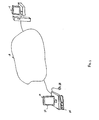
- FIG. 1 shows a first computing system (client node) 10 in communication with a second computing system (server node) 14 over a communications network 18 for remotely executing an application program on the server node 14 in accordance with the principles of the invention.
- the network 18 over which the client and server nodes 10, 14 communicate can be a local area network (LAN) or a wide area network (WAN) such as the Internet.
- the client and server nodes 10, 14 can connect to the network 18 through a variety of connections including standard telephone lines, LAN or WAN links (e.g., T1, T3, 56kb, X.25), broadband connections (ISDN, Frame Relay, ATM), and wireless connections.
- Connections can be established using a variety of communication protocols (e.g., TCP/IP, IPX, SPX, NetBIOS, Ethernet, RS232, and direct asynchronous connections).
- Other client nodes and server nodes may also be connected to the network 18.
- the client node 10 communicates with the server node 14 using an Independent Computing Architecture (ICA) protocol developed by Citrix Systems, Inc. of Ft. Lauderdale, Florida.
- ICA is a general-purpose presentation services protocol that controls the input/output between the client node 10 and server node 14.
- the design of ICA is for the presentation services to run over industry standard network protocols, such as TCP/IP, IPX/SPX, or NetBEUI, using industry-standard transport protocols, including but not limited to ISDN, frame relay, and asynchronous transfer mode (ATM).
- ICA Independent Computing Architecture
- ICA ICA
- all application execution remains on the server node 14, and only user interface information, such as windows application screen presentation, full-screen text presentation, and keyboard and pointing device updates, are sent to the client node 10.
- the technique of the invention operates as a feature that accelerates standard ICA keyboard processing. If a particular application program or input control cannot support the technique, the standard ICA keyboard processing is used.
- Other embodiments can employ other remote control protocols, such as MICROSOFT RDP (Remote Desktop Protocol), to practice the principles of the invention.
- MICROSOFT RDP Remote Desktop Protocol
- the client node 10 can be any personal computer (e.g., 286, 386, 486, Pentium, Pentium II, Macintosh computer), thin-client device, windows and non-windows based terminal, network computer, wireless device, information appliance, RISC Power PC, X-device, workstation, mini computer, main frame computer, or any processor-based device capable of displaying application data and operating according to a protocol that transmits input data to an application program executing remotely on the sever node 14.
- personal computer e.g., 286, 386, 486, Pentium, Pentium II, Macintosh computer
- thin-client device e.g., Windows and non-windows based terminal
- network computer e.g., wireless device, information appliance, RISC Power PC, X-device, workstation, mini computer, main frame computer, or any processor-based device capable of displaying application data and operating according to a protocol that transmits input data to an application program executing remotely on the sever no
- the user interface displayed at the client node 10 can be text driven (e.g., the DOS operating system manufactured by Microsoft Corporation of Redmond, Washington) or graphically driven (e.g., the WINDOWS operating system manufactured by Microsoft Corporation of Redmond, Washington).
- the operating system of the client node 10 can be one of a variety of platforms including but not limited to WINDOWS 3.x, WINDOWS 95, WINDOWS 98, WINDOWS NT 3.51, WINDOWS NT 4.0, Macintosh, Java, and Unix, DOS, Linux, and WINDOWS CE for windows-based terminals.
- the client node 10 includes a display screen 22, a keyboard 24, a pointing device (e.g., a mouse, trackball, touch-pad, touch-screen, etc) 28, a processor (not shown), and persistent storage (not shown).
- the server node 14 can be any computing device that controls access to other portions of the network (e.g., workstations, printers, etc.) and runs applications in response to input received from the client node 10. Like the client node 10, the server node 14 can support a variety of operating system platforms, such as, for example, WINDOWS 3.x, WINDOWS 95, WINDOWS 98, WINDOWS NT 3.51, WINDOWS NT 4.0, WINDOWS CE for windows-based terminals, Macintosh, Java, and Unix.
- the server node 14 can include a group of server systems logically acting as a single server system, called a server farm. In one embodiment, the server node 14 is a multi-user server system supporting multiple concurrently active client nodes.
- the server node 14 hosts one or more application programs that can be accessed by the client node 10.
- applications include browser software, e.g., MICROSOFT INTERNET EXPLORER TM , word processing programs such as MICROSOFT WORD® and MICROSOFT NOTEPAD®, database programs such as MICROSOFT ACCESS®, and spreadsheet programs such as MICROSOFT EXCEL®, all of which are manufactured by Microsoft Corporation of Redmond, Washington.
- Such application programs call application program interface (API) routines to direct the performance of the operating system running on the server node 14.
- Server-side support may make use of the Active Accessibility API, developed by Microsoft Corporation of Redmond, Washington, or equivalent proprietary APIs that allow information about the contents of a window to be extracted from the application in control of that window.
- the Active Accessibility API models user interface elements as Component Object Model (COM) objects.
- COM Component Object Model
- a client is able to examine the properties of an object using provided functions such as Iaccessible::accLocation and IAccessible::get_accName.
- the client node 10 communicates with the server node 14 to remotely execute an application program on the server node 14.
- User input supplied at the client node 10 serves as input to the application program. All execution of the application program occurs on the server node 14 according to this user input forwarded to the server node 14 from the client node 10. Examples of user input, typically submitted by a user of the client node 10, include characters entered through the keyboard 24 or cursor movements submitted using the pointing device 28.
- the server node 14 In response to the user input, the server node 14 produces a server response that controls the content and appearance of the screen display of the client node 10 when subsequently transmitted to and received by the client node 10.
- the type of the server response depends on the type of the user input received and the application program that is processing the user input. For example, if the application program is a word processor and the input event is a keyboard input of the character "T,” then the response from the server node 14 to the client node 10 produces the character "T" when displayed on the client node 10.
- the response can include information that defines the display of the character "T" on the screen of the client node 10, including current input position information and font information.
- the server response can display a drop-down menu associated with that icon on the screen 22 of the client node 10.
- the period of elapsed time for the user input to traverse the network 18 to the server node 14 and for the server response to return to the client node 10 is the latency of the connection between the nodes 10, 14.
- the client node 10 and server node 14 are communicating over a high-latency connection, the user may experience a palpable delay from the moment of entering the input until the moment of receiving a server response.
- Such high-latency connections are common in a WAN or Internet environment and can occur in multi-user computer systems that are busy responding to queries from multiple active clients.
- the client node 10 produces and displays a response to the input event in anticipation of the server response.
- the client node 10 response attempts to anticipate the server response that substantially matches, in content and appearance, the subsequent display of the expected server response.
- Content for example, includes the specific text and graphical image that the server response is expected to display, such as the capital letter "T" and the drop-down menu of the above-described examples.
- Attributes associated with appearance include, for example, the color of the displayed character (e.g., blue), the font size (e.g., 12), the font type (e.g., Times New Roman), the font style (e.g., italics), and current input position (i.e., (x, y) coordinate) on the display screen 22.
- the color of the displayed character e.g., blue
- the font size e.g., 12
- the font type e.g., Times New Roman
- the font style e.g., italics
- current input position i.e., (x, y) coordinate
- Fig. 2 shows an exemplary block diagram illustrating the information used by a client response generator 30 to produce a client response 32 to a user-supplied input 34.
- the client response generator 30 includes the processor of the client node 10 and the particular API routines that form and display the client-generated response 32.
- Data 35 sent from the server 14 to the client 10 comprises data 36 and data 37.
- Data 36 comprises server-supplied information
- data 37 is the server response to the user-supplied input.
- the client response generator 30 forms the client-generated response 32 based upon that user-supplied input 34 and upon server-supplied information 36, but if certain server-supplied information described below is unavailable, the client response generator 30 can use default information 38 instead.
- the user-supplied input 34 is one of at least two types: (1) keyboard input or (2) a pointing device input.
- the user of the client node 10 supplied keyboard input by typing in characters using the keyboard and pointing device input by clicking or double-clicking the pointing device 28.
- Another type of pointing device input is the position of the cursor on the display screen 22 of the client node 10.
- User-supplied input is transmitted to the server 14 via a client-side transport mechanism 33.
- the client-side transport mechanism 33 includes a transport driver that handles low-level network communication (e.g., physical layer), a protocol driver that handles higher-level network communication (e.g. data link layer), and an ICA driver that handles formatting of data to conform to the ICA protocol.
- the type of server-supplied information 36 depends on the type of user input. As described above, the input types include keyboard input and pointing device input.
- the server-supplied information 36 includes a current input position and current font information. The current input position is determined by current cursor position.
- the font information defines the appearance (e.g., font size, style, color, type, etc.) of the client-generated response when displayed on the display screen.
- the server-supplied information 36 includes current input position information, as described above, and current screen object information.
- the screen object information includes such information as menu size and screen location, number of menu elements, and size of menu elements.
- the current input position information corresponds to the cursor position determined by the pointing input device.
- the server node 14 obtains the current input position, font, and screen object information from the application program 40 executing on the server node 14.
- the application program can use a standard operating system cursor handling routine or support a particular query API that obtains the cursor information, such as the "font info" API 41 or the "caret” API 42 depicted in FIG. 2.
- Use of the standard operating system routine may require some modification to that routine to obtain the cursor information. For example, implementations using MICROSOFT WINDOWS can accomplish this by installing a hook procedure in the standard dynamic link library file User32.dll.
- the application program 40 either uses text output functions to draw the text in response to the keyboard input or supports a particular query API to obtain the font information.
- the client response generator 30 can use default information 38 to produce the client-generated response 32.
- default information 38 for font can be predetermined or taken from the most recent, previous text output generated by the application program.
- the application program 40 provides screen object information in a manner similar to providing current input position, that is, by using a system-supported routine for accessing such information or by supporting yet another particular query API, such as Iaccessible::accLocation mentioned above.
- query APIs can be standard API, such as APIs in the Active Accessibility interface developed by Microsoft, or proprietary APIs.
- the type of server-supplied information 36 also depends on the operational state of the application program currently executing on the server node 14. For example, if the server node 14 is executing a word processing application program and the program is presently processing the input using Edit control, the client response generator 30 can anticipate how the server node 14 will process keyboard input while operating according to this set of controls. For embodiments implemented using the WINDOWS operating system, Edit control is standard and well documented.
- the behavior of the Edit control is generally determined by a set of flags associated with the Edit control such as: ES_MULTILINE, which indicates that the control contains multiple lines of text; ES_NUMBER, which indicates that the control allows only digits to be entered; ES_CENTER, which indicates that the entered text will be centered; or ES_LOWERCASE, which indicates that the entered text will be converted to lower case.
- Other information can be obtained by querying the Edit control, such as the current size of the output rectangle, the currently selected font, the current line, or the current text selection in the Edit control.
- the client response generator 30 can anticipate a number of characteristics associated with, for example, text that is currently being edited in order to estimate the server response.
- the client response generator 30 monitors the control by using a hooking control procedure. If the Edit control changes its state as a result of the user input or application request, the change is detected by the installed hook procedure and the updated information is communicated to the client.
- the technique of estimation is not limited to Edit control or any particular set of controls, but that the technique can apply to any type of input control as long as cursor (caret) information is available to the client response generator 30.
- the technique may require that font information also be available to the client response generator 30.
- the server node 14 can send the server-supplied information 36 to the client node 10 at various points during the execution of the application program depending upon the type of application program.
- the server node 14 periodically sends information to the client 10.
- the server 14 may use a virtual channel set up using the ICA protocol to transmit the information.
- the client 10 requests information from the server 14 at opportune times, such as periods of low network bandwidth usage or low processor loading.
- One point at which the client 10 may request information is when the server node 14 starts executing the application program 40.
- the latency of the connection between the server 14 and client nodes 10 has minimal impact upon client user behavior because the client user has not yet begun to submit input to the application program 40.
- Other points can occur during the execution of the application program 40, such as, for example, when server node 14 transmits a server response to the client node 14. Still other points can be when certain trigger events occur during the execution of the application program 40, such as, for example, when the client user moves from one input field to another while entering data in a database record.
- the server node 14 can transmit to the client node the information 36 appropriate for that input field.
- Fig. 3 shows an exemplary process of the invention by which the client node 10 and the server node 14 cooperate to give a client user an immediate visual response for each character typed in at the keyboard 24 by the client user.
- the responses appear character by character. Accordingly, the user should not visually discern any delay between the moment of supplying input to the moment of observing a response.
- the client node 10 launches (step 40) an application program, and in response, the server node 14 starts (step 44) execution of that application.
- the application program is MICROSOFT NOTEPAD, which uses a Multi-line Edit box within which characters typed in by the user appear.
- the server node 14 transmits (step 48) application-specific information to the client node 10. This information includes at least font information and current input position information.
- the client user types in the capital letter "T.”
- the client node 10 receives (step 52) this keyboard input, and then, as described above, generates and displays (step 56) a visual response that attempts to anticipate the server response.
- the client-generated response is more than a simple echo of the capital letter "T" because the client-generated response may also anticipate the visual attributes of the character, such as the font type, size, color, and current input position on the display screen. All of such visual attributes are obtainable from the information provided by the server in step 48.
- the client node 10 can use default information for any visual attributes not provided by the server node 14 with such application-specific information.
- the client node 10 transmits (step 60) the input character "T" to the server node 14. Although shown here as occurring after the generation and display of the client-generated response, the transmission of the character to the server node 14 can occur before such generation and display.
- the client node receives (step 64) a second character typed in by the client user, here character "e.” In a manner similar to the client-generated response for the letter "T", the client node 10 generates and displays (step 68) a response for the character "e" on the client display screen. In step 72, the client node 10 transmits the user input of the character "e" to the server node 14.
- the client node 10 monitors for a server response.
- the server node 14 produces (step 76) the response 37 to the character input "T", and transmits the response 37 to the client node 10 over the network 18.
- the latency of the connection between the client and server nodes 10, 14 is longer than the time needed for the client node 10 to produce and display the client-generated response.
- the client-generated response may appear on the screen before the server node 14 generates the server response 37 or receives the user input.
- the latency of the communications link between the server and client nodes is such that responses 37 from the server node 14 lag behind responses displayed by the client node 10 by multiple characters, as is illustrated by this example.
- the client node 10 receives the server response 37 for the letter "T” and updates (step 80) the display by overwriting the client-generated response with the server response. Because the server response 37 overwrites the client response, the server response 37 does not need to exactly match the client-generated response. Slight differences in appearance between the client-generated response and the server response are usually indiscernible by the client user.
- the client node 10 can compare the client-generated response with the server response and then overwrite the client-generated response if the server response differs.
- the server node 14 (step 84) a response 37 to the character input "e", and returns the response 37 to the client node 10, which updates (step 88) the display screen with this server response.
- the client node 10 updates the display screen regardless of whether the server-supplied response 37 differs from the client-generated response.
- the client node 10 updates the display with the server-supplied response 37 only if the client-generated response was wrong.
- the server node 14 can be providing new font and current input position information for use by the client node 10 to update subsequently generated client-generated responses.
- Fig. 4 provides another exemplary flow diagram of the process by which the client node 10 generates responses to user input provided through the pointing device 28.
- the client node 10 launches (step 100) an application program that starts executing (step 104) on the server node 14.
- the server node 14 executes the MICROSOFT WORD application program.
- the server node provides (step 108) application-specific information.
- the application-specific information describes screen objects, such as the commands and toolbar icons that are displayed at the top of the MICROSOFT WORD window and the menu structure associated with each such screen object.
- the screen object information includes the screen position and screen area covered by each command and icon so that the client node 10 can generate, using the current cursor position, which command or icon is selected when the client user clicks the pointing device 28.
- a typical display of commands at the top of the MICROSOFT WORD window is
- Activation of the Edit command occurs by clicking the pointing device 28 while the cursor position falls within the boundaries of the rectangular screen area covered by the Edit command.
- the client node 10 receives this pointing device input.
- the client node 10 generates and displays (step 116) a response, here a drop-down menu associated with the Edit command, from the server-provided application-specific information and the current cursor position.
- the client node 10 transmits (step 120) the user input to the server node 14.
- the client node 10 tracks (step 124) the cursor movement within the drop-down menu and highlights the menu item within which the current cursor position falls.
- the server node 14 produces the actual response to the pointing device input and returns the response to the client node 10.
- the client node 10 updates (step 132) the display with the server response.
- the present invention may be implemented as one or more computer-readable software programs embodied on or in one or more articles of manufacture.
- the article of manufacture can be, for example, any one or combination of a floppy disk, a hard disk, hard-disk drive, a CD-ROM, a DVD-ROM, a flash memory card, an EEPOM, an EPROM, a PROM, a RAM, a ROM, or a magnetic tape.
- any standard or proprietary, programming or interpretive language can be used to produce the computer-readable software programs. Examples of such languages include C, C++, Pascal, JAVA, BASIC, Visual Basic, and Visual C++.
- the software programs may be stored on or in one or more articles of manufacture as source code, object code, interpretive code, or executable code.
Landscapes
- Engineering & Computer Science (AREA)
- Computer Networks & Wireless Communication (AREA)
- Signal Processing (AREA)
- Computer Hardware Design (AREA)
- Theoretical Computer Science (AREA)
- Software Systems (AREA)
- Physics & Mathematics (AREA)
- General Engineering & Computer Science (AREA)
- General Physics & Mathematics (AREA)
- User Interface Of Digital Computer (AREA)
- Information Transfer Between Computers (AREA)
- Computer And Data Communications (AREA)
Applications Claiming Priority (3)
| Application Number | Priority Date | Filing Date | Title |
|---|---|---|---|
| US09/360,876 US6538667B1 (en) | 1999-07-23 | 1999-07-23 | System and method for providing immediate visual response to user input at a client system connected to a computer system by a high-latency connection |
| US360876 | 1999-07-23 | ||
| PCT/US2000/019749 WO2001008378A1 (en) | 1999-07-23 | 2000-07-20 | A system and method for providing immediate visual response to user input at a client system |
Publications (2)
| Publication Number | Publication Date |
|---|---|
| EP1197055A1 EP1197055A1 (en) | 2002-04-17 |
| EP1197055B1 true EP1197055B1 (en) | 2007-02-07 |
Family
ID=23419752
Family Applications (1)
| Application Number | Title | Priority Date | Filing Date |
|---|---|---|---|
| EP00947558A Expired - Lifetime EP1197055B1 (en) | 1999-07-23 | 2000-07-20 | A system and method for providing immediate visual response to user input at a client system |
Country Status (11)
| Country | Link |
|---|---|
| US (1) | US6538667B1 (https=) |
| EP (1) | EP1197055B1 (https=) |
| JP (1) | JP2003505781A (https=) |
| KR (1) | KR100798963B1 (https=) |
| AU (1) | AU775740B2 (https=) |
| CA (1) | CA2380768C (https=) |
| DE (1) | DE60033286T2 (https=) |
| ES (1) | ES2281349T3 (https=) |
| HK (1) | HK1045617B (https=) |
| IL (2) | IL147754A0 (https=) |
| WO (1) | WO2001008378A1 (https=) |
Families Citing this family (64)
| Publication number | Priority date | Publication date | Assignee | Title |
|---|---|---|---|---|
| US6721786B1 (en) * | 2000-01-06 | 2004-04-13 | International Business Machines Corporation | Method and apparatus for balancing bandwidth usage in a browser |
| AU778428B2 (en) * | 2000-02-25 | 2004-12-02 | Canon Kabushiki Kaisha | Local sound and graphic feedback |
| US7010503B1 (en) * | 2000-03-10 | 2006-03-07 | Ams Services, Inc. | Traffic reduction in networked data collection |
| US6763501B1 (en) * | 2000-06-09 | 2004-07-13 | Webex Communications, Inc. | Remote document serving |
| US7117239B1 (en) | 2000-07-28 | 2006-10-03 | Axeda Corporation | Reporting the state of an apparatus to a remote computer |
| AU2001281402A1 (en) * | 2000-08-08 | 2002-02-18 | Fineground Networks | Method and system for parameterized web documents |
| US7047281B1 (en) | 2000-08-08 | 2006-05-16 | Fineground Networks | Method and system for accelerating the delivery of content in a networked environment |
| US8108543B2 (en) | 2000-09-22 | 2012-01-31 | Axeda Corporation | Retrieving data from a server |
| US7185014B1 (en) | 2000-09-22 | 2007-02-27 | Axeda Corporation | Retrieving data from a server |
| US7310687B2 (en) | 2001-03-23 | 2007-12-18 | Cisco Technology, Inc. | Methods and systems for managing class-based condensation |
| US7171444B2 (en) * | 2001-11-14 | 2007-01-30 | Sharp Laboratories Of America, Inc. | Remote desktop protocol compression system |
| US20030105879A1 (en) * | 2001-11-30 | 2003-06-05 | Erlend Olson | Wireless network architecture and method |
| US7254601B2 (en) | 2001-12-20 | 2007-08-07 | Questra Corporation | Method and apparatus for managing intelligent assets in a distributed environment |
| US7178149B2 (en) | 2002-04-17 | 2007-02-13 | Axeda Corporation | XML scripting of soap commands |
| US7966418B2 (en) | 2003-02-21 | 2011-06-21 | Axeda Corporation | Establishing a virtual tunnel between two computer programs |
| DE10315111A1 (de) * | 2003-04-02 | 2004-10-14 | Klaus Rock | Verfahren zur Reduzierung der Latenzzeit bei der interaktiven Datenkommunikation zwischen einem Terminal Server und einem Terminal-Server Client in einem geostationären Satellitennetzwerk |
| US8250034B2 (en) * | 2004-04-14 | 2012-08-21 | Verisign, Inc. | Method and apparatus to provide visual editing |
| US20050234838A1 (en) * | 2004-04-14 | 2005-10-20 | Manousos Nicholas H | Method and apparatus for providing in place editing within static documents |
| US20050257196A1 (en) * | 2004-05-17 | 2005-11-17 | Gideon Hollander | System and method for developing new services from legacy computer applications |
| DE102004043868B4 (de) * | 2004-09-10 | 2007-01-11 | Kai Lauterjung | Datenkommunikationssystem, sowie Datenkommunikationsverfahren |
| DE102004048343B4 (de) * | 2004-10-01 | 2022-09-22 | Satcloud Ip Holding Llc | Verfahren zur Reduzierung der Latenzzeit bei der interaktiven Datenkommunikation zwischen einem Terminal Server und einem Terminal-Server Client in einem Telekommunikationsnetzwerk, insbesondere einem GSM oder einem UMTS Netzwerk |
| US7450128B2 (en) * | 2004-11-15 | 2008-11-11 | Hewlett-Packard Development Company, L.P. | Systems and methods of providing image copy and modify commands to a receiver with an associated display |
| US7577749B1 (en) | 2004-12-03 | 2009-08-18 | Ux Ltd. | Emulation of persistent HTTP connections between network devices |
| CA2490645A1 (en) * | 2004-12-16 | 2006-06-16 | Ibm Canada Limited - Ibm Canada Limitee | Data-centric distributed computing |
| US7817849B2 (en) * | 2005-08-18 | 2010-10-19 | Hewlett-Packard Development Company, L.P. | Method and apparatus for graphical data compression |
| US20080002830A1 (en) * | 2006-04-14 | 2008-01-03 | Cherkasov Aleksey G | Method, system, and computer-readable medium to maintain and/or purge files of a document management system |
| US8370479B2 (en) * | 2006-10-03 | 2013-02-05 | Axeda Acquisition Corporation | System and method for dynamically grouping devices based on present device conditions |
| US8065397B2 (en) | 2006-12-26 | 2011-11-22 | Axeda Acquisition Corporation | Managing configurations of distributed devices |
| US8214367B2 (en) * | 2007-02-27 | 2012-07-03 | The Trustees Of Columbia University In The City Of New York | Systems, methods, means, and media for recording, searching, and outputting display information |
| JP2009009330A (ja) * | 2007-06-27 | 2009-01-15 | Fujitsu Ltd | 情報処理装置、情報処理システム及び情報処理装置の制御方法 |
| CA2607537A1 (en) * | 2007-10-22 | 2009-04-22 | Ibm Canada Limited - Ibm Canada Limitee | Software engineering system and method for self-adaptive dynamic software components |
| JP5012716B2 (ja) * | 2008-07-29 | 2012-08-29 | 富士通株式会社 | リモートファイル操作方法 |
| JP4827950B2 (ja) * | 2008-07-31 | 2011-11-30 | 富士通株式会社 | サーバ装置 |
| JP2010091724A (ja) * | 2008-10-07 | 2010-04-22 | Canon Inc | 画像処理システム |
| US8195692B2 (en) | 2008-12-11 | 2012-06-05 | International Business Machines Corporation | System and method for managing semantic and syntactic metadata |
| BRPI0920494A2 (pt) * | 2009-01-29 | 2015-12-22 | Hewlett Packard Development Co | método para fornecer uma indicação de mudança em um dispositivo de interface de usuário através de uma rede entre computadores, computador principal e artigo |
| US8566391B2 (en) | 2009-08-13 | 2013-10-22 | Hitachi, Ltd. | System and method for evaluating application suitability in execution environment |
| US9063932B2 (en) * | 2009-12-18 | 2015-06-23 | Vertafore, Inc. | Apparatus, method and article to manage electronic or digital documents in a networked environment |
| US8700682B2 (en) * | 2009-12-24 | 2014-04-15 | Vertafore, Inc. | Systems, methods and articles for template based generation of markup documents to access back office systems |
| US8555187B2 (en) * | 2010-02-16 | 2013-10-08 | Google Inc. | Server-based data sharing in computer applications using a clipboard |
| WO2012048007A2 (en) * | 2010-10-05 | 2012-04-12 | Citrix Systems, Inc. | Touch support for remoted applications |
| US9384198B2 (en) | 2010-12-10 | 2016-07-05 | Vertafore, Inc. | Agency management system and content management system integration |
| US9274746B2 (en) * | 2011-02-18 | 2016-03-01 | Nuance Communications, Inc. | Latency hiding techniques for multi-modal user interfaces |
| US8731973B2 (en) | 2011-04-19 | 2014-05-20 | Vertafore, Inc. | Overlaying images in automated insurance policy form generation |
| US9794735B2 (en) | 2012-02-15 | 2017-10-17 | Dropbox Inc. | Context determination for mobile devices when accessing remote resources |
| US9307009B2 (en) * | 2012-02-15 | 2016-04-05 | Mobilespan Inc. | Presenting execution of a remote application in a mobile device native format |
| KR20130101864A (ko) * | 2012-03-06 | 2013-09-16 | 삼성전자주식회사 | 클라이언트 장치, 클라이언트의 제어 방법, 서버 및 서버의 영상 제공 방법 |
| KR101867494B1 (ko) * | 2012-10-05 | 2018-07-17 | 텍추얼 랩스 컴퍼니 | 저지연 유저 입력 프로세싱과 피드백용 하이브리드 시스템 및 방법 |
| KR101430929B1 (ko) * | 2012-12-12 | 2014-08-18 | 에스케이플래닛 주식회사 | 사용자의 입력에 즉각적인 결과를 제공할 수 있는 서비스 제공 방법, 이를 위한 시스템 및 장치 |
| KR101432990B1 (ko) * | 2012-12-12 | 2014-08-22 | 에스케이플래닛 주식회사 | 사용자의 입력에 즉각적인 결과를 제공할 수 있는 서비스 제공 방법, 이를 위한 시스템 및 장치 |
| WO2014092293A1 (ko) * | 2012-12-12 | 2014-06-19 | 에스케이플래닛 주식회사 | 사용자의 입력에 즉각적인 결과를 제공할 수 있는 서비스 제공 방법, 이를 위한 시스템 및 장치 |
| JP6205749B2 (ja) * | 2013-02-26 | 2017-10-04 | 日本電気株式会社 | サーバ装置、仮想デスクトップシステム、入力情報処理方法、およびそのプログラム |
| US9122366B2 (en) * | 2013-03-15 | 2015-09-01 | Navico Holding As | Residue indicators |
| US20150089203A1 (en) * | 2013-09-23 | 2015-03-26 | Mitch Kline | Latency reduction in distributed computing environments |
| US9507814B2 (en) | 2013-12-10 | 2016-11-29 | Vertafore, Inc. | Bit level comparator systems and methods |
| US9367435B2 (en) | 2013-12-12 | 2016-06-14 | Vertafore, Inc. | Integration testing method and system for web services |
| US9747556B2 (en) | 2014-08-20 | 2017-08-29 | Vertafore, Inc. | Automated customized web portal template generation systems and methods |
| US10437938B2 (en) | 2015-02-25 | 2019-10-08 | Onshape Inc. | Multi-user cloud parametric feature-based 3D CAD system |
| WO2016179436A1 (en) * | 2015-05-05 | 2016-11-10 | Colorado Code Craft Patent Holdco Llc | Ultra-low latency remote application access |
| US9600400B1 (en) | 2015-10-29 | 2017-03-21 | Vertafore, Inc. | Performance testing of web application components using image differentiation |
| US11281478B2 (en) | 2019-03-27 | 2022-03-22 | Citrix Systems, Inc. | Providing user interface (UI) elements having an ordered hierarchy of graphical control elements in virtual machine sessions at reduced latency and related methods |
| US11263029B2 (en) | 2019-03-27 | 2022-03-01 | Citrix Systems, Inc. | Providing user interface (UI) elements having scrollable content in virtual machine sessions at reduced latency and related methods |
| US11263028B2 (en) | 2019-03-27 | 2022-03-01 | Citrix Systems, Inc. | Providing user interface (UI) elements in virtual machine sessions at reduced latency |
| US20250238611A1 (en) * | 2024-01-23 | 2025-07-24 | Hewlett-Packard Development Company, L.P. | Predictive text rendering for virtual desktop applications |
Family Cites Families (32)
| Publication number | Priority date | Publication date | Assignee | Title |
|---|---|---|---|---|
| USRE32632E (en) | 1982-07-19 | 1988-03-29 | Apple Computer, Inc. | Display system |
| JPS62282328A (ja) | 1986-02-21 | 1987-12-08 | Hitachi Ltd | 多重画面制御方式 |
| US4937036A (en) | 1986-04-28 | 1990-06-26 | Xerox Corporation | Concurrent display of data from two different display processors and user interface therefore |
| US5072412A (en) | 1987-03-25 | 1991-12-10 | Xerox Corporation | User interface with multiple workspaces for sharing display system objects |
| US4949281A (en) | 1987-04-23 | 1990-08-14 | H. Berthold Ag | Method and apparatus for generating and producing two-dimensional graphic object by polynominal parametric curves |
| US4903218A (en) | 1987-08-13 | 1990-02-20 | Digital Equipment Corporation | Console emulation for a graphics workstation |
| US5103303A (en) | 1988-04-19 | 1992-04-07 | Konica Corporation | Multicolor imaging forming apparatus |
| US4958303A (en) | 1988-05-12 | 1990-09-18 | Digital Equipment Corporation | Apparatus for exchanging pixel data among pixel processors |
| KR930003126B1 (ko) | 1989-04-20 | 1993-04-19 | 가부시기가이샤 도시바 | 곡선정합에 있어서 형상을 표시하는 직선쇼트벡터의 접속상태를 판정하는 방법 및 시스템 |
| US5119319A (en) | 1989-12-14 | 1992-06-02 | Options Unlimited Research Corp. | Full-duplex video communication system |
| US5309555A (en) | 1990-05-15 | 1994-05-03 | International Business Machines Corporation | Realtime communication of hand drawn images in a multiprogramming window environment |
| EP0493084B1 (en) | 1990-12-26 | 1997-06-04 | Canon Kabushiki Kaisha | Multi-media communication apparatus |
| CA2069355C (en) | 1991-06-07 | 1998-10-06 | Robert C. Pike | Global user interface |
| US5351129A (en) | 1992-03-24 | 1994-09-27 | Rgb Technology D/B/A Rgb Spectrum | Video multiplexor-encoder and decoder-converter |
| JP3390033B2 (ja) | 1992-10-14 | 2003-03-24 | 株式会社日立製作所 | パケット通信方式 |
| US5469540A (en) | 1993-01-27 | 1995-11-21 | Apple Computer, Inc. | Method and apparatus for generating and displaying multiple simultaneously-active windows |
| US5583763A (en) * | 1993-09-09 | 1996-12-10 | Mni Interactive | Method and apparatus for recommending selections based on preferences in a multi-user system |
| US5802292A (en) * | 1995-04-28 | 1998-09-01 | Digital Equipment Corporation | Method for predictive prefetching of information over a communications network |
| US5874960A (en) | 1995-07-05 | 1999-02-23 | Microsoft Corporation | Method and system for sharing applications between computer systems |
| US5805815A (en) * | 1995-12-18 | 1998-09-08 | At&T Corp. | Method and apparatus for providing interim data displays while awaiting of retrieval linked information |
| IL116804A (en) | 1996-01-17 | 1998-12-06 | R N S Remote Networking Soluti | Application user interface redirector |
| US5757925A (en) | 1996-07-23 | 1998-05-26 | Faybishenko; Yaroslav | Secure platform independent cross-platform remote execution computer system and method |
| US6108493A (en) * | 1996-10-08 | 2000-08-22 | Regents Of The University Of Minnesota | System, method, and article of manufacture for utilizing implicit ratings in collaborative filters |
| US5931904A (en) * | 1996-10-11 | 1999-08-03 | At&T Corp. | Method for reducing the delay between the time a data page is requested and the time the data page is displayed |
| US6078740A (en) * | 1996-11-04 | 2000-06-20 | Digital Equipment Corporation | Item selection by prediction and refinement |
| KR100571059B1 (ko) * | 1997-08-06 | 2006-04-14 | 태크욘 인코포레이티드 | 예비 페칭을 위한 분산된 시스템 및 방법 |
| US5982351A (en) * | 1997-09-30 | 1999-11-09 | Motorola, Inc. | Method and apparatus for supplementing a keyboard and for helping a user operate an electronic device |
| JP3272281B2 (ja) * | 1997-10-20 | 2002-04-08 | インターナショナル・ビジネス・マシーンズ・コーポレーション | データアイテム表示方法及び表示装置、データアイテムの表示を制御するプログラムを格納した記憶媒体 |
| US6243761B1 (en) * | 1998-03-26 | 2001-06-05 | Digital Equipment Corporation | Method for dynamically adjusting multimedia content of a web page by a server in accordance to network path characteristics between client and server |
| US6182125B1 (en) * | 1998-10-13 | 2001-01-30 | 3Com Corporation | Methods for determining sendable information content based on a determined network latency |
| US6178461B1 (en) * | 1998-12-08 | 2001-01-23 | Lucent Technologies Inc. | Cache-based compaction technique for internet browsing using similar objects in client cache as reference objects |
| US6304909B1 (en) * | 1998-12-18 | 2001-10-16 | International Business Machines Corporation | Client-controlled link processing in computer network |
-
1999
- 1999-07-23 US US09/360,876 patent/US6538667B1/en not_active Expired - Lifetime
-
2000
- 2000-07-20 HK HK02106936.2A patent/HK1045617B/en not_active IP Right Cessation
- 2000-07-20 CA CA002380768A patent/CA2380768C/en not_active Expired - Lifetime
- 2000-07-20 KR KR1020027000992A patent/KR100798963B1/ko not_active Expired - Lifetime
- 2000-07-20 WO PCT/US2000/019749 patent/WO2001008378A1/en not_active Ceased
- 2000-07-20 AU AU61142/00A patent/AU775740B2/en not_active Expired
- 2000-07-20 EP EP00947558A patent/EP1197055B1/en not_active Expired - Lifetime
- 2000-07-20 JP JP2001512762A patent/JP2003505781A/ja active Pending
- 2000-07-20 ES ES00947558T patent/ES2281349T3/es not_active Expired - Lifetime
- 2000-07-20 IL IL14775400A patent/IL147754A0/xx not_active IP Right Cessation
- 2000-07-20 DE DE60033286T patent/DE60033286T2/de not_active Expired - Lifetime
-
2002
- 2002-01-21 IL IL147754A patent/IL147754A/en unknown
Also Published As
| Publication number | Publication date |
|---|---|
| ES2281349T3 (es) | 2007-10-01 |
| DE60033286D1 (de) | 2007-03-22 |
| KR100798963B1 (ko) | 2008-01-28 |
| JP2003505781A (ja) | 2003-02-12 |
| AU775740B2 (en) | 2004-08-12 |
| KR20020038700A (ko) | 2002-05-23 |
| WO2001008378A9 (en) | 2002-08-29 |
| IL147754A0 (en) | 2002-08-14 |
| HK1045617B (en) | 2007-12-14 |
| US6538667B1 (en) | 2003-03-25 |
| CA2380768A1 (en) | 2001-02-01 |
| IL147754A (en) | 2007-05-15 |
| EP1197055A1 (en) | 2002-04-17 |
| AU6114200A (en) | 2001-02-13 |
| WO2001008378A1 (en) | 2001-02-01 |
| DE60033286T2 (de) | 2007-11-08 |
| HK1045617A1 (en) | 2002-11-29 |
| CA2380768C (en) | 2006-12-19 |
Similar Documents
| Publication | Publication Date | Title |
|---|---|---|
| EP1197055B1 (en) | A system and method for providing immediate visual response to user input at a client system | |
| US5831609A (en) | Method and system for dynamic translation between different graphical user interface systems | |
| US6286003B1 (en) | Remote controlling method a network server remote controlled by a terminal and a memory storage medium for HTML files | |
| US6717589B1 (en) | Computerized help system with modal and non-modal modes | |
| EP1214667B1 (en) | Methods and apparatus for efficiently transmitting interactive application data between a client and server using markup language | |
| US6590595B1 (en) | Mechanism for providing intuitive scrolling feedback | |
| US7657837B2 (en) | Seamless windows functionality to remote desktop sessions regarding z-order | |
| USRE39801E1 (en) | Automatic installation of printers in a distributed environment | |
| US7180615B2 (en) | One click printing in a web browser | |
| US20090077174A1 (en) | Server-based computing environment | |
| US20060230105A1 (en) | Method of providing a remote desktop session with the same look and feel as a local desktop | |
| WO2002076175A2 (en) | System and method for printing over networks via a print server | |
| US20040049530A1 (en) | Distributed computer system using a graphical user interface toolkit | |
| WO2005050406A2 (en) | Server visualization and control | |
| US7827329B2 (en) | Character interactive input/output | |
| WO2000002148A1 (en) | System and method for rendering and displaying a compound document | |
| KR100555392B1 (ko) | 클라이언트/서버간 응용프로그램 실행의 터미널 제어시스템 및 그 방법 | |
| US20060168106A1 (en) | Method for reducing latency periods during interactive data communication between a terminal server and a terminal server client in a geostationay satellite network | |
| HK1046321B (en) | Methods and apparatus for efficiently transmitting interactive application data between a client and server using markup language |
Legal Events
| Date | Code | Title | Description |
|---|---|---|---|
| PUAI | Public reference made under article 153(3) epc to a published international application that has entered the european phase |
Free format text: ORIGINAL CODE: 0009012 |
|
| 17P | Request for examination filed |
Effective date: 20020118 |
|
| AK | Designated contracting states |
Kind code of ref document: A1 Designated state(s): AT BE CH CY DE DK ES FI FR GB GR IE IT LI LU MC NL PT SE |
|
| AX | Request for extension of the european patent |
Free format text: AL;LT;LV;MK;RO;SI |
|
| 17Q | First examination report despatched |
Effective date: 20040304 |
|
| RBV | Designated contracting states (corrected) |
Designated state(s): DE ES FR GB IE IT |
|
| GRAP | Despatch of communication of intention to grant a patent |
Free format text: ORIGINAL CODE: EPIDOSNIGR1 |
|
| GRAS | Grant fee paid |
Free format text: ORIGINAL CODE: EPIDOSNIGR3 |
|
| GRAA | (expected) grant |
Free format text: ORIGINAL CODE: 0009210 |
|
| AK | Designated contracting states |
Kind code of ref document: B1 Designated state(s): DE ES FR GB IE IT |
|
| REG | Reference to a national code |
Ref country code: GB Ref legal event code: FG4D |
|
| REG | Reference to a national code |
Ref country code: IE Ref legal event code: FG4D |
|
| REF | Corresponds to: |
Ref document number: 60033286 Country of ref document: DE Date of ref document: 20070322 Kind code of ref document: P |
|
| ET | Fr: translation filed | ||
| REG | Reference to a national code |
Ref country code: ES Ref legal event code: FG2A Ref document number: 2281349 Country of ref document: ES Kind code of ref document: T3 |
|
| PLBE | No opposition filed within time limit |
Free format text: ORIGINAL CODE: 0009261 |
|
| REG | Reference to a national code |
Ref country code: HK Ref legal event code: GR Ref document number: 1045617 Country of ref document: HK |
|
| STAA | Information on the status of an ep patent application or granted ep patent |
Free format text: STATUS: NO OPPOSITION FILED WITHIN TIME LIMIT |
|
| 26N | No opposition filed |
Effective date: 20071108 |
|
| REG | Reference to a national code |
Ref country code: FR Ref legal event code: PLFP Year of fee payment: 16 |
|
| REG | Reference to a national code |
Ref country code: FR Ref legal event code: PLFP Year of fee payment: 17 |
|
| REG | Reference to a national code |
Ref country code: FR Ref legal event code: PLFP Year of fee payment: 18 |
|
| REG | Reference to a national code |
Ref country code: FR Ref legal event code: PLFP Year of fee payment: 19 |
|
| PGFP | Annual fee paid to national office [announced via postgrant information from national office to epo] |
Ref country code: ES Payment date: 20190801 Year of fee payment: 20 Ref country code: FR Payment date: 20190725 Year of fee payment: 20 Ref country code: IT Payment date: 20190726 Year of fee payment: 20 Ref country code: IE Payment date: 20190729 Year of fee payment: 20 Ref country code: DE Payment date: 20190729 Year of fee payment: 20 |
|
| PGFP | Annual fee paid to national office [announced via postgrant information from national office to epo] |
Ref country code: GB Payment date: 20190729 Year of fee payment: 20 |
|
| REG | Reference to a national code |
Ref country code: DE Ref legal event code: R071 Ref document number: 60033286 Country of ref document: DE |
|
| REG | Reference to a national code |
Ref country code: GB Ref legal event code: PE20 Expiry date: 20200719 |
|
| REG | Reference to a national code |
Ref country code: IE Ref legal event code: MK9A |
|
| PG25 | Lapsed in a contracting state [announced via postgrant information from national office to epo] |
Ref country code: IE Free format text: LAPSE BECAUSE OF EXPIRATION OF PROTECTION Effective date: 20200720 Ref country code: GB Free format text: LAPSE BECAUSE OF EXPIRATION OF PROTECTION Effective date: 20200719 |
|
| REG | Reference to a national code |
Ref country code: ES Ref legal event code: FD2A Effective date: 20201202 |
|
| PG25 | Lapsed in a contracting state [announced via postgrant information from national office to epo] |
Ref country code: ES Free format text: LAPSE BECAUSE OF EXPIRATION OF PROTECTION Effective date: 20200721 |