EP1184784A2 - Programmgesteuerte Einheit zur gleichzeitigen Befehlsausführung - Google Patents
Programmgesteuerte Einheit zur gleichzeitigen Befehlsausführung Download PDFInfo
- Publication number
- EP1184784A2 EP1184784A2 EP01121003A EP01121003A EP1184784A2 EP 1184784 A2 EP1184784 A2 EP 1184784A2 EP 01121003 A EP01121003 A EP 01121003A EP 01121003 A EP01121003 A EP 01121003A EP 1184784 A2 EP1184784 A2 EP 1184784A2
- Authority
- EP
- European Patent Office
- Prior art keywords
- program
- controlled unit
- commands
- command
- unit according
- Prior art date
- Legal status (The legal status is an assumption and is not a legal conclusion. Google has not performed a legal analysis and makes no representation as to the accuracy of the status listed.)
- Withdrawn
Links
Images

Classifications
-
- G—PHYSICS
- G06—COMPUTING OR CALCULATING; COUNTING
- G06F—ELECTRIC DIGITAL DATA PROCESSING
- G06F9/00—Arrangements for program control, e.g. control units
- G06F9/06—Arrangements for program control, e.g. control units using stored programs, i.e. using an internal store of processing equipment to receive or retain programs
- G06F9/30—Arrangements for executing machine instructions, e.g. instruction decode
- G06F9/38—Concurrent instruction execution, e.g. pipeline or look ahead
- G06F9/3802—Instruction prefetching
-
- G—PHYSICS
- G06—COMPUTING OR CALCULATING; COUNTING
- G06F—ELECTRIC DIGITAL DATA PROCESSING
- G06F9/00—Arrangements for program control, e.g. control units
- G06F9/06—Arrangements for program control, e.g. control units using stored programs, i.e. using an internal store of processing equipment to receive or retain programs
- G06F9/30—Arrangements for executing machine instructions, e.g. instruction decode
- G06F9/38—Concurrent instruction execution, e.g. pipeline or look ahead
- G06F9/3836—Instruction issuing, e.g. dynamic instruction scheduling or out of order instruction execution
- G06F9/3853—Instruction issuing, e.g. dynamic instruction scheduling or out of order instruction execution of compound instructions
Definitions
- the present invention relates to a device according to the Preambles of claims 1, 22 and 28, i.e. a program-controlled unit with several command execution units for simultaneous execution of successive Instructions of a program to be executed.
- Such a program-controlled unit is, for example superscalar processor.
- Superscalar processors have been around many years in different designs known and need no further description here.
- the present invention is therefore based on the object the program-controlled unit according to the generic terms of Claims 1, 22 and 28 such that the use of such program-controlled units can reduce driving effort.
- the fact that the commands to be executed in one Buffer can be written to the multiple independently comprises writable and readable memory blocks, allows the stored in the cache Instructions in a single instruction fetch unit the program-controlled unit one to several Commands undergo preprocessing simultaneously can be. This proves, for example, but not exclusively as advantageous because it means no time Delay a previously not or only partially determined Assignment of commands to the command execution units, which the commands are supposed to execute.
- That the program-controlled unit can be commanded by a command is a buffer in which the to be executed Commands after reading them out of a program memory cached, or a specific part of it Buffer for a certain time or until it occurs not to overwrite a certain event, allows the number of accesses to the program memory can be minimized.
- program-controlled unit described below is a digital signal processor with superscalar architecture. However, it was already on this Point out that the following described Special features of the program-controlled unit also at other program-controlled units such as microprocessors or use microcontrollers with superscalar architecture to let.
- the basic structure of the considered program-controlled Unit is shown in Figure 1.
- the considered programmatic Unit comprises a core CORE, a program memory PMEM, a data memory DMEM, a DMA controller DMA, multiple coprocessors COP, and a constant memory DOT, which via buses not shown in Figure 1 are interconnected.
- the core CORE is of particular interest here.
- the remaining Components of the program-controlled program shown in FIG Unity are of secondary importance: they can also be provided outside the program-controlled unit be, or - apart from the program memory PMEM - omitted; alternatively or additionally, the program-controlled Unit also contain other components.
- the Core CORE fetches the commands to be executed from the program memory PMEM and executes them.
- the commands to be executed are fetched and executed here in a pipeline comprising four pipeline stages.
- the four pipeline stages are as shown in Figure 2 is an instruction fetch stage IF, an instruction decode stage ID, a first instruction execution level (first execution level) EX1, and a second instruction execution stage (second Execution level) EX2. It was already at this point pointed out that there is no restriction; it can more or fewer pipeline stages can also be provided and / or another distribution of the for command processing steps to be carried out on the pipeline stages become.
- the special features of the program-controlled unit lie in considered example in the special training of the Instruction fetch stage; with a different pipeline structure of which, however, also realizing other pipeline stages Core components may be affected.
- command bundles Which include the commands that can be executed simultaneously Command sequences are referred to below as command bundles; the program-controlled unit executes those to be executed Commands in units from command bundles. Which Commands each belonging to a command bundle are considered in the Example in programming and / or in for example by a compiler, an assembler and / or a linker implementation of the for program-controlled Unit of written program into an executable Program set.
- the assignment device referred to below as the aligner allows that from the program-controlled unit executable and stored in the program memory PMEM Program only for those command execution units Contains commands that are actually used to execute the program are needed, and for command execution units, that are not needed, contain no commands.
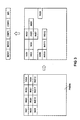
- FIG. 3 shows the program memory PMEM, and with the reference MOV1, MOV2, CMP1, CMP2 and BR designated five instruction execution units.
- instruction execution units MOV1 and MOV2 command execution units to execute load / store commands that are Instruction execution units CMP1 and CMP2 instruction execution units to perform the arithmetic / logical Commands are, and the command execution unit BR one Instruction execution unit for executing a branch instruction is.
- the aligner can recognize this and arranges the individual commands as shown in Figure 3 at the right time the correct instruction execution unit. On how this will be discussed in more detail later.
- the aligner eliminates the need for command bundles to be used with constant length.
- the command bundles must only contain as many commands as there are to execute the program is absolutely necessary; the inclusion of NOP instructions or the like for those not required Instruction execution units in the instruction bundles is - in contrast to the previous practice - no longer required.
- the command bundles must each be one of the Corresponding number of existing command execution units Number of commands include because of the assignment of the commands contained in the command bundles for the Command execution units according to the position of the relevant commands within the command bundles. This means that the first command of a command bundle is always followed by executed a certain first instruction execution unit, the second command of a respective command bundle is always executed by a certain second instruction execution unit, the third command of a command bundle is always executed by a certain third instruction execution unit, etc.
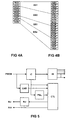
- Figure 4A illustrates the contents of the program memory PMEM in the event that the above described by the Aligner performed flexible assignment of commands to the Instruction execution units are performed;
- Figure 4B illustrates the content of the program memory PMEM for the In case one of the positions of the commands in the command bundles dependent fixed assignment of the commands to the Command execution units takes place.
- B1 to B4 the respective command bundles, and NOP the (NOP-) Instructions in the case illustrated in Figure 4B additionally stored in the program memory PMEM and from it have to be fetched.
- the number can the one to be stored in the program memory PMEM and off commands to be fetched by the provision of an aligner reduced to less than half in the example considered become.
- an aligner enables the Any jump target of jump commands contained in the program Command can be within a command bundle; Without aligners, jumps are only allowed on the first command of a command bundle. This difference enables more efficient use of the command execution units: it is not necessary to have a command put together could be executed with previous commands due to the fact that it is a possible jumping target acts to move to the next command bundle and so to be carried out later than is theoretically possible.
- Figure 5 shows the basic structure of the part of the program-controlled Unit by which to execute Commands fetched from the PMEM program memory and the Command execution units are assigned.
- the arrangement shown is the command fetch unit or part the same and contains a read unit RU, an instruction cache IC, an instruction mapping unit IM, a Long instruction detection device LWD, p-bit logic PBL, and a control unit CTL.
- the control unit CTL has several tasks.
- a first task is that they are getting commands from the Program memory PMEM controls. For this purpose, it gives to the program memory PMEM the address from which data should be read and controls the (initiating the reading) Reading unit RU.
- a second task for the control unit CTL is that they are assigning the commands to the command execution units. Generated for this They are evaluating information given to them by the long command capture device LWD and the p-bit logic PBL supplied and other information that they themselves extracted from the commands, the assignment-defining data, and passes this on to the one that realizes the assignment Instruction mapping unit IM out.
- the control unit CTL can or must also perform other tasks; hereupon however, it should not be discussed in more detail here.
- the reading unit RU enters the program memory PMEM Read signal Rd off when reading from this data should, and then causes that from the program memory Data output by PMEM are transferred to the instruction cache IC become.
- the reading unit RU is in the example considered by a Moore machine or - even better - by formed a Mealy automaton.
- the instruction cache has one Storage capacity of 16 20-bit words (16 normal instructions) and is divided into several (in the example considered four blocks of equal size), each block being cyclical Buffer is formed, and the individual Blocks independently of one another and, if necessary, simultaneously are writable and readable.
- the long command detection device LWD checks whether the Commands fetched from the PMEM program memory. Normal commands or long commands, and passes the result to the control unit CTL off. Whether there is a long command can be found in the considered example on certain bits of the representing the commands See data. This review takes place at Avoiding delays preferably already during the Writing the instructions into the instruction cache IC.
- the Data output from the PMEM program memory are stored in not only the instruction cache IC in this case, but also supplied to the long command detection device LWD. The results of the review are shown in the example considered in the long command detection device LWD stored until the control unit CTL needs the relevant information.
- the P-bit logic PBL examines those stored in the instruction cache Commands, specifies which commands go to a Command bundles include (which commands together at the same time are to be carried out) and transmits the result to the Control unit CTL.
- This P bit has in considered example at the last command of each Command bundles are 0, and in all other cases, Value 1; if a command bundle just a single command contains, the P bit of this command has the value 0.
- the P bit of the last command of a command bundle has the value 1, and has the value 0 in all other cases.
- the P bit of the first command of a Command bundles has a special value.
- the P-bit logic has several subunits working in parallel; is present each block of the instruction cache IC has its own P-bit logic subunit assigned.
- the control unit CTL also carries out checks on the commands to be executed. In particular, she notes what type of command the respective commands are is. In the example considered, she checks whether it is a load / store instruction, an arithmetic / logic instruction, or is a branch instruction. The verification in the present case, it is based on the values of two specific bits of the data representing the commands.
- the result of the definition are in the considered example Data or signals for controlling in the instruction mapping unit IMU existing multiplexer.
- each instruction execution unit assigned two multiplexers is because each of the instruction execution units either execute normal commands or long commands can, and that normal commands have a storage space in the Instruction cache IC occupy, and Lang instructions two memory locations occupy IC in the instruction cache.
- the command execution units for which in a command bundle no command is present for the duration of the Execution of this command bundle deactivated or received Commands are supplied to the Execution the proper execution of the execution Do not affect or do not affect the program can.
- the latter can happen, for example, that the multiplexer of the instruction mapping unit an additional Have input connection, which with a storage device storing such a command and that the multiplexers are controlled so that they switch through the data supplied to this input connection, when executing a command bundle that is for Instruction execution units, which the relevant multiplexer are assigned, contains no commands.
- the program is Unit commandable by a command, a Buffer in which the commands to be executed are their reading from a program memory is buffered or a certain part of this cache for a certain time or until a certain time occurs Not to overwrite the event.
- This can force that short loops without repeated reading the instructions from the program memory from the instruction Cache run out.
- This has the positive Effect that the number of reads on the program memory is minimized.
- the said command is preferred already in the command fetch unit (e.g. in the control unit CTL) decoded and executed; it could be provided to this command as a special command type which would make it quick and easy to see that it is a special command.
- program-controlled unit can be - independent of the details of the practical implementation of the same - the effort required to manufacture and operate program-controlled Units, the consecutive commands of a program to be executed at the same time, must be kept lower than has been the case up to now is.
Landscapes
- Engineering & Computer Science (AREA)
- Software Systems (AREA)
- Theoretical Computer Science (AREA)
- Physics & Mathematics (AREA)
- General Engineering & Computer Science (AREA)
- General Physics & Mathematics (AREA)
- Advance Control (AREA)
- Memory System Of A Hierarchy Structure (AREA)
- Executing Machine-Instructions (AREA)
Abstract
Description
- daß eine Zuordnungsvorrichtung vorgesehen ist, welche die auszuführenden Befehle unabhängig von deren jeweiliger Position innerhalb der die gleichzeitig auszuführenden Befehle umfassenden Befehlsfolgen beliebigen Befehlsausführungs-Einheiten zur Ausführung zuweisen kann,
- daß die auszuführenden Befehle aus einem Programmspeicher geholt und in einen in der programmgesteuerten Einheit vorgesehenen, mehrere unabhängig voneinander beschreibbare und auslesbare Speicherblöcke umfassenden Zwischenspeicher geschrieben werden, und/oder
- daß der programmgesteuerten Einheit durch einen Befehl befehlbar ist, einen Zwischenspeicher, in welchem die auszuführenden Befehle nach deren Auslesen aus einem Programmspeicher zwischengespeichert werden, oder einen bestimmten Teil dieses Zwischenspeichers für eine bestimmte Zeit oder bis zum Eintreten eines bestimmten Ereignisses nicht zu überschreiben.
- daß im Programmspeicher, in welchem das von der programmgesteuerten Einheit auszuführende Programm gespeichert ist, nur die Befehle für diejenigen Befehlsausführungs-Einheiten gespeichert werden, die zur Ausführung des Programms tatsächlich benötigt werden, und
- daß bei der Festlegung der Befehle, die zusammen ausgeführt werden sollen, keine Rücksicht darauf genommen werden muß, daß ein Befehl, der ein Sprungziel eines Sprungbefehls sein kann, der erste Befehl einer die gleichzeitig auszuführenden Befehle umfassenden Befehlsfolge ist.
- Figur 1
- den prinzipiellen Aufbau der nachfolgend beschriebenen programmgesteuerten Einheit,
- Figur 2
- eine Darstellung der in der betrachteten programmgesteuerten Einheit zum Einsatz kommenden Befehlsabarbeitungs-Pipeline,
- Figur 3
- eine schematische Darstellung der Zuordnung von durch die betrachtete programmgesteuerte Einheit auszuführenden Befehlen an die vorhandenen Befehlsausführungs-Einheiten,
- Figur 4A
- die Befehle, die bei der betrachteten programmgesteuerten Einheit für die Ausführung eines Beispielprogramms im Programmspeicher gespeichert werden müssen,
- Figur 4A
- die Befehle, die bei einer herkömmlichen programmgesteuerten Einheit für die Ausführung des Beispielprogramms im Programmspeicher gespeichert werden müssen, und
- Figur 5
- einen möglichen Aufbau des Teils der programmgesteuerten Einheit, welcher die Zuordnungsvorrichtung enthält, durch welche die in Figur 2 beispielhaft veranschaulichte Zuordnung vorgenommen wird.
- eine die Instruction-Fetch-Stufe IF realisierende Befehlshol-Einheit,
- eine der Anzahl der gleichzeitig ausführbaren Befehle entsprechende Anzahl von die Befehlsdecodierungs-Stufe ID realisierenden Befehlsdecodierungs-Einheiten,
- eine der Anzahl der gleichzeitig ausführbaren Befehle entsprechende Anzahl von die erste Befehlsausführungs-Stufe EX1 realisierenden ersten Befehlsausführungs-Einheiten, und
- eine der Anzahl der gleichzeitig ausführbaren Befehle entsprechende Anzahl von die zweite Befehlsausführungs-Stufe EX2 realisierenden zweiten Befehlsausführungs-Einheiten.
- daß in ihr eine Zuordnungsvorrichtung vorgesehen ist, welche die auszuführenden Befehle unabhängig von deren jeweiliger Position innerhalb der die gleichzeitig auszuführenden Befehle umfassenden Befehlsfolgen beliebigen Befehlsausführungs-Einheiten zur Ausführung zuweisen kann,
- daß sie einen Instruction Cache aufweist,
- daß ihr durch einen Befehl befehlbar ist, einen Zwischenspeicher, in welchem die auszuführenden Befehle nach deren Auslesen aus einem Programmspeicher zwischengespeichert werden, oder einen bestimmten Teil dieses Zwischenspeichers für eine bestimmte Zeit oder bis zum Eintreten eines bestimmten Ereignisses nicht zu überschreiben.
- weist ein Befehl eine Länge von 20 Bits (Normal-Befehl) oder 40 Bits (Lang-Befehl) auf,
- wird der Programmspeicher PMEM in Einheiten von 80 Bits ausgelesen, und
- können bis zu fünf Befehle gleichzeitig ausgeführt werden, wobei die Befehle unabhängig voneinander Normal-Befehle oder Lang-Befehle sein können und bis zu zwei Load/Store-Befehle (beispielsweise Move-Befehle), bis zu zwei arithmethisch/logische Befehle (beispielsweise Add- oder And-Befehle), und einen Branch-Befehl (beispielsweise einen Jmp-Befehl) umfassen können.
- die Befehle INS1 und INS2,
- die Befehle INS3 bis INS6,
- der Befehl INS7,
- die Befehle INS8 und INS9, und
- die Befehle INS10 bis INS12 jeweils gleichzeitig auszuführen sind, und wobei
- die Befehle INS1, INS3, INS4, INS8, INS10 und INS11 Load/Store-Befehle sind,
- die Befehle INS2, INS5, INS6, INS7, und INS12 arithmetisch/ logische Befehle sind, und
- der Befehl INS9 ein Branch-Befehl ist.
- daß der Programmspeicher PMEM verkleinert werden kann und/oder umfangreichere Programme in diesem gespeichert werden können, und
- daß aus dem Programmspeicher PMEM weniger Daten ausgelesen werden müssen.
- der von der P-Bit-Logik PBL erhaltenen Information, welche der im Instruction-Cache IC gespeicherten Befehls zusammen auszuführen sind (wo die zusammen auszuführenden Befehle innerhalb des Instruction-Cache IC stehen),
- der von der Langbefehls-Erfassungseinrichtung LWD erhaltenen Information, welche der zusammen auszuführenden Befehle Normal-Befehle, und welche der zusammen auszuführenden Befehle Lang-Befehle sind, und
- der selbst ermittelten Information, um welche Befehlstypen es sich bei den zusammen auszuführen Befehlen handelt,
- sind die Eingangsanschlüsse jedes Multiplexers mit allen Instruction-Cache-Speicherplätzen verbunden, und
- sind die Ausgangsanschlüsse der Multiplexer mit jeweils einer Befehlsdecodierungs-Einheit verbunden, wobei jeder Befehlsdecodierungs-Einheit zwei Multiplexer zugeordnet sind,
- Adr
- Adresse für PMEM
- BR
- Befehlsausführungs-Einheit für Branch-Befehle
- CMP1
- Befehlsausführungs-Einheit für arithmetisch/logische Befehle
- CMP2
- Befehlsausführungs-Einheit für arithmetisch/logische Befehle
- COP
- Coprozessor
- CORE
- Core
- CTL
- Steuereinheit
- DMA
- DMA-Controller
- DMEM
- Datenspeicher
- DOT
- Konstanten-Speicher
- EX1
- erste Befehlsausführungs-Stufe
- EX2
- zweite Befehlsausführungs-Stufe
- IC
- Instruction Cache
- ID
- Befehlsdecodierungs-Stufe
- IF
- Befehlshol-Stufe
- IM
- Instruction-Mapping-Einheit
- INSx
- Befehle
- MOV1
- Befehlsausführungs-Einheit für Load/Store-Befehle
- MOV2
- Befehlsausführungs-Einheit für Load/Store-Befehle
- NOP
- NOP-Befehl
- PBL
- P-Bit-Logik
- PMEM
- Programmspeicher
- Rd
- Lesesignal für PMEM
- RU
- Lese-Einheit
Claims (29)
- Programmgesteuerte Einheit mit mehreren Befehlsausführungs-Einheiten zur gleichzeitigen Ausführung aufeinanderfolgender Befehle eines auszuführenden Programms,
dadurch gekennzeichnet, daß eine Zuordnungsvorrichtung vorgesehen ist, welche die auszuführenden Befehle unabhängig von deren jeweiliger Position innerhalb der die gleichzeitig auszuführenden Befehle umfassenden Befehlsfolgen beliebigen Befehlsausführungs-Einheiten zur Ausführung zuweisen kann. - Programmgesteuerte Einheit nach Anspruch 1,
dadurch gekennzeichnet, daß die programmgesteuerte Einheit eine eine Befehlshol-Stufe, eine Befehlsdecodierungs-Stufe, und eine oder mehrere Befehlsausführungs-Stufen umfassende Pipeline-Struktur aufweist. - Programmgesteuerte Einheit nach Anspruch 2,
dadurch gekennzeichnet, daß die Zuordnungsvorrichtung Bestandteil einer die Befehlshol-Stufe bildenden Befehlshol-Einheit ist. - Programmgesteuerte Einheit nach einem der vorhergehenden Ansprüche,
dadurch gekennzeichnet, daß vor der Zuordnung der gleichzeitig auszuführenden Befehle an die die betreffenden Befehle ausführenden Befehlsausführungs-Einheiten ermittelt wird, welche Befehle gleichzeitig auszuführen sind. - Programmgesteuerte Einheit nach Anspruch 4,
dadurch gekennzeichnet, daß die Ermittlung, welche Befehle gleichzeitig auszuführen sind, unter Auswertung einer entsprechenden Information in den die Befehle repräsentierenden Daten erfolgt. - Programmgesteuerte Einheit nach einem der vorhergehenden Ansprüche,
dadurch gekennzeichnet, daß vor der Zuordnung der gleichzeitig auszuführenden Befehle an die die betreffenden Befehle ausführenden Befehlsausführungs-Einheiten ermittelt wird, wie lange die auszuführenden Befehle sind. - Programmgesteuerte Einheit nach Anspruch 6,
dadurch gekennzeichnet, daß die Ermittlung, wie lange die auszuführenden Befehle sind, unter Auswertung einer entsprechenden Information in den die Befehle repräsentierenden Daten erfolgt. - Programmgesteuerte Einheit nach einem der vorhergehenden Ansprüche,
dadurch gekennzeichnet, daß vor der Zuordnung der gleichzeitig auszuführenden Befehle an die die betreffenden Befehle ausführenden Befehlsausführungs-Einheiten ermittelt wird, zu welchem Befehlstyp die auszuführenden Befehle gehören. - Programmgesteuerte Einheit nach Anspruch 8,
dadurch gekennzeichnet, daß die Ermittlung, zu welchem Befehlstyp die auszuführenden Befehle gehören, unter Auswertung einer entsprechenden Information in den die Befehle repräsentierenden Daten erfolgt. - Programmgesteuerte Einheit nach einem der vorhergehenden Ansprüche,
dadurch gekennzeichnet, daß die auszuführenden Befehle aus einem Programmspeicher geholt und in einen in der programmgesteuerten Einheit vorgesehenen Zwischenspeicher geschrieben werden. - Programmgesteuerte Einheit nach Anspruch 10,
dadurch gekennzeichnet, daß der Zwischenspeicher ein Instruction-Cache ist. - Programmgesteuerte Einheit nach Anspruch 10 oder 11,
dadurch gekennzeichnet, daß der Zwischenspeicher mehrere unabhängig voneinander beschreibbare und auslesbare Speicherblöcke umfaßt, - Programmgesteuerte Einheit nach Anspruch 12,
dadurch gekennzeichnet, daß jeder der Speicherblöcke als ein zyklischer Puffer ausgebildet ist. - Programmgesteuerte Einheit nach Anspruch 12 oder 13,
dadurch gekennzeichnet, daß jeder der Speicherblöcke eine Speicherkapazität aufweist, die der in einem Lesevorgang aus dem Programmspeicher ausgelesenen Datenmenge entspricht. - Programmgesteuerte Einheit nach einem der Ansprüche 10 bis 14,
dadurch gekennzeichnet, daß der programmgesteuerten Einheit durch einen Befehl befehlbar ist, den Zwischenspeicher oder einen bestimmten Teil desselben für eine bestimmte Zeit oder bis zum Eintreten eines bestimmten Ereignisses nicht zu überschreiben. - Programmgesteuerte Einheit nach Anspruch 15,
dadurch gekennzeichnet, daß die Ausführung des Befehls, durch welchen der programmgesteuerten Einheit befehlbar ist, den Zwischenspeicher oder einen bestimmten Teil desselben für eine bestimmte Zeit oder bis zum Eintreten eines bestimmten Ereignisses nicht zu überschreiben, in der Befehlshol-Einheit der programmgesteuerten Einheit ausgeführt wird. - Programmgesteuerte Einheit nach einem der Ansprüche 10 bis 16,
dadurch gekennzeichnet, daß die Zuordnungsvorrichtung nach der Festlegung, welcher der gleichzeitig auszuführenden Befehle welcher Befehlsausführungs-Einheit zur Ausführung zuzuweisen ist, eine Verbindung zwischen den die gleichzeitig auszuführenden Befehle speichernden Zwischenspeicher-Elementen und den Befehlsdecodierungs-Einheiten herstellen, die den Befehlsausführungs-Einheiten, welche die betreffenden Befehle auszuführen haben, zugeordnet sind. - Programmgesteuerte Einheit nach Anspruch 17,
dadurch gekennzeichnet, daß die Verbindungen unter Verwendung von Multiplexern erfolgen. - Programmgesteuerte Einheit nach Anspruch 18,
dadurch gekennzeichnet, daß über die Multiplexer jedes Zwischenspeicher-Element mit einer beliebigen Befehlsdecodierungs-Einheit verbindbar ist - Programmgesteuerte Einheit nach Anspruch 18 oder 19,
dadurch gekennzeichnet, daß jeder Befehlsausführungs-Einheit mindestens ein Multiplexer zugeordnet ist, und daß die Ausgangsanschlüsse der Multiplexer, die einer Befehlsausführungs-Einheit zugeordnet sind, mit den Eingangsanschlüssen der der betreffenden Befehlsausführungs-Einheit zugeordneten Befehlsdecodierungs-Einheit verbunden sind. - Programmgesteuerte Einheit nach einem der Ansprüche 18 bis 20,
dadurch gekennzeichnet, daß jeder der Multiplexer mindestens eine der Anzahl der Zwischenspeicher-Elemente entsprechende Anzahl von Eingangsanschlüssen aufweist, und daß die Eingangsanschlüsse jedes Multiplexers mit allen Zwischenspeicher-Elementen verbunden sind. - Programmgesteuerte Einheit mit mehreren Befehlsausführungs-Einheiten zur gleichzeitigen Ausführung aufeinanderfolgender Befehle eines auszuführenden Programmes,
dadurch gekennzeichnet, daß die auszuführenden Befehle aus einem Programmspeicher geholt und in einen in der programmgesteuerten Einheit vorgesehenen, mehrere unabhängig voneinander beschreibbare und auslesbare Speicherblöcke umfassenden Zwischenspeicher geschrieben werden. - Programmgesteuerte Einheit nach Anspruch 22,
dadurch gekennzeichnet, daß der Zwischenspeicher ein Instruction-Cache ist. - Programmgesteuerte Einheit nach Anspruch 22 oder 23,
dadurch gekennzeichnet, daß jeder der Speicherblöcke als ein zyklischer Puffer ausgebildet ist. - Programmgesteuerte Einheit nach einem der Ansprüche 22 bis 24,
dadurch gekennzeichnet, daß jeder der Speicherblöcke eine Speicherkapazität aufweist, die der in einem Lesevorgang aus dem Programmspeicher ausgelesenen Datenmenge entspricht. - Programmgesteuerte Einheit nach einem der Ansprüche 22 bis 25,
dadurch gekennzeichnet, daß der programmgesteuerten Einheit durch einen Befehl befehlbar ist, den Zwischenspeicher oder einen bestimmten Teil desselben für eine bestimmte Zeit oder bis zum Eintreten eines bestimmten Ereignisses nicht zu überschreiben. - Programmgesteuerte Einheit nach Anspruch 26,
dadurch gekennzeichnet, daß die Ausführung des Befehls, durch welchen der programmgesteuerten Einheit befehlbar ist, den Zwischenspeicher oder einen bestimmten Teil desselben für eine bestimmte Zeit oder bis zum Eintreten eines bestimmten Ereignisses nicht zu überschreiben, in der Befehlshol-Einheit der programmgesteuerten Einheit ausgeführt wird. - Programmgesteuerte Einheit mit mehreren Befehlsausführungs-Einheiten zur gleichzeitigen Ausführung aufeinanderfolgender Befehle eines auszuführenden Programms,
dadurch gekennzeichnet, daß der programmgesteuerten Einheit durch einen Befehl befehlbar ist, einen Zwischenspeicher, in welchem die auszuführenden Befehle nach deren Auslesen aus einem Programmspeicher zwischengespeichert werden, oder einen bestimmten Teil dieses Zwischenspeichers für eine bestimmte Zeit oder bis zum Eintreten eines bestimmten Ereignisses nicht zu überschreiben. - Programmgesteuerte Einheit nach Anspruch 28,
dadurch gekennzeichnet, daß die Ausführung des Befehls, durch welchen der programmgesteuerten Einheit befehlbar ist, den Zwischenspeicher oder einen bestimmten Teil desselben für eine bestimmte Zeit oder bis zum Eintreten eines bestimmten Ereignisses nicht zu überschreiben, in der Befehlshol-Einheit der programmgesteuerten Einheit ausgeführt wird.
Applications Claiming Priority (2)
| Application Number | Priority Date | Filing Date | Title |
|---|---|---|---|
| DE10043003A DE10043003A1 (de) | 2000-09-01 | 2000-09-01 | Programmgesteuerte Einheit |
| DE10043003 | 2000-09-01 |
Publications (2)
| Publication Number | Publication Date |
|---|---|
| EP1184784A2 true EP1184784A2 (de) | 2002-03-06 |
| EP1184784A3 EP1184784A3 (de) | 2003-06-11 |
Family
ID=7654564
Family Applications (1)
| Application Number | Title | Priority Date | Filing Date |
|---|---|---|---|
| EP01121003A Withdrawn EP1184784A3 (de) | 2000-09-01 | 2001-08-31 | Programmgesteuerte Einheit zur gleichzeitigen Befehlsausführung |
Country Status (3)
| Country | Link |
|---|---|
| US (1) | US7117343B2 (de) |
| EP (1) | EP1184784A3 (de) |
| DE (1) | DE10043003A1 (de) |
Families Citing this family (2)
| Publication number | Priority date | Publication date | Assignee | Title |
|---|---|---|---|---|
| JP3878508B2 (ja) * | 2001-11-08 | 2007-02-07 | 松下電器産業株式会社 | 回路群制御システム |
| US20050193287A1 (en) * | 2004-02-10 | 2005-09-01 | Via Technologies, Inc. | Data accessing method |
Citations (4)
| Publication number | Priority date | Publication date | Assignee | Title |
|---|---|---|---|---|
| EP0363222A2 (de) | 1988-10-07 | 1990-04-11 | Hewlett-Packard Company | Verfahren und Vorrichtung zur gleichzeitigen Verteilung von Befehlen an mehrere funktionelle Einheiten |
| EP0463299A2 (de) | 1990-06-26 | 1992-01-02 | International Business Machines Corporation | Speicherverwaltung für Rechner mit skalierbaren, zusammensetzbaren Befehlsätzen unter Verwendung von speicherinterner Zusammensetzung |
| US5530816A (en) | 1991-11-02 | 1996-06-25 | International Computers Limited | Data processing system for handling multiple independent data-driven instruction streams |
| EP0855648A2 (de) | 1997-01-24 | 1998-07-29 | Texas Instruments Inc. | Datenverarbeitung mit paralleler oder sequentieller Durchführung von Programmbefehlen |
Family Cites Families (13)
| Publication number | Priority date | Publication date | Assignee | Title |
|---|---|---|---|---|
| WO1991004536A1 (en) * | 1989-09-20 | 1991-04-04 | Dolphin Server Technology A/S | Instruction cache architecture for parallel issuing of multiple instructions |
| EP0457403B1 (de) * | 1990-05-18 | 1998-01-21 | Koninklijke Philips Electronics N.V. | Mehrstufiger Befehlscachespeicher und Verwendungsverfahren dafür |
| CA2038264C (en) * | 1990-06-26 | 1995-06-27 | Richard James Eickemeyer | In-memory preprocessor for a scalable compound instruction set machine processor |
| US5446850A (en) * | 1991-01-15 | 1995-08-29 | International Business Machines Corporation | Cross-cache-line compounding algorithm for scism processors |
| JP2779557B2 (ja) * | 1991-07-09 | 1998-07-23 | 三菱電機株式会社 | 並列演算処理装置 |
| US6154828A (en) * | 1993-06-03 | 2000-11-28 | Compaq Computer Corporation | Method and apparatus for employing a cycle bit parallel executing instructions |
| EP0652510B1 (de) * | 1993-11-05 | 2000-01-26 | Intergraph Corporation | Superskalare Rechnerarchitektur mit Softwarescheduling |
| DE69430018T2 (de) * | 1993-11-05 | 2002-11-21 | Intergraph Corp., Huntsville | Befehlscachespeicher mit assoziativem Kreuzschienenschalter |
| US5604909A (en) * | 1993-12-15 | 1997-02-18 | Silicon Graphics Computer Systems, Inc. | Apparatus for processing instructions in a computing system |
| US5761475A (en) * | 1994-12-15 | 1998-06-02 | Sun Microsystems, Inc. | Computer processor having a register file with reduced read and/or write port bandwidth |
| US5961631A (en) * | 1997-07-16 | 1999-10-05 | Arm Limited | Data processing apparatus and method for pre-fetching an instruction in to an instruction cache |
| US6321325B1 (en) * | 1998-12-03 | 2001-11-20 | Sun Microsystems, Inc. | Dual in-line buffers for an instruction fetch unit |
| US6480938B2 (en) * | 2000-12-15 | 2002-11-12 | Hewlett-Packard Company | Efficient I-cache structure to support instructions crossing line boundaries |
-
2000
- 2000-09-01 DE DE10043003A patent/DE10043003A1/de not_active Withdrawn
-
2001
- 2001-08-31 EP EP01121003A patent/EP1184784A3/de not_active Withdrawn
- 2001-09-04 US US09/946,851 patent/US7117343B2/en not_active Expired - Lifetime
Patent Citations (4)
| Publication number | Priority date | Publication date | Assignee | Title |
|---|---|---|---|---|
| EP0363222A2 (de) | 1988-10-07 | 1990-04-11 | Hewlett-Packard Company | Verfahren und Vorrichtung zur gleichzeitigen Verteilung von Befehlen an mehrere funktionelle Einheiten |
| EP0463299A2 (de) | 1990-06-26 | 1992-01-02 | International Business Machines Corporation | Speicherverwaltung für Rechner mit skalierbaren, zusammensetzbaren Befehlsätzen unter Verwendung von speicherinterner Zusammensetzung |
| US5530816A (en) | 1991-11-02 | 1996-06-25 | International Computers Limited | Data processing system for handling multiple independent data-driven instruction streams |
| EP0855648A2 (de) | 1997-01-24 | 1998-07-29 | Texas Instruments Inc. | Datenverarbeitung mit paralleler oder sequentieller Durchführung von Programmbefehlen |
Also Published As
| Publication number | Publication date |
|---|---|
| DE10043003A1 (de) | 2002-03-14 |
| US7117343B2 (en) | 2006-10-03 |
| EP1184784A3 (de) | 2003-06-11 |
| US20020083303A1 (en) | 2002-06-27 |
Similar Documents
| Publication | Publication Date | Title |
|---|---|---|
| DE69129569T2 (de) | Maschine mit sehr langem Befehlswort für leistungsfähige Durchführung von Programmen mit bedingten Verzweigungen | |
| DE69132675T2 (de) | Parallelfliessband-Befehlsverarbeitungssystem für sehr lange Befehlswörter | |
| DE68914172T2 (de) | Datenverarbeitungssystem und Videoverarbeitungssystem mit einem derartigen Datenverarbeitungssystem. | |
| DE3750935T2 (de) | Verfahren und System zum Erleichtern der Befehlsausführung in einem digitalen Rechner. | |
| DE69127101T2 (de) | System für verteilte mehrfachrechnerkommunikation | |
| DE4305442C2 (de) | Verfahren und Vorrichtung zum Erzeugen eines Testvektors | |
| DE3914265C2 (de) | ||
| DE4237417C2 (de) | Datenverarbeitungssystem | |
| DE69228360T2 (de) | Registerlesekontrolle | |
| EP0097725B1 (de) | Einrichtung im Befehlswerk eines mikroprogrammgesteuerten Prozessors zur direkten hardwaregesteuerten Ausführung bestimmter Instruktionen | |
| DE19526008C2 (de) | Befehlsvorholeinheit für einen Computer | |
| DE69418146T2 (de) | Temporärer Registersatz für einen superpipeline-superskalaren Prozessor | |
| DE1928202A1 (de) | UEberwachungs- und Statistikeinrichtung fuer Datenverarbeitungssysteme | |
| DE3752280T2 (de) | Mustergenerator | |
| DE1774296B2 (de) | Restruktuierbare Steuereinheit für elektronische Digitalrechner | |
| DE60006021T2 (de) | VLIW-Prozessor und Programmkomprimierungsgerät and -verfahren | |
| DE2555963A1 (de) | Einrichtung zur funktionsmodifizierung | |
| DE19983098B4 (de) | Mehrfach-Bitanzeige zur Behandlung von Schreib-nach-Schreib-Fehlern und zur Eliminierung von Bypass-Komparatoren | |
| DE19524402C2 (de) | Programmausführungssteuereinrichtung mit einer Adressierbarkeit entsprechend einer M-reihigen Pseudo-Zufallszahlenfolge | |
| DE2617485C3 (de) | Schaltungsanordnung für Datenverarbeitungsanlagen zur Abarbeitung von Mikrobefehlsfolgen | |
| DE2906685C2 (de) | ||
| EP1117037B1 (de) | Datenverarbeitungsvorrichtung zum parallelen Verarbeiten von unabhängigen Prozessen (Threads) | |
| DE2759120C2 (de) | ||
| DE102004009610A1 (de) | Heterogener paralleler Multithread-Prozessor (HPMT) mit geteilten Kontexten | |
| EP1483682A2 (de) | Reconfigurierbarer prozessor |
Legal Events
| Date | Code | Title | Description |
|---|---|---|---|
| PUAI | Public reference made under article 153(3) epc to a published international application that has entered the european phase |
Free format text: ORIGINAL CODE: 0009012 |
|
| AK | Designated contracting states |
Kind code of ref document: A2 Designated state(s): AT BE CH CY DE DK ES FI FR GB GR IE IT LI LU MC NL PT SE TR |
|
| AX | Request for extension of the european patent |
Free format text: AL;LT;LV;MK;RO;SI |
|
| PUAL | Search report despatched |
Free format text: ORIGINAL CODE: 0009013 |
|
| AK | Designated contracting states |
Designated state(s): AT BE CH CY DE DK ES FI FR GB GR IE IT LI LU MC NL PT SE TR |
|
| AX | Request for extension of the european patent |
Extension state: AL LT LV MK RO SI |
|
| 17P | Request for examination filed |
Effective date: 20031203 |
|
| AKX | Designation fees paid |
Designated state(s): DE FR IT |
|
| 17Q | First examination report despatched |
Effective date: 20071026 |
|
| RAP1 | Party data changed (applicant data changed or rights of an application transferred) |
Owner name: INFINEON TECHNOLOGIES AG |
|
| STAA | Information on the status of an ep patent application or granted ep patent |
Free format text: STATUS: THE APPLICATION IS DEEMED TO BE WITHDRAWN |
|
| 18D | Application deemed to be withdrawn |
Effective date: 20170301 |