EP1177796A1 - Preventives/remedies for liver diseases - Google Patents
Preventives/remedies for liver diseases Download PDFInfo
- Publication number
- EP1177796A1 EP1177796A1 EP00921077A EP00921077A EP1177796A1 EP 1177796 A1 EP1177796 A1 EP 1177796A1 EP 00921077 A EP00921077 A EP 00921077A EP 00921077 A EP00921077 A EP 00921077A EP 1177796 A1 EP1177796 A1 EP 1177796A1
- Authority
- EP
- European Patent Office
- Prior art keywords
- hydrogen
- alkyl
- aralkyl
- group
- formula
- Prior art date
- Legal status (The legal status is an assumption and is not a legal conclusion. Google has not performed a legal analysis and makes no representation as to the accuracy of the status listed.)
- Granted
Links
- 0 CCC*CCCC=C(C)C(C)=C(*)[C@]1CC(CC)CC1 Chemical compound CCC*CCCC=C(C)C(C)=C(*)[C@]1CC(CC)CC1 0.000 description 9
Images


Classifications
-
- A—HUMAN NECESSITIES
- A61—MEDICAL OR VETERINARY SCIENCE; HYGIENE
- A61K—PREPARATIONS FOR MEDICAL, DENTAL OR TOILETRY PURPOSES
- A61K31/00—Medicinal preparations containing organic active ingredients
- A61K31/33—Heterocyclic compounds
- A61K31/395—Heterocyclic compounds having nitrogen as a ring hetero atom, e.g. guanethidine or rifamycins
- A61K31/435—Heterocyclic compounds having nitrogen as a ring hetero atom, e.g. guanethidine or rifamycins having six-membered rings with one nitrogen as the only ring hetero atom
- A61K31/44—Non condensed pyridines; Hydrogenated derivatives thereof
- A61K31/445—Non condensed piperidines, e.g. piperocaine
- A61K31/4523—Non condensed piperidines, e.g. piperocaine containing further heterocyclic ring systems
-
- C—CHEMISTRY; METALLURGY
- C07—ORGANIC CHEMISTRY
- C07D—HETEROCYCLIC COMPOUNDS
- C07D471/00—Heterocyclic compounds containing nitrogen atoms as the only ring hetero atoms in the condensed system, at least one ring being a six-membered ring with one nitrogen atom, not provided for by groups C07D451/00 - C07D463/00
- C07D471/02—Heterocyclic compounds containing nitrogen atoms as the only ring hetero atoms in the condensed system, at least one ring being a six-membered ring with one nitrogen atom, not provided for by groups C07D451/00 - C07D463/00 in which the condensed system contains two hetero rings
- C07D471/04—Ortho-condensed systems
-
- A—HUMAN NECESSITIES
- A61—MEDICAL OR VETERINARY SCIENCE; HYGIENE
- A61K—PREPARATIONS FOR MEDICAL, DENTAL OR TOILETRY PURPOSES
- A61K31/00—Medicinal preparations containing organic active ingredients
- A61K31/16—Amides, e.g. hydroxamic acids
-
- A—HUMAN NECESSITIES
- A61—MEDICAL OR VETERINARY SCIENCE; HYGIENE
- A61K—PREPARATIONS FOR MEDICAL, DENTAL OR TOILETRY PURPOSES
- A61K31/00—Medicinal preparations containing organic active ingredients
- A61K31/33—Heterocyclic compounds
- A61K31/395—Heterocyclic compounds having nitrogen as a ring hetero atom, e.g. guanethidine or rifamycins
- A61K31/435—Heterocyclic compounds having nitrogen as a ring hetero atom, e.g. guanethidine or rifamycins having six-membered rings with one nitrogen as the only ring hetero atom
- A61K31/4353—Heterocyclic compounds having nitrogen as a ring hetero atom, e.g. guanethidine or rifamycins having six-membered rings with one nitrogen as the only ring hetero atom ortho- or peri-condensed with heterocyclic ring systems
- A61K31/437—Heterocyclic compounds having nitrogen as a ring hetero atom, e.g. guanethidine or rifamycins having six-membered rings with one nitrogen as the only ring hetero atom ortho- or peri-condensed with heterocyclic ring systems the heterocyclic ring system containing a five-membered ring having nitrogen as a ring hetero atom, e.g. indolizine, beta-carboline
-
- A—HUMAN NECESSITIES
- A61—MEDICAL OR VETERINARY SCIENCE; HYGIENE
- A61K—PREPARATIONS FOR MEDICAL, DENTAL OR TOILETRY PURPOSES
- A61K31/00—Medicinal preparations containing organic active ingredients
- A61K31/33—Heterocyclic compounds
- A61K31/395—Heterocyclic compounds having nitrogen as a ring hetero atom, e.g. guanethidine or rifamycins
- A61K31/435—Heterocyclic compounds having nitrogen as a ring hetero atom, e.g. guanethidine or rifamycins having six-membered rings with one nitrogen as the only ring hetero atom
- A61K31/44—Non condensed pyridines; Hydrogenated derivatives thereof
-
- A—HUMAN NECESSITIES
- A61—MEDICAL OR VETERINARY SCIENCE; HYGIENE
- A61K—PREPARATIONS FOR MEDICAL, DENTAL OR TOILETRY PURPOSES
- A61K31/00—Medicinal preparations containing organic active ingredients
- A61K31/33—Heterocyclic compounds
- A61K31/395—Heterocyclic compounds having nitrogen as a ring hetero atom, e.g. guanethidine or rifamycins
- A61K31/435—Heterocyclic compounds having nitrogen as a ring hetero atom, e.g. guanethidine or rifamycins having six-membered rings with one nitrogen as the only ring hetero atom
- A61K31/44—Non condensed pyridines; Hydrogenated derivatives thereof
- A61K31/4409—Non condensed pyridines; Hydrogenated derivatives thereof only substituted in position 4, e.g. isoniazid, iproniazid
-
- A—HUMAN NECESSITIES
- A61—MEDICAL OR VETERINARY SCIENCE; HYGIENE
- A61P—SPECIFIC THERAPEUTIC ACTIVITY OF CHEMICAL COMPOUNDS OR MEDICINAL PREPARATIONS
- A61P1/00—Drugs for disorders of the alimentary tract or the digestive system
- A61P1/16—Drugs for disorders of the alimentary tract or the digestive system for liver or gallbladder disorders, e.g. hepatoprotective agents, cholagogues, litholytics
-
- A—HUMAN NECESSITIES
- A61—MEDICAL OR VETERINARY SCIENCE; HYGIENE
- A61P—SPECIFIC THERAPEUTIC ACTIVITY OF CHEMICAL COMPOUNDS OR MEDICINAL PREPARATIONS
- A61P29/00—Non-central analgesic, antipyretic or antiinflammatory agents, e.g. antirheumatic agents; Non-steroidal antiinflammatory drugs [NSAID]
-
- A—HUMAN NECESSITIES
- A61—MEDICAL OR VETERINARY SCIENCE; HYGIENE
- A61P—SPECIFIC THERAPEUTIC ACTIVITY OF CHEMICAL COMPOUNDS OR MEDICINAL PREPARATIONS
- A61P35/00—Antineoplastic agents
-
- C—CHEMISTRY; METALLURGY
- C07—ORGANIC CHEMISTRY
- C07D—HETEROCYCLIC COMPOUNDS
- C07D213/00—Heterocyclic compounds containing six-membered rings, not condensed with other rings, with one nitrogen atom as the only ring hetero atom and three or more double bonds between ring members or between ring members and non-ring members
- C07D213/02—Heterocyclic compounds containing six-membered rings, not condensed with other rings, with one nitrogen atom as the only ring hetero atom and three or more double bonds between ring members or between ring members and non-ring members having three double bonds between ring members or between ring members and non-ring members
- C07D213/04—Heterocyclic compounds containing six-membered rings, not condensed with other rings, with one nitrogen atom as the only ring hetero atom and three or more double bonds between ring members or between ring members and non-ring members having three double bonds between ring members or between ring members and non-ring members having no bond between the ring nitrogen atom and a non-ring member or having only hydrogen or carbon atoms directly attached to the ring nitrogen atom
- C07D213/60—Heterocyclic compounds containing six-membered rings, not condensed with other rings, with one nitrogen atom as the only ring hetero atom and three or more double bonds between ring members or between ring members and non-ring members having three double bonds between ring members or between ring members and non-ring members having no bond between the ring nitrogen atom and a non-ring member or having only hydrogen or carbon atoms directly attached to the ring nitrogen atom with hetero atoms or with carbon atoms having three bonds to hetero atoms with at the most one bond to halogen, e.g. ester or nitrile radicals, directly attached to ring carbon atoms
- C07D213/72—Nitrogen atoms
- C07D213/75—Amino or imino radicals, acylated by carboxylic or carbonic acids, or by sulfur or nitrogen analogues thereof, e.g. carbamates
Definitions
- the present inventors have conducted intensive studies in an attempt to solve the above-mentioned problems and found that a compound having a Rho kinase inhibitory activity inhibits activation of hepatic stellate cells and suppresses hepatic fibrogenesis in liver tissues, and that the compound is useful as an activation inhibitor of hepatic stellate cells and for the prophylaxis and treatment of liver diseases such as hepatitis, hepatic fibrosis, hepatic cirrhosis, hepatic cancer and the like, which resulted in the completion of the present invention.
- hepatic stellate cell by the "activation" of hepatic stellate cell is meant a state associated with increased synthesis of collagen type I and type III, cell proliferation, expression of smooth muscle type ⁇ -actin and the like in the liver. Morphologically, non-active type cell has a spindle like shape with dendroidal protrusions. On the other hand, activated hepatic stellate cells lose lipid droplet thereof and change into cells with an extended shape of, for example, myofibroblast.
- Hepatitis is divided into virus hepatitis, toxic hepatitis, autoimmune hepatitis and the like, and into acute hepatitis and chronic hepatitis according to the mode of progress.
- the hepatitis in the present invention encompasses any type irrespective of the cause thereof, as long as it provides degenerative findings in hepatocytes due to the factors such as activation of hepatic stellate cell and the like.
- the substituent of optionally substituted cycloalkyl, cycloalkylalkyl, phenyl and aralkyl on the ring at R, R' and R 1 is halogen (e.g., chlorine, bromine, fluorine and iodine), alkyl (same as alkyl at R, R' and R 1 ), alkoxy (linear or branched alkoxy having 1 to 6 carbon atoms, such as methoxy, ethoxy, propoxy, isopropoxy, butoxy, isobutoxy, sec-butoxy, tert-butoxy, pentyloxy, hexyloxy and the like), aralkyl (same as aralkyl at R, R' and R 1 ) or haloalkyl (alkyl at R, R' and R 1 which is substituted by 1-5 halogen, and exemplified by fluoromethyl, difluoromethyl, trifluoromethyl, 2,2,2-triflu
- the group formed by R and R 1 or R' and R 1 in combination together with the adjacent nitrogen atom, which forms a heterocycle optionally having, in the ring, oxygen atom, sulfur atom or optionally substituted nitrogen atom is preferably a 5 or 6-membered ring and bonded ring thereof.
- Examples thereof include 1-pyrrolidinyl, piperidino, 1-piperazinyl, morpholino, thiomorpholino, 1-imidazolyl, 2,3-dihydrothiazol-3-yl and the like.
- the substituent of the optionally substituted nitrogen atom is exemplified by alkyl, aralkyl, haloalkyl and the like.
- alkyl, aralkyl and haloalkyl are as defined for R, R' and R 1 .
- Alkyl at R 2 is as defined for R, R' and R 1 .
- Alkoxycarbonyl at R 3 and R 4 is that wherein the alkoxy moiety is linear or branched alkoxy having 1 to 6 carbon atoms, which is exemplified by methoxycarbonyl, ethoxycarbonyl, propoxycarbonyl, isopropoxycarbonyl, butoxycarbonyl, isobutoxycarbonyl, secbutoxycarbonyl, tert-butoxycarbonyl, pentyloxycarbonyl, hexyloxycarbonyl and the like.
- Alkoxy at R 5 is as defined for R, R' and R 1 .
- Alkyl at R 6 is as defined for R, R' and R 1 ; alkyl at R 8 and R 9 is as defined for R, R' and R 1 ; and aralkyl at R 8 and R 9 is as defined for R, R' and R 1 .
- R 6 and R 7 in combination which forms a heterocycle optionally having, in the ring, oxygen atom, sulfur atom or optionally substituted nitrogen atom, is imidazol-2-yl, thiazol-2-yl, oxazol-2-yl, imidazolin-2-yl, 3,4,5,6-tetrahydropyridin-2-yl, 3,4,5,6-tetrahydropyrimidin-2-yl, 1,3-oxazolin-2-yl, 1,3-thiazolin-2-yl or optionally substituted benzoimidazol-2-yl, benzothiazol-2-yl, benzoxazol-2-yl and the like having a substituent such as halogen, alkyl, alkoxy, haloalkyl, nitro, amino, phenyl, aralkyl and the like.
- halogen, alkyl, alkoxy, haloalkyl and aralkyl are examples of substituent such as
- Mono- or dialkylaminoalkyl at L is mono- or di-substituted aminoalkyl with alkyl having 1 to 4 carbon atoms, which is exemplified by methylaminomethyl, dimethylaminomethyl, ethylaminomethyl, diethylaminomethyl, propylaminomethyl, dipropylaminomethyl, butylaminomethyl, dibutylaminomethyl, 2-dimethylaminoethyl, 2-diethylaminoethyl and the like.
- the compound having a Rho kinase inhibitory activity When used as a pharmaceutical, it is produced as a general pharmaceutical preparation and administered orally or parenterally.
- Examples of commercially available products of these include Witepsol (manufactured by Dynamitnovel Ltd.), Farmazol (NOF Corporation) and the like.
- an aqueous liquid or solution is used, which is particularly a sterile injectable aqueous solution.
- the eye drop can appropriately contain various additives such as buffer (borate buffer, acetate buffer, carbonate buffer and the like are preferable for reducing irritation), isotonicity agent, solubilizer, preservative, thickener, chelating agent, pH adjusting agent (generally, pH is preferably adjusted to about 6-8.5) and aromatic.
- the level of fibrogenesis was measured as follows. A part of the removed liver was fixed with a formalin solution overnight, and a paraffin embedded piece was prepared and stained by Masson trichrome stain. The stained images were input in a computer through a digital camera (Fujix HC-1000, Fuji Film, Tokyo, Japan) and, using a computer-assisted morphometric analyzer (MacScope, Mitani corporation, Fukui, Japan), the area ratio of the collagen portion stained in bright green was determined as the degree of fibrogenesis.
Landscapes
- Health & Medical Sciences (AREA)
- Chemical & Material Sciences (AREA)
- Organic Chemistry (AREA)
- Veterinary Medicine (AREA)
- Medicinal Chemistry (AREA)
- Pharmacology & Pharmacy (AREA)
- Life Sciences & Earth Sciences (AREA)
- Animal Behavior & Ethology (AREA)
- General Health & Medical Sciences (AREA)
- Public Health (AREA)
- Epidemiology (AREA)
- Nuclear Medicine, Radiotherapy & Molecular Imaging (AREA)
- General Chemical & Material Sciences (AREA)
- Chemical Kinetics & Catalysis (AREA)
- Rheumatology (AREA)
- Gastroenterology & Hepatology (AREA)
- Engineering & Computer Science (AREA)
- Bioinformatics & Cheminformatics (AREA)
- Pain & Pain Management (AREA)
- Pharmaceuticals Containing Other Organic And Inorganic Compounds (AREA)
- Pyridine Compounds (AREA)
- Medicines Containing Material From Animals Or Micro-Organisms (AREA)
- Medicines Containing Plant Substances (AREA)
- Acyclic And Carbocyclic Compounds In Medicinal Compositions (AREA)
- Medicines That Contain Protein Lipid Enzymes And Other Medicines (AREA)
- Nitrogen Condensed Heterocyclic Rings (AREA)
- Plural Heterocyclic Compounds (AREA)
Abstract
Description
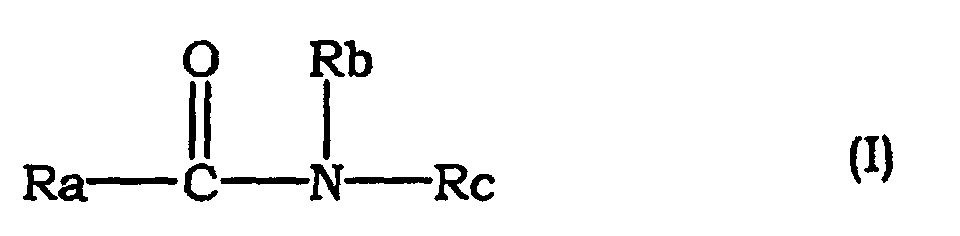
- Ra
- is a group of the formula
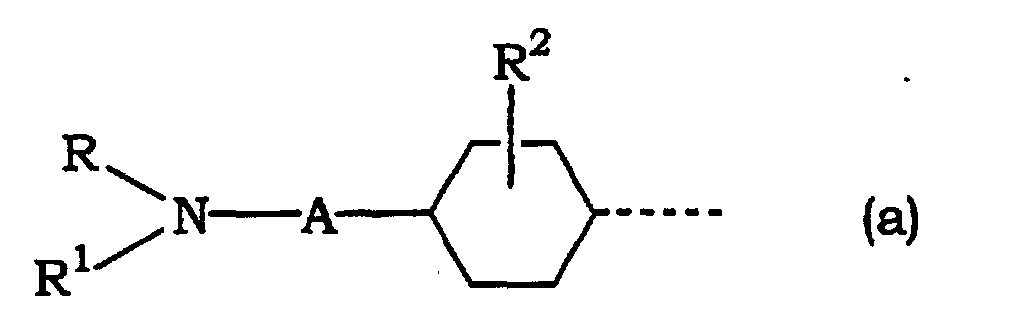
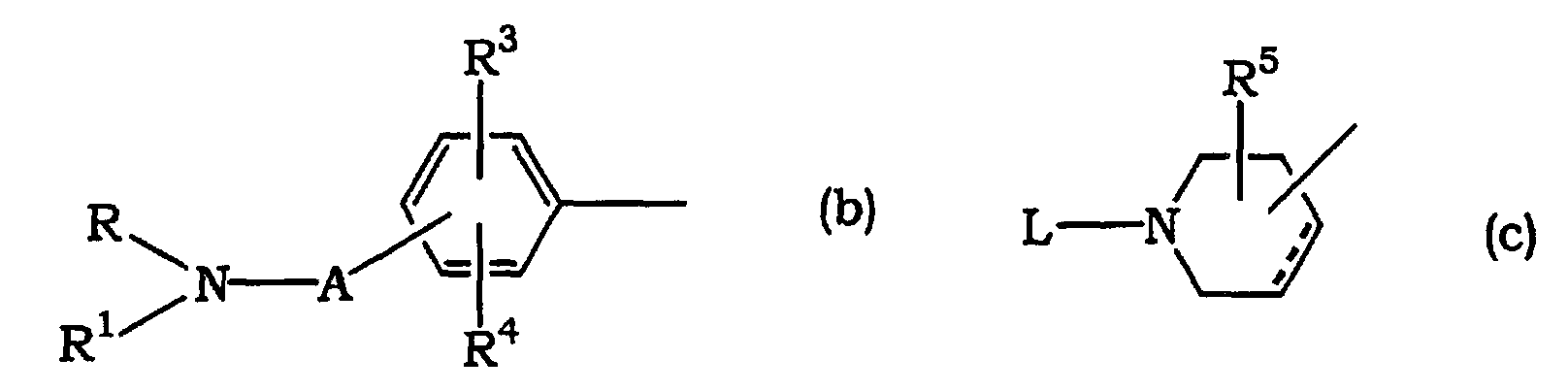
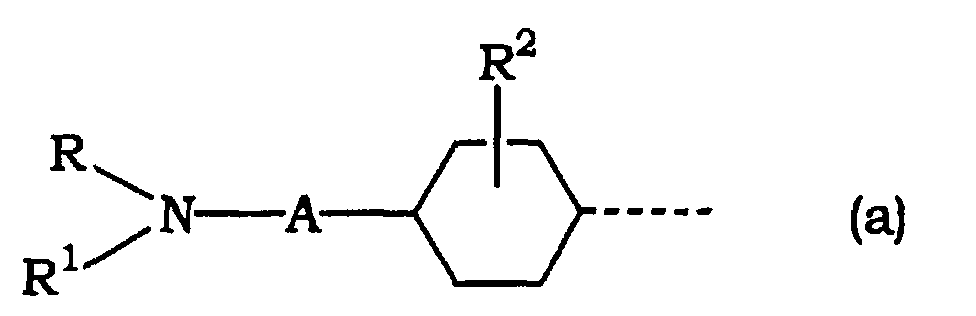
 in the formulas (a) and (b),
- R
- is hydrogen, alkyl, or cycloalkyl, cycloalkylalkyl,
phenyl or aralkyl, which optionally has a substituent on
the ring, or a group of the formula
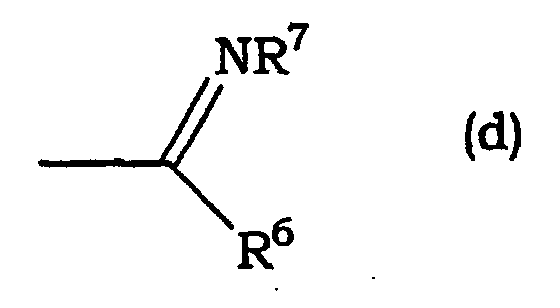
wherein R6 is hydrogen, alkyl or formula : -NR8R9

wherein R8 and R9 are the same or different and each is hydrogen, alkyl, aralkyl or phenyl, R7 is hydrogen, alkyl, aralkyl, phenyl, nitro or cyano, or R6 and R7 in combination show a group forming a heterocycle optionally having, in the ring, oxygen atom, sulfur atom or optionally substituted nitrogen atom, - R1
- is hydrogen, alkyl, or cycloalkyl, cycloalkylalkyl, phenyl or aralkyl, which optionally has a substituent on the ring, or
- R and R1
- in combination form, together with the adjacent nitrogen atom, a group forming a heterocycle optionally having, in the ring, oxygen atom, sulfur atom or optionally substituted nitrogen atom,
- R2
- is hydrogen or alkyl,
- R3 and R4
- are the same or different and each is hydrogen, alkyl, aralkyl, halogen, nitro, amino, alkylamino, acylamino, hydroxy, alkoxy, aralkyloxy, cyano, acyl, mercapto, alkylthio, aralkylthio, carboxy, alkoxycarbonyl, carbamoyl, mono- or dialkylcarbamoyl or azide, and
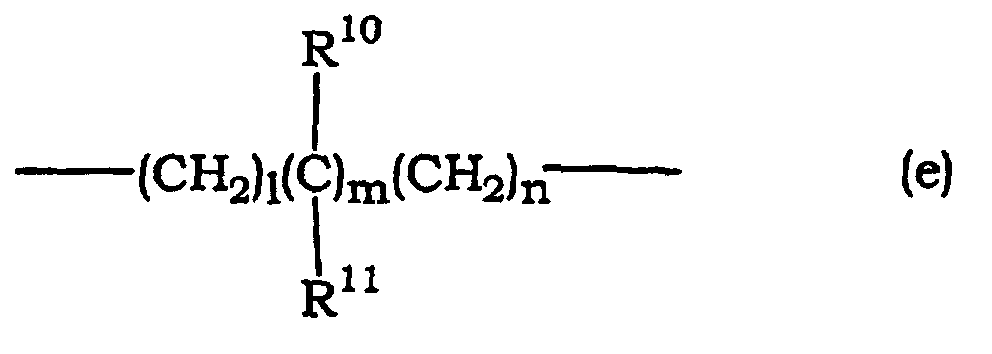
- A
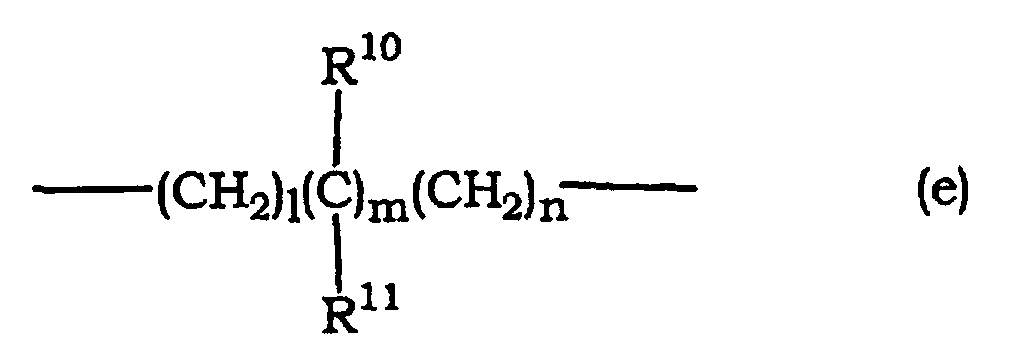
- is a group of the formula
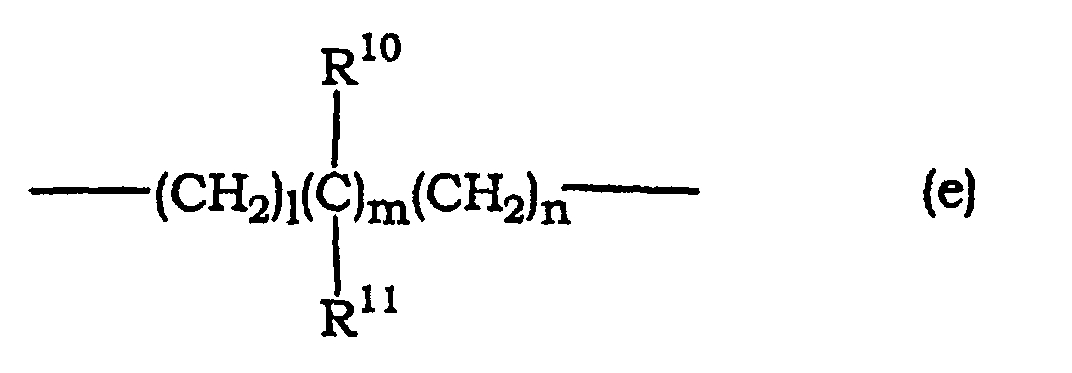
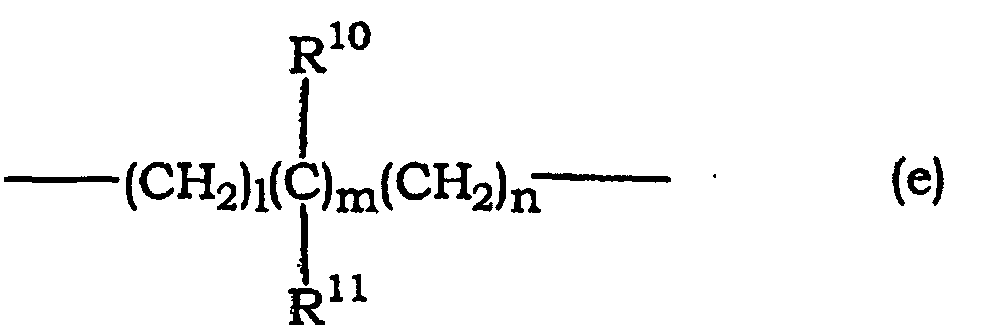
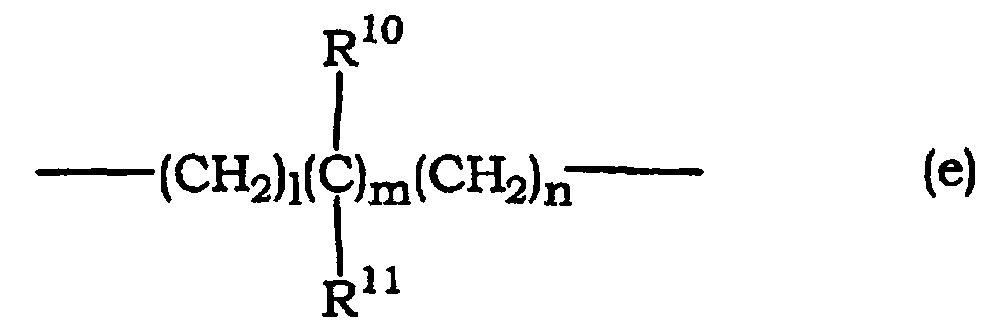
wherein R10 and R11 are the same or different and each is hydrogen, alkyl, haloalkyl, aralkyl, hydroxyalkyl, carboxy or alkoxycarbonyl, or R10 and R11 show a group which forms cycloalkyl in combination and 1, m and n are each 0 or an integer of 1-3,
in the formula (c), - L
- is hydrogen, alkyl, aminoalkyl, mono- or
dialkylaminoalkyl, tetrahydrofurfuryl, carbamoylalkyl,
phthalimidoalkyl, amidino or a group of the formula
 wherein B is hydrogen, alkyl, alkoxy, aralkyl, aralkyloxy, aminoalkyl, hydroxyalkyl, alkanoyloxyalkyl, alkoxycarbonylalkyl, α-aminobenzyl, furyl, pyridyl, phenyl, phenylamino, styryl or imidazopyridyl,
- Q1 is hydrogen, halogen, hydroxy, aralkyloxy or thienylmethyl,
- W is alkylene,
- Q2 is hydrogen, halogen, hydroxy or aralkyloxy,
- X is alkylene,
- Q3 is hydrogen, halogen, hydroxy, alkoxy, nitro, amino,
2,3-dihydrofuryl or 5-methyl-3-oxo-2,3,4,5-tetrahydropyridazin-6-yl;
and Y is a single bond, alkylene or alkenylene, and in the formula (c),
a broken line is a single bond or a double bond, and
- R5
- is hydrogen, hydroxy, alkoxy, alkoxycarbonyloxy, alkanoyloxy or aralkyloxycarbonyloxy;
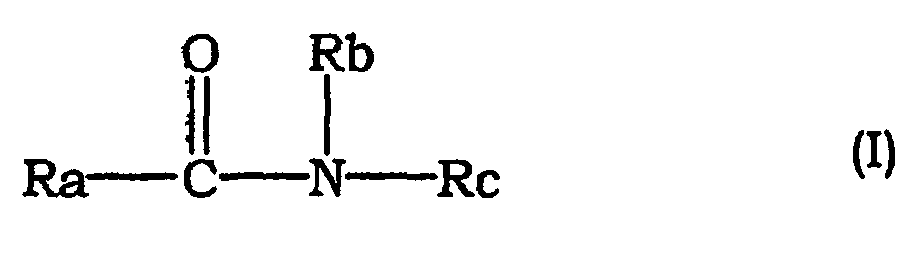
- Rb
- is a hydrogen, an alkyl, an aralkyl, an aminoalkyl or a mono- or dialkylaminoalkyl; and
- Rc
- is an optionally substituted heterocycle containing
nitrogen,
an isomer thereof and/or a pharmaceutically acceptable acid addition salt thereof.

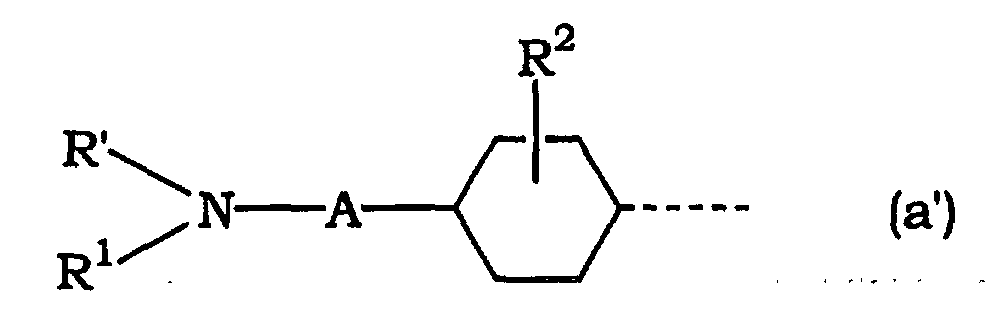
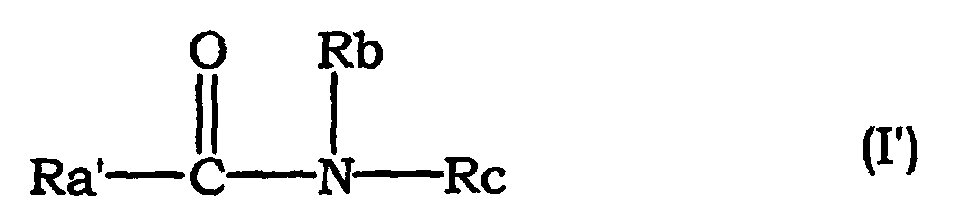
- Ra'
- is a group of the formula
 wherein
- R'
- is hydrogen, alkyl, or cycloalkyl, cycloalkylalkyl, phenyl or aralkyl, which optionally has a substituent on the ring,
- R1
- is hydrogen, alkyl, or cycloalkyl, cycloalkylalkyl, phenyl or aralkyl, which optionally has a substituent on the ring, or
- R' and R1
- in combination form, together with the adjacent nitrogen atom, a group forming a heterocycle optionally having, in the ring, oxygen atom, sulfur atom or optionally substituted nitrogen atom,
- R2
- is hydrogen or alkyl,
- R3 and R4
- are the same or different and each is hydrogen, alkyl, aralkyl, halogen, nitro, amino, alkylamino, acylamino, hydroxy, alkoxy, aralkyloxy, cyano, acyl, mercapto, alkylthio, aralkylthio, carboxy, alkoxycarbonyl, carbamoyl, mono- or dialkylcarbamoyl or azide, and
- A
- is a group of the formula
wherein R10 and R11 are the same or different and each is hydrogen, alkyl, haloalkyl, aralkyl, hydroxyalkyl, carboxy or alkoxycarbonyl, or R10 and R11 show a group which forms cycloalkyl in combination and l, m and n are each 0 or an integer of 1-3,

- Rb
- is a hydrogen, an alkyl, an aralkyl, an aminoalkyl or a mono- or dialkylaminoalkyl; and
- Rc
- is an optionally substituted heterocycle containing
nitrogen,
an isomer thereof and/or a pharmaceutically acceptable acid addition salt thereof.
wherein alkyl and aralkyl are as defined for R, R' and R1 and exemplified by methylhydrazino, ethylhydrazino, benzylhydrazino and the like.
| Formulation Example 1: Tablet | |
| Compound of the present invention | 10.0 mg |
| Lactose | 50.0 mg |
| Corn starch | 20.0 mg |
| Crystalline cellulose | 29.7 mg |
| Polyvinylpyrrolidone K30 | 5.0 mg |
| Talc | 5.0 mg |
| Magnesium stearate | 0.3 mg |
| 120.0 mg |
| Formulation Example 2 : Capsules | |
| Compound of the present invention | 10.0 mg |
| Lactose | 70.0 mg |
| Corn starch | 35.0 mg |
| Polyvinylpyrrolidone K30 | 2.0 mg |
| Talc | 2.7 mg |
| Magnesium stearate | 0.3 mg |
| 120.0 mg |
Claims (34)
- An agent for prophylaxis or treatment of liver disease, which comprises a compound having a Rho kinase inhibitory activity.
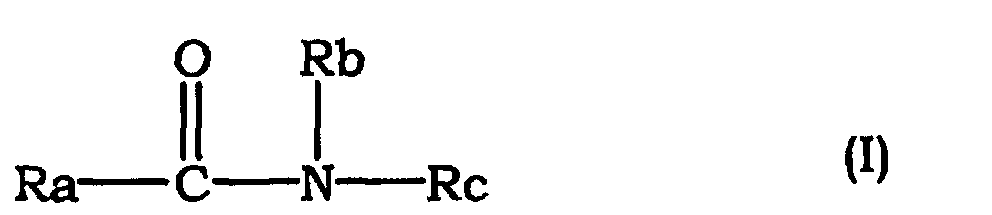
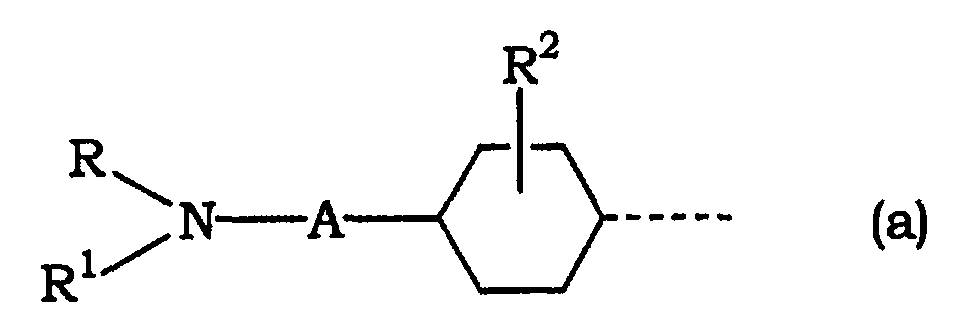
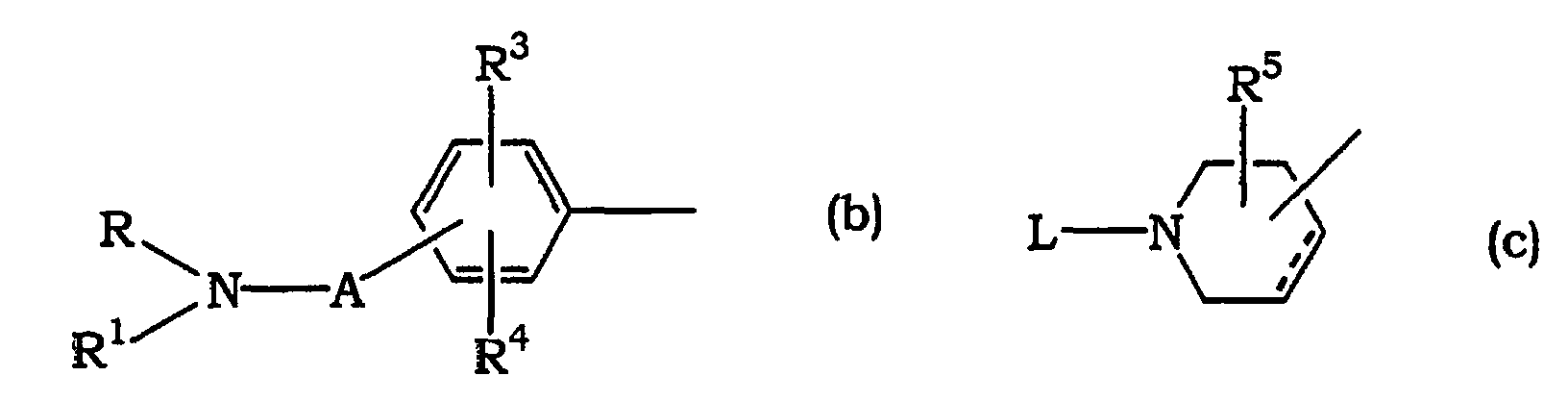
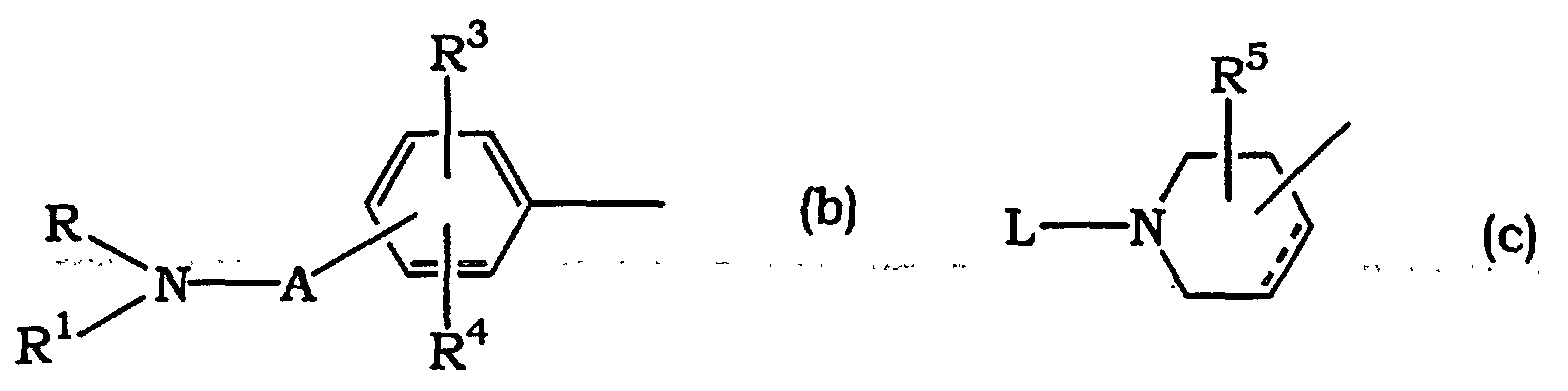
- The agent for the prophylaxis or treatment of liver disease of Claim 1, wherein the compound having a Rho kinase inhibitory activity is an amide compound of the following formula (I)wherein

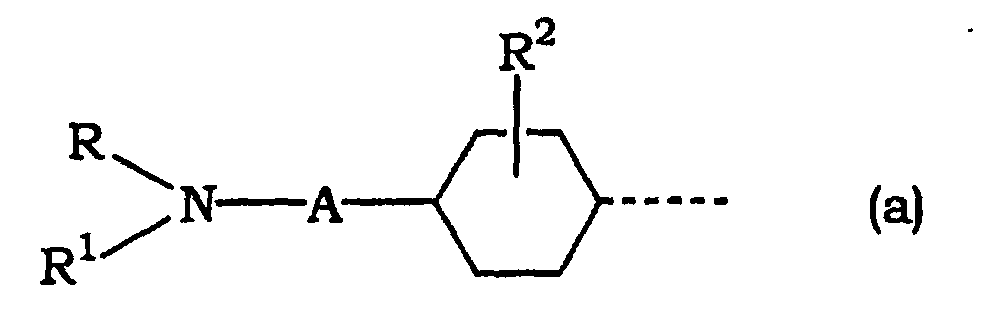
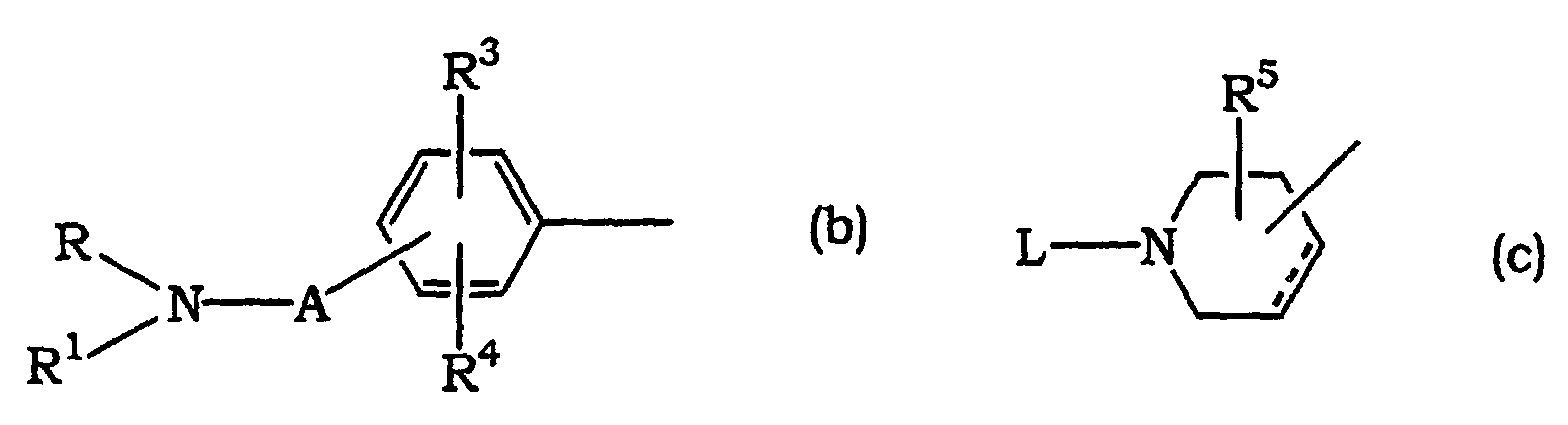
- Ra
- is a group of the formula


- R
- is hydrogen, alkyl, or cycloalkyl, cycloalkylalkyl,
phenyl or aralkyl, which optionally has a substituent on
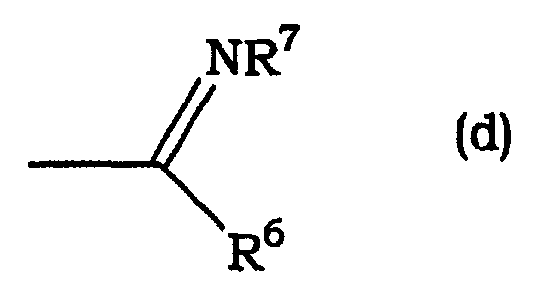
the ring, or a group of the formula
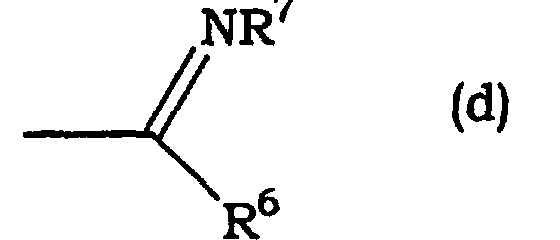
wherein R6 is hydrogen, alkyl or formula: -NR8R9
wherein R8 and R9 are the same or different and each is hydrogen, alkyl, aralkyl or phenyl, R7 is hydrogen, alkyl, aralkyl, phenyl, nitro or cyano, or R6 and R7 in combination show a group forming a heterocycle optionally having, in the ring, oxygen atom, sulfur atom or optionally substituted nitrogen atom, - R1
- is hydrogen, alkyl, or cycloalkyl, cycloalkylalkyl, phenyl or aralkyl, which optionally has a substituent on the ring, or
- R and R1
- in combination form, together with the adjacent nitrogen atom, a group forming a heterocycle optionally having, in the ring, oxygen atom, sulfur atom or optionally substituted nitrogen atom,
- R2
- is hydrogen or alkyl,
- R3 and R4
- are the same or different and each is hydrogen, alkyl, aralkyl, halogen, nitro, amino, alkylamino, acylamino, hydroxy, alkoxy, aralkyloxy, cyano, acyl, mercapto, alkylthio, aralkylthio, carboxy, alkoxycarbonyl, carbamoyl, mono- or dialkylcarbamoyl or azide, and
- A
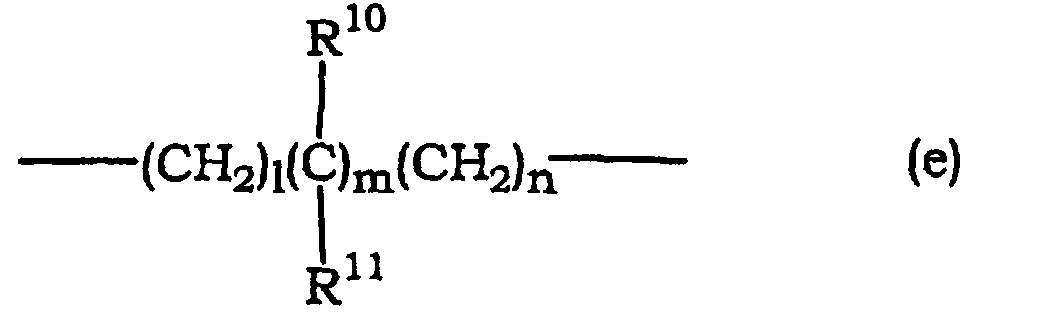
- is a group of the formula
wherein R10 and R11 are the same or different and each is hydrogen, alkyl, haloalkyl, aralkyl, hydroxyalkyl, carboxy or alkoxycarbonyl, or R10 and R11 show a group which forms cycloalkyl in combination and 1, m and n are each 0 or an integer of 1-3,

- L
- is hydrogen, alkyl, aminoalkyl, mono- or
dialkylaminoalkyl, tetrahydrofurfuryl, carbamoylalkyl,
phthalimidoalkyl, amidino or a group of the formula
 wherein B is hydrogen, alkyl, alkoxy, aralkyl, aralkyloxy, aminoalkyl, hydroxyalkyl, alkanoyloxyalkyl, alkoxycarbonylalkyl, α-aminobenzyl, furyl, pyridyl, phenyl, phenylamino, styryl or imidazopyridyl,
- Q1 is hydrogen, halogen, hydroxy, aralkyloxy or thienylmethyl,
- W is alkylene,
- Q2 is hydrogen, halogen, hydroxy or aralkyloxy,
- X is alkylene,
- Q3 is hydrogen, halogen, hydroxy, alkoxy, nitro, amino, 2,3-dihydrofuryl or 5-methyl-3-oxo-2,3,4,5-tetrahydropyridazin-6-yl;
- and Y is a single bond, alkylene or alkenylene, and
a broken line is a single bond or a double bond, and- R5
- is hydrogen, hydroxy, alkoxy, alkoxycarbonyloxy, alkanoyloxy or aralkyloxycarbonyloxy;
- Rb
- is a hydrogen, an alkyl, an aralkyl, an aminoalkyl or a mono- or dialkylaminoalkyl; and
- Rc
- is an optionally substituted heterocycle containing nitrogen,
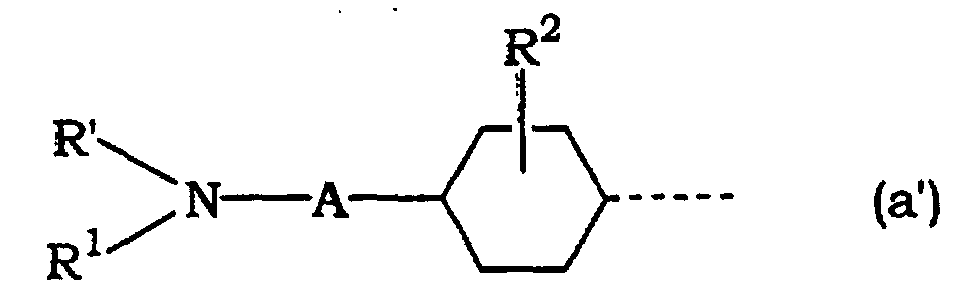
- The agent for the prophylaxis or treatment of liver disease of claim 1 or claim 2, wherein the compound having a Rho kinase inhibitory activity is an amide compound of the following formula (I')wherein

- Ra'
- is a group of the formula
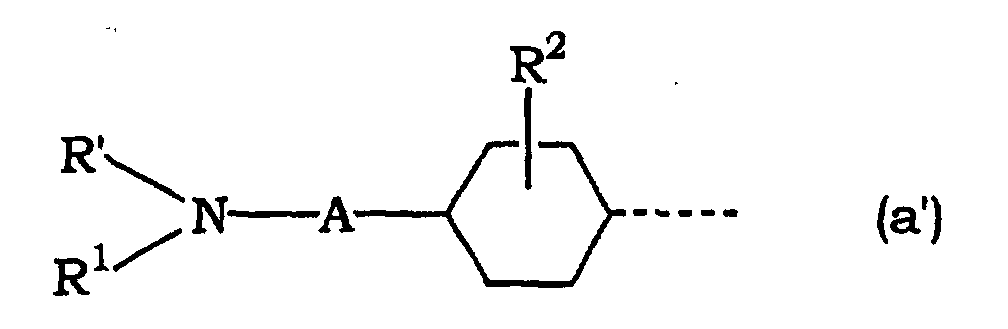 wherein
- R'
- is hydrogen, alkyl, or cycloalkyl, cycloalkylalkyl, phenyl or aralkyl, which optionally has a substituent on the ring,
- R1
- is hydrogen, alkyl, or cycloalkyl, cycloalkylalkyl, phenyl or aralkyl, which optionally has a substituent on the ring, or
- R' and R1
- in combination form, together with the adjacent nitrogen atom, a group forming a heterocycle optionally having, in the ring, oxygen atom, sulfur atom or optionally substituted nitrogen atom,
- R2
- is hydrogen or alkyl,
- R3 and R4
- are the same or different and each is hydrogen, alkyl, aralkyl, halogen, nitro, amino, alkylamino, acylamino, hydroxy, alkoxy, aralkyloxy, cyano, acyl, mercapto, alkylthio, aralkylthio, carboxy, alkoxycarbonyl, carbamoyl, mono- or dialkylcarbamoyl or azide, and
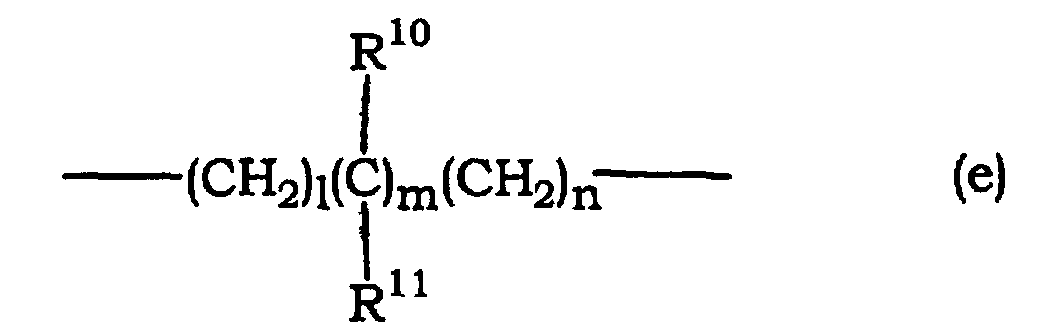
- A
- is a group of the formula
wherein R10 and R11 are the same or different and each is hydrogen, alkyl, haloalkyl, aralkyl, hydroxyalkyl, carboxy or alkoxycarbonyl, or R10 and R11 show a group which forms cycloalkyl in combination and 1, m and n are each 0 or an integer of 1-3,
- Rb
- is a hydrogen, an alkyl, an aralkyl, an aminoalkyl or a mono- or dialkylaminoalkyl; and
- Rc
- is an optionally substituted heterocycle containing nitrogen,
- The agent for the prophylaxis or treatment of liver disease of claim 1, wherein the compound having a Rho kinase inhibitory activity is a compound selected from the group consisting of (+)- trans-4-(1-aminoethyl)-1-(4-pyridylcarbamoyl)cyclohexane, (+)- trans-N-(1H-pyrrolo[2,3-b]pyridin-4-yl)-4-(1-aminoethyl) cyclohexanecarboxamide, (R) - (+) -N- (4-pyridyl) -4- (1-aminoethyl)benzamide and (R)-(+)-N-(1H-pyrrolo[2,3-b]pyridin-4-yl)-4-(1-aminoethyl)benzamide, and/or a pharmaceutically acceptable acid addition salt thereof.
- The agent for the prophylaxis or treatment of liver disease of claim 1, wherein the compound having a Rho kinase inhibitory activity is (+)-trans-4-(1-aminoethyl)-1-(4-pyridylcarbamoyl)cyclohexane and/or a pharmaceutically acceptable acid addition salt thereof.
- The agent for the prophylaxis or treatment of liver disease of any of claim 1 to claim 5, wherein the liver disease is caused by activation of hepatic stellate cell.
- The agent for the prophylaxis or treatment of liver disease of any of claim 1 to claim 6, wherein the liver disease is at least one selected from the group consisting of hepatitis, hepatic fibrosis, hepatic cirrhosis and hepatic cancer.
- An activation inhibitor of hepatic stellate cells, which comprises a compound having a Rho kinase inhibitory activity.
- The activation inhibitor of hepatic stellate cells of claim 8,
wherein the compound having a Rho kinase inhibitory activity is an amide compound of the following formula (I)wherein
- Ra
- is a group of the formula
- R
- is hydrogen, alkyl, or cycloalkyl, cycloalkylalkyl,
phenyl or aralkyl, which optionally has a substituent on
the ring, or a group of the formula
wherein R6 is hydrogen, alkyl or formula : -NR8R9
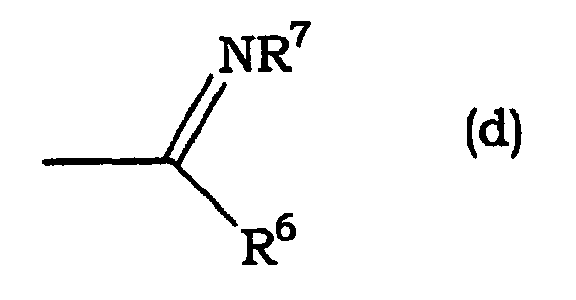
wherein R8 and R9 are the same or different and each is hydrogen, alkyl, aralkyl or phenyl, R7 is hydrogen, alkyl, aralkyl, phenyl, nitro or cyano, or R6 and R7 in combination show a group forming a heterocycle optionally having, in the ring, oxygen atom, sulfur atom or optionally substituted nitrogen atom, - R1
- is hydrogen, alkyl, or cycloalkyl, cycloalkylalkyl, phenyl or aralkyl, which optionally has a substituent on the ring, or
- R and R1
- in combination form, together with the adjacent nitrogen atom, a group forming a heterocycle optionally having, in the ring, oxygen atom, sulfur atom or optionally substituted nitrogen atom,
- R2
- is hydrogen or alkyl,
- R3 and R4
- are the same or different and each is hydrogen, alkyl, aralkyl, halogen, nitro, amino, alkylamino, acylamino, hydroxy, alkoxy, aralkyloxy, cyano, acyl, mercapto, alkylthio, aralkylthio, carboxy, alkoxycarbonyl, carbamoyl, mono- or dialkylcarbamoyl or azide, and
- A
- is a group of the formula
wherein R10 and R11 are the same or different and each is hydrogen, alkyl, haloalkyl, aralkyl, hydroxyalkyl, carboxy or alkoxycarbonyl, or R10 and R11 show a group which forms cycloalkyl in combination and 1, m and n are each 0 or an integer of 1-3,
- L
- is hydrogen, alkyl, aminoalkyl, mono- or
dialkylaminoalkyl, tetrahydrofurfuryl, carbamoylalkyl,
phthalimidoalkyl, amidino or a group of the formula
 wherein B is hydrogen, alkyl, alkoxy, aralkyl, aralkyloxy, aminoalkyl, hydroxyalkyl, alkanoyloxyalkyl, alkoxycarbonylalkyl, α-aminobenzyl, furyl, pyridyl, phenyl, phenylamino, styryl or imidazopyridyl,
- Q1 is hydrogen, halogen, hydroxy, aralkyloxy or thienylmethyl,
- W is alkylene,
- Q2 is hydrogen, halogen, hydroxy or aralkyloxy,
- X is alkylene,
- Q3 is hydrogen, halogen, hydroxy, alkoxy, nitro, amino, 2,3-dihydrofuryl or 5-methyl-3-oxo-2,3,4,5-tetrahydropyridazin-6-yl;
- and Y is a single bond, alkylene or alkenylene, and
a broken line is a single bond or a double bond, and- R5
- is hydrogen, hydroxy, alkoxy, alkoxycarbonyloxy, alkanoyloxy or aralkyloxycarbonyloxy;
- Rb
- is a hydrogen, an alkyl, an aralkyl, an aminoalkyl or a mono- or dialkylaminoalkyl; and
- Rc
- is an optionally substituted heterocycle containing nitrogen,
- The activation inhibitor of hepatic stellate cells of claim 8 or claim 9, wherein the compound having a Rho kinase inhibitory activity is an amide compound of the following formula (I')wherein

- Ra'
- is a group of the formula


- R'
- is hydrogen, alkyl, or cycloalkyl, cycloalkylalkyl, phenyl or aralkyl, which optionally has a substituent on the ring,
- R1
- is hydrogen, alkyl, or cycloalkyl, cycloalkylalkyl, phenyl or aralkyl, which optionally has a substituent on the ring, or
- R' and R1
- in combination form, together with the adjacent nitrogen atom, a group forming a heterocycle optionally having, in the ring, oxygen atom, sulfur atom or optionally substituted nitrogen atom,
- R2
- is hydrogen or alkyl,
- R3 and R4
- are the same or different and each is hydrogen, alkyl, aralkyl, halogen, nitro, amino, alkylamino, acylamino, hydroxy, alkoxy, aralkyloxy, cyano, acyl, mercapto, alkylthio, aralkylthio, carboxy, alkoxycarbonyl, carbamoyl, mono- or dialkylcarbamoyl or azide, and
- A
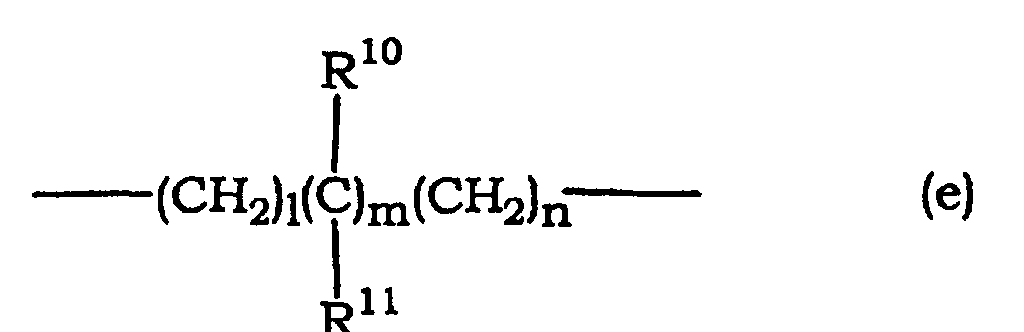
- is a group of the formula
wherein R10 and R11 are the same or different and each is hydrogen, alkyl, haloalkyl, aralkyl, hydroxyalkyl, carboxy or alkoxycarbonyl, or R10 and R11 show a group which forms cycloalkyl in combination and 1, m and n are each 0 or an integer of 1-3,
- Rb
- is a hydrogen, an alkyl, an aralkyl, an aminoalkyl or a mono- or dialkylaminoalkyl; and
- Rc
- is an optionally substituted heterocycle containing nitrogen,
- The activation inhibitor of hepatic stellate cells of claim 8,
wherein the compound having a Rho kinase inhibitory activity is a compound selected from the group consisting of (+)-trans-4-(1-aminoethyl)-1- (4-pyridylcarbamoyl)cyclohexane, (+)-trans-N-(1H-pyrrolo[2,3-b]pyridin-4-yl)-4-(1-aminoethyl)cyclohexanecarboxamide, (R)-(+)-N- (4-pyridyl)-4-(1-aminoethyl)benzamide and (R)-(+)-N-(1H-pyrrolo [2,3-b]pyridin-4-yl) -4- (1-aminoethyl) benzamide, and/or a pharmaceutically acceptable acid addition salt thereof. - The activation inhibitor of hepatic stellate cells of claim 8,
wherein the compound having a Rho kinase inhibitory activity is (+) -trans-4- (1-aminoethyl) -1- (4-pyridylcarbamoyl) cyclohexane and/or a pharmaceutically acceptable acid addition salt thereof. - A pharmaceutical composition for prophylaxis or treatment of liver disease, which comprises a compound having a Rho kinase inhibitory activity and a pharmaceutically acceptable carrier.
- The pharmaceutical composition for the prophylaxis or treatment of liver disease of claim 13, wherein the compound having a Rho kinase inhibitory activity is an amide compound of the following formula (I)wherein
- Ra
- is a group of the formula
- R
- is hydrogen, alkyl, or cycloalkyl, cycloalkylalkyl,
phenyl or aralkyl, which optionally has a substituent on
the ring, or a group of the formula
wherein R6 is hydrogen, alkyl or formula:-NR8R9

wherein R8 and R9 are the same or different and each is hydrogen, alkyl, aralkyl or phenyl, R7 is hydrogen, alkyl, aralkyl, phenyl, nitro or cyano, or R6 and R7 in combination show a group forming a heterocycle optionally having, in the ring, oxygen atom, sulfur atom or optionally substituted nitrogen atom, - R1
- is hydrogen, alkyl, or cycloalkyl, cycloalkylalkyl, phenyl or aralkyl, which optionally has a substituent on the ring, or
- R and R1
- in combination form, together with the adjacent nitrogen atom, a group forming a heterocycle optionally having, in the ring, oxygen atom, sulfur atom or optionally substituted nitrogen atom,
- R2
- is hydrogen or alkyl,
- R3 and R4
- are the same or different and each is hydrogen, alkyl, aralkyl, halogen, nitro, amino, alkylamino, acylamino, hydroxy, alkoxy, aralkyloxy, cyano, acyl, mercapto, alkylthio, aralkylthio, carboxy, alkoxycarbonyl, carbamoyl, mono- or dialkylcarbamoyl or azide, and
- A
- is a group of the formula
in the formula (c),- L
- is hydrogen, alkyl, aminoalkyl, mono- or
dialkylaminoalkyl, tetrahydrofurfuryl, carbamoylalkyl,
phthalimidoalkyl, amidino or a group of the formula
 wherein B is hydrogen, alkyl, alkoxy, aralkyl, aralkyloxy, aminoalkyl, hydroxyalkyl, alkanoyloxyalkyl, alkoxycarbonylalkyl, α-aminobenzyl, furyl, pyridyl, phenyl, phenylamino, styryl or imidazopyridyl,
- Q1 is hydrogen, halogen, hydroxy, aralkyloxy or thienylmethyl,
- W is alkylene,
- Q2 is hydrogen, halogen, hydroxy or aralkyloxy,
- X is alkylene,
- Q3 is hydrogen, halogen, hydroxy, alkoxy, nitro, amino, 2,3-dihydrofuryl or 5-methyl-3-oxo-2,3,4,5-tetrahydropyridazin-6-yl;
- and Y is a single bond, alkylene or alkenylene, and
a broken line is a single bond or a double bond, and- R5
- is hydrogen, hydroxy, alkoxy, alkoxycarbonyloxy, alkanoyloxy or aralkyloxycarbonyloxy;
- Rb
- is a hydrogen, an alkyl, an aralkyl, an aminoalkyl or a mono- or dialkylaminoalkyl; and
- Rc
- is an optionally substituted heterocycle containing nitrogen,
- The pharmaceutical composition for the prophylaxis or treatment of liver disease, wherein the compound having a Rho kinase inhibitory activity is an amide compound of the following formula (I')wherein
- Ra'
- is a group of the formula

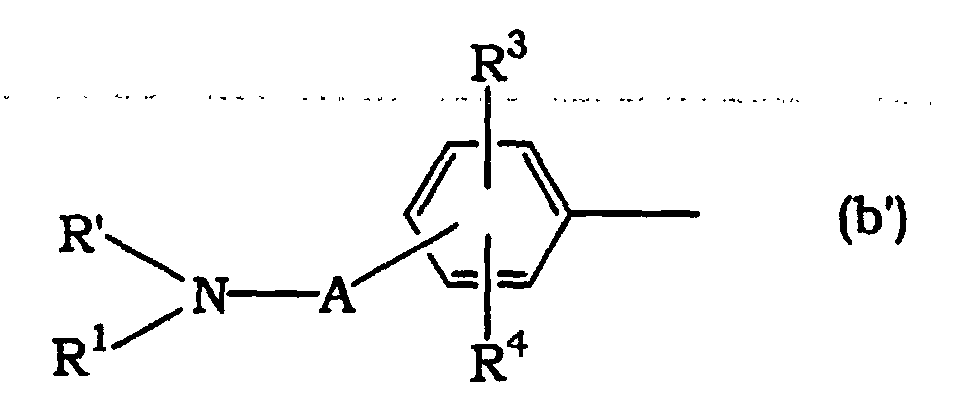
- R'
- is hydrogen, alkyl, or cycloalkyl, cycloalkylalkyl, phenyl or aralkyl, which optionally has a substituent on the ring,
- R1
- is hydrogen, alkyl, or cycloalkyl, cycloalkylalkyl, phenyl or aralkyl, which optionally has a substituent on the ring, or
- R' and R1
- in combination form, together with the adjacent nitrogen atom, a group forming a heterocycle optionally having, in the ring, oxygen atom, sulfur atom or optionally substituted nitrogen atom,
- R2
- is hydrogen or alkyl,
- R3 and R4
- are the same or different and each is hydrogen, alkyl, aralkyl, halogen, nitro, amino, alkylamino, acylamino, hydroxy, alkoxy, aralkyloxy, cyano, acyl, mercapto, alkylthio, aralkylthio, carboxy, alkoxycarbonyl, carbamoyl, mono- or dialkylcarbamoyl or azide, and
- A
- is a group of the formula
wherein R10 and R11 are the same or different and each is hydrogen, alkyl, haloalkyl, aralkyl, hydroxyalkyl, carboxy or alkoxycarbonyl, or R10 and R11 show a group which forms cycloalkyl in combination and 1, m and n are each 0 or an integer of 1-3,

- Rb
- is a hydrogen, an alkyl, an aralkyl, an aminoalkyl or a mono- or dialkylaminoalkyl; and
- Rc
- is an optionally substituted heterocycle containing nitrogen,
- The pharmaceutical composition for the prophylaxis or treatment of liver disease of claim 13, wherein the compound having a Rho kinase inhibitory activity is a compound selected from the group consisting of (+)-trans-4-(1-aminoethyl)-1-(4-pyridylcarbamoyl)cyclohexane, (+)-trans-N-(1H-pyrrolo[2,3-b]pyridin-4-yl)-4-(1-aminoethyl)cyclohexanecarboxamide, (R)-(+)-N-(4-pyridyl)-4- (1-aminoethyl) benzamide and (R)-(+)-N-(1H-pyrrolo[2,3-b]pyridin-4-yl)-4-(1-aminoethyl)benzamide, and/or a pharmaceutically acceptable acid addition salt thereof.
- The pharmaceutical composition for the prophylaxis or treatment of liver disease of claim 13, wherein the compound having a Rho kinase inhibitory activity is (+)-trans-4-(1-aminoethyl)-1-(4-pyridylcarbamoyl)cyclohexane and/or a pharmaceutically acceptable acid addition salt thereof.
- The pharmaceutical composition for the prophylaxis or treatment of liver disease of any of claim 13 to calim 17, wherein the liver disease is caused by activation of hepatic stellate cell.
- The pharmaceutical composition for the prophylaxis or treatment of liver disease of any of claim 13 to calim 18, wherein the liver disease is at least one selected from the group consisting of hepatitis, hepatic fibrosis, hepatic cirrhosis and hepatic cancer.
- A method of prophylaxis or treatment of liver disease, which comprises administering an effective amount of a compound having a Rho kinase inhibitory activity to a patient.
- The method of the prophylaxis or treatment of liver disease of claim 20, wherein the compound having a Rho kinase inhibitory activity is an amide compound of the following formula (I)wherein

- Ra
- is a group of the formula
- R
- is hydrogen, alkyl, or cycloalkyl, cycloalkylalkyl,
phenyl or aralkyl, which optionally has a substituent on
the ring, or a group of the formula
wherein R6 is hydrogen, alkyl or the formula: -NR8R9
wherein R8 and R9 are the same or different and each is hydrogen, alkyl, aralkyl or phenyl, R7 is hydrogen, alkyl, aralkyl, phenyl, nitro or cyano, or R6 and R7 in combination show a group forming a heterocycle optionally having, in the ring, oxygen atom, sulfur atom or optionally substituted nitrogen atom, - R1
- is hydrogen, alkyl, or cycloalkyl, cycloalkylalkyl, phenyl or aralkyl, which optionally has a substituent on the ring, or
- R and R1
- in combination form, together with the adjacent nitrogen atom, a group forming a heterocycle optionally having, in the ring, oxygen atom, sulfur atom or optionally substituted nitrogen atom,
- R2
- is hydrogen or alkyl,
- R3 and R4
- are the same or different and each is hydrogen, alkyl, aralkyl, halogen, nitro, amino, alkylamino, acylamino, hydroxy, alkoxy, aralkyloxy, cyano, acyl, mercapto, alkylthio, aralkylthio, carboxy, alkoxycarbonyl, carbamoyl, mono- or dialkylcarbamoyl or azide, and
- A
- is a group of the formula
wherein R10 and R11 are the same or different and each is hydrogen, alkyl, haloalkyl, aralkyl, hydroxyalkyl, carboxy or alkoxycarbonyl, or R10 and R11 show a group which forms cycloalkyl in combination and 1, m and n are each 0 or an integer of 1-3,
- L
- is hydrogen, alkyl, aminoalkyl, mono- or
dialkylaminoalkyl, tetrahydrofurfuryl, carbamoylalkyl,
phthalimidoalkyl, amidino or a group of the formula
 wherein B is hydrogen, alkyl, alkoxy, aralkyl, aralkyloxy, aminoalkyl, hydroxyalkyl, alkanoyloxyalkyl, alkoxycarbonylalkyl, α-aminobenzyl, furyl, pyridyl, phenyl, phenylamino, styryl or imidazopyridyl,
- Q1 is hydrogen, halogen, hydroxy, aralkyloxy or thienylmethyl,
- W is alkylene,
- Q2 is hydrogen, halogen, hydroxy or aralkyloxy,
- X is alkylene,
- Q3 is hydrogen, halogen, hydroxy, alkoxy, nitro, amino, 2,3-dihydrofuryl or 5-methyl-3-oxo-2,3,4,5-tetrahydropyridazin-6-yl;
- and Y is a single bond, alkylene or alkenylene, and
a broken line is a single bond or a double bond, and- R5
- is hydrogen, hydroxy, alkoxy, alkoxycarbonyloxy, alkanoyloxy or aralkyloxycarbonyloxy;
- Rb
- is a hydrogen, an alkyl, an aralkyl, an aminoalkyl or a mono- or dialkylaminoalkyl; and
- Rc
- is an optionally substituted heterocycle containing nitrogen,
- The method of the prophylaxis or treatment of liver disease of claim 20 or claim 21, wherein the compound having a Rho kinase inhibitory activity is an amide compound of the following formula (I')wherein

- Ra'
- is a group of the formula
 wherein
- R'
- is hydrogen, alkyl, or cycloalkyl, cycloalkylalkyl, phenyl or aralkyl, which optionally has a substituent on the ring,
- R1
- is hydrogen, alkyl, or cycloalkyl, cycloalkylalkyl, phenyl or aralkyl, which optionally has a substituent on the ring, or
- R' and R1
- in combination form, together with the adjacent nitrogen atom, a group forming a heterocycle optionally having, in the ring, oxygen atom, sulfur atom or optionally substituted nitrogen atom,
- R2
- is hydrogen or alkyl,
- R3 and R4
- are the same or different and each is hydrogen, alkyl, aralkyl, halogen, nitro, amino, alkylamino, acylamino, hydroxy, alkoxy, aralkyloxy, cyano, acyl, mercapto, alkylthio, aralkylthio, carboxy, alkoxycarbonyl, carbamoyl, mono- or dialkylcarbamoyl or azide, and
- A
- is a group of the formula
wherein R10 and R11 are the same or different and each is hydrogen, alkyl, haloalkyl, aralkyl, hydroxyalkyl, carboxy or alkoxycarbonyl, or R10 and R11 show a group which forms cycloalkyl in combination and 1, m and n are each 0 or an integer of 1-3,
- Rb
- is a hydrogen, an alkyl, an aralkyl, an aminoalkyl or a mono- or dialkylaminoalkyl; and
- Rc
- is an optionally substituted heterocycle containing nitrogen,
- The method of the prophylaxis or treatment of liver disease of claim 20, wherein the compound having a Rho kinase inhibitory activity is a compound selected from the group consisting of (+)- trans-4-(1-aminoethyl)-1-(4-pyridylcarbamoyl)cyclohexane, (+)- trans-N-(1H-pyrrolo[2,3-b]pyridin-4-yl)-4-(1-aminoethyl)cyclohexanecarboxamide, (R)-(+)-N-(4-pyridyl)-4-(1-aminoethyl) benzamide and (R)-(+)-N-(1H-pyrrolo[2,3-b]pyridin-4-yl)-4-(1-aminoethyl)benzamide, and/or a pharmaceutically acceptable acid addition salt thereof.
- The method of the prophylaxis or treatment of liver disease of claim 20, wherein the compound having a Rho kinase inhibitory activity is a (+)-trans-4-(1-aminoethyl)-1-(4-pyridylcarbamoyl)cyclohexane, and/or a pharmaceutically acceptable acid addition salt thereof.
- The method of the prophylaxis or treatment of liver disease of any of claim 20 to claim 24, wherein the liver disease is caused by activation of hepatic stellate cell.
- The method of the prophylaxis or treatment of liver disease of any of claim 20 to claim 25, wherein the liver disease is at least one selected from the group consisting of hepatitis, hepatic fibrosis, hepatic cirrhosis and hepatic cancer.
- Use of a compound having a Rho kinase inhibitory activity for the production of an agent for prophylaxis or treatment of liver desease.
- The use of claim 27, wherein the compound having a Rho kinase inhibitory activity is an amide compound of the following formula (I)wherein
- Ra
- is a group of the formula
- R
- is hydrogen, alkyl, or cycloalkyl, cycloalkylalkyl,
phenyl or aralkyl, which optionally has a substituent on
the ring, or a group of the formula
wherein R6 is hydrogen, alkyl or formula: -NR8R9 wherein R8 and R9 are the same or different and each is hydrogen, alkyl, aralkyl or phenyl, R7 is hydrogen, alkyl, aralkyl, phenyl, nitro or cyano, or R6 and R7 in combination show a group forming a heterocycle optionally having, in the ring, oxygen atom, sulfur atom or optionally substituted nitrogen atom,
- R1
- is hydrogen, alkyl, or cycloalkyl, cycloalkylalkyl, phenyl or aralkyl, which optionally has a substituent on the ring, or
- R and R1
- in combination form, together with the adjacent nitrogen atom, a group forming a heterocycle optionally having, in the ring, oxygen atom, sulfur atom or optionally substituted nitrogen atom,
- R2
- is hydrogen or alkyl,
- R3 and R4
- are the same or different and each is hydrogen, alkyl, aralkyl, halogen, nitro, amino, alkylamino, acylamino, hydroxy, alkoxy, aralkyloxy, cyano, acyl, mercapto, alkylthio, aralkylthio, carboxy, alkoxycarbonyl, carbamoyl, mono- or dialkylcarbamoyl or azide, and
- A
- is a group of the formula
- L
- is hydrogen, alkyl, aminoalkyl, mono- or
dialkylaminoalkyl, tetrahydrofurfuryl, carbamoylalkyl,
phthalimidoalkyl, amidino or a group of the formula
 wherein B is hydrogen, alkyl, alkoxy, aralkyl, aralkyloxy, aminoalkyl, hydroxyalkyl, alkanoyloxyalkyl, alkoxycarbonylalkyl, α-aminobenzyl, furyl, pyridyl, phenyl, phenylamino, styryl or imidazopyridyl,
- Q1 is hydrogen, halogen, hydroxy, aralkyloxy or thienylmethyl,
- W is alkylene,
- Q2 is hydrogen, halogen, hydroxy or aralkyloxy,
- X is alkylene,
- Q3 is hydrogen, halogen, hydroxy, alkoxy, nitro, amino, 2,3-dihydrofuryl or 5-methyl-3-oxo-2,3,4,5-tetrahydropyridazin-6-yl; and Y is a single bond, alkylene or alkenylene, and
a broken line is a single bond or a double bond, and- R5
- is hydrogen, hydroxy, alkoxy, alkoxycarbonyloxy, alkanoyloxy or aralkyloxycarbonyloxy;
- Rb
- is a hydrogen, an alkyl, an aralkyl, an aminoalkyl or a mono- or dialkylaminoalkyl; and
- Rc
- is an optionally substituted heterocycle containing nitrogen,
- The use of claim 27 or claim 28, wherein the compound having a Rho kinase inhibitory activity is an amide compound of the following formula (I')
wherein
- Ra'
- is a group of the formula
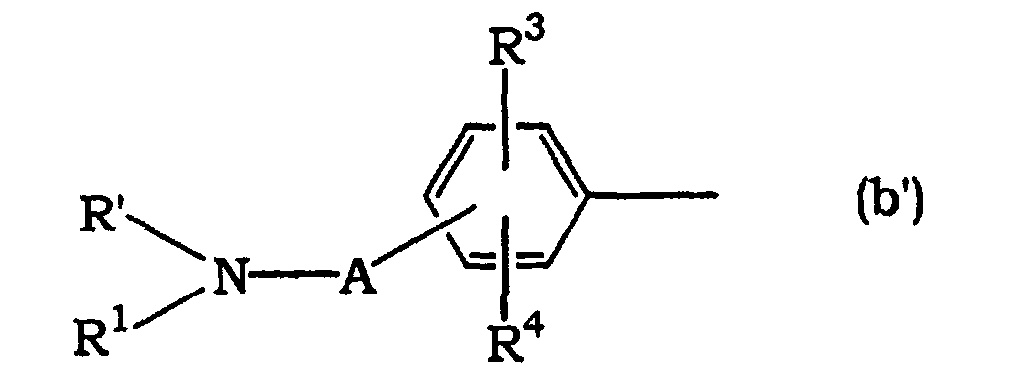
- R'
- is hydrogen, alkyl, or cycloalkyl, cycloalkylalkyl, phenyl or aralkyl, which optionally has a substituent on the ring,
- R1
- is hydrogen, alkyl, or cycloalkyl, cycloalkylalkyl, phenyl or aralkyl, which optionally has a substituent on the ring, or
- R' and R1
- in combination form, together with the adjacent nitrogen atom, a group forming a heterocycle optionally having, in the ring, oxygen atom, sulfur atom or optionally substituted nitrogen atom,
- R2
- is hydrogen or alkyl,
- R3 and R4
- are the same or different and each is hydrogen, alkyl, aralkyl, halogen, nitro, amino, alkylamino, acylamino, hydroxy, alkoxy, aralkyloxy, cyano, acyl, mercapto, alkylthio, aralkylthio, carboxy, alkoxycarbonyl, carbamoyl, mono- or dialkylcarbamoyl or azide, and
- A
- is a group of the formula
wherein R10 and R11 are the same or different and each is hydrogen, alkyl, haloalkyl, aralkyl, hydroxyalkyl, carboxy or alkoxycarbonyl, or R10 and R11 show a group which forms cycloalkyl in combination and 1, m and n are each 0 or an integer of 1-3,

- Rb
- is a hydrogen, an alkyl, an aralkyl, an aminoalkyl or a mono- or dialkylaminoalkyl; and
- Rc
- is an optionally substituted heterocycle containing nitrogen,
- The use of claim 27, wherein the compound having a Rho kinase inhibitory activity is a compound selected from the group consisting of (+)-trans-4-(1-aminoethyl)-1-(4-pyridylcarbamoyl)cyclohexane, (+)-trans-N-(1H-pyrrolo[2,3-b]pyridin-4-yl)-4-(1-aminoethyl)cyclohexanecarboxamide, (R)-(+)-N-(4-pyridyl) -4- (1-aminoethyl) benzamide and (R)-(+)-N-(1H-pyrrolo[2,3-b]pyridin-4-yl)-4-(1-aminoethyl)benzamide, and/or a pharmaceutically acceptable acid addition salt thereof.
- The use of claim 27, wherein the compound having a Rho kinase inhibitory activity is a (+)-trans-4-(1-aminoethyl)-1-(4-pyridylcarbamoyl)cyclohexane, and/or a pharmaceutically acceptable acid addition salt thereof.
- The use of any of claim 27 to claim 31, wherein the liver desease is caused by activation of hepatic stellate cell.
- The use of any of claim 27 to claim 32, wherein the liver deases is at least one selected from the group consisting of hepatitis, hepatic fibrosis, hepatic cirrhosis and hepatic cancer.
- A commercial package comprising a pharmaceutical composition for the prophylaxis or treatment of liver disease of any of claim 13 to claim 19, and a written matter associated therewith, the written matter stating that the pharmaceutical composition can or should be used for the prophylaxis or treatment of liver desease.
Applications Claiming Priority (3)
| Application Number | Priority Date | Filing Date | Title |
|---|---|---|---|
| JP12062499 | 1999-04-27 | ||
| JP12062499 | 1999-04-27 | ||
| PCT/JP2000/002797 WO2000064478A1 (en) | 1999-04-27 | 2000-04-27 | Preventives/remedies for liver diseases |
Publications (3)
| Publication Number | Publication Date |
|---|---|
| EP1177796A1 true EP1177796A1 (en) | 2002-02-06 |
| EP1177796A4 EP1177796A4 (en) | 2003-11-19 |
| EP1177796B1 EP1177796B1 (en) | 2011-04-27 |
Family
ID=14790843
Family Applications (1)
| Application Number | Title | Priority Date | Filing Date |
|---|---|---|---|
| EP00921077A Expired - Lifetime EP1177796B1 (en) | 1999-04-27 | 2000-04-27 | Medicament for prevention or therapeutic treatment of liver disease |
Country Status (11)
| Country | Link |
|---|---|
| US (1) | US6794398B1 (en) |
| EP (1) | EP1177796B1 (en) |
| JP (1) | JP4509395B2 (en) |
| KR (1) | KR100812972B1 (en) |
| CN (1) | CN100438910C (en) |
| AT (1) | ATE506967T1 (en) |
| AU (1) | AU4144400A (en) |
| CA (1) | CA2369560C (en) |
| DE (1) | DE60045890D1 (en) |
| ES (1) | ES2365692T3 (en) |
| WO (1) | WO2000064478A1 (en) |
Cited By (12)
| Publication number | Priority date | Publication date | Assignee | Title |
|---|---|---|---|---|
| WO2005030248A1 (en) * | 2003-09-29 | 2005-04-07 | Bioaxone Therapeutique Inc. | Clostridium botulinum c3 exotransferase compositions and methods for treating tumour spreading |
| WO2004108142A3 (en) * | 2003-06-06 | 2005-04-21 | Univ Manchester | Inhibitors of tip-1 for treatment tissue damage |
| US6924290B2 (en) | 2002-01-23 | 2005-08-02 | Bayer Pharmaceuticals Corporation | Rho-kinase inhibitors |
| US6930115B2 (en) | 2000-06-23 | 2005-08-16 | Mitsubishi Pharma Corporation | Antitumor effect potentiators |
| US6943172B2 (en) | 2002-01-23 | 2005-09-13 | Bayer Pharmaceuticals Corporation | Rho-kinase inhibitors |
| WO2007042321A3 (en) * | 2005-10-13 | 2007-07-12 | Devgen Nv | Kinase inhibitors |
| US7547702B2 (en) | 2000-09-20 | 2009-06-16 | Ortho-Mcneil Pharmaceutical, Inc. | 4-amino-quinazolines |
| US7645878B2 (en) | 2002-03-22 | 2010-01-12 | Bayer Healthcare Llc | Process for preparing quinazoline Rho-kinase inhibitors and intermediates thereof |
| US7648986B2 (en) | 2002-01-10 | 2010-01-19 | Bayer Healthcare Llc | Substituted thieno[3,2-D]pyrimidines as Rho kinase inhibitors |
| US7829566B2 (en) | 2001-09-17 | 2010-11-09 | Werner Mederski | 4-amino-quinazolines |
| US7910554B2 (en) | 2001-04-12 | 2011-03-22 | Bioaxone Therapeutique Inc. | Treatment of macular degeneration with ADP-ribosyl transferase fusion protein therapeutic compositions |
| US8273900B2 (en) | 2008-08-07 | 2012-09-25 | Novartis Ag | Organic compounds |
Families Citing this family (21)
| Publication number | Priority date | Publication date | Assignee | Title |
|---|---|---|---|---|
| JP4851003B2 (en) * | 2000-12-21 | 2012-01-11 | 田辺三菱製薬株式会社 | Preventive and therapeutic agents for diseases based on liver damage |
| PE20050206A1 (en) * | 2003-05-26 | 2005-03-26 | Schering Ag | PHARMACEUTICAL COMPOSITION CONTAINING AN INHIBITOR OF HISTONE DEACETILASE |
| AU2005320014B2 (en) | 2004-12-22 | 2011-05-26 | Nitto Denko Corporation | Drug carrier and drug carrier kit for inhibiting fibrosis |
| JP2009221164A (en) | 2008-03-17 | 2009-10-01 | Nitto Denko Corp | Drug for treating pulmonary fibrosis |
| CA2590261C (en) * | 2004-12-27 | 2011-08-16 | Alcon, Inc. | Aminopyrazine analogs for treating glaucoma and other rho kinase-mediated diseases and conditions |
| JP2009521494A (en) * | 2005-12-22 | 2009-06-04 | アルコン リサーチ, リミテッド | (Indazol-5-yl) -pyrazine and (1,3-dihydroindol-2-one) -pyrazine for treating rho kinase-mediated diseases and conditions |
| US9572886B2 (en) | 2005-12-22 | 2017-02-21 | Nitto Denko Corporation | Agent for treating myelofibrosis |
| US7867999B1 (en) | 2005-12-22 | 2011-01-11 | Alcon Research, Ltd. | Hydroxyamino- and amino-substituted pyridine analogs for treating rho kinase-mediated diseases and conditions |
| BRPI0719189A2 (en) * | 2006-10-12 | 2018-08-14 | Univ Kyushu Nat Univ Corp | use of modified cyclosporins |
| AR064420A1 (en) * | 2006-12-21 | 2009-04-01 | Alcon Mfg Ltd | OPHTHALMIC PHARMACEUTICAL COMPOSITIONS THAT INCLUDE AN EFFECTIVE AMOUNT OF ANALOGS OF 6-AMINOIMIDAZO [1,2B] PIRIDAZINAS, USEFUL FOR THE TREATMENT OF GLAUCOMA AND / OR CONTROL THE NORMAL OR ELEVATED INTRAOCULAR PRESSURE (IOP). |
| WO2011021221A2 (en) | 2009-08-17 | 2011-02-24 | Reliance Life Sciences Pvt. Ltd. | Compositions for spinal cord injury |
| JP5950428B2 (en) | 2010-08-05 | 2016-07-13 | 日東電工株式会社 | Composition for regenerating normal tissue from fibrotic tissue |
| JP6340162B2 (en) | 2012-12-20 | 2018-06-06 | 日東電工株式会社 | Apoptosis inducer |
| KR101660815B1 (en) | 2013-06-13 | 2016-09-29 | 한국생명공학연구원 | Pharmaceutical composition for prevention or treatment of viral disease containing tetracycline derivative, pharmacutically acceptable salt thereof or stereoisomer thereof as an active ingredient |
| FR3017868A1 (en) | 2014-02-21 | 2015-08-28 | Servier Lab | ISOQUINOLINE DERIVATIVES, PROCESS FOR PREPARING THEM AND PHARMACEUTICAL COMPOSITIONS CONTAINING SAME |
| CN106164089B (en) | 2014-04-02 | 2020-11-03 | 日东电工株式会社 | Targeting molecules and their uses |
| KR102256453B1 (en) | 2014-04-07 | 2021-05-25 | 닛토덴코 가부시키가이샤 | Novel polymer-based hydrotropes for hydrophobic drug delivery |
| AU2017324935B2 (en) | 2016-09-06 | 2021-10-21 | Mti Biotech, Inc. | Compositions and methods of use of gamma-ketoaldehyde scavengers for treating, preventing or improving nonalcoholic fatty liver disease (NAFLD), NASH, ALD or conditions related to the liver |
| RU2019112148A (en) * | 2016-09-27 | 2020-10-29 | Мицубиси Танабе Фарма Корпорейшн | PHARMACEUTICAL COMPOSITION AND METHOD FOR TREATMENT OF NON-ALCOHOLIC FATTY LIVER DISEASE |
| KR20210081366A (en) * | 2018-10-19 | 2021-07-01 | 더 제너럴 하스피탈 코포레이션 | Compositions and methods for the treatment of liver disease |
| WO2021138331A2 (en) * | 2019-12-30 | 2021-07-08 | Memorial Sloan Kettering Cancer Center | Small molecule inhibitors of ulk1 |
Family Cites Families (29)
| Publication number | Priority date | Publication date | Assignee | Title |
|---|---|---|---|---|
| JPS57200366A (en) | 1981-06-01 | 1982-12-08 | Asahi Chem Ind Co Ltd | Isoquinoline compound |
| JPS61227581A (en) | 1985-04-02 | 1986-10-09 | Asahi Chem Ind Co Ltd | Isoquinoline derivative bearing sulfone group |
| JPH0680054B2 (en) | 1985-06-19 | 1994-10-12 | 吉富製薬株式会社 | Piperidine derivative |
| JPS63185921A (en) * | 1987-01-28 | 1988-08-01 | Takeda Chem Ind Ltd | Remedy for hepatic disease |
| WO1990005723A1 (en) * | 1988-11-24 | 1990-05-31 | Yoshitomi Pharmaceutical Industries, Ltd. | Trans-4-amino(alkyl)-1-pyridylcarbamoyl-cyclohexane compounds and their medicinal use |
| JP2770497B2 (en) | 1988-11-24 | 1998-07-02 | 吉富製薬株式会社 | Trans-4-amino (alkyl) -1-pyridylcarbamoylcyclohexane compounds and their pharmaceutical uses |
| JP2720348B2 (en) | 1989-03-30 | 1998-03-04 | 旭化成工業株式会社 | Brain cell dysfunction improver |
| JP3408546B2 (en) | 1991-02-19 | 2003-05-19 | 旭化成株式会社 | Anti-asthmatic |
| JP2864489B2 (en) | 1991-02-27 | 1999-03-03 | 吉富製薬株式会社 | Asthma treatment |
| JP3275389B2 (en) | 1991-09-06 | 2002-04-15 | 三菱ウェルファーマ株式会社 | 4-amino (alkyl) cyclohexane-1-carboxylic acid amide compound |
| JPH0597834A (en) * | 1991-10-11 | 1993-04-20 | Morishita Roussel Kk | 2,3,6-trimethyl-5-(tetrahydrofuran-2-yl)benzoquinone |
| JP3265695B2 (en) | 1992-05-12 | 2002-03-11 | 三菱ウェルファーマ株式会社 | 4-substituted amino (alkyl) cyclohexane-1-carboxylic acid amide compound |
| JP2893029B2 (en) | 1992-08-10 | 1999-05-17 | 旭化成工業株式会社 | Cardioprotectant |
| JPH0680569A (en) | 1992-09-03 | 1994-03-22 | Asahi Chem Ind Co Ltd | Antithrombotic agent |
| JP3464012B2 (en) | 1993-04-05 | 2003-11-05 | 旭化成株式会社 | Psychotic treatment |
| JPH0741424A (en) | 1993-07-28 | 1995-02-10 | Asahi Chem Ind Co Ltd | Anti-inflammatory agent |
| JPH07277979A (en) | 1994-04-12 | 1995-10-24 | Asahi Chem Ind Co Ltd | Therapeutic or preventive agent for hyperviscosity syndrome |
| EP1195372A1 (en) | 1994-04-18 | 2002-04-10 | Mitsubishi Pharma Corporation | N-heterocyclic substituted benzamide derivatives with antihypertensive activity |
| JPH0867637A (en) * | 1994-08-31 | 1996-03-12 | Ajinomoto Co Inc | Prophylactic and therapeutic agent for hepatopathy |
| US5906819A (en) | 1995-11-20 | 1999-05-25 | Kirin Beer Kabushiki Kaisha | Rho target protein Rho-kinase |
| JP3421217B2 (en) * | 1995-11-20 | 2003-06-30 | 麒麟麦酒株式会社 | Rho target protein Rho kinase |
| DE69634414T2 (en) | 1995-12-21 | 2005-11-17 | Alcon Laboratories, Inc., Fort Worth | USE OF SUBSTITUTED ISOCHINOLINSULFONYL COMPOUNDS FOR THE MANUFACTURE OF A MEDICAMENT FOR THE TREATMENT OF GLUCKOM AND OKULAR ISCHEMIA |
| KR19990082174A (en) | 1996-02-02 | 1999-11-25 | 니뽄 신야쿠 가부시키가이샤 | Isoquinoline Derivatives and Medicines |
| JPH09227381A (en) | 1996-02-29 | 1997-09-02 | Asahi Chem Ind Co Ltd | Improving agent for motor paralysis in cerebral thorombosis |
| JPH1045598A (en) | 1996-04-10 | 1998-02-17 | Asahi Chem Ind Co Ltd | Preventive and therapeutic agent for virus infectious disease |
| JPH10201480A (en) * | 1996-07-24 | 1998-08-04 | Kirin Brewery Co Ltd | Human-derived Rho target protein Rho kinase and gene thereof |
| JPH1087491A (en) | 1996-07-26 | 1998-04-07 | Asahi Chem Ind Co Ltd | Transcription control factor inhibitor |
| NZ334613A (en) | 1996-08-12 | 2002-02-01 | Welfide Corp | Pharmaceutical agents comprising Rho kinase inhibitor |
| EP0827742A1 (en) | 1996-09-04 | 1998-03-11 | Vrije Universiteit Brussel | Use of histone deacetylase inhibitors for treating fribosis or cirrhosis |
-
2000
- 2000-04-27 EP EP00921077A patent/EP1177796B1/en not_active Expired - Lifetime
- 2000-04-27 WO PCT/JP2000/002797 patent/WO2000064478A1/en not_active Ceased
- 2000-04-27 CA CA2369560A patent/CA2369560C/en not_active Expired - Fee Related
- 2000-04-27 DE DE60045890T patent/DE60045890D1/en not_active Expired - Lifetime
- 2000-04-27 CN CNB008096171A patent/CN100438910C/en not_active Expired - Fee Related
- 2000-04-27 US US09/959,441 patent/US6794398B1/en not_active Expired - Lifetime
- 2000-04-27 KR KR1020017013603A patent/KR100812972B1/en not_active Expired - Fee Related
- 2000-04-27 JP JP2000613468A patent/JP4509395B2/en not_active Expired - Fee Related
- 2000-04-27 AU AU41444/00A patent/AU4144400A/en not_active Abandoned
- 2000-04-27 ES ES00921077T patent/ES2365692T3/en not_active Expired - Lifetime
- 2000-04-27 AT AT00921077T patent/ATE506967T1/en not_active IP Right Cessation
Non-Patent Citations (4)
| Title |
|---|
| KAWADA NORIFUMI ET AL: "Rock inhibitor, Y-27632, blocks stellate cell contraction and attenuates portal vein constriction induced by endothelin-1." HEPATOLOGY, vol. 30, no. 4 PART 2, October 1999 (1999-10), page 235A XP009016967 50th Annual Meeting and Postgraduate Courses of the American Association for the Study of Liver Diseases;Dallas, Texas, USA; November 5-9, 1999 ISSN: 0270-9139 * |
| See also references of WO0064478A1 * |
| SUGIMOTO RIE ET AL: "p160ROCK-specific inhibitor, Y-27632, suppresses hepatic fibrosis induced by dimethylnitrosamine in rats." HEPATOLOGY, vol. 30, no. 4 PART 2, October 1999 (1999-10), page 489A XP009016968 50th Annual Meeting and Postgraduate Courses of the American Association for the Study of Liver Diseases;Dallas, Texas, USA; November 5-9, 1999 ISSN: 0270-9139 * |
| YAMAGATA S ET AL: "Effect of calcium sensitization modulator, Y-27632, on the isolated human bronchus and pulmonary artery." EUROPEAN RESPIRATORY JOURNAL, vol. 12, no. Supplement 29, December 1998 (1998-12), page 75s XP009016960 World Asthma Meeting;Barcelona, Spain; December 09-13, 1998 ISSN: 0903-1936 * |
Cited By (13)
| Publication number | Priority date | Publication date | Assignee | Title |
|---|---|---|---|---|
| US6930115B2 (en) | 2000-06-23 | 2005-08-16 | Mitsubishi Pharma Corporation | Antitumor effect potentiators |
| US7547702B2 (en) | 2000-09-20 | 2009-06-16 | Ortho-Mcneil Pharmaceutical, Inc. | 4-amino-quinazolines |
| US7910554B2 (en) | 2001-04-12 | 2011-03-22 | Bioaxone Therapeutique Inc. | Treatment of macular degeneration with ADP-ribosyl transferase fusion protein therapeutic compositions |
| US7829566B2 (en) | 2001-09-17 | 2010-11-09 | Werner Mederski | 4-amino-quinazolines |
| US7648986B2 (en) | 2002-01-10 | 2010-01-19 | Bayer Healthcare Llc | Substituted thieno[3,2-D]pyrimidines as Rho kinase inhibitors |
| US6924290B2 (en) | 2002-01-23 | 2005-08-02 | Bayer Pharmaceuticals Corporation | Rho-kinase inhibitors |
| US6943172B2 (en) | 2002-01-23 | 2005-09-13 | Bayer Pharmaceuticals Corporation | Rho-kinase inhibitors |
| US7645878B2 (en) | 2002-03-22 | 2010-01-12 | Bayer Healthcare Llc | Process for preparing quinazoline Rho-kinase inhibitors and intermediates thereof |
| WO2004108142A3 (en) * | 2003-06-06 | 2005-04-21 | Univ Manchester | Inhibitors of tip-1 for treatment tissue damage |
| WO2005030248A1 (en) * | 2003-09-29 | 2005-04-07 | Bioaxone Therapeutique Inc. | Clostridium botulinum c3 exotransferase compositions and methods for treating tumour spreading |
| WO2007042321A3 (en) * | 2005-10-13 | 2007-07-12 | Devgen Nv | Kinase inhibitors |
| US8273900B2 (en) | 2008-08-07 | 2012-09-25 | Novartis Ag | Organic compounds |
| US8614213B2 (en) | 2008-08-07 | 2013-12-24 | Novartis Ag | Cyclohexyl amide derivatives and their use as CRF-1 receptor antagonists |
Also Published As
| Publication number | Publication date |
|---|---|
| DE60045890D1 (en) | 2011-06-09 |
| KR100812972B1 (en) | 2008-03-13 |
| EP1177796B1 (en) | 2011-04-27 |
| CN100438910C (en) | 2008-12-03 |
| ATE506967T1 (en) | 2011-05-15 |
| ES2365692T3 (en) | 2011-10-10 |
| JP4509395B2 (en) | 2010-07-21 |
| US6794398B1 (en) | 2004-09-21 |
| AU4144400A (en) | 2000-11-10 |
| EP1177796A4 (en) | 2003-11-19 |
| WO2000064478A1 (en) | 2000-11-02 |
| CA2369560C (en) | 2011-02-01 |
| CN1362884A (en) | 2002-08-07 |
| CA2369560A1 (en) | 2000-11-02 |
| KR20010110805A (en) | 2001-12-13 |
Similar Documents
| Publication | Publication Date | Title |
|---|---|---|
| US6794398B1 (en) | Preventive/remedies for liver diseases | |
| US7109208B2 (en) | Visual function disorder improving agents | |
| CA2368675C (en) | Agent for prophylaxis and treatment of interstitial pneumonia and pulmonary fibrosis | |
| EP1295607B1 (en) | Antitumor effect potentiators | |
| EP1459742B1 (en) | Agent for prophylaxis and treatment of asthenopia and pseudomyopia | |
| JPWO2000064478A1 (en) | Preventive and therapeutic drugs for liver disease | |
| EP1174150A1 (en) | Preventives/remedies for angiostenosis | |
| CA2404594C (en) | Agent for prophylaxis and treatment of renal disease | |
| JPWO2001074391A1 (en) | Kidney disease prevention and treatment | |
| JP4851003B2 (en) | Preventive and therapeutic agents for diseases based on liver damage | |
| JP2004250410A (en) | Agent for treating ischemia-reperfusion injury in the kidney | |
| HK1061803A (en) | Visual function disorder improving agents | |
| JPWO2000064477A1 (en) | Preventive and therapeutic drugs for vascular stenosis | |
| HK1069121B (en) | Agent for prophylaxis and treatment of asthenopia and pseudomyopia |
Legal Events
| Date | Code | Title | Description |
|---|---|---|---|
| PUAI | Public reference made under article 153(3) epc to a published international application that has entered the european phase |
Free format text: ORIGINAL CODE: 0009012 |
|
| 17P | Request for examination filed |
Effective date: 20011123 |
|
| AK | Designated contracting states |
Kind code of ref document: A1 Designated state(s): AT BE CH CY DE DK ES FI FR GB GR IE IT LI LU MC NL PT SE |
|
| AX | Request for extension of the european patent |
Free format text: AL PAYMENT 20011123;LT PAYMENT 20011123;LV PAYMENT 20011123;MK PAYMENT 20011123;RO PAYMENT 20011123;SI PAYMENT 20011123 |
|
| RIN1 | Information on inventor provided before grant (corrected) |
Inventor name: NAWATA, HAJIME Inventor name: UEHATA, MASAYOSHI, MISUBISHI PHARMA CORPORATION Inventor name: NAKAMUTA, MAKOTO |
|
| A4 | Supplementary search report drawn up and despatched |
Effective date: 20031007 |
|
| RIC1 | Information provided on ipc code assigned before grant |
Ipc: 7A 61P 1/16 B Ipc: 7A 61K 31/27 B Ipc: 7A 61K 31/443 B Ipc: 7A 61K 31/44 B Ipc: 7A 61K 31/445 B Ipc: 7A 61K 31/415 B Ipc: 7A 61K 31/4439 B Ipc: 7A 61K 31/437 B Ipc: 7A 61K 45/00 A Ipc: 7A 61K 31/4433 B Ipc: 7A 61K 31/4409 B |
|
| RAP1 | Party data changed (applicant data changed or rights of an application transferred) |
Owner name: MITSUBISHI TANABE PHARMA CORPORATION |
|
| GRAP | Despatch of communication of intention to grant a patent |
Free format text: ORIGINAL CODE: EPIDOSNIGR1 |
|
| RTI1 | Title (correction) |
Free format text: MEDICAMENT FOR PREVENTION OR THERAPEUTIC TREATMENT OF LIVER DISEASE |
|
| GRAS | Grant fee paid |
Free format text: ORIGINAL CODE: EPIDOSNIGR3 |
|
| GRAA | (expected) grant |
Free format text: ORIGINAL CODE: 0009210 |
|
| RIN1 | Information on inventor provided before grant (corrected) |
Inventor name: NAKAMUTA, MAKOTO Inventor name: NAWATA, HAJIME Inventor name: UEHATA, MASAYOSHI,MISUBISHI TANABE PHARMA CORPORAT |
|
| AK | Designated contracting states |
Kind code of ref document: B1 Designated state(s): AT BE CH CY DE DK ES FI FR GB GR IE IT LI LU MC NL PT SE |
|
| AX | Request for extension of the european patent |
Extension state: AL LT LV MK RO SI |
|
| REG | Reference to a national code |
Ref country code: GB Ref legal event code: FG4D |
|
| REG | Reference to a national code |
Ref country code: CH Ref legal event code: EP |
|
| REG | Reference to a national code |
Ref country code: IE Ref legal event code: FG4D |
|
| REF | Corresponds to: |
Ref document number: 60045890 Country of ref document: DE Date of ref document: 20110609 Kind code of ref document: P |
|
| REG | Reference to a national code |
Ref country code: DE Ref legal event code: R096 Ref document number: 60045890 Country of ref document: DE Effective date: 20110609 |
|
| REG | Reference to a national code |
Ref country code: NL Ref legal event code: VDEP Effective date: 20110427 |
|
| RAP2 | Party data changed (patent owner data changed or rights of a patent transferred) |
Owner name: MITSUBISHI TANABE PHARMA CORPORATION |
|
| RIN2 | Information on inventor provided after grant (corrected) |
Inventor name: NAKAMUTA, MAKOTO Inventor name: NAWATA, HAJIME Inventor name: UEHATA, MASAYOSHIC/O MITSUBISHI TANABE PHARMA CORP |
|
| LTIE | Lt: invalidation of european patent or patent extension |
Effective date: 20110427 |
|
| REG | Reference to a national code |
Ref country code: ES Ref legal event code: FG2A Ref document number: 2365692 Country of ref document: ES Kind code of ref document: T3 Effective date: 20111010 |
|
| PG25 | Lapsed in a contracting state [announced via postgrant information from national office to epo] |
Ref country code: SE Free format text: LAPSE BECAUSE OF FAILURE TO SUBMIT A TRANSLATION OF THE DESCRIPTION OR TO PAY THE FEE WITHIN THE PRESCRIBED TIME-LIMIT Effective date: 20110427 Ref country code: PT Free format text: LAPSE BECAUSE OF FAILURE TO SUBMIT A TRANSLATION OF THE DESCRIPTION OR TO PAY THE FEE WITHIN THE PRESCRIBED TIME-LIMIT Effective date: 20110829 |
|
| PG25 | Lapsed in a contracting state [announced via postgrant information from national office to epo] |
Ref country code: AT Free format text: LAPSE BECAUSE OF FAILURE TO SUBMIT A TRANSLATION OF THE DESCRIPTION OR TO PAY THE FEE WITHIN THE PRESCRIBED TIME-LIMIT Effective date: 20110427 Ref country code: GR Free format text: LAPSE BECAUSE OF FAILURE TO SUBMIT A TRANSLATION OF THE DESCRIPTION OR TO PAY THE FEE WITHIN THE PRESCRIBED TIME-LIMIT Effective date: 20110728 Ref country code: FI Free format text: LAPSE BECAUSE OF FAILURE TO SUBMIT A TRANSLATION OF THE DESCRIPTION OR TO PAY THE FEE WITHIN THE PRESCRIBED TIME-LIMIT Effective date: 20110427 Ref country code: MC Free format text: LAPSE BECAUSE OF NON-PAYMENT OF DUE FEES Effective date: 20110430 Ref country code: BE Free format text: LAPSE BECAUSE OF FAILURE TO SUBMIT A TRANSLATION OF THE DESCRIPTION OR TO PAY THE FEE WITHIN THE PRESCRIBED TIME-LIMIT Effective date: 20110427 Ref country code: CY Free format text: LAPSE BECAUSE OF FAILURE TO SUBMIT A TRANSLATION OF THE DESCRIPTION OR TO PAY THE FEE WITHIN THE PRESCRIBED TIME-LIMIT Effective date: 20110427 |
|
| REG | Reference to a national code |
Ref country code: CH Ref legal event code: PL |
|
| PG25 | Lapsed in a contracting state [announced via postgrant information from national office to epo] |
Ref country code: NL Free format text: LAPSE BECAUSE OF FAILURE TO SUBMIT A TRANSLATION OF THE DESCRIPTION OR TO PAY THE FEE WITHIN THE PRESCRIBED TIME-LIMIT Effective date: 20110427 |
|
| PG25 | Lapsed in a contracting state [announced via postgrant information from national office to epo] |
Ref country code: CH Free format text: LAPSE BECAUSE OF NON-PAYMENT OF DUE FEES Effective date: 20110430 Ref country code: LI Free format text: LAPSE BECAUSE OF NON-PAYMENT OF DUE FEES Effective date: 20110430 |
|
| REG | Reference to a national code |
Ref country code: IE Ref legal event code: MM4A |
|
| PG25 | Lapsed in a contracting state [announced via postgrant information from national office to epo] |
Ref country code: DK Free format text: LAPSE BECAUSE OF FAILURE TO SUBMIT A TRANSLATION OF THE DESCRIPTION OR TO PAY THE FEE WITHIN THE PRESCRIBED TIME-LIMIT Effective date: 20110427 |
|
| PLBE | No opposition filed within time limit |
Free format text: ORIGINAL CODE: 0009261 |
|
| STAA | Information on the status of an ep patent application or granted ep patent |
Free format text: STATUS: NO OPPOSITION FILED WITHIN TIME LIMIT |
|
| 26N | No opposition filed |
Effective date: 20120130 |
|
| PG25 | Lapsed in a contracting state [announced via postgrant information from national office to epo] |
Ref country code: IE Free format text: LAPSE BECAUSE OF NON-PAYMENT OF DUE FEES Effective date: 20110427 |
|
| REG | Reference to a national code |
Ref country code: DE Ref legal event code: R097 Ref document number: 60045890 Country of ref document: DE Effective date: 20120130 |
|
| PG25 | Lapsed in a contracting state [announced via postgrant information from national office to epo] |
Ref country code: LU Free format text: LAPSE BECAUSE OF NON-PAYMENT OF DUE FEES Effective date: 20110427 |
|
| REG | Reference to a national code |
Ref country code: FR Ref legal event code: PLFP Year of fee payment: 17 |
|
| PGFP | Annual fee paid to national office [announced via postgrant information from national office to epo] |
Ref country code: ES Payment date: 20160311 Year of fee payment: 17 |
|
| PGFP | Annual fee paid to national office [announced via postgrant information from national office to epo] |
Ref country code: FR Payment date: 20160309 Year of fee payment: 17 |
|
| PGFP | Annual fee paid to national office [announced via postgrant information from national office to epo] |
Ref country code: GB Payment date: 20160427 Year of fee payment: 17 Ref country code: DE Payment date: 20160419 Year of fee payment: 17 |
|
| PGFP | Annual fee paid to national office [announced via postgrant information from national office to epo] |
Ref country code: IT Payment date: 20160418 Year of fee payment: 17 |
|
| REG | Reference to a national code |
Ref country code: DE Ref legal event code: R119 Ref document number: 60045890 Country of ref document: DE |
|
| GBPC | Gb: european patent ceased through non-payment of renewal fee |
Effective date: 20170427 |
|
| REG | Reference to a national code |
Ref country code: FR Ref legal event code: ST Effective date: 20171229 |
|
| PG25 | Lapsed in a contracting state [announced via postgrant information from national office to epo] |
Ref country code: DE Free format text: LAPSE BECAUSE OF NON-PAYMENT OF DUE FEES Effective date: 20171103 Ref country code: FR Free format text: LAPSE BECAUSE OF NON-PAYMENT OF DUE FEES Effective date: 20170502 |
|
| PG25 | Lapsed in a contracting state [announced via postgrant information from national office to epo] |
Ref country code: GB Free format text: LAPSE BECAUSE OF NON-PAYMENT OF DUE FEES Effective date: 20170427 |
|
| REG | Reference to a national code |
Ref country code: ES Ref legal event code: FD2A Effective date: 20180510 |
|
| PG25 | Lapsed in a contracting state [announced via postgrant information from national office to epo] |
Ref country code: IT Free format text: LAPSE BECAUSE OF NON-PAYMENT OF DUE FEES Effective date: 20170427 |
|
| PG25 | Lapsed in a contracting state [announced via postgrant information from national office to epo] |
Ref country code: ES Free format text: LAPSE BECAUSE OF NON-PAYMENT OF DUE FEES Effective date: 20170428 |