EP1176216A2 - Acides nucléiques, acides nucléiques pour la détection des bactéries décomposants l'éthylène chloré, méthode pour la détection des bactéries décomposant l'éthylène chloré, et méthode de décomposition d'éthylène et d'éthane chloré - Google Patents
Acides nucléiques, acides nucléiques pour la détection des bactéries décomposants l'éthylène chloré, méthode pour la détection des bactéries décomposant l'éthylène chloré, et méthode de décomposition d'éthylène et d'éthane chloré Download PDFInfo
- Publication number
- EP1176216A2 EP1176216A2 EP01117844A EP01117844A EP1176216A2 EP 1176216 A2 EP1176216 A2 EP 1176216A2 EP 01117844 A EP01117844 A EP 01117844A EP 01117844 A EP01117844 A EP 01117844A EP 1176216 A2 EP1176216 A2 EP 1176216A2
- Authority
- EP
- European Patent Office
- Prior art keywords
- chlorinated ethylene
- decomposing bacteria
- nucleic acid
- decomposing
- detecting
- Prior art date
- Legal status (The legal status is an assumption and is not a legal conclusion. Google has not performed a legal analysis and makes no representation as to the accuracy of the status listed.)
- Ceased
Links
Images


Classifications
-
- C—CHEMISTRY; METALLURGY
- C12—BIOCHEMISTRY; BEER; SPIRITS; WINE; VINEGAR; MICROBIOLOGY; ENZYMOLOGY; MUTATION OR GENETIC ENGINEERING
- C12Q—MEASURING OR TESTING PROCESSES INVOLVING ENZYMES, NUCLEIC ACIDS OR MICROORGANISMS; COMPOSITIONS OR TEST PAPERS THEREFOR; PROCESSES OF PREPARING SUCH COMPOSITIONS; CONDITION-RESPONSIVE CONTROL IN MICROBIOLOGICAL OR ENZYMOLOGICAL PROCESSES
- C12Q1/00—Measuring or testing processes involving enzymes, nucleic acids or microorganisms; Compositions therefor; Processes of preparing such compositions
- C12Q1/68—Measuring or testing processes involving enzymes, nucleic acids or microorganisms; Compositions therefor; Processes of preparing such compositions involving nucleic acids
-
- C—CHEMISTRY; METALLURGY
- C02—TREATMENT OF WATER, WASTE WATER, SEWAGE, OR SLUDGE
- C02F—TREATMENT OF WATER, WASTE WATER, SEWAGE, OR SLUDGE
- C02F3/00—Biological treatment of water, waste water, or sewage
- C02F3/34—Biological treatment of water, waste water, or sewage characterised by the microorganisms used
-
- B—PERFORMING OPERATIONS; TRANSPORTING
- B09—DISPOSAL OF SOLID WASTE; RECLAMATION OF CONTAMINATED SOIL
- B09C—RECLAMATION OF CONTAMINATED SOIL
- B09C1/00—Reclamation of contaminated soil
- B09C1/002—Reclamation of contaminated soil involving in-situ ground water treatment
-
- B—PERFORMING OPERATIONS; TRANSPORTING
- B09—DISPOSAL OF SOLID WASTE; RECLAMATION OF CONTAMINATED SOIL
- B09C—RECLAMATION OF CONTAMINATED SOIL
- B09C1/00—Reclamation of contaminated soil
- B09C1/10—Reclamation of contaminated soil microbiologically, biologically or by using enzymes
-
- C—CHEMISTRY; METALLURGY
- C12—BIOCHEMISTRY; BEER; SPIRITS; WINE; VINEGAR; MICROBIOLOGY; ENZYMOLOGY; MUTATION OR GENETIC ENGINEERING
- C12N—MICROORGANISMS OR ENZYMES; COMPOSITIONS THEREOF; PROPAGATING, PRESERVING, OR MAINTAINING MICROORGANISMS; MUTATION OR GENETIC ENGINEERING; CULTURE MEDIA
- C12N1/00—Microorganisms; Compositions thereof; Processes of propagating, maintaining or preserving microorganisms or compositions thereof; Processes of preparing or isolating a composition containing a microorganism; Culture media therefor
- C12N1/26—Processes using, or culture media containing, hydrocarbons
-
- C—CHEMISTRY; METALLURGY
- C12—BIOCHEMISTRY; BEER; SPIRITS; WINE; VINEGAR; MICROBIOLOGY; ENZYMOLOGY; MUTATION OR GENETIC ENGINEERING
- C12Q—MEASURING OR TESTING PROCESSES INVOLVING ENZYMES, NUCLEIC ACIDS OR MICROORGANISMS; COMPOSITIONS OR TEST PAPERS THEREFOR; PROCESSES OF PREPARING SUCH COMPOSITIONS; CONDITION-RESPONSIVE CONTROL IN MICROBIOLOGICAL OR ENZYMOLOGICAL PROCESSES
- C12Q1/00—Measuring or testing processes involving enzymes, nucleic acids or microorganisms; Compositions therefor; Processes of preparing such compositions
- C12Q1/68—Measuring or testing processes involving enzymes, nucleic acids or microorganisms; Compositions therefor; Processes of preparing such compositions involving nucleic acids
- C12Q1/6876—Nucleic acid products used in the analysis of nucleic acids, e.g. primers or probes
- C12Q1/6888—Nucleic acid products used in the analysis of nucleic acids, e.g. primers or probes for detection or identification of organisms
- C12Q1/689—Nucleic acid products used in the analysis of nucleic acids, e.g. primers or probes for detection or identification of organisms for bacteria
-
- C—CHEMISTRY; METALLURGY
- C02—TREATMENT OF WATER, WASTE WATER, SEWAGE, OR SLUDGE
- C02F—TREATMENT OF WATER, WASTE WATER, SEWAGE, OR SLUDGE
- C02F2103/00—Nature of the water, waste water, sewage or sludge to be treated
- C02F2103/06—Contaminated groundwater or leachate
Definitions
- the present invention relates to nucleic acid that preferentially hybridizes to the 16S rRNA or rDNA of chlorinated ethylene-decomposing bacteria, labeled probe for detecting chlorinated ethylene-decomposing bacteria comprising this nucleic acid, and a method of detecting chlorinated ethylene-decomposing bacteria using this nucleic acid or labeled probe and a method of decomposing chlorinated ethylene or ethane.
- the object of the present invention is to provide novel and useful nucleic acid that can be used for detection of chlorinated ethylene-decomposing bacteria and that preferentially hybridizes to the 16S rRNA or rDNA of chlorinated ethylene-decomposing bacteria, labeled probe for detection of chlorinated ethylene-decomposing bacteria comprising this nucleic acid, and a method of detecting chlorinated ethylene-decomposing bacteria using this nucleic acid or labeled probe and a method of decomposing chlorinated ethylene or ethane.
- the present invention is the following nucleic acid that preferentially hybridizes to the 16S rRNA or rDNA of chlorinated ethylene-decomposing bacteria, labeled probe for detecting chlorinated ethylene-decomposing bacteria comprising this nucleic acid, method of detecting chlorinated ethylene-decomposing bacteria using this nucleic acid or labeled probe, and method of decomposing chlorinated ethylene or ethane:
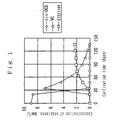
- Figure 1 is a graph showing the results of Example 3.
- Figure 2 is a graph showing the results of the control in Example 3.
- Figure 3 is a graph showing the results of Example 4.
- the nucleic acid of the present invention is nucleic acid comprising 18 ⁇ 25 nucleotides which preferentially hybridizes to the 16S rRNA or rDNA of chlorinated ethylene-decomposing bacteria and has any of base sequences of SEQ ID No. 1 through No. 15 of the base sequence table, a base sequence having at least 90% homology with these base sequences, or a base sequence complementary to these base sequences.
- the nucleic acid of the present invention is nucleic acid which comprises 10 ⁇ 50 nucleotides, preferably 15 ⁇ 35 nucleotides, that preferentially hybridizes to the 16S rRNA or rDNA of chlorinated ethylene-decomposing bacteria and wherein the base sequence of at least 10 individual bases in succession is the same as any of sequences of SEQ ID No. 1 through No. 15 or complementary to these base sequences.
- An example is nucleic acid having the same base sequence as a base sequence of 10 or more individual bases in succession beginning at any position in base sequence of SEQ ID No. 1 or complementary to these base sequences.
- a base may be bound upstream and/or downstream of the base sequence that is the same as this base sequence of SEQ ID No. 1 or complementary to these base sequences.
- the nucleic acid of the present invention that is, any of base sequences of SEQ ID No. 1 through No. 15, a base sequence having at least 90% homology with any of these base sequences, a base sequence complimentary to any of these base sequences, or a base sequence wherein the base sequence of at least 10 individual bases in succession is the same as any of base sequence of SEQ ID No. 1 through No. 15 or complementary to these base sequences, can be easily chemically synthesized by conventional methods.
- the base sequence of the 16S rDNA of chlorinated ethylene-decomposing bacteria has been determined, and then the nucleic acids of the present invention are designed using the specific segment of these sequences, they preferentially hybridize to 16S rRNA or rDNA of chlorinated ethylene-decomposing bacteria.
- chlorinated ethylene-decomposing bacteria there are bacteria belonging to the genus Dehalococcoides, etc.
- chlorinated ethylene that can be decomposed or dechlorinated by chlorinated ethylene-decomposing bacteria
- chlorinated ethylene-decomposing bacteria tetrachloroethylene, trichloroethylene (TCE), cis-1,2-dichloroethylene, trans-1,2-dichloroethylene, 1,1-dichloroethylene, vinyl chloride, and their dechlorination intermediates, etc.
- chlorinated ethanes that can be decomposed or dechlorinated by chlorinated ethylene-decomposing bacteria are 1,2-dichloroethane, monochloroethane, etc.
- chlorinated ethylene-decomposing bacteria can be detected easily at specifically high reliability by PCR using the nucleic acids of the present invention as the primer or by hybridization.
- the labeled probe for detection of chlorinated ethylene-decomposing bacteria of the present invention is a probe wherein the above-mentioned nucleic acid of the present invention has been labeled with a label, such as a radioactive element, fluorescent substance, chemical substance, antigen, antibody, enzyme, etc. Labels that have usually been used can be used as this label, specific examples being radioactive elements, such as 32 P, etc., phosphors, such as FITC (fluorescence isothiocyanate), rhodamine, etc.; haptenes, such as digoxygenin, etc., enzymes such as alkaline phosphatase, peroxidase, etc., chemical substances, such as biotin, etc. These labels can be introduced to the nucleic acid by conventional methods.
- a label such as a radioactive element, fluorescent substance, chemical substance, antigen, antibody, enzyme, etc.
- Labels that have usually been used can be used as this label, specific examples being radioactive elements, such as 32 P
- the labeled probe for detecting chlorinated ethylene-decomposing bacteria of the present invention hybridizes with a sample to be checked for the presence of chlorinated ethylene-decomposing bacteria and the chlorinated ethylene-decomposing bacteria that have hybridized with labeled probe can be detected easily with specifically high reliability using this label as the indicator.
- the method of detecting chlorinated ethylene-decomposing bacteria of the present invention includes a method of detecting chlorinated ethylene-decomposing bacteria using the above-mentioned nucleic acid of the present invention. That is, PCR is performed using the above-mentioned nucleic acid of the present invention as the primer and the nucleic acid prepared from the sample to be checked for the presence of chlorinated ethylene-decomposing bacteria as the template and if DNA of the expected size is synthesized, it can be concluded that chlorinated ethylene-decomposing bacteria are present in the sample.
- PCR can be performed by conventional methods, or it can be performed using a commercial PCR kit. PCR usually uses 2 types of primers, an upper primer and a lower primer.
- the nucleic acid of the present invention can be used as one or both of the primers. Detection reliability can be improved by performing detection several times using several different types of nucleic acids as the primer.
- the method of detecting chlorinated ethylene-decomposing bacteria of the present invention includes the method wherein chlorinated ethylene-decomposing bacteria are detected using the above-mentioned labeled probe for detection of chlorinated ethylene-decomposing bacteria of the present invention. That is, it is the method wherein once RNA or DNA hybridization has been performed by bringing the above-mentioned labeled probe for detecting chlorinated ethylene-decomposing bacteria of the present invention into contact with the sample to be checked for presence of chlorinated ethylene-decomposing bacteria or with nucleic acid prepared from this sample, chlorinated ethylene-decomposing bacteria are detected using the label as the indicator. Hybridization can be performed by the same methods as conventional methods.
- Detection after hybridization can be performed by conventional methods in accordance with the type of label. For instance, detection can be performed by assaying radioactivity by conventional methods when the probe has been labeled by a radioactive element. Moreover, detection can be performed by measuring the quantity of light by conventional methods when the probe has been labeled by a fluorescent substance. In addition, detection can be performed by assaying enzyme activity by conventional methods when the probe has been labeled by an enzyme. Further, detection can be performed by analyzing chemical substance when the probe has been labeled by chemical substance. Furthermore, detection can be performed by conducting an antigen-antibody reaction using antibody or antigen that reacts specifically with labeled antigen or antibody and determining the reaction product by conventional methods when the probe is labeled by antigen or antibody.
- chlorinated ethylene-decomposing bacteria When soil or underground water contaminated by chlorinated ethylene or ethane is to be purified using chlorinated ethylene-decomposing bacteria, it is possible to pre-determine whether or not dechlorination can be throughly accomplished by detecting chlorinated ethylene-decomposing bacteria in the above-mentioned method. Moreover, application of measures including addition of chlorinated ethylene-decomposing bacteria, etc., become possible when chlorinated ethylene-decomposing bacteria have not been detected.
- the method of decomposing chlorinated ethylene or ethane of the present invention is the method wherein the above-mentioned detection of ethylene-decomposing bacteria of the present invention is conducted using underground water or soil as the sample, then the underground water or soil, in which chlorinated ethylene-decomposing bacteria have been detected, or cultivation liquid inoculated with these (there are cases hereafter where these are collectively referred to as chlorinated ethylene-decomposing bacteria-detected matter) is introduced to soil or underground water contaminated by chlorinated ethylene or ethane (there are cases hereafter where these are collectively referred to as contaminated environment) and thereby the chlorinated ethylene or ethane is decomposed.
- the chlorinated ethylene-decomposing bacteria-detected matter to be introduced to the contaminated environment may be any one which is detected or collected anywhere.
- underground water or soil in which chlorinated ethylene-decomposing bacteria have been detected in a place incontaminated by chlorinated ethylene or ethane, or cultivation liquid inoculated with these, may be introduced to soil or underground water contaminated by chlorinated ethylene or ethane.
- underground water or soil in which chlorinated ethylene-decomposing bacteria have been detected in a place contaminated by chlorinated ethylene or ethane, or cultivation liquid inoculated with these, may be introduced to a place contaminated by chlorinated ethylene or ethane in the same region or may be introduced to a different place not in the same region.
- the method of spreading chlorinated ethylene-decomposing bacteria-detected matter on the surface of contaminated soil, the method of injection into soil from an injection tube or injection well, the method of injection into source of underground water, etc., are given as methods of introducing chlorinated ethylene-decomposing bacteria-detected matter into a contaminated environment.
- the introduction point may, of course, be the contaminated site, or upstream from the contaminated environment, etc.
- chlorinated ethylene or ethane When the chlorinated ethylene or ethane is decomposed, there are cases where the underground water or soil, in which chlorinated ethylene-decomposing bacteria have been detected, or cultivation liquid inoculated with these, is simply introduced to the contaminated environment, but depending on the case, water, nutrient source, etc., may also be further introduced. Moreover, if there is not thorough decomposition with 1 introduction, introduction may be repeated. It is also possible to introduce the chlorinated ethylene-decomposing bacteria-detected matter after adding coagulant to coagulate, or after supporting the matter on a carrier.
- a contaminated environment contaminated by chlorinated ethylene or ethane can be purified by decomposing chlorinated ethylene or ethane.
- the nucleic acid of the present invention is novel and useful.
- the nucleic acids of the present invention have a specific base sequence and hybridizes preferentially to 16S rRNA or rDNA of chlorinated ethylene-decomposing bacteria. Therefore, they can be used for detection of chlorinated ethylene-decomposing bacteria.
- the nucleic acids for detection of chlorinated ethylene-decomposing bacteria of the present invention comprise the above-mentioned nucleic acids and therefore, chlorinated ethylene-decomposing bacteria can be easily detected with specifically high reliability by using these nucleic acids.
- the labeled probes for detecting chlorinated ethylene-decomposing bacteria of the present invention label the above-mentioned nucleic acid and therefore, it is possible to easily detect with specifically high reliability chlorinated ethylene-decomposing bacteria using this label as the indicator.
- the method of detecting chlorinated ethylene-decomposing bacteria of the present invention uses the above-mentioned nucleic acids or labeled probes and therefore, chlorinated ethylene-decomposing bacteria can be detected easily with specifically high reliability.
- chlorinated ethylene or ethane of the present invention By means of the method of decomposing chlorinated ethylene or ethane of the present invention, underground water or soil, in which chlorinated ethylene-decomposing bacteria have been detected by the above-mentioned detection method, or cultivation liquid inoculated with these, is introduced to soil or underground water contaminated by chlorinated ethylene or ethane and the chlorinated ethylene or ethane is decomposed. Therefore, chlorinated ethylene or ethane can be easily and efficiently decomposed to purify the environment.
- PCR was performed as described below using this extracted DNA solution and the presence of chlorinated ethylene-decomposing bacteria was examined.
- the 16S rDNA was amplified by PCR using 1 ⁇ L of the extracted DNA solution obtained by above-mentioned (1) as the template.
- the total volume of the reaction solution of PCR amplification was brought to 100 ⁇ L, and 2.5 U Ex Taq DNA polymerase (Takara Shuzo) and 200 ⁇ M dNTP were used.
- the PCR reaction was performed by pre-heating at 94°C for 2 minutes, followed by 30 cycles of step 1 at 94°C for 20 seconds, step 2 at 55°C for 30 seconds, and step 3 at 72°C for 2 minutes, and finally, post-extension for 7 minutes at 72°C.
- KWI-De8 was used as the upper primer and oligonucleotide complementary to KWI-De15 was used as the lower primer.
- KWI-De10 labeled with FITC (fluorescence isothiocyanate) at the 3' terminal and KWI-De11 phosphorylated at the 3' terminal and labeled with FITC at the 5' terminal were used as the hybridization probe.
- Wells (A and B) were placed in 2 places that were 1 m apart in an area contaminated by chlorinated ethylene. Water was pumped from point B at 3 L/min and this water was introduced to point A. When introduced to point A, lactic acid was added at a concentration of 100 mg/L. The contaminated aquifer was 3 m below the ground and the aquifer was 4 m thick.
- the underground water was periodically sampled at point B and the concentration of ethylenes was determined.
- the results are shown in Figure 3.
- the axis of abscissas shows the time that had lapsed and the 0 point is the time when 50 L of liquid in which chlorinated ethylene-decomposing bacteria had been detected (gene concentration: 10 7 copies/mL) had been introduced from point A.
Landscapes
- Life Sciences & Earth Sciences (AREA)
- Chemical & Material Sciences (AREA)
- Engineering & Computer Science (AREA)
- Organic Chemistry (AREA)
- Health & Medical Sciences (AREA)
- Microbiology (AREA)
- Zoology (AREA)
- Wood Science & Technology (AREA)
- Biotechnology (AREA)
- Proteomics, Peptides & Aminoacids (AREA)
- Bioinformatics & Cheminformatics (AREA)
- General Health & Medical Sciences (AREA)
- Genetics & Genomics (AREA)
- Analytical Chemistry (AREA)
- Environmental & Geological Engineering (AREA)
- Molecular Biology (AREA)
- Biochemistry (AREA)
- General Engineering & Computer Science (AREA)
- Water Supply & Treatment (AREA)
- Hydrology & Water Resources (AREA)
- Biomedical Technology (AREA)
- Soil Sciences (AREA)
- Biophysics (AREA)
- Physics & Mathematics (AREA)
- Immunology (AREA)
- Mycology (AREA)
- Biodiversity & Conservation Biology (AREA)
- Oil, Petroleum & Natural Gas (AREA)
- Medicinal Chemistry (AREA)
- Tropical Medicine & Parasitology (AREA)
- Virology (AREA)
- Measuring Or Testing Involving Enzymes Or Micro-Organisms (AREA)
- Processing Of Solid Wastes (AREA)
Applications Claiming Priority (4)
| Application Number | Priority Date | Filing Date | Title |
|---|---|---|---|
| JP2000227580 | 2000-07-24 | ||
| JP2000227580 | 2000-07-24 | ||
| JP2001066001 | 2001-03-09 | ||
| JP2001066001 | 2001-03-09 |
Publications (2)
| Publication Number | Publication Date |
|---|---|
| EP1176216A2 true EP1176216A2 (fr) | 2002-01-30 |
| EP1176216A3 EP1176216A3 (fr) | 2002-11-27 |
Family
ID=26596846
Family Applications (1)
| Application Number | Title | Priority Date | Filing Date |
|---|---|---|---|
| EP01117844A Ceased EP1176216A3 (fr) | 2000-07-24 | 2001-07-23 | Acides nucléiques, acides nucléiques pour la détection des bactéries décomposants l'éthylène chloré, méthode pour la détection des bactéries décomposant l'éthylène chloré, et méthode de décomposition d'éthylène et d'éthane chloré |
Country Status (5)
| Country | Link |
|---|---|
| US (4) | US20030104383A1 (fr) |
| EP (1) | EP1176216A3 (fr) |
| KR (1) | KR100879419B1 (fr) |
| CA (1) | CA2352500A1 (fr) |
| TW (1) | TWI319781B (fr) |
Cited By (1)
| Publication number | Priority date | Publication date | Assignee | Title |
|---|---|---|---|---|
| CN103088145A (zh) * | 2013-01-25 | 2013-05-08 | 中国海洋大学 | 一种紫云蛤科贝类线粒体16S rRNA基因的扩增引物 |
Families Citing this family (1)
| Publication number | Priority date | Publication date | Assignee | Title |
|---|---|---|---|---|
| US7615153B1 (en) * | 2008-05-07 | 2009-11-10 | Savannah River Nuclear Solutions, Llc | Microbial based chlorinated ethene destruction |
Family Cites Families (2)
| Publication number | Priority date | Publication date | Assignee | Title |
|---|---|---|---|---|
| US6294366B1 (en) * | 1997-09-19 | 2001-09-25 | Clariant Finance (Bvi) Limited | Compositions and methods for treating cellulose containing fabrics using truncated cellulase enzyme compositions |
| EP1224323B1 (fr) * | 1999-04-15 | 2006-03-01 | E.I. Du Pont De Nemours And Company | Fragments d'acide nucleique destines a l'identification de la bacterie de dechloration |
-
2001
- 2001-07-23 EP EP01117844A patent/EP1176216A3/fr not_active Ceased
- 2001-07-23 KR KR1020010044088A patent/KR100879419B1/ko not_active Expired - Fee Related
- 2001-07-23 TW TW090117921A patent/TWI319781B/zh not_active IP Right Cessation
- 2001-07-24 US US09/911,860 patent/US20030104383A1/en not_active Abandoned
- 2001-07-24 CA CA002352500A patent/CA2352500A1/fr not_active Abandoned
-
2003
- 2003-12-19 US US10/741,658 patent/US20050136410A1/en not_active Abandoned
-
2006
- 2006-09-06 US US11/517,144 patent/US20070059749A1/en not_active Abandoned
-
2007
- 2007-08-15 US US11/839,187 patent/US20080099395A1/en not_active Abandoned
Cited By (2)
| Publication number | Priority date | Publication date | Assignee | Title |
|---|---|---|---|---|
| CN103088145A (zh) * | 2013-01-25 | 2013-05-08 | 中国海洋大学 | 一种紫云蛤科贝类线粒体16S rRNA基因的扩增引物 |
| CN103088145B (zh) * | 2013-01-25 | 2014-10-08 | 中国海洋大学 | 一种紫云蛤科贝类线粒体16S rRNA基因的扩增引物 |
Also Published As
| Publication number | Publication date |
|---|---|
| KR100879419B1 (ko) | 2009-01-19 |
| EP1176216A3 (fr) | 2002-11-27 |
| TWI319781B (en) | 2010-01-21 |
| US20080099395A1 (en) | 2008-05-01 |
| CA2352500A1 (fr) | 2002-01-24 |
| US20050136410A1 (en) | 2005-06-23 |
| US20030104383A1 (en) | 2003-06-05 |
| US20070059749A1 (en) | 2007-03-15 |
| KR20020008788A (ko) | 2002-01-31 |
Similar Documents
| Publication | Publication Date | Title |
|---|---|---|
| Kotik et al. | Bacterial communities in tetrachloroethene-polluted groundwaters: a case study | |
| US9650682B2 (en) | Methods of identifying and classifying organohalide-respiring bacteria | |
| Lefebvre et al. | Treatment of hypersaline industrial wastewater by a microbial consortium in a sequencing batch reactor | |
| Rossetti et al. | Kinetic and phylogenetic characterization of an anaerobic dechlorinating microbial community | |
| US20080099395A1 (en) | Nucleic acid, nucleic acid for detecting chlorinated ethylene-decomposing bacteria, probe, method of detecting chlorinated ethylene-decomposing bacteria, and method of decomposing chlorinated ethylene | |
| US6894156B2 (en) | Nucleic acid fragments for the identification of dechlorinating bacteria | |
| EP1224323B1 (fr) | Fragments d'acide nucleique destines a l'identification de la bacterie de dechloration | |
| US6797817B1 (en) | Nucleic acid fragments for the identification of dechlorinating bacteria | |
| US7115734B2 (en) | Nucleic acid, nucleic acid for detecting dechlorination bacteria, probe, method for detecting dechlorination bacteria and method for treating earth or underground water polluted by chlorinated ethylene or chlorinated ethane | |
| EP3327149A1 (fr) | Souches bactériennes et consortium comprenant celui-ci pour la dégradation de mtbe, tba et/ou hcho | |
| JP3922944B2 (ja) | 環境試料の石油分解能力の予測法 | |
| JP2002355055A (ja) | 核酸、塩素化エチレン分解細菌検出用核酸、プローブ、塩素化エチレン分解細菌の検出方法および塩素化エチレンまたはエタンの分解方法 | |
| JP2007259862A (ja) | 核酸、塩素化エチレン分解細菌検出用核酸、プローブ、塩素化エチレン分解細菌の検出方法および塩素化エチレンまたはエタンの分解方法 | |
| US7595176B2 (en) | Methods and reagents for quantitative analysis of Dehalococcoides species | |
| JP2003219885A (ja) | 核酸、脱塩素化細菌検出用核酸、プローブ、脱塩素化細菌の検出方法および塩素化エチレンまたはエタンの分解方法 | |
| JP2005211004A (ja) | 塩素化エタン分解菌検出用核酸断片、検出方法および塩素化エタン分解方法 | |
| JP2005218322A (ja) | 塩素化エタン分解菌検出用核酸断片、検出方法および塩素化エタン分解方法 | |
| JP2002345473A (ja) | 核酸、脱塩素化細菌検出用核酸、プローブ、脱塩素化細菌の検出方法および脱塩素化方法 | |
| JP4421870B2 (ja) | 芳香族化合物の嫌気的分解の評価方法 | |
| KR101300368B1 (ko) | 탈염소화 효소 모니터링을 통한 토착 탈염소화 미생물 존재 확인 방법 | |
| Fukui et al. | Yoshikazu Koizumi, John J. Kelly, Tatsunori Nakagawa | |
| JP2010119340A (ja) | 有機ハロゲン化合物分解微生物を検出するためのプローブおよび検出方法 | |
| CA2474659A1 (fr) | Fragments d'acides nucleiques pour l'identification de bacteries de dechloration | |
| TW202022125A (zh) | 用於偵測脫鹵球菌的多重基因定量分析套組及方法 | |
| Löffler et al. | 16S rRNA Gene-Based Detection of |
Legal Events
| Date | Code | Title | Description |
|---|---|---|---|
| PUAI | Public reference made under article 153(3) epc to a published international application that has entered the european phase |
Free format text: ORIGINAL CODE: 0009012 |
|
| AK | Designated contracting states |
Kind code of ref document: A2 Designated state(s): AT BE CH CY DE DK ES FI FR GB GR IE IT LI LU MC NL PT SE TR |
|
| AX | Request for extension of the european patent |
Free format text: AL;LT;LV;MK;RO;SI |
|
| PUAL | Search report despatched |
Free format text: ORIGINAL CODE: 0009013 |
|
| AK | Designated contracting states |
Kind code of ref document: A3 Designated state(s): AT BE CH CY DE DK ES FI FR GB GR IE IT LI LU MC NL PT SE TR |
|
| AX | Request for extension of the european patent |
Free format text: AL;LT;LV;MK;RO;SI |
|
| RIC1 | Information provided on ipc code assigned before grant |
Free format text: 7C 12Q 1/68 A, 7B 09C 1/10 B |
|
| 16A | New documents despatched to applicant after publication of the search report |
Effective date: 20030115 |
|
| 17P | Request for examination filed |
Effective date: 20030117 |
|
| AKX | Designation fees paid |
Designated state(s): CH DE FR GB IT LI NL |
|
| 17Q | First examination report despatched |
Effective date: 20040216 |
|
| APBN | Date of receipt of notice of appeal recorded |
Free format text: ORIGINAL CODE: EPIDOSNNOA2E |
|
| APBV | Interlocutory revision of appeal recorded |
Free format text: ORIGINAL CODE: EPIDOSNIRAPE |
|
| APBR | Date of receipt of statement of grounds of appeal recorded |
Free format text: ORIGINAL CODE: EPIDOSNNOA3E |
|
| 17Q | First examination report despatched |
Effective date: 20040216 |
|
| APBN | Date of receipt of notice of appeal recorded |
Free format text: ORIGINAL CODE: EPIDOSNNOA2E |
|
| APBR | Date of receipt of statement of grounds of appeal recorded |
Free format text: ORIGINAL CODE: EPIDOSNNOA3E |
|
| APAF | Appeal reference modified |
Free format text: ORIGINAL CODE: EPIDOSCREFNE |
|
| APAF | Appeal reference modified |
Free format text: ORIGINAL CODE: EPIDOSCREFNE |
|
| APBT | Appeal procedure closed |
Free format text: ORIGINAL CODE: EPIDOSNNOA9E |
|
| STAA | Information on the status of an ep patent application or granted ep patent |
Free format text: STATUS: THE APPLICATION HAS BEEN REFUSED |
|
| 18R | Application refused |
Effective date: 20110216 |