EP1172459A2 - Dosierung von Suspensionen im Mikromassstab zur Herstellung von Materialproben in der kombinatorischen Materialforschung - Google Patents
Dosierung von Suspensionen im Mikromassstab zur Herstellung von Materialproben in der kombinatorischen Materialforschung Download PDFInfo
- Publication number
- EP1172459A2 EP1172459A2 EP01114775A EP01114775A EP1172459A2 EP 1172459 A2 EP1172459 A2 EP 1172459A2 EP 01114775 A EP01114775 A EP 01114775A EP 01114775 A EP01114775 A EP 01114775A EP 1172459 A2 EP1172459 A2 EP 1172459A2
- Authority
- EP
- European Patent Office
- Prior art keywords
- substrate
- suspension
- flat substrate
- dosing
- suspensions
- Prior art date
- Legal status (The legal status is an assumption and is not a legal conclusion. Google has not performed a legal analysis and makes no representation as to the accuracy of the status listed.)
- Withdrawn
Links
- 239000000463 material Substances 0.000 title claims abstract description 62
- 239000000725 suspension Substances 0.000 title claims abstract description 47
- 238000002360 preparation method Methods 0.000 title description 5
- 238000011160 research Methods 0.000 title description 2
- 239000000758 substrate Substances 0.000 claims abstract description 81
- 238000000034 method Methods 0.000 claims abstract description 40
- 239000000203 mixture Substances 0.000 claims abstract description 26
- 239000011159 matrix material Substances 0.000 claims abstract description 19
- 238000004519 manufacturing process Methods 0.000 claims abstract description 9
- 239000000843 powder Substances 0.000 claims description 16
- 230000008569 process Effects 0.000 claims description 5
- 150000001875 compounds Chemical class 0.000 claims description 4
- 238000001035 drying Methods 0.000 claims description 4
- 229910052768 actinide Inorganic materials 0.000 claims description 2
- 150000001255 actinides Chemical class 0.000 claims description 2
- 229910052747 lanthanoid Inorganic materials 0.000 claims description 2
- 150000002602 lanthanoids Chemical class 0.000 claims description 2
- 238000004154 testing of material Methods 0.000 claims description 2
- 238000001311 chemical methods and process Methods 0.000 claims 1
- 230000000737 periodic effect Effects 0.000 claims 1
- 239000000523 sample Substances 0.000 description 17
- 239000002270 dispersing agent Substances 0.000 description 16
- 239000007788 liquid Substances 0.000 description 11
- 239000007787 solid Substances 0.000 description 10
- 239000001301 oxygen Substances 0.000 description 9
- 229910052760 oxygen Inorganic materials 0.000 description 9
- -1 polytetrafluoroethylene Polymers 0.000 description 9
- 239000002245 particle Substances 0.000 description 8
- 238000005245 sintering Methods 0.000 description 8
- 238000012360 testing method Methods 0.000 description 8
- 239000001257 hydrogen Substances 0.000 description 7
- 229910052739 hydrogen Inorganic materials 0.000 description 7
- 238000012216 screening Methods 0.000 description 7
- IJGRMHOSHXDMSA-UHFFFAOYSA-N Atomic nitrogen Chemical compound N#N IJGRMHOSHXDMSA-UHFFFAOYSA-N 0.000 description 6
- 239000006185 dispersion Substances 0.000 description 6
- 125000002496 methyl group Chemical group [H]C([H])([H])* 0.000 description 6
- TWNQGVIAIRXVLR-UHFFFAOYSA-N oxo(oxoalumanyloxy)alumane Chemical compound O=[Al]O[Al]=O TWNQGVIAIRXVLR-UHFFFAOYSA-N 0.000 description 6
- VDZOOKBUILJEDG-UHFFFAOYSA-M tetrabutylammonium hydroxide Chemical compound [OH-].CCCC[N+](CCCC)(CCCC)CCCC VDZOOKBUILJEDG-UHFFFAOYSA-M 0.000 description 6
- WRIDQFICGBMAFQ-UHFFFAOYSA-N (E)-8-Octadecenoic acid Natural products CCCCCCCCCC=CCCCCCCC(O)=O WRIDQFICGBMAFQ-UHFFFAOYSA-N 0.000 description 5
- LQJBNNIYVWPHFW-UHFFFAOYSA-N 20:1omega9c fatty acid Natural products CCCCCCCCCCC=CCCCCCCCC(O)=O LQJBNNIYVWPHFW-UHFFFAOYSA-N 0.000 description 5
- QSBYPNXLFMSGKH-UHFFFAOYSA-N 9-Heptadecensaeure Natural products CCCCCCCC=CCCCCCCCC(O)=O QSBYPNXLFMSGKH-UHFFFAOYSA-N 0.000 description 5
- UFHFLCQGNIYNRP-UHFFFAOYSA-N Hydrogen Chemical compound [H][H] UFHFLCQGNIYNRP-UHFFFAOYSA-N 0.000 description 5
- 239000005642 Oleic acid Substances 0.000 description 5
- ZQPPMHVWECSIRJ-UHFFFAOYSA-N Oleic acid Natural products CCCCCCCCC=CCCCCCCCC(O)=O ZQPPMHVWECSIRJ-UHFFFAOYSA-N 0.000 description 5
- QVGXLLKOCUKJST-UHFFFAOYSA-N atomic oxygen Chemical compound [O] QVGXLLKOCUKJST-UHFFFAOYSA-N 0.000 description 5
- QXJSBBXBKPUZAA-UHFFFAOYSA-N isooleic acid Natural products CCCCCCCC=CCCCCCCCCC(O)=O QXJSBBXBKPUZAA-UHFFFAOYSA-N 0.000 description 5
- ZQPPMHVWECSIRJ-KTKRTIGZSA-N oleic acid Chemical class CCCCCCCC\C=C/CCCCCCCC(O)=O ZQPPMHVWECSIRJ-KTKRTIGZSA-N 0.000 description 5
- 238000003860 storage Methods 0.000 description 5
- XLYOFNOQVPJJNP-UHFFFAOYSA-N water Substances O XLYOFNOQVPJJNP-UHFFFAOYSA-N 0.000 description 5
- YEJRWHAVMIAJKC-UHFFFAOYSA-N 4-Butyrolactone Chemical compound O=C1CCCO1 YEJRWHAVMIAJKC-UHFFFAOYSA-N 0.000 description 4
- XEEYBQQBJWHFJM-UHFFFAOYSA-N Iron Chemical compound [Fe] XEEYBQQBJWHFJM-UHFFFAOYSA-N 0.000 description 4
- NRTOMJZYCJJWKI-UHFFFAOYSA-N Titanium nitride Chemical compound [Ti]#N NRTOMJZYCJJWKI-UHFFFAOYSA-N 0.000 description 4
- 239000007789 gas Substances 0.000 description 4
- PCHJSUWPFVWCPO-UHFFFAOYSA-N gold Chemical compound [Au] PCHJSUWPFVWCPO-UHFFFAOYSA-N 0.000 description 4
- 239000010931 gold Substances 0.000 description 4
- 229910052737 gold Inorganic materials 0.000 description 4
- 229910052751 metal Inorganic materials 0.000 description 4
- 239000002184 metal Substances 0.000 description 4
- HBMJWWWQQXIZIP-UHFFFAOYSA-N silicon carbide Chemical compound [Si+]#[C-] HBMJWWWQQXIZIP-UHFFFAOYSA-N 0.000 description 4
- 229910010271 silicon carbide Inorganic materials 0.000 description 4
- MYMOFIZGZYHOMD-UHFFFAOYSA-N Dioxygen Chemical compound O=O MYMOFIZGZYHOMD-UHFFFAOYSA-N 0.000 description 3
- 230000015572 biosynthetic process Effects 0.000 description 3
- 230000000694 effects Effects 0.000 description 3
- 230000009969 flowable effect Effects 0.000 description 3
- 150000002431 hydrogen Chemical class 0.000 description 3
- 238000005259 measurement Methods 0.000 description 3
- 238000002156 mixing Methods 0.000 description 3
- 229910052757 nitrogen Inorganic materials 0.000 description 3
- RUOJZAUFBMNUDX-UHFFFAOYSA-N propylene carbonate Chemical compound CC1COC(=O)O1 RUOJZAUFBMNUDX-UHFFFAOYSA-N 0.000 description 3
- 150000003839 salts Chemical class 0.000 description 3
- 239000000126 substance Substances 0.000 description 3
- QTBSBXVTEAMEQO-UHFFFAOYSA-M Acetate Chemical compound CC([O-])=O QTBSBXVTEAMEQO-UHFFFAOYSA-M 0.000 description 2
- ZHNUHDYFZUAESO-UHFFFAOYSA-N Formamide Chemical compound NC=O ZHNUHDYFZUAESO-UHFFFAOYSA-N 0.000 description 2
- BDAGIHXWWSANSR-UHFFFAOYSA-M Formate Chemical compound [O-]C=O BDAGIHXWWSANSR-UHFFFAOYSA-M 0.000 description 2
- 229910000831 Steel Inorganic materials 0.000 description 2
- 125000000217 alkyl group Chemical group 0.000 description 2
- PNEYBMLMFCGWSK-UHFFFAOYSA-N aluminium oxide Inorganic materials [O-2].[O-2].[O-2].[Al+3].[Al+3] PNEYBMLMFCGWSK-UHFFFAOYSA-N 0.000 description 2
- 230000008901 benefit Effects 0.000 description 2
- 239000000919 ceramic Substances 0.000 description 2
- 238000004590 computer program Methods 0.000 description 2
- 125000001495 ethyl group Chemical group [H]C([H])([H])C([H])([H])* 0.000 description 2
- 125000000219 ethylidene group Chemical group [H]C(=[*])C([H])([H])[H] 0.000 description 2
- 150000002191 fatty alcohols Chemical group 0.000 description 2
- 239000010419 fine particle Substances 0.000 description 2
- 229920002313 fluoropolymer Polymers 0.000 description 2
- 150000002500 ions Chemical class 0.000 description 2
- 239000003960 organic solvent Substances 0.000 description 2
- RVTZCBVAJQQJTK-UHFFFAOYSA-N oxygen(2-);zirconium(4+) Chemical compound [O-2].[O-2].[Zr+4] RVTZCBVAJQQJTK-UHFFFAOYSA-N 0.000 description 2
- HNJBEVLQSNELDL-UHFFFAOYSA-N pyrrolidin-2-one Chemical compound O=C1CCCN1 HNJBEVLQSNELDL-UHFFFAOYSA-N 0.000 description 2
- 238000000926 separation method Methods 0.000 description 2
- 239000002904 solvent Substances 0.000 description 2
- 238000004544 sputter deposition Methods 0.000 description 2
- 239000010959 steel Substances 0.000 description 2
- KZNICNPSHKQLFF-UHFFFAOYSA-N succinimide Chemical compound O=C1CCC(=O)N1 KZNICNPSHKQLFF-UHFFFAOYSA-N 0.000 description 2
- DZLFLBLQUQXARW-UHFFFAOYSA-N tetrabutylammonium Chemical class CCCC[N+](CCCC)(CCCC)CCCC DZLFLBLQUQXARW-UHFFFAOYSA-N 0.000 description 2
- WGTYBPLFGIVFAS-UHFFFAOYSA-M tetramethylammonium hydroxide Chemical compound [OH-].C[N+](C)(C)C WGTYBPLFGIVFAS-UHFFFAOYSA-M 0.000 description 2
- 238000012546 transfer Methods 0.000 description 2
- 229910001928 zirconium oxide Inorganic materials 0.000 description 2
- MSXVEPNJUHWQHW-UHFFFAOYSA-N 2-methylbutan-2-ol Chemical compound CCC(C)(C)O MSXVEPNJUHWQHW-UHFFFAOYSA-N 0.000 description 1
- QGZKDVFQNNGYKY-UHFFFAOYSA-O Ammonium Chemical compound [NH4+] QGZKDVFQNNGYKY-UHFFFAOYSA-O 0.000 description 1
- 229920001780 ECTFE Polymers 0.000 description 1
- KMTRUDSVKNLOMY-UHFFFAOYSA-N Ethylene carbonate Chemical compound O=C1OCCO1 KMTRUDSVKNLOMY-UHFFFAOYSA-N 0.000 description 1
- IAYPIBMASNFSPL-UHFFFAOYSA-N Ethylene oxide Chemical compound C1CO1 IAYPIBMASNFSPL-UHFFFAOYSA-N 0.000 description 1
- 239000004435 Oxo alcohol Substances 0.000 description 1
- 239000002033 PVDF binder Substances 0.000 description 1
- XBDQKXXYIPTUBI-UHFFFAOYSA-M Propionate Chemical compound CCC([O-])=O XBDQKXXYIPTUBI-UHFFFAOYSA-M 0.000 description 1
- XBDQKXXYIPTUBI-UHFFFAOYSA-N Propionic acid Chemical compound CCC(O)=O XBDQKXXYIPTUBI-UHFFFAOYSA-N 0.000 description 1
- CIUQDSCDWFSTQR-UHFFFAOYSA-N [C]1=CC=CC=C1 Chemical class [C]1=CC=CC=C1 CIUQDSCDWFSTQR-UHFFFAOYSA-N 0.000 description 1
- 238000009825 accumulation Methods 0.000 description 1
- 239000000654 additive Substances 0.000 description 1
- 150000001298 alcohols Chemical class 0.000 description 1
- 150000001338 aliphatic hydrocarbons Chemical class 0.000 description 1
- 229910052783 alkali metal Inorganic materials 0.000 description 1
- 150000001340 alkali metals Chemical class 0.000 description 1
- 125000002947 alkylene group Chemical group 0.000 description 1
- 229910052782 aluminium Inorganic materials 0.000 description 1
- XAGFODPZIPBFFR-UHFFFAOYSA-N aluminium Chemical compound [Al] XAGFODPZIPBFFR-UHFFFAOYSA-N 0.000 description 1
- 150000001408 amides Chemical class 0.000 description 1
- 150000001412 amines Chemical class 0.000 description 1
- 150000004945 aromatic hydrocarbons Chemical class 0.000 description 1
- 239000012298 atmosphere Substances 0.000 description 1
- 230000004888 barrier function Effects 0.000 description 1
- 239000002585 base Substances 0.000 description 1
- 125000004432 carbon atom Chemical group C* 0.000 description 1
- 150000007942 carboxylates Chemical class 0.000 description 1
- 229910010293 ceramic material Inorganic materials 0.000 description 1
- 238000006243 chemical reaction Methods 0.000 description 1
- 239000011248 coating agent Substances 0.000 description 1
- 238000000576 coating method Methods 0.000 description 1
- 239000002131 composite material Substances 0.000 description 1
- 238000007796 conventional method Methods 0.000 description 1
- 239000002826 coolant Substances 0.000 description 1
- 238000001816 cooling Methods 0.000 description 1
- 230000007547 defect Effects 0.000 description 1
- 238000013461 design Methods 0.000 description 1
- 238000010586 diagram Methods 0.000 description 1
- 229910003460 diamond Inorganic materials 0.000 description 1
- 239000010432 diamond Substances 0.000 description 1
- 230000004069 differentiation Effects 0.000 description 1
- 238000009792 diffusion process Methods 0.000 description 1
- 230000008034 disappearance Effects 0.000 description 1
- 238000002845 discoloration Methods 0.000 description 1
- 238000006073 displacement reaction Methods 0.000 description 1
- 238000009826 distribution Methods 0.000 description 1
- 150000002148 esters Chemical class 0.000 description 1
- RTZKZFJDLAIYFH-UHFFFAOYSA-N ether Substances CCOCC RTZKZFJDLAIYFH-UHFFFAOYSA-N 0.000 description 1
- 150000002170 ethers Chemical class 0.000 description 1
- 238000007046 ethoxylation reaction Methods 0.000 description 1
- 238000011049 filling Methods 0.000 description 1
- 239000012530 fluid Substances 0.000 description 1
- 238000000227 grinding Methods 0.000 description 1
- 150000008282 halocarbons Chemical class 0.000 description 1
- 238000010438 heat treatment Methods 0.000 description 1
- 238000000265 homogenisation Methods 0.000 description 1
- XLYOFNOQVPJJNP-UHFFFAOYSA-M hydroxide Chemical compound [OH-] XLYOFNOQVPJJNP-UHFFFAOYSA-M 0.000 description 1
- 125000002887 hydroxy group Chemical group [H]O* 0.000 description 1
- 230000002452 interceptive effect Effects 0.000 description 1
- 150000002576 ketones Chemical class 0.000 description 1
- FPYJFEHAWHCUMM-UHFFFAOYSA-N maleic anhydride Chemical compound O=C1OC(=O)C=C1 FPYJFEHAWHCUMM-UHFFFAOYSA-N 0.000 description 1
- 125000005439 maleimidyl group Chemical group C1(C=CC(N1*)=O)=O 0.000 description 1
- 150000001247 metal acetylides Chemical class 0.000 description 1
- 150000004767 nitrides Chemical class 0.000 description 1
- 150000002828 nitro derivatives Chemical class 0.000 description 1
- 239000012811 non-conductive material Substances 0.000 description 1
- 230000003647 oxidation Effects 0.000 description 1
- 238000007254 oxidation reaction Methods 0.000 description 1
- 230000035515 penetration Effects 0.000 description 1
- 230000035699 permeability Effects 0.000 description 1
- 238000005240 physical vapour deposition Methods 0.000 description 1
- 239000004033 plastic Substances 0.000 description 1
- 239000003495 polar organic solvent Substances 0.000 description 1
- 229920000233 poly(alkylene oxides) Polymers 0.000 description 1
- 229920001343 polytetrafluoroethylene Polymers 0.000 description 1
- 239000004810 polytetrafluoroethylene Substances 0.000 description 1
- 229920002981 polyvinylidene fluoride Polymers 0.000 description 1
- 238000002310 reflectometry Methods 0.000 description 1
- 239000007921 spray Substances 0.000 description 1
- 238000005118 spray pyrolysis Methods 0.000 description 1
- 238000005507 spraying Methods 0.000 description 1
- 230000006641 stabilisation Effects 0.000 description 1
- 238000011105 stabilization Methods 0.000 description 1
- 238000006467 substitution reaction Methods 0.000 description 1
- 229960002317 succinimide Drugs 0.000 description 1
- BDHFUVZGWQCTTF-UHFFFAOYSA-M sulfonate Chemical compound [O-]S(=O)=O BDHFUVZGWQCTTF-UHFFFAOYSA-M 0.000 description 1
- 239000000375 suspending agent Substances 0.000 description 1
- 238000003786 synthesis reaction Methods 0.000 description 1
- 125000000999 tert-butyl group Chemical group [H]C([H])([H])C(*)(C([H])([H])[H])C([H])([H])[H] 0.000 description 1
- 238000002604 ultrasonography Methods 0.000 description 1
Classifications
-
- C—CHEMISTRY; METALLURGY
- C04—CEMENTS; CONCRETE; ARTIFICIAL STONE; CERAMICS; REFRACTORIES
- C04B—LIME, MAGNESIA; SLAG; CEMENTS; COMPOSITIONS THEREOF, e.g. MORTARS, CONCRETE OR LIKE BUILDING MATERIALS; ARTIFICIAL STONE; CERAMICS; REFRACTORIES; TREATMENT OF NATURAL STONE
- C04B41/00—After-treatment of mortars, concrete, artificial stone or ceramics; Treatment of natural stone
- C04B41/45—Coating or impregnating, e.g. injection in masonry, partial coating of green or fired ceramics, organic coating compositions for adhering together two concrete elements
- C04B41/4572—Partial coating or impregnation of the surface of the substrate
- C04B41/4574—Coating different parts of the substrate with different materials
-
- B—PERFORMING OPERATIONS; TRANSPORTING
- B01—PHYSICAL OR CHEMICAL PROCESSES OR APPARATUS IN GENERAL
- B01J—CHEMICAL OR PHYSICAL PROCESSES, e.g. CATALYSIS OR COLLOID CHEMISTRY; THEIR RELEVANT APPARATUS
- B01J19/00—Chemical, physical or physico-chemical processes in general; Their relevant apparatus
- B01J19/0046—Sequential or parallel reactions, e.g. for the synthesis of polypeptides or polynucleotides; Apparatus and devices for combinatorial chemistry or for making molecular arrays
-
- B—PERFORMING OPERATIONS; TRANSPORTING
- B01—PHYSICAL OR CHEMICAL PROCESSES OR APPARATUS IN GENERAL
- B01J—CHEMICAL OR PHYSICAL PROCESSES, e.g. CATALYSIS OR COLLOID CHEMISTRY; THEIR RELEVANT APPARATUS
- B01J2219/00—Chemical, physical or physico-chemical processes in general; Their relevant apparatus
- B01J2219/00274—Sequential or parallel reactions; Apparatus and devices for combinatorial chemistry or for making arrays; Chemical library technology
- B01J2219/00277—Apparatus
- B01J2219/00351—Means for dispensing and evacuation of reagents
-
- B—PERFORMING OPERATIONS; TRANSPORTING
- B01—PHYSICAL OR CHEMICAL PROCESSES OR APPARATUS IN GENERAL
- B01J—CHEMICAL OR PHYSICAL PROCESSES, e.g. CATALYSIS OR COLLOID CHEMISTRY; THEIR RELEVANT APPARATUS
- B01J2219/00—Chemical, physical or physico-chemical processes in general; Their relevant apparatus
- B01J2219/00274—Sequential or parallel reactions; Apparatus and devices for combinatorial chemistry or for making arrays; Chemical library technology
- B01J2219/00277—Apparatus
- B01J2219/00351—Means for dispensing and evacuation of reagents
- B01J2219/00427—Means for dispensing and evacuation of reagents using masks
- B01J2219/0043—Means for dispensing and evacuation of reagents using masks for direct application of reagents, e.g. through openings in a shutter
-
- B—PERFORMING OPERATIONS; TRANSPORTING
- B01—PHYSICAL OR CHEMICAL PROCESSES OR APPARATUS IN GENERAL
- B01J—CHEMICAL OR PHYSICAL PROCESSES, e.g. CATALYSIS OR COLLOID CHEMISTRY; THEIR RELEVANT APPARATUS
- B01J2219/00—Chemical, physical or physico-chemical processes in general; Their relevant apparatus
- B01J2219/00274—Sequential or parallel reactions; Apparatus and devices for combinatorial chemistry or for making arrays; Chemical library technology
- B01J2219/00277—Apparatus
- B01J2219/00497—Features relating to the solid phase supports
- B01J2219/00527—Sheets
-
- B—PERFORMING OPERATIONS; TRANSPORTING
- B01—PHYSICAL OR CHEMICAL PROCESSES OR APPARATUS IN GENERAL
- B01J—CHEMICAL OR PHYSICAL PROCESSES, e.g. CATALYSIS OR COLLOID CHEMISTRY; THEIR RELEVANT APPARATUS
- B01J2219/00—Chemical, physical or physico-chemical processes in general; Their relevant apparatus
- B01J2219/00274—Sequential or parallel reactions; Apparatus and devices for combinatorial chemistry or for making arrays; Chemical library technology
- B01J2219/00583—Features relative to the processes being carried out
- B01J2219/00585—Parallel processes
-
- B—PERFORMING OPERATIONS; TRANSPORTING
- B01—PHYSICAL OR CHEMICAL PROCESSES OR APPARATUS IN GENERAL
- B01J—CHEMICAL OR PHYSICAL PROCESSES, e.g. CATALYSIS OR COLLOID CHEMISTRY; THEIR RELEVANT APPARATUS
- B01J2219/00—Chemical, physical or physico-chemical processes in general; Their relevant apparatus
- B01J2219/00274—Sequential or parallel reactions; Apparatus and devices for combinatorial chemistry or for making arrays; Chemical library technology
- B01J2219/00583—Features relative to the processes being carried out
- B01J2219/0059—Sequential processes
-
- B—PERFORMING OPERATIONS; TRANSPORTING
- B01—PHYSICAL OR CHEMICAL PROCESSES OR APPARATUS IN GENERAL
- B01J—CHEMICAL OR PHYSICAL PROCESSES, e.g. CATALYSIS OR COLLOID CHEMISTRY; THEIR RELEVANT APPARATUS
- B01J2219/00—Chemical, physical or physico-chemical processes in general; Their relevant apparatus
- B01J2219/00274—Sequential or parallel reactions; Apparatus and devices for combinatorial chemistry or for making arrays; Chemical library technology
- B01J2219/00583—Features relative to the processes being carried out
- B01J2219/00596—Solid-phase processes
-
- B—PERFORMING OPERATIONS; TRANSPORTING
- B01—PHYSICAL OR CHEMICAL PROCESSES OR APPARATUS IN GENERAL
- B01J—CHEMICAL OR PHYSICAL PROCESSES, e.g. CATALYSIS OR COLLOID CHEMISTRY; THEIR RELEVANT APPARATUS
- B01J2219/00—Chemical, physical or physico-chemical processes in general; Their relevant apparatus
- B01J2219/00274—Sequential or parallel reactions; Apparatus and devices for combinatorial chemistry or for making arrays; Chemical library technology
- B01J2219/00583—Features relative to the processes being carried out
- B01J2219/00603—Making arrays on substantially continuous surfaces
- B01J2219/00605—Making arrays on substantially continuous surfaces the compounds being directly bound or immobilised to solid supports
-
- B—PERFORMING OPERATIONS; TRANSPORTING
- B01—PHYSICAL OR CHEMICAL PROCESSES OR APPARATUS IN GENERAL
- B01J—CHEMICAL OR PHYSICAL PROCESSES, e.g. CATALYSIS OR COLLOID CHEMISTRY; THEIR RELEVANT APPARATUS
- B01J2219/00—Chemical, physical or physico-chemical processes in general; Their relevant apparatus
- B01J2219/00274—Sequential or parallel reactions; Apparatus and devices for combinatorial chemistry or for making arrays; Chemical library technology
- B01J2219/00583—Features relative to the processes being carried out
- B01J2219/00603—Making arrays on substantially continuous surfaces
- B01J2219/00605—Making arrays on substantially continuous surfaces the compounds being directly bound or immobilised to solid supports
- B01J2219/0061—The surface being organic
-
- B—PERFORMING OPERATIONS; TRANSPORTING
- B01—PHYSICAL OR CHEMICAL PROCESSES OR APPARATUS IN GENERAL
- B01J—CHEMICAL OR PHYSICAL PROCESSES, e.g. CATALYSIS OR COLLOID CHEMISTRY; THEIR RELEVANT APPARATUS
- B01J2219/00—Chemical, physical or physico-chemical processes in general; Their relevant apparatus
- B01J2219/00274—Sequential or parallel reactions; Apparatus and devices for combinatorial chemistry or for making arrays; Chemical library technology
- B01J2219/00583—Features relative to the processes being carried out
- B01J2219/00603—Making arrays on substantially continuous surfaces
- B01J2219/00605—Making arrays on substantially continuous surfaces the compounds being directly bound or immobilised to solid supports
- B01J2219/00612—Making arrays on substantially continuous surfaces the compounds being directly bound or immobilised to solid supports the surface being inorganic
-
- B—PERFORMING OPERATIONS; TRANSPORTING
- B01—PHYSICAL OR CHEMICAL PROCESSES OR APPARATUS IN GENERAL
- B01J—CHEMICAL OR PHYSICAL PROCESSES, e.g. CATALYSIS OR COLLOID CHEMISTRY; THEIR RELEVANT APPARATUS
- B01J2219/00—Chemical, physical or physico-chemical processes in general; Their relevant apparatus
- B01J2219/00274—Sequential or parallel reactions; Apparatus and devices for combinatorial chemistry or for making arrays; Chemical library technology
- B01J2219/00583—Features relative to the processes being carried out
- B01J2219/00603—Making arrays on substantially continuous surfaces
- B01J2219/00605—Making arrays on substantially continuous surfaces the compounds being directly bound or immobilised to solid supports
- B01J2219/00614—Delimitation of the attachment areas
- B01J2219/00621—Delimitation of the attachment areas by physical means, e.g. trenches, raised areas
-
- B—PERFORMING OPERATIONS; TRANSPORTING
- B01—PHYSICAL OR CHEMICAL PROCESSES OR APPARATUS IN GENERAL
- B01J—CHEMICAL OR PHYSICAL PROCESSES, e.g. CATALYSIS OR COLLOID CHEMISTRY; THEIR RELEVANT APPARATUS
- B01J2219/00—Chemical, physical or physico-chemical processes in general; Their relevant apparatus
- B01J2219/00274—Sequential or parallel reactions; Apparatus and devices for combinatorial chemistry or for making arrays; Chemical library technology
- B01J2219/00583—Features relative to the processes being carried out
- B01J2219/00603—Making arrays on substantially continuous surfaces
- B01J2219/00605—Making arrays on substantially continuous surfaces the compounds being directly bound or immobilised to solid supports
- B01J2219/00623—Immobilisation or binding
- B01J2219/0063—Other, e.g. van der Waals forces, hydrogen bonding
-
- B—PERFORMING OPERATIONS; TRANSPORTING
- B01—PHYSICAL OR CHEMICAL PROCESSES OR APPARATUS IN GENERAL
- B01J—CHEMICAL OR PHYSICAL PROCESSES, e.g. CATALYSIS OR COLLOID CHEMISTRY; THEIR RELEVANT APPARATUS
- B01J2219/00—Chemical, physical or physico-chemical processes in general; Their relevant apparatus
- B01J2219/00274—Sequential or parallel reactions; Apparatus and devices for combinatorial chemistry or for making arrays; Chemical library technology
- B01J2219/00583—Features relative to the processes being carried out
- B01J2219/00603—Making arrays on substantially continuous surfaces
- B01J2219/00659—Two-dimensional arrays
-
- B—PERFORMING OPERATIONS; TRANSPORTING
- B01—PHYSICAL OR CHEMICAL PROCESSES OR APPARATUS IN GENERAL
- B01J—CHEMICAL OR PHYSICAL PROCESSES, e.g. CATALYSIS OR COLLOID CHEMISTRY; THEIR RELEVANT APPARATUS
- B01J2219/00—Chemical, physical or physico-chemical processes in general; Their relevant apparatus
- B01J2219/00274—Sequential or parallel reactions; Apparatus and devices for combinatorial chemistry or for making arrays; Chemical library technology
- B01J2219/0068—Means for controlling the apparatus of the process
- B01J2219/00686—Automatic
- B01J2219/00689—Automatic using computers
-
- B—PERFORMING OPERATIONS; TRANSPORTING
- B01—PHYSICAL OR CHEMICAL PROCESSES OR APPARATUS IN GENERAL
- B01J—CHEMICAL OR PHYSICAL PROCESSES, e.g. CATALYSIS OR COLLOID CHEMISTRY; THEIR RELEVANT APPARATUS
- B01J2219/00—Chemical, physical or physico-chemical processes in general; Their relevant apparatus
- B01J2219/00274—Sequential or parallel reactions; Apparatus and devices for combinatorial chemistry or for making arrays; Chemical library technology
- B01J2219/0068—Means for controlling the apparatus of the process
- B01J2219/00686—Automatic
- B01J2219/00691—Automatic using robots
-
- B—PERFORMING OPERATIONS; TRANSPORTING
- B01—PHYSICAL OR CHEMICAL PROCESSES OR APPARATUS IN GENERAL
- B01J—CHEMICAL OR PHYSICAL PROCESSES, e.g. CATALYSIS OR COLLOID CHEMISTRY; THEIR RELEVANT APPARATUS
- B01J2219/00—Chemical, physical or physico-chemical processes in general; Their relevant apparatus
- B01J2219/00274—Sequential or parallel reactions; Apparatus and devices for combinatorial chemistry or for making arrays; Chemical library technology
- B01J2219/0068—Means for controlling the apparatus of the process
- B01J2219/00702—Processes involving means for analysing and characterising the products
- B01J2219/00707—Processes involving means for analysing and characterising the products separated from the reactor apparatus
-
- B—PERFORMING OPERATIONS; TRANSPORTING
- B01—PHYSICAL OR CHEMICAL PROCESSES OR APPARATUS IN GENERAL
- B01J—CHEMICAL OR PHYSICAL PROCESSES, e.g. CATALYSIS OR COLLOID CHEMISTRY; THEIR RELEVANT APPARATUS
- B01J2219/00—Chemical, physical or physico-chemical processes in general; Their relevant apparatus
- B01J2219/00274—Sequential or parallel reactions; Apparatus and devices for combinatorial chemistry or for making arrays; Chemical library technology
- B01J2219/00718—Type of compounds synthesised
- B01J2219/00745—Inorganic compounds
-
- B—PERFORMING OPERATIONS; TRANSPORTING
- B01—PHYSICAL OR CHEMICAL PROCESSES OR APPARATUS IN GENERAL
- B01J—CHEMICAL OR PHYSICAL PROCESSES, e.g. CATALYSIS OR COLLOID CHEMISTRY; THEIR RELEVANT APPARATUS
- B01J2219/00—Chemical, physical or physico-chemical processes in general; Their relevant apparatus
- B01J2219/00274—Sequential or parallel reactions; Apparatus and devices for combinatorial chemistry or for making arrays; Chemical library technology
- B01J2219/00718—Type of compounds synthesised
- B01J2219/00745—Inorganic compounds
- B01J2219/0075—Metal based compounds
-
- B—PERFORMING OPERATIONS; TRANSPORTING
- B01—PHYSICAL OR CHEMICAL PROCESSES OR APPARATUS IN GENERAL
- B01J—CHEMICAL OR PHYSICAL PROCESSES, e.g. CATALYSIS OR COLLOID CHEMISTRY; THEIR RELEVANT APPARATUS
- B01J2219/00—Chemical, physical or physico-chemical processes in general; Their relevant apparatus
- B01J2219/00274—Sequential or parallel reactions; Apparatus and devices for combinatorial chemistry or for making arrays; Chemical library technology
- B01J2219/00718—Type of compounds synthesised
- B01J2219/00745—Inorganic compounds
- B01J2219/0075—Metal based compounds
- B01J2219/00754—Metal oxides
-
- C—CHEMISTRY; METALLURGY
- C40—COMBINATORIAL TECHNOLOGY
- C40B—COMBINATORIAL CHEMISTRY; LIBRARIES, e.g. CHEMICAL LIBRARIES
- C40B40/00—Libraries per se, e.g. arrays, mixtures
- C40B40/18—Libraries containing only inorganic compounds or inorganic materials
-
- C—CHEMISTRY; METALLURGY
- C40—COMBINATORIAL TECHNOLOGY
- C40B—COMBINATORIAL CHEMISTRY; LIBRARIES, e.g. CHEMICAL LIBRARIES
- C40B60/00—Apparatus specially adapted for use in combinatorial chemistry or with libraries
- C40B60/14—Apparatus specially adapted for use in combinatorial chemistry or with libraries for creating libraries
Definitions
- the invention relates to methods for the combinatorial production of material samples in Form of a two-dimensional matrix in the surface area of a flat substrate.
- the invention relates to a method for combinatorial testing of such received material samples.
- WO 98/47613 discloses a number of methods by means of which sputtering, CVD or PVD techniques libraries of potentially interesting materials are generated can.
- this application relates to the use of suitable mask techniques, which is a defined separation of at least 2 components (which as separate Substrates are present) on a substrate, whereby composite materials are obtained become.
- suitable mask techniques which is a defined separation of at least 2 components (which as separate Substrates are present) on a substrate, whereby composite materials are obtained become.
- the method by generating gradients on the sputtered substrate complete libraries of different materials Composition are generated.
- DE-A 199 55 789 which is older and not prepublished, relates to a method for combinatorial production of a library of materials in which at least two different sprayable material components from at least two spray nozzles a substrate can be sprayed.
- spray pyrolysis is carried out.
- the object of the present invention is to provide a method for combinatorial production of material samples in the form of a two-dimensional Matrix in the surface area of a flat substrate, which has the disadvantages of the known Avoiding procedures and allowing simplified procedures.
- one reliable apparatus design of the method can be provided.
- the received Materials should be manufactured and examined as practically as possible so that special, effects caused by the combinatorial manufacturing process are suppressed.
- the object is achieved according to the invention by a method for combinatorial Production of material samples in the form of a two-dimensional matrix in the Surface area of a flat substrate, in which at least two different ones meterable material components as a suspension of one or more Dosing devices that allow the dispensing of individual drops of suspension onto the same Place of the substrate are metered, so that on different surface areas of the Substrate materials with different compositions can be obtained.
- the process according to the invention is achieved by using special dispersing agents and dispersion techniques, as described below, are particularly advantageous executed.
- the flat substrate is preferably arranged horizontally and is in the essentially vertical, i.e. loaded from above, the metering devices so are arranged so that the dosing directions in a perpendicular to the flat substrate or angled from it.
- any suitable metering devices can be used allow the delivery of individual drops of suspension. Dosing is preferred by moving movable pistons in the metering device (s) (or in one corresponding cavity of the dosing device). Syringes are particularly preferred used as dosing devices. In the particularly advantageous miniaturized Execution of the method according to the invention uses microliter syringes which a volume of 1 to 1000 microliters, particularly preferably 10 to 100 microliters exhibit.
- a multiplicity of differently composed materials is preferably applied generated a substrate. Preferably at least 100 are preferred at least 1000 different materials are formed on the substrate.
- the components of the material combinations to be produced are preferably used present powder using suitable dispersants and organic Solvent and / or water to highly concentrated particle suspensions. This are preferably directly via fixed pistons in the manner of microliter syringes or indirectly into a suitable syringe via barrier liquids serving as liquid pistons or cannula sucked in. The sucked in suspensions are then on a preselected location in quantity and speed computer controlled in Filed surface area of a flat substrate.
- the expression "in the surface area” means that the materials, for example, on a flat substrate are formed, the metered material components not penetrate into the substrate. This is for example with smooth metal, ceramic or Plastic substrates the case in which, for example, the metered material components can be included in wells.
- the material is formed in the uppermost layer of the flat substrate, d. H. in the surface area.
- the depth of penetration is the metered Material components preferably a maximum of 100 microns, in particular a maximum of 10 microns.
- flat substrate means a substrate that extends in two spatial directions extends much more than in the third spatial direction.
- the flat substrate must not even, it can be, for example, a row of bowls or Act wells on or in a plate.
- it can be a Dab plate act or a corresponding plate, which periodically Has depressions.
- the exact configuration of the flat substrate is not limited. Individual sections can also be made in other suitable ways (Matrix elements) on the flat substrate.
- the flat substrate is thereby in divided individual places that the doses on the substrate in one spatial distance takes place, the confluence of metered suspension drops prevented on the substrate.
- the flat substrate is thereby divided into individual defined places that one with holes on the flat substrate provided matrix plate is placed, the metering takes place in the holes that dosed suspension drops are dried at least so far that they are Lifting off the matrix plate does not flow together on the substrate, and the matrix plate is lifted off after this drying.
- the suspensions are in the holes metered in simultaneously or successively, the suspensions over a small suitable Mixing device mixed and after partially drying the mixture Matrix plate lifted off.
- the material for the matrix plate becomes less wettable Fluoroplastics such as polytetrafluoroethylene, polyvinylidene fluoride or ECTFE are used.
- the matrix plates have thicknesses of 0.5 to 5 mm, preferably 1 to 2 mm.
- the holes in it for receiving the suspensions or their mixtures have distances of 1-2 mm, their diameters are at the Base 1-3 mm.
- the holes have bevels of at least 5 ° on, whereby the material samples take the form of blunt cones that with the larger area on the substrate plate.
- Edge length can accommodate 1,000 to 2,000 material samples. It is also possible to work without matrix plates. To do this, it must be ensured that e.g. out Microliter syringes placed on the substrate plate do not flow apart. Around To ensure this, the solid particles are suspended in liquids that on the one hand have the highest possible surface tension, on the other hand with the Do not form a hydrogen bond on the substrate plate.
- the invention also relates to a method for combinatorial testing of the so libraries of materials obtained, in which the on individually defined places of the Material samples present in the substrate using physical and / or chemical methods be examined for a desired property.
- the suspensions of the components are made from one stirred storage vessel by means of microliter syringes moved for each Component mounted separately.
- the microliter syringes are each on a robot arm so approached each other that they lie on an imaginary cone and the The openings of the channels almost touch at one point.
- Spraying metered amounts of the respective suspensions via the actuators, and the drop generated in this way is either by lifting the syringes or lifting the Substrate plate until the drop touches the substrate plate, and lifting the syringes on the Substrate plate deposited. Either it is placed freely on the plate or in the cavity of one Matrix board.
- the component mixture can be inside a cavity of a matrix plate be mixed. This can be done in the form of a premix followed by Placing the mixture on or directly on the flat substrate or in its cavities.
- the drops of the components are not placed on immediately the actual substrate plate, but you place it on another plate, mix the components on the separate plate and then transfer the mixture with a single dosing syringe on the actual substrate plate.
- This has the advantage that with Security receives a homogeneously mixed material. You can also do something Mix a larger amount, for example 20-100 ⁇ l, with less error doses, and uses only a part of this amount, for example 5 to 20 ul.
- This procedure is characterized in that the meterable Material components are first metered and mixed on an auxiliary substrate and the mixture is then taken up with the metering device and metered onto the substrate becomes.
- the filling of the syringes and dosing of the suspensions is controlled by a computer, which also controls the screening equipment.
- the quantities are according to the specifications of the individual components assigned to the location coordinates on the substrate plate and dosed or premixed there.
- the mixing ratios can over a random number generator can be determined.
- the specifications to be entered are, for example Subdivision of the proportions of the individual components, or it is specified that certain components with a minimum or maximum proportion of the mixture should be involved.
- samples are screened on the same time scale. Including the after the Synthesis of subsequent sintering to the actual material and parallel use of the Times of sample setting, sintering and screening can vary depending on the 24 hour period Sample size and test duration 1,000 to 5,000 material samples can be screened.
- the substrate plate is placed in a Sintering furnace transferred in which at materials and temperatures and atmospheres the actual materials to be screened are generated.
- the samples heated at speeds of 1 to 20 ° C / min, 0.5 to 5 hours at Leave the sintering temperature, and then the furnace is cooled.
- Shrink when sintering the samples usually according to the volume fraction that is not with inorganic Powder was filled. At 50% volume, the linear shrinkage for example about 21%.
- the screening robot guides its probe according to the computer program and the Coordinates the material samples over the samples and checks a cycle according to the Test specifications.
- the test probes are designed according to the properties to be tested: If mechanical properties such as hardness or rigidity are to be checked, see above one uses a rigid substrate plate, for example made of silicon carbide.
- the test probe carries a diamond that is pressed onto the samples, which becomes the force / displacement diagram measured and saved sample by sample in the computer. The measurements can be made at different temperatures or temperature-controlled probe.
- the dielectric properties are screened by placing the material samples on a are electrically conductive substrate plate, for example silicon carbide or on a ceramic or metal plate coated with gold or titanium nitride, and the probe with a constant test force. Then one is added to the material sample AC voltage with the frequency and voltage of interest applied and the dielectric properties of interest are measured. This can also happen with different Measuring temperatures take place.
- the probe To probe magnetic properties, the probe has a mini coil that co-operates with it Streams of variable frequency is applied. This is obtained via a secondary coil Information about magnetic permeability, hysteresis values, quality factors or other important properties.
- the substrate plate should avoid interfering eddy currents consist of a non-conductive material such as aluminum or zirconium oxide.
- the samples are used to screen the oxidation and scale resistance of materials heated together with inert substrate plates in the atmosphere of interest, and with a Camera will be the disappearance of reflectivity, the formation of Tarnish or other discoloration and changes observed.
- the material samples including inert are Substrate plate made of ceramic materials in the gaseous or liquid medium exposed to temperatures of interest and in a first step optically visible Checked for changes.
- Electrical resistances or impedances can be applied via an electrode be checked depending on the frequency.
- Thermal voltages and thermal currents can occur on the individual material samples Applying a tempered electrode can be screened relative to each other.
- the ion conductivity of the material samples can also be easily screened. So lets screen the conductivity for oxygen ions by looking at the electrical Measures resistance at certain temperatures and oxygen partial pressures.
- the storage capacity of material samples for gases such as hydrogen or Oxygen can be screened quickly by adding the substrate plate with the material samples Room temperature is exposed to the gas to be tested. Then the samples briefly contacted with a heated tube using a mass spectrometer is connected to measure whether and how much of the gas at given temperatures or is released during heating.
- Photoelectric effects can be quickly screened by the electrical resistance or the formation of a photo voltage when the exposure changes.
- Example contains liquid nitrogen. There is a on the bottom of the container Permanent magnet. Samples of material that float or float Jump temperatures of at least -196 ° C. The level can vary depending on the cooling medium the jump temperature limits to be screened.
- Measurement curves If tests supply measured values directly or via transducers, these are for each Material pobe or coordinate stored on the substrate plate, such as Measurement curves.
- the computer program is designed so that a particularly characteristic Value is displayed in a color scale on a screen. So you get with one View an overview of this characteristic size on the entire substrate plate. Points that seem interesting are clicked on (called up) and you get both the measurement curve as well as other important parameters such as dosed composition, Coordinates, etc.
- the material components are preferably selected from suspensions and powders of elements from groups IB, IIB, IIIB, IVB, VB, VIB, VIIB and VIII, lanthanoids, Actinoids, IA, IIA, IIIA, IVA, VA and VIA or their compounds or mixtures from that.
- Powder includes metal powder as well as oxides, carbides or nitrides understand.
- the suspending agents can be, for example, water, paraffins or Mixtures of solvents with suitable dispersants such as organic Be additives. If suspensions are dosed, the particles contained in the Dispersion / suspension are included, preferably less than 50 microns, particularly preferably less than 10 microns in order to avoid clogging of the nozzles.
- dispersants of the formula I (R 1 ) x -A - [(BO) n -Z] y a very broad spectrum of activity.
- the compounds (I) are alkylene oxide or polyalkylene oxide derivatives with radicals (R 1 ) x -A- and -Z as terminating groups.
- the dispersants of the general formula (I) are used according to the invention for Dispersion of finely divided solids in a flowable medium (dispersant). She are described, for example, in EP-A-0 582 209.
- Such solids are preferably oxidic or non-oxide inorganic powders and Metal powder.
- Finely divided means that the average grain sizes are generally 0.1 to 10 ⁇ m.
- Flowable media include liquids that are at room temperature are liquid, such as water or organic solvents such as alcohols, ethers, Ether alcohols, esters, ketones, aliphatic and aromatic hydrocarbons, halogenated hydrocarbons, amines, amides and nitro compounds. It can too Mixtures of these substances can be used.
- the flowable media and Compounds of formula (I) are suspensions to be applied according to the invention available.
- the suspensions used according to the invention are produced per se known way. So it has proven particularly useful to use the dispersion Make ultrasonic waves by dispersing medium and dispersant in one Ultrasound bath can be mixed with the solid.
- dispersants of the following formulas are also well suited: or or in which R 1 is an aliphatic hydrocarbon radical having 10 to 40 carbon atoms, A the grouping -O- or -C (O) -O-, R 2 at different positions independently of one another -H, -CH 3 or -CH 2 -CH 3 , B the Gmppiemng -HSO 3 , -H 2 PO 4 , - (CH 2 ) x -C (O) -OZ, - (CH 2 ) -NH 2 , -NH- (CH 2 ) x -NH 2 or - (CH 2 ) x -C (O) -NY 2 , in the Z for hydrogen, alkali metal or ammonium, x represents an integer from 1 to 3 and y represents H or -CH 3 , D the grouping> N- or
- dispersants Preferably 0.1 to 10% by weight of the dispersants are particularly preferred 0.5 to 5 wt .-%, based on the solid used.
- Dispersants which have been found to contain the salts of oleic acid have proven suitable Tetramethylammonium hydroxide or tetrabutylammonium hydroxide in a molar ratio of 1: 1 are.
- the invention also relates to a device for performing the described Method, comprising a computer-controlled movable robot arm, the one or several 1 to 1000 ⁇ l dosing devices, e.g. Syringes carries, as well as one Computer to control the robot arm.
- a device for performing the described Method comprising a computer-controlled movable robot arm, the one or several 1 to 1000 ⁇ l dosing devices, e.g. Syringes carries, as well as one Computer to control the robot arm.
- a suspension was obtained which contained 40% by volume of iron powder.
- This suspension was aspirated through a microliter syringe with a total content of 10 ⁇ l.
- the piston diameter of the syringe was 0.5 mm
- the cannula diameter was approximately 0.2 mm at 45 mm cannula length.
- Example 1 39.5 g of an aluminum oxide powder with a maximum of the grain size distribution 0.9 ⁇ m, 13.8 g of propylene carbonate and 0.7 g of the tetrabutylammonium salt of oleic acid were mixed as in Example 1. A stable suspension was obtained, the 45 vol .-% Contains alumina. This suspension was easy to use with a Dispense a microliter syringe with the dimensions from Example 1 in the same dispensing cycle.
- Example 2 39.5 g of the aluminum oxide from Example 2 were analogous to Example 2 with 11.5 g of water and 0.7 g of tetrabutylammonium salt of oleic acid are mixed.
- the stable obtained Suspension contained 45% by volume of aluminum oxide and was as in Example 1 shown dispense without difficulty.
- Example 2 100 g of aluminum oxide from Example 2 were analogous to this example with 31.4 g of gamma-butyrolactone and 3.0 g of the salt of oleic acid and tetrabutylammonium hydroxide mixed.
- the suspension thus obtained had a content of 45% by volume Alumina powder and could be dosed without difficulty from a 10 ul syringe.
Landscapes
- Chemical & Material Sciences (AREA)
- Organic Chemistry (AREA)
- Engineering & Computer Science (AREA)
- Ceramic Engineering (AREA)
- Chemical Kinetics & Catalysis (AREA)
- Materials Engineering (AREA)
- Structural Engineering (AREA)
- Sampling And Sample Adjustment (AREA)
- Physical Or Chemical Processes And Apparatus (AREA)
Abstract
Description
- A
- Sauerstoff oder eine -CO-O- Gruppe, vorzugsweise Sauerstoff, wenn x und y für 1 stehen; weiterhin Stickstoff, wenn x + y = 3 ist,
- B
- Ethyliden oder 1,2-Propyliden, vorzugsweise Ethyliden,
- Z
- eine der Gruppen
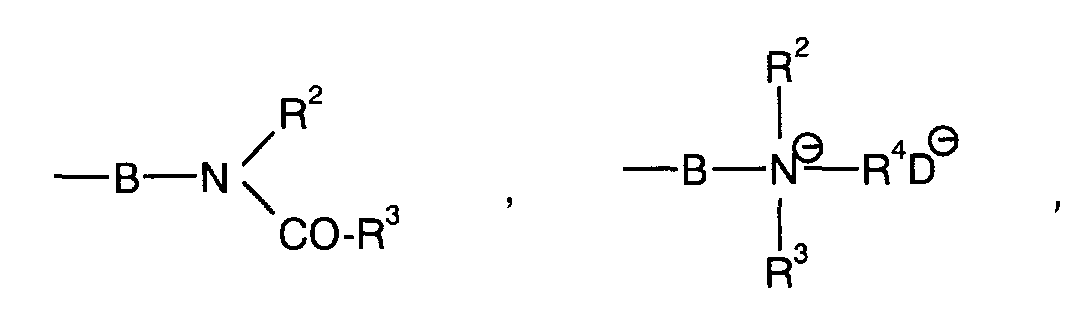
 wobei folgende Gruppen bevorzugt sind: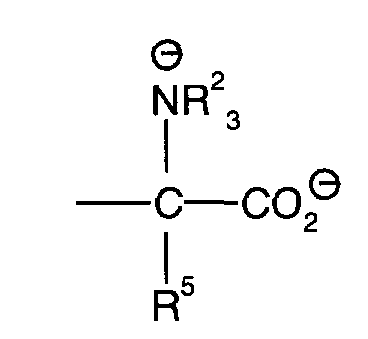
-CH2CH2N+ R2R3-CH2-CO2-, - D-
- Acetat, Formiat, Propionat oder Hydroxyd, vorzugsweise Acetat,
- E-
- Carboxylat oder Sulfonat, vorzugsweise Carboxylat,
- M
- eine Brückengruppierung zur Vervollständigung eines Pyrrolidon-, - oder
Succinimid- oder Maleinimidrings als Gruppierung
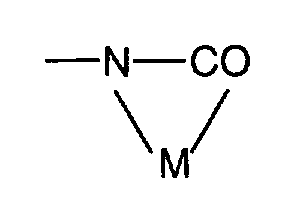
- n
- 1 bis 50, vorzugsweise 2 bis 25,
- q
- 1 bis 4, vorzugsweise 1,
- x, y
- 1 oder 2 mit der Maßgabe, daß x+y ≤ 3 ist,
- R1
- (C8-C30)- Alkylgruppe oder wenn A = 0 (C4-C12)-alkylsubstituierter Phenylrest, vorzugsweise (C12-C18)-Alkylgruppe, darunter besonders Gemische aus (C13/C15)-Oxoalkoholresten sowie (C12/C14)- und (C16/C18)-Fettalkoholresten; im Fall, daß A für Sauerstoff steht, vorzugsweise tert.-Butyl-, iso-Octyl- und iso-Nonylphenyl,
- R2, R3, R4
- Wasserstoff, Methyl oder Ethyl, vorzugsweise Wasserstoff oder Methyl,
- R5
- Wasserstoff, Methyl.


x für eine ganze Zahl von 1 bis 3 und y für H oder -CH3 steht,
D die Gruppierung >N- oder
Claims (11)
- Verfahren zur kombinatorischen Herstellung von Materialproben in Form einer zweidimensionalen Matrix im Oberflächenbereich eines flächigen Substrats, bei dem mindestens zwei unterschiedliche dosierfähige Materialkomponenten als Suspension aus einer oder mehreren Dosiervorrichtungen, die die Abgabe einzelner Suspensionstropfen erlauben, auf dieselbe Stelle des Substrats dosiert werden, so daß an unterschiedlichen Oberflächenbereichen des Substrats Materialien mit unterschiedlicher Zusammensetzung erhalten werden.
- Verfahren nach Anspruch 1, dadurch gekennzeichnet, daß das flächige Substrat horizontal angeordnet ist und im wesentlichen vertikal von oben beschickt wird, wobei die Dosiervorrichtungen so angeordnet sind, daß sich die Dosierrichtungen in einer zum flächigen Substrat senkrechten oder davon abgewinkelten Ebene befinden.
- Verfahren nach Anspruch 1 oder 2, dadurch gekennzeichnet, daß die Dosierung durch Verschieben beweglicher Kolben in der/den Dosiervorrichtung(en) erfolgt.
- Verfahren nach einem der Ansprüche 1 bis 3, dadurch gekennzeichnet, daß die dosierfähigen Materialkomponenten zunächst auf einem Hilfssubstrat dosiert und vermischt werden und die Mischung sodann mit der Dosiervorrichtung aufgenommen und auf das Substrat dosiert wird.
- Verfahren nach einem der Ansprüche 1 bis 4, dadurch gekennzeichnet, daß die dosierfähigen Materialkomponenten ausgewählt sind aus Suspensionen von Pulvern der Elemente der Gruppen IB, IIB, IIIB, IVB, VB, VIB, VIIB oder VIII, Lanthanoiden, Actinoiden, IA, IIA, IIIA, IVA, VA, VIA des Periodensystems der Elemente oder deren Verbindungen oder Gemischen davon.
- Verfahren nach einem der Ansprüche 1 bis 5, dadurch gekennzeichnet, daß das flächige Substrat in einzelne definierte Plätze unterteilt ist, die räumlich voneinander abgegrenzt sind.
- Verfahren nach Anspruch 6, dadurch gekennzeichnet, daß das flächige Substrat dadurch in einzelne definierte Plätze unterteilt wird, daß die Dosierungen auf das Substrat in einem räumlichen Abstand erfolgen, der ein Zusammenfließen von dosierten Suspensionstropfen auf dem Substrat verhindert.
- Verfahren nach Anspruch 6, dadurch gekennzeichnet, daß das flächige Substrat dadurch in einzelne definierte Plätze unterteilt wird, daß auf das flächige Substrat eine mit Bohrungen versehene Matrixplatte aufgelegt wird, die Dosierung in die Bohrungen erfolgt, die dosierten Suspensionstropfen mindestens soweit getrocknet werden, daß sie beim Abheben der Matrixplatte auf dem Substrat nicht zusammenfließen, und die Matrixplatte nach diesem Trocknen abgehoben wird.
- Verfahren nach einem der Ansprüche 6 bis 8, dadurch gekennzeichnet, daß pro Platz auf dem Substrat insgesamt 1 bis 1000 µl Suspension dosiert werden.
- Verfahren zur kombinatorischen Testung von Materialproben, die nach einem Verfahren gemäß einem der Ansprüche 1 bis 9 erhalten werden, bei dem die auf einzelnen definierten Plätzen des Substrats vorliegenden Materialproben mit physikalischen und/oder chemischen Verfahren auf eine gewünschte Eigenschaft hin untersucht werden.
- Vorrichtung zur Durchführung eines Verfahrens nach einem der Ansprüche 1 bis 9, umfassend einen rechnergesteuert bewegbaren Roboterarm, der eine oder mehrere 1 bis 1000 µl fassende Dosiervorrichtungen trägt, sowie einen Rechner zur Ansteuerung des Roboterarms.
Applications Claiming Priority (2)
| Application Number | Priority Date | Filing Date | Title |
|---|---|---|---|
| DE10031587 | 2000-06-29 | ||
| DE10031587A DE10031587A1 (de) | 2000-06-29 | 2000-06-29 | Dosierung von Suspensionen im Mikromaßstab zur Herstellung von Materialproben in der kombinatorischen Materialforschung sowie deren Prüfung |
Publications (2)
| Publication Number | Publication Date |
|---|---|
| EP1172459A2 true EP1172459A2 (de) | 2002-01-16 |
| EP1172459A3 EP1172459A3 (de) | 2009-06-03 |
Family
ID=7647154
Family Applications (1)
| Application Number | Title | Priority Date | Filing Date |
|---|---|---|---|
| EP01114775A Withdrawn EP1172459A3 (de) | 2000-06-29 | 2001-06-26 | Dosierung von Suspensionen im Mikromassstab zur Herstellung von Materialproben in der kombinatorischen Materialforschung |
Country Status (3)
| Country | Link |
|---|---|
| US (1) | US20020028467A1 (de) |
| EP (1) | EP1172459A3 (de) |
| DE (1) | DE10031587A1 (de) |
Families Citing this family (1)
| Publication number | Priority date | Publication date | Assignee | Title |
|---|---|---|---|---|
| DE10139553B4 (de) | 2001-08-10 | 2008-04-10 | Robert Bosch Gmbh | Verfahren zur Herstellung einer Materialbibliothek |
Family Cites Families (23)
| Publication number | Priority date | Publication date | Assignee | Title |
|---|---|---|---|---|
| CA1039649A (en) * | 1973-08-30 | 1978-10-03 | General Electric Company | Method of forming multilayer immunologically complexed films |
| US5143854A (en) * | 1989-06-07 | 1992-09-01 | Affymax Technologies N.V. | Large scale photolithographic solid phase synthesis of polypeptides and receptor binding screening thereof |
| US5226462A (en) * | 1991-07-26 | 1993-07-13 | Carl Richard A | Introducing measured amounts of liquid into receptacles |
| US5122301A (en) * | 1991-09-09 | 1992-06-16 | Great Lakes Chemical Corp. | Antimicrobial compositions containing propylene carbonate and/or ethylene carbonate as the carrier solvent |
| JPH06106064A (ja) * | 1992-09-29 | 1994-04-19 | Cosmo Oil Co Ltd | 接触分解用触媒の製造方法 |
| US6558633B1 (en) * | 1994-09-21 | 2003-05-06 | Isis Pharmaceuticals, Inc. | Chemical reaction apparatus and methods |
| US6030917A (en) * | 1996-07-23 | 2000-02-29 | Symyx Technologies, Inc. | Combinatorial synthesis and analysis of organometallic compounds and catalysts |
| US5985356A (en) * | 1994-10-18 | 1999-11-16 | The Regents Of The University Of California | Combinatorial synthesis of novel materials |
| EP1669738A3 (de) * | 1996-10-09 | 2007-12-12 | Symyx Technologies, Inc. | Infrarotspektroskopie und Abbildung von Bibliotheken |
| US6720186B1 (en) * | 1998-04-03 | 2004-04-13 | Symyx Technologies, Inc. | Method of research for creating and testing novel catalysts, reactions and polymers |
| US5731264A (en) * | 1996-10-17 | 1998-03-24 | Isp Investments Inc. | Stabilized liquid emulsifiable concentrate for a sulfonyl or sulfamoylurea herbicide |
| US6024925A (en) * | 1997-01-23 | 2000-02-15 | Sequenom, Inc. | Systems and methods for preparing low volume analyte array elements |
| NO304355B1 (no) * | 1997-02-20 | 1998-12-07 | Sinvent As | Multi-autoklav for metodisk, automatisert syntese av zeolitter og andre forbindelser |
| US6028189A (en) * | 1997-03-20 | 2000-02-22 | University Of Washington | Solvent for oligonucleotide synthesis and methods of use |
| US5985214A (en) * | 1997-05-16 | 1999-11-16 | Aurora Biosciences Corporation | Systems and methods for rapidly identifying useful chemicals in liquid samples |
| DE19749557A1 (de) * | 1997-11-10 | 1999-05-12 | Jung Guenther Prof Dr | Einrichtung zur parallelen Durchführung einer Vielzahl chemischer Reaktionen |
| EP1040348B1 (de) * | 1997-12-23 | 2005-11-16 | HTE Aktiengesellschaft The High Throughput Experimentation Company | Verfahren zur kombinatorischen materialentwicklung durch den einsatz von wärmedifferenzbildern |
| DE19855894A1 (de) * | 1998-12-03 | 2000-06-08 | Basf Ag | Verfahren zur kombinatorischen Herstellung und Testung von Heterogenkatalysatoren |
| US6260407B1 (en) * | 1998-04-03 | 2001-07-17 | Symyx Technologies, Inc. | High-temperature characterization of polymers |
| US6406921B1 (en) * | 1998-07-14 | 2002-06-18 | Zyomyx, Incorporated | Protein arrays for high-throughput screening |
| US6258962B1 (en) * | 1999-06-14 | 2001-07-10 | Mobil Oil Corp. | Process for producing alkylene carbonates |
| EP1246698B1 (de) * | 2000-01-06 | 2006-09-20 | Caliper Life Sciences, Inc. | Vorrichtungen und verfahren für hochdurchsatz-probenentnahme und analyse |
| US6420180B1 (en) * | 2000-01-26 | 2002-07-16 | Agilent Technologies, Inc. | Multiple pass deposition for chemical array fabrication |
-
2000
- 2000-06-29 DE DE10031587A patent/DE10031587A1/de not_active Withdrawn
-
2001
- 2001-06-26 US US09/888,591 patent/US20020028467A1/en not_active Abandoned
- 2001-06-26 EP EP01114775A patent/EP1172459A3/de not_active Withdrawn
Also Published As
| Publication number | Publication date |
|---|---|
| DE10031587A1 (de) | 2002-01-10 |
| US20020028467A1 (en) | 2002-03-07 |
| EP1172459A3 (de) | 2009-06-03 |
Similar Documents
| Publication | Publication Date | Title |
|---|---|---|
| DE60030226T2 (de) | DNS-Chip-Herstellungsverfahren | |
| DE69931787T2 (de) | Vorrichtung und Verfahren zur Verabreichung von Tropfen | |
| DE69526957T2 (de) | Tintenstrahl-tintenzusammensetzungen | |
| EP1144989B1 (de) | Nanotomographie | |
| Wang et al. | Optimisation of CGO suspensions for inkjet-printed SOFC electrolytes | |
| DE4130268A1 (de) | Waessriges ferrofluid | |
| WO2003051515A1 (de) | Hydrophobe oberfläche mit einer vielzahl von elektroden | |
| Shi et al. | ZnO varistor manufactured by composite nano-additives | |
| WO1986001747A1 (en) | Method for applying solid suspensions capable of being fired on ceramic or glass substrates, and device for implementing such method | |
| DE102016211038A1 (de) | Vorrichtung und Verfahren zum Detektieren von Zellen oder Partikeln in einem Fluidbehälter | |
| EP1172459A2 (de) | Dosierung von Suspensionen im Mikromassstab zur Herstellung von Materialproben in der kombinatorischen Materialforschung | |
| EP1101832B1 (de) | Verfahren zur kombinatorischen Herstellung einer Biblithek von Materialien | |
| EP3749625A2 (de) | Wässrige suspension enthaltend metallcarbid-partikel | |
| DE69434641T2 (de) | Elektrooptisches Messinstrument | |
| Wang et al. | Drying behaviour of droplets of mixed powder suspensions | |
| Wang et al. | Segregation in multicomponent ceramic colloids during drying of droplets | |
| Funke et al. | Surface tension in polymer blends of isotactic poly (propylene) and atactic polystyrene | |
| Zhang et al. | Control of particle segregation during drying of ceramic suspension droplets | |
| Polsakiewicz et al. | Highly loaded alumina inks for use in a piezoelectric print head | |
| WO2017157362A1 (de) | Verfahren zur in-situ charakterisierung einer auf einem substrat abzuscheidenden schicht und sensoranordnung | |
| US12405237B2 (en) | Predicting ceramic colloidal suspension stability for extrusion-based additive manufacturing | |
| EP4308938A1 (de) | Vorrichtung und verfahren zum absetzen von flüssigkeit auf träger | |
| DE102006054695B4 (de) | Verfahren zur Regelung nanoskaliger elektronenstrahlinduzierter Abscheidungen | |
| DE2753787A1 (de) | Verfahren zur herstellung einer dielektrischen schicht auf einem bi tief 12 geo tief 20 -substrat | |
| DE10322321B4 (de) | Anordnung und Verfahren zur Herstellung von Formteilen |
Legal Events
| Date | Code | Title | Description |
|---|---|---|---|
| PUAI | Public reference made under article 153(3) epc to a published international application that has entered the european phase |
Free format text: ORIGINAL CODE: 0009012 |
|
| AK | Designated contracting states |
Kind code of ref document: A2 Designated state(s): AT BE CH CY DE DK ES FI FR GB GR IE IT LI LU MC NL PT SE TR |
|
| AX | Request for extension of the european patent |
Free format text: AL;LT;LV;MK;RO;SI |
|
| RAP1 | Party data changed (applicant data changed or rights of an application transferred) |
Owner name: BASF SE |
|
| PUAL | Search report despatched |
Free format text: ORIGINAL CODE: 0009013 |
|
| AK | Designated contracting states |
Kind code of ref document: A3 Designated state(s): AT BE CH CY DE DK ES FI FR GB GR IE IT LI LU MC NL PT SE TR |
|
| AX | Request for extension of the european patent |
Extension state: AL LT LV MK RO SI |
|
| 17P | Request for examination filed |
Effective date: 20091203 |
|
| AKX | Designation fees paid |
Designated state(s): BE DE FR GB NL |
|
| 17Q | First examination report despatched |
Effective date: 20101110 |
|
| STAA | Information on the status of an ep patent application or granted ep patent |
Free format text: STATUS: THE APPLICATION IS DEEMED TO BE WITHDRAWN |
|
| 18D | Application deemed to be withdrawn |
Effective date: 20110322 |