EP1149057B1 - Biodegradable glass compositions and their use in the manufacture of a medicament for radiation therapy - Google Patents
Biodegradable glass compositions and their use in the manufacture of a medicament for radiation therapy Download PDFInfo
- Publication number
- EP1149057B1 EP1149057B1 EP00907088A EP00907088A EP1149057B1 EP 1149057 B1 EP1149057 B1 EP 1149057B1 EP 00907088 A EP00907088 A EP 00907088A EP 00907088 A EP00907088 A EP 00907088A EP 1149057 B1 EP1149057 B1 EP 1149057B1
- Authority
- EP
- European Patent Office
- Prior art keywords
- glass
- mole
- set forth
- rare earth
- radioisotope
- Prior art date
- Legal status (The legal status is an assumption and is not a legal conclusion. Google has not performed a legal analysis and makes no representation as to the accuracy of the status listed.)
- Expired - Lifetime
Links
Images


Classifications
-
- C—CHEMISTRY; METALLURGY
- C03—GLASS; MINERAL OR SLAG WOOL
- C03C—CHEMICAL COMPOSITION OF GLASSES, GLAZES OR VITREOUS ENAMELS; SURFACE TREATMENT OF GLASS; SURFACE TREATMENT OF FIBRES OR FILAMENTS MADE FROM GLASS, MINERALS OR SLAGS; JOINING GLASS TO GLASS OR OTHER MATERIALS
- C03C3/00—Glass compositions
- C03C3/12—Silica-free oxide glass compositions
- C03C3/14—Silica-free oxide glass compositions containing boron
- C03C3/15—Silica-free oxide glass compositions containing boron containing rare earths
-
- A—HUMAN NECESSITIES
- A61—MEDICAL OR VETERINARY SCIENCE; HYGIENE
- A61K—PREPARATIONS FOR MEDICAL, DENTAL OR TOILETRY PURPOSES
- A61K41/00—Medicinal preparations obtained by treating materials with wave energy or particle radiation ; Therapies using these preparations
- A61K41/009—Neutron capture therapy, e.g. using uranium or non-boron material
-
- A—HUMAN NECESSITIES
- A61—MEDICAL OR VETERINARY SCIENCE; HYGIENE
- A61P—SPECIFIC THERAPEUTIC ACTIVITY OF CHEMICAL COMPOUNDS OR MEDICINAL PREPARATIONS
- A61P19/00—Drugs for skeletal disorders
- A61P19/02—Drugs for skeletal disorders for joint disorders, e.g. arthritis, arthrosis
-
- C—CHEMISTRY; METALLURGY
- C03—GLASS; MINERAL OR SLAG WOOL
- C03C—CHEMICAL COMPOSITION OF GLASSES, GLAZES OR VITREOUS ENAMELS; SURFACE TREATMENT OF GLASS; SURFACE TREATMENT OF FIBRES OR FILAMENTS MADE FROM GLASS, MINERALS OR SLAGS; JOINING GLASS TO GLASS OR OTHER MATERIALS
- C03C3/00—Glass compositions
- C03C3/04—Glass compositions containing silica
- C03C3/062—Glass compositions containing silica with less than 40% silica by weight
- C03C3/064—Glass compositions containing silica with less than 40% silica by weight containing boron
- C03C3/068—Glass compositions containing silica with less than 40% silica by weight containing boron containing rare earths
-
- C—CHEMISTRY; METALLURGY
- C03—GLASS; MINERAL OR SLAG WOOL
- C03C—CHEMICAL COMPOSITION OF GLASSES, GLAZES OR VITREOUS ENAMELS; SURFACE TREATMENT OF GLASS; SURFACE TREATMENT OF FIBRES OR FILAMENTS MADE FROM GLASS, MINERALS OR SLAGS; JOINING GLASS TO GLASS OR OTHER MATERIALS
- C03C2213/00—Glass fibres or filaments
- C03C2213/02—Biodegradable glass fibres
Definitions
- This invention relates to radiation therapy such as radiation synovectomy of arthritic joints and biodegradable glass compositions in particulate form for use in radiation therapy.
- Bio-inert radiotherapy glass particulates have already demonstrated the effectiveness of glass materials for safely delivering large localized does of therapeutic beta radiation. However, such glasses are limited to therapies where the glass can remain in the body indefinitely. Radiation synovectomy of diseased joints is one example of an application where the eventual removal (clearance) of the radiopharmaceutical may be desired. This creates the need for a biodegradable material.
- Non-glass materials that have been proposed for use as radiopharmaceuticals include radiocolloids and ceramic, polymer or protein particulates that have a radioactive isotope attached (bonded) to their surface.
- radiocolloids and ceramic, polymer or protein particulates that have a radioactive isotope attached (bonded) to their surface.
- Several of these non-glass materials can be cleared from in vivo treatment sites such as a rheumatoid arthritic joint.
- Each has shortcomings, however, that limits their usefulness and safety during preparation and use. These shortcomings include: (1) release of excessive or potentially dangerous amounts of radiation outside the treatment site.
- Beta-emitting radionuclides are considered the most useful for radiotherapeutic applications because of the moderate linear energy transfer (LET) of the ionizing particle (electron) and its intermediate range (typically several millimeters in tissue).
- LET linear energy transfer
- Gamma rays deliver dosage at lower levels over much greater distances.
- Alpha particles represent the other extreme; they deliver very high LET dosage, but have an extremely limited range and must, therefore, be in intimate contact with the cells of the tissue to be treated.
- alpha emitters are generally heavy metals, which limits the possible chemistry and presents undue hazards from leakage of radionuclide from the area to be treated.
- beta emitters the most useful radiotherapeutic radionuclides
- Reactor-produced isotopes number in the thousands, giving researchers a wide choice of isotopes of various half-lives, beta energies, gamma emissions, and chemical properties.
- Gamma emissions while not as useful as beta emissions, play an important role in that they permit the distribution of radioisotope in the body to be observed using an Anger gamma ray camera or single photon computed tomography (SPECT) instrument. This permits direct observation and, to some extent, quantification of radionuclide leakage from an organ or a joint and also provides positive verification of the potency of joint injection and distribution of the radionuclide in the research animal.
- SPECT single photon computed tomography
- Radiocolloid particulates e.g. 90 Y or 198 Au salts, are presently used in Europe for radiation synovectomy (e.g. Houle et al., Radiology 172 [3] 1989); Russel et al., Endocurietherapy/Hyperthermia Oncology, 4 [7] 171-186 (1988); Sledge et al., Arth.
- Radiocolloids are known to easily escape the synovium due to their sub-micron size, and in certain instances 25% of the targeted radiation has been deposited in healthy tissue outside the joint. Glass microspheres for radiotherapy are much larger (>1 ⁇ m in diameter) than the radiocolloids and have the additional advantage of a carefully controlled size within a few microns.
- U.S. Patent No. 5,011,797 dated April 30, 1991 discloses radioactive microspheres for radiation synovectomy of arthritic joints which comprise a biodegradable glass material and a beta radiation emitting radioisotope chemically dissolved in and distributed substantially uniformly throughout the glass material.
- the biodegradable glass material may be lithium silicate, lithium aluminosilicate, lithium aluminoborate, lithium germanate, lithium aluminogermanate, potassium silicate, potassium aluminosilicate, potassium aluminoborate, potassium germanate or potassium aluminogermanate and the beta radiation emitting radioisotope may be samarium-153, holmium-166, erbium-169, dysprosium-165, rhenium-186, rhenium-188 or yttrium-90.
- the patent also discloses non-biodegradable glass materials such as magnesium aluminosilicate and aluminosilicate glass materials which contain a beta radiation emitting radioisotope.
- novel biodegradable rare earth-lithium borate glass materials for use in radiation therapy; the provision of such glass materials containing beta or gamma emitting radioisotopes; the provision of such glass materials in the form of microspheres; the provision of such biodegradable glass materials which upon being introduced into a body fluid for radiation therapy are adapted to react therewith causing the radioisotope contained therein to react with the body fluid causing the radioisotope to form an insoluble compound on the surface of the glass material which is retained on the glass material and thereby prevented from escaping from the treatment site; and the provision of methods for carrying out radiation therapy such as radiation synovectomy of arthritic joints.
- Other objects and features will be in part apparent and in part pointed out hereinafter.
- the present invention is directed to novel radioactive glass in particulate form for radiation therapy in a mammal comprising a biodegradable glass material having one of the following compositions: xRE 2 O 3 • (100-x) LiB 3 O 5 xRE 2 O 3 •yLi 2 O• (100-x-y) B 2 O 3 xRE 2 O 3 •yMgO• (100-x-y) LiB 3 O 5 xRE 2 O 3 •yMgO• (100-x-y) Li 2 B 8 O 13 xRE 2 O 3 •3MgO•5SiO 2 •yAl 2 O 3 • (92-y-x) Li 3 B 8 O 13 wherein RE is a neutron activatable rare earth'which emits a therapeutic intensity of beta or gamma radiation, the radioisotope being distributed throughout the glass material, x is the mole percent of RE 2 O 3 and ranges between approximately 0.5 and 5 and y is the mole percent of Li 2 O, MgO or Al
- the lithium borate glass is substantially free of lithium-6 and boron-10 and the glass upon being introduced into a body fluid for radiation therapy is adapted to react therewith causing the radioisotope to form an insoluble compound on the surface of the glass material which is retained in the glass material and thereby prevented from escaping from the treatment site.
- Another aspect of the invention resides in the provision of novel nonradioactive glass in particulate form which, upon being subjected to an effective amount of neutron irradiation, will produce a beta or gamma emitting radioisotope thereby rendering the glass material suitable for use for radiation therapy while avoiding the handling of radioactive elements during initial production of the glass material.
- Still another aspect of the invention lies in the use of the radioactive glass material for the manufacture of a medicament for carrying out radiation therapy such as radiation synovectomy of arthritic joints.
- novel radioactive glass materials in particulate form may be used for the in vivo irradiation of diseased organs in the body, e.g. malignant tumors and the inflamed synovium of arthritic joints.
- the glass materials may be in the form of microspheres which, upon being introduced into a body fluid for radiation therapy are adapted to have the beta or gamma emitting radioisotope contained therein react with the body fluid causing the radioisotope to form an insoluble compound on the surface of the glass material which is retained in the glass material and thereby prevented from escaping from the treatment site to other sites in the body.
- the radioactive glass materials of the invention are prepared from novel nonradioactive glass materials which may be manufactured, sized, and processed in other ways before radioactivity is induced providing the advantage of working only with nonradioactive materials during initial production of the glass materials.
- the novel radioactive materials in particulate form are comprised of a biodegradable glass material having one of the following compositions: xRE 2 O 3 • (100-x)LiB 3 O 5 xRE 2 O 3 •yLi 2 O•(100-x-y) B 2 O 3 xRE 2 O 3 •yMgO• (100-x-y) LiB 3 O 5 xRE 2 O 3 •yMgO• (100-x-y)Li 2 B 8 O 13 xRE 2 O 3 •3MgO•5SiO 2 •yAl 2 O 3 • (92-y-x)Li 2 B 8 O 13 wherein RE is a neutron activatable rare earth radioisotope which emits a therapeutic intensity of beta or gamma radiation and is distributed throughout the glass material, x is the mole percent of RE 2 O 3 and ranges between approximately 0.5 and 5, y is the mole percent of Li 2 O, Mg
- the lithium borate glass material is substantially free of lithium-6 and boron-10.
- Lithium-6 is a 7.4% naturally abundant isotope which forms tritium when naturally occurring lithium compounds are bombarded with neutrons.
- Tritium is a beta emitter with a half life of 12.5 years. Accordingly, compounds which contain just lithium-7 should be used since no radioactive isotopes are formed when lithium-7 is bombarded with neutrons.
- Boron-10 is an isotope with a large thermal cross section, 3837 barns, which would be detrimental in a glass material of the present invention because the glass might absorb so many neutrons as to prevent other portions of the glass from becoming radioactive. This problem can be avoided by using compounds which contain only boron-11 that has a much smaller thermal cross section, about 0.005 barns.
- neutron activatable rare earth radioisotope which emits a therapeutic intensity of beta or gamma radiation may be used in the practice of the invention as a component of the above-noted glass Material compositions.
- the term neutron activatable rare earth radioisotope includes yttrium-90.
- Illustrative beta or gamma emitting radioisotopes include dysprosium-165, holmium-166, yttrium-90, rhenium-186, rhenium-188 and samarium-153. These beta or gamma emitting radioisotopes are particularly suitable for use in the present invention.
- Samarium-153 (46.3 hr.
- Holmium-166 is produced by neutron capture on 100% abundant, stable holmium-165 with thermal neutron and resonance neutron cross sections of 61.2 and 67.0 barns, respectively. It decays with a 26.83 hour half-life by emission of 1.855 MeV (51%) and 1.776 MeV (48%) maximum energy beta particles with a maximum range of about 8.0 mm and an average range of about 2 mm. Since dysprosium-165 emits a beta particle of slightly lower maximum energy (1.31 MeV) and has proven efficacious in human knee radiation synovectomies, it appears that holmium-166 has sufficient penetration for this application. Ho-166 has sufficient penetration for this application. Ho-166 also emits an 80.5 Kev gamma ray in 6.2% abundance and thus is imageable by conventional techniques.
- Samarium-153 is produced by neutron capture of natural or isotopically enriched samarium-152 with thermal and resonance neutron cross sections of 210 and 3,020 barns, respectively. it decays by beta emissions of 0.810 MeV (20%) 0.710 MeV (49%) and 0.640 MeV (30%) maximum energies with concomitant ranges of about 2.3 mm maximum and 0.8 mm average distance, respectively.
- Sm-153 has a physical half-life of 46.27 hours and produces a highly imageable 103 KeV gamma ray with an abundance of 29.8%, decaying to stable Eu-153.
- Samarium-153 and holmium-166 are both chemically compatible and capable of being incorporated into the above-noted glass compositions in which no other significant radioactivities induced by neutron bombardment will be present after about one day of decay.
- Dysprosium-165, yttrium-90, rhenium-186 and rhenium-188 and other beta or gamma emitting radioisotopes may also be used as the radioisotope in the practice of the invention.
- biodegradable lithium borate glass materials within the above-noted compositions may be mentioned the following: Dy 2 O 3 1. 7 mole % Li 2 O 24.6 mole % B 2 O 3 73.7 mole % 100.0 mole % Dy 2 O 3 5 mole % Li 2 O 16 mole % Al 2 O 3 5 mole % B 2 O 3 66 mole % SiO 2 5 mole % MgO 3 mole % 100 mole % DY 2 O 3 5 mole % Li 2 O 15 mole % Al 2 O 3 10 mole % B 2 O 3 62 mole % SiO 2 5 mole % MgO 3 mole % 100 mole % Ho 2 O 3 2 mole % Li 2 O 15 mole % Al 2 O 3 15 mole % B 2 O 3 60 mole % SiO 2 5 mole % MgO 3 mole % 100 mole % It will be understood that other radioisotope-containing lithium borate glass materials within the following:
- the biodegradable rare earth-lithium borate glass materials of the invention corrode, react or biodegrade in the body at controlled rates determined by the specific glass composition. This biodegradation occurs in such a way that none of the beta or gamma emitting radioisotope contained in the glass escapes from the treatment site.
- the glass materials are formed into microspheres of nearly any desired size, preferably microspheres having a diameter less than 100 microns and, more preferably, having a diameter between approximately 1 and 40 microns.
- the radioactive rare earth element After administration to the treatment site for radiation therapy as by injection or other suitable conventional means known to the art, the radioactive rare earth element either reacts with another constituent in the glass or with a body fluid to form an insoluble compound on the surface of the glass material, which insoluble compound may eventually form throughout the glass material and be retained on the glass material and is thereby prevented from escaping from the treatment site.
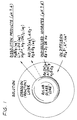
- Fig. 1 there is shown a simplified model for the degradation or corrosion characteristics of dysprosium-165, holmium-166 or other rare earth lithium borate glass microspheres of the invention as employed for in vivo radiation therapy.
- FIG. 1 shows the presence of a corrosion or reaction layer on the surface of the glass microsphere due to the dissolution of the B 2 O 3 , Li 2 O, MgO and, to a lesser extent, Al 2 O 3 and SiO 2 .
- the insoluble compound formed and retained on the glass material to prevent its unwanted migration to other sites may be, for example, a rare earth oxide, rare earth hydroxide or rare earth phosphate.
- Some of the probable products of dissolution and undissolved Dy 2 O 3 or Fio 2 O 3 , Al 2 O 3 , and SiO 2 are shown in Fig. 1.
- the diffusion of P, K and Na ions from body fluids into the corrosion or reaction layer of the glass microsphere is also indicated in Fig. 1.
- the undissolved oxides in the corrosion layer may become partially hydrated.
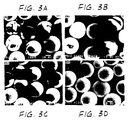
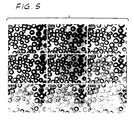
- the DyLAB glass microspheres shown in Fig. 5 demonstrate the unique degradation characteristics of the glass materials of the invention. Although none of the radioactive component is released, the glass material began to react within 24 hours in a PBS solution at 37°C. This is shown in Fig. 5 as the formation of a rare earth rich reaction layer on the DyLAB microspheres and indicates that the glasses will be degradable in the body.
- the degradation rate of the glass materials of the invention can be easily controlled from approximately 10 -6 to 10 -10 g/cm 2 /min. by adjusting the glass composition.
- the rare earth-lithium borate glasses of the invention can safely accommodate a variety of useful radioisotopes (beta or gamma emitters) whose half-life ranges from as little as 2 hours to as much as 7 days. This factor greatly enhances the versatility of the glass materials of the invention for in vivo radiotherapy.
- the glass materials of the present invention in the form of microspheres, may be prepared from a homogeneous mixture of powders (i.e. the batch) that is melted to form the desired glass composition.
- the exact chemical compounds or raw materials used for the batch is not critical so long as they provide the necessary oxides in the correct proportion for the melt composition being prepared.
- the mole and weight percent of illustrative components of glass materials of the invention are set forth in Tables II through V hereinafter.
- the purity of each raw material is typically greater than 99.9%.
- the mixture may be placed in a platinum or platinum/rhodium alloy crucible for melting in an electric furnace.
- the raw materials must not contain impurities that become radioactive from neutron irradiation.
- the melt is then cast into a bar or patty on a stainless steel plate.
- the glasses are crushed with a mortar and pestle to obtain glass powders.
- the powders are then fed to a propane/air flame where each particle is melted and spheroidized due to surface tension.
- the spherical particles are cooled to solid glass microspheres and collected.
- the glass materials of the invention can be readily made into microspheres of nearly any desired size, preferably having a diameter of less than approximately 100 microns and, more preferably, a diameter between approximately 1 and 40 microns.
- the glass materials of the invention in particulate form such as microspheres, may be activated by being subjected to an effective amount of neutron irradiation which will produce a beta or gamma radiation emitting radioisotope such as, for example, dysprosium-165, holmium-166, yttrium-90, rhenium-186, rhenium-188 or samarium-153, the amount depending upon the particular isotope of such elements that has been chemically dissolved and uniformly distributed throughout the glass materials. Since the glass materials are made radioactive after they are fabricated, all glass melting and fabrication into microspheres, for example, advantageously involves only non-radioactive materials.
- the radioactive glass compositions of the present invention prepared as described may be administered for the in vivo irradiation of diseased organs such as malignant tumors and the inflamed synovium of arthritic joints.
- diseased organs such as malignant tumors and the inflamed synovium of arthritic joints.
- novel glass compositions in the form of glass microspheres may be administered by intra-articular injection or by other suitable means of administration.
- the glass compositions are introduced into synovial fluid, become distributed reasonably uniformly in the synovial membrane to a depth of about 50 to 100 microns, and emit beta radiation to substantially fully irradiate the thickness of the membrane without significant dosage to more distant joint structures with the radioisotope being retained in the glass material to prevent migration from the treatment site.
- novel glass compositions of the present invention offer the significant advantages of in situ degradability, significantly decreased potential for radiation escaping from the treatment site, and ease of preparation. Such glass compositions also enable the use of larger radiation doses than can currently be delivered by non-glass radiotherapy materials, use relatively inexpensive materials and can be delivered to essentially any site in the body by simple injection.
- the nonradioactive glass compositions of the invention also possess an indefinite shelf life.
- the rare earth-lithium borate glasses listed in Table I containing either Dy 2 O 3 , Ho 2 O 3 , Y 2 O 3 or Sm 2 O 3 , were prepared by melting a homogeneous mixture of analytical grade powders of the rare earth oxides in a platinum or platinum/rhodium alloy crucible in an electric furnace. All bath materials used in glass preparation were oxides with the exception of H 3 BO 3 and Li 2 CO 3 .
- the melting temperature of the glasses which contained both Al 2 O 3 and SiO 2 was slightly higher at 1200 to 1300°C. Each melt was held at its melting temperature for approximately 30 minutes (up to one hour for the RELAB glasses) to assure complete melting and homogeneity. After this period, the melts were stirred once with an alumina rod and cast into a bar or patty on a stainless steel plate.
- the glasses were stored in a desiccator until they were annealed for property measurements or crushed for spheroidization.
- the batch composition of the rare earth-lithium borate glasses are listed in Tables II through V. Mole and Weight % Composition (wt% in Parenthesis) of DyLB Glasses .
- DyLB-1 74.37 24.79 0.84 H. Glass (83.11) (11.89) (5.00) 0.33 (P) DyLB-2 74.04 24.68 1.28 H. Glass (80.93) (11.58) (7.49) 0.33 (P) DyLB-3 73.68 24.57 1.75 H.
- the density of the glasses at 25°C was measured by Archimedes' buoyancy method using kerosene as the suspension medium whose density (0.8015 g/cm 2 at 25°C) was determined using a Gay-Lussac specific gravity bottle.
- density measurement the dry and suspended mass of a crack-and bubble-free piece of each annealed glass was measured on an analytical balance. The experimental error in the density was estimated to be ⁇ 0.01 g/cm 2 .
- the n D refractive index was measured by the Becke line method using certified refractive index liquids and a filter which transmitted only sodium D(589 nm) light. Annealed glasses that were crushed with a porcelain mortar and pestle were used for the refractive index measurement. The error for the refractive index was ⁇ 0.002.
- the chemical durability of the glasses that contained Dy 2 O 3 or Ho 2 O 3 was evaluated by measuring the weight loss of as-cast or annealed bulk glass samples that were immersed in phosphate buffered saline (PBS) solution (pH 7.4) at 37°C.
- PBS solution at 37°C was used as the corrosion medium to simulate both the ion content, listed in Table VI, and temperature of body fluids, e.g. synovial fluid.
- Molar Content of Inorganic Electrolytes in Phosphate Buffered Saline (PBS) Solution Used in Corrosion Testing of RELAB Glasses Phosphate Buffered Saline
- Rectangular glass samples (plates) for corrosion testing were cut from annealed DyMLB and DyLAB glasses and polished to a 0.05 ⁇ m surface finish using SiC paper and Al 2 O 3 polishing abrasive. Only non-aqueous lubricants, i.e. kerosene and mineral oil, were used during the cutting and polishing to avoid corrosion of the glass before testing. Any residual kerosene or mineral oil was removed from the glass surface prior to testing by rinsing the plates with acetone. Glass plates ( ⁇ 10 ⁇ 5 ⁇ 2mm) were used so that the dissolution rate (DR in g/cm 2 /min.) could be calculated from the weight loss of the glass. Prior to immersion in the PBS solution, the surface area of the DyMLB and DyLAB glass plates was estimated from their bulk dimensions, and the initial weight of all the glass samples was determined.
- the bulk glass samples (as-cast pieces or annealed glass plates) were immersed separately in approximately 100 ml of PBS solution at 37°C that was contained in high density polyethylene (HDPE) bottles.
- the glass samples were periodically removed from the PBS solution, gently rinsed with acetone to remove any residual PBS, and dried in air at 70°C for at least 30 minutes. After drying, the reacted or corroded glass samples were weighed and placed back into their respective PBS solution for further testing. These steps were repeated several times for up to 18 days (or 75 and 90 days for the DyLAB and HoLAB glasses respectively).
- ICP Inductively coupled plasma spectroscopy
- DyLB and HoLB and all of the rare earth-lithium borate glasses that contained Al 2 O 3 , MgO and and/or SiO 2 formed a clear glass when cast on a steel plate, as indicated in Tables II through VI.
- the density of the rare earth-lithium borate glasses ranged from 2.29 to 2.95 g/cm 3 and increased linearly with increasing mole % Re 2 O 3 .
- the refractive index (n D ) of the rare earth-lithium borate glasses ranged from 1.544 to 1.604 and increased with increasing mole % rare earth oxide, which was expected from the increase in density.
- fluctuations in the refractive index due to the addition of Al 2 O 3 , or MgO were more pronounced than those for the density of the rare earth-lithium borate glasses.
- the chemical durability of a rare earth-lithium borate glass is important from the standpoint of both unwanted radiation leakage and eventual disintegration and dissolution of the glass.
- the rare earth-lithium borate glass microspheres should preferably completely retain the rare earth radionuclide within the treatment site while it is still significantly radioactive, which is approximately one, 11, 20 or 27 days (i.e. 10 half-lives) for 165 Dy, 166 Ho, 90 Y, or 153 Sm, respectively.
- Ten half-lives correspond to the time when 99.9% of the radiation has decayed, at which point the rare earth-lithium borate glass microspheres could completely disintegrate without releasing harmful amounts of radiation.
- the chemical durability of the rare earth-lithium borate glasses varied drastically with composition, and generally increased with increasing mole % rare earth oxide.
- the weight loss and dissolution rate (DR) for the DyLB and DyMLB glasses after 8 days and the DyLAB and HoLAB glasses after 7 days are listed in Tables VII and VIII, respectively.
- the HoLB and DyLB glasses were the least durable rare earth-lithium berate glasses.
- the DyLB-1 through DyLB-5 glasses which contained from 0.84 to 3.9 mole % Dy 2 O 3 , respectively, were more durable than the HOLE glasses and did not fully react within 24 hours.
- the DyMLB glasses were slightly more durable than the DyLB glasses and had from 1.0 to 13.7% weight loss after immersion in the PBS solution at 37°C for 8 days (see Table VII). Percent Weight Loss and Dissolution Rate for DyLB, DyALB, and DyMLB Glasses (Mole% Dy 2 O 3 and Al 2 O 3 or MgO are included for Comparison).
- the DR of the DyMLB glasses (listed in Table VII) was the same order of magnitude (10 -7 g/cm 2 min.) for all the glasses but, like the percent weight loss, was somewhat inconsistent with differences in composition.
- the DyLAB glasses were generally much more chemically durable than the DyLB or DyMLB glasses, which was not surprising since the DylAB glasses had the highest Dy 2 O 3 content (5 mole %) and contained SiO 2 , Al 2 O 3 and MgO.
- the HoLAB glasses contained less rare earth (2 mole % Ho 2 O 3 ) than the DyLAB glasses and were, consequently, less chemically durable.
- the DyLAB-15, DyLAB-20 and HoLAB-20 glasses, which lost little or no weight in the PBS solution at 37°C are clearly the least degradable of the rare earth-lithium borate glasses.
- Solid glass microspheres (1 to 40 ⁇ m in diameter) were successfully prepared from all of the DyLAB and HoLAB glasses and the DyLB-3, DyLB-8, DyMLB-6, DyMLB-8 and HoI.B-5 glasses.
- the microspheres made from the DyLAB-5 glass exhibited uniformity and smooth surfaces representative of all the rare earth-lithium berate microspheres prepared by flame spheroidization.
- a small fraction of the rare earth-lithium borate glass microspheres contained one or more small gas bubbles which should not have any adverse effect on the use of the microspheres for radiotherapy.
- each of the dysprosium and holmium glasses listed in the following Table IX were prepared by melting a homogeneous mixture of high purity powders (i.e. Dy 2 O 3 , H 3 BO 3 , Li 2 CO 3 , Al 2 O 3 , SiO 2 and Mgo) in a platinum or platinum/rhodium alloy crucible in an electric furnace. Mole% Composition of the DyLAB and HoLAB Glasses Investigated for In Vivo Radiotherapy. Glass RB 2 O 3 ..
- Each melt was held at its melting temperature for approximately one hour before being stirred with an alumina rod and then cast into a bar or patty on a stainless steel plate.
- a portion of each dysprosium glass was annealed in air at 500°C for 30 minutes. The annealed dysprosium glasses were inspected for any residual stress by viewing them through cross polarized light.
- the glasses were crushed with a porcelain mortar and pestle and the particles were sieved to obtain a -45 ⁇ m (-325 mesh) glass powder.
- the glass powder was then fed to a propane/air flame where each particle melted and spheroidized due to surface tension.
- the spherical particles cooled to solid glass microspheres and were collected in a large stainless steel cylinder (barrel).
- Microspheres were prepared from each glass listed in Table IX above.
- the glass microspheres were dry sieved to size ranges of +38, -38/+32, -32/+25, -25/+20, and -20 ⁇ m in diameter and then stored in a desiccator.
- the bulk dysprosium and holmium glass samples were corroded separately using phosphate buffered saline (PBS) solution (pH 7.4) at 37°C in high density polyethylene bottles.
- PBS phosphate buffered saline
- the PBS solution Sigma Chemical Co., St. Louis, Mo.
- the glass surface area to solution volume (SA/V) ratio for each glass sample was approximately 0.1 cm -1 .
- SA/V glass surface area to solution volume
- the glass samples were removed from the PBS solution, briefly submerged in acetone to remove any residual PBS, and dried in air at 70°C for 30 minutes. The glass samples were then weighed and immediately replaced in their respective PBS solution for further testing. These steps were repeated several times for up to 90 days.
- the dissolution rate (DR in g/cm 2 /min.) of each dysprosium and holmium glass for a given period was determined by dividing the weight loss by the initial surface area and elapsed dissolution time.
- ICP Inductively coupled plasma spectroscopy
- scintillation counting of leached radioactive 165 Dy were used in two separate experiments to quantify the amount of Dy 3+ , if any, that dissolved from the above-noted DyLAB glass microspheres during corrosion.
- ICP analysis approximately 70 mg of non-radioactive DyLAB-5, DyLAB-10, DyLAB-15 or DyLAB-20 glass microspheres (28 ⁇ 4 ⁇ m average diameter) were corroded in 30 ml of PBS solution at 37°C (estimated SA/V-1.8 cm -1 ) for 5 or 24 hours. In one case, ICP was used to analyze the PBS solution that had been in contact with DyLAB-10 glass microspheres for 23 days.
- the glass microspheres were vacuum filtered from the PBS solution and examined by scanning electron microscopy (SEM). Each PBS solution was analyzed by ICP to determine the amount of Dy and other glass components, i.e. B, Al, Si and Mg, in solution.
- the ICP equipment used had a lower detection limit of 0.1 ppm for Dy, B, Al, Si and Mg.
- the radioactivity of deionized (DI) H 2 O in which neutron activated DyLAB-10 or DyLAB-20 glass microspheres were immersed at 37°C was measured to determine the amount of radioactive 165 Dy in solution. Approximately every three hours, 1 ⁇ 2 of each test solution was removed and replaced with an equal volume of fresh DI H 2 O. The decanted test solution was filtered to eliminate any glass microspheres and then analyzed by counting the 94 KeV gamma emissions of 165 Dy. The radioactivity of the DyLAB glass microspheres was also measured as a control.
- Electron dispersion spectroscopy (EDS) and x-ray photoelectron spectroscopy (XPS) were used to determine the surface composition of as-made and corroded DyLAB glass plates. Of most interest was the concentration of Dy in the corroded surface of the DyLAB glasses as compared to the as-made glass. EDS analysis was performed on the same DyLAB-5 glass plate that had been corroded for the weight less measurement. For XPS analysis, a separate set of DyLAB-10 glass plates were corroded in PBS solution at 37°C for 0, 5, 24 or 336 hours (2 weeks).
- the animal was sacrificed two weeks after injection of the glass microspheres and thin tissue sections were prepared from each stifle joint.
- tissue sections were prepared from the joints from the rat, dehydrated, and fixed in polymethylmethacrylate. Thin sections were cut from the fixed joints, along the sagittal plane, and polished using SiC paper and Al 2 O 3 polishing abrasive. The polished sections were examined by optical microscopy to determine the physical condition of the DyLAB-10 glass microspheres and the surrounding synovial tissue and any evidence of tissue necrosis or other adverse responses.
- dysprosium and holmium melts cooled to a clear glass that was free of bubbles and unmelted batch material.
- the dysprosium and holmium glasses were yellow or orange in color, respectively, and contained some striae, but were otherwise homogeneous in appearance. Residual stress in the dysprosium glasses was adequately removed by annealing the glasses at 500°C in air for 30 minutes.
- Microspheres were successfully produced from each of the dysprosium and holmium glasses, and all were alike in both their formation qualities and appearance.
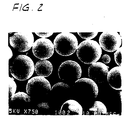
- the representative photomicrograph in Fig. 2 shows the uniformity and smooth surface texture of the glass microspheres that were prepared by flame spheroidization. Although not visible in Fig. 2, a small fraction of the glass microspheres contained one or more gas bubbles.
- the cumulative percent weight loss per surface area (%WL/cm 2 ) of the bulk dysprosium (5 mole % Dy 2 O 3 ) and holmium (2 mole % Ho 2 O 3 ) glass samples after immersion in PBS solution at 37°C for 1, 7 or 75 days (90 days for holmium glasses is listed below in Table X. Percent Weight Lose Per Surface Area for DyLAB and HoLAB Glasses Corroded in PBS Solution at 37°C (SA/V 0.1 cm -1 ).
- the DyLAB-5 and DyLAB-10 glass plates (5 and 10 mole % Al 2 O 3 , respectively) had a total weight loss of 1.16 and 0.17%/cm 2 after 75 days, respectively, whereas the DyLAB-15 and DyLAB-20 glass plates (15 and 20 mole % Al 2 O 3 , respectively) had little to no measurable weight loss.
- the weight loss of the HoLAB glass plates after 90 days decreased from 33.53 to 0.19%/cm 2 as the Al 2 O 3 content increased from 10 to 20 mole %.
- the DyLAB glasses were clearly more chemically durable than the HoLAB glasses that contained equal mole % Al 2 O 3 , which is attributed to the difference in the amount (5 or 2 mole % Dy 2 O 3 or Ho 2 O 3 , respectively) rather than to the specific rare earth oxide.
- the mole % Dy 2 O 3 or Ho 2 O 3 was held constant within each RELAD glass series, DyLAB or HoLAB, in order to standardize the neutron activation time and the resulting specific activity of the RELAB glass microspheres.
- the chemical durability of the DyLAB and HoLAB glasses was controlled by adjusting the Al 2 O 3 content which would have no effect on the neutron activation time.
- the ICP analysis of the PBS solution that was in contact with the DyLAB glass microspheres at 37°c indicates that the weight loss of the glass was due to dissolution of the non-activatable glass components and not to the dissolution of Dy.
- No measurable amount of Dy was detected by ICP analysis of the PBS solution that had been in contact with DyLAB-5, DyLAB-10, DyLAB-15 or DyLAB-20 glass microspheres at 37°C for up to 24 hours. This is significant since in 24 hours, 99.9% of the 165 Dy decays to its non-radioactive daughter isotope 165 Ho. In other words, no detectable amount of radioactive 165 Dy would be released in the first 24 hours.
- Dysprosium was likewise not detected in the PBS solution that contained DyLAB-10 glass microspheres for 23 days.
- the RELAB glasses do not dissolve uniformly and none of the radioactive rare earth, including 166 Ho, 90 Y or 153 Sm, would be expected to be released from RELAB glass microspheres.
- Non-uniform dissolution of the RELAB glass microspheres where the rare earth radionuclide is retained in the glass is clearly an advantage for safe in vivo radiotherepy, especially for glasses that contain the longer-lived 166 Ho, 90 Y or 153 Sm.
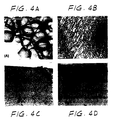
- Fig. 4a also shows that a fraction of the corrosion layer on the DyLAB-5 glass plate was separated from the glass that had been immersed in PBS at 37°C for 11 days. From ICP analysis of the solution, it was not surprising that the atomic ratio of Dy to Al plus Si (Dy/Al+Si)), as determined by EDS, was 3.3 times greater in the corrosion layer that separated from the DyLAB-5 glass than in the as-made DyLAB-5 glass.
- the surface resolution of XPS analysis of glass is 10 to 20 ⁇ , compared to approximately one micron for EDS, and can be combined with ion sputter milling to give a compositional depth profile.
- the increasing size of the peak caused by Dy in the XPS spectra indicates that the concentration of Dy in the DyLAB-10 glass increased as corrosion progressed.
- the concentration of B and Al appears lower to a depth of 1000 and 80 ⁇ , respectively, in the DyLAB-10 glass immersed for 5 or 24 hours.
- the XPS peaks for B and Al in the 2 week DyLAB-10 glass sample most closely resemble those of as-made DyLAB-10 glass plate.
- the Dy concentration appears to remain the same or to increase in the DyLAB-10 glass even after 2 weeks of corrosion, rather than decrease as it would if Dy was being dissolved from the glass.
- XPS analysis also revealed that phosphorus ions from the PBS solution were present in the surface of the DyLAB-10 glass after immersion for 5, 24 or 336 hours.
- the XPS spectra for the samples immersed for 5 or 24 hours show that the concentration of phosphorus decreased with depth but increased with dissolution time. This concentration gradient suggests that phosphorus was diffusing into the corrosion layer and possibly reacting with the undissolved glass components rather than simply precipitating on the surface.
- RTVM real time video microscopy
- a corrosion layer also formed on the surface of non-radioactive DyLAB-10 glass microspheres (23 ⁇ m in average diameter) that were injected into the healthy stifle joint (knee) of a rat.
- Photomicrographs of the DyLAB-10 glass microspheres imbedded in the synovial membrane, Figs. 6(a) and (b) (two weeks after injection) show evidence of a corrosion layer, which is similar in appearance to the corroded layer seen on the DyLAB-5 or DyLAB-10 glass microspheres immersed in PBS solution at 22 or 37°C.
- the size of the DyLAB-10 glass microspheres injected into the rat did not decrease noticeably during two weeks in the stifle joint. None of the microspheres were found outside the synovial membrane (see Fig. 6(A)). There was no discernable difference in the stifle joints injected with either 2 or 4 mg of DyLAB-10 glass microspheres.
Landscapes
- Chemical & Material Sciences (AREA)
- Health & Medical Sciences (AREA)
- Life Sciences & Earth Sciences (AREA)
- Engineering & Computer Science (AREA)
- Chemical Kinetics & Catalysis (AREA)
- General Chemical & Material Sciences (AREA)
- Organic Chemistry (AREA)
- Geochemistry & Mineralogy (AREA)
- Materials Engineering (AREA)
- Animal Behavior & Ethology (AREA)
- Pharmacology & Pharmacy (AREA)
- Medicinal Chemistry (AREA)
- General Health & Medical Sciences (AREA)
- Public Health (AREA)
- Veterinary Medicine (AREA)
- Epidemiology (AREA)
- Rheumatology (AREA)
- Orthopedic Medicine & Surgery (AREA)
- Immunology (AREA)
- Bioinformatics & Cheminformatics (AREA)
- Physical Education & Sports Medicine (AREA)
- Nuclear Medicine, Radiotherapy & Molecular Imaging (AREA)
- Medicines That Contain Protein Lipid Enzymes And Other Medicines (AREA)
- Pharmaceuticals Containing Other Organic And Inorganic Compounds (AREA)
- Glass Compositions (AREA)
- Medicinal Preparation (AREA)
Applications Claiming Priority (3)
| Application Number | Priority Date | Filing Date | Title |
|---|---|---|---|
| US24189299A | 1999-02-01 | 1999-02-01 | |
| PCT/US2000/002388 WO2000044682A1 (en) | 1999-02-01 | 2000-01-31 | Biodegradable glass compositions and methods for radiation therapy |
| US241892 | 2000-10-20 |
Publications (2)
| Publication Number | Publication Date |
|---|---|
| EP1149057A1 EP1149057A1 (en) | 2001-10-31 |
| EP1149057B1 true EP1149057B1 (en) | 2004-05-26 |
Family
ID=22912591
Family Applications (1)
| Application Number | Title | Priority Date | Filing Date |
|---|---|---|---|
| EP00907088A Expired - Lifetime EP1149057B1 (en) | 1999-02-01 | 2000-01-31 | Biodegradable glass compositions and their use in the manufacture of a medicament for radiation therapy |
Country Status (9)
| Country | Link |
|---|---|
| US (1) | US6379648B1 (enExample) |
| EP (1) | EP1149057B1 (enExample) |
| JP (1) | JP4397531B2 (enExample) |
| AT (1) | ATE267775T1 (enExample) |
| AU (1) | AU758560B2 (enExample) |
| CA (1) | CA2361573C (enExample) |
| DE (1) | DE60011045T2 (enExample) |
| ES (1) | ES2222892T3 (enExample) |
| WO (1) | WO2000044682A1 (enExample) |
Families Citing this family (32)
| Publication number | Priority date | Publication date | Assignee | Title |
|---|---|---|---|---|
| US6616591B1 (en) * | 1999-12-08 | 2003-09-09 | Scimed Life Systems, Inc. | Radioactive compositions and methods of use thereof |
| AUPR098300A0 (en) * | 2000-10-25 | 2000-11-16 | Sirtex Medical Limited | Polymer based radionuclide containing microspheres |
| AUPR098200A0 (en) * | 2000-10-25 | 2000-11-16 | Sirtex Medical Limited | Production of low density radionuclide containing microspheres |
| GB0104383D0 (en) | 2001-02-22 | 2001-04-11 | Psimedica Ltd | Cancer Treatment |
| US6709744B1 (en) * | 2001-08-13 | 2004-03-23 | The Curators Of The University Of Missouri | Bioactive materials |
| GB2383534A (en) * | 2001-12-28 | 2003-07-02 | Psimei Pharmaceuticals Plc | Delivery of neutron capture elements for neutron capture therapy |
| WO2004065949A1 (en) * | 2003-01-21 | 2004-08-05 | X-Ray Flux Pty Ltd | X-ray fluorescence flux composition |
| US20040220135A1 (en) * | 2003-04-30 | 2004-11-04 | Sirtex Medical Limited | Combination therapy for treatment of neoplasia |
| US20040258614A1 (en) * | 2003-06-20 | 2004-12-23 | University Of Maryland, Baltimore | Microparticles for microarterial imaging and radiotherapy |
| EP1729822B1 (en) * | 2004-03-05 | 2014-05-07 | XL Sci-Tech, Inc. | Particulate materials and compositions for radio therapy |
| US9248034B2 (en) * | 2005-08-23 | 2016-02-02 | Advanced Cardiovascular Systems, Inc. | Controlled disintegrating implantable medical devices |
| US20070170396A1 (en) * | 2006-01-26 | 2007-07-26 | Graham Appleby | Photostimulable glass ceramic |
| US20080038190A1 (en) * | 2006-08-11 | 2008-02-14 | Simpson Thomas J | Composition apparatus and method for use in imaging |
| US20080119927A1 (en) * | 2006-11-17 | 2008-05-22 | Medtronic Vascular, Inc. | Stent Coating Including Therapeutic Biodegradable Glass, and Method of Making |
| US8353966B2 (en) * | 2009-01-15 | 2013-01-15 | The Curators Of The University Of Missouri | Scaffold for bone and tissue repair in mammals |
| US9456890B2 (en) | 2009-01-15 | 2016-10-04 | The Curators Of The University Of Missouri | Scaffold for bone and tissue repair in mammals |
| US8481066B2 (en) * | 2009-07-16 | 2013-07-09 | The Curators Of The University Of Missouri | Scaffold for tissue regeneration in mammals |
| WO2011015958A2 (en) | 2009-08-06 | 2011-02-10 | Koninklijke Philips Electronics N.V. | Oncology therapies employing radioactive seeds |
| US9849200B2 (en) | 2010-09-16 | 2017-12-26 | Mo-Sci Corporation | Strontium phosphate microparticle for radiological imaging and therapy |
| US9119887B2 (en) | 2010-09-16 | 2015-09-01 | Mo-Sci Corporation | Low-density magnesium-aluminum-silicate (MAS) microparticles for radiotherapy and/or radioimaging |
| US8865123B1 (en) | 2010-09-16 | 2014-10-21 | Mo-Sci Corporation | Strontium phosphate microparticle for radiological imaging and therapy |
| EP2457588A1 (en) | 2010-11-05 | 2012-05-30 | UMC Utrecht Holding B.V. | Microsphere comprising a lanthanide metal complex |
| CN104379182B (zh) * | 2012-03-29 | 2017-12-05 | 巴斯夫公司 | 非晶碳承载的包含镧系氧化物的纳米粒子及其制备方法 |
| JP6373961B2 (ja) | 2013-03-13 | 2018-08-15 | バイオスフィア メディカル,インコーポレイテッド | ラジオアイソトープ結合微粒子の組成物及び結合方法 |
| JP2017503846A (ja) | 2014-01-24 | 2017-02-02 | サーテックス・メディカル・リミテッド | 新生物の治療 |
| GB201415005D0 (en) * | 2014-08-22 | 2014-10-08 | Univ Nottingham | Porous and non-pourous bodies |
| US11013836B2 (en) * | 2016-06-16 | 2021-05-25 | The Curators Of The University Of Missouri | Inorganic biodegradable substrates for devices and systems |
| BR112020003767B1 (pt) * | 2017-08-22 | 2023-10-10 | Moebius Medical Ltd | Composição farmacêutica que compreende lipossomas e uso da dita composição para tratar dor ou irritação em uma articulação |
| TWI675669B (zh) * | 2018-03-05 | 2019-11-01 | 白金科技股份有限公司 | 放射微球及其製備方法 |
| WO2020047662A1 (en) | 2018-09-05 | 2020-03-12 | Ir Scientific Inc. | Glass composition |
| EP4031195A4 (en) | 2019-09-16 | 2023-11-29 | ABK Biomedical Incorporated | Composition of radioactive and non-radioactive microparticles |
| CA3266614A1 (en) | 2023-01-19 | 2024-07-25 | Moebius Medical Ltd. | LONG-ACTING LIPOSOMAL COMPOSITION FOR THE TREATMENT OF PAIN IN JOINT DISORDERS |
Family Cites Families (4)
| Publication number | Priority date | Publication date | Assignee | Title |
|---|---|---|---|---|
| US3972721A (en) * | 1974-03-01 | 1976-08-03 | Ppg Industries, Inc. | Thermally stable and crush resistant microporous glass catalyst supports and methods of making |
| US5039326A (en) | 1988-01-29 | 1991-08-13 | The Curators Of The University Of Missouri | Composition and method for radiation synovectomy of arthritic joints |
| US4889707A (en) | 1988-01-29 | 1989-12-26 | The Curators Of The University Of Missouri | Composition and method for radiation synovectomy of arthritic joints |
| US5011797A (en) | 1988-01-29 | 1991-04-30 | The Curators Of The University Of Missouri | Composition and method for radiation synovectomy of arthritic joints |
-
1999
- 1999-02-01 US US09/241,892 patent/US6379648B1/en not_active Expired - Lifetime
-
2000
- 2000-01-31 WO PCT/US2000/002388 patent/WO2000044682A1/en not_active Ceased
- 2000-01-31 JP JP2000595944A patent/JP4397531B2/ja not_active Expired - Lifetime
- 2000-01-31 AU AU28647/00A patent/AU758560B2/en not_active Expired
- 2000-01-31 CA CA2361573A patent/CA2361573C/en not_active Expired - Lifetime
- 2000-01-31 AT AT00907088T patent/ATE267775T1/de not_active IP Right Cessation
- 2000-01-31 ES ES00907088T patent/ES2222892T3/es not_active Expired - Lifetime
- 2000-01-31 DE DE60011045T patent/DE60011045T2/de not_active Expired - Lifetime
- 2000-01-31 EP EP00907088A patent/EP1149057B1/en not_active Expired - Lifetime
Also Published As
| Publication number | Publication date |
|---|---|
| EP1149057A1 (en) | 2001-10-31 |
| WO2000044682A1 (en) | 2000-08-03 |
| ATE267775T1 (de) | 2004-06-15 |
| US6379648B1 (en) | 2002-04-30 |
| WO2000044682A9 (en) | 2001-08-30 |
| ES2222892T3 (es) | 2005-02-16 |
| AU2864700A (en) | 2000-08-18 |
| DE60011045D1 (de) | 2004-07-01 |
| CA2361573C (en) | 2010-05-25 |
| AU758560B2 (en) | 2003-03-27 |
| JP4397531B2 (ja) | 2010-01-13 |
| DE60011045T2 (de) | 2005-05-25 |
| CA2361573A1 (en) | 2000-08-03 |
| JP2002535237A (ja) | 2002-10-22 |
Similar Documents
| Publication | Publication Date | Title |
|---|---|---|
| US6379648B1 (en) | Biodegradable glass compositions and methods for radiation therapy | |
| US4889707A (en) | Composition and method for radiation synovectomy of arthritic joints | |
| EP0201601B1 (en) | Glass microspheres | |
| Day et al. | Transformation of borate glasses into biologically useful materials | |
| CN1946432B (zh) | 用于放射治疗的颗粒材料和组合物 | |
| US5011797A (en) | Composition and method for radiation synovectomy of arthritic joints | |
| US5039326A (en) | Composition and method for radiation synovectomy of arthritic joints | |
| Conzone et al. | In vitro and in vivo dissolution behavior of a dysprosium lithium borate glass designed for the radiation synovectomy treatment of rheumatoid arthritis | |
| US20060177373A1 (en) | Low density radionuclide-containing particulate material | |
| White et al. | Rare earth aluminosilicate glasses for in vivo radiation delivery | |
| WO2008017944A2 (en) | Composition apparatus and method for use in imaging | |
| RU2505492C1 (ru) | Способ получения микрошариков из иттрий-алюмосиликатного стекла для радиотерапии | |
| Conzone et al. | Glass formation and chemical durability of dysprosium lithium borate glasses intended for in vivo radiation synovectomy | |
| Day et al. | Composition and method for radiation synovectomy of arthritic joints | |
| Day et al. | Glass microspheres | |
| White | Rare earth-lithium-borate glasses for use as degradable radiopharmaceuticals | |
| McIntyre et al. | Ho2O3–Al2O3–SiO2 glasses for in‐vivo radiotherapy | |
| Zhao et al. | Dysprosium lithium borate glass mircrospheres for radiation synovectomy: The in vitro and in vivo performance evaluation | |
| Day et al. | Microspheres for Radiation Therapy | |
| Erbe | Glass formation and properties in the Sm₂O₃· Al₂O₃· SiO₂ system |
Legal Events
| Date | Code | Title | Description |
|---|---|---|---|
| PUAI | Public reference made under article 153(3) epc to a published international application that has entered the european phase |
Free format text: ORIGINAL CODE: 0009012 |
|
| 17P | Request for examination filed |
Effective date: 20010809 |
|
| AK | Designated contracting states |
Kind code of ref document: A1 Designated state(s): AT BE CH CY DE DK ES FI FR GB GR IE IT LI LU MC NL PT SE |
|
| 17Q | First examination report despatched |
Effective date: 20020227 |
|
| GRAP | Despatch of communication of intention to grant a patent |
Free format text: ORIGINAL CODE: EPIDOSNIGR1 |
|
| RTI1 | Title (correction) |
Free format text: BIODEGRADABLE GLASS COMPOSITIONS AND THEIR USE IN THE MANUFACTURE OF A MEDICAMENT FOR RADIATION THERAPY |
|
| GRAS | Grant fee paid |
Free format text: ORIGINAL CODE: EPIDOSNIGR3 |
|
| GRAA | (expected) grant |
Free format text: ORIGINAL CODE: 0009210 |
|
| AK | Designated contracting states |
Kind code of ref document: B1 Designated state(s): AT BE CH CY DE DK ES FI FR GB GR IE IT LI LU MC NL PT SE |
|
| PG25 | Lapsed in a contracting state [announced via postgrant information from national office to epo] |
Ref country code: NL Free format text: LAPSE BECAUSE OF FAILURE TO SUBMIT A TRANSLATION OF THE DESCRIPTION OR TO PAY THE FEE WITHIN THE PRESCRIBED TIME-LIMIT Effective date: 20040526 Ref country code: LI Free format text: LAPSE BECAUSE OF FAILURE TO SUBMIT A TRANSLATION OF THE DESCRIPTION OR TO PAY THE FEE WITHIN THE PRESCRIBED TIME-LIMIT Effective date: 20040526 Ref country code: FI Free format text: LAPSE BECAUSE OF FAILURE TO SUBMIT A TRANSLATION OF THE DESCRIPTION OR TO PAY THE FEE WITHIN THE PRESCRIBED TIME-LIMIT Effective date: 20040526 Ref country code: AT Free format text: LAPSE BECAUSE OF FAILURE TO SUBMIT A TRANSLATION OF THE DESCRIPTION OR TO PAY THE FEE WITHIN THE PRESCRIBED TIME-LIMIT Effective date: 20040526 Ref country code: CH Free format text: LAPSE BECAUSE OF FAILURE TO SUBMIT A TRANSLATION OF THE DESCRIPTION OR TO PAY THE FEE WITHIN THE PRESCRIBED TIME-LIMIT Effective date: 20040526 |
|
| REG | Reference to a national code |
Ref country code: GB Ref legal event code: FG4D |
|
| REG | Reference to a national code |
Ref country code: CH Ref legal event code: EP |
|
| REG | Reference to a national code |
Ref country code: IE Ref legal event code: FG4D |
|
| REF | Corresponds to: |
Ref document number: 60011045 Country of ref document: DE Date of ref document: 20040701 Kind code of ref document: P |
|
| PG25 | Lapsed in a contracting state [announced via postgrant information from national office to epo] |
Ref country code: SE Free format text: LAPSE BECAUSE OF FAILURE TO SUBMIT A TRANSLATION OF THE DESCRIPTION OR TO PAY THE FEE WITHIN THE PRESCRIBED TIME-LIMIT Effective date: 20040826 Ref country code: DK Free format text: LAPSE BECAUSE OF FAILURE TO SUBMIT A TRANSLATION OF THE DESCRIPTION OR TO PAY THE FEE WITHIN THE PRESCRIBED TIME-LIMIT Effective date: 20040826 Ref country code: GR Free format text: LAPSE BECAUSE OF FAILURE TO SUBMIT A TRANSLATION OF THE DESCRIPTION OR TO PAY THE FEE WITHIN THE PRESCRIBED TIME-LIMIT Effective date: 20040826 |
|
| REG | Reference to a national code |
Ref country code: CH Ref legal event code: PL |
|
| NLV1 | Nl: lapsed or annulled due to failure to fulfill the requirements of art. 29p and 29m of the patents act | ||
| ET | Fr: translation filed | ||
| PG25 | Lapsed in a contracting state [announced via postgrant information from national office to epo] |
Ref country code: CY Free format text: LAPSE BECAUSE OF FAILURE TO SUBMIT A TRANSLATION OF THE DESCRIPTION OR TO PAY THE FEE WITHIN THE PRESCRIBED TIME-LIMIT Effective date: 20050131 Ref country code: IE Free format text: LAPSE BECAUSE OF NON-PAYMENT OF DUE FEES Effective date: 20050131 Ref country code: MC Free format text: LAPSE BECAUSE OF NON-PAYMENT OF DUE FEES Effective date: 20050131 Ref country code: LU Free format text: LAPSE BECAUSE OF NON-PAYMENT OF DUE FEES Effective date: 20050131 |
|
| REG | Reference to a national code |
Ref country code: ES Ref legal event code: FG2A Ref document number: 2222892 Country of ref document: ES Kind code of ref document: T3 |
|
| PLBE | No opposition filed within time limit |
Free format text: ORIGINAL CODE: 0009261 |
|
| STAA | Information on the status of an ep patent application or granted ep patent |
Free format text: STATUS: NO OPPOSITION FILED WITHIN TIME LIMIT |
|
| 26N | No opposition filed |
Effective date: 20050301 |
|
| REG | Reference to a national code |
Ref country code: IE Ref legal event code: MM4A |
|
| PG25 | Lapsed in a contracting state [announced via postgrant information from national office to epo] |
Ref country code: PT Free format text: LAPSE BECAUSE OF NON-PAYMENT OF DUE FEES Effective date: 20041026 |
|
| REG | Reference to a national code |
Ref country code: FR Ref legal event code: PLFP Year of fee payment: 17 |
|
| REG | Reference to a national code |
Ref country code: FR Ref legal event code: PLFP Year of fee payment: 18 |
|
| REG | Reference to a national code |
Ref country code: FR Ref legal event code: PLFP Year of fee payment: 19 |
|
| PGFP | Annual fee paid to national office [announced via postgrant information from national office to epo] |
Ref country code: ES Payment date: 20190201 Year of fee payment: 20 Ref country code: DE Payment date: 20190129 Year of fee payment: 20 Ref country code: FR Payment date: 20190125 Year of fee payment: 20 Ref country code: IT Payment date: 20190123 Year of fee payment: 20 Ref country code: GB Payment date: 20190128 Year of fee payment: 20 |
|
| PGFP | Annual fee paid to national office [announced via postgrant information from national office to epo] |
Ref country code: BE Payment date: 20190128 Year of fee payment: 20 |
|
| REG | Reference to a national code |
Ref country code: DE Ref legal event code: R071 Ref document number: 60011045 Country of ref document: DE |
|
| REG | Reference to a national code |
Ref country code: GB Ref legal event code: PE20 Expiry date: 20200130 |
|
| REG | Reference to a national code |
Ref country code: BE Ref legal event code: MK Effective date: 20200131 |
|
| PG25 | Lapsed in a contracting state [announced via postgrant information from national office to epo] |
Ref country code: GB Free format text: LAPSE BECAUSE OF EXPIRATION OF PROTECTION Effective date: 20200130 |
|
| REG | Reference to a national code |
Ref country code: ES Ref legal event code: FD2A Effective date: 20200723 |
|
| PG25 | Lapsed in a contracting state [announced via postgrant information from national office to epo] |
Ref country code: ES Free format text: LAPSE BECAUSE OF EXPIRATION OF PROTECTION Effective date: 20200201 |