EP1139600A2 - Synchronisierung eines Netzelements eines analogen, zellularen Netzwerks - Google Patents
Synchronisierung eines Netzelements eines analogen, zellularen Netzwerks Download PDFInfo
- Publication number
- EP1139600A2 EP1139600A2 EP01000067A EP01000067A EP1139600A2 EP 1139600 A2 EP1139600 A2 EP 1139600A2 EP 01000067 A EP01000067 A EP 01000067A EP 01000067 A EP01000067 A EP 01000067A EP 1139600 A2 EP1139600 A2 EP 1139600A2
- Authority
- EP
- European Patent Office
- Prior art keywords
- synchronization
- data
- word
- dot1
- network element
- Prior art date
- Legal status (The legal status is an assumption and is not a legal conclusion. Google has not performed a legal analysis and makes no representation as to the accuracy of the status listed.)
- Withdrawn
Links
- 230000001413 cellular effect Effects 0.000 title claims abstract description 8
- 238000011156 evaluation Methods 0.000 claims abstract description 12
- 238000000034 method Methods 0.000 claims abstract description 12
- 101710112083 Para-Rep C1 Proteins 0.000 claims abstract description 6
- 102100022881 Rab proteins geranylgeranyltransferase component A 1 Human genes 0.000 claims abstract description 6
- 101710119887 Trans-acting factor B Proteins 0.000 claims abstract description 6
- 230000005540 biological transmission Effects 0.000 claims description 14
- 238000012545 processing Methods 0.000 claims description 2
- 238000012544 monitoring process Methods 0.000 claims 1
- 238000001514 detection method Methods 0.000 abstract description 7
- 102100039489 Histone-lysine N-methyltransferase, H3 lysine-79 specific Human genes 0.000 description 38
- 101000963360 Homo sapiens Histone-lysine N-methyltransferase, H3 lysine-79 specific Proteins 0.000 description 38
- 238000005562 fading Methods 0.000 description 2
- 238000005259 measurement Methods 0.000 description 2
- 238000010187 selection method Methods 0.000 description 2
- 206010012289 Dementia Diseases 0.000 description 1
- 101000742280 Milk vetch dwarf virus (isolate N) Para-Rep C10 Proteins 0.000 description 1
- 101710112075 Para-Rep C7 Proteins 0.000 description 1
- -1 REP5 Proteins 0.000 description 1
- 238000000605 extraction Methods 0.000 description 1
Images



Classifications
-
- H—ELECTRICITY
- H04—ELECTRIC COMMUNICATION TECHNIQUE
- H04W—WIRELESS COMMUNICATION NETWORKS
- H04W56/00—Synchronisation arrangements
-
- H—ELECTRICITY
- H04—ELECTRIC COMMUNICATION TECHNIQUE
- H04L—TRANSMISSION OF DIGITAL INFORMATION, e.g. TELEGRAPHIC COMMUNICATION
- H04L7/00—Arrangements for synchronising receiver with transmitter
- H04L7/04—Speed or phase control by synchronisation signals
- H04L7/041—Speed or phase control by synchronisation signals using special codes as synchronising signal
-
- H—ELECTRICITY
- H04—ELECTRIC COMMUNICATION TECHNIQUE
- H04B—TRANSMISSION
- H04B7/00—Radio transmission systems, i.e. using radiation field
- H04B7/24—Radio transmission systems, i.e. using radiation field for communication between two or more posts
- H04B7/26—Radio transmission systems, i.e. using radiation field for communication between two or more posts at least one of which is mobile
-
- H—ELECTRICITY
- H04—ELECTRIC COMMUNICATION TECHNIQUE
- H04L—TRANSMISSION OF DIGITAL INFORMATION, e.g. TELEGRAPHIC COMMUNICATION
- H04L7/00—Arrangements for synchronising receiver with transmitter
- H04L7/04—Speed or phase control by synchronisation signals
-
- H—ELECTRICITY
- H04—ELECTRIC COMMUNICATION TECHNIQUE
- H04L—TRANSMISSION OF DIGITAL INFORMATION, e.g. TELEGRAPHIC COMMUNICATION
- H04L7/00—Arrangements for synchronising receiver with transmitter
- H04L7/04—Speed or phase control by synchronisation signals
- H04L7/041—Speed or phase control by synchronisation signals using special codes as synchronising signal
- H04L7/042—Detectors therefor, e.g. correlators, state machines
-
- H—ELECTRICITY
- H04—ELECTRIC COMMUNICATION TECHNIQUE
- H04L—TRANSMISSION OF DIGITAL INFORMATION, e.g. TELEGRAPHIC COMMUNICATION
- H04L7/00—Arrangements for synchronising receiver with transmitter
- H04L7/04—Speed or phase control by synchronisation signals
- H04L7/10—Arrangements for initial synchronisation
Definitions
- the invention relates to a network element of an analog, cellular network, in particular a mobile radio device or a base station, and a method for a network element of a analog cellular network for receiving a broadband data sequence from an initial synchronization, a word synchronization, a data word and a fixed number of repetitions of another synchronization, word synchronization and data distribution.
- the transmission of data in the format specified at the beginning is for example for the US system AMPS (Advanced Mobile Phone System) from the standards TIA / EIA / IS-91 ("Mobile Station - Land Station Compatibility Standard for 800 MHz Analog Cellular", 1994) and TIA / EIA / IS-136.2-A ("TDMACellular / PCS -Radio Interface - Mobile Station - Base Station Compatibility - Traffic Channels and FSK Control Channel " October 1996) for the forward voice channel (FVC) of one Base station provided for a mobile device.
- the data sequence is 1032 bits and is an example of a word to be transmitted in FIG. 1 shown.
- Word synchronization follows a long initial synchronization "DOT1" of 101 bits “WS” with 11 bits and the first transmission of the data word to be transmitted "REP1" with 40 bit. There are 10 repetitions of a shorter synchronization "DOT” with 37 bits, a word synchronization "WS” with 11 bits and the transmitted data word "REP2-REP11". Both the initial synchronization (DOT1) and the other synchronizations (DOT) consist of one "Dotting" sequence consisting of alternating zeros and ones.
- Such broadband data sequences are used to transmit a single data word for example for handover requests from a base station to a mobile radio device used during an ongoing analog voice transmission to get worse Reception quality a change of the mobile device on a channel with better To initiate reception quality.
- the part of a network element that does the task has to decode received data sequences continuously during speech transmission monitor the audio stream for possible broadband data transmission detect.
- the detection a 101 bit initial synchronization used to assume that a data transmission has begun.
- the network element must then be in accordance with the Synchronize 101-bit initial sync and word sync before the various repetitions of the actual data word are received can.
- Each of the repetitions of the data word is usually with one 40.28 BCH (Bose-Chaudhuri-Hocquenghem) code encoded, causing some errors in the data word can be recognized and possibly even corrected.
- After that Network element that has received eleven repetitions of the data word there can be one Apply the selection procedure to the stored repetitions of the data word and send the finally selected data word for further processing.
- the invention has for its object a network element and a method for analog cellular network to create better detection of broadband data, transmitted in the form of a data sequence with an initial synchronization, one Word synchronization, a data word and a specified number of repetitions a synchronization, a word synchronization and the data word, enable.
- the network dementia and the method according to the invention show that Advantage on messages with the specified data format between elements of the network are more likely to be received correctly become. This advantage always comes into play when due to poor reception conditions the initial synchronization in the receiving network element is not is evaluable.
- the reception conditions can mainly be caused by fading and interference, but can also be affected by other disturbances.
- the use of the invention is primarily in transmissions from one base station to one Mobile device can be seen in the message channel defined for AMPS. However, it is neither limited to such transmissions nor to data sequences with the for this specified number of repetitions and the specified lengths of the individual parts of a data sequence.
- FIGS. 2a-2d like FIG. 1, each show a data sequence of 1032 bits the definition of data channels in the standard AMPS.
- the first synchronization sequence that is the initial synchronization with 101 bits
- the subsequent word synchronization WS and the subsequent data word REP1 and at least 5 other blocks are correct be received.
- this corresponds to a total of 1032 bits of 57% of the data sequence.
- blocks are crossed out as an example received data sequences may be disturbed without this has an influence on the extraction of the data word of interest REP1-REP11.
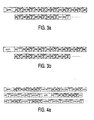
- the initial synchronization must DOT1 is not necessarily received correctly, rather Detection of any 6 blocks within the data sequence is sufficient. So come also consider the data sequence in FIG. 2b for correct reception, in which the Blocks for the first, fifth, seventh, tenth and eleventh repetition of the data word REP1, REP5, REP7, REP10, REP11 could not be received correctly, which in turn is made clear by crossing the blocks.
- the Invention Based on the maximum tolerable downtime within a data sequence, the Invention an improvement of up to 14% due to up to 14% longer downtime of fading holes etc. can be accepted as previously. The whole 14% you always get when the complete initial synchronization DOT1 is disturbed. The previous implementations, on the other hand, do not allow any recognition at all of the data stream if the initial synchronization DOT1 is disturbed.
- FIGS. 2a, b, c, d and 3a, b are based on the assumption that that the majority of repetitions of the data word REP1-REP11 by the base station were transmitted, can be decoded and that the decoded Data words must be the same among each other. According to a different selection strategy all correctly received repetitions of a data word REP1-REP11 Selection based, regardless of the number of correctly received retries of the data word. After decoding there are different versions of the Data word is available, the one most frequently accepted as correct occurs.
- the correct reception of a message with several words may seem to the mobile subscriber compared to receiving messages in one word, especially from Handover messages, of minor importance. Even the reception of such Messages can, however, with the network elements according to the invention and the inventive Procedures can be improved as detailed below.
- the first selection strategy is used as a basis, in which at least 6 Blocks of a data sequence must be received correctly.
- the second data sequence can be based on the known length of the data sequences regardless of the detection of the second initial synchronization DOT1 be recorded.
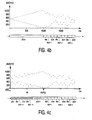
- the initial synchronization DOT1 of the first data sequence is already disturbed and is for example, first the fourth block of the first data sequence is correctly received, As can be seen in FIG. 4a, it is initially not possible to tell where the first data sequence is going enough. However, the initial synchronization DOT1 of the second data sequence 4a received correctly, the end of the first data sequence is clear completed and the second data sequence can be received and evaluated as usual become.
- Slightly disturbed initial synchronizations DOT1 can be achieved with a continuous Detect measurement that always received the last 101 bits of the data stream in one Data buffer stores.
- the stored bits are also continuously updated with a separately stored, correct sequence of the initial synchronization DOT1 compared.
- the number of different bits is constantly changing dd (rx) determined.
- FIG. 4b shows the result of such a measurement of the number dd (rx) of the deviations above the received bits rx (data bit) for a correctly received one Initial synchronization DOT1 shown.
- the initial synchronization DOT1 101 bits consist of a sequence of consecutive ones and zeros "101010 ... 10101". For the sake of clarity, it was assumed that the data buffer, into which the 101 bits are put for comparison, initially set with zeros is. In addition, there is only a reduced number of bits for better clarity shown.
- Severely disturbed initial synchronizations DOT1 can also be used with this Do not detect method. Two successive data sequences with the repetitions of two different data words and one badly disturbed Initial synchronization DOT1 are shown in Figure 4d.
- the blocks with the fourth, sixth, eighth ninth, tenth and eleventh repetitions of the data words received correctly Since from the fourth block of the first data sequence to the fourth Block of the second data sequence 14 decoding attempts are made, but each data word only Repeated 11 times, it is known that the correctly received fourth block is the second Data sequence must also belong to this.
- the last six blocks of the first data sequence become correct received, so that the evaluation means of the network element with up to four more Repetitions of the same data host must calculate.
- the second data sequence then four more attempts are made to repeat the first Decode data word, two of them during the 101 bit initial synchronization DOT1 of the second data sequence.
- a total of up to three can be correctly decoded Repetitions of the second data word REP1-REP3 incorrectly the selection procedure for the first data word.
- the implementation of the algorithm can, for example, include a faulty one Initial synchronization DOT1 of the second data word as a further 37-bit synchronization DOT of the first data word can be understood.
- the remaining eight Repetitions of the second data word REP4-REP11 can be used for the selection based on the same. It can even do two repetitions of the second data word REP4-REP11 without restricting the usability of the second data word are lost in order to get the required six correctly received Blocks to come.
- Each of the blocks with 37-bit synchronization DOT with a data stream of 10 kbit / s has a duration of 8.8 ms
- the evaluation means of the network element can alternatively also check whether there is a 8.8 between two correctly recognized blocks divisible period.
- the invention can therefore also be used in the case where the initial synchronization DOT1 of a second data sequence is badly disturbed, but with the consequence that a smaller number of repetitions for receiving the next data word Available.
- the second of the selection strategies listed also comes for multi-word transmissions in question.
- the initial synchronization DOT1 of both the first data sequence and The second data sequence is also disturbed, as shown in FIG. 5, so an assignment of correctly recorded blocks for the different data words only possible if the period between the start of the first correctly detected block and Beginning of another correctly recorded block at least the length of a complete one Data sequence, i.e. here of 1032 bits or 103.2 ms. At least if this Condition is fulfilled, but a faulty multi-word transmission can be correctly detected.
- the network elements and the method according to the invention can also be used for such data sequences in which do not contain the same data word in all blocks, but alternate in those Repeatedly two or more data words are contained accordingly Selection strategy each at least one or at least a certain number of each of the different data words are received correctly for evaluation to allow.
Landscapes
- Engineering & Computer Science (AREA)
- Computer Networks & Wireless Communication (AREA)
- Signal Processing (AREA)
- Mobile Radio Communication Systems (AREA)
- Synchronisation In Digital Transmission Systems (AREA)
- Time-Division Multiplex Systems (AREA)
Abstract
Description
Die Erfindung wird im folgenden anhand eines Ausführungsbeispiels unter Bezugnahme auf Zeichnungen näher erläutert. Dabei zeigt
- Fig. 1
- eine Datensequenz entsprechend dem für AMPS definierten Nachrichtenkanal für Übertragungen von Basisstation zu Mobilfunkgerät;
- Fig. 2a
- eine mit einem Netzelement des Standes der Technik auswertbare Datensequenz gemäß Fig 1;
- Fig 2b
- eine mit einem Netzelement gemäß Erfindung auswertbare Datensequenz gemäß Fig. 1;
- Fig. 2c
- eine zweite mit einem Netzelementen des Standes der Technik auswertbare Datensequenz;
- Fig. 2d
- eine zweite mit einem Netzelement gemäß Erfindung auswertbare Datensequenz gemäß Fig. 1;
- Fig. 3a
- eine dritte mit einem Netzelementen des Standes der Technik auswertbare Datensequenz;
- Fig. 3b
- eine dritte mit einem Netzelement gemäß Erfindung auswertbare Datensequenz gemäß Fig. 1;
- Fig. 4a
- ein Beispiel für zwei aufeinanderfolgende Datensequenzen ohne Störung der zweiten Anfangssynchronisierung;
- Fig. 4b
- eine Grafik zum bitweisen Empfang der Anfangssynchronisierung bei einer zweiten Anfangssynchronisierung ohne Störung;
- Fig. 4c
- eine Grafik zum bitweisen Empfang der Anfangssynchronisierung bei einer zweiten Anfangssynchronisierung mit geringfügiger Störung;
- Fig. 4d
- ein Beispiel für zwei aufeinanderfolgende Datensequenzen mit stark gestörter zweiter Anfangssynchronisierung; und
- Fig 5
- ein weiteres Beispiel für zwei aufeinanderfolgende Datensequenz mit stark gestörter zweiter Anfangssynchronisierung.
Claims (6)
- Netzelement eines analogen, zellularen Netzwerks, insbesondere ein Mobilfunkgerät oder eine Bassstation, mit Empfangsmitteln zum Empfangen einer Breitband-Datensequenz, zusammengesetzt aus einer Anfangssynchronisierung (DOT1), einer Wortsynchronisierung (WS), einem Datenwort (REP1) und einer festgelegten Anzahl von Wiederholungen einer weiteren Synchronisierung (DOT), einer Wortsynchronisierung (WS) und des Datenwortes (REP2-REP11), sowie mit Auswertmitteln zum Erkennen, daß eine Übertragung einer Datensequenz erfolgt, wenn eine Anfangssynchronisierung (DOT1) erkannt wurde oder alternativ eine der weiteren Synchronisierungen (DOT) gefolgt von einer korrekten Wortsynchronisierung (WS) erkannt wurde, und zum Auswerten der jeweils im Anschluß an eine erkannte und von einer Wortsynchronisierung (WS) gefolgten Anfangssynchronisierung (DOT1) bzw. an eine erkannte und von einer korrekten Wortsynchronisierung (WS) gefolgten weiteren Synchronisierung (DOT) empfangenen Datenwörter (REP1-REP11).
- Netzelement nach Anspruch 1,
dadurch gekennzeichnet, dass die Auswertmittel geeignet sind, eine empfangene Datensequenz dann einer Auswahl eines Datenwortes zugrunde zu legen, wenn mindestens eine festgelegte Anzahl an korrekt empfangenen Wiederholungen des Datenwortes (REP1-REP11) aus der Datensequenz vorhanden ist. - Netzelement nach einem der voranstehenden Ansprüche
dadurch gekennzeichnet, dass die Auswertmittel geeignet sind, von den empfangenen Wiederholung eines Datenwortes (REP1-REP11) in einer Datensequenz für eine Weiterverarbeitung diejenige auszuwählen, die am häufigsten auftritt. - Netzelement nach einem der voranstehenden Ansprüche,
dadurch gekennzeichnet, dass die Auswertmittel einen Speichern zum Speichern einer korrekten Anfangssynchronisierung (DOT1) und einen Datenpuffer mindestens von der Größe der Anfangssynchronisierung zum bitweisen Aufnehmen und Durchschieben der empfangenen Daten aufweisen, sowie Vergleichsmittel zum kontinuierlichen bitweisen Vergleichen des Speicherinhalts mit dem Datenpufferinhalt und zum Bestimmen der Anzahl (dd(rx)) der sich unterscheidenden Bits, wobei die Auswertmittel geeignet sind, auf eine eingegangene Anfangssynchronisierung (DOT1) zu schließen, wenn die Anzahl (dd(rx)) der sich unterscheidenden Bits eine festgelegte Anzahl (ddmin) unterschreitet, und auf eine korrekt eingegangene Anfangssynchronisierung (DOT1), wenn die Anzahl (dd(rx)) der sich unterscheidenden Bits Null erreicht. - Netzelement nach einem der voranstehenden Ansprüche,
dadurch gekennzeichnet, dass die Auswertmittel geeignet sind, bei gestörten Anfangssynchronisierungen (DOT1) von zwei unmittelbar aufeinanderfolgenden Datensequenzen nach Ablauf der zeitlichen Länge einer Datensequenz ab Beginn einer ersten erkannten und von einer korrekten Wortsynchronisierung (WS) gefolgten weiteren Synchronisierung (DOT) einen Wech-sel zu der zweiten Datensequenz anzunehmen. - Verfahren für ein Netzelement eines analogen, zellularen Netzwerks, insbesondere ein Mobilfunkgerät oder eine Barsstation, zum Empfangen einer Datensequenz, zusammengesetzt aus einer Anfangssynchronisierung (DOT1), einer Wortsynchronisierung (WS), einem Datenwort (REP1) und einer festgelegten Anzahl von Wiederholungen einer weiteren Synchronisierung (DOT), einer Wortsynchronisierung (WS) und des Datenwortes (REP2-REP11), das die folgenden Schritte aufweist:a) kontinuierliches Überwachen auf ankommende Breitband-Datenströmen zum Erkennen, ob eine an das Netzelement gerichtete Datenübertragung erfolgt,b) Ermitteln, ob in empfangenen Datenströmen eine Anfangssynchronisierung (DOT1) erkannt werden kann oder ob eine weitere Synchronisierung (DOT) gefolgt von einer korrekten Wortsynchronisierung (WS) erkannt werden kann, undc) Auswerten der auf eine erkannte Anfangssynchronisierung (DOT1) oder auf eine Kombination von einer weiteren erkannten Synchronisierung (DOT) und einer korrekten empfangenen Wortsynchronisierung (WS) folgenden Datenwörter (REP1-REP11).
Applications Claiming Priority (2)
| Application Number | Priority Date | Filing Date | Title |
|---|---|---|---|
| DE10015630 | 2000-03-29 | ||
| DE10015630A DE10015630A1 (de) | 2000-03-29 | 2000-03-29 | Netzelement eines analogen, zellularen Netzwerks und ein Verfahren für ein solches Netzelement |
Publications (2)
| Publication Number | Publication Date |
|---|---|
| EP1139600A2 true EP1139600A2 (de) | 2001-10-04 |
| EP1139600A3 EP1139600A3 (de) | 2005-10-19 |
Family
ID=7636845
Family Applications (1)
| Application Number | Title | Priority Date | Filing Date |
|---|---|---|---|
| EP01000067A Withdrawn EP1139600A3 (de) | 2000-03-29 | 2001-03-23 | Synchronisierung eines Netzelements eines analogen, zellularen Netzwerks |
Country Status (6)
| Country | Link |
|---|---|
| US (1) | US6901267B2 (de) |
| EP (1) | EP1139600A3 (de) |
| JP (1) | JP2001320322A (de) |
| KR (1) | KR100776834B1 (de) |
| CN (1) | CN1249947C (de) |
| DE (1) | DE10015630A1 (de) |
Cited By (1)
| Publication number | Priority date | Publication date | Assignee | Title |
|---|---|---|---|---|
| KR100842536B1 (ko) | 2004-07-01 | 2008-07-01 | 삼성전자주식회사 | 통신 시스템에서 동기 획득 방법 및 시스템 |
Families Citing this family (4)
| Publication number | Priority date | Publication date | Assignee | Title |
|---|---|---|---|---|
| JP2005217486A (ja) * | 2004-01-27 | 2005-08-11 | Matsushita Electric Ind Co Ltd | ストリーム復号装置 |
| CN1329837C (zh) * | 2004-08-20 | 2007-08-01 | 中兴通讯股份有限公司 | 在个人计算机上模拟基站网管系统的方法及其装置 |
| CN103763713B (zh) * | 2013-12-31 | 2017-08-04 | 华为技术服务有限公司 | 一种构建微蜂窝的分析方法及装置 |
| WO2016167447A1 (ko) * | 2015-04-17 | 2016-10-20 | 엘지전자 주식회사 | 무선 통신 시스템에서의 동기 신호 송수신 방법 |
Citations (1)
| Publication number | Priority date | Publication date | Assignee | Title |
|---|---|---|---|---|
| US4876740A (en) | 1985-08-30 | 1989-10-24 | Motorola, Inc. | Radiotelephone system employing digitized speech/data signalling |
Family Cites Families (5)
| Publication number | Priority date | Publication date | Assignee | Title |
|---|---|---|---|---|
| US4312074A (en) * | 1980-02-07 | 1982-01-19 | Motorola, Inc. | Method and apparatus for detecting a data signal including repeated data words |
| US4763339A (en) * | 1984-03-15 | 1988-08-09 | General Electric Company | Digital word synchronizing arrangement |
| US4905234A (en) * | 1987-06-03 | 1990-02-27 | General Electric Company | Apparatus and method for transmitting digital data over a radio communications channel |
| US5768268A (en) * | 1995-07-19 | 1998-06-16 | Watkins Johnson Company | Wideband base station architecture for digital cellular communications system |
| US6331976B1 (en) * | 1997-12-10 | 2001-12-18 | Texas Instruments Incorporated | Circuits system and methods for synchronization word detection in bitstream communications apparatus |
-
2000
- 2000-03-29 DE DE10015630A patent/DE10015630A1/de not_active Withdrawn
-
2001
- 2001-03-23 EP EP01000067A patent/EP1139600A3/de not_active Withdrawn
- 2001-03-26 CN CNB011221992A patent/CN1249947C/zh not_active Expired - Fee Related
- 2001-03-27 US US09/817,977 patent/US6901267B2/en not_active Expired - Fee Related
- 2001-03-27 KR KR1020010015852A patent/KR100776834B1/ko not_active Expired - Fee Related
- 2001-03-28 JP JP2001093276A patent/JP2001320322A/ja not_active Withdrawn
Patent Citations (1)
| Publication number | Priority date | Publication date | Assignee | Title |
|---|---|---|---|---|
| US4876740A (en) | 1985-08-30 | 1989-10-24 | Motorola, Inc. | Radiotelephone system employing digitized speech/data signalling |
Cited By (2)
| Publication number | Priority date | Publication date | Assignee | Title |
|---|---|---|---|---|
| KR100842536B1 (ko) | 2004-07-01 | 2008-07-01 | 삼성전자주식회사 | 통신 시스템에서 동기 획득 방법 및 시스템 |
| US7426204B2 (en) | 2004-07-01 | 2008-09-16 | Samsung Electronics Co., Ltd | Symbol synchronization method for OFDM-based wireless communication system |
Also Published As
| Publication number | Publication date |
|---|---|
| KR20010093703A (ko) | 2001-10-29 |
| US6901267B2 (en) | 2005-05-31 |
| JP2001320322A (ja) | 2001-11-16 |
| CN1249947C (zh) | 2006-04-05 |
| KR100776834B1 (ko) | 2007-11-16 |
| CN1323145A (zh) | 2001-11-21 |
| US20010049290A1 (en) | 2001-12-06 |
| EP1139600A3 (de) | 2005-10-19 |
| DE10015630A1 (de) | 2001-10-04 |
Similar Documents
| Publication | Publication Date | Title |
|---|---|---|
| DE602004011445T2 (de) | FEC-Dekodierung mit dynamischen Parametern | |
| DE69719430T2 (de) | Rahmensynchronisierungsanordnung und Kommunikationssystem | |
| DE69424118T2 (de) | Verfahren und Vorrichtung zum Datenempfang | |
| DE3211325C1 (de) | System zum automatischen Aufbau einer Kurzwellen-Telegrafiezeichen-Verbindung | |
| DE69102201T2 (de) | Verfahren zum Übertragen von verschiedenen Befehlen für Auswahl von Sender-Antenne in einem zeitmultiplexen Funkübertragungssystem. | |
| DE3780406T2 (de) | Verfahren und anordnung zur kodierung und dekodierung binaerer information. | |
| DE3027579C2 (de) | ||
| DE3876702T2 (de) | Verfahren und anordnung fuer die akquisition von synchronisierbits in datenuebertragungssystemen. | |
| DE19952685A1 (de) | Verfahren und Apparat für die Übertragung und Wiederherstellung von Videosignalen | |
| DE4027262C2 (de) | Verfahren und Vorrichtung zur Synchronisation von digitalen Daten | |
| EP0666661B1 (de) | Verfahren zur Erkennung eines Übertragungsmodes bei einem digitalen Mehrkanalübertragungssystem | |
| EP1074105A1 (de) | Verfahren zur rahmensynchronisation in einem zeitmultiplexsystem | |
| EP0256152B1 (de) | Verfahren zur Bildung eines Schaltsignals in einem Rundfunk- oder Videoempfangsgerät | |
| DE68927788T2 (de) | Datenvermittlungsbauweise zur Verschlüsselung von Paketen | |
| DE69800432T2 (de) | Verfahren und Gerät zur Durchführung eines Fehlerkorrekturprozesses mit kleiner Speicherkapazität | |
| DE2125528A1 (de) | ||
| DE10015630A1 (de) | Netzelement eines analogen, zellularen Netzwerks und ein Verfahren für ein solches Netzelement | |
| EP1069724B1 (de) | Makro-Diversity-Übertragung in einem Mobilfunksystem | |
| DE69121876T2 (de) | Videokodierer und -dekodierer mit Verschiebungsverhinderung für korrekt dekodierte Signalblöcke | |
| DE3851483T2 (de) | Digitale-Synchronisierung. | |
| DE2801870C2 (de) | ||
| DE10256462A1 (de) | Vorrichtung und Verfahren zum Minimieren der durch Puncturing verursachten Ausgangsverzögerung | |
| DE10140114A1 (de) | Vorrichtung und Verfahren zur Qualitätsprüfung von über einen Funkkanal übertragenen Datenpaketen | |
| WO2013182332A1 (de) | Verfahren und system zur zeitsynchronisierung in einem ad-hoc-netzwerk | |
| DE4218499C2 (de) | Fehlererfassungseinrichtung für ein Übertragungssystem |
Legal Events
| Date | Code | Title | Description |
|---|---|---|---|
| PUAI | Public reference made under article 153(3) epc to a published international application that has entered the european phase |
Free format text: ORIGINAL CODE: 0009012 |
|
| AK | Designated contracting states |
Kind code of ref document: A2 Designated state(s): AT BE CH CY DE DK ES FI FR GB GR IE IT LI LU MC NL PT SE TR |
|
| AX | Request for extension of the european patent |
Free format text: AL;LT;LV;MK;RO;SI |
|
| RAP1 | Party data changed (applicant data changed or rights of an application transferred) |
Owner name: KONINKLIJKE PHILIPS ELECTRONICS N.V. Owner name: PHILIPS CORPORATE INTELLECTUAL PROPERTY GMBH |
|
| RAP1 | Party data changed (applicant data changed or rights of an application transferred) |
Owner name: KONINKLIJKE PHILIPS ELECTRONICS N.V. Owner name: PHILIPS CORPORATE INTELLECTUAL PROPERTY GMBH |
|
| RAP1 | Party data changed (applicant data changed or rights of an application transferred) |
Owner name: KONINKLIJKE PHILIPS ELECTRONICS N.V. Owner name: PHILIPS INTELLECTUAL PROPERTY & STANDARDS GMBH |
|
| PUAL | Search report despatched |
Free format text: ORIGINAL CODE: 0009013 |
|
| AK | Designated contracting states |
Kind code of ref document: A3 Designated state(s): AT BE CH CY DE DK ES FI FR GB GR IE IT LI LU MC NL PT SE TR |
|
| AX | Request for extension of the european patent |
Extension state: AL LT LV MK RO SI |
|
| 17P | Request for examination filed |
Effective date: 20060419 |
|
| AKX | Designation fees paid |
Designated state(s): DE FR GB |
|
| RAP1 | Party data changed (applicant data changed or rights of an application transferred) |
Owner name: NXP B.V. |
|
| 17Q | First examination report despatched |
Effective date: 20071121 |
|
| STAA | Information on the status of an ep patent application or granted ep patent |
Free format text: STATUS: THE APPLICATION IS DEEMED TO BE WITHDRAWN |
|
| 18D | Application deemed to be withdrawn |
Effective date: 20131001 |