RELATED APPLICATIONS
This application claims the priority of Japanese Patent Application No. 2000-95023
filed on March 30, 2000, which is incorporated herein by reference.
FIELD OF THE INVENTION
The present invention relates to a hair dye fixative, a hair dye and a hair dyeing
method, particularly to an improvement in the fixation mechanism of an acid dye in a hair.
BACKGROUND OF THE INVENTION
Examples of a conventional commercial product for changing the color of a hair are
an oxidation hair dye employing an oxidation dye (permanent hair dye), an acid hair dye
employing an acid dye such as a hair manicure or a color rinse (semi-permanent hair dye) and
a temporary hair dye employing a pigment. Among these products, an oxidation hair dye and
an acid hair dye are employed to respond to the need of changing the hair color for a
prolonged period. Since an oxidation hair dye exhibits a color tone as a result of the
polymerization of a low molecular dye precursor within a hair, it has a potent hair dyeing
ability and an advantageous property experienced as a sustained color for a prolonged period.
However, it requires a patch test for any irritating effect on a head skin, and there is an
interval of about 48 hours before dyeing and which leads to a difficulty in performing a quick
and simple dyeing, and it also gives a damage on a hair such as an intra-hair S-S bond
cleavage.
On the contrary, an acid hair dye can readily be used without any patch test since it
accomplishes a hair dyeing by binding an positive-charged amino acid residue within a hair to
the acid dye via an ion bond, and it is advantageous also in terms of a color variation and no
damage on a hair.
A pH of an acid hair dye is usually needed to be in the range of 1.5 to 4.5 when the
hair dye is used. Not to bring an hair dye of such a high acidity in contact with an object
except for hair by dropping when using the hair dye, a thickner is generally contained in an
acid hair dye. For example thickners such as xanthan gum (Japanese Patent Publication Hei 2-32253),
carboxyvinylpolymer and cellulose derivatives such as hydroxyethyl cellulose are
generally used for an acid hair dye.
Nevertheless, an acid hair dye undergoes an ion bond cleavage within a hair upon
shampooing to allow the dye to be released from the hair, resulting in a difficulty in keeping a
finished hair color for a prolonged period, with the period of a sustained color being as
problematically short as 1 to 2 weeks.
On the other hand thickners which can be used in a composition of high acidity such
as an acid hair dye are considerably limited in number. Moreover it cannot be said that
thickners which can be used in high acidity condition are always satisfactorily used for an hair
dye.
SUMMARY OF THE INVENTION
An objective of the present invention, in view of the problems associated with the
prior art described above, is to provide a hair dye fixative, a hair dye and a hair dyeing
method having an extremely low skin irritating effect, having a high hair dyeing performance
without giving any damage on a hair and having a high usability performance, a high stability
performance and smooth touch of a hair after used.
Thus, a hair dye fixative according to the present invention comprises a complex
nucleus capable of forming a complex with an acid dye.
In this fixative, the complex nucleus is preferably a multivalent metal ion.
Also in this fixative, the complex nucleus is preferably aluminum ion.
Also in this fixative, a combination amount of a complex nucleus is preferably 0.1 to
20 % by weight in terms of the corresponding metal salt.
Also in this fixative, an acid is preferably comprised. An acid comprised is
preferably an organic acid, more preferably α -hydroxyl acid and further preferably glycolic
acid. A combination amount of an acid is preferably 0.01 to 15 % by weight.
Also in this fixative, silicone is preferably comprised.
Also in this fixative, one or more compounds selected from ethanol, isopropanol, n-propanol,
n-butanol and isobutanol is preferably comprised.
A one-component hair dye according to the present invention comprises:
Also in this hair dye, the complex nucleus is preferably a multivalent metal ion.
Also in this hair dye, the complex nucleus is preferably aluminum ion.
Also this hair dye, a combination amount of a complex nucleus is preferably 0.1 to
20 % by weight in terms of the corresponding metal salt.
Also in this hair dye, xyloglucan is preferably comprised. A combination amount of
xyloglucan is preferably 0.1 to 30 % by weight.
Also in this hair dye, silicone is preferably comprised.
Also in this hair dye, an acid is preferably comprised. An acid comprised is
preferably an organic acid, more preferably α-hydroxy acid and further preferably glycolic
acid. A combination amount of an acid is preferably 0.01 to 15 % by weight.
Also in this hair dye, an aromatic alcohol is preferably comprised.
Also in this hair dye, one or more compounds selected from ethanol, isopropanol, n-propanol,
n-butanol and isobutanol is preferably comprised.
A mixing type hair dye wherein a mixture of two compositions is prepared before
use and the mixture is applied to hair according to the present invention consists of:
Also in this hair dye, said complex nucleus is preferably a multivalent metal ion.
Also in this hair dye, said complex nucleus is preferably aluminum ion.
Also in this hair dye, a combination amount of a complex nucleus in a second
composition is preferably 0.1 to 20 % by weight in terms of the corresponding metal salt.
Also in this hair dye, xyloglucan is preferably comprised in a first composition. A
combination amount of xyloglucan is preferably 0.1 to 30 % by weight.
Also in this hair dye, silicone is preferably comprised in a first and / or second
composition.
Also in this hair dye, an acid is preferably comprised in a second composition. An
acid comprised is preferably an organic acid, more preferably α -hydroxyl acid and further
preferably glycolic acid. A combination amount of an acid is preferably 0.01 to 15 % by
weight.
Also in this hair dye, an aromatic alcohol is preferably comprised in a first
composition.
Also in this hair dye, benzyl alcohol is preferably comprised in a second
composition.
Also in this fixative, one or more compounds selected from ethanol, isopropanol, n-propanol,
n-butanol and isobutanol is preferably comprised in a first and / or second
composition.
A hair dyeing method according to the present invention is characterized by treating
a hair with a hair dye fixative comprising a complex nucleus capable of forming a complex
with said acid dye, and then dyeing a hair with an acid dye.
A hair dyeing method according to the present invention is characterized by dyeing a
hair with an acid dye and simultaneously treating the hair with a hair dye fixative comprising
a complex nucleus capable of forming a complex with said acid dye.
A hair dyeing method according to the present invention is characterized by dyeing a
hair with an acid dye, and then treating a hair with a hair dye fixative comprising a complex
nucleus capable of forming a complex with said acid dye.
BRIEF DESCRIPTION OF THE DRAWINGS
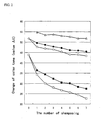
Figure 1 shows the color-sustaining ability according to the present invention (value
L).
Figure 2 shows the color-sustaining ability according to the present invention (value
ΔE).
Figure 3 shows the color-sustaining ability according to the present invention (values
a and b).
DETAILED DISCRIPTION OF THE INVENTION
Preferred embodiments of the present invention are described below.
A complex nucleus employed in the present invention may for example be a trivalent
metal salt such as aluminum chloride, a divalent metal salt such as magnesium chloride,
calcium chloride and manganese chloride, a monovalent metal salt such as sodium chloride,
potassium chloride, lead chloride and zinc chloride, with a di- or trivalent salt being preferred.
A metal salt employed may be any metal salt having a complex-forming ability, and sulfates
and acetate in addition to the chlorides described above can also give successful results. A
metal salt having a complex-forming ability may be employed alone or in combination with
each other, and incorporated in an amount of 0.01 to 20.0 % by weight, preferably 0.1 to
10.0 % by weight into the entire composition. An amount less than 0.01 % by weight leads to
an extremely low amount used for forming a metal complex within a hair, resulting in a
difficulty in obtaining a sufficient hair-dyeing effect and a color tone-sustaining effect. An
amount exceeding 20 % by weight is excessive, resulting in a release of the dye from the hair
which may lead to a decoloration or a dirty deposition.
An acid dye employed in the present invention may for example be, but not limited
to, Amaranth (FD & C Red No.2), Erythrosine (FD & C Red No.3), New Coccin, Rose
Bengal, Acid Red, Tartrazine (FD & C Yellow No.5), Sunset Yellow FCF (FD & C Yellow
No.6), Fast Green FCF (FD & C Green No.3), Brilliant Blue FCF (FD & C Blue No.1),
Indigo Carmine (FD & C Blue No.2), Lithol Rubine B (D & C Red No.6), Fast Acid Magenta
(D & C Red No.33), Eosine YS (D & C Red No.22), Eosine YSK, Phloxine BK, Rose Bengal
K, Orange II (D & C Orange No.4), Erythrosine Yellowish NA (D & C Orange No.11),
Uranine K, Quinoline Yellow WS (D & C Yellow No.10), Alizarine Cyanine Green (FD & C
Green No.5), Pyranine Conc (D & C Green No.8), Light Green SF Yellowish, Patent Blue NA,
Alphazurine FG (D & C Blue No.4), Dibromofluorescein (D & C Orange No.5), Violamine R
(EXT. D & C Red No.3), Ponceau 3R, Ponceau R, Ponceau SX (FD & C Red No.4), Fast Red
S, Polar Yellow 5G, Polar Yellow 5G, Naphthol Yellow S (EXT.D & C Yellow No.7), Metanil
Yellow (EXT.D & C Yellow No.1), Fast Light Yellow 3G (EXT.D & C Yellow No.3),
Naphthol Green B (EXT.D & C Green No.1), Guinea Green B, Alizurol Purple (EXT. D & C
Violet No.2), Naphthol Blue Black (D & C Black No.1), an oily dye such as Rhodamine B
Stearate (D & C Red No.37), Tetrachlorotetrabromofluorescein (D & C Red No.27), SudanIII
(D & C Red No.17), Dibromofluorescein (D & C Orange No.5), Diiodofluorescein (D & C
Orange No.10), Fluorescein (D & C Yellow No.7), Quinoline Yellow SS (D & C Yellow
No.11), Quinizarine Green SS (D & C Green No.6), Alizurine Purple SS (D & C Violet No.2),
Scarlet Red N.F., Oil Red XO, Orange SS (EXT. D & C Orange No.4), Yellow AB, Yellow
OB, Sudan Blue B, and other acid dye may also be employed. Among these acid dyes,
Tartrazine (FD & C Yellow No.5), Pyranine Conc (D & C Green No.8), Amaranth (FD & C
Red No.2), New Coccin, Fast Acid Magenta (D & C Red No.33), Fast Green FCF (FD & C
Green No.3), Brilliant Blue FCF (FD & C Blue No.1), Alphazurine FG (D & C Blue No.4),
Naphthol Yellow S (EXT.D & C Yellow No.7), Acid Red, Lithol Rubine B (D & C Red No.6),
Orange II (D & C Orange No.4), Naphthol Blue Black (D & C Black No.1), Alizarine
Cyanine Green (FD & C Green No.5), Alizurol Purple (EXT. D & C Violet No.2) is preferred
and Naphthol Blue Black (D & C Black No.1), Alizurol Purple (EXT. D & C Violet No.2),
Orange II (D & C Orange No.4), Naphthol Yellow S (EXT. D & C Yellow No.7), Acid Red
is particularly preferred.
Any of these acid dyes may be employed alone or in combination with each other,
and incorporated in an amount of 0.0001 to 2.0 % by weight, preferably 0.001 to 2.0 % by
weight into the entire composition. An amount not more than 0.0001 % by weight leads to
an extremely low pigment level within a hair, resulting in an insufficient hair-dyeing effect.
An amount exceeding 2.0 % by weight is excessive and may lead to a decoloration and a dirty
deposition.
A carrier component for transporting a high molecular weight acid dye into an inner
region of a hair may for example be benzyl alcohol.
A solvent for solubilizing benzyl alcohol may for example be ethyl alcohol.
When an acid dye and a complex nucleus are present in an identical composition in
the present invention (one-component hair dye), a solvent should be prepared so that the acid
dye does not form an insoluble complex with the complex nucleus in this composition. For
this purpose, an amount of the acid dye not higher than 2 % by weight in the composition
allows a solvent to be prepared appropriately for relevant dye and complex nucleus using an
aqueous/alcohol-based solvent.
Xyloglucan is preferably comprised in a hair dye of the present invention.
Xyloglucan is not decomposed even in a high acidity condition and is not decomposed by a
metal salt. So xyloglucan is extremely stable and an hair dye of the present invention
comprising xyloglucan is also stable. So appearances accompanied with a decomposition of
thickners such as an increase of pH, a change of viscosity and deterioration of the color and
smell does not occur with the passage of the time. Especially in a composition containing a
thickner where a metal ion is also contained a stability of the composition is not insufficient
even if a thickner generally used for a hair dye is used. But by employing xyloglucan as a
thickner excellent stability is obtained.
A composition containing xyloglucan usually shows a thixotropic property. So even
when a viscosity of an hair dye of the present invention is established by addition of
xyloglucan in a range not to drop from the applied hair, the hair dye has excellent extensibility
and applicability. Moreover xyloglucan has little irritation for skin and eye, has no
sensitization property, has excellent moisturizing property and can keep soft touch of applied
hair.
For such excellent properties of xyloglucan described above, an hair dye of the
present invention containing xyloglucan as thickner need not to contain a flow improving
agent such as bentonite and bridged polyacrylate like an hair dye containing xanthan gum to
improve a flow property and extensibility of the hair dye, and not to drop from hair when
using the hair dye.
Though a hair dye containing a flow improving agent has an excellent flow property
and excellently prevents the applied hair dye onto hair from dropping, it lacks ease of washing
out from hair. But a hair dye of the present invention containing xyloglucan can retain the
above-mentioned excellent properties without a flow improving agent.
Xyloglucan has a property that when it is dispersed in a water-rich media its
intertwinement between molecular chains is diminished and a viscosity of the solution is
relatively low. So an hair dye containing xyloglucan has excellent washing property in that it
is easy to wash out from hair after it is applied.
Thus a hair dye of the present invention containing xyloglucan has also excellent
safety for the reason that it is easy to wash out from hair after it is applied, and as a result little
damage to hair or irritation to skin occurs.
Xyloglucan is now commercially available ( ┌GLYROID ┘ manufactured by
DAINIPPON PHARMACEUTICAL CO. LTD.) and widely used as a thickner employed for
foods such as sauce or ice cream. When a commercially available xyloglucan is employed for
a hair dye of the present invention, a purified grade is preferably used. Xyloglucan can be
produced according to the description of the catalogue of ┌GLYROID ┘. Namely xyloglucan
is obtained by the process of eliminating aliens from a seed of tamarind, crushing in wet
condition, reducing to powder, eliminating inpurities from the resultant, washing and drying,
and finally crushing finely.
A combination amount of xyloglucan in a hair dye of the present invention is not
limited and a viscosity of the hair dye can be arbitrarily adjusted with a consideration of
elements such as extensibility, applicability and dyeing ability onto hair. However a viscosity
of a hair dye of the present invention is preferably 5,000 to 200,000 cps when considered
these elements. When a viscosity is not more than 5,000 cps the hair dye tends to drop from
hair and such a viscosity condition is unpreferable. When a viscosity exceeds 200,000 cps an
extension of the hair dye begins to difficult and it tends to lead to deterioration of uniform
dyeing property.
Consequently a preferable combination amount of xyloglucan with a hair dye of the
present invention is preferably 0.1 to 30 % by weight and more preferably 0.5 to 15 % by
weight. In case where a mixing type hair dye wherein a mixture of two compositions is
prepared before use and the mixture is applied to hair consisting of an acid hair dye as a first
composition comprising xyloglucan and a hair dye fixative as a second composition is used, a
combination amount of xyloglucan in said acid hair dye is also preferable to be in the above-mentioned
range. In this case, an amount exceeding 30 % by weight per said hair dye may
leads to difficulty in mixing said hair dye and said fixative, which is unpreferable.
In the case of two-component hair dye it allowed to combine xyloglucan with the
above-mentioned hair dye fixative.
An average molecular weight of xyloglucan is preferably 100,000 to 2,000,000 and
more preferably near 650,000.
Other thickners generally employed to an acid hair dye also can be used in the
limitation of stability. Such a thickner is preferably an nonionic thickener, such as agar, guar
gum, a guar gum derivative such as hydroxypropyl guar gum, a cellulose derivative such as
hydroxyethylcellulose and hydroxypropylcellulose.
A thickner such as lauric acid diethanolamide, carboxymethylcellulose,
hydroxyethylcellulose, hydroxypropylcellulose, methylcellulose, xanthan gum, carrageenan,
alginate salts, pectin, arabic gum, karaya gum, tragacanth gum and agar powder can be
comprised in a hair dye of the present invention. But care should be taken not to prevent the
effect of the present invention by a combination of these thickners.
It is preferable to contain an acid in a hair dye of the present invention. By the
combination of an acid more excellent dyeing ability and color-sustaining ability can be
obtained. An organic acid, an inorganic acid and / or their salts can be employed in the hair
dye. As an organic acid, for example glycolic acid, lactic acid, tartaric acid, fumaric acid,
malic acid, succinic acid, citric acid, levulinic acid, butylic acid, valeric acid, oxalic acid,
maleic acid, mandelic acid, pyrrolidone-5-carboxylic acid, glutamic acid, acetic acid, formic
acid may be contained in the hair dye. As an inorganic acid, for example phosphoric acid,
sulfuric acid, hydrochloric acid, nitric acid may be contained in the hair dye. As these salts,
for example, sodium salts, potassium salts, ammonium salts ; triethanolamine salts,
diethanolamine salts, monoethanolamine salts such as aminodihydoxymethyl propanediol, 2-amino-2-methyl-1-propanol,
2-amino-2-methyl-1,3-propanediol may be contained in the hair
dye.
In these acids an organic acid is preferably used and α-hydroxy acid is more
preferably used. As an α-hydroxy acid glycolic acid, lactic acid, tartaric acid, citric acid,
fumaric acid and maric acid is preferably used and glycolic acid is more preferably used.
A combination amount of these acids is preferably 0.01 to 15 % by weight, and more
preferably 0.1 to 10 % by weight. An amount not more than 0.01 % by weight leads to
insufficient effect on dyeing ability and color-sustaining ability. An amount exceeding 15 %
by weight leads to unpreferable effect on stability of the hair dye.
In the case of a hair dye fixative of the present invention it is also preferable to
combine an acid in the above-mentioned combination amount.
It is preferable to contain a silicone in a hair dye of the present invention. By the
combination of a silicone a touch of hair after using the hair dye becomes more improved and
damage of hair is effectively prevented.
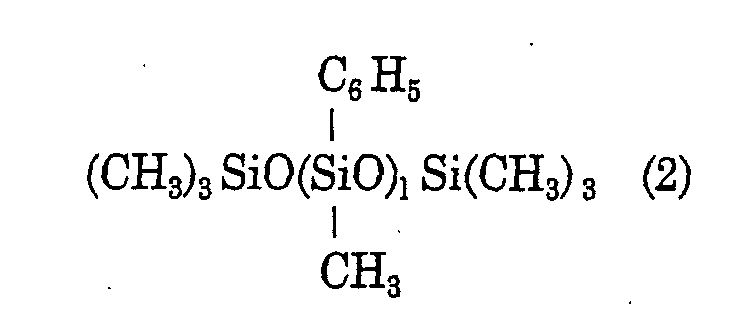
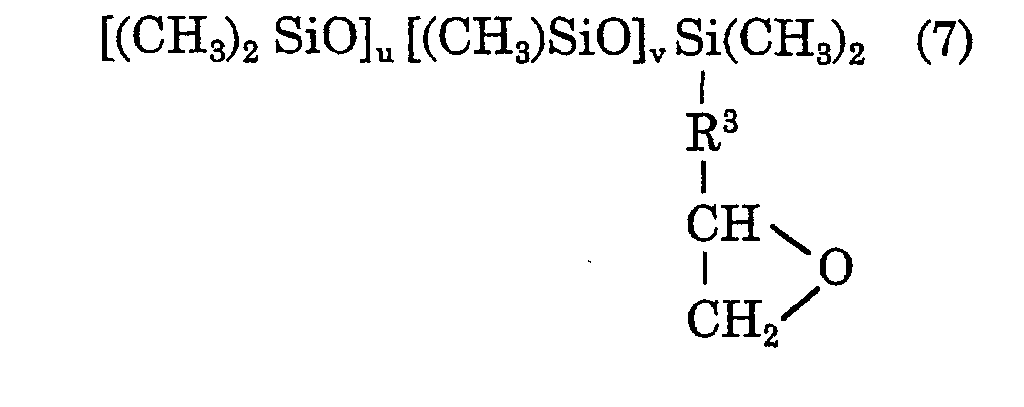
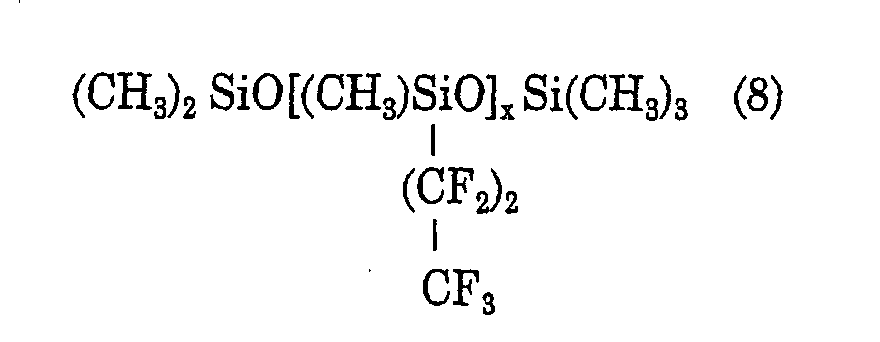
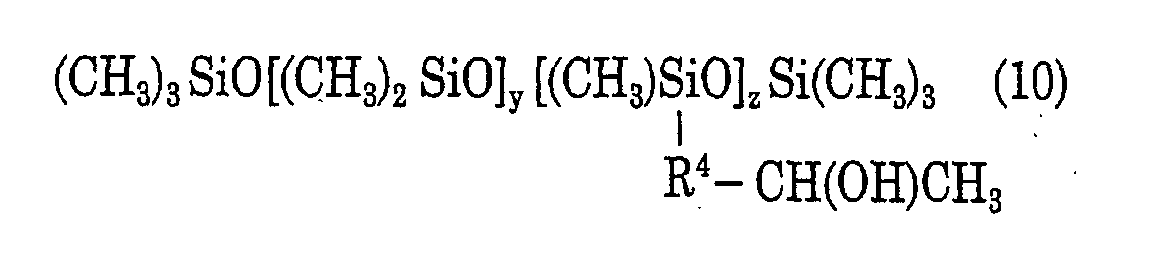
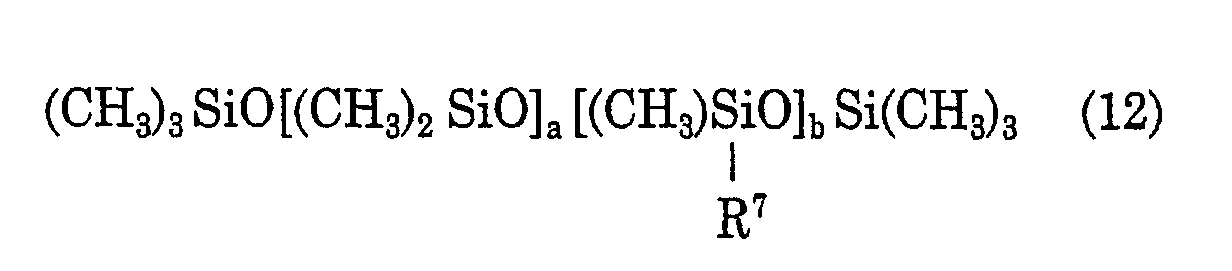
As a silicone for example dimethylpolysiloxane, methylphenylpolysiloxane,
polyether-modified polysiloxane, amino-modified polysiloxane, fluorine-modified
polysiloxane, alcohol-modified polysiloxane may be employed. In detail one or more
silicones shown in the following may be employed.
In the above-mentioned silicones when one or more silicones selected from amino-modified
polysiloxane (for example TORAY · SILICONE SM-8702C manufactured by
TORAY · SILICONE CO. LTD. ; APS-20EM-735, APS-20DMS and APS-10DMS
manufactured by SIN-ETSU CHEMICAL CO. LTD.), silicone polymer (G-40-EM735, G-10-DMS,
G-20-DMS manufactured by SIN-ETSU CHEMICAL CO. LTD.), methylphenyl
polysiloxane (for example SILICONE KF56 manufactured by SIN-ETSU CHEMICAL CO.
LTD.), dimethylpolysiloxane · methyl (polyoxyethylene) siloxane copolymer of average
addition mole number 20 to 30 (for example SILICONE SC-9450 manufactured by SIN-ETSU
CHEMICAL CO. LTD.) are used, it is not only effective on improvement of hair touch
and dyeing ability, but also effective on stability of the hair dye.
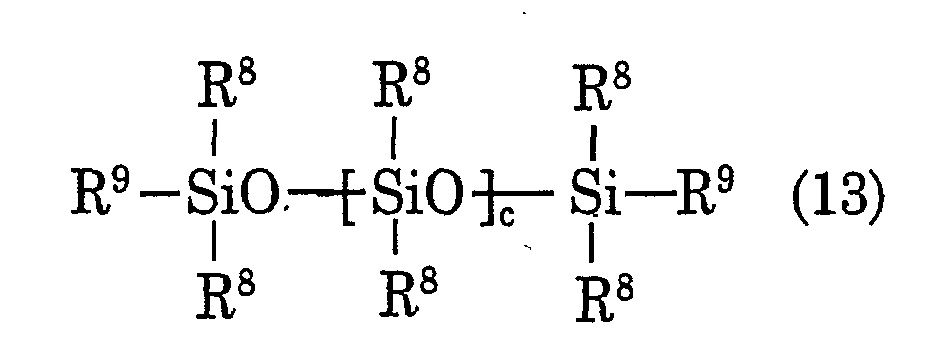
As a silicone polymer of the above formula (13), for example, dimethylpolysiloxane
rubber manufactured by SIN-ETSU CHEMICAL CO. LTD. (A degree of polymerization (the
symbol c in the formula (13)) is 5000 to 8000) may be used.
A combination amount of a silicone in a hair dye of the present invention is
preferably 0.01 to 5.0 % by weight. An amount not more than 0.01 % by weight leads to
insufficient effect on hair touch. And an amount exceeding 5.0 % by weight occasionally
leads to sticky hair touch, which is unpreferable.
In a hair dye of the present invention an organic solvent may be comprised for the
purpose of an improvement of usability, solubilization or preventing a formation of an
insoluble complex. Such an organic solvent may be, for example, ethanol, isopropanol, n-propanol,
n-butanol, isobutanol, ethyleneglycol, propyleneglycol, 1,3-butanediol,
dipropyleneglycol, hexyleneglycol, isopreneglycol, glycerine, methylcarbitol, propylcarbitol,
butylcarbitol, triethyleneglycol monobutylether, N-methyl-2-pyrrolidone, N-octyl-2-pyrrolidone,
N-lauryl-2-pyrrolidone, propylene carbonate, ethylene carbonate. In these
organic solvents ethanol, isopropanol, n-propanol, n-butanol is preferable. A preferable
combination amount of these organic solvents is 0.5 to 40 % by weight per a hair dye, more
preferably 1 to 30 % by weight.
In addition to these organic solvents, an aromatic alcohol such as benzyl alcohol,
phenylethyl alcohol, γ -phenylpropyl alcohol, cinnamyl alcohol, anisalcohol, p-methylbennzyl
alcohol, α -dimethyl phenylethyl alcohol, α -phenyl ethanol, phenoxy ethanol
and benzyloxy ethanol may be employed especially for its properties to carry an acid dye
inside the hair. A preferable combination amount of an aromatic alcohol is 0.5 to 20 % by
weight per a hair dye, more preferably 1 to 12 % by weight.
In a hair dye of the present invention various agents such as a surfactant, a
moisturizing agent, an oil ingredient, a higher alcohol, an emulsifier, a conditioning agent, a
fat, a high fatty acid ester, a bactericide, a perfume, a UV-scattering agent, a protein derivative,
a plant extract and a medical ingredient can be contained.
As a surfactant, for example, polyoxyethylene surfactants such as polyoxyethylene
alkylether, polyoxyethylene fatty acid ester, polyoxyethylenepolyalcohol partially esterified
by fatty acid, polyoxyethylene hydrogenated castor oil derivatives ; polyglycerine surfactants
such as alkylpolyglycoside like octylpolyglycoside, polyglycerine fatty acid ester,
polyglycerine alkyl ether ; nonionic surfactants such as sugar alcohol ethers like maltitol
hydroxyalkylether and sorbitol alkylether, fatty acid diethanolamides ; anionic surfactants
such as higher fatty acid salts, phosphates, alkyl sulfates, polyoxyethylene alkyl sulfates ;
cationic surfactants such as amino acids, alkyl trimethylammonium salts, dialkyl
dimethylammonium salts, alkyl dimethyl amine oxides can be contained in a hair dye of the
present invention. And amphipathic compound or a surfactant such as stearyl trimethyl
ammonium chloride, glycerine monostearate can be contained as a dispersant, or solubilizer in
the hair dye.
As a moisturizing agent, for example, glycerine, polyethylene glycol, chondroitin
sulfate, hyaluronate, diglycerine, sorbitol, maltitol, pyrrolidone carboxylic acid, lactose,
oligosaccharide can be contained in a hair dye of the present invention.
As an oil ingredient, for example, lanolin, squalane, liquid petrolatum, petrolatum,
higher fatty acids, triglycerides, ester oil can be contained in a hair dye of the present
invention.
As a higher alcohols benzyl alcohol, 2-ethylhexyl alcohol, 2-hexyldecyl alcohol, 2-decyltetradecyl
alcohols, isostearyl alcohol, cetostearyl alcohol, lauryl alcohol, oleyl alcohol,
myristyl alcohol, palmityl alcohol, stearyl alcohol, cetyl alcohol can be contained in a hair dye
of the present invention.
Further, hydrolyzed proteins and their quatery ammonium salts such as hydrolyzed
collagen, hydrolyzed keratin, hydrolyzed silk protein, hydrolyzed elastin, hydrolyzed soy
peptide ; sequestering agents and antiseptics such as phenacetin, hydroxyethane disulfonic
acid and its salts, ethylenediamine tetraacetic acid and its salts, paraben, stannate ; cationic
polymer such as poly (dimethylallyl ammonium halide) type cationic polymer, cationic
polymer of a condensation product by polyethylene glycol, epichlorohydrin, propylene amine
and tallowoyl amine obtained by tallow fatty acid, cationic polymer of a condensation product
by polyethylene glycol, epichlorohydrin, propylene amine and cocoyl amine obtained by
coconut fatty acid, cationic copolymer of vinylpyrrolidone and dimethylamino methacrylate,
cationic cellulose polymer can also be contained in a hair dye of the present invention.
A hair dye of the present invention can be a form of a mixing type hair dye wherein a
mixture of two compositions is prepared before use and the mixture is applied to hair consists
of a first composition comprising an acid dye and a second composition comprising a
complex nucleus capable of forming a complex with said acid dye. A hair dye of this type is
especially preferable when a thickner is combined with a hair dye because a decomposition of
the thickner by a metal ion as a complex nucleus can be prevented and as a result viscosity
stability is improved.
A hair dyeing method according to the present invention is characterized by treating
a hair with a hair dye fixative comprising a complex nucleus capable of forming a complex
with said acid dye, and then dyeing a hair with an acid dye. A hair dyeing procedure can be
conducted simultaneously with treating the hair with a hair dye fixative comprising a complex
nucleus capable of forming a complex with said acid dye. And a hair dyeing method in which
a hair is dyed with an acid dye, and then a hair is treated with a hair dye fixative comprising a
complex nucleus capable of forming a complex with said acid dye, is also probable
An hair dye fixative of the present invention can be formulated into a composition of
any product type. For example, the fixative may be in the forms of mist type, spray type,
liquid, gel, cream and the like.
An acid hair dye of the present invention can be formulated into a composition of
any product type. For example, the acid hair dye may be in the forms of liquid, gel, foam,
cream and the like.
EXAMPLES
The present invention is further described in the following Examples, which are not
intended to restrict the invention. An amount is represented as % by weight unless otherwise
specified.
[Evaluation method]
The evaluation method employed in Examples is described below. Thus, an acid hair
dye obtained in the form of a gel or a liquid was examined for (1) dyeing ability, (2) touch, (3)
secondary deposition and (4) color-sustaining ability.
(1) Dyeing ability
About 2 g of a Caucasian hair strand was coated evenly with 0.5 g of a sample to
effect a dyeing treatment for 15 minutes, followed by shampooing, rinsing and drying, and a
resultant dyed strand was subjected to a visual evaluation by 20 experienced panelists based
on the comparison with a non-dyed Caucasian hair strand. In this evaluation, a mean score
was obtained from the respective scores of the following evaluation items and assigned to one
of the 4 grades shown below.
(2) Touch
About 2 g of a Caucasian hair strand was coated evenly with 0.5 g of a sample to
effect a dyeing treatment for 15 minutes, followed by shampooing, rinsing and drying, and a
resultant dyed strand was subjected to a touch evaluation by 20 experienced panelists. The
evaluation was performed as described above for the dyeing ability.
(3) Secondary deposition
About 2 g of a Caucasian hair strand was coated evenly with 0.5 g of a sample to
effect a dyeing treatment for 15 minutes, followed by shampooing and rinsing, and a resultant
wet dyed strand was placed on a white towel for 20 minutes and then subjected to an
evaluation by 20 experienced panelists for the deposition of the color on the white towel.
The evaluation was performed as described above for the dyeing ability.
(4) Color-sustaining ability
About 2 g of a Caucasian hair strand was coated evenly with 0.5 g of a sample to
effect a dyeing treatment for 15 minutes, followed by shampooing, rinsing and drying to
obtain a dyed strand. The strand thus obtained was shampooed with a commercially
available shampoo each for 1 minutes 7 times repetitively, and then the color tone of the
strand was evaluated by 20 experienced panelists. The evaluation was performed as
described above for the dyeing ability.
[One-component hair dye]
The results of the evaluation of one-component hair-dyeing gels are shown in Table
1.
| | Sample 1 | 2 | 3 | 4 | 5 | 6 | 7 | 8 |
| (1) Nonionic thickner | 2.0 | 2.0 | 2.0 | 2.0 | 2.0 | 2.0 | 2.0 | 2.0 |
| (2) Benzyl alcohol | 8.0 | 8.0 | 8.0 | 8.0 | 8.0 | 8.0 | 8.0 | 8.0 |
| (3) Naphthol Blue Black (D & C Black No.1) | 0.2 | 0.2 | 0.2 | 0.2 | 0.2 | 0.2 | 0.2 | 0.2 |
| (4) Naphthol Yellow S (EXT.D & C Yellow No.7) | 0.1 | 0.1 | 0.1 | 0.1 | 0.1 | 0.1 | 0.1 | 0.1 |
| (5) Fast Acid Magenta (D & C Red No.33) | 0.1 | 0.1 | 0.1 | 0.1 | 0.1 | 0.1 | 0.1 | 0.1 |
| (6) Ethanol | 20.0 | 20.0 | 20.0 | 20.0 | 20.0 | 20.0 | 20.0 | 20.0 |
| (7) Aluminum chloride | 0.0 | 0.005 | 0.01 | 0.1 | 1.0 | 10.0 | 20.0 | 25.0 |
| (8) Perfume | 0.1 | 0.1 | 0.1 | 0.1 | 0.1 | 0.1 | 0.1 | 0.1 |
| (9) Ion-exchange water | B.L.(#1). | B.L | B.L. | R.L. | B.L. | B.L. | B.L. | B.L. |
| Dyeing ability | Δ | Δ | ○ | o ○ | o ○ | o ○ | ○ | Δ |
| Touch | o ○ | o ○ | o ○ | o ○ | o ○ | o ○ | o ○ | o ○ |
| Secondary deposition | o ○ | o ○ | o ○ | o ○ | o ○ | o ○ | o ○ | o ○ |
| Color-sustaining ability | Δ | Δ | ○ | o ○ | o ○ | o ○ | ○ | Δ |
| (#1): The symbol B.L. means balance. |
In the experiments, Components (1) and (7) were dissolved completely in
Component (9), which was combined with Component (6) with which Components (2) and
(8) were mixed uniformly. A resultant solution was combined with a part of Component (9)
in which Components (3), (4) and (5) were dissolved to obtain an acid hair-dyeing gel.
As evident from Table 1, aluminum chloride as a complex nucleus began to exhibit
its effect at 0.01 % and the effect came to be higher particularly at a concentration of 0.1 to
10 %, but then acted rather adversely at a concentration higher than 20 %. This behavior
may be attributable to the complex formation as a result of the evaporation even of a small
amount of an alcohol, whereby depositing a complex on the surface of a hair and preventing a
migration into the inside of the hair. Accordingly, a preferable amount of a complex nucleus
to be incorporated is about 0.01 to 20 %, more preferably 0.1 to 10 %.
A similar experiment was conducted also with a temporary hair dye. The results are
shown in Table 2.
| | Sample 9 | 10 |
| (1) Carbon black | 1.0 | 1.0 |
| (2) Acrylic resin alkanol amine solution (50 %) | 6.0 | 6.0 |
| (3) Aluminum chloride | 0.1 | ― |
| (4) Ethanol | Balance | Balance |
| Dyeing ability | Δ | Δ |
| Touch | o ○ | o ○ |
| Secondary deposition | × | × |
| Color-sustaining ability | × | × |
As evident from Table 2, absolutely no effect of the addition of aluminum chloride
on a temporary hair dye employing a pigment such as a carbon black was observed. This
means that the interaction between an acid dye and aluminum chloride indicated in Table 1
shown above is extremely specific.
Accordingly, we then made a formulation from an acid dye (0.4%), aluminum
chloride · 6H2O (0.5 %), ethanol (20 %), benzyl alcohol (8 %) and water (balance) according
to the method for producing the one-component hair dye described above. The formulation
was placed in a flask and the solvent was evaporated using a rotary evaporator under reduced
pressure at 50°C. Although a precipitation was formed while the evaporation of the solvent
was proceeded, no complete removal of the solvent was accomplished even after the
evaporation for about 1 hour and a non-volatile solvent associated with the precipitate was
obtained. This was then combined with various solvents in an attempt to effect a dissolution.
As a result, partial dissolution in water and ethanol, slight dissolution in acetone and almost
no dissolution in hexane were noted, but a complete dissolution in 0.4 % EDTA · 3Na was
accomplished. Accordingly, the precipitate formed upon removal of the solvent was
assumed to be a metal complex with the dye.
Based on the findings described above, we considered that when a one-component
hair dye according to the present invention is applied to a hair an acid dye can migrate as
usual into a cuticle and a part of a cortex where coexisting aluminum ion and the acid dye
forms an insoluble complex upon evaporation of the solvent. Thus, an apparent molecular
weight becomes larger and it becomes possible to prevent the pigment from being released
from the hair.
Subsequently, we prepared red-shaded hair dyes having the compositions in Table 3,
which were subjected to a more detailed examination for the color-sustaining ability.
| | Sample 11 | 12 |
| (1) Nonionic thickner | 2.0 | 2.0 |
| (2) Benzyl alcohol | 8.0 | 8.0 |
| (3) Fast Acid Magenta (D & C Red No.33) | 0.2 | 0.2 |
| (4) Ethanol | 20.0 | 20.0 |
| (5) Aluminum chloride | 0.5 | ― |
| (6) Perfume | 0.1 | 0.1 |
| (7) Ion-exchange water | Balance | Balance |
About 2 g of a Caucasian hair strand was coated evenly with 0.5 g of a sample to
effect a dyeing treatment for 15 minutes, followed by shampooing with or without rinsing and
then drying to obtain a dyed strand. The strand thus obtained was shampooed with a
commercially available shampoo each for 1 minutes, and then the color tone of the strand was
analyzed using a colorimeter. This procedure was repeated seven times. Sample 13 was
dyed similarly to Sample 11 and then allowed to stand for 15 minutes prior to the shampooing
described above.
The results are shown in Figures 1 to 3.
As evident from Figures, Sample 11 exhibited not only a higher dyeing ability when
compared with Sample 12 but also a markedly excellent ability of sustaining the color tone in
spite of repetitive shampooing. Also as evident from the results of Sample 13, a time
interval provided after the dyeing treatment served to further enhance the color-sustaining
ability.
[Fixative]
Subsequently, we investigated the fixative effect of an aqueous solution of aluminum
chloride when applying after using a hair dye employing an acid dye.
Hair dye composition (1)
| (1) Nonionic thickner |
2.0 |
| (2) Benzyl alcohol |
8.0 |
(3) Naphthol Blue Black
(D & C Black No.1) |
0.2 |
(4) Naphthol Yellow S
(EXT. D & C Yellow No.7) |
0.1 |
(5) Fast Acid Magenta
(D & C Red No.33) |
0.1 |
| (6) Ethyl alcohol |
20.0 |
| (7) Perfume |
0.1 |
| (8) Ion-exchange water |
Balance |
The hair dye having the composition shown above was used to dye a hair as
described above, and then a fixative (mist type) having a composition shown below was
sprayed onto a strand. After allowing to stand for 20 minutes followed by drying, each
strand was examined for the difference in the color (ΔE before washed) from the strand before
dyeing. Subsequently, the strand was shaken together with 100 ml of a 2% aqueous solution
of sodium lauryl sulfate in a conical flask at 30°C for 1 hour. After washing with water
followed by drying, ΔE between each strand and the respective strand before dyeing (ΔE of a
washed strand) and ΔE of the respective washing were determined. The results are shown
in Table 4.
| Fixative composition (mist type) |
| | Sample 14 | 15 | 16 | 17 |
| Aluminum chloride hexahydrate | 0 | 0.4 | 1.0 | 5.0 |
| Ion-exchanged water | B.L. | B.L. | B.L. | B.L. |
| ΔE of a washed strand | 37.702 | 42.832 | 43.139 | 44.293 |
| ΔE before washed | 45.562 | 46.680 | 45.716 | 46.836 |
| ΔE loss | 7.860 | 3.848 | 2.577 | 2.543 |
| ΔE of washing | 38.513 | 30.328 | 29.691 | 25.321 |
Based on the results shown in Table 4, aluminum chloride was proven to have an
excellent effect even when being used as a fixative separately from a hair dye.
Subsequently, we investigated a preferable combination amount of a complex
nucleus by employing a fixative composition (mist type).
| Hair dye composition (2) |
| (1) Carboxyvinylpolymer | 3.0 |
| (2) Benzyl alcohol | 8.0 |
| (3) Orange II (D & C Orange No.4) | 0.4 |
| (4) New Coccin | 0.1 |
| (5) Dipropylene glycol | 15.0 |
| (6) Sodium hydroxide | 0.03 |
| (7) Ion-exchange water | Balance |
The hair dye having the composition shown above was used to dye a hair as
described above, and then a fixative having a composition shown below was sprayed onto a
strand. After allowing to stand for 10 minutes followed by drying, each strand was
examined for the difference in the color (ΔE before washed) from the strand before dyeing.
Subsequently, the strand was shaken together with 100 ml of a 2% aqueous solution of
sodium dodecyl sulfate in a conical flask at 30°C for 10 minutes and this procedure was
repeated 3 times. After washing with water followed by drying, ΔE between each strand
and the respective strand before dyeing (ΔE of a washed strand) were determined. Then the
color-sustaining ability of a sample was evaluated based on a difference between said ΔE
before washed and ΔE of a washed strand (ΔE loss) The results are shown in Table 5.
Color-sustaining ability
o ○: ΔE loss was less than 4.
○: ΔE loss was 4 or higher and less than 8.
Δ: ΔE loss was 8 or higher and less than 12.
× : ΔE loss was 12 or higher.
| Fixative composition (mist type) |
| |
Sample 18
|
19
|
20
|
21
|
| Aluminum chloride hexahydrate |
0 |
0.1 |
1.0 |
4.0 |
| Ethanol |
20 |
20 |
20 |
20 |
|
Ion-exchange water
|
B.L.(#1) |
B.L |
B.L. |
B.L. |
| ΔE of a washed strand |
22 |
33 |
35 |
37 |
| ΔE before washed |
40 |
40 |
40 |
40 |
| ΔE loss |
18 |
7 |
5 |
3 |
|
Color-sustaining ability
|
× |
○ |
○ |
o ○ |
| (#1): The symbol B.L. means balance. |
The mist type fixative above-mentioned was produced by dissolving ethanol in ion-exchange
water followed by dissolving aluminum chloride hexahydrate, and filling up the
resultant in a mist receptacle.
Based on the results shown in Table 5, the combination effect of aluminum chloride
as a complex nucleus began to be obvious at a combination amount of near 0.1 %. Though it
is not shown in Table 5, a combination amount higher than 20 % occasionally acts rather
adversely. This behavior may be attributable to the complex formation as a result of the
evaporation even of a small amount of an alcohol, whereby depositing a complex on the
surface of a hair and preventing a migration into the inside of the hair. Accordingly, a
preferable amount of a complex nucleus to be incorporated is about 0.1 to 20 %.
Subsequently, we also investigated the cases where the treatment by a fixative is
conducted before a hair dye is applied onto hair (treatment before hair dyeing), and the cases
where the treatment by a fixative is conducted simultaneously with applying a hair dye onto
hair (simultaneous treatment with hair dyeing). A hair dye of said hair dye composition (2)
and a hair dye fixative of the following composition in Table 6 (mist type) was used and a hair
dyeing ability and a color-sustaining ability were evaluated. A hair dyeing treatment was done
as follows.
Treatment before hair dyeing :
A suitable amount of the hair dye fixative of Sample 23 in
Table 6 was sprayed onto a strand and left for 10 minutes at 30°C. Then a suitable amount of
the hair dye was applied and left for 10 minutes at 30°C followed by washing and drying.
Simultaneous treatment with hair dyeing :
A suitable amount of the hair dye was applied onto
a strand followed by spraying a suitable amount of the hair dye fixative of Sample 24 in Table
6. Then the strand was left for 10 minutes at 30°C followed by washing and drying.
For the each case said ΔE before washed and ΔE of a washed strand were
determined. Then a dyeing ability and a color sustaining ability were evaluated based on the
following evaluation standard.
Dyeing ability
o ○: The difference in said ΔE before washed from that of the case where a treatment by the
hair dye fixative was not conducted was 4 or higher.
○: The difference in said ΔE before washed from that of the case where a treatment by the
hair dye fixative was not conducted was 1 or higher and less than 4.
× : The difference in said ΔE before washed from that of the case where a treatment by the
hair dye fixative was not conducted was less than 1.
Color-sustaining ability
o ○: ΔE loss was less than 4.
○: ΔE loss was 4 or higher and less than 8.
Δ: ΔE loss was 8 or higher and less than 12.
×: ΔE loss was 12 or higher.
The results are shown in Table 6.
| Fixative composition (mist type) |
| | Sample 22 | 23 | 24 |
| | | Treatment before hair dyeing | Simultaneous treatment |
| Aluminum chloride hexahydrate | ― | 2.0 | 2.0 |
| Ethanol | ― | 10.0 | 10.0 |
| Benzyl alcohol | ― | 10.0 | 10.0 |
| 1,3-Butylene glycol | ― | 5.0 | 5.0 |
| Dipropylene glycol | ― | 5.0 | 5.0 |
| Glycollic acid | ― | 1.0 | 1.0 |
| Sodium lactate | ― | 0.5 | 0.5 |
| Ion-exchange water | ― | balance | balance |
| ΔE of a washed strand | 28 | 43 | 43 |
| ΔE before washed | 40 | 46 | 46 |
| ΔE loss | 12 | 3 | 3 |
| Dyeing ability | ― | o ○ | o ○ |
| Color-sustaining ability | × | o ○ | o ○ |
From Table 6 it is obvious that both the case of the treatment by a hair dye fixative
before dyeing and the simultaneous treatment by a hair dye fixative with hair dyeing are also
shows sufficient effect on dyeing ability and color-sustaining ability.
[Effect of a combination of xyloglucan on usability and stability]
Subsequently we investigated the effect of a combination of xyloglcan on stability and
usability of a hair dye in which xyloglucan is employed as a thickner. The stability and
usability was evaluated based on the following standard. The dyeing ability evaluation of (1)
and the color-sustaining ability evaluation of (4) which is mentioned above was also
conducted.
Stability
An each sample hair dye shown in Table 7 was left for a week at 70°C. Then pH and
viscosity of the sample was measured and a stability was evaluated based on the following
standard.
Usability
An each sample hair dye shown in Table 7 was used by 20 panelists and extensibility,
applicability and uniform-dyeing ability when an each sample was applied on hair were
evaluated based on the following standard.
The results are shown in Table 7.
| | Sample 25 | 26 | 27 | 28 | 29 | 30 | 31 | 32 |
| (1) Xyloglucan | 0 | 0.1 | 0.5 | 2 | 5 | 15 | 30 | 40 |
| (2) Hydroxyethyl cellulose | 2 | 1.8 | 1 | 0 | 0 | 0 | 0 | 0 |
| (3) Benzyl alcohol | 8 | 8 | 8 | 8 | 8 | 8 | 8 | 8 |
| (4) Naphthol Blue Black (D & C Black No.1) | 0.1 | 0.1 | 0.1 | 0.1 | 0.1 | 0.1 | 0.1 | 0.1 |
| (5) Orange II (D & C Orange No.4) | 0.1 | 0.1 | 0.1 | 0.1 | 0.1 | 0.1 | 0.1 | 0.1 |
| (6) Alizurol Purple (EXT. D & C Violet No.2) | 0.1 | 0.1 | 0.1 | 0.1 | 0.1 | 0.1 | 0.1 | 0.1 |
| (7) Violamine R (EXT. D & C Red No.3) | 0.1 | 0.1 | 0.1 | 0.1 | 0.1 | 0.1 | 0.1 | 0.1 |
| (8) 1,3-butyleneglycol | 15 | 15 | 15 | 15 | 15 | 15 | 15 | 15 |
| (9) Aluminum chloride ·hexahydrate | 0.5 | 0.5 | 0.5 | 0.5 | 0.5 | 0.5 | 0.5 | 0.5 |
| (10) Ion-exchange water | B.L.(#1) | B.L. | B.L. | B.L. | B.L. | B.L. | B.L. | B.L. |
| Stability | × | Δ | ○ | ○ | ○ | ○ | ○ | ○ |
| Usability | ○ | ○ | ○ | ○ | ○ | ○ | Δ | × |
| Dyeing ability | o ○ | o ○ | o ○ | o ○ | o ○ | o ○ | o ○ | o ○ |
| Color-sustaining ability | o ○ | o ○ | o ○ | o ○ | o ○ | o ○ | o ○ | o ○ |
| (#1): The symbol B.L. means balance. |
In the experiments, Components (1) and (2) were dissolved completely in a part of
Component (10) at 70°C, which was combined with Component (3), Component (8) and
Component (9) dissolved in a part of Component (10) A resultant solution was combined with
dyes dissolved in a part of Component (10) to obtain each sample hair dye. In the case of a
sample25, 26 and 27 an amount of hydroxyethyl cellulose was adjusted to obtain almost equal
viscosity for these samples.
As evident from Table 7, It is effective on usability and stability when a combination
amount of xyloglucan was in the range of 0.1 to 30 % by weight. In the case where only
hydroxyethyl cellulose was combined as a thickner a viscosity of the sample changed by time
and lack a stability for viscosity. It was especially effective on usability and stability when a
combination amount of xyloglucan was in the range of 0.5 to 15 % by weight. Accordingly,
a preferable amount of xyloglycan to be incorporated is about 0.1 to 30 %, more preferably
0.5 to 15 %.
[Effect of a combination of acid]
Subsequently we investigated the effect of a combination of an acid on dyeing ability and
color-sustaining ability by preparing an one-component hair dye in which an acid was added.
| Hair dye composition (3) |
| (1) | Hydroxyethyl cellulose | 0.5 |
| (2) | Agar | 2.0 |
| (3) | Benzyl alcohol | 8.0 |
| (4) | Orange II (D & C Orange No.4) | 0.44 |
| (5) | New Coccin | 0.15 |
| (6) | Methyl paraben | 20.0 |
| (7) | Aluminum chloride hexahydrate | 0.5 |
| (8) | 95% Brucine-modified alcohol | 20.0 |
| (9) | an acid (A sort and a combination amount are shown in Table 8.) |
| (10) | 50 % Sodium lactate (A combination amount are shown in Table 8.) |
| (11) | Ion-exchange water | Balance |
The dyeing treatment onto a Caucasian hair strand for 10 minutes at 30°C was
conducted by employing a hair dye of the composition shown above. After shampooing and
drying, each strand was examined for the difference in the color (ΔE before washed) from the
strand before dyeing. Subsequently, the strand was shaken together with 100 ml of a 2%
aqueous solution of sodium dodecyl sulfate in a conical flask at 30°C for 10 minutes and this
procedure was repeated 3 times. After washing with water followed by drying, ΔE between
each strand and the respective strand before dyeing (ΔE of a washed strand) were determined.
From each ΔE dyeing ability and color-sustaining ability were evaluated based on
the following standard. The results are shown in Table 8.
Dyeing ability
o ○: The difference between ΔE before washing of the case where a treatment by a sample
was conducted and that of the case where a treatment by the sample in which an acid was not
combined (the sample 33 in Table 8) was conducted was 4 or higher.
○: The difference between ΔE before washing of the case where a treatment by a sample
was conducted and that of the case where a treatment by the sample in which an acid was not
combined (the sample 33 in Table 8) was conducted was 0 or higher and less than 4.
Δ: The difference between ΔE before washing of the case where a treatment by a sample
was conducted and that of the case where a treatment by the sample in which an acid was not
combined (the sample 33 in Table 8) was conducted was less than 0.
Color-sustaining ability
o ○: The difference between said ΔE loss of the case where a treatment by the sample in
which an acid was not combined (the sample 33 in Table 8) was conducted and that of the
case where a treatment by a sample was conducted was 10 or higher.
○: The difference between said ΔE loss of the case where a treatment by the sample in
which an acid was not combined (the sample 33 in Table 8) was conducted and that of the
case where a treatment by a sample was conducted was 0 or higher and less than 10.
Δ: The difference between said ΔE loss of the case where a treatment by the sample in
which an acid was not combined (the sample 33 in Table 8) was conducted and that of the
case where a treatment by a sample was conducted was less than 0.
| |
Sample 33 |
34 |
35 |
36 |
37 |
38 |
39 |
40 |
41 |
| (An acid employed) |
| Citric acid |
― |
0.02 |
― |
― |
― |
― |
― |
― |
― |
| Glycolic acid |
― |
― |
0.1 |
0.2 |
0.4 |
1.0 |
1.6 |
2.4 |
5.0 |
| (pH adjusting agent) |
| 50 % Sodium lactate |
― |
― |
― |
0.2 |
0.3 |
0.4 |
0.9 |
1.3 |
2.4 |
|
pH
|
2.8 |
2.3 |
2.3 |
2.3 |
2.3 |
2.3 |
2.3 |
2.3 |
2.3 |
| ΔE before washing |
40 |
42 |
46 |
46 |
49 |
51 |
51 |
51 |
51 |
| ΔE of a washed strand |
28 |
34 |
40 |
42 |
42 |
44 |
45 |
45 |
45 |
| Dyeing ability |
― |
○ |
o ○ |
o ○ |
o ○ |
o ○ |
o ○ |
o ○ |
o ○ |
|
Color-sustaining ability
|
― |
○ |
o ○ |
o ○ |
o ○ |
o ○ |
o ○ |
o ○ |
o ○ |
In the experiments, Components all (3) to (10) were dissolved completely in a part of
Component (11) and the resultant was mixed with Component (1) and Component (2)
dissolved in a part of Component (11) to obtain each sample hair dye.
As evident from Table 8, an addition of an acid in a hair dye of the present invention
comprising an acid dye and a complex nucleus which is capable of forming a complex with
the acid dye was effective on a dyeing ability and a color-sustaining ability. Although the
results are not shown in Table 8, an amount less than 0.01 % by weight leads to insufficient
effect on a dyeing ability and a color-sustaining ability, and an amount exceeding 15 % by
weight leads to give unpreferable effect on a stability of the hair dye. A combination amount
of 0.1 to 10 % by weight was especially effective on a dyeing ability and a color-sustaining
ability. Accordingly, a preferable amount of an acid to be incorporated is about 0.01 to 15 %,
more preferably 0.1 to 10 %.
Subsequently we prepared an one-component hair dye of the following composition
containing an acid and investigated a relation between a sort of an acid incorporated and a
dyeing ability and a color-sustaining ability of the sample hair dye based on said ΔE before
washing, said ΔE of a washed strand and a difference between these two parameters (ΔE loss).
The results are shown in Table 9.
| Hair dye composition (4) |
| (1) | Hydroxyethyl cellulose | 0.5 |
| (2) | Agar | 2.0 |
| (3) | Benzyl alcohol | 8.0 |
| (4) | Naphthol blue black (D & C Black No.1) | 0.2 |
| (5) | Alizurol Purple (EXT. D & C Violet No.2) | 0.1 |
| (6) | Orange II (D & C Orange No.4) | 0.4 |
| (7) | Methyl paraben | 0.1 |
| (8) | Aluminum chloride hexahydrate | 0.5 |
| (9) | 95% Brucine modified alcohol | 20.0 |
| (10) | an acid (A sort and a combination amount are shown in Table 9.) |
| (11) | 50 % Sodium lactate (A combination amount are shown in Table 9.) |
| (12) | Ion-exchange water | Balance |
| | Sample 42 | 43 | 44 | 45 | 46 |
| (An acid employed) |
| Citric acid | ― | 1.6 | ― | ― | ― |
| Tartaric acid | ― | ― | 1.6 | ― | ― |
| Lactic acid | ― | ― | ― | 1.6 | ― |
| Glycolic acid | ― | ― | ― | ― | 1.6 |
| (pH adjusting agent) |
| 50 % Sodium lactate | ― | 1.1 | 1.1 | 0.9 | 0.9 |
| pH | 2.8 | 2.3 | 2.3 | 2.3 | 2.3 |
| ΔE before washing | 40 | 44 | 48 | 51 | 55 |
| ΔE of a washed strand | 28 | 36 | 40 | 44 | 51 |
| ΔE loss | 12 | 8 | 8 | 7 | 4 |
As evident from Table 9, when α -hydroxy acid such as tartaric acid, lactic acid and
glycollic acid was employed the effect on a dyeing ability and a color-sustaining ability by
incorporating acid is excellent, and when glycollic acid was employed the effect was
especially excellent.
[Examples]
Preferred formulations according to the present inventions are described below.
| Formulation 1 : Color rinse (one-component type) |
| Xyloglucan | 2.0 |
| Naphthol Blue Black (D & C Black No.1) | 0.01 |
| Orange II (D & C Orange No.4) | 0.01 |
| Alizurol Purple (EXT. D & C Violet No.2) | 0.01 |
| Fast Acid Magenta (D & C Red No.33) | 0.01 |
| Benzyl alcohol | 8.0 |
| Aluminum Chloride hexahydrate | 0.1 |
| 1,3-Butylene glycol | 15 |
| Cetanol | 1.0 |
| α-Olefinsulfonic acid | 0.5 |
| Polyoxyethylene hydrogenated castor oil | 0.5 |
| Amino-modified silicone | 0.5 |
| (This is an amino-modified siloxane of the above-mentioned general formula (6). In the formula R2 is methyl group and s=10000, t=10.) |
| Lactic acid | 0.1 |
| Sodium lactate | 0.1 |
| Ion-exchange water | Balance |
Cetanol is added to 1,3-butylene glycol and dissolved with heating at 70°C and then
combined with α-olefinsulfonic acid and polyoxyethylene hydrogenated castor oil (organic
phase). Separately, aluminum chloride, lactic acid and sodium lactate are dissolved in an
ion-exchange water followed by dissolution of xylogulucan at 70°C (aqueous phase). To the
organic phase, the aqueous phase is added followed by benzyl alcohol and finally a dye
dissolved in an ion-exchange water, and mixed.
The color rinse thus obtained exhibited excellent dyeing ability, color-sustaining
ability, handling performance and stability. It also exhibited uniform dyeing, no dropping
from hair, ease of washing out after applying onto hair, touch and had a characteristic of soft
touch.
| Formulation 2 : Hair dye (one-component type) |
| Xyloglucan | 7.0 |
| Xanthangum | 0.5 |
| Naphthol Blue Black (D & C Black No.1) | 0.2 |
| Alizurol Purple (EXT. D & C Violet No.2) | 0.3 |
| Sunset Yellow FCF (FD & C Yellow No.6) | 0.1 |
| Benzyl alcohol | 5.0 |
| Aluminum Chloride hexahydrate | 0.4 |
| Dimethylpolysiloxane | 0.5 |
| (This is a silicone polymer of the above-mentioned general formula (13). In the formula R8 and R9 are methyl group and c=10000.) |
| Tetrahydrofurfuryl alcohol | 12.0 |
| Glycerine | 0.5 |
| Polyoxyethylene (100) hydrogenated castor oil | 1.0 |
| Hydrolyzed silk protein | 0.1 |
| Lactic acid | 2.0 |
| Perfume | Suitable amount |
| Ion-exchange water | Balance |
The production method was in accordance with a standard method.
The hair dye thus obtained exhibited excellent dyeing ability, color-sustaining ability,
handling performance and stability. It also exhibited uniform dyeing, no dropping from hair,
ease of washing out after applying onto hair, touch and had a characteristic of soft touch.
| Formulation 3 : Hair dye (one-component) |
| Xyloglucan | 4.0 |
| Naphthol Blue Black (D & C Black No.1) | 0.2 |
| Alizurol Purple (EXT. D & C Violet No.2) | 0.3 |
| Sunset Yellow FCF (FD & C Yellow No.6) | 0.1 |
| Benzyl alcohol | 5.0 |
| Magnesium chloride dihydrate | 0.4 |
| Dimethylpolysiloxane | 0.5 |
| (This is a dimethylpolysiloxane of the above-mentioned general formula (1). In the formula k=5 to 20.) |
| Tetrahydrofurfuryl alcohol | 12.0 |
| Glycerine | 0.5 |
| Polyoxyethylene (100) hydrogenated castor oil | 1.0 |
| Hydrolyzed elastin | 0.2 |
| Lactic acid | 2.0 |
| Perfume | Suitable amount |
| Ion-exchange water | Balance |
The production method was in accordance with a standard method.
The hair dye thus obtained exhibited excellent dyeing ability, color-sustaining ability,
handling performance and stability. It also exhibited uniform dyeing, no dropping from hair,
ease of washing out after applying onto hair, touch and had a characteristic of soft touch.
| Formulation 4 : Hair dye (one-component type) |
| Xyloglucan | 6.0 |
| Naphthol Blue Black (D & C Black No.1) | 0.2 |
| Alizurol Purple (EXT. D & C Violet No.2) | 0.3 |
| Sunset Yellow FCF (FD & C Yellow No.6) | 0.1 |
| Benzyl alcohol | 5.0 |
| Aluminum chloride hexahydrate | 0.2 |
| Methylphenylpolysiloxane | 0.5 |
| (This is a methylphenylpolysiloxane of the above-mentioned general formula (2). In the formula 1=5 to 20.) |
| Tetrahydrofurfuryl alcohol | 12.0 |
| Glycerine | 0.5 |
| Polyoxyethylene (100) hydrogenated castor oil | 1.0 |
| Hydrolyzed keratin quaternary salts | 0.1 |
| Lactic acid | 2.0 |
| Perfume | Suitable amount |
| Ion-exchange water | Balance |
The production method was in accordance with a standard method.
The hair dye thus obtained exhibited excellent dyeing ability, color-sustaining ability,
handling performance and stability. It also exhibited uniform dyeing, no dropping from hair,
ease of washing out after applying onto hair, touch and had a characteristic of soft touch.
| Formulation 5 : Hair dye (one-component type) |
| Xyloglucan | 7.0 |
| Naphthol Blue Black (D & C Black No.1) | 0.2 |
| Alizurol Purple (EXT. D & C Violet No.2) | 0.3 |
| Sunset Yellow FCF (FD & C Yellow No.6) | 0.1 |
| Benzyl alcohol | 5.0 |
| Magnesium Chloride dihydrate | 1.0 |
| Polyether-modified polysiloxane | 0.5 |
| (This is a polyether-modified polysiloxane of the above-mentioned general formula (4). In the formula R1 is hydrogen, o=50 to 60, p=2 to 5, q=8 to 10, r=0) |
| Dipropylene glycol | 12.0 |
| 1,3-butylene glycol | 0.5 |
| Polyoxyethylene (100) hydrogenated castor oil | 1.0 |
| Sodium chondroitin sulfate | 0.1 |
| Bridged sodium polyacrylate | 0.2 |
| Hydrolyzed elastin | 0.1 |
| Lactic acid | 2.0 |
| Perfume | Suitable amount |
| Ion-exchange water | Balance |
The production method was in accordance with a normal production method.
The hair dye thus obtained exhibited excellent dyeing ability, color-sustaining ability,
handling performance and stability. It also exhibited uniform dyeing, no dropping from hair,
ease of washing out after applying onto hair, touch and had a characteristic of soft touch.
| Formulation 6 : Color rinse (one-component type) |
| Xyloglucan | 1.0 |
| Xanthanegum | 0.5 |
| Naphthol Blue Black (D & C Black No.1) | 0.2 |
| Alizurol Purple (EXT. D & C Violet No.2) | 0.3 |
| Sunset Yellow FCF (FD & C Yellow No.6) | 0.1 |
| Benzyl alcohol | 3.0 |
| Potassium chloride dihydrate | 0.3 |
| Polyether-modified polysiloxane | 0.5 |
| (This is a polyether-modified polysiloxane of the above-mentioned general formula (4). In the formula R1 is hydrogen, o=50 to 60, p=2 to 5, q=8 to 10, r=0) |
| Dimethylpolysiloxane | 0.5 |
| (This is a dimethylpolysiloxane of the above-mentioned general formula (13). In the formula R8 and R9 is methyl group and c=10000.) |
| Octamethyltetrasiloxane | 3.0 |
| Cetanol | 8.0 |
| Glycerine | 0.5 |
| 1,3-butylene glycol | 15.0 |
| Polyoxyethylene (100) hydrogenated castor oil | 0.7 |
| hydrolyzed silk protein quaternary salt | 0.2 |
| Lactic acid | 0.6 |
| Perfume | Suitable amount |
| Ion-exchange water | Balance |
The production method was in accordance with a standard method.
The color rinse thus obtained exhibited excellent dyeing ability, color-sustaining
ability, handling performance and stability. It also exhibited uniform dyeing, no dropping
from hair, ease of washing out after applying onto hair, touch and had a characteristic of soft
touch.
| Formulation 7 : Hair dye (one-component type) |
| Xyloglucan | 3.0 |
| Carboxyvinylpolymer | 3.0 |
| Naphthol Blue Black (D & C Black No.1) | 0.2 |
| Alizurol Purple (EXT. D & C Violet No.2) | 0.1 |
| Sunset Yellow FCF (FD & C Yellow No.6) | 0.2 |
| Benzyl alcohol | 5.0 |
| Calcium chloride dihydrate | 1.0 |
| Polyether-modified polysiloxane | 0.5 |
| (This is a polyether-modified polysiloxane of the above-mentioned general formula (4). In the formula R1 is hydrogen, o=50 to 60, p=2 to 5, q=8 to 10, r=0) |
| 1,3-butylene glycol | 15.0 |
| hydrolyzed keratin quaternary salt | 0.1 |
| Lactic acid | 2.0 |
| Perfume | Suitable amount |
| Ion-exchange water | Balance |
The production method was in accordance with a standard method.
The hair dye thus obtained exhibited excellent dyeing ability, color-sustaining ability,
handling performance and stability. It also exhibited uniform dyeing, no dropping from hair,
ease of washing out after applying onto hair, touch and had a characteristic of soft touch.
| Formulation 8 : Hair dye (one-component type) |
| Xyloglucan | 5.0 |
| Naphthol Blue Black (D & C Black No.1) | 0.2 |
| Alizurol Purple (EXT. D & C Violet No.2) | 0.3 |
| Sunset Yellow FCF (FD & C Yellow No.6) | 0.1 |
| Benzyl alcohol | 5.0 |
| Aluminum chloride hexahydrate | 1.0 |
| Amino-modified polysiloxane | 0.5 |
| (This is a Amino-modified polysiloxane of the above-mentioned general formula (6). In the formula R2 is hydroxyl group, s=100, t=100) |
| Tetrahydrofurfuryl alcohol | 12.0 |
| Polyoxyethylene (100) hydrogenated castor oil | 1.0 |
| Sodium pyrrolidone carboxylate | 0.5 |
| Hydrolyzed silk protein | 0.1 |
| Lactic acid | 2.0 |
| Perfume | Suitable amount |
| Ion-exchange water | Balance |
The production method was in accordance with a standard method.
The hair dye thus obtained exhibited excellent dyeing ability, color-sustaining ability,
handling performance and stability. It also exhibited uniform dyeing, no dropping from hair,
ease of washing out after applying onto hair, touch and had a characteristic of soft touch.
| Formulation 9 : Hair dye (one-component type) |
| Xyloglucan | 4.0 |
| Naphthol Blue Black (D & C Black No.1) | 0.2 |
| Alizurol Purple (EXT. D & C Violet No.2) | 0.3 |
| Sunset Yellow FCF (FD & C Yellow No.6) | 0.1 |
| Benzyl alcohol | 5.0 |
| Aluminum chloride hexahydrate | 1.0 |
| Dimethylpolysiloxane | 0.5 |
| (This is a dimethylpolysiloxane of the above-mentioned general formula (13). In the formula R8 and R9 are methyl group, c=10000) |
| Tetrahydrofurfuryl alcohol | 12.0 |
| Propylene glycol | 5.0 |
| Polyoxyethylene (100) hydrogenated castor oil | 1.0 |
| Hydrolyzed keratin | 0.1 |
| Lactic acid | 2.0 |
| Perfume | Suitable amount |
| Ion-exchange water | Balance |
The production method was in accordance with a standard method.
The hair dye thus obtained exhibited excellent dyeing ability, color-sustaining ability,
handling performance and stability. It also exhibited uniform dyeing, no dropping from hair,
ease of washing out after applying onto hair, touch and had a characteristic of soft touch.
| Formulation 10 : Hair dye (one-component type) |
| Xyloglucan | 7.0 |
| Carboxymethyl cellulose | 0.1 |
| Naphthol Blue Black (D & C Black No.1) | 0.2 |
| Alizurol Purple (EXT. D & C Violet No.2) | 0.3 |
| Sunset Yellow FCF (FD & C Yellow No.6) | 0.1 |
| Benzyl alcohol | 5.0 |
| Aluminum chloride hexahydrate | 0.5 |
| Polyether-modified polysiloxane | 0.5 |
| (This is a polyether-modified polysiloxane of the above-mentioned general formula (4). In the formula R1 is hydrogen, o=50 to 60, p=2 to 5, q=8 to 10, r=0) |
| Tetrahydroforfuryl alcohol | 12.0 |
| Glycerine | 0.5 |
| Polyoxyethylene (100) hydrogenated castor oil | 1.0 |
| Hydrolyzed keratin quaternary salt | 0.2 |
| Lactic acid | 2.0 |
| Perfume | Suitable amount |
| Ion-exchange water | Balance |
The production method was in accordance with a standard method.
The hair dye thus obtained exhibited excellent dyeing ability, color-sustaining ability,
handling performance and stability. It also exhibited uniform dyeing, no dropping from hair,
ease of washing out after applying onto hair, touch and had a characteristic of soft touch.
| Formulation 11 : Hair dye (one-component type) |
| Xyloglucan | 1.5 |
| Xanthangum | 0.5 |
| Naphthol Blue Black (D & C Black No.1) | 0.02 |
| Alizurol Purple (EXT. D & C Violet No.2) | 0.03 |
| Sunset Yellow FCF (FD & C Yellow No.6) | 0.01 |
| Benzyl alcohol | 3.0 |
| Aluminum chloride hexahydrate | 0.6 |
| Polyether-modified polysiloxane | 0.2 |
| (This is a polyether-modified polysiloxane of the above-mentioned general formula (4). In the formula R1 is hydrogen, o=50 to 60, p=2 to 5, q=8 to 10, r=0) |
| Amino-modified polysiloxane | 0.5 |
| (This is a amino-modified polysiloxane of the above-mentioned general formula (5). In the formula R2 is hydroxyl group, o=50 to 60, p=2 to 5, q=8 to 10, r=0) |
| Octamethylcyclotetrasiloxane | 3.0 |
| Cetanol | 3.0 |
| Glycerine | 0.5 |
| 1,3-butylene glycol | 15.0 |
| Polyoxyethylene (100) hydrogenated castor oil | 0.7 |
| Stearyltrimethylammonium chloride | 0.1 |
| Hydrolyzed keratin | 0.2 |
| Lactic acid | 2.0 |
| Perfume | Suitable amount |
| Ion-exchange water | Balance |
The production method was in accordance with a standard method.
The hair dye thus obtained exhibited excellent dyeing ability, color-sustaining ability,
handling performance and stability. It also exhibited uniform dyeing, no dropping from hair,
ease of washing out after applying onto hair, touch and had a characteristic of soft touch.
| Formulation 12 : Hair dye (one-component type) |
| Xyloglucan | 3.0 |
| Naphthol Blue Black (D & C Black No.1) | 0.02 |
| Alizurol Purple (EXT. D & C Violet No.2) | 0.03 |
| Sunset Yellow FCF (FD & C Yellow No.6) | 0.01 |
| Benzyl alcohol | 3.0 |
| Aluminum chloride hexahydrate | 0.6 |
| Amino-modified polysiloxane | 0.6 |
| (This is a amino-modified polysiloxane of the above-mentioned general formula (5). In the formula R2 is hydroxyl group, s=100, t=100) |
| Octamethylcyclotetrasiloxane | 3.0 |
| Cetanol | 1.0 |
| Glycerine | 0.5 |
| Polyoxyethylene (100) hydrogenated castor oil | 0.7 |
| Hydrolyzed soy peptide | 0.2 |
| Lactic acid | 0.6 |
| Perfume | Suitable amount |
| Ion-exchange water | Balance |
The production method was in accordance with a standard method.
The hair dye thus obtained exhibited excellent dyeing ability, color-sustaining ability,
handling performance and stability. It also exhibited uniform dyeing, no dropping from hair,
ease of washing out after applying onto hair, touch and had a characteristic of soft touch.
| Formulation 13 : Hair dye (one-component type) |
| Xyloglucan | 3.0 |
| Naphthol Blue Black (D & C Black No.1) | 0.2 |
| Alizurol Purple (EXT. D & C Violet No.2) | 0.3 |
| Sunset Yellow FCF (FD & C Yellow No.6) | 0.1 |
| Benzyl alcohol | 5.0 |
| Magnesium chloride dihydrate | 1.0 |
| Dimethylpolysiloxane | 0.5 |
| (This is a silicone polymer of the above-mentioned general formula (13). In the formula R8 and R9 are methyl group, c=10000.) |
| Glycerine | 0.5 |
| N-methyl-2-pyrrolidone | 12.0 |
| Polyoxyethylene (100) hydrogenated castor oil | 1.0 |
| Hydrolyzed collagen quaternary salt | 0.1 |
| Perfume | Suitable amount |
| Ion-exchange water | Balance |
The production method was in accordance with a standaard method.
The hair dye thus obtained exhibited excellent dyeing ability, color-sustaining ability,
handling performance and stability. It also exhibited uniform dyeing, no dropping from hair,
ease of washing out after applying onto hair, touch and had a characteristic of soft touch.
| Formulation 14 : Hair dye (one-component type) |
| Xyloglucan | 2.0 |
| Naphthol Blue Black (D & C Black No.1) | 0.2 |
| Alizurol Purple (EXT. D & C Violet No.2) | 0.3 |
| Sunset Yellow FCF (FD & C Yellow No.6) | 0.1 |
| Benzyl alcohol | 5.0 |
| Aluminum chloride hexahydrate | 1.0 |
| Polyether-modified polysiloxane | 0.5 |
| (This is a polyether-modified polysiloxane of the above-mentioned general formula (4). In the formula R1 is hydrogen, o=5 to 10, p=4 to 6, q=9 to 13, r=0) |
| 1,3-butylene glycol | 12.0 |
| Octamethyltetrasiloxane | 3.0 |
| Glycerine | 0.5 |
| Polyoxyethylene hydrogenated castor oil | 1.0 |
| Bridged sodium polyacrylate | 0.2 |
| Hydrolyzed soy peptide quaternary salt | 0.2 |
| Perfume | Suitable amount |
| Ion-exchange water | Balance |
The production method was in accordance with a standard method.
The hair dye thus obtained exhibited excellent dyeing ability, color-sustaining ability,
handling performance and stability. It also exhibited uniform dyeing, no dropping from hair,
ease of washing out after applying onto hair, touch and had a characteristic of soft touch.
| Formulation 15 : Color rinse |
| Xyloglucan | 2.0 |
| Naphthol Blue Black (D & C Black No.1) | 0.2 |
| Alizurol Purple (EXT. D & C Violet No.2) | 0.3 |
| Sunset Yellow FCF (FD & C Yellow No.6) | 0.1 |
| Benzyl alcohol | 3.0 |
| Aluminum chloride hexahydrate | 0.8 |
| Polyether-modified polysiloxane | 0.5 |
| (This is a polyether-modified polysiloxane of the above-mentioned general formula (4). In the formula R1 is hydrogen, o=50 to 60, p=2 to 5, q=8 to 10, r=0) |
| Octamethylcyclotetrasiloxane | 3.0 |
| Tetrahydrofurfuryl alcohol | 8.0 |
| Glycerine | 0.5 |
| 1,3-butylene glycol | 15.0 |
| Polyoxyethylene (100) hydrogenated castor oil | 0.7 |
| Hydrolyzed collagen quaternary salt | 0.2 |
| Perfume | Suitable amount |
| Ion-exchange water | Balance |
The production method was in accordance with a standard method.
The color rinse thus obtained exhibited excellent dyeing ability, color-sustaining
ability, handling performance and stability. It also exhibited uniform dyeing, no dropping
from hair, ease of washing out after applying onto hair, touch and had a characteristic of soft
touch.
| Formulation 16 : Hair dye |
| Xyloglucan | 5.0 |
| Naphthol Blue Black (D & C Black No.1) | 0.2 |
| Alizurol Purple (EXT. D & C Violet No.2) | 0.3 |
| Sunset Yellow FCF (FD & C Yellow No.6) | 0.1 |
| Benzyl alcohol | 5.0 |
| Calcium chloride dihydrate | 0.6 |
| Octylpolyglycoside | 1.0 |
| Tetrahydrofurfuryl alcohol | 12.0 |
| Hydrolyzed keratin | 0.1 |
| Lactic acid | 2.0 |
| Perfume | Suitable amount |
| Ion-exchange water | Balance |
The production method was in accordance with a standard method.
The hair dye thus obtained exhibited excellent dyeing ability, color-sustaining ability,
handling performance and stability. It also exhibited uniform dyeing, no dropping from hair,
ease of washing out after applying onto hair, touch and had a characteristic of soft touch.
| Formulation 17 : Color rinse (one-component type) |
| Xyloglucan | 0.5 |
| Hydroxyethyl cellulose | 1 |
| Naphthol Blue Black (D & C Black No.1) | 0.01 |
| Orange II (D & C Orange No.4) | 0.01 |
| Alizurol Purple (EXT. D & C Violet No.2) | 0.01 |
| Fast Acid Magenta (D & C Red No.33) | 0.01 |
| Benzyl alcohol | 8 |
| Aluminum chloride hexahydrate | 0.5 |
| Amino-modified silicone | 0.5 |
| 1,3-butylene glycol | 15 |
| Cetanol | 1 |
| Polyoxyethylene (100) hydrogenated castor oil | 0.5 |
| α-Olefinsulfonic acid | 0.5 |
| Ion-exchange water | Balance |
The production method was in accordance with a standard method.
The color rinse thus obtained exhibited excellent dyeing ability, color-sustaining
ability, handling performance and stability. It also exhibited uniform dyeing, no dropping
from hair, ease of washing out after applying onto hair, touch and had a characteristic of soft
touch.
| Formulation 18 : Hair dye (one-component type) |
| Xyloglucan | 3.0 |
| Xanthan gum | 0.5 |
| Naphthol Blue Black (D & C Black No.1) | 0.01 |
| Alizurol Purple (EXT. D & C Violet No.2) | 0.01 |
| Tartrazine (FD & C Yellow No.5) | 0.1 |
| Benzyl alcohol | 5.0 |
| Aluminum chloride hexahydrate | 0.6 |
| Tetrahydrofurfuryl alcohol | 12.0 |
| Hydrolyzed collagen | 0.2 |
| Perfume | Suitable amount |
| Ion-exchange water | Balance |
The production method was in accordance with a standard method.
The hair dye thus obtained exhibited excellent dyeing ability, color-sustaining ability,
handling performance and stability. It also exhibited uniform dyeing, no dropping from hair,
ease of washing out after applying onto hair, touch and had a characteristic of soft touch.
| Formulation 19 : Hair dye (one-component type) |
| Xyloglucan | 4.0 |
| Naphthol Blue Black (D & C Black No.1) | 0.1 |
| Alizurol Purple (EXT. D & C Violet No.2) | 0.2 |
| Tartrazine (FD & C Yellow No.5) | 0.4 |
| Benzyl alcohol | 5.0 |
| Aluminum chloride hexahydrate | 1.0 |
| Dipropylene glycol | 10.0 |
| Carboxyvinylpolymer | 2.0 |
| Hydrolyzed keratin quaternary salt | 0.2 |
| Perfume | Suitable amount |
| Ion-exchange water | Balance |
The production method was in accordance with a standard method.
The hair dye thus obtained exhibited excellent dyeing ability, color-sustaining ability,
handling performance and stability. It also exhibited uniform dyeing, no dropping from hair,
ease of washing out after applying onto hair, touch and had a characteristic of soft touch.
| Formulation 20 : Color rinse (one-component type) |
| Xyloglucan | 2 |
| Naphthol Blue Black (D & C Black No.1) | 0.01 |
| Orange II (D & C Orange No.4) | 0.01 |
| Alizurol Purple (EXT. D & C Violet No.2) | 0.01 |
| Fast Acid Magenta (D & C Red No.33) | 0.01 |
| Benzyl alcohol | 8 |
| Aluminum chloride hexahydrate | 0.5 |
| 1,3-butylene glycol | 15 |
| Cetanol | 1 |
| α -Olefinsulfonic acid | 0.5 |
| Polyoxyethylene hydrogenated castor oil | 0.5 |
| Amino-modified silicone | 0.5 |
| Lactic acid | 0.1 |
| Sodium lactate | 0.1 |
| Ion-exchange water | Balance |
The production method was in accordance with a production method of a color rinse
of Formulation 1.
The color rinse thus obtained exhibited excellent dyeing ability, color-sustaining
ability, handling performance and stability. It also exhibited uniform dyeing, no dropping
from hair, ease of washing out after applying onto hair, touch and had a characteristic of soft
touch.
| Formulation 21 : Hair dye (one-component type) |
| Xyloglucan | 2 |
| Naphthol Blue Black (D & C Black No.1) | 0.01 |
| Orange II (D & C Orange No.4) | 0.01 |
| Alizurol Purple (EXT. D & C Violet No.2) | 0.01 |
| Fast Acid Magenta (D & C Red No.33) | 0.01 |
| Benzyl alcohol | 8 |
| Aluminum chloride hexahydrate | 0.1 |
| 1,3-butylene glycol | 15 |
| Cetanol | 1 |
| α -Olefinsulfonic acid | 0.5 |
| Polyoxyethylene hydrogenated castor oil | 0.5 |
| Amino-modified silicone | 0.5 |
| Lactic acid | 1 |
| Sodium lactate | 1 |
| Ion-exchange water | Balance |
The production method was in accordance with a production method of a color rinse
of Formulation 1.
The color rinse thus obtained exhibited excellent dyeing ability, color-sustaining
ability, handling performance and stability. It also exhibited uniform dyeing, no dropping
from hair, ease of washing out after applying onto hair, touch and had a characteristic of soft
touch.
| Formulation 22 : Hair dye (one-component type) |
| Xyloglucan | 2 |
| Naphthol Blue Black (D & C Black No.1) | 0.01 |
| Orange II (D & C Orange No.4) | 0.01 |
| Alizurol Purple (EXT. D & C Violet No.2) | 0.01 |
| Fast Acid Magenta (D & C Red No.33) | 0.01 |
| Benzyl alcohol | 8 |
| Aluminum chloride hexahydrate | 0.5 |
| 1,3-butylene glycol | 15 |
| Cetanol | 1 |
| α -Olefinsulfonic acid | 0.5 |
| Polyoxyethylene hydrogenated castor oil | 0.5 |
| Amino-modified silicone | 0.5 |
| Lactic acid | 1 |
| Sodium lactate | 1 |
| Ion-exchange water | Balance |
The production method was in accordance with a production method of a color rinse
of Formulation 1.
The color rinse thus obtained exhibited excellent dyeing ability, color-sustaining
ability, handling performance and stability. It also exhibited uniform dyeing, no dropping
from hair, ease of washing out after applying onto hair, touch and had a characteristic of soft
touch.
| Formulation 23 : Hair dye (one-component type) |
| Xyloglucan | 1.0 |
| Agar | 2.0 |
| Orange II (D & C Orange No.4) | 0.4 |
| Benzyl alcohol | 8.0 |
| Aluminum chloride hexahydrate | 1.0 |
| Ethanol | 20.0 |
| Glycolic acid | 1.5 |
| Sodium lactate | 0.3 |
| Ion-exchange water | Balance |
The production method was in accordance with a standard method.
The hair dye thus obtained exhibited excellent dyeing ability, handling performance,
color-sustaining ability and stability.
| Formulation 24 : Hair dye (A mixing type hair dye wherein a mixture of two components is prepared before use and the mixture is applied to hair) |
| First Component |
| Ethanol | 12.0 |
| Aluminum chloride hexahydrate | 0.5 |
| Glycollic acid | 2.0 |
| Ion-exchange water | to 40 |
| Second Component |
| Hydroxyethyl cellulose | 1.0 |
| Agar | 2.0 |
| Orange II (D & C Orange No.4) | 0.4 |
| Acid red | 0.1 |
| Benzyl alcohol | 4.0 |
| Ethanol | 8.0 |
| Sodium lactate | 0.5 |
| Ion-exchange water | to 60.0 |
The production method was in accordance with a standard method.
The hair dye thus obtained exhibited excellent dyeing ability, color-sustaining ability,
handling performance and stability.
| Formulation 25 : Hair dye (A mixing type hair dye wherein a mixture of two component is prepared before use and the mixture is applied to hair) |
| First Component |
| Ethanol | 20.0 |
| Aluminum chloride hexahydrate | 1.0 |
| Benzyl alcohol | 8.0 |
| Glycolic acid | 1.0 |
| An acid dye | Suitable amount |
| Ion-exchange water | to 40.0 |
| Second Component |
| Hydroxyethyl cellulose | 1.0 |
| Agar | 2.0 |
| Ethanol | 4.0 |
| Methyl paraben | 0.1 |
| Ion-exchange water | to 60.0 |
The production method was in accordance with a standard method.
The hair dye thus obtained exhibited excellent dyeing ability, color-sustaining ability,
handling performance and stability.
| Formulation 26 : Hair dye (A mixing type hair dye wherein a mixture of two components is prepared before use and the mixture is applied to hair) |
| First Component |
| Ethanol | 12.0 |
| Aluminum chloride hexahydrate | 0.5 |
| Glycolic acid | 2.0 |
| Orange II (D & C Orange No.4) | 0.001 |
| Ion-exchange water | to 40.0 |
| Second Component |
| Xyloglucan | 1.0 |
| Hydroxyethyl cellulose | 0.5 |
| Orange II (D & C Orange No.4) | 0.4 |
| Acid red | 0.1 |
| Benzyl alcohol | 4.0 |
| Ethanol | 8.0 |
| Sodium lactate | 0.5 |
| Ion-exchange water | to 60.0 |
The production method was in accordance with a standard method.
The hair dye thus obtained exhibited excellent dyeing ability, color-sustaining ability,
handling performance and stability.
| Formulation 27 : Hair dye fixative |
| Aluminum chloride hexahydrate | 1.0 |
| Glycolic acid | 1.0 |
| Ethanol | 20.0 |
| Benzyl alcohol | 8.0 |
| Dipropylene glycol | 15.0 |
| Ion-exchange water | balance |
The production method was in accordance with a standard method.
The hair dye thus obtained exhibited excellent dyeing ability, color-sustaining ability,
handling performance and stability.
| Formulation 28 : Hair dye fixative (Mist type) |
| Aluminum chloride hexahydrate | 1.0 |
| Glycolic acid | 1.0 |
| Ethanol | 20.0 |
| Benzyl alcohol | 8.0 |
| Dipropylene glycol | 15.0 |
| Ion-exchange water | balance |
The production method was in accordance with a standard method.
The hair dye thus obtained exhibited excellent dyeing ability, color-sustaining ability,
handling performance and stability.
| Formulation 29 : hair dye fixative (Treatment type) |
| Aluminum chloride hexahydrate | 3 |
| Isostearyl alcohol | 0.5 |
| Octyl palmitate | 2 |
| Stearyl alcohol | 5 |
| Stearyl trimethyl ammonium chloride | 1 |
| Glycolic acid | 3 |
| Sodium lactate | 1.5 |
| Benzyl alcohol | 2 |
| Dipropylene glycol | 3 |
| Perfume | 0.3 |
| Ion-exchange water | balance |
Aluminum chloride hexahydrate, glycollic acid, Sodium hydrate are dissolved into
ion-exchange water followed by dissolving stearyl trimethyl ammonium chloride into the
mixture at 70°C. Then benzyl alcohol and dipropylene glycol are added into the mixture with
mixing, followed by adding isostearyl alcohol, octyl palmitate and stearyl alcohol into the
mixture. After dissolution of these ingredients is confirmed the mixture is treated by a
homomixer. Then the mixture is cooled to less than 50°C and then perfume is added into the
mixture.
The hair dye thus obtained exhibited excellent dyeing ability, color-sustaining ability,
handling performance and stability.
| Formulation 30 : Hair dye (A mixing type hair dye wherein a mixture of two components is prepared before use and the mixture is applied to hair) |
| First Component |
| Aluminum chloride hexahydrate | 1 |
| Isostearyl alcohol | 0.5 |
| Stearyl alcohol | 2 |
| Stearyl trimethyl ammonium chloride | 1 |
| Glycollic acid | 1.5 |
| Sodium lactate | 0.7 |
| Benzyl alcohol | 2 |
| Ethanol | 2 |
| Dipropylene glycol | 2 |
| Perfume | 0.5 |
| Ion-exchange water | to 40.0 |
| Second Component |
| Carboxyvinylpolymer | 3.0 |
| Orange II (D & C Orange No.4) | 0.4 |
| New Coccin | 0.1 |
| Benzyl alcohol | 8.0 |
| Dipropylene glycol | 15.0 |
| Sodium hydroxide | 0.03 |
| Ion-exchange water | to 60.0 |
The production method of First Component : Aluminum chloride hexahydrate,
glycollic acid, Sodium hydrate are dissolved into ion-exchange water followed by dissolving
stearyl trimethyl ammonium chloride into the mixture at 70°C. Then benzyl alcohol and
dipropylene glycol are added into the mixture with mixing, followed by adding isostearyl
alcohol and stearyl alcohol into the mixture. After dissolution of these ingredients is
confirmed the mixture is treated by a homomixer. Then the mixture is cooled to less than
50°C and then ethanol and perfume is added into the mixture.
The production method of Second Component was in accordance with a standard
method.
The hair dye thus obtained exhibited excellent dyeing ability, color-sustaining ability,
handling performance and stability.
| Formulation 31 : Color rinse (one-component type) |
| Hydroxyethyl cellulose | 2.0 |
| Benzyl alcohol | 8.0 |
| Naphthol Blue Black (D & C Black No.1) | 0.01 |
| Orange II (D & C Orange No.4) | 0.01 |
| Alizurol Purple (EXT. D & C Violet No.2) | 0.01 |
| Fast Acid Magenta (D & C Red No.33) | 0.01 |
| Ethanol | 15 |
| 1,3-Butylene glycol | 5 |
| Aluminum Chloride hexahydrate | 0.2 |
| Cetanol | 1 |
| α-Olefinsulfonic acid | 0.5 |
| Polyoxyethylene hydrogenated castor oil | 0.5 |
| Stearyl trimethyl ammonium chloride | 0.1 |
| Amino-modified silicone | 0.5 |
| Ion-exchange water | Balance |
Cetanol is added to 1,3-butylene glycol and dissolved with heating at 70°C and then
combined with α-olefinsulfonic acid and polyoxyethylene hydrogenated castor oil (organic
phase). Separately, aluminum chloride is dissolved in an ion-exchange water followed by
dissolution of hydroxypropyl cellulose at 70°C (aqueous phase). To the organic phase, the
aqueous phase is added followed by benzyl alcohol, ethanol and finally a dye dissolved in an
ion-exchange water, and mixed.
The color rinse thus obtained exhibited excellent dyeing ability, color-sustaining
ability, handling performance and stability.
| Formulation 32 : Color rinse (one-component type) |
| Hydroxyethyl cellulose | 2 |
| Benzyl alcohol | 8 |
| Naphthol Blue Black (D & C Black No.1) | 0.01 |
| Orange II (D & C Orange No.4) | 0.01 |
| Alizurol Purple (EXT. D & C Violet No.2) | 0.01 |
| Fast Acid Magenta (D & C Red No.33) | 0.01 |
| Ethanol | 20 |
| Aluminum Chloride hexahydrate | 0.4 |
| Cetanol | 1 |
| α-Olefinsulfonic acid | 0.5 |
| Polyoxyethylene hydrogenated castor oil | 0.5 |
| Stearyl trimethyl ammonium chloride | 0.1 |
| Amino-modified silicone | 0.5 |
| Ion-exchange water | Balance |
The production method was in accordance with Formulation 31
The color rinse thus obtained exhibited excellent dyeing ability, color-sustaining
ability, handling performance and stability.
| Formulation 33 : Color rinse (one-component type) |
| Hydroxyethyl cellulose | 2 |
| Benzyl alcohol | 5 |
| Naphthol Blue Black (D & C Black No.1) | 0.01 |
| Orange II (D & C Orange No.4) | 0.02 |
| Alizurol Purple (EXT. D & C Violet No.2) | 0.01 |
| Fast Acid Magenta (D & C Red No.33) | 0.01 |
| Ethanol | 10 |
| Aluminum Chloride hexahydrate | 0.5 |
| Cetanol | 3 |
| α-Olefinsulfonic acid | 0.5 |
| Polyoxyethylene hydrogenated castor oil | 0.5 |
| Dimethylpolysiloxane | 2 |
| (This is a dimethylpolysiloxane of the above-mentioned general formula (1). |
| In the formula k=25) |
| Stearyl trimethyl ammonium chloride | 0.1 |
| Amino-modified silicone | 0.5 |
| (This is an amino-modified polysiloxane of the above-mentioned general formula (6). In the formula s=10000, t=10.) |
| Ion-exchange water | Balance |
The production method was in accordance with Formulation 31
The color rinse thus obtained exhibited excellent dyeing ability, color-sustaining
ability, handling performance and stability.
| Formulation 34 : Color rinse (one-component type) |
| Hydroxyethyl cellulose | 1.5 |
| Benzyl alcohol | 3 |
| Naphthol Blue Black (D & C Black No.1) | 0.03 |
| Orange II (D & C Orange No.4) | 0.03 |
| Alizurol Purple (EXT. D & C Violet No.2) | 0.02 |
| Fast Acid Magenta (D & C Red No.33) | 0.01 |
| Ethanol | 5 |
| 1,3-butylene glycol | 15 |
| Aluminum Chloride hexahydrate | 0.8 |
| Cetanol | 1 |
| α-Olefinsulfonic acid | 0.5 |
| Silicone polymer | 1 |
| (This is a silicone polymer of the above-mentioned general formula (13). |
| In the formula c=8000.) |
| Polyoxyethylene hydrogenated castor oil | 0.8 |
| Dimethylpolysiloxane | 4 |
| (This is a dimethylpolysiloxane of the above-mentioned general formula (1). In the formula k=25) |
| Stearyl trimethyl ammonium chloride | 0.1 |
| Amino-modified silicone | 1 |
| (This is an amino-modified polysiloxane of the above-mentioned general formula (6). In the formula R2 is methyl group and s=10000, t=100.) |
| Ion-exchange water | Balance |
The production method was in accordance with Formulation 31
The color rinse thus obtained exhibited excellent dyeing ability, color-sustaining
ability, handling performance and stability.
| Formulation 35 : Color rinse (one-component type) |
| Hydroxyethyl cellulose | 1.5 |
| Benzyl alcohol | 8 |
| Naphthol Blue Black (D & C Black No.1) | 0.03 |
| Orange II (D & C Orange No.4) | 0.08 |
| Alizurol Purple (EXT. D & C Violet No.2) | 0.05 |
| Fast Acid Magenta (D & C Red No.33) | 0.02 |
| Ethanol | 5 |
| 1,3-butylene glycol | 15 |
| Aluminum Chloride hexahydrate | 1 |
| Cetanol | 3 |
| α-Olefinsulfonic acid | 0.1 |
| Polyoxyethylene hydrogenated castor oil | 0.8 |
| Dimethylpolysiloxane | 2 |
| (This is a dimethylpolysiloxane of the above-mentioned general formula (1). In the formula k=20) |
| Stearyl trimethyl ammonium chloride | 0.1 |
| Amino-modified silicone | 2.5 |
| (This is an amino-modified polysiloxane of the above-mentioned general formula (6). In the formula R2 is methyl group and s=10000, t=100.) |
| Ion-exchange water | Balance |
The production method was in accordance with Formulation 31
The color rinse thus obtained exhibited excellent dyeing ability, color-sustaining
ability, handling performance and stability.
As detailed above, a fixative, a hair dye and a hair dyeing method according to the
invention improve the dyeing ability and the color-sustaining ability greatly since a complex
nucleus is employed for fixing an acid dye to effect the complex formation of the acid dye
within a hair which leads to an insolubility and a higher apparent molecular weight.