EP1123388B1 - Transgener c. elegans als modellorganismus für untersuchungen zur alzheimer'schen krankheit - Google Patents
Transgener c. elegans als modellorganismus für untersuchungen zur alzheimer'schen krankheit Download PDFInfo
- Publication number
- EP1123388B1 EP1123388B1 EP99947485A EP99947485A EP1123388B1 EP 1123388 B1 EP1123388 B1 EP 1123388B1 EP 99947485 A EP99947485 A EP 99947485A EP 99947485 A EP99947485 A EP 99947485A EP 1123388 B1 EP1123388 B1 EP 1123388B1
- Authority
- EP
- European Patent Office
- Prior art keywords
- elegans
- nucleotide sequence
- app
- peptide
- seq
- Prior art date
- Legal status (The legal status is an assumption and is not a legal conclusion. Google has not performed a legal analysis and makes no representation as to the accuracy of the status listed.)
- Expired - Lifetime
Links
- 230000009261 transgenic effect Effects 0.000 title claims abstract description 30
- 208000024827 Alzheimer disease Diseases 0.000 title description 14
- 101710137189 Amyloid-beta A4 protein Proteins 0.000 claims abstract description 59
- 101710151993 Amyloid-beta precursor protein Proteins 0.000 claims abstract description 59
- 102100022704 Amyloid-beta precursor protein Human genes 0.000 claims abstract description 59
- DZHSAHHDTRWUTF-SIQRNXPUSA-N amyloid-beta polypeptide 42 Chemical compound C([C@@H](C(=O)N[C@@H](C)C(=O)N[C@@H](CCC(O)=O)C(=O)N[C@@H](CC(O)=O)C(=O)N[C@H](C(=O)NCC(=O)N[C@@H](CO)C(=O)N[C@@H](CC(N)=O)C(=O)N[C@@H](CCCCN)C(=O)NCC(=O)N[C@@H](C)C(=O)N[C@H](C(=O)N[C@@H]([C@@H](C)CC)C(=O)NCC(=O)N[C@@H](CC(C)C)C(=O)N[C@@H](CCSC)C(=O)N[C@@H](C(C)C)C(=O)NCC(=O)NCC(=O)N[C@@H](C(C)C)C(=O)N[C@@H](C(C)C)C(=O)N[C@@H]([C@@H](C)CC)C(=O)N[C@@H](C)C(O)=O)[C@@H](C)CC)C(C)C)NC(=O)[C@H](CC=1C=CC=CC=1)NC(=O)[C@@H](NC(=O)[C@H](CC(C)C)NC(=O)[C@H](CCCCN)NC(=O)[C@H](CCC(N)=O)NC(=O)[C@H](CC=1N=CNC=1)NC(=O)[C@H](CC=1N=CNC=1)NC(=O)[C@@H](NC(=O)[C@H](CCC(O)=O)NC(=O)[C@H](CC=1C=CC(O)=CC=1)NC(=O)CNC(=O)[C@H](CO)NC(=O)[C@H](CC(O)=O)NC(=O)[C@H](CC=1N=CNC=1)NC(=O)[C@H](CCCNC(N)=N)NC(=O)[C@H](CC=1C=CC=CC=1)NC(=O)[C@H](CCC(O)=O)NC(=O)[C@H](C)NC(=O)[C@@H](N)CC(O)=O)C(C)C)C(C)C)C1=CC=CC=C1 DZHSAHHDTRWUTF-SIQRNXPUSA-N 0.000 claims abstract description 59
- 108700019146 Transgenes Proteins 0.000 claims abstract description 30
- 239000002773 nucleotide Substances 0.000 claims description 50
- 125000003729 nucleotide group Chemical group 0.000 claims description 50
- 108090000765 processed proteins & peptides Proteins 0.000 claims description 42
- 102000002659 Amyloid Precursor Protein Secretases Human genes 0.000 claims description 33
- 108010043324 Amyloid Precursor Protein Secretases Proteins 0.000 claims description 33
- 108010076504 Protein Sorting Signals Proteins 0.000 claims description 25
- 150000001413 amino acids Chemical class 0.000 claims description 22
- 230000000694 effects Effects 0.000 claims description 22
- 101150114748 unc-119 gene Proteins 0.000 claims description 12
- 230000014509 gene expression Effects 0.000 claims description 11
- 241000244203 Caenorhabditis elegans Species 0.000 claims description 5
- 101150031224 app gene Proteins 0.000 claims description 5
- 239000012634 fragment Substances 0.000 claims description 5
- 101100347613 Caenorhabditis elegans unc-54 gene Proteins 0.000 claims description 4
- 101100465890 Caenorhabditis elegans sel-12 gene Proteins 0.000 claims description 3
- 108091028043 Nucleic acid sequence Proteins 0.000 claims description 3
- 230000001537 neural effect Effects 0.000 claims description 3
- 230000001105 regulatory effect Effects 0.000 claims description 3
- 101100071585 Caenorhabditis elegans hsp-16.2 gene Proteins 0.000 claims description 2
- 230000002500 effect on skin Effects 0.000 claims description 2
- 230000003387 muscular Effects 0.000 claims description 2
- 125000003178 carboxy group Chemical group [H]OC(*)=O 0.000 claims 1
- 108090000623 proteins and genes Proteins 0.000 abstract description 27
- 102000004169 proteins and genes Human genes 0.000 abstract description 21
- 238000004519 manufacturing process Methods 0.000 abstract description 11
- 108020004414 DNA Proteins 0.000 description 15
- 210000004027 cell Anatomy 0.000 description 13
- 239000013604 expression vector Substances 0.000 description 13
- 239000003550 marker Substances 0.000 description 10
- 238000000034 method Methods 0.000 description 10
- 239000013598 vector Substances 0.000 description 10
- PLUBXMRUUVWRLT-UHFFFAOYSA-N Ethyl methanesulfonate Chemical compound CCOS(C)(=O)=O PLUBXMRUUVWRLT-UHFFFAOYSA-N 0.000 description 8
- 125000003275 alpha amino acid group Chemical group 0.000 description 8
- 210000002569 neuron Anatomy 0.000 description 8
- 238000012545 processing Methods 0.000 description 8
- 238000012216 screening Methods 0.000 description 7
- 241000282414 Homo sapiens Species 0.000 description 6
- 102000035195 Peptidases Human genes 0.000 description 6
- 108091005804 Peptidases Proteins 0.000 description 6
- 239000004365 Protease Substances 0.000 description 6
- 239000005090 green fluorescent protein Substances 0.000 description 6
- 239000013612 plasmid Substances 0.000 description 6
- 102000015499 Presenilins Human genes 0.000 description 5
- 108010050254 Presenilins Proteins 0.000 description 5
- 238000013459 approach Methods 0.000 description 5
- 238000003491 array Methods 0.000 description 5
- 238000001514 detection method Methods 0.000 description 5
- 238000002703 mutagenesis Methods 0.000 description 5
- 231100000350 mutagenesis Toxicity 0.000 description 5
- YBJHBAHKTGYVGT-ZKWXMUAHSA-N (+)-Biotin Chemical compound N1C(=O)N[C@@H]2[C@H](CCCCC(=O)O)SC[C@@H]21 YBJHBAHKTGYVGT-ZKWXMUAHSA-N 0.000 description 4
- 108020005544 Antisense RNA Proteins 0.000 description 4
- 102000013918 Apolipoproteins E Human genes 0.000 description 4
- 108010025628 Apolipoproteins E Proteins 0.000 description 4
- 108010029485 Protein Isoforms Proteins 0.000 description 4
- 102000001708 Protein Isoforms Human genes 0.000 description 4
- 230000002776 aggregation Effects 0.000 description 4
- 238000004220 aggregation Methods 0.000 description 4
- 230000015572 biosynthetic process Effects 0.000 description 4
- 238000012512 characterization method Methods 0.000 description 4
- 239000003184 complementary RNA Substances 0.000 description 4
- 239000003814 drug Substances 0.000 description 4
- 108020001507 fusion proteins Proteins 0.000 description 4
- 102000037865 fusion proteins Human genes 0.000 description 4
- 230000010196 hermaphroditism Effects 0.000 description 4
- 239000002243 precursor Substances 0.000 description 4
- 238000002360 preparation method Methods 0.000 description 4
- 239000000126 substance Substances 0.000 description 4
- 108700024394 Exon Proteins 0.000 description 3
- 108010043121 Green Fluorescent Proteins Proteins 0.000 description 3
- 102000004144 Green Fluorescent Proteins Human genes 0.000 description 3
- 241001465754 Metazoa Species 0.000 description 3
- 101710081950 Xaa-Pro aminopeptidase 2 Proteins 0.000 description 3
- 238000004458 analytical method Methods 0.000 description 3
- 210000004899 c-terminal region Anatomy 0.000 description 3
- 238000003776 cleavage reaction Methods 0.000 description 3
- 238000010367 cloning Methods 0.000 description 3
- 229940079593 drug Drugs 0.000 description 3
- 238000000520 microinjection Methods 0.000 description 3
- 230000035772 mutation Effects 0.000 description 3
- 238000003118 sandwich ELISA Methods 0.000 description 3
- 230000007017 scission Effects 0.000 description 3
- 108091032973 (ribonucleotides)n+m Proteins 0.000 description 2
- FWMNVWWHGCHHJJ-SKKKGAJSSA-N 4-amino-1-[(2r)-6-amino-2-[[(2r)-2-[[(2r)-2-[[(2r)-2-amino-3-phenylpropanoyl]amino]-3-phenylpropanoyl]amino]-4-methylpentanoyl]amino]hexanoyl]piperidine-4-carboxylic acid Chemical compound C([C@H](C(=O)N[C@H](CC(C)C)C(=O)N[C@H](CCCCN)C(=O)N1CCC(N)(CC1)C(O)=O)NC(=O)[C@H](N)CC=1C=CC=CC=1)C1=CC=CC=C1 FWMNVWWHGCHHJJ-SKKKGAJSSA-N 0.000 description 2
- IJGRMHOSHXDMSA-UHFFFAOYSA-N Atomic nitrogen Chemical compound N#N IJGRMHOSHXDMSA-UHFFFAOYSA-N 0.000 description 2
- 101100268548 Caenorhabditis elegans apl-1 gene Proteins 0.000 description 2
- 101100483112 Caenorhabditis elegans ttx-3 gene Proteins 0.000 description 2
- 241000255581 Drosophila <fruit fly, genus> Species 0.000 description 2
- 238000002965 ELISA Methods 0.000 description 2
- ROHFNLRQFUQHCH-YFKPBYRVSA-N L-leucine Chemical compound CC(C)C[C@H](N)C(O)=O ROHFNLRQFUQHCH-YFKPBYRVSA-N 0.000 description 2
- ROHFNLRQFUQHCH-UHFFFAOYSA-N Leucine Natural products CC(C)CC(N)C(O)=O ROHFNLRQFUQHCH-UHFFFAOYSA-N 0.000 description 2
- 230000000692 anti-sense effect Effects 0.000 description 2
- 230000010165 autogamy Effects 0.000 description 2
- 229960002685 biotin Drugs 0.000 description 2
- 235000020958 biotin Nutrition 0.000 description 2
- 239000011616 biotin Substances 0.000 description 2
- 210000004556 brain Anatomy 0.000 description 2
- 238000004113 cell culture Methods 0.000 description 2
- 238000006243 chemical reaction Methods 0.000 description 2
- 238000005516 engineering process Methods 0.000 description 2
- 108010048367 enhanced green fluorescent protein Proteins 0.000 description 2
- 239000000284 extract Substances 0.000 description 2
- 230000004927 fusion Effects 0.000 description 2
- 230000002068 genetic effect Effects 0.000 description 2
- 210000004602 germ cell Anatomy 0.000 description 2
- 238000011835 investigation Methods 0.000 description 2
- 210000003205 muscle Anatomy 0.000 description 2
- 230000002018 overexpression Effects 0.000 description 2
- 230000037361 pathway Effects 0.000 description 2
- 238000012163 sequencing technique Methods 0.000 description 2
- 239000000725 suspension Substances 0.000 description 2
- 102000035160 transmembrane proteins Human genes 0.000 description 2
- 108091005703 transmembrane proteins Proteins 0.000 description 2
- 238000001262 western blot Methods 0.000 description 2
- 102000002260 Alkaline Phosphatase Human genes 0.000 description 1
- 108020004774 Alkaline Phosphatase Proteins 0.000 description 1
- 101100069049 Caenorhabditis elegans goa-1 gene Proteins 0.000 description 1
- 101100339496 Caenorhabditis elegans hop-1 gene Proteins 0.000 description 1
- 101100478118 Caenorhabditis elegans spe-4 gene Proteins 0.000 description 1
- 101100048437 Caenorhabditis elegans unc-22 gene Proteins 0.000 description 1
- 208000031124 Dementia Alzheimer type Diseases 0.000 description 1
- 201000010374 Down Syndrome Diseases 0.000 description 1
- 241001295925 Gegenes Species 0.000 description 1
- 241000282412 Homo Species 0.000 description 1
- 239000000232 Lipid Bilayer Substances 0.000 description 1
- 102000043136 MAP kinase family Human genes 0.000 description 1
- 108091054455 MAP kinase family Proteins 0.000 description 1
- 241000244206 Nematoda Species 0.000 description 1
- 206010029350 Neurotoxicity Diseases 0.000 description 1
- 206010044221 Toxic encephalopathy Diseases 0.000 description 1
- 102100038364 Xaa-Pro aminopeptidase 2 Human genes 0.000 description 1
- 230000004913 activation Effects 0.000 description 1
- 239000004480 active ingredient Substances 0.000 description 1
- 125000000539 amino acid group Chemical group 0.000 description 1
- 210000003484 anatomy Anatomy 0.000 description 1
- 238000003782 apoptosis assay Methods 0.000 description 1
- 238000003556 assay Methods 0.000 description 1
- 239000011324 bead Substances 0.000 description 1
- 230000003542 behavioural effect Effects 0.000 description 1
- 230000008901 benefit Effects 0.000 description 1
- 239000012620 biological material Substances 0.000 description 1
- 210000004900 c-terminal fragment Anatomy 0.000 description 1
- 230000001413 cellular effect Effects 0.000 description 1
- 210000003710 cerebral cortex Anatomy 0.000 description 1
- 238000004891 communication Methods 0.000 description 1
- 238000010276 construction Methods 0.000 description 1
- 210000000172 cytosol Anatomy 0.000 description 1
- 239000003599 detergent Substances 0.000 description 1
- 238000011161 development Methods 0.000 description 1
- 230000029087 digestion Effects 0.000 description 1
- 235000013601 eggs Nutrition 0.000 description 1
- 230000005284 excitation Effects 0.000 description 1
- 238000002474 experimental method Methods 0.000 description 1
- 230000008014 freezing Effects 0.000 description 1
- 238000007710 freezing Methods 0.000 description 1
- 238000012252 genetic analysis Methods 0.000 description 1
- 239000011521 glass Substances 0.000 description 1
- 210000002149 gonad Anatomy 0.000 description 1
- 230000005764 inhibitory process Effects 0.000 description 1
- 238000003780 insertion Methods 0.000 description 1
- 230000037431 insertion Effects 0.000 description 1
- 230000002197 limbic effect Effects 0.000 description 1
- 239000000463 material Substances 0.000 description 1
- 239000012528 membrane Substances 0.000 description 1
- 230000004770 neurodegeneration Effects 0.000 description 1
- 208000015122 neurodegenerative disease Diseases 0.000 description 1
- 230000007171 neuropathology Effects 0.000 description 1
- 230000002887 neurotoxic effect Effects 0.000 description 1
- 230000007135 neurotoxicity Effects 0.000 description 1
- 231100000228 neurotoxicity Toxicity 0.000 description 1
- 229910052757 nitrogen Inorganic materials 0.000 description 1
- 230000002265 prevention Effects 0.000 description 1
- 230000008569 process Effects 0.000 description 1
- 230000005522 programmed cell death Effects 0.000 description 1
- 230000017854 proteolysis Effects 0.000 description 1
- 230000002797 proteolythic effect Effects 0.000 description 1
- 230000006337 proteolytic cleavage Effects 0.000 description 1
- 238000003259 recombinant expression Methods 0.000 description 1
- 230000006798 recombination Effects 0.000 description 1
- 238000005215 recombination Methods 0.000 description 1
- 230000028327 secretion Effects 0.000 description 1
- 230000035939 shock Effects 0.000 description 1
- 230000011664 signaling Effects 0.000 description 1
- 210000001082 somatic cell Anatomy 0.000 description 1
- 238000000527 sonication Methods 0.000 description 1
- -1 spacer amino acids Chemical class 0.000 description 1
- 239000000758 substrate Substances 0.000 description 1
- 230000028029 thermotaxis Effects 0.000 description 1
- 210000001519 tissue Anatomy 0.000 description 1
- 231100000331 toxic Toxicity 0.000 description 1
- 230000002588 toxic effect Effects 0.000 description 1
- 231100000419 toxicity Toxicity 0.000 description 1
- 230000001988 toxicity Effects 0.000 description 1
- 238000010200 validation analysis Methods 0.000 description 1
- 230000000007 visual effect Effects 0.000 description 1
Images


Classifications
-
- A—HUMAN NECESSITIES
- A01—AGRICULTURE; FORESTRY; ANIMAL HUSBANDRY; HUNTING; TRAPPING; FISHING
- A01K—ANIMAL HUSBANDRY; AVICULTURE; APICULTURE; PISCICULTURE; FISHING; REARING OR BREEDING ANIMALS, NOT OTHERWISE PROVIDED FOR; NEW BREEDS OF ANIMALS
- A01K67/00—Rearing or breeding animals, not otherwise provided for; New or modified breeds of animals
- A01K67/60—New or modified breeds of invertebrates
- A01K67/61—Genetically modified invertebrates, e.g. transgenic or polyploid
- A01K67/63—Genetically modified worms
- A01K67/64—Genetically modified nematodes
-
- A—HUMAN NECESSITIES
- A61—MEDICAL OR VETERINARY SCIENCE; HYGIENE
- A61P—SPECIFIC THERAPEUTIC ACTIVITY OF CHEMICAL COMPOUNDS OR MEDICINAL PREPARATIONS
- A61P25/00—Drugs for disorders of the nervous system
- A61P25/28—Drugs for disorders of the nervous system for treating neurodegenerative disorders of the central nervous system, e.g. nootropic agents, cognition enhancers, drugs for treating Alzheimer's disease or other forms of dementia
-
- C—CHEMISTRY; METALLURGY
- C07—ORGANIC CHEMISTRY
- C07K—PEPTIDES
- C07K14/00—Peptides having more than 20 amino acids; Gastrins; Somatostatins; Melanotropins; Derivatives thereof
- C07K14/435—Peptides having more than 20 amino acids; Gastrins; Somatostatins; Melanotropins; Derivatives thereof from animals; from humans
- C07K14/46—Peptides having more than 20 amino acids; Gastrins; Somatostatins; Melanotropins; Derivatives thereof from animals; from humans from vertebrates
- C07K14/47—Peptides having more than 20 amino acids; Gastrins; Somatostatins; Melanotropins; Derivatives thereof from animals; from humans from vertebrates from mammals
- C07K14/4701—Peptides having more than 20 amino acids; Gastrins; Somatostatins; Melanotropins; Derivatives thereof from animals; from humans from vertebrates from mammals not used
- C07K14/4711—Alzheimer's disease; Amyloid plaque core protein
-
- A—HUMAN NECESSITIES
- A01—AGRICULTURE; FORESTRY; ANIMAL HUSBANDRY; HUNTING; TRAPPING; FISHING
- A01K—ANIMAL HUSBANDRY; AVICULTURE; APICULTURE; PISCICULTURE; FISHING; REARING OR BREEDING ANIMALS, NOT OTHERWISE PROVIDED FOR; NEW BREEDS OF ANIMALS
- A01K2217/00—Genetically modified animals
- A01K2217/05—Animals comprising random inserted nucleic acids (transgenic)
-
- C—CHEMISTRY; METALLURGY
- C07—ORGANIC CHEMISTRY
- C07K—PEPTIDES
- C07K2319/00—Fusion polypeptide
Definitions
- the present invention relates to the use of a transgenic C. elegans containing a transgene which codes for the amyloid precursor protein (APP) or a part thereof for the identification and / or characterization of substances which inhibit ⁇ -secretase activity or which express the ⁇ -Secretase activity, or to validate an ⁇ - and / or a ⁇ secretion activity or to identify a ⁇ -secretase activity in C. elegans.
- APP amyloid precursor protein
- Alzheimer's disease is a neurodegenerative disease of the brain that is accompanied at the cellular level by a massive loss of neurons in the limbic and cerebral cortex.
- protein deposits so-called plaques
- a ⁇ peptide The most abundant protein in these plaques is a 40 to 42 amino acid peptide termed the A ⁇ peptide.
- This peptide is a cleavage product of a much larger protein of 695 to 751 amino acids, the so-called amyloid precursor protein ( A myloid P recursor P rotein, APP).
- APP is an integral transmembrane protein that traverses the lipid bilayer once. By far the largest part of the protein is extracellular, while the shorter C-terminal domain is directed into the cytosol ( FIG. 1 ).
- the A ⁇ peptide is in FIG. 1 shown in dark gray. About two-thirds of the A ⁇ peptide is from the extracellular domain and about one-third from the transmembrane domain of APP.
- APPsec secreted APP
- Cleavage occurs at a site of the amino acid sequence of APP that is within the amino acid sequence of the A ⁇ peptide (after amino acid residue 16 of the A ⁇ peptide). Proteolysis of APP by the ⁇ -secretase thus precludes the formation of the A ⁇ peptide.
- the A ⁇ peptide can only be formed from APP by an alternative processing route. It is postulated that two more proteases are involved in this processing pathway, with one protease termed ⁇ -secretase cleaving at the N-terminus of the A ⁇ peptide in the APP and the second protease, termed ⁇ -secretase , the C-terminus of the Aß-peptide releases ( Kang, J. et al., Nature, 325, 733 ) ( FIG. 1 ).
- a ⁇ peptide is a critical factor in the onset of Alzheimer's disease.
- a neurotoxicity of Aß fibrils in cell culture is postulated ( Yankner, BA et al., (1990) Proc Natl Acad Sci USA, 87, 9020 ).
- the neuropathology characteristic of Alzheimer's disease already occurs at the age of 30 years. It is assumed that overexpression of APP is followed by increased conversion into the A ⁇ peptide ( Rumble, B. et al., (1989), N. Engl. J. Med., 320, 1446 ).
- Aß peptide Perhaps the strongest indication of the central role of the Aß peptide are the familial forms of Alzheimer's disease. Here are mutations in the APP gene around the area of the ß- and ⁇ -secretase interfaces or in two other AD-associated genes (presenilines), which lead to a significant increase in Aß production in cell culture ( Scheuner, D. et al., (1996) Nature Medicine, 2, 864 ).
- C. elegans has already been used as a model organism in Alzheimer's disease, however, this work does not relate to the processing of APP into the A ⁇ peptide.
- the presenilins are transmembrane proteins that traverse the membrane 6-8 times. They are of great importance in familial Alzheimer cases, as certain mutations in the Presenilingen lead to Alzheimer's disease. It has been shown that C.
- elegans homologues to the human presenilines exist, wherein the function of presenilins is conserved in humans and worms ( Levitan D, Greenwald I (1995) Nature 377, 351 ; Levitan et al (1996) Proc Natl Acad Sci USA, 93, 14940 ; Baumeister R (1997) Genes & Function 1, 149 ; Xiajun Li and Iva Greenwald (1997) Proc Natl Acad Sci USA, 94, 12204 ).
- C. elegans C. elegans
- Apl-1 does not have a region homologous to the amino acid sequence of the A ⁇ peptide, therefore C. elegans does not have an endogenous A ⁇ peptide ( Daigle I, Li C (1993) Proc Natl Acad Sci USA, 90 (24), 12045 ).
- a ⁇ peptide (not that of an A ⁇ precursor protein) in C. elegans became by CD Link, Proc Natl Acad Sci USA (1995) 92, 9368 described.
- transgenic worms were produced expressing an A ⁇ 1-42 peptide (ie the A ⁇ peptide consisting of 42 amino acids) under the control of the muscle specific promoter unc54 as a fusion protein with a synthetic signal peptide.
- muscle-specific protein deposits that reacted with anti- ⁇ -amyloid antibodies were detected.
- Further work (eg, C. Link et al., Personal communication) relates to studies of the aggregation and toxicity of the A ⁇ peptide in the C. elegans model system.
- the subject of the present invention therefore relates to the following use.
- the nucleotide sequence encodes the 100 carboxy-terminal amino acids of APP starting with the sequence of the A ⁇ peptide and ending with the carboxy-terminal amino acid of APP encoded (C100 fragment).
- the APP is preferably one of the isoforms APP695 (695 amino acids), APP751 (751 amino acids), APP770 (770 amino acids) and L-APP. All isoforms are formed by alternative splicing from the same APP gene. In APP695, exons 7 and 8 were removed by splicing, whereas in APP751 only exon 8 is absent and present in APP770 exons 7 and 8. In addition, there are other splice forms of APP, where the exon 15 is removed by splicing. These forms are referred to as L-APP and are also present in the forms spliced to exons 7 and 8.
- the transgene contains the nucleotide sequence SEQ ID NO .: 1 or a part thereof.
- the transgene contains a further coding nucleotide sequence located at the 5 'end of the nucleotide sequence encoding APP or a portion thereof.
- the further nucleotide sequence codes for a signal peptide or a part thereof, for example for the APP signal peptide (SP) with the amino acid sequence SEQ ID NO .: 9 or a part thereof.
- the sequence from the N-terminus of the A ⁇ peptide to the C-terminus of APP consists of 99 amino acids.
- the APP signal peptide consists of 17 amino acids.
- one or more "spacer amino acids” are preferably inserted between these two parts of the fusion product, preferably an amino acid is inserted , for example leucine.
- the transgene contains the nucleotide sequence SEQ ID NO .: 2 or a part thereof and / or the nucleotide sequence SEQ ID NO .: 3 or a part thereof.
- the transgene may contain one or more other non-coding and / or one or more additional coding nucleotide sequences.
- the transgene may contain, as a further non-coding nucleotide sequence, a sequence of an intron of the APP gene, for example a sequence which originates from the intron 42 bp of the APP gene and has the sequence SEQ ID NO .: 4.
- the object of the invention is a transgene which contains the nucleotide sequence SEQ ID NO .: 5.
- the transgene also contains one or more gene regulatory sequences for the regulated expression of the encoded protein, preferably a constitutive or a regulatable promoter.
- the promoter may be active in C. elegans neuronal, muscular or dermal tissue or ubiquitous in C. elegans.
- a promoter may be selected from the range of C. elegans promoters unc-54, hsp16-2, unc-119, goa-1 and sel-12.
- the transgene contains a promoter having the nucleotide sequence SEQ ID NO .: 6.
- the transgene contains the nucleotide sequence SEQ ID NO .: 7.
- the transgene may be present in a vector, for example in an expression vector.
- a recombinant expression vector may contain the nucleotide sequence of SEQ ID NO: 8.
- the invention also describes the production of an expression vector, wherein a transgene is integrated into a vector by known methods.
- the invention describes the use of an expression vector for the production of a transgenic cell, which cell is part of a non-human organism, e.g. C. elegans, can be.
- the invention also describes the preparation of the transgene, wherein suitable partial sequences are ligated in the appropriate order and in the correct reading frame, if appropriate with the insertion of linkers.
- the invention describes the use of the transgene, eg for the production of a transgenic cell, which cell may be part of a non-human organism.
- the cell may be a C. elegans cell.
- a particular embodiment of the invention describes a transgenic C. elegans containing the transgene.
- the transgene may also be present in the C. elegans in an expression vector.
- the transgene may be present in the C. elegans intra- and / or extrachromosomal. Intra- and / or extrachromosomal, one or more transgenes or expression vectors containing the transgene, as
- a transgenic cell or transgenic organism additionally contains another expression vector containing a nucleotide sequence encoding a marker, which marker is either a temperature-sensitive or a phenotypic marker.
- the marker may be a visual or a behavioral phenotypic marker.
- fluorescent labels e.g. GFP (Green Fluorescent Protein) or EGFP (Enhanced Green Fluorescent Protein)
- marker genes encoding a dominant mutated form of a particular protein, e.g. for a dominant RoI6 mutation or marker sequences encoding antisense RNA, e.g. for the antisense RNA of Unc-22.
- one or more copies of the transgene and / or the expression vector are present in the germ cells and / or the somatic cells of the transgenic C. elegans and, if appropriate, a further expression vector.
- the invention also describes methods for producing a transgenic C. elegans, wherein a transgene and / or an expression vector, if appropriate in the presence of a further expression vector which contains a nucleotide sequence which codes for a marker, is microinjected into the germinal cells of a C. elegans.
- the invention also describes the use of a transgenic C. elegans, for example for expression of an SP-C100 fusion protein.
- An object of the invention uses a Sp-C100 fusion protein having the amino acid sequence SEQ ID NO .: 10.
- the invention relates to the use of a transgenic C. elegans for the identification of ⁇ -secretase activity and / or ⁇ -secretase activity in C. elegans, for use in methods for the identification and / or characterization of substances having the ⁇ -secretase activity use in methods for the identification and / or characterization of substances that increase ⁇ -secretase activity, use in methods for the identification and / or characterization of substances used as active ingredients for the treatment and / or prevention of Alzheimer's disease can be.
- C. elegans the nematode Caenorhabditis elegans
- This worm is excellently suited for genetic studies and has therefore been widely used in the past to detect universally important processes, e.g. to study programmed cell death, neuronal guidance, and RAS / MAP kinase signaling (Riddle, D.L. et al., 1997).
- FIG. 1 shows the amyloid precursor protein (isoform APP695 and isoforms APP770 and APP751, respectively) and secretase cleavage products.
- C100 consists of the A ⁇ sequence and the C-terminus of APP ( Shoji, M et al., (1992) Science 258, 126 ).
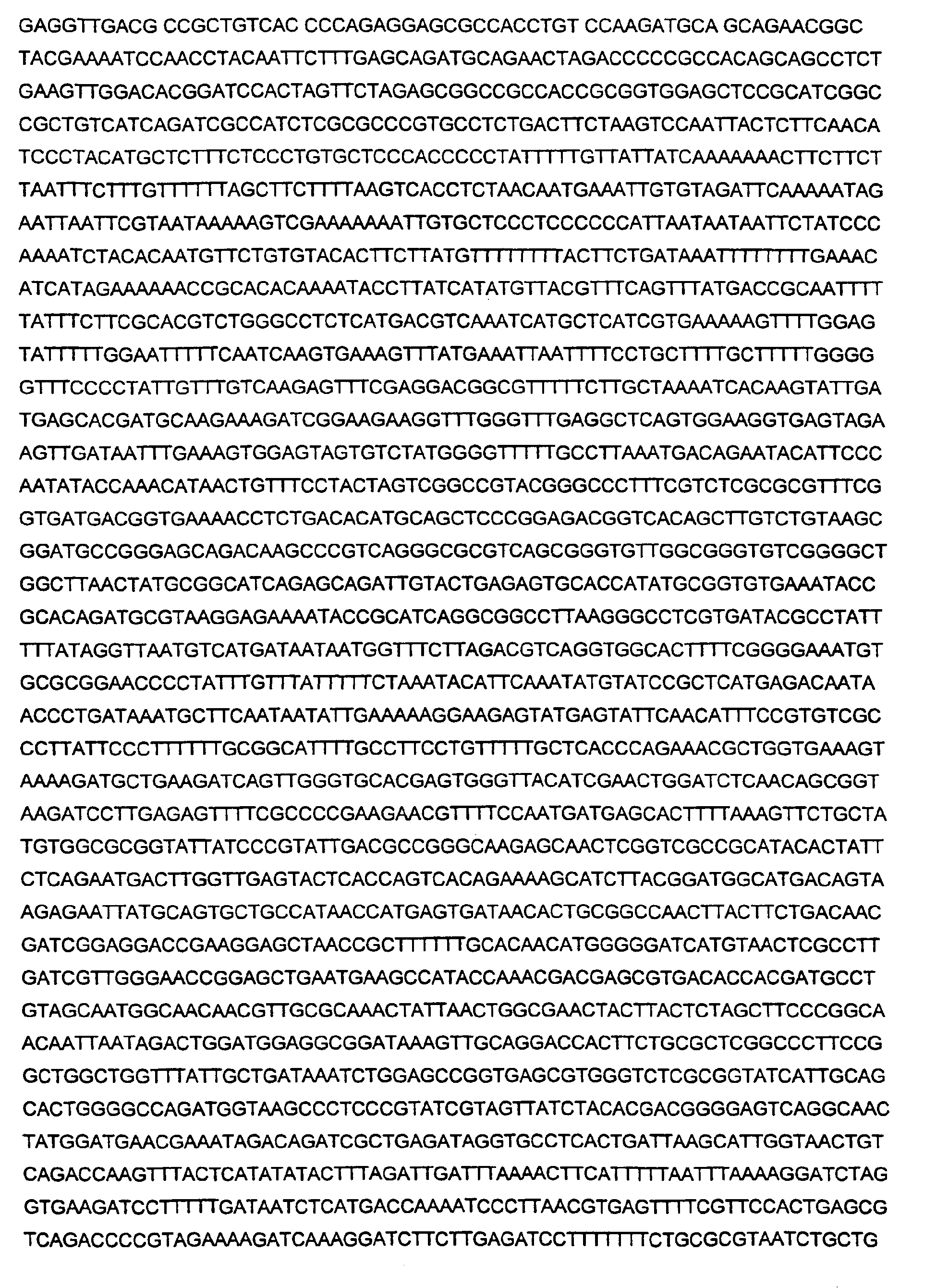
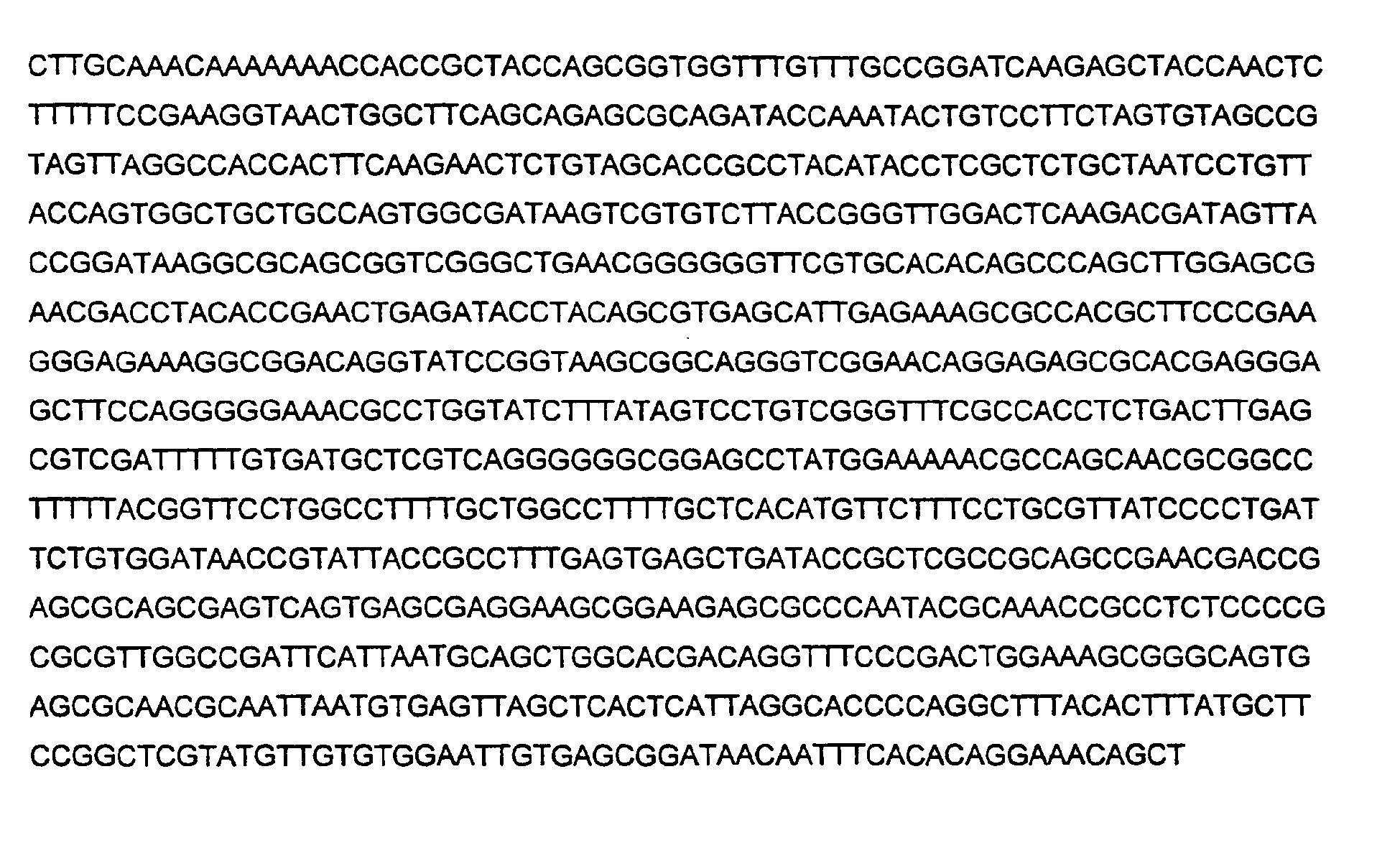
- Unc-119-SP-C100 has 5112 base pairs.
- Example 1 Preparation of an expression vector containing the transgene.
- the base vector pBY103 consists of the vector backbone pPD49.26 described in " Caenorhabditis elegans: Modern Biological Analysis of an Organism "(1995) Ed. Epstein et al., Vol 48, pp. 473 into which the unc-119 promoter ( Maduro et al. Genetics (1995), 141, p.
- the plasmid unc-119-SP-C100 was prepared by KpnI / SacI cut and subsequent cloning of the LC99 fragment from pSKLC1-99 (Shoji et al. (1992) into the pBY103.
- the unc-119 SP-C100 construct was microinjected into the gonads of young adult hermaphrodites using a microinjection system.
- the DNA concentration was about 20 ng / ⁇ l.
- a marker plasmid was injected. It is the ttx3-GFP plasmid that encodes the Green Fluorescent Protein under the control of the ttx3 promoter.
- the activity of the ttx3 promoter is specific for certain head neurons of C. elegans, the so-called AIY neurons, which play a role in the thermotaxis of the worm.
- Successfully injected worms exhibit green fluorescence in the head of the AIY neurons when excited with light at a wavelength of about 480 nm. Such nematodes could be detected.
- C100 transgenic worms show a green fluorescence in the AIY neurons of the head area after excitation with light of the wavelength of 480 nm. Since green fluorescence was again detectable in the head neurons in the offspring of the worms, it can be assumed that the plasmids are pathway-friendly. However, the penetrance is not 100%, suggesting that the long tandam arrays of ttx3-GFP marker DNA and unc-119-SP-C100 are more extrachromosomally integrated than in the genome.
- 96-well plates are first incubated with the monoclonal antibody clone 6E10 (SENETEK PLC., MO, USA), which reacts specifically with the A ⁇ peptide (amino acid 1-17), and then with worm extracts from transgenic worms or control worms.
- the detection of the A ⁇ peptide takes place with the aid of the monoclonal A ⁇ antibody 4G8 (SENETEK PLC., MO, USA), which recognizes amino acids 17-24 in the A ⁇ peptide and is labeled with biotin.
- the detection is carried out via the alkaline phosphatase reaction with a corresponding antibody which is directed against biotin.
- the digestion of the worms implies detergent treatment, nitrogen shock freezing, sonication, and rupture of the cells with glass beads.
- the ELISA signal from the experiment described above may underlie both weak expression of the A ⁇ peptide and that of the C100 precursor protein, since the corresponding epitopes are present in both proteins.
- the expression of the A ⁇ peptide could be detected specifically:
- Aß-specific antibodies that do not react with the C 100 precursor would have to be used in an A ⁇ sandwich ELISA.
- an A ⁇ -specific antibody could be a monoclonal antibody that specifically recognizes the C-terminal end of the A ⁇ form, which is composed of 40 or 42 amino acids.
- the A ⁇ peptide could be detected in the Western blot using monoclonal antibodies 4G8 and 6E10 and then discriminated from the larger C100 precursor due to its molecular weight of 4kD.
Landscapes
- Health & Medical Sciences (AREA)
- Life Sciences & Earth Sciences (AREA)
- Chemical & Material Sciences (AREA)
- Organic Chemistry (AREA)
- Engineering & Computer Science (AREA)
- Biomedical Technology (AREA)
- Neurology (AREA)
- Environmental Sciences (AREA)
- Zoology (AREA)
- Medicinal Chemistry (AREA)
- Animal Behavior & Ethology (AREA)
- General Health & Medical Sciences (AREA)
- Biophysics (AREA)
- Genetics & Genomics (AREA)
- Molecular Biology (AREA)
- Proteomics, Peptides & Aminoacids (AREA)
- Biochemistry (AREA)
- Bioinformatics & Cheminformatics (AREA)
- Gastroenterology & Hepatology (AREA)
- Neurosurgery (AREA)
- Toxicology (AREA)
- Biodiversity & Conservation Biology (AREA)
- Animal Husbandry (AREA)
- Hospice & Palliative Care (AREA)
- Pharmacology & Pharmacy (AREA)
- Nuclear Medicine, Radiotherapy & Molecular Imaging (AREA)
- Public Health (AREA)
- Veterinary Medicine (AREA)
- General Chemical & Material Sciences (AREA)
- Chemical Kinetics & Catalysis (AREA)
- Psychiatry (AREA)
- Micro-Organisms Or Cultivation Processes Thereof (AREA)
- Measuring Or Testing Involving Enzymes Or Micro-Organisms (AREA)
- Investigating Or Analysing Biological Materials (AREA)
- Medicines That Contain Protein Lipid Enzymes And Other Medicines (AREA)
- Peptides Or Proteins (AREA)
Description
- Die vorliegende Erfindung betrifft die Verwendung eines transgenen C. elegans enthaltend ein Transgen, welches für da Amyloid Vorläufer Protein (APP) oder einen Teil davon kodiert, zur Identifizierung und/oder Charakterisierung von Substanzen, die die γ-Sekretase Aktivität hemmen oder die die α-Sekretase Aktivität erhöhen, bzw. zur Validierung einer α- und/oder einer γ-Sekretionsaktivität bzw. zur Identifizierung einer γ-Sekretase Aktivität in C. elegans.
- Bei der Alzheimer'schen Krankheit (Morbus Alzheimer) handelt es sich um eine neurodegenerative Erkrankung des Gehirns, die auf zellulärer Ebene mit einem massiven Verlust von Neuronen im limbischen System und im cerebralen Cortex einher geht. Auf molekularer Ebene lassen sich in den betroffenen Gehirnarealen Proteinablagerungen, sogenannte Plaques, nachweisen, die ein wesentliches Charakteristikum der Alzheimer'schen Krankheit darstellen. Das am häufigsten in diesen Plaques vorkommende Protein ist ein 40 bis 42 Aminosäuren großes Peptid, das als Aß-Peptid bezeichnet wird. Bei diesem Peptid handelt es sich um ein Spaltprodukt eines wesentlich größeren Proteins von 695 bis 751 Aminosäuren, dem sogenannten Amyloidvorläuferprotein (Amyloid Precursor Protein; APP).
- APP ist ein integrales Transmembranprotein, das die Lipiddoppelschicht einmal durchquert. Der weitaus größte Teil des Proteins liegt extrazellulär, während die kürzere C-terminale Domäne in das Cytosol gerichtet ist (
Figur 1 ). Das Aß-Peptid ist inFigur 1 dunkelgrau dargestellt. Etwa zwei Drittel des Aß-Peptids stammen aus der extrazellulären Domäne und etwa ein Drittel aus der Transmembrandomäne von APP. - Neben dem membranständigen APP läßt sich eine sekretierte Form des Amyloid Vorläuferproteins nachweisen, die aus der großen Ektodomäne des APPs besteht und als APPsec ("sekretiertes APP") bezeichnet wird. APPsec entsteht aus APP durch proteolytische Spaltung, die durch die ∀-Sekretase erfolgt. Die proteolytische
- Spaltung findet an einer Stelle der Aminosäuresequenz von APP statt, die innerhalb der Aminosäuresequenz des Aß-Peptids liegt (nach Aminosäurerest 16 des Aß-Peptids). Eine Proteolyse von APP durch die α-Sekretase schließt damit die Bildung des Aß-Peptids aus.
- Das Aß-Peptid kann also nur auf einem alternativen Prozessierungsweg aus APP gebildet werden. Es wird postuliert, daß an diesem Prozessierungsweg zwei weitere Proteasen beteiligt sind, wobei die eine Protease, die als ß-Sekretase bezeichnet wird, am N-Terminus des Aß-Peptids im APP schneidet und die zweite Protease, die als γ-Sekretase bezeichnet wird, den C-Terminus des Aß-Peptids freisetzt (Kang, J. et al., Nature, 325, 733) (
Figur 1 ). - Bisher konnte keine der drei Sekretasen bzw. Proteasen (α-Sekretase, β-Sekretase, γ-Sekretase) identifiziert werden. Die Kenntnis der Sekretasen ist jedoch von großem Interesse, insbesondere im Rahmen von Untersuchungen zur Alzheimer'schen Krankheit und zur Identifizierung der beteiligten Proteine, die dann wiederum als Targets in weiterführenden Studien eingesetzt werden können, da zum einen die Inhibition der ß - und insbesondere der γ-Sekretase zu einer Reduktion der Aß-Produktion führen könnte, zum anderen eine Aktivierung der α-Sekretase die Prozessierung von APP in APPsec steigern und damit gleichzeitig die Entstehung des Aß-Peptids reduzieren würde.
- Es gibt viele Hinweise darauf, daß das Aß-Peptid bei dem Auftreten der Alzheimer'schen Krankheit ein entscheidender Faktor ist. Unter anderem wird eine Neurotoxizität von Aß-Fibrillen in Zellkultur postuliert (Yankner, B.A. et al., (1990) Proc Natl Acad Sci USA,87, 9020). Auch tritt bei Patienten mit Down Syndrom, bei denen APP in einer zusätzlichen Kopie vorkommt die für den Morbus Alzheimer charakteristische Neuropathologie bereits im Alter von 30 Jahren auf. Dabei wird angenommen, daß der Überexpression von APP eine erhöhte Umsetzung in das Aß-Peptid folgt (Rumble, B. et al., (1989), N. Engl. J. Med., 320, 1446).
- Den vielleicht stärksten Hinweis auf die zentrale Rolle des Aß-Peptids stellen die familiären Formen der Alzheimer'schen Krankheit dar. Hier finden sich Mutationen im APP-Gen um den Bereich der ß- und γ-Sekretaseschnittstellen oder in zwei weiteren AD-assoziierten Genen (Presenilinen), die in Zellkultur zu einer wesentlichen Erhöhung der Aß-Produktion führen (Scheuner, D. et al., (1996), Nature Medicine, 2, 864).
- C. elegans wurde bereits als Modellorganismus bei der Alzheimer'schen Krankheit eingesetzt, jedoch beziehen sich diese Arbeiten nicht auf die Prozessierung von APP in das Aß-Peptid. Einige Arbeiten befassen sich mit zwei anderen Alzheimer assoziierten Proteinen, den Presenilinen. Bei den Presenilinen handelt es sich um Transmembranproteine, die die Membran 6 - 8 mal durchqueren. Sie besitzen bei familiären Alzheimerfällen eine große Bedeutung, da bestimmte Mutationen in den Presenilingenen zur Alzheimer'schen Krankheit führen. Dabei wurde gezeigt, daß im C. elegans Homologe zu den humanen Presenilinen (sel-12, spe-4, hop-1) existieren, wobei die Funktion der Preseniline in Mensch und Wurm konserviert ist (Levitan D, Greenwald I (1995) Nature 377, 351; Levitan et al.(1996) Proc Natl Acad Sci USA, 93, 14940; Baumeister R (1997) Genes & Function 1, 149; Xiajun Li and Iva Greenwald (1997) Proc Natl Acad Sci USA, 94, 12204).
- Weitere Arbeiten beschäftigen sich mit dem APP-Homologen in C. elegans, das als Apl-1 bezeichnet wird und der Aß-Peptid Expression in C. elegans. Apl-1 besitzt jedoch keine Region, die zu der Aminosäuresequenz des Aß-Peptids homolog ist, weshalb C. elegans kein endogenes Aß-Peptid hat (Daigle I, Li C (1993) Proc Natl Acad Sci USA, 90 (24), 12045).
- Die Expression von Aß-Peptid (nicht die eines Aß-Vorläuferproteins) in C. elegans wurde von C. D. Link, Proc Natl Acad Sci USA (1995) 92, 9368 beschrieben. In diesen Arbeiten wurden transgene Würmer hergestellt, die ein Aß1-42 Peptid (d.h. das Aß-Peptid, das aus 42 Aminosäuren besteht) unter der Kontrolle des Muskelspezifischen Promotors unc 54 als Fusionsprotein mit einem synthetischen Signalpeptid exprimiert. In diesen Studien wurden Muskel-spezifische Proteinablagerungen, die mit anti-ß-amyloid Antikörpern reagierten, nachgewiesen. Weitere Arbeiten (z.B. C. Link et al. persönliche Mitteilung) beziehen sich auf Untersuchungen der Aggregation und Toxizität des Aß-Peptids im Modellsystem C. elegans.
- Um die Existenz einer Prozessierungsmaschinerie in C. elegans, die an der Entstehung von Aß-Peptid beteiligt ist, zu untersuchen und potentielle Sekretasen im Wurm zu identifizieren wurden in der vorliegenden Arbeit transgene C. elegans Linien etabliert.
- Gegenstand der vorliegenden Erfindung betrifft daher folgende Verwendung.
- Verwendung eines transgenen C. elegans enthaltend ein Transgen enthaltend
- a) eine Nukleotidsequenz, die für das Amyloid Vorläufer Protein (APP) oder einen Teil davon kodiert,
wobei die Nukleotidsequenz den Teil der Nukleotidsequenz des APPs umfasst, der für das vollständige Aβ-Peptid kodiert und
wobei die Nukleotidsequenz nicht identisch ist mit dem Teil des APPs, der für ein vollständiges Aß-Peptid kodiert, - b) gegebenenfalls ein oder mehrere weitere kodierende und/oder nicht-kodierende Nukleotidsequenzen und
- c) einen Promotor für die Expression in einer Zelle des Nematoden Caenorhabditis elegans (C. elegans)
zur Identifizierung einer γ-Sekretase Aktivität und/oder einer α-Sekretase Aktivität in C. elegans. - Vorzugsweise kodiert die Nukleotidsequenz für die 100 carboxy-terminalen Aminosäuren von APP, beginnend mit der Sequenz des Aß-Peptids und endend mit der carboxy-terminalen Aminosäure von APP, kodiert (C100 Fragment). Das APP ist vorzugsweise eines der Isoformen APP695 (695 Aminosäuren), APP751 (751 Aminosäuren), APP770 (770 Aminosäuren) und L-APP. Alle Isoformen entstehen durch alternatives Spleißen aus dem gleichen APP Gen. In APP695 wurden durch Spleißen die Exons 7 und 8 entfernt, wohingegen in APP751 nur das Exon 8 fehlt und in APP770 Exon 7 und 8 vorliegen. Daneben existieren weitere Spleißformen von APP, in denen das Exon 15 durch Spleißen entfernt wird. Diese Formen werden als L-APP bezeichnet und liegen ebenfalls in den bzgl. der Exons 7 und 8 gespleißten Formen vor.
- In einer besonderen Ausführungsform der Erfindung enthält das Transgen die Nukleotidsequenz SEQ ID NO.: 1 oder einen Teil davon.
- Vorzugsweise enthält das Transgen eine weitere kodierende Nukleotidsequenz, die am 5'-Ende der Nukleotidsequenz, die für APP oder einen Teil desselben kodiert, lokalisiert ist. In einer besonderen Ausführungsform der Erfindung kodiert die weitere Nukleotidsequenz für ein Signalpeptid oder einen Teil davon, beispielsweise für das APP Signalpeptid (SP) mit der Aminosäuresequenz SEQ ID NO.: 9 oder einen Teil davon.
- Die Sequenz vom N-Terminus des Aß-Peptids bis zum C-Terminus von APP besteht aus 99 Aminosäuren. Das APP-Signalpeptid besteht aus 17 Aminosäuren. Bei der Klonierung eines Fusionsproduktes bestehend aus dem N-Terminus des Aß-Peptids bis zum C-Terminus von APP und dem APP Signalpeptid, werden zwischen diese beiden Teile des Fusionsproduktes vorzugsweise ein oder mehrere "Spacer-Aminosäuren" eingefügt, vorzugsweise wird eine Aminosäure eingefügt, beispielsweise Leucin. Das C-Terminale Fragment wird deshalb unterschiedlich bezeichnet, z.B. C100 (C= C-Terminus), LC99 (L=Leucin), LC1-99, C99, SPA4CT (SP=Signalpeptid, A4=Aß-Peptid, CT= C-Terminus).
- In einer besonderen Ausführungsfrom der Erfindung enthält das Transgen die Nukleotidsequenz SEQ ID NO.: 2 oder einen Teil davon und/oder die Nukleotidsequenz SEQ ID NO.: 3 oder eine Teil davon.
- Darüber hinaus kann das Transgen eine oder mehrere weitere nicht-kodierende und/oder eine oder mehrere weitere kodierende Nukleotidsequenzen enthalten. Beispielsweise kann das Transgen als weitere nicht-kodierende Nukleotidsequenz eine Sequenz aus einem Intron des APP Gens enthalten, z.B. eine Sequenz, die aus dem Intron 42 bp des APP Gens stammt und die Sequenz SEQ ID NO.: 4 aufweist. Gegenstand der Erfinndung ist ein Transgen, das die Nukleotidsequenz SEQ ID NO.: 5 enthält.
- Vorzugsweise enthält das Transgen auch ein oder mehrere genregulatorische Sequenzen für die geregelte Expression des kodierten Proteins, vorzugsweise einen konstitutiven oder einen regulierbaren Promotor. Beispielsweise kann der Promotor in neuronalem, muskulärem oder dermalem Gewebe von C. elegans aktive sein oder ubiquitär in C. elegans aktiv sein. Ein Promotor kann beispielsweise ausgewählt werden aus der Reihe der C. elegans Promotoren unc-54, hsp16-2, unc-119, goa-1 und sel-12. In einer besonderen Ausführungsform der Erfindung enthält das Transgen einen Promotor mit der Nukleotidsequenz SEQ ID NO.: 6. In einer besonderen Ausführungsform enthält das Transgen die Nukleotidsequenz SEQ ID NO.: 7.
- Das Transgen kann in einem Vektor vorliegen, beispielsweise in einem Expressionsvektor. Beispielsweise kann ein rekombinanter Expressionsvektor die Nukleotidsequenz SEQ ID NO.: 8 enthalten.
- Die Erfindung beschreibt auch die Herstellung eines Expressionsvektors, wobei ein Transgen nach bekannten Methoden in einen Vektor integriert wird. Insbesondere beschreibt die Erfindung die Verwendung eines Expressionsvektors zur Herstellung einer transgenen Zelle, wobei diese Zelle Teil eines nicht-humanen Organismus, z.B. C. elegans, sein kann.
- Die Erfindung beschreibt auch die Herstellung des Transgens, wobei geeignete Teilsequenzen in der entsprechenden Reihenfolge und im richtigen Leserahmen, ggf. unter Einfügung von Linkern ligiert werden. Insbesondere beschreibt die Erfindung die Verwendung des Transgens, z.B. zur Herstellung einer transgenen Zelle, wobei diese Zelle Teil eines nicht humanen Organismus sein kann. Beispielsweise kann die Zelle eine C. elegans Zelle sein.
- Eine besondere Ausführungsform der Erfindung beschreibt einen transgenen C. elegans, der das Transgen enthält. Das Transgen kann in dem C. elegans auch in einem Expressionsvektor vorliegen. Das Transgen kann in dem C. elegans intra-und/oder extrachromosomal vorliegen. Intra- und/oder extrachromosomal können ein oder mehrere Transgene bzw. Expressionsvektoren, die das Transgen enthalten, als
- Long Tandem Arrays vorliegen. Vorzugsweise enthält eine transgene Zelle oder ein transgener Organismus zusätzlich einen weiteren Expressionsvektor, der eine Nukleotidsequenz enthält, die für einen Marker kodiert, wobei der Marker entweder ein temperatursensitiver oder ein phenotypischer Marker ist. Beispielsweise kann der Marker ein visueller oder ein verhaltens-phenotypischer Marker sein. Beispiele sind fluoreszierende Marker, z.B. GFP (green fluorescent protein) oder EGFP (Enhanced green fluorescent protein), Markergene, die für eine dominante mutierte Form eines bestimmten Proteins kodiert, z.B. für eine dominante RoI6 Mutation oder Markersequenzen, die für antisense RNA kodieren, z.B. für die antisense RNA von Unc-22 ist.
- Vorzugsweise liegen in den Keimzellen und/oder den somatischen Zellen des transgenen C. elegans eine oder mehrere Kopien des Transgens und/oder des Expressionsvektors vor und ggf. eines weiteren Expressionsvektor vor.
- Die Erfindung beschreibt auch Verfahren zur Herstellung eines transgenen C. elegans, wobei ein Transgen und/oder ein Expressionsvektor gegebenenfalls in Gegenwart eines weiteren Expressionsvektors, der eine Nukleotidsequenz enthält, die für einen Marker kodiert, in die Keimzellen eines C. elegans mikroinjiziert wird. Für die Herstellung der transgenen C. elegans-Linien kann beispielsweise ein DNA-Konstrukt verwendet, das SP-C100 (SP = Signalpeptid) unter der Kontrolle eines Neuron-spezifischen Promotors exprimiert (
Abb. 2 ). Da sich C100 aus der Aβ-Sequenz und dem C-Terminus von APP zusammensetzt ist nur der γ-Sekretaseschnitt nötig, um das Aß-Peptid aus C100 freizusetzten. C100 stellt ebenfalls ein Substrat für die γ-Sekretase dar. - Die Erfindung beschreibt auch die Verwendung eines transgenen C. elegans, beispielsweise zur Expression eines SP-C100 Fusionsproteins. Ein Gegenstand der Erfindung verwendet ein Sp-C100 Fusionsprotein mit der Aminosäuresequenz SEQ ID NO.: 10.
- Insbesondere betrifft die Erfindung die Verwendung eines transgenen C. elegans zur Identifizierung einer γ-Sekretase Aktivität und/oder einer α-Sekretase Aktivität in C. elegans, die Verwendung in Verfahren zur Identifizierung und/oder Charakterisierung von Substanzen, die die γ-Sekretase Aktivität hemmen, die Verwendung in Verfahren zur Identifizierung und/oder Charakterisierung von Substanzen, die die α-Sekretase Aktivität erhöhen, die Verwendung in Verfahren zur Identifizierung und/oder Charakterisierung von Substanzen, die als Wirkstoffe zur Behandlung und/oder Prävention der Alzheimerschen' Krankheit verwendet werden können.
- Zur Identifizierung von Sekretasen, die an der Prozessierung von APP in das Aβ-Peptid beteiligt sind wurde in der vorliegenden Arbeit der Nematode Caenorhabditis elegans (C. elegans) als Modellorganismus gewählt. Dieser Wurm eignet sich hervorragend für genetische Studien und wurde daher in der Vergangenheit vielfach eingesetzt, um universell wichtige Prozesse wie z.B. den programmierten Zelltod, Neuronal guidance und RAS/MAP Kinase Signalling zu untersuchen (Riddle, D.L. et al. (1997)).
- Zu den wesentlichen Punkten, durch die sich C. elegans besonders für solche Studien auszeichnet, zählen (C. Kenyon, Science (1988) 240, 1448; P.E. Kuwabara (1997), TIG, 13, 454):
- sein kleines Genom, das sich aus etwa 19000 Genen bzw. 97 Mb zusammensetzt und im Dezember 1998 vollständig sequenziert worden ist. (The C. elegans Sequencing Consortium, Science (1998), 282, 2012).
- seine Vermehrung durch Selbstbefruchtung. Bei den zwei Geschlechtern von C. elegans unterscheidet man zwischen Männchen und Hermaphroditen, d.h. zwittrige Tiere, die ihre Eier vor der Ablage selbst befruchten. Ein entscheidender Vorteil dieser Art der Vermehrung ist, daß ein Hermaphrodit nach dem Einbringen eines Transgens in die Keimbahn automatisch homozygote transgene Nachkommen erzeugen kann. Es sind also keine weiteren Kreuzungsschritte wie z.B. bei Drosophila zur Herstellung transgener Linien notwendig.
- seine leichte Handhabung im Labor aufgrund seiner geringen Größe (etwa 1 mm Länge) und seiner relativ anspruchslosen Wachstumsbedingungen. Es kann daher eine große Zahl von Würmern routinemäßig im Labor gehandhabt werden.
- seine kurze Generationszeit von 3 Tagen, die es ermöglicht innerhalb sehr kurzer Zeit große Mengen an biologischem Material für Analysen zu erhalten.
- Es ist eine komplette Zellbeschreibung für die Entwicklung und Anatomie von C. elegans vorhanden.
- Es liegen detaillierte genetische Karten und Methoden zur genetischen Analyse in C. elegans vor.
- Es sind Technologien zur Herstellung von knock-out Tieren vorhanden. Ebenso existieren Technologien zur Mutagenisierung des C. elegans Genoms (Transposon Mutagenese, Ethylmethansulfonate (EMS) Mutagenese).
- Verwendungsmöglichkeiten der transgenen C. elegans Linien:
- 1. Identifizierung einer γ-Sekretase ähnlichen Aktivität in C. elegans mit Hilfe von Mutageneseansätzen. Geplant ist eine Transposonmutagenese, durch die die γ-Sekretase ähnliche Aktivität zerstört und durch Detektion der Würmer, die diese Aktivität nicht mehr besitzen, das entsprechende Gen gesucht werden soll. Solch ein Screeningverfahren ist in der Literatur beschrieben: Korswagen H.C. et al., (1996), 93, 14680 Proc Natl Acad Sci USA).
Alternative Ansätze wären Mutagenese über Ethylmethansulfonat (EMS) oder auch RNA anti-sense Ansätze. Bei letzterem könnte man versuchen gemeinsame Motive aller C. elegans Proteasen zu finden und gezielt mit anti-sense RNA, die gegen diese Motive gerichtet sind, herunter zu regulieren. Ein Screening auf das Aß-Peptid könnte dann zeigen, ob eine der Proteasen an der Aß-Produktion beteiligt ist. - 2. Identifizierung einer γ-Sekretase ähnlichen Aktivität in C. elegans evtl. über einen ähnlichen Weg wie in Punkt 1. beschrieben.
- 3. Mit der Kenntnis einer γ-Sekretase bzw. γ-Sekretase ähnlichen Aktivität in C. elegans kann über Homologievergleich die humane γ-Sekretase bzw. γ-Sekretase ähnliche Aktivität gesucht werden.
- 4. Identifizierung von Pharmaka, die
- die γ-Sekretaseaktivität hemmen, um direkt die Aß-Produktion aus dem Amyloidvorläuferprotein zu inhibieren.
- die γ-Sekretase aktivieren und dadurch indirekt durch eine Steigerung der APPsec-Produktion die Entstehung des Aß-Peptids inhibieren.
Dieser Ansatz könnte im 96-Well-Format stattfinden, da C. elegans in Suspension in 96-Well-Platten gehalten werden kann.
Da das Screening an einem Gesamtorganismus durchgeführt wird, können Pharmaka mit unspezifisch toxischer Wirkung weitgehend ausgeschlossen werden.
- 5. Untersuchung des Aggregationsverhaltens und einer eventuellen neurotoxischen Wirkung des Aß-Peptids in C. elegans. Screening nach Pharmaka, die die Aggregation von Aß-Peptid inhibieren.
- 6. Untersuchung zur Modulation der APP-Prozessierung durch andere Proteine (z.B. Preseniline oder ApoE) durch deren Überexpression oder knock-out. Da es sich bei den Presenilinen um Alzheimer-assoziierte Proteine handelt und ApoE ein Risikofaktor der Alzheimer Krankheit darstellt könnten diese Proteine die Bildung des Aß-Peptids beeinflussen und damit ihre Rolle im APP-Prozessierungsweg untersucht werden.
- 7. Gegebenenfalls Validierung einer α- und/oder γ-Sekretaseaktivität, die mit Hilfe anderer, dem Fachmann bekannter, experimenteller Ansätze gefunden wurde.
-
Figur 1: Figur 1 zeigt das Amyloid Vorläuferprotein (Isoform APP695 und Isoformen APP770 bzw. APP751) und Sekretase Spaltprodukte. -
Figur 2: Figur 2 beschreibt die Konstruktion des transgenen Vektors "Unc-119-SP-C100" enthaltend einem unc-119 Promotor, ein APP-Signalpeptid und das C100 Fragment aus APP, wobei "unc-119" ein Neuron-spezifischer C. elegans Promotor ist, APP Signalpeptid, den Aminosäuren 1 bis 24 von APP entspricht und C100 den C-terminalen 100 Aminosäuren von APP (= C100) entspricht. C100 besteht aus der Aß-Sequenz und dem C-Terminus von APP (Shoji, M et al., (1992) Science 258, 126). Der Vektor Unc-119-SP-C100 hat 5112 Basenpaare. - Für die Klonierung wurden zwei Vektoren verwendet, pSKLC1-99, der das SP-C100 kodiert und pBY103, der den unc-119 Promotor enthält, wobei die für SP-C100 kodierende DNA hinter den unc-119 Promotor in den pBY103-Vektor kloniert wurde. Der Basisvektor pBY103 besteht aus dem Vektorbackbone pPD49.26, beschrieben in "Caenorhabditis elegans: Modern Biological Analysis of an Organism" (1995) Ed. Epstein et al., Vol 48, pp. 473 in das der unc-119 Promotor (Maduro et al. Genetics (1995), 141, p. 977) über HindIII/BamHI kloniert wurde. Das Plasmid unc-119-SP-C100 wurde durch KpnI/SacI Schnitt und anschließende Klonierung des LC99 Fragments aus pSKLC1-99 (Shoji et al. (1992) in den pBY103 hergestellt.
- Zur Herstellung der transgenen C. elegans Linien wurde das Verfahren der Mikroinjektion angewandt (Mello et al.,(1991) EMBO J. 10 (12) 3959; C. Mello and A. Fire, Methods in Cell Biology, Academic Press Vol48, pp451, 1995; C. D. Link, Proc Natl Acad Sci USA (1995) 92, 9368).
- Verwendet wurden zwei verschiedene C. elegans-Stämme, Wild-typ N2 und him-8 (high incidence of males). Das unc-119-SP-C100-Konstrukt wurde in die Gonaden von jungen adulten Hermaphroditen mit Hilfe einer Mikroinjektionsanlage mikroinjiziert. Die DNA-Konzentration betrug etwa 20 ng/µl.
- Zusammen mit dem unc-119-SP-C100 wurde ein Markerplasmid injiziert. Dabei handelt es sich um das ttx3-GFP-Plasmid, das für das Green Fluorescent Protein unter der Kontrolle des ttx3-Promotors kodiert. Die Aktivität des ttx3-Promotors ist spezifisch für bestimmte Kopfneuronen von C. elegans, den sogenannten AIY-Neuronen, die bei der Thermotaxis des Wurms eine Rolle spielen.
- Bei der Mikroinjektion von Plasmid-DNA wird davon ausgegangen, daß sich durch Rekombination sogenannte Long Tandem Arrays bilden, die aus vielen Kopien von Plasmid-DNA (in unserem Falle aus dem ttx3-GFP und dem unc-119-SP-C100) bestehen. Diese Arrays integrieren zu einem bestimmten Prozentsatz in das C. elegans Genom. Mit einer höheren Wahrscheinlichkeit jedoch liegen die Arrays extrachromosomal vor.
- Erfolgreich injizierte Würmer weisen bei Anregung mit Licht einer Wellenlänge von etwa 480 nm grüne Fluoreszenz in den AIY-Neuronen im Kopfbereich auf. Solche Nematoden konnten detektiert werden.
- C100 transgene Würmer weisen in den AIY-Neuronen des Kopfbereiches nach Anregung mit Licht der Wellenlänge von 480 nm eine grüne Fluoreszenz auf. Da auch bei den Nachkommen der Würmer wiederum grüne Fluoreszenz in den Kopfneuronen detektierbar war, kann davon ausgegangen werden, daß die Plasmide keimbahngängig sind. Jedoch ist die Penetranz nicht 100 %, was darauf schließen läßt, daß die long tandam arrays aus ttx3-GFP-Marker-DNA und unc-119-SP-C100 eher extrachromosomal als in das Genom integriert vorliegen.
- Sechs verschiedene transgene C100 C. elegans Linien (drei im N2 wt und drei im him 8 Hintergrund) wurden in einem Western Blot auf die Expression des C100 Fragments mit einem polyklonalen Antiserum, das gegen den C-Terminus von APP gerichtet ist, untersucht. In allen sechs Linien war eine Bande mit dem entsprechenden Molekulargewicht von etwa 10 kDa detektierbar.
- In einem Aβ Sandwich ELISA konnten in Zellextrakten aus transgenen Tieren Signale über dem Hintergrund-Level detektiert werden, die in zwei Fällen statistisch signifikant waren. Dies deutet darauf hin, daß C. elegans eine γ-Sekretase ähnliche Aktivität besitzen könnte.
- Bei dem Aß-Sandwich ELISA Assay werden 96-Well-Platten zunächst mit dem monoklonalen Antikörper Klon 6E10 (SENETEK PLC., MO, USA), der spezifisch mit dem Aß-Peptid (Aminosäure 1-17) reagiert, inkubiert und anschließend mit Wurmextrakten aus transgenen Würmern bzw. Kontrollwürmern überschichtet. Die Detektion des Aß-Peptids findet mit Hilfe des monoklonalen Aß-Antikörper 4G8 (SENETEK PLC., MO, USA), der die Aminosäuren 17-24 im Aß-Peptid erkennt und mit Biotin markiert ist, statt. Der Nachweis erfolgt über die Alkalische Phosphatase Reaktion mit einem entsprechenden Antikörper der gegen Biotin gerichtet ist. Der Aufschluß der Würmer impliziert Detergenzbehandlung, Stickstoffschockgefrieren, Sonifizierung, und das Aufbrechen der Zellen mit Glasperlen.
- Das ELISA Signal aus dem oben beschriebenen Versuch kann sowohl einer schwachen Expression des Aß-Peptids als auch der des C100-Vorläuferproteins zugrunde liegen, da die entsprechenden Epitope in beiden Proteinen vorliegen.
- In analoger Weise könnte beispielsweise auch die Expression des Aß-Peptides spezifisch nachgewiesen werden: Dazu müßten Aß-spezifische Antikörper, die nicht mit dem C 100-Vorläufer reagieren, in einem Aß-Sandwich ELISA eingesetzt werden. Ein Aß-spezifischer Antikörper könnte beispielsweise ein monoklonaler Antikörper sein, der spezifisch das C-terminale Ende der Aß-Form erkennt, die sich aus 40 oder aus 42 Aminosäuren zusammensetzt. Parallel könnte das Aß-Peptid im Western Blot mit Hilfe der monoklonalen Antikörper 4G8 und 6E10 detektiert und dann aufgrund seines Molekulargewichtes von 4kD von dem größeren C100-Vorläufer unterschieden werden.
- Die Vektoren sind erhältlich bei Andrew Fire (Department of Embryology, Carnegie Institution of Washington, Baltimore, Maryland 21210, USA) für den pPD49.26 bzw. LC99 (Amyloid Precursor protein) hinterlegt unter der ATCC-Nummer 106372. Der unc-119-Promotor ist erhältlich von Maduro, M. (Department of Biological Science, Universitiy of Alberta Edmonton, Canada), unc-54 und unc-16.2 sind von Andrew Fire erhältlich.
- SEQ ID NO.1: Nukleotidsequenz von C100

- SEQ ID NO.2: Nukleotidsequenz von SP
ATG CTGCCCGGTT TGGCACTGTT CCTGCTGGCC GCCTGGACGG CTCGGGCG - SEQ ID NO.3: Nukleotidsequenz von SP+C100

- SEQ ID NO.4: Nukleotidsequenz Intron 42bp
GTATGTTTCGAATGATACTAACATAACATAGAACATTTTCAG - SEQ ID NO.5: Nukleotidsequenz von Intron+SP+C100

- SEQ ID NO.6: Nukleotidsequenz von unc-119


- SEQ ID NO.7: Nukleotidsequenz von unc-119+ Intron+SP+C100


- SEQ ID NO.8: Nukleotidsequenz des Expressionsvektors


- SEQ ID NO.9: Aminosäuresequenz von SP
MLPGLALFLL AAWTARA - SEQ ID NO.10: Aminosäuresequenz des Fusionsproteins
MLPGLALFLL AAWTARALDA EFRHDSGYEV HHQKLVFFAE DVGSNKGAII
GLMVGGVVIA TVIVITLVML KKKQYTSIHH G\/VEVDAAVT PEERHLSKMQ
QNGYENPTYK FFEQMQN - SEQ ID NO. 11: Nukleotidsequenz des Vektors unc-119-SP-C100

-
- Baumeister R (1997) Genes & Function 1, 149
- Daigle I, Li C (1993), 90 (24), 12045
- Kang, J., Lemaire, H.G., Unterbeck, A., Salbaum J.M., Masters C.L., Grzeschik, K.H., Multhaupt, G., Beyreuther, K., Mueller-Hill, B. (1987) Nature, 325, 733
- Kenyon, C., Science (1988) 240, 1448
- Korswagen H.C., Durbin, R. M., Smits, M. T., Plasterk, R. H. A. (1996), 93, 14680 Proc Natl Acad Sci USA
- Kuwabara, P. E. (1997), Trends in Gentics, 13, 454
- Levitan D., Doyle TG, Brousseau D., Lee MK. Thinakaran G., Slunt HH., Sisodia SS. Greenwald I. (1996) Proc Natl Acad Sci USA, 93, 14940
- Levitan D, Greenwald I (1995) Nature 377, 351
- Link C.D. (1995) Proc Natl Acad Sci USA, 92, 9368
- Mello, C. and Fire, A., Methods in Cell Biology, Academic Press Vol.48, pp 451, 1995
- Riddle et al. (1997) C. elegans II, Cold Spring Habor Laboratory Press
- Rumble, B., Retallack, R., Hilbich, C., Simms, G., Multhaup, G., Martins, R., Hockey, A., Montgomery, P., Beyreuther, K., Masters, C.L., (1989), N. Engl. J. Med., 320, 1446
- Scheuner, D., Eckman, C., Jensen, M., Song, X., Citron, M., Suzuki, N., Bird, T., Hardy, M., Hutton, W., Kukull, W., Farson, E., Levy-Lahad, E., Vitanen, M., Peskind, E., Poorkaj, P., Schellenberg, G., Tanzi, R., Wasco, W., Lannfeld, D., Selkoe, D., Younkin, S.G. (1996), Nature Medicine, 2, 864
- Shoji M., Golde T E., Ghiso J., Cheung T T., Estus S., Shaffer L M., Cai X-D., McKay D M., Tintner R., Fraggione B., Younkin S G. (1992) Science 258, 126
- Xiajun Li and Iva Greenwald (1997) Proc Natl Acad Sci USA, 94, 12204
- Yankner, B.A., Caceres, A., Duffy, L.K. (1990) Proc Natl Acad Sci USA,87, 9020
-
- (1) ALLGEMEINE ANGABEN:
- (i) ANMELDER:
- (A) NAME: Hoechst Marion Roussel Deutschland GmbH
- (B) STRASSE: -
- (C) ORT: Frankfurt
- (D) BUNDESLAND: -
- (E) LAND: Deutschland
- (F) POSTLEITZAHL: 65926
- (G) TELEFON: 069-305-7072
- (H) TELEFAX: 069-35-7175
- (I) TELEX: -
- (ii) BEZEICHNUNG DER ERFINDUNG: Transgener C. elegans als Modellorganismus für Untersuchungen zur Alzheimer'schen Krankheit
- (iii) ANZAHL DER SEQUENZEN: 11
- (iv) COMPUTER-LESBARE FASSUNG:
- (A) DATENTRÄGER: Floppy disk
- (B) COMPUTER: IBM PC compatible
- (C) BETRIEBSSYSTEM: PC-DOS/MS-DOS
- (D) SOFTWARE: PatentIn Release #1.0, Version #1.30 (EPA)
- (i) ANMELDER:
- (2) ANGABEN ZU SEQ ID NO: 1:
- (i) SEQUENZKENNZEICHEN:
- (A) LÄNGE: 303 Basenpaare
- (B) ART: Nucleotid
- (C) STRANGFORM: Einzelstrang
- (D) TOPOLOGIE: linear
- (ii) ART DES MOLEKÜLS: Genom-DNA
- (ix) MERKMAL:
- (A) NAME/SCHLÜSSEL: exon
- (B) LAGE:1..303
- (xi) SEQUENZBESCHREIBUNG: SEQ ID NO: 1:

- (i) SEQUENZKENNZEICHEN:
- (2) ANGABEN ZU SEQ ID NO: 2:
- (i) SEQUENZKENNZEICHEN:
- (A) LÄNGE: 51 Basenpaare
- (B) ART: Nucleotid
- (C) STRANGFORM: Einzelstrang
- (D) TOPOLOGIE: linear
- (ii) ART DES MOLEKÜLS: Genom-DNA
- (ix) MERKMAL:
- (A) NAME/SCHLÜSSEL: exon
- (B) LAGE:1..51
- (xi) SEQUENZBESCHREIBUNG: SEQ ID NO: 2:
ATGCTGCCCG GTTTGGCACT GTTCCTGCTG GCCGCCTGGA CGGCTCGGGC G 51
- (i) SEQUENZKENNZEICHEN:
- (2) ANGABEN ZU SEQ ID NO: 3:
- (i) SEQUENZKENNZEICHEN:
- (A) LÄNGE: 354 Basenpaare
- (B) ART: Nucleotid
- (C) STRANGFORM: Einzelstrang
- (D) TOPOLOGIE: linear
- (ii) ART DES MOLEKÜLS: Genom-DNA
- (ix) MERKMAL:
- (A) NAME/SCHLÜSSEL: exon
- (B) LAGE:1..354 (xi) SEQUENZBESCHREIBUNG: SEQ ID NO: 3:

- (i) SEQUENZKENNZEICHEN:
- (2) ANGABEN ZU SEQ ID NO: 4:
- (i) SEQUENZKENNZEICHEN:
- (A) LÄNGE: 42 Basenpaare
- (B) ART: Nucleotid
- (C) STRANGFORM: Einzelstrang
- (D) TOPOLOGIE: linear
- (ii) ART DES MOLEKÜLS: Genom-DNA (ix) MERKMAL:
- (A) NAME/SCHLÜSSEL: exon
- (B) LAGE:1..42
- (xi) SEQUENZBESCHREIBUNG: SEQ ID NO: 4:
GTATGTTTCG AATGATACTA ACATAACATA GAACATTTTC AG 42
- (i) SEQUENZKENNZEICHEN:
- (2) ANGABEN ZU SEQ ID NO: 5:
- (i) SEQUENZKENNZEICHEN:
- (A) LÄNGE: 495 Basenpaare
- (B) ART: Nucleotid
- (C) STRANGFORM: Einzelstrang
- (D) TOPOLOGIE: linear
- (ii) ART DES MOLEKÜLS: Genom-DNA
- (ix) MERKMAL:
- (A) NAME/SCHLÜSSEL: exon
- (B) LAGE:1..495 (xi) SEQUENZBESCHREIBUNG: SEQ ID NO: 5:

- (i) SEQUENZKENNZEICHEN:
- (2) ANGABEN ZU SEQ ID NO: 6:
- (i) SEQUENZKENNZEICHEN:
- (A) LÄNGE: 1207 Basenpaare
- (B) ART: Nucleotid
- (C) STRANGFORM: Einzelstrang
- (D) TOPOLOGIE: linear
- (ii) ART DES MOLEKÜLS: Genom-DNA
- (ix) MERKMAL:
- (A) NAME/SCHLÜSSEL: exon
- (B) LAGE:1..1207
- (xi) SEQUENZBESCHREIBUNG: SEQ ID NO: 6:

- (i) SEQUENZKENNZEICHEN:
- (2) ANGABEN ZU SEQ ID NO: 7:
- (i) SEQUENZKENNZEICHEN:
- (A) LÄNGE: 1773 Basenpaare
- (B) ART: Nucleotid
- (C) STRANGFORM: Einzelstrang
- (D) TOPOLOGIE: linear
- (ii) ART DES MOLEKÜLS: Genom-DNA
- (ix) MERKMAL:
- (A) NAME/SCHLÜSSEL: exon
- (B) LAGE:1..1773
- (xi) SEQUENZBESCHREIBUNG: SEQ ID NO: 7:


- (i) SEQUENZKENNZEICHEN:
- (2) ANGABEN ZU SEQ ID NO: 8:
- (i) SEQUENZKENNZEICHEN:
- (A) LÄNGE: 3344 Basenpaare
- (B) ART: Nucleotid
- (C) STRANGFORM: Einzelstrang
- (D) TOPOLOGIE: linear
- (ii) ART DES MOLEKÜLS: Genom-DNA
- (ix) MERKMAL:
- (A) NAME/SCHLÜSSEL: exon
- (B) LAGE:1..3344
- (xi) SEQUENZBESCHREIBUNG: SEQ ID NO: 8:


- (i) SEQUENZKENNZEICHEN:
- (2) ANGABEN ZU SEQ ID NO: 9:
- (i) SEQUENZKENNZEICHEN:
- (A) LÄNGE: 17 Aminosäuren
- (B) ART: Aminosäure
- (C) STRANGFORM: Einzelstrang
- (D) TOPOLOGIE: linear
- (ii) ART DES MOLEKÜLS: Protein
- (ix) MERKMAL:
- (A) NAME/SCHLÜSSEL: Protein
- (B) LAGE:1..17
- (xi) SEQUENZBESCHREIBUNG: SEQ ID NO: 9:

- (i) SEQUENZKENNZEICHEN:
- (2) ANGABEN ZU SEQ ID NO: 10:
- (i) SEQUENZKENNZEICHEN:
- (A) LÄNGE: 117 Aminosäuren
- (B) ART: Aminosäure
- (C) STRANGFORM: Einzelstrang
- (D) TOPOLOGIE: linear
- (ii) ART DES MOLEKÜLS: Protein
- (ix) MERKMAL:
- (A) NAME/SCHLÜSSEL: Protein
- (B) LAGE:1..117 (xi) SEQUENZBESCHREIBUNG: SEQ ID NO: 10:

- (i) SEQUENZKENNZEICHEN:
- (2) ANGABEN ZU SEQ ID NO: 11:
- (i) SEQUENZKENNZEICHEN:
- (A) LÄNGE: 5109 Basenpaare
- (B) ART: Nucleotid
- (C) STRANGFORM: Einzelstrang
- (D) TOPOLOGIE: linear
- (ii) ART DES MOLEKÜLS: Genom-DNA
- (ix) MERKMAL:
- (A) NAME/SCHLÜSSEL: exon
- (B) LAGE:1..5109
- (xi) SEQUENZBESCHREIBUNG: SEQ ID NO: 11:


- (i) SEQUENZKENNZEICHEN:
Claims (14)
- Verwendung eines transgenen C. elegans enthaltend ein Transgen enthaltenda) eine Nukleotidsequenz, die für das Amyloid Vorläufer Protein (APP) oder einen Teil davon kodiert,
wobei die Nukleotidsequenz den Teil der Nukleotidsequenz des APPs umfasst, der für das vollständige Aß-Peptid kodiert und
wobei die Nukleotidsequenz nicht identisch ist mit dem Teil des APPs, der für ein vollständiges Aß-Peptid kodiert,b) gegebenenfalls ein oder mehrere weitere kodierende und/oder nicht-kodierende Nukleotidsequenzen undc) einen Promotor für die Expression in einer Zelle des Nematoden Caenorhabditis elegans (C. elegans)
zur Identifizierung einer γ-Sekretase Aktivität und/oder einer α-Sekretase Aktivität in C. elegans. - Verwendung nach Anspruch 1, wobei die Nukleotidsequenz für die 100 carboxyterminalen Aminosäuren von APP, beginnend mit der Sequenz des Aß-Peptids und endend mit der carboxyterminalen Aminosäure von APP, kodiert (C100 Fragment).
- Verwendung nach einem der Ansprüche 1 oder 2, wobei das Transgen die Nukleotidsequenz SEQ ID NO.: 1 enthält.
- Verwendung nach einem der Ansprüche 1 bis 3, wobei das Transgen eine weitere kodierende Nukleotidsequenz, die am 5'-Ende der Nukleotidsequenz, die für APP oder einen Teil desselben kodiert, lokalisiert ist, enthält.
- Verwendung nach Anspruch 4, wobei die weitere Nukleotidsequenz für ein Signalpeptid oder einen Teil davon kodiert.
- Verwendung nach einem der Ansprüche 4 oder 5, wobei die weitere Nukleotidsequenz für das APP Signalpeptid (SP) mit der Aminosäuresequenz SEQ ID NO.: 9 kodiert.
- Verwendung nach einem der Ansprüche 4 bis 6 enthaltend die Nukleotidsequenz SEQ ID NO.: 2.
- Verwendung nach einem oder mehreren der Ansprüche 1 bis 7 enthaltend die Nukleotidsequenz SEQ ID NO.: 3.
- Verwendung nach einem der Ansprüche 1 bis 8 enthaltend eine weitere nicht-kodierende Nukleotidsequenz.
- Verwendung nach Anspruch 9, wobei die weitere nicht-kodierende Nukleotidsequenz aus dem Intron 42 bp des APP Gens stammt und die Sequenz SEQ ID NO.: 4 aufweist.
- Verwendung nach einem der Ansprüche 9 oder 10 enthaltend die Nukleotidsequenz SEQ ID NO.: 5.
- Verwendung nach einem der Ansprüche 1 bis 11 enthaltend einen konstitutiven oder einen regulierbaren Promotor.
- Verwendung nach einem der Ansprüche 1 bis 12, wobei der Promotor in neuronalem, muskulärem, dermalem Gewebe von C. elegans oder ubiquitär in C. elegans aktiv ist.
- Verwendung nach einem der Ansprüche 1 bis 13 enthaltend einen Promotor ausgewählt aus der Reihe der C. elegans Promotoren unc-54, hsp 16-2, unc-119, G0A1 und sel-12.
Applications Claiming Priority (3)
| Application Number | Priority Date | Filing Date | Title |
|---|---|---|---|
| DE19849073A DE19849073A1 (de) | 1998-10-24 | 1998-10-24 | Transgener C. elegans als Modellorganismus für Untersuchungen zur Alzheimer'schen Krankheit |
| DE19849073 | 1998-10-24 | ||
| PCT/EP1999/007578 WO2000024880A1 (de) | 1998-10-24 | 1999-10-09 | Transgener c. elegans als modellorganismus für untersuchungen zur alzheimer'schen krankheit |
Publications (2)
| Publication Number | Publication Date |
|---|---|
| EP1123388A1 EP1123388A1 (de) | 2001-08-16 |
| EP1123388B1 true EP1123388B1 (de) | 2012-01-18 |
Family
ID=7885512
Family Applications (1)
| Application Number | Title | Priority Date | Filing Date |
|---|---|---|---|
| EP99947485A Expired - Lifetime EP1123388B1 (de) | 1998-10-24 | 1999-10-09 | Transgener c. elegans als modellorganismus für untersuchungen zur alzheimer'schen krankheit |
Country Status (7)
| Country | Link |
|---|---|
| US (1) | US6673600B2 (de) |
| EP (1) | EP1123388B1 (de) |
| JP (1) | JP4559628B2 (de) |
| AT (1) | ATE541923T1 (de) |
| AU (1) | AU6090799A (de) |
| DE (1) | DE19849073A1 (de) |
| WO (1) | WO2000024880A1 (de) |
Families Citing this family (17)
| Publication number | Priority date | Publication date | Assignee | Title |
|---|---|---|---|---|
| GB2357767B (en) * | 1998-09-24 | 2002-08-21 | Upjohn Co | Alzheimer's disease secretase app substrates therefor and uses therefor |
| DE19856261C1 (de) * | 1998-12-07 | 2000-03-30 | Hoechst Marion Roussel De Gmbh | Aß-Peptid Screening Assay |
| DE19910108C2 (de) * | 1999-03-08 | 2001-02-22 | Falk Fahrenholz | Zellen, die ein Amyloidvorläuferprotein und eine alpha-Sekretase coexprimieren, ein Testverfahren zur Identifikation alpha-Sekretase-aktiver Substanzen sowie eines zur Identifikation weiterer Sekretasen, ein Testverfahren zur Bestimmung der Anfälligkeit gegenüber Morbus Alzheimer und Verwendung von Nukleinsäuren, die für eine alpha-Sekretase codieren, für die Gentherapie |
| DE10008315A1 (de) * | 2000-02-23 | 2001-09-06 | Metabowerke Kg | Elektrohandwerkzeug |
| US20030215896A1 (en) * | 2001-04-25 | 2003-11-20 | Yueming Li | Gamma secretase substrates and in vitro assays |
| DE10130166A1 (de) * | 2001-06-22 | 2003-01-16 | Elegene Ag I Ins | Identifizierung von ses-1 sowie dessen Verwendungen |
| DE60230643D1 (de) * | 2001-09-24 | 2009-02-12 | Evotec Ag | Invertebraten tiermodell mit alzheimer-ähnlicher pathologie zum screenen und testen von molekülen |
| US7615676B2 (en) * | 2001-11-30 | 2009-11-10 | U.S. Department Of Veterans Affairs | Transgenic screen and method for screening modulators of brain-derived neurotrophic factor (BDNF) production |
| US7491810B2 (en) * | 2001-11-30 | 2009-02-17 | U.S. Department Of Veterans Affairs | Transgenic screen and method for screening modulators of brain-derived neurotrophic factor (BDNF) production |
| EP1481987A1 (de) * | 2003-05-26 | 2004-12-01 | Aventis Pharma Deutschland GmbH | Screening-Verfahren für Inhibitoren der gamma-Sekretase-Aktivität |
| ATE517913T1 (de) * | 2004-01-28 | 2011-08-15 | Sanofi Aventis Deutschland | Caenorhabditis elegans p21-aktivierte kinase (pak) und assoziierten funktionsverlustphenotypen |
| AU2008297070A1 (en) * | 2007-09-12 | 2009-03-19 | Probiodrug Ag | Transgenic mice |
| WO2011017319A1 (en) | 2009-08-03 | 2011-02-10 | University Of Pittsburgh - Of The Commonwealth System Of Higher Education | Methods of treating disorders associated with protein polymerization |
| US8809617B2 (en) * | 2009-11-05 | 2014-08-19 | The University of Pittsburgh—Of the Commonwealth System of Higher Education | Automated high-content live animal drug screening using C. elegans |
| US9072772B2 (en) | 2009-11-05 | 2015-07-07 | University of Pittsburgh—of the Commonwealth System of Higher Education | Methods of treating disorders associated with protein aggregation |
| US20130024954A1 (en) * | 2011-06-24 | 2013-01-24 | Jonathan Thomas Pierce-Shimomura | Human Age-Related Neurodegenerative Nematode Model and Methods |
| GB201803010D0 (en) | 2018-02-26 | 2018-04-11 | Royal Holloway & Bedford New College | Neurodegenerative disorders |
Family Cites Families (3)
| Publication number | Priority date | Publication date | Assignee | Title |
|---|---|---|---|---|
| US5744346A (en) * | 1995-06-07 | 1998-04-28 | Athena Neurosciences, Inc. | β-secretase |
| US5849999A (en) * | 1996-10-16 | 1998-12-15 | The Mclean Hospital Corporation | Transgenic non-human mice expressing Flag-APP-C100 protein develop alzheimer's disease brain morphology and behavior |
| AU5619298A (en) * | 1997-01-03 | 1998-07-31 | University Technology Corporation | Beta-amyloid toxicity |
-
1998
- 1998-10-24 DE DE19849073A patent/DE19849073A1/de not_active Ceased
-
1999
- 1999-10-09 AU AU60907/99A patent/AU6090799A/en not_active Abandoned
- 1999-10-09 JP JP2000578434A patent/JP4559628B2/ja not_active Expired - Fee Related
- 1999-10-09 WO PCT/EP1999/007578 patent/WO2000024880A1/de not_active Ceased
- 1999-10-09 AT AT99947485T patent/ATE541923T1/de active
- 1999-10-09 EP EP99947485A patent/EP1123388B1/de not_active Expired - Lifetime
- 1999-10-21 US US09/422,569 patent/US6673600B2/en not_active Expired - Fee Related
Also Published As
| Publication number | Publication date |
|---|---|
| DE19849073A1 (de) | 2000-04-27 |
| EP1123388A1 (de) | 2001-08-16 |
| JP2002528074A (ja) | 2002-09-03 |
| WO2000024880A1 (de) | 2000-05-04 |
| US6673600B2 (en) | 2004-01-06 |
| US20030023997A1 (en) | 2003-01-30 |
| ATE541923T1 (de) | 2012-02-15 |
| AU6090799A (en) | 2000-05-15 |
| JP4559628B2 (ja) | 2010-10-13 |
Similar Documents
| Publication | Publication Date | Title |
|---|---|---|
| Maduro et al. | Identification and cloning of unc-119, a gene expressed in the Caenorhabditis elegans nervous system | |
| DE69233109T2 (de) | Transgene tiermodelle fur alzheimer-krankheit | |
| DE19849073A1 (de) | Transgener C. elegans als Modellorganismus für Untersuchungen zur Alzheimer'schen Krankheit | |
| Leuzinger et al. | Equivalence of the fly orthodenticle gene and the human OTX genes in embryonic brain development of Drosophila | |
| DE69807687T2 (de) | Transgenfisch mit gewebespezifischer expression | |
| Way et al. | mec-3, a homeobox-containing gene that specifies differentiation of the touch receptor neurons in C. elegans | |
| EP1268535B1 (de) | Parkin aus c. elegans, nematode, der eine aberrante oder fehlende expression eines parkingens aufweist, und verwendungen davon | |
| DE69534310T2 (de) | Ptc gene und ihre verwendung | |
| Garbe et al. | IMP-L2: an essential secreted immunoglobulin family member implicated in neural and ectodermal development in Drosophila | |
| EP1137810B1 (de) | Peptid screening test zum nachweis von gamma-sekretase aktivität | |
| Schulze et al. | Drosophila syntaxin is required for cell viability and may function in membrane formation and stabilization | |
| JP4290329B2 (ja) | 遺伝子変異動物 | |
| DE60127982T2 (de) | Transgene drosophila melanogaster, die beta-amyloid exprimiert | |
| Englund et al. | adrift, a novel bnl-induced Drosophila gene, required for tracheal pathfinding into the CNS | |
| DE602004013440T2 (de) | Verfahren zur detektion der gamma-sekretase-aktivität | |
| Perez et al. | Molecular and genetic analyses of lama, an evolutionarily conserved gene expressed in the precursors of the Drosophila first optic ganglion | |
| EP1402034B1 (de) | Identifizierung von ses-1 aus c. elegans sowie dessen verwendung | |
| DE69817860T2 (de) | Für die i45f-mutation kodierende human app oder a4ct sequenzen | |
| Vanario-Alonso et al. | Targeted ribozymes reveal a conserved function of the Drosophila paired gene in sensory organ development | |
| DE60036198T2 (de) | Transgener mollusk und verfahren zu seiner herstellung | |
| DE60126122T2 (de) | Nicht-menschliche transgene oder rekombinante säugetiere für das stop protein und verwendungen davon zur auswahl von psychoaktiven arzneimitteln | |
| DE60223205T2 (de) | Transgenes Tiermodell für Alzheimer-Erkrankung | |
| DE10130247A1 (de) | Identifizierung von ses-3 sowie dessen Verwendungen | |
| Doyle | Characterization of sel-8 and sel-12, two genes that interact with lin-12 | |
| Crotty | Regulation of the mouse homeobox-containing gene Hoxa-4 |
Legal Events
| Date | Code | Title | Description |
|---|---|---|---|
| PUAI | Public reference made under article 153(3) epc to a published international application that has entered the european phase |
Free format text: ORIGINAL CODE: 0009012 |
|
| 17P | Request for examination filed |
Effective date: 20010525 |
|
| AK | Designated contracting states |
Kind code of ref document: A1 Designated state(s): AT BE CH CY DE DK ES FI FR GB GR IE IT LI LU MC NL PT SE |
|
| AX | Request for extension of the european patent |
Free format text: AL;LT;LV;MK;RO;SI |
|
| RIN1 | Information on inventor provided before grant (corrected) |
Inventor name: BAUMEISTER, RALF Inventor name: HOPPE, EDMUND Inventor name: PERAUS, GIESELA |
|
| RBV | Designated contracting states (corrected) |
Designated state(s): AT BE CH CY DE DK ES FI FR GB GR IE IT LI LU NL PT SE |
|
| 17Q | First examination report despatched |
Effective date: 20040723 |
|
| RAP1 | Party data changed (applicant data changed or rights of an application transferred) |
Owner name: SANOFI-AVENTIS DEUTSCHLAND GMBH |
|
| GRAP | Despatch of communication of intention to grant a patent |
Free format text: ORIGINAL CODE: EPIDOSNIGR1 |
|
| GRAS | Grant fee paid |
Free format text: ORIGINAL CODE: EPIDOSNIGR3 |
|
| GRAA | (expected) grant |
Free format text: ORIGINAL CODE: 0009210 |
|
| AK | Designated contracting states |
Kind code of ref document: B1 Designated state(s): AT BE CH CY DE DK ES FI FR GB GR IE IT LI LU NL PT SE |
|
| REG | Reference to a national code |
Ref country code: GB Ref legal event code: FG4D Free format text: NOT ENGLISH |
|
| REG | Reference to a national code |
Ref country code: CH Ref legal event code: EP |
|
| REG | Reference to a national code |
Ref country code: AT Ref legal event code: REF Ref document number: 541923 Country of ref document: AT Kind code of ref document: T Effective date: 20120215 Ref country code: IE Ref legal event code: FG4D Free format text: LANGUAGE OF EP DOCUMENT: GERMAN |
|
| REG | Reference to a national code |
Ref country code: DE Ref legal event code: R096 Ref document number: 59915320 Country of ref document: DE Effective date: 20120315 |
|
| REG | Reference to a national code |
Ref country code: NL Ref legal event code: VDEP Effective date: 20120118 |
|
| PG25 | Lapsed in a contracting state [announced via postgrant information from national office to epo] |
Ref country code: NL Free format text: LAPSE BECAUSE OF FAILURE TO SUBMIT A TRANSLATION OF THE DESCRIPTION OR TO PAY THE FEE WITHIN THE PRESCRIBED TIME-LIMIT Effective date: 20120118 |
|
| REG | Reference to a national code |
Ref country code: IE Ref legal event code: FD4D |
|
| PG25 | Lapsed in a contracting state [announced via postgrant information from national office to epo] |
Ref country code: FI Free format text: LAPSE BECAUSE OF FAILURE TO SUBMIT A TRANSLATION OF THE DESCRIPTION OR TO PAY THE FEE WITHIN THE PRESCRIBED TIME-LIMIT Effective date: 20120118 Ref country code: GR Free format text: LAPSE BECAUSE OF FAILURE TO SUBMIT A TRANSLATION OF THE DESCRIPTION OR TO PAY THE FEE WITHIN THE PRESCRIBED TIME-LIMIT Effective date: 20120419 Ref country code: PT Free format text: LAPSE BECAUSE OF FAILURE TO SUBMIT A TRANSLATION OF THE DESCRIPTION OR TO PAY THE FEE WITHIN THE PRESCRIBED TIME-LIMIT Effective date: 20120518 |
|
| PG25 | Lapsed in a contracting state [announced via postgrant information from national office to epo] |
Ref country code: CY Free format text: LAPSE BECAUSE OF FAILURE TO SUBMIT A TRANSLATION OF THE DESCRIPTION OR TO PAY THE FEE WITHIN THE PRESCRIBED TIME-LIMIT Effective date: 20120118 |
|
| PG25 | Lapsed in a contracting state [announced via postgrant information from national office to epo] |
Ref country code: SE Free format text: LAPSE BECAUSE OF FAILURE TO SUBMIT A TRANSLATION OF THE DESCRIPTION OR TO PAY THE FEE WITHIN THE PRESCRIBED TIME-LIMIT Effective date: 20120118 Ref country code: IE Free format text: LAPSE BECAUSE OF FAILURE TO SUBMIT A TRANSLATION OF THE DESCRIPTION OR TO PAY THE FEE WITHIN THE PRESCRIBED TIME-LIMIT Effective date: 20120118 Ref country code: DK Free format text: LAPSE BECAUSE OF FAILURE TO SUBMIT A TRANSLATION OF THE DESCRIPTION OR TO PAY THE FEE WITHIN THE PRESCRIBED TIME-LIMIT Effective date: 20120118 |
|
| PLBE | No opposition filed within time limit |
Free format text: ORIGINAL CODE: 0009261 |
|
| STAA | Information on the status of an ep patent application or granted ep patent |
Free format text: STATUS: NO OPPOSITION FILED WITHIN TIME LIMIT |
|
| PG25 | Lapsed in a contracting state [announced via postgrant information from national office to epo] |
Ref country code: IT Free format text: LAPSE BECAUSE OF FAILURE TO SUBMIT A TRANSLATION OF THE DESCRIPTION OR TO PAY THE FEE WITHIN THE PRESCRIBED TIME-LIMIT Effective date: 20120118 |
|
| PGFP | Annual fee paid to national office [announced via postgrant information from national office to epo] |
Ref country code: LU Payment date: 20121011 Year of fee payment: 14 |
|
| 26N | No opposition filed |
Effective date: 20121019 |
|
| REG | Reference to a national code |
Ref country code: DE Ref legal event code: R097 Ref document number: 59915320 Country of ref document: DE Effective date: 20121019 |
|
| PGFP | Annual fee paid to national office [announced via postgrant information from national office to epo] |
Ref country code: ES Payment date: 20121031 Year of fee payment: 14 |
|
| PGFP | Annual fee paid to national office [announced via postgrant information from national office to epo] |
Ref country code: AT Payment date: 20120927 Year of fee payment: 14 |
|
| BERE | Be: lapsed |
Owner name: SANOFI-AVENTIS DEUTSCHLAND G.M.B.H. Effective date: 20121031 |
|
| PG25 | Lapsed in a contracting state [announced via postgrant information from national office to epo] |
Ref country code: ES Free format text: LAPSE BECAUSE OF FAILURE TO SUBMIT A TRANSLATION OF THE DESCRIPTION OR TO PAY THE FEE WITHIN THE PRESCRIBED TIME-LIMIT Effective date: 20120429 |
|
| REG | Reference to a national code |
Ref country code: CH Ref legal event code: PL |
|
| PG25 | Lapsed in a contracting state [announced via postgrant information from national office to epo] |
Ref country code: CH Free format text: LAPSE BECAUSE OF NON-PAYMENT OF DUE FEES Effective date: 20121031 Ref country code: LI Free format text: LAPSE BECAUSE OF NON-PAYMENT OF DUE FEES Effective date: 20121031 Ref country code: BE Free format text: LAPSE BECAUSE OF NON-PAYMENT OF DUE FEES Effective date: 20121031 |
|
| REG | Reference to a national code |
Ref country code: AT Ref legal event code: MM01 Ref document number: 541923 Country of ref document: AT Kind code of ref document: T Effective date: 20131009 |
|
| PG25 | Lapsed in a contracting state [announced via postgrant information from national office to epo] |
Ref country code: AT Free format text: LAPSE BECAUSE OF NON-PAYMENT OF DUE FEES Effective date: 20131009 |
|
| PGFP | Annual fee paid to national office [announced via postgrant information from national office to epo] |
Ref country code: DE Payment date: 20140930 Year of fee payment: 16 Ref country code: FR Payment date: 20141008 Year of fee payment: 16 Ref country code: GB Payment date: 20141008 Year of fee payment: 16 |
|
| PG25 | Lapsed in a contracting state [announced via postgrant information from national office to epo] |
Ref country code: LU Free format text: LAPSE BECAUSE OF NON-PAYMENT OF DUE FEES Effective date: 20131009 |
|
| REG | Reference to a national code |
Ref country code: DE Ref legal event code: R119 Ref document number: 59915320 Country of ref document: DE |
|
| GBPC | Gb: european patent ceased through non-payment of renewal fee |
Effective date: 20151009 |
|
| PG25 | Lapsed in a contracting state [announced via postgrant information from national office to epo] |
Ref country code: DE Free format text: LAPSE BECAUSE OF NON-PAYMENT OF DUE FEES Effective date: 20160503 Ref country code: GB Free format text: LAPSE BECAUSE OF NON-PAYMENT OF DUE FEES Effective date: 20151009 |
|
| REG | Reference to a national code |
Ref country code: FR Ref legal event code: ST Effective date: 20160630 |
|
| PG25 | Lapsed in a contracting state [announced via postgrant information from national office to epo] |
Ref country code: FR Free format text: LAPSE BECAUSE OF NON-PAYMENT OF DUE FEES Effective date: 20151102 |
|
| PG25 | Lapsed in a contracting state [announced via postgrant information from national office to epo] |
Ref country code: ES Free format text: THE PATENT HAS BEEN ANNULLED BY A DECISION OF A NATIONAL AUTHORITY Effective date: 20120429 |