EP1122517A2 - Navigationssystem und Verfahren zur nutzerspezifischen Anpassung eines Navigationssystems - Google Patents
Navigationssystem und Verfahren zur nutzerspezifischen Anpassung eines Navigationssystems Download PDFInfo
- Publication number
- EP1122517A2 EP1122517A2 EP01100872A EP01100872A EP1122517A2 EP 1122517 A2 EP1122517 A2 EP 1122517A2 EP 01100872 A EP01100872 A EP 01100872A EP 01100872 A EP01100872 A EP 01100872A EP 1122517 A2 EP1122517 A2 EP 1122517A2
- Authority
- EP
- European Patent Office
- Prior art keywords
- navigation system
- user
- module
- driver
- transformation
- Prior art date
- Legal status (The legal status is an assumption and is not a legal conclusion. Google has not performed a legal analysis and makes no representation as to the accuracy of the status listed.)
- Granted
Links
- 238000000034 method Methods 0.000 title claims abstract description 33
- 230000006978 adaptation Effects 0.000 claims abstract description 21
- 238000013528 artificial neural network Methods 0.000 claims abstract description 20
- 230000003044 adaptive effect Effects 0.000 claims abstract description 4
- 230000009466 transformation Effects 0.000 claims description 16
- 230000005540 biological transmission Effects 0.000 claims description 5
- 230000006399 behavior Effects 0.000 description 20
- 230000008569 process Effects 0.000 description 13
- 230000008901 benefit Effects 0.000 description 6
- 238000005457 optimization Methods 0.000 description 6
- 238000011156 evaluation Methods 0.000 description 5
- 230000006870 function Effects 0.000 description 5
- 238000004364 calculation method Methods 0.000 description 4
- 238000012549 training Methods 0.000 description 4
- 238000012546 transfer Methods 0.000 description 3
- 238000011161 development Methods 0.000 description 2
- 230000003466 anti-cipated effect Effects 0.000 description 1
- 238000013459 approach Methods 0.000 description 1
- 230000007175 bidirectional communication Effects 0.000 description 1
- 230000008859 change Effects 0.000 description 1
- 230000006866 deterioration Effects 0.000 description 1
- 230000000694 effects Effects 0.000 description 1
- 230000010354 integration Effects 0.000 description 1
- 238000013507 mapping Methods 0.000 description 1
- 238000012986 modification Methods 0.000 description 1
- 230000004048 modification Effects 0.000 description 1
- 238000012913 prioritisation Methods 0.000 description 1
- 230000000946 synaptic effect Effects 0.000 description 1
- 230000001131 transforming effect Effects 0.000 description 1
- 238000011144 upstream manufacturing Methods 0.000 description 1
- 230000000007 visual effect Effects 0.000 description 1
Images

Classifications
-
- G—PHYSICS
- G01—MEASURING; TESTING
- G01C—MEASURING DISTANCES, LEVELS OR BEARINGS; SURVEYING; NAVIGATION; GYROSCOPIC INSTRUMENTS; PHOTOGRAMMETRY OR VIDEOGRAMMETRY
- G01C21/00—Navigation; Navigational instruments not provided for in groups G01C1/00 - G01C19/00
- G01C21/26—Navigation; Navigational instruments not provided for in groups G01C1/00 - G01C19/00 specially adapted for navigation in a road network
- G01C21/34—Route searching; Route guidance
Definitions
- the invention relates to a navigation system containing a road map and a routing module coupled herewith for the transmission of map data and a method for user-specific adaptation of such Navigation system.
- Navigation systems to support a road user like a driver in particular is known and essentially exists from the subsystems (a) digital road map, (b) computing module for route calculation, (c) position determination, (d) system administration, (e) sensors for detecting vehicle movements, (f) input unit and (e) output unit for operation and route guidance.
- the route calculation is usually based on of various optimization parameters set by the user in advance must be or already in the manufacturer in the algorithms for Route calculation are firmly anchored. The optimization is done with the help evaluations of the route elements involved contained in a database, which for example length, possible speed, Road type and the like may include. Choosing an optimal one For example, route can be in the compilation of the fastest or the shortest route. What weighting made here can be influenced by personal user preferences become.
- the optimization specified by the manufacturer is usually limited to one "Average driver" is parameterized and therefore only delivers for one such an optimal route.
- Different drivers rate the route recommendation but usually different. For example preferred or avoided certain road types, or the Average speed on highways varies depending on the vehicle type, Driver temperament or the like.
- An inclusion of this individual Driver behavior or other preferences when choosing a route currently at best by manual and usually only when standing Vehicle possible input of predefined parameters. This the clarity becomes more difficult especially with increasing number of parameters and operability of the navigation system, so that a sensibly coordinated Modification of all relevant parameters only by experienced or technically interested users can be expected.
- the object of the present invention was to provide a navigation system and a method for its user-specific adaptation where the user is not himself with the process of adjustment has to deal with and in which the adaptation without major changes to existing navigation systems is possible.
- the navigation system contains a road map and one for Transmission of map data coupled routing module, in which the Calculation of the route recommendations made according to specified Optimization criteria are carried out.
- the navigation system is characterized by that a variable between the road map and the routing module Filter module is arranged, which the card data in user-specific Transformed way.
- the navigation system according to the invention is therefore based on conventional ones Navigation systems with the necessary components "Road map” and “Routing module” on. In the internal structure and the processes in these modules are not affected. Instead of this is used to achieve a user-specific adaptation of the navigation system between the road map and the routing module Filter module arranged, which by a suitable transformation of the user-specific data transmitted from the road map to the routing module Adaptation allowed.
- the filter module is variable, that is, that between its entrance and its exit made transformation is changeable.
- the transformation is set so that the navigation system as a whole shows a behavior that is better adapted to the respective user.
- the desired influencing of the routing behavior of the navigation system by transforming the filter module for example be obtained from those provided by the road map Information that includes properties such as road type, Degree of development, scenic surroundings and the like of route sections included, changed in a certain way so that user preferences are better taken into account. If for that For example, users might not be interested in landscape aspects this information entirely in the data transmitted by the road map be hidden.
- the filter module therefore allows without one fundamental change in the structure of known navigation systems, the data stream into the routing module or the route guidance module to influence so that with regard to the route suggestions with great Probability is decided in the interest of the driver.
- the filter module is adaptive. That means that there are appropriate procedures and algorithms automatically to the observed behavior of the user adjusts.
- the filter module should be based on statistics of the driving behavior of the respective user directly through the use of the navigation system the user can be taught.
- the route selection and route guidance of the navigation system can thus a user-specific revaluation of those supplied on the digital card Optimization criteria of the individual route sections influenced become.
- This revaluation is carried out using a preferably multidimensional one and nonlinear filter module for the input data of the Routing module, the filter module preferably numerous variable Possesses parameters, the value of which is learned by the respective user is adjusted.
- the parameters adapted in this way then represent that actual user profile or implicit driver profile, which one describes a general behavior that is independent of the absolute location.
- the adaptation of the filter module can be done both online while driving can also be done offline using detailed, recorded driving histories.
- the active filter module is not adapted, however, but according to claim 3, a copy of this filter module is available which performed the adaptation outside of active operation can be. That means that the corresponding copy is not in the forward branch of the control and therefore not on the active control involved in the driving process. Rather, it becomes parallel to the active one System trained continuously. Off-line training with help is also possible of recorded data conceivable. This ensures that the adaptation does not affect the speed of the active system and that any errors that occur during the adaptation cannot have an immediate impact.
- the active filter module can then, if the opportunity arises, against that in a satisfactory manner Wise adapted copy of the filter module can be exchanged.
- the input data of the filter module Any other data relevant to driver behavior serve.
- the output data of the filter module are compared to the input data set preferably of the same or less dimension.
- the adaptive filter module can be one according to claim 4 artificial neural network (NN) or around a fuzzy logic unit act.
- NN artificial neural network
- a neural network has the advantage that it is known Procedures such as back propagation can be trained without that a detailed understanding of the underlying relationships must be present. Determined by the corresponding learning algorithm the neural network rather the relevant relationships and parameters by itself. However, it is of great advantage in that Selection or configuration of the network structure in terms of a parameter to be parameterized Approach function as much as possible via known relationships to be considered in order to relieve the learning process. Otherwise, the convergence of learning for practical purposes proceed too slowly or only lead to unsatisfactory results.
- the implemented in the parameters of a learned neural network highly nonlinear function of many variables is for interpretation and analysis with regard to the underlying regularities almost inaccessible.
- the invention further relates to a method for user-specific adaptation a navigation system with a road map and a Routing module according to claim 5, which is characterized in that the map data transmitted from the road map to the routing module be subjected to a user-specific transformation.
- a transformation can be customized Navigation system to a user without having to go into the internal Structure of the components of the navigation system can be intervened got to.
- the transformation between the road map and the routing module is preferably adapted to user behavior according to claim 6. You thus get a system that changes over time by a special user more and more in his habits and Adapts preferences so that it is ultimately highly likely Can make route suggestions that correspond to the wishes of the user.
- the adaptation of the transformation is preferred according to claim 7 due to the discrepancy between that suggested by the routing module and the route actually carried out by the driver.
- This deviation contains information about the extent to which the driver agreed to the suggested routes or not.
- a copy of the transformation is preferably used adapted outside of active operation and the active transformation replaced at intervals by the adapted copy.
- a particular advantage of the described method is that none explicit driver statistics are needed over a long period of time and that thus less storage space is required overall. Compared to the A firm memorization of user profiles and user requests is still from Advantage that the required complexity of the settings and parameter sets is not visible to the outside and therefore not distracting or even can act as a hindrance. Furthermore, through the method of teaching system stability is ensured, as is the case with arbitrary determination a larger number of free parameters cannot be expected by the user is.
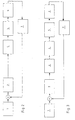
- FIG. 1 A simple control model of a driver without support systems is shown in Figure 1.
- the base size of this model is the running time t.
- All signals shown can be scalar or be vectorial (that is, multi-component) in nature (corresponding to also to understand the adder).
- Individual components can this type of representation also "looped through” the system blocks, the means to be passed through unchanged. The latter applies, for example, to the running time t.
- the input variable x 0 is the statically determined destination.
- Driver 5 and vehicle 6 form the forward branch. This assignment is based on the idea that the driver and vehicle form a unit with regard to their position and that the comparison of the input variables and the returned variables lies with the driver, which ultimately should remain in full control.
- the output variable of the forward branch is the current position x (t) of the vehicle, even if this cannot always be determined exactly.
- the configuration shown in FIG. 1 applies in principle to any driver who consciously steers his vehicle towards a specific destination and thereby compares his current position with his intended goal.
- FIG. 2 shows a system in which the driver 5 is automated Navigation is supported.
- the navigation leaves the driver the full freedom of choice, therefore only applies in cases of doubt ignoring instructions in driving. It lets itself through Inserting a location system 7, which shows the current position of the driver / vehicle determined, in the reverse branch, as well as by inserting a map matching module 2, which is the actual comparator in the control loop serves, and a routing module 4 in the forward branch before Represent driver 5.
- the "visual", of course, always in parallel Branch "of the driver is not shown to simplify the illustration.
- the location can be determined directly by vehicle sensors such as wheel sensors or GPS (Global Positioning System).
- the navigation system shown in Figure 2 is according to the invention adapted in a user-specific way that between the map matching module 2 and the router 4 a non-linear transmission module 3 is switched into the data stream.
- Acting in the example shown it is a neural network NN.
- the route search and selection of the route suggested by the driver take place in the system shown in FIG. 3 according to evaluation criteria, from the evaluations of those involved contained in database 1 Track elements (length, speed, road type etc.) won become.
- Track elements length, speed, road type etc.
- these ratings are based on an average driver tailored and therefore only provide an optimal route for such a route.
- different drivers rate differently, prefer or avoid certain types of roads differently or show different ones Average speeds on highways depending on the vehicle and driver temperament.
- a personalization of the route search or the route guidance is now possible in that the incoming into the routing module 4 Map data can be changed in their evaluation parameters. This happens through the transformation of the incoming parameter set (multi-dimensional Vector) by means of those implemented in the neural network 3 general transfer function.
- Output side of the neural Network 3 is a vector of the same or lower dimension, which the driver profile was stamped so that the router 4 with high Probability in the sense of the driver decides. You can by the neural network 3 includes several cost criteria on one only cost function are mapped, which are then processed by router 4 becomes. For example, a mapping of the cost criteria to the Speed evaluation done.
- the general transfer function between the map matching module 2 and the router 4 has the complexity of the system in accordance with the Usually a highly non-linear behavior. It also preferably has over a large number of free parameters. These parameters are advantageous empirically determined by learning in the manner explained below. The requirements mentioned are particularly good through the Use of a neural network 3 fulfilled as a transmission element.
- FIG 4 is the structure of the invention shown in Figure 3 Navigation system for the process of adapting the filter module 3 shown.
- the neural network 3 serving in this case as a filter should can be set so that the driver behavior matches the previous one Suggested routes.
- the behavior of driver 5 is at the output of the map matching module 2 visible and can be used as information for the training of the neural Network can be tapped.
- the primary routing module 4 with its upstream (primary) neural network 3 second identical subsystem of secondary router 9 and secondary neural network 8 operated.
- On the secondary filter module 8 a separate teach-in algorithm is used.
- the result of the secondary Routings are compared with the current driver behavior the learning algorithm is fed with the result of this comparison.
- you may have to add another Delay element (not shown) are switched before the teach branch.
- the training process of the neural network 8 consists of an ongoing one Variation of the parameters (synaptic link weights) according to known algorithms such as back propagation (Grandiose procedure). This adaptation continues until one to be determined Error threshold is fallen below or until the Process converges. This way you get one in the secondary branch Filter module 8, which reflects the individual driver profile. This Reference to a particular driver is added by those added Letters XY indicated.
- the first teaching of a filter 8 from the original state can be done so that the primary filter module 3 initially configured as an identical image. That is, the input data from the map matching module 2 unchanged to the primary router module 4 are passed on. During the subsequent operation of the navigation system is then carried out in the manner described above the adaptation of the secondary filter module 8. If a convergence of the secondary filter 8, its parameters can be applied to the primary filter 3 are transferred, with which the system is personalized for the first time, the means tailored to the driver XY.
- the secondary filter 8 is then permanently subjected to the learning process.
- the parameter transfer to the primary filter 3 can now every time when the primary filter 3 is no longer sufficient corresponds to driver behavior, which is directly recognized by primary router 4 becomes.
- the personalization obtained with the method described above of the navigation system relates to the overall behavior of the driver, without taking into account special local phenomena, because to do this, the entire road network traveled would have to be represented in the filter become.
- the parameter set of the filter implicitly becomes a user profile created.
- This parameter set can be stored on a mobile data carrier (for Example chip card, floppy disk) can be stored in order then in others Vehicles that are equipped with the same system continue to be used to be able to.
- driver identification With the use of individual driver profiles, preferably one Driver identification must be linked so that the system knows which one User just has to adjust it. Furthermore, the possibility be provided under various optimization criteria (for example Choice of the fastest or shortest routes) created profiles (parameter sets) save a user and use it if necessary. Further the possibility should be provided for the user if necessary always switch to normal, i.e. not personalized, operation.
- the system should interrupt the teaching process automatically or after querying the user, around the implicit statistics of the secondary filter Influencing information that is not typical user behavior correspond.
- the method described above can also be used in such cases in which individual components of the navigation system are outsourced. This can be the case with centrally supported, for example Navigation systems. If necessary, is for their integration bidirectional communication (for example GSM) is necessary.
- GSM global system
- the method according to the invention enables the navigation system to be adapted to the respective user without in-depth intervention into the existing components and without that the user must strive for this adjustment himself. Rather it will obtained the necessary information by observing his behavior.
Landscapes
- Engineering & Computer Science (AREA)
- Radar, Positioning & Navigation (AREA)
- Remote Sensing (AREA)
- Automation & Control Theory (AREA)
- Physics & Mathematics (AREA)
- General Physics & Mathematics (AREA)
- Navigation (AREA)
- Instructional Devices (AREA)
- Traffic Control Systems (AREA)
Abstract
Description
- Fig. 1
- eine regelungstechnische Darstellung eines nicht unterstützten Fahrvorganges;
- Fig. 2
- eine regelungstechnische Darstellung eines Navigationssystems;
- Fig. 3
- ein erfindungsgemäßes Navigationssystem mit einem zwischengeschalteten neuronalen Netz;
- Fig. 4
- ein Trainingsschema für das neuronale Netz nach Figur 3.
Claims (8)
- Navigationssystem enthaltend eine Straßenkarte (1) und ein hiermit zur Übertragung von Kartendaten gekoppeltes Routingmodul (4),
dadurch gekennzeichnet, dass zwischen der Straßenkarte und dem Routingmodul ein variables Filtermodul (3) angeordnet ist, welches die Kartendaten nutzerspezifisch transformiert. - Navigationssystem nach Anspruch 1,
dadurch gekennzeichnet, dass das Filtermodul (3) adaptiv ist. - Navigationssystem nach Anspruch 2,
dadurch gekennzeichnet, dass eine Kopie (8) des Filtermoduls vorhanden ist, an welcher außerhalb des aktiven Betriebs die Adaptation vorgenommen werden kann. - Navigationssystem nach einem der Ansprüche 2 oder 3,
dadurch gekennzeichnet, dass das Filtermodul ein neuronales Netzwerk (3) oder eine Fuzzy-Logic-Einheit ist. - Verfahren zur nutzerspezifischen Anpassung eines Navigationssystems mit einer Straßenkarte (1) und einem Routingmodul (4),
dadurch gekennzeichnet, dass die von der Straßenkarte zum Routingmodul übertragenen Kartendaten einer nutzerspezifischen Transformation (3) unterworfen werden. - Verfahren nach Anspruch 5,
dadurch gekennzeichnet, dass die Transformation (3) an das Nutzerverhalten adaptiert wird. - Verfahren nach Anspruch 6,
dadurch gekennzeichnet, dass die Adaptation der Transformation (8) über die Abweichung zwischen der vom Routingmodul (9) vorgeschlagenen und der tatsächlichen Fahrtroute erfolgt. - Verfahren nach einem der Ansprüche 5 bis 7,
dadurch gekennzeichnet, dass eine Kopie (8) der Transformation, die nicht im Navigationssystem im aktiven Betrieb steht, adaptiert wird und dass die im Navigationssystem aktive Transformation (3) in Zeitabständen durch die adaptierte Kopie (8) ersetzt wird.
Applications Claiming Priority (2)
| Application Number | Priority Date | Filing Date | Title |
|---|---|---|---|
| DE2000104163 DE10004163A1 (de) | 2000-02-01 | 2000-02-01 | Navigationssystem und Verfahren zur nutzerspezifischen Anpassung eines Navigationssystems |
| DE10004163 | 2000-02-01 |
Publications (3)
| Publication Number | Publication Date |
|---|---|
| EP1122517A2 true EP1122517A2 (de) | 2001-08-08 |
| EP1122517A3 EP1122517A3 (de) | 2004-02-11 |
| EP1122517B1 EP1122517B1 (de) | 2011-10-05 |
Family
ID=7629341
Family Applications (1)
| Application Number | Title | Priority Date | Filing Date |
|---|---|---|---|
| EP20010100872 Expired - Lifetime EP1122517B1 (de) | 2000-02-01 | 2001-01-16 | Navigationssystem und Verfahren zur nutzerspezifischen Anpassung eines Navigationssystems |
Country Status (3)
| Country | Link |
|---|---|
| EP (1) | EP1122517B1 (de) |
| JP (1) | JP2001249021A (de) |
| DE (1) | DE10004163A1 (de) |
Cited By (7)
| Publication number | Priority date | Publication date | Assignee | Title |
|---|---|---|---|---|
| US6920392B2 (en) | 2001-04-27 | 2005-07-19 | Matsushita Electric Industrial Co., Ltd. | Digital map position transfer method |
| US6931319B2 (en) | 2000-12-08 | 2005-08-16 | Matsushita Electric Industrial Co., Ltd. | Method for transmitting information on position on digital map and device used for the same |
| US7353108B2 (en) | 2001-01-29 | 2008-04-01 | Matsushita Electric Industrial Co., Ltd. | Method and apparatus for transmitting position information on a digital map |
| US7539348B2 (en) | 2001-05-01 | 2009-05-26 | Panasonic Corporation | Digital map shape vector encoding method and position information transfer method |
| US7634452B2 (en) | 1999-08-27 | 2009-12-15 | Panasonic Corporation | Method for locating road shapes using erroneous map data |
| US8260550B2 (en) | 2009-06-19 | 2012-09-04 | GM Global Technology Operations LLC | Presentation of navigation instructions using variable levels of detail |
| US8838386B2 (en) | 1999-07-28 | 2014-09-16 | Panasonic Intellectual Property Corporation Of America | Method for transmitting location information on a digital map, apparatus for implementing the method, and traffic information provision/reception system |
Families Citing this family (8)
| Publication number | Priority date | Publication date | Assignee | Title |
|---|---|---|---|---|
| JP4566844B2 (ja) * | 2005-07-01 | 2010-10-20 | 株式会社デンソー | ナビゲーションシステム、および、そのナビゲーションシステムに用いる記憶装置 |
| DE102005060132B4 (de) * | 2005-12-16 | 2016-05-25 | Bayerische Motoren Werke Aktiengesellschaft | Verfahren zur Anpassung einer Verkehrszustandserkennung und System zur Verkehrszustandserkennung |
| DE102007011274B4 (de) | 2007-03-08 | 2020-06-25 | Volkswagen Ag | Verfahren und Vorrichtung zum Steuern einer Anzeigevorrichtung in einem Fahrzeug |
| DE102007018525A1 (de) * | 2007-04-19 | 2008-10-23 | Genima Innovations Marketing Gmbh | Strassenkarte mit Zeit-Skalierung |
| DE102010040587A1 (de) * | 2010-09-10 | 2012-03-15 | Bayerische Motoren Werke Aktiengesellschaft | Navigationssystem und Verfahren zum Berechnen von Gesamtkosten einer Route |
| DE102012103630A1 (de) * | 2012-04-25 | 2013-10-31 | Hella Kgaa Hueck & Co. | Verfahren zum Einstellen des Schwenkwinkels von Kurvenlichtscheinwerfern eines Fahrzeugs |
| JP7341387B2 (ja) * | 2020-07-30 | 2023-09-11 | オムロン株式会社 | モデル生成方法、探索プログラム及びモデル生成装置 |
| DE102023132230A1 (de) * | 2023-11-20 | 2025-05-22 | Dr. Ing. H.C. F. Porsche Aktiengesellschaft | Verfahren und System zur Routenplanung unter Berücksichtigung einer Eventkategorie |
Citations (3)
| Publication number | Priority date | Publication date | Assignee | Title |
|---|---|---|---|---|
| WO1993009510A1 (en) | 1991-11-01 | 1993-05-13 | Motorola, Inc. | A vehicle route guidance system |
| WO1996039689A1 (en) | 1995-06-05 | 1996-12-12 | Smart Route Systems Limited Partnership | Information retrieval system for drivers |
| US5802492A (en) | 1994-06-24 | 1998-09-01 | Delorme Publishing Company, Inc. | Computer aided routing and positioning system |
-
2000
- 2000-02-01 DE DE2000104163 patent/DE10004163A1/de not_active Withdrawn
-
2001
- 2001-01-16 EP EP20010100872 patent/EP1122517B1/de not_active Expired - Lifetime
- 2001-01-31 JP JP2001023960A patent/JP2001249021A/ja not_active Withdrawn
Patent Citations (3)
| Publication number | Priority date | Publication date | Assignee | Title |
|---|---|---|---|---|
| WO1993009510A1 (en) | 1991-11-01 | 1993-05-13 | Motorola, Inc. | A vehicle route guidance system |
| US5802492A (en) | 1994-06-24 | 1998-09-01 | Delorme Publishing Company, Inc. | Computer aided routing and positioning system |
| WO1996039689A1 (en) | 1995-06-05 | 1996-12-12 | Smart Route Systems Limited Partnership | Information retrieval system for drivers |
Cited By (12)
| Publication number | Priority date | Publication date | Assignee | Title |
|---|---|---|---|---|
| US8838386B2 (en) | 1999-07-28 | 2014-09-16 | Panasonic Intellectual Property Corporation Of America | Method for transmitting location information on a digital map, apparatus for implementing the method, and traffic information provision/reception system |
| US7634452B2 (en) | 1999-08-27 | 2009-12-15 | Panasonic Corporation | Method for locating road shapes using erroneous map data |
| US8078563B2 (en) | 1999-08-27 | 2011-12-13 | Panasonic Corporation | Method for locating road shapes using erroneous map data |
| US6931319B2 (en) | 2000-12-08 | 2005-08-16 | Matsushita Electric Industrial Co., Ltd. | Method for transmitting information on position on digital map and device used for the same |
| US8086401B2 (en) | 2000-12-08 | 2011-12-27 | Panasonic Corporation | Method for transmitting information on position on digital map and device used for the same |
| US8655580B2 (en) | 2000-12-08 | 2014-02-18 | Panasonic Corporation | Method for transmitting information on position on digital map and device used for the same |
| US7353108B2 (en) | 2001-01-29 | 2008-04-01 | Matsushita Electric Industrial Co., Ltd. | Method and apparatus for transmitting position information on a digital map |
| US8185306B2 (en) | 2001-01-29 | 2012-05-22 | Panasonic Corporation | Method and apparatus for transmitting position information on a digital map |
| US6920392B2 (en) | 2001-04-27 | 2005-07-19 | Matsushita Electric Industrial Co., Ltd. | Digital map position transfer method |
| US9177487B2 (en) | 2001-04-27 | 2015-11-03 | Panasonic Intellectual Property Corporation Of America | Digital map position information transfer method |
| US7539348B2 (en) | 2001-05-01 | 2009-05-26 | Panasonic Corporation | Digital map shape vector encoding method and position information transfer method |
| US8260550B2 (en) | 2009-06-19 | 2012-09-04 | GM Global Technology Operations LLC | Presentation of navigation instructions using variable levels of detail |
Also Published As
| Publication number | Publication date |
|---|---|
| JP2001249021A (ja) | 2001-09-14 |
| EP1122517B1 (de) | 2011-10-05 |
| EP1122517A3 (de) | 2004-02-11 |
| DE10004163A1 (de) | 2001-08-02 |
Similar Documents
| Publication | Publication Date | Title |
|---|---|---|
| EP1272814B1 (de) | Verfahren zur routenplanung in einem navigationssystem | |
| EP1122517B1 (de) | Navigationssystem und Verfahren zur nutzerspezifischen Anpassung eines Navigationssystems | |
| DE102013019424B4 (de) | Verfahren zum Betrieb eines Fahrzeugsystems zur Überwachung eines Fahrers und Kraftfahrzeug | |
| EP3365741B1 (de) | Verfahren zur vollautomatischen führung eines fahrzeugsystems und kraftfahrzeug | |
| DE10354322B4 (de) | Verfahren und System zur Ermittlung der Fahrsituation | |
| DE102019002790B4 (de) | Verfahren zur Prädiktion einer Verkehrssituation für ein Fahrzeug | |
| WO2019154615A1 (de) | Verfahren zum auswählen eines fahrprofils eines kraftwagens, fahrassistenzsystem und kraftwagen | |
| DE102021201677B3 (de) | Verfahren und Fahrerassistenzsystem zum Unterstützen eines Kraftfahrzeugs beim Durchführen einer Kurvenfahrt | |
| EP3523168A1 (de) | Verfahren und vorrichtung zur fahrdynamikregelung für ein kraftfahrzeug | |
| DE102017212908B4 (de) | Verfahren zur Verbesserung der Quer- und/oder Längsführung eines Fahrzeugs | |
| DE102019214931A1 (de) | Steuerung eines Fahrzeugs | |
| DE102014212989A1 (de) | Steuern von Datenverbindungen und/oder Datenübertragungen in einer mobilen Funkeinrichtung | |
| DE102019214935A1 (de) | Steuerung eines Fahrzeugs | |
| EP4229361A1 (de) | Verfahren, computerprogramm und vorrichtung zum anpassen einer route | |
| DE102022212503A1 (de) | Verfahren und vorrichtung für kundenspezifisches autonomes fahren | |
| DE102018219290B4 (de) | Verfahren zum Anlernen einer personalisierten Scheinwerfereinrichtung eines Kraftfahrzeugs | |
| DE102017200436B4 (de) | Verfahren zum Betrieb eines Fahrerassistenzsystems eines Kraftfahrzeugs | |
| DE102019127974A1 (de) | Verfahren und System zum Bewerten eines Fahrverhaltens | |
| EP0898259A2 (de) | Verkehrsleitsystem | |
| DE102016013509A1 (de) | Vorrichtung und Verfahren zum Erzeugen einer lernenden digitalen Karte für ein Kraftfahrzeug | |
| EP4350660A1 (de) | System und verfahren zur prädiktion einer zukünftigen position eines verkehrsteilnehmers | |
| DE19806794C2 (de) | Navigationsgerät | |
| DE10159872B4 (de) | Verfahren und Anordnung sowie Computerprogramm mit Programmcode-Mitteln und Computerprogramm-Produkt zur Ermittlung einer Manöverinformation aus einem Satz von vorgebbaren Manöverinformationen für eine mobile Einheit unter Verwendung von Fuzzy-Logik | |
| WO2023138826A1 (de) | Verfahren zur ermittlung eines nutzerindividuellen fahrprofils für eine automatisierte fahrt eines fahrzeugs | |
| EP0813986A2 (de) | Verfahren zur Abstandsregelung für ein Fahrzeug |
Legal Events
| Date | Code | Title | Description |
|---|---|---|---|
| PUAI | Public reference made under article 153(3) epc to a published international application that has entered the european phase |
Free format text: ORIGINAL CODE: 0009012 |
|
| AK | Designated contracting states |
Kind code of ref document: A2 Designated state(s): AT BE CH CY DE DK ES FI FR GB GR IE IT LI LU MC NL PT SE TR |
|
| AX | Request for extension of the european patent |
Free format text: AL;LT;LV;MK;RO;SI |
|
| PUAL | Search report despatched |
Free format text: ORIGINAL CODE: 0009013 |
|
| AK | Designated contracting states |
Kind code of ref document: A3 Designated state(s): AT BE CH CY DE DK ES FI FR GB GR IE IT LI LU MC NL PT SE TR |
|
| AX | Request for extension of the european patent |
Extension state: AL LT LV MK RO SI |
|
| 17P | Request for examination filed |
Effective date: 20040811 |
|
| AKX | Designation fees paid |
Designated state(s): DE FR GB |
|
| 17Q | First examination report despatched |
Effective date: 20080415 |
|
| GRAP | Despatch of communication of intention to grant a patent |
Free format text: ORIGINAL CODE: EPIDOSNIGR1 |
|
| GRAS | Grant fee paid |
Free format text: ORIGINAL CODE: EPIDOSNIGR3 |
|
| GRAA | (expected) grant |
Free format text: ORIGINAL CODE: 0009210 |
|
| AK | Designated contracting states |
Kind code of ref document: B1 Designated state(s): DE FR GB |
|
| REG | Reference to a national code |
Ref country code: GB Ref legal event code: FG4D Free format text: NOT ENGLISH |
|
| REG | Reference to a national code |
Ref country code: DE Ref legal event code: R096 Ref document number: 50115966 Country of ref document: DE Effective date: 20111201 |
|
| PGFP | Annual fee paid to national office [announced via postgrant information from national office to epo] |
Ref country code: FR Payment date: 20120201 Year of fee payment: 12 |
|
| PGFP | Annual fee paid to national office [announced via postgrant information from national office to epo] |
Ref country code: GB Payment date: 20120124 Year of fee payment: 12 |
|
| PLBE | No opposition filed within time limit |
Free format text: ORIGINAL CODE: 0009261 |
|
| STAA | Information on the status of an ep patent application or granted ep patent |
Free format text: STATUS: NO OPPOSITION FILED WITHIN TIME LIMIT |
|
| 26N | No opposition filed |
Effective date: 20120706 |
|
| REG | Reference to a national code |
Ref country code: DE Ref legal event code: R097 Ref document number: 50115966 Country of ref document: DE Effective date: 20120706 |
|
| GBPC | Gb: european patent ceased through non-payment of renewal fee |
Effective date: 20130116 |
|
| REG | Reference to a national code |
Ref country code: FR Ref legal event code: ST Effective date: 20130930 |
|
| PG25 | Lapsed in a contracting state [announced via postgrant information from national office to epo] |
Ref country code: GB Free format text: LAPSE BECAUSE OF NON-PAYMENT OF DUE FEES Effective date: 20130116 Ref country code: FR Free format text: LAPSE BECAUSE OF NON-PAYMENT OF DUE FEES Effective date: 20130131 |
|
| PGFP | Annual fee paid to national office [announced via postgrant information from national office to epo] |
Ref country code: DE Payment date: 20150324 Year of fee payment: 15 |
|
| REG | Reference to a national code |
Ref country code: DE Ref legal event code: R119 Ref document number: 50115966 Country of ref document: DE |
|
| PG25 | Lapsed in a contracting state [announced via postgrant information from national office to epo] |
Ref country code: DE Free format text: LAPSE BECAUSE OF NON-PAYMENT OF DUE FEES Effective date: 20160802 |