EP1109100A2 - Verfahren zur Abarbeitung eines Daten-Ladeauftrags in einem Daten ver- und/oder bearbeitenden System - Google Patents
Verfahren zur Abarbeitung eines Daten-Ladeauftrags in einem Daten ver- und/oder bearbeitenden System Download PDFInfo
- Publication number
- EP1109100A2 EP1109100A2 EP00127173A EP00127173A EP1109100A2 EP 1109100 A2 EP1109100 A2 EP 1109100A2 EP 00127173 A EP00127173 A EP 00127173A EP 00127173 A EP00127173 A EP 00127173A EP 1109100 A2 EP1109100 A2 EP 1109100A2
- Authority
- EP
- European Patent Office
- Prior art keywords
- loading
- list
- order
- processing
- network element
- Prior art date
- Legal status (The legal status is an assumption and is not a legal conclusion. Google has not performed a legal analysis and makes no representation as to the accuracy of the status listed.)
- Granted
Links
Images

Classifications
-
- G—PHYSICS
- G06—COMPUTING OR CALCULATING; COUNTING
- G06F—ELECTRIC DIGITAL DATA PROCESSING
- G06F11/00—Error detection; Error correction; Monitoring
- G06F11/07—Responding to the occurrence of a fault, e.g. fault tolerance
- G06F11/14—Error detection or correction of the data by redundancy in operations
- G06F11/1402—Saving, restoring, recovering or retrying
- G06F11/1415—Saving, restoring, recovering or retrying at system level
- G06F11/1433—Saving, restoring, recovering or retrying at system level during software upgrading
Definitions
- the invention relates to a method for processing of a data load job according to the preamble of Claim 1.
- a method for processing a data load job which is also known as a batch job known. It is provided that the loading order processed using a so-called loading list is listed in which at least the system component that will receive the data to be loaded and in which the data component to be loaded is described is.
- Such loading orders are, for example in a computer, especially a computer network, executed. It can be provided be that new or updated software to individual System components or network elements should be transmitted. Of course only data can be transmitted that needed when running existing programs become. It would also be conceivable with such data loading jobs To run utilities. For example, it can be provided that of such a loading order in a system a backup of the type mentioned here stored data is started. Of course other utilities can also be processed or started with a Data load job should be executed. Under Data is therefore in connection with this registration Software components, utilities, data, Status information or the like understood.
- a disadvantage of this type of processing Batch jobs is that when an error occurs the loading list just processed, i.e. the loading order, possibly not or only incompletely is executed so that the data component to be loaded into the system component intended for this is not transmitted. This can cause it to Malfunctions are coming. However, it also arises Waiting times because, for example, uncertain for users is whether the load job is done properly was or not. To be sure you would have to then the loading order can be started again. It So there may be waiting times during which the system component without data, i.e. without function is. This is particularly disadvantageous if such loading orders outside of usage times, for example, automatically executed at night should be. Occurs during this time Malfunction, may occur at the next usage time cannot be said with certainty whether the loading orders were actually executed. Complex checks may therefore be necessary become.
- the method with the features of claim 1 has the advantage that certainty exists whether the load orders actually occurred have been carried out. Because the loading list, So the data load job, not one volatile memory is cached, and only after the loading process has been completed being removed from this memory can be very be easily checked whether the processing of the Loading order has been made. For example advantageously possible, not in this volatile memory "look up" whether a loading list is still cached or already was removed because the processing of the associated Loading order was made. would have done the loading job the loading list is located However, the load order can still be cached restarted manually or automatically. It is with the inventive method thus prevents uncertainty about the state of charge the system component.
- the complete loading list is not preferred cached, but for the loading list assign a name, preferably a file name, to the then cached. Is the loading order the name of the loading list from the Buffer deleted.
- a system component the loading order is actually complete is in training the invention provided that the loading order so often automatically processed or started until it is complete once was carried out. Occurs for example during the Processing of the loading order is an error in one System component, for example a power failure and then reactivate the Energy supply, so can not automatically volatile memory can be looked up whether the loading list or the associated name still is cached or not. It is still the loading order is cached automatically started again, so the loading list again worked off. This process is repeated until the load order has been completely executed is, so he then cached it can be removed. So is ensured in the method according to the invention, that loading orders are actually executed and the system component, which is the data component should actually be supplied had received.
- the loading list or their Name is transferred to an order list, whereby the job list in the non-volatile memory is filed. If there are several loading lists with your transfer the respective name to this order list, can be certain about it in a simple way which loading lists are processed because only the Loading orders are still there that have not yet have been carried out. A loading order will be complete executed, it is carried out from this list of orders away.
- the loading lists are preferred depending on their Sorted starting time in the order list. You can therefore read out depending on the time to the loading lists at the requested start time to process.
- the loading list management is therefore manageable. Of course you can the loading lists are also sorted according to other criteria become.
- the system is integrated into a network, at least has two network elements, the first Network element the system component receiving the loading order and the second network element is the System component processing loading order forms.
- the data component can thus start from the second network element transmitted to the first network element become.
- This first network element can, for example be a terminal of an overall system, where this terminal connected to a central unit which forms the second network element.
- the system preferably works as a telecommunications system, the first network element for example is a private branch exchange.
- this System on a third network element in which the loading list is created.
- the loading list can immediately before the start of the loading order to the second Network element are transmitted. However, this can also immediately after creating the second network element be transmitted.
- the loading list respectively their name is in the second network element saved in the job list. The transfer takes place the loading list to the second network element immediately before the start of the loading order at the same time the loading list or its name in the Job list cached. After processing of the loading order, the order list is updated, So the processed loading list respectively the associated name removed.
- the data component to be loaded can from the third network element to the second network element are transmitted.
- the loading order management and the order is issued. That means that the loading order management accordingly those specified in the individual loading lists Starting times decide which loading order must be processed, and that of the second Network element from the data component to be loaded the first network element is transmitted. The order issue is done from the second network element.
- the loading order management the order to be processed Assigns loading list, so that then too loading data component can be output, whereupon the order issue after complete processing of the loading order this is the loading order management reports back, so that the loading order management the completed loading list or can remove their names from the order list.
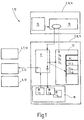
- Figure 1 shows a data processing and / or processing System, hereinafter referred to only as system 1 becomes.
- the system has several system components 2, 3, 4, 5 and 6 on one over here Network not shown connected together are.
- the system components 2, 3, 4, 5, 6 network elements, the system component 4 forms a first network element 7.
- the system component 3 is a second network element 8; the system component 2 forms a third network element 9.
- System 1 is preferably used as a telecommunications system 10 realized in which the third network element 9 is a so-called service PC 14.
- the second network element 8 forms the central unit 11 the telecommunications system 10.
- the first network element 7 can be an extension 12.
- the system components 5 and 6 can also be used as extensions 12 be formed.
- FIG. 1 shows that a load job L 5 is currently active for the system component 5, that is to say a data component D 5 is currently being transferred to the system component 5.
- an order list AL is created, in which loading lists are sorted.
- the names LL assigned to the loading lists are stored in the memory 13.
- Various data components D 4 to D 6 which are to be transmitted to the system components 4 to 6, can also be stored in the memory 13.
- the loading orders for the system components 4, 5, 6 are prepared in a method step 15.
- the loading lists preferably with the associated names LL 4 to LL 6 , are created.
- the loading orders which are also referred to as downloads, are then transmitted in a method step 16 from the service PC 14 to an order output 17 of the central unit 11.
- the respective start times for the loading orders L 4 to L 6 are read from the loading lists.
- the names LL 4 to LL 6 of the loading lists are transferred to the order list AL.
- the loading orders are stored and managed in a loading order management system 18. This is shown in FIG. 1 using the loading order L 6 .
- the charging order L 5 is currently active.
- the next load order L 4 to be processed is to be started depending on its start time when the load order L 5 has been processed.
- the order output 17 evaluates the order list AL after the power supply has been resumed and determines that the names LL 4 and LL 6 of the loading lists are still temporarily stored in the order list AL, that is to say must still be processed, as can be seen from FIG. 2.
- the order output 17 is initialized by the loading order management 18, whereupon the order output takes all the as yet unprocessed loading orders L 4 and L 6 from the order list AL using the names LL and starts as new loading orders L 4 and L 6 , so that the associated data components D 4 and D 6 can be transferred from the memory 13 to the associated system components 4 and 6.
- This process can be repeated any number of times until a loading order L has been started, completely processed and its loading list or list name LL has been removed from the order list AL. Because the list names LL are sorted in the order list AL, the loading orders L 4 to L 6 that are still to be processed can be restarted after the malfunction.
- the order output 17 or the loading order management 18 takes the list name and requests the associated loading list from the service PC 14. This is then transmitted to the central unit 11 again, so that the associated loading order L can be carried out.
- the method according to the invention therefore offers itself The following advantages:
- the service PC 14 must after a malfunction of the central unit 11 restart all loading jobs again, just those that have not yet been processed. Furthermore omitted tedious clean-up work in the store 13, which is preferably designed as a hard disk, such cleanups, for example Remove or delete, no longer needed Loading lists or log files that are no longer required are.
Landscapes
- Engineering & Computer Science (AREA)
- Theoretical Computer Science (AREA)
- Quality & Reliability (AREA)
- Physics & Mathematics (AREA)
- General Engineering & Computer Science (AREA)
- General Physics & Mathematics (AREA)
- Information Transfer Between Computers (AREA)
- Stored Programmes (AREA)
Abstract
Description
- Figur 1
- anhand eines Blockschaltbilds ein Verfahren zur Abarbeitung des Daten-Ladeauftrags,
- Figur 2
- anhand eines Blockschaltbilds eine automatische Abarbeitung eines Ladeauftrags.
Claims (13)
- Verfahren zur Abarbeitung eines Daten-Ladeauftrags in einem Daten ver- und/oder bearbeitenden System, wobei die Abarbeitung anhand einer Ladeliste erfolgt, die zumindest die den Ladeauftrag enthaltende Systemkomponente und die zu ladende Datenkomponente enthält, dadurch gekennzeichnet, dass während oder vor der Abarbeitung des Daten-Ladeauftrags (L4,L5,L6) in einem nicht flüchtigen Speicher (13) die Ladeliste (LL4,LL5,LL6) zwischengespeichert und erst nach vollständiger Abarbeitung des Ladeauftrags (L4,L5,L6) aus dem Speicher (13) entfernt wird.
- Verfahren nach Anspruch 1, dadurch gekennzeichnet, dass für die Ladeliste ein Listenname (LL4,LL5,LL6) vergeben wird, der in dem nicht flüchtigen Speicher (13) zwischengespeichert wird.
- Verfahren nach Anspruch 1 oder 2, dadurch gekennzeichnet, dass der Ladeauftrag (L4,L5,L6) so oft automatisch abgearbeitet beziehungsweise gestartet wird, bis er einmal vollständig ausgeführt ist.
- Verfahren nach einem der vorhergehenden Ansprüche, dadurch gekennzeichnet, dass die Ladeliste oder deren Listenname (LL4,LL5,LL6) in eine Auftragsliste (AL) übertragen wird, wobei die Auftragsliste (AL) in dem nicht flüchtigen Speicher (13) abgelegt ist.
- Verfahren nach Anspruch 4, dadurch gekennzeichnet, dass die Auftragsliste (AL) mehrere abzuarbeitende Ladelisten oder Listennamen (LL4,LL5,LL6) enthält.
- Verfahren nach einem der vorhergehenden Ansprüche, dadurch gekennzeichnet, dass die Ladeliste (LL4,LL5,LL6) einen Startzeitpunkt für den Ladeauftrag (L4,L5,L6) enthält.
- Verfahren nach einem der vorhergehenden Ansprüche, dadurch gekennzeichnet, dass die Ladelisten oder deren Listenname (LL4,LL5,LL6) in Abhängigkeit ihres Startzeitpunktes in der Auftragsliste (AL) einsortiert sind.
- Verfahren nach einem der vorhergehenden Ansprüche, dadurch gekennzeichnet, dass das Daten ver- und/oder bearbeitende System (1) in einem Netzwerk arbeitet, das zumindest zwei Netzelemente (3,4,5,6) enthält, wobei das erste Netzelement (4,5,6) die den Ladeauftrag (L4,L5,L6) erhaltende Systemkomponente (4,5,6) ist und das zweite Netzelement (3) die den Ladeauftrag (L4,L5,L6) abarbeitende Systemkomponente (8) bildet.
- Verfahren nach einem der vorhergehenden Ansprüche, dadurch gekennzeichnet, dass das System (1) als Telekommunikationsanlage (10) arbeitet.
- Verfahren nach einem der vorhergehenden Ansprüche, dadurch gekennzeichnet, dass ein drittes Netzelement (9) vorgesehen ist, in dem die Ladeliste (LL4,LL5,LL6) erstellt wird, dass die Auftragsliste (AL) in dem zweiten Netzelement (8) gespeichert ist und dass die Ladeliste oder deren Listenname (LL4,LL5,LL6) vom dritten Netzelement (9) in die Auftragsliste (AL) übertragen wird.
- Verfahren nach einem der vorhergehenden Ansprüche, dadurch gekennzeichnet, dass in dem zweiten Netzelement (8) die zu ladende Datenkomponente (D4,D5,D6) gespeichert ist.
- Verfahren nach einem der vorhergehenden Ansprüche, dadurch gekennzeichnet, dass in dem zweiten Netzelement (8) die Ladeauftragsverwaltung (18) und die Auftragsausgabe (17) erfolgt.
- Verfahren nach einem der vorhergehenden Ansprüche, dadurch gekennzeichnet, dass die Ladeauftragsverwaltung (18) der Auftragsausgabe (17) die abzuarbeitende Ladeliste (LL4,LL5,LL6) zuweist, dass die Auftragsausgabe (17) nach vollständiger Abarbeitung dies der Ladeauftragsverwaltung (18) zurückmeldet und dass die Ladeauftragsverwaltung (18) die abgearbeitete Ladeliste oder deren Listennamen (LL4,LL5,LL6) aus der Auftragsliste (AL) entfernt.
Applications Claiming Priority (2)
| Application Number | Priority Date | Filing Date | Title |
|---|---|---|---|
| DE19960985 | 1999-12-17 | ||
| DE1999160985 DE19960985A1 (de) | 1999-12-17 | 1999-12-17 | Verfahren zur Abarbeitung eines Daten-Ladeauftrags in einem Daten ver- und oder bearbeitenden System |
Publications (3)
| Publication Number | Publication Date |
|---|---|
| EP1109100A2 true EP1109100A2 (de) | 2001-06-20 |
| EP1109100A3 EP1109100A3 (de) | 2003-01-15 |
| EP1109100B1 EP1109100B1 (de) | 2012-10-17 |
Family
ID=7933093
Family Applications (1)
| Application Number | Title | Priority Date | Filing Date |
|---|---|---|---|
| EP20000127173 Expired - Lifetime EP1109100B1 (de) | 1999-12-17 | 2000-12-12 | Verfahren zur Abarbeitung eines Daten-Ladeauftrags in einem Daten ver- und/oder bearbeitenden System |
Country Status (2)
| Country | Link |
|---|---|
| EP (1) | EP1109100B1 (de) |
| DE (1) | DE19960985A1 (de) |
Family Cites Families (5)
| Publication number | Priority date | Publication date | Assignee | Title |
|---|---|---|---|---|
| JP3093541B2 (ja) * | 1993-11-19 | 2000-10-03 | 富士通株式会社 | プログラムおよびデータの版数管理を行う端末装置およびオンラインシステム |
| JPH086796A (ja) * | 1994-06-15 | 1996-01-12 | Nec Corp | ダウンロード方法、そのネットワークシステム、及びデータファイル更新方法 |
| US5754785A (en) * | 1995-04-27 | 1998-05-19 | General Datacomm | Communications network equipment |
| US5940074A (en) * | 1996-06-03 | 1999-08-17 | Webtv Networks, Inc. | Remote upgrade of software over a network |
| US6189147B1 (en) * | 1998-10-13 | 2001-02-13 | Hewlett-Packard Company | Apparatus and method for an installation recovery system |
-
1999
- 1999-12-17 DE DE1999160985 patent/DE19960985A1/de not_active Withdrawn
-
2000
- 2000-12-12 EP EP20000127173 patent/EP1109100B1/de not_active Expired - Lifetime
Also Published As
| Publication number | Publication date |
|---|---|
| DE19960985A1 (de) | 2001-06-21 |
| EP1109100A3 (de) | 2003-01-15 |
| EP1109100B1 (de) | 2012-10-17 |
Similar Documents
| Publication | Publication Date | Title |
|---|---|---|
| EP0525432B1 (de) | Verfahren zur Änderung von Systemkonfigurationsdatensätzen in einem Fernmeldevermittlungssystem | |
| DE68925182T2 (de) | Zuverlässige Anordnung zur Datenbankverwaltung | |
| EP0743595B1 (de) | Kommunikationssystem mit Mitteln zum Austausch von Software | |
| DE4235193C2 (de) | Netzwerksystem und zugehöriges Softwareverwaltungsverfahren | |
| DE69432332T2 (de) | Verfahren und Gerät zum Konvertieren von übertragenen digitalen Daten | |
| EP0849666B1 (de) | Verfahren zum Instantiieren einer versionsbehafteten Klasse | |
| DE69729399T2 (de) | Datenverwaltungssystem und Verfahren für replizierte Daten | |
| DE68926345T2 (de) | Datenverarbeitungsnetzwerk | |
| DE60220418T2 (de) | Verfahren und Anbieter zur Systemsynchronisation | |
| DE4125389C1 (de) | ||
| EP1430369B1 (de) | Dynamischer zugriff auf automatisierungsressourcen | |
| DE19607149A1 (de) | Verfahren zum rechnergestützten Abgleich mehrerer, in mindestens einem Rechner gespeicherten Dateikopien einer gespeicherten Datei | |
| EP1005216A2 (de) | Verfahren und Vorrichtung zur Validierung von Konfigurationsdaten für Telekommunikationssysteme | |
| EP1109100A2 (de) | Verfahren zur Abarbeitung eines Daten-Ladeauftrags in einem Daten ver- und/oder bearbeitenden System | |
| DE10206000A1 (de) | Installations-Server | |
| DE19930119C2 (de) | Prioritätsverwaltungsverfahren | |
| DE10115380A1 (de) | Verfahren zum Ändern eines Parameters eines Betriebssystems eines Computersystems | |
| EP1248430A1 (de) | Verfahren und Generierungsmodul zur Ermittlung von Filtermasken zur Relevanzprüfung von Kennzeichnern | |
| DE19850650C2 (de) | Verfahren zum Übertragen von Daten | |
| DE19845043C1 (de) | Verfahren und dessen Verwendung sowie Datenverarbeitungsvorrichtung zum Abgleichen von in verschiedenen Anwenderdateien gespeicherten Daten | |
| DE102012202382A1 (de) | Verfahren und Anordnung zur Verwaltung von Daten sowie ein entsprechendes Computerprogramm und ein entsprechendes computerlesbares Speichermedium | |
| DE10148877A1 (de) | Verfahren zum Verteilen von Daten in einem Datennetz | |
| EP1414591A1 (de) | Verfahren zum automatischen erzeugen von aktuellen verteilreihenfolgedaten | |
| DE102022000824A1 (de) | Verfahren zur werkerlosen Bearbeitung von Fahrzeugen in einer Automobilfertigung | |
| DE19829749A1 (de) | Verfahren zur Aktualisierung von Software und/oder Daten in verteilten Systemen |
Legal Events
| Date | Code | Title | Description |
|---|---|---|---|
| PUAI | Public reference made under article 153(3) epc to a published international application that has entered the european phase |
Free format text: ORIGINAL CODE: 0009012 |
|
| AK | Designated contracting states |
Kind code of ref document: A2 Designated state(s): AT BE CH CY DE DK ES FI FR GB GR IE IT LI LU MC NL PT SE TR |
|
| AX | Request for extension of the european patent |
Free format text: AL;LT;LV;MK;RO;SI |
|
| PUAL | Search report despatched |
Free format text: ORIGINAL CODE: 0009013 |
|
| AK | Designated contracting states |
Kind code of ref document: A3 Designated state(s): AT BE CH CY DE DK ES FI FR GB GR IE IT LI LU MC NL PT SE TR |
|
| AX | Request for extension of the european patent |
Free format text: AL;LT;LV;MK;RO;SI |
|
| RIC1 | Information provided on ipc code assigned before grant |
Free format text: 7G 06F 11/14 A, 7G 06F 9/445 B |
|
| 17P | Request for examination filed |
Effective date: 20030320 |
|
| 17Q | First examination report despatched |
Effective date: 20030502 |
|
| AKX | Designation fees paid |
Designated state(s): AT BE CH CY DE DK ES FI FR GB GR IE IT LI LU MC NL PT SE TR |
|
| GRAP | Despatch of communication of intention to grant a patent |
Free format text: ORIGINAL CODE: EPIDOSNIGR1 |
|
| GRAS | Grant fee paid |
Free format text: ORIGINAL CODE: EPIDOSNIGR3 |
|
| GRAA | (expected) grant |
Free format text: ORIGINAL CODE: 0009210 |
|
| AK | Designated contracting states |
Kind code of ref document: B1 Designated state(s): AT BE CH CY DE DK ES FI FR GB GR IE IT LI LU MC NL PT SE TR |
|
| REG | Reference to a national code |
Ref country code: GB Ref legal event code: FG4D Free format text: NOT ENGLISH |
|
| REG | Reference to a national code |
Ref country code: CH Ref legal event code: EP |
|
| REG | Reference to a national code |
Ref country code: IE Ref legal event code: FG4D Free format text: LANGUAGE OF EP DOCUMENT: GERMAN |
|
| REG | Reference to a national code |
Ref country code: AT Ref legal event code: REF Ref document number: 580168 Country of ref document: AT Kind code of ref document: T Effective date: 20121115 |
|
| REG | Reference to a national code |
Ref country code: DE Ref legal event code: R096 Ref document number: 50016269 Country of ref document: DE Effective date: 20121213 |
|
| REG | Reference to a national code |
Ref country code: NL Ref legal event code: VDEP Effective date: 20121017 |
|
| PG25 | Lapsed in a contracting state [announced via postgrant information from national office to epo] |
Ref country code: ES Free format text: LAPSE BECAUSE OF FAILURE TO SUBMIT A TRANSLATION OF THE DESCRIPTION OR TO PAY THE FEE WITHIN THE PRESCRIBED TIME-LIMIT Effective date: 20130128 Ref country code: FI Free format text: LAPSE BECAUSE OF FAILURE TO SUBMIT A TRANSLATION OF THE DESCRIPTION OR TO PAY THE FEE WITHIN THE PRESCRIBED TIME-LIMIT Effective date: 20121017 Ref country code: NL Free format text: LAPSE BECAUSE OF FAILURE TO SUBMIT A TRANSLATION OF THE DESCRIPTION OR TO PAY THE FEE WITHIN THE PRESCRIBED TIME-LIMIT Effective date: 20121017 Ref country code: SE Free format text: LAPSE BECAUSE OF FAILURE TO SUBMIT A TRANSLATION OF THE DESCRIPTION OR TO PAY THE FEE WITHIN THE PRESCRIBED TIME-LIMIT Effective date: 20121017 |
|
| PG25 | Lapsed in a contracting state [announced via postgrant information from national office to epo] |
Ref country code: PT Free format text: LAPSE BECAUSE OF FAILURE TO SUBMIT A TRANSLATION OF THE DESCRIPTION OR TO PAY THE FEE WITHIN THE PRESCRIBED TIME-LIMIT Effective date: 20130218 Ref country code: GR Free format text: LAPSE BECAUSE OF FAILURE TO SUBMIT A TRANSLATION OF THE DESCRIPTION OR TO PAY THE FEE WITHIN THE PRESCRIBED TIME-LIMIT Effective date: 20130118 Ref country code: CY Free format text: LAPSE BECAUSE OF FAILURE TO SUBMIT A TRANSLATION OF THE DESCRIPTION OR TO PAY THE FEE WITHIN THE PRESCRIBED TIME-LIMIT Effective date: 20121017 |
|
| BERE | Be: lapsed |
Owner name: TENOVIS G.M.B.H. & CO. KG Effective date: 20121231 |
|
| PG25 | Lapsed in a contracting state [announced via postgrant information from national office to epo] |
Ref country code: DK Free format text: LAPSE BECAUSE OF FAILURE TO SUBMIT A TRANSLATION OF THE DESCRIPTION OR TO PAY THE FEE WITHIN THE PRESCRIBED TIME-LIMIT Effective date: 20121017 Ref country code: MC Free format text: LAPSE BECAUSE OF NON-PAYMENT OF DUE FEES Effective date: 20121231 |
|
| REG | Reference to a national code |
Ref country code: CH Ref legal event code: PL |
|
| PLBE | No opposition filed within time limit |
Free format text: ORIGINAL CODE: 0009261 |
|
| STAA | Information on the status of an ep patent application or granted ep patent |
Free format text: STATUS: NO OPPOSITION FILED WITHIN TIME LIMIT |
|
| PG25 | Lapsed in a contracting state [announced via postgrant information from national office to epo] |
Ref country code: IT Free format text: LAPSE BECAUSE OF FAILURE TO SUBMIT A TRANSLATION OF THE DESCRIPTION OR TO PAY THE FEE WITHIN THE PRESCRIBED TIME-LIMIT Effective date: 20121017 |
|
| 26N | No opposition filed |
Effective date: 20130718 |
|
| REG | Reference to a national code |
Ref country code: IE Ref legal event code: MM4A |
|
| REG | Reference to a national code |
Ref country code: FR Ref legal event code: ST Effective date: 20130830 |
|
| PG25 | Lapsed in a contracting state [announced via postgrant information from national office to epo] |
Ref country code: BE Free format text: LAPSE BECAUSE OF NON-PAYMENT OF DUE FEES Effective date: 20121231 |
|
| PG25 | Lapsed in a contracting state [announced via postgrant information from national office to epo] |
Ref country code: LI Free format text: LAPSE BECAUSE OF NON-PAYMENT OF DUE FEES Effective date: 20121231 Ref country code: CH Free format text: LAPSE BECAUSE OF NON-PAYMENT OF DUE FEES Effective date: 20121231 Ref country code: IE Free format text: LAPSE BECAUSE OF NON-PAYMENT OF DUE FEES Effective date: 20121212 |
|
| REG | Reference to a national code |
Ref country code: DE Ref legal event code: R097 Ref document number: 50016269 Country of ref document: DE Effective date: 20130718 |
|
| PG25 | Lapsed in a contracting state [announced via postgrant information from national office to epo] |
Ref country code: FR Free format text: LAPSE BECAUSE OF NON-PAYMENT OF DUE FEES Effective date: 20130102 |
|
| PGFP | Annual fee paid to national office [announced via postgrant information from national office to epo] |
Ref country code: DE Payment date: 20131223 Year of fee payment: 14 Ref country code: GB Payment date: 20131217 Year of fee payment: 14 |
|
| REG | Reference to a national code |
Ref country code: AT Ref legal event code: MM01 Ref document number: 580168 Country of ref document: AT Kind code of ref document: T Effective date: 20121212 |
|
| PG25 | Lapsed in a contracting state [announced via postgrant information from national office to epo] |
Ref country code: TR Free format text: LAPSE BECAUSE OF FAILURE TO SUBMIT A TRANSLATION OF THE DESCRIPTION OR TO PAY THE FEE WITHIN THE PRESCRIBED TIME-LIMIT Effective date: 20121017 |
|
| PG25 | Lapsed in a contracting state [announced via postgrant information from national office to epo] |
Ref country code: LU Free format text: LAPSE BECAUSE OF NON-PAYMENT OF DUE FEES Effective date: 20121212 Ref country code: AT Free format text: LAPSE BECAUSE OF NON-PAYMENT OF DUE FEES Effective date: 20121212 |
|
| REG | Reference to a national code |
Ref country code: DE Ref legal event code: R119 Ref document number: 50016269 Country of ref document: DE |
|
| GBPC | Gb: european patent ceased through non-payment of renewal fee |
Effective date: 20141212 |
|
| PG25 | Lapsed in a contracting state [announced via postgrant information from national office to epo] |
Ref country code: DE Free format text: LAPSE BECAUSE OF NON-PAYMENT OF DUE FEES Effective date: 20150701 Ref country code: GB Free format text: LAPSE BECAUSE OF NON-PAYMENT OF DUE FEES Effective date: 20141212 |