EP1096824B1 - Method for authorising a communication between at least two devices, as well as such a device and a telecommunication system - Google Patents
Method for authorising a communication between at least two devices, as well as such a device and a telecommunication system Download PDFInfo
- Publication number
- EP1096824B1 EP1096824B1 EP99440291A EP99440291A EP1096824B1 EP 1096824 B1 EP1096824 B1 EP 1096824B1 EP 99440291 A EP99440291 A EP 99440291A EP 99440291 A EP99440291 A EP 99440291A EP 1096824 B1 EP1096824 B1 EP 1096824B1
- Authority
- EP
- European Patent Office
- Prior art keywords
- identification
- authorisation
- code
- case
- security level
- Prior art date
- Legal status (The legal status is an assumption and is not a legal conclusion. Google has not performed a legal analysis and makes no representation as to the accuracy of the status listed.)
- Expired - Lifetime
Links
- 238000000034 method Methods 0.000 title claims abstract description 59
- 238000004891 communication Methods 0.000 title claims description 9
- 238000013475 authorization Methods 0.000 claims abstract description 166
- 230000008569 process Effects 0.000 claims abstract description 41
- 230000008878 coupling Effects 0.000 abstract description 7
- 238000010168 coupling process Methods 0.000 abstract description 7
- 238000005859 coupling reaction Methods 0.000 abstract description 7
- 230000006870 function Effects 0.000 description 15
- 230000004044 response Effects 0.000 description 3
- 238000012790 confirmation Methods 0.000 description 2
- 206010042635 Suspiciousness Diseases 0.000 description 1
- 238000001514 detection method Methods 0.000 description 1
- 238000011161 development Methods 0.000 description 1
- 238000003780 insertion Methods 0.000 description 1
- 230000037431 insertion Effects 0.000 description 1
- 238000009434 installation Methods 0.000 description 1
Images
Classifications
-
- H—ELECTRICITY
- H04—ELECTRIC COMMUNICATION TECHNIQUE
- H04W—WIRELESS COMMUNICATION NETWORKS
- H04W12/00—Security arrangements; Authentication; Protecting privacy or anonymity
- H04W12/06—Authentication
-
- H—ELECTRICITY
- H04—ELECTRIC COMMUNICATION TECHNIQUE
- H04M—TELEPHONIC COMMUNICATION
- H04M1/00—Substation equipment, e.g. for use by subscribers
- H04M1/66—Substation equipment, e.g. for use by subscribers with means for preventing unauthorised or fraudulent calling
- H04M1/667—Preventing unauthorised calls from a telephone set
- H04M1/67—Preventing unauthorised calls from a telephone set by electronic means
- H04M1/673—Preventing unauthorised calls from a telephone set by electronic means the user being required to key in a code
-
- H—ELECTRICITY
- H04—ELECTRIC COMMUNICATION TECHNIQUE
- H04M—TELEPHONIC COMMUNICATION
- H04M1/00—Substation equipment, e.g. for use by subscribers
- H04M1/66—Substation equipment, e.g. for use by subscribers with means for preventing unauthorised or fraudulent calling
- H04M1/667—Preventing unauthorised calls from a telephone set
- H04M1/67—Preventing unauthorised calls from a telephone set by electronic means
- H04M1/675—Preventing unauthorised calls from a telephone set by electronic means the user being required to insert a coded card, e.g. a smart card carrying an integrated circuit chip
-
- H—ELECTRICITY
- H04—ELECTRIC COMMUNICATION TECHNIQUE
- H04W—WIRELESS COMMUNICATION NETWORKS
- H04W12/00—Security arrangements; Authentication; Protecting privacy or anonymity
- H04W12/08—Access security
-
- H—ELECTRICITY
- H04—ELECTRIC COMMUNICATION TECHNIQUE
- H04M—TELEPHONIC COMMUNICATION
- H04M1/00—Substation equipment, e.g. for use by subscribers
- H04M1/72—Mobile telephones; Cordless telephones, i.e. devices for establishing wireless links to base stations without route selection
- H04M1/724—User interfaces specially adapted for cordless or mobile telephones
-
- H—ELECTRICITY
- H04—ELECTRIC COMMUNICATION TECHNIQUE
- H04M—TELEPHONIC COMMUNICATION
- H04M2250/00—Details of telephonic subscriber devices
- H04M2250/08—Details of telephonic subscriber devices home cordless telephone systems using the DECT standard
Definitions
- the invention relates to a method for authorising a communication between at least two devices in a telecommunication system in dependence of an identification process.
- the known method is disadvantageous, inter alia, due to requiring this additional identification depending upon the range in which the wireless telephone is used. This is not user-friendly, due to this additional identification being required for each suspicious telephone call.
- said user identification process By firstly performing said user identification process, and then secondly performing said authorisation process comprising the checking of a larger authorisation phase/code in case of a negative identification and comprising the checking of a security level in case of a positive identification and comprising the checking of an average authorisation phase/code in case of a lower security level and comprising the checking of a smaller authorisation phase/code or no authorisation phase/code at all in case of a higher security level, said user identification process allows the avoiding of at least a part of said authorisation process, and the user-friendlyness is increased a lot, due to not requiring both processes for each suspicious call.
- the invention is based on the insight, inter alia, that when user-identification has taken place, at least a part of device-authorisation has become superfluous.
- the invention solves the problem, inter alia, of providing a method for coupling devices having a mutual confidential relationship in a user-friendly way without endangering the confidential character.
- the user identification process comprises the checking, if a user identification made in the past is still valid.
- the security level is checked in dependency of the kind of identification or of the person/user being identified.
- a preferred embodiment of the method according to the invention is characterised in that said lower security level corresponds with a code identification or a voice identification, with said higher security level corresponding with a smart card identification or a finger print identification.
- a further embodiment of the method according to the invention is characterised in that said larger authorisation phase/code corresponds with a first, second and third authorisation phase/code, with said average authorisation phase/code corresponding with the second and third authorisation phase/code, and with said smaller authorisation phase/code corresponding with the third authorisation phase/code.
- the invention further relates to a telecommunication system comprising a first device to be coupled to a second device, which telecommunication system comprises
- a preferred embodiment of the telecommunication system according to the invention is characterised in that said lower security level corresponds with a code identification or a voice identification, with said higher security level corresponding with a smart card identification or a finger print identification.
- Said prior art telecommunication system may further be an existing DECT-system, with said devices being DECT-devices, a first device in the form of one or more DECT-base-stations and/or one or more DECT-handsets and a second device in the form of another, new DECT-handset which is to be added to the existing DECT-system by inputting long manufacturer codes which are to be checked by said existing DECT-system.
- said telecommunication system is a car radio system, comprising a first device in the form of a car radio without a front, and a second device in the form of said front.
- said identification process could be realised by providing said first device (like for example a DECT-base-station and/or a DECT-handset) with a smart card reader or a keyboard for receiving a user-code or a voice recogniser or a finger print reader etc. for analysing a smart card or a user-code or voice or a finger print etc. for user identification purposes,
- said identification process could further be realised by using the identification between the motor-management-system and the ignition key.
- a further embodiment of the telecommunication system according to the invention is characterised in that said telecommunication system comprises a network coupled to said first device, with either said first device or said network comprising said identification receiver and with either said first device or said network comprising said processor.
- Said network can be located either at a first position at one side of said first device with said second device being at the other side of said first device (for example in case of both devices belonging to a DECT-system which is coupled to a Digital Home Network via a controller in the form of a gateway and/or server, or for example in case said first device is said controller in the form of a gateway and/or server of said Digital Home Network with said second device being one of the several devices of said Digital Home Network), or can be located at a second position between both devices (for example in case of said first device being a base-station (DECT/GSM/DCS/CTS etc.) with said second device being a handset (DECT/GSM/DCS/CTS etc.), or at both positions.
- a first network could be at said first location
- a second network could be at said second position.
- said authorisation process and said user identification process take place, whereby said authorisation receiver can be located either in said network or in one of said devices, whereby for each receiver located in said network it should not be excluded that (identification and/or authorisation) signals arrive via a device.
- said authorisation process and said user identification process take place, whereby said authorisation receiver can be located either in said network or in one of said devices, whereby for each receiver located in a device it should not be excluded that (identification and/or authorisation) signals arrive via a network.
- said authorisation process and said user identification process take place, whereby said authorisation receiver can be located either in said network or in one of said devices, whereby identification signals arrive via said first device, and whereby authorisation signals may arrive either via a network or via a device.
- said authorisation process and said user identification process take place, whereby said authorisation receiver can be located either in said network or in one of said devices, whereby identification signals arrive via a network, and whereby authorisation signals may arrive either via a network or via a device.
- identification processor a first, identification processor is used and that for said authorisation process a second, authorisation processor is used, whereby each one of them can be located as described before, thereby offering the possibilities and advantages as described before.
- the invention yet further relates to a first device to be coupled to a second device, which first device comprises
- a preferred embodiment of the first device according to the invention is characterised in that said low security level corresponds with a code identification or a voice identification, with said high security level corresponding with a smart card identification or a finger print identification.
- the larger authorisation phase/code corresponds with a first, second and third authorisation phase/code, the average authorisation phase/code corresponding with the second and third authorisation phase/code, and the smaller authorisation phase/code corresponding with the third authorisation phase/code.
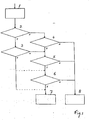
- the method according to the invention functions as follows.
- said first device is for example a DECT-base-station already coupled to a first handset, and a second device in the form of a second handset needs to be coupled to said system, for which authorisation is required (1), to prevent unauthorised colling.
- a user identity is checked (2), either by asking said user to identify himself (via smart card or code or voice or finger print etc.) or by checking a user identification made in the post but still valid.
- the security level is checked (3), which can be, for example, either high (smart card or finger print) or low (code or voice);
- the security level is checked (3), which can be, for example, either high (smart card or finger print) or low (code or voice);
- the security level is checked (3), which can be, for example, either high (smart card or finger print) or low (code or voice);
- a high level security either no further authorisation is required at all and devices may be coupled (7), for example wirelessly, to be used, or only the third authorisation phase/code needs to be checked (6), if correct, authorisation is ok and said devices may be coupled (7), for example wirelessly, to be used.
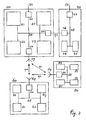
- the telecommunication system according to the invention disclosed in figure 2 comprises a first device 20 to be coupled to a second device 60 via a wireless connection 90 and coupled to a third device 80 via a wireless connection 91 and coupled to a fourth device 40 via a wired connection 93.
- Second device 60 and third device 80 could be coupled via a wireless connection 92.
- First device 20 comprises a bussystem 28 for coupling processor 21, memory 22, man-machine-interface 25 (like for example a keyboard/display), identification/authorisation processor 27, network interface 23 coupled to connection 30, system interface 26 coupled to connection 93, and transceiver 24 coupled to antennae 29 for said wireless connections 90 and 91.
- bussystem 28 for coupling processor 21, memory 22, man-machine-interface 25 (like for example a keyboard/display), identification/authorisation processor 27, network interface 23 coupled to connection 30, system interface 26 coupled to connection 93, and transceiver 24 coupled to antennae 29 for said wireless connections 90 and 91.
- Second device 60 comprises a bussystem 68 for coupling processor 61, memory 62, man-machine-interface 65 (like for example a keyboard/display), identification/authorisation processor 67, and transceiver 64 coupled to antennae 69 for said wireless connections 90 and 92.
- bussystem 68 for coupling processor 61, memory 62, man-machine-interface 65 (like for example a keyboard/display), identification/authorisation processor 67, and transceiver 64 coupled to antennae 69 for said wireless connections 90 and 92.
- Third device 80 comprises a bussystem 88 for coupling processor 81, memory 82, man-machine-interface 85 (like for example a keyboard/display), identification/authorisation processor 87, and transceiver 84 coupled to antennae 89 for said wireless connections 91 and 92.
- bussystem 88 for coupling processor 81, memory 82, man-machine-interface 85 (like for example a keyboard/display), identification/authorisation processor 87, and transceiver 84 coupled to antennae 89 for said wireless connections 91 and 92.
- Fourth device 40 comprises a bussystem 48 for coupling processor 41, memory 42, and network interface 43 coupled to connection 50.
- the telecommunication system according to the invention disclosed in figure 2 functions as follows.
- first device 20 is for example a DECT-base-station to be coupled to second device 60 which is for example a DECT-handset via wireless connection 90 and coupled to third device 80 which is for example a DECT-handset via wireless connection 91 and coupled to fourth device 40 which is for example a controller or a gateway/server of a Digital Home Network via connection 93.
- First device 20 and third device 80 already know each other (for example due to being bought together) and ore able to communicate with each other.
- First device 20 is coupled to fourth device 40 via connection 93, and could further be coupled to a network via connection 30.
- Second device 60 is new, and needs introduction and authorisation before it is able to communicate with for example first device 20.
- a user identity is checked (block 2 in figure 1), either by asking said user (which question for example could be shown on man-machine-interface 25 or could be asked by generating speech via a loudspeaker forming part of man-machine-interface 25) to identify himself (via a smart card to be read by a smart card reader forming part of man-machine-interface 25 or a code to be entered via man-machine-interface 25 or voice to be received via a microphone forming part of man-machine-interface 25 or a finger print to be read by a finger print reader forming part of man-machine-interface 25 etc.) or by checking a user identification made in the past but still valid.
- identification/authorisation processor 27 (possibly in cooperation with memory 22), whereby processor 21 in controls memory 22 and man-machine-interface 25 and (for example in response to said introduction-signal) activates and/or controls identification/authorisation processor 27.
- the security level is checked (block 3 in figure 1), which can be, for example, either high (in dependence of the kind of identification : smart card or finger print, or in dependence of the person being identified) or low (in dependence of the kind of identification : code or voice, or in dependence of the person being identified);
- a high level security either no further authorisation is required at all and devices may be coupled (block 7 in figure 1), or only the third authorisation phase/code needs to be checked (block 6 in figure 1), if correct, authorisation is ok and said devices may be coupled (block 7 in figure 1).
- man-machine-interface 25 instead of using man-machine-interface 25, for one or more of all described functions of man-machine-interface 25, man-machine-interface 65 (including a possible loudspeaker, smart cord reader, microphone, finger print reader etc.) is used, whereby signals will have to be exchanged via wireless connection 90.
- man-machine-interface 65 including a possible loudspeaker, smart cord reader, microphone, finger print reader etc.
- identification/authorisation processor 27 instead of using identification/authorisation processor 27, for one or more of all described functions of identification/authorisation processor 27, identification/authorisation processor 67 is used, whereby signals will have to be exchanged via wireless connection 90.
- identification/authorisation processor 27 (67) consists of two separate processors, an identification processor and an authorisation processor, whereby each one of them can be partly or completely integrated with processor 21 (61).
- said function is performed by device 40 (whereby signals will have to be exchanged via connection 93) or inside a network (whereby signals will have to be exchanged via connection 30 and/or 50).
- first device 20 is for example a controller or a gateway/server of a Digital Home Network or DHN and is coupled to fourth device 40 via connection 93, and could further be coupled to a network via connection 30.
- Fourth device 40 is for example a device belonging to said DHN, like a PC, TV, VRC, refrigerator, security system, etc., and could further be coupled to a network via connedion 50.
- Second device 60 is for example a DECT-base-station coupled to third device 80 which is for example a DECT-hondset via wireless connection 91.
- First device 20 and fourth device 40 already know each other (for example due to being bought together and/or due to being introduced to one another) and are able to communicate with each other.
- Second device 60 and third device 80 already know each other (for example due to being bought together), but in said DHN, the combination of device 60 and device 80 is new, and needs introduction and authorisation before this combination is able to communicate with for example first device 20.
- a user identity is checked (block 2 in figure 1), either by asking said user (which question for example could be shown on man-machine-interface 25 or could be asked by generating speech via a loudspeaker forming part of man-machine-interface 25) to identify himself (via a smart card to be read by a smart card reader forming port of man-machine-interface 25 or a code to be entered via man-machine-interface 25 or voice to be received via a microphone forming part of man-machine-interface 25 or a finger print to be read by a finger print reader forming part of man-machine-interface 25 etc.) or by checking a user identification made in the past but still valid.
- identification/authorisation processor 27 (possibly in cooperation with memory 22), whereby processor 21 in controls memory 22 and man-machine-interface 25 and (for example in response to said introduction-signal) activates and/or controls identification/authorisation processor 27.
- identification/authorisation processor 27 In case of a negative identification, all authorisation phases/codes need to be checked, if all three are correct, authorisation is ok and both devices 60 and 80 have been introduced to device 20 (block 7 in figure 1), if at least one is not correct, authorisation is not ok, devices are not to be coupled (block 8 in figure 1).
- the security level is checked, which can be, for example, either high or low.
- Said identification and/or authorisation could be done only once, for example to introduce a new device to an existing device/system, or regularly, for example each day or week, or each time said new device is to be used. Therefore, the generation of said introduction signal could be done by a user and/or automatically at any location possible.
- man-machine-interface 65 and/or 85 are used, whereby signals will have to be exchanged via wireless connection 90 and/or 91.
- identification/authorisation processor 27 instead of using identification/authorisation processor 27, for one or more of all described functions of identification/authorisation processor 27, identification/authorisation processor 67 and/or 87 is used, whereby signals will have to be exchanged via wireless connection 90 and/or 91.
- identification/authorisation processor 27 (67, 87) consists of two separate processors, an identification processor and an authorisation processor, whereby each one of them can be partly or completely integrated with processor 21 (61, 81).
- said function is performed by device 40 (whereby signals will have to be exchanged via connection 93) or inside a network (whereby signals will have to be exchanged via connection 30 and/or 50).
- both devices 60 and 80 need to be introduced to device 20 separately, or device 60 needs to be introduced to device 20, after which device 80 needs to be introduced to device 60 (in case they did not know each other and had not yet been introduced to one
- first device 20 is for example a GSM/DCS/CTS-base-station, coupled to fourth device 40 via connection 93, and could further be coupled to a network via connection 30.
- Fourth device 40 is for example a GSM/DCS/CTS-mobile-switching-center, and could further be coupled to a network via connection 50.
- Second device 60 is for example a GSM/DCS/CTS-handset. First device 20 and fourth device 40 already know each other (for example due to being introduced to one another) and are able to communicate with each other. Second device 60 is new, and needs introduction and authorisation before this device 60 is able to communicate with for example first device 20.
- a user identity is checked (block 2 in figure 1), either in/near device 20 (in case said user possibly will have to appear near device 20) by asking (which question for example could be shown on man-mochine-interface 25 or could be asked by generating speech via a loudspeaker forming part of man-machine-interface 25) to identify said user (via a smart card to be read by a smart card reader forming part of man-machine-interface 25 or a code to be entered via man-machine-interface 25 or voice to be received via a microphone forming part of mon-machine-interface 25 or a finger print to be read by a finger print reader forming part of man-machine-interface 25 etc.) or near device 60 (in case
- This identification process is for example managed by identification/authorisation processor 27 and/or 67 (possibly in cooperation with memory 22 and/or 62), whereby processor 21 and/or 61 controls memory 22 and/or 62 and man-machine-interface 25 and/or 65 and (for example in response to said introduction-signal) activates and/or controls identification/authorisation processor 27 and/or 67.
- a large authorisation phase/code for example chip-card present in handset + long code to be entered + small code to be entered
- device 60 has been introduced to device 20 (block 7 in figure 1), if not correct, authorisation is not ok, devices are not to be coupled (block 8 in figure 1).
- the security level is checked, which can be, for example, either high or low.
- the security level is checked, which can be, for example, either high or low.
- a high level security either no further authorisation is required at all and devices may be coupled (block 7 in figure 1), or only a small authorisation phase/code (for example small code to be entered) needs to be checked, if correct, authorisation is ok and said devices may be coupled (block 7 in figure 1).
- an overage authorisation phase/code for example chip card present in handset + small code to be entered or for example long code to be entered + small code to be entered
- an overage authorisation phase/code for example chip card present in handset + small code to be entered or for example long code to be entered + small code to be entered
- Said identification and/or authorisation could be done only once, for example to introduce a new device to an existing device/system, or regularly, for example each day or week, or each time said new device is to be used. Therefore, the generation of said introduction signal could be done by a user and/or automatically at any location possible.
- wireless connection 90 some particular communication via wireless connection 90 will be generally necessary before introduction has been completed to perform an identification and/or authorisation process.
- This particular communication could for example be allowed by a network manager for a limited amount of time and only for particular purposes and to particular addresses/destinations etc.
- identification/authorisation processor 27 (67) consists of two separate processors, an identification processor and an authorisation processor, whereby each one of them can be partly or completely integrated with processor 21 (61).
- said function is performed by device 40 (whereby signals will have to be exchanged via connection 93) or inside a network (whereby signals will have to be exchanged via connection 30 and/or 50), another) etc.
- first device 20 is for example a car radio without a front and to be coupled to fourth device 40 via connection 93.
- Fourth device 40 is for example said front.
- Second device 60 and third device 80 are for example transmitting radio stations.
- front 40 needs introduction/authorisotion before it is able to communicate with car radio 20 (without said front and said introdudion/authorisation said car radio cannot be used for receiving radio signals and/or playing cd's and cassette tapes). According to prior art, this was done by entering a keycode via man-machine-interface 25 and/or mon-machine-interface 45 not shown. This way for introducing two devices to one another is time-consuming and user-unfriendly.
- a user identity is checked, either in/near device 20 by asking (which question for example could be shown on man-machine-interfoce 25 or 45 not shown or could be asked by generating speech via a loudspeaker forming part of man-machine-interface 25 or 45 not shown) to identify said user (via for example voice to be received via a microphone forming part of man-machine-interface 25 or 45 not shown or a finger print to be read by a finger print reader forming part of man-machine-interface 25 or 45 not shown etc.) or by checking o user identification made in the past but still valid (for example the identification between the motor management system and the ignition key).
- This identification process is for example managed by identification/authorisation processor 27 and/or 47 not shown (possibly in cooperation with memory 22 and/or 42), whereby processor 21 and/or 41 controls memory 22 and/or 42 and man-machine-interface 25 and/or 45 not shown and activates and/or controls identification/authorisation processor 27 and/or 47 not shown.
- processor 21 and/or 41 controls memory 22 and/or 42 and man-machine-interface 25 and/or 45 not shown and activates and/or controls identification/authorisation processor 27 and/or 47 not shown.
- a negative identification voice/finger print unclear, or no ignition key coupled to motor management system
- said keycode needs to be checked, if correct, authorisation is ok and front 40 has been introduced to car radio 20 (block 7 in figure 1), if not correct, authorisation is not ok, devices are not to be coupled (block 8 in figure 1).
- a car can only be started in case of (for example but not necessarily) the right key being used, together with a long security code being entered, whereby according to the invention in case of a driver having identified himself positively, of said long security code only a part has still to be entered, or a completely different, shorter security code, or even no code at all.
- Said invention could further be extended with a detector for detecting a unit for identifying a user functioning properly or not, whereby in case of detection of said unit not functioning properly, automatically a unit for authorising is ordered to request full authorisation (instead of a partly authorisation after a positive identification).
Landscapes
- Engineering & Computer Science (AREA)
- Computer Security & Cryptography (AREA)
- Signal Processing (AREA)
- Computer Networks & Wireless Communication (AREA)
- Microelectronics & Electronic Packaging (AREA)
- Mobile Radio Communication Systems (AREA)
- Telephone Function (AREA)
- Communication Control (AREA)
- Small-Scale Networks (AREA)
- Radio Relay Systems (AREA)
- Radar Systems Or Details Thereof (AREA)
- Near-Field Transmission Systems (AREA)
Priority Applications (8)
| Application Number | Priority Date | Filing Date | Title |
|---|---|---|---|
| EP99440291A EP1096824B1 (en) | 1999-10-29 | 1999-10-29 | Method for authorising a communication between at least two devices, as well as such a device and a telecommunication system |
| DE69930237T DE69930237T2 (de) | 1999-10-29 | 1999-10-29 | Verfahren zum Erlauben der Kommunikation zwischen zwei Vorrichtungen, sowie solche Vorrichtung und ein Telekommunikationssystem |
| AT99440291T ATE320151T1 (de) | 1999-10-29 | 1999-10-29 | Verfahren zum erlauben der kommukation zwischen zwei vorrichtungen, sowie solche vorrichtung und ein telekommunikationssystem |
| ES99440291T ES2255751T3 (es) | 1999-10-29 | 1999-10-29 | Metodo para autorizar una comunicacion entre al menos dos dispositivos, asi como tal dispositivo y un sistema de telecomunicaciones. |
| CA002320547A CA2320547A1 (en) | 1999-10-29 | 2000-09-25 | Method for authorising a communication between at least two devices, as well as telecommunication system, as well as device |
| AU62462/00A AU6246200A (en) | 1999-10-29 | 2000-10-04 | Method for authorising a communication between atleast two devices, a well as telecommunication system, as well as device |
| JP2000305724A JP4806485B2 (ja) | 1999-10-29 | 2000-10-05 | 少なくとも2つの装置間の通信をオーソライズする方法、通信システム、および装置 |
| US09/688,710 US6622014B1 (en) | 1999-10-29 | 2000-10-17 | Method for authorizing a communication between at least two devices |
Applications Claiming Priority (1)
| Application Number | Priority Date | Filing Date | Title |
|---|---|---|---|
| EP99440291A EP1096824B1 (en) | 1999-10-29 | 1999-10-29 | Method for authorising a communication between at least two devices, as well as such a device and a telecommunication system |
Publications (2)
| Publication Number | Publication Date |
|---|---|
| EP1096824A1 EP1096824A1 (en) | 2001-05-02 |
| EP1096824B1 true EP1096824B1 (en) | 2006-03-08 |
Family
ID=8242388
Family Applications (1)
| Application Number | Title | Priority Date | Filing Date |
|---|---|---|---|
| EP99440291A Expired - Lifetime EP1096824B1 (en) | 1999-10-29 | 1999-10-29 | Method for authorising a communication between at least two devices, as well as such a device and a telecommunication system |
Country Status (8)
| Country | Link |
|---|---|
| US (1) | US6622014B1 (enExample) |
| EP (1) | EP1096824B1 (enExample) |
| JP (1) | JP4806485B2 (enExample) |
| AT (1) | ATE320151T1 (enExample) |
| AU (1) | AU6246200A (enExample) |
| CA (1) | CA2320547A1 (enExample) |
| DE (1) | DE69930237T2 (enExample) |
| ES (1) | ES2255751T3 (enExample) |
Families Citing this family (7)
| Publication number | Priority date | Publication date | Assignee | Title |
|---|---|---|---|---|
| US20020198994A1 (en) * | 2001-05-15 | 2002-12-26 | Charles Patton | Method and system for enabling and controlling communication topology, access to resources, and document flow in a distributed networking environment |
| JP2003091509A (ja) * | 2001-09-17 | 2003-03-28 | Nec Corp | 携帯通信機器の個人認証方法およびそれを記述したプログラム |
| JP2003263623A (ja) * | 2002-03-11 | 2003-09-19 | Seiko Epson Corp | 記録媒体、記録媒体の読取書込装置、及び記録媒体の使用方法 |
| US20040123147A1 (en) * | 2002-12-19 | 2004-06-24 | Christopher White | Control of security or ease-of-use sensitivity for a wireless communication device |
| US7526108B2 (en) * | 2003-02-11 | 2009-04-28 | Topaz Systems, Inc. | Wireless data management system |
| US10212683B2 (en) * | 2012-03-13 | 2019-02-19 | Dsp Group Ltd. | System for allowing registration of DECT devices |
| US9830603B2 (en) * | 2015-03-20 | 2017-11-28 | Microsoft Technology Licensing, Llc | Digital identity and authorization for machines with replaceable parts |
Family Cites Families (12)
| Publication number | Priority date | Publication date | Assignee | Title |
|---|---|---|---|---|
| US5274368A (en) * | 1991-02-15 | 1993-12-28 | Motorola, Inc. | Method and apparatus for controlling access to a communication system |
| IT1252191B (it) * | 1991-12-11 | 1995-06-05 | Delta Elettronica Spa | Apparecchiatura di sicurezza per un dispositivo elettronico ausiliariomontato su un mezzo di locomozione. |
| FI952146A7 (fi) * | 1995-05-04 | 1996-11-05 | Nokia Telecommunications Oy | Tilaajalaitteen käyttoikeuden tarkistus |
| FI101031B (fi) * | 1995-05-12 | 1998-03-31 | Nokia Telecommunications Oy | Tilaajalaitteen käyttöoikeuden tarkistus |
| US5737701A (en) * | 1995-10-03 | 1998-04-07 | At&T Corp. | Automatic authentication system |
| US5970405A (en) * | 1997-02-28 | 1999-10-19 | Cellular Technical Services Co., Inc. | Apparatus and method for preventing fraudulent calls in a wireless telephone system using destination and fingerprint analysis |
| TW338865B (en) * | 1997-06-03 | 1998-08-21 | Philips Eloctronics N V | Authentication system |
| US6466780B1 (en) * | 1997-09-03 | 2002-10-15 | Interlok Technologies, Llc | Method and apparatus for securing digital communications |
| US6157707A (en) * | 1998-04-03 | 2000-12-05 | Lucent Technologies Inc. | Automated and selective intervention in transaction-based networks |
| FR2785135B1 (fr) * | 1998-10-22 | 2000-12-29 | Sfr Sa | Procede de lancement d'une application par un terminal, sous commande d'un module d'identification d'abonne, module d'identification d'abonne et terminal correspondants |
| JP3589579B2 (ja) * | 1999-01-08 | 2004-11-17 | 株式会社日立製作所 | 生体認証装置及びその処理プログラムを記録した記録媒体 |
| JP2000259278A (ja) * | 1999-03-12 | 2000-09-22 | Fujitsu Ltd | 生体情報を用いて個人認証を行う認証装置および方法 |
-
1999
- 1999-10-29 AT AT99440291T patent/ATE320151T1/de not_active IP Right Cessation
- 1999-10-29 DE DE69930237T patent/DE69930237T2/de not_active Expired - Lifetime
- 1999-10-29 EP EP99440291A patent/EP1096824B1/en not_active Expired - Lifetime
- 1999-10-29 ES ES99440291T patent/ES2255751T3/es not_active Expired - Lifetime
-
2000
- 2000-09-25 CA CA002320547A patent/CA2320547A1/en not_active Abandoned
- 2000-10-04 AU AU62462/00A patent/AU6246200A/en not_active Abandoned
- 2000-10-05 JP JP2000305724A patent/JP4806485B2/ja not_active Expired - Fee Related
- 2000-10-17 US US09/688,710 patent/US6622014B1/en not_active Expired - Fee Related
Also Published As
| Publication number | Publication date |
|---|---|
| EP1096824A1 (en) | 2001-05-02 |
| JP2001177520A (ja) | 2001-06-29 |
| DE69930237T2 (de) | 2006-08-10 |
| US6622014B1 (en) | 2003-09-16 |
| ES2255751T3 (es) | 2006-07-01 |
| DE69930237D1 (de) | 2006-05-04 |
| CA2320547A1 (en) | 2001-04-29 |
| ATE320151T1 (de) | 2006-03-15 |
| AU6246200A (en) | 2001-05-03 |
| JP4806485B2 (ja) | 2011-11-02 |
Similar Documents
| Publication | Publication Date | Title |
|---|---|---|
| EP1145096B1 (en) | Mobile telephone auto pc logon | |
| US9572035B2 (en) | Method and apparatus for unlocking a mobile telephone type wireless communication terminal | |
| RU2111615C1 (ru) | Способ обеспечения блокировки абонирования для радиотелефона и способ управления доступом к радиотелефонной системе (варианты) | |
| US7505758B2 (en) | Apparatus and method for setting use restriction of mobile communication terminal | |
| EP1601216B1 (en) | Mobile communication terminal | |
| US20040198311A1 (en) | Method and system for processing a service access request for a mobile communication device | |
| US7689254B2 (en) | Motor vehicle mobile phone configuration and communication method | |
| US20080090548A1 (en) | Method for tracking mobile communication terminal | |
| EP1901577B1 (en) | Apparatus and method for controlling bluetooth in portable terminal | |
| US6741872B1 (en) | Method of authorizing access to a cellular mobile radio network from a simplified telephone and an associated mobile radio system and simplified telephone | |
| US20160214572A1 (en) | Telematics system with pin-controlled external sim to prevent vehicle piracy | |
| EP1063859B1 (en) | Mobile station adapted for removable user identity modules | |
| EP1096824A1 (en) | Method for authorising a communication between at least two devices, as well as such a device and a telecommunication system | |
| CN1477842B (zh) | 防止未经许可使用用户识别模块的方法 | |
| JP2003148017A (ja) | 錠装置、錠制御システム及び錠制御方法 | |
| US7406333B2 (en) | Method and apparatus for operating a blocked secure storage memory | |
| KR100726674B1 (ko) | 인증데이터 등록기능을 갖는 이동통신단말기 및 그인증데이터 등록방법 | |
| US20040198310A1 (en) | Method and apparatus for service access for a mobile communication device | |
| KR100591341B1 (ko) | 스마트 카드를 사용하여 사용자 인증이 가능한 이동통신단말기 및 인증방법 | |
| KR100293944B1 (ko) | 이동통신시스템에서휴대폰의사용자인증방법 | |
| JP2002315055A (ja) | 通信端末及び無線通信システム | |
| JP4347118B2 (ja) | 錠制御システム | |
| KR20020074314A (ko) | 이동 통신망에서 동일한 이에스엔과 유아이엠-아이디 구분방법 | |
| KR101408437B1 (ko) | 분실된 이동 통신 단말 추적 방법 | |
| KR20200054147A (ko) | 진성 메시지 판별을 이용한 결제 처리 방법 |
Legal Events
| Date | Code | Title | Description |
|---|---|---|---|
| PUAI | Public reference made under article 153(3) epc to a published international application that has entered the european phase |
Free format text: ORIGINAL CODE: 0009012 |
|
| AK | Designated contracting states |
Kind code of ref document: A1 Designated state(s): AT BE CH CY DE DK ES FI FR GB GR IE IT LI LU MC NL PT SE |
|
| AX | Request for extension of the european patent |
Free format text: AL;LT;LV;MK;RO;SI |
|
| 17P | Request for examination filed |
Effective date: 20010928 |
|
| AKX | Designation fees paid |
Free format text: AT BE CH CY DE DK ES FI FR GB GR IE IT LI LU MC NL PT SE |
|
| 17Q | First examination report despatched |
Effective date: 20020107 |
|
| GRAP | Despatch of communication of intention to grant a patent |
Free format text: ORIGINAL CODE: EPIDOSNIGR1 |
|
| GRAS | Grant fee paid |
Free format text: ORIGINAL CODE: EPIDOSNIGR3 |
|
| GRAA | (expected) grant |
Free format text: ORIGINAL CODE: 0009210 |
|
| AK | Designated contracting states |
Kind code of ref document: B1 Designated state(s): AT BE CH CY DE DK ES FI FR GB GR IE IT LI LU MC NL PT SE |
|
| PG25 | Lapsed in a contracting state [announced via postgrant information from national office to epo] |
Ref country code: NL Free format text: LAPSE BECAUSE OF FAILURE TO SUBMIT A TRANSLATION OF THE DESCRIPTION OR TO PAY THE FEE WITHIN THE PRESCRIBED TIME-LIMIT Effective date: 20060308 Ref country code: IT Free format text: LAPSE BECAUSE OF FAILURE TO SUBMIT A TRANSLATION OF THE DESCRIPTION OR TO PAY THE FEE WITHIN THE PRESCRIBED TIME-LIMIT;WARNING: LAPSES OF ITALIAN PATENTS WITH EFFECTIVE DATE BEFORE 2007 MAY HAVE OCCURRED AT ANY TIME BEFORE 2007. THE CORRECT EFFECTIVE DATE MAY BE DIFFERENT FROM THE ONE RECORDED. Effective date: 20060308 Ref country code: FI Free format text: LAPSE BECAUSE OF FAILURE TO SUBMIT A TRANSLATION OF THE DESCRIPTION OR TO PAY THE FEE WITHIN THE PRESCRIBED TIME-LIMIT Effective date: 20060308 Ref country code: BE Free format text: LAPSE BECAUSE OF FAILURE TO SUBMIT A TRANSLATION OF THE DESCRIPTION OR TO PAY THE FEE WITHIN THE PRESCRIBED TIME-LIMIT Effective date: 20060308 Ref country code: AT Free format text: LAPSE BECAUSE OF FAILURE TO SUBMIT A TRANSLATION OF THE DESCRIPTION OR TO PAY THE FEE WITHIN THE PRESCRIBED TIME-LIMIT Effective date: 20060308 |
|
| REG | Reference to a national code |
Ref country code: GB Ref legal event code: FG4D |
|
| REG | Reference to a national code |
Ref country code: CH Ref legal event code: EP |
|
| REG | Reference to a national code |
Ref country code: IE Ref legal event code: FG4D |
|
| REG | Reference to a national code |
Ref country code: CH Ref legal event code: NV Representative=s name: CABINET ROLAND NITHARDT CONSEILS EN PROPRIETE INDU |
|
| REF | Corresponds to: |
Ref document number: 69930237 Country of ref document: DE Date of ref document: 20060504 Kind code of ref document: P |
|
| PG25 | Lapsed in a contracting state [announced via postgrant information from national office to epo] |
Ref country code: SE Free format text: LAPSE BECAUSE OF FAILURE TO SUBMIT A TRANSLATION OF THE DESCRIPTION OR TO PAY THE FEE WITHIN THE PRESCRIBED TIME-LIMIT Effective date: 20060608 Ref country code: DK Free format text: LAPSE BECAUSE OF FAILURE TO SUBMIT A TRANSLATION OF THE DESCRIPTION OR TO PAY THE FEE WITHIN THE PRESCRIBED TIME-LIMIT Effective date: 20060608 |
|
| REG | Reference to a national code |
Ref country code: ES Ref legal event code: FG2A Ref document number: 2255751 Country of ref document: ES Kind code of ref document: T3 |
|
| PG25 | Lapsed in a contracting state [announced via postgrant information from national office to epo] |
Ref country code: PT Free format text: LAPSE BECAUSE OF FAILURE TO SUBMIT A TRANSLATION OF THE DESCRIPTION OR TO PAY THE FEE WITHIN THE PRESCRIBED TIME-LIMIT Effective date: 20060808 |
|
| ET | Fr: translation filed | ||
| NLV1 | Nl: lapsed or annulled due to failure to fulfill the requirements of art. 29p and 29m of the patents act | ||
| PG25 | Lapsed in a contracting state [announced via postgrant information from national office to epo] |
Ref country code: MC Free format text: LAPSE BECAUSE OF NON-PAYMENT OF DUE FEES Effective date: 20061031 Ref country code: IE Free format text: LAPSE BECAUSE OF NON-PAYMENT OF DUE FEES Effective date: 20061031 |
|
| PLBE | No opposition filed within time limit |
Free format text: ORIGINAL CODE: 0009261 |
|
| STAA | Information on the status of an ep patent application or granted ep patent |
Free format text: STATUS: NO OPPOSITION FILED WITHIN TIME LIMIT |
|
| 26N | No opposition filed |
Effective date: 20061211 |
|
| PG25 | Lapsed in a contracting state [announced via postgrant information from national office to epo] |
Ref country code: GR Free format text: LAPSE BECAUSE OF FAILURE TO SUBMIT A TRANSLATION OF THE DESCRIPTION OR TO PAY THE FEE WITHIN THE PRESCRIBED TIME-LIMIT Effective date: 20060609 |
|
| PG25 | Lapsed in a contracting state [announced via postgrant information from national office to epo] |
Ref country code: LU Free format text: LAPSE BECAUSE OF NON-PAYMENT OF DUE FEES Effective date: 20061029 |
|
| PG25 | Lapsed in a contracting state [announced via postgrant information from national office to epo] |
Ref country code: CY Free format text: LAPSE BECAUSE OF FAILURE TO SUBMIT A TRANSLATION OF THE DESCRIPTION OR TO PAY THE FEE WITHIN THE PRESCRIBED TIME-LIMIT Effective date: 20060308 |
|
| REG | Reference to a national code |
Ref country code: GB Ref legal event code: 732E Free format text: REGISTERED BETWEEN 20131114 AND 20131120 |
|
| REG | Reference to a national code |
Ref country code: FR Ref legal event code: GC Effective date: 20140717 |
|
| REG | Reference to a national code |
Ref country code: FR Ref legal event code: RG Effective date: 20141016 |
|
| PGFP | Annual fee paid to national office [announced via postgrant information from national office to epo] |
Ref country code: GB Payment date: 20141021 Year of fee payment: 16 Ref country code: CH Payment date: 20141021 Year of fee payment: 16 Ref country code: ES Payment date: 20141028 Year of fee payment: 16 Ref country code: FR Payment date: 20141022 Year of fee payment: 16 Ref country code: DE Payment date: 20141022 Year of fee payment: 16 |
|
| PGFP | Annual fee paid to national office [announced via postgrant information from national office to epo] |
Ref country code: IT Payment date: 20141028 Year of fee payment: 16 |
|
| REG | Reference to a national code |
Ref country code: DE Ref legal event code: R119 Ref document number: 69930237 Country of ref document: DE |
|
| REG | Reference to a national code |
Ref country code: CH Ref legal event code: PL |
|
| GBPC | Gb: european patent ceased through non-payment of renewal fee |
Effective date: 20151029 |
|
| PG25 | Lapsed in a contracting state [announced via postgrant information from national office to epo] |
Ref country code: LI Free format text: LAPSE BECAUSE OF NON-PAYMENT OF DUE FEES Effective date: 20151031 Ref country code: IT Free format text: LAPSE BECAUSE OF NON-PAYMENT OF DUE FEES Effective date: 20151029 Ref country code: GB Free format text: LAPSE BECAUSE OF NON-PAYMENT OF DUE FEES Effective date: 20151029 Ref country code: DE Free format text: LAPSE BECAUSE OF NON-PAYMENT OF DUE FEES Effective date: 20160503 Ref country code: CH Free format text: LAPSE BECAUSE OF NON-PAYMENT OF DUE FEES Effective date: 20151031 |
|
| REG | Reference to a national code |
Ref country code: FR Ref legal event code: ST Effective date: 20160630 |
|
| PG25 | Lapsed in a contracting state [announced via postgrant information from national office to epo] |
Ref country code: FR Free format text: LAPSE BECAUSE OF NON-PAYMENT OF DUE FEES Effective date: 20151102 |
|
| REG | Reference to a national code |
Ref country code: ES Ref legal event code: FD2A Effective date: 20170203 |
|
| PG25 | Lapsed in a contracting state [announced via postgrant information from national office to epo] |
Ref country code: ES Free format text: LAPSE BECAUSE OF NON-PAYMENT OF DUE FEES Effective date: 20151030 |