EP1083508A2 - Erstellung von Benutzerprofilen mit Hilfe von künstlicher Intelligentz - Google Patents
Erstellung von Benutzerprofilen mit Hilfe von künstlicher Intelligentz Download PDFInfo
- Publication number
- EP1083508A2 EP1083508A2 EP00307796A EP00307796A EP1083508A2 EP 1083508 A2 EP1083508 A2 EP 1083508A2 EP 00307796 A EP00307796 A EP 00307796A EP 00307796 A EP00307796 A EP 00307796A EP 1083508 A2 EP1083508 A2 EP 1083508A2
- Authority
- EP
- European Patent Office
- Prior art keywords
- user
- evidential
- common sense
- logic rules
- activity
- Prior art date
- Legal status (The legal status is an assumption and is not a legal conclusion. Google has not performed a legal analysis and makes no representation as to the accuracy of the status listed.)
- Withdrawn
Links
Images



Classifications
-
- G—PHYSICS
- G06—COMPUTING OR CALCULATING; COUNTING
- G06Q—INFORMATION AND COMMUNICATION TECHNOLOGY [ICT] SPECIALLY ADAPTED FOR ADMINISTRATIVE, COMMERCIAL, FINANCIAL, MANAGERIAL OR SUPERVISORY PURPOSES; SYSTEMS OR METHODS SPECIALLY ADAPTED FOR ADMINISTRATIVE, COMMERCIAL, FINANCIAL, MANAGERIAL OR SUPERVISORY PURPOSES, NOT OTHERWISE PROVIDED FOR
- G06Q30/00—Commerce
- G06Q30/02—Marketing; Price estimation or determination; Fundraising
Definitions
- the invention relates to an apparatus for and method of profiling user activity so as to predict future user activity.
- a system for automatically selecting among a plurality of alternative modes of an activity comprises an activity monitor input for receiving activity data characteristic of the activity and a user identifier input for defining which user is associated with current activity.
- An artificial intelligence engine comprising a predictive, user behaviour knowledge base holds a number of user profiles for the users of the system.
- the user profiles are defined by a set of evidential logic rules, referred to as given fact evidential logic rules in the following.
- the given fact evidential logic rules have associated fuzzy sets and weights personalised to each user to form the user profiles.
- the user behaviour knowledge base is operable in a predictive capacity to select for any user one among the plurality of alternative modes of activity by applying the given fact evidential logic rules held in the user profile of that user.
- the selection is made having regard to which alternative modes are currently available, as measured from the current activity data.
- the system preferably comprises a further knowledge base, referred to as the common sense knowledge base in the following, this further knowledge base having the function of refining the user behaviour knowledge base.
- the common sense knowledge base also has associated evidential logic rules with fuzzy sets and weights.
- the common sense evidential logic rules are operable in response to activity data and the user identifier to output common sense support values which, in use, are continually applied to modify the user profile of the currently active user by adjusting the fuzzy sets and/or the weights held in that user's profile for the given fact evidential logic rules, thereby to personalise the user profiles responsive to monitoring of each user's activity.
- the common sense fuzzy sets and weights are generic to all users and the common sense weights are fixed in use.
- the common sense evidential logic rules are configured to provide a measure of the current liking of the activity by the participating user.
- One application of the system is for automatically selecting among a plurality of alternative TV channels, the activity data then being a multi-channel television signal.
- the user behaviour knowledge base can select for any user one among the plurality of TV channels by applying the given fact evidential logic rules held in the user profile of that user.
- the common sense knowledge base is used to refine the given fact fuzzy sets and weights on the basis of monitoring the viewing habits of individual users. Users can log on to provide their user identifier by way of a television remote control, for example.
- artificial intelligence engine for example, for automatic selection among a plurality of alternative data files, in a search engine or as part of a web browser for automatically selecting web sites of interest.
- a method of predicting user activity comprising: measuring a user activity to provide user activity data; defining a plurality of given fact evidential logic rules with associated fuzzy sets and weights; and applying the given fact evidential logic rules to output given fact support values for predicting or selecting future user activity.
- the method of the second aspect preferably further comprises: defining a plurality of common sense evidential logic rules with associated fuzzy sets and weights; applying the common sense evidential logic rules to the user activity data to output common sense support values; and adjusting the fuzzy sets and/or the weights of the given fact evidential logic rules according to the common sense support values output from the common sense evidential logic rules.
- the given fact fuzzy sets are preferably initialised with maximum entropy and the common sense fuzzy sets are initialised with semantic meaning.
- the weights associated with the given fact fuzzy sets are preferably recalculated from time to time, either synchronously or asynchronously, according to entropy distribution, whereas the weights associated with the common sense fuzzy sets are kept fixed.
- the given fact evidential logic rules are preferably of a lower level of abstraction in that they follow from facts directly inferable from the user activity data, whereas the common sense evidential logic rules are preferably of a higher level of abstraction in that they drawn from a secondary analysis of users' subjective attitude to the activity.
- the secondary analysis may include statistics, psychology, social behaviour and/or expert opinion, for example.
- the common sense evidential logic rules may serve to quantify a user's current liking of the activity.
- the method of the second aspect of the invention is capable of implementing the same applications as the above-described system of the first aspect of the invention.
- FIG 1 is a schematic diagram of an artificial intelligence (AI) engine 10 which has an input for receiving an activity signal 12 derived from measurement of an activity 20.
- AI artificial intelligence
- the utility of the AI engine 10 is that it learns how better to predict future activity on the basis of analysis of the activity signal 12 for each user, the users being identified by a user identifier (i.d.) signal 15 supplied as an input to the AI engine 10.
- the AI engine 10 can be prompted by a predict prompt input 14 to output a prediction result 16.
- FIG. 2 shows the AI engine 10 in more detail.
- the activity is characterised by the activity signal 12, which may for example be a television (TV) signal.
- An activity monitor or attribute extraction unit 35 is arranged to tap or snoop the activity signal 12 through a data path 23.
- the activity attribute extraction unit 35 extracts activity data from the activity signal and outputs the activity data to each of two knowledge bases 30 and 40 which form the heart of the AI engine.
- Current activity is also associated with a specific user who is identified by a user i.d. supplied externally to the AI engine through a user identifier or login unit 25.
- the user may be a viewer or watcher of a TV and the login process may be performed through a remote control unit.
- the two knowledge bases 30 and 40 are a user behaviour knowledge base 30 and a common sense knowledge base 40.
- the role of the user behaviour knowledge base 30 is to implement prediction of future user activity
- the role of the common sense knowledge base 40 is to refine the performance of the user behaviour knowledge base 30. The refinement is implemented by monitoring each user's activities, drawing conclusions from this monitoring and using the conclusions to adjust parameters in the user behaviour knowledge base 30 through a feedback line 45.
- the user behaviour knowledge base 30 holds a number of user profiles, for example in a memory or non-volatile readable and writable medium. A user profile is maintain for each of the individual users.
- the user behaviour knowledge base 30 is built on given fact evidential logic rules (ELRs) with associated fuzzy sets and weights. The fuzzy sets or the weights, or both, can be personalised to each user, so that the user profiles for the different users will generally be different.
- the user behaviour knowledge base 30 is operable in its predictive capacity to select, for the currently logged-in user, one among a plurality of alternative modes of the activity.
- the activity signal 12 may include a large number of modes, all transmitted simultaneously.
- the activity signal 12 may be a TV signal carrying a number of different TV channels.
- the mode selection is performed by applying the given fact evidential logic rules using the personalised variable operands held in the user profile of that user.
- the common sense knowledge base 40 comprises a plurality of common sense evidential logic rules with associated fuzzy sets and weights.
- the common sense evidential logic rules are operable, in response to the activity data, received from the activity monitor unit 35, and the user identifier, received from the login unit 25, to output common sense support values Sup n . These support values are fed-back through data path 45 to modify the user profile of the currently active user by adjusting the fuzzy sets and/or the weights held in that user's profile for the given fact evidential logic rules.
- the user profiles are thus personalised responsive to the monitoring of each user's activity by the common sense knowledge base 40.
- the AI engine thus has a two tier structure.
- the user behaviour knowledge base 30 operates with given fact evidential logic rules that follow from facts directly inferable from the user activity data, whereas the common sense knowledge base operates with evidential logic rules that are drawn from a secondary analysis of users' subjective attitudes to the activity.
- the secondary analysis may include statistics, psychology, social behaviour or expert opinion, for example.
- the common sense evidential logic rules are set to measure user behaviour at a higher, subjective level, for example to provide a measure of emotions such as like and dislike in respect of the activity modes.
- Fril is described in the text "Fril-Fuzzy and Evidential Reasoning in Artificial Intelligence", J.F Baldwin, T.P. Martin, B.W. Pilsworth, Research Studies Press Ltd., John Wiley & Son , Inc. 1995.
- fuzzy rules accompanied by fuzzy sets, such as "his/her favourite TV station” with a fuzzy set to describe the station, and weights, such as "description of program content is more important than TV station for him/her", which can then be fed into the ELR of Fril.
- the fuzzy sets and weights serve as variables which are modified in a learning process. They will initially have setting that are universal for everyone. After the learning process, they will be personalised for individual users as the user's profile. (Alternatively the initial settings may be set according to user parameters such as age, sex, address and occupation).
- DAISP Distributed AI Service Provider
- BARB Broadcasters' Audience Research Board
- the BARB data provides a comprehensive day-to-day TV viewing record for a group of representable users and brief TV program listings in the United Kingdom, and is available from "BARB 1991 Service Format for Panel Viewing Data File”. March 1997, AGB Television, Westgate, London W5 1UA.. It will be understood that if the invention is embodied in, or for use with, a TV set, for example as part of a set-top box, the equivalent data will be logged from a user's viewing habits.
- the BARB data provides actual viewing facts, which can be taken into account for building fuzzy rules.
- the facts can be divided into two categories, one direct, another derived.
- the BARB data files consist of records which have fixed length.
- Three types of information are available, namely: (1) user information, such as age group, occupation, area of residence, etc; (2) all valid user watching sessions,; and (3) program information for all stations.
- the data on the user watching sessions includes data on (a) day of the week, (b) start time of the session, (c) duration of the session, and (d) station IDs of the stations the user watched in the session.
- the data on program information for all stations includes data on (a) title of a program; (b) start time/day of the program; (c) duration of the program; and (d) genre code of the program.
- ELRs There are two sets of ELRs.
- One set of ELRs is for given facts, originally obtained from BARB data. Initially, this set consists of maximum entropy fuzzy sets, weights and ELR rules. It covers things like program genre code, station, starting time, duration, days of the watching session, etc. That is these ELRs relate to things that can be obtained from BARB data without extra interpretation.
- Another set of ELRs is for common sense facts such as those listed in the last section. Some of the rules of common sense can be drawn based on statistics, some psychology, some by analogy on people's social belief and behaviour, some by expert opinion, etc..
- the weight set is assigned new values according to the entropies the fuzzy sets have, i.e. the weight set is the function of information usefulness measurement of the corresponding fuzzy sets (see for example "A Mathematical Theory of Evidence", 1976, Shafer G., Princeton University Press).
- the given facts become the user's profile.
- the weight set of the given facts fuzzy sets will be calculated on line, whenever they are needed, according to the entropy distribution of those fuzzy sets.
- those fuzzy sets belonging to the common sense facts will be kept fixed and weights will be maintained according to usefulness, i.e. the entropy of the corresponding fuzzy sets (see for example the above-referenced text by Shafer).
- ELRs of given facts are a jury to give a judgement on whether a program is to the user's taste or not in terms of a likingness value. While ELR of common sense facts serves as witnesses who provide evidence for the jury. i.e. its task is to influence jury's judgement in the outcome of its verdict.
- the given facts are formed by the following discrete fuzzy sets in the Fril-based system.
- the items of evidence here are based upon the programs the user has watched before and the behaviour of the user in the watching session.
- the behaviour can be translated and then evaluated by the common sense facts ELRs.
- the evaluation result will be reflected in the fuzzy sets and weight set of the given facts ELRs, which will be used as the user's profile. That is the learning process.
- the test process is done by feeding the given fact ELR with given fact program information.
- Each of the programs will be assigned a "likingness" value based on the result of the given fact ELR.
- the degree that he likes it i.e. the "likingness” value can be estimated by: (1) the duration he/she stays watching it; (2) how much he/she actually watched it; (3) what he/she did before and after watching it; and (4) how often he/she watched this sort of program in the past.
- Sw Sp Sw > Sp Sw ⁇ Sp
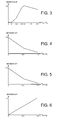
- Figure 3 illustrates schematically a fuzzy set defined to reflect the above ambiguous rules about "the more viewer watches the more viewer probably likes it".
- Ew Ep
- the whole program was watched. Since the user switched off the watching session at the time the program ended, it can be inferred that the user enjoyed the program. How much the user enjoyed the program could be determined by how long the user (viewer) waited for the program, i.e. ⁇ (Sw, Sp) and Dp. If the viewer watched the program soon after the viewer started his watching session, the program is to his taste. On the other hand, if the program started long after the watching session started, the viewer probably just watched it and let the time pass by, i.e. his interest in the program was less.
- Equation 2 the bigger value the value that Equation 2 has (> 1), the less interest the user had towards this program since the user spent a smaller amount of his watching session on the program.
- the smaller the value of Equation 4 the higher is the possibility that the user switched on the watching session for watching this program.
- Equation 5 A formula (namely Equation 5 below) can be used to measure the facts in terms of "likingness”.
- the corresponding fuzzy set is shown in Figure 5 which reflects the proposition "The viewer enjoys this program” in the case that the viewer watched more than this one program.
- P Ew>Ep (Sp - Sw) * Dw/Dp 2
- Equation 2 can be used to determine the likingness using the fuzzy set of Figure 3.
- Figure 6 shows a typical fuzzy set for it, reflecting the proposition: "The viewer enjoys this program when the viewer watched much of it. "
- the ELR is one of the built in fuzzy inference rules of Fril. It is based on probability, fuzzy logic, uncertainty theory and mass assignment, as described in the above-referenced text on Fril by Baldwin et al.
- the variables of an ELR are fuzzy sets and weights representing knowledge in the domain in question and the facts about the query.
- the output of an ELR is a number representing the support for the answer of the query.
- the following is an example syntax of an ELR predicate for getting a "likingness" value about a TV program for a user.
- Favourite_Station, Favourite_Genre_Code, Favourite_Watch_Time, Favourite_Watch_Day, Similar_description_words are fuzzy sets of Given Facts i.e. they are items of evidence about the user's viewing behaviour.
- W1, W2, W3, W4, W5 are weights for individual rules.
- fuzzy set Favourite Station can be the following, where the membership is a number in [0,1], i.e. membership ⁇ [0,1]:
- a likingness support i.e. predictive output value
- the support values are used to update fuzzy sets in the given fact ELRs. Fuzzy sets of given facts are used to give likingness support values when needed.
- the likingness support values for the programs the user watched will be used to increment those membership values of corresponding items in the fuzzy sets of given facts.
- the support values for programs, which were available during the watching session but the user didn't watch, will be used to decrement the membership value of the corresponding items.
- DAISP Distributed AI Service Provider
- DAISP DAISP The basic idea of DAISP is to make use of all available computer power in a networked environment and not to affect local users' activities. Distribution should be done whenever and wherever needed in a straight forward, effective, and simple way.
- the DAISP is a normal user level application. It does NOT require anything special from an existing operating system. In a Unix situation, it will run as long as the user has a valid account. In the Microsoft NT case, it will run on a normal NT workstation and it does not require special libraries apart from the Winsock.dll which is needed for networking under NT.
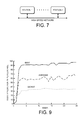
- Figure 7 shows a computer network comprising a plurality of Stations 1, 2,... n interconnected by a communication link. It is not a client/server architecture. There is no central server for the service so that there is no single point failure in the system. It is a network where individuals serve others and themselves if necessary. Sometimes, the stations work together to produce harmonious performance that is where the name chorus comes from. Individuals use the network as a stage to play on, to serve others, and to communicate/monitoring. It is possible for a station not to provide any service to others. In this case, it is a customer/listener only station. However, it is a part of the architecture.
- FIG. 8 shows internal structure of a station.
- the internal structure is made up of a number of interconnected modules, each of which are now described in turn.
- the Broadcast/Answer Module is the module to broadcast service requirements to the network.
- the requirement can be anything related to the task it is performing. For example, if a station wants to take on a task since it is the most suitable station to do the job, but found that there was a software module missing in its library, it could then broadcast the requirement for the piece of software.
- the answering part of the module includes information about its self-assessment of performance if it takes on the task and some basic station based information such as CPU power, benchmark, free memory, total memory, current load of the machine, etc.
- Some basic station based information such as CPU power, benchmark, free memory, total memory, current load of the machine, etc.
- security has to be checked to keep intruders away. Also, it has to check resources inside itself to make sure it can take on the task.
- the Self Assessment Module provides two kinds of self assessment or self evaluation, based on static and dynamic status.
- the static status information includes:
- the dynamic status information includes:
- Static status takes relatively long time to complete. It needs to be done only once when the DAISP is up and running first time after a hardware update. It is then saved as a file which can be used when needed. Dynamic status has very short life time, i.e. it is out of date soon after it is obtained. It will be obtained periodically and dispatched if needed immediately.
- the System Security Module guards a station running DAISP by every means. It can prevent answering malicious requirements and unreasonable task execution requirements. It can use encryption to protect the communication between stations. Normally, this is done on a trust basis. If a station is trusted in the DAISP, it will have the right to access whatever it can access under the operating system's discretion. For example, if a DAISP is run by a normal user (compared with privileged user), it will have access to the resources which a normal user can access. In the case of a normal UNIX box, it will have access to the user's own quota controlled harddisk, user ID priority governed CPU usage, etc. In a Microsoft NT environment, a normal user will have the right to access all shared hard disks on the network and user ID priority governed CPU usage. Care must be taken in the Microsoft case since a normal user has access to the network wide shared disks.
- the Task Execution, Monitoring, Reporting Module takes on a task and starts execution if necessary. It will broadcast status to the network. The purpose of doing this is that if the station fails in the middle of the execution, others will know about the task and its progress and take over. For example, if station a started a service and put up a message onto the network saying that "I am doing the task, it should finish by 21:10:35 and this information is updated at 21:10:10, and next update will be at 21:10:20", if it fails to update the message at 21:10:21, everybody on the network knows that something unexpected happened to a, then the capable station at the time can take on the task and inform the network about its action. This will guarantee the quality of the service.
- the Task Scheduler Module maintains a tasks' and stations' priority scheme which governs the task execution priority in the station. It will monitor all tasks in the station including local tasks, which are the tasks initiated locally and foreign tasks, which are created by remote DAISP users. For example, if a local user starts a task, say Microsoft word, the Task scheduler module has to act quickly to suspend some of the foreign tasks in order to release enough resources, say CPU power, back to the local resources pool. It will guarantee that the local user will not be affected by any foreign tasks running in the machine. That will encourage users to participate the DAISP scheme.
- the Service Requirement Analysis Module does extra work after finishing a service and provides information about performance and possible improvement. It maintains the redistributable software resource repository inside of the station. For example, if a software module was not used for a long time, it can ask others to have it. If nobody wants it, it can put it into a software dump place. If it finds out there exists a new version of a software, it can update the software collection of the station by grabbing it through internet and let other station know it.
- the Service/Performance History Learning Analysis Module is concerned with the history of the station. Its main task is to optimise the station so that it can service the network better. It will try to find bottlenecks for different tasks and will bring these to the attention of the system administrators if it can not solve it itself.
- the Task Failure Management Module deals with both failure of itself and other stations in the network. If it fails to do something, it will put a requirement up to the network for solution. If it found somebody else's failure such as mentioned in the "Task execution, monitoring, reporting module" section, it will see whether it can take on the task. If it can, it will broadcast the response and wait a while for answers. If nobody answers before timeout, it will start to continue the services.
- the Assistance Service Module works as a bridge to other modules, for example, as a intermediate delivery station for a long distance material transfer. Or, it can be treated as sub-service to other service stations.
- the Service Modules are the modules that do the actual service jobs. They can be any services such as AI service for user habit catching, analysis and predicting, video streaming services, streaming convergence services, etc.. Certain service modules can be inside of "Redistributable software resource repository”. They could be relocated to somewhere else in order to serve customers better.
- the experimental system is based on the above described embodiment, but without the linguistic part of ELR. It runs on a Linux system and includes:
- the learning and testing conditions are:
- the result of the experimented system is based on learning and testing of 660 subjects for 26 weeks.
- the execution time is less then 50 minutes on a dual Pentium II 350MHz PC.
- the procedure is: learning 1st week, predicting 2nd week, learning 2nd week, predicting 3rd week, learning 3rd week, predicting 4th week ... etc.
- the result of correct prediction ranging between 30% to 93% for individuals with average of more than 50%.
- Figure 9 shows the averaged result for all subjects. It shows that after a week of learning, under the condition that in the 1st week the viewer had watched some programs which viewer was interested, the system can make fairly good prediction. Also, the accuracy has an increasing trend as more learning is carried out.
- the prototype system is designed and implemented so that all users are assigned the same initial fuzzy sets for both ELRs (the given facts and the common sense facts) and weights associated with them.
- the on-line weights calculation is identical for all users.
- Analysing the result of individuals shows that the system can predict with little error for those users who have a clear pattern to follow. Meanwhile, the system is not doing so well for those individual users without a clear viewing pattern.
- DAISP Distributed AI Service Provider
- the current example system can predict, with reasonable accuracy, what the user would like to watch given the history of the user's watching habits and available programs.
- the DAISP provides a good solution for many networked applications, not just the present AI engine.
- the "Chorus" distributed system architecture can provide a more robust and reliable service in many areas.
- FIG 10 shows a home system including a TV and video recorder (VCR) unit 5 arranged to receive a multi-channel TV signal 12 obtained from a receiver 70, such as a digital decoder or set-top box.
- the TV/VCR 5 includes an AI engine as described hereinabove and a remote control I/O device 50.
- the TV/VCR 5 operates in conjunction with a remote control unit 60 which includes dedicated buttons designated LOGIN, AUTO-VIEW and AUTO-VCR, or functional equivalents thereof.
- the LOGIN button is used for the user to provide his or her user i.d. to the system and the AUTO- buttons prompt further predictive functions that are now described.
- Figure 11 shows a conventional operational mode in which TV channel selection in the TV/VCR 5 is made on the basis of a channel select signal received from the remote control unit 60.
- Figure 12 shows the AUTO-VIEW functionality in which the signal following from depression of the AUTO-VIEW button is recognised and, in response thereto, the user behaviour knowledge base 30 is prompted with a prompt signal 14.
- the user behaviour knowledge base 30 outputs a result 16 in the form of an automatic channel selection of the channel that the AI engine concludes the user concerned is most likely to want to watch among the available programs being broadcast on all the TV channels.
- Figure 13 shows the AUTO-VCR mode.
- the user identifies himself or herself and specifies a period of absence during which TV viewing will not be possible.
- the operands are thus user i.d. U n , absence start time As and absence finish time A f .
- the user behaviour knowledge base 30 is then prompted to predict from TV schedules a selection of programs to record over the period of absence.
- the TV schedules may be available already at the home system, or the AUTO-VCR command may itself prompt downloading of this information to the home system.
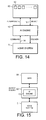
- FIG 14 shows a virtual record store application.
- a remote server 80 stores a large number of data files in the form of digital audio files 82, e.g. albums.
- a home system network terminal 5 is used to command an AI engine 10 as hereinbefore described to select a music recording from the virtual record store server 80.
- the AI engine is preferably local to the home system network, locally storing the user's profile in respect of musical taste which may be built up, for example, from snooping a hifi-system networked to the home system.
- the user may further specify the selection to be made on a specific genre sub-set of the user's normal range of listening, thus allowing the user to buy a new dance album, or classical album, for example.
- Figure 15 shows a web browser application.
- the AI engine 10 as hereinbefore described is incorporated in a search engine 90 to allow a home system user terminal 5 to find interesting new websites in the web 95 for a user based on an analysis of the attributes of existing favourites and other past behaviour.
- the AI engine of the TV/VCR home system application can also be used as the core of a TV scheduling modeller.
- a TV channel retains a database of user profiles which provide a comprehensive record of the viewing habits of a statistically valid group of viewers.
- the TV channel can then run a simulation of the effect of showing a dummy program schedule.
- the task may be to decide when to show a new documentary series. There may be say four available time slots, each at different times of the day and different days of the week. Another example, would be to predict the effect of moving an established program to a later time or a different day. In this way, the optimum broadcast time can be determined on the basis of the predicted viewing figures.
- the TV channel can predict which individuals will be watching a particular show, and thus obtain a composite profile of the viewer groups who are predominantly watching the show, for example in terms of age, sex and social group. This information can be used better to target advertising content during the commercial breaks.
- a strength of the modelling is that it takes account of what programs rival TV channels will be showing at the same time, based on pre-existing knowledge of the future scheduling of the rival channels.
- the embodiments described above may use dedicated hardware, programmable logic such as application specific integrated circuits (ASICs) or field programmable gate arrays (FPGAs), software or combinations of these.
- the software may be carried by a carrier medium such as a storage medium and/or a transmission medium.
Landscapes
- Business, Economics & Management (AREA)
- Strategic Management (AREA)
- Engineering & Computer Science (AREA)
- Accounting & Taxation (AREA)
- Development Economics (AREA)
- Finance (AREA)
- Economics (AREA)
- Game Theory and Decision Science (AREA)
- Entrepreneurship & Innovation (AREA)
- Marketing (AREA)
- Physics & Mathematics (AREA)
- General Business, Economics & Management (AREA)
- General Physics & Mathematics (AREA)
- Theoretical Computer Science (AREA)
- Information Retrieval, Db Structures And Fs Structures Therefor (AREA)
- Management, Administration, Business Operations System, And Electronic Commerce (AREA)
Applications Claiming Priority (2)
| Application Number | Priority Date | Filing Date | Title |
|---|---|---|---|
| GB9921231A GB2354089B (en) | 1999-09-08 | 1999-09-08 | Artificial intelligence user profiling |
| GB9921231 | 1999-09-08 |
Publications (1)
| Publication Number | Publication Date |
|---|---|
| EP1083508A2 true EP1083508A2 (de) | 2001-03-14 |
Family
ID=10860576
Family Applications (1)
| Application Number | Title | Priority Date | Filing Date |
|---|---|---|---|
| EP00307796A Withdrawn EP1083508A2 (de) | 1999-09-08 | 2000-09-08 | Erstellung von Benutzerprofilen mit Hilfe von künstlicher Intelligentz |
Country Status (3)
| Country | Link |
|---|---|
| EP (1) | EP1083508A2 (de) |
| JP (1) | JP2001134706A (de) |
| GB (1) | GB2354089B (de) |
Cited By (6)
| Publication number | Priority date | Publication date | Assignee | Title |
|---|---|---|---|---|
| US7890653B2 (en) | 2003-05-26 | 2011-02-15 | Panasonic Corporation | Operation history utilization system |
| GB2482153A (en) * | 2010-07-21 | 2012-01-25 | Marc Iain Davies | Virtual or smart environment behaviour profile generation |
| US9679068B2 (en) | 2010-06-17 | 2017-06-13 | Microsoft Technology Licensing, Llc | Contextual based information aggregation system |
| CN107045291A (zh) * | 2016-02-05 | 2017-08-15 | 中国电信股份有限公司 | 智能终端控制规则的形成方法、装置和系统 |
| US10284572B2 (en) | 2014-03-14 | 2019-05-07 | Fujitsu Limited | Management method, management device, and management program |
| US12429948B2 (en) | 2021-04-12 | 2025-09-30 | Toyota Research Institute, Inc. | Systems and methods for selectively communicating to a user via a system 1 or system 2 channel |
Families Citing this family (13)
| Publication number | Priority date | Publication date | Assignee | Title |
|---|---|---|---|---|
| JP3654349B2 (ja) | 2001-07-09 | 2005-06-02 | ソニー株式会社 | コンテンツ嗜好度算出方法およびコンテンツ受信装置 |
| US7243105B2 (en) | 2002-12-31 | 2007-07-10 | British Telecommunications Public Limited Company | Method and apparatus for automatic updating of user profiles |
| ES2450590T3 (es) | 2003-03-18 | 2014-03-25 | Pace Plc | Selección de elementos de programa dependiendo de un periodo de tiempo en el que los elementos de programa deben ser grabados |
| US7549125B2 (en) * | 2003-10-23 | 2009-06-16 | Microsoft Corporation | Information picker |
| CN1629884A (zh) * | 2003-12-15 | 2005-06-22 | 皇家飞利浦电子股份有限公司 | 一种信息推荐系统及方法 |
| JP4828233B2 (ja) * | 2006-01-12 | 2011-11-30 | シャープ株式会社 | 番組処理装置、番組処理方法、番組処理プログラムおよびコンピュータ読取り可能な記録媒体 |
| JP2007265341A (ja) | 2006-03-30 | 2007-10-11 | Sony Corp | コンテンツ利用方法、コンテンツ利用装置、コンテンツ記録方法、コンテンツ記録装置、コンテンツ提供システム、コンテンツ受信方法、コンテンツ受信装置およびコンテンツデータフォーマット |
| JP2010130585A (ja) * | 2008-11-28 | 2010-06-10 | Video Research:Kk | 視聴率予測装置および視聴率予測プログラム |
| US20110153343A1 (en) * | 2009-12-22 | 2011-06-23 | Carefusion 303, Inc. | Adaptable medical workflow system |
| US10984034B1 (en) | 2016-10-05 | 2021-04-20 | Cyrano.ai, Inc. | Dialogue management system with hierarchical classification and progression |
| CN110019837B (zh) * | 2017-12-22 | 2021-07-16 | 百度在线网络技术(北京)有限公司 | 用户画像的生成方法及装置、计算机设备及可读介质 |
| US11539992B2 (en) | 2018-02-28 | 2022-12-27 | Google Llc | Auto-adjust playback speed and contextual information |
| JP7626042B2 (ja) | 2021-12-01 | 2025-02-04 | 富士通株式会社 | エージェントモデル構築プログラム、エージェントモデル構築方法および情報処理装置 |
Family Cites Families (3)
| Publication number | Priority date | Publication date | Assignee | Title |
|---|---|---|---|---|
| US6148294A (en) * | 1996-12-20 | 2000-11-14 | Siemens Information And Communication Networks, Inc. | System and method for computer directory updating and presentation based on frequency of access |
| GB2340638B (en) * | 1997-03-31 | 2000-08-09 | Microsoft Corp | Query-based electronic program guide |
| US6185614B1 (en) * | 1998-05-26 | 2001-02-06 | International Business Machines Corp. | Method and system for collecting user profile information over the world-wide web in the presence of dynamic content using document comparators |
-
1999
- 1999-09-08 GB GB9921231A patent/GB2354089B/en not_active Expired - Fee Related
-
2000
- 2000-09-07 JP JP2000272177A patent/JP2001134706A/ja not_active Withdrawn
- 2000-09-08 EP EP00307796A patent/EP1083508A2/de not_active Withdrawn
Cited By (8)
| Publication number | Priority date | Publication date | Assignee | Title |
|---|---|---|---|---|
| US7890653B2 (en) | 2003-05-26 | 2011-02-15 | Panasonic Corporation | Operation history utilization system |
| US9679068B2 (en) | 2010-06-17 | 2017-06-13 | Microsoft Technology Licensing, Llc | Contextual based information aggregation system |
| US9979994B2 (en) | 2010-06-17 | 2018-05-22 | Microsoft Technology Licensing, Llc | Contextual based information aggregation system |
| GB2482153A (en) * | 2010-07-21 | 2012-01-25 | Marc Iain Davies | Virtual or smart environment behaviour profile generation |
| GB2482153B (en) * | 2010-07-21 | 2016-07-27 | Iain Davies Marc | Artificial behaviour |
| US10284572B2 (en) | 2014-03-14 | 2019-05-07 | Fujitsu Limited | Management method, management device, and management program |
| CN107045291A (zh) * | 2016-02-05 | 2017-08-15 | 中国电信股份有限公司 | 智能终端控制规则的形成方法、装置和系统 |
| US12429948B2 (en) | 2021-04-12 | 2025-09-30 | Toyota Research Institute, Inc. | Systems and methods for selectively communicating to a user via a system 1 or system 2 channel |
Also Published As
| Publication number | Publication date |
|---|---|
| GB9921231D0 (en) | 1999-11-10 |
| GB2354089A (en) | 2001-03-14 |
| GB2354089B (en) | 2003-09-17 |
| JP2001134706A (ja) | 2001-05-18 |
Similar Documents
| Publication | Publication Date | Title |
|---|---|---|
| GB2354089A (en) | Artificial intelligence user profiling | |
| US9781478B2 (en) | System and method for personalized TV | |
| US8495679B2 (en) | Method and apparatus for delivery of television programs and targeted de-coupled advertising | |
| CA2353646C (en) | Subscriber characterization and advertisement monitoring system | |
| DE60209947T2 (de) | System, Verfahren und Software für die Bereitstellung einer gezielten Werbung durch Benutzerprofildatenstruktur basierend auf Benutzerpräferenzen | |
| EP2090101B1 (de) | Gezielte videowerbung | |
| EP1920546B1 (de) | Erweiterte elektronische programmanleitungen | |
| US8249912B2 (en) | Method for determining, correlating and examining the causal relationships between media program and commercial content with response rates to advertising and product placement | |
| Grizzard et al. | Interdependence of narrative characters: Implications for media theories | |
| WO2001015449A1 (en) | Method and apparatus for creating recommendations from users profile built interactively | |
| CN110267059B (zh) | 直播方法、装置、电子设备及存储介质 | |
| KR20190096952A (ko) | 개별화된 미디어 콘텐츠를 스트리밍하기 위한 시스템 및 방법 | |
| US20030037144A1 (en) | Collaborative content programming | |
| JP2006509399A (ja) | 同様の視聴習慣を有するユーザのユーザプロファイルに基づいたビデオコンテンツの推薦 | |
| KR102646116B1 (ko) | 아티스트 뮤직 순위 제공 및 이벤트 투표 서비스 제공 시스템 | |
| CA2520117A1 (en) | Generating audience analytics | |
| JP2013530447A (ja) | 索引要素をメタデータに関連付けるウェブの時間索引 | |
| WO2007123780A2 (en) | System and method for electronic media content delivery | |
| Noh | Dual portfolio management strategies of online subscription video on demand (SVOD) companies: a genre perspective | |
| JP2004519902A (ja) | テレビジョン視聴者プロファイルイニシャライザ及び関連する方法 | |
| WO2001065747A1 (en) | Advertisment monitoring and feedback system | |
| US7921440B1 (en) | Method and system for managing television viewing habits | |
| US12167090B2 (en) | System, method and computer-readable medium for recommending streaming data | |
| Difino et al. | A multi-agent system for a personalized electronic program guide | |
| US20130198780A1 (en) | System for previously notifying and registering internet broadcasting content and programming channels and method thereof |
Legal Events
| Date | Code | Title | Description |
|---|---|---|---|
| PUAI | Public reference made under article 153(3) epc to a published international application that has entered the european phase |
Free format text: ORIGINAL CODE: 0009012 |
|
| AK | Designated contracting states |
Kind code of ref document: A2 Designated state(s): AT BE CH CY DE DK ES FI FR GB GR IE IT LI LU MC NL PT SE |
|
| AX | Request for extension of the european patent |
Free format text: AL;LT;LV;MK;RO;SI |
|
| STAA | Information on the status of an ep patent application or granted ep patent |
Free format text: STATUS: THE APPLICATION HAS BEEN WITHDRAWN |
|
| 18W | Application withdrawn |
Effective date: 20050825 |