EP1076852B1 - Remote computing - Google Patents
Remote computing Download PDFInfo
- Publication number
- EP1076852B1 EP1076852B1 EP99919404A EP99919404A EP1076852B1 EP 1076852 B1 EP1076852 B1 EP 1076852B1 EP 99919404 A EP99919404 A EP 99919404A EP 99919404 A EP99919404 A EP 99919404A EP 1076852 B1 EP1076852 B1 EP 1076852B1
- Authority
- EP
- European Patent Office
- Prior art keywords
- computer
- program
- agent
- monitoring
- task
- Prior art date
- Legal status (The legal status is an assumption and is not a legal conclusion. Google has not performed a legal analysis and makes no representation as to the accuracy of the status listed.)
- Expired - Lifetime
Links
Images






Classifications
-
- G—PHYSICS
- G06—COMPUTING OR CALCULATING; COUNTING
- G06F—ELECTRIC DIGITAL DATA PROCESSING
- G06F9/00—Arrangements for program control, e.g. control units
- G06F9/06—Arrangements for program control, e.g. control units using stored programs, i.e. using an internal store of processing equipment to receive or retain programs
- G06F9/46—Multiprogramming arrangements
- G06F9/50—Allocation of resources, e.g. of the central processing unit [CPU]
- G06F9/5061—Partitioning or combining of resources
- G06F9/5066—Algorithms for mapping a plurality of inter-dependent sub-tasks onto a plurality of physical CPUs
-
- G—PHYSICS
- G06—COMPUTING OR CALCULATING; COUNTING
- G06F—ELECTRIC DIGITAL DATA PROCESSING
- G06F9/00—Arrangements for program control, e.g. control units
- G06F9/06—Arrangements for program control, e.g. control units using stored programs, i.e. using an internal store of processing equipment to receive or retain programs
- G06F9/46—Multiprogramming arrangements
- G06F9/50—Allocation of resources, e.g. of the central processing unit [CPU]
- G06F9/5083—Techniques for rebalancing the load in a distributed system
- G06F9/5088—Techniques for rebalancing the load in a distributed system involving task migration
Definitions
- This invention relates to remote computing, and particularly but not exclusively to remote computing using so - called "agents”.
- Such agents comprise a program which is capable of stopping its execution, converting its code into a serial form suitable for transmission through a transmission medium such as a telecommunications network, and causing the code to be transmitted to another computer, and subsequently to be executed there.
- a transmission medium such as a telecommunications network
- agents have the appearance of single, mobile entities which can pass from computer to computer.
- agent is used with different meanings in different contexts in the art.
- a “mobile agent” refers to a program which can, on receipt of an instruction, move itself to another computer and commence execution there without loss of continuity.
- VOYAGER "VOYAGER” available from OBJECTSPACE Inc., 14901 Quorum Drive, Dallas, Texas TX 75240 USA.
- VOYAGER is arranged to convert Java code into a form in which it can provide mobile agent programs which can move themselves to another specified computer and re-commence operation there, and includes enhancements such as the ability to terminate such programs automatically.
- Voyager is available in a Beta 2 version, from ObjectSpace Inc.
- Such mobile agent systems consist of single programs for particular purposes.
- Agent design patterns elements of agent application design
- Aridor and Lange are presented at the Second International Conference on Mobile Agents (Agents '98) in Minneapolis/St. Pauls, 10-13 May 1998, which the present inventors received after the development of the present invention.
- That paper describes mobile agents having itineraries, specifying a sequence of successive computers to visit.
- the agents may be in a master/slave relationship.
- a "master” agent which is static
- a "slave” agent visits another site and reports back to the master agent.
- the slave agent may report by using a "messenger” agent, to carry data to the master agent.
- the present invention provides various improvement to existing agent proposals, and may be implemented using one of the above mentioned available agent languages and support platforms.
- the present invention provides a method of remote computing comprising supplying a plurality of parallel processing task programs from a first computer to at least one second computer; supplying a coordinating program from said first computer to said second computer; and coordinating operation of the task programs through the coordinating program.
- a network of computers comprises a user computer 10, interconnected via a telecommunications network 20 with a plurality of remote computers 30a, 30b, 30c.
- the user computer 10 may, for example, comprise a Sun workstation, and the target computers 30a, 30b, 30c may comprise a network server 30a, a workstation 30b, and a laptop personal computer 30c.
- Each of the remote computers 30 consists of a central processor unit (CPU), a memory 32, a disc drive 33, a visual display unit (VDU) 34, a keyboard 35, and a communications port 36, coupled to communications channel 37 (such as an ISDN link). These elements are interconnected via a conventional bus structure (not shown).
- a plurality of control programs are stored for execution.
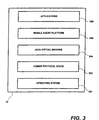
- these comprise an operating system 321, such as Windows 95 or Windows NT, a communications protocol stack 322 such as TCP/IP, a Java virtual machine 324, and a mobile agent platform 326, such as VOYAGER available from ObjectSpace Inc., which collectively comprise an operating environment for applications programs labelled collectively as 328 in Figure 3.
- the structure of the user computer 10 generally corresponds to that of the remote computers 30 described with reference to Figures 2 and 3, except insofar as modified as described below.
- the mobile agent platform 326 and Java virtual machine 324 In use, where serialised code representing a mobile agent program is received through the communications port 37, the mobile agent platform 326 and Java virtual machine 324 cause it to be stored within the applications area 328 of the memory 32. The mobile agent platform 326 then converts the code into local Java code, to run on the Java virtual machine 324 making use of the local operating system 321. General details of the operation of the mobile agent platform 326 and Java virtual machine 324 will be found in the Voyager user guide, version 1.0, Beta 3.0, July 1997, available from OBJECTSPACE Inc. Thus far, the above described system operates in the manner of a conventional mobile agent computing system.
- agent control program 40 is provided within the user computer 10 .
- the agent control program 40 is in communication, via the telecommunications network 20, with a co-ordinating agent program 42 resident on a first target computer 38. Also resident on the first target computer 38 are a plurality of a task agent programs 44a-44d, each of which is arranged to communicate with the coordinating agent program 42.
- a scout agent program 46 is provided on a further remote computer 30b.
- the task agent programs 44a-44d operate to process part of a task in parallel. Typically, all task agent programs 44 will be identical.
- the co-ordinating agent program 42 interacts with the operating system 321 of the remote computer 38 on which it is resident. It communicates with the task agent programs 44a-44d via local message passing, and with the control agent control program 40 via messages transmitted through the telecommunications network 20.
- the Scout agent 46 communicates with the coordinating agent 42 and with the agent control program 40 by sending messages through the network 20.
- the task agents 44a-44d each perform a portion of the computing task, in parallel.
- a co-ordinating agent 42 controls the amount of computing resource used by the task agents on the remote computer 30a. It also communicates the results calculated by the task agents to the agent control program 40. Finally, it decides whether, and when, to move from the remote computer 38 to the further remote computer 30b to re-commence execution there.
- the agent control program 40 is permanently operational on the user computer 10 and does not move to remote computers. In operation, it continually monitors the usage and availability of computing resources on the remote computers 30a-30d, by receiving messages from the Scout agent programs 46 and, where necessary, by sending out new Scout agent programs 46 to newly located target computers 30.
- the agent control program 40 allows the user to define the task to be performed, and creates a suitable code for task agents 44.
- the co-ordinating agent program 42 When the co-ordinating agent program 42 arrives at the first such remote computer 30a, it creates a plurality of task agent programs 44, and controls their operation in dependence upon the computing resources available at the remote computer 30a. When the resources cease to be suitable, for example because a user of the remote computer 30a has commenced a different task there, the coordinating agent 42 determines a further remote computer 30b to move to (either from the itinerary, or from the reports of the Scout agents 46), and moves itself and the task agents 44 to the remote computer 30 b via the telecommunications network 20.
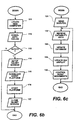
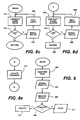
- a step 110 the user computer 10 starts the agent control programme 40, and initialisation is performed as described in greater detail below in Figure 6a.
- a step 110 new suitable hosts for remote computing are created in the manner described in Figure 6b.
- a step 130 a database of available remote computers is created and maintained as described in greater detail below in Figure 6c, and in a step 140, an itinerary of host computers is calculated for the or each agent team which will be created.
- step 160 one or more teams of mobile agents are created and sent to a first computer on each itinerary.
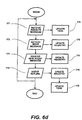
- step 170 the agent control programme 40 monitors the creation, termination and movement of the teams, as described in greater detail below in Figure 6d , and in step 190, after the desired task has been completed, the agent control program 40 terminates.
- the agent control program 40 determines the IP address of the user computer 10.
- the agent control programme 40 creates a graphical user interface (GUI) including a display, as shown in Figure 10.
- GUI graphical user interface
- the agent control program 40 creates an instance of a scout agent 46, a co-ordinating agent 42 and a task agent 44 and in a step 107, the agent control programme 40 creates and updates a Registry, consisting of a list of all existing agents and their locations (ie the IP addresses of the computers on which they are running).
- the agent control program 40 defines the task to be performed, by allowing the user to interact through the GUI, either to select an existing predefined task, or to create a new task by supplying code for execution.
- suitable tasks are tasks which need to be performed multiple times, such as exhaustive searches for solutions to equations, or code breaking.
- One example which has successfully been performed employing this embodiment is a genetic algorithm evaluation.
- step 111 remote computers not already carrying an agent platform are located, via the telecommunications network 20, and in step 112, an authentication dialogue is carried out with such computers. If (step 113) the authentication dialogue is successful, then in step 114, a Telnet session is set up to the remote computer 30, and in a step 115, the agent platform (eg a VOYAGER server) is downloaded to the remote computer 30. In a step 116, the agent platform is started on the remote computer 30, and then in step 117, the Telnet session is closed down.
- step 112 remote computers not already carrying an agent platform are located, via the telecommunications network 20, and in step 112, an authentication dialogue is carried out with such computers. If (step 113) the authentication dialogue is successful, then in step 114, a Telnet session is set up to the remote computer 30, and in a step 115, the agent platform (eg a VOYAGER server) is downloaded to the remote computer 30. In a step 116, the agent platform is started on the remote computer 30, and then in step 117, the Tel
- step 131 a plurality of scout agents 46 are created, and each is sent to a respective one of the remote computers 30a-30d.
- the agent control program 40 sends each agent a message instructing it to move to the IP address of the computer it is to monitor, and updates its registry to indicate that the scout agent has gone to the respective computers.
- the agent control program receives a signal from one of the scout agents 46, and in a step 133 updates (or creates, if no signal has previously been received) a database of remote computers 30 comprising, for each remote computer, an indication of the processor type; available memory; computer type (e.g. laptop or desktop); lP address; hard disk size and available space; operating system type; JAVA version number; level of current CPU usage; and any other available data from the scout agent 46. It also includes the geographical location (where known) This may be determined from the IP address, or from data located at the remote computer such as time of day held by the system clock (indicating the latitude) or the phone number (indicating the country and/or area).
- a step 134 the display of Figure 10 is updated to show graphically, in shorthand form, the available capacity on a visual representation of each remote computer 30.
- this display comprises a control panel area 1050 consisting of a number of areas for selection with a "mouse” or other cursor control device by a user and including, in this embodiment, "soft buttons" 1051 for starting a Telnet program to install an new agent server platform; 1052 and 1053 for respectively showing or hiding a map display area 1070 discussed below; 1054 for terminating a selected agent; 1055 for instructing a status reading of a selected agent; and 1056 for instructing a status reading of a selected server.
- the agent or server is selected graphically by the user, as discussed below.
- a status area 1058 shows, for each team, the progress of the task (i.e. as a percentage of the time to completion).
- the map display area 1070 comprises a map (here, floor plan) of the computing resources in the geographical area of the home server (in this case, in the surrounding rooms). It consists of icons 1030a-1030h each representing one of the remote computers 30a-30c, and an icon 1010 representing the user computer 10. Also present is an icon 1040 indicating the presence of the agent control program 40 on the user computer 10, this being represented by proximity on the screen.
- an icon 1042, 1044, or 1046 representing respectively an agent co-ordinating program 42, task agent 44 or scout agent 46, is shown on the display next to the icon 1030 for the host computer on which the program is currently resident.
- communications between the remote computers 30 and the user computer 10 are graphically represented, by connected lines, the width of which denotes the speed of information transmission.
- the user may select an agent or computer to be interrogated, using a cursor control input device.
- the display of Figure 10 is implemented using conventional user interface technology, such as the "Windows" operating system.
- the agent control program 40 is arranged to generate a periodic TCP/lP "PING" signal, to detect the time delay to each remote computer.
- the time delay data in this case is stored, for each computer, in the remote computer database, and may be utilised in selecting the itinerary, so as to keep the overall delay low.
- the GUI also includes a display frame showing a "bullseye" or target view, with the user computer 10 central within the view and the remote computers 30 at bearings corresponding to their geographical bearing from the user computer 10, and at distances corresponding to the measured time delays therefrom.
- the display consists of an icon 2010 representing the user computer 10, and icons 2030a-2030c each representing one of the remote computers 30a-30c.
- step 135 the agent control program 40 determines whether the scout agent 46 should be moved (for example, where the remote computer 30 is going out of service) and effects any necessary movement instructions.
- These monitoring and updating steps 132-135 are performed continuously throughout the operation of the agent control program 40, or at periodic intervals.
- the scout agents 46 are arranged to terminate themselves on the remote computer 30 on which they are running if they do not, in a predetermined period, receive a message from the agent control program 40.
- the agent control program 40 proceeds to determine how many agent teams should be created.
- the remote computers 30 comprise a number of relatively powerful network server computers, a number of (less powerful) engineering work stations, a number of (less powerful) personal computers, and a number of laptop computers.
- the remote computers 30 comprise a number of relatively powerful network server computers, a number of (less powerful) engineering work stations, a number of (less powerful) personal computers, and a number of laptop computers.
- a number of programs will already be executing, so that the resources available for the task to be performed are constrained, by varying amounts.
- the agent control program 40 determines a usefulness factor for each remote computer as the product of an index of the power of the computer (comprising, for example, a weighted sum of its processor speed and available memory), and a fraction of its capacity which is available.
- the agent control program 40 sets a maximum capacity for utilisation (for example, of 50% of the resources of the remote computer).
- the index thus calculated for each remote computer thus represents the desirability of the computer for use in solving the task.
- the M computers with the highest usefulness index i.e. the most powerful computers with the most available capacity
- the M computers with the highest usefulness index are selected as the respective starting points of the itinerary for each agent team.
- position information (where available) for each computer is utilised, to select starting points for each itinerary which are spatially separate, and/or are relatively close to the user computer 10.
- Spatial separation assists in preventing conflicts between different agent teams, and in spreading the impact of the remote computing task rather than concentrating it on one geographical (and hence, probably, business) area.
- the agent control program 40 then examines the remote computer database to determine (in the same manner) the next M most useable computers, and, from these (or where there are more than M computers of closely similar capacity available, then from this larger group) selects for each agent team a next itinerary point, by utilising location information (where available) to select a computer relatively close to the first in the itinerary concerned.
- This process is repeated until a predetermined number P of computers have been selected for each itinerary.
- each itinerary is refined periodically, and, where necessary, chances to the itinerary are signalled to each co-ordinating agent 42.
- the agent control program 40 signals one or more teams to move to the newly available computers.
- the itinerary in this embodiment, comprises a simple linked list of IP addresses to which the team of agents is to move in succession.
- the agent control program receives, from a co-ordinating agent 42, a message containing one or more items of results data from one or more task agents 44. On receipt of such a message, in step 175 the agent control program 40 updates the current result of the task, and displays the results on the GUI.
- the current best result from any of the task agents 44 is displayed on the GUI.
- control program 40 determines whether that condition has been met and, or so, terminates (step 190 discussed below).
- the agent control program 40 detects, in step 172, any messages from coordinating agents 42 or scout agents 46, indicating that they or any task agents 44 have moved location, and (step 176) updates the agent registry record for the agent concerned, to indicate the IP address of the computer 30 on which the agent will be resident.
- step 173 the agent control program 40 detects, from the co-ordinating agents 42, any message indicating the creation or destruction of a task agent or co-ordinating agent, and records this in the registry in step 176.
- step 174 the agent control program 40 detects any return of an agent to the user computer 10 and updates the registry record for that agent in step 176 to record the new location of the agent. It then interrogates the agent to read any result data it is carrying, and updates the task in step 175 as discussed above.
- control program 40 outputs the results of the task in step 192 (e.g. to a file stored on a hard disk), then sends a signal to each co-ordinating agent 42 to terminate itself and its task agents, and to each scout agent 46 to terminate itself in step 194.
- step 196 the agent platforms 326 are removed from those remote computers 30 on which they were installed, by creating a Telnet session (as described in Figure 6b). Finally, the agent program 40 ceases execution.
- agent control program performs the following functions:
- Result data and monitoring data from the agents may be returned to the agent control program 40 as described above either by messages signalled back via the telecommunications network 20, or by the return of the agent concerned, followed by its interrogation locally.
- the former method is more advantageous where results or monitor data are generated relatively frequently, since it is faster merely to signal the result data than to move the code for the agent.
- the latter is preferable where monitoring data is required relatively infrequently, since it removes the scout agent program 46 from the memory of the remote computer 30, thus reducing the intrusiveness of the remote computing process into the remote computers 30 themselves.
- the latter method is generally preferred for this reason.
- step 202 the scout agent program reads the computer status. Accordingly, the scout agent program 46 performs the following tests:
- the scout agent 46 determines whether the operating system 321 is that of a portable computer or a desktop computer. If a portable computer is detected, the battery lifetime, hard disk 33 status and display 34 status are preferably detected and monitored.
- step 204 a status change is recorded, in step 206 it is signalled back to the agent control program 40.
- the scout program 46 could move back to the user computer 10.
- the scout agent 46 receives messages (step 208) from the agent control program 40. If (step 210) the message constitutes an instruction to the scout agent to terminate, then in step 212 it does so. If (step 210) it constitutes an instruction to move to a new computer, then in step 214 the scout agent 46 does so. Both the move and terminate methods are provided within the Voyager agent system used in this embodiment.
- each scout agent 46 has a limited, predetermined lifetime and will also invoke step 212 to terminate itself if it has not received a message from the agent control program 40 within this determined time period.
- the scout agent is preferably arranged to indicate its presence on the remote computer 30, by displaying an image on the VDU 34 thereof (e.g. an icon announcing its presence).
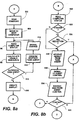
- the co-ordinating agent 42 is arranged (step 502) to read its stored copy of its itinerary, and determine the next remote computer in the itinerary. On creation, naturally, this will be the first in the itinerary.
- the co-ordinating agent 42 moves its team as described below with reference to Figure 8c.
- step 506 the co-ordinate agent 42 reads the status of the computer on which it has arrived.
- the status checks performed are the same as those performed by the scout agent 46, and are implemented by the same code.
- the co-ordinating agent 42 determines how much of the available capacity should be utilised, based on the free memory and CPU utilisation data derived in the preceding step. In general, the co-ordinating agent 42 leaves some free memory and CPU time, in case the user of the remote computer 30 wishes to carry out some other task at the same time. For example, up to (say) 30% of the memory may be allocated as free by the co-ordinating agent 42.
- step 510 the co-ordinating agent 42 determines whether the remaining capacity, over that which is to be left free, will support an additional task agent 44 in execution or whether, to achieve the necessary amount of free space, a task agent 44 must be terminated.
- step 512 if there is sufficient additional space to accommodate an additional task agent, then an additional task agent 44 is created; if it is necessary to reduce the number of task agents, then one is terminated as will be described in greater detail below. In either case the creation or destruction if an agent is signalled in step 514 to the agent control program 40. The process is then repeated at step 506 until as many task agents 44 as required, or as can be supported on the remote computer 30, have been created.
- step 516 the co-ordinating agent 42 creates a display on the VDU 34 remote computer 30, indicating its presence and the presence of the task agents 44.
- the co-ordinating agent 42 monitors the computer 30 (step 520). In the event of a change (step 522) the result is reported to the agent control program 40. If the change is significant (step 524), such as the user manipulating the keyboard 35, or a high-priority task starting on the CPU 31, then the co-ordinating agent 42 initiates a move, by passing back to step 502.
- the monitoring of the activity of the computer 30 constitutes one thread of execution of the co-ordinating agent 42.
- the co-ordinating agent 42 detects messages from the task agents passing on results (step 526), and signals these on to the agent control program 40 (step 528). In this embodiment, rather than forwarding all results immediately, some collation of results is performed by the coordinating agent 42. To reduce the number of separate signals, and hence the addressing overhead, groups of result data are combined into a single message for forwarding.
- step 530 the co-ordinating agent 42 checks for messages from the agent control program 40, which are interpreted according to their content (step 532). If the message is to update the itinerary, then, referring to Figure 8e, the new IP addresses of the computers concerned are substituted within the itinerary in step 552.
- step 504 is performed comprising for each task agent, sending that task agent an instructions to move itself to that address (step 534) and, unless the last agent has been processed, signalling the move (step 538) back to the agent control program 40 and selecting the next agent (step 540). After processing the last task agent 44, the co-ordinating agent 42 moves itself (step 504).
- each task agent 44 is sent a message step (542) to terminate itself and the termination is report (step 546) to the agent control program 40, following which (step 550) the co-ordinating agent 42 terminates itself.
- the co-ordinating agent 42 provides, on each remote computer 30, a central control facility for monitoring machine state, initiating a move where necessary; and co-ordinating communications between the agent control program 40 and the task agents 44.
- Each network co-ordinating agent 42 is, essentially, standardised within its structure, since it controls the movement and communications functions of the team but does not, in this embodiment, take part in performing the task itself.
- the task agent 44 is given only a limited life span and will terminate itself unless it receives a message from the co-ordinating agent 42 within this life span.
- the co-ordinating agent 42 is arranged to send such messages periodically, at intervals less than the life span concerned. Thus, where the co-ordinating agent 42 has moved the team to another remote computer 30, or has terminated itself, the task agents 44 will terminate.
- Each task agent 44 consists of two parts; a generic part and task-specific part.
- the generic part consists of a Voyager mobile agent arranged, as indicated above, to terminated itself after a predetermined time unless it receives signals from the co-ordinating agent 42; to await signals from the co-ordinating agent 42 and act upon them to move or terminate itself; and to pass on results to the coordinating agent 42.
- the task specific part is arranged to perform a repetitive computing task such as equation solving, decryption or string searching, and, periodically or on satisfying a task condition, to generate a result which is supplied for forwarding to the co-ordinating agent 42.
- a repetitive computing task such as equation solving, decryption or string searching, and, periodically or on satisfying a task condition, to generate a result which is supplied for forwarding to the co-ordinating agent 42.
- step 402 comprises a performing the task;
- step 404 comprises signalling the results thereof to the co-ordinating agent 42;
- step 406 comprises receiving a signal from the co-ordinating unit 42 and (step 408) in dependence on its contents, terminating (step 410) or moving (step 412) as appropriate.
- the co-ordinating agents 42 includes a method for creating a new task agent, from a stored task agent class, the generic part of which is stored as part of the network co-ordinating agent and the task specific part of which is supplied initially by the agent control program 40.
- Voyager system provides functionality for implementing the invention. For example, termination is performed in this embodiment using the voyager dieNow() function, and movement is performed by the voyager MoveTo("placename") function.
- the co-ordinating agent 42 is arranged to monitor the communications port 37, and when the port ceases to be connected with the telecommunications network, is arranged to buffer all results received from the task agents 44.
- the co-ordinating agent 42 signals to the agent control program 20 the results and any monitor data obtained since the network became unavailable last.
- the agent control program 20 all messages sent to the team of agents since the last message received therefrom are buffered, and are re-transmitted through the telecommunications network are next receiving a message therefrom.
- this embodiment of the invention is able to send an agent team onto a mobile computer, and to make use of the resources of the mobile computer whilst it is out of communication with the telecommunications network 20, collecting the results when it next becomes available.
- the operation of the scout agent in reporting the level of usage of the remote computer is described. It is also envisaged that the scout agent would evaluate the state of the remote computer by monitoring local events to check if the keyboard is being pressed, and by recording whether the amount of free memory is static, rising, or falling. It may report changes in the amount of usage at the remote machine, rather than the actual level of usage.
- the agent control program may be arranged to monitor the historical activity of different remote computers (and, where different users of the remote computers are known, the activity pattern of each user), and to use this to create the itinerary for each agent program, to ensure that agents are not sent to computers which are currently available but which will become busy soon.
- knowledge of the time zone in which the computer is located may be used to, for example, predict that the computer is more likely to be available during nocturnal hours in that time zone.
- agent co-ordinating program or the co-ordinating agent may decide to suspend operation of the agent programs temporarily but leave them on the remote computer. This will be appropriate where, for example, monitoring of the historical activity of that remote computer suggests that usage will be only for brief periods so that the computer will become usable shortly by the agent team.
- task agent programs have been described as acting independently on the remote computer, in embodiments it may be preferred to permit these programs to access resources on the remote computer only through the co-ordinating agent.
- the co-ordinating agent will have access to operating system routines for reading or writing disks or allocating memory, which routines will be called by the task agent programs.
- the co-ordinating agent is arranged to perform security checks, for example to ensure that individual task agents can only modify files which they themselves created. Security of this nature may be arranged by each task agent communicating a request signal to the co-ordinating agent using an exchange of keys, so that "virus" programs cannot be introduced onto a remote computer which is programmed to accept a team of task agents.
- each task agent may identify the task which it is performing when it requests access to system resources. This will enable the co-ordinating agent to determine whether tasks of that nature (for example, for a given identified user) are permitted to be performed on a given remote machine on which the task agents are resident.
- agent control program 20 has been described as a static program on the user computer 10, it will be possible to enable it to move to another computer where desired.
- scout agent programs 46 are described as mobile agents, it would be possible to provide static monitoring within the agent platform, although at the cost of more permanent occupation of the resources on the remote computer.
Landscapes
- Engineering & Computer Science (AREA)
- Software Systems (AREA)
- Theoretical Computer Science (AREA)
- Physics & Mathematics (AREA)
- General Engineering & Computer Science (AREA)
- General Physics & Mathematics (AREA)
- Multi Processors (AREA)
- Computer And Data Communications (AREA)
Applications Claiming Priority (5)
| Application Number | Priority Date | Filing Date | Title |
|---|---|---|---|
| GB9810279 | 1998-05-13 | ||
| GBGB9810279.1A GB9810279D0 (en) | 1998-05-13 | 1998-05-13 | Remote computing |
| GB9823714 | 1998-10-29 | ||
| GBGB9823714.2A GB9823714D0 (en) | 1998-10-29 | 1998-10-29 | Remote computing |
| PCT/GB1999/001329 WO1999059062A1 (en) | 1998-05-13 | 1999-04-29 | Remote computing |
Publications (2)
| Publication Number | Publication Date |
|---|---|
| EP1076852A1 EP1076852A1 (en) | 2001-02-21 |
| EP1076852B1 true EP1076852B1 (en) | 2003-06-04 |
Family
ID=26313672
Family Applications (1)
| Application Number | Title | Priority Date | Filing Date |
|---|---|---|---|
| EP99919404A Expired - Lifetime EP1076852B1 (en) | 1998-05-13 | 1999-04-29 | Remote computing |
Country Status (6)
| Country | Link |
|---|---|
| EP (1) | EP1076852B1 (enExample) |
| JP (1) | JP4550278B2 (enExample) |
| AU (1) | AU3720399A (enExample) |
| CA (1) | CA2332247C (enExample) |
| DE (1) | DE69908589T2 (enExample) |
| WO (1) | WO1999059062A1 (enExample) |
Families Citing this family (2)
| Publication number | Priority date | Publication date | Assignee | Title |
|---|---|---|---|---|
| AU2002365812A1 (en) * | 2001-12-04 | 2003-06-17 | Powerllel Corporation | Parallel computing system, method and architecture |
| US7475107B2 (en) * | 2002-07-08 | 2009-01-06 | Electronic Evidence Discovery, Inc. | System and method for managing distributed computer processes |
Family Cites Families (1)
| Publication number | Priority date | Publication date | Assignee | Title |
|---|---|---|---|---|
| JP4049889B2 (ja) * | 1998-06-17 | 2008-02-20 | 株式会社東芝 | エージェント管理方法ならびにエージェントシステム及び同方法がプログラムされ記録される記録媒体 |
-
1999
- 1999-04-29 AU AU37203/99A patent/AU3720399A/en not_active Abandoned
- 1999-04-29 EP EP99919404A patent/EP1076852B1/en not_active Expired - Lifetime
- 1999-04-29 DE DE69908589T patent/DE69908589T2/de not_active Expired - Lifetime
- 1999-04-29 JP JP2000548805A patent/JP4550278B2/ja not_active Expired - Lifetime
- 1999-04-29 WO PCT/GB1999/001329 patent/WO1999059062A1/en not_active Ceased
- 1999-04-29 CA CA002332247A patent/CA2332247C/en not_active Expired - Fee Related
Also Published As
| Publication number | Publication date |
|---|---|
| EP1076852A1 (en) | 2001-02-21 |
| DE69908589D1 (de) | 2003-07-10 |
| WO1999059062A1 (en) | 1999-11-18 |
| JP4550278B2 (ja) | 2010-09-22 |
| AU3720399A (en) | 1999-11-29 |
| CA2332247C (en) | 2005-04-19 |
| JP2002514812A (ja) | 2002-05-21 |
| CA2332247A1 (en) | 1999-11-18 |
| DE69908589T2 (de) | 2004-04-29 |
Similar Documents
| Publication | Publication Date | Title |
|---|---|---|
| US7287179B2 (en) | Autonomic failover of grid-based services | |
| US6434594B1 (en) | Virtual processing network enabler | |
| US6167538A (en) | Method and apparatus for monitoring components of a computer system | |
| US5377309A (en) | Software work tool | |
| US5572731A (en) | Sequentially navigated object oriented computer system | |
| US9223625B2 (en) | Client server system and method for executing an application utilizing distributed objects | |
| CN103034536A (zh) | 提高有状态应用的可用性 | |
| CN105159736B (zh) | 一种支持性能分析的SaaS软件部署方案的构建方法 | |
| CN100377090C (zh) | 用于客户/服务器计算的方法 | |
| CN112883184A (zh) | 对话管理方法、设备、计算机可读存储介质及程序产品 | |
| US7237005B2 (en) | Job network setup method, job network execution method, job management system, management terminal and program | |
| US8250131B1 (en) | Method and apparatus for managing a distributed computing environment | |
| JP2001282970A (ja) | ワークフロー管理システム | |
| US7089314B2 (en) | Console input/output control system and console control device | |
| CA2332247C (en) | Remote computing | |
| US7047531B2 (en) | Method and apparatus for automated network polling | |
| KR20230165086A (ko) | Rpa 태스크의 레코딩 및 실행 방법 | |
| EP2111017B1 (en) | Supplying web pages | |
| JPH06348664A (ja) | 異なる命令特性を持つ複数のcpuによって構成される計算機システムの制御装置 | |
| HARA et al. | Flexible Distributed Agent System and Its | |
| JPH09274608A (ja) | マルチプロセッサシステムにおけるプロセッサ間の負荷配分制御方法 | |
| CN109218286A (zh) | 虚拟化环境下实现无代理edr的方法及装置 | |
| JPH09160847A (ja) | クライアント・サーバ型分散処理システム | |
| JP2009277120A (ja) | サーバシステム | |
| JP2000029847A (ja) | エージェントシステム、情報処理方法及び情報処理用ソフトウェアを記録した記録媒体 |
Legal Events
| Date | Code | Title | Description |
|---|---|---|---|
| PUAI | Public reference made under article 153(3) epc to a published international application that has entered the european phase |
Free format text: ORIGINAL CODE: 0009012 |
|
| 17P | Request for examination filed |
Effective date: 20001211 |
|
| AK | Designated contracting states |
Kind code of ref document: A1 Designated state(s): BE CH DE ES FR GB IT LI NL |
|
| 17Q | First examination report despatched |
Effective date: 20010607 |
|
| GRAG | Despatch of communication of intention to grant |
Free format text: ORIGINAL CODE: EPIDOS AGRA |
|
| GRAG | Despatch of communication of intention to grant |
Free format text: ORIGINAL CODE: EPIDOS AGRA |
|
| GRAG | Despatch of communication of intention to grant |
Free format text: ORIGINAL CODE: EPIDOS AGRA |
|
| GRAH | Despatch of communication of intention to grant a patent |
Free format text: ORIGINAL CODE: EPIDOS IGRA |
|
| GRAH | Despatch of communication of intention to grant a patent |
Free format text: ORIGINAL CODE: EPIDOS IGRA |
|
| GRAA | (expected) grant |
Free format text: ORIGINAL CODE: 0009210 |
|
| AK | Designated contracting states |
Designated state(s): BE CH DE ES FR GB IT LI NL |
|
| PG25 | Lapsed in a contracting state [announced via postgrant information from national office to epo] |
Ref country code: NL Free format text: LAPSE BECAUSE OF FAILURE TO SUBMIT A TRANSLATION OF THE DESCRIPTION OR TO PAY THE FEE WITHIN THE PRESCRIBED TIME-LIMIT Effective date: 20030604 Ref country code: LI Free format text: LAPSE BECAUSE OF FAILURE TO SUBMIT A TRANSLATION OF THE DESCRIPTION OR TO PAY THE FEE WITHIN THE PRESCRIBED TIME-LIMIT Effective date: 20030604 Ref country code: IT Free format text: LAPSE BECAUSE OF FAILURE TO SUBMIT A TRANSLATION OF THE DESCRIPTION OR TO PAY THE FEE WITHIN THE PRESCRIBED TIME-LIMIT;WARNING: LAPSES OF ITALIAN PATENTS WITH EFFECTIVE DATE BEFORE 2007 MAY HAVE OCCURRED AT ANY TIME BEFORE 2007. THE CORRECT EFFECTIVE DATE MAY BE DIFFERENT FROM THE ONE RECORDED. Effective date: 20030604 Ref country code: CH Free format text: LAPSE BECAUSE OF FAILURE TO SUBMIT A TRANSLATION OF THE DESCRIPTION OR TO PAY THE FEE WITHIN THE PRESCRIBED TIME-LIMIT Effective date: 20030604 Ref country code: BE Free format text: LAPSE BECAUSE OF FAILURE TO SUBMIT A TRANSLATION OF THE DESCRIPTION OR TO PAY THE FEE WITHIN THE PRESCRIBED TIME-LIMIT Effective date: 20030604 |
|
| REG | Reference to a national code |
Ref country code: GB Ref legal event code: FG4D |
|
| REG | Reference to a national code |
Ref country code: CH Ref legal event code: EP |
|
| REF | Corresponds to: |
Ref document number: 69908589 Country of ref document: DE Date of ref document: 20030710 Kind code of ref document: P |
|
| PG25 | Lapsed in a contracting state [announced via postgrant information from national office to epo] |
Ref country code: ES Free format text: LAPSE BECAUSE OF FAILURE TO SUBMIT A TRANSLATION OF THE DESCRIPTION OR TO PAY THE FEE WITHIN THE PRESCRIBED TIME-LIMIT Effective date: 20030915 |
|
| NLV1 | Nl: lapsed or annulled due to failure to fulfill the requirements of art. 29p and 29m of the patents act | ||
| REG | Reference to a national code |
Ref country code: CH Ref legal event code: PL |
|
| ET | Fr: translation filed | ||
| PLBE | No opposition filed within time limit |
Free format text: ORIGINAL CODE: 0009261 |
|
| STAA | Information on the status of an ep patent application or granted ep patent |
Free format text: STATUS: NO OPPOSITION FILED WITHIN TIME LIMIT |
|
| 26N | No opposition filed |
Effective date: 20040305 |
|
| REG | Reference to a national code |
Ref country code: FR Ref legal event code: PLFP Year of fee payment: 18 |
|
| REG | Reference to a national code |
Ref country code: FR Ref legal event code: PLFP Year of fee payment: 19 |
|
| REG | Reference to a national code |
Ref country code: FR Ref legal event code: PLFP Year of fee payment: 20 |
|
| PGFP | Annual fee paid to national office [announced via postgrant information from national office to epo] |
Ref country code: DE Payment date: 20180420 Year of fee payment: 20 |
|
| PGFP | Annual fee paid to national office [announced via postgrant information from national office to epo] |
Ref country code: FR Payment date: 20180420 Year of fee payment: 20 |
|
| PGFP | Annual fee paid to national office [announced via postgrant information from national office to epo] |
Ref country code: GB Payment date: 20180418 Year of fee payment: 20 |
|
| REG | Reference to a national code |
Ref country code: DE Ref legal event code: R071 Ref document number: 69908589 Country of ref document: DE |
|
| REG | Reference to a national code |
Ref country code: GB Ref legal event code: PE20 Expiry date: 20190428 |
|
| PG25 | Lapsed in a contracting state [announced via postgrant information from national office to epo] |
Ref country code: GB Free format text: LAPSE BECAUSE OF EXPIRATION OF PROTECTION Effective date: 20190428 |