EP1075835A1 - Use of aminodiol derivatives in skin cosmeics - Google Patents
Use of aminodiol derivatives in skin cosmeics Download PDFInfo
- Publication number
- EP1075835A1 EP1075835A1 EP00117013A EP00117013A EP1075835A1 EP 1075835 A1 EP1075835 A1 EP 1075835A1 EP 00117013 A EP00117013 A EP 00117013A EP 00117013 A EP00117013 A EP 00117013A EP 1075835 A1 EP1075835 A1 EP 1075835A1
- Authority
- EP
- European Patent Office
- Prior art keywords
- propanediol
- skin
- amino
- mixture
- external
- Prior art date
- Legal status (The legal status is an assumption and is not a legal conclusion. Google has not performed a legal analysis and makes no representation as to the accuracy of the status listed.)
- Withdrawn
Links
Images

Classifications
-
- A—HUMAN NECESSITIES
- A61—MEDICAL OR VETERINARY SCIENCE; HYGIENE
- A61K—PREPARATIONS FOR MEDICAL, DENTAL OR TOILETRY PURPOSES
- A61K8/00—Cosmetics or similar toiletry preparations
- A61K8/18—Cosmetics or similar toiletry preparations characterised by the composition
- A61K8/30—Cosmetics or similar toiletry preparations characterised by the composition containing organic compounds
-
- A—HUMAN NECESSITIES
- A61—MEDICAL OR VETERINARY SCIENCE; HYGIENE
- A61K—PREPARATIONS FOR MEDICAL, DENTAL OR TOILETRY PURPOSES
- A61K8/00—Cosmetics or similar toiletry preparations
- A61K8/18—Cosmetics or similar toiletry preparations characterised by the composition
- A61K8/30—Cosmetics or similar toiletry preparations characterised by the composition containing organic compounds
- A61K8/40—Cosmetics or similar toiletry preparations characterised by the composition containing organic compounds containing nitrogen
- A61K8/41—Amines
-
- A—HUMAN NECESSITIES
- A61—MEDICAL OR VETERINARY SCIENCE; HYGIENE
- A61Q—SPECIFIC USE OF COSMETICS OR SIMILAR TOILETRY PREPARATIONS
- A61Q19/00—Preparations for care of the skin
- A61Q19/02—Preparations for care of the skin for chemically bleaching or whitening the skin
-
- A—HUMAN NECESSITIES
- A61—MEDICAL OR VETERINARY SCIENCE; HYGIENE
- A61Q—SPECIFIC USE OF COSMETICS OR SIMILAR TOILETRY PREPARATIONS
- A61Q19/00—Preparations for care of the skin
- A61Q19/08—Anti-ageing preparations
Definitions
- the present invention relates to a composition for external use, and more particularly to a composition for external use exhibiting, among others, an effect of retarding aging of the skin.
- skin aging refers to aging of the skin, accompanied by typical phenomena such as wrinkles, flabbiness, and spots. These phenomena progress with age, and other factors such as exposure to UV rays, smoking, insufficient sleep, and air pollution are known to accelerate these phenomena.
- AHA ⁇ -hydroxy acid
- vitamin A derivatives Compounds such as ⁇ -hydroxy acid (AHA) and vitamin A derivatives are known as cosmetic agents which can improve the slowed turnover rate of the keratinous layer accompanying retarding metabolism in the skin caused by aging.
- E. J. Van Scott et al . have reported, in Int . J . Dermatol . 26, 90, 1987 and Skin & Allergy News 18, 38, 1987, that AHA and vitamin A derivatives reduce formation of wrinkles and improve dry skin, acne, and senile pigmented spots.
- AHA smoothes the skin, and the mechanism thereof is considered to involve loosening adhesion between keratinocytes and preventing stratification of keratinocytes.
- Vitamin A derivatives exert effects on equilibrium between proliferation and differentiation of epidermal cells, thereby possibly preventing stratification of keratinocytes and activating metabolism in the skin.
- AHA and vitamin A derivatives themselves are not mild to the skin, and therefore, not only are their incorporation amounts limited, but care must be exerted during manufacture of various forms of compositions. At present, insufficient effects are obtained from these compounds.
- desmosomes which participate in intercellular adhesion, are known to play an important role in falling of old keratinocytes and activating metabolism in the skin.
- A. Lundstrom et al . reported in J . Invest . Dermatol ., 91, 216-220, 1990 that acceleration of decomposition of desmoglein, serving as a protein constituting desmosomes, results in acceleration of falling of the keratinous layer.
- the present invention is to provide means for retarding skin aging as well as preventing unfavorable skin conditions of various types, particularly by use of an ingredient other than AHA and vitamin A derivatives which accelerates decomposition of desmoglein.
- the present inventors have carried out extensive research regarding the desmoglein decomposition effect of a variety of compounds, in search for a novel keratious layer-exfoliating ingredient of high effect, and have found that specific propanediol derivatives exhibit an excellent effect of improving decrease in turnover rate of the keratinous layer caused by aging; more specifically, retarding skin aging as well as preventing unfavorable skin conditions of various types, such as spots, dull appearance, wrinkles, and skin-roughening.
- the present invention has been accomplished on the basis of this finding.
- the present invention provides an external-use composition containing a propanediol derivative represented by formula (I): (wherein R represents a hydrogen atom, a methyl group, or an ethyl group) or a pharmaceutically acceptable salt thereof.
- the propanediol derivative represented by formula (I) is 2-amino-1,3-propanediol or 2-amino-2-methyl-1,3-propanediol and their salts are hydrochloric acid salt, sulfuric acid salt or oxalic acid salt.
- the amount of the propanediol derivative represented by formula (I) in the external-use composition is preferably 0.005-20.0 wt.%, more preferably 0.01-10.0 wt.%.
- skin aging refers to skin aging caused by aging, exposure to UV rays, smoking, insufficient sleep, and air pollution. Specifically, skin aging is retarded by controlling a variety of aging phenomena such as spots, dull appearance, wrinkles, and skin-roughening. Thus, an effect of retarding aging of the skin is a wide-ranging effect.
- the external-use composition of the present invention is employed for preventing specific unfavorable skin conditions such as spots, dull appearance, wrinkles, and skin-roughening, whereas "retarding skin aging” is not limited to prevention of these specific phenomena.
- composition of the invention A. Active ingredients of the composition of the invention:
- the active ingredient of the external-use composition is a propanediol derivative represented by formula (I) (hereinafter may be referred to as propanediol derivative (I)) or a pharmaceutically acceptable salt thereof.
- the propanediol derivative is a dihydric alcohol represented by formula (I). Specifically, when R is a hydrogen atom, the derivative is 2-amino-1,3-propanediol. Similarly, when R is a methyl group, the derivative is 2-amino-2-methyl-1,3-propanediol, whereas when R is an ethyl group, the derivative is 2-amino-2-ethyl-1,3-propanediol.
- the propanediol derivative (I) or a salt thereof exhibits an effect of retarding aging of the skin; i.e., the compounds accelerate the turnover rate of the keratinous layer lowered by aging and activate metabolism in the skin, thereby attaining skin conditions of much suppleness and bright appearance without spots, dull appearance, wrinkles, or skin-roughening.
- propanediol derivative (I) or a salt thereof promotes decomposition of desmosomes participating in intercellular adhesion in the keratinous layer; exhibits excellent effect of accelerating the turnover rate of the keratinous layer in the aged skin; and restores elasticity of the skin.
- the dihydric alcohol or a salt thereof accelerates the turnover rate of the keratinous layer in the aged skin and improve conditions of the keratinous layer, thereby activating metabolism in the skin and exhibiting an effect of retarding aging of the skin.
- the propanediol derivative (I) or a salt thereof may be incorporated singly or in combination of two or more species into the composition of the present invention.
- the amount of the compounds is preferably 0.005-20.0 wt.% based on the entire amount of the composition, more preferably 0.01-10.0 wt.%. When the amount is less than 0.005 wt.%, the effect of retarding aging of the skin is poor, whereas when the amount is in excess of 20.0 wt.%, the effect commensurate with the amount of addition is not attained.
- the present invention provides an external-use composition incorporating the aforementioned propanediol derivative (I) or a salt thereof, which composition exhibits effects of retarding skin aging and preventing spots, dull appearance, wrinkles, and skin-roughening.
- additive ingredients include aqueous ingredients, oil ingredients, powder ingredients, alcohols other than the propanediol derivatives, humectants, thickeners, UV-absorbents, whitening agents, preservatives, anti-oxidants, surfactants, perfumes, colorants, and nutrients for the skin.
- composition of the present invention may be applied to a cosmetic, drug, or quasi-drug.
- the composition may be formed into a variety of dosage forms and product forms, such as ointment, cream, milky lotion, lotion, pack, and bath-water additive.
- the extract was subjected to electrophoresis by use of agarose gel, and the gel was transferred to a PVDF membrane.
- An anti-desmoglein antibody and an alkaline-phosphatase-labeled anti-IgG sequentially reacted with the gel, and the resultant gel was colored with alkaline phosphatase.
- the image of bands formed on the membrane was captured by an image-scanner, and was analyzed, to obtain the amount of desmoglein. The test was performed twice, and an average value of the amount was calculated. The average values of samples were compared.
- 2-amino-1,3-propanediol and 2-amino-1,3-propanediol hydrochloride were found to exhibit a stronger effect of promoting decomposition of desmoglein than does glycolic acid as a positive control.
- 2-amino-2-methyl-1,3-propanediol and its hydrochloride were also found to exhibit a stronger effect of promoting decomposition of desmoglein than does glycolic acid as a positive control.
- Aqueous solutions of 2-amino-1,3-propanediol and its hydrochloride were employed as the representative compositions of the present invention.
- a 1% aqueous solution of glycolic acid ⁇ which is one type of AHA ⁇ was employed as a comparative composition, and water (purified water) was employed as a reference.
- a 1% phosphor solution (1 mL) in ethanol was added to an outer syringe (length: about 2 cm) of a 10-mL disposable injector, to bring the solution into contact with the skin for one minute (four portions on the inside of the forearm). From the next day, each sample including water was applied to the phosphor-contacted portions. Application was performed three times per day and continued for four consecutive days.
- Elasticity of the skin was measured by use of Cutometer SEM474 (product of Courage + Khazaka).
- the elasticity was obtained from extension (Uf) and retraction (Ur) of the skin when a negative pressure of 300 hPa was repeatedly applied to the skin by use of a probe having a diameter of 2 mm.
- the ratio (Ur/Uf) was employed as an index of elasticity of the skin. The higher the ratio, the higher the elasticity of the skin. The results are shown in Fig. 5.
- 2-amino-1,3-propanediol and its hydrochloride which are employed as ingredients of the composition of the present invention, mitigate decrease in turnover rate induced by aging (Fig. 3) and improve water content of the keratinous layer (Fig. 4) and elasticity of the skin (Fig. 5).
- glycolic acid which is known as a turnover-promoter of the keratinous layer.
- Test Example 5 Evaluation for improving skin conditions by use of the composition of the invention (actual use over a continuous four-week period) (1)
- the external-use composition of the present invention was applied to women complaining spots, dull appearance, wrinkles, and skin-roughening. Improvement in skin conditions was evaluated.
- the composition containing 2-amino-1,3-propanediol (Example 1) and the composition containing its hydrochloride (Example 2) exhibit excellent effects of improving spots, dull appearance, wrinkles, and skin-roughening as compared with the composition containing glycolic acid (Comp. Ex. 1) or the active-ingredient-free composition (Comp. Ex. 2).
- these two compositions according to the present invention exhibit higher efficacy in this test than does the composition containing glycolic acid, which is known to improve spots, dull appearance, wrinkles, and skin-roughening by accelerating the turnover rate of the keratinous layer.
- the results indicate that the external-use composition of the present invention is highly effective for improving spots, dull appearance, wrinkles, and skin-roughening.
- the composition containing 2-amino-2-methyl-1,3-propanediol (Example 3) and the composition containing its hydrochloride (Example 4) exhibit excellent effects of improving spots, dull appearance, wrinkles, and skin-roughening as compared with the comparative cases.
- Propylene glycol and 2-amino-1,3-propanediol hydrochloride were added to the purified water and the mixture was maintained at 70°C (aqueous phase). The remaining ingredients were mixed, and the mixture was melted and maintained at 70°C (oily phase). The oily phase was gradually added to the aqueous phase. After completion of the addition, the mixture was maintained at the same temperature for a while and was homogeneously emulsified by use of a homogenizer, and was cooled to 30°C under sufficient stirring to obtain a cream.
- Cream Ingredient Amount (wt.%) stearic acid 2.0 stearyl alcohol 7.0 hydrogenated lanolin 2.0 squalane 5.0 2-octyldodecyl alcohol 6.0 POE (25 mol) cetyl ether 3.0 glyceryl monostearate 2.0 propylene glycol 5.0 2-amino-1,3-propanediol 0.5 citric acid 0.7 ethyl paraben 0.3 perfume suitable amount purified water balance
- the mixture of 2-amino-1,3-propanediol, citric acid, and propylene glycol was added to the purified water.
- the mixture was maintained at 70°C (aqueous phase).
- the remaining ingredients were mixed, and the mixture was melted and maintained at 70°C (oily phase).
- the oily phase was gradually added to the aqueous phase for preliminary emulsification.
- the mixture was homogeneously emulsified by use of a homogenizer, and was cooled to 30°C under sufficient stirring to obtain a cream.
- the mixture of 2-amino-1,3-propanediol hydrochloride, powdery soap, and borax was added to the purified water.
- the mixture was maintained at 70°C (aqueous phase).
- the remaining ingredients were mixed, and the mixture was melted and maintained at 70°C (oily phase).
- the oily phase was gradually added to the aqueous phase with stirring for reaction. Subsequently, the mixture was homogeneously emulsified by use of a homogenizer, and was cooled to 30°C under sufficient stirring.
- the carboxyvinyl polymer was added to a small amount of the purified water, to obtain a solution (phase A).
- the mixture of polyethylene glycol 1500, triethanolamine, and 2-amino-1,3-propanethol oxalate was added to the remaining portion of the purified water.
- the mixture was heated for solution, and the solution was maintained at 70°C (aqueous phase).
- the remaining ingredients were mixed, and the mixture was melted and maintained at 70°C (oily phase).
- the oily phase was added to the aqueous phase for preliminary emulsification, and the phase A mixture was added thereto.
- the mixture was homogeneously emulsified by use of a homogenizer and was cooled to 30°C under sufficient stirring to obtain a milky lotion.
- the mixture of 2-amino-1,3-propanediol, glutamic acid, and propylene glycol was added to the purified water.
- the mixture was heated for solution, and the solution was maintained at 70°C (aqueous phase).
- the remaining ingredients were mixed, and the mixture was melted and maintained at 70°C (oily phase).
- the oily phase was gradually added to the aqueous phase, and the mixture was homogeneously emulsified by use of a homogenizer and was cooled to 30°C under sufficient stirring to obtain a milky lotion.
- Carbopole 940 was thoroughly dissolved in the purified water.
- the POE (50 mol) oleyl ether was added to the resultant aqueous phase. Subsequently, the aqueous phase was neutralized and thickened through addition of the 2-amino-1,3-propanediol, to which the remaining ingredients had been added in advance, to obtain a jelly.
- phase A and the “phase C” ingredients were homogenously mixed.
- the "phase A” mixture was added to and dissolved in the “phase C” mixture. Thereafter, the "phase B” ingredient was added thereto and the mixture was charged into a container to obtain a jelly.
- phase A dipropylene glycol 5.0 POE (60 mol) hydrogenated castor oil 5.0
- phase B olive oil 5.0 tocopheryl acetate 0.2 ethyl paraben 0.2
- phase C 2-amino-1,3-propanediol sulfate 0.3 polyvinyl alcohol (saponification value: 90; polymerization degree: 2,000) 13.0 ethyl alcohol 7.0 purified water balance
- phase A Each of the "phase A”, "phase B”, and “phase C” ingredients were homogeously mixed.
- the "phase B” mixture was added to and dissolved in the “phase A” mixture.
- the "phase C” mixture was added thereto, and the mixture was charged into a container, to obtain a pack.
- Solid-type foundation Ingredient Amount (wt.%) talc 43.1 kaolin 15.0 sericite 10.0 zinc oxide 7.0 titanium dioxide 3.8 yellow iron oxide 2.9 black iron oxide 0.2 squalane 8.0 isostearic acid 4.0 POE sorbitan monooleate 3.0 isocetyl octanoate 2.0 2-amino-1,3-propanediol 0.2 lactic acid 0.5 preservative suitable amount perfume suitable amount
- the powdery ingredients from the talc to the black iron oxide were sufficiently mixed by use of a blender.
- the oily ingredients from the squalane to the isocetyl octanoate, the 2-amino-1,3-propanediol, the lactic acid, the preservative, and the perfume were added to the resultant mixture.
- the mixture was thoroughly kneaded, charged into a container, and then shaped, to obtain a solid-type foundation.
- Emulsion-type foundation Ingredient Amount (wt.%) (powdery ingredients) titanium dioxide 10.3 sericite 5.4 kaolin 3.0 yellow iron oxide 0.8 red iron oxide 0.3 black iron oxide 0.2 (oily phase) decamethylcyclopentasiloxane 11.5 liquid paraffin 4.5 POE-modified dimethylpolysiloxane 4.0 (aqueous phase) purified water 50.0 1,3-butylene glycol 4.5 2-amino-1,3-propanediol 1.0 sorbitan sesquioleate 3.0 preservative suitable amount perfume suitable amount
- the aqueous phase ingredients were mixed and heated with stirring.
- the powdery ingredients which had been thoroughly mixed and pulverized were added thereto and subjected to processing in a homogenizer.
- the oily phase ingredients which had been heated and mixed were added, and the mixture was processed by use of a homogenizer.
- the perfume was added under stirring, followed by cooling to room temperature, to obtain an emulsion-type foundation.
- the mixture of propylene glycol and 2-amino-2-methyl-1,3-propanediol hydrochloride was added to the purified water.
- the mixture was maintained at 70°C (aqueous phase).
- the remaining ingredients were mixed, and the resultant mixture was melted and maintained at 70°C (oily phase).
- the oily phase was gradually added to the aqueous phase.
- the mixture was maintained at the same temperature for a while. Thereafter, the mixture was homogeneously emulsified by use of a homogenizer, and the thus-obtained emulsion was cooled to 30°C under sufficient stirring, to obtain a cream.
- Cream Ingredient Amount (wt.%) stearic acid 2.0 stearyl alcohol 7.0 hydrogenated lanolin 2.0 squalane 5.0 2-octyldodecyl alcohol 6.0 POE (25 mol) cetyl ether 3.0 glyceryl monostearate 2.0 propylene glycol 5.0 2-amino-2-methyl-1,3-propanediol 1.0 citric acid 0.7 ethyl paraben 0.3 perfume suitable amount purified water balance
- the mixture of 2-amino-2-methyl-1,3-propanediol, citric acid, and propylene glycol was added to the purified water.
- the mixture was maintained at 70°C (aqueous phase).
- the remaining ingredients were mixed, and the resultant mixture was melted and maintained at 70°C (oily phase).
- the oily phase was gradually added to the aqueous phase for preliminary emulsification.
- the mixture was homogeneously emulsified by use of a homogenizer, and the thus-obtained emulsion was cooled to 30°C under sufficient stirring, to obtain a cream.
- the mixture of 2-amino-2-methyl-1,3-propanediol hydrochloride, powdery soap, and borax was added to the purified water.
- the mixture was maintained at 70°C (aqueous phase).
- the remaining ingredients were mixed, and the mixture was maintained at 70°C (oily phase).
- the oily phase was gradually added to the aqueous phase with stirring for reaction. Subsequently, the mixture was homogeneously emulsified by use of a homogenizer, and was cooled to 30°C under sufficient stirring.
- the carboxyvinyl polymer was added to a small amount of the purified water to obtain a solution (phase A).
- the mixture of polyethylene glycol 1500, triethanolamine, and 2-amino-2-methyl-1,3-propanediol oxalate was added to the remaining portion of the purified water.
- the mixture was maintained at 70°C (aqueous phase).
- the remaining ingredients were mixed, and the mixture was maintained at 70°C (oily phase).
- the oily phase was added to the aqueous phase for preliminary emulsification, and the phase A mixture was added thereto.
- the mixture of 2-amino-2-methyl-1,3-propanediol, glutamic acid, and propylene glycol was added to the purified water.
- the mixture was maintained at 70°C (aqueous phase).
- the remaining ingredients were mixed, and the mixture was maintained at 70°C (oily phase).
- the oily phase was continuously stirred and the aqueous phase was slowly added thereto.
- the mixture was emulsified by use of a homogenizer.
- the thus-obtained emulsion was cooled to 30°C under sufficient stirring to obtain a milky lotion.
- Carbopole 940 was dissolved thoroughly in the purified water.
- the POE (50 mol) oleyl ether was added to the resultant aqueous phase. Subsequently, the resultant aqueous phase was neutralized and thickened through the addition of the 2-amino-2-methyl-1,3-propanediol, to which the remaining ingredients had been added in advance, to obtain a jelly.
- phase A ingredients were homogenously mixed.
- phase C ingredients were homogenously mixed
- the thus-obtained “phase A” mixture was added to and dissolved in the "phase C” mixture.
- the “phase B” ingredient was added thereto and the resultant mixture was charged into a container to obtain a jelly.
- phase A dipropylene glycol 5.0 POE (60 mol) hydrogenated castor oil 5.0
- phase B olive oil 5.0 tocopheryl acetate 0.2 ethyl paraben 0.2
- phase C 2-amino-2-methyl-1,3-propanediol sulfate 0.3 polyvinyl alcohol (saponification value: 90; polymerization degree: 2,000) 13.0 ethyl alcohol 7.0 purified water balance
- phase A Each of the "phase A”, "phase B”, and “phase C” ingredients were homogenously mixed.
- the "phase B” mixture was added to and dissolved in the “phase A” mixture.
- the "phase C” mixture was added thereto, and the resultant mixture was charged into a container, to obtain a pack.
- Solid-type foundation Ingredient Amount (wt.%) talc 43.1 kaolin 15.0 sericite 10.0 zinc oxide 7.0 titanium dioxide 3.8 yellow iron oxide 2.9 black iron oxide 0.2 squalane 8.0 isostearic acid 4.0 POE sorbitan monooleate 3.0 isocetyl octanoate 2.0 2-amino-2-methyl-1,3-propanediol 0.2 lactic acid 0.5 preservative suitable amount perfume suitable amount
- the powdery ingredients from the talc to the black iron oxide were sufficiently mixed by use of a blender.
- the mixture of the oily ingredients from the squalane to the isocetyl octanoate, the 2-amino-2-methyl-1,3-propanediol, the lactic acid, the preservative, and the perfume was added to the previous mixture.
- the mixture was thoroughly kneaded, charged into a container, and then shaped, to obtain a solid-type foundation.
- Emulsion-type foundation Ingredient Amount (wt.%) (powdery ingredients) titanium dioxide 10.3 sericite 5.4 kaolin 3.0 yellow iron oxide 0.8 red iron oxide 0.3 black iron oxide 0.2 (oily phase) decamethylcyclopentasiloxane 11.5 liquid paraffin 4.5 POE-modified dimethylpolysiloxane 4.0 (aqueous phase) purified water 50.0 1,3-butylene glycol 4.5 2-amino-2-methyl-1,3-propanediol 1.5 sorbitan sesquioleate 3.0 preservative suitable amount perfume suitable amount
- the aqueous phase ingredients were mixed and heated with stirring.
- the powdery ingredients which had been thoroughly mixed and pulverized were added thereto and subjected to processing in a homogenizer.
- the oily phase ingredients which had been heated and mixed were added, and the resultant mixture was processed by use of a homogenizer.
- the perfume was added under stirring, followed by cooling to room temperature, to obtain an emulsion-type foundation.
Landscapes
- Health & Medical Sciences (AREA)
- Life Sciences & Earth Sciences (AREA)
- Animal Behavior & Ethology (AREA)
- General Health & Medical Sciences (AREA)
- Public Health (AREA)
- Veterinary Medicine (AREA)
- Dermatology (AREA)
- Birds (AREA)
- Epidemiology (AREA)
- Gerontology & Geriatric Medicine (AREA)
- Cosmetics (AREA)
Abstract
To provide an external-use composition which exhibits excellent effect of improving decrease in turnover rate of the keratinous layer caused by aging; more specifically, retarding skin aging as well as preventing unfavorable skin conditions of various types such as spots, dull appearance, wrinkles, and skin-roughening. The external-use composition contains a propanediol derivative represented by formula (I): <CHEM> (wherein R represents a hydrogen atom, a methyl group, or an ethyl group) or a pharmaceutically acceptable salt thereof.
Description
The present invention relates to a composition for
external use, and more particularly to a composition for
external use exhibiting, among others, an effect of retarding
aging of the skin.
Efforts towards discovery of an ingredient which is
effective for treatment of various types of unfavorable skin
conditions and provision of improved compositions for
external use (hereinafter referred to as simply "external-use
compositions") by incorporating such an ingredient into
existing compositions have always been recognized as valuable
development activities.
In addition to typical unfavorable skin conditions such
as spots, dull appearance, wrinkles, and roughening of the
skin, the concept "skin aging" has recently become of
interest. "Skin aging" refers to aging of the skin,
accompanied by typical phenomena such as wrinkles, flabbiness,
and spots. These phenomena progress with age, and other
factors such as exposure to UV rays, smoking, insufficient
sleep, and air pollution are known to accelerate these
phenomena.
In the healthy epidermis, generation of new cells in
the basal layer and falling of old keratinocytes from the
keratinous layer are equilibrated. When the equilibrium is
lost and the keratinous layer is thickened by slowed falling
of old keratinocytes, the skin may lose its shiny appearance
or may become chapped, as is usually observed in winter. In
addition, the turnover rate of the keratinous layer decreases
with age, thereby retarding metabolism in the skin and
permitting spots and wrinkles to become conspicuous.
J. Koyama et al. have already reported, in Fragrance
Journal 1, 13-18, 1995, that thickening of the keratinous
layer induced by decrease in turnover rate of the keratinous
layer is positively correlated with decrease in desmosome
decomposition activity (chymotrypsin-like enzyme activity),
and that decrease in water content of the keratinous layer
reduces enzyme activity.
Compounds such as α-hydroxy acid (AHA) and vitamin A
derivatives are known as cosmetic agents which can improve
the slowed turnover rate of the keratinous layer accompanying
retarding metabolism in the skin caused by aging. E. J. Van
Scott et al. have reported, in Int. J. Dermatol. 26, 90, 1987
and Skin & Allergy News 18, 38, 1987, that AHA and vitamin A
derivatives reduce formation of wrinkles and improve dry skin,
acne, and senile pigmented spots. Thus, these compounds have
been incorporated into a variety of cosmetics. AHA smoothes
the skin, and the mechanism thereof is considered to involve
loosening adhesion between keratinocytes and preventing
stratification of keratinocytes. Vitamin A derivatives exert
effects on equilibrium between proliferation and
differentiation of epidermal cells, thereby possibly
preventing stratification of keratinocytes and activating
metabolism in the skin.
However, AHA and vitamin A derivatives themselves are
not mild to the skin, and therefore, not only are their
incorporation amounts limited, but care must be exerted
during manufacture of various forms of compositions. At
present, insufficient effects are obtained from these
compounds.
As mentioned above, desmosomes, which participate in
intercellular adhesion, are known to play an important role
in falling of old keratinocytes and activating metabolism in
the skin. In fact, A. Lundstrom et al. reported in J. Invest.
Dermatol., 91, 216-220, 1990 that acceleration of
decomposition of desmoglein, serving as a protein
constituting desmosomes, results in acceleration of falling
of the keratinous layer.
In an attempt to solve the aforementioned problem, the
present invention is to provide means for retarding skin
aging as well as preventing unfavorable skin conditions of
various types, particularly by use of an ingredient other
than AHA and vitamin A derivatives which accelerates
decomposition of desmoglein.
The present inventors have carried out extensive
research regarding the desmoglein decomposition effect of a
variety of compounds, in search for a novel keratious layer-exfoliating
ingredient of high effect, and have found that
specific propanediol derivatives exhibit an excellent effect
of improving decrease in turnover rate of the keratinous
layer caused by aging; more specifically, retarding skin
aging as well as preventing unfavorable skin conditions of
various types, such as spots, dull appearance, wrinkles, and
skin-roughening. The present invention has been accomplished
on the basis of this finding.
Accordingly, the present invention provides an
external-use composition containing a propanediol derivative
represented by formula (I):
 (wherein R represents a hydrogen atom, a methyl group, or an
ethyl group) or a pharmaceutically acceptable salt thereof.
(wherein R represents a hydrogen atom, a methyl group, or an
ethyl group) or a pharmaceutically acceptable salt thereof.
Typically, the propanediol derivative represented by
formula (I) is 2-amino-1,3-propanediol or 2-amino-2-methyl-1,3-propanediol
and their salts are hydrochloric acid salt,
sulfuric acid salt or oxalic acid salt.
The amount of the propanediol derivative represented by
formula (I) in the external-use composition is preferably
0.005-20.0 wt.%, more preferably 0.01-10.0 wt.%.
Also in the present invention, as mentioned above, the
term "skin aging" refers to skin aging caused by aging,
exposure to UV rays, smoking, insufficient sleep, and air
pollution. Specifically, skin aging is retarded by
controlling a variety of aging phenomena such as spots, dull
appearance, wrinkles, and skin-roughening. Thus, an effect
of retarding aging of the skin is a wide-ranging effect. The
external-use composition of the present invention is employed
for preventing specific unfavorable skin conditions such as
spots, dull appearance, wrinkles, and skin-roughening,
whereas "retarding skin aging" is not limited to prevention
of these specific phenomena.
Various other objects, features, and many of the
attendant advantages of the present invention will be readily
appreciated as the same becomes better understood with
reference to the following detailed description of the
preferred embodiments when considered in connection with
accompanying drawings, in which:
Embodiments for carrying out the present invention will
next be described.
The active ingredient of the external-use composition
is a propanediol derivative represented by formula (I)
(hereinafter may be referred to as propanediol derivative
(I)) or a pharmaceutically acceptable salt thereof.
The propanediol derivative is a dihydric alcohol
represented by formula (I). Specifically, when R is a
hydrogen atom, the derivative is 2-amino-1,3-propanediol.
Similarly, when R is a methyl group, the derivative is 2-amino-2-methyl-1,3-propanediol,
whereas when R is an ethyl
group, the derivative is 2-amino-2-ethyl-1,3-propanediol.
These three compounds; i.e., 2-amino-1,3-propanediol,
2-amino-2-methyl-1,3-propanediol, and 2-amino-2-ethyl-1,3-propanediol,
can be produced through a conventional method.
As systhesis of 2-amino-2-methyl-1,3-propandiol, nitroethane
obtained by nitration of natural gas reacts with formaldehyde
in the presence of an alkaline catalyst, to give 2-nitro-2-methyl-1,3-propanediol.
The intermediate is reduced to give
target compound. The commercial products are also available.
These propanediol derivatives and their salts are known
compounds. 2-Amino-2-methyl-1,3-propanediol is just known as
using a pH-adjusting agent or an emulsifier in cosmetics,
however, the pharmacological effect of these three compounds
on the skin has never been reported.
We have found the propanediol derivative (I) or a salt
thereof exhibits an effect of retarding aging of the skin;
i.e., the compounds accelerate the turnover rate of the
keratinous layer lowered by aging and activate metabolism in
the skin, thereby attaining skin conditions of much
suppleness and bright appearance without spots, dull
appearance, wrinkles, or skin-roughening.
The mechanism of retarding of skin aging by propanediol
derivative (I) or a salt thereof has never been reported. We
have found the propanediol derivative (I) or a salt thereof
promotes decomposition of desmosomes participating in
intercellular adhesion in the keratinous layer; exhibits
excellent effect of accelerating the turnover rate of the
keratinous layer in the aged skin; and restores elasticity of
the skin. We have, first of all, thought that the dihydric
alcohol or a salt thereof accelerates the turnover rate of
the keratinous layer in the aged skin and improve conditions
of the keratinous layer, thereby activating metabolism in the
skin and exhibiting an effect of retarding aging of the skin.
The propanediol derivative (I) or a salt thereof may be
incorporated singly or in combination of two or more species
into the composition of the present invention. The amount of
the compounds is preferably 0.005-20.0 wt.% based on the
entire amount of the composition, more preferably 0.01-10.0
wt.%. When the amount is less than 0.005 wt.%, the effect of
retarding aging of the skin is poor, whereas when the amount
is in excess of 20.0 wt.%, the effect commensurate with the
amount of addition is not attained.
As described above, the present invention provides an
external-use composition incorporating the aforementioned
propanediol derivative (I) or a salt thereof, which
composition exhibits effects of retarding skin aging and
preventing spots, dull appearance, wrinkles, and skin-roughening.
In addition to the above ingredients, other ingredients
which are typically employed in cosmetics and medical
preparations for external use may appropriately be
incorporated into the composition of the present invention in
accordance with needs. Examples of additive ingredients
include aqueous ingredients, oil ingredients, powder
ingredients, alcohols other than the propanediol derivatives,
humectants, thickeners, UV-absorbents, whitening agents,
preservatives, anti-oxidants, surfactants, perfumes,
colorants, and nutrients for the skin.
The composition of the present invention may be applied
to a cosmetic, drug, or quasi-drug. The composition may be
formed into a variety of dosage forms and product forms, such
as ointment, cream, milky lotion, lotion, pack, and bath-water
additive.
The present invention is described in detail by
examples, which should not be construed as limiting the
present invention thereto. Throughout the following examples,
the amount of an ingredient incorporated into a composition
is represented by wt.% based on the composition.
To both sides of a sheet (1.5 ± 0.2 mg) of the
keratinous layer was applied 2-amino-1,3-propanediol, 2-amino-1,3-propanediol
hydrochloride, or glycolic acid (5 µL
for each side). Glycolic acid, which is one of AHA's, was
used as a positive control. The sheet was sandwiched by
stainless steel mesh sheets and allowed to stand at 37°C with
a humidity of 75% for one week. Subsequently, the sheet was
transferred into a microtube, and an extracting liquid (100
µL) was added to the microtube. The mixture was maintained
at 37°C overnight to extract protein from the mixture. The
extract was subjected to electrophoresis by use of agarose
gel, and the gel was transferred to a PVDF membrane. An
anti-desmoglein antibody and an alkaline-phosphatase-labeled
anti-IgG sequentially reacted with the gel, and the resultant
gel was colored with alkaline phosphatase. The image of
bands formed on the membrane was captured by an image-scanner,
and was analyzed, to obtain the amount of desmoglein. The
test was performed twice, and an average value of the amount
was calculated. The average values of samples were compared.
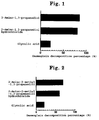
As shown in Fig. 1, 2-amino-1,3-propanediol and 2-amino-1,3-propanediol
hydrochloride were found to exhibit a
stronger effect of promoting decomposition of desmoglein than
does glycolic acid as a positive control.
The effect of 2-amino-2-methyl-1,3-propanediol and its
hydrochloride was investigated in accordance with the same
method.
As shown in Fig. 2, 2-amino-2-methyl-1,3-propanediol
and its hydrochloride were also found to exhibit a stronger
effect of promoting decomposition of desmoglein than does
glycolic acid as a positive control.
The effect of 2-amino-1,3-propanediol and 2-amino-1,3-propanediol
hydrochloride on mitigation of decrease in
turnover rate of the keratinous layer induced by aging was
investigated in four middle-aged subjects. The turnover rate,
water content of the keratinous layer, and elasticity of the
skin were evaluated.
1% Aqueous solutions of 2-amino-1,3-propanediol and its
hydrochloride were employed as the representative
compositions of the present invention. A 1% aqueous solution
of glycolic acid―which is one type of AHA―was employed
as a comparative composition, and water (purified water) was
employed as a reference.
A 1% phosphor solution (1 mL) in ethanol was added to
an outer syringe (length: about 2 cm) of a 10-mL disposable
injector, to bring the solution into contact with the skin
for one minute (four portions on the inside of the forearm).
From the next day, each sample including water was applied to
the phosphor-contacted portions. Application was performed
three times per day and continued for four consecutive days.
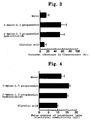
On the fifth day after the test was initiated,
intensity of fluorescence from the skin surface was measured
by use of a fluorescence-detector designed for this
particular use. Decrease in fluorescence was employed as an
index of the turnover rate of the keratinous layer. The
larger the decrease in fluorescence, the greater the turnover
rate. The results are shown in Fig. 3.
Water content of the keratinous layer was measured by
use of an apparatus for measuring electrical conductivity
(Skicon-200, product of IBS). The conductivity was employed
as an index of water content. Thus, the higher the water
content, the higher the electrical conductivity. The results
are shown in Fig. 4.
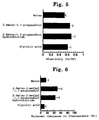
Elasticity of the skin was measured by use of Cutometer
SEM474 (product of Courage + Khazaka). The elasticity was
obtained from extension (Uf) and retraction (Ur) of the skin
when a negative pressure of 300 hPa was repeatedly applied to
the skin by use of a probe having a diameter of 2 mm. The
ratio (Ur/Uf) was employed as an index of elasticity of the
skin. The higher the ratio, the higher the elasticity of the
skin. The results are shown in Fig. 5.
As is clear from Figs. 3 to 5, 2-amino-1,3-propanediol
and its hydrochloride, which are employed as ingredients of
the composition of the present invention, mitigate decrease
in turnover rate induced by aging (Fig. 3) and improve water
content of the keratinous layer (Fig. 4) and elasticity of
the skin (Fig. 5).
These ingredients were found to exhibit the above three
effects more strongly than does glycolic acid, which is known
as a turnover-promoter of the keratinous layer.
The turnover rate, water content of keratinous layer
and elasticity of the skin in case of 2-amino-2-methyl-1,3-propanediol
and its hydrochloride were also investigated.
As is clear from the turnover rate induced by aging
(Fig. 6), water content of the keratinous layer (Fig. 7) and
elasticity of the skin (Fig. 8), 2-amino-2-methyl-1,3-propanediol
and its hydrochloride were found to exhibit the
above three effects more strongly than does glycolic acid.
The external-use composition of the present invention
was applied to women complaining spots, dull appearance,
wrinkles, and skin-roughening. Improvement in skin
conditions was evaluated.
Specifically, 40 women panelists suffering from spots,
dull appearance, wrinkles, and skin-roughening were enrolled
in the test. One lotion according to the present invention
was applied to one cheek of each panelist, and one
comparative lotion was applied to the other cheek. The
compositions (amount based on wt.%) of the lotions employed
in the test are shown in Table 1. Application was performed
twice per day and continued for consecutive four weeks. Skin
conditions were observed by the naked eye, and evaluated on
the basis of the following standards.
The results are shown in Table 2.
- Standards for evaluating improvement effect on spots and
dull appearance
- Remarkably effective : Unfavorable conditions disappeared
- Effective : Unfavorable conditions were improved
- Slightly effective : Unfavorable conditions were slightly improved
- No effect : No improvement in unfavorable conditions
- Standards for evaluating improvement effect on wrinkles
- Remarkably effective : Unfavorable conditions disappeared
- Effective : Unfavorable conditions were improved
- Slightly effective : Unfavorable conditions were slightly improved
- No effect : No improvement in unfavorable conditions
- Standards for evaluating improvement effect on skin-roughening
- Remarkably effective : Unfavorable conditions disappeared
- Effective : Unfavorable conditions were improved
- Slightly effective : Unfavorable conditions were slightly improved
- No effect : No improvement in unfavorable conditions
| Ingredients | Example 1 | Example 2 | Comp. Ex. 1 | Comp. Ex. 2 |
| 2-Amino-1,3- |
1 0 | - | - | - |
| 2-Amino-1,3-propanediol HCl | - | 1.0 | - | - |
| Glycolic acid | - | - | 1.0 | - |
| Glycerin | 1.0 | 1.0 | 1.0 | 1.0 |
| 1,3-Butylene glycol | 4.0 | 4.0 | 4.0 | 4.0 |
| Ethanol | 7.0 | 7.0 | 7.0 | 7.0 |
| POE (20 mol) oleyl alcohol | 0.5 | 0.5 | 0.5 | 0.5 |
| Purified water | balance | balance | balance | balance |
| Samples | Example 1 | Example 2 | Comp. Ex. 1 | Comp. Ex. 2 |
| Spot, dull appearance | BB | BB | CC | DD |
| Wrinkles | BB | BB | CC | DD |
| Skin-roughening | AA | AA | BB | DD |
As is clear from Table 2, the composition containing 2-amino-1,3-propanediol
(Example 1) and the composition
containing its hydrochloride (Example 2) exhibit excellent
effects of improving spots, dull appearance, wrinkles, and
skin-roughening as compared with the composition containing
glycolic acid (Comp. Ex. 1) or the active-ingredient-free
composition (Comp. Ex. 2). Particularly, these two
compositions according to the present invention exhibit
higher efficacy in this test than does the composition
containing glycolic acid, which is known to improve spots,
dull appearance, wrinkles, and skin-roughening by
accelerating the turnover rate of the keratinous layer. The
results indicate that the external-use composition of the
present invention is highly effective for improving spots,
dull appearance, wrinkles, and skin-roughening.
The investigation of 2-amino-2-methyl-1,3-propanediol
and its hydrochloride was made as the same procedure.
Specifically, 40 women panelists suffering from spots,
dull appearance, wrinkles, and skin-roughening were enrolled
in the test. One lotion according to the present invention
was applied to one cheek of each panelist, and one
comparative lotion was applied to the other cheek. The
compositions (amount based on wt.%) of the lotions employed
in the test and the estimation are shown in Table 3.
Application was performed twice per day and continued for
four weeks. Skin conditions were observed by the naked eye,
and evaluated on the basis of the standards described in Test
Example 5.
| Ingredients | Example 3 | Example 4 | Comp. Ex. 3 | Comp. Ex. 4 |
| 2-Amino-2-methyl-1,3-propanediol | 1.0 | - | - | - |
| 2-Amino-2-methyl-1,3-propanediol HCl | - | 1.0 | - | - |
| Glycolic acid | - | - | 1.0 | - |
| Glycerin | 1.0 | 1.0 | 1.0 | 1.0 |
| 1,3-Butylene glycol | 4.0 | 4.0 | 4.0 | 4.0 |
| Ethanol | 7.0 | 7.0 | 7.0 | 7.0 |
| POE (20 mol) oleyl alcohol | 0.5 | 0.5 | 0.5 | 0.5 |
| Purified water | Balance | balance | balance | balance |
| Estimation | ||||
| Spot, dull appearance | BB | BB | CC | DD |
| Wrinkles | BB | BB | CC | DD |
| Skin-roughening | AA | AA | BB | DD |
As is clear from Table 3, the composition containing 2-amino-2-methyl-1,3-propanediol
(Example 3) and the
composition containing its hydrochloride (Example 4) exhibit
excellent effects of improving spots, dull appearance,
wrinkles, and skin-roughening as compared with the
comparative cases.
Thus, pharmacological effect of 2-amino-1,3-propanediol
and its salts and 2-amino-2-methyl-1,3-propanediol and its
salts on desmoglein decomposition, turnover rate of the
keratinous layer, water content of the keratinous layer, and
elasticity of the skin was elucidated. Accordingly, the same
pharmacological effect of 2-amino-2-ethyl-1,3-propanediol and
its salts can be easily expected.
Formulation examples of the external-use composition of
the present invention was described. All of the following
compositions according to the invention have been tested as
described above and found to be highly effective for
improving spots, dull appearance, wrinkles, and skin-roughening
and retarding skin aging.
| [Formulation Example 1] | Cream |
| Ingredient | Amount (wt.%) |
| stearic acid | 5.0 |
| stearyl alcohol | 4.0 |
| isopropyl myristate | 18.0 |
| glyceryl monostearate | 3.0 |
| propylene glycol | 10.0 |
| 2-amino-1,3-propanediol hydrochloride | 0.2 |
| sodium bisulfite | 0.01 |
| preservative | suitable amount |
| perfume | suitable amount |
| purified water | balance |
Propylene glycol and 2-amino-1,3-propanediol
hydrochloride were added to the purified water and the
mixture was maintained at 70°C (aqueous phase). The
remaining ingredients were mixed, and the mixture was melted
and maintained at 70°C (oily phase). The oily phase was
gradually added to the aqueous phase. After completion of
the addition, the mixture was maintained at the same
temperature for a while and was homogeneously emulsified by
use of a homogenizer, and was cooled to 30°C under sufficient
stirring to obtain a cream.
| [Formulation Example 2] | Cream |
| Ingredient | Amount (wt.%) |
| stearic acid | 2.0 |
| stearyl alcohol | 7.0 |
| hydrogenated lanolin | 2.0 |
| squalane | 5.0 |
| 2-octyldodecyl alcohol | 6.0 |
| POE (25 mol) cetyl ether | 3.0 |
| glyceryl monostearate | 2.0 |
| propylene glycol | 5.0 |
| 2-amino-1,3-propanediol | 0.5 |
| citric acid | 0.7 |
| ethyl paraben | 0.3 |
| perfume | suitable amount |
| purified water | balance |
The mixture of 2-amino-1,3-propanediol, citric acid,
and propylene glycol was added to the purified water. The
mixture was maintained at 70°C (aqueous phase). The
remaining ingredients were mixed, and the mixture was melted
and maintained at 70°C (oily phase). The oily phase was
gradually added to the aqueous phase for preliminary
emulsification. Subsequently, the mixture was homogeneously
emulsified by use of a homogenizer, and was cooled to 30°C
under sufficient stirring to obtain a cream.
| [Formulation Example 3] | Cream |
| Ingredient | Amount (wt.%) |
| solid paraffin | 5.0 |
| beeswax | 10.0 |
| Vaseline | 15.0 |
| liquid paraffin | 41.0 |
| glyceryl monostearate | 2.0 |
| POE (20 mol) sorbitan monolaurate | 2.0 |
| powdery soap | 0.1 |
| borax | 0.2 |
| 2-amino-1,3-propanediol hydrochloride | 3.0 |
| ethyl paraben | 0.3 |
| perfume | suitable amount |
| purified water | balance |
The mixture of 2-amino-1,3-propanediol hydrochloride,
powdery soap, and borax was added to the purified water. The
mixture was maintained at 70°C (aqueous phase). The
remaining ingredients were mixed, and the mixture was melted
and maintained at 70°C (oily phase). The oily phase was
gradually added to the aqueous phase with stirring for
reaction. Subsequently, the mixture was homogeneously
emulsified by use of a homogenizer, and was cooled to 30°C
under sufficient stirring.
| [Formulation Example 4] | Milky Lotion |
| Ingredient | Amount (wt.%) |
| stearic acid | 2.5 |
| cetyl alcohol | 1.5 |
| Vaseline | 5.0 |
| liquid paraffin | 10.0 |
| POE (10 mol) monooleate | 2.0 |
| polyethylene glycol 1500 | 3.0 |
| triethanolamine | 1.0 |
| carboxyvinyl polymer (trade name: Carbopole 941, B. F. Goodrich Chemical Company) | 0.05 |
| 2-amino-1,3-propanediol oxalate | 0.02 |
| ethyl paraben | 0.3 |
| perfume | suitable amount |
| purified water | balance |
The carboxyvinyl polymer was added to a small amount of
the purified water, to obtain a solution (phase A). The
mixture of polyethylene glycol 1500, triethanolamine, and 2-amino-1,3-propanethol
oxalate was added to the remaining
portion of the purified water. The mixture was heated for
solution, and the solution was maintained at 70°C (aqueous
phase). The remaining ingredients were mixed, and the
mixture was melted and maintained at 70°C (oily phase). The
oily phase was added to the aqueous phase for preliminary
emulsification, and the phase A mixture was added thereto.
The mixture was homogeneously emulsified by use of a
homogenizer and was cooled to 30°C under sufficient stirring
to obtain a milky lotion.
| [Formulation Example 5] | Milky Lotion |
| Ingredient | Amount (wt.%) |
| microcrystalline wax | 1.0 |
| beeswax | 2.0 |
| lanolin | 20.0 |
| liquid paraffin | 10.0 |
| squalane | 5.0 |
| sorbitan sesquioleate | 4.0 |
| POE (20 mol) sorbitan monooleate | 1.0 |
| propylene glycol | 7.0 |
| 2-amino-1,3-propanediol | 4.0 |
| glutamic acid | 0.7 |
| ethyl paraben | 0.3 |
| perfume | suitable amount |
| purified water | balance |
The mixture of 2-amino-1,3-propanediol, glutamic acid,
and propylene glycol was added to the purified water. The
mixture was heated for solution, and the solution was
maintained at 70°C (aqueous phase). The remaining
ingredients were mixed, and the mixture was melted and
maintained at 70°C (oily phase). The oily phase was
gradually added to the aqueous phase, and the mixture was
homogeneously emulsified by use of a homogenizer and was
cooled to 30°C under sufficient stirring to obtain a milky
lotion.
| [Formulation Example 6] | Jelly |
| Ingredient | Amount (wt.%) |
| 95% ethyl alcohol | 10.0 |
| dipropylene glycol | 15.0 |
| POE (50 mol) oleyl ether | 2.0 |
| carboxyvinyl polymer (trade name: Carbopole 940, B. F. Goodrich Chemical Company) | 0.05 |
| 2-amino-1,3-propanediol | 0.05 |
| gluconic acid | 0.1 |
| ethyl paraben | 0.3 |
| perfume | suitable amount |
| purified water | balance |
Carbopole 940 was thoroughly dissolved in the purified
water. The POE (50 mol) oleyl ether was added to the
resultant aqueous phase. Subsequently, the aqueous phase was
neutralized and thickened through addition of the 2-amino-1,3-propanediol,
to which the remaining ingredients had been
added in advance, to obtain a jelly.
| [Formulation Example 7] | Jelly |
| Ingredient | Amount (wt.%) |
| (phase A) | |
| 95% ethyl alcohol | 10.0 |
| POE (20 mol) octyldodecanol | 1.0 |
| pantothenyl ethyl ether | 0.1 |
| methyl paraben | 0.15 |
| (phase B) | |
| potassium hydroxide | 0.1 |
| (phase C) | |
| glycerin | 5.0 |
| dipropylene glycol | 10.0 |
| 2-amino-1,3-propanediol hydrochloride | 0.05 |
| carboxyvinyl polymer (trade name: Carbopole 940, B. F. Goodrich Chemical Company) | 0.2 |
| purified water | balance |
Each of the "phase A" and the "phase C" ingredients
were homogenously mixed. The "phase A" mixture was added to
and dissolved in the "phase C" mixture. Thereafter, the
"phase B" ingredient was added thereto and the mixture was
charged into a container to obtain a jelly.
| [Formulation Example 8] | Pack |
| Ingredient | Amount (wt.%) |
| (phase A) | |
| dipropylene glycol | 5.0 |
| POE (60 mol) hydrogenated castor oil | 5.0 |
| (phase B) | |
| olive oil | 5.0 |
| tocopheryl acetate | 0.2 |
| ethyl paraben | 0.2 |
| perfume | 0.2 |
| (phase C) | |
| 2-amino-1,3-propanediol sulfate | 0.3 |
| polyvinyl alcohol (saponification value: 90; polymerization degree: 2,000) | 13.0 |
| ethyl alcohol | 7.0 |
| purified water | balance |
Each of the "phase A", "phase B", and "phase C"
ingredients were homogeously mixed. The "phase B" mixture
was added to and dissolved in the "phase A" mixture.
Subsequently, the "phase C" mixture was added thereto, and
the mixture was charged into a container, to obtain a pack.
| [Formulation Example 9] | Solid-type foundation |
| Ingredient | Amount (wt.%) |
| talc | 43.1 |
| kaolin | 15.0 |
| sericite | 10.0 |
| zinc oxide | 7.0 |
| titanium dioxide | 3.8 |
| yellow iron oxide | 2.9 |
| black iron oxide | 0.2 |
| squalane | 8.0 |
| isostearic acid | 4.0 |
| POE sorbitan monooleate | 3.0 |
| isocetyl octanoate | 2.0 |
| 2-amino-1,3-propanediol | 0.2 |
| lactic acid | 0.5 |
| preservative | suitable amount |
| perfume | suitable amount |
The powdery ingredients from the talc to the black iron
oxide were sufficiently mixed by use of a blender. The oily
ingredients from the squalane to the isocetyl octanoate, the
2-amino-1,3-propanediol, the lactic acid, the preservative,
and the perfume were added to the resultant mixture. The
mixture was thoroughly kneaded, charged into a container, and
then shaped, to obtain a solid-type foundation.
| [Formulation Example 10] | Emulsion-type foundation |
| Ingredient | Amount (wt.%) |
| (powdery ingredients) | |
| titanium dioxide | 10.3 |
| sericite | 5.4 |
| kaolin | 3.0 |
| yellow iron oxide | 0.8 |
| red iron oxide | 0.3 |
| black iron oxide | 0.2 |
| (oily phase) | |
| decamethylcyclopentasiloxane | 11.5 |
| liquid paraffin | 4.5 |
| POE-modified dimethylpolysiloxane | 4.0 |
| (aqueous phase) | |
| purified water | 50.0 |
| 1,3-butylene glycol | 4.5 |
| 2-amino-1,3-propanediol | 1.0 |
| sorbitan sesquioleate | 3.0 |
| preservative | suitable amount |
| perfume | suitable amount |
The aqueous phase ingredients were mixed and heated
with stirring. The powdery ingredients which had been
thoroughly mixed and pulverized were added thereto and
subjected to processing in a homogenizer. The oily phase
ingredients which had been heated and mixed were added, and
the mixture was processed by use of a homogenizer. The
perfume was added under stirring, followed by cooling to room
temperature, to obtain an emulsion-type foundation.
| [Formulation Example 11] | Cream |
| Ingredient | Amount (wt.%) |
| stearic acid | 5.0 |
| stearyl alcohol | 4.0 |
| isopropyl myristate | 18.0 |
| glyceryl monostearate | 3.0 |
| propylene glycol | 10.0 |
| 2-amino-2-methyl-1,3-propanediol hydrochloride | 0.1 |
| sodium bisulfite | 0.01 |
| preservative | suitable amount |
| perfume | suitable amount |
| purified water | balance |
The mixture of propylene glycol and 2-amino-2-methyl-1,3-propanediol
hydrochloride was added to the purified water.
The mixture was maintained at 70°C (aqueous phase). The
remaining ingredients were mixed, and the resultant mixture
was melted and maintained at 70°C (oily phase). The oily
phase was gradually added to the aqueous phase. After
completion of the addition, the mixture was maintained at the
same temperature for a while. Thereafter, the mixture was
homogeneously emulsified by use of a homogenizer, and the
thus-obtained emulsion was cooled to 30°C under sufficient
stirring, to obtain a cream.
| [Formulation Example 12] | Cream |
| Ingredient | Amount (wt.%) |
| stearic acid | 2.0 |
| stearyl alcohol | 7.0 |
| hydrogenated lanolin | 2.0 |
| squalane | 5.0 |
| 2-octyldodecyl alcohol | 6.0 |
| POE (25 mol) cetyl ether | 3.0 |
| glyceryl monostearate | 2.0 |
| propylene glycol | 5.0 |
| 2-amino-2-methyl-1,3-propanediol | 1.0 |
| citric acid | 0.7 |
| ethyl paraben | 0.3 |
| perfume | suitable amount |
| purified water | balance |
The mixture of 2-amino-2-methyl-1,3-propanediol, citric
acid, and propylene glycol was added to the purified water.
The mixture was maintained at 70°C (aqueous phase). The
remaining ingredients were mixed, and the resultant mixture
was melted and maintained at 70°C (oily phase). The oily
phase was gradually added to the aqueous phase for
preliminary emulsification. Subsequently, the mixture was
homogeneously emulsified by use of a homogenizer, and the
thus-obtained emulsion was cooled to 30°C under sufficient
stirring, to obtain a cream.
| [Formulation Example 13] | Cream |
| Ingredient | Amount (wt.%) |
| solid paraffin | 5.0 |
| beeswax | 10.0 |
| Vaseline | 15.0 |
| liquid paraffin | 41.0 |
| glyceryl monostearate | 2.0 |
| POE (20 mol) sorbitan monolaurate | 2.0 |
| powdery soap | 0.1 |
| borax | 0.2 |
| 2-amino-2-methyl-1,3-propanediol hydrochloride | 3.0 |
| ethyl paraben | 0.3 |
| perfume | suitable amount |
| purified water | balance |
The mixture of 2-amino-2-methyl-1,3-propanediol
hydrochloride, powdery soap, and borax was added to the
purified water. The mixture was maintained at 70°C (aqueous
phase). The remaining ingredients were mixed, and the
mixture was maintained at 70°C (oily phase). The oily phase
was gradually added to the aqueous phase with stirring for
reaction. Subsequently, the mixture was homogeneously
emulsified by use of a homogenizer, and was cooled to 30°C
under sufficient stirring.
| [Formulation Example 14] | Milky Lotion |
| Ingredient | Amount (wt.%) |
| stearic acid | 2.5 |
| cetyl alcohol | 1.5 |
| Vaseline | 5.0 |
| liquid paraffin | 10.0 |
| POE (10 mol) monooleate | 2.0 |
| polyethylene glycol 1500 | 3.0 |
| triethanolamine | 1.0 |
| carboxyvinyl polymer (trade name: Carbopole 941, B. F. Goodrich Chemical Company) | 0.05 |
| 2-amino-2-methyl-1,3-propanediol oxalate | 0.01 |
| ethyl paraben | 0.3 |
| perfume | suitable amount |
| purified water | balance |
The carboxyvinyl polymer was added to a small amount of
the purified water to obtain a solution (phase A). The
mixture of polyethylene glycol 1500, triethanolamine, and 2-amino-2-methyl-1,3-propanediol
oxalate was added to the
remaining portion of the purified water. The mixture was
maintained at 70°C (aqueous phase). The remaining
ingredients were mixed, and the mixture was maintained at
70°C (oily phase). The oily phase was added to the aqueous
phase for preliminary emulsification, and the phase A mixture
was added thereto. The mixture was homogeneously emulsified
by use of a homogenizer, and after emulsification, the thus-obtained
emulsion was cooled to 30°C under sufficient
stirring to obtain a milky lotion.
| [Formulation Example 15] | Milky Lotion |
| Ingredient | Amount (wt.%) |
| microcrystalline wax | 1.0 |
| beeswax | 2.0 |
| lanolin | 20.0 |
| liquid paraffin | 10.0 |
| squalane | 5.0 |
| sorbitan sesquioleate | 4.0 |
| POE (20 mol) sorbitan monooleate | 1.0 |
| propylene glycol | 7.0 |
| 2-amino-2-methyl-1,3-propanediol | 5.0 |
| glutamic acid | 0.7 |
| ethyl paraben | 0.3 |
| perfume | suitable amount |
| purified water | balance |
The mixture of 2-amino-2-methyl-1,3-propanediol,
glutamic acid, and propylene glycol was added to the purified
water. The mixture was maintained at 70°C (aqueous phase).
The remaining ingredients were mixed, and the mixture was
maintained at 70°C (oily phase). The oily phase was
continuously stirred and the aqueous phase was slowly added
thereto. The mixture was emulsified by use of a homogenizer.
The thus-obtained emulsion was cooled to 30°C under
sufficient stirring to obtain a milky lotion.
| [Formulation Example 16] | Jelly |
| Ingredient | Amount (wt.%) |
| 95% ethyl alcohol | 10.0 |
| dipropylene glycol | 15.0 |
| POE (50 mol) oleyl ether | 2.0 |
| carboxyvinyl polymer (trade name: Carbopole 940, B. F. Goodrich Chemical Company) | 0.05 |
| 2-amino-2-methyl-1,3-propanediol | 0.1 |
| gluconic acid | 0.1 |
| ethyl paraben | 0.3 |
| perfume | suitable amount |
| purified water | balance |
Carbopole 940 was dissolved thoroughly in the purified
water. The POE (50 mol) oleyl ether was added to the
resultant aqueous phase. Subsequently, the resultant aqueous
phase was neutralized and thickened through the addition of
the 2-amino-2-methyl-1,3-propanediol, to which the remaining
ingredients had been added in advance, to obtain a jelly.
| [Formulation Example 17] | Jelly |
| Ingredient | Amount (wt.%) |
| (phase A) | |
| 95% ethyl alcohol | 10.0 |
| POE (20 mol) octyldodecanol | 1.0 |
| pantothenyl ethyl ether | 0.1 |
| methyl paraben | 0.15 |
| (phase B) | |
| potassium hydroxide | 0.1 |
| (phase C) | |
| glycerin | 5.0 |
| dipropylene glycol | 10.0 |
| 2-amino-2-methyl-1,3-propanediol hydrochloride | 0.05 |
| carboxyvinyl polymer (trade name: Carbopole 940, B. F. Goodrich Chemical Company) | 0.2 |
| purified water | balance |
The "phase A" ingredients were homogenously mixed.
Similarly, the "phase C" ingredients were homogenously mixed
The thus-obtained "phase A" mixture was added to and
dissolved in the "phase C" mixture. The "phase B" ingredient
was added thereto and the resultant mixture was charged into
a container to obtain a jelly.
| [Formulation Example 18] | Pack |
| Ingredient | Amount (wt.%) |
| (phase A) | |
| dipropylene glycol | 5.0 |
| POE (60 mol) hydrogenated castor oil | 5.0 |
| (phase B) | |
| olive oil | 5.0 |
| tocopheryl acetate | 0.2 |
| ethyl paraben | 0.2 |
| perfume | 0.2 |
| (phase C) | |
| 2-amino-2-methyl-1,3-propanediol sulfate | 0.3 |
| polyvinyl alcohol (saponification value: 90; polymerization degree: 2,000) | 13.0 |
| ethyl alcohol | 7.0 |
| purified water | balance |
Each of the "phase A", "phase B", and "phase C"
ingredients were homogenously mixed. The "phase B" mixture
was added to and dissolved in the "phase A" mixture.
Subsequently, the "phase C" mixture was added thereto, and
the resultant mixture was charged into a container, to obtain
a pack.
| [Formulation Example 19] | Solid-type foundation |
| Ingredient | Amount (wt.%) |
| talc | 43.1 |
| kaolin | 15.0 |
| sericite | 10.0 |
| zinc oxide | 7.0 |
| titanium dioxide | 3.8 |
| yellow iron oxide | 2.9 |
| black iron oxide | 0.2 |
| squalane | 8.0 |
| isostearic acid | 4.0 |
| POE sorbitan monooleate | 3.0 |
| isocetyl octanoate | 2.0 |
| 2-amino-2-methyl-1,3-propanediol | 0.2 |
| lactic acid | 0.5 |
| preservative | suitable amount |
| perfume | suitable amount |
The powdery ingredients from the talc to the black iron
oxide were sufficiently mixed by use of a blender. The
mixture of the oily ingredients from the squalane to the
isocetyl octanoate, the 2-amino-2-methyl-1,3-propanediol, the
lactic acid, the preservative, and the perfume was added to
the previous mixture. The mixture was thoroughly kneaded,
charged into a container, and then shaped, to obtain a solid-type
foundation.
| [Formulation Example 20] | Emulsion-type foundation |
| Ingredient | Amount (wt.%) |
| (powdery ingredients) | |
| titanium dioxide | 10.3 |
| sericite | 5.4 |
| kaolin | 3.0 |
| yellow iron oxide | 0.8 |
| red iron oxide | 0.3 |
| black iron oxide | 0.2 |
| (oily phase) | |
| decamethylcyclopentasiloxane | 11.5 |
| liquid paraffin | 4.5 |
| POE-modified dimethylpolysiloxane | 4.0 |
| (aqueous phase) | |
| purified water | 50.0 |
| 1,3-butylene glycol | 4.5 |
| 2-amino-2-methyl-1,3-propanediol | 1.5 |
| sorbitan sesquioleate | 3.0 |
| preservative | suitable amount |
| perfume | suitable amount |
The aqueous phase ingredients were mixed and heated
with stirring. The powdery ingredients which had been
thoroughly mixed and pulverized were added thereto and
subjected to processing in a homogenizer. The oily phase
ingredients which had been heated and mixed were added, and
the resultant mixture was processed by use of a homogenizer.
The perfume was added under stirring, followed by cooling to
room temperature, to obtain an emulsion-type foundation.
Claims (10)
- An external-use composition comprising a propanediol derivative represented by formula (I):(wherein R represents a hydrogen atom, a methyl group, or an ethyl group) or a pharmaceutically acceptable salt thereof.

- An external-use composition according to claim 1, wherein the propanediol derivative represented by formula (I) is 2-amino-1,3-propanediol.
- An external-use composition according to claim 1, wherein the propanediol derivative represented by formula (I) is 2-amino-2-methyl-1,3-propanediol.
- An external-use composition according to claim 1, wherein the propanediol derivative represented by formula (I) is 2-amino-2-ethyl-1,3-propanediol.
- An external-use composition according to claim 1, wherein the amount of the propanediol derivative represented by formula (I) is 0.005-20.0 wt.% with respect to the entirety of the external-use composition.
- An external-use composition according to claim 1, which exhibits retardation action against aging of the skin.
- An external-use composition according to claim 1, which exhibits preventive action against spots.
- An external-use composition according to claim 1, which exhibits preventive action against dull appearance.
- An external-use composition according to claim 1, which exhibits preventive action against wrinkles.
- An external-use composition according to claim 1, which exhibits preventive action against skin-roughening.
Applications Claiming Priority (4)
| Application Number | Priority Date | Filing Date | Title |
|---|---|---|---|
| JP22507999 | 1999-08-09 | ||
| JP22507999 | 1999-08-09 | ||
| JP2000124198 | 2000-04-25 | ||
| JP2000124198 | 2000-04-25 |
Publications (1)
| Publication Number | Publication Date |
|---|---|
| EP1075835A1 true EP1075835A1 (en) | 2001-02-14 |
Family
ID=26526424
Family Applications (1)
| Application Number | Title | Priority Date | Filing Date |
|---|---|---|---|
| EP00117013A Withdrawn EP1075835A1 (en) | 1999-08-09 | 2000-08-08 | Use of aminodiol derivatives in skin cosmeics |
Country Status (3)
| Country | Link |
|---|---|
| US (1) | US20030152599A1 (en) |
| EP (1) | EP1075835A1 (en) |
| KR (1) | KR20010050016A (en) |
Cited By (4)
| Publication number | Priority date | Publication date | Assignee | Title |
|---|---|---|---|---|
| WO2004004674A1 (en) * | 2002-07-04 | 2004-01-15 | Beiersdorf Ag | Cosmetic preparation for treating dry and sensitive skin |
| WO2004041224A1 (en) * | 2002-11-02 | 2004-05-21 | Beiersdorf Ag | Hair conditioning agents having improved coating and olfactory properties |
| FR2925312A1 (en) * | 2007-12-19 | 2009-06-26 | Oreal | COSMETIC USE OF DESMOGLEINE I PROTEINS |
| CN101980022A (en) * | 2009-01-13 | 2011-02-23 | 欧莱雅 | Use of the desmoglein I protein for screening soluble anti-ageing active ingredients |
Families Citing this family (1)
| Publication number | Priority date | Publication date | Assignee | Title |
|---|---|---|---|---|
| JP7485462B2 (en) * | 2019-11-29 | 2024-05-16 | ポーラ化成工業株式会社 | Desmograin amount estimation device and estimation program, and skin blemish concentration estimation device and estimation program |
Citations (5)
| Publication number | Priority date | Publication date | Assignee | Title |
|---|---|---|---|---|
| US4021539A (en) * | 1974-01-29 | 1977-05-03 | Henkel & Cie G.M.B.H. | Skin treating cosmetic compositions containing N-polyhydroxyalkyl-amines |
| GB1480314A (en) * | 1974-05-04 | 1977-07-20 | Henkel & Cie Gmbh | Skin-care and skin-protection compositions containing skin-moisture-containing agents |
| JPS54132242A (en) * | 1978-03-31 | 1979-10-15 | Kanebo Ltd | Cosmetics |
| EP0530865A1 (en) * | 1991-07-08 | 1993-03-10 | Crinos Industria Farmacobiologica S.p.A. | Composition for the cleaning of skin, scalp and hair |
| EP0691327A1 (en) * | 1993-03-17 | 1996-01-10 | Kao Corporation | Amine derivative and dermatologic preparation containing the same |
-
2000
- 2000-08-08 EP EP00117013A patent/EP1075835A1/en not_active Withdrawn
- 2000-08-08 KR KR1020000045860A patent/KR20010050016A/en not_active Withdrawn
-
2002
- 2002-11-07 US US10/289,378 patent/US20030152599A1/en not_active Abandoned
Patent Citations (5)
| Publication number | Priority date | Publication date | Assignee | Title |
|---|---|---|---|---|
| US4021539A (en) * | 1974-01-29 | 1977-05-03 | Henkel & Cie G.M.B.H. | Skin treating cosmetic compositions containing N-polyhydroxyalkyl-amines |
| GB1480314A (en) * | 1974-05-04 | 1977-07-20 | Henkel & Cie Gmbh | Skin-care and skin-protection compositions containing skin-moisture-containing agents |
| JPS54132242A (en) * | 1978-03-31 | 1979-10-15 | Kanebo Ltd | Cosmetics |
| EP0530865A1 (en) * | 1991-07-08 | 1993-03-10 | Crinos Industria Farmacobiologica S.p.A. | Composition for the cleaning of skin, scalp and hair |
| EP0691327A1 (en) * | 1993-03-17 | 1996-01-10 | Kao Corporation | Amine derivative and dermatologic preparation containing the same |
Non-Patent Citations (1)
| Title |
|---|
| PATENT ABSTRACTS OF JAPAN vol. 003, no. 157 (C - 068) 22 December 1979 (1979-12-22) * |
Cited By (7)
| Publication number | Priority date | Publication date | Assignee | Title |
|---|---|---|---|---|
| WO2004004674A1 (en) * | 2002-07-04 | 2004-01-15 | Beiersdorf Ag | Cosmetic preparation for treating dry and sensitive skin |
| DE10230026A1 (en) * | 2002-07-04 | 2004-01-22 | Beiersdorf Ag | Cosmetic preparation for the treatment of dry or sensitive skin |
| WO2004041224A1 (en) * | 2002-11-02 | 2004-05-21 | Beiersdorf Ag | Hair conditioning agents having improved coating and olfactory properties |
| FR2925312A1 (en) * | 2007-12-19 | 2009-06-26 | Oreal | COSMETIC USE OF DESMOGLEINE I PROTEINS |
| WO2009081368A3 (en) * | 2007-12-19 | 2010-04-29 | L'oreal | Cosmetic use desmoglein i-type proteins |
| CN101980022A (en) * | 2009-01-13 | 2011-02-23 | 欧莱雅 | Use of the desmoglein I protein for screening soluble anti-ageing active ingredients |
| US9316653B2 (en) | 2009-01-13 | 2016-04-19 | L'oreal | Use of soluble forms of the Desmoglein I protein for the purposes of screening for anti-ageing active agents |
Also Published As
| Publication number | Publication date |
|---|---|
| KR20010050016A (en) | 2001-06-15 |
| US20030152599A1 (en) | 2003-08-14 |
Similar Documents
| Publication | Publication Date | Title |
|---|---|---|
| JP3513873B2 (en) | External preparation for skin | |
| CA2597640A1 (en) | Cosmetic and cosmeceutical compositions for restoration of skin barrier function | |
| EP2051690B1 (en) | Use of c-glycoside derivatives as pro-desquamating active agents | |
| US20080160088A1 (en) | Composition containing hydroxyapatite and a calcium salt | |
| JPH08283139A (en) | Topical skin | |
| JP3513872B2 (en) | External preparation for skin | |
| US20030152599A1 (en) | Composition for external use | |
| CN114366692A (en) | Oil-control acne-removing composition and application thereof | |
| JP3278138B2 (en) | External preparation for skin | |
| JPH09268121A (en) | External preparation for skin | |
| JP2002012512A (en) | External composition | |
| JP2000044460A (en) | External preparation for skin | |
| JPH10212225A (en) | Wrinkle preventive | |
| JPH0925214A (en) | Skin preparation for external use | |
| JP2021004237A (en) | Topical compositions containing n-acyl dipeptide derivatives and glycolic acid | |
| JPH1029922A (en) | Preparation for external use for skin | |
| EP0955032A1 (en) | Cosmetic | |
| JPH0925213A (en) | Skin preparation for external use | |
| JP2003146886A (en) | Filaggrin synthesis accelerator, improver for moisture- retaining function of horny layer, horny layer softener and enhancer of isolated amino acid in horny layer | |
| JP3505003B2 (en) | External preparation | |
| WO2001045697A1 (en) | Skin external agents and drugs | |
| JPH1129468A (en) | Protease inhibitor | |
| JPH0977653A (en) | Cosmetics | |
| JP3277033B2 (en) | Cosmetics | |
| JPH09176030A (en) | Sebum secretagogue |
Legal Events
| Date | Code | Title | Description |
|---|---|---|---|
| PUAI | Public reference made under article 153(3) epc to a published international application that has entered the european phase |
Free format text: ORIGINAL CODE: 0009012 |
|
| AK | Designated contracting states |
Kind code of ref document: A1 Designated state(s): DE FR GB IT |
|
| AX | Request for extension of the european patent |
Free format text: AL;LT;LV;MK;RO;SI |
|
| 17P | Request for examination filed |
Effective date: 20010124 |
|
| AKX | Designation fees paid |
Free format text: DE FR GB IT |
|
| STAA | Information on the status of an ep patent application or granted ep patent |
Free format text: STATUS: THE APPLICATION IS DEEMED TO BE WITHDRAWN |
|
| 18D | Application deemed to be withdrawn |
Effective date: 20060221 |