EP1062976A2 - Medizinisches Therapiesystem - Google Patents
Medizinisches Therapiesystem Download PDFInfo
- Publication number
- EP1062976A2 EP1062976A2 EP00250211A EP00250211A EP1062976A2 EP 1062976 A2 EP1062976 A2 EP 1062976A2 EP 00250211 A EP00250211 A EP 00250211A EP 00250211 A EP00250211 A EP 00250211A EP 1062976 A2 EP1062976 A2 EP 1062976A2
- Authority
- EP
- European Patent Office
- Prior art keywords
- signal
- therapy
- data
- processing
- signals
- Prior art date
- Legal status (The legal status is an assumption and is not a legal conclusion. Google has not performed a legal analysis and makes no representation as to the accuracy of the status listed.)
- Withdrawn
Links
- 238000013160 medical therapy Methods 0.000 title claims description 3
- 238000012545 processing Methods 0.000 claims abstract description 130
- 238000002560 therapeutic procedure Methods 0.000 claims abstract description 84
- 238000004422 calculation algorithm Methods 0.000 claims description 15
- 230000006399 behavior Effects 0.000 claims description 10
- 238000000034 method Methods 0.000 claims description 9
- 230000006835 compression Effects 0.000 claims description 8
- 238000007906 compression Methods 0.000 claims description 8
- 239000013598 vector Substances 0.000 claims description 6
- 238000004364 calculation method Methods 0.000 claims description 5
- 206010003119 arrhythmia Diseases 0.000 claims description 4
- 230000006793 arrhythmia Effects 0.000 claims description 4
- 230000008859 change Effects 0.000 claims description 4
- 238000001228 spectrum Methods 0.000 claims description 4
- 230000002763 arrhythmic effect Effects 0.000 claims description 3
- 238000012937 correction Methods 0.000 claims description 3
- 238000012067 mathematical method Methods 0.000 claims description 3
- 230000001225 therapeutic effect Effects 0.000 claims description 3
- 230000005540 biological transmission Effects 0.000 claims description 2
- 230000003595 spectral effect Effects 0.000 claims description 2
- 230000036962 time dependent Effects 0.000 claims description 2
- 206010015856 Extrasystoles Diseases 0.000 claims 2
- 208000000418 Premature Cardiac Complexes Diseases 0.000 claims 2
- 238000000605 extraction Methods 0.000 claims 2
- 206010036590 Premature baby Diseases 0.000 claims 1
- 210000005242 cardiac chamber Anatomy 0.000 claims 1
- 229940030602 cardiac therapy drug Drugs 0.000 claims 1
- 238000009795 derivation Methods 0.000 claims 1
- 230000010247 heart contraction Effects 0.000 claims 1
- 238000011835 investigation Methods 0.000 claims 1
- 238000007620 mathematical function Methods 0.000 claims 1
- 239000000203 mixture Substances 0.000 claims 1
- 230000002028 premature Effects 0.000 claims 1
- 230000009466 transformation Effects 0.000 claims 1
- 230000000875 corresponding effect Effects 0.000 description 16
- 230000006870 function Effects 0.000 description 10
- 238000011156 evaluation Methods 0.000 description 5
- 238000004891 communication Methods 0.000 description 4
- 230000000638 stimulation Effects 0.000 description 4
- 230000001960 triggered effect Effects 0.000 description 4
- 230000000712 assembly Effects 0.000 description 3
- 238000000429 assembly Methods 0.000 description 3
- 238000013500 data storage Methods 0.000 description 3
- 230000001419 dependent effect Effects 0.000 description 3
- 230000008569 process Effects 0.000 description 3
- 230000001755 vocal effect Effects 0.000 description 3
- 230000009471 action Effects 0.000 description 2
- 230000008901 benefit Effects 0.000 description 2
- 230000000747 cardiac effect Effects 0.000 description 2
- 206010061592 cardiac fibrillation Diseases 0.000 description 2
- 238000010586 diagram Methods 0.000 description 2
- 230000002600 fibrillogenic effect Effects 0.000 description 2
- 230000000737 periodic effect Effects 0.000 description 2
- 238000007781 pre-processing Methods 0.000 description 2
- 230000035939 shock Effects 0.000 description 2
- 239000000126 substance Substances 0.000 description 2
- 230000002123 temporal effect Effects 0.000 description 2
- 230000006978 adaptation Effects 0.000 description 1
- 239000003795 chemical substances by application Substances 0.000 description 1
- 150000001875 compounds Chemical class 0.000 description 1
- 239000012141 concentrate Substances 0.000 description 1
- 230000002596 correlated effect Effects 0.000 description 1
- 238000004132 cross linking Methods 0.000 description 1
- 238000000354 decomposition reaction Methods 0.000 description 1
- 238000011161 development Methods 0.000 description 1
- 230000018109 developmental process Effects 0.000 description 1
- 238000003745 diagnosis Methods 0.000 description 1
- 230000000694 effects Effects 0.000 description 1
- 238000005516 engineering process Methods 0.000 description 1
- 238000001914 filtration Methods 0.000 description 1
- 230000014509 gene expression Effects 0.000 description 1
- 230000036541 health Effects 0.000 description 1
- 230000002452 interceptive effect Effects 0.000 description 1
- 230000002688 persistence Effects 0.000 description 1
- 230000004044 response Effects 0.000 description 1
- 230000033764 rhythmic process Effects 0.000 description 1
- 230000011664 signaling Effects 0.000 description 1
- 238000004088 simulation Methods 0.000 description 1
- 238000012109 statistical procedure Methods 0.000 description 1
- 239000013589 supplement Substances 0.000 description 1
- 238000011144 upstream manufacturing Methods 0.000 description 1
Images






Classifications
-
- A—HUMAN NECESSITIES
- A61—MEDICAL OR VETERINARY SCIENCE; HYGIENE
- A61N—ELECTROTHERAPY; MAGNETOTHERAPY; RADIATION THERAPY; ULTRASOUND THERAPY
- A61N1/00—Electrotherapy; Circuits therefor
- A61N1/18—Applying electric currents by contact electrodes
- A61N1/32—Applying electric currents by contact electrodes alternating or intermittent currents
- A61N1/36—Applying electric currents by contact electrodes alternating or intermittent currents for stimulation
- A61N1/362—Heart stimulators
- A61N1/365—Heart stimulators controlled by a physiological parameter, e.g. heart potential
- A61N1/36585—Heart stimulators controlled by a physiological parameter, e.g. heart potential controlled by two or more physical parameters
Definitions
- the invention relates to a - in particular implantable - medical therapy system, preferably a system for electrical stimulation or other treatment of the heart with electrical impulses.
- Such systems are, for example, as implantable pacemakers, defibrillators or appropriate devices for eliminating arrhythmia conditions of the heart or for electrostimulation treatment of other parts of the human body.
- the corresponding devices generate electrical impulses or others on the signals or effects of therapy depending on the human body of sensor signals that they pick up from the body. But it is also one External control possible.
- the invention is therefore based on the object, information from the To make bodies usable for therapeutic purposes, which on the one hand are relatively obscured are recognizable in the body's signaling process and on the other hand only one have a distant temporal reference to the current signal event.
- clinical indicators such as risk factors, quality of life indicators, risk factors and clinical follow-up indicators or performance factors in the system and be included in the calculations.
- clinical indicators such as risk factors, quality of life indicators, risk factors and clinical follow-up indicators or performance factors in the system and be included in the calculations.
- multi-stage Processing which also contains hidden information related to the target can detect signals recorded from the patient's body.
- the reference periods for Heartbeats are set in the real-time system, but consider a time vector to be the next periodic event to be expected. Then the heart rate changes, so this vector is generated by the corresponding linking / processing unit changes with the result that the corresponding reference times also change.
- the necessary therapy actions are based on the corresponding statements determined and defined with their corresponding reference times. Should any additional conditions or requirements change, the corresponding ones Therapy measures do not apply if a countermeasure is initiated becomes. If an arrhythmia or fibrillation is expected by prediction, can a multi-step response can be initiated if such a predictor Indicates event in the future with a certain probability. By the for a point in time in the future under the corresponding verbal designation The event to be treated is initially a "gentle" countermeasure triggered. Then the persistence of the predictor is repeated the query (re-run the corresponding link chain with the current signal states then existing are repeated. If the predictor exists continues, becomes a "harder" countermeasure due to the then existing signal states executed.
- service processing like a signal compression, a “compression” of events which are further in the past, for a statistical summary. In this way, the data can be compressed the more it is in the past.
- an uncompressed data record can also be presented "outsource” its compression by telemetry, making it interactive for one comprehensive processing can still be accessed on the total data set can.
- stability checks and Functional and plausibility checks are carried out at times when there is no particularly great need for processing. This also includes control of therapy success and a resulting self-learning function. It is it can be seen that such experiences can be seen through telemetry and communication with corresponding centers, it can also be used for other similar therapy devices have it done.
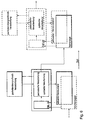
- FIG. 1 From the overall overview of the therapy system according to the invention shown in FIG. 1 its basic structure can be seen. Here are the physical ones Basic units described, which are used for implementation. The in the In contrast, the components described below are more function-related and reflect the way of working in detail.
- ICD implantable cardioverter defibrillator
- the input interface to the patient is through a number of sensors formed, which are combined in the drawing to form sensor means 1.
- the individual sensors can be physical or chemical converters, which signals tap on the body and into time-dependent electrical signals reshape.
- the transducers typically form electrodes or other signal generators, which allow a statement about the patient's condition.
- the electrical Signals are supplied to analog-digital converter means 2.
- Their digitized Output signals go to a processing part 3, which is processed by a data processor is formed, which interacts with a data memory 4 stands.
- the processing part 3 accesses a data memory 4, which both the patient condition data that characterize the patient, as well as system condition and system configuration data that that associated with the patient Describe system contains.
- the processing part is priority-controlled, so it leads the upcoming signal processing operations by urgency, where however, the processing with respect to an input part 3.1 and an output part 3.2 is real-time, since the corresponding input and Output signals are recorded or made available in a timely manner have to.
- the rest of the processing can be time-decoupled and therefore appropriate of different urgency, with certain processing tasks of a more complex nature time-delayed or externally networked can be, as described in more detail below.
- the output section 3.2 of the processing section 3 is provided with digital-to-analog converter means 6 in connection, which is the interface to therapy applicator means 7 form that act on the patient.
- digital-to-analog converter means 6 in connection, which is the interface to therapy applicator means 7 form that act on the patient.
- This is the real one Therapy surface in the form of electrodes or chemical dosing devices.
- System health and system configuration data including the associated Linking and processing algorithms from external to the processing part be "reloaded".
- Such additional system configuration data are recorded in the plug-in part 4.1 of the data memory 4.
- the content the data memory can be read externally via the communication interface 5 or be changed from there. This way both are outsourced the processing of data is possible as well as the supply of external system status and system configuration data as well as collectives of patient data and generalized patient condition sizes.
- the priority-related processing allows processing at low priority at low other processing case also make precautionary calculations, which may be needed, but can also be discarded.
- the data is stored in so-called signal data sets, as groups of related information. These signal data sets have time stamp and context signals, as will be described in more detail below.
- FIG. 2 shows the basic course of simple signal processing with an unlinked signal Processing from the sensor means 1 to the applicator means 7 shown in more detail.
- the arrangement of the analog-to-digital converter means 2 and Digital-analog converter means 6 corresponds to that of Figure 1.
- the processing part 3 of Figure 1 is here in the form of blocks connected in series reproduced.
- At least one digitized sensor output signal is used as the input signal successively two first (upstream and downstream) processing / linking stages 3.11 and 3.12 fed.
- the processed sensor signal forms the output signal of the downstream first processing / combination stages 3.12.
- the first two processing / linking stages 3.11 and 3.12 together form a stage for preprocessing the sensor signals. This preprocessing serves in the first stage of the geometry assessment. This is for example in cardiac stimulator systems, objectified processing of signals possible, which come from different electrode configurations. Output signals of interconnections of several electrodes are in this Level linked if necessary.
- a time-frequency evaluation is carried out of the sensor signal or another signal evaluation.
- This Signal evaluation is initially only related to the current sensor signals themselves and corresponds to a short-term evaluation or filtering around fixed disturbance or runtime influences compensate for that not from other signals or system states are dependent. This compensation also includes the sensor signals among each other. Below is described how this editing due to the other features of the system described also linked to other signals and in time can be made iteratively.
- This processing part was in the assembly 3 referred to as the input part 3.1.
- the processed sensor signal as the output signal of the first processing / combination stage 3.11 / 3.12 forms the input signal of at least two second ones Processing / linking levels 3.13 and 3.14, which are from the processed Sensor signals a control variable for the application agent or a clinical Indicator or predictor as the output signal of the second processing / linking stage generated.
- the difference is that the immediate tax parameters (for example, no heartbeat in a pacemaker) such as have been formed immediately.
- a clinical indicator or predictor on the other hand, it is a concealed one recorded by the sensor means Signal state, recorded with a time delay, a longer processing time subject and if necessary iteratively and / or in context with others Signal states is recorded.
- the indicator or predictor signals have the same system structure are processed as the immediate control signals, resulting in an essential Simplification in the control effort results.
- the at least one control signal, a clinical indicator or predictor form that Input signal of a third processing / combination stage, which is a therapy applicator raw signal as the output signal of the third processing / combination stage 3.15 generated.
- a third processing / combination stage which is a therapy applicator raw signal as the output signal of the third processing / combination stage 3.15 generated.
- the indication or is implemented Prediction in combination with a control signal in a signal which is called Therapy applicator raw signal forms the basis for the treatment.
- the therapy applicator raw signal as an input signal of a fourth processing / linking stage 3.16 which is a processed therapy applicator input signal generated as an output signal.
- This fourth processing and / or linking level concludes a geometry assessment of the therapy applicator means of the Therapy applicator raw signal, which is an adaptation to the geometric Arrangement of the application means includes.
- FIG. 3 shows a more complex structure than the simplified embodiment shown in Figure 2.
- a networked instead of a purely serial processing structure Structure can be used.
- Each module contains a signal output. The number of inputs is different. It can be seen that different output signals can also be fed from further back stages to a subsequent processing and linking stage (example: processing / linking stage 3.23). It can also output a stage (Example: processing / linking level 3.33) for iterative processing to be led back to oneself.
- each processing stage shown a signal data set, which provides information in the form of a signal data set, which is compressed into a key message which can be processed in subsequent stages.
- This key message is with a time reference combined for its validity and contains a statement about one found signal state, a diagnosis and then to be initiated Therapy measure.
- signal profiles or spectra can also be used in the signal data set be filed. It is the information that forms the basis of further decisions can lead to higher-value statements to lead.
- the information is displayed according to its validity in time and Linked to their designation, so that at any time statements for behavior too other reference times can be obtained if the corresponding Time reference is selected.
- a conventional system 8 is additionally provided as a backup.
- a Sensor data distribution unit is the analog-to-digital converter 2, which receives its input signals receives from the sensor means 1 (see FIGS. 1 and 2), connected downstream.
- the sensor signals are as the conventional processing part 8 as also the processing part 3 operating according to the principle of the invention fed.
- Linking and processing level 3.32 for the plausibility check gives a lack of plausibility of a control signal status in the processing part 3 from a control signal to the selection unit 10, which in this case the output signals the conventional processing assembly 8, which then over the digital-analog converter module 6 actuate the application means 7.
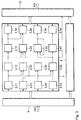
- FIG. 4 In the block diagram shown in Figure 4 is the structure of a link / processing stage 3.11 shown in detail. This forms the physical Computing unit, which carries out the processing operations under program control using the sizes available in the data storage.
- About entry fields 41 are in the data memory 4 via their names and Timestamps through the in the memory for the linking and processing algorithm 42 conditions selected input signal / signal data sets read.
- the data to be processed are then in the output data field 43 transferred and for further processing the subsequent stages provided or transferred to the data memory 4 together with the time stamp.
- the link processing algorithm is determined by the Configuration signal data set 44, which is also in the data memory 4 in Assignment to the designation 45 of the relevant linkage and processing level is included.
- the processing is triggered by the appearance or changing an input signal / data set in an input field 41 and if all time references of the input signal / data sets are valid, i.e. the real time, which is present at connection 47, as the scope contain.
- Unconditional signal processing regardless of real time can forced by a special trigger condition via time input 47 be forced if a time is transmitted here, which none Corresponds to real time.
- Such trigger conditions can be used externally service operations are regularly enforced (for example dependent of the system load if, for example, there is no signal / data set in data memory 4 exists that contains a time reference that is less than a specified one Time difference before real time is located.
- Connections 46 are available for the linking / processing algorithm available from external plug-ins that use the linking / editing algorithm supported by calculation methods, which in connection with the can find use of the signal link mentioned. This is it generally about mathematical methods, which allow it through appropriate To get information with a high relevance context. These include statistical procedures, neuro procedures, wavelet procedures, Fuzzification procedures and statistical mechanics procedures.
- the output signal / data set can therefore both at the preselected point in time further data operations in different linking and processing levels than also trigger the applicator means.
- the following table contains the representation of the signal data set, which is processed based on a reference time or a reference time range.
- the signal data set is an information unit individualized by its name and a time, which is its validity certainly. This can be a point in time or a time range, which if necessary is open upwards for further valid signals, i.e. none End time contains. All signal data sets with the same name form one Data record, which shows the time course of the signal data set in question characterized.
- the signal data sets can have signal spectra, geometric shapes as signal amplitude curves, fixed values, vector references to other signal data sets according to their name or date of validity.
- a weighting size can also be provided, which is a Evaluation of the statistical security of the signal data set for further processing contains.
- the signal / data sets thus describe both the patient and the System state complete to ensure the operation of the system. All State signals can be merged, compared, or processed logically linked to initiate a therapy action, which is also called State set is held.
- the signal data sets form the so to speak System and patient-specific events, including the states are time-variable and are recorded as such events.
- a signal data set is a linkage and processing level of the same name assigned. It describes the signal present at its output.
- the signal data sets are states with the relatively highest Assigned relevance. These are conditions that make the behavior logically dependent States (in the present system such, the subordinate linking and Processing stages are assigned) as clearly as possible and without redundancy determine.
- the signal data sets do not completely need all the signal sizes mentioned included, but only have those that are relevant for the relevant linkage and processing level.
- the signals from the sensor means and the therapy application means are also through Signal data sets described.
- configuration signal data sets are in the Data storage recorded, which for the linkage and processing stages in association with their names, their linking and processing algorithms hold tight.
- the linking algorithms contain the names of the preceding sensor means, the signals in the respective combination and Processing level are processed and the one to be used for the link Algorithm.
- the processing algorithm is also recorded. Describe the signal spectra and amplitude curves of the signal data set their transmission behavior, since in system theory signals and system behavior (for example in the form of the jump answer) mathematically in a similar way are writable.
- geometry signal data sets are also provided, which one geometric correction for the signals of the sensor means and therapy application means according to their spatial distribution in the body. So make up the common signal from electrodes in the case of electrostimulation, for example altogether a signal image, which for the individual electrodes in its corresponding components must be dismantled. This component decomposition hangs but depending on the geometric electrode configuration, where the corresponding Configuration is generated by the GeometrySignal data set.
- All signal / data sets in the memory can be transferred externally and vice versa can be read from there. In this way there is communication externally possible and appropriate processing can take place.
- the linkage and processing levels contain
- the processing part is schematically exemplary divided into several assemblies, which functionally complex linking and processing units, which in turn are more complex in themselves can and internally a whole series of linkage and processing stages, as shown in Figure 4 may contain.
- Such complex built Linking / editing modules can therefore, in contrast to individual Linkage and processing stages contain multiple outputs. This is but not necessarily the case. They behave like compound ones Linkage and processing levels are not so in their control variable and transparent, because they perform fixed functions that do not should be accessible or changeable to the operational security of the system not endangered by incorrect manipulation.
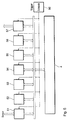
- module 51 to 57 which with the data memory 4 interact.
- the illustration shows a basic module 51, which detects input data obtained from the sensor means and For example, the application times for basic therapy are determined and others Modules 52 to 57 are shown, of which module 57 is the application means controls, here different predetermined therapy patterns can be called up via the are.
- the retrieval takes place in that the real time or an internally set Cycle time a specified default time set by another module reached, reaching the given time - as above described - acts as a "trigger" (block 50).
- the functions of the other modules 52 to 56 can be selected differently. As an example, a series of complex functions is shown below, the can be carried out by linking / editing modules:
- Such a module can in particular with regard to its internal structure, i.e. in all of its linking and Processing stages (see FIG. 3) can be designed from the outside.
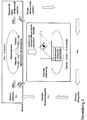
- FIG. 6 shows schematically how the system according to the invention works the prediction generated on the basis of the indicators with the actually occurred State compared and a target-actual comparison is carried out.
Landscapes
- Health & Medical Sciences (AREA)
- Heart & Thoracic Surgery (AREA)
- Life Sciences & Earth Sciences (AREA)
- Cardiology (AREA)
- Engineering & Computer Science (AREA)
- Physiology (AREA)
- Biophysics (AREA)
- Biomedical Technology (AREA)
- Nuclear Medicine, Radiotherapy & Molecular Imaging (AREA)
- Radiology & Medical Imaging (AREA)
- Animal Behavior & Ethology (AREA)
- General Health & Medical Sciences (AREA)
- Public Health (AREA)
- Veterinary Medicine (AREA)
- Electrotherapy Devices (AREA)
Abstract
Description
- Figur 1
- eine Gesamtübersicht des erfindungsgemäßen Herzstimulationssystems als Blockschaltbild,
- Figur 2
- ein Ausführungsbeispiel des Verarbeitungsteils als Detail zu Figur 1 in einfacher Form,
- Figur 3
- ein Ausführungsbeispiel des Verarbeitungsteils als Detail zu Figur 1 in komplexerer Form,
- Figur 4
- eine Verknüpfungs-/Bearbeitungsstufe als des Detail des Verarbeitungsteils,
- Figur 5
- die Darstellung einer Anzahl funktionsbezogener verknüpfungs-/Bearbeitungsmodule, welche jeweils eine Anzahl von Verknüpfungs-/Bearbeitungsstufen enthalten.
- Figur 6
- die Darstellung einses Vorhersagemodells nach dem Prinzip der Erfindung sowie
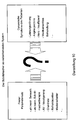
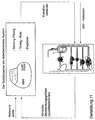
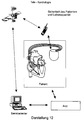
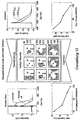
- 13 Darstellungen
- im Anhang zur Funktionalität verschiedener nach dem erfindungsgemäßen Konzept realisierter Systeme oder Systemteile.
Zu den weiteren Ausführungsmöglichkeiten wird auf die Ansprüche verwiesen. Die Erfindung beschränkt sich in ihrer Ausführung nicht auf die oben erläuterten bevorzugten Ausführungsbeispiele. Vielmehr ist eine Anzahl von Varianten denkbar, welche von der dargestellten Lösung auch bei anders gearteten Ausführungen Gebrauch machen.
Claims (29)
- Medizinisches Therapiesystem, vorzugsweise zur Elektrostimulation oder sonstigen Behandlung des Herzens mit elektrischen Impulsen, mit zwischen eingangsseitigen Sensormitteln und ausgangsseitigen Therapie-Applikatormitteln eingeschalteten Verknüpfungs- und/oder Bearbeitungsstufen für Signale , dadurch gekennzeichnet, daß aus den Eingangsignalen eine Signalgröße durch die Verknüpfungs-/Bearbeitungsstufen und/oder in einem aus mehreren Verknüpfungs-/Bearbeitungsstufe bestehenden Verknüpfungs-/Bearbeitungsmodul aus den Eingangsignalen mindestens ein Indikatorsignal ermittelt wird, das ein Maß für ein wahrscheinlich bevorstehendes therapiepflichtiges Ereignis oder den Therapieerfolg bildet.
- Therapiesystem, insbesondere nach einem der vorangehenden Ansprüche, dadurch gekennzeichnet, daß das Indikatorsignal zusätzlich ein Zeitreferenzsignal aufweist, welches den wahrscheinlichen Zeitpunkt des Auftretens des therapiepflichtigen Ereignisses oder des Therapieerfolgs beinhaltet (Präediktor).
- Therapiesystem, insbesondere nach einem der vorangehenden Ansprüche, dadurch gekennzeichnet, daß es sich bei den Eingangssignalen um klinische Observationsgrößen, und dabei im Falle der Herztherapie insbesondere um Arrhythmieindikatoren, handelt.
- Therapiesystem, insbesondere nach einem der vorangehenden Ansprüche, dadurch gekennzeichnet, daß sich bei den Eingangssignalen zur Ableitung von Indikatorsignalen für Arrhythmien um das Auftreten von Extrasystolen, der Grad der Vorzeitigkeit von Extrasystolen, die Anzahl vorzeitiger Herzkontraktionen, arrhythmische Muster, Leitungszeiten innerhalb der Herzkammern.
- Therapiesystem, insbesondere nach einem der vorangehenden Ansprüche, dadurch gekennzeichnet, daß das Indikatorsignal zusätzliche eine Wahrscheinlichkeitsbewertungsgröße hinsichtlich der Wahrscheinlichkeit des Auftretens des therapiepflichtigen Ereignisses oder des Therapieerfolgs beinhaltet.
- Therapiesystem, insbesondere nach einem der vorangehenden Ansprüche, dadurch gekennzeichnet, daß die Extraktion unter mindestens einfacher Anwendung von einem oder mehreren Verfahren erfolgt, welche ein oder mehrstufige mathematische Verfahren oder Filtermittel zum Auffinden eines Signalereignisses in einem Signalgemisch enthalten.
- Therapiesystem, insbesondere nach Anspruch 4, dadurch gekennzeichnet, daß als mathematische Verfahren oder Filtermittel zum Auffinden eines Signalereignisses in einem Signalgemisch mindestens eines der nachfolgenden vorgesehen ist:Korrelation, Mustervergleich, Vergleich der Signalsets als Zustandsvektoren insbesondere nach der Methode der kleinsten Fehlerquadrate, Fuzzy-Logik, Wavelets, Nichtlineare Verknüpfungen, Lorenzattraktoren, mathematische Funktionen mit mehreren Variablen, n-dimensionale orthogonale Systeme handelt.
- Therapiesystem, insbesondere nach einem der vorangehenden Ansprüche, dadurch gekennzeichnet, daß die Extraktion durch die Verknüpfung der Erfahrungswerte von mehreren Therapiesystemen bei gleichartigen Therapiefällen erfolgt.
- Therapiesystem, insbesondere nach einem der vorangehenden Ansprüche, dadurch gekennzeichnet, daß mindestens ein Sensormittel-Roh-Signal als Eingangssignal einer ersten Verknüpfungs-/Bearbeitungsstufe zugeführt wird, wobei ein verarbeitetes Sensorsignal als Ausgangssignal der ersten Verknüpfungs-/Bearbeitungsstufe erscheint, wobei die erste Verknüpfungs-/Bearbeitungsstufe eine Geometriebewertung der Sensormittel und/oder eine Zeit- und/oder Frequenzkorrektur der Sensorausgangssignale einschließt.
- Therapiesystem, insbesondere nach einem der vorangehenden Ansprüche, dadurch gekennzeichnet, daß mindestens ein verarbeitetes Sensorsignal als Eingangssignal mindestens einer zweiten Verknüpfungs-/Bearbeitungsstufe zugeführt wird, deren Ausgangssignal das Indikatorsignal bildet, das ein Maß für ein wahrscheinlich bevorstehendes therapiepflichtiges Ereignis oder den Therapieerfolg ist.
- Therapiesystem, insbesondere nach einem der vorangehenden Ansprüche, dadurch gekennzeichnet, daß das das Indikatorsignal das Eingangssignal einer dritten Verknüpfungs-/Bearbeitungsstufe bildet, welche als Ausgangssignal ein Therapieapplikator-Rohsignal liefert.
- Therapiesystem, insbesondere nach einem der vorangehenden Ansprüche, dadurch gekennzeichnet, daß das Therapieapplikator-Rohsignal das Eingangssignal einer vierten Verknüpfungs-/Bearbeitungsstufe bildet, welche als Ausgangssignal ein Therapieapplikatorsigal liefert, wobei die vierte Verknüpfungs-/Bearbeitungsstufe insbesondere eine Geometriebewertung der Therapieapplikatormittel und/oder eine Zeit- und/oder Frequenzkorrektur des Therapieapplikator-Rohsignals einschließt.
- Therapiesystem, insbesondere nach einem der vorangehenden Ansprüche, dadurch gekennzeichnet, daß eine mehrfach verwendbare Verarbeitungs- und Verknüpfungsschaltung oder Softwaremodul vorgesehen ist, welches als erste, zweite dritte und/oder vierte Verknüpfungstufe zeitlich sequentiell einsetzbar ist, wobei dem Verknüpfungsmodul jeweils neben den Eingangssignalen noch folgene Informationen zugeführt werden: die Art der zu verknüpfenden und zu bearbeitenden Eingangssignale, ein Verarbeitungs- und/oder ein Verknüpfungsalgorithmus.
- Therapiesystem, insbesondere nach einem der vorangehenden Ansprüche, dadurch gekennzeichnet, daß das Verarbeitungs-und Verknüpfungsmodul zusätzlich eine Verknüpfungsinformation d.h. eine Information darüber, welche Eingangsgrößen in welcher Weise zu überlagern sind, aufweist.,
- Therapiesystem, insbesondere nach einem der vorangehenden Ansprüche, dadurch gekennzeichnet, daß das Verhalten einer Verknüpfungs-/Bearbeitungsstufe durch mittels eines in einen Speicher einlesbaren Systemdatensets veränderbar ist.
- Therapiesystem, insbesondere nach einem der vorangehenden Ansprüche, dadurch gekennzeichnet, daß mindestens eine der folgenden Signalgruppen: Ausgangssignale von Sensormitteln, Indikatorsignale, Patientenzustandssignale, Therapieapplikationssignalen, Systembeschreibungssignale, Ein- und/oder Ausgangssignale von Verknüpfungs-/Bearbeitungsstufen, Systemkonfigurationsdaten, ein Signal-/Daten-Set bildet, welches eine Referenzzeitangabe und/oder einen Gültigkeitszeitbereichsangabe aufweist, die den Zeitpunkt kennzeichnet, zu dem die betreffenden Signale oder Daten aufgenommen wurden oder zu dem sie gültig sind, wobei der Anfang oder das Ende des Gültigkeitsbereichs nicht festgelegt zu sein braucht, so daß sie bei der nachfolgenden Verarbeitung entsprechend berücksichtigt oder zugeordnet werden können.
- Therapiesystem, insbesondere nach einem der vorangehenden Ansprüche, dadurch gekennzeichnet, daß die Signal-/Daten-Sets in einem gemeinsamen Speicher vorgesehen sind.
- Therapiesystem, insbesondere nach einem der vorangehenden Ansprüche, dadurch gekennzeichnet, daß es sich bei der Referenzzeitangabe um eine Echtzeitangabe oder um eine Zeitangabe handelt, welche sich auf eine zyklische Zeitperiode einer Patientenzustandsgröße oder einer Therapiegröße handelt.
- Therapiesystem, insbesondere nach einem der vorangehenden Ansprüche, dadurch gekennzeichnet, daß dem Signal-/Daten-Set eine alphanumerische Kennzeichnung zugeordnet ist, welche zur Identifikation und zur Auswahl des entsprechenden Signal-/Daten-Sets dient.
- Therapiesystem, insbesondere nach einem der vorangehenden Ansprüche, dadurch gekennzeichnet, daß das Signal-/Daten-Set mindestens eine der folgenden Informationen enthält: Boolesche Logikdaten, Amplitudendaten, Amplitudenverlaufsdaten, Spektralinformationsdaten, welche insbesondere der Referenzeit zugeordnet ist, Angaben zur geometrischen Anordnung der Sensor- und/oder Applikatormittel, Patientenzustandsdaten, Systemkonfigurationsdaten, Verknüpfungsalgorithmen, Verarbeitungsalgorithmen.
- Therapiesystem, insbesondere nach einem der vorangehenden Ansprüche, dadurch gekennzeichnet, daß ein Trigger für die Auslösung einer Aktualisierung der Ausgangsignale der Verknüpfungs-/Bearbeitungsstufe eine Veränderung der diese betreffenden Signale oder Daten ist, insbesondere der Eingangssignale, oder der für diese Verknüpfungs-/Bearbeitungsstufe relevanten Signal-/Daten-Sets.
- Therapiesystem, insbesondere nach einem der vorangehenden Ansprüche, dadurch gekennzeichnet, daß eine Bedingung für die Auslösung einer Aktualisierung der Ausgangsignale der Verknüpfungs-/Bearbeitungsstufe die Erfüllung einer Bedingung für die Referenzzeit- und -zeitbereichsangaben ist.
- Therapiesystem, insbesondere nach einem der vorangehenden Ansprüche, dadurch gekennzeichnet, daß Verknüpfungs-/Bearbeitungsstufen oder aus mehreren Verknüpfungs-/Bearbeitungsstufe bestehende Verknüpfungs-/Bearbeitungsmodule vorgesehen sind, welche unabhängig oder in Koordination mit den auf Ausgangssignale von Sensormitteln ansprechenden Verknüpfungs-/Bearbeitungsstufen mindestens eine der nachfolgenden Operationen, insbesondere durch Datenübertragung über Telemetriemittel zu einer entfernt gelegenen Datenverarbeitungsstation und/oder in der Reihenfolge der Dringlichkeit, insbesondere in der Reihenfolge der den Signal-/Daten-Sets zugeordneten Zeitreferenzen, ausführen:Kompression des für die Signal-/Daten-Sets benötigten Speicherbedarfs durch Reduzierung der den Signal-/Daten-Sets zugeordeneten Signale und/oder Daten durch Ersetzen von komplexeren Datenstrukturen durch einfachere mit zunehmenden Alter der den Signalen/Daten zugeordneten Referenzzeiten, insbesondere Vorsehen einer zusätzlichen Verarbeitungs- und Verknüpfungsstufe zum Verdichten von Patientenzustandsdaten indem mehrere Signal-Daten-Sets von verschiedenen Zeitpunkten oder Zeiträumen zugeordneten Patientenzustandsdaten zu einem größeren Zeitraum zugeordneten Patientenzustandsdaten zusammengefaßt werden. (Signalverdichtung), wobei diese Verdichtung um so größer ist, je weiter die Zeitpunkte oder Zeiträume gegenüber der aktuellen Systemzeit zurückliegen.Prüfung der Signal-/Daten-Sets auf mögliche Inkonsistenzen, Korrektur inkonsistenter Daten/Signale bzw. Löschung derselben.Durchführung zu Untersuchungen hinsichtlich der dynamischen Stabilität, des Systems bei möglichen ungewöhnlichen Daten /Signal-Zuständen.Durchführung von Untersuchungen hinsichtlich Funktionsfähigkeit des Systems und insbesondere Umschaltung der Erzeugung der Therapiesignale durch ein zusätzlich vorgesehens Reserve- und/oder konventionelles System bei einer verbleibenden Abweichung zwischen vorhergesagtem um eingetretenen Therapieerfolg und Stillsetzen des vorher aktiven Systems.Vergleich des zu einem Indikator (Präediktor) für die Vorhersage des wahrscheinlich bevorstehendes therapiepflichtigen Ereignisses oder den Therapieerfolg gehörigen Signal-/Daten-Sets oder Teile desselben mit dem zu dem tatsächlich eingetretene therapiepflichtigen Ereignis oder dem Therapieerfolg ses oder ergesagten mit dem eingetretenen Therapieerfolg gehörigen Signal-/Daten-Set oder Teilen desselben und bei Überschreiten einer vorgegebenen Abweichung Änderung mindestens eines vorgegebenen Systemzustandsparameters um einen vorgegebenen Betrag.Umrechnen vom Frequenzspektren in zeitabhängige Signale und umgekehrt (Fast-Fourier bzw. Wavelet-Transformation) eines Signal-Daten-Sets.
- Therapiesystem, insbesondere nach einem der vorangehenden Ansprüche, dadurch gekennzeichnet, daß die Verknüpfungs- und/oder Bearbeitungsalgorithmen durch sogenannte Plug-Ins oder Applets als zusätzliche Prozessor- oder Softwareteile gebildet werden, welche, sich in einem gemeinsamen Speicher befinden und/oder nach Bedarf über Telemetriemittel aus einer äußeren Quelle geladen werden.
- Therapiesystem, insbesondere nach einem der vorangehenden Ansprüche, dadurch gekennzeichnet, daß die externe Verarbeitung und/oder die Berechnung eines Indikators unter Berücksichtigung und/oder Zugrundelegung der Signale/Daten eines Kollektivs gleichartiger Systeme mit vergleichbaren Signal/Dateninhalten und/oder einem datenmäßig nachgebildeten Patientenmodell erfolgt.
- Therapiesystem, insbesondere nach einem der vorangehenden Ansprüche, dadurch gekennzeichnet, daß die Telemetrie die Benutzung des Internet einschließt
- Therapiesystem, insbesondere nach einem der vorangehenden Ansprüche, dadurch gekennzeichnet, daß die Eingabe von Signalen und/oder Datenwerten des Signal-/Daten-Sets oder Ausführung von Berechnungen von extern über Telemetrie vorgesehen ist.
- Therapiesystem, insbesondere nach einem der vorangehenden Ansprüche, dadurch gekennzeichnet, daß die Telemetrie mindestens teilweise über das Internet vorgesehen ist.
- Therapiesystem, insbesondere nach einem der vorangehenden Ansprüche, dadurch gekennzeichnet, daß eine vorausschauende Bearbeitung zur Behandlung von möglicherweise auftretenden Signal-/Datenzuständen vorsorglich erfolgt, wobei ein Abbruch der Verarbeitung erfolgt und/oder die erhaltenen Daten-/Signale verworfen werden, wenn die Voraussetzungen unter denen die vorausschauende Bearbeitung erfolgte, nicht mehr vorliegt.
Applications Claiming Priority (2)
| Application Number | Priority Date | Filing Date | Title |
|---|---|---|---|
| DE19930533 | 1999-06-26 | ||
| DE1999130533 DE19930533A1 (de) | 1999-06-26 | 1999-06-26 | Medizinisches Therapiesystem |
Publications (2)
| Publication Number | Publication Date |
|---|---|
| EP1062976A2 true EP1062976A2 (de) | 2000-12-27 |
| EP1062976A3 EP1062976A3 (de) | 2004-01-28 |
Family
ID=7913414
Family Applications (1)
| Application Number | Title | Priority Date | Filing Date |
|---|---|---|---|
| EP00250211A Withdrawn EP1062976A3 (de) | 1999-06-26 | 2000-06-26 | Medizinisches Therapiesystem |
Country Status (2)
| Country | Link |
|---|---|
| EP (1) | EP1062976A3 (de) |
| DE (1) | DE19930533A1 (de) |
Cited By (1)
| Publication number | Priority date | Publication date | Assignee | Title |
|---|---|---|---|---|
| DE10157024B4 (de) * | 2001-11-21 | 2015-10-15 | Quanten-Medicine Ag | Vorrichtung zur Erzeugung von pulsierenden elektromagnetischen und/oder elektrischen Feldern |
Family Cites Families (4)
| Publication number | Priority date | Publication date | Assignee | Title |
|---|---|---|---|---|
| US5002052A (en) * | 1988-08-29 | 1991-03-26 | Intermedics, Inc. | System and method for detection and treatment of ventricular arrhythmias |
| US5183040A (en) * | 1991-03-08 | 1993-02-02 | Telectronics Pacing Systems, Inc. | Apparatus and method for detecting abnormal cardiac rhythms using an ultrasound sensor in an arrhythmia control system |
| US5421830A (en) * | 1993-08-27 | 1995-06-06 | Pacesetter, Inc. | Programming system having means for recording and analyzing a patient's cardiac signal |
| US5836971A (en) * | 1997-02-26 | 1998-11-17 | Pacesetter, Inc. | Dynamic rezoning of a tiered therapy inplantable cardioverter defibrillator/pacemaker (ICD) device |
-
1999
- 1999-06-26 DE DE1999130533 patent/DE19930533A1/de not_active Withdrawn
-
2000
- 2000-06-26 EP EP00250211A patent/EP1062976A3/de not_active Withdrawn
Non-Patent Citations (1)
| Title |
|---|
| None |
Cited By (1)
| Publication number | Priority date | Publication date | Assignee | Title |
|---|---|---|---|---|
| DE10157024B4 (de) * | 2001-11-21 | 2015-10-15 | Quanten-Medicine Ag | Vorrichtung zur Erzeugung von pulsierenden elektromagnetischen und/oder elektrischen Feldern |
Also Published As
| Publication number | Publication date |
|---|---|
| EP1062976A3 (de) | 2004-01-28 |
| DE19930533A1 (de) | 2001-01-11 |
Similar Documents
| Publication | Publication Date | Title |
|---|---|---|
| DE69114517T2 (de) | Verfahren zur erkennung von einem pathologischen zustand der herzkammer für eine automatische defibrillation. | |
| DE60035546T2 (de) | System und Verfahren zur automatischen Sammlung und Analyse von periodisch erfassten Patientendaten zur Fernpatientenpflege | |
| DE69329692T2 (de) | Herzrhythmus Steuereinrichtung mit automatischer Optimalisierung von Reizungsparametern | |
| DE69933761T2 (de) | Rückenmarks-Stimulationssystem mit Patientenaktivität und Therapieeinstellungen | |
| EP0215729B1 (de) | Herzschrittmacher | |
| DE69636715T2 (de) | Vorrichtung und Verfahren zur Erzeugung eines synthetisierten Elektrokardiogramms | |
| EP1748819B1 (de) | Vorrichtung zur entkopplung und/oder desynchronisation neuronaler hirnaktivität | |
| DE69732105T2 (de) | Programmerweiterbare, implantierbare, medizinische vorrichtung | |
| DE60222076T2 (de) | Darstellungsstruktur für ein Netzwerk, dass implantierbare Herztherapie-Geräte unterstützt | |
| DE60038429T2 (de) | System und Verfahren zur Bestimmung einer Referenzgrundlinie eines individuellen Patientenzustands zur Benutzung in einer automatischen Sammlung und Analysesystem zur Patientenpflege | |
| DE60114969T2 (de) | Vorhersagen einer Arrythmie auf der Basis von Änderungen der Morphologie bei intrakardialen EKG-Signalen | |
| DE102015108861A1 (de) | Verfahren und Vorrichtung zur Neurostimulation | |
| DE102015108859B4 (de) | Verfahren und System zum Verarbeiten von Datenströmen | |
| DE19941882A1 (de) | Konfigurierbarer Rhythmusstörungsanalysealgorithmus | |
| DE60225370T2 (de) | Verfahren zur Verarbeitung von gespeicherten Daten in einer aktiven, implantierbaren, medizinischen Vorrichtung zur Unterstützung einer Ärztlichen Diagnose | |
| DE202020005639U1 (de) | Personalisierung von Modellen der künstlichen Intelligenz für die Analyse von Herzrhythmen | |
| EP0215731B1 (de) | Herzschrittmacher | |
| DE102019214752A1 (de) | Neuronales signalsystem, verfahren und computerprogramm zumsignalisieren eines gerätezustands | |
| DE10211766B4 (de) | Vorrichtung zur Behandlung von Patienten mittels Hirnstimulation sowie die Verwendung der Vorrichtung in der Medizin | |
| EP0793977B1 (de) | Therapiegerät | |
| DE102008024453A1 (de) | EKG-Analysevorrichtung | |
| EP1262143B1 (de) | Verfahren und Speichervorrichtung zur Speicherung von Herzrhythmusinformation | |
| EP0222681A1 (de) | Herzschrittmacher | |
| DE10157024B4 (de) | Vorrichtung zur Erzeugung von pulsierenden elektromagnetischen und/oder elektrischen Feldern | |
| EP2338566A1 (de) | Implantierbares medizinisches Gerät mit Mitteln zur Rekonstruktion eines unvollständig erfassten Signals |
Legal Events
| Date | Code | Title | Description |
|---|---|---|---|
| PUAI | Public reference made under article 153(3) epc to a published international application that has entered the european phase |
Free format text: ORIGINAL CODE: 0009012 |
|
| AK | Designated contracting states |
Kind code of ref document: A2 Designated state(s): AT BE CH CY DE DK ES FI FR GB GR IE IT LI LU MC NL PT SE |
|
| AX | Request for extension of the european patent |
Free format text: AL;LT;LV;MK;RO;SI |
|
| PUAL | Search report despatched |
Free format text: ORIGINAL CODE: 0009013 |
|
| AK | Designated contracting states |
Kind code of ref document: A3 Designated state(s): AT BE CH CY DE DK ES FI FR GB GR IE IT LI LU MC NL PT SE |
|
| AX | Request for extension of the european patent |
Extension state: AL LT LV MK RO SI |
|
| 17P | Request for examination filed |
Effective date: 20040728 |
|
| AKX | Designation fees paid |
Designated state(s): AT BE CH CY DE DK ES FI FR GB GR IE IT LI LU MC NL PT SE |
|
| 17Q | First examination report despatched |
Effective date: 20050609 |
|
| STAA | Information on the status of an ep patent application or granted ep patent |
Free format text: STATUS: THE APPLICATION IS DEEMED TO BE WITHDRAWN |
|
| 18D | Application deemed to be withdrawn |
Effective date: 20051220 |
|
| RAP1 | Party data changed (applicant data changed or rights of an application transferred) |
Owner name: BIOTRONIK GMBH & CO. KG |