EP1059088B1 - Procédé de purification des fractions d'Ig connectées possédant une activité immunomodulatrice - Google Patents
Procédé de purification des fractions d'Ig connectées possédant une activité immunomodulatrice Download PDFInfo
- Publication number
- EP1059088B1 EP1059088B1 EP00401601A EP00401601A EP1059088B1 EP 1059088 B1 EP1059088 B1 EP 1059088B1 EP 00401601 A EP00401601 A EP 00401601A EP 00401601 A EP00401601 A EP 00401601A EP 1059088 B1 EP1059088 B1 EP 1059088B1
- Authority
- EP
- European Patent Office
- Prior art keywords
- fractions
- polyvalent
- igg
- dnp
- fraction
- Prior art date
- Legal status (The legal status is an assumption and is not a legal conclusion. Google has not performed a legal analysis and makes no representation as to the accuracy of the status listed.)
- Expired - Lifetime
Links
Images





Classifications
-
- C—CHEMISTRY; METALLURGY
- C07—ORGANIC CHEMISTRY
- C07K—PEPTIDES
- C07K16/00—Immunoglobulins [IG], e.g. monoclonal or polyclonal antibodies
- C07K16/06—Immunoglobulins [IG], e.g. monoclonal or polyclonal antibodies from serum
- C07K16/065—Purification, fragmentation
-
- A—HUMAN NECESSITIES
- A61—MEDICAL OR VETERINARY SCIENCE; HYGIENE
- A61P—SPECIFIC THERAPEUTIC ACTIVITY OF CHEMICAL COMPOUNDS OR MEDICINAL PREPARATIONS
- A61P17/00—Drugs for dermatological disorders
-
- A—HUMAN NECESSITIES
- A61—MEDICAL OR VETERINARY SCIENCE; HYGIENE
- A61P—SPECIFIC THERAPEUTIC ACTIVITY OF CHEMICAL COMPOUNDS OR MEDICINAL PREPARATIONS
- A61P21/00—Drugs for disorders of the muscular or neuromuscular system
- A61P21/04—Drugs for disorders of the muscular or neuromuscular system for myasthenia gravis
-
- A—HUMAN NECESSITIES
- A61—MEDICAL OR VETERINARY SCIENCE; HYGIENE
- A61P—SPECIFIC THERAPEUTIC ACTIVITY OF CHEMICAL COMPOUNDS OR MEDICINAL PREPARATIONS
- A61P25/00—Drugs for disorders of the nervous system
-
- A—HUMAN NECESSITIES
- A61—MEDICAL OR VETERINARY SCIENCE; HYGIENE
- A61P—SPECIFIC THERAPEUTIC ACTIVITY OF CHEMICAL COMPOUNDS OR MEDICINAL PREPARATIONS
- A61P37/00—Drugs for immunological or allergic disorders
-
- A—HUMAN NECESSITIES
- A61—MEDICAL OR VETERINARY SCIENCE; HYGIENE
- A61P—SPECIFIC THERAPEUTIC ACTIVITY OF CHEMICAL COMPOUNDS OR MEDICINAL PREPARATIONS
- A61P37/00—Drugs for immunological or allergic disorders
- A61P37/02—Immunomodulators
-
- A—HUMAN NECESSITIES
- A61—MEDICAL OR VETERINARY SCIENCE; HYGIENE
- A61P—SPECIFIC THERAPEUTIC ACTIVITY OF CHEMICAL COMPOUNDS OR MEDICINAL PREPARATIONS
- A61P37/00—Drugs for immunological or allergic disorders
- A61P37/02—Immunomodulators
- A61P37/06—Immunosuppressants, e.g. drugs for graft rejection
-
- A—HUMAN NECESSITIES
- A61—MEDICAL OR VETERINARY SCIENCE; HYGIENE
- A61P—SPECIFIC THERAPEUTIC ACTIVITY OF CHEMICAL COMPOUNDS OR MEDICINAL PREPARATIONS
- A61P7/00—Drugs for disorders of the blood or the extracellular fluid
-
- A—HUMAN NECESSITIES
- A61—MEDICAL OR VETERINARY SCIENCE; HYGIENE
- A61P—SPECIFIC THERAPEUTIC ACTIVITY OF CHEMICAL COMPOUNDS OR MEDICINAL PREPARATIONS
- A61P9/00—Drugs for disorders of the cardiovascular system
- A61P9/10—Drugs for disorders of the cardiovascular system for treating ischaemic or atherosclerotic diseases, e.g. antianginal drugs, coronary vasodilators, drugs for myocardial infarction, retinopathy, cerebrovascula insufficiency, renal arteriosclerosis
-
- C—CHEMISTRY; METALLURGY
- C07—ORGANIC CHEMISTRY
- C07K—PEPTIDES
- C07K16/00—Immunoglobulins [IG], e.g. monoclonal or polyclonal antibodies
- C07K16/42—Immunoglobulins [IG], e.g. monoclonal or polyclonal antibodies against immunoglobulins
- C07K16/4283—Immunoglobulins [IG], e.g. monoclonal or polyclonal antibodies against immunoglobulins against an allotypic or isotypic determinant on Ig
-
- C—CHEMISTRY; METALLURGY
- C07—ORGANIC CHEMISTRY
- C07K—PEPTIDES
- C07K16/00—Immunoglobulins [IG], e.g. monoclonal or polyclonal antibodies
- C07K16/44—Immunoglobulins [IG], e.g. monoclonal or polyclonal antibodies against material not provided for elsewhere, e.g. haptens, metals, DNA, RNA, amino acids
-
- A—HUMAN NECESSITIES
- A61—MEDICAL OR VETERINARY SCIENCE; HYGIENE
- A61K—PREPARATIONS FOR MEDICAL, DENTAL OR TOILETRY PURPOSES
- A61K39/00—Medicinal preparations containing antigens or antibodies
- A61K2039/505—Medicinal preparations containing antigens or antibodies comprising antibodies
-
- Y—GENERAL TAGGING OF NEW TECHNOLOGICAL DEVELOPMENTS; GENERAL TAGGING OF CROSS-SECTIONAL TECHNOLOGIES SPANNING OVER SEVERAL SECTIONS OF THE IPC; TECHNICAL SUBJECTS COVERED BY FORMER USPC CROSS-REFERENCE ART COLLECTIONS [XRACs] AND DIGESTS
- Y10—TECHNICAL SUBJECTS COVERED BY FORMER USPC
- Y10S—TECHNICAL SUBJECTS COVERED BY FORMER USPC CROSS-REFERENCE ART COLLECTIONS [XRACs] AND DIGESTS
- Y10S424/00—Drug, bio-affecting and body treating compositions
- Y10S424/81—Drug, bio-affecting and body treating compositions involving autoimmunity, allergy, immediate hypersensitivity, delayed hypersensitivity, immunosuppression, immunotolerance, or anergy
-
- Y—GENERAL TAGGING OF NEW TECHNOLOGICAL DEVELOPMENTS; GENERAL TAGGING OF CROSS-SECTIONAL TECHNOLOGIES SPANNING OVER SEVERAL SECTIONS OF THE IPC; TECHNICAL SUBJECTS COVERED BY FORMER USPC CROSS-REFERENCE ART COLLECTIONS [XRACs] AND DIGESTS
- Y10—TECHNICAL SUBJECTS COVERED BY FORMER USPC
- Y10S—TECHNICAL SUBJECTS COVERED BY FORMER USPC CROSS-REFERENCE ART COLLECTIONS [XRACs] AND DIGESTS
- Y10S435/00—Chemistry: molecular biology and microbiology
- Y10S435/965—Chemistry: molecular biology and microbiology involving idiotype or anti-idiotype antibody
-
- Y—GENERAL TAGGING OF NEW TECHNOLOGICAL DEVELOPMENTS; GENERAL TAGGING OF CROSS-SECTIONAL TECHNOLOGIES SPANNING OVER SEVERAL SECTIONS OF THE IPC; TECHNICAL SUBJECTS COVERED BY FORMER USPC CROSS-REFERENCE ART COLLECTIONS [XRACs] AND DIGESTS
- Y10—TECHNICAL SUBJECTS COVERED BY FORMER USPC
- Y10S—TECHNICAL SUBJECTS COVERED BY FORMER USPC CROSS-REFERENCE ART COLLECTIONS [XRACs] AND DIGESTS
- Y10S436/00—Chemistry: analytical and immunological testing
- Y10S436/822—Identified hapten
-
- Y—GENERAL TAGGING OF NEW TECHNOLOGICAL DEVELOPMENTS; GENERAL TAGGING OF CROSS-SECTIONAL TECHNOLOGIES SPANNING OVER SEVERAL SECTIONS OF THE IPC; TECHNICAL SUBJECTS COVERED BY FORMER USPC CROSS-REFERENCE ART COLLECTIONS [XRACs] AND DIGESTS
- Y10—TECHNICAL SUBJECTS COVERED BY FORMER USPC
- Y10S—TECHNICAL SUBJECTS COVERED BY FORMER USPC CROSS-REFERENCE ART COLLECTIONS [XRACs] AND DIGESTS
- Y10S436/00—Chemistry: analytical and immunological testing
- Y10S436/824—Immunological separation techniques
-
- Y—GENERAL TAGGING OF NEW TECHNOLOGICAL DEVELOPMENTS; GENERAL TAGGING OF CROSS-SECTIONAL TECHNOLOGIES SPANNING OVER SEVERAL SECTIONS OF THE IPC; TECHNICAL SUBJECTS COVERED BY FORMER USPC CROSS-REFERENCE ART COLLECTIONS [XRACs] AND DIGESTS
- Y10—TECHNICAL SUBJECTS COVERED BY FORMER USPC
- Y10S—TECHNICAL SUBJECTS COVERED BY FORMER USPC CROSS-REFERENCE ART COLLECTIONS [XRACs] AND DIGESTS
- Y10S530/00—Chemistry: natural resins or derivatives; peptides or proteins; lignins or reaction products thereof
- Y10S530/868—Chemistry: natural resins or derivatives; peptides or proteins; lignins or reaction products thereof involving autoimmunity, allergy, immediate hypersensitivity, delayed hypersensitivity, immunosuppression, or immunotolerance
Definitions
- the present invention relates to a process for preparing Ig fractions from of polyvalent human intravenous immunoglobulins (IVIG) which would be more particularly responsible for the immunomodulatory effect observed during treatments for certain autoimmune diseases.
- IVIG polyvalent human intravenous immunoglobulins
- the invention relates to fractions. Ig which have a reactivity towards IgM, F (ab ') 2 IgG or hapten DNP and little or no reactivity towards non-self antigens, i.e. Ig fractions which exhibit idiotypic interactions between them (fraction connected) or which include natural antibodies reactive with the DNP hapten. These fractions show a polyreactivity with respect to given autoantigens.
- IglV constitutes a replacement therapy which provides IgG whose plasma concentration in patients is not not sufficient to neutralize the development of viral or bacterial infections.
- IVIg For autoimmune diseases, the effectiveness of IVIg is linked to effects complex immunomodulators.
- IglV is a replacement treatment while awaiting reconstitution immunology of the transplanted subjects and exert an immunomodulatory effect for the graft versus host disease.
- IglV are prepared from a pool of plasmas from several thousand donors, they have a breakdown into subclasses and specificities antibodies reflecting that of the general population. So IglV can be considered a product containing the entire repertoire of natural antibodies and antibodies to exterior antigens and autoantigens.
- IglV autoimmune thrombocytopenic purpura
- PTAI autoimmune thrombocytopenic purpura
- Certain indications, for which the effectiveness of IglV has been clearly established, are officially recognized by regulatory authorities. They are PTAI, Kawasaki disease where they very effectively prevent aneurysmal complications (2,3), transplantation of allogenic hematopoietic cells where they modulate the reaction of the graft against the host (4) and more recently , Birdshot retinochoroiditis, where they improve visual acuity and where they sometimes reduce corticosteroid therapy (5). Other indications are considered by the experts to be justified.
- IVIg has experienced a very significant boom in neurology thanks to multicenter controlled studies with criteria of efficacy at the same time quantitative (neurological scores) and qualitative (number of patients improved).
- IglV are as effective as plasma exchanges and are better tolerated (11,12). They are recommended in first intention in childhood forms (13). They are more effective versus placebo in chronic inflammatory demyelinating polyneuropathies (14) and in dermatomyositis (15). They are as effective and better tolerated as plasma exchanges during acute myasthenia gravis (16).
- a study versus placebo demonstrated the efficacy of IglV in the forms of alternating remissions and relapses of multiple sclerosis (17).
- a fraction (called connected) of lg can be purified on an affinity column whose F (ab ') 2 of IgIV were coupled to Sepharose beads (19, 20 and 25).
- IgM contained in the serum of normal individuals bind to the F (ab ') 2 fragments autologous IgGs and inhibit the association of these IgGs with autoantigens (21).
- the IgM help regulate the natural autoreactivity of IgG through interactions of idiotypic type (21).
- These Ig or their F (ab ') 2 can inhibit the binding of certain autoantibodies to their antigens as demonstrated by in vitro tests (22).
- the connected fraction of Ig obtained from IVIG would contain in particular antibodies recognizing anti-idiotypic determinants present on IgG or IgM autoantibodies capable of neutralizing each other and altering the function and the dynamics of the idiotypic network (23).
- a fraction of Ig characterized in what it reacts with hapten DNP is described as containing antibodies natural polyreactive and self-reactive (24).
- WO 97/19113 relates to the use of anti-idiotype IgG monoclonal antibodies as an immunoregulator of the immune response, especially for treatment autoimmune diseases.
- the objective underlying the present invention is therefore to obtain specific Ig allowing a reduction in dosages, having maintained or even increased efficacy, better tolerance, and the mode of administration is simpler.
- IgM anti IgM
- anti F (ab ') 2 reactivity of IgG or anti DNP little or no reactivity towards antigens of non-self, and / or which show a polyreactivity towards certain autoantigens.
- the present invention relates to the purification of the Ig contained in the IVIg which would be particularly responsible for the effect immunomodulator seen during the treatment of certain diseases Autoimmune.
- the invention is based on the characteristics of these IgG fractions which have reactivity towards IgM, F (ab ') 2 IgG or hapten DNP and little or no vis-à-vis the tetanus toxoid and the HBs antigen (antigens of non-self), that is to say fractions comprising Ig presenting interactions of the type idiotypic between them (connected fraction) or comprising natural antibodies. These fractions show polyreactivity towards certain autoantigens.
- a first aspect of the invention relates to a fraction of Ig reacting with at least a component selected from IgM, F (ab ') 2 of IgG and hapten DNP with a enrichment rate greater than 20 compared to the activity of polyvalent Ig initials, and in that it does not react with tetanus toxoid and HBs antigen with an enrichment rate of less than 5 compared to the activity of polyvalent Ig initials.
- This Ig fraction can consist of an IgG fraction or an IgM fraction. Preferably, it reacts with a component selected from IgM, F (ab ') 2 IgG and hapten DNP with an enrichment rate greater than 40 compared to the activity of the initial polyvalent Ig.
- the fraction according to the invention can also react with at least one of the autoantigens selected from myosin, actin, tubulin, and protein basic myelin (MBP) with an enrichment rate greater than 10, preferably over activity of the initial polyvalent Ig.
- the autoantigens selected from myosin, actin, tubulin, and protein basic myelin (MBP) with an enrichment rate greater than 10, preferably over activity of the initial polyvalent Ig.
- the fraction reacts with all of the autoantigens mentioned previously.
- a preferred fraction according to the invention can be defined in that it reacts with a component selected from IgM, F (ab ') 2 of IgG and hapten DNP with a level enrichment greater than 40 compared to the activity of the initial polyvalent Ig, and with myosin, actin, tubulin, and MBP with an average enrichment rate greater than 20 compared to the activity of the initial polyvalent lg.
- the mentioned fractions can react with IgM or F (ab ') 2 IgG. They can also react with hapten DNP and in this case they do not react with IgM and the F (ab ') 2 of IgG.
- the Ig absorbed can be IgG or IgM.
- the Ig fractions obtained are prepared from polyvalent Ig or any other intermediate fraction obtained during the manufacturing process of IglV for therapeutic use.
- These polyvalent Ig can be IgG or IgM.
- polyvalent Ig there are natural antibodies which interact with the hapten DNP and antibodies which interact with the idiotypes expressed by autoantibodies of the IgG or IgM type (connected fraction) and which have a certain autoreactivity.
- Connected fraction is understood to mean, in the context of the invention, a fraction which exhibits a high percentage of Ig interacting with each other or with IgG or IgM by idiotype - anti-idiotype bond.
- the strategy used to determine, among the different fractions, the fraction (s) having the desired properties, that is to say, the fractions containing the highest self-reactivity titer and reacting with the largest number of autoantigens, consists in subjecting them to a screening which can comprise several successive stages.
- the method according to the invention can therefore include steps allowing the selection of Ig fractions with given characteristics.
- step d) can comprise a measurement of the rate of enrichment in antibodies reactive against IgM, F (ab ′) 2 of IgG or hapten DNP used for the purification.
- Step d) can also include a measurement of the reactivity for tetanus toxoid and HBs antigen by taking the enrichment rate as a control value.
- step d) comprises an ELISA test carried out on a panel of autoantigens selected in particular from actin, myosin, MBP, and tubulin.
- Step a) consists of grafting of IgG or of polyvalent IgM or of DNP-Lysine on an insoluble support, in particular on a gel of Sepharose®, of Trisacryl®, of Affiprep®, of Affigel®, gels activated with CNBr, NHS or C 5 H 8 O 2 (glutaraldehyde) groups.
- the lg deposited on the solid support obtained in step a) are adsorbed either in the form of lyophilized polyvalent Ig and redissolved in solution, or in the form of intermediate fractions obtained during a process for the manufacture of Ig versatile.
- the deposited lg include IgG or IgM.
- the absorption is carried out under temperature conditions ranging from 4 ° to 40 ° C and in 20 mM phosphate buffer or equivalent comprising NaCl whose concentration can vary from 0 M to 3 M.
- the elution of the Ig retained in step b) is preferably eluted in step c) with an ion buffer dissociating the Ag-Ac or DNP-Ac bond, selected in particular from chaotropes such as glycine-HCl or sodium iodide (Nal) under conditions varying the pH, preferably between 2.8 to 4.0.
- the fraction not retained on the different columns can also serve as a control in addition to the initial preparation of Ig.
- certain parameters of the process can be modified at the convenience of a person skilled in the art by simple routine experiments.
- the invention therefore also relates to a process mentioned above in which the parameters are determined as a function of the fractions which have been selected beforehand in step d). It is a question of defining the optimum parameters to obtain a fraction having the particular properties which one wishes and then applying these parameters on the scale of an industrial process according to the invention.
- Such parameters may be the parameters which characterize the fractions described above.
- the process can be adapted to obtain the fractions described above.
- the invention relates to a process for the industrial manufacture of fractions exhibiting reactivity with respect to a component selected from IgM, F (ab ') 2 of IgG and hapten DNP, little or no of reactivity with respect to non-self antigens and a poly-reactivity with respect to given autoantigens, characterized in that steps a) b) and c) described above are implemented while respecting or by adapting the parameters used when preparing the fractions of interest previously selected.
- the subject of the invention is also the fractions capable of being obtained from the process mentioned above.
- the immunomodulatory properties of the few fractions selected by the tests in vitro can also be determined in vivo in several animal models of autoimmune disease and graft versus host disease (GVH) after allografts.
- GVH graft versus host disease
- the severity of the disease is assessed clinically and / or histopathological and several biological parameters such as weight loss, production of antibodies against the injected autoantigen are measured over time.
- GVH is induced in hybrid rats (Lewis ⁇ Brown-Norway) by injection of lymphoid cells from Lewis rats. The disease is assessed by weight loss, the presence of erythema and the rate of mortality.
- the animal model of autoimmune hemolytic anemia which mainly in action the action of the antibodies, is close to the hemolytic pathologies observed in the man. It is induced by injecting rat red blood cells (GR) into mice C3H previously splenectomized. This test is useful because of the effectiveness of IVIG seen in hemolytic anemia in humans. The development of anemia is followed by the decrease in the number of RBCs and the appearance in animal serum autoantibodies against their own RBCs.
- the protective effect of the TEGELINE®, IgG or IgM polyvalent product or any other intermediate product obtained during the manufacturing process for polyvalent Ig, is previously tested in these models and the optimal conditions of administration (dose, number, times and route of injection) are determined.
- the selected fractions are injected at doses five to twenty times lower than those of TEGELINE® and the effectiveness of these treatments is measured in different disease models Autoimmune.
- Models of primary biliary cirrhosis, myastenia, and thyroiditis of Hashimoto were selected because the cells from these pathologies have already have been successfully grafted to SCID mice. Other pathologies may be chosen thereafter.
- Step d) can therefore also include one or more in vitro test (s), in particular the tests described above.
- the method according to the invention allows in particular the preparation and selection of fractions whose characteristics are defined above.
- the parameters of steps a), b) and c) can be used as part of an industrial manufacturing process said fractions.
- Such a process with the appropriate parameters according to the fractions of interest previously selected is an additional object of the invention.
- a complementary aspect of the invention relates to the fractions which can be obtained from the process defined above. It should be noted that the description of the present invention is not limitative, that equivalent methods and equivalent fractions also form the invention.
- An additional aspect relates to the use of the Ig fractions according to the invention for the preparation of a medicine.
- This medication is more particularly suitable for the treatment of autoimmune diseases, GVH, and / or transplant rejection after transplantation.
- fractions according to the invention are useful for the preparation of a medicament intended to the treatment of Kawasaki disease, Birdshot retinochoroiditis, possibly in combination with corticosteroid therapy, for the treatment of certain cytopenia, hemophilia with inhibitors (anti-factor VIII autoantibodies), and / or to prevent or prevent immune rejection of cell and / or organ transplants and the development of GVH after allogeneic cell transplantation.
- fractions according to the invention are also useful for the preparation of a medication for the treatment of neurological diseases, including the disease of Guillain-Barré in adults, chronic inflammatory polyneuropathies demyelinating, dermatomyositis, myasthenia gravis, and / or multiple sclerosis.
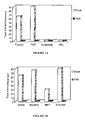
- FIGS. 1A-1D Evaluation of the properties of a fraction obtained from TEGELINE® (solid support based on Affigel grafted with TEGELINE®) The parameters of the process for preparing this fraction are explained in more detail in Example 1 below.
- FNA means fraction not absorbed.
- FIGS. 1A and 1C illustrate the specific reactivity with respect to F (ab ') 2 of IgG and FIGS. 1B and 1D represent the reactivity with respect to the autoantigens.
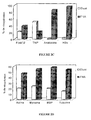
- FIGS. 2A-2D Evaluation of the properties of a fraction obtained from TEGELTNE® (solid support based on NHS-Sepharose). The parameters of the process for preparing this fraction are explained in more detail in Example 2 below.
- FIGS. 2A and 2C illustrate the specific reactivity with respect to F (ab ') 2 of IgG and FIGS. 2B and 2D represent the reactivity with respect to the autoantigens.
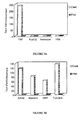
- FIGS. 3A-3D Evaluation of the properties of a fraction obtained from TEGELINE® (solid support based on NHS-AffiPrep with DNP-Lysine). The parameters of the process for preparing this fraction are explained in more detail in Example 3 below.
- FIGS. 3A and 3C illustrate the specific reactivity with respect to F (ab ') 2 of IgG and FIGS. 3B and 3D show the reactivity with respect to the autoantigens.
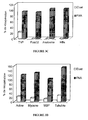
- FIGS. 4A-4D Evaluation of the properties of a fraction obtained from TEGELINE® (solid support based on NHS-Sepharose grafted with IgM). The parameters of the process for preparing this fraction are explained in more detail in Example 4 below.
- FIGS. 4A and 4C illustrate the specific reactivity with respect to IgM and FIGS. 4B and 4D show the reactivity with respect to the autoantigens.
- Figure 5 Evaluation of the capacity of TEGELINE® or of the fractions to inhibit the binding between DNA and anti-DNA antibodies originating from a serum of a patient suffering from Lupus Erythematosus.
- Example 6 The experimental conditions of the competition test are explained in Example 6 below: ⁇ 47-2 EN (anti-DNP); ⁇ 47-4 EN (anti-DNP); ⁇ Tegeline; ⁇ 46-8 EA (anti-Tegeline); ⁇ 46-9 EA (anti-Tegeline).
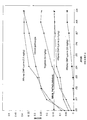
- Figure 6 Evaluation of the protective effect of the anti-DNP fraction compared to Tegeline on the development of rheumatoid arthritis induced by collagen II in rats. This figure represents the evolution of the arthritic score with DNP-LYSINE fractions. The methods of induction of the disease as well as of the administration of the products are described in Example 7A below.
- Figure 7 Evaluation of the protective effect of the anti-DNP fraction compared to Tegeline on the development of cyclophosphamide-induced diabetes in male NOD mice. The methods of induction of the disease as well as of the administration of the products are described in Example 7B below.
- Example 1 Process according to the invention with TEGELINE® and a solid support Affigel.
- the polyvalent IgGs were coupled to an NHS-Affigel gel at the rate of 21 mg of product per ml of gel.
- a dose of 20 g of polyvalent IgG at a concentration of 20 mg / ml was brought into contact by column recirculation with 21 of immunoabsorbent for 4 h at 22 ° C in PBS.
- the elution was then carried out in 0.1M glycine HCL pH 3.25 and the eluate concentrated on an ultrafiltration membrane having a cutoff threshold of 30kD.
- the concentration was measured in nephelometry.
- the recovery rate is 0.42% in the eluate and 89% in the FNA.
- the rate of enrichment in reactivity with respect to the F (ab ′) 2 of this eluate relative to the starting polyvalent IgGs amounts to 65.
- This fraction has an enhanced reactivity compared to that of polyvalent IgGs with respect to several autoantigens and an absence of reactivity with respect to tetanus toxoid and HBs antigen (see FIG. 1 and Table 1). .
- Antigens tested Enrichment rate % recovery Eluate FNA Eluate FNA F (ab ') 2 65 0.3 28 26 NPT 90 0.7 39 62 tetanus 1.8 1.1 0.8 106 HBs 2.5 1.4 1.1 132 actin 63.5 0.7 27 69 myosin 76 0.6 33 57 MBP 29 1 12 90 tubulin 80 0.8 34 74
- Example 2 Process according to the invention with TEGELINE® and a solid support NHS-Sepharose.
- Multipurpose IgGs were coupled to an NHS-Sepharose gel at the rate of 10 mg of protein per ml of gel.
- a dose of 50 mg of polyvalent IgG at a concentration of 1 mg / ml was brought into contact by column recirculation with 20 ml of immunoabsorbent for 4 h at 22 ° C in PBS.
- the unabsorbed fraction or FNA was collected and stored at -80 ° C.
- the elution was then carried out in 0.1 M HCl glycine buffer pH 3.5 and the eluate concentrated by centrifugation on an ultrafiltration membrane having a cutoff threshold of 30 kD.
- the IgG concentration was measured by nephelometry.
- the recovery rate is 0.77% in the eluate and 94.7% in the FNA.
- the rate of enrichment in reactivity with respect to the F (ab ′) 2 of this eluate relative to the starting polyvalent IgGs amounts to 76.
- This fraction has an enhanced reactivity compared to that of polyvalent IgG with respect to several autoantigens and an absence of reactivity with respect to tetanus toxoid and HBs antigen (FIG. 2 and Table 2).
- Example 3 Method according to the invention with DNP-Lysine and a solid support NHS-AffiPrep.
- DNP-Lysine was coupled to an NHS-Affiprep gel at the rate of 4 mg of product per ml of gel.
- a dose of 60 g of polyvalent IgG at a concentration of 50 mg / ml was brought into contact by column recirculation with 2 l of immunoabsorbent for 4 h at 22 ° C in PBS.
- the elution was then carried out in 2M sodium iodide (KI) at pH 7.
- KI sodium iodide
- the eluate is desalted against PBS on a column of Sephadex G 25 .
- the concentration was measured in nephelometry.
- the recovery rate is 0.12% in the eluate and 85% in the FNA.
- This fraction has an enhanced reactivity compared to that of polyvalent IgGs with respect to several autoantigens and an absence of reactivity with respect to tetanus toxoid and the HBs antigen (FIG. 3 and Table 3).
- Example 4 Method according to the invention with polyclonal IgM and a support solid NHS-Sepharose.
- Human polyclonal IgM (90% purity) were coupled to an NHS-Sepharose gel at the rate of 10 mg of proteins per ml of gel.
- a dose of 50 mg of polyvalent IgG at a concentration of 1 mg / ml was brought into contact with 20 ml of immunoadsorbent for 4 h at 22 ° C in PBS.
- the non-adsorbed fraction or FNA was collected and stored at -80 ° C.
- the elution was then carried out in 0.1M HCL glycine buffer pH 3.5 and the eluate concentrated by centrifugation on an ultrafiltration membrane having a cutoff threshold of 30 kDa.
- the IgG concentration was measured by nephelometry.
- the recovery rate is 0.20% in the eluate and 98.7% in the FNA.
- the rate of enrichment in reactivity with respect to the IgMs of this eluate compared to the polyvalent starting IgGs amounts to 64.
- This fraction has an enhanced reactivity compared to that of polyvalent IgG with respect to several autoantigens and an absence of reactivity with respect to tetanus toxoid and HBs antigen ( Figure 4 and Table 4).
- the measurement of the incorporation rate of tritiated thymidine in human cells which reflects proliferation is carried out using a ⁇ scintillation counter.
- the percentage inhibition of the proliferation of lymphocytes in the presence of the various components added to the culture is calculated relative to the proliferation of the cells of donors A and B mixed.
- Table 5 presents the results in terms of dose in ⁇ g / ml of fractions or products capable of giving a 50% inhibition of cell proliferation.
- the fractions presented in Examples 1 to 4 are capable of inhibiting the proliferation of lymphocytes in mixed culture with an efficiency 10 to 50 times greater than that of Tegeline.
- Tegeline or the anti-Tegeline fractions prepared according to Example 2 or the fractions anti-DNP prepared according to Example 3 are incubated in the presence of antibodies anti-DNA biotinylates from a patient with Lupus Erythematosus, in a DNA coated microfiltration plate. Percentage inhibition of binding of anti-DNA biotinylated antibody to DNA is measured as a function of the concentration of Tegeline or added fractions. The results presented in FIG. 5 show that the anti-DNP fractions inhibit proliferation approximately ten times more than Tegeline for the same concentration. Anti-Tegeline fractions, on the contrary, promote binding pathogenic antibodies to DNA by establishing idiotypic interactions.
- Example 7 Clinical applications.
- Fractions enriched in autoreactivity and showing themselves to be effective in models autoimmune disease trials are intended for use in the treatment of many conditions where IglV has been shown to have therapeutic action, and in particular autoimmune diseases, GVH and rejection of transplant after transplant.
- Example 7A Effect of anti-DNP fractions compared with Tegeline on the development of rheumatoid arthritis induced by collagen II in rats.
- the fractions enriched in autoreactivity originating from the elution of polyvalent IgGs from an NHS-Affiprep gel coupled to DNP-Lysine were injected ip at different doses into rats having received collagen II for induce the development of rheumatoid arthritis.
- the protective efficacy against rheumatoid arthritis of the fractions was compared with that obtained with the same doses of initial polyvalent IgG.
- the combined results of two independent experiments (FIG.
- Example 7B Effect of the anti-Tegeline fraction and the anti-DNP fraction on the development of cyclophosphamide-induced diabetes in male NOD mice.
- Newborn male NOD mice are injected three times a week for 4 weeks either by Tegeline at a dose of 1 mg / mouse or by the anti-Tegeline fraction or the anti-DNP fraction at a dose of 0.1 mg / mouse.
- the development of diabetes is started at 8 weeks of age by two injections of cyclophosphamide (200 mg / kg) spaced two weeks apart.
- Figure 7 shows that the percentage of diabetic mice [the blood sugar level higher than 3g / l) is significantly decreased in the group of NOD mice injected with Tegeline (14%) and in the group injected by the anti-DNP fraction (21%) but not in the group injected by the fraction anti-Tegeline compared to the untreated group (68%)].
Landscapes
- Health & Medical Sciences (AREA)
- Chemical & Material Sciences (AREA)
- Organic Chemistry (AREA)
- Medicinal Chemistry (AREA)
- Immunology (AREA)
- Life Sciences & Earth Sciences (AREA)
- General Health & Medical Sciences (AREA)
- Bioinformatics & Cheminformatics (AREA)
- Engineering & Computer Science (AREA)
- Chemical Kinetics & Catalysis (AREA)
- General Chemical & Material Sciences (AREA)
- Veterinary Medicine (AREA)
- Nuclear Medicine, Radiotherapy & Molecular Imaging (AREA)
- Pharmacology & Pharmacy (AREA)
- Animal Behavior & Ethology (AREA)
- Public Health (AREA)
- Proteomics, Peptides & Aminoacids (AREA)
- Molecular Biology (AREA)
- Genetics & Genomics (AREA)
- Biophysics (AREA)
- Biochemistry (AREA)
- Neurology (AREA)
- Heart & Thoracic Surgery (AREA)
- Dermatology (AREA)
- Diabetes (AREA)
- Neurosurgery (AREA)
- Cardiology (AREA)
- Vascular Medicine (AREA)
- Urology & Nephrology (AREA)
- Hematology (AREA)
- Transplantation (AREA)
- Biomedical Technology (AREA)
- Orthopedic Medicine & Surgery (AREA)
- Physical Education & Sports Medicine (AREA)
- Medicines Containing Antibodies Or Antigens For Use As Internal Diagnostic Agents (AREA)
- Peptides Or Proteins (AREA)
- Compounds Of Unknown Constitution (AREA)
- Medicines Containing Material From Animals Or Micro-Organisms (AREA)
- Polysaccharides And Polysaccharide Derivatives (AREA)
- Measuring Or Testing Involving Enzymes Or Micro-Organisms (AREA)
Description
- Les déficits immunitaires primitifs ou secondaires,
- Le traitement de certaines maladies autoimmunes,
- Les complications infectieuses et la maladie du greffon contre l'hôte après greffes de cellules hématopoïétiques allogéniques.
D'autres indications sont considérées par les experts comme étant justifiées. Certaines cytopénies par exemple où les IglV entraínent une amélioration rapide, mais souvent transitoire (6) et les hémophilies avec inhibiteurs (autoanticorps anti-facteur VIII) où en revanche l'amélioration peut être durable (7,8). Des résultats contradictoires ont été obtenus dans les avortements à répétition avec des taux de succès encourageants dans certaines séries (9,10).
- Le blocage des récepteurs Fc à la surface des macrophages, monocytes, neutrophiles et eosinophiles.
- La neutralisation des autoanticorps circulants par des anticorps anti-idiotype,
- L'inhibition des effets néfastes dus à l'activation du complément,
- La modulation du réseau des cytokines,
- et/ou la sélection des répertoires immunitaires par interaction avec les lymphocytes T et B.
EP 293 606 décrit une méthode générale pour la purification d'un anticorps X par interaction idiotypique / anti-idiotypique comprenant les étapes suivantes :
- Fractionnement du plasma provenant d'un pool de donneurs par précipitation, adsorption et/ou filtration puis ultrafiltration (obtention d'une première fraction " PSO 1"),
- Traitement par la pepsine à pH acide, formulation, répartition, et lyophilisation (obtention du produit TEGELINE® ),
- Un autre traitement pourrait utiliser la chromatographie sur colonne échangeuse d'anions, ultrafiltration, obtention d'une fraction intermédiaire (appelée " PSO 2") et chauffage, ultrafiltration, formulation et répartition (obtention d'une fraction IgIV liquide).
De préférence, elle réagit avec un composant sélectionné parmi les IgM, les F(ab')2 d'IgG et l'haptène DNP avec un taux d'enrichissement supérieur à 40 par rapport à l'activité des Ig polyvalentes initiales.
Dans les Ig polyvalentes, il existe des anticorps naturels qui interagissent avec l'haptène DNP et des anticorps qui interagissent avec les idiotypes exprimés par des autoanticorps de type IgG ou IgM (fraction connectée) et qui possèdent une certaine autoréactivité. On entend par " fraction connectée " dans le cadre de l'invention une fraction qui présente un pourcentage élevé d'Ig interagissant entre elles ou avec des IgG ou des IgM par liaison idiotype - anti-idiotype.
L'étape d) peut également comporter une mesure de la réactivité pour l'anatoxine tétanique et l'antigène HBs en prenant le taux d'enrichissement comme valeur contrôle.
De préférence, l'étape d) comprend un test ELISA effectué sur un panel d'autoantigènes sélectionnés notamment parmi l'actine, la myosine, la MBP, et la tubuline.
Ce test de réaction lymphocytaire mixte peut comprendre les étapes suivants :
- obtention de prélèvements sanguins d'un donneur A et d'un donneur B incompatible au niveau des antigènes du complexe majeur d'histocompatibilité (CMH),
- purification des cellules mononuclées sur ficoll,
- mise ne culture de 2.105 cellules du donneur B en présence de 2105 cellules du donneur A,
- mesure de la prolifération des cellules au jour 4 par mesure de l'incorporation de thymidine tritiée.
Avantageusement, l'absorption est effectuée dans des conditions de température allant de 4° à 40°C et en tampon phosphate 20 mM ou équivalent comprenant du NaCI dont la concentration peut varier de 0 M à 3 M.
L'élution des Ig retenues à l'étape b) sont de préférence éluées à l'étape c) avec un tampon d'ions dissociant la liaison Ag-Ac ou DNP-Ac, sélectionné notamment parmi les chaotropes tels que la glycine-HCl ou l'iodure de sodium (Nal) dans des conditions faisant varier le pH, de préférence entre 2,8 à 4,0.
Bien entendu, certains paramètres du procédé peuvent être modifiés à la convenance de l'homme du métier par de simples expériences de routine. L'invention porte donc également sur un procédé évoqué ci-dessus dans lequel les paramètres sont déterminés en fonction des fractions que l'on a sélectionnée au préalable à l'étape d). Il s'agit de définir les paramètres optimums pour obtenir une fraction ayant les propriétés particulières que l'on souhaite et d'appliquer ensuite ces paramètres à l'échelle d'un procédé industriel selon l'invention. De tels paramètres peuvent être les paramètres qui caractérisent les fractions décrites ci-dessus. Ainsi, le procédé peut être adapté à l'obtention des fractions décrites ci-dessus. De même, l'invention vise un procédé de fabrication industrielle de fractions présentant une réactivité vis-à-vis d'un composant sélectionné parmi les IgM, les F(ab')2 d'IgG et l'haptène DNP, pas ou peu de réactivité vis-à-vis d'antigènes du non-soi et une polyréactivité vis-à-vis d'autoantigènes donnés caractérisé en ce qu'on met en oeuvre les étapes a) b) et c) décrite ci-dessus en respectant ou en adaptant les paramètres utilisés lors de la préparation des fractions d'intérêt préalablement sélectionnées.
L'invention a également pour objet les fractions susceptibles d'être obtenues à partir du procédé évoqué précédemment.
- Modèles dans lequel la fonction effectrice est assurée par l'intermédiaire de cellules T ou par des anticorps,
- Modèles dans lequel les mécanismes dépendent de l'interaction avec les F(ab)'2 ou les Fc.
- La souris SCID/NOD humanisée apparaít comme le meilleur modèle pour évaluer l'efficacité in vivo sur des cellules humaines pathologiques des fractions présélectionnées par les tests sur les modèles animaux.
Il est nécessaire de noter que la description de la présente invention n'est pas limitative, que des procédés équivalents et des fractions équivalentes forment également l'invention.
- Une diminution des posologies. Etant donné que le nouveau produit proposé correspond à une fraction contenue dans les Ig polyvalentes la quantité injectée d'lg présentant des propriétés immunomodulatrices est inférieure à celle des IgIV habituellement prescrites. Les doses efficaces peuvent être réduites d'un facteur de 5 à 20 voire plus. Cet avantage est considérable car les posologies actuellement utilisées pour les Ig polyvalentes disponibles sont très élevées : de l'ordre de 1 à 2 g/kg.
- Une efficacité maintenue voire accrue car le produit est enrichi en lg immunomodulatrices,
- Une meilleure tolérance. Avec des concentrations plus faibles, la tolérance du nouveau produit est améliorée. En effet, actuellement il est nécessaire de prendre certaines précautions au cours de l'administration des IgIV avec, en particulier, une perfusion lente du produit pendant plusieurs heures pour éviter certains effets secondaires, comme par exemple des réactions allergiques.
- Une prescription simplifiée. L'administration de faibles doses permet d'instaurer des traitements ambulatoires venant se substituer aux perfusions actuelles réalisées en milieu hospitalier.
Les paramètres du procédé de préparation de cette fraction sont explicités plus en détail à l'exemple 1 ci-après.
FNA signifie fraction non absorbée.
Les figures 1A et 1C illustrent la réactivité spécifique vis-à-vis des F(ab')2 d'IgG et les figures 1B et 1D représentent la réactivité vis-à-vis des autoantigènes.
Les paramètres du procédé de préparation de cette fraction sont explicités plus en détail à l'exemple 2 ci-après.
Les figures 2A et 2C illustrent la réactivité spécifique vis-à-vis des F(ab')2 d'IgG et les figures 2B et 2D représentent la réactivité vis-à-vis des autoantigènes.
Les paramètres du procédé de préparation de cette fraction sont explicités plus en détail à l'exemple 3 ci-après.
Les figures 3A et 3C illustrent la réactivité spécifique vis-à-vis des F(ab')2 d'IgG et les figures 3B et 3D représentent la réactivité vis-à-vis des autoantigènes.
Les paramètres du procédé de préparation de cette fraction sont explicités plus en détail à l'exemple 4 ci-après.
Les figures 4A et 4C illustrent la réactivité spécifique vis-à-vis des IgM et les figures 4B et 4D représentent la réactivité vis-à-vis des autoantigènes.
Figure 5 : Evaluation de la capacité de TEGELINE® ou des fractions à inhiber la liaison entre l'ADN et des anticorps anti-ADN provenant d'un sérum de patient atteint d'un Lupus Erythémateux .
Les conditions expérimentales du test de compétition sont explicitées à l'exemple 6 ci-après :
▪ 47-2 EN (anti-DNP) ; ○ 47-4 EN (anti-DNP) ; □ Tégéline ; ○ 46-8 EA (anti-Tégéline) ; ▪ 46-9 EA (anti-Tégéline).
Cette figure représente l'évolution du score arthritique avec des fractions DNP-LYSINE.
Les modalités d'induction de la maladie ainsi que de l'administration des produits sont décrits à l'exemple 7A ci-après.
Les modalités d'induction de la maladie ainsi que de l'administration des produits sont décrits à l'exemple 7B ci-après .
La concentration a été mesurée en néphélémétrie. Le taux de récupération s'élève à 0,42 % dans l'éluat et à 89 % dans la FNA.
Le taux d'enrichissement en réactivité vis à vis des F(ab')2 de cet éluat par rapport aux IgG polyvalentes de départ, s'élève à 65.
| Antigènes testés | Taux d'enrichissement | % de récupération | ||
| Eluat | FNA | Eluat | FNA | |
| F(ab')2 | 65 | 0,3 | 28 | 26 |
| TNP | 90 | 0.7 | 39 | 62 |
| Anatoxine | 1,8 | 1.1 | 0.8 | 106 |
| HBs | 2.5 | 1.4 | 1.1 | 132 |
| Actine | 63.5 | 0.7 | 27 | 69 |
| Myosine | 76 | 0,6 | 33 | 57 |
| MBP | 29 | 1 | 12 | 90 |
| Tubuline | 80 | 0.8 | 34 | 74 |
Le taux d'enrichissement en réactivité vis-à-vis des F(ab')2 de cet éluat par rapport aux IgG polyvalentes de départ, s'élève à 76.
Cette fraction possède une réactivité enrichie par rapport à celle des IgG polyvalentes vis-à-vis de plusieurs autoantigènes et une absence de réactivité vis-à-vis de l'anatoxine tétanique et de l'antigène HBs (figure 2 et tableau 2).
| Antigènes Testés | Taux d'enrichissement | % de récupération | ||
| Eluat | FNA | Eluat | FNA | |
| TNP | 32 | 0.45 | 22 | 39 |
| F(ab')2 | 76 | 0,2 | 51 | 22 |
| Anatoxine | 1,3 | 1 | 0,9 | 86 |
| HBs | 4,87 | 1,1 | 3,3 | 96,4 |
| Actine | 29,5 | 0,6 | 20 | 47 |
| Myosine | 35 | 0,6 | 24 | 55 |
| MBP | 29 | 0,7 | 20 | 58 |
| Tubuline | 22,4 | 0,6 | 15 | 54 |
La concentration a été mesuré en néphélémétrie. Le taux de récupération s'élève à 0,12% dans l'éluat et à 85 % dans la FNA.
Le taux d'enrichissement en réactivité vis à vis du TNP-Ova de cet éluat par rapport aux lgG polyvalentes de départ, s'élève à 239.
Cette fraction possède une réactivité enrichie par rapport à celle des lgG polyvalentes vis-à-vis de plusieurs autoantigènes et une absence de réactivité vis-à-vis de l'anatoxine tétanique et de l'antigène HBs (figure 3 et Tableau 3).
| Antigènes testés | Taux d'enrichissement | % de récupération | ||
| Eluat | FNA | Eluat | FNA | |
| TNP | 239 | 0,9 | 23 | 94 |
| F(ab')2 | 2,9 | 0,9 | 0,6 | 92 |
| Anatoxine | 2,4 | 1 | 0,5 | 104 |
| HBs | 3,2 | 1 | 0,7 | 104 |
| Actine | 117 | 1,1 | 24 | 120 |
| Myosine | 83 | 1,2 | 17 | 129 |
| MBP | 63 | 1 | 13 | 102 |
| Tubuline | 137 | 1,5 | 28 | 152 |
La concentration en IgG a été mesurée par néphélémétrie. Le taux de récupération s'élève à 0,20 % dans l'éluat et à 98,7 % dans la FNA.
Le taux d'enrichissement en réactivité vis-à-vis des IgM de cet éluat par rapport aux IgG polyvalentes de départ, s'élève à 64.
Cette fraction possède une réactivité enrichie par rapport à celle des IgG polyvalentes vis-à-vis de plusieurs autoantigènes et une absence de réactivité vis-à-vis de l'anatoxine tétanique et de l'antigène HBs (figure 4 et tableau 4).
| Antigènes testés | Taux d'enrichissement | % de récupération | ||
| Eluat | FNA | Eluat | FNA | |
| TNP | 71,5 | 0,5 | 13 | 44,5 |
| IgM | 64 | 1,2 | 11,4 | 106 |
| F(ab')2 | 24,5 | 0,7 | 4,5 | 67 |
| Anatoxine | 1,8 | 0,8 | 0,3 | 76 |
| HBs | < seuil | 0,8 | < seuil | 76 |
| Actine | 52 | 0,3 | 9 | 33 |
| Myosine | 54 | 0,6 | 10 | 54 |
| MBP | 39,5 | 0,5 | 7 | 50 |
| Tubuline | 58 | 0,7 | 10 | 62 |
| Inhibition par TEGELINE® et par les fractions de la prolifération de lymphocytes humains en culture mixte | |||
| Référence fractions | Support d'affinité | Dose en µg / ml donnant 50 % d'inhibition de la prolifération | |
| Expérience 1 | Expérience 2 | ||
| Tégéline® | NA | 160 | 80 |
| Fc de Tégéline® | NA | 1 000 | NT |
| F(ab')2 de Tégéline® | NA | NT | 250 |
| Exemple 1 | AffiGel NHS Tégéline | 7 | NT |
| Exemple 2 | Sepharose NHS Tégéline | 5 | NT |
| Exemple 3 | AffiPrep NHS DNP-Lysine | 9 | 2 |
| Exemple 4 | Sepharose NHS IgM | 2,5 | - |
| NA = non applicable | |||
| NT = non testé |
Claims (16)
- Procédé de préparation de fractions d'Ig caractérisé en ce qu'il comprend les étapes suivantes :a) Préparation d'un support insoluble sur lequel est greffé un composant sélectionné parmi les IgG, les IgM polyvalentes et du DNP-Lysine,b) adsorption d'Ig polyvalentes sur le support obtenu à l'étape a),c) élution des Ig retenues sur la partie des immunoglobulines liées au support de façon à recueillir la fraction connectée par interactions idiotypiques IgG-IgG ou IgM-IgG ; ou élution de la fraction interagissant avec le DNP.d) sélection des fractions présentant i) une réactivité vis-à-vis des IgM, des F(ab')2 d'IgG ou de l'haptène DNP, ii) pas ou peu de réactivité vis-à-vis d'antigènes du non-soi, et/ou iii) une polyréactivité avec au moins l'un des autoantigènes sélectionnés parmi la myosine, l'actine, la tubuline, et la protéine basique de la myéline (MBP), i) et iii) étant caractérisées par une réactivité enrichie des fractions par rapport à celle des IgG polyvalentes initiales selon un taux d'enrichissement supérieur à 20 et 10 respectivement.e) sélection des fractions par un test d'inhibition de la réaction lymphocytaire mixte avec des cellules humaines pour contrôler la réactivité des Ig purifiées.
- Procédé selon la revendication 1 caractérisé en ce que les Ig absorbées consistent en des IgG ou des IgM.
- Procédé selon l'une des revendications 1 et 2 caractérisé en ce que les fractions d'Ig sont préparées à partir d'Ig polyvalentes ou toute autre fraction intermédiaire obtenue au cours du procédé de fabrication des IgIV à usage thérapeutique.
- Procédé selon la revendication 3 caractérisé en ce que les Ig polyvalentes utilisées pour préparer les fractions consistent en des IgG ou des IgM.
- Procédé selon l'une des revendications 1 à 4 caractérisé en ce que l'étape d) comprend une mesure du taux d'enrichissement en anticorps réactifs contre les IgM, les F(ab')2 d'IgG ou l'haptène DNP utilisés pour la purification.
- Procédé selon l'une des revendications 1 à 5 caractérisé en ce que l'étape d) comprend une mesure de la réactivité pour l'anatoxine tétanique et l'antigène HBs en prenant le taux d'enrichissement comme valeur contrôle.
- Procédé selon l'une des revendications 1 à 6 caractérisé en ce que l'étape d) comprend un test de compétition pour contrôler l'activité neutralisante des fractions anti-DNP vis-à-vis d'anticorps biotimylés anti-ADN provenant d'un malade atteint de Lupus Erythémateux, le pourcentage d'inhibition de la liaison de l'anticorps biotimylé anti-ADN à l'ADN étant mesuré en fonction de la concentration au Tégéline.
- Procédé selon l'une des revendications 1 à 7 caractérisé en ce que l'étape a) consiste en un greffage d'IgG, d'IgM polyvalentes ou de DNP-Lysine sur un support solide, notamment sur un gel de Sepharose®, de Trisacryl®, d'Affiprep®, d'Affigel®, gels activés avec CNBr, NHS ou C5H8O2 (glutaraldéhyde).
- Procédé selon l'une des revendications 1 à 8 caractérisé en ce que les IgG déposées sur le support solide obtenu à l'étape a) sont adsorbées soit sous forme d'IgG polyvalentes lyophilisées et remises en solution ou sous forme liquide, soit sous forme de fractions intermédiaires obtenues au cours d'un procédé de fabrication d'IgG polyvalentes en tampon phosphate 20 mM comprenant du NaCl dont la concentration peut varier de 0 M à 3 M.
- Procédé selon l'une des revendications 1 à 9 caractérisé en ce que l'élution des Ig retenues à l'étape b) est effectuée avec un tampon d'ions dissociant la liaison Ag-Ac ou Ag-DNP, sélectionnés notamment parmi les chaotropes tels que la glycine-HCl ou l'iodure de sodium (Nal), dans des conditions faisant varier le pH, de préférence entre 2.8 à 4.0 et/ou la molarité du tampon.
- Procédé selon l'une des revendications 1 à 10 caractérisé en ce que l'absorption est effectuée dans des conditions de température allant de 4° à 40°C et en PBS.
- Fractions susceptibles d'être obtenues à partir d'un procédé selon l'une des revendications 1 à 11 caractérisées en ce qu'elles réagissent avec au moins l'un des autoantigènes sélectionnés parmi la myosine, l'actine, la tubuline, et la protéine basique de la myéline (MBP) avec un taux d'enrichissement supérieur à 10 par rapport à l'activité des Ig polyvalentes initiales.
- Utilisation d'une fraction d'Ig selon la revendications 12 pour la préparation d'un médicament.
- Utilisation selon la revendication 13 pour la préparation d'un médicament destiné au traitement des maladies autoimmunes, de la GVH, et/ou du rejet de greffe après transplantation.
- Utilisation selon la revendication 13 pour la préparation d'un médicament destiné au traitement de la maladie de Kawasaki, au traitement de la rétinochoroïdite de Birdshot, éventuellement en association avec une corticothérapie, au traitement de certaines cytopénies, des hémophilies avec inhibiteurs (autoanticorps anti-facteur VIII), et/ou pour prévenir et/ou empêcher le rejet immunitaire de greffes de cellules et/ou d'organes et le développement de la GVH après la greffe de cellules hématopoïétiques allogéniques.
- Utilisation selon la revendication 13 pour la préparation d'un médicament destiné au traitement de maladies neurologiques, notamment la maladie de Guillain-Barré de l'adulte, les polyneuropathies inflammatoires chroniques démyelinisantes, les dermatomyosites, la myasthénie, et/ou la sclérose en plaques.
Applications Claiming Priority (4)
| Application Number | Priority Date | Filing Date | Title |
|---|---|---|---|
| FR9907153A FR2794460A1 (fr) | 1999-06-07 | 1999-06-07 | Procede de preparation de nouvelles fractions d'igg humaines possedant une activite immunomodulatrice |
| FR9907153 | 1999-06-07 | ||
| FR9916632 | 1999-12-29 | ||
| FR9916632A FR2794461B1 (fr) | 1999-06-07 | 1999-12-29 | Procede de preparation de nouvelles fractions d'ig humaines possedant une activite immunomodulatrice |
Publications (2)
| Publication Number | Publication Date |
|---|---|
| EP1059088A1 EP1059088A1 (fr) | 2000-12-13 |
| EP1059088B1 true EP1059088B1 (fr) | 2004-09-29 |
Family
ID=26234979
Family Applications (1)
| Application Number | Title | Priority Date | Filing Date |
|---|---|---|---|
| EP00401601A Expired - Lifetime EP1059088B1 (fr) | 1999-06-07 | 2000-06-07 | Procédé de purification des fractions d'Ig connectées possédant une activité immunomodulatrice |
Country Status (12)
| Country | Link |
|---|---|
| US (1) | US6932969B1 (fr) |
| EP (1) | EP1059088B1 (fr) |
| JP (1) | JP2003519619A (fr) |
| AT (1) | ATE277635T1 (fr) |
| AU (1) | AU780138B2 (fr) |
| CA (1) | CA2376335A1 (fr) |
| DE (1) | DE60014239T2 (fr) |
| DK (1) | DK1059088T3 (fr) |
| ES (1) | ES2228425T3 (fr) |
| FR (1) | FR2794461B1 (fr) |
| PT (1) | PT1059088E (fr) |
| WO (1) | WO2000074717A1 (fr) |
Families Citing this family (23)
| Publication number | Priority date | Publication date | Assignee | Title |
|---|---|---|---|---|
| DE10127712A1 (de) * | 2001-06-07 | 2002-12-19 | Torsten Witte | Anwendung von IgM-Antikörpern gegen dsDNA beim systemischen Lupus erythematodes mit Nephritis |
| FR2832155B1 (fr) * | 2001-11-09 | 2004-07-09 | Lab Francais Du Fractionnement | Anticorps stimulant la production d'il-1ra |
| US20040101909A1 (en) * | 2002-08-20 | 2004-05-27 | Hema-Quebec, 2535 Boul. Laurier, Ste-Foy, Quebec, Canada G1V 4M3 | Purification of polyreactive autoantibodies and uses thereof |
| US9557325B2 (en) | 2003-06-09 | 2017-01-31 | Redox-Reactive Reagents Llc | Method of altering the binding specificity of proteins by oxidation-reduction reactions |
| US7892751B2 (en) * | 2003-06-09 | 2011-02-22 | Redox-Reactive Reagents Llc | Method of detecting or diagnosing of a neurodegenerative disease or condition |
| BRPI0411103B1 (pt) | 2003-06-09 | 2019-01-15 | A Mcintyre John | método, e, método de obtenção e isolamento de um autoanticorpo de um fluido biológico contendo anticorpo ou de um extrato de fluido biológico contendo anticorpo |
| FR2895263B1 (fr) | 2005-12-26 | 2008-05-30 | Lab Francais Du Fractionnement | Concentre d'immunoglobines g (lg) appauvri en anticorps anti-a et anti-b, et en igg polyreactives |
| FR2939667B1 (fr) | 2008-12-17 | 2012-01-27 | Fractionnement Et Des Biotechonologies Lab Franc | Composition d'immunoglobine g comme medicament pour le traitement de l'ictere neonatal par incompatibilite foetomaternelle dans le systeme abo |
| EP3385279B1 (fr) | 2009-03-20 | 2020-02-26 | Amgen Inc. | Immunoglobulines porteuses et utilisations de celles-ci |
| EP2258727A1 (fr) | 2009-05-27 | 2010-12-08 | Wezen Biopharmaceuticals S.r.l. A Socio Unico | Préparation d'immunoglobuline pour le traitement des maladies auto-immunes et troubles du système immunitaire |
| US20100330102A1 (en) | 2009-06-26 | 2010-12-30 | Wezen Biopharmaceuticals Srl A Socio Unico | Immunoglobulin preparation for the treatment of hiv-1 infection |
| JP6017422B2 (ja) | 2010-08-10 | 2016-11-02 | エコール・ポリテクニーク・フェデラル・ドゥ・ローザンヌ(ウペエフエル)Ecole Polytechnique Federale de Lausanne (EPFL) | 赤血球結合療法 |
| US9517257B2 (en) | 2010-08-10 | 2016-12-13 | Ecole Polytechnique Federale De Lausanne (Epfl) | Erythrocyte-binding therapeutics |
| US9850296B2 (en) | 2010-08-10 | 2017-12-26 | Ecole Polytechnique Federale De Lausanne (Epfl) | Erythrocyte-binding therapeutics |
| EP2619226B1 (fr) | 2010-09-22 | 2018-09-12 | Amgen Inc. | Immunoglobulines porteuses et leur utilisation |
| KR20240154672A (ko) | 2014-02-21 | 2024-10-25 | 에꼴 뽈리떼끄닉 뻬데랄 드 로잔느 (으뻬에프엘) | 글리코타겟팅 치료제 |
| US10953101B2 (en) | 2014-02-21 | 2021-03-23 | École Polytechnique Fédérale De Lausanne (Epfl) | Glycotargeting therapeutics |
| US10946079B2 (en) | 2014-02-21 | 2021-03-16 | Ecole Polytechnique Federale De Lausanne | Glycotargeting therapeutics |
| US10046056B2 (en) | 2014-02-21 | 2018-08-14 | École Polytechnique Fédérale De Lausanne (Epfl) | Glycotargeting therapeutics |
| EP3638296A1 (fr) | 2017-06-16 | 2020-04-22 | The University Of Chicago | Compositions et procédés d'induction d'une tolérance immunitaire |
| WO2019133245A1 (fr) * | 2017-12-27 | 2019-07-04 | The Johns Hopkins University | Prévention du syndrome de libération de cytokine |
| SG11202011078VA (en) | 2018-05-09 | 2020-12-30 | Univ Chicago | Compositions and methods concerning immune tolerance |
| CN116159340A (zh) * | 2022-12-16 | 2023-05-26 | 浙江大学 | 一种用于体积排阻色谱法的缓冲液 |
-
1999
- 1999-12-29 FR FR9916632A patent/FR2794461B1/fr not_active Expired - Fee Related
-
2000
- 2000-06-07 DE DE60014239T patent/DE60014239T2/de not_active Expired - Lifetime
- 2000-06-07 PT PT00401601T patent/PT1059088E/pt unknown
- 2000-06-07 DK DK00401601T patent/DK1059088T3/da active
- 2000-06-07 EP EP00401601A patent/EP1059088B1/fr not_active Expired - Lifetime
- 2000-06-07 ES ES00401601T patent/ES2228425T3/es not_active Expired - Lifetime
- 2000-06-07 AU AU55387/00A patent/AU780138B2/en not_active Ceased
- 2000-06-07 AT AT00401601T patent/ATE277635T1/de active
- 2000-06-07 US US09/980,833 patent/US6932969B1/en not_active Expired - Fee Related
- 2000-06-07 WO PCT/FR2000/001560 patent/WO2000074717A1/fr not_active Ceased
- 2000-06-07 CA CA002376335A patent/CA2376335A1/fr not_active Abandoned
- 2000-06-07 JP JP2001501251A patent/JP2003519619A/ja active Pending
Also Published As
| Publication number | Publication date |
|---|---|
| FR2794461B1 (fr) | 2004-01-23 |
| AU5538700A (en) | 2000-12-28 |
| FR2794461A1 (fr) | 2000-12-08 |
| DK1059088T3 (da) | 2005-02-07 |
| US6932969B1 (en) | 2005-08-23 |
| DE60014239D1 (de) | 2004-11-04 |
| WO2000074717A1 (fr) | 2000-12-14 |
| PT1059088E (pt) | 2005-02-28 |
| CA2376335A1 (fr) | 2000-12-14 |
| ATE277635T1 (de) | 2004-10-15 |
| ES2228425T3 (es) | 2005-04-16 |
| AU780138B2 (en) | 2005-03-03 |
| DE60014239T2 (de) | 2005-08-25 |
| JP2003519619A (ja) | 2003-06-24 |
| EP1059088A1 (fr) | 2000-12-13 |
Similar Documents
| Publication | Publication Date | Title |
|---|---|---|
| EP1059088A1 (fr) | Nouvelles fractions d'Ig possédant une activité immunomodulatrice | |
| US11014990B2 (en) | Anti-CD40L antibodies | |
| Looney et al. | Use of intravenous immunoglobulin G (IVIG) | |
| CA2146647C (fr) | Traitement d'affections auto-immunes et inflammatoires | |
| EP1968634B1 (fr) | PROCÉDÉ DE PRÉPARATION DE CONCENTRE D' IMMUNOGLOBULINES G (IgG) APPAUVRI EN ANTICORPS ANTI-A ET ANTI-B | |
| Goodfield et al. | Intravenous immunoglobulin (IVIg) for therapy‐resistant cutaneous lupus erythematosus (LE) | |
| Sundin et al. | Induction of unresponsiveness against IgA in IgA-deficient patients on subcutaneous immunoglobulin infusion therapy | |
| Getman et al. | Pharmacokinetic effects of 4C9, an anti-FcRn antibody, in rats: implications for the use of FcRn inhibitors for the treatment of humoral autoimmune and alloimmune conditions | |
| NZ266838A (en) | Treatment of patients with anti-tnfalpha antibody, antibody fragment | |
| KR20070107079A (ko) | 안정화된 액체 폴리펩타이드 제형 | |
| US20090117131A1 (en) | Pharmaceutical Composition for The Treatment or Prevention of Allergic Diseases, Use Thereof, and A Method for The Treatment or Prevention of Allergic Diseases | |
| HUT62486A (en) | Process for producing pharmaceutical compositions comprising antigene-antibody complexes | |
| Aktas et al. | Regulation of self-reactive T cells by human immunoglobulins-implications for multiple sclerosis therapy | |
| Oxelius et al. | Different Gm allotype amounts in human intravenous immunoglobulin (IVIG) preparations; survival of foreign Gm allotypes in immunodeficient patients | |
| CA2195126A1 (fr) | Sequence polypeptidique antigenique du facteur viii, fragments et/ou epitopes de celle-ci | |
| FR2794460A1 (fr) | Procede de preparation de nouvelles fractions d'igg humaines possedant une activite immunomodulatrice | |
| EP1438341B1 (fr) | Anticorps stimulant la production d'il-1ra | |
| WO1986005099A1 (fr) | Preparations d'immunoglobulines presentant des titres eleves en anticorps bloquants | |
| US6383489B1 (en) | Inactivation of granulocytes in the treatment of established allergic responses | |
| HK40083008A (en) | Anti-cd40l antibodies and methods for treating cd40l-related diseases or disorders | |
| FR3035789A1 (fr) | Composition enrichie en immunoglobulines polyclonales anti-a et/ou anti-b pour son utilisation dans le traitement des maladies autoimmunes ou des polyglobulies |
Legal Events
| Date | Code | Title | Description |
|---|---|---|---|
| PUAI | Public reference made under article 153(3) epc to a published international application that has entered the european phase |
Free format text: ORIGINAL CODE: 0009012 |
|
| AK | Designated contracting states |
Kind code of ref document: A1 Designated state(s): AT BE CH CY DE DK ES FI FR GB GR IE IT LI LU MC NL PT SE |
|
| AX | Request for extension of the european patent |
Free format text: AL;LT;LV;MK;RO;SI |
|
| 17P | Request for examination filed |
Effective date: 20010612 |
|
| AKX | Designation fees paid |
Free format text: AT BE CH CY DE DK ES FI FR GB GR IE IT LI LU MC NL PT SE |
|
| AXX | Extension fees paid |
Free format text: RO PAYMENT 20010612 |
|
| 17Q | First examination report despatched |
Effective date: 20030212 |
|
| GRAP | Despatch of communication of intention to grant a patent |
Free format text: ORIGINAL CODE: EPIDOSNIGR1 |
|
| RTI1 | Title (correction) |
Free format text: IG CONNECTED FRACTION PURIFICATION PROCESS, THE IG MODULATING THE IMMUNE RESPONSE |
|
| RTI1 | Title (correction) |
Free format text: IG CONNECTED FRACTION PURIFICATION PROCESS, THE IG MODULATING THE IMMUNE RESPONSE |
|
| GRAS | Grant fee paid |
Free format text: ORIGINAL CODE: EPIDOSNIGR3 |
|
| GRAA | (expected) grant |
Free format text: ORIGINAL CODE: 0009210 |
|
| AK | Designated contracting states |
Kind code of ref document: B1 Designated state(s): AT BE CH CY DE DK ES FI FR GB GR IE IT LI LU MC NL PT SE |
|
| AX | Request for extension of the european patent |
Extension state: RO |
|
| REG | Reference to a national code |
Ref country code: GB Ref legal event code: FG4D Free format text: NOT ENGLISH |
|
| REG | Reference to a national code |
Ref country code: CH Ref legal event code: EP |
|
| REG | Reference to a national code |
Ref country code: CH Ref legal event code: NV Representative=s name: MICHELI & CIE INGENIEURS-CONSEILS |
|
| REG | Reference to a national code |
Ref country code: IE Ref legal event code: FG4D Free format text: FRENCH |
|
| REF | Corresponds to: |
Ref document number: 60014239 Country of ref document: DE Date of ref document: 20041104 Kind code of ref document: P |
|
| REG | Reference to a national code |
Ref country code: GR Ref legal event code: EP Ref document number: 20040403590 Country of ref document: GR |
|
| REG | Reference to a national code |
Ref country code: SE Ref legal event code: TRGR |
|
| REG | Reference to a national code |
Ref country code: DK Ref legal event code: T3 |
|
| GBT | Gb: translation of ep patent filed (gb section 77(6)(a)/1977) |
Effective date: 20050125 |
|
| REG | Reference to a national code |
Ref country code: PT Ref legal event code: SC4A Free format text: AVAILABILITY OF NATIONAL TRANSLATION Effective date: 20041227 |
|
| REG | Reference to a national code |
Ref country code: ES Ref legal event code: FG2A Ref document number: 2228425 Country of ref document: ES Kind code of ref document: T3 |
|
| PLBE | No opposition filed within time limit |
Free format text: ORIGINAL CODE: 0009261 |
|
| STAA | Information on the status of an ep patent application or granted ep patent |
Free format text: STATUS: NO OPPOSITION FILED WITHIN TIME LIMIT |
|
| 26N | No opposition filed |
Effective date: 20050630 |
|
| PGFP | Annual fee paid to national office [announced via postgrant information from national office to epo] |
Ref country code: PT Payment date: 20080516 Year of fee payment: 9 Ref country code: MC Payment date: 20080520 Year of fee payment: 9 Ref country code: FI Payment date: 20080613 Year of fee payment: 9 Ref country code: CY Payment date: 20080331 Year of fee payment: 9 |
|
| PGFP | Annual fee paid to national office [announced via postgrant information from national office to epo] |
Ref country code: IE Payment date: 20080520 Year of fee payment: 9 Ref country code: LU Payment date: 20080704 Year of fee payment: 9 |
|
| PGFP | Annual fee paid to national office [announced via postgrant information from national office to epo] |
Ref country code: GR Payment date: 20080527 Year of fee payment: 9 |
|
| REG | Reference to a national code |
Ref country code: PT Ref legal event code: MM4A Free format text: LAPSE DUE TO NON-PAYMENT OF FEES Effective date: 20091207 |
|
| PG25 | Lapsed in a contracting state [announced via postgrant information from national office to epo] |
Ref country code: MC Free format text: LAPSE BECAUSE OF NON-PAYMENT OF DUE FEES Effective date: 20090630 Ref country code: FI Free format text: LAPSE BECAUSE OF NON-PAYMENT OF DUE FEES Effective date: 20090607 |
|
| PG25 | Lapsed in a contracting state [announced via postgrant information from national office to epo] |
Ref country code: CY Free format text: LAPSE BECAUSE OF NON-PAYMENT OF DUE FEES Effective date: 20090607 Ref country code: PT Free format text: LAPSE BECAUSE OF NON-PAYMENT OF DUE FEES Effective date: 20091207 |
|
| REG | Reference to a national code |
Ref country code: IE Ref legal event code: MM4A |
|
| PG25 | Lapsed in a contracting state [announced via postgrant information from national office to epo] |
Ref country code: IE Free format text: LAPSE BECAUSE OF NON-PAYMENT OF DUE FEES Effective date: 20090608 |
|
| PG25 | Lapsed in a contracting state [announced via postgrant information from national office to epo] |
Ref country code: GR Free format text: LAPSE BECAUSE OF NON-PAYMENT OF DUE FEES Effective date: 20100107 |
|
| PG25 | Lapsed in a contracting state [announced via postgrant information from national office to epo] |
Ref country code: LU Free format text: LAPSE BECAUSE OF NON-PAYMENT OF DUE FEES Effective date: 20090607 |
|
| PGFP | Annual fee paid to national office [announced via postgrant information from national office to epo] |
Ref country code: SE Payment date: 20110620 Year of fee payment: 12 Ref country code: CH Payment date: 20110616 Year of fee payment: 12 |
|
| PGFP | Annual fee paid to national office [announced via postgrant information from national office to epo] |
Ref country code: GB Payment date: 20110627 Year of fee payment: 12 Ref country code: AT Payment date: 20110621 Year of fee payment: 12 Ref country code: DK Payment date: 20110621 Year of fee payment: 12 Ref country code: NL Payment date: 20110627 Year of fee payment: 12 |
|
| PGFP | Annual fee paid to national office [announced via postgrant information from national office to epo] |
Ref country code: BE Payment date: 20110624 Year of fee payment: 12 Ref country code: DE Payment date: 20110613 Year of fee payment: 12 |
|
| PGFP | Annual fee paid to national office [announced via postgrant information from national office to epo] |
Ref country code: ES Payment date: 20110726 Year of fee payment: 12 |
|
| PGFP | Annual fee paid to national office [announced via postgrant information from national office to epo] |
Ref country code: IT Payment date: 20110627 Year of fee payment: 12 |
|
| BERE | Be: lapsed |
Owner name: *LABORATOIRE FRANCAIS DU FRACTIONNEMENT ET DES BIO Effective date: 20120630 |
|
| REG | Reference to a national code |
Ref country code: NL Ref legal event code: V1 Effective date: 20130101 |
|
| REG | Reference to a national code |
Ref country code: DK Ref legal event code: EBP |
|
| REG | Reference to a national code |
Ref country code: SE Ref legal event code: EUG |
|
| REG | Reference to a national code |
Ref country code: CH Ref legal event code: PL |
|
| REG | Reference to a national code |
Ref country code: AT Ref legal event code: MM01 Ref document number: 277635 Country of ref document: AT Kind code of ref document: T Effective date: 20120607 Ref country code: CH Ref legal event code: PL |
|
| GBPC | Gb: european patent ceased through non-payment of renewal fee |
Effective date: 20120607 |
|
| PG25 | Lapsed in a contracting state [announced via postgrant information from national office to epo] |
Ref country code: IT Free format text: LAPSE BECAUSE OF NON-PAYMENT OF DUE FEES Effective date: 20120607 Ref country code: SE Free format text: LAPSE BECAUSE OF NON-PAYMENT OF DUE FEES Effective date: 20120608 |
|
| PGFP | Annual fee paid to national office [announced via postgrant information from national office to epo] |
Ref country code: FR Payment date: 20121214 Year of fee payment: 13 |
|
| REG | Reference to a national code |
Ref country code: DE Ref legal event code: R119 Ref document number: 60014239 Country of ref document: DE Effective date: 20130101 |
|
| PG25 | Lapsed in a contracting state [announced via postgrant information from national office to epo] |
Ref country code: GB Free format text: LAPSE BECAUSE OF NON-PAYMENT OF DUE FEES Effective date: 20120607 Ref country code: LI Free format text: LAPSE BECAUSE OF NON-PAYMENT OF DUE FEES Effective date: 20120630 Ref country code: DE Free format text: LAPSE BECAUSE OF NON-PAYMENT OF DUE FEES Effective date: 20130101 Ref country code: BE Free format text: LAPSE BECAUSE OF NON-PAYMENT OF DUE FEES Effective date: 20120630 Ref country code: CH Free format text: LAPSE BECAUSE OF NON-PAYMENT OF DUE FEES Effective date: 20120630 Ref country code: NL Free format text: LAPSE BECAUSE OF NON-PAYMENT OF DUE FEES Effective date: 20130101 |
|
| PG25 | Lapsed in a contracting state [announced via postgrant information from national office to epo] |
Ref country code: AT Free format text: LAPSE BECAUSE OF NON-PAYMENT OF DUE FEES Effective date: 20120607 |
|
| PG25 | Lapsed in a contracting state [announced via postgrant information from national office to epo] |
Ref country code: DK Free format text: LAPSE BECAUSE OF NON-PAYMENT OF DUE FEES Effective date: 20120702 |
|
| REG | Reference to a national code |
Ref country code: ES Ref legal event code: FD2A Effective date: 20131018 |
|
| PG25 | Lapsed in a contracting state [announced via postgrant information from national office to epo] |
Ref country code: ES Free format text: LAPSE BECAUSE OF NON-PAYMENT OF DUE FEES Effective date: 20120608 |
|
| REG | Reference to a national code |
Ref country code: FR Ref legal event code: ST Effective date: 20140228 |
|
| PG25 | Lapsed in a contracting state [announced via postgrant information from national office to epo] |
Ref country code: FR Free format text: LAPSE BECAUSE OF NON-PAYMENT OF DUE FEES Effective date: 20130701 |