EP1039722A2 - Verfahren zur Unterstützung der Vermittlung von Daten - Google Patents
Verfahren zur Unterstützung der Vermittlung von Daten Download PDFInfo
- Publication number
- EP1039722A2 EP1039722A2 EP00440065A EP00440065A EP1039722A2 EP 1039722 A2 EP1039722 A2 EP 1039722A2 EP 00440065 A EP00440065 A EP 00440065A EP 00440065 A EP00440065 A EP 00440065A EP 1039722 A2 EP1039722 A2 EP 1039722A2
- Authority
- EP
- European Patent Office
- Prior art keywords
- terminal
- communication network
- data
- network
- network node
- Prior art date
- Legal status (The legal status is an assumption and is not a legal conclusion. Google has not performed a legal analysis and makes no representation as to the accuracy of the status listed.)
- Withdrawn
Links
- 238000000034 method Methods 0.000 title claims abstract description 16
- 238000004891 communication Methods 0.000 claims abstract description 75
- 230000005540 biological transmission Effects 0.000 claims abstract description 11
- 238000011156 evaluation Methods 0.000 claims description 4
- 230000008520 organization Effects 0.000 description 3
- 238000012546 transfer Methods 0.000 description 3
- 238000010586 diagram Methods 0.000 description 1
- 230000007246 mechanism Effects 0.000 description 1
- 238000012545 processing Methods 0.000 description 1
- 230000001360 synchronised effect Effects 0.000 description 1
- 230000029305 taxis Effects 0.000 description 1
Images

Classifications
-
- H—ELECTRICITY
- H04—ELECTRIC COMMUNICATION TECHNIQUE
- H04L—TRANSMISSION OF DIGITAL INFORMATION, e.g. TELEGRAPHIC COMMUNICATION
- H04L45/00—Routing or path finding of packets in data switching networks
-
- H—ELECTRICITY
- H04—ELECTRIC COMMUNICATION TECHNIQUE
- H04L—TRANSMISSION OF DIGITAL INFORMATION, e.g. TELEGRAPHIC COMMUNICATION
- H04L61/00—Network arrangements, protocols or services for addressing or naming
- H04L61/35—Network arrangements, protocols or services for addressing or naming involving non-standard use of addresses for implementing network functionalities, e.g. coding subscription information within the address or functional addressing, i.e. assigning an address to a function
-
- H—ELECTRICITY
- H04—ELECTRIC COMMUNICATION TECHNIQUE
- H04L—TRANSMISSION OF DIGITAL INFORMATION, e.g. TELEGRAPHIC COMMUNICATION
- H04L61/00—Network arrangements, protocols or services for addressing or naming
- H04L61/50—Address allocation
- H04L61/5007—Internet protocol [IP] addresses
-
- H—ELECTRICITY
- H04—ELECTRIC COMMUNICATION TECHNIQUE
- H04L—TRANSMISSION OF DIGITAL INFORMATION, e.g. TELEGRAPHIC COMMUNICATION
- H04L2101/00—Indexing scheme associated with group H04L61/00
- H04L2101/60—Types of network addresses
- H04L2101/604—Address structures or formats
-
- H—ELECTRICITY
- H04—ELECTRIC COMMUNICATION TECHNIQUE
- H04L—TRANSMISSION OF DIGITAL INFORMATION, e.g. TELEGRAPHIC COMMUNICATION
- H04L61/00—Network arrangements, protocols or services for addressing or naming
- H04L61/45—Network directories; Name-to-address mapping
Definitions
- the invention relates to a method for supporting the mediation of Data according to the preamble of claim 1, a method for Mediation of data through a communication network according to the The preamble of claim 7, a terminal for connection to a Communication networks according to the preamble of claim 10 and Network node of a communication network according to the generic terms of Claims 8 and 9.
- the invention is based on the usual addressing of terminals in Internet, as described, for example, in chapter 5.5.2. IP addresses and 5.5.3. Subnets of the book “Computer Networks” by Andrew S. Tannenbaum, Prentice Hall, 1998 on pages 446 to 449 is.
- IP Internet protocol
- IP Internet protocol
- These network addresses are each assigned to one 32 bit number formed, usually in dotted Decimal numbers is described.
- 32 bit network addresses are used proposed in IPv4.
- the network address is on the physical Network architecture oriented and hierarchical: The first digits of the Network address, also called network number, designate the IP subnet. The the last digits indicate the number of the respective host, i.e. the Terminal, within this subnet.
- Adapting different subnet sizes are different classes of addresses provided, which differ in the number of digits for the Addressing of subnets and thus also in the number of for the Addressing hosts available in the respective subnet Differentiate digits.
- IP addresses are hierarchically organized by a central one Organization assigned:
- the network numbers are from a central Organization assigned to the "Network Information Center”.
- the host address within the respective subnetwork is determined by the respective Sub-network operator assigned.
- the E. 164 addressing scheme for telephone networks is also known.
- This addressing scheme is also hierarchical: a first one Numeric blocks address a country network, a second numeric block addresses a local area network and a third number block the terminal within the local network.
- the values are also here hierarchically within each of these different blocks of digits assigned to a central organization.
- the invention is based on the object, the addressing of To improve end devices in communication networks and thus the Make communication of data more efficient through communication networks.
- This task is solved by a procedure to support the Mediation of data according to the teaching of claim 1, a method for Communication of data through a communication network according to the teaching of Claim 7, a terminal for connection to a communication network according to the teaching of claim 10 and a network node Communication network according to the teachings of claims 8 and 9.
- the invention is based on the idea of geographical To encode the position of the end devices and the respective encoded geographical position of a terminal as its internal routing address to be used in the communication network.
- the respective For this purpose the geographical position of a terminal is determined, encoded and sent to at least one network node of the communication network, the this coded geographical position of the terminal as a routing address of the end device registered. With the routing addresses obtained in this way then controlled the switching of data in the communication network.
- the advantage of the invention is firstly that such a clear decentralized assignment of routing addresses to end devices is possible. There are no longer any central organizations for the assignment of Network addresses to end devices required. This new decentralized type of Assignment can be adjusted much faster and dynamically. Further omitted the u. U. considerable coordination effort.
- the advantage of the invention is that the for Available numbering range used much more efficiently becomes.
- This advantage particularly affects large, global ones Communication networks such as the Internet or the telephone network from: There is the length required for addressing end devices Address smaller than with the existing systems. This requires again a lower bandwidth requirement due to the addressing such as less processing effort in the network nodes of such Communication systems.
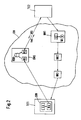
- Fig. 1 shows a communication network KN with several together connected subnets SN1 to SN4 and three terminals TE1 to TE3.
- the communication network KN is a data network. It is also possible that the communication network KN is a Communication network that is a synchronous voice or Provides image communication service.
- the communication network KN is formed by several subnetworks, of which the four in FIG. 1 by way of example Subnets SN1 to SN4 are shown.
- the subnets SN1 to SN4 are organizational and / or physically separate subnets of the Communication network KN.
- the subnets SN1 to SN4 are like this assigned to different network operators, for example.
- the subnets SN1 to SN4 can continue on different physical networks based.
- IP Internet Protocol
- TCP Transmission Capability Part
- UDP User Datagram Protocol
- the terminals TE1 to TE3 are computers that work with appropriate software and hardware for connection to the subnets SN1, SN4 and SN2 are provided.
- the terminal TE1 determines and codes its geographical position.
- the terminal TE1 then sends this encoded geographical Position to register as a routing address to at least one Network node of the communication network KN, for example to the Network node DNS.
- the coded geographical position of the Terminal from the terminal itself to at least one network node of the Communication network KN is sent, there is also the possibility that the geographical position of the terminal from a separate Device is determined, encoded by this device or the terminal and then from this device or the terminal to the at least a network node is sent.
- the network node DNS registers the encoded geographical position of the Terminal TE1 as the routing address of the terminal TE1. By means of this Routing addresses are then directed to the terminal TE1 in the following Data communicated through the communication network KN to the terminal TE1.
- the network nodes of the communication network KN evaluate the switching from data the routing addresses assigned to this data, the in each case by coding the respective geographical position of the respective target terminal have been generated, and then perform using the evaluation of these routing addresses the transmission of this data by.
- routing addresses represent intra-network routing addresses that do not appear to the outside world.
- One or more network nodes of the Communication network for example the network node DNS, then form for the transmission of data through the communication network or several external addresses for such an internal routing address from.
- FIG. 2 shows the communication network KN with the network nodes DNS, NN1, NN2 and NN3 as well as the terminals TE1 and TE2.
- the terminal TE1 is made up of a system platform based on it Application programs formed, the functions of the terminal TE1 Taxes. From a functional point of view, the terminal TE1 points in addition to the usual communication functions of a terminal a control unit CON on the registration of the routing address of the terminal TE1 in Communication network KN serves.
- the control unit CON has one Coding unit CU and a registration unit RU.
- the coding unit CU is used to code the geographical position of the Terminal TE1. From the coding unit CU, the geographical Location of the end device determined. The exact location of the device can from the terminal with the support of a Satellite communication system, for example through the GPS system (Global Position System) itself. However, it is also possible that the location of the terminal is entered by an operator or determined by a separate device and then to the coding unit CU is transmitted. In terms of position accuracy, it is here usually sufficient that the determined position of a position within the office or apartment where the Terminal is set up.
- GPS system Global Position System
- the coded position is made up of longitude, latitude and height. For example, 32 bits are provided for the longitude, 32 bits for the latitude and 20 bits for the height.
- the 84 bit address created in this way makes it possible to assign an end device to every cm 3 on the earth at a height of 10,000 m.
- the height range is advantageously required for devices whose location is in the same house on different floors.
- the number of bits provided for the encoding can vary, the height specification can be omitted, the encoding area can be limited to a part of the earth's surface, for example the area of a state, it can in the latter case in particular, a Cartesian coordinate system can be used for the coding.
- the registration unit RU sends the encoded geographical position of the Terminal to at least one network node of the communication network KN to register the coded geographic position as a routing address of the terminal.
- the registration unit RU has one for this purpose Database with the address or addresses of network nodes, the one Execute registration function within the communication network. Further it has mechanisms for registering as a routing address of a terminal necessary protocols and Execute authentication routines.
- the registration unit RU sends the coded geographical position, for example at the network node DNS, of the above function within the communication network KN executes. It is also possible that the registration unit RU encoded the geographical position at the network node NN3 for registration for the Mediation of data to the terminal TE1 sends.
- the terminal TE1 does not have its own position, but the position of other devices is determined, encoded and as a routing address registered in the communication network KN.
- the terminal TE1 is it, for example, the establishment of a network operator, of information about the geographic location of the office space of a building and the position of end devices accordingly encoded and their registration in the communication network KN.
- the network node DNS has a database RDB and two control units RS and NS on.
- the database RDB contains data that one or more external Assign addresses to internal routing addresses.
- the in the database Stored internal addresses are encoded by the geographical position formed by terminals.
- the external addresses are advantageously from easily understandable and memorable addresses educated. Examples of external addresses are telephone numbers or domains Names.
- the control unit RS registers the coded geographic position of End devices as the routing address of these end devices. For this it has the necessary protocols and authentication routines for Conducting such a registration session with devices of the Communication network KN.
- the control unit NS orders the coded geographical on request Position of the terminal device such data as routing address to the Device to be conveyed.
- a terminal device for example the Terminal TE2 if there is data to a second terminal, for example the Terminal TE1 has to send, first a request message REQ the network node DNS.
- the REQ request message contains the external one Address of the terminal TE1.
- the control unit NS uses the database RDB the internal routing address for this external routing address and sends this internal routing address in a RAD message back to the terminal TE2.
- the terminal TE2 now sends the data this internal routing address as the address of the destination terminal in the Communication network KN.
- the terminal the data with the external address of the terminal TE1 are provided directly to the Network node sends DNS. It addresses the data for this with the internal Routing address of the network node DNS.
- the control unit NS orders if it receives this data, the internal routing address for the data, to whom this data is to be communicated. Then the control unit carries NS the assigned internal routing address in the data as the destination routing address and forwards them through the Communication network KN further.
- the communication network KN with several Network node is equipped with the functionality of the network node DNS.
- each of the subnetworks SN1 up to SN4 has such a network node.
- the device can display the coded geographic position of the device a terminal to be distributed to each of these network nodes. It is also possible that these network nodes coded the received geographical positions of terminals to each other Distribute network nodes.
- the network node DNS could also be dispensed with.
- the structure of the network nodes NN1 to NN3 is described below using the Structure of the network node NN1 explained as an example.
- the network node NN1 consist of hardware and one on it software platform, on which in turn application programs to control the functions of the network node NN1. Out From a functional point of view, the network node NN1 have a control unit SC and a switching unit SE.
- the switching unit SE consists of a layer 2 switching element that Mediation functions on layer 2 performs.
- the control unit SC provides u. a. Layer 3 routing functions.
- control unit SC evaluates the switching of network nodes NN1 data to be conveyed to the data is assigned to the internal network routing address from, each by coding the respective geographical Position of the respective target terminal have been generated.
- the control unit SC controls the evaluation of these routing addresses the mediation of this data on layer 3.
- the routing addresses of the data are, for example, the control unit SC possible the geographic position of the target device with your own compare geographic position. Your own geographical position for the network node NN1 results, for example, from its own Routing address that encoded the geographic location of the NN1 represents network node. By comparing these two geographical Positions, the network node NN1 can then easily make a routing decision.
- the geographic position is the geographic position of the network node is coded and registered in the communication network KN in which the terminal is registered.
Landscapes
- Engineering & Computer Science (AREA)
- Computer Networks & Wireless Communication (AREA)
- Signal Processing (AREA)
- Data Exchanges In Wide-Area Networks (AREA)
Abstract
Description
- Fig. 1
- zeigt ein Blockschaltbild eines Kommunikationsnetzes mit mehreren erfindungsgemäßen Netzknoten.
- Fig. 2
- zeigt eine funktionelle Darstellung der Netzknoten nach Fig. 1.
Claims (10)
- Verfahren zur Unterstützung der Vermittlung von Daten durch ein Kommunikationsnetz (KN) zu einem mit dem Kommunikationsnetz (KN) verbundenen Endgerät (TE1),
dadurch gekennzeichnet, daß die geographische Position des Endgerätes (TE1) kodiert wird, daß die kodierte geographische Position des Endgerätes an mindestens einen Netzknoten (DNS) des Kommunikationsnetzes (KN) gesendet wird, und daß die kodierte geographische Position des Endgeräts (TE1) in dem mindestens einen Netzknoten (DNS) des Kommunikationsnetzes (KN) als Routing-Adresse des Endgerätes (TE1) registriert wird, mittels der die Daten an das Endgerät (TE1) vermittelt werden. - Verfahren nach Anspruch 1, dadurch gekennzeichnet, daß die geographische Position mittels der UTM Projektion und einer zusäztlichen Höhenangabe kodiert wird.
- Verfahren nach Anspruch 1, dadurch gekennzeichnet, daß die kodierte geographische Position des Endgeräts (TE1) vom Endgerät (TE1) selbst an den mindestens einen Netzknoten (DNS) gesendet wird.
- Verfahren nach Anspruch 1, dadurch gekennzeichnet, daß die kodierte geographische Position des Endgeräts (TE1) von einer Registriereinrichtung an den mindestens einen Netzknoten (DNS) gesendet wird.
- Verfahren nach Anspruch 1, dadurch gekennzeichnet, daß die als Routing-Adresse des Endgerätes (TE1) verwendete kodierte geographische Position des Endgeräts (TE1) die interne Routing-Adresse des Endgeräts (TE1) im Kommunikationsnetzes (KN) bildet und daß ein oder mehrere Netzknoten (DNS) des Kommunikationsnetzes (KN) für die Vermittlung von Daten durch das Kommunikationsnetz (KN) ein oder mehrere externe Adressen auf jeweils eine solche interne Routing-Adresse abbilden.
- Verfahren nach Anspruch 1, dadurch gekennzeichnet, daß als geographische Position eines mobilen Endgerätes die geographische Position desjenigen Netzknotens kodiert wird, in dem das Endgerät registriert ist.
- Verfahren zur Vermittlung von Daten durch ein Kommunikationsnetz (KN) zu einem oder mehreren mit dem Kommunikationsnetz (KN) verbundenen Endgeräten (TE1),
dadurch gekennzeichnet, daß mindestens ein Netzknoten (NN1 bis NN3) des Kommunikationsnetzes für die Vermittlung von von dem Netzknoten (NN1 bis NN3) zu vermittelnden Daten den Daten zugeordnete netzinterne Routing-Adressen auswertet, die jeweils durch die Kodierung der jeweiligen geographische Position des jeweiligen Ziel-Endgerätes (TE1) erzeugt worden sind, und mittels der Auswertung dieser Routing-Adressen, die Informationen über die jeweilige geographische Position des jeweiligen Ziel-Endgerätes (TE1) enthalten, die Vermittlung dieser Daten durchführt. - Netzknoten (DNS) eines Kommunikationsnetzes (KN) zur Unterstützung der Vermittlung von Daten durch das Kommunikationsnetz (KN) zu einem mit dem Kommunikationsnetz (KN) verbundenen Endgerät (TE1),
dadurch gekennzeichnet, daß der Netzknoten mit Mitteln (RS) versehen ist, die so ausgestaltet sind, daß sie die kodierte geographische Position des Endgerätes (TE1) als Routing-Adresse des Endgerätes (TE1) registrieren, und daß der Netzknoten (DNS) weiter mit Mitteln (NS, RDB) versehen ist, die so ausgestaltet sind, daß sie auf Anforderung die kodierte geographische Position des Endgeräts (TE1) solchen Daten als Routing-Adresse zuordnet, die an das Endgerät (TE1) zu vermitteln sind. - Netzknoten (NN1 bis NN3) eines Kommunikationsnetzes (KN) zur Vermittlung von Daten durch das Kommunikationsnetz (KN) zu ein oder mehreren mit dem Kommunikationsnetz (KN) verbundenen Endgeräten (TE1),
dadurch gekennzeichnet, daß der Netzknoten (NN1 bis NN3) mit einer Steuereinheit (SC) versehen ist, die so ausgestaltet ist, daß sie für die Vermittlung von von dem Netzknoten (NN1 bis NN3) zu vermittelnden Daten den Daten zugeordnete netzinterne Routing-Adressen auswertet, die jeweils durch die Kodierung der jeweiligen geographische Position des jeweiligen Ziel-Endgerätes (TE1) erzeugt worden sind, und mittels der Auswertung dieser Routing-Adressen, die Informationen über die jeweilige geographische Position des jeweiligen Ziel-Endgerätes (TE1) enthalten, die Vermittlung dieser Daten steuert. - Endgerät (TE1) für den Anschluß an ein Kommunikationsnetze (KN), das der Unterstützung der Vermittlung von Daten durch das Kommunikationsnetz (KN) dient,
dadurch gekennzeichnet, daß das Endgerät (TE1) eine Kodiereinheit (CU) zur Kodierung der geographischen Position des Endgerätes (TE1) oder eines weiteren Endgerätes versehen ist, und daß das Endgerät weiter mit einer Registriereinheit (RU) versehen ist, die so ausgestaltet ist, daß sie die kodierte geographische Position des Endgerätes (TE1) bzw. des weiteren Endgerätes an mindestens einen Netzknoten (DNS, NN3) des Kommunikationsnetzes (KN) zur Registrierung der kodierten geographischen Position des Endgerätes (TE1) als Routing-Adresse des Endgerätes (TE1) bzw. des weiteren Endgerätes sendet.
Applications Claiming Priority (2)
| Application Number | Priority Date | Filing Date | Title |
|---|---|---|---|
| DE19912377A DE19912377A1 (de) | 1999-03-19 | 1999-03-19 | Verfahren zur Unterstützung der Vermittlung von Daten |
| DE19912377 | 1999-03-19 |
Publications (2)
| Publication Number | Publication Date |
|---|---|
| EP1039722A2 true EP1039722A2 (de) | 2000-09-27 |
| EP1039722A3 EP1039722A3 (de) | 2003-11-19 |
Family
ID=7901626
Family Applications (1)
| Application Number | Title | Priority Date | Filing Date |
|---|---|---|---|
| EP00440065A Withdrawn EP1039722A3 (de) | 1999-03-19 | 2000-03-03 | Verfahren zur Unterstützung der Vermittlung von Daten |
Country Status (2)
| Country | Link |
|---|---|
| EP (1) | EP1039722A3 (de) |
| DE (1) | DE19912377A1 (de) |
Cited By (2)
| Publication number | Priority date | Publication date | Assignee | Title |
|---|---|---|---|---|
| WO2002096041A1 (en) | 2001-05-22 | 2002-11-28 | Kai Mustonen | Utilization of geographic location information in ip addressing |
| WO2002103985A3 (en) * | 2001-06-15 | 2003-09-04 | Motorola Inc | A radio communication device and method therefor |
Family Cites Families (5)
| Publication number | Priority date | Publication date | Assignee | Title |
|---|---|---|---|---|
| US5400338A (en) * | 1994-02-08 | 1995-03-21 | Metricom, Inc. | Parasitic adoption of coordinate-based addressing by roaming node |
| US5727057A (en) * | 1994-12-27 | 1998-03-10 | Ag Communication Systems Corporation | Storage, transmission, communication and access to geographical positioning data linked with standard telephony numbering and encoded for use in telecommunications and related services |
| EP0868104A3 (de) * | 1997-03-27 | 2003-09-17 | Siemens Aktiengesellschaft | Hierarchisch gegliedertes Kommunikationsnetz und Verfahren zum Mitteilen georgrafischer Koordinaten von Netzknoten |
| DE19745252A1 (de) * | 1997-03-27 | 1998-10-01 | Siemens Ag | Hierarchisch gegliedertes Kommunikationsnetz und Verfahren zum Mitteilen geografischer Koordinaten von Netzknoten |
| DE19733586C1 (de) * | 1997-08-02 | 1999-02-11 | Dirc Gmbh & Co Kg | Telekommunikationssystem |
-
1999
- 1999-03-19 DE DE19912377A patent/DE19912377A1/de not_active Withdrawn
-
2000
- 2000-03-03 EP EP00440065A patent/EP1039722A3/de not_active Withdrawn
Cited By (2)
| Publication number | Priority date | Publication date | Assignee | Title |
|---|---|---|---|---|
| WO2002096041A1 (en) | 2001-05-22 | 2002-11-28 | Kai Mustonen | Utilization of geographic location information in ip addressing |
| WO2002103985A3 (en) * | 2001-06-15 | 2003-09-04 | Motorola Inc | A radio communication device and method therefor |
Also Published As
| Publication number | Publication date |
|---|---|
| EP1039722A3 (de) | 2003-11-19 |
| DE19912377A1 (de) | 2000-09-21 |
Similar Documents
| Publication | Publication Date | Title |
|---|---|---|
| DE69929627T2 (de) | Geo-räumliche adressierung zum internet-protokoll | |
| DE69923942T2 (de) | Verfahren und System zur drahtlosen mobile Server und Gleichrangigendiensten mit Dynamische DNS Aktualisierung | |
| DE69327019T2 (de) | Routing von Datenpaketen zwischen einem mobilen und einem fest installierten Rechner durch ein Netzwerk | |
| DE69419534T2 (de) | Multi-Protokoll Paketvermittlungsnetz | |
| DE60225223T2 (de) | Geschaltetes vollduplex-Ethernet Kommunikationsnetz und Verfahren dafür | |
| DE60029430T2 (de) | Mehrfach-sendefähiges adressauflösungsprotokoll | |
| DE69727930T2 (de) | Zusammenfassung von verbindungen in vermittlungskommunikationsnetzen | |
| DE60300299T2 (de) | System zur Auswahl von Quell-Adressen geeignet für eine Umgebung mit mehreren Heimatnetzen | |
| DE60211270T2 (de) | Vorrichtung und Verfahren zur Erbringung von Rechnernetzwerken | |
| EP3611876A1 (de) | Verfahren zur konfiguration, verfahren zur bereitstellung von topologie-informationen, verwendung, gerät, computerprogramm und computerlesbares medium | |
| WO2005055529A1 (de) | Verfahren zur herstellung einer verbindung zwischen einem dienstanforderer (client) und einem dienstanbieter (server) in einem dezentralen mobilfunknetz | |
| DE60019474T2 (de) | Leitweglenkungsverfahren in einem Intranetzwerk mit sehr niedriger Bandbreite | |
| WO1998043461A2 (de) | Kommunikationssystem zum vermitteln von datenpaketen mit zugeordneten routing-informationen | |
| DE69734695T2 (de) | Adressauflösungssystem | |
| DE10331621A1 (de) | Verfahren zum Aufbauen von Punkt-zu-Punkt oder Punkt-zu-Mehrpunkt Internet-Verbindung(en) | |
| DE10004811A1 (de) | Kommunikationssystem, Verfahren und Steuereinrichtung zum Leiten von Anrufen innerhalb von privaten Netzen, die über geographische beabstandete Zonen verteilt sind | |
| DE60316158T2 (de) | Filter zur verkehrstrennung | |
| EP1266493B1 (de) | Verfahren und anordnung zum übertragen eines datenpakets von einer ersten vermittlungseinheit an eine zweite vermittlungseinheit in einem datennetz | |
| DE10119447B4 (de) | Verfahren zum Vermitteln von Daten zwischen einem lokalen Netzwerk und einem externen Gerät und Router dafür | |
| EP1039722A2 (de) | Verfahren zur Unterstützung der Vermittlung von Daten | |
| EP2171943B1 (de) | Verfahren zum routen von dienstnachrichten | |
| EP1623559A1 (de) | Verfahren zum datenaustausch zwischen netzelementen in netzwerken mit verschiedenen adressbereichen | |
| EP1992127A2 (de) | Kommunikationssystem, rechner und verfahren zum ermitteln eines zu verwendenden kommunikationsprotokolls in einem kommunikationssystem | |
| WO2007147424A1 (de) | Vorrichtung und verfahren zum adress-mapping | |
| EP1189383B1 (de) | Verfahren und Anordnung für eine Zuweisung von Knotennummern zu Netzknoten eines Netzwerks |
Legal Events
| Date | Code | Title | Description |
|---|---|---|---|
| PUAI | Public reference made under article 153(3) epc to a published international application that has entered the european phase |
Free format text: ORIGINAL CODE: 0009012 |
|
| AK | Designated contracting states |
Kind code of ref document: A2 Designated state(s): AT BE CH CY DE DK ES FI FR GB GR IE IT LI LU MC NL PT SE |
|
| AX | Request for extension of the european patent |
Free format text: AL;LT;LV;MK;RO;SI |
|
| PUAL | Search report despatched |
Free format text: ORIGINAL CODE: 0009013 |
|
| RIC1 | Information provided on ipc code assigned before grant |
Ipc: 7H 04L 12/56 B Ipc: 7H 04L 29/12 B Ipc: 7H 04L 29/06 A |
|
| AK | Designated contracting states |
Kind code of ref document: A3 Designated state(s): AT BE CH CY DE DK ES FI FR GB GR IE IT LI LU MC NL PT SE |
|
| AX | Request for extension of the european patent |
Extension state: AL LT LV MK RO SI |
|
| AKX | Designation fees paid |
Designated state(s): AT BE CH CY DE DK ES FI FR GB GR IE IT LI LU MC NL PT SE |
|
| STAA | Information on the status of an ep patent application or granted ep patent |
Free format text: STATUS: THE APPLICATION IS DEEMED TO BE WITHDRAWN |
|
| 18D | Application deemed to be withdrawn |
Effective date: 20040520 |