EP1037657B1 - Alpha interferon-polymer konjugate mit erhöhter biologischer wirksamkeit sowie verfahren zu deren herstellung - Google Patents
Alpha interferon-polymer konjugate mit erhöhter biologischer wirksamkeit sowie verfahren zu deren herstellung Download PDFInfo
- Publication number
- EP1037657B1 EP1037657B1 EP98963948A EP98963948A EP1037657B1 EP 1037657 B1 EP1037657 B1 EP 1037657B1 EP 98963948 A EP98963948 A EP 98963948A EP 98963948 A EP98963948 A EP 98963948A EP 1037657 B1 EP1037657 B1 EP 1037657B1
- Authority
- EP
- European Patent Office
- Prior art keywords
- interferon
- polymer
- conjugates
- substantially non
- ifn
- Prior art date
- Legal status (The legal status is an assumption and is not a legal conclusion. Google has not performed a legal analysis and makes no representation as to the accuracy of the status listed.)
- Expired - Lifetime
Links
- 238000000034 method Methods 0.000 title claims abstract description 70
- 230000004071 biological effect Effects 0.000 title description 12
- 229920000642 polymer Polymers 0.000 claims abstract description 148
- 102000014150 Interferons Human genes 0.000 claims abstract description 102
- 108010050904 Interferons Proteins 0.000 claims abstract description 102
- 229940079322 interferon Drugs 0.000 claims abstract description 90
- 230000008569 process Effects 0.000 claims abstract description 43
- 239000002253 acid Substances 0.000 claims abstract description 32
- 230000000890 antigenic effect Effects 0.000 claims abstract description 30
- 230000000694 effects Effects 0.000 claims abstract description 28
- 238000004519 manufacturing process Methods 0.000 claims abstract description 4
- 229920001223 polyethylene glycol Polymers 0.000 claims description 22
- 108010047761 Interferon-alpha Proteins 0.000 claims description 21
- 102000006992 Interferon-alpha Human genes 0.000 claims description 21
- 229920000233 poly(alkylene oxides) Polymers 0.000 claims description 17
- 239000002202 Polyethylene glycol Substances 0.000 claims description 14
- 241000282414 Homo sapiens Species 0.000 claims description 11
- DTQVDTLACAAQTR-UHFFFAOYSA-N Trifluoroacetic acid Chemical compound OC(=O)C(F)(F)F DTQVDTLACAAQTR-UHFFFAOYSA-N 0.000 claims description 6
- -1 nitroaryl carbonates Chemical class 0.000 claims description 6
- ZJIFDEVVTPEXDL-UHFFFAOYSA-N (2,5-dioxopyrrolidin-1-yl) hydrogen carbonate Chemical compound OC(=O)ON1C(=O)CCC1=O ZJIFDEVVTPEXDL-UHFFFAOYSA-N 0.000 claims description 5
- 239000008194 pharmaceutical composition Substances 0.000 claims description 3
- 229920002307 Dextran Polymers 0.000 claims description 2
- 150000001720 carbohydrates Chemical class 0.000 claims description 2
- 229920002401 polyacrylamide Polymers 0.000 claims description 2
- 229920002451 polyvinyl alcohol Polymers 0.000 claims description 2
- 235000019422 polyvinyl alcohol Nutrition 0.000 claims description 2
- 229920000036 polyvinylpyrrolidone Polymers 0.000 claims description 2
- 235000013855 polyvinylpyrrolidone Nutrition 0.000 claims description 2
- BTBWSRPRAGXJJV-UHFFFAOYSA-N 2h-benzotriazole;carbonic acid Chemical class OC(O)=O.C1=CC=C2NN=NC2=C1 BTBWSRPRAGXJJV-UHFFFAOYSA-N 0.000 claims 1
- 125000002915 carbonyl group Chemical group [*:2]C([*:1])=O 0.000 claims 1
- 239000003937 drug carrier Substances 0.000 claims 1
- 235000011007 phosphoric acid Nutrition 0.000 claims 1
- 150000003016 phosphoric acids Chemical class 0.000 claims 1
- 239000000203 mixture Substances 0.000 abstract description 8
- 230000000717 retained effect Effects 0.000 abstract description 7
- 238000001727 in vivo Methods 0.000 abstract description 4
- 101000959820 Homo sapiens Interferon alpha-1/13 Proteins 0.000 description 45
- 102100040019 Interferon alpha-1/13 Human genes 0.000 description 45
- 238000006243 chemical reaction Methods 0.000 description 28
- 239000000243 solution Substances 0.000 description 27
- 235000018102 proteins Nutrition 0.000 description 25
- 108090000623 proteins and genes Proteins 0.000 description 25
- 102000004169 proteins and genes Human genes 0.000 description 25
- 230000021615 conjugation Effects 0.000 description 18
- 239000000047 product Substances 0.000 description 15
- 241000124008 Mammalia Species 0.000 description 14
- 229940047124 interferons Drugs 0.000 description 13
- 241000894007 species Species 0.000 description 11
- KXDHJXZQYSOELW-UHFFFAOYSA-M Carbamate Chemical compound NC([O-])=O KXDHJXZQYSOELW-UHFFFAOYSA-M 0.000 description 10
- 125000003277 amino group Chemical group 0.000 description 10
- 230000000975 bioactive effect Effects 0.000 description 9
- 239000000126 substance Substances 0.000 description 9
- JOYRKODLDBILNP-UHFFFAOYSA-N Ethyl urethane Chemical compound CCOC(N)=O JOYRKODLDBILNP-UHFFFAOYSA-N 0.000 description 7
- 238000006460 hydrolysis reaction Methods 0.000 description 7
- 230000008901 benefit Effects 0.000 description 6
- 230000007062 hydrolysis Effects 0.000 description 6
- 239000000463 material Substances 0.000 description 6
- 108090000765 processed proteins & peptides Proteins 0.000 description 6
- 238000000926 separation method Methods 0.000 description 6
- 239000004094 surface-active agent Substances 0.000 description 6
- 102000004269 Granulocyte Colony-Stimulating Factor Human genes 0.000 description 5
- 108010017080 Granulocyte Colony-Stimulating Factor Proteins 0.000 description 5
- 239000003957 anion exchange resin Substances 0.000 description 5
- 238000010828 elution Methods 0.000 description 5
- 238000004128 high performance liquid chromatography Methods 0.000 description 5
- 235000018977 lysine Nutrition 0.000 description 5
- 102000004196 processed proteins & peptides Human genes 0.000 description 5
- 239000011347 resin Substances 0.000 description 5
- 229920005989 resin Polymers 0.000 description 5
- DHMQDGOQFOQNFH-UHFFFAOYSA-N Glycine Chemical compound NCC(O)=O DHMQDGOQFOQNFH-UHFFFAOYSA-N 0.000 description 4
- KDXKERNSBIXSRK-UHFFFAOYSA-N Lysine Natural products NCCCCC(N)C(O)=O KDXKERNSBIXSRK-UHFFFAOYSA-N 0.000 description 4
- 239000004472 Lysine Substances 0.000 description 4
- UIIMBOGNXHQVGW-UHFFFAOYSA-M Sodium bicarbonate Chemical compound [Na+].OC([O-])=O UIIMBOGNXHQVGW-UHFFFAOYSA-M 0.000 description 4
- FAPWRFPIFSIZLT-UHFFFAOYSA-M Sodium chloride Chemical compound [Na+].[Cl-] FAPWRFPIFSIZLT-UHFFFAOYSA-M 0.000 description 4
- 238000010306 acid treatment Methods 0.000 description 4
- 150000001408 amides Chemical class 0.000 description 4
- 235000001014 amino acid Nutrition 0.000 description 4
- 150000001413 amino acids Chemical group 0.000 description 4
- 230000015572 biosynthetic process Effects 0.000 description 4
- 239000000872 buffer Substances 0.000 description 4
- 201000010099 disease Diseases 0.000 description 4
- 208000037265 diseases, disorders, signs and symptoms Diseases 0.000 description 4
- 239000013628 high molecular weight specie Substances 0.000 description 4
- 230000005764 inhibitory process Effects 0.000 description 4
- 230000000670 limiting effect Effects 0.000 description 4
- 125000005647 linker group Chemical group 0.000 description 4
- 230000000269 nucleophilic effect Effects 0.000 description 4
- 230000020477 pH reduction Effects 0.000 description 4
- 229920001184 polypeptide Polymers 0.000 description 4
- XLYOFNOQVPJJNP-UHFFFAOYSA-N water Substances O XLYOFNOQVPJJNP-UHFFFAOYSA-N 0.000 description 4
- QTBSBXVTEAMEQO-UHFFFAOYSA-N Acetic acid Chemical compound CC(O)=O QTBSBXVTEAMEQO-UHFFFAOYSA-N 0.000 description 3
- 206010059313 Anogenital warts Diseases 0.000 description 3
- 208000000907 Condylomata Acuminata Diseases 0.000 description 3
- HEMHJVSKTPXQMS-UHFFFAOYSA-M Sodium hydroxide Chemical compound [OH-].[Na+] HEMHJVSKTPXQMS-UHFFFAOYSA-M 0.000 description 3
- 230000004913 activation Effects 0.000 description 3
- 238000003556 assay Methods 0.000 description 3
- 238000004925 denaturation Methods 0.000 description 3
- 230000036425 denaturation Effects 0.000 description 3
- 208000006454 hepatitis Diseases 0.000 description 3
- 235000014304 histidine Nutrition 0.000 description 3
- 125000000487 histidyl group Chemical group [H]N([H])C(C(=O)O*)C([H])([H])C1=C([H])N([H])C([H])=N1 0.000 description 3
- 230000002401 inhibitory effect Effects 0.000 description 3
- 230000002427 irreversible effect Effects 0.000 description 3
- 238000002955 isolation Methods 0.000 description 3
- 210000000265 leukocyte Anatomy 0.000 description 3
- 239000011159 matrix material Substances 0.000 description 3
- 239000008363 phosphate buffer Substances 0.000 description 3
- 229920001451 polypropylene glycol Polymers 0.000 description 3
- 239000012064 sodium phosphate buffer Substances 0.000 description 3
- 230000001225 therapeutic effect Effects 0.000 description 3
- 238000002560 therapeutic procedure Methods 0.000 description 3
- 241000283690 Bos taurus Species 0.000 description 2
- 102000004127 Cytokines Human genes 0.000 description 2
- 108090000695 Cytokines Proteins 0.000 description 2
- LYCAIKOWRPUZTN-UHFFFAOYSA-N Ethylene glycol Chemical compound OCCO LYCAIKOWRPUZTN-UHFFFAOYSA-N 0.000 description 2
- 239000004471 Glycine Substances 0.000 description 2
- VEXZGXHMUGYJMC-UHFFFAOYSA-N Hydrochloric acid Chemical compound Cl VEXZGXHMUGYJMC-UHFFFAOYSA-N 0.000 description 2
- 239000007836 KH2PO4 Substances 0.000 description 2
- 241001465754 Metazoa Species 0.000 description 2
- 206010028980 Neoplasm Diseases 0.000 description 2
- NBIIXXVUZAFLBC-UHFFFAOYSA-N Phosphoric acid Chemical compound OP(O)(O)=O NBIIXXVUZAFLBC-UHFFFAOYSA-N 0.000 description 2
- DBMJMQXJHONAFJ-UHFFFAOYSA-M Sodium laurylsulphate Chemical compound [Na+].CCCCCCCCCCCCOS([O-])(=O)=O DBMJMQXJHONAFJ-UHFFFAOYSA-M 0.000 description 2
- QAOWNCQODCNURD-UHFFFAOYSA-N Sulfuric acid Chemical compound OS(O)(=O)=O QAOWNCQODCNURD-UHFFFAOYSA-N 0.000 description 2
- 241000700605 Viruses Species 0.000 description 2
- 150000007513 acids Chemical class 0.000 description 2
- 230000003213 activating effect Effects 0.000 description 2
- 150000001412 amines Chemical group 0.000 description 2
- 230000009286 beneficial effect Effects 0.000 description 2
- 238000001815 biotherapy Methods 0.000 description 2
- ACBQROXDOHKANW-UHFFFAOYSA-N bis(4-nitrophenyl) carbonate Chemical compound C1=CC([N+](=O)[O-])=CC=C1OC(=O)OC1=CC=C([N+]([O-])=O)C=C1 ACBQROXDOHKANW-UHFFFAOYSA-N 0.000 description 2
- 229920001400 block copolymer Polymers 0.000 description 2
- 230000000903 blocking effect Effects 0.000 description 2
- 210000004369 blood Anatomy 0.000 description 2
- 239000008280 blood Substances 0.000 description 2
- 210000004027 cell Anatomy 0.000 description 2
- 239000007795 chemical reaction product Substances 0.000 description 2
- 230000001268 conjugating effect Effects 0.000 description 2
- ZPWVASYFFYYZEW-UHFFFAOYSA-L dipotassium hydrogen phosphate Chemical compound [K+].[K+].OP([O-])([O-])=O ZPWVASYFFYYZEW-UHFFFAOYSA-L 0.000 description 2
- 229910000396 dipotassium phosphate Inorganic materials 0.000 description 2
- BNIILDVGGAEEIG-UHFFFAOYSA-L disodium hydrogen phosphate Chemical compound [Na+].[Na+].OP([O-])([O-])=O BNIILDVGGAEEIG-UHFFFAOYSA-L 0.000 description 2
- 229910000397 disodium phosphate Inorganic materials 0.000 description 2
- 239000012149 elution buffer Substances 0.000 description 2
- HNDVDQJCIGZPNO-UHFFFAOYSA-N histidine Natural products OC(=O)C(N)CC1=CN=CN1 HNDVDQJCIGZPNO-UHFFFAOYSA-N 0.000 description 2
- 125000002887 hydroxy group Chemical group [H]O* 0.000 description 2
- RAXXELZNTBOGNW-UHFFFAOYSA-N imidazole Natural products C1=CNC=N1 RAXXELZNTBOGNW-UHFFFAOYSA-N 0.000 description 2
- 230000006872 improvement Effects 0.000 description 2
- NOESYZHRGYRDHS-UHFFFAOYSA-N insulin Chemical compound N1C(=O)C(NC(=O)C(CCC(N)=O)NC(=O)C(CCC(O)=O)NC(=O)C(C(C)C)NC(=O)C(NC(=O)CN)C(C)CC)CSSCC(C(NC(CO)C(=O)NC(CC(C)C)C(=O)NC(CC=2C=CC(O)=CC=2)C(=O)NC(CCC(N)=O)C(=O)NC(CC(C)C)C(=O)NC(CCC(O)=O)C(=O)NC(CC(N)=O)C(=O)NC(CC=2C=CC(O)=CC=2)C(=O)NC(CSSCC(NC(=O)C(C(C)C)NC(=O)C(CC(C)C)NC(=O)C(CC=2C=CC(O)=CC=2)NC(=O)C(CC(C)C)NC(=O)C(C)NC(=O)C(CCC(O)=O)NC(=O)C(C(C)C)NC(=O)C(CC(C)C)NC(=O)C(CC=2NC=NC=2)NC(=O)C(CO)NC(=O)CNC2=O)C(=O)NCC(=O)NC(CCC(O)=O)C(=O)NC(CCCNC(N)=N)C(=O)NCC(=O)NC(CC=3C=CC=CC=3)C(=O)NC(CC=3C=CC=CC=3)C(=O)NC(CC=3C=CC(O)=CC=3)C(=O)NC(C(C)O)C(=O)N3C(CCC3)C(=O)NC(CCCCN)C(=O)NC(C)C(O)=O)C(=O)NC(CC(N)=O)C(O)=O)=O)NC(=O)C(C(C)CC)NC(=O)C(CO)NC(=O)C(C(C)O)NC(=O)C1CSSCC2NC(=O)C(CC(C)C)NC(=O)C(NC(=O)C(CCC(N)=O)NC(=O)C(CC(N)=O)NC(=O)C(NC(=O)C(N)CC=1C=CC=CC=1)C(C)C)CC1=CN=CN1 NOESYZHRGYRDHS-UHFFFAOYSA-N 0.000 description 2
- 230000002452 interceptive effect Effects 0.000 description 2
- 238000004255 ion exchange chromatography Methods 0.000 description 2
- 238000011068 loading method Methods 0.000 description 2
- 125000003588 lysine group Chemical class [H]N([H])C([H])([H])C([H])([H])C([H])([H])C([H])([H])C([H])(N([H])[H])C(*)=O 0.000 description 2
- 238000002156 mixing Methods 0.000 description 2
- 229910000402 monopotassium phosphate Inorganic materials 0.000 description 2
- WWZKQHOCKIZLMA-UHFFFAOYSA-N octanoic acid Chemical compound CCCCCCCC(O)=O WWZKQHOCKIZLMA-UHFFFAOYSA-N 0.000 description 2
- GNSKLFRGEWLPPA-UHFFFAOYSA-M potassium dihydrogen phosphate Chemical compound [K+].OP(O)([O-])=O GNSKLFRGEWLPPA-UHFFFAOYSA-M 0.000 description 2
- NGVDGCNFYWLIFO-UHFFFAOYSA-N pyridoxal 5'-phosphate Chemical compound CC1=NC=C(COP(O)(O)=O)C(C=O)=C1O NGVDGCNFYWLIFO-UHFFFAOYSA-N 0.000 description 2
- 239000011541 reaction mixture Substances 0.000 description 2
- 238000010188 recombinant method Methods 0.000 description 2
- 230000002829 reductive effect Effects 0.000 description 2
- 150000003839 salts Chemical class 0.000 description 2
- 238000001542 size-exclusion chromatography Methods 0.000 description 2
- 229910000030 sodium bicarbonate Inorganic materials 0.000 description 2
- 239000011780 sodium chloride Substances 0.000 description 2
- AJPJDKMHJJGVTQ-UHFFFAOYSA-M sodium dihydrogen phosphate Chemical compound [Na+].OP(O)([O-])=O AJPJDKMHJJGVTQ-UHFFFAOYSA-M 0.000 description 2
- 229910000162 sodium phosphate Inorganic materials 0.000 description 2
- 238000006467 substitution reaction Methods 0.000 description 2
- 210000001519 tissue Anatomy 0.000 description 2
- 230000009261 transgenic effect Effects 0.000 description 2
- 230000003612 virological effect Effects 0.000 description 2
- 239000008215 water for injection Substances 0.000 description 2
- ODIGIKRIUKFKHP-UHFFFAOYSA-N (n-propan-2-yloxycarbonylanilino) acetate Chemical compound CC(C)OC(=O)N(OC(C)=O)C1=CC=CC=C1 ODIGIKRIUKFKHP-UHFFFAOYSA-N 0.000 description 1
- KVGOXGQSTGQXDD-UHFFFAOYSA-N 1-decane-sulfonic-acid Chemical compound CCCCCCCCCCS(O)(=O)=O KVGOXGQSTGQXDD-UHFFFAOYSA-N 0.000 description 1
- BFSVOASYOCHEOV-UHFFFAOYSA-N 2-diethylaminoethanol Chemical compound CCN(CC)CCO BFSVOASYOCHEOV-UHFFFAOYSA-N 0.000 description 1
- OCVLSHAVSIYKLI-UHFFFAOYSA-N 3h-1,3-thiazole-2-thione Chemical compound SC1=NC=CS1 OCVLSHAVSIYKLI-UHFFFAOYSA-N 0.000 description 1
- 208000030507 AIDS Diseases 0.000 description 1
- QTBSBXVTEAMEQO-UHFFFAOYSA-M Acetate Chemical compound CC([O-])=O QTBSBXVTEAMEQO-UHFFFAOYSA-M 0.000 description 1
- 201000004384 Alopecia Diseases 0.000 description 1
- 239000005635 Caprylic acid (CAS 124-07-2) Substances 0.000 description 1
- KXDHJXZQYSOELW-UHFFFAOYSA-N Carbamic acid Chemical group NC(O)=O KXDHJXZQYSOELW-UHFFFAOYSA-N 0.000 description 1
- 206010008909 Chronic Hepatitis Diseases 0.000 description 1
- KRKNYBCHXYNGOX-UHFFFAOYSA-K Citrate Chemical compound [O-]C(=O)CC(O)(CC([O-])=O)C([O-])=O KRKNYBCHXYNGOX-UHFFFAOYSA-K 0.000 description 1
- 206010014935 Enzyme abnormality Diseases 0.000 description 1
- 241000588724 Escherichia coli Species 0.000 description 1
- 208000010201 Exanthema Diseases 0.000 description 1
- 208000018522 Gastrointestinal disease Diseases 0.000 description 1
- WHUUTDBJXJRKMK-UHFFFAOYSA-N Glutamic acid Natural products OC(=O)C(N)CCC(O)=O WHUUTDBJXJRKMK-UHFFFAOYSA-N 0.000 description 1
- 102000001554 Hemoglobins Human genes 0.000 description 1
- 108010054147 Hemoglobins Proteins 0.000 description 1
- 241000282412 Homo Species 0.000 description 1
- AVXURJPOCDRRFD-UHFFFAOYSA-N Hydroxylamine Chemical compound ON AVXURJPOCDRRFD-UHFFFAOYSA-N 0.000 description 1
- 206010020751 Hypersensitivity Diseases 0.000 description 1
- 206010022004 Influenza like illness Diseases 0.000 description 1
- 102000004877 Insulin Human genes 0.000 description 1
- 108090001061 Insulin Proteins 0.000 description 1
- 102000002227 Interferon Type I Human genes 0.000 description 1
- 108010014726 Interferon Type I Proteins 0.000 description 1
- 102100040018 Interferon alpha-2 Human genes 0.000 description 1
- 108010079944 Interferon-alpha2b Proteins 0.000 description 1
- 102000003996 Interferon-beta Human genes 0.000 description 1
- 108090000467 Interferon-beta Proteins 0.000 description 1
- 208000007766 Kaposi sarcoma Diseases 0.000 description 1
- CKLJMWTZIZZHCS-REOHCLBHSA-N L-aspartic acid Chemical compound OC(=O)[C@@H](N)CC(O)=O CKLJMWTZIZZHCS-REOHCLBHSA-N 0.000 description 1
- 206010058467 Lung neoplasm malignant Diseases 0.000 description 1
- 241000699670 Mus sp. Species 0.000 description 1
- 229910019142 PO4 Inorganic materials 0.000 description 1
- 206010057249 Phagocytosis Diseases 0.000 description 1
- 229920000037 Polyproline Polymers 0.000 description 1
- 229920001214 Polysorbate 60 Polymers 0.000 description 1
- 208000003251 Pruritus Diseases 0.000 description 1
- 108020004511 Recombinant DNA Proteins 0.000 description 1
- 241000282849 Ruminantia Species 0.000 description 1
- 241000282887 Suidae Species 0.000 description 1
- 108700005078 Synthetic Genes Proteins 0.000 description 1
- WBWWGRHZICKQGZ-UHFFFAOYSA-N Taurocholic acid Natural products OC1CC2CC(O)CCC2(C)C2C1C1CCC(C(CCC(=O)NCCS(O)(=O)=O)C)C1(C)C(O)C2 WBWWGRHZICKQGZ-UHFFFAOYSA-N 0.000 description 1
- XSQUKJJJFZCRTK-UHFFFAOYSA-N Urea Chemical compound NC(N)=O XSQUKJJJFZCRTK-UHFFFAOYSA-N 0.000 description 1
- 208000036142 Viral infection Diseases 0.000 description 1
- 238000002835 absorbance Methods 0.000 description 1
- 239000011149 active material Substances 0.000 description 1
- 238000005917 acylation reaction Methods 0.000 description 1
- 231100000360 alopecia Toxicity 0.000 description 1
- 229910000147 aluminium phosphate Inorganic materials 0.000 description 1
- 208000007502 anemia Diseases 0.000 description 1
- 238000005349 anion exchange Methods 0.000 description 1
- 238000005571 anion exchange chromatography Methods 0.000 description 1
- 208000025009 anogenital human papillomavirus infection Diseases 0.000 description 1
- 201000004201 anogenital venereal wart Diseases 0.000 description 1
- 230000000840 anti-viral effect Effects 0.000 description 1
- 230000005875 antibody response Effects 0.000 description 1
- 235000003704 aspartic acid Nutrition 0.000 description 1
- HYGWNUKOUCZBND-UHFFFAOYSA-N azanide Chemical group [NH2-] HYGWNUKOUCZBND-UHFFFAOYSA-N 0.000 description 1
- QRUDEWIWKLJBPS-UHFFFAOYSA-N benzotriazole Chemical compound C1=CC=C2N[N][N]C2=C1 QRUDEWIWKLJBPS-UHFFFAOYSA-N 0.000 description 1
- 239000012964 benzotriazole Substances 0.000 description 1
- OQFSQFPPLPISGP-UHFFFAOYSA-N beta-carboxyaspartic acid Natural products OC(=O)C(N)C(C(O)=O)C(O)=O OQFSQFPPLPISGP-UHFFFAOYSA-N 0.000 description 1
- 230000033228 biological regulation Effects 0.000 description 1
- 239000000337 buffer salt Substances 0.000 description 1
- 239000007853 buffer solution Substances 0.000 description 1
- 239000008366 buffered solution Substances 0.000 description 1
- 239000002775 capsule Substances 0.000 description 1
- 239000004202 carbamide Substances 0.000 description 1
- 125000000837 carbohydrate group Chemical group 0.000 description 1
- 210000003169 central nervous system Anatomy 0.000 description 1
- 239000003795 chemical substances by application Substances 0.000 description 1
- 239000012501 chromatography medium Substances 0.000 description 1
- 238000003776 cleavage reaction Methods 0.000 description 1
- 230000000052 comparative effect Effects 0.000 description 1
- 239000002299 complementary DNA Substances 0.000 description 1
- 238000007796 conventional method Methods 0.000 description 1
- 229920001577 copolymer Polymers 0.000 description 1
- 230000008878 coupling Effects 0.000 description 1
- 238000010168 coupling process Methods 0.000 description 1
- 238000005859 coupling reaction Methods 0.000 description 1
- 210000001151 cytotoxic T lymphocyte Anatomy 0.000 description 1
- 230000002939 deleterious effect Effects 0.000 description 1
- 238000001514 detection method Methods 0.000 description 1
- 239000003599 detergent Substances 0.000 description 1
- 238000002405 diagnostic procedure Methods 0.000 description 1
- IJKVHSBPTUYDLN-UHFFFAOYSA-N dihydroxy(oxo)silane Chemical compound O[Si](O)=O IJKVHSBPTUYDLN-UHFFFAOYSA-N 0.000 description 1
- 210000003743 erythrocyte Anatomy 0.000 description 1
- 150000002148 esters Chemical class 0.000 description 1
- 125000001495 ethyl group Chemical group [H]C([H])([H])C([H])([H])* 0.000 description 1
- 238000011156 evaluation Methods 0.000 description 1
- 201000005884 exanthem Diseases 0.000 description 1
- 230000007717 exclusion Effects 0.000 description 1
- 238000000605 extraction Methods 0.000 description 1
- 210000002950 fibroblast Anatomy 0.000 description 1
- 239000012530 fluid Substances 0.000 description 1
- 238000005194 fractionation Methods 0.000 description 1
- 125000000524 functional group Chemical group 0.000 description 1
- 235000013922 glutamic acid Nutrition 0.000 description 1
- 125000000291 glutamic acid group Chemical group N[C@@H](CCC(O)=O)C(=O)* 0.000 description 1
- 230000013595 glycosylation Effects 0.000 description 1
- 238000006206 glycosylation reaction Methods 0.000 description 1
- 201000009277 hairy cell leukemia Diseases 0.000 description 1
- 231100000283 hepatitis Toxicity 0.000 description 1
- 208000002672 hepatitis B Diseases 0.000 description 1
- 229920001519 homopolymer Polymers 0.000 description 1
- WGCNASOHLSPBMP-UHFFFAOYSA-N hydroxyacetaldehyde Natural products OCC=O WGCNASOHLSPBMP-UHFFFAOYSA-N 0.000 description 1
- 230000028993 immune response Effects 0.000 description 1
- 208000026278 immune system disease Diseases 0.000 description 1
- 230000009851 immunogenic response Effects 0.000 description 1
- 238000000338 in vitro Methods 0.000 description 1
- 230000000415 inactivating effect Effects 0.000 description 1
- 230000002779 inactivation Effects 0.000 description 1
- 229940090438 infergen Drugs 0.000 description 1
- 229940125396 insulin Drugs 0.000 description 1
- 108010010648 interferon alfacon-1 Proteins 0.000 description 1
- 239000002563 ionic surfactant Substances 0.000 description 1
- 238000010829 isocratic elution Methods 0.000 description 1
- YFVGRULMIQXYNE-UHFFFAOYSA-M lithium;dodecyl sulfate Chemical compound [Li+].CCCCCCCCCCCCOS([O-])(=O)=O YFVGRULMIQXYNE-UHFFFAOYSA-M 0.000 description 1
- 210000004185 liver Anatomy 0.000 description 1
- 201000005296 lung carcinoma Diseases 0.000 description 1
- 229920001427 mPEG Polymers 0.000 description 1
- 210000002540 macrophage Anatomy 0.000 description 1
- 210000004962 mammalian cell Anatomy 0.000 description 1
- 239000012528 membrane Substances 0.000 description 1
- 235000013336 milk Nutrition 0.000 description 1
- 239000008267 milk Substances 0.000 description 1
- 210000004080 milk Anatomy 0.000 description 1
- 230000004048 modification Effects 0.000 description 1
- 238000012986 modification Methods 0.000 description 1
- 210000000822 natural killer cell Anatomy 0.000 description 1
- 230000010585 negative regulation of hypersensitivity Effects 0.000 description 1
- 239000002736 nonionic surfactant Substances 0.000 description 1
- 231100000252 nontoxic Toxicity 0.000 description 1
- 230000003000 nontoxic effect Effects 0.000 description 1
- 229960002446 octanoic acid Drugs 0.000 description 1
- 210000000056 organ Anatomy 0.000 description 1
- 238000003359 percent control normalization Methods 0.000 description 1
- 230000008782 phagocytosis Effects 0.000 description 1
- 239000000825 pharmaceutical preparation Substances 0.000 description 1
- NBIIXXVUZAFLBC-UHFFFAOYSA-K phosphate Chemical compound [O-]P([O-])([O-])=O NBIIXXVUZAFLBC-UHFFFAOYSA-K 0.000 description 1
- 239000010452 phosphate Substances 0.000 description 1
- 239000002861 polymer material Substances 0.000 description 1
- 229920005862 polyol Polymers 0.000 description 1
- 150000003077 polyols Chemical class 0.000 description 1
- 229920000056 polyoxyethylene ether Polymers 0.000 description 1
- 108010026466 polyproline Proteins 0.000 description 1
- 229920000136 polysorbate Polymers 0.000 description 1
- 238000002360 preparation method Methods 0.000 description 1
- 125000002924 primary amino group Chemical group [H]N([H])* 0.000 description 1
- 150000003180 prostaglandins Chemical class 0.000 description 1
- 230000001681 protective effect Effects 0.000 description 1
- 238000000746 purification Methods 0.000 description 1
- 235000007682 pyridoxal 5'-phosphate Nutrition 0.000 description 1
- 239000011589 pyridoxal 5'-phosphate Substances 0.000 description 1
- 229960001327 pyridoxal phosphate Drugs 0.000 description 1
- 150000003856 quaternary ammonium compounds Chemical class 0.000 description 1
- 238000010791 quenching Methods 0.000 description 1
- 230000000171 quenching effect Effects 0.000 description 1
- 206010037844 rash Diseases 0.000 description 1
- 239000011535 reaction buffer Substances 0.000 description 1
- 230000009467 reduction Effects 0.000 description 1
- 238000006722 reduction reaction Methods 0.000 description 1
- 238000005932 reductive alkylation reaction Methods 0.000 description 1
- 230000010076 replication Effects 0.000 description 1
- 238000011160 research Methods 0.000 description 1
- 230000004044 response Effects 0.000 description 1
- 230000002441 reversible effect Effects 0.000 description 1
- 238000012552 review Methods 0.000 description 1
- 230000007017 scission Effects 0.000 description 1
- 230000003248 secreting effect Effects 0.000 description 1
- 230000000405 serological effect Effects 0.000 description 1
- 238000003998 size exclusion chromatography high performance liquid chromatography Methods 0.000 description 1
- 125000006850 spacer group Chemical group 0.000 description 1
- 229960002317 succinimide Drugs 0.000 description 1
- 239000000725 suspension Substances 0.000 description 1
- 239000003826 tablet Substances 0.000 description 1
- WBWWGRHZICKQGZ-GIHLXUJPSA-N taurocholic acid Chemical compound C([C@@H]1C[C@H]2O)[C@@H](O)CC[C@]1(C)[C@@H]1[C@@H]2[C@@H]2CC[C@@H]([C@@H](CCC(=O)NCCS(O)(=O)=O)C)[C@@]2(C)[C@H](O)C1 WBWWGRHZICKQGZ-GIHLXUJPSA-N 0.000 description 1
- 125000002813 thiocarbonyl group Chemical group *C(*)=S 0.000 description 1
- 230000001573 trophoblastic effect Effects 0.000 description 1
- 238000000108 ultra-filtration Methods 0.000 description 1
- 230000009385 viral infection Effects 0.000 description 1
- 229920003169 water-soluble polymer Polymers 0.000 description 1
Images

Classifications
-
- C—CHEMISTRY; METALLURGY
- C07—ORGANIC CHEMISTRY
- C07K—PEPTIDES
- C07K1/00—General methods for the preparation of peptides, i.e. processes for the organic chemical preparation of peptides or proteins of any length
- C07K1/107—General methods for the preparation of peptides, i.e. processes for the organic chemical preparation of peptides or proteins of any length by chemical modification of precursor peptides
- C07K1/1072—General methods for the preparation of peptides, i.e. processes for the organic chemical preparation of peptides or proteins of any length by chemical modification of precursor peptides by covalent attachment of residues or functional groups
- C07K1/1077—General methods for the preparation of peptides, i.e. processes for the organic chemical preparation of peptides or proteins of any length by chemical modification of precursor peptides by covalent attachment of residues or functional groups by covalent attachment of residues other than amino acids or peptide residues, e.g. sugars, polyols, fatty acids
-
- A—HUMAN NECESSITIES
- A61—MEDICAL OR VETERINARY SCIENCE; HYGIENE
- A61K—PREPARATIONS FOR MEDICAL, DENTAL OR TOILETRY PURPOSES
- A61K38/00—Medicinal preparations containing peptides
- A61K38/16—Peptides having more than 20 amino acids; Gastrins; Somatostatins; Melanotropins; Derivatives thereof
- A61K38/17—Peptides having more than 20 amino acids; Gastrins; Somatostatins; Melanotropins; Derivatives thereof from animals; from humans
- A61K38/19—Cytokines; Lymphokines; Interferons
- A61K38/21—Interferons [IFN]
- A61K38/212—IFN-alpha
-
- A—HUMAN NECESSITIES
- A61—MEDICAL OR VETERINARY SCIENCE; HYGIENE
- A61K—PREPARATIONS FOR MEDICAL, DENTAL OR TOILETRY PURPOSES
- A61K47/00—Medicinal preparations characterised by the non-active ingredients used, e.g. carriers or inert additives; Targeting or modifying agents chemically bound to the active ingredient
- A61K47/50—Medicinal preparations characterised by the non-active ingredients used, e.g. carriers or inert additives; Targeting or modifying agents chemically bound to the active ingredient the non-active ingredient being chemically bound to the active ingredient, e.g. polymer-drug conjugates
- A61K47/51—Medicinal preparations characterised by the non-active ingredients used, e.g. carriers or inert additives; Targeting or modifying agents chemically bound to the active ingredient the non-active ingredient being chemically bound to the active ingredient, e.g. polymer-drug conjugates the non-active ingredient being a modifying agent
- A61K47/56—Medicinal preparations characterised by the non-active ingredients used, e.g. carriers or inert additives; Targeting or modifying agents chemically bound to the active ingredient the non-active ingredient being chemically bound to the active ingredient, e.g. polymer-drug conjugates the non-active ingredient being a modifying agent the modifying agent being an organic macromolecular compound, e.g. an oligomeric, polymeric or dendrimeric molecule
- A61K47/59—Medicinal preparations characterised by the non-active ingredients used, e.g. carriers or inert additives; Targeting or modifying agents chemically bound to the active ingredient the non-active ingredient being chemically bound to the active ingredient, e.g. polymer-drug conjugates the non-active ingredient being a modifying agent the modifying agent being an organic macromolecular compound, e.g. an oligomeric, polymeric or dendrimeric molecule obtained otherwise than by reactions only involving carbon-to-carbon unsaturated bonds, e.g. polyureas or polyurethanes
- A61K47/60—Medicinal preparations characterised by the non-active ingredients used, e.g. carriers or inert additives; Targeting or modifying agents chemically bound to the active ingredient the non-active ingredient being chemically bound to the active ingredient, e.g. polymer-drug conjugates the non-active ingredient being a modifying agent the modifying agent being an organic macromolecular compound, e.g. an oligomeric, polymeric or dendrimeric molecule obtained otherwise than by reactions only involving carbon-to-carbon unsaturated bonds, e.g. polyureas or polyurethanes the organic macromolecular compound being a polyoxyalkylene oligomer, polymer or dendrimer, e.g. PEG, PPG, PEO or polyglycerol
-
- C—CHEMISTRY; METALLURGY
- C07—ORGANIC CHEMISTRY
- C07K—PEPTIDES
- C07K14/00—Peptides having more than 20 amino acids; Gastrins; Somatostatins; Melanotropins; Derivatives thereof
- C07K14/435—Peptides having more than 20 amino acids; Gastrins; Somatostatins; Melanotropins; Derivatives thereof from animals; from humans
- C07K14/52—Cytokines; Lymphokines; Interferons
- C07K14/555—Interferons [IFN]
- C07K14/56—IFN-alpha
Definitions
- the present invention is directed to long-acting interferon-containing preparations.
- the invention is directed to interferon conjugates having higher levels of retained biological activity, relative to the activity of previously known interferon conjugates, as well as to methods of making and using the same.
- Such conjugates are usually formed by reacting a biologically active material, such as a protein, with a several-fold molar excess of an activated polymer, i.e. , a polymer having a terminal linking group, without regard to where the polymer will attach to the protein.
- a biologically active material such as a protein
- an activated polymer i.e. , a polymer having a terminal linking group
- Biologically active proteins that were among the first to be so conjugated include, e.g., insulin and hemoglobin. These proteins contain several free nucleophilic amino attachment sites, such as alpha amino groups (preferably N-terminal), epsilon amino groups and histidine residues, allowing several polymers to be attached, without significant loss of biologic activity.
- the conjugation reaction encounters complications.
- conducting a conjugation reaction using excessive amounts of activated polymers can result in biologically inactive conjugates.
- Such inactivation can be caused by any of a number of undesirable reactions, including, for example, the formation of a linker bond to the protein that results in steric or conformational hindrance of a protein motif required for biological activity. This problem can be difficult to avoid since the polymer and protein are typically joined in solution-based reactions and there is little that can be done to preselect the points of polymer attachment.
- nonspecific polymer binding may be minimized by pre-blocking active sites with reversible (removable) protective materials, such as pyridoxal phosphate, but the results have been inconsistent.
- U.S. Patent Nos. 4,766,106 and 4,917,888 describe, inter alia, ⁇ -interferon-PEG conjugates.
- the conjugates described in the aforementioned patents use either an amide or ester linkage to join the methoxypolyethylene glycol to the interferon.
- Wide molar ratios of the polymer and interferon are disclosed, ranging from 0.1 to 1,000:1.
- U.S. Patent No. 4,894,226 discloses ⁇ -interferon conjugated via an amide linkage to polyproline using a flexible spacer arm.
- U.S. Patent No. 5,281,698 incorporated herein by reference in its entirety, describes, inter alia, reacting interferons with a urethane-linkage forming activated polyethylene glycol using a most preferred ratio of the polymer to the protein of 5:1.
- U.S. Patent No. 5,382,657 discloses forming amide or urethane-linked interferon conjugates using a polymer-protein ratio of about 3:1.
- European Patent Application bearing publication No. 0 236 987 describes reacting alpha and gamma interferons with high molar excesses of alkyl-imido ester-activated polyethylene glycols.
- European Patent Application bearing publication No. 0 510 356 describes conjugating alpha interferon with pyridinyl carbonyl and thiocarbonyl activated PEG. In both cases, however, the resultant conjugates included species containing a wide variety of pegylated species, including a substantial amount containing more than one polymer strand per interferon molecule.
- G-CSF granulocyte colony stimulating factor
- WO96/11953 reports that conjugates were prepared by reacting a protein, exemplified by consensus IFN, with a polymer, at an acid pH (pH 4). WO96/11953 states that this reaction selectively prevents linkage to lysine epsilon amino groups, while favoring linkage with the N-terminal alpha amino group. WO96/11953 also describes a two-step pH treatment process wherein G-CSF is reacted with a PEG at pH 8.0, followed by reduction of pH to pH 4.0, simply as a prelude to loading the product onto a separation column. No conjugates of interferon were reported to be prepared by this second method.
- interferon-polymer conjugates improvements have been sought. In particular, it would be beneficial to provide interferon conjugates having substantially predictable and even uniform levels of bioactivity. It would also be beneficial to prepare IFN conjugates which are substantially free of polymers attached to the active site region of the interferon.
- the present invention provides new conjugates of suitable polymers with interferon proteins having desirable biological activity, as well as methods of making and using the same.
- the methods of the invention also provide conjugates which demonstrate higher proportions of the biological activity of the native interferon proteins, relative to that produced by previously known methods.
- interferon proteins are relatively acid stable and exhibit or have potential for at least one useful biological activity.
- Desirable acid stable interferon proteins preferably include ⁇ -IFN proteins.
- methods are provided for treating polymer conjugates of acid stable ⁇ -IFN in order to selectively cleave away polymer strands on the IFN, preferably those that may reduce the bioactivity of the conjugated interferon.
- the process includes the steps of :
- step (c) is conducted for a time period and at a pH effective to produce a product that is substantially free of conjugates having significant inhibition of native IFN bioactivity.
- the product of step (c) is optionally isolated from solution by any suitable art-known methods, as required.
- the pH lowering, e.g., acidification, is conducted with a suitable acid at a concentration and for a time such that native IFN bioactivity is substantially retained by the resulting conjugates.
- the ⁇ -IFN conjugates are preferably formed by reacting a non-antigenic, carbamate-activated polymer, with ⁇ -IFN, in a molar ratio of from about 1:8 to about 8:1 (moles of polymer, per mole of IFN). More preferred molar ratios include those ranging from about 1:4 to about 4:1 moles of polymer per mole of IFN.
- the substantially non-antigenic polymer is preferably a polyalkylene oxide (PAO) such as a polyethylene glycol (PEG) having a molecular weight of from about 600 to about 60,000.
- PAO polyalkylene oxide
- PEG polyethylene glycol
- ⁇ -IFN - polymer conjugates which can be included as part of pharmaceutically-acceptable solutions.
- Conjugates that can be prepared by the above-described process include ⁇ -IFNs attached to an activated, substantially non-antigenic, polymer. Activation is preferably achieved by reacting the polymer with a carbamate-forming moiety. Without being bound by theory, Applicants believe that the carbamate linkage extends between an amino group of the IFN and a terminus of the substantially non-antigenic polymer.
- substantially all of the ⁇ -IFN-polymer conjugates of the present invention contain a single polymer strand covalently attached to the IFN molecule, e.g., are monosubstituted. While not wishing to be bound by any theory, it is believed that the aforementioned single polymer is attached so as to avoid inhibiting the bioactivity of the conjugated interferon.
- the conjugate product includes one or more polymeric strands.
- the substitutions may range from 2 to about 8 polymers per IFN molecule.
- compositions can be prepared with conjugates designed to include a substantially uniform number of polymer strands per interferon molecule, while retaining maximized levels of native interferon bioactivity, relative to previously known interferon conjugates.
- Such previously known interferon-polymer conjugates include those prepared with large molar excesses of activated polymers and/or included polymers, conjugated to the active site of the interferon.
- the invention also includes methods of treating ⁇ -interferon-susceptible conditions in mammals.
- the treatment methods include administering an effective amount of the ⁇ -interferon conjugates to mammals requiring such therapy.
- ⁇ -interferon conjugates having predictable, relatively uniform interferon activity.
- Applicants believe that this result is due to the substantially uniform presence of a single strand of polymer per conjugate, wherein, as discussed above, the single polymer strand is attached substantially away from the active site of the interferon.
- Another feature of the present invention is that increased circulating life is achieved with minimal losses in retained interferon activity.
- bioactive and “biologically active” are to be considered synonymous for purposes of the present invention, unless otherwise specified.
- the term bioactive shall be understood to mean that the substance to which such term is applied has the property of "bioactivity", e.g. , medical utility (therapeutic and/or diagnostic) in a mammal, mammalian tissues and/or mammalian cells.
- bioactivity e.g. , medical utility (therapeutic and/or diagnostic) in a mammal, mammalian tissues and/or mammalian cells.
- a bioactive interferon, or derivative and/or conjugate thereof acts to modify or determine a state or function of a mammal, mammalian organ, tissue, cell, fluid, secretory product, and the like.
- Such a modification is, for example, for the purpose of providing a therapeutic medical treatment or other desired effect and/or to indicate the state or function of a mammal by means of a diagnostic test.
- useful functions of a bioactive substance such as an interferon protein or conjugate, can be obtained in vivo, ex vivo, or in vitro, as appropriate ;
- bis -activated polymers shall be understood to include polymers having alpha and omega terminal moieties which serve as suitable leaving groups during conjugation (linking) reactions with interferons;
- bis -interferon-polymer conjugates shall be understood to describe a single strand of substantially non-antigenic polymer with two molecules of interferon covalently attached, one to the alpha terminus and one to the omega terminus of the polymer;
- carbarbamate” and “urethane” linkages are to be considered synonyms for purposes of the present invention;
- circulating life shall be understood to mean the time period during which a conjugate according to the invention, or an interferon protein
- interferon susceptible condition shall be understood to include all disease states, such as viral infections, immune disorders, cancers, or related conditions, which benefit therapeutically from exogenous interferon, especially ⁇ -interferon, administration;
- mono-interferon-polymer conjugates shall be understood to describe a conjugate containing a single interferon molecule covalently attached to a terminus of a single strand of substantially non-antigenic polymer;
- physiologically-acceptable pH shall be understood to describe a pH which is compatible with physiological systems.
- the present invention includes a process for preparing polymer conjugates with biologically-active interferon proteins, wherein the produced conjugates retain high levels of biological activity, relative to the same interferons conjugated to the same polymer by previously used processes.
- the interferon is an ⁇ -interferon protein.
- the process of the invention includes:
- step (b) of the process, described supra is conducted for a time period and at a pH effective to produce a conjugate product according to the invention.
- the conjugate product is substantially free of conjugates having significant inhibition of native IFN bioactivity, e.g., inhibition caused by active site interference, steric hindrance or blockade by the linked polymer(s).
- the optimal time period and pH are readily determined and adjusted by the ordinary artisan, who will appreciate that such parameters are adjusted using routine methods, based on the specific polymer, activated linker, the nature of the desired conjugate, and so forth.
- the term, "substantially free” indicates that a significant proportion of the undesirable conjugates with activity lower than that of native IFN, are removed.
- the product generally includes from about 0 to about 20 percent of the described undesirable conjugates. More preferably, the product includes from about 5 to about 20 percent of the undesirable conjugates, or from about 10 to about 15 percent of the undesirable conjugates.
- the product of step (c) of the inventive process is preferably purified or isolated from the pH adjusted solution by any suitable art-known methods, as required.
- a discussion of one isolation procedure is discussed and exemplified, merely for illustrative purposes, by the text and Examples found herein below.
- the interferons are a complex family of cytokine proteins. At present, the interferons are categorized into five different types: alpha IFN (leukocyte IFN), beta IFN (fibroblast IFN), gamma IFN (immune IFN), omega IFN and tau IFN (trophoblastic factor).
- alpha IFN leukocyte IFN
- beta IFN fibroblast IFN
- gamma IFN immunoglobulfin
- omega IFN omega IFN
- tau IFN tau IFN
- human consensus IFN is a recombinantly produced alpha IFN as a consensus of specified human interferon sequences. While only alpha interferons are discussed below, the artisan will appreciate that the invention may optionally be practiced with other members of the interferon family of proteins that are usefully acid stable and that provide the required polymer attachment sites and desired biological activities.
- ⁇ -IFNs are preferred for the processes and conjugates of the present invention.
- the ⁇ -IFN portion of the polymer conjugate can be prepared or obtained from a variety of sources including recombinant techniques, such as those using synthetic genes expressed in E. coli. See also Pestka, "Interferon a” in Human Cytokines, Blackwell Scientific Publications 1-16 (1992 ), the disclosure of which is incorporated herein by reference. Additional IFN's are described in " Structure-activity of Type I Interferons" Biotherapy 10:59-86 (1997) , U.S. patent No's 4,897,471 , 5,541,293 and 5,661,009 , the contents of each of which are incorporated herein by reference.
- the ⁇ -IFN can also be a mammalian extract such as human, ruminant or bovine ⁇ -IFN.
- ⁇ -IFN proteins are known. These include, for example, proteins encoded by the eight distinct cloned human leukocyte IFN cDNA reported by Goeddel et al., 1981, Nature 290:20-21 , the disclosure of which is incorporated by reference herein.
- Another ⁇ -IFN is human consensus interferon. Consensus interferon is a non-naturally occurring polypeptide, that primarily includes the amino acids and peptide sequences present in all of the naturally-occurring human ⁇ -IFN subtypes. At sequence positions at which here there is no amino acid common to all subtypes, the residue that predominates among the various subtypes is selected. Additional information concerning human consensus ⁇ -IFN and methods of obtaining the same is summarized, e.g ., by WO 96/11953 , the disclosure of which is incorporated by reference herein.
- ⁇ -IFN is IFN ⁇ -2b, a recombinantly-made product of the Schering Corp., Kenilworth, NJ.
- IFN effect in mammals means any substance which demonstrates in vivo activity corresponding to that observed with IFN's. These substances are prepared by using techniques known to those of ordinary skill in the art such as tissue culture, extraction from animal sources or by recombinant DNA methodologies. Transgenic sources of IFN and related moieties are also contemplated. Such proteins are obtained from transgenic animals, i.e., mice, pigs, cows, etc. where the IFN protein is expressed in milk, blood, or tissues. It is also understood that the recombinant techniques could also include a glycosylation site for addition of a carbohydrate moiety on the recombinantly-derived polypeptide. The method by which the IFN is prepared for the conjugates of the present invention is not limited to those described herein.
- ⁇ -IFN is preferred for the present invention not only because of its biochemical and serological properties, but also because it has documented antiviral properties and diffuses more effectively into the bloodstream than other interferons.
- ⁇ -interferon is acid stable so as to benefit from the methods of the invention. While not wishing to be bound by any theory, the acid catalyzed removal of undesirable polymers from ⁇ -IFN is believed to contribute to maintaining native IFN activity.
- ⁇ -IFNs are most preferably acid stable when contacted for an effective period of time with a reaction solution having an acid pH.
- the pH level is sufficient to remove, hydrolyze or otherwise cleave the linkages, e.g. , carbamate linkages, in an active site area of an interferon protein of interest.
- Suitable recombinant ⁇ -interferons which may be used in the practice of the invention include but are not limited to interferon alpha-2b such as Intron® A available from Schering Corporation, Kenilworth, N.J., interferon alpha-2a such as Roferon® A available from Hoffmann-La Roche, Nutley, N.J., and Infergen® available form Amgen, Thousand Oaks, CA.
- substantially non-antigenic polymers such as poly(alkylene oxides) (PAO's) are converted into activated forms, as such term is known to those of ordinary skill in the art.
- PAO's poly(alkylene oxides)
- one and preferably both of the terminal polymer hydroxyl endgroups, i.e. , the alpha and omega terminal hydroxyl groups
- reactive functional groups which, in turn, allow the polymer to be covalently conjugated to a protein of interest.
- activation i.e. , the alpha and omega terminal hydroxyl groups
- polymers containing both alpha and omega linking groups are referred to as bis -activated polyalkylene oxides.
- Other substantially non-antigenic polymers such as polypropylene glycol (PPG) and those described herein are similarly "activated” or functionalized.
- the preferred activated polymers are those which form a urethane or carbamate linkage with a nucleophilic amino group, e.g., an N-terminal ⁇ -amino group, ⁇ -amino acid group of lysine and imidazole amino group of histidine, found on IFN molecules.
- a nucleophilic amino group e.g., an N-terminal ⁇ -amino group, ⁇ -amino acid group of lysine and imidazole amino group of histidine, found on IFN molecules.
- the urethane linkage is formed using a terminal oxycarbonyl-oxy-N-dicarboximide group, such as a succinimidyl carbonate group.
- Alternative activating groups include N-succinimide, N-phthalimide, N-tetrahydrophthalimide and other such activating groups, such as benzotriazole.
- the substantially non-antigenic polymers include leaving groups on the alpha and/or omega terminal(s). These urethane-forming groups are described in commonly owned U. S. Patent No. 5,122,614 , the disclosure of which is incorporated by reference herein.
- U.S. Patent No. 5,122,614 also discloses the formation of N-succinimide carbonate derivatives of polyalkylene oxides including polyethylene glycols which are also capable of forming urethane linkages with lysine amino group targets. Additional groups include, p-nitrophenyl carbonate (PNP), oxycarbonylimidazole (CI) and thiazolidine thione.
- PNP p-nitrophenyl carbonate
- CI oxycarbonylimidazole
- thiazolidine thione thiazolidine thione
- the substantially non-antigenic polymer is activated with the SC group.
- U.S. Patent No. 5,122,614 also discloses the formation of mono- and bis- N-succinimidyl carbonate derivatives of polyalkylene oxides and conjugates made therewith. It will be understood, however, that regardless of the activated polymer leaving group used, the urethane or carbamate linkage reaction will proceed in a similar manner which will be apparent to the skilled artisan without undue experimentation.
- carbamate or urethane linkages are generally regarded in the art as being relatively hydrolysis-resistant, it has been surprisingly found that under the conditions described herein, certain carbamate bonds can be selectively cleaved.
- carbamate bond which attaches to either a lysine or histidine amino group to the polymer is located near a glutamic or aspartic acid, the free amino group of these active site region lysines or histidines are regenerated when the conjugate is exposed to a lower pH for a sufficient time, thus increasing the specific activity of the resultant conjugate, while other carbamate linkages on the protein are substantially unaffected.
- polymers can be attached to the interferon using other types of linkages, i.e., amide, urea, etc., using alternative types of activated polymers, the carbamate linkage is preferred because of its relatively unique degree of linkage strength and susceptibility to selective hydrolysis in the active site region of the interferon.
- the group of substantially non-antigenic polymers optionally includes the bis -activated polymers, e.g ., bis -activated polyalkylene oxides (PAO's), such as bis -activated polyethylene glycols.
- PAO's bis -activated polyalkylene oxides
- Suitable polymers will vary substantially by weight; however, polymers having molecular weights ranging from about 600 to about 60,000 are usually selected for the purposes of the present invention. Molecular weights of from about 1,000 to about 40,000 are preferred and 2,000 to about 20,000 are particularly preferred.
- the polymeric substances employed according to the invention are also preferably water-soluble at room temperature.
- a non-limiting list of such polymers include polyalkylene oxide homopolymers such as polyethylene glycol (PEG) or polypropylene glycols, polyoxyethylenated polyols, copolymers thereof and block copolymers thereof, provided that the water solubility of the block copolymers is maintained.
- effectively non-antigenic materials such as dextran, polyvinyl pyrrolidones, polyacrylamides, polyvinyl alcohols, carbohydrate-based polymers and the like can be used.
- the activation of terminal groups of these polymeric substances can be effected in fashions similar to that used to convert polyalkylene oxides and thus will be apparent to those of ordinary skill.
- Those of ordinary skill in the art will realize that the foregoing list is merely illustrative and that all polymer materials having the qualities described herein are contemplated.
- "effectively non-antigenic" means all materials understood in the art as being nontoxic and not eliciting an appreciable immunogenic response in mammals.
- the activated polymers are preferably used in carefully defined molar ratios in order to form the conjugates described herein. It is preferred that the carbamate-linkage forming polymer be present in molar ratio amounts which are about equal to or less than that of the interferon. Thus, the activated polymer will be present in amounts of from about 1:8 to about 8:1 (moles of polymer per mole of IFN). Other molar ratios employed according to the invention include those ranging from about 1:4 to about 4:1 moles of polymer per mole of IFN. In a further aspect, molar ratios of from about 1:2 to about 2:1 moles of polymer per mole of IFN, may be employed.
- the process of the invention allows for ratios of at least about 8 moles of polymer to each mole of IFN enabling the formation of significant amounts of the desired conjugates, which can thereafter treated to maximize bioactivity and, if necessary, screened to remove higher molecular weight species.
- the conjugation reaction is carried out under relatively mild conditions to avoid inactivating the interferon.
- Mild conditions include maintaining the pH of the reaction solution in the range of 6-8 and the reaction temperatures within the range of from about 0 - 30° C and preferably about room temperature, i.e. , 19-22°C.
- suitable buffers includes phosphate, citrate, acetate, etc.
- bis -activated forms of a polymer are used to form the interferon conjugates.
- the conjugation reactions of the present invention using activated polymer initially provide a reaction mixture or pool containing mono-interferon conjugates, unreacted interferon, unreacted polymer and some high molecular weight species.
- the high molecular weight species include multistranded conjugates, i.e. , conjugates containing a plurality of polymer strands and/or polymerized (cross-linked) PEG-IFN species, up to the maximum number of substitutions that are both desired and that can practically be achieved with a particular IFN.
- compositions containing primarily mono-interferon-polymer conjugates are recovered.
- the conjugates have at least about 20% of the biological activity associated with the native or unmodified interferon, as measured using a standard viral protection assay, such as a CPE assay with EMC virus challenging A549 human lung carcinoma cells.
- a standard viral protection assay such as a CPE assay with EMC virus challenging A549 human lung carcinoma cells. See, for example, Larocca, A.T., Borden, E.C., and Colby, C.B. in Human Cytokines. Handbook for Basic & Clinical Research. B.B. Aggarwal & S.U. Gutterman (eds.), Blackwell Scientific Publications, Boston, 1991 , the disclosure of which is incorporated by reference herein.
- the conjugates have about 30% of the biological activity associated with unmodified interferon and most preferably, the mixture has about 40% of the biological activity associated with unmodified interferon. It is to be understood that these values for retained activity are values which are calculated prior to the acid treatment process described herein.
- a surfactant is used in the conjugation processes of the present invention.
- Suitable surfactants include ionic-type agents such as sodium dodecyl sulfate, (SDS).
- SDS sodium dodecyl sulfate
- Other ionic surfactants such as lithium dodecyl sulfate, quaternary ammonium compounds, taurocholic acid, caprylic acid, decane sulfonic acid, etc.
- Non-ionic surfactants such as polyoxyethylene sorbitans (Tweens), polyoxyethylene ethers (Tritons) can also be used. See also Neugebauer, A Guide to the Properties and Uses of Detergents in Biology and Biochemistry (1992) Calbiochem Corp .
- the only limitations on the surfactants used in the processes of the invention are that they are used under conditions and at concentrations that do not cause substantial irreversible denaturation of the interferon and do not completely inhibit polymer conjugation.
- the surfactants are present in the reaction mixtures in amounts from about 0.01-0.5 %; preferably from 0.05-0.5 %; and most preferably from about 0.075-0.25 %. Mixtures of the surfactants are also contemplated.
- the average number of strands included as part of the conjugate can be determined by the skilled artisan, without undue experimentation.
- the optimal number of strands per conjugate and/or optimal average number of strands per conjugate will be readily determined by the skilled artisan, simply by conducting routine evaluations of the potency and efficacy of the conjugate for the intended use.
- the conjugation reaction is stopped with a several-fold molar excess of glycine.
- the unmodified interferon present in the reaction pool, after quenching can be recycled into future reactions using ion exchange or size exclusion chromatography or similar separation techniques.
- the compositions of the present invention contain less than about 5% unmodified interferon.
- the process includes:
- the conjugates are typically kept in an aqueous buffered solution after conjugation and purification at about pH 6.0-7.5.
- the solution is then transferred, if necessary, to a suitable vessel to which the acid can be added.
- suitable acids includes haloacetic acids such as trifluoroacetic acid, acetic acid, hydrochloric acid, sulfuric acid, phosphoric acid etc.
- the amount of acid added to the conjugates is described as a pH reducing amount. This amount will depend upon several factors including the type of acid selected, acid strength or concentration, and the particular ⁇ -IFN protein, etc. The amount can further be described as that amount which is sufficient to achieve the desired pH reduction and active site region selective hydrolysis without causing significant irreversible denaturation or unfolding of the interferon.
- the pH of the acid-containing solution is reduced to less than 3.
- the pH of the acid containing or acidified solution will range from a pH of about 1 to about 3.
- the optimal pH range will be readily determined by routine manipulation and without undue experimentation, by conducting the process and quantifying the quality and quantity of the yield, depending upon the particular reaction conditions and, e.g. , the conjugates to be treated.
- the other parameters of the conjugation reaction, especially the acidification step are readily optimized.
- time during which the conjugates are exposed to the lower pH is generally regarded as a time which is sufficient to achieve the desired result while avoiding deleterious effects on the interferon.
- the exact time will vary depending upon the batch size, type of acid used and other process parameters which will be apparent to the ordinary skilled artisan. It is contemplated that time periods of from about 2 minutes to about 7 hours will generally be regarded as sufficient for achieving sufficient selective hydrolysis without significant irreversible protein denaturation. More preferably, a time period of from about 2 minutes to about 4 hours is employed, or even a time period from about 1 to about 4 hours.
- bioactivity enhancement provided by the acid treatment takes place by cleavage of a carbamate modified nucleophilic amino group.
- the cleaved carbamate group is possibly one that causes interference with interferon bioactivity, e.g., by blocking or interfering with an active site, or perhaps the interferon structure or conformation in some way.
- the acid-treated interferon substantially non-antigenic polymer conjugates are returned to a physiologically acceptable pH, i.e., from about 6.5 to about 7.5.
- the various interferon-polymer species i.e. , mono or polystranded conjugates, are isolated.
- This step can be carried out either prior to, or preferably, after the acid treatment step. Separation is effected by placing the mixed species in a buffer solution containing from about 1-10 mg/ml of the interferon-polymer conjugates. Suitable solutions have a pH of from about 6.0 to about 9.0 and preferably from about 7.5 to about 8.5.
- the solutions preferably contain one or more buffer salts selected from KCI, NaCl, K 2 HPO 4 , KH 2 PO 4 , Na 2 HPO 4 , NaH 2 PO 4 , NaHCO 3 , NaBO 4 , and NaOH.
- Sodium phosphate buffers are preferred.
- the interferon polymer conjugate solution may first have to undergo buffer exchange/ultrafiltration to remove any unreacted polymer.
- the PAO-interferon conjugate solution can be ultra-filtered across a low molecular weight cut-off (10,000 to 30,000 Dalton) membrane to remove most unwanted materials such as unreacted polymer, surfactants (if present), or the like.
- the fractionation of the conjugates into a pool that includes substantially isolated desired product, e.g., monosubstituted polymer-IFN, is preferably carried out using an anion exchange chromatography medium.
- Such media are capable of selectively binding PAO-interferon conjugates via differences in charge which vary in a somewhat predictable fashion.
- the surface charge of ⁇ -IFN is determined by the number of available charged amino acids on the surface of the protein.
- nucleophilic amino groups e.g., alpha amino groups, lysine residues and /or histidine residues serve as the point of potential attachment of polyalkylene oxide conjugates. Therefore, various interferon conjugate species will have a different charges and allow selective isolation.
- quaternary anion exchange resins such as quaternary amine anion exchange resins are especially preferred for the method of the present invention.
- quaternary anion exchange resins suitable for use with the present invention are Q-HD, QA TRISACRYL® and QMA-SPHEROSIL®, quaternary amine resins coated onto a polymer matrix, manufactured by IBF of Garenne, France, for Sepracor of Marlborough, Massachusetts; TMAE650M®, a tetramethylamino ethyl resin coated onto a polymer matrix, manufactured by EM-Separators of Gibbstown, New Jersey; QAESSOC®, and SUPERQC®, each a quaternary amine resin coated onto a polymer matrix and manufactured by TosoHaas of Montgomeryville, PA.
- QMA Accell manufactured by Millipore of Millford, MA and PEI resins manufactured by JT Baker of Phillipsburg, NJ, may also be used.
- Other suitable anion exchange resins may also be used
- the anion exchange resin is preferably packed in a column and equilibrated by conventional means.
- a buffer having the same pH and osmolality as the polymer conjugated interferon solution is used.
- the elution buffer preferably contains one or more salts selected from KCI, NaCl, K 2 HPO 4 , KH 2 PO 4 , Na 2 HPO 4 , NaH 2 PO 4 , NaHCO 3 , NaBO 4 and (NH 4 ) 2 CO 3 .
- the conjugate-containing solution is then adsorbed onto the column with the high molecular weight species and unreacted polymer not being retained.
- a gradient flow of an elution buffer with increasing salt concentrations is applied to the column to elute the desired fraction of polyalkylene oxide-conjugated interferon.
- the eluted pooled fractions are preferably limited to uniform mono- and bis- interferon polymer conjugates after the anion exchange separation step. Any unconjugated interferon species can then be back washed from the column by conventional techniques. If desired, mono- and bis -interferon species can also be separated from each other via additional ion exchange chromatography or size exclusion chromatography.
- the temperature range for elution is between about 4°C and about 25°C.
- elution is carried out at a temperature of from about 6°C to about 22°C.
- the elution of the PAO- ⁇ -IFN fraction is detected by UV absorbance at 280 nm. Fraction collection may be achieved through simple time elution profiles.
- Another aspect of the present invention provides methods of treatment for various disease conditions in mammals.
- the methods include administering an effective amount of interferon-polymer conjugates, which have been prepared as described herein, to a mammal in need of such treatment.
- the conjugates are useful for, among other things, treating interferon-susceptible diseases or conditions which would respond positively or favorably, as these terms are known in the medical arts, to interferon-based therapy.
- the interferon conjugates can be used to treat conditions which would benefit from the inhibiting replication of interferon-sensitive viruses.
- the conjugates can be used to modify various immune responses including inhibition of antibody response to antigenic challenge, inhibition of hypersensitivity reactions, regulation of NK cell activity enhancement of cytotoxic T cell activity, modulation of prostaglandin production and enhancement of phagocytosis by macrophages.
- interferon-polymer conjugates can be used include hairy cell leukemia, venereal or genital warts (condylomata acuminata), AIDS-Related Kaposi's sarcoma, hepatitis and hepatitis-like viral conditions including hepatitis-B and chronic hepatitis non-A, non-B/C, and various solid tumors.
- the treatment afforded by the conjugates of the invention can be, for example, palliative, e.g., providing some control or relief from the effects of a condition, as well as fully or partially curative of any disease or condition so treated.
- the amount of the interferon-polymer conjugate administered to treat the conditions described above is based on the interferon activity of the polymeric conjugate. It is an amount that is sufficient to significantly effect a positive clinical response.
- the maximal dose for mammals including humans is the highest dose that does not cause clinically-important side effects.
- clinically important side effects are those which would require cessation of therapy due to severe flu-like symptoms, central nervous system depression, severe gastrointestinal disorders, alopecia, severe pruritus or rash.
- Substantial white and/or red blood cell and/or liver enzyme abnormalities or anemia-like conditions may also be dose limiting.
- the dosages of the interferon-based compositions will vary somewhat depending upon the interferon moiety and polymer selected.
- the conjugate is administered in amounts ranging from about 100,000 to about several million IU/m 2 of interferon per day, based on the mammal's condition.
- the range set forth above is illustrative and those skilled in the art will determine the optimal dosing of the conjugate selected based on clinical experience and the treatment indication.
- the IFN-polymer conjugates and compositions containing the mono- and bis -interferon polymer conjugates of the present invention can be included in one or more suitable pharmaceutical compositions for administration to mammals.
- the pharmaceutical compositions may be in the form of a solution, suspension, tablet, capsule or the like, including, e.g., lyophilized product readily reconstituted, prepared according to methods well known in the art. It is also contemplated that administration of such compositions will be chiefly by the parenteral route although oral or inhalation routes may also be used depending upon the needs of the artisan.
- succinimidyl carbonate-activated polyethylene glycol molecular weight 12,000
- succinimidyl carbonate activated PEG was prepared in accordance with the method of the aforementioned U.S. Patent No. 5,122,614 .
- the interferon was recombinant ⁇ -IFN-2b, (r ⁇ -IFN), a product of the Schering- Plough Corporation, Madison, New Jersey.
- Interferon alpha (0.28 ⁇ moles 5 mg) was adjusted to pH 6.5 with 100 mM phosphate buffer.
- the activated PEG was dissolved in Water For Injection (pH approximately 6.0) and then added to the alpha interferon in a ratio of about one-half mole of activated polymer per mole of interferon.
- the reaction was incubated at room temperature (21 °C) for about 2 hours with continuous gentle mixing. After 2 hours, the reaction was stopped with a ten-fold molar excess of glycine.
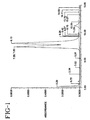
- reaction products were analyzed via SEC-HPLC (BioRad, Bio-Sil SEC-125 column) at a flow rate of 1.0 ml / minute using a 0.1 molar phosphate buffer, pH 7.0 with detection at 280 nm.
- SEC-HPLC BioRad, Bio-Sil SEC-125 column
- Figure 1 shows two peaks at 7.29 and 8.13, indicating that the conjugates were largely 1-PEG and 2-PEG species. A minor amount of higher molecular weight species was also detected
- the PEG 12,000 -IFN conjugate pool containing the 1-PEG and 2-PEG conjugates resulting from Example 1 was treated with 0.1% trifluoroacetic acid to reduce the pH of the conjugates to about 1.6 for about 3 hours at 37°C.
- the reaction was stopped by the addition of sodium phosphate buffer (100mM) pH 6.5, and the final pH of the solution was between pH 6.0-6.2.
- the acid-treated conjugates were analyzed via HPLC (100mM sodium phosphate buffer pH 7.0). The results are set forth in Figure 2 which illustrates a much sharper peak at 7.95 and smaller shoulder as well as some native IFN. This also indicates that the acid treated conjugates were largely the 1-PEG 12000 -IFN.
Landscapes
- Health & Medical Sciences (AREA)
- Chemical & Material Sciences (AREA)
- Life Sciences & Earth Sciences (AREA)
- General Health & Medical Sciences (AREA)
- Organic Chemistry (AREA)
- Medicinal Chemistry (AREA)
- Proteomics, Peptides & Aminoacids (AREA)
- Biochemistry (AREA)
- Pharmacology & Pharmacy (AREA)
- Genetics & Genomics (AREA)
- Gastroenterology & Hepatology (AREA)
- Molecular Biology (AREA)
- Zoology (AREA)
- Veterinary Medicine (AREA)
- Engineering & Computer Science (AREA)
- Bioinformatics & Cheminformatics (AREA)
- Biophysics (AREA)
- Epidemiology (AREA)
- Animal Behavior & Ethology (AREA)
- Public Health (AREA)
- Toxicology (AREA)
- Immunology (AREA)
- Chemical Kinetics & Catalysis (AREA)
- General Chemical & Material Sciences (AREA)
- Analytical Chemistry (AREA)
- Medicines That Contain Protein Lipid Enzymes And Other Medicines (AREA)
- Peptides Or Proteins (AREA)
Claims (26)
- Verfahren zum Herstellen eines α-Interferon-Polymer-Konjugats, umfassend:a) Bilden eines Konjugats eines säurestabilen α-Interferons mit einem aktivierten, im wesentlichen nicht-antigenen Polymer in Lösung,b) Ansäuern der konjugathaltigen Lösung aus (a) auf ein pH-Niveau von weniger als etwa 3, das zum selektiven Spalten von Bindungen wirksam ist, die die Aktivität des konjugierten Interferons vermindern, und anschließendc) Einstellen der angesäuerten Lösung aus (b) auf einen physiologisch annehmbaren pH, wobei das molare Verhältnis des im wesentlichen nicht-antigenen Polymers zu dem α-Interferon im Bereich von etwa 8:1 bis etwa 1:8 liegt.
- Verfahren gemäß Anspruch 1, wobei das nicht-antigene Polymer mit einem eine Carbamatbindung bildenden Rest aktiviert wird.
- Verfahren gemäß Anspruch 2, wobei der eine Carbamatbindung bildende Rest ausgewählt ist aus der Gruppe bestehend aus Oxycarbonyl-oxy-N-dicarboximid, para-Nitroarylcarbonaten, Carbonyldiimidazol, Benzotriazolcarbonaten und Pyridylcarbonaten.
- Verfahren gemäß Anspruch 3, wobei das Oxycarbonyl-oxy-N-dicarboximid ein Succinimidylcarbonat ist.
- Verfahren gemäß Anspruch 1, wobei das im wesentlichen nicht-antigene Polymer mit einem Succinimidylcarbonat aktiviert wird.
- Verfahren gemäß Anspruch 1, wobei das molare Verhältnis des im wesentlichen nicht-antigenen Polymers zu dem α-Interferon im Bereich von etwa 4:1 bis etwa 1:4 liegt.
- Verfahren gemäß Anspruch 1, wobei das molare Verhältnis des im wesentlichen nicht-antigenen Polymers zu dem α-Interferon im Bereich von etwa 2:1 bis etwa 1:2 liegt.
- Verfahren gemäß Anspruch 1, wobei das im wesentlichen nicht-antigene Polymer ein Polyalkylenoxid umfaßt.
- Verfahren gemäß Anspruch 8, wobei das Polyalkylenoxid ein Polyethylenglycol umfaßt.
- Verfahren gemäß Anspruch 1, wobei die Lösung mit einer Säure ausgewählt aus der Gruppe bestehend aus Halogenessigsäure, Essigsäure, Salzsäure, Schwefelsäure und Phosphorsäuren angesäuert wird.
- Verfahren gemäß Anspruch 10, wobei die Halogenessigsäure Trifluoressigsäure ist.
- Verfahren gemäß Anspruch 1, wobei das pH-Niveau des Schritts (b) weniger als etwa 2 ist.
- Verfahren gemäß Anspruch 12, wobei das pH-Niveau weniger als etwa 1,6 ist.
- Verfahren gemäß Anspruch 12, wobei der pH etwa 1,6 ist.
- Verfahren gemäß Anspruch 1, wobei das pH-Niveau des Schritts (b) im Bereich von etwa 1 bis etwa 3 liegt.
- Verfahren gemäß Anspruch 1, wobei der im wesentlichen nicht-antigene Polymerteil des Konjugats ein Molekulargewicht von etwa 600 bis etwa 60.000 aufweist.
- Verfahren gemäß Anspruch 16, wobei der im wesentlichen nicht-antigene Polymerteil des Konjugats ein Molekulargewicht von etwa 1.000 bis etwa 40.000 aufweist.
- Verfahren gemäß Anspruch 16, wobei der im wesentlichen nicht-antigene Polymerteil des Konjugats ein Molekulargewicht von etwa 2.000 bis etwa 20.000 aufweist.
- Verfahren gemäß Anspruch 1, wobei der physiologisch annehmbare pH im Bereich von etwa 6,5 bis etwa 7,5 liegt.
- Verfahren gemäß Anspruch 1, wobei das α-Interferon α-Interferon 2b ist.
- Verfahren gemäß Anspruch 1, wobei das α-Interferon ein Humaninterferon ist.
- Verfahren gemäß Anspruch 21, wobei das Interferon ein humanes Consensusinterferon ist.
- Verfahren gemäß Anspruch 1, wobei das im wesentlichen nicht-antigene Polymer ausgewählt ist aus der Gruppe bestehend aus Dextran, Polyvinylpyrrolidonen, Polyacrylamiden, Polyvinylalkoholen und Polymeren auf Kohlenhydratbasis.
- Verfahren gemäß Anspruch 1, ferner umfassend im wesentlichen Isolieren und Aufreinigen des Produkts des Schritts (c).
- α-Interferon-Polymer-Konjugate erhältlich durch das Verfahren gemäß Anspruch 1.
- Pharmazeutische Zusammensetzung umfassend ein α-Interferon-Polymer-Konjugat wie in Anspruch 25 definiert und einen pharmazeutisch annehmbaren Träger.
Applications Claiming Priority (3)
| Application Number | Priority Date | Filing Date | Title |
|---|---|---|---|
| US08/994,623 US5981709A (en) | 1997-12-19 | 1997-12-19 | α-interferon-polymer-conjugates having enhanced biological activity and methods of preparing the same |
| US994623 | 1997-12-19 | ||
| PCT/US1998/026679 WO1999032140A1 (en) | 1997-12-19 | 1998-12-16 | Alpha-interferon-polymer-conjugates having enhanced biological activity and methods of preparing the same |
Publications (3)
| Publication Number | Publication Date |
|---|---|
| EP1037657A1 EP1037657A1 (de) | 2000-09-27 |
| EP1037657A4 EP1037657A4 (de) | 2004-08-25 |
| EP1037657B1 true EP1037657B1 (de) | 2008-03-12 |
Family
ID=25540859
Family Applications (1)
| Application Number | Title | Priority Date | Filing Date |
|---|---|---|---|
| EP98963948A Expired - Lifetime EP1037657B1 (de) | 1997-12-19 | 1998-12-16 | Alpha interferon-polymer konjugate mit erhöhter biologischer wirksamkeit sowie verfahren zu deren herstellung |
Country Status (8)
| Country | Link |
|---|---|
| US (1) | US5981709A (de) |
| EP (1) | EP1037657B1 (de) |
| AT (1) | ATE388721T1 (de) |
| AU (1) | AU1916899A (de) |
| DE (1) | DE69839251T2 (de) |
| DK (1) | DK1037657T3 (de) |
| ES (1) | ES2303361T3 (de) |
| WO (1) | WO1999032140A1 (de) |
Cited By (3)
| Publication number | Priority date | Publication date | Assignee | Title |
|---|---|---|---|---|
| US8129330B2 (en) | 2002-09-30 | 2012-03-06 | Mountain View Pharmaceuticals, Inc. | Polymer conjugates with decreased antigenicity, methods of preparation and uses thereof |
| US9125880B2 (en) | 2002-12-26 | 2015-09-08 | Mountain View Pharmaceuticals, Inc. | Polymer conjugates of interferon-beta with enhanced biological potency |
| WO2016201448A3 (en) * | 2015-06-11 | 2017-02-09 | Prolong Pharmaceuticals, LLC | Pegylated granulocyte colony stimulating factor (gcsf) |
Families Citing this family (128)
| Publication number | Priority date | Publication date | Assignee | Title |
|---|---|---|---|---|
| US5951974A (en) * | 1993-11-10 | 1999-09-14 | Enzon, Inc. | Interferon polymer conjugates |
| EE05111B1 (et) | 1998-10-16 | 2008-12-15 | Biogen, Incorporated | Interferoon-beetaga sulandatud valgud ja nende kasutamine |
| HU229888B1 (en) | 1998-10-16 | 2014-11-28 | Biogen Idec Ma Inc Cambridge | Polymer conjugates of interferon betha-1a and uses |
| US7169889B1 (en) | 1999-06-19 | 2007-01-30 | Biocon Limited | Insulin prodrugs hydrolyzable in vivo to yield peglylated insulin |
| US6969524B1 (en) | 1999-10-12 | 2005-11-29 | Santen Pharamceutical Co., Ltd. | Interferon complex and medicinal use thereof |
| SK11672002A3 (sk) | 2000-01-10 | 2002-12-03 | Maxygen Holdings Ltd. | Polypeptidový konjugát, spôsob jeho výroby, farmaceutický prostriedok s jeho obsahom a jeho použitie |
| PL204285B1 (pl) | 2000-02-11 | 2009-12-31 | Bayer Healthcare Llc | Koniugat polipeptydowy, polipeptyd, sekwencja nukleotydowa, wektor ekspresyjny, komórka gospodarz, sposób wytwarzania koniugatu polipeptydowego, środek farmaceutyczny i zastosowanie koniugatu polipeptydowego |
| KR100353392B1 (ko) * | 2000-03-13 | 2002-09-18 | 선바이오(주) | 높은 생체 활성도를 갖는 생체 활성 단백질과 peg의결합체 제조방법 |
| US7060675B2 (en) | 2001-02-15 | 2006-06-13 | Nobex Corporation | Methods of treating diabetes mellitus |
| US6867183B2 (en) | 2001-02-15 | 2005-03-15 | Nobex Corporation | Pharmaceutical compositions of insulin drug-oligomer conjugates and methods of treating diseases therewith |
| JP2004534523A (ja) | 2001-02-27 | 2004-11-18 | マキシゲン・エイピーエス | 新規なインターフェロンβ様分子 |
| US7713932B2 (en) | 2001-06-04 | 2010-05-11 | Biocon Limited | Calcitonin drug-oligomer conjugates, and uses thereof |
| US6713452B2 (en) | 2001-06-04 | 2004-03-30 | Nobex Corporation | Mixtures of calcitonin drug-oligomer conjugates comprising polyalkylene glycol, uses thereof, and methods of making same |
| US6835802B2 (en) | 2001-06-04 | 2004-12-28 | Nobex Corporation | Methods of synthesizing substantially monodispersed mixtures of polymers having polyethylene glycol moieties |
| US6858580B2 (en) | 2001-06-04 | 2005-02-22 | Nobex Corporation | Mixtures of drug-oligomer conjugates comprising polyalkylene glycol, uses thereof, and methods of making same |
| US6828297B2 (en) | 2001-06-04 | 2004-12-07 | Nobex Corporation | Mixtures of insulin drug-oligomer conjugates comprising polyalkylene glycol, uses thereof, and methods of making same |
| US6828305B2 (en) | 2001-06-04 | 2004-12-07 | Nobex Corporation | Mixtures of growth hormone drug-oligomer conjugates comprising polyalkylene glycol, uses thereof, and methods of making same |
| US7312192B2 (en) | 2001-09-07 | 2007-12-25 | Biocon Limited | Insulin polypeptide-oligomer conjugates, proinsulin polypeptide-oligomer conjugates and methods of synthesizing same |
| US7030082B2 (en) * | 2001-09-07 | 2006-04-18 | Nobex Corporation | Pharmaceutical compositions of drug-oligomer conjugates and methods of treating disease therewith |
| US7196059B2 (en) | 2001-09-07 | 2007-03-27 | Biocon Limited | Pharmaceutical compositions of insulin drug-oligomer conjugates and methods of treating diseases therewith |
| US6913903B2 (en) | 2001-09-07 | 2005-07-05 | Nobex Corporation | Methods of synthesizing insulin polypeptide-oligomer conjugates, and proinsulin polypeptide-oligomer conjugates and methods of synthesizing same |
| US6770625B2 (en) | 2001-09-07 | 2004-08-03 | Nobex Corporation | Pharmaceutical compositions of calcitonin drug-oligomer conjugates and methods of treating diseases therewith |
| US7166571B2 (en) | 2001-09-07 | 2007-01-23 | Biocon Limited | Insulin polypeptide-oligomer conjugates, proinsulin polypeptide-oligomer conjugates and methods of synthesizing same |
| JP2005517648A (ja) * | 2001-12-07 | 2005-06-16 | インターミューン インコーポレイテッド | 肝炎ウイルス感染症を治療するための組成物および方法 |
| DK1476181T3 (en) | 2002-01-18 | 2016-05-23 | Biogen Ma Inc | POLYALKYLENE POLYMER COMPOUNDS AND USE THEREOF |
| US7601688B2 (en) | 2002-06-13 | 2009-10-13 | Biocon Limited | Methods of reducing hypoglycemic episodes in the treatment of diabetes mellitus |
| ATE503498T1 (de) | 2002-06-21 | 2011-04-15 | Novo Nordisk Healthcare Ag | Pegylierte glykoformen von faktor vii |
| TW200500375A (en) | 2002-06-28 | 2005-01-01 | Idenix Cayman Ltd | Modified 2' and 3'-nucleoside prodrugs for treating flaviviridae |
| US20040062748A1 (en) * | 2002-09-30 | 2004-04-01 | Mountain View Pharmaceuticals, Inc. | Polymer conjugates with decreased antigenicity, methods of preparation and uses thereof |
| PL396711A1 (pl) * | 2002-12-26 | 2011-12-19 | Mountain View Pharmaceuticals, Inc. | Koniugaty polimerów z cytokinami, chemokinami, czynnikami wzrostu, hormonami polipeptydowymi i ich antagonistami, kompozycja farmaceutyczna i sposób zapobiegania, diagnozowania lub leczenia |
| CA2516552A1 (en) * | 2003-02-26 | 2004-09-10 | Intermune, Inc. | Polyethylene glycol modified interferon compositions and methods of use thereof |
| EP1633317A4 (de) | 2003-05-16 | 2008-08-20 | Intermune Inc | Synthetische chemokin-rezeptor-liganden und anwendungsverfahren dafür |
| CN100503628C (zh) | 2003-05-30 | 2009-06-24 | 法莫赛特股份有限公司 | 修饰的氟化核苷类似物 |
| EP1673387B1 (de) | 2003-10-10 | 2010-09-15 | Novo Nordisk A/S | Il-21-derivate |
| HRP20130098T1 (hr) | 2003-10-14 | 2013-02-28 | F. Hoffmann - La Roche Ag | MAKROCIKLIÄŚKE KARBOKSILNE KISELINE I ACILSULFONAMIDNI SPOJEVI KAO INHIBITORI REPLIKACIJE HCV-a |
| ES2428358T3 (es) | 2003-10-17 | 2013-11-07 | Novo Nordisk A/S | Terapia de combinación |
| WO2005040758A2 (en) * | 2003-10-24 | 2005-05-06 | Intermune, Inc. | Use of pirfenidone in therapeutic regimens |
| US8778880B2 (en) | 2004-02-02 | 2014-07-15 | Ambrx, Inc. | Human growth hormone modified at position 35 |
| WO2005123113A2 (en) * | 2004-06-14 | 2005-12-29 | Intermune, Inc. | Interferon compositions and methods of use thereof |
| KR101699142B1 (ko) | 2004-06-18 | 2017-01-23 | 암브룩스, 인코포레이티드 | 신규 항원-결합 폴리펩티드 및 이의 용도 |
| MX2007000883A (es) | 2004-07-19 | 2007-04-02 | Biocon Ltd | Conjugados de insulina-oligomero, formulaciones y usos de los mismos. |
| CN101023094B (zh) | 2004-07-21 | 2011-05-18 | 法莫赛特股份有限公司 | 烷基取代的2-脱氧-2-氟代-d-呋喃核糖基嘧啶和嘌呤及其衍生物的制备 |
| US7638299B2 (en) | 2004-07-21 | 2009-12-29 | Ambrx, Inc. | Biosynthetic polypeptides utilizing non-naturally encoded amino acids |
| BRPI0515279A (pt) | 2004-09-14 | 2008-07-15 | Pharmasset Inc | preparação de ribofuranosil pirimidinas e purinas 2'fluoro-2'-alquil- substituìdas ou outras opcionalmente substituìdas e seus derivados |
| WO2006068802A2 (en) | 2004-12-22 | 2006-06-29 | Ambrx, Inc. | COMPOSITIONS OF AMINOACYL-tRNA SYNTHETASE AND USES THEREOF |
| EP2284191A3 (de) | 2004-12-22 | 2011-07-20 | Ambrx, Inc. | Prozess zur Herstellung von hGH |
| WO2006071840A2 (en) | 2004-12-22 | 2006-07-06 | Ambrx, Inc. | Formulations of human growth hormone comprising a non-naturally encoded amino acid |
| US8080391B2 (en) | 2004-12-22 | 2011-12-20 | Ambrx, Inc. | Process of producing non-naturally encoded amino acid containing high conjugated to a water soluble polymer |
| US7365127B2 (en) * | 2005-02-04 | 2008-04-29 | Enzon Pharmaceuticals, Inc. | Process for the preparation of polymer conjugates |
| CA2609205A1 (en) | 2005-06-03 | 2006-12-14 | Ambrx, Inc. | Improved human interferon molecules and their uses |
| JP5335422B2 (ja) | 2005-06-17 | 2013-11-06 | ノボ ノルディスク ヘルス ケア アクチェンゲゼルシャフト | 少なくとも1つの非天然のシステインを含んでいる操作されたタンパク質の選択的な還元および誘導体化 |
| US20090018029A1 (en) | 2005-11-16 | 2009-01-15 | Ambrx, Inc. | Methods and Compositions Comprising Non-Natural Amino Acids |
| EP1985303B1 (de) | 2006-01-12 | 2012-11-21 | Kitasato Daiichi Sankyo Vaccine Co., Ltd. | Alpha-Interferon enthaltende orale Zusammensetzung |
| WO2007130453A2 (en) | 2006-05-02 | 2007-11-15 | Allozyne, Inc. | Non-natural amino acid substituted polypeptides |
| US20080096819A1 (en) * | 2006-05-02 | 2008-04-24 | Allozyne, Inc. | Amino acid substituted molecules |
| KR20090013816A (ko) | 2006-05-24 | 2009-02-05 | 노보 노르디스크 헬스 케어 악티엔게젤샤프트 | 연장된 생체내 반감기를 갖는 인자 ⅸ 유사체 |
| AR078117A1 (es) | 2006-06-20 | 2011-10-19 | Protech Pharma S A | Una muteina recombinante del interferon alfa humano glicosilado, un gen que codifica para dicha muteina, un metodo de produccion de dicho gen, un metodo para obtener una celula eucariota productora de dicha muteina, un metodo para producir dicha muteina, un procedimiento para purificar dicha muteina |
| EP1886685A1 (de) | 2006-08-11 | 2008-02-13 | INSERM (Institut National de la Santé et de la Recherche Médicale) | Methoden, Verwendungen und Zusammensetzungen zur Modulation der Replikation von HCV durch Aktivierung oder Hemmung des Farnesoid X Rezeptors |
| DK2615108T3 (en) | 2006-09-08 | 2017-01-30 | Ambrx Inc | Modified human plasma polypeptide or fc scaffolds and their applications |
| DK2064333T3 (da) | 2006-09-08 | 2014-05-05 | Ambrx Inc | Suppressor-trna-transkription i hvirveldyrceller |
| EP2097068B1 (de) | 2006-11-24 | 2013-09-04 | Cadila Healthcare Limited | Formulierungen aus peg-interferon-alpha-konjugaten |
| PL2068909T3 (pl) | 2007-03-30 | 2012-09-28 | Ambrx Inc | Modyfikowane polipeptydy fgf-21 i ich zastosowanie |
| US7964580B2 (en) | 2007-03-30 | 2011-06-21 | Pharmasset, Inc. | Nucleoside phosphoramidate prodrugs |
| EP2076533B1 (de) | 2007-05-02 | 2014-10-08 | Ambrx, Inc. | Modifizierte interferon-beta-polypeptide und ihre verwendungen |
| CA2707840A1 (en) * | 2007-08-20 | 2009-02-26 | Allozyne, Inc. | Amino acid substituted molecules |
| BRPI0818004B8 (pt) | 2007-10-16 | 2021-05-25 | Biocon Ltd | composição farmacêutica sólida administrável por via oral e o processo da mesma. |
| US8946148B2 (en) | 2007-11-20 | 2015-02-03 | Ambrx, Inc. | Modified insulin polypeptides and their uses |
| US9938333B2 (en) | 2008-02-08 | 2018-04-10 | Ambrx, Inc. | Modified leptin polypeptides and their uses |
| TW200946541A (en) | 2008-03-27 | 2009-11-16 | Idenix Pharmaceuticals Inc | Solid forms of an anti-HIV phosphoindole compound |
| PL2318029T3 (pl) | 2008-07-23 | 2018-03-30 | Elanco Us Inc. | Zmodyfikowane polipeptydy bydlęcego G-CSF i ich zastosowania |
| CA2738033C (en) | 2008-09-26 | 2019-11-26 | Ambrx, Inc. | Non-natural amino acid replication-dependent microorganisms and vaccines |
| US8278418B2 (en) | 2008-09-26 | 2012-10-02 | Ambrx, Inc. | Modified animal erythropoietin polypeptides and their uses |
| EP3025727A1 (de) | 2008-10-02 | 2016-06-01 | The J. David Gladstone Institutes | Verfahren zur behandlung von lebererkrankungen |
| EP2376515A1 (de) | 2008-12-23 | 2011-10-19 | Pharmasset, Inc. | Synthese von purinnukleosiden |
| US8551973B2 (en) | 2008-12-23 | 2013-10-08 | Gilead Pharmasset Llc | Nucleoside analogs |
| CA2748057C (en) | 2008-12-23 | 2018-07-03 | Pharmasset, Inc. | Nucleoside phosphoramidates |
| US8975247B2 (en) | 2009-03-18 | 2015-03-10 | The Board Of Trustees Of The Leland Stanford Junion University | Methods and compositions of treating a flaviviridae family viral infection |
| EP2408800B1 (de) | 2009-03-20 | 2016-05-25 | Hanmi Science Co., Ltd. | Verfahren für die zubereitung eines ortsspezifischen konjugats eines physiologisch aktiven polypeptids |
| US8618076B2 (en) | 2009-05-20 | 2013-12-31 | Gilead Pharmasset Llc | Nucleoside phosphoramidates |
| TWI598358B (zh) | 2009-05-20 | 2017-09-11 | 基利法瑪席特有限責任公司 | 核苷磷醯胺 |
| US20120283172A1 (en) | 2009-12-21 | 2012-11-08 | Ambrx, Inc. | Modified porcine somatotropin polypeptides and their uses |
| BR112012015461A2 (pt) | 2009-12-21 | 2017-01-10 | Ambrx Inc | polipeptídeos de somatotropina boviina modificados e seus usos |
| AU2011222883B2 (en) | 2010-03-05 | 2016-05-26 | Omeros Corporation | Chimeric inhibitor molecules of complement activation |
| CL2011000718A1 (es) | 2010-03-31 | 2012-04-09 | Gilead Pharmasset Llc | Proceso para la preparacion de compuestos fosforados enantiomericos. |
| WO2011143274A1 (en) | 2010-05-10 | 2011-11-17 | Perseid Therapeutics | Polypeptide inhibitors of vla4 |
| US9567386B2 (en) | 2010-08-17 | 2017-02-14 | Ambrx, Inc. | Therapeutic uses of modified relaxin polypeptides |
| EP3572091B1 (de) | 2010-08-17 | 2023-12-13 | Ambrx, Inc. | Modifizierte relaxinpolypeptide und deren verwendungen |
| AR083006A1 (es) | 2010-09-23 | 2013-01-23 | Lilly Co Eli | Formulaciones para el factor estimulante de colonias de granulocitos (g-csf) bovino y variantes de las mismas |
| PT3042910T (pt) | 2010-11-30 | 2019-04-16 | Gilead Pharmasset Llc | 2'-espiro-nucleósidos para utilização na terapia da hepatite c |
| WO2012107589A1 (en) | 2011-02-11 | 2012-08-16 | INSERM (Institut National de la Santé et de la Recherche Médicale) | Methods and pharmaceutical compositions for the treatment and prevention of hcv infections |
| RU2014103288A (ru) | 2011-07-01 | 2015-08-10 | Байер Интеллектчуал Проперти Гмбх | Слитые полипептиды релаксина и их применение |
| US20140314713A1 (en) | 2011-07-20 | 2014-10-23 | Universite Paris Diderot - Paris Vii | Methods for determining treatment response in patients infected with hcv genotype 4 |
| US8889159B2 (en) | 2011-11-29 | 2014-11-18 | Gilead Pharmasset Llc | Compositions and methods for treating hepatitis C virus |
| MY171759A (en) | 2011-12-06 | 2019-10-28 | Univ Leland Stanford Junior | Methods and compositions for treating viral diseases |
| WO2013174988A1 (en) | 2012-05-24 | 2013-11-28 | INSERM (Institut National de la Santé et de la Recherche Médicale) | Methods for predicting and monitoring treatment response in hcv- and hcv/hiv-infected subjects |
| ES2718478T3 (es) | 2012-06-08 | 2019-07-02 | Sutro Biopharma Inc | Anticuerpos que comprenden restos de aminoácidos no naturales de localización específica, métodos para su preparación y métodos para su uso |
| DK2863955T3 (en) | 2012-06-26 | 2017-01-23 | Sutro Biopharma Inc | MODIFIED FC PROTEINS, INCLUDING LOCATION-SPECIFIC NON-NATURAL AMINO ACID RESIDUES, CONJUGATES THEREOF, METHODS OF PRODUCING ITS AND PROCEDURES FOR USE THEREOF |
| SG11201501464TA (en) | 2012-08-31 | 2015-03-30 | Sutro Biopharma Inc | Modified amino acids comprising an azido group |
| US9764039B2 (en) | 2013-07-10 | 2017-09-19 | Sutro Biopharma, Inc. | Antibodies comprising multiple site-specific non-natural amino acid residues, methods of their preparation and methods of their use |
| EP3650014B1 (de) | 2013-08-27 | 2021-10-06 | Gilead Pharmasset LLC | Kombinationsformulierung von zwei antiviralen verbindungen |
| WO2015054658A1 (en) | 2013-10-11 | 2015-04-16 | Sutro Biopharma, Inc. | Modified amino acids comprising tetrazine functional groups, methods of preparation, and methods of their use |
| US10076512B2 (en) | 2014-05-01 | 2018-09-18 | Eiger Biopharmaceuticals, Inc. | Treatment of hepatitis delta virus infection |
| ES2728405T3 (es) | 2014-05-01 | 2019-10-24 | Eiger Biopharmaceuticals Inc | Tratamiento de la infección por virus de hepatitis delta |
| US11311519B2 (en) | 2014-05-01 | 2022-04-26 | Eiger Biopharmaceuticals, Inc. | Treatment of hepatitis delta virus infection |
| CN107108710B (zh) | 2014-10-24 | 2022-02-15 | 百时美施贵宝公司 | 修饰的fgf-21多肽及其用途 |
| HUE054068T2 (hu) | 2015-04-21 | 2021-08-30 | Eiger Biopharmaceuticals Inc | Lonafarnibot és Ritonavirt tartalmazó gyógyszerkészítmények |
| EP3858352A1 (de) | 2015-11-04 | 2021-08-04 | Eiger Biopharmaceuticals, Inc. | Behandlung von hepatitis-delta-virus-infektion |
| CN116143678A (zh) | 2016-11-14 | 2023-05-23 | 杭州多禧生物科技有限公司 | 偶联连接体,含有此连接体的细胞结合分子-药物偶联物及其制备和应用 |
| JP7189399B2 (ja) | 2017-01-18 | 2022-12-14 | アンスティチュ ナショナル ドゥ ラ サンテ エ ドゥ ラ ルシェルシュ メディカル | 骨髄増殖性障害を患う患者の処置のための方法及び医薬組成物 |
| PE20191716A1 (es) | 2017-02-08 | 2019-12-05 | Bristol Myers Squibb Co | Polipeptidos de relaxina modificada que comprenden un mejorador farmacocinetico y sus usos |
| US12344645B2 (en) | 2017-03-29 | 2025-07-01 | Polaris Group | Protein conjugates |
| US11926664B2 (en) | 2017-07-25 | 2024-03-12 | INSERM (Institut National de la Santé et de la Recherche Médicale) | Methods and pharmaceutical compositions for modulating monocytopoiesis |
| DK3849614T3 (da) | 2018-09-11 | 2024-02-26 | Ambrx Inc | Interleukin-2-polypeptidkonjugater og anvendelser deraf |
| WO2020082057A1 (en) | 2018-10-19 | 2020-04-23 | Ambrx, Inc. | Interleukin-10 polypeptide conjugates, dimers thereof, and their uses |
| AU2020223031B2 (en) | 2019-02-12 | 2024-08-29 | Ambrx, Inc. | Compositions containing, methods and uses of antibody-TLR agonist conjugates |
| AU2020312735A1 (en) | 2019-07-18 | 2021-12-16 | Enyo Pharma | Method for decreasing adverse-effects of interferon |
| TW202146011A (zh) | 2020-03-05 | 2021-12-16 | 美商詹森藥物公司 | 治療b型肝炎病毒感染之組合療法 |
| MX2022011163A (es) | 2020-03-11 | 2022-10-18 | Ambrx Inc | Conjugados de polipeptidos de interleucina-2 y sus usos. |
| WO2021228983A1 (en) | 2020-05-13 | 2021-11-18 | INSERM (Institut National de la Santé et de la Recherche Médicale) | A pharmaceutical composition comprising an arsenic compound, an inductor of type-1 ifn and a protein kinase inhibitor for treating cancer |
| ES2929379T3 (es) | 2020-05-20 | 2022-11-28 | Inst Nat Sante Rech Med | Métodos para el tratamiento de infecciones por coronavirus |
| US20210403908A1 (en) | 2020-06-22 | 2021-12-30 | Janssen Pharmaceuticals, Inc. | Compositions and methods for treatment of hepatitis d virus infection |
| CA3128035A1 (en) | 2020-08-13 | 2022-02-13 | Bioasis Technologies, Inc. | Combination therapies for delivery across the blood brain barrier |
| AU2021327396A1 (en) | 2020-08-20 | 2023-03-23 | Ambrx, Inc. | Antibody-TLR agonist conjugates, methods and uses thereof |
| WO2022043496A2 (en) | 2020-08-28 | 2022-03-03 | INSERM (Institut National de la Santé et de la Recherche Médicale) | Use of mait cells as biomarkers and biotargets in covid-19 |
| WO2022079205A1 (en) | 2020-10-15 | 2022-04-21 | INSERM (Institut National de la Santé et de la Recherche Médicale) | Use of ifn-alpha polypeptides for the treatment of coronavirus infections |
| EP4313163A1 (de) | 2021-04-03 | 2024-02-07 | Ambrx, Inc. | Anti-her2-antikörper-wirkstoff-konjugate und verwendungen davon |
| WO2022078524A2 (en) | 2021-11-03 | 2022-04-21 | Hangzhou Dac Biotech Co., Ltd. | Specific conjugation of an antibody |
| WO2026043823A2 (en) | 2024-08-19 | 2026-02-26 | Sutro Biopharma, Inc. | Antibodies comprising site-specific non-natural amino acid residues, methods of preparation and uses thereof |
Family Cites Families (21)
| Publication number | Priority date | Publication date | Assignee | Title |
|---|---|---|---|---|
| US4179337A (en) * | 1973-07-20 | 1979-12-18 | Davis Frank F | Non-immunogenic polypeptides |
| US6936694B1 (en) * | 1982-05-06 | 2005-08-30 | Intermune, Inc. | Manufacture and expression of large structural genes |
| US4609546A (en) * | 1982-06-24 | 1986-09-02 | Japan Chemical Research Co., Ltd. | Long-acting composition |
| US4917888A (en) * | 1985-06-26 | 1990-04-17 | Cetus Corporation | Solubilization of immunotoxins for pharmaceutical compositions using polymer conjugation |
| US4766106A (en) * | 1985-06-26 | 1988-08-23 | Cetus Corporation | Solubilization of proteins for pharmaceutical compositions using polymer conjugation |
| JP2514950B2 (ja) * | 1986-03-10 | 1996-07-10 | エフ・ホフマン―ラ ロシユ アーゲー | 化学修飾蛋白質,その製造法および中間体 |
| US4810638A (en) * | 1986-07-24 | 1989-03-07 | Miles Inc. | Enzyme-labeled antibody reagent with polyalkyleneglycol linking group |
| US4894226A (en) * | 1986-11-14 | 1990-01-16 | Cetus Corporation | Solubilization of proteins for pharmaceutical compositions using polyproline conjugation |
| US5080891A (en) * | 1987-08-03 | 1992-01-14 | Ddi Pharmaceuticals, Inc. | Conjugates of superoxide dismutase coupled to high molecular weight polyalkylene glycols |
| US5004605A (en) * | 1987-12-10 | 1991-04-02 | Cetus Corporation | Low pH pharmaceutical compositions of recombinant β-interferon |
| US5122614A (en) * | 1989-04-19 | 1992-06-16 | Enzon, Inc. | Active carbonates of polyalkylene oxides for modification of polypeptides |
| US5595732A (en) * | 1991-03-25 | 1997-01-21 | Hoffmann-La Roche Inc. | Polyethylene-protein conjugates |
| US5281698A (en) * | 1991-07-23 | 1994-01-25 | Cetus Oncology Corporation | Preparation of an activated polymer ester for protein conjugation |
| US5676942A (en) * | 1992-02-10 | 1997-10-14 | Interferon Sciences, Inc. | Composition containing human alpha interferon species proteins and method for use thereof |
| US5382657A (en) * | 1992-08-26 | 1995-01-17 | Hoffmann-La Roche Inc. | Peg-interferon conjugates |
| HUT75533A (en) * | 1993-11-10 | 1997-05-28 | Schering Corp | Improved interferon polymer conjugates |
| US5650234A (en) * | 1994-09-09 | 1997-07-22 | Surface Engineering Technologies, Division Of Innerdyne, Inc. | Electrophilic polyethylene oxides for the modification of polysaccharides, polypeptides (proteins) and surfaces |
| US5824784A (en) * | 1994-10-12 | 1998-10-20 | Amgen Inc. | N-terminally chemically modified protein compositions and methods |
| US5738846A (en) * | 1994-11-10 | 1998-04-14 | Enzon, Inc. | Interferon polymer conjugates and process for preparing the same |
| US5646242A (en) * | 1994-11-17 | 1997-07-08 | Eli Lilly And Company | Selective acylation of epsilon-amino groups |
| TW517067B (en) * | 1996-05-31 | 2003-01-11 | Hoffmann La Roche | Interferon conjugates |
-
1997
- 1997-12-19 US US08/994,623 patent/US5981709A/en not_active Expired - Lifetime
-
1998
- 1998-12-16 AU AU19168/99A patent/AU1916899A/en not_active Abandoned
- 1998-12-16 DK DK98963948T patent/DK1037657T3/da active
- 1998-12-16 ES ES98963948T patent/ES2303361T3/es not_active Expired - Lifetime
- 1998-12-16 WO PCT/US1998/026679 patent/WO1999032140A1/en not_active Ceased
- 1998-12-16 AT AT98963948T patent/ATE388721T1/de not_active IP Right Cessation
- 1998-12-16 DE DE69839251T patent/DE69839251T2/de not_active Expired - Lifetime
- 1998-12-16 EP EP98963948A patent/EP1037657B1/de not_active Expired - Lifetime
Cited By (3)
| Publication number | Priority date | Publication date | Assignee | Title |
|---|---|---|---|---|
| US8129330B2 (en) | 2002-09-30 | 2012-03-06 | Mountain View Pharmaceuticals, Inc. | Polymer conjugates with decreased antigenicity, methods of preparation and uses thereof |
| US9125880B2 (en) | 2002-12-26 | 2015-09-08 | Mountain View Pharmaceuticals, Inc. | Polymer conjugates of interferon-beta with enhanced biological potency |
| WO2016201448A3 (en) * | 2015-06-11 | 2017-02-09 | Prolong Pharmaceuticals, LLC | Pegylated granulocyte colony stimulating factor (gcsf) |
Also Published As
| Publication number | Publication date |
|---|---|
| EP1037657A1 (de) | 2000-09-27 |
| ES2303361T3 (es) | 2008-08-01 |
| DE69839251D1 (de) | 2008-04-24 |
| DE69839251T2 (de) | 2009-03-19 |
| WO1999032140A1 (en) | 1999-07-01 |
| DK1037657T3 (da) | 2008-07-07 |
| US5981709A (en) | 1999-11-09 |
| EP1037657A4 (de) | 2004-08-25 |
| AU1916899A (en) | 1999-07-12 |
| ATE388721T1 (de) | 2008-03-15 |
Similar Documents
| Publication | Publication Date | Title |
|---|---|---|
| EP1037657B1 (de) | Alpha interferon-polymer konjugate mit erhöhter biologischer wirksamkeit sowie verfahren zu deren herstellung | |
| US5738846A (en) | Interferon polymer conjugates and process for preparing the same | |
| JP3747070B2 (ja) | 改良型インターフェロン−ポリマーコンジュゲート | |
| US5711944A (en) | Interferon polymer conjugates | |
| US5985263A (en) | Substantially pure histidine-linked protein polymer conjugates | |
| EP2049566B1 (de) | Spezifische monokonjugate von g-csf | |
| MXPA99011862A (es) | Conjugados mejorados de polimero de interferon |
Legal Events
| Date | Code | Title | Description |
|---|---|---|---|
| PUAI | Public reference made under article 153(3) epc to a published international application that has entered the european phase |
Free format text: ORIGINAL CODE: 0009012 |
|
| 17P | Request for examination filed |
Effective date: 20000623 |
|
| AK | Designated contracting states |
Kind code of ref document: A1 Designated state(s): AT BE CH CY DE DK ES FI FR GB GR IE IT LI LU MC NL PT SE |
|
| AX | Request for extension of the european patent |
Free format text: AL PAYMENT 20000623;LT PAYMENT 20000623;LV PAYMENT 20000623;MK PAYMENT 20000623;RO PAYMENT 20000623;SI PAYMENT 20000623 |
|
| A4 | Supplementary search report drawn up and despatched |
Effective date: 20040712 |
|
| 17Q | First examination report despatched |
Effective date: 20041011 |
|
| GRAP | Despatch of communication of intention to grant a patent |
Free format text: ORIGINAL CODE: EPIDOSNIGR1 |
|
| GRAS | Grant fee paid |
Free format text: ORIGINAL CODE: EPIDOSNIGR3 |
|
| GRAA | (expected) grant |
Free format text: ORIGINAL CODE: 0009210 |
|
| AK | Designated contracting states |
Kind code of ref document: B1 Designated state(s): AT BE CH CY DE DK ES FI FR GB GR IE IT LI LU MC NL PT SE |
|
| AX | Request for extension of the european patent |
Extension state: AL LT LV MK RO SI |
|
| REG | Reference to a national code |
Ref country code: GB Ref legal event code: FG4D |
|
| REG | Reference to a national code |
Ref country code: CH Ref legal event code: EP |
|
| REG | Reference to a national code |
Ref country code: IE Ref legal event code: FG4D |
|
| REF | Corresponds to: |
Ref document number: 69839251 Country of ref document: DE Date of ref document: 20080424 Kind code of ref document: P |
|
| REG | Reference to a national code |
Ref country code: CH Ref legal event code: NV Representative=s name: E. BLUM UND CO.AG PATENT- UND MARKENANWAELTE VSP |
|
| REG | Reference to a national code |
Ref country code: DK Ref legal event code: T3 |
|
| REG | Reference to a national code |
Ref country code: ES Ref legal event code: FG2A Ref document number: 2303361 Country of ref document: ES Kind code of ref document: T3 |
|
| LTIE | Lt: invalidation of european patent or patent extension |
Effective date: 20080312 |
|
| PG25 | Lapsed in a contracting state [announced via postgrant information from national office to epo] |
Ref country code: AT Free format text: LAPSE BECAUSE OF FAILURE TO SUBMIT A TRANSLATION OF THE DESCRIPTION OR TO PAY THE FEE WITHIN THE PRESCRIBED TIME-LIMIT Effective date: 20080312 |
|
| PG25 | Lapsed in a contracting state [announced via postgrant information from national office to epo] |
Ref country code: BE Free format text: LAPSE BECAUSE OF FAILURE TO SUBMIT A TRANSLATION OF THE DESCRIPTION OR TO PAY THE FEE WITHIN THE PRESCRIBED TIME-LIMIT Effective date: 20080312 |
|
| PG25 | Lapsed in a contracting state [announced via postgrant information from national office to epo] |
Ref country code: PT Free format text: LAPSE BECAUSE OF FAILURE TO SUBMIT A TRANSLATION OF THE DESCRIPTION OR TO PAY THE FEE WITHIN THE PRESCRIBED TIME-LIMIT Effective date: 20080814 |
|
| ET | Fr: translation filed | ||
| PLBE | No opposition filed within time limit |
Free format text: ORIGINAL CODE: 0009261 |
|
| STAA | Information on the status of an ep patent application or granted ep patent |
Free format text: STATUS: NO OPPOSITION FILED WITHIN TIME LIMIT |
|
| 26N | No opposition filed |
Effective date: 20081215 |
|
| PG25 | Lapsed in a contracting state [announced via postgrant information from national office to epo] |
Ref country code: MC Free format text: LAPSE BECAUSE OF NON-PAYMENT OF DUE FEES Effective date: 20081231 |
|
| PG25 | Lapsed in a contracting state [announced via postgrant information from national office to epo] |
Ref country code: CY Free format text: LAPSE BECAUSE OF FAILURE TO SUBMIT A TRANSLATION OF THE DESCRIPTION OR TO PAY THE FEE WITHIN THE PRESCRIBED TIME-LIMIT Effective date: 20080312 |
|
| PGFP | Annual fee paid to national office [announced via postgrant information from national office to epo] |
Ref country code: NL Payment date: 20091204 Year of fee payment: 12 |
|
| PG25 | Lapsed in a contracting state [announced via postgrant information from national office to epo] |
Ref country code: LU Free format text: LAPSE BECAUSE OF NON-PAYMENT OF DUE FEES Effective date: 20081216 |
|
| PG25 | Lapsed in a contracting state [announced via postgrant information from national office to epo] |
Ref country code: GR Free format text: LAPSE BECAUSE OF FAILURE TO SUBMIT A TRANSLATION OF THE DESCRIPTION OR TO PAY THE FEE WITHIN THE PRESCRIBED TIME-LIMIT Effective date: 20080613 |
|
| REG | Reference to a national code |
Ref country code: NL Ref legal event code: V1 Effective date: 20110701 |
|
| PG25 | Lapsed in a contracting state [announced via postgrant information from national office to epo] |
Ref country code: NL Free format text: LAPSE BECAUSE OF NON-PAYMENT OF DUE FEES Effective date: 20110701 |
|
| PGFP | Annual fee paid to national office [announced via postgrant information from national office to epo] |
Ref country code: DK Payment date: 20131126 Year of fee payment: 16 |
|
| PGFP | Annual fee paid to national office [announced via postgrant information from national office to epo] |
Ref country code: CH Payment date: 20131029 Year of fee payment: 16 Ref country code: IE Payment date: 20131127 Year of fee payment: 16 Ref country code: SE Payment date: 20131206 Year of fee payment: 16 |
|
| PGFP | Annual fee paid to national office [announced via postgrant information from national office to epo] |
Ref country code: IT Payment date: 20131216 Year of fee payment: 16 Ref country code: FI Payment date: 20131205 Year of fee payment: 16 Ref country code: ES Payment date: 20131211 Year of fee payment: 16 |
|
| REG | Reference to a national code |
Ref country code: DK Ref legal event code: EBP Effective date: 20141231 |
|
| PG25 | Lapsed in a contracting state [announced via postgrant information from national office to epo] |
Ref country code: SE Free format text: LAPSE BECAUSE OF NON-PAYMENT OF DUE FEES Effective date: 20141217 Ref country code: FI Free format text: LAPSE BECAUSE OF NON-PAYMENT OF DUE FEES Effective date: 20141216 |
|
| REG | Reference to a national code |
Ref country code: CH Ref legal event code: PL |
|
| REG | Reference to a national code |
Ref country code: SE Ref legal event code: EUG |
|
| REG | Reference to a national code |
Ref country code: IE Ref legal event code: MM4A |
|
| PG25 | Lapsed in a contracting state [announced via postgrant information from national office to epo] |
Ref country code: IE Free format text: LAPSE BECAUSE OF NON-PAYMENT OF DUE FEES Effective date: 20141216 Ref country code: CH Free format text: LAPSE BECAUSE OF NON-PAYMENT OF DUE FEES Effective date: 20141231 Ref country code: LI Free format text: LAPSE BECAUSE OF NON-PAYMENT OF DUE FEES Effective date: 20141231 |
|
| REG | Reference to a national code |
Ref country code: FR Ref legal event code: PLFP Year of fee payment: 18 |
|
| PG25 | Lapsed in a contracting state [announced via postgrant information from national office to epo] |
Ref country code: IT Free format text: LAPSE BECAUSE OF NON-PAYMENT OF DUE FEES Effective date: 20141216 |
|
| REG | Reference to a national code |
Ref country code: ES Ref legal event code: FD2A Effective date: 20160127 |
|
| PG25 | Lapsed in a contracting state [announced via postgrant information from national office to epo] |
Ref country code: DK Free format text: LAPSE BECAUSE OF NON-PAYMENT OF DUE FEES Effective date: 20141231 |
|
| PGFP | Annual fee paid to national office [announced via postgrant information from national office to epo] |
Ref country code: GB Payment date: 20151125 Year of fee payment: 18 |
|
| PGFP | Annual fee paid to national office [announced via postgrant information from national office to epo] |
Ref country code: FR Payment date: 20151124 Year of fee payment: 18 |
|
| PG25 | Lapsed in a contracting state [announced via postgrant information from national office to epo] |
Ref country code: ES Free format text: LAPSE BECAUSE OF NON-PAYMENT OF DUE FEES Effective date: 20141217 |
|
| PGFP | Annual fee paid to national office [announced via postgrant information from national office to epo] |
Ref country code: DE Payment date: 20151230 Year of fee payment: 18 |
|
| REG | Reference to a national code |
Ref country code: DE Ref legal event code: R119 Ref document number: 69839251 Country of ref document: DE |
|
| GBPC | Gb: european patent ceased through non-payment of renewal fee |
Effective date: 20161216 |
|
| REG | Reference to a national code |
Ref country code: FR Ref legal event code: ST Effective date: 20170831 |
|
| PG25 | Lapsed in a contracting state [announced via postgrant information from national office to epo] |
Ref country code: FR Free format text: LAPSE BECAUSE OF NON-PAYMENT OF DUE FEES Effective date: 20170102 |
|
| PG25 | Lapsed in a contracting state [announced via postgrant information from national office to epo] |
Ref country code: DE Free format text: LAPSE BECAUSE OF NON-PAYMENT OF DUE FEES Effective date: 20170701 Ref country code: GB Free format text: LAPSE BECAUSE OF NON-PAYMENT OF DUE FEES Effective date: 20161216 |