EP1026148A1 - Verfahren zur Herstellung von Malonsäureestern - Google Patents
Verfahren zur Herstellung von Malonsäureestern Download PDFInfo
- Publication number
- EP1026148A1 EP1026148A1 EP00100310A EP00100310A EP1026148A1 EP 1026148 A1 EP1026148 A1 EP 1026148A1 EP 00100310 A EP00100310 A EP 00100310A EP 00100310 A EP00100310 A EP 00100310A EP 1026148 A1 EP1026148 A1 EP 1026148A1
- Authority
- EP
- European Patent Office
- Prior art keywords
- malonic acid
- alkyl
- esters
- phase transfer
- water
- Prior art date
- Legal status (The legal status is an assumption and is not a legal conclusion. Google has not performed a legal analysis and makes no representation as to the accuracy of the status listed.)
- Granted
Links
- OFOBLEOULBTSOW-UHFFFAOYSA-N Malonic acid Chemical compound OC(=O)CC(O)=O OFOBLEOULBTSOW-UHFFFAOYSA-N 0.000 title claims abstract description 20
- 238000000034 method Methods 0.000 title claims abstract description 16
- 150000002148 esters Chemical class 0.000 title claims description 9
- 238000002360 preparation method Methods 0.000 title claims description 4
- XLYOFNOQVPJJNP-UHFFFAOYSA-N water Substances O XLYOFNOQVPJJNP-UHFFFAOYSA-N 0.000 claims abstract description 15
- 125000000217 alkyl group Chemical group 0.000 claims abstract description 11
- 150000001447 alkali salts Chemical class 0.000 claims abstract description 8
- 239000003444 phase transfer catalyst Substances 0.000 claims abstract description 8
- 150000004820 halides Chemical class 0.000 claims abstract description 7
- CPELXLSAUQHCOX-UHFFFAOYSA-M Bromide Chemical compound [Br-] CPELXLSAUQHCOX-UHFFFAOYSA-M 0.000 claims abstract description 5
- 125000003342 alkenyl group Chemical group 0.000 claims abstract description 5
- 229910052794 bromium Inorganic materials 0.000 claims abstract description 4
- 229910052801 chlorine Inorganic materials 0.000 claims abstract description 4
- 239000000243 solution Substances 0.000 claims description 12
- -1 alkylammonium halide Chemical class 0.000 claims description 5
- 150000003242 quaternary ammonium salts Chemical class 0.000 claims description 4
- WKBOTKDWSSQWDR-UHFFFAOYSA-N Bromine atom Chemical group [Br] WKBOTKDWSSQWDR-UHFFFAOYSA-N 0.000 claims description 3
- VEXZGXHMUGYJMC-UHFFFAOYSA-M Chloride anion Chemical compound [Cl-] VEXZGXHMUGYJMC-UHFFFAOYSA-M 0.000 claims description 3
- 239000007864 aqueous solution Substances 0.000 claims description 3
- GDTBXPJZTBHREO-UHFFFAOYSA-N bromine Chemical group BrBr GDTBXPJZTBHREO-UHFFFAOYSA-N 0.000 claims description 3
- 239000000460 chlorine Substances 0.000 claims description 3
- 125000001309 chloro group Chemical group Cl* 0.000 claims description 3
- DNIAPMSPPWPWGF-VKHMYHEASA-N (+)-propylene glycol Chemical compound C[C@H](O)CO DNIAPMSPPWPWGF-VKHMYHEASA-N 0.000 claims description 2
- YPFDHNVEDLHUCE-UHFFFAOYSA-N 1,3-propanediol Substances OCCCO YPFDHNVEDLHUCE-UHFFFAOYSA-N 0.000 claims description 2
- 229910001854 alkali hydroxide Inorganic materials 0.000 claims description 2
- 150000008044 alkali metal hydroxides Chemical class 0.000 claims description 2
- 230000003197 catalytic effect Effects 0.000 claims description 2
- PNDPGZBMCMUPRI-UHFFFAOYSA-N iodine Chemical group II PNDPGZBMCMUPRI-UHFFFAOYSA-N 0.000 claims description 2
- 230000003647 oxidation Effects 0.000 claims description 2
- 238000007254 oxidation reaction Methods 0.000 claims description 2
- 229920000166 polytrimethylene carbonate Polymers 0.000 claims description 2
- IEHIPPDDMCEYPI-UHFFFAOYSA-L disodium propanedioate propanedioic acid Chemical compound [Na+].[Na+].OC(=O)CC(O)=O.[O-]C(=O)CC([O-])=O IEHIPPDDMCEYPI-UHFFFAOYSA-L 0.000 claims 1
- 238000004519 manufacturing process Methods 0.000 abstract description 3
- 125000003710 aryl alkyl group Chemical group 0.000 abstract 1
- 150000005690 diesters Chemical class 0.000 abstract 1
- XMBWDFGMSWQBCA-UHFFFAOYSA-N hydrogen iodide Chemical compound I XMBWDFGMSWQBCA-UHFFFAOYSA-N 0.000 abstract 1
- 150000002690 malonic acid derivatives Chemical class 0.000 abstract 1
- HEMHJVSKTPXQMS-UHFFFAOYSA-M Sodium hydroxide Chemical compound [OH-].[Na+] HEMHJVSKTPXQMS-UHFFFAOYSA-M 0.000 description 12
- BZLVMXJERCGZMT-UHFFFAOYSA-N Methyl tert-butyl ether Chemical compound COC(C)(C)C BZLVMXJERCGZMT-UHFFFAOYSA-N 0.000 description 10
- 239000000203 mixture Substances 0.000 description 10
- JRMUNVKIHCOMHV-UHFFFAOYSA-M tetrabutylammonium bromide Chemical compound [Br-].CCCC[N+](CCCC)(CCCC)CCCC JRMUNVKIHCOMHV-UHFFFAOYSA-M 0.000 description 8
- MVPPADPHJFYWMZ-UHFFFAOYSA-N chlorobenzene Chemical compound ClC1=CC=CC=C1 MVPPADPHJFYWMZ-UHFFFAOYSA-N 0.000 description 6
- PRWXGRGLHYDWPS-UHFFFAOYSA-L sodium malonate Chemical compound [Na+].[Na+].[O-]C(=O)CC([O-])=O PRWXGRGLHYDWPS-UHFFFAOYSA-L 0.000 description 6
- PMZURENOXWZQFD-UHFFFAOYSA-L Sodium Sulfate Chemical compound [Na+].[Na+].[O-]S([O-])(=O)=O PMZURENOXWZQFD-UHFFFAOYSA-L 0.000 description 5
- 239000008346 aqueous phase Substances 0.000 description 5
- 239000012074 organic phase Substances 0.000 description 5
- 230000035484 reaction time Effects 0.000 description 5
- 229910052938 sodium sulfate Inorganic materials 0.000 description 5
- 235000011152 sodium sulphate Nutrition 0.000 description 5
- MUXOBHXGJLMRAB-UHFFFAOYSA-N Dimethyl succinate Chemical compound COC(=O)CCC(=O)OC MUXOBHXGJLMRAB-UHFFFAOYSA-N 0.000 description 4
- NEHMKBQYUWJMIP-UHFFFAOYSA-N chloromethane Chemical compound ClC NEHMKBQYUWJMIP-UHFFFAOYSA-N 0.000 description 4
- 238000004817 gas chromatography Methods 0.000 description 4
- 230000000630 rising effect Effects 0.000 description 4
- LFQSCWFLJHTTHZ-UHFFFAOYSA-N Ethanol Chemical compound CCO LFQSCWFLJHTTHZ-UHFFFAOYSA-N 0.000 description 3
- AGEZXYOZHKGVCM-UHFFFAOYSA-N benzyl bromide Chemical compound BrCC1=CC=CC=C1 AGEZXYOZHKGVCM-UHFFFAOYSA-N 0.000 description 3
- 125000004432 carbon atom Chemical group C* 0.000 description 3
- FOCAUTSVDIKZOP-UHFFFAOYSA-N chloroacetic acid Chemical class OC(=O)CCl FOCAUTSVDIKZOP-UHFFFAOYSA-N 0.000 description 3
- PSEQWFPWQRZBOO-UHFFFAOYSA-M tetrahexylazanium;benzoate Chemical compound [O-]C(=O)C1=CC=CC=C1.CCCCCC[N+](CCCCCC)(CCCCCC)CCCCCC PSEQWFPWQRZBOO-UHFFFAOYSA-M 0.000 description 3
- HEDRZPFGACZZDS-MICDWDOJSA-N Trichloro(2H)methane Chemical compound [2H]C(Cl)(Cl)Cl HEDRZPFGACZZDS-MICDWDOJSA-N 0.000 description 2
- KCXMKQUNVWSEMD-UHFFFAOYSA-N benzyl chloride Chemical compound ClCC1=CC=CC=C1 KCXMKQUNVWSEMD-UHFFFAOYSA-N 0.000 description 2
- 239000003054 catalyst Substances 0.000 description 2
- 238000006243 chemical reaction Methods 0.000 description 2
- 229940106681 chloroacetic acid Drugs 0.000 description 2
- 238000001816 cooling Methods 0.000 description 2
- MLIREBYILWEBDM-UHFFFAOYSA-N cyanoacetic acid Chemical compound OC(=O)CC#N MLIREBYILWEBDM-UHFFFAOYSA-N 0.000 description 2
- BEPAFCGSDWSTEL-UHFFFAOYSA-N dimethyl malonate Chemical compound COC(=O)CC(=O)OC BEPAFCGSDWSTEL-UHFFFAOYSA-N 0.000 description 2
- LELOWRISYMNNSU-UHFFFAOYSA-N hydrogen cyanide Chemical compound N#C LELOWRISYMNNSU-UHFFFAOYSA-N 0.000 description 2
- 229940050176 methyl chloride Drugs 0.000 description 2
- 239000002904 solvent Substances 0.000 description 2
- 125000004178 (C1-C4) alkyl group Chemical class 0.000 description 1
- 238000005160 1H NMR spectroscopy Methods 0.000 description 1
- LTMRRSWNXVJMBA-UHFFFAOYSA-L 2,2-diethylpropanedioate Chemical compound CCC(CC)(C([O-])=O)C([O-])=O LTMRRSWNXVJMBA-UHFFFAOYSA-L 0.000 description 1
- 125000004974 2-butenyl group Chemical group C(C=CC)* 0.000 description 1
- MLIREBYILWEBDM-UHFFFAOYSA-M 2-cyanoacetate Chemical compound [O-]C(=O)CC#N MLIREBYILWEBDM-UHFFFAOYSA-M 0.000 description 1
- 125000006024 2-pentenyl group Chemical group 0.000 description 1
- 125000000094 2-phenylethyl group Chemical class [H]C1=C([H])C([H])=C(C([H])=C1[H])C([H])([H])C([H])([H])* 0.000 description 1
- 125000003903 2-propenyl group Chemical group [H]C([*])([H])C([H])=C([H])[H] 0.000 description 1
- 125000004975 3-butenyl group Chemical group C(CC=C)* 0.000 description 1
- 125000006201 3-phenylpropyl group Chemical class [H]C1=C([H])C([H])=C(C([H])=C1[H])C([H])([H])C([H])([H])C([H])([H])* 0.000 description 1
- OSDWBNJEKMUWAV-UHFFFAOYSA-N Allyl chloride Chemical compound ClCC=C OSDWBNJEKMUWAV-UHFFFAOYSA-N 0.000 description 1
- UGFAIRIUMAVXCW-UHFFFAOYSA-N Carbon monoxide Chemical compound [O+]#[C-] UGFAIRIUMAVXCW-UHFFFAOYSA-N 0.000 description 1
- XFXPMWWXUTWYJX-UHFFFAOYSA-N Cyanide Chemical compound N#[C-] XFXPMWWXUTWYJX-UHFFFAOYSA-N 0.000 description 1
- IYXGSMUGOJNHAZ-UHFFFAOYSA-N Ethyl malonate Chemical compound CCOC(=O)CC(=O)OCC IYXGSMUGOJNHAZ-UHFFFAOYSA-N 0.000 description 1
- 238000005481 NMR spectroscopy Methods 0.000 description 1
- 239000002253 acid Substances 0.000 description 1
- 125000001931 aliphatic group Chemical group 0.000 description 1
- 229910052783 alkali metal Inorganic materials 0.000 description 1
- 125000003545 alkoxy group Chemical group 0.000 description 1
- 125000005210 alkyl ammonium group Chemical group 0.000 description 1
- 125000002947 alkylene group Chemical group 0.000 description 1
- 229940073608 benzyl chloride Drugs 0.000 description 1
- 125000001797 benzyl group Chemical class [H]C1=C([H])C([H])=C(C([H])=C1[H])C([H])([H])* 0.000 description 1
- VJGNLOIQCWLBJR-UHFFFAOYSA-M benzyl(tributyl)azanium;chloride Chemical compound [Cl-].CCCC[N+](CCCC)(CCCC)CC1=CC=CC=C1 VJGNLOIQCWLBJR-UHFFFAOYSA-M 0.000 description 1
- AOESAXAWXYJFNC-UHFFFAOYSA-N bis(prop-2-enyl) propanedioate Chemical compound C=CCOC(=O)CC(=O)OCC=C AOESAXAWXYJFNC-UHFFFAOYSA-N 0.000 description 1
- 238000009835 boiling Methods 0.000 description 1
- RDHPKYGYEGBMSE-UHFFFAOYSA-N bromoethane Chemical compound CCBr RDHPKYGYEGBMSE-UHFFFAOYSA-N 0.000 description 1
- 125000000484 butyl group Chemical group [H]C([*])([H])C([H])([H])C([H])([H])C([H])([H])[H] 0.000 description 1
- 229910052799 carbon Inorganic materials 0.000 description 1
- 229910002091 carbon monoxide Inorganic materials 0.000 description 1
- 229910017052 cobalt Inorganic materials 0.000 description 1
- 239000010941 cobalt Substances 0.000 description 1
- 150000001875 compounds Chemical class 0.000 description 1
- 125000002704 decyl group Chemical group [H]C([H])([H])C([H])([H])C([H])([H])C([H])([H])C([H])([H])C([H])([H])C([H])([H])C([H])([H])C([H])([H])C([H])([H])* 0.000 description 1
- RYFCSKVXWRJEOB-UHFFFAOYSA-N dibenzyl propanedioate Chemical compound C=1C=CC=CC=1COC(=O)CC(=O)OCC1=CC=CC=C1 RYFCSKVXWRJEOB-UHFFFAOYSA-N 0.000 description 1
- 230000032050 esterification Effects 0.000 description 1
- 238000005886 esterification reaction Methods 0.000 description 1
- 150000002170 ethers Chemical class 0.000 description 1
- 125000001495 ethyl group Chemical group [H]C([H])([H])C([H])([H])* 0.000 description 1
- 229910052736 halogen Inorganic materials 0.000 description 1
- 150000002367 halogens Chemical class 0.000 description 1
- 125000003187 heptyl group Chemical group [H]C([*])([H])C([H])([H])C([H])([H])C([H])([H])C([H])([H])C([H])([H])C([H])([H])[H] 0.000 description 1
- 125000004051 hexyl group Chemical group [H]C([H])([H])C([H])([H])C([H])([H])C([H])([H])C([H])([H])C([H])([H])* 0.000 description 1
- 230000007062 hydrolysis Effects 0.000 description 1
- 238000006460 hydrolysis reaction Methods 0.000 description 1
- 239000012442 inert solvent Substances 0.000 description 1
- 125000000959 isobutyl group Chemical group [H]C([H])([H])C([H])(C([H])([H])[H])C([H])([H])* 0.000 description 1
- 125000001972 isopentyl group Chemical group [H]C([H])([H])C([H])(C([H])([H])[H])C([H])([H])C([H])([H])* 0.000 description 1
- 125000001449 isopropyl group Chemical group [H]C([H])([H])C([H])(*)C([H])([H])[H] 0.000 description 1
- 125000005394 methallyl group Chemical group 0.000 description 1
- 125000002496 methyl group Chemical group [H]C([H])([H])* 0.000 description 1
- 125000001971 neopentyl group Chemical group [H]C([*])([H])C(C([H])([H])[H])(C([H])([H])[H])C([H])([H])[H] 0.000 description 1
- 150000002825 nitriles Chemical class 0.000 description 1
- 125000001400 nonyl group Chemical group [H]C([*])([H])C([H])([H])C([H])([H])C([H])([H])C([H])([H])C([H])([H])C([H])([H])C([H])([H])C([H])([H])[H] 0.000 description 1
- 125000002347 octyl group Chemical group [H]C([*])([H])C([H])([H])C([H])([H])C([H])([H])C([H])([H])C([H])([H])C([H])([H])C([H])([H])[H] 0.000 description 1
- 125000001147 pentyl group Chemical group C(CCCC)* 0.000 description 1
- 125000001997 phenyl group Chemical group [H]C1=C([H])C([H])=C(*)C([H])=C1[H] 0.000 description 1
- 150000004714 phosphonium salts Chemical class 0.000 description 1
- 125000001436 propyl group Chemical group [H]C([*])([H])C([H])([H])C([H])([H])[H] 0.000 description 1
- 239000012429 reaction media Substances 0.000 description 1
- 150000003839 salts Chemical class 0.000 description 1
- 229920006395 saturated elastomer Polymers 0.000 description 1
- 125000002914 sec-butyl group Chemical group [H]C([H])([H])C([H])([H])C([H])(*)C([H])([H])[H] 0.000 description 1
- 125000001424 substituent group Chemical group 0.000 description 1
- 125000000999 tert-butyl group Chemical group [H]C([H])([H])C(*)(C([H])([H])[H])C([H])([H])[H] 0.000 description 1
- 230000001988 toxicity Effects 0.000 description 1
- 231100000419 toxicity Toxicity 0.000 description 1
- 239000002699 waste material Substances 0.000 description 1
Classifications
-
- C—CHEMISTRY; METALLURGY
- C07—ORGANIC CHEMISTRY
- C07C—ACYCLIC OR CARBOCYCLIC COMPOUNDS
- C07C67/00—Preparation of carboxylic acid esters
- C07C67/10—Preparation of carboxylic acid esters by reacting carboxylic acids or symmetrical anhydrides with ester groups or with a carbon-halogen bond
- C07C67/11—Preparation of carboxylic acid esters by reacting carboxylic acids or symmetrical anhydrides with ester groups or with a carbon-halogen bond being mineral ester groups
Definitions
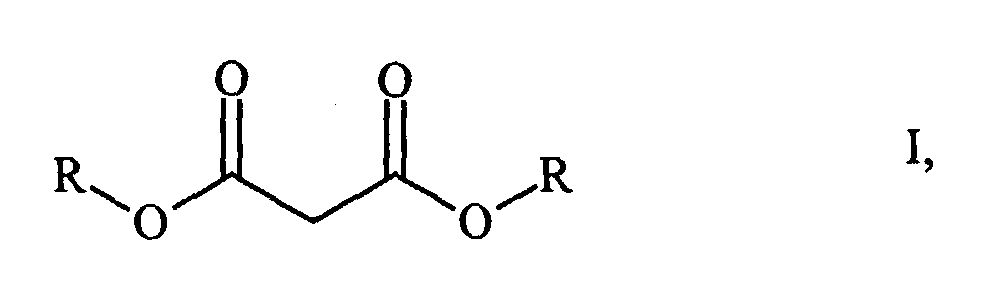
- the invention relates to a process for the preparation of malonic esters of the general formula wherein RC is 1-10 alkyl, C 3-10 alkenyl or arylC 1-4 alkyl.
- the two common processes for the production of malonic esters start from Derivatives of chloroacetic acid.
- Either an ester of chloroacetic acid is present in the presence a catalyst based on cobalt carbonyl with carbon monoxide and alcohol implemented (DE-A 23 59 963, DE-A 25 24 389) or a salt of chloroacetic acid is in reacted with cyanide to cyanoacetate in a first stage and then in a second stage converted into the malonic ester with alcohol.
- the latter method is because of the toxicity of hydrocyanic acid or cyanides and the large amounts of waste safety and ecologically questionable.
- the obvious method for Preparation of esters by direct esterification of the acid with the corresponding Alcohol is irrelevant in this case, but the reverse is malonic acid prepared by hydrolysis of malonic esters (or cyanoacetic acid).
- the object of the present invention was to provide an alternative route to malonic esters. According to the invention, this object is achieved by the method according to claim 1.
- alkali metal salts of malonic acid in the presence of water with halides of the general formula R ⁇ X (II), in which RC denotes 1-10 -alkyl, C 3-10 -alkenyl or aryl-C 1-4 -alkyl and X Is chlorine, bromine or iodine, to the corresponding malonic esters of the general formula wherein R has the meaning given above, can be implemented if a phase transfer catalyst is present.
- C 1-10 alkyl here and below means all linear or branched primary, secondary or tertiary alkyl groups with 1-10 carbon atoms, for example methyl, ethyl, propyl, isopropyl, butyl, isobutyl, sec- butyl, tert -Butyl, pentyl, isopentyl, neopentyl, hexyl, heptyl, octyl, nonyl, decyl etc.
- C 3-10 alkenyl means linear or branched alkylene groups with 3-10 carbon atoms, in particular those whose double bond is separated from the free valence by at least one saturated carbon atom, such as, for example, allyl, methallyl, 2-butenyl (crotyl), 3-butenyl, 2-pentenyl, etc.
- Aryl-C 1-4 alkyl is to be understood in particular as phenyl-substituted C 1-4 alkyl groups such as, for example, benzyl, phenethyl or 3-phenylpropyl, the phenyl group also being one or more identical or different substituents such as C 1-4 alkyl, C 1-4 alkoxy or halogen can carry.
- Phase transfer catalysts here and below are the usual ones for this To understand the purpose of the compounds used, in particular quaternary ammonium or Phosphonium salts.
- Disodium malonate is preferably used as the alkali salt of malonic acid.
- a chloride or bromide is preferably used as the halide R ⁇ X (II).
- the alkali salt of malonic acid is preferably used in the form of an aqueous solution.
- Those by catalytic oxidation of 1,3-propanediol are particularly preferred Solutions obtained in the presence of aqueous alkali hydroxide. The production of such Solutions are described for example in DE-A 41 07 986.
- a quaternary ammonium salt is preferably used as the phase transfer catalyst.
- halide is preferably chloride or bromide. Examples include tetrabutyl and terahexylammonium bromide and benzyltributylammonium chloride.
- the inventive method is advantageous at temperatures of 80-150 ° C. carried out, when using low-boiling halides (II) appropriately under elevated Print.
- an inert solvent which is immiscible with water is advantageously used.
- an inert solvent which is immiscible with water.
- less reactive aliphatic or aromatic chlorinated hydrocarbons such as chlorobenzene or ethers such as tert-butyl methyl ether are suitable.
Landscapes
- Chemical & Material Sciences (AREA)
- Organic Chemistry (AREA)
- Organic Low-Molecular-Weight Compounds And Preparation Thereof (AREA)
- Low-Molecular Organic Synthesis Reactions Using Catalysts (AREA)
Abstract
Description
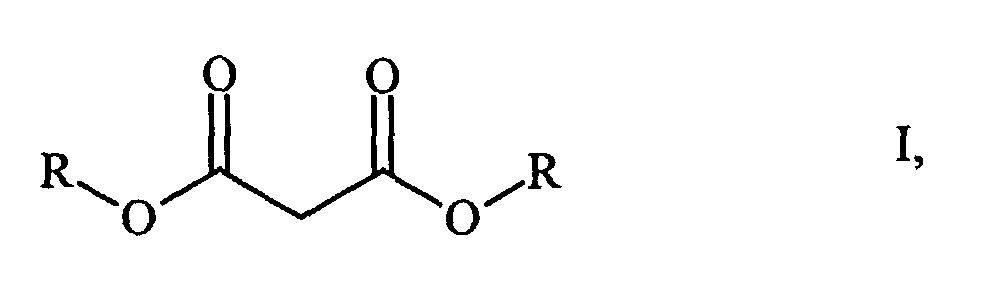
Erfindungsgemäss wird diese Aufgabe durch das Verfahren gemäss Patentanspruch 1 gelöst.

Unter C3-10-Alkenyl sind lineare oder verzweigte Alkylengruppen mit 3-10 Kohlenstoffatomen zu verstehen, insbesondere solche, deren Doppelbindung durch wenigstens ein gesättigtes Kohlenstoffatom von der freien Valenz getrennt ist, wie beispielsweise Allyl, Methallyl, 2-Butenyl (Crotyl), 3-Butenyl, 2-Pentenyl usw.
Unter Aryl-C1-4-alkyl sind insbesondere phenylsubstituierte C1-4-Alkylgruppen wie beispielsweise Benzyl, Phenethyl oder 3-Phenylpropyl zu verstehen, wobei die Phenylgruppe auch einen oder mehrere gleiche oder verschiedene Substituenten wie beispielsweise C1-4-Alkyl, C1-4-Alkoxy oder Halogen tragen kann.

| Beispiel Nr. | Katalysator | Temperatur [°C] | Reaktionszeit [h] | Ausbeute [%] |
| 5 | TBAB | 100 | 4 | 55 |
| 6 | TBAB | 100 | 6 | 56 |
| 7 | TBAB | 125 | 5 | 64 |
| 8 | TBAB | 150 | 4 | 6 |
| 9 | THAB | 100 | 4 | 58 |
| 10 | BTBACl | 100 | 4 | 39 |
| 11 | THAB | 125 | 4 | 67 |
| 12 | THAB | 100 | 4 | 21 |
Claims (7)
- Verfahren zur Herstellung von Malonsäureestern der allgemeinen Formelworin R C1-10-Alkyl, C3-10-Alkenyl oder Aryl-C1-4-alkyl bedeutet, dadurch gekennzeichnet, dass ein Alkalisalz der Malonsäure in Gegenwart von Wasser und eines Phasentransferkatalysators mit einem Halogenid der allgemeinen Formel R―X (II), worin R die oben genannte Bedeutung hat und X Chlor, Brom oder Iod ist, umgesetzt wird.
- Verfahren nach Anspruch 1, dadurch gekennzeichnet, dass als Alkalisalz der Malonsäure Dinatriummalonat eingesetzt wird.
- Verfahren nach Anspruch 1 oder 2, dadurch gekennzeichnet, dass X Chlor oder Brom ist.
- Verfahren nach einem der Ansprüche 1 bis 3, dadurch gekennzeichnet, dass das Alkalisalz der Malonsäure in wässriger Lösung eingesetzt wird.
- Verfahren nach Anspruch 4, dadurch gekennzeichnet, dass als wässrige Lösung des Alkalisalzes eine durch katalytische Oxidation von 1,3-Propandiol in Gegenwart von wässrigem Alkalihydroxid erhaltene Lösung eingesetzt wird.
- Verfahren nach einem der Ansprüche 1 bis 5, dadurch gekennzeichnet, dass als Phasentransferkatalysator ein quartäres Ammoniumsalz eingesetzt wird.
- Verfahren nach Anspruch 6, dadurch gekennzeichnet, dass als quartäres Ammoniumsalz ein Tetra-n-C4-10-alkylammonium-, Benzyltri-n-C1-8-alkylammonium- oder Methyltri-n-C4-10-alkylammoniumhalogenid, vorzugsweise Chlorid oder Bromid, eingesetzt wird.
Priority Applications (2)
| Application Number | Priority Date | Filing Date | Title |
|---|---|---|---|
| EP20000100310 EP1026148B1 (de) | 1999-01-11 | 2000-01-07 | Verfahren zur Herstellung von Malonsäureestern |
| TW89100796A TWI286542B (en) | 2000-01-07 | 2000-01-19 | Process for preparing malonic esters |
Applications Claiming Priority (3)
| Application Number | Priority Date | Filing Date | Title |
|---|---|---|---|
| EP99100411 | 1999-01-11 | ||
| EP99100411 | 1999-01-11 | ||
| EP20000100310 EP1026148B1 (de) | 1999-01-11 | 2000-01-07 | Verfahren zur Herstellung von Malonsäureestern |
Publications (2)
| Publication Number | Publication Date |
|---|---|
| EP1026148A1 true EP1026148A1 (de) | 2000-08-09 |
| EP1026148B1 EP1026148B1 (de) | 2003-05-07 |
Family
ID=26070409
Family Applications (1)
| Application Number | Title | Priority Date | Filing Date |
|---|---|---|---|
| EP20000100310 Expired - Lifetime EP1026148B1 (de) | 1999-01-11 | 2000-01-07 | Verfahren zur Herstellung von Malonsäureestern |
Country Status (1)
| Country | Link |
|---|---|
| EP (1) | EP1026148B1 (de) |
Citations (1)
| Publication number | Priority date | Publication date | Assignee | Title |
|---|---|---|---|---|
| EP0534817A1 (de) * | 1991-09-24 | 1993-03-31 | Rhone-Poulenc Chimie | Verfahren zur Veresterung von Salzen von Carbonsäuren |
-
2000
- 2000-01-07 EP EP20000100310 patent/EP1026148B1/de not_active Expired - Lifetime
Patent Citations (1)
| Publication number | Priority date | Publication date | Assignee | Title |
|---|---|---|---|---|
| EP0534817A1 (de) * | 1991-09-24 | 1993-03-31 | Rhone-Poulenc Chimie | Verfahren zur Veresterung von Salzen von Carbonsäuren |
Non-Patent Citations (1)
| Title |
|---|
| JAIME DE LA ZERDA ET AL.: "Selective Monoetherification and Monoesterification of Diols and Diacids under Phase-Transfer Conditions", TETRAHEDRON., vol. 45, no. 5, 1989, ELSEVIER SCIENCE PUBLISHERS, AMSTERDAM., NL, pages 1533 - 1536, XP002138240, ISSN: 0040-4020 * |
Also Published As
| Publication number | Publication date |
|---|---|
| EP1026148B1 (de) | 2003-05-07 |
Similar Documents
| Publication | Publication Date | Title |
|---|---|---|
| DE2212604B2 (de) | Verfahren zur herstellung von 2- halogenaethylphosphonsaeuren | |
| DE2630633C2 (de) | ||
| DE2015068C3 (de) | ||
| EP1026148B1 (de) | Verfahren zur Herstellung von Malonsäureestern | |
| DD206371A5 (de) | Verfahren zur herstellung eines 2s chiralen alkohols | |
| DE2838030A1 (de) | Verfahren zur herstellung von alkylenglykolen | |
| EP0087585A1 (de) | Verfahren zur Herstellung von 3-Alkoxi-acrylnitrilen | |
| EP0123187A2 (de) | Verfahren zur Herstellung von fluorierten Phenylessigsäureestern und neue fluorierte Trichlorethylbenzole | |
| DE2609015A1 (de) | Verfahren zur herstellung von benz (f)-2,5-oxazocinen | |
| DE2446686A1 (de) | Verfahren zur herstellung von aetherpolycarbonsaeuren | |
| EP1309538B1 (de) | Verfahren zur herstellung von trifluorethoxysubstituierten benzoesäuren | |
| DE60101391T2 (de) | Verfahren zum Herstellen von Pivaloylessigsäureester | |
| EP1028105B1 (de) | Verfahren zur Herstellung von Cyanessigsäureestern | |
| EP0041923B1 (de) | Verfahren zur Herstellung von N-(1'-Alkoxycarbonyläthyl)-2,6-dialkylanilinen | |
| CH644093A5 (de) | Verfahren zur herstellung von 2,2-dihalogenvinyl-substituierten cyclopropancarbonsaeure-estern. | |
| EP1019356B1 (de) | Verfahren zur herstellung von 3-hydroxy-2-methylbenzoesäure | |
| EP0041921B1 (de) | Verfahren zur Herstellung von N-(1'-Alkoxycarbonyläthyl)-2,6-dialkylanilinen | |
| EP0035635B1 (de) | Verfahren zur Herstellung von Trimethylbenzochinon | |
| EP1152005B1 (de) | Verfahren zur Herstellung von substituierten 10-Chlor-phenoxaphosphinen oder 10-Brom-phenoxaphosphinen | |
| DE10333852A1 (de) | Verfahren zur Monoalkylierung C-H-acider Methylengruppen | |
| DE1243677B (de) | Verfahren zur Herstellung von Sulfonsaeureestern | |
| EP0226119B1 (de) | Neue Halogen-tetrafluorpropionsäure, Verfahren zu ihrer Herstellung und ihre Verwendung | |
| DE3731424A1 (de) | Verfahren zur herstellung von phosphanen | |
| EP0238850B1 (de) | Verfahren zur Herstellung von Diethylenglykoldialkylethern | |
| DE2653446C2 (de) | Verfahren zur Herstellung von Pyrogallolverbindungen |
Legal Events
| Date | Code | Title | Description |
|---|---|---|---|
| PUAI | Public reference made under article 153(3) epc to a published international application that has entered the european phase |
Free format text: ORIGINAL CODE: 0009012 |
|
| AK | Designated contracting states |
Kind code of ref document: A1 Designated state(s): AT BE CH CY DE DK ES FI FR GB GR IE IT LI LU MC NL PT SE |
|
| AX | Request for extension of the european patent |
Free format text: AL;LT;LV;MK;RO;SI |
|
| 17P | Request for examination filed |
Effective date: 20010122 |
|
| AKX | Designation fees paid |
Free format text: AT BE CH CY DE DK ES FI FR GB GR IE IT LI LU MC NL PT SE |
|
| 17Q | First examination report despatched |
Effective date: 20010924 |
|
| GRAH | Despatch of communication of intention to grant a patent |
Free format text: ORIGINAL CODE: EPIDOS IGRA |
|
| GRAH | Despatch of communication of intention to grant a patent |
Free format text: ORIGINAL CODE: EPIDOS IGRA |
|
| GRAA | (expected) grant |
Free format text: ORIGINAL CODE: 0009210 |
|
| AK | Designated contracting states |
Designated state(s): AT BE CH CY DE DK ES FI FR GB GR IE IT LI LU MC NL PT SE |
|
| PG25 | Lapsed in a contracting state [announced via postgrant information from national office to epo] |
Ref country code: CY Free format text: LAPSE BECAUSE OF FAILURE TO SUBMIT A TRANSLATION OF THE DESCRIPTION OR TO PAY THE FEE WITHIN THE PRESCRIBED TIME-LIMIT Effective date: 20030507 Ref country code: FI Free format text: LAPSE BECAUSE OF FAILURE TO SUBMIT A TRANSLATION OF THE DESCRIPTION OR TO PAY THE FEE WITHIN THE PRESCRIBED TIME-LIMIT Effective date: 20030507 |
|
| REG | Reference to a national code |
Ref country code: GB Ref legal event code: FG4D Free format text: NOT ENGLISH |
|
| REG | Reference to a national code |
Ref country code: CH Ref legal event code: EP |
|
| REG | Reference to a national code |
Ref country code: IE Ref legal event code: FG4D Free format text: GERMAN |
|
| REF | Corresponds to: |
Ref document number: 50002027 Country of ref document: DE Date of ref document: 20030612 Kind code of ref document: P |
|
| PG25 | Lapsed in a contracting state [announced via postgrant information from national office to epo] |
Ref country code: SE Free format text: LAPSE BECAUSE OF FAILURE TO SUBMIT A TRANSLATION OF THE DESCRIPTION OR TO PAY THE FEE WITHIN THE PRESCRIBED TIME-LIMIT Effective date: 20030807 Ref country code: DK Free format text: LAPSE BECAUSE OF FAILURE TO SUBMIT A TRANSLATION OF THE DESCRIPTION OR TO PAY THE FEE WITHIN THE PRESCRIBED TIME-LIMIT Effective date: 20030807 Ref country code: GR Free format text: LAPSE BECAUSE OF FAILURE TO SUBMIT A TRANSLATION OF THE DESCRIPTION OR TO PAY THE FEE WITHIN THE PRESCRIBED TIME-LIMIT Effective date: 20030807 |
|
| REG | Reference to a national code |
Ref country code: PT Ref legal event code: SC4A Free format text: AVAILABILITY OF NATIONAL TRANSLATION Effective date: 20030807 |
|
| GBT | Gb: translation of ep patent filed (gb section 77(6)(a)/1977) | ||
| PG25 | Lapsed in a contracting state [announced via postgrant information from national office to epo] |
Ref country code: LU Free format text: LAPSE BECAUSE OF NON-PAYMENT OF DUE FEES Effective date: 20040107 |
|
| PG25 | Lapsed in a contracting state [announced via postgrant information from national office to epo] |
Ref country code: MC Free format text: LAPSE BECAUSE OF NON-PAYMENT OF DUE FEES Effective date: 20040131 |
|
| REG | Reference to a national code |
Ref country code: ES Ref legal event code: FG2A Ref document number: 2199100 Country of ref document: ES Kind code of ref document: T3 |
|
| ET | Fr: translation filed | ||
| PLBE | No opposition filed within time limit |
Free format text: ORIGINAL CODE: 0009261 |
|
| STAA | Information on the status of an ep patent application or granted ep patent |
Free format text: STATUS: NO OPPOSITION FILED WITHIN TIME LIMIT |
|
| 26N | No opposition filed |
Effective date: 20040210 |
|
| PGFP | Annual fee paid to national office [announced via postgrant information from national office to epo] |
Ref country code: CH Payment date: 20080117 Year of fee payment: 9 Ref country code: ES Payment date: 20080123 Year of fee payment: 9 |
|
| PGFP | Annual fee paid to national office [announced via postgrant information from national office to epo] |
Ref country code: DE Payment date: 20080116 Year of fee payment: 9 Ref country code: GB Payment date: 20080109 Year of fee payment: 9 Ref country code: IE Payment date: 20080118 Year of fee payment: 9 Ref country code: IT Payment date: 20080117 Year of fee payment: 9 Ref country code: NL Payment date: 20071219 Year of fee payment: 9 Ref country code: PT Payment date: 20071218 Year of fee payment: 9 |
|
| PGFP | Annual fee paid to national office [announced via postgrant information from national office to epo] |
Ref country code: AT Payment date: 20080116 Year of fee payment: 9 |
|
| PGFP | Annual fee paid to national office [announced via postgrant information from national office to epo] |
Ref country code: FR Payment date: 20080111 Year of fee payment: 9 |
|
| PGFP | Annual fee paid to national office [announced via postgrant information from national office to epo] |
Ref country code: BE Payment date: 20080222 Year of fee payment: 9 |
|
| REG | Reference to a national code |
Ref country code: PT Ref legal event code: MM4A Free format text: LAPSE DUE TO NON-PAYMENT OF FEES Effective date: 20090707 |
|
| REG | Reference to a national code |
Ref country code: CH Ref legal event code: PL |
|
| GBPC | Gb: european patent ceased through non-payment of renewal fee |
Effective date: 20090107 |
|
| NLV4 | Nl: lapsed or anulled due to non-payment of the annual fee |
Effective date: 20090801 |
|
| REG | Reference to a national code |
Ref country code: IE Ref legal event code: MM4A |
|
| PG25 | Lapsed in a contracting state [announced via postgrant information from national office to epo] |
Ref country code: PT Free format text: LAPSE BECAUSE OF NON-PAYMENT OF DUE FEES Effective date: 20090707 Ref country code: AT Free format text: LAPSE BECAUSE OF NON-PAYMENT OF DUE FEES Effective date: 20090107 Ref country code: CH Free format text: LAPSE BECAUSE OF NON-PAYMENT OF DUE FEES Effective date: 20090131 Ref country code: DE Free format text: LAPSE BECAUSE OF NON-PAYMENT OF DUE FEES Effective date: 20090801 Ref country code: LI Free format text: LAPSE BECAUSE OF NON-PAYMENT OF DUE FEES Effective date: 20090131 |
|
| REG | Reference to a national code |
Ref country code: FR Ref legal event code: ST Effective date: 20091030 |
|
| PG25 | Lapsed in a contracting state [announced via postgrant information from national office to epo] |
Ref country code: GB Free format text: LAPSE BECAUSE OF NON-PAYMENT OF DUE FEES Effective date: 20090107 Ref country code: NL Free format text: LAPSE BECAUSE OF NON-PAYMENT OF DUE FEES Effective date: 20090801 |
|
| PG25 | Lapsed in a contracting state [announced via postgrant information from national office to epo] |
Ref country code: IE Free format text: LAPSE BECAUSE OF NON-PAYMENT OF DUE FEES Effective date: 20090107 |
|
| PG25 | Lapsed in a contracting state [announced via postgrant information from national office to epo] |
Ref country code: BE Free format text: LAPSE BECAUSE OF NON-PAYMENT OF DUE FEES Effective date: 20090131 |
|
| REG | Reference to a national code |
Ref country code: ES Ref legal event code: FD2A Effective date: 20090108 |
|
| PG25 | Lapsed in a contracting state [announced via postgrant information from national office to epo] |
Ref country code: FR Free format text: LAPSE BECAUSE OF NON-PAYMENT OF DUE FEES Effective date: 20090202 Ref country code: ES Free format text: LAPSE BECAUSE OF NON-PAYMENT OF DUE FEES Effective date: 20090108 |
|
| PG25 | Lapsed in a contracting state [announced via postgrant information from national office to epo] |
Ref country code: IT Free format text: LAPSE BECAUSE OF NON-PAYMENT OF DUE FEES Effective date: 20090107 |