EP1025470B1 - Verfahren zur ermittlung realisierbarer konfigurationen von bearbeitungsanlagen - Google Patents
Verfahren zur ermittlung realisierbarer konfigurationen von bearbeitungsanlagen Download PDFInfo
- Publication number
- EP1025470B1 EP1025470B1 EP98962189A EP98962189A EP1025470B1 EP 1025470 B1 EP1025470 B1 EP 1025470B1 EP 98962189 A EP98962189 A EP 98962189A EP 98962189 A EP98962189 A EP 98962189A EP 1025470 B1 EP1025470 B1 EP 1025470B1
- Authority
- EP
- European Patent Office
- Prior art keywords
- machining
- processing
- individual
- modules
- plant
- Prior art date
- Legal status (The legal status is an assumption and is not a legal conclusion. Google has not performed a legal analysis and makes no representation as to the accuracy of the status listed.)
- Expired - Lifetime
Links
Images
Classifications
-
- G—PHYSICS
- G05—CONTROLLING; REGULATING
- G05B—CONTROL OR REGULATING SYSTEMS IN GENERAL; FUNCTIONAL ELEMENTS OF SUCH SYSTEMS; MONITORING OR TESTING ARRANGEMENTS FOR SUCH SYSTEMS OR ELEMENTS
- G05B19/00—Program-control systems
- G05B19/02—Program-control systems electric
- G05B19/418—Total factory control, i.e. centrally controlling a plurality of machines, e.g. direct or distributed numerical control [DNC], flexible manufacturing systems [FMS], integrated manufacturing systems [IMS] or computer integrated manufacturing [CIM]
-
- H—ELECTRICITY
- H10—SEMICONDUCTOR DEVICES; ELECTRIC SOLID-STATE DEVICES NOT OTHERWISE PROVIDED FOR
- H10P—GENERIC PROCESSES OR APPARATUS FOR THE MANUFACTURE OR TREATMENT OF DEVICES COVERED BY CLASS H10
- H10P74/00—Testing or measuring during manufacture or treatment of wafers, substrates or devices
- H10P74/23—Testing or measuring during manufacture or treatment of wafers, substrates or devices characterised by multiple measurements, corrections, marking or sorting processes
-
- G—PHYSICS
- G05—CONTROLLING; REGULATING
- G05B—CONTROL OR REGULATING SYSTEMS IN GENERAL; FUNCTIONAL ELEMENTS OF SUCH SYSTEMS; MONITORING OR TESTING ARRANGEMENTS FOR SUCH SYSTEMS OR ELEMENTS
- G05B19/00—Program-control systems
- G05B19/02—Program-control systems electric
- G05B19/418—Total factory control, i.e. centrally controlling a plurality of machines, e.g. direct or distributed numerical control [DNC], flexible manufacturing systems [FMS], integrated manufacturing systems [IMS] or computer integrated manufacturing [CIM]
- G05B19/41865—Total factory control, i.e. centrally controlling a plurality of machines, e.g. direct or distributed numerical control [DNC], flexible manufacturing systems [FMS], integrated manufacturing systems [IMS] or computer integrated manufacturing [CIM] characterised by job scheduling, process planning, material flow
-
- Y—GENERAL TAGGING OF NEW TECHNOLOGICAL DEVELOPMENTS; GENERAL TAGGING OF CROSS-SECTIONAL TECHNOLOGIES SPANNING OVER SEVERAL SECTIONS OF THE IPC; TECHNICAL SUBJECTS COVERED BY FORMER USPC CROSS-REFERENCE ART COLLECTIONS [XRACs] AND DIGESTS
- Y02—TECHNOLOGIES OR APPLICATIONS FOR MITIGATION OR ADAPTATION AGAINST CLIMATE CHANGE
- Y02P—CLIMATE CHANGE MITIGATION TECHNOLOGIES IN THE PRODUCTION OR PROCESSING OF GOODS
- Y02P90/00—Enabling technologies with a potential contribution to greenhouse gas [GHG] emissions mitigation
- Y02P90/02—Total factory control, e.g. smart factories, flexible manufacturing systems [FMS] or integrated manufacturing systems [IMS]
Definitions
- the present invention relates to control methods a large number of processing plants, each of which has several Have processing modules for the production of at least one Product.
- Modern industrial production is generally through one characterized high degree of automation.
- high degree of automation in the semiconductor industry indispensable to be internationally competitive to be able to.
- the processing systems used to process products can be single modules with which at any time only one processing step can be carried out. These individual modules can then be controlled independently of one another can be described, for example, in US 5,444,632.
- the product to be processed must then at least a part of the Iterate through modules in a predetermined order processing provided by the respective processing system to experience.
- the modules of a processing system can but also be selected so that at least some of the modules carry out the same processing steps can. This has the advantage that if one module fails this module can be replaced by a corresponding module can without the entire processing system failing.
- the cost of such automated production will be influenced to a large extent by the question of how well and the manufacturing process can be efficiently controlled and planned can.
- To control the entire manufacturing process of a specific product will first create a work plan for that particular one Product created.
- one A variety of process goals are defined, with the individual process goals through one or more individual process instructions (EPA).
- a single process instruction calls usually the processing plant on which the processing of the product and it contains about it the exact work program (e.g. an "NC program"), that is to be processed by the processing system.
- the Work plan thus consists of a long series of individual process instructions, through the editing of each Product is set.
- This sequence of steps enables the different Processing times, which are due to the failure / blocking one or more processing modules in a processing system for a specific individual process instruction, in production control or production planning become. Accordingly, the production control leads to a more efficient and cheaper production.
- information is provided in the method according to claim 1 determined which individual process instructions can be carried out simultaneously by a processing system can.
- a processing system When processing a single process instruction a processing system, the situation may arise that not all processing modules of the processing system for the Processing of these individual process instructions are required. Therefore could the processing modules not required for processing further individual process instructions can be used.
- a work plan is created for the production of the product, which details the manufacturing process of the product Process goals are structured, with the individual process goals often realized by one or more individual process instructions can be.
- the manufacturing process of the product into individual process goals structured by one or more individual process instructions can be realized, and according to the invention such Process objectives provided by either one or more Individual process instructions through which a processing system is selected, or by several individual process instructions, through which at least two different processing plants be selected, are feasible.
- the processing plants and the process objectives are common so coordinated that the result of a processing system corresponds to a process goal.
- the process goal realized by one or more individual process instructions, through which only one corresponding processing system is selected. If individual failures occur Processing modules in a processing system, so can some process goals on this processing system are not more can be achieved since the processing steps necessary for these process goals only from the failed processing modules can be processed. However, there are more Machining systems available, the processing modules straight could take over these processing steps, that's it
- the inventive method is able to achieve the process goal to implement one or more new individual process instructions, through which the part of the process goal, which the failed Processing modules concerns, on an additional Processing system can be carried out. To this In this way, the non-failed processing modules of one Processing system continues to realize the process goal be used. In many cases, this can be caused by the Failure of the processing modules increases the throughput time be significantly reduced.
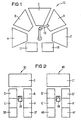
- the processing system 10 has five processing modules A, B, C, D and E, so-called Process chambers, in the CVD process (chemical vapor deposition) for layer generation on a semiconductor substrate can be carried out. Furthermore owns the processing system 10 two loading and unloading stations 17th and 18, through which semiconductor wafers for processing in the Machining system 10 introduced and after processing the processing system 10 can be guided out.
- the Transport of the semiconductor wafers within the processing system 10 is carried out by a robot arm 19, which in the Center of the processing system 10 is arranged.
- EPA single process instruction
- the individual process instruction names the processing system the certain processing steps ("program to be processed") should be carried out. Furthermore, the single process instruction a statement of how long the processing system to process these processing steps needs if all necessary processing modules A, B, C, D (in this example, since module E is not required) and the robot arm 19 and the loading and unloading stations are fully functional are. Furthermore, the individual process instruction names the processing modules of the selected processing system and finally, possible configurations of the processing modules provided for the processing of the processing steps.
- the number "0" in the processing module E indicates that this Processing module in the present single process instruction is not needed.
- the number "1" for the processing modules A and C indicate that for the present single process instruction these processing modules are considered equivalent become. That is, that of the processing module A processing steps to be carried out also by the processing module C (and vice versa) can be performed.
- Corresponding gives the number "2" in the processing modules B and D indicates that for the present individual process instruction these Processing modules are considered to be equivalent.
- On the other hand can edit modules marked with the number "1” are not the tasks of the editing modules with the number "2" are provided. Machining modules with one common digit somt forms a group, each of Group at least one processing module must be available, to be able to execute the single process instruction.
- K 1 - K 9 K 1 K 2 K 3 K 4 K 5 K 6 K 7 K 8 K 9 Module A + + + + + - - - + + Module B + + - + + + - + + Module C + - - - + + + + + Module D + + + + - + + + - + - Module E - - - - - - - - - - - - - -
- the sign "+” means that the respective processing module used for processing the individual process instructions becomes.
- the symbol “-” means that the respective processing module for processing the individual process instructions is not or cannot be used (technical downtime or blocking the process).
- the time periods associated with the individual configurations (K 1 - K 9) of processing the product are provided in the processing system. This can be seen, for example, from the following table: K 1 K 2 K 3 K 4 K 5 K 6 K 7 K 8 K 9 Time / min 33 50 59 59 50 59 59 44 44
- extension factors could also be used compared to the standard time of 33 minutes become.
- the time periods assigned to the individual configurations can be experimental during test runs of the processing system or by simulating the processing system be calculated.
- Procedure Information about the status of the processing modules provided in the processing plants.
- the sign “UP” means that the respective processing module available for processing the individual process instructions is.
- the sign “DOWN” means that the respective Processing module for processing the individual process instructions for technical reasons (maintenance, repair, %) or for process reasons (particles, unstable processes, %) not is available.
- the configurations of the processing system that can be implemented according to the status of the processing modules are determined.
- the following configurations of the processing system can be implemented: feasible K 4 K 7 K 9 Time / min 59 59 44
- Table 4 also contains those that can be implemented with the individual ones Configurations related processing times of the product in the processing system.
- the realizable configurations of the processing system and those associated with each configuration Duration of processing the product in the processing system are the basis for optimization algorithms the most efficient possible order of those to be processed Individual process instructions on the individual processing plants to be defined (production control).
- the realizable configurations of the processing system and those associated with each configuration Duration of processing the product in the processing system can also be used to work with a predetermined sequence of the individual process instructions to be processed lead times on the individual processing systems for individual products and production capacities to be determined (production planning).
- processing module D and E are not used. However, this has different causes. Processing module D is not used because, for example due to repairs, is not available at all. Processing module E is not used because, although it would be available, for this single process instruction is not needed. This information can now be used to analyze utilization losses lead for production planning. To this Way can be found, for example, that for the intended Products the processing system 10 a fifth processing module E not needed, so the processing module E removed from the processing system 10 and into another Processing plant in which it is used more often, could be installed.
- the first individual process instruction contains the following data: EPA number 105 Machining system number 10 program to be processed Sequence 3 standard time 40 min processing modules A, B, C, D, E configuration 1, 2, 2, 0, 0
- the second single process instruction (EPA 2) is defined by the following data: EPA number 110 Machining system number 10 program to be processed Sequence 6 standard time 45 min processing modules A, B, C, D, E configuration 0, 0, 1, 2, 2
- Procedural information provided about which Single process instructions simultaneously from one processing system can be executed.
- EPA 1 and EPA 2 can work together on the processing system 10 are executed. Since in the invention Procedure Information about the status of the processing modules are provided in the processing plants possible to decide whether the two single process instructions can actually be run simultaneously.
- the process becomes a work schedule for the production of a product created the manufacturing process of the product divided into individual process goals, with the individual process goals realized by one or more individual process instructions become. It is particularly preferred if process goals are provided, both by one or more Individual process instructions through which a processing system is selected, as well as by several individual process instructions, through which at least two different processing plants can be selected, can be realized. This will be explained below with reference to FIG. 2.
- FIG. 2 shows a schematic representation of a processing area ("Bay"), the two processing systems 30 and 40 for generating resist masks on a semiconductor substrate.
- the processing systems 30 and 40 also each have five processing modules A, B, C, D and E or A ', B', C ', D' and E ', the modules A and B or A' and B 'of the coating of the semiconductor substrate, the modules C and C 'of the exposure and the modules D and E or D 'and E' of the development of the exposed Serve lacquers.
- the processing plants have 30 and 40 two loading and unloading stations 37 and 38 or 47 and 48, through which semiconductor wafers for processing introduced into the processing systems 30 and 40 and after processing from processing systems 30 and 40 can be led out.
- the transportation of semiconductor wafers within the processing plants 30 and 40 respectively carried out by a robot arm 39 or 49.
- processing modules A and B are maintenance-related not available, the single process instruction cannot be executed or the entire processing system 30 can not be used.
- lacquering EPA number 121 Machining system number 40 program to be processed Sequence 12 ("coating") standard time 40 min processing modules A ', B', C ', D', E ' configuration 1, 1, 0, 0, 0
- Exposure and development EPA number 122 Machining system number 30 program to be processed Sequence 13 ("Exposure and Development") standard time 200 min processing modules A, B, C, D, E configuration 0, 0, 1, 2, 2
- the individual process instruction "lacquering” can now be carried out simultaneously with the usual single process instruction “creation of a paint mask” are processed on the processing system 40.
- the method according to the invention therefore makes it simple Possible way, processing modules from a processing system another processing system for further processing to make available and the resulting effects to consider the overall process.
Landscapes
- Engineering & Computer Science (AREA)
- General Engineering & Computer Science (AREA)
- Manufacturing & Machinery (AREA)
- Quality & Reliability (AREA)
- Physics & Mathematics (AREA)
- General Physics & Mathematics (AREA)
- Automation & Control Theory (AREA)
- General Factory Administration (AREA)
- Management, Administration, Business Operations System, And Electronic Commerce (AREA)
Description
- zu dem Produkt wird eine Folge von Einzelprozeßanweisungen ermittelt, durch welche jeweils eine bestimmte Bearbeitungsanlage ausgewählt wird und die von der Bearbeitungsanlage abzuarbeitenden Bearbeitungsschritte definiert werden,
- entsprechend den abzuarbeitenden Bearbeitungsschritten werden mögliche Konfigurationen der Bearbeitungsanlage und die mit den einzelnen Konfigurationen verbundenen Zeitdauern der Bearbeitung des Produkts in der Bearbeitunganlage ermittelt,
- Informationen zu dem Zustand der Bearbeitungsmodule in den Bearbeitungsanlagen werden ermittelt,
- aus den Informationen zu dem Zustand der Bearbeitungsmodule und den gemäß den abzuarbeitenden Bearbeitungsschritten möglichen Konfigurationen der Bearbeitungsanlage werden die gemäß dem Zustand der Bearbeitungsmodule realisierbaren Konfigurationen der Bearbeitungsanlage und die mit den einzelnen Konfigurationen verbundenen Zeitdauern der Bearbeitung des Produkts in der Bearbeitungan lage ermittelt,
- auf der Grundlage der realisierbaren Konfigurationen und der mit den einzelnen Konfigurationen verbundenen Zeitdauern wird in einem Optimierungsalgorithmus eine Reihenfolge der abzuarbeitenden Einzelprozeßanweisungen in den einzelnen Bearbeitungsanlagen festgelegt.
| Nummer der EPA | 101 |
| Nummer der Bearbeitungsanlage | 10 |
| abzuarbeitendes Programm | Sequence 1 |
| Standardzeit | 33 min |
| Bearbeitungsmodule | A, B, C, D, E |
| Konfiguration | 1, 2, 1, 2, 0 |
| K 1 | K 2 | K 3 | K 4 | K 5 | K 6 | K 7 | K 8 | K 9 | |
| Modul A | + | + | + | + | - | - | - | + | + |
| Modul B | + | + | - | + | + | - | + | - | + |
| Modul C | + | - | - | - | + | + | + | + | + |
| Modul D | + | + | + | - | + | + | - | + | - |
| Modul E | - | - | - | - | - | - | - | - | - |
| K 1 | K 2 | K 3 | K 4 | K 5 | K 6 | K 7 | K 8 | K 9 | |
| Zeit/min | 33 | 50 | 59 | 59 | 50 | 59 | 59 | 44 | 44 |
| Modul A | Modul B | Modul C | Modul D | Modul E | |
| Zustand | UP | UP | UP | DOWN | UP |
| realisierbar | K 4 | K 7 | K 9 |
| Zeit/min | 59 | 59 | 44 |
| Nummer der EPA | 105 |
| Nummer der Bearbeitungsanlage | 10 |
| abzuarbeitendes Programm | Sequence 3 |
| Standardzeit | 40 min |
| Bearbeitungsmodule | A, B, C, D, E |
| Konfiguration | 1, 2, 2, 0, 0 |
| Nummer der EPA | 110 |
| Nummer der Bearbeitungsanlage | 10 |
| abzuarbeitendes Programm | Sequence 6 |
| Standardzeit | 45 min |
| Bearbeitungsmodule | A, B, C, D, E |
| Konfiguration | 0, 0, 1, 2, 2 |
| Modul A | Modul B | Modul C | Modul D | Modul E | |
| Zustand | UP | UP | UP | DOWN | UP |
| EPA 1 | EPA 2 | |
| Modul A | + | - |
| Modul B | + | - |
| Modul C | - | + |
| Modul D | - | - |
| Modul E E | - | + |
| Zeit/min | 40 | 45 |
| Nummer der EPA | 130 |
| Nummer der Bearbeitungsanlage | 30 |
| abzuarbeitendes Programm | Sequence 1 |
| Standardzeit | 240 min |
| Bearbeitungsmodule | A, B, C, D, E |
| Konfiguration | 1, 1, 2, 3, 3 |
| Nummer der EPA | 121 |
| Nummer der Bearbeitungsanlage | 40 |
| abzuarbeitendes Programm | Sequence 12 ("Belackung") |
| Standardzeit | 40 min |
| Bearbeitungsmodule | A', B', C', D', E' |
| Konfiguration | 1, 1, 0, 0, 0 |
| Nummer der EPA | 122 |
| Nummer der Bearbeitungsanlage | 30 |
| abzuarbeitendes Programm | Sequence 13 ("Belichtung und Entwicklung") |
| Standardzeit | 200 min |
| Bearbeitungsmodule | A, B, C, D, E |
| Konfiguration | 0, 0, 1, 2, 2 |
Claims (5)
- Verfahren zur Steuerung einer Vielzahl von Bearbeitungsanlagen, welche jeweils mehrere Bearbeitungsmodule aufweisen, zur Produktion zumindest eines Produkts, mit den Schritten:wobei Informationen darüber ermittelt werden, welche Einzelprozeßanweisungen gleichzeitig von einer Bearbeitungsanlage ausgeführt werden können.zu dem Produkt wird eine Folge von Einzelprozeßanweisungen ermittelt, durch welche jeweils eine bestimmte Bearbeitungsanlage ausgewählt wird und die von der Bearbeitungsanlage abzuarbeitenden Bearbeitungsschritte definiert werden,entsprechend den abzuarbeitenden Bearbeitungsschritten werden mögliche Konfigurationen der Bearbeitungsanlage und die mit den einzelnen Konfigurationen verbundenen Zeitdauern der Bearbeitung des Produkts in der Bearbeitunganlage ermittelt,Informationen zu dem momentanen, realen Zustand der Bearbeitungsmodule in den Bearbeitungsanlagen werden ermittelt,aus den Informationen zu dem Zustand der Bearbeitungsmodule und den gemäß den abzuarbeitenden Bearbeitungsschritten möglichen Konfigurationen der Bearbeitungsanlage werden die gemäß dem Zustand der Bearbeitungsmodule realisierbaren Konfigurationen der Bearbeitungsanlage und die mit den einzelnen Konfigurationen verbundenen Zeitdauern der Bearbeitung des Produkts in der Bearbeitunganlage ermittelt,auf der Grundlage der realisierbaren Konfigurationen und der mit den einzelnen Konfigurationen verbundenen Zeitdauern wird in einem Optimierungsalgorithmus eine Reihenfolge der abzuarbeitenden Einzelprozeßanweisungen in den einzelnen Bearbeitungsanlagen festgelegt,
- Verfahren nach Anspruch 1,
dadurch gekennzeichnet, daß kombinierbare Einzelprozeßanweisungen explizit als solche gekennzeichnet werden. - Verfahren zur Steuerung einer Vielzahl von Bearbeitungsanlagen, welche jeweils mehrere Bearbeitungsmodule aufweisen, zur Produktion zumindest eines Produkts, mit den Schritten:wobei der Herstellungsprozeß des Produkts in einzelne Prozeßziele gegliedert wird, die durch eine oder mehrere Einzelprozeßanweisungen realisiert werden,zu dem Produkt wird eine Folge von Einzelprozeßanweisungen ermittelt, durch welche jeweils eine bestimmte Bearbeitungsanlage ausgewählt wird und die von der Bearbeitungsanlage abzuarbeitenden Bearbeitungsschritte definiert werden,entsprechend den abzuarbeitenden Bearbeitungsschritten werden mögliche Konfigurationen der Bearbeitungsanlage und die mit den einzelnen Konfigurationen verbundenen Zeitdauern der Bearbeitung des Produkts in der Bearbeitunganlage ermittelt,Informationen zu dem momentanen, realen Zustand der Bearbeitungsmodule in den Bearbeitungsanlagen werden ermittelt,aus den Informationen zu dem Zustand der Bearbeitungsmodule und den gemäß den abzuarbeitenden Bearbeitungsschritten möglichen Konfigurationen der Bearbeitungsanlage werden die gemäß dem Zustand der Bearbeitungsmodule realisierbaren Konfigurationen der Bearbeitungsanlage und die mit den einzelnen Konfigurationen verbundenen Zeitdauern der Bearbeitung des Produkts in der Bearbeitunganlage ermittelt,auf der Grundlage der realisierbaren Konfigurationen und der mit den einzelnen Konfigurationen verbundenen Zeitdauern wird in einem Optimierungsalgorithmus eine Reihenfolge der abzuarbeitenden Einzelprozeßanweisungen in den einzelnen Bearbeitungsanlagen festgelegt,
und wobei solche Prozeßziele vorgesehen werden, die entweder durch eine oder mehrere Einzelprozeßanweisungen, durch welche eine Bearbeitungsanlage ausgewählt wird, oder durch mehrere Einzelprozeßanweisungen, durch welche zumindest zwei unterschiedliche Bearbeitungsanlagen ausgewählt werden, realisierbar sind. - Verfahren nach einem der Ansprüche 1 bis 3,
dadurch gekennzeichnet, daß berücksichtigt wird, daß ein erster Bearbeitungsschritt einen zweiten negativ beeinflussen kann, auch wenn der erste und der zweite Bearbeitungsschritt in unterschiedlichen Bearbeitungsmodulen durchgeführt werden. - Verfahren nach einem der Ansprüche 1 bis 4,
dadurch gekennzeichnet, daß die Zeitdauer, in der ein Bearbeitungsmodul nicht benutzt wird, festgehalten wird, wobei zwischen einem Ausfall des Bearbeitungsmoduls aufgrund von technischen Ursachen und einer Nichtbenutzung des Bearbeitungsmoduls aufgrund der gerade in der Bearbeitungsanlage abgearbeitenden Einzelprozeßanweisung unterschieden wird.
Applications Claiming Priority (3)
| Application Number | Priority Date | Filing Date | Title |
|---|---|---|---|
| DE19747574 | 1997-10-28 | ||
| DE19747574A DE19747574A1 (de) | 1997-10-28 | 1997-10-28 | Verfahren zur Ermittlung realisierbarer Konfigurationen von Bearbeitungsanlagen |
| PCT/DE1998/003159 WO1999022279A2 (de) | 1997-10-28 | 1998-10-28 | Verfahren zur ermittlung realisierbarer konfigurationen von bearbeitungsanlagen |
Publications (2)
| Publication Number | Publication Date |
|---|---|
| EP1025470A2 EP1025470A2 (de) | 2000-08-09 |
| EP1025470B1 true EP1025470B1 (de) | 2002-07-03 |
Family
ID=7846865
Family Applications (1)
| Application Number | Title | Priority Date | Filing Date |
|---|---|---|---|
| EP98962189A Expired - Lifetime EP1025470B1 (de) | 1997-10-28 | 1998-10-28 | Verfahren zur ermittlung realisierbarer konfigurationen von bearbeitungsanlagen |
Country Status (6)
| Country | Link |
|---|---|
| EP (1) | EP1025470B1 (de) |
| JP (1) | JP2001521237A (de) |
| KR (1) | KR20010031549A (de) |
| CN (1) | CN1161676C (de) |
| DE (2) | DE19747574A1 (de) |
| WO (1) | WO1999022279A2 (de) |
Cited By (1)
| Publication number | Priority date | Publication date | Assignee | Title |
|---|---|---|---|---|
| DE102006025407A1 (de) * | 2006-05-31 | 2007-12-06 | Advanced Micro Devices, Inc., Sunnyvale | Verfahren und System zum dynamischen Ändern der Transportsequenz in einer Cluster-Anlage |
Families Citing this family (11)
| Publication number | Priority date | Publication date | Assignee | Title |
|---|---|---|---|---|
| US6456894B1 (en) * | 1999-06-01 | 2002-09-24 | Applied Materials, Inc. | Semiconductor processing techniques |
| DE19948139A1 (de) * | 1999-10-07 | 2001-04-12 | Volkswagen Ag | Flexibles Fertigungssystem |
| DE10062471A1 (de) | 2000-12-14 | 2002-07-04 | Witzig & Frank Gmbh | Bearbeitungseinrichtung und Maschinensteuerprogramm |
| US7337019B2 (en) * | 2001-07-16 | 2008-02-26 | Applied Materials, Inc. | Integration of fault detection with run-to-run control |
| US7016753B2 (en) * | 2001-10-30 | 2006-03-21 | Semiconductor Energy Laboratory Co., Ltd. | Management system for production line and management method for production line |
| WO2003040841A1 (en) * | 2001-11-09 | 2003-05-15 | Amada Company, Limited | Compound processing system for sheet metal processing |
| DE10161307A1 (de) * | 2001-12-13 | 2003-07-03 | Infineon Technologies Ag | Verfahren und Vorrichtung zum Analysieren eines wiederholt auftretenden Prozesses und Verfahren und Vorrichtung zum Evaluieren einer Mehrzahl von Prozeßvorrichtungen gleichen Typs sowie Verfahren und Vorrichtung zum Verbessern der Leistungsfähigkeit einer Prozeßvorrichtung |
| DE10304252A1 (de) * | 2003-02-03 | 2004-08-26 | Erwin Junker Maschinenfabrik Gmbh | Vorrichtung und Verfahren zum CNC-Schleifen von Nockenwellen, Kurbelwellen und dergleichen |
| JP4241248B2 (ja) * | 2003-07-17 | 2009-03-18 | 株式会社アドヴィックス | 車両の運動制御装置 |
| JP4210270B2 (ja) * | 2005-06-07 | 2009-01-14 | ファナック株式会社 | ロボット制御装置及びロボット制御方法 |
| EP3686698B1 (de) * | 2019-01-24 | 2022-04-06 | ABB Schweiz AG | Automatisierte erstellung von modularen industriellen anlagen |
Family Cites Families (5)
| Publication number | Priority date | Publication date | Assignee | Title |
|---|---|---|---|---|
| JPS5789106A (en) * | 1980-11-25 | 1982-06-03 | Hitachi Ltd | Nc data dividing and editing device of nc working device |
| JPH0616475B2 (ja) * | 1987-04-03 | 1994-03-02 | 三菱電機株式会社 | 物品の製造システム及び物品の製造方法 |
| US5195041A (en) * | 1989-07-24 | 1993-03-16 | Institute Of Business Technology | Method and apparatus for improving manufacturing processes |
| US5402350A (en) * | 1991-06-28 | 1995-03-28 | Texas Instruments Incorporated | Scheduling for multi-task manufacturing equipment |
| US5444632A (en) * | 1994-04-28 | 1995-08-22 | Texas Instruments Incorporated | Apparatus and method for controlling and scheduling processing machines |
-
1997
- 1997-10-28 DE DE19747574A patent/DE19747574A1/de not_active Withdrawn
-
1998
- 1998-10-28 KR KR1020007004592A patent/KR20010031549A/ko not_active Withdrawn
- 1998-10-28 DE DE59804692T patent/DE59804692D1/de not_active Expired - Lifetime
- 1998-10-28 WO PCT/DE1998/003159 patent/WO1999022279A2/de not_active Ceased
- 1998-10-28 JP JP2000518311A patent/JP2001521237A/ja active Pending
- 1998-10-28 EP EP98962189A patent/EP1025470B1/de not_active Expired - Lifetime
- 1998-10-28 CN CNB988106906A patent/CN1161676C/zh not_active Expired - Fee Related
Cited By (2)
| Publication number | Priority date | Publication date | Assignee | Title |
|---|---|---|---|---|
| DE102006025407A1 (de) * | 2006-05-31 | 2007-12-06 | Advanced Micro Devices, Inc., Sunnyvale | Verfahren und System zum dynamischen Ändern der Transportsequenz in einer Cluster-Anlage |
| US7567851B2 (en) | 2006-05-31 | 2009-07-28 | Advanced Micro Devices, Inc. | Method and system for dynamically changing the transport sequencing in a cluster tool |
Also Published As
| Publication number | Publication date |
|---|---|
| DE59804692D1 (de) | 2002-08-08 |
| WO1999022279A3 (de) | 1999-07-15 |
| CN1161676C (zh) | 2004-08-11 |
| DE19747574A1 (de) | 1999-05-06 |
| KR20010031549A (ko) | 2001-04-16 |
| JP2001521237A (ja) | 2001-11-06 |
| EP1025470A2 (de) | 2000-08-09 |
| CN1278338A (zh) | 2000-12-27 |
| WO1999022279A2 (de) | 1999-05-06 |
Similar Documents
| Publication | Publication Date | Title |
|---|---|---|
| DE3806966C2 (de) | ||
| DE2240653A1 (de) | Ausschussratenverringerung bei herstellung monolithisch integrierter schaltkreise | |
| WO1999022279A2 (de) | Verfahren zur ermittlung realisierbarer konfigurationen von bearbeitungsanlagen | |
| DE19535084A1 (de) | Verfahren und Vorrichtung zur dynamischen Optimierung von durch ein Computersystem gemanagten Geschäftsprozessen | |
| WO1995027236A1 (de) | Verfahren zur automatischen diagnose von störungsfällen | |
| DE102005009022A1 (de) | Automatisches Durchsatzsteuerungssystem und Verfahren zum Betreiben desselben | |
| AT412131B (de) | Automatisierungssystem zur lösung einer prozesstechnischen aufgabenstellung und verfahren hierzu | |
| DE102006025407A1 (de) | Verfahren und System zum dynamischen Ändern der Transportsequenz in einer Cluster-Anlage | |
| WO2024110308A1 (de) | Verfahren zum steuern eines systems | |
| DE102006001257A1 (de) | Automatisiertes Zustandabschätzungssystem für Cluster-Anlagen und Verfahren zum Betreiben des Systems | |
| DE102016212571A1 (de) | Vorrichtung und Verfahren zur Herstellung von dreidimensionalen Bauteilen mit einem pulverbettbasierten Strahlschmelzverfahren | |
| EP1420312A2 (de) | Verfahren, Vorrichtung, computerlesbarer Speicher und Computerprogramm-Element zum rechnergestützten Überwachen und Regeln eines Herstellungsprozesses | |
| EP0801340A1 (de) | Verfahren und Vorrichtung zur Steuerung einer Werkzeugmaschine, insbesondere einer Funkenerosionsmaschine | |
| DE10228804B4 (de) | Ein virtualisierter generischer Ausrüstungsmodelldaten- und Steuerrouter für eine Fabrikautomatisierung | |
| DE69930102T2 (de) | Verfahren zur herstellung von integrierten schaltungen | |
| DE102006009248A1 (de) | Verfahren und System zur Modellierung eines Produktstromes in einer Fertigungsumgebung durch Prozess- und Anlagenkategorisierung | |
| WO2010133234A1 (de) | Verfahren zum analysieren von meldungsarchiven und korrespondierendes computerprogramm | |
| EP2126644B1 (de) | Verfahren zur umwandlung von kontaktplänen | |
| DE10354146A1 (de) | Verfahren zur Entwicklung und Implementierung eines Modells zur formalen Beschreibung von mehrere verteilte Komponenten aufweisenden kollaborativen Systemen, insbesondere von intelligenten flexiblen Produktionsautomatisierungssystemen | |
| WO2020078680A1 (de) | Verfahren zur steuerung einer produktionsanlage, computerprogramm, maschinenlesbares speichermedium, elektronische steuereinheit sowie produktionsanlage | |
| DE3545957A1 (de) | Verfahren und schaltungsanordnung zur automatischen abarbeitung von einrichtefunktionen in numerischen steuerungen | |
| EP1479023B1 (de) | Verfahren zum projektieren und/oder konfigurieren eines projektes | |
| DE112016007216B4 (de) | Numerische Steuervorrichtung | |
| EP1388770B1 (de) | Verfahren und Vorrichtung zum Vorgeben einer Bearbeitungsreihenfolge von Fertigungslosen | |
| EP4458116B1 (de) | Computer-implementiertes verfahren zur bestimmung einer teilmenge von baugruppentypen einer vorgegebenen menge von baugruppentypen und einer zugehörigen modifizierten festrüstung |
Legal Events
| Date | Code | Title | Description |
|---|---|---|---|
| PUAI | Public reference made under article 153(3) epc to a published international application that has entered the european phase |
Free format text: ORIGINAL CODE: 0009012 |
|
| 17P | Request for examination filed |
Effective date: 20000417 |
|
| AK | Designated contracting states |
Kind code of ref document: A2 Designated state(s): DE FR GB IT |
|
| GRAG | Despatch of communication of intention to grant |
Free format text: ORIGINAL CODE: EPIDOS AGRA |
|
| 17Q | First examination report despatched |
Effective date: 20011119 |
|
| GRAG | Despatch of communication of intention to grant |
Free format text: ORIGINAL CODE: EPIDOS AGRA |
|
| GRAH | Despatch of communication of intention to grant a patent |
Free format text: ORIGINAL CODE: EPIDOS IGRA |
|
| GRAH | Despatch of communication of intention to grant a patent |
Free format text: ORIGINAL CODE: EPIDOS IGRA |
|
| GRAA | (expected) grant |
Free format text: ORIGINAL CODE: 0009210 |
|
| AK | Designated contracting states |
Kind code of ref document: B1 Designated state(s): DE FR GB IT |
|
| REF | Corresponds to: |
Ref document number: 59804692 Country of ref document: DE Date of ref document: 20020808 |
|
| GBT | Gb: translation of ep patent filed (gb section 77(6)(a)/1977) | ||
| ET | Fr: translation filed | ||
| PLBE | No opposition filed within time limit |
Free format text: ORIGINAL CODE: 0009261 |
|
| STAA | Information on the status of an ep patent application or granted ep patent |
Free format text: STATUS: NO OPPOSITION FILED WITHIN TIME LIMIT |
|
| 26N | No opposition filed |
Effective date: 20030404 |
|
| REG | Reference to a national code |
Ref country code: FR Ref legal event code: PLFP Year of fee payment: 18 |
|
| PGFP | Annual fee paid to national office [announced via postgrant information from national office to epo] |
Ref country code: IT Payment date: 20151028 Year of fee payment: 18 Ref country code: GB Payment date: 20151021 Year of fee payment: 18 |
|
| PGFP | Annual fee paid to national office [announced via postgrant information from national office to epo] |
Ref country code: FR Payment date: 20151023 Year of fee payment: 18 |
|
| PGFP | Annual fee paid to national office [announced via postgrant information from national office to epo] |
Ref country code: DE Payment date: 20151215 Year of fee payment: 18 |
|
| REG | Reference to a national code |
Ref country code: DE Ref legal event code: R119 Ref document number: 59804692 Country of ref document: DE |
|
| GBPC | Gb: european patent ceased through non-payment of renewal fee |
Effective date: 20161028 |
|
| REG | Reference to a national code |
Ref country code: FR Ref legal event code: ST Effective date: 20170630 |
|
| PG25 | Lapsed in a contracting state [announced via postgrant information from national office to epo] |
Ref country code: GB Free format text: LAPSE BECAUSE OF NON-PAYMENT OF DUE FEES Effective date: 20161028 Ref country code: DE Free format text: LAPSE BECAUSE OF NON-PAYMENT OF DUE FEES Effective date: 20170503 Ref country code: FR Free format text: LAPSE BECAUSE OF NON-PAYMENT OF DUE FEES Effective date: 20161102 |
|
| PG25 | Lapsed in a contracting state [announced via postgrant information from national office to epo] |
Ref country code: IT Free format text: LAPSE BECAUSE OF NON-PAYMENT OF DUE FEES Effective date: 20161028 |