BACKGROUND OF THE INVENTION
1. Field of the Invention
The present invention relates to a positive electrode material
containing a composite oxide of lithium (Li) and nickel (Ni) or a positive
electrode material containing a composite oxide of lithium, nickel and cobalt
(Co), and a secondary battery using such materials.
2. Description of the Related Art
In recent years, as electronic technology progresses, small portable
electronic devices typified by camcorder (video cassette recorder), portable
telephone and laptop computer have been being developed. As a portable
power source for use in each of those devices, therefore, development of a
small and light secondary battery having high energy density is strongly
demanded.
Conventionally, secondary batteries such as nickel-cadmium
secondary battery, lead accumulator, lithium ion secondary battery, and the
like are widely known. Especially, attention is given to lithium ion
secondary batteries which can realize a high output and high energy
density and, recently, some of them are commercially available by active
study and development.
Lithium ion secondary batteries utilize a nonaqueous liquid
electrolyte obtained by dissolving lithium salt such as lithium
hexafluorophosphate (LiPF6) into a nonaqueous solvent such as propylene
carbonate or diethyl carbonate, since lithium is highly reactive to water.
In some cases, lithium ion secondary batteries may have negative electrodes
made of metal lithium or lithium alloy. But recently, a carbonaceous
material capable of occluding and releasing lithium ions, in which dendrite
(dendrite crystal) is not formed even when charging and discharging are
repeated, is often employed.
On the other hand, the positive electrodes have been made of metal
sulfide or metal oxide which does not contain lithium, such as TiS2, MoS2,
NbSe2 or V2O5. Recently, however, a composite oxide of lithium and nickel
which are capable of achieving higher energy density as compared with the
above-named materials and can be produced at lower cost is often used.
Secondary batteries using a composite oxide of lithium and nickel
for the positive electrode, however, have problems of the low charge and
discharge efficiency as a ratio of the discharge capacity to the charge
capacity and the lower energy density at the time of discharge than the
theoretical energy density (Solid State Ionics, 109 (1998), p.295; H. Arai et
al).
SUMMARY OF THE INVENTION
The invention has been achieved in consideration of the problems.
An object of the invention is to provide a positive electrode material capable
of achieving high charge and discharge efficiency and a secondary battery
using the material.
A positive electrode material according to the invention contains a
composite oxide of lithium and nickel. The composite oxide has a
characteristic that a reduction wave in a current-potential curve obtained
by cyclic voltammetry does not have a current peak in a range where a
potential is larger than 3.4V and smaller than 3.6V with a lithium metal
potential used as a reference.
Another positive electrode material according to invention contains
composite oxide of lithium, nickel and cobalt having a mole ratio of cobalt to
nickel and cobalt (Co/(Ni+Co)) larger than. 0.0 and smaller than 0.15. The
composite oxide has a characteristic that a reduction wave in a current-potential
curve obtained by cyclic voltammetry does not have a current peak
in a range where a potential is larger than 3.4V and smaller than 3.6V with
a lithium metal potential used as a reference.
Still another positive electrode material contains a composite oxide
of lithium and nickel, the composite oxide having a mole ratio of nickel to
lithium (Ni/Li) larger than 1.0.
A secondary battery according to the invention comprises a positive
electrode and a negative electrode, and an electrolyte, the positive electrode
containing a composite oxide of lithium and nickel. The composite oxide
has a characteristic that a reduction wave in a current-potential curve
obtained by cyclic voltammetry does not have a current peak in a range
where a potential is larger than 3.4V and smaller than 3.6V with a lithium
metal potential used as a reference.
Another secondary battery according to the invention comprises a
positive electrode and a negative electrode, and an electrolyte, the positive
electrode containing a composite oxide of lithium, nickel and cobalt. The
composite oxide has a mole ratio of cobalt to both nickel and cobalt
(Co/(Ni+Co)) larger than 0.0 and smaller than 0.15. The composite oxide
has a characteristic that a reduction wave in a current-potential curve
obtained by cyclic voltammetry does not have a current peak in a range
where a potential is larger than 3.4V and smaller than 3.6V with a lithium
metal potential used as a reference.
Still another secondary battery according to the invention
comprises a positive electrode and a negative electrode, and an electrolyte,
the positive electrode containing a composite oxide of lithium and nickel.
The composite oxide has a mole ratio of nickel to lithium (Ni/Li) larger than
1.0.
A positive electrode material according to the invention contains a
composite oxide of lithium and nickel. The composite oxide has a
characteristic that the reduction wave in the current-potential curve
obtained by cyclic voltammetry does not have a current peak in a range
where the potential is larger than 3.4V and smaller than 3.6V with the
lithium metal potential used as a reference. Thus, the positive electrode
having high charge and discharge efficiency can be obtained.
Another positive electrode material according to the invention
contains a composite oxide of lithium, nickel and cobalt. The composite
oxide has a characteristic that the reduction wave in the current-potential
curve obtained by cyclic voltammetry does not have a current peak in a
range where the potential is larger than 3.4V and smaller than 3.6V with
the lithium metal potential used as a reference. Thereby, the positive
electrode having high charge and discharge efficiency can be obtained.
Still another positive electrode material according to the invention
contains the composite oxide of lithium and nickel. The composite oxide
has the mole ratio of nickel to lithium (Ni/Li) larger than 1.0. Thus, the
positive electrode having high charge and discharge efficiency can be
obtained.
A secondary battery according to the invention is charged when
lithium ions are released from the positive electrode and moved from the
positive electrode to the negative electrode via the electrolyte. The
secondary battery is discharged when the lithium ions are moved from the
negative electrode to the positive electrode via the electrolyte and occluded
by the positive electrode. Since the positive electrode contains a composite
oxide similar to the positive electrode material of the invention, the
secondary battery has high charge and discharge efficiency.
Other and further objects, features and advantages of the invention
will appear more fully from the following description.
BRIEF DESCRIPTION OF THE DRAWINGS
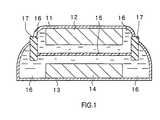
Fig. 1 is a cross section showing the configuration of a secondary
battery using a positive electrode material according to an embodiment of
the invention.
Fig. 2 is a cyclic voltamgram of a secondary battery according to
Example 1 of the invention.
Fig. 3 is a cyclic voltamgram of a secondary battery according to
Comparative Example 1.
Fig. 4 is a cyclic voltamgram of a secondary battery according to
Comparative Example 2.
Fig. 5 is a cyclic voltamgram of a secondary battery according to
Example 2 of the invention.
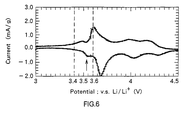
Fig. 6 is a cyclic voltamgram of a secondary battery according to
Comparative Example 3.
DETAILED DESCRIPTION OF THE PREFERRED EMBODIMENTS
Embodiments will be described in detail hereinbelow with
reference to the drawings.
First Embodiment
A positive electrode material according to a first embodiment of the
invention is used for, for example, a positive electrode of a secondary battery.
The positive electrode material contains mainly a composite oxide of lithium
and nickel (hereinbelow, called lithium nickel composite oxide). A
characteristic of the lithium nickel composite oxide is that a reduction wave
in a current-potential curve obtained by cyclic voltammetry does not have a
current peak in a range where the potential is larger than 3.4V and smaller
than 3.6V with the lithium metal potential used as a reference. The
current-potential curve (that is, cyclic voltamgram) is obtained by oxidizing
the lithium nickel composite oxide until the potential becomes 4.5V by using
the lithium metal potential as a reference at the scanning speed of 0.01
mV/sec and, after that, reducing it until the potential becomes 3.0V by using
the lithium metal potential as a reference at the scanning speed of 0.01
mV/sec.
Generally, a lithium nickel composite oxide having a stoichiometric
composition corresponds to a composition expression as shown by Chemical
Formula (1):
LiNiO2
In the lithium nickel composite oxide, the mole ratio of nickel to lithium
(Ni/Li) (hereinbelow, referred to as mole ratio Ni/Li) is larger than 1.0 as
the stoichiometric composition. That is, the lithium nickel composite oxide
is non-stoichiometric with respect to the mole ratio of nickel to lithium and
accordingly has defects.
With such a composition, the lithium nickel composite oxide has
the characteristic of being able to increase the charge and discharge
efficiency when used for the positive electrode of a secondary battery. The
reason can be given as follows. For example, if a lithium nickel composite
oxide having the mole ratio Ni/Li of approximately 1.0 as the stoichiometric
composition is used for the positive electrode of a secondary battery, the
crystal system changes in the charging/discharging process (that is, process
of oxidation/reduction) and several kinds of structural phase transitions
occur. Since the transition is accompanied by discontinuous changes in the
lattice volume, a crack or an inactive area occurs in the crystal of the
lithium nickel composite oxide due to the transition. As a result, diffusion
of lithium is disturbed by distortion at the last stage of discharge.
Polarization becomes so large that high charge and discharge efficiency
cannot be obtained.
In contrast, in the lithium nickel composite oxide having the mole
ratio Ni/Li larger than 1.0, the defect introduced therein works as a "wedge"
against the structural phase transition, with the result that the transition
does not easily occur in the charge and discharge process. Especially, the
transition from a hexagonal system to a monoclinic system is diminished.
Therefore, polarization does not become large even at the last stage of the
discharge. A discharge capacity appropriate to a charge capacity, that is,
high charge and discharge efficiency can be obtained.
The mole ratio Ni/Li is preferably not too large, or else a rock-salt
structure becomes stable and the capacity decreases. Specifically, it is
preferable that the mole ratio Ni/Li is smaller than 1.1/0.9.
The positive electrode material having such a composition can be
produced by using, for example, a lithium compound and a nickel compound
as materials. Specifically, a lithium compound and a nickel compound are
weighted so that a desired mole ratio of lithium to nickel can be obtained.
The compounds are sufficiently mixed, heated and sintered at temperatures
of 600 to 1000 ° C in an atmosphere containing oxygen. Thereby, the
positive electrode material is obtained. As a lithium compound, carbonate,
sulfate, nitrate, oxide, hydroxide or halide of lithium is used. As a nickel
compound, similarly, carbonate, sulfate, nitrate, oxide, hydroxide or halide
of nickel is used. As a specific example of the lithium compound, lithium
hydroxide hydrate (LiOH·H2O) can be mentioned. As a specific example of
the nickel compound, nickel oxide (NiO) can be mentioned.
The positive electrode material produced as mentioned above is
used for, for example, the positive electrode of a secondary battery as
described below.
Fig. 1 shows the structure in cross section of a secondary battery
having the positive electrode made of the positive electrode material
according to the embodiment. The secondary battery is of what is called a
coin type. The secondary battery is obtained by stacking a disc-shaped
positive electrode 12 housed in an armor cup 11 and a disc-shaped negative
electrode 14 housed in an armor can 13 with a separator 15 in between.
The armor cup 11 and the armor can 13 are filled with a liquid electrolyte
16 as a liquid type electrolyte. The peripheral parts of the armor cup 11
and the armor can 13 are caulked with an insulating gasket 17 in between,
and thus hermetically sealed.
Each of the armor cup 11 and the armor can 13 is made of a metal
such as stainless steel or aluminium. The armor cup 11 functions as a
collector of the positive electrode 12 and the armor can 13 functions as a
collector of the negative electrode 14.
The positive electrode 12 contains, for example, a positive electrode
material according to the embodiment as a positive electrode active
material. The positive electrode 12 is made of the positive electrode
material together with a conductive agent such as carbon black or graphite
and a binder such as polyvinylidene fluoride. That is, the positive
electrode 12 contains the lithium nickel composite oxide having the above-mentioned
composition. The positive electrode 12 is fabricated through,
for example, preparing a positive electrode mixture by mixing a positive
electrode material, a conductive agent and a binder and, after that,
compression molding the positive electrode mixture in a pellet form. The
positive electrode 12 may be also fabricated through preparing a positive
electrode mixture by mixing a solvent such as formamide or N-methylpyrrolidone
in addition to a positive electrode material, a conductive
agent and a binder and, after that, drying the positive electrode mixture,
and then compression molding the dried mixture. In these cases, the
positive electrode material may be used either as it is or in the dried state.
Preferably, the positive electrode material is used in the sufficiently dried
state. This is because the positive electrode material reacts with water
and loses the function as a positive electrode material, when the positive
electrode material comes into contact with water.
The negative electrode 14 contains, for example, a material capable
of occluding and releasing lithium metal, lithium alloy or lithium. As a
material capable of occluding and releasing lithium, for example, there are
a conductive polymer and a carbonaceous material. The carbonaceous
material is more preferable since its energy density per unit volume is
higher. As a conductive polymer, polyacetylene, polypyrrole, or the like is
used. As carbonaceous materials, there are pyrolytic carbon materials,
cokes such as pitch coke, needle coke, and petroleum coke, artificial
graphite materials, natural graphite materials, carbon black such as
acetylene black, vitrified carbon materials, calcined organic high polymer,
carbon fiber, active carbon, and the like. A calcined organic high polymer
is obtained by burning an organic high polymer material such as phenol
resin or furan resin at a proper temperature of 500 ° C or higher in an inert
gas current or in vacuum.
When the negative electrode 14 contains a carbonaceous material,
the negative electrode 14 is made of a carbonaceous material together with
a binder such as polyvinylidene fluoride. In this case, the negative
electrode 14 is fabricated through, for example, preparing a negative
electrode mixture by mixing a carbonaceous material with a binder and,
after that, compression molding the negative electrode mixture in a pellet
form. The negative electrode 14 may be also fabricated through preparing
a negative electrode mixture by mixing a solvent such as formamide or N-methylpyrrolidone
in addition to a carbonaceous material and a binder and,
after that, drying the negative electrode mixture, and then compression
molding the dried negative electrode mixture.
The separator 15 separates the positive electrode 12 and the
negative electrode 14 from each other and allows lithium ions to pass while
preventing a current short circuit due to the contact between the positive
and negative electrodes. The separator 15 takes the form of, for example,
nonwoven cloth made of polytetrafluoroethylene, polypropylene,
polyethylene or the like, ceramics film, or porous film.
The liquid electrolyte 16 is obtained by dissolving lithium salt into
an organic solvent. The liquid electrolyte 16 exhibits ion conductivity
when the lithium salt is ionized. As lithium salt, LiPf6, LiClO4, LiAsF6,
LiBF4, LiCF3SO3, Li(CF3SO2)2 and the like are appropriate. A mixture of
two or more kinds of them may be also used.
As organic solvents, propylene carbonate, ethylene carbonate,
butylene carbonate, vinylene carbonate, γ-butyrolactone, sulfolane, 1,2-dimethoxyethane,
1,2-diethoxyethane, 2-methyltetrahydrofuran, 3-methyl-1,3-dioxolane,
propionic acid methyl, butyric acid methyl, dimethyl
carbonate, diethyl carbonate, dipropyl carbonate, and the like are
appropriate. A mixture of two or more kinds of them may be also used.
Among them, cyclic carbonate such as propylene carbonate or vinylene
carbonate and chain carbonate such as dimethyl carbonate, diethyl
carbonate or dipropyl carbonate are electrochemically stable and thus
preferable as organic solvents.
The secondary battery having such a configuration acts as follows.
When the secondary battery is charged, lithium ions are released
from the lithium nickel composite oxide which forms the positive electrode
12. The lithium ions pass through the separator 15 via the liquid
electrolyte 16, and are occluded by the negative electrode 14. After that,
when the secondary battery is discharged, for example, in the case of using
a carbonaceous material for the negative electrode 14, lithium ions are
released from the negative electrode 14. The lithium ions pass through the
separator 15 via the liquid electrolyte 16, are returned to the positive
electrode 12, and are occluded by the lithium nickel composite oxide. In
this case, the reduction wave with respect to the current-potential curve
obtained by cyclic voltammetry of the lithium nickel composite oxide which
forms the positive electrode 12 does not have a current peak in a range
where the potential is larger than 3.4 V and smaller than 3.6V with the
lithium metal potential used as a reference. Also, the mole ratio Ni/Li of
the lithium nickel composite oxide is larger than 1.0. The positive
electrode 12 is not therefore largely polarized even at the last stage of the
discharge, but has the discharge capacity appropriate to the charge capacity
and displays high charge and discharge efficiency.
As described above, the positive electrode material of the
embodiment contains the lithium nickel composite oxide which has a
characteristic that the reduction wave in the current-potential curve
obtained by cyclic voltammetry does not have a current peak in a range
where the potential is larger than 3.4V and smaller than 3.6V with the
lithium metal potential used as a reference. By using the positive
electrode material for the positive electrode of a secondary battery, a
secondary battery having high charge and discharge efficiency can be
obtained.
Also, the positive electrode material of the embodiment contains
the lithium nickel composite oxide having the mole ratio Ni/Li larger than
1.0. By using the positive electrode material for the positive electrode of a
secondary battery, a secondary battery having high charge and discharge
efficiency can be obtained.
Further, by using the positive electrode material which contains
the lithium nickel composite oxide having the mole ratio Ni/Li smaller than
1.1/0.9, the capacity of the positive electrode can be increased.
Second Embodiment
A positive electrode material according to a second embodiment of
the invention contains mainly a composite oxide of lithium, nickel and
cobalt (hereinbelow, referred to as lithium nickel cobalt composite oxide).
The positive electrode material is used for, for example, the positive
electrode of a secondary battery in a manner similar to the first embodiment.
Generally, a lithium nickel cobalt composite oxide having a stoichiometric
composition corresponds to a composition expression as shown by Chemical
Formula (2):
LiNi1-yCoyO2
Preferably, the composite oxide contains cobalt so that the mole ratio of
cobalt to both nickel and cobalt (Co/(Ni+Co)) (hereinbelow, called mole ratio
Co/(Ni+Co)) is larger than 0.0 and smaller than 0.15. That is, in chemical
formula (2), it is preferable that y is larger than 0.0 and smaller than 0.15.
This is because the charging/discharging capacity of a secondary battery
decreases as the cobalt content of the composite oxide increases when the
composite oxide is used for the positive electrode of a secondary battery. In
other words, it is preferable that the cobalt content of the composite oxide is
smaller in order to obtain the larger charge and discharge capacity with
respect to the secondary battery. More preferably, the composite oxide
contains cobalt so that the mole ratio Co/(Ni + Co) is 0.1 or lower.
A characteristic of the lithium nickel composite oxide is that the
reduction wave in the current-potential curve obtained by cyclic
voltammetry does not have a current peak in a range where the potential is
larger than 3.4V and smaller than 3.6V with the lithium metal potential
used as a reference. The current-potential curve is obtained, for example,
under measurement conditions similar to those of the first embodiment.
The lithium nickel cobalt composite oxide therefore has the characteristic of
being able to increase the charge and discharge efficiency of a secondary
battery when used for the positive electrode of a secondary battery.
The reason can be given as follows. Generally, unlike the lithium
nickel composite oxide having the stoichiometric composition, a lithium
nickel cobalt composite oxide does not exhibit large polarization when used
for the positive electrode of a secondary battery even at the last stage of
discharge as the cobalt content of the composite oxide increases. This
characteristic is clear especially when the content of cobalt is at the mole
ratio Co/(Ni + Co) of 0.15 or larger. This is because the density of trivalent
nickel ions which cause a distortion by the Jahn-Teller effect is lowered by
cobalt ions having no Jahn-Teller effect as the content of cobalt increases,
thereby the distortion at the last stage of discharge is reduced. The
diffusion of lithium is not therefore disturbed by the distortion. Large
polarization is not found either even at the last stage of discharge. Such a
characteristic, however, cannot be sufficiently obtained when the content of
cobalt is at the mole ratio Co/(Ni + Co) smaller than 0.15.
On the other hand, even in the case of lithium nickel cobalt
composite oxide having the mole ratio Co/(Ni+Co) smaller than 0.15, some
defect is introduced therein if the composite oxide has a characteristic that
the reduction wave in the current-potential curve obtained by cyclic
voltammetry does not have a current peak in a range where the potential is
larger than 3.4V and smaller than 3.6V with the lithium metal potential
used as a reference. Occurrence of a distortion is suppressed by the defect
introduced therein, as in the first embodiment. The defect introduced
therein does not have to be a defect of a degree at which the mole ratio of
lithium, nickel and cobalt is recognized to be non-stoichiometric, but some
defect. Therefore, polarization does not become large even at the last stage
of discharge. The high charge and discharge efficiency can be thus
obtained.
The positive electrode material having such a composition can be
produced by using, for example, a lithium compound, a nickel compound,
and a cobalt compound as materials in a manner similar to the first
embodiment. In this case, as a cobalt compound, carbonate, sulfate,
nitrate, oxide, hydroxide, halogenide, or the like of cobalt can be used. As a
specific example of the cobalt compound, a cobalt oxide (Co3O4) can be
mentioned.
To be specific, the positive electrode material fabricated as
mentioned above is used for the positive electrode of a secondary battery in
a manner similar to the first embodiment (refer to Fig. 1). The secondary
battery has the same configuration as that of the first embodiment except
that the positive electrode material according to the second embodiment is
used for the positive electrode. Therefore, detailed description thereof with
reference to Fig. 1 is omitted.
The secondary battery acts in a manner similar to the first
embodiment. Specifically, when the secondary battery is charged, lithium
ions are released from the lithium nickel cobalt composite oxide which
forms the positive electrode 12 and moved to the negative electrode 14.
When the secondary battery is discharged, lithium ions are moved from the
negative electrode 14 to the positive electrode 12 and occluded by the
lithium nickel cobalt composite oxide which forms the positive electrode 12.
The lithium nickel cobalt composite oxide which forms the positive electrode
12 has a characteristic that the reduction wave in the current-potential
curve obtained by cyclic voltammetry does not have a current peak in a
range where the potential is larger than 3.4 V and smaller than 3.6V with
the lithium metal potential used as a reference. The positive electrode 12
therefore is not largely polarized even at the last stage of discharge but
displays high charge and discharge efficiency.
As described above, the positive electrode material of the
embodiment contains the lithium nickel cobalt composite oxide having the
mole ratio Co/(Ni+Co) smaller than 0.15. Further, the composite oxide has
a characteristic that the reduction wave in the current-potential curve
obtained by cyclic voltammetry does not have a current peak in a range
where the potential is larger than 3.4V and smaller than 3.6V with the
lithium metal potential used as a reference. By using the positive
electrode material for the positive electrode of a secondary battery, a
secondary battery having large charge and discharge capacity and high
charge and discharge efficiency can be obtained. Thus, decrease in energy
density can be suppressed.
Examples
Specific examples of the invention will now be described in detail.
Example 1
A lithium hydroxide hydrate of purity higher than 99.0% and a
nickel oxide of purity higher than 99.5% were prepared and mixed so that
the mole ratio between lithium and nickel becomes Li:Ni = 1.0 : 1.0. The
mixture was then heated at 800 ° C for six hours in mixture gas reflux
comprised of argon (Ar) gas of 5 percent by volume and oxygen (O2) gas of 95
percent by volume. By the operation, black powders containing mainly a
lithium nickel composite oxide were obtained as a positive electrode
material.
The composition of the obtained lithium nickel composite oxide was
analyzed by powder X-ray diffraction. For calculation of the composition,
the calculation program RIETAN-97 for Rietveld-analysis was used. The
result is shown in Table 1. As understood from Table 1, the mole ratio
between lithium and nickel in the obtained lithium nickel composite oxide
was Li:Ni = 0.96 : 1.04. It was found that the lithium nickel composite
oxide was non-stoichiometric with respect to the mole ratio between lithium
and nickel and that the mole ratio Ni:Li was larger than 1.0 as the
stoichiometric composition and smaller than 1.1/0.9.
| | Mole ratio of Li to Ni Li : Ni | Charge and discharge efficiency (%) | Discharge energy density (mWh/g) |
| Example 1 | 0.96 : 1.04 | 94 | 790 |
| Comparative Example 1 | 1.00 : 1.00 | 81 | 740 |
| Comparative Example 2 | 0.89 : 1.11 | 92 | 456 |
Subsequently, a positive electrode was fabricated by using the
obtained positive electrode material and then a secondary battery was made
by using the positive electrode. Specifically, to 90 parts by weight of the
obtained positive electrode material, 7 parts by weight of graphite as a
conductive agent and 3 parts by weight of polyvinylidene fluoride as a
binder were added and, after that, dimethyl formamide as a solvent was
added and mixed, thereby preparing a positive electrode mixture. After
that, the positive electrode mixture was sufficiently dried until dimethyl
formamide was completely volatilized. Approximately 60 mg of the
positive electrode mixture was measured and pressure-molded in a disc
shape having the surface area of approximately 2 cm2, thereby fabricating a
positive electrode.
After fabricating the positive electrode, by using the positive
electrode, a negative electrode obtained by stamping a lithium metal into a
disc shape, a liquid electrolyte obtained by dissolving lithium
hexafluorophosphate (LiPF6) into propylene carbonate and a separator
which takes the form of a porous film made of polypropylene, a coin-type
secondary battery similar to the secondary battery shown in Fig. 1 was
fabricated. The amount of lithium used in the example is adjusted to be
hundreds times of the maximum charging capacity of the positive electrode
so as not to regulate the electrochemical performance of the positive
electrode.
The secondary battery fabricated as mentioned above was charged
and discharged and the charge and discharge efficiency and the discharge
energy density were obtained. The charging was performed until the
battery voltage reached 4.2V with a constant current having a current
density of 0.52 mA/cm2. The discharging was performed until the battery
voltage reached 3.0V with a constant current having the same current
density of 0.52 mA/cm2. The charging and discharging was carried out at
room temperature (23 ° C). The charge and discharge efficiency (the ratio
of the discharge capacity to the charge capacity) was calculated by obtaining
the charge capacity and the discharge capacity from the result of charging
and discharging. The discharge energy density was derived by forming a
discharge curve, although not shown, by setting the potential on the vertical
axis and setting the discharge capacity on the lateral axis from the result of
charging and discharging and by integrating the discharge curve. Table 1
shows the result. As understood from Table 1, the secondary battery
achieved high charge and discharge efficiency of 94% and high discharge
energy density of 790 mWh/g.
The cyclic voltamgram of the fabricated secondary battery was
measured. In the event of measurement, the secondary battery was
charged until the battery voltage became 4.5V at a scanning speed of 0.01
mV/sec. Then, the secondary battery was discharged until the battery
voltage became 3.0V at the same scanning speed of 0.01 mV/sec. That is,
the positive electrode was oxidized until the potential became 4.5V at the
scanning speed of 0.01 mV/sec with the lithium metal potential used as a
reference. Then, the positive electrode was reduced until the potential
became 3.0V at the same scanning speed of 0.01 mV/sec. The
measurement was performed at room temperature (23 ° C). Fig. 2 shows
the obtained cyclic voltamgram. As understood from Fig. 2, no current
peak of the reduction wave was found in a range where the potential is
larger than 3.4V and smaller than 3.6V with the lithium metal potential
used as a reference.
As Comparative Example 1 with regard to Example 1, a positive
electrode material containing mainly a lithium nickel composite oxide was
prepared by the same parameters as those of Example 1 except that the
mixture of lithium hydroxide hydrate and nickel oxide was heated at 750 °
C in pure oxygen gas currents. The composition of the obtained lithium
nickel composite oxide was analyzed by powder X-ray diffraction in a
manner similar to Example 1. The result is shown in Table 1. As
understood from Table 1, the mole ratio between lithium and nickel was
Li:Ni = 1.00 : 1.00. It was found that the lithium nickel composite oxide
does not have the non-stoichiometric mole ratio between lithium and nickel
and that the mole ratio Ni/Li is equal to 1.0 as the stoichiometric
composition.
After preparing a secondary battery in a manner similar to
Example 1 by using the obtained positive electrode material, the charge and
discharge efficiency and the discharge energy density were obtained in a
manner similar to Example 1. Also, the cyclic voltamgram was measured.
The obtained charge and discharge efficiency and the discharge energy
density are shown in Table 1 and the cyclic voltamgram is shown in Fig. 3.
As understood from Table 1, the charge and discharge efficiency was 81%
and the discharge energy density was 740 mWh/g, which were both lower
than those of Example 1. The reason why the discharge energy density is
lower than that of Example 1 is mainly because of the low charge and
discharge efficiency. As shown by the arrow in Fig. 3, a current peak of the
reduction wave was found in the neighborhood of the potential of 3.5V with
the lithium metal potential used as a reference.
Further, as Comparative Example 2 with regard to Example 1, a
positive electrode material containing a lithium nickel composite oxide was
prepared under the same parameters as those of Example 1 except that the
mixture of lithium hydroxide hydrate and nickel oxide was heated at 850 °
C in pure oxygen gas currents. The composition of the obtained lithium
nickel composite oxide was analyzed by powder X-ray diffraction in a
manner similar to Example 1. The result is shown in Table 1. As
understood from Table 1, the mole ratio between lithium and nickel was
Li:Ni = 0.89 : 1.11. It was found that the lithium nickel composite oxide
has the non-stoichiometric mole ratio between lithium and nickel and that
the mole ratio Ni/Li is equal to or larger than 1.1 / 0.9.
After preparing a secondary battery in a manner similar to
Example 1 by using the obtained positive electrode material, the charge and
discharge efficiency and the discharge energy density were obtained in a
manner similar to Example 1. Also, the cyclic voltamgram was measured.
The obtained charge and discharge efficiency and the discharge energy
density are shown in Table 1 and the cyclic voltamgram is shown in Fig. 4.
As understood from Table 1, although the charge and discharge efficiency
was as sufficiently high as 92%, the discharge energy density was as low as
456 mWh/g. No current peak of the reduction wave was found in a range
where the potential is larger than 3.4V and smaller than 3.6V with the
lithium metal potential used as a reference.
From the results above, it was found that the charge and discharge
efficiency of the secondary battery can be increased by using the positive
electrode containing the lithium nickel composite oxide which has a
characteristic that the reduction wave obtained by cyclic voltammetry does
not have a current peak in a range where the potential is larger than 3.4V
and smaller than 3.6V with the lithium metal potential used as a reference.
It was also found that the charge and discharge efficiency can be increased
with respect to the lithium nickel composite oxide having the mole ratio
Ni/Li larger than 1. Further, it was also found that the discharge energy
density of a secondary battery can be made high by using the positive
electrode containing the lithium nickel composite oxide having the mole
ratio Ni/Li smaller than 1.1/0.9.
Example 2
In the example, lithium hydroxide hydrate of purity higher than
99.0%, nickel oxide of purity higher than 99.5% and cobalt oxide of purity
higher than 99.0% were prepared and mixed so that the mole ratio of
lithium, nickel, and cobalt became Li:Ni:Co = 1.0 : 0.9 : 0.1. The mixture
was then heated at 900 ° C in the same atmosphere as that of Example 1.
Thereby, black powders containing mainly a lithium nickel cobalt composite
oxide were obtained as a positive electrode material.
The composition of the obtained lithium nickel cobalt composite
oxide was analyzed by powder X-ray diffraction in a manner similar to
Example 1. The result is shown in Table 2. As understood from Table 2,
the mole ratio of lithium, nickel and cobalt was Li:Ni:Co = 1.00 : 0.90 : 0.10.
It was not found that the mole ratio Li:(Ni+Co) of lithium to both nickel and
cobalt in the lithium nickel cobalt composite oxide was non-stoichiometric.
After preparing a secondary battery by using the obtained positive
electrode material in a manner similar to Example 1, the charge and
discharge efficiency and the discharge energy density were obtained in a
manner similar to Example 1. Also, the cyclic voltamgram was measured.
The obtained charge and discharge efficiency and the discharge energy
density are shown in Table 2 and the cyclic voltamgram is shown in Fig. 5.
As understood from Table 2, the secondary battery realizes the high charge
and discharge efficiency of 93% and the high discharge energy density of
770 mWh/g. The discharge energy density is lower as compared with
Example 1 since the whole capacity decreases due to the solid solution of
cobalt. No current peak of the reduction wave was found in a range where
the potential is larger than 3.4V and smaller than 3.6V with the lithium
metal potential used as a reference.
As Comparative Example 3 with regard to Example 2, a positive
electrode material containing the lithium nickel cobalt composite oxide was
prepared with the same parameters as those of Example 2 except that the
mixture of lithium hydroxide hydrate, nickel oxide and cobalt oxide was
heated at 750 ° C. The composition of the obtained lithium nickel cobalt
composite oxide was analyzed by powder X-ray diffraction in a manner
similar to Example 2. The result is shown in Table 2. The mole ratio of
lithium, nickel and cobalt was Li:Ni:Co = 1.00 : 0.90 : 0.10. In a manner
similar to Example 2, it was not found that the mole ratio of lithium to both
nickel and cobalt (Li:(Ni+Co)) was non-stoichiometric.
| | Mole ratio of Li, Ni and Co Li : Ni : Co | Charge and discharge efficiency (%) | Discharge energy density (mWh/g) |
| Example 2 | 1.00 : 0.90 : 0.10 | 93 | 770 |
| Comparative Example 3 | 1.00 : 0.90 : 0.10 | 88 | 720 |
After preparing a secondary battery in a manner similar to
Example 1 by using the obtained positive electrode material, the charge and
discharge efficiency and the discharge energy density were obtained in a
manner similar to Example 2. Also, the cyclic voltamgram was measured.
The obtained charge and discharge efficiency and the discharge energy
density are shown in Table 2 and the cyclic voltamgram is shown in Fig. 6.
As understood from Table 2, the charge and discharge efficiency was 88%
and the discharge energy density was 720 mWh/g, which were both lower
than those of Example 2. The reason why the discharge energy density is
lower than that of Example 2 is mainly because of the low charge and
discharge efficiency. As shown by the arrow in Fig. 6, a current peak of the
reduction wave was found in the neighborhood of the potential of 3.5V with
the lithium metal potential used as a reference.
From the results above, it was found that the charge and discharge
efficiency of the secondary battery can be increased and the discharge
energy density can be also made high by using the positive electrode
containing the lithium nickel cobalt composite oxide having the mole ratio
between nickel and cobalt is Ni:Co = 0.9 : 0.1, which has a characteristic
that the reduction wave obtained by cyclic voltammetry does not have a
current peak in a range where the potential is larger than 3.4V and smaller
than 3.6V with the lithium metal potential used as a reference.
Although the invention has been described with regard to the
foregoing embodiments and examples, the invention is not limited to the
embodiments and examples but can be variously modified. For example,
the positive electrode material of the invention may contain, in addition to
the lithium nickel composite oxide or lithium nickel cobalt composite oxide
described in the embodiments and examples, for instance, a small amount
of impurity which does not react completely at the time of manufacture.
In the examples, the positive electrode materials of the invention
were prepared at heating temperatures different from those of the
comparative examples. However, the positive electrode material of the
invention is not limited by producing processes. Even if the positive
electrode material is produced by another producing process, the effects of
the invention can be obtained so long as the positive electrode contains the
lithium nickel composite oxide or lithium nickel cobalt composite oxide
described in the examples.
Although the case of using the positive electrode material of the
invention for a coin-type secondary battery has been described in the
embodiments and examples, the invention can be similarly applied to
secondary batteries of other shapes such as button, paper, square and
cylinder-shape having a spiral structure. In the case of producing a
secondary battery of a square or cylinder shape, the positive electrode can
be prepared as follows. For example, a positive electrode mixture in a
paste state is prepared by adding a solvent such as formamide or N-methylpyrrolidone
to the positive electrode material of the invention, a
conductive agent and a binder, and then the positive electrode mixture is
applied to a positive electrode collector and dried. The negative electrode
can be prepared as follows in a manner similar to the positive electrode. A
negative electrode mixture in a paste state is prepared by adding a solvent
to a carbonaceous material and a binder. The negative electrode mixture
is applied to a negative electrode collector and dried.
In addition, although the secondary battery using a liquid
electrolyte as a liquid type electrolyte has been described in the above-mentioned
embodiments and examples, a solid electrolyte or gel electrolyte
in which lithium salt is dissolved may be used in place of a liquid electrolyte.
One of solid electrolytes is obtained by dissolving or dispersing lithium salt
in an ion conductive polymer. One of gel electrolytes is obtained by holding
a liquid electrolyte by a polymer. Electrolytes of other compositions may
be also used so long as an electrolyte has ion conductivity by means of
lithium ions.
Further, although the case of forming the positive electrode by
using the positive electrode material according to the first or second
embodiment as a positive electrode active material has been described in
the embodiments and examples, the positive electrode may be also formed
by using both of the positive electrode materials according to the first and
second embodiments. The positive electrode may be also formed by using
both the positive electrode material of the invention and a lithium
compound as another positive electrode active material.
In addition, the case of using the positive electrode material of the
invention for a secondary battery has been described in the embodiments
and examples, the invention can be similarly applied to other batteries such
as a primary battery.
As described above, according to the invention, the positive
electrode material contains the composite oxide of lithium and nickel, The
composite oxide has a characteristic that the reduction wave in the current-potential
curve obtained by cyclic voltammetry does not have a current peak
in a range where a potential is larger than 3.4V and smaller than 3.6V with
a lithium metal potential used as a reference. By forming the positive
electrode of a secondary battery by using the positive electrode material, a
secondary battery having high charge and discharge efficiency can be
obtained.
According to the invention, the positive electrode material contains
the composite oxide of lithium, nickel and cobalt, having the mole ratio
Co/(Ni+Co) smaller than 0.15. The composite oxide has a characteristic
that a reduction wave in a current-potential curve obtained by cyclic
voltammetry does not have a current peak in a range where a potential is
larger than 3.4V and smaller than 3.6V with the lithium metal potential
used as a reference. By forming the positive electrode of a secondary
battery by using the positive electrode material, a secondary battery having
high charge and discharge capacity and high charge and discharge
efficiency can be obtained.
Further, according to the invention, the positive electrode material
contains the composite oxide of lithium and nickel, having the mole ratio
Ni/Li larger than 1.0. By forming the positive electrode of a secondary
battery by using the positive electrode material, a secondary battery having
high charge and discharge efficiency can be obtained.
According to one aspect of the invention, the positive electrode
material contains the composite oxide of lithium and nickel, having the
mole ratio Ni/Li smaller than 1.1/0.9. Thus, the capacity of the positive
electrode can be increased.
In addition, according to the secondary battery of the invention, the
positive electrode contains a composite oxide similar to the positive
electrode material of the invention. Therefore, high charge and discharge
efficiency can be obtained.
Obviously many modifications and variations of the present
invention are possible in the light of the above teachings. It is therefore to
be understood that within the scope of the appended claims the invention
may be practiced other wise than as specifically described.