EP0989423A2 - Faseroptisches Mach-Zehnder-Interferometer hergestellt mit asymmetrischen Kopplern - Google Patents
Faseroptisches Mach-Zehnder-Interferometer hergestellt mit asymmetrischen Kopplern Download PDFInfo
- Publication number
- EP0989423A2 EP0989423A2 EP99307547A EP99307547A EP0989423A2 EP 0989423 A2 EP0989423 A2 EP 0989423A2 EP 99307547 A EP99307547 A EP 99307547A EP 99307547 A EP99307547 A EP 99307547A EP 0989423 A2 EP0989423 A2 EP 0989423A2
- Authority
- EP
- European Patent Office
- Prior art keywords
- optical fiber
- zehnder interferometer
- mach
- coupling region
- propagation constant
- Prior art date
- Legal status (The legal status is an assumption and is not a legal conclusion. Google has not performed a legal analysis and makes no representation as to the accuracy of the status listed.)
- Withdrawn
Links
Images



Classifications
-
- G—PHYSICS
- G01—MEASURING; TESTING
- G01B—MEASURING LENGTH, THICKNESS OR SIMILAR LINEAR DIMENSIONS; MEASURING ANGLES; MEASURING AREAS; MEASURING IRREGULARITIES OF SURFACES OR CONTOURS
- G01B9/00—Measuring instruments characterised by the use of optical techniques
- G01B9/02—Interferometers
-
- G—PHYSICS
- G02—OPTICS
- G02B—OPTICAL ELEMENTS, SYSTEMS OR APPARATUS
- G02B6/00—Light guides; Structural details of arrangements comprising light guides and other optical elements, e.g. couplings
- G02B6/24—Coupling light guides
- G02B6/26—Optical coupling means
- G02B6/28—Optical coupling means having data bus means, i.e. plural waveguides interconnected and providing an inherently bidirectional system by mixing and splitting signals
- G02B6/293—Optical coupling means having data bus means, i.e. plural waveguides interconnected and providing an inherently bidirectional system by mixing and splitting signals with wavelength selective means
- G02B6/29346—Optical coupling means having data bus means, i.e. plural waveguides interconnected and providing an inherently bidirectional system by mixing and splitting signals with wavelength selective means operating by wave or beam interference
- G02B6/2935—Mach-Zehnder configuration, i.e. comprising separate splitting and combining means
- G02B6/29352—Mach-Zehnder configuration, i.e. comprising separate splitting and combining means in a light guide
-
- G—PHYSICS
- G02—OPTICS
- G02B—OPTICAL ELEMENTS, SYSTEMS OR APPARATUS
- G02B6/00—Light guides; Structural details of arrangements comprising light guides and other optical elements, e.g. couplings
- G02B6/24—Coupling light guides
- G02B6/26—Optical coupling means
- G02B6/28—Optical coupling means having data bus means, i.e. plural waveguides interconnected and providing an inherently bidirectional system by mixing and splitting signals
- G02B6/293—Optical coupling means having data bus means, i.e. plural waveguides interconnected and providing an inherently bidirectional system by mixing and splitting signals with wavelength selective means
- G02B6/29346—Optical coupling means having data bus means, i.e. plural waveguides interconnected and providing an inherently bidirectional system by mixing and splitting signals with wavelength selective means operating by wave or beam interference
- G02B6/2935—Mach-Zehnder configuration, i.e. comprising separate splitting and combining means
- G02B6/29352—Mach-Zehnder configuration, i.e. comprising separate splitting and combining means in a light guide
- G02B6/29353—Mach-Zehnder configuration, i.e. comprising separate splitting and combining means in a light guide with a wavelength selective element in at least one light guide interferometer arm, e.g. grating, interference filter, resonator
-
- G—PHYSICS
- G02—OPTICS
- G02B—OPTICAL ELEMENTS, SYSTEMS OR APPARATUS
- G02B6/00—Light guides; Structural details of arrangements comprising light guides and other optical elements, e.g. couplings
- G02B6/24—Coupling light guides
- G02B6/26—Optical coupling means
- G02B6/28—Optical coupling means having data bus means, i.e. plural waveguides interconnected and providing an inherently bidirectional system by mixing and splitting signals
- G02B6/2804—Optical coupling means having data bus means, i.e. plural waveguides interconnected and providing an inherently bidirectional system by mixing and splitting signals forming multipart couplers without wavelength selective elements, e.g. "T" couplers, star couplers
- G02B6/2821—Optical coupling means having data bus means, i.e. plural waveguides interconnected and providing an inherently bidirectional system by mixing and splitting signals forming multipart couplers without wavelength selective elements, e.g. "T" couplers, star couplers using lateral coupling between contiguous fibres to split or combine optical signals
- G02B6/2835—Optical coupling means having data bus means, i.e. plural waveguides interconnected and providing an inherently bidirectional system by mixing and splitting signals forming multipart couplers without wavelength selective elements, e.g. "T" couplers, star couplers using lateral coupling between contiguous fibres to split or combine optical signals formed or shaped by thermal treatment, e.g. couplers
-
- G—PHYSICS
- G02—OPTICS
- G02B—OPTICAL ELEMENTS, SYSTEMS OR APPARATUS
- G02B6/00—Light guides; Structural details of arrangements comprising light guides and other optical elements, e.g. couplings
- G02B6/24—Coupling light guides
- G02B6/26—Optical coupling means
- G02B6/28—Optical coupling means having data bus means, i.e. plural waveguides interconnected and providing an inherently bidirectional system by mixing and splitting signals
- G02B6/293—Optical coupling means having data bus means, i.e. plural waveguides interconnected and providing an inherently bidirectional system by mixing and splitting signals with wavelength selective means
- G02B6/29304—Optical coupling means having data bus means, i.e. plural waveguides interconnected and providing an inherently bidirectional system by mixing and splitting signals with wavelength selective means operating by diffraction, e.g. grating
- G02B6/29316—Light guides comprising a diffractive element, e.g. grating in or on the light guide such that diffracted light is confined in the light guide
- G02B6/29317—Light guides of the optical fibre type
-
- G—PHYSICS
- G02—OPTICS
- G02B—OPTICAL ELEMENTS, SYSTEMS OR APPARATUS
- G02B6/00—Light guides; Structural details of arrangements comprising light guides and other optical elements, e.g. couplings
- G02B6/24—Coupling light guides
- G02B6/26—Optical coupling means
- G02B6/28—Optical coupling means having data bus means, i.e. plural waveguides interconnected and providing an inherently bidirectional system by mixing and splitting signals
- G02B6/293—Optical coupling means having data bus means, i.e. plural waveguides interconnected and providing an inherently bidirectional system by mixing and splitting signals with wavelength selective means
- G02B6/29331—Optical coupling means having data bus means, i.e. plural waveguides interconnected and providing an inherently bidirectional system by mixing and splitting signals with wavelength selective means operating by evanescent wave coupling
- G02B6/29332—Wavelength selective couplers, i.e. based on evanescent coupling between light guides, e.g. fused fibre couplers with transverse coupling between fibres having different propagation constant wavelength dependency
-
- G—PHYSICS
- G02—OPTICS
- G02B—OPTICAL ELEMENTS, SYSTEMS OR APPARATUS
- G02B6/00—Light guides; Structural details of arrangements comprising light guides and other optical elements, e.g. couplings
- G02B6/24—Coupling light guides
- G02B6/26—Optical coupling means
- G02B6/28—Optical coupling means having data bus means, i.e. plural waveguides interconnected and providing an inherently bidirectional system by mixing and splitting signals
- G02B6/293—Optical coupling means having data bus means, i.e. plural waveguides interconnected and providing an inherently bidirectional system by mixing and splitting signals with wavelength selective means
- G02B6/29346—Optical coupling means having data bus means, i.e. plural waveguides interconnected and providing an inherently bidirectional system by mixing and splitting signals with wavelength selective means operating by wave or beam interference
- G02B6/2935—Mach-Zehnder configuration, i.e. comprising separate splitting and combining means
- G02B6/29352—Mach-Zehnder configuration, i.e. comprising separate splitting and combining means in a light guide
- G02B6/29355—Cascade arrangement of interferometers
Definitions
- a wavelength division multiplexer/demultiplexer can be fabricated from a fiber optic Mach-Zehnder interferometer (MZI).
- MZI Mach-Zehnder interferometer
- the MZI is fabricated from a pair of symmetric couplers. Identical fiber Bragg gratings are written in the interfering arms between the couplers.
- a fiber Bragg grating (FBG) is a change in the refractive index in the fiber core that reflects a selective wavelength on the fiber.
- a signal carrying several channels or wavelengths ⁇ 1, ⁇ 2, ⁇ 3, ⁇ 4, and ⁇ 5 is input into the first fiber of the first coupler.
- Other numbers of channels for example, 4 or 8 channels, may be input into the coupler.
- the signal is split at the coupler to pass along both arms.
- the FBGs which are identical, are resonant at a selected frequency, for example, ⁇ 4.
- ⁇ 4 is reflected, passes back through the first coupler, and is extracted or the second fiber of the first coupler.
- the remaining wavelengths, ⁇ 1, ⁇ 2, ⁇ 3, and ⁇ 5, pass through the second coupler and are output on the second fiber of the second coupler.
- a signal having the wavelength ⁇ 4 is inserted on the first fiber at the second coupler.
- a signal of various wavelengths ⁇ 1, ⁇ 2, ⁇ 3, and ⁇ 5 is input into the first fiber of the first coupler.
- ⁇ 4 is reflected at the FBGs.
- ⁇ 4 is then output on the second fiber of the second coupler.
- the output of the second coupler includes all the wavelengths, ⁇ 1, ⁇ 2, ⁇ 3, ⁇ 4, and ⁇ 5.
- the present invention provides an optical fiber Mach-Zehnder interferometer fabricated from asymmetrical couplers, which allow 30 dB isolation over a wider wavelength range about a desired wavelength.
- the asymmetric optical fiber Mach-Zehnder interferometer of the present invention comprises first and second optical fibers connected at a first coupling region and a second coupling region.
- the first and second optical fibers form two interfering arms between the first and second coupling regions.
- the propagation constant in a portion of the first optical fiber in one of the coupling regions for example, the first coupling region, differs from the propagation constant in a portion of the second optical fiber in that coupling region.
- the propagation constant in the first optical fiber and the propagation constant in the second optical fiber are chosen to provide 30 dB isolation in a through port of the Mach-Zehnder interferometer over a span of more than ⁇ 20 nm, and preferably more than ⁇ 60 nm, about a desired wavelength.
- the splitting ratio of the first coupling region is controlled to split the power 50 percent at a desired wavelength.
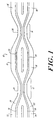
- Fig. 1 illustrates an asymmetric Mach-Zehnder interferometer (MZI) 10 according to the present invention.
- the MZI comprises two coupling regions 12, 14 separated by interfering arms 16, 18. More particularly in the embodiment illustrated, the MZI is formed from first and second optical fibers 20, 22 that are coupled at first and second asymmetric couplers 24, 26.
- a coupler is a device that splits the incoming optical energy between two output fibers.
- the first and second fibers 20, 22 form the interfering arms 16, 18 that connect the couplers 24, 26.
- a fiber Bragg grating (FBG) 25, 27 is written in the core 28, 30 of each of the interfering arms 16, 18 between the two couplers 24, 26.
- FBG fiber Bragg grating
- one fiber such as fiber 20
- the other fiber constitutes a drop or extract port 34
- the fiber 20 constitutes an add or insert port 36
- the fiber 22 constitutes an output or through port 38.
- the asymmetric couplers as well as the location of the fibers improves the spectral performance of the MZI.
- the electric field in the coupled port lags the electric field in the input port by a phase of ⁇ /2.
- the same phase relationship does not hold for the asymmetric coupler.
- the phase difference between the fields depends on the coupling strength and the degree of asymmetry.
- the constituent fibers have substantially identical propagation constants in the coupling region so that the coupling ratio can be 100%.
- the splitting ratio of the constituent couplers is substantially 50%.
- the splitting ratio of a symmetric coupler goes as the sine of the wavelength. The 50% point occurs at the quadrate of the wavelength response and hence is sensitive to small changes in wavelength.
- Fig. 2 illustrates a graph of measured spectral response of a typical symmetric coupler.
- the excess loss of the coupler was approximately 0.07 dB.
- the spikes are measurement artifacts from mode movement in the FP laser. From the graph, it can be seen that the wavelength variation in the region of interest (around the quadrate) is approximately 0.125%/nm. It is this large wavelength variation that reduces the isolation of the MZI to under 30 dB for spans greater than ⁇ 20 nm about the center wavelength.
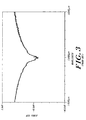
- Fig. 3 shows the measured spectral response of the add fiber in an MZI fabricated from typical symmetric couplers. From the graph, it can be seen that 30 dB isolation can be achieved in the add fiber over a wavelength range of 40 nm, which is a narrow wavelength range. The limited span of the 30 dB isolation region arises from the wavelength sensitivity of the couplers used to fabricate the MZI.
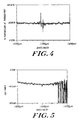
- Fig. 4 is a graph of measured spectral response of a typical asymmetric coupler. The excess loss of the coupler was approximately 0.09 dB. The spikes are measurement artifacts from mode movement in the FP laser. From the graph it can be seen that the wavelength variation in the region of interest is approximately 0.03%/nm. It is this reduced wavelength variation that allows 30 dB isolation in the through fiber to be achieved over spans greater than ⁇ 60 nm about the center wavelength. This is substantially greater than the span of ⁇ 20 nm achievable with the symmetric coupler discussed above.
- the most common method of fabricating the coupler is the fused taper method. For example, jackets of the two fibers are stripped for an appropriate length. The fibers are held together with the regions to be coupled maintained substantially parallel to each other and in contact. The coupling region is heated to a temperature of approximately 1700°C until they fuse together.
- the fibers may be heated with any suitable heat source, such as an electric arc, oxygen butane flame, or laser. As they are heated, the fibers are also drawn or stretched to create a narrowed or necked down or waist region. The tapering brings the fiber cores closer together, increasing the interaction between the signals.
- the asymmetry can be achieved by pre-tapering, etching or polishing one of the coupled fibers in the coupling region, or by bending the coupling region in the fiber plane.
- the asymmetry can also be achieved by fusing one of the fibers to a third glass rod or tube in the coupling region. The glass rod or tube raises the propagation constant of the fiber it is attached to in the coupling region. A combination of these techniques may also be used.
- Fig. 5 is a measured response of the add fiber of a MZI fabricated using asymmetric couplers. The spikes are measurement artifacts. From the graph, it can be seen that 30 dB isolation can be achieved in the add, or drop, fiber over a wavelength range of 120 nm, which is substantially larger than the 40 nm range achievable with the prior art symmetric MZI described above.
- the fiber Bragg gratings are written in the fiber cores in the two interfering arms.
- the fiber Bragg gratings may be written in any known manner. For example, using a photosensitive fiber, a silica phase mask having grooves etched thereon in the desired periodicity is placed close to the fiber. The fiber and mask are illuminated with an ultraviolet (UV) light source, such as a laser beam. The phase mask diffracts the light from the UV light source, creating multiple interfering beams. The UV light passes through the photo-sensitive fiber, altering the refractive index distribution therein and forming an FBG. In another technique to form an FBG, a UV laser beam is moved along the length of the fiber and turned on and off as it travels. Other techniques for writing the FBG may be used, such as interference holograms, interfering laser beams, or amplitude masks.
- UV ultraviolet
- Two embodiments are preferred in the present invention, a point symmetric MZI and a line symmetric MZI. Both embodiments may be used to fabricate the MZI and both may be used in conjunction with fiber Bragg gratings.
- a point symmetric MZI is one that is substantially symmetric about a point 40 in the middle of the interferometer arms.
- the fiber 20 in the coupling region 12 has a first propagation constant, preferably, the propagation constant of a standard fiber.
- the fiber 22 in the coupling region 12 is modified to have a different propagation constant.
- the fiber 22 in the coupling region 14 has the first or standard propagation constant.
- the fiber 20 in the coupling region 14 is modified to have a different propagation constant.
- a line symmetric MZI is one that is substantially symmetric about a line 42 through the interfering arms.
- One fiber, such as the fiber 20 has a first propagation constant, preferably the propagation constant of a standard fiber, at both the coupling region 12 and the coupling region 14.
- the other fiber, fiber 22, is modified to have a different propagation constant at both the coupling region 12 and the coupling region 14.
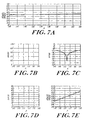
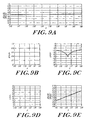
- the operation of the line symmetric MZI is described as follows, with reference to Figs. 9A-9E (the couplers are described in terms of transfer matrices and all the variables are given typical values):
- the coupler may be fabricated using polished or D-shaped fiber couplers.
- the asymmetry may be achieved by pretapering, etching or polishing one of the coupled fibers in the coupled region, or by bending the coupling region in the fiber plane.
- a combination of the techniques may also be used.
- the fibers used to fabricate the coupler need not necessarily be fused together as in the case of a polished block coupler.
- the interferometer may be fabricated from one or more photo-sensitive fibers.
- the coupler may be composed of more than two fibers.
- a 1x3 coupler may be fabricated wherein one or more of the fibers is photo-sensitive and the remaining fibers are photo-insensitive.
- the splitting ratio may be other than 50%.
- the maximum splitting ratio of the asymmetric couplers may be 40%.
- the MZI may be composed of a symmetric and an asymmetric coupler.
- the splitting ratio and the maximum splitting ratio of both couplers need not necessarily be the same.
- the interfering arms of the MZI need not necessarily be balanced.
- the structure may be used to make wavelength division multiplexers, with or without fiber Bragg gratings.
- the MZI may be constructed from three or more couplers, in which one or more of the couplers are asymmetric.
- the interfering arms of the MZI are different. By controlling the difference, the wavelength response of the output can be controlled.
Landscapes
- Physics & Mathematics (AREA)
- General Physics & Mathematics (AREA)
- Optics & Photonics (AREA)
- Instruments For Measurement Of Length By Optical Means (AREA)
Applications Claiming Priority (2)
| Application Number | Priority Date | Filing Date | Title |
|---|---|---|---|
| US10159298P | 1998-09-24 | 1998-09-24 | |
| US101592P | 1998-09-24 |
Publications (2)
| Publication Number | Publication Date |
|---|---|
| EP0989423A2 true EP0989423A2 (de) | 2000-03-29 |
| EP0989423A3 EP0989423A3 (de) | 2001-11-07 |
Family
ID=22285449
Family Applications (1)
| Application Number | Title | Priority Date | Filing Date |
|---|---|---|---|
| EP99307547A Withdrawn EP0989423A3 (de) | 1998-09-24 | 1999-09-24 | Faseroptisches Mach-Zehnder-Interferometer hergestellt mit asymmetrischen Kopplern |
Country Status (8)
| Country | Link |
|---|---|
| US (1) | US6226091B1 (de) |
| EP (1) | EP0989423A3 (de) |
| JP (1) | JP2000161910A (de) |
| KR (1) | KR20000023464A (de) |
| CN (1) | CN1251906A (de) |
| AR (1) | AR023905A1 (de) |
| BR (1) | BR9913820A (de) |
| CA (1) | CA2283361C (de) |
Cited By (3)
| Publication number | Priority date | Publication date | Assignee | Title |
|---|---|---|---|---|
| EP1202089A1 (de) * | 2000-10-31 | 2002-05-02 | PIRELLI CAVI E SISTEMI S.p.A. | Faseroptischer Filter |
| WO2009002255A1 (en) * | 2007-06-27 | 2008-12-31 | Syntune Ab | Mach zehnder modulator |
| EP3223049A1 (de) * | 2016-03-22 | 2017-09-27 | Huawei Technologies Co., Ltd. | Punktsymmetrische mach-zehnder-interferometer vorrichtung |
Families Citing this family (11)
| Publication number | Priority date | Publication date | Assignee | Title |
|---|---|---|---|---|
| US6563971B1 (en) * | 1998-12-16 | 2003-05-13 | Alcoa Fujikura Limited | Optical fiber Mach-Zehnder interferometer employing miniature bends |
| CA2363806A1 (en) * | 2001-11-27 | 2003-05-27 | David R. Rolston | All fiber dynamic optical wavelength switch/filter device |
| CN1307404C (zh) * | 2003-01-28 | 2007-03-28 | 电子科技大学 | 基于马赫-曾德尔干涉原理的干涉式光纤陀螺仪 |
| US7590312B2 (en) * | 2003-07-04 | 2009-09-15 | Nippon Telegraph And Telephone Corporation | Interferometer optical switch and variable optical attenuator |
| KR100772557B1 (ko) * | 2006-06-15 | 2007-11-02 | 경북대학교 산학협력단 | 마이크로 옵틱 마하젠더 간섭계 기반의 계측 장치 |
| KR100863523B1 (ko) * | 2007-04-16 | 2008-10-15 | 주식회사 피피아이 | 멀티모드를 갖는 비대칭 마하젠더 구조의 도파형 광분배기 |
| US8643929B2 (en) * | 2010-01-12 | 2014-02-04 | Alcatel Lucent | Nested Mach-Zehnder modulator |
| JP2011253015A (ja) * | 2010-06-01 | 2011-12-15 | Olympus Corp | 光結合デバイス及び光結合デバイスの実装方法 |
| JP5856307B2 (ja) * | 2011-10-06 | 2016-02-09 | オーエフエス ファイテル,エルエルシー | 広帯域ファイバセンサーアレイ |
| CN103267999B (zh) * | 2013-06-01 | 2018-02-06 | 青岛农业大学 | 基于哑铃形光纤结构的马赫增德干涉仪 |
| CN111998172A (zh) * | 2019-05-27 | 2020-11-27 | 北京中创为南京量子通信技术有限公司 | 一种减振隔热装置及减振隔热光纤干涉仪设备 |
Family Cites Families (3)
| Publication number | Priority date | Publication date | Assignee | Title |
|---|---|---|---|---|
| US5048909A (en) * | 1990-07-27 | 1991-09-17 | At&T Bell Laboratories | Adiabatic reflection apparatus |
| US5875272A (en) * | 1995-10-27 | 1999-02-23 | Arroyo Optics, Inc. | Wavelength selective optical devices |
| US5841920A (en) | 1997-03-18 | 1998-11-24 | Lucent Technologies Inc. | Fiber grating package |
-
1999
- 1999-09-23 US US09/404,083 patent/US6226091B1/en not_active Expired - Lifetime
- 1999-09-24 JP JP11271131A patent/JP2000161910A/ja active Pending
- 1999-09-24 CN CN99123929A patent/CN1251906A/zh active Pending
- 1999-09-24 CA CA002283361A patent/CA2283361C/en not_active Expired - Fee Related
- 1999-09-24 BR BR9913820-4A patent/BR9913820A/pt not_active IP Right Cessation
- 1999-09-24 AR ARP990104813A patent/AR023905A1/es not_active Application Discontinuation
- 1999-09-24 EP EP99307547A patent/EP0989423A3/de not_active Withdrawn
- 1999-09-27 KR KR1019990041322A patent/KR20000023464A/ko not_active Abandoned
Cited By (6)
| Publication number | Priority date | Publication date | Assignee | Title |
|---|---|---|---|---|
| EP1202089A1 (de) * | 2000-10-31 | 2002-05-02 | PIRELLI CAVI E SISTEMI S.p.A. | Faseroptischer Filter |
| WO2002037150A1 (en) * | 2000-10-31 | 2002-05-10 | Pirelli S.P.A. | Optical fibre filter |
| US7177511B2 (en) | 2000-10-31 | 2007-02-13 | Pirelli S.P.A. | Optical fiber, optical fiber filter, and optical amplifier |
| WO2009002255A1 (en) * | 2007-06-27 | 2008-12-31 | Syntune Ab | Mach zehnder modulator |
| US8306370B2 (en) | 2007-06-27 | 2012-11-06 | Syntune Ab | Mach zehnder modulator |
| EP3223049A1 (de) * | 2016-03-22 | 2017-09-27 | Huawei Technologies Co., Ltd. | Punktsymmetrische mach-zehnder-interferometer vorrichtung |
Also Published As
| Publication number | Publication date |
|---|---|
| CA2283361C (en) | 2002-12-24 |
| AR023905A1 (es) | 2002-09-04 |
| EP0989423A3 (de) | 2001-11-07 |
| JP2000161910A (ja) | 2000-06-16 |
| CA2283361A1 (en) | 2000-03-24 |
| US6226091B1 (en) | 2001-05-01 |
| KR20000023464A (ko) | 2000-04-25 |
| BR9913820A (pt) | 2001-11-20 |
| CN1251906A (zh) | 2000-05-03 |
Similar Documents
| Publication | Publication Date | Title |
|---|---|---|
| JP3022181B2 (ja) | 導波路型光合分波器 | |
| EP0791842B1 (de) | Eine einen planaren optischen Wellenleiter-Mach-Zehnder-Interferometer enthaltende Vorrichtung und Verfahren zu ihrer Herstellung | |
| Bilodeau et al. | An all-fiber dense wavelength-division multiplexer/demultiplexer using photoimprinted Bragg gratings | |
| US5940556A (en) | Fiber-optic mode-routed add-drop filter | |
| US6091870A (en) | Wavelength division multiplexer/demultiplexer optical device | |
| JP3377729B2 (ja) | 光導波路システム | |
| EP0989423A2 (de) | Faseroptisches Mach-Zehnder-Interferometer hergestellt mit asymmetrischen Kopplern | |
| US5818987A (en) | Filter obtained by writing a Bragg grating into an optical fiber | |
| US20030048991A1 (en) | All-fiber mach-zehnder interferometer and method of making the same | |
| JP4477260B2 (ja) | 導波路型光カプラおよび該導波路型光カプラを用いた光合分波器 | |
| AU739755B2 (en) | Multi-band-pass filter | |
| KR100311281B1 (ko) | 기울어진 브래그 격자와 모드 분할 방향성 결합기를 이용한 광 파장 가감기 | |
| CA2231530C (en) | Grating-assisted fused fiber filter | |
| US6453094B1 (en) | All fiber DWDM multiplexer and demultiplexer | |
| US6212318B1 (en) | Add/drop filters and multiplexers fabricated from cladding mode couplers and fiber bragg gratings | |
| Åslund et al. | Add-drop multiplexing by dispersion inverted interference coupling | |
| US6763155B2 (en) | Mach-zehnder interferomter (MZI) filter devices | |
| US6973240B2 (en) | Optical filter | |
| Bures et al. | All-fiber dense wavelength division multiplexers | |
| MXPA99008781A (es) | Interferometro de mach-zehnder de fibra optica fabricado con acopladores asimetricos | |
| Lacroix | Fused bitapered fiber devices for telecommunication and sensing systems | |
| KR100855827B1 (ko) | 전광섬유 간섭계 및 이를 제조하는 방법 | |
| KR100633463B1 (ko) | 마하젠더 간섭계를 이용한 파장 첨가/추출기 | |
| Astharini et al. | Wavelength Shift in Single MZI as a Function of Arm Length Differences | |
| KR20000040493A (ko) | 파장분할다중 광통신 시스템에서의 커플러형 추가/추출 필터 |
Legal Events
| Date | Code | Title | Description |
|---|---|---|---|
| PUAI | Public reference made under article 153(3) epc to a published international application that has entered the european phase |
Free format text: ORIGINAL CODE: 0009012 |
|
| AK | Designated contracting states |
Kind code of ref document: A2 Designated state(s): AT BE CH CY DE DK ES FI FR GB GR IE IT LI LU MC NL PT SE Kind code of ref document: A2 Designated state(s): DE FR GB IT |
|
| AX | Request for extension of the european patent |
Free format text: AL;LT;LV;MK;RO;SI |
|
| PUAL | Search report despatched |
Free format text: ORIGINAL CODE: 0009013 |
|
| RIC1 | Information provided on ipc code assigned before grant |
Free format text: 7G 02B 6/28 A, 7G 02F 1/313 B, 7G 02B 6/293 B |
|
| AK | Designated contracting states |
Kind code of ref document: A3 Designated state(s): AT BE CH CY DE DK ES FI FR GB GR IE IT LI LU MC NL PT SE |
|
| AX | Request for extension of the european patent |
Free format text: AL;LT;LV;MK;RO;SI |
|
| RAP1 | Party data changed (applicant data changed or rights of an application transferred) |
Owner name: THOMAS & BETTS INTERNATIONAL, INC. |
|
| AKX | Designation fees paid | ||
| RBV | Designated contracting states (corrected) |
Designated state(s): DE FR GB IT |
|
| REG | Reference to a national code |
Ref country code: DE Ref legal event code: 8566 |
|
| RAP1 | Party data changed (applicant data changed or rights of an application transferred) |
Owner name: ALCOA FUJIKURA LIMITED, (A DELAWARE CORPORATION) |
|
| 17P | Request for examination filed |
Effective date: 20020507 |
|
| RBV | Designated contracting states (corrected) |
Designated state(s): DE FR GB IT |
|
| 17Q | First examination report despatched |
Effective date: 20040921 |
|
| STAA | Information on the status of an ep patent application or granted ep patent |
Free format text: STATUS: THE APPLICATION IS DEEMED TO BE WITHDRAWN |
|
| 18D | Application deemed to be withdrawn |
Effective date: 20050202 |