EP0980184A2 - Verfahren zur Aufbereitung von Bilddaten für ein erweitertes Bildformat - Google Patents
Verfahren zur Aufbereitung von Bilddaten für ein erweitertes Bildformat Download PDFInfo
- Publication number
- EP0980184A2 EP0980184A2 EP99110899A EP99110899A EP0980184A2 EP 0980184 A2 EP0980184 A2 EP 0980184A2 EP 99110899 A EP99110899 A EP 99110899A EP 99110899 A EP99110899 A EP 99110899A EP 0980184 A2 EP0980184 A2 EP 0980184A2
- Authority
- EP
- European Patent Office
- Prior art keywords
- image
- format
- data
- expanded
- additional
- Prior art date
- Legal status (The legal status is an assumption and is not a legal conclusion. Google has not performed a legal analysis and makes no representation as to the accuracy of the status listed.)
- Granted
Links
Images
Classifications
-
- H—ELECTRICITY
- H04—ELECTRIC COMMUNICATION TECHNIQUE
- H04N—PICTORIAL COMMUNICATION, e.g. TELEVISION
- H04N7/00—Television systems
- H04N7/01—Conversion of standards, e.g. involving analogue television standards or digital television standards processed at pixel level
- H04N7/0117—Conversion of standards, e.g. involving analogue television standards or digital television standards processed at pixel level involving conversion of the spatial resolution of the incoming video signal
- H04N7/0122—Conversion of standards, e.g. involving analogue television standards or digital television standards processed at pixel level involving conversion of the spatial resolution of the incoming video signal the input and the output signals having different aspect ratios
-
- H—ELECTRICITY
- H04—ELECTRIC COMMUNICATION TECHNIQUE
- H04N—PICTORIAL COMMUNICATION, e.g. TELEVISION
- H04N19/00—Methods or arrangements for coding, decoding, compressing or decompressing digital video signals
- H04N19/10—Methods or arrangements for coding, decoding, compressing or decompressing digital video signals using adaptive coding
- H04N19/169—Methods or arrangements for coding, decoding, compressing or decompressing digital video signals using adaptive coding characterised by the coding unit, i.e. the structural portion or semantic portion of the video signal being the object or the subject of the adaptive coding
- H04N19/17—Methods or arrangements for coding, decoding, compressing or decompressing digital video signals using adaptive coding characterised by the coding unit, i.e. the structural portion or semantic portion of the video signal being the object or the subject of the adaptive coding the unit being an image region, e.g. an object
-
- H—ELECTRICITY
- H04—ELECTRIC COMMUNICATION TECHNIQUE
- H04N—PICTORIAL COMMUNICATION, e.g. TELEVISION
- H04N19/00—Methods or arrangements for coding, decoding, compressing or decompressing digital video signals
- H04N19/30—Methods or arrangements for coding, decoding, compressing or decompressing digital video signals using hierarchical techniques, e.g. scalability
- H04N19/33—Methods or arrangements for coding, decoding, compressing or decompressing digital video signals using hierarchical techniques, e.g. scalability in the spatial domain
-
- H—ELECTRICITY
- H04—ELECTRIC COMMUNICATION TECHNIQUE
- H04N—PICTORIAL COMMUNICATION, e.g. TELEVISION
- H04N21/00—Selective content distribution, e.g. interactive television or video on demand [VOD]
- H04N21/40—Client devices specifically adapted for the reception of or interaction with content, e.g. set-top-box [STB]; Operations thereof
- H04N21/43—Processing of content or additional data, e.g. demultiplexing additional data from a digital video stream; Elementary client operations, e.g. monitoring of home network or synchronising decoder's clock; Client middleware
- H04N21/431—Generation of visual interfaces for content selection or interaction; Content or additional data rendering
- H04N21/4312—Generation of visual interfaces for content selection or interaction; Content or additional data rendering involving specific graphical features, e.g. screen layout, special fonts or colors, blinking icons, highlights or animations
-
- H—ELECTRICITY
- H04—ELECTRIC COMMUNICATION TECHNIQUE
- H04N—PICTORIAL COMMUNICATION, e.g. TELEVISION
- H04N21/00—Selective content distribution, e.g. interactive television or video on demand [VOD]
- H04N21/40—Client devices specifically adapted for the reception of or interaction with content, e.g. set-top-box [STB]; Operations thereof
- H04N21/43—Processing of content or additional data, e.g. demultiplexing additional data from a digital video stream; Elementary client operations, e.g. monitoring of home network or synchronising decoder's clock; Client middleware
- H04N21/44—Processing of video elementary streams, e.g. splicing a video clip retrieved from local storage with an incoming video stream or rendering scenes according to encoded video stream scene graphs
- H04N21/4402—Processing of video elementary streams, e.g. splicing a video clip retrieved from local storage with an incoming video stream or rendering scenes according to encoded video stream scene graphs involving reformatting operations of video signals for household redistribution, storage or real-time display
- H04N21/440263—Processing of video elementary streams, e.g. splicing a video clip retrieved from local storage with an incoming video stream or rendering scenes according to encoded video stream scene graphs involving reformatting operations of video signals for household redistribution, storage or real-time display by altering the spatial resolution, e.g. for displaying on a connected PDA
- H04N21/440272—Processing of video elementary streams, e.g. splicing a video clip retrieved from local storage with an incoming video stream or rendering scenes according to encoded video stream scene graphs involving reformatting operations of video signals for household redistribution, storage or real-time display by altering the spatial resolution, e.g. for displaying on a connected PDA for performing aspect ratio conversion
-
- H—ELECTRICITY
- H04—ELECTRIC COMMUNICATION TECHNIQUE
- H04N—PICTORIAL COMMUNICATION, e.g. TELEVISION
- H04N21/00—Selective content distribution, e.g. interactive television or video on demand [VOD]
- H04N21/40—Client devices specifically adapted for the reception of or interaction with content, e.g. set-top-box [STB]; Operations thereof
- H04N21/47—End-user applications
- H04N21/478—Supplemental services, e.g. displaying phone caller identification, shopping application
- H04N21/4788—Supplemental services, e.g. displaying phone caller identification, shopping application communicating with other users, e.g. chatting
-
- H—ELECTRICITY
- H04—ELECTRIC COMMUNICATION TECHNIQUE
- H04N—PICTORIAL COMMUNICATION, e.g. TELEVISION
- H04N7/00—Television systems
- H04N7/01—Conversion of standards, e.g. involving analogue television standards or digital television standards processed at pixel level
- H04N7/0125—Conversion of standards, e.g. involving analogue television standards or digital television standards processed at pixel level one of the standards being a high definition standard
-
- H—ELECTRICITY
- H04—ELECTRIC COMMUNICATION TECHNIQUE
- H04N—PICTORIAL COMMUNICATION, e.g. TELEVISION
- H04N7/00—Television systems
- H04N7/14—Systems for two-way working
- H04N7/15—Conference systems
-
- H—ELECTRICITY
- H04—ELECTRIC COMMUNICATION TECHNIQUE
- H04N—PICTORIAL COMMUNICATION, e.g. TELEVISION
- H04N21/00—Selective content distribution, e.g. interactive television or video on demand [VOD]
- H04N21/40—Client devices specifically adapted for the reception of or interaction with content, e.g. set-top-box [STB]; Operations thereof
- H04N21/41—Structure of client; Structure of client peripherals
- H04N21/426—Internal components of the client ; Characteristics thereof
Definitions
- the invention is based on a processing method of image data for an expanded image format.
- Conventional Transmission standards for the transmission of image data e.g. the transmission standard according to ITU-T recommendation H 261, only see the encoding of image formats with a Aspect ratio of 4: 3 before.
- Other image formats e.g. the 16: 9 picture format common for modern TV screens, cannot be transferred with it.
- the image data delivered in the expanded image format are broken down into first image data which correspond to a non-expanded image format and additional image data which contain the image information for the image format extension.
- the image generated by a camera is scaled in the format 16: 9 to a 16: 9 format QCIF (quarter common intermediate format) or CIF (common intermediate format) with constant vertical resolution.
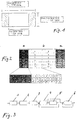
- the corresponding 16: 9 image formats can be seen in FIG. 1, where S stands for columns and Z for rows.
- the center of the 16: 9 picture becomes a 4: 3 QCIF or CIF picture extracted, which for example corresponds to the H. 261 standard is encoded and transmitted.
- the remaining Image areas, right and left of the extracted Standard image are as Additional image information with the H. 261 algorithms for Data reduction (DCT, motion estimation) encoded and in the GSPARE field according to chapter 4.2.2 of the H. 261 standard transfer.
- DCT Data reduction
- H. 261 standard In this, in H. 261 data stream already existing GSPARE field, information can be arbitrary Size can be transferred.
- the standard provides that Decoders that cannot evaluate this information, they discard and after the end of the GSPARE field the for further decode the relevant data stream.
- a picture to be coded according to H. 261 is divided into so-called group of blocks (GOB).
- a GOB consists of 176 x 48 luminance and 88 x 24 chrominance pixels or from 33 Macroblocks (MB) of 16 x 16 pixels each (Chapter 4.2.2, 4.2.3 / H. 261).
- Figure 2 shows the arrangement of the GOBs and Mbs as well as the 16: 9 extension based on a CIF image.
- the gray hatched areas a show the enlargement of the image on 16: 9.
- the designations 1ex to 12ex indicate the Extensions of the corresponding GOBs 1 to 12 to the Edges.
- the middle white area b has the standard CIF image width on.
- FIG. 3 shows the transmission of the information of the expanded image format in the H. 261 bit stream.
- 1 is the group of blocks start code ", with 2 the group number ", with 3 the quantization information, with 4 the extra insertion information ", which is set to logical 1 if the subsequent optional data field 5 GSPARE is available in H. 261 standard.
- Block 6 denotes the MB (macroblock layer) according to Chapter 4.2.3 of H. 261.
- the blocks The macro block data of the image format extension are contained in 4 and 5.
- the GSPARE field 5 is only inserted until all symbols necessary for coding the macro blocks such as MBA (macroblock address), MTYPE (information about the data elements provided in the macro block), MQUANT (type of used quantization), MVD (motion vector data), CBP (identifies blocks for which the transformation coefficients are to be transmitted), TCOEFF (transformation coefficients) and EOB (end of block identifier) in accordance with Chapter 4.2.3 and 4.2.4.
- the invention allows the transmission of additional image data to extend a transmitted QCIF or CIF image from 4: 3 image format to a panorama format with for example an aspect ratio of 16: 9 within an H. 320 Image data stream with full downward compatibility.
- the Use other than that described here Extended 16: 9 picture format is the same too realize so that the invention does not affect the image format 16: 9 is restricted as an expanded picture format.
Landscapes
- Engineering & Computer Science (AREA)
- Multimedia (AREA)
- Signal Processing (AREA)
- Computer Graphics (AREA)
- General Engineering & Computer Science (AREA)
- Compression Or Coding Systems Of Tv Signals (AREA)
- Television Systems (AREA)
- Controls And Circuits For Display Device (AREA)
Abstract
Description

Claims (7)
- Verfahren zur Aufbereitung von Bilddaten für ein erweitertes Bildformat mit folgenden Schritten:Die in einem erweiterten Bildformat angelieferten Bilddaten werden zerlegt in erste Bilddaten, die einem nichterweiterten Bildformat entsprechen sowie in Zusatzbilddaten, die die Bildinformation für die Bildformaterweiterung enthalten,die ersten Bilddaten werden nach einem vorgegebenen Übertragungsstandard kodiert,die Zusatzbilddaten werden einer Datenreduktion unterzogen und in den vorgegebenen Übertragungsstandard auf einem Zusatzdatenfeld eingebunden.
- Verfahren nach Anspruch 1, dadurch gekennzeichnet, daß das von einer Kamera im erweiterten Bildformat erzeugte Bild auf ein im erweiterten Bildformat erweitertes QCIF oder CIF-Bild skaliert wird bei gleichbleibender vertikaler Auflösung, daß aus der Mitte dieses skalierten Bildes ein QCIF- bzw. CIF-Bild im nichterweiterten Bildformat extrahiert wird und daß die verbleibenden Bildbereiche als Zusatzbilddaten der Datenreduktion unterzogen werden.
- Verfahren nach Anspruch 1 oder 2, dadurch gekennzeichnet, daß als erweitertes Bildformat das 16:9 Bildformat verwendet wird und als nichterweitertes Bildformat das 4:3 Bildformat.
- Verfahren nach einem der Ansprüche 1 bis 3, dadurch gekennzeichnet, daß als vorgegebener Übertragungsstandard der Standard gemäß ITU-T Empfehlung H. 261 verwendet wird.
- Verfahren nach Anspruch 4, dadurch gekennzeichnet, daß die Zusatzbilddaten nach der Datenreduktion in das Zusatzdatenfeld GSPARE des H. 261 Standards eingebunden werden.
- Verfahren nach einem der Ansprüche 1 bis 5, dadurch gekennzeichnet, daß ein Dekoder, der die Information des Zusatzdatenfeldes nicht auswerten kann, die Information dieses Zusatzdatenfeldes bei der Dekodierung verwirft.
- Verfahren nach einem der Ansprüche 1 bis 6, dadurch gekennzeichnet, daß die ersten Bilddaten sowie die Zusatzbilddaten in einen Datenstrom nach dem H. 320 Standard für Bildtelefonanwendungen eingebunden werden.
Applications Claiming Priority (2)
| Application Number | Priority Date | Filing Date | Title |
|---|---|---|---|
| DE19836294A DE19836294A1 (de) | 1998-08-11 | 1998-08-11 | Verfahren zur Aufbereitung von Bilddaten für ein erweitertes Bildformat |
| DE19836294 | 1998-08-11 |
Publications (3)
| Publication Number | Publication Date |
|---|---|
| EP0980184A2 true EP0980184A2 (de) | 2000-02-16 |
| EP0980184A3 EP0980184A3 (de) | 2002-03-06 |
| EP0980184B1 EP0980184B1 (de) | 2005-11-30 |
Family
ID=7877149
Family Applications (1)
| Application Number | Title | Priority Date | Filing Date |
|---|---|---|---|
| EP99110899A Expired - Lifetime EP0980184B1 (de) | 1998-08-11 | 1999-06-08 | Verfahren zur Aufbereitung von Bilddaten für ein erweitertes Bildformat |
Country Status (4)
| Country | Link |
|---|---|
| EP (1) | EP0980184B1 (de) |
| JP (1) | JP3809036B2 (de) |
| DE (2) | DE19836294A1 (de) |
| ES (1) | ES2253849T3 (de) |
Families Citing this family (2)
| Publication number | Priority date | Publication date | Assignee | Title |
|---|---|---|---|---|
| KR100429874B1 (ko) * | 2001-07-20 | 2004-05-04 | 삼성전자주식회사 | 파노라마/워터글라스 기능 구현을 위한 영상 처리 장치 및그 방법 |
| KR100443868B1 (ko) * | 2001-10-18 | 2004-08-09 | 엘지전자 주식회사 | 영상표시기기의 영상 확대방법 및 장치 |
Family Cites Families (2)
| Publication number | Priority date | Publication date | Assignee | Title |
|---|---|---|---|---|
| JP2904975B2 (ja) * | 1991-10-30 | 1999-06-14 | 三菱電機株式会社 | ワイドアスペクト比のテレビジョン受信機 |
| JP3125552B2 (ja) * | 1993-12-28 | 2001-01-22 | 三菱電機株式会社 | テレビ会議システム |
-
1998
- 1998-08-11 DE DE19836294A patent/DE19836294A1/de not_active Withdrawn
-
1999
- 1999-06-08 ES ES99110899T patent/ES2253849T3/es not_active Expired - Lifetime
- 1999-06-08 DE DE59912856T patent/DE59912856D1/de not_active Expired - Lifetime
- 1999-06-08 EP EP99110899A patent/EP0980184B1/de not_active Expired - Lifetime
- 1999-08-10 JP JP22642299A patent/JP3809036B2/ja not_active Expired - Fee Related
Also Published As
| Publication number | Publication date |
|---|---|
| DE59912856D1 (de) | 2006-01-05 |
| DE19836294A1 (de) | 2000-02-17 |
| EP0980184B1 (de) | 2005-11-30 |
| ES2253849T3 (es) | 2006-06-01 |
| JP3809036B2 (ja) | 2006-08-16 |
| EP0980184A3 (de) | 2002-03-06 |
| JP2000078540A (ja) | 2000-03-14 |
Similar Documents
| Publication | Publication Date | Title |
|---|---|---|
| EP2198610B1 (de) | Verfahren und vorrichtung zum erstellen eines kodierten ausgangsvideostroms aus mindestens zwei kodierten eingangsvideoströmen, sowie verwendung der vorrichtung | |
| US7646736B2 (en) | Video conferencing system | |
| DE69525025T2 (de) | Anpassung von Videoübertragungsraten in Multimedia-Kommunikationssystemen | |
| DE60114812T2 (de) | Videoformat konvertierung und transkodierung von mpeg-2 in mpeg-4 | |
| AU2002355089B2 (en) | Method and apparatus for continuously receiving frames from a pluarlity of video channels and for alternatively continuously transmitting to each of a plurality of participants in a video conference individual frames containing information concerning each of said video channels | |
| DE69535553T2 (de) | Videokompression | |
| DE69630173T2 (de) | Übertragungssystem und -einrichtung für sich bewegende Bilder | |
| AU2002355089A1 (en) | Method and apparatus for continuously receiving frames from a pluarlity of video channels and for alternatively continuously transmitting to each of a plurality of participants in a video conference individual frames containing information concerning each of said video channels | |
| DE112008004040T5 (de) | Verfahren und System zum Erhöhen einer Rahmenanzeigerate | |
| EP1371229A1 (de) | Verfahren zur komprimierung und dekomprimierung von videodaten | |
| DE69227879T2 (de) | Stehbildübertragungssystem | |
| DE19643672C2 (de) | Verfahren zum Decodieren eines Videobitstroms nach MPEG-Standard | |
| DE60221807T2 (de) | Lauflängenkodierung nichtkodierter makroblöcke | |
| DE19744859B4 (de) | Verfahren zum Codieren eines binären Formsignals | |
| DE19919412B4 (de) | Decoder für einen digitalen Fernsehempfänger | |
| DE19643376C2 (de) | Verfahren zum Speichern von Daten eines Videobildes in einem Speicher | |
| DE69616850T2 (de) | Videodecodersystem | |
| EP0980184B1 (de) | Verfahren zur Aufbereitung von Bilddaten für ein erweitertes Bildformat | |
| DE19749604A1 (de) | Verfahren zum Kodieren eines Modus beim Kodieren binärer Formen | |
| EP1110407A1 (de) | Verfahren und anordnung zur codierung und decodierung eines digitalisierten bildes mit anwendung eines objektgesamtbewegungsvektors | |
| DE69806184T2 (de) | Übertragung von videodaten | |
| DE69520904T2 (de) | Bildkodierungs- und -dekodierungsmethode mit flexiblem Format für Übertragungssystem mit niedriger Datenrate | |
| DE69723358T2 (de) | Adressendekodierer für Videomatrix | |
| DE10296360T5 (de) | Video-Bitstrom-Reiniger | |
| DE4132600A1 (de) | Video-codec |
Legal Events
| Date | Code | Title | Description |
|---|---|---|---|
| PUAI | Public reference made under article 153(3) epc to a published international application that has entered the european phase |
Free format text: ORIGINAL CODE: 0009012 |
|
| AK | Designated contracting states |
Kind code of ref document: A2 Designated state(s): AT BE CH CY DE DK ES FI FR GB GR IE IT LI LU MC NL PT SE Kind code of ref document: A2 Designated state(s): CH DE ES FI FR GB IT LI NL SE |
|
| AX | Request for extension of the european patent |
Free format text: AL;LT;LV;MK;RO;SI |
|
| PUAL | Search report despatched |
Free format text: ORIGINAL CODE: 0009013 |
|
| AK | Designated contracting states |
Kind code of ref document: A3 Designated state(s): AT BE CH CY DE DK ES FI FR GB GR IE IT LI LU MC NL PT SE |
|
| AX | Request for extension of the european patent |
Free format text: AL;LT;LV;MK;RO;SI |
|
| RIC1 | Information provided on ipc code assigned before grant |
Free format text: 7H 04N 7/01 A, 7H 04N 5/44 B, 7H 04N 7/15 B |
|
| 17P | Request for examination filed |
Effective date: 20020906 |
|
| AKX | Designation fees paid |
Free format text: CH DE ES FI FR GB IT LI NL SE |
|
| GRAP | Despatch of communication of intention to grant a patent |
Free format text: ORIGINAL CODE: EPIDOSNIGR1 |
|
| GRAS | Grant fee paid |
Free format text: ORIGINAL CODE: EPIDOSNIGR3 |
|
| GRAA | (expected) grant |
Free format text: ORIGINAL CODE: 0009210 |
|
| AK | Designated contracting states |
Kind code of ref document: B1 Designated state(s): CH DE ES FI FR GB IT LI NL SE |
|
| REG | Reference to a national code |
Ref country code: CH Ref legal event code: NV Representative=s name: SCINTILLA AG, DIREKTION Ref country code: GB Ref legal event code: FG4D Free format text: NOT ENGLISH Ref country code: CH Ref legal event code: EP |
|
| REF | Corresponds to: |
Ref document number: 59912856 Country of ref document: DE Date of ref document: 20060105 Kind code of ref document: P |
|
| REG | Reference to a national code |
Ref country code: SE Ref legal event code: TRGR |
|
| GBT | Gb: translation of ep patent filed (gb section 77(6)(a)/1977) |
Effective date: 20060308 |
|
| REG | Reference to a national code |
Ref country code: ES Ref legal event code: FG2A Ref document number: 2253849 Country of ref document: ES Kind code of ref document: T3 |
|
| ET | Fr: translation filed | ||
| PLBE | No opposition filed within time limit |
Free format text: ORIGINAL CODE: 0009261 |
|
| 26N | No opposition filed |
Effective date: 20060831 |
|
| PGFP | Annual fee paid to national office [announced via postgrant information from national office to epo] |
Ref country code: SE Payment date: 20091222 Year of fee payment: 12 |
|
| PGFP | Annual fee paid to national office [announced via postgrant information from national office to epo] |
Ref country code: FR Payment date: 20100706 Year of fee payment: 12 Ref country code: FI Payment date: 20100621 Year of fee payment: 12 Ref country code: ES Payment date: 20100628 Year of fee payment: 12 |
|
| PGFP | Annual fee paid to national office [announced via postgrant information from national office to epo] |
Ref country code: IT Payment date: 20100624 Year of fee payment: 12 |
|
| PGFP | Annual fee paid to national office [announced via postgrant information from national office to epo] |
Ref country code: NL Payment date: 20100622 Year of fee payment: 12 Ref country code: CH Payment date: 20100624 Year of fee payment: 12 |
|
| PGFP | Annual fee paid to national office [announced via postgrant information from national office to epo] |
Ref country code: GB Payment date: 20100401 Year of fee payment: 12 Ref country code: DE Payment date: 20100824 Year of fee payment: 12 |
|
| REG | Reference to a national code |
Ref country code: NL Ref legal event code: V1 Effective date: 20120101 |
|
| PG25 | Lapsed in a contracting state [announced via postgrant information from national office to epo] |
Ref country code: FI Free format text: LAPSE BECAUSE OF NON-PAYMENT OF DUE FEES Effective date: 20110608 |
|
| REG | Reference to a national code |
Ref country code: CH Ref legal event code: PL |
|
| REG | Reference to a national code |
Ref country code: SE Ref legal event code: EUG |
|
| GBPC | Gb: european patent ceased through non-payment of renewal fee |
Effective date: 20110608 |
|
| PG25 | Lapsed in a contracting state [announced via postgrant information from national office to epo] |
Ref country code: IT Free format text: LAPSE BECAUSE OF NON-PAYMENT OF DUE FEES Effective date: 20110608 |
|
| REG | Reference to a national code |
Ref country code: FR Ref legal event code: ST Effective date: 20120229 |
|
| REG | Reference to a national code |
Ref country code: DE Ref legal event code: R119 Ref document number: 59912856 Country of ref document: DE Effective date: 20120103 |
|
| PG25 | Lapsed in a contracting state [announced via postgrant information from national office to epo] |
Ref country code: LI Free format text: LAPSE BECAUSE OF NON-PAYMENT OF DUE FEES Effective date: 20110630 Ref country code: CH Free format text: LAPSE BECAUSE OF NON-PAYMENT OF DUE FEES Effective date: 20110630 Ref country code: FR Free format text: LAPSE BECAUSE OF NON-PAYMENT OF DUE FEES Effective date: 20110630 Ref country code: DE Free format text: LAPSE BECAUSE OF NON-PAYMENT OF DUE FEES Effective date: 20120103 |
|
| PG25 | Lapsed in a contracting state [announced via postgrant information from national office to epo] |
Ref country code: NL Free format text: LAPSE BECAUSE OF NON-PAYMENT OF DUE FEES Effective date: 20120101 |
|
| PG25 | Lapsed in a contracting state [announced via postgrant information from national office to epo] |
Ref country code: GB Free format text: LAPSE BECAUSE OF NON-PAYMENT OF DUE FEES Effective date: 20110608 |
|
| REG | Reference to a national code |
Ref country code: ES Ref legal event code: FD2A Effective date: 20130404 |
|
| PG25 | Lapsed in a contracting state [announced via postgrant information from national office to epo] |
Ref country code: SE Free format text: LAPSE BECAUSE OF NON-PAYMENT OF DUE FEES Effective date: 20110609 Ref country code: ES Free format text: LAPSE BECAUSE OF NON-PAYMENT OF DUE FEES Effective date: 20110609 |