EP0977889B1 - Verwendung von calculus - Google Patents
Verwendung von calculus Download PDFInfo
- Publication number
- EP0977889B1 EP0977889B1 EP98917357A EP98917357A EP0977889B1 EP 0977889 B1 EP0977889 B1 EP 0977889B1 EP 98917357 A EP98917357 A EP 98917357A EP 98917357 A EP98917357 A EP 98917357A EP 0977889 B1 EP0977889 B1 EP 0977889B1
- Authority
- EP
- European Patent Office
- Prior art keywords
- nucleic acid
- microbial
- calculus
- animal
- isolated
- Prior art date
- Legal status (The legal status is an assumption and is not a legal conclusion. Google has not performed a legal analysis and makes no representation as to the accuracy of the status listed.)
- Expired - Lifetime
Links
Images
Classifications
-
- C—CHEMISTRY; METALLURGY
- C12—BIOCHEMISTRY; BEER; SPIRITS; WINE; VINEGAR; MICROBIOLOGY; ENZYMOLOGY; MUTATION OR GENETIC ENGINEERING
- C12Q—MEASURING OR TESTING PROCESSES INVOLVING ENZYMES, NUCLEIC ACIDS OR MICROORGANISMS; COMPOSITIONS OR TEST PAPERS THEREFOR; PROCESSES OF PREPARING SUCH COMPOSITIONS; CONDITION-RESPONSIVE CONTROL IN MICROBIOLOGICAL OR ENZYMOLOGICAL PROCESSES
- C12Q1/00—Measuring or testing processes involving enzymes, nucleic acids or microorganisms; Compositions therefor; Processes of preparing such compositions
- C12Q1/68—Measuring or testing processes involving enzymes, nucleic acids or microorganisms; Compositions therefor; Processes of preparing such compositions involving nucleic acids
- C12Q1/6876—Nucleic acid products used in the analysis of nucleic acids, e.g. primers or probes
- C12Q1/6888—Nucleic acid products used in the analysis of nucleic acids, e.g. primers or probes for detection or identification of organisms
- C12Q1/689—Nucleic acid products used in the analysis of nucleic acids, e.g. primers or probes for detection or identification of organisms for bacteria
Definitions
- the present invention relates to the use of dental calculus as a source of genetic information and in particular to the extraction and characterisation of microbial DNA from the dental calculus of long dead mammals.
- Dental calculus is a solid mixture of mineral salts, mainly calcium based, which builds up on the surface of teeth and certain other organs, but it may also contain phosphorus, magnesium, fluorine, cobalt, silicon and sodium (R ⁇ lla, G. et al., (1989) in Recent Advances in the Study of Dental Calculus Ed. J. M. ten Cate, IEL Press pp 123-126; Glock, G. E. and Murray, M. M. (1938) J. Dental Res. 17:257-264).
- Dental calculus also comprises an organic phase of bacteria and bacterial remnants, cell products and various compounds found in saliva and gingival fluid (Eggen, K. H., and Rolla, G. (1985) Scand. J. Dent. Res. 93:426-431). Dental calculus may occur supra- and sub-gingivally and there may be differences in the abundance, distribution and structure between the types.
- Calculus is found in the ducts, passages, hollow organs, cysts and the surfaces of teeth in humans and other mammals. Calculus persists for many years after the death of the organism and well preserved calculus has been detected, for example, on the teeth of bodies in excess of 5,000 years old. In contrast, all the soft tissues of an organism decompose unless the body is mummified, frozen or otherwise preserved.
- calculus forms to a greater or lesser extent on all mammalian teeth.
- a major clinical feature of calculus is that it binds tenaciously to the teeth and is difficult to remove. Its formation is spontaneous and effected by diet, chewing behaviour and the micro-environment of the mouth in particular pH. Additionally, there may be some genetic predisposition towards the greater or lesser formation of calculus and certain ethnic groups e.g. Asians, are particularly affected.
- pH is a determining factor in the type of calcium salts which predominate in calculus.
- urinary calculi comprising mainly calcium carbonate
- those with neutral urine develop calculi comprising calcium phosphate and individuals exhibiting low pH urine, who develp calculi, will produce stones rich in uric acid salts.
- Diet can affect the formation of calculus in different ways, for example, hard, abrasive foods are believed to assist in preventing calculus formation on the teeth by mechanical agitation.
- Dietary silicon can, under certain circumstances promote the formation of urinary calculi in cattle and sheep and there is some suggestion that a high silicon diet, particularly from rice, correlates with increased formation of dental calculus (Gaare, D. (1989) J. Dent. Res. 68:(Spec Issue)1710-1711; R ⁇ lla et al., 1989).
- the isolated nucleic acid for example from calcified microorganisms embedded in dental calculus, may be isolated in a form amenable to manipulation by recombinant DNA technology and thus may be amplified, sequenced, cloned, expressed, mutated and otherwise manipulated by any molecular biology technique known in the art. Such amenability to manipulation may thus facilitate the study of gene sequences of microorganisms which lived many thousands of years ago.
- calculus from living animals may also be used as a source of nucleic acid for genetic study.
- the present invention provides the use of animal dental calculus as a source of nucleic acid, wherein said nucleic acid is obtained or isolated directly from calcified microbial cells or cellular material embedded in said calculus, or wherein said nucleic acid is derived by copying or amplifying the said directly isolated nucleic acid.
- the invention provides a useful source of nucleic acid for genetic study.
- the calculus may be obtained from any animal body on or in which it is laid down. Conveniently however, the animal will be any mammalian animal.
- the nucleic acid may be DNA or RNA. Preferably, however, it is DNA. More preferably if the DNA is of eukaryotic origin, it is nuclear DNA.
- the genetic material is from microorganisms which may be isolated from dental calculus, formed during the life of the host, on or in any part of the body.
- a particularly advantageous feature of the present invention is that the microbial material isolated from the calculus, may comprise ancient microorganisms. In other words the host body, from which the calculus is obtained may have been long dead. Thus, the calculus may be obtained not only from intact bodies which may be dead or alive but also from skeletal remains.
- the invention thus encompasses the use of a living animal body as a source of the calculus, or a dead body, which may be recently or long dead.
- the dead body may be intact in its entirety, or body parts may be used, with varying degrees of decomposition.
- Skeletal material devoid of soft tissue may be used.
- "Long dead” as used herein encompasses anything from tens to thousands of years from death. In other words, the body or body part, from which the calculus is obtained, may have died from 1 day to up to 20,000 years or more ago, and preferably, up to 10,000 years ago.
- the invention thus lends itself well to the study of archaeological or archive material.
- a preferred aspect of the invention can thus be seen to provide a method of obtaining microbial nucleic acid, characterised in that the said nucleic acid is derived from microorganisms contained in the dental calculus of an animal host.
- microorganism is used within the context of this application to cover all microbial organisms or cellular material and in particular bacteria, fungi and viruses as well as plant cells such as algae including blue-green algae, and protozoa. Spores from sporulating bacteria or fungi are also within the scope of the term microorganism as are plasmids, bacteriophage and mycoplasmas.
- microorganisms associated with the mammalian body may be of any species or genus and of course may be commensals, pathogens or saprophytes.
- the invention is not limited to isolating the nucleic acid of microorganisms from calculus, and the nucleic acid may be obtained from any cells or cellular material eg. organelles which are contained in the calculus, including all eukaryotic cells which may be plant or animal cells or protoplasts, and include the cells of the host.
- the information gained from calculus-derived microbial genetic information may be useful in the study of population movement and interaction in groups of people and animals thousands of years ago.
- the calculus from which microbial DNA is extracted is of human origin.
- a particular advantage of using dental calculus as a source of microbial DNA is that it does not contain significant amounts of host DNA and hence the study of ancient microbial DNA is not complicated by host DNA contamination.
- the present invention provides a method of study of microbial genetics characterised in that microbial nucleic acids for said study are derived from animal dental calculus.
- genetic study is used herein in its broadest sense to encompass all forms of study or analysis related to the genome, including not only epidemiological studies and comparisons between different organisms, or organisms obtained from different sources of calculus eg. animals from different locations or of different species, but also any study or manipulation of the isolated genetic material itself eg. sequencing, cloning, expression, modification, amplification etc. Many techniques for genetic study are described for example by Sambrook et al., in "Molecular Cloning", a Laboratory manual, 2nd Edition, Cold Spring Harbour Laboratory Press, 1989.
- derived is used herein to include not only obtaining or isolating the nucleic acid directly from the calculus, but also nucleic acid derived by copying or amplifying the originally isolated source nucleic acid.
- nucleic acids from different individuals characterised in that the nucleic acids are derived from animal dental calculus.
- the "individuals” may be any animal, but advantageously will be human.
- the nucleic acids directly isolated from the calculus may be compared using any of the techniques for genetic study which are well known in the art and widely described in the literature eg. by in vitro amplification eg. by PCR and subsequent analysis of the amplification products eg. by size fractionation by gel electrophoresis, restriction fragment length polymorphism analysis (RFLP), hybridisation-based methods, sequencing, etc.
- RFLP restriction fragment length polymorphism analysis
- the methods employed in the extraction, characterisation and molecular manipulation of the extracted genetic information may all be performed by techniques used in the art and a process for the preparation of isolated nucleic acids of host or microbial origin is provide herein, characterised in that the nucleic acids are directly isolated from animal dental calculus.
- Another approach is to subject the washed calculus to a process of demineralisation by suspending the isolated calculus in an aqueous solution comprising EDTA, or a similar chelator of divalent cations, which binds calcium ions, the major substituent of calculus, and magnesium ions. Chelation of magnesium ions inhibits DNAse enzyme activity which would degrade the DNA.
- Hall, R. C. et al., (1996) Eur. J. Oral Sci. 104:285-291 in the extraction of native DNA from teeth.
- DNA within the calculus may be amplified in situ using PCR.
- the resultant fragments may be hybridised in situ and visualised or may be extracted and purified.
- This technique involves sectioning the calculus in a similar manner to that used for electron microscopy and then creating a PCR reaction chamber on a glass slide by adding the PCR mixture to the section under analysis and enclosing the mixture using a rubber seal. The PCR reaction may then be carried out as appropriate.
- Silica based purification methods as, for example, described by Hoss, M. & Paabo, S.(1993) Nucleic Acids Res. 21:3913-3914, may also be used successful in the extraction of nucleic acid from calculus.
- Yet a further possibility may be the breaking down of silicate junctions which form the cornerstones of calculus by using weak acids and extracting the nucleic acids therefrom.
- nucleic acids may be extracted by any known methods, methods in which an appreciable amount of nucleic acid is lost during the extraction and purification process for example, those involving solvent extraction e.g. phenol/chloroform extraction, precipitation for example using precipitants such as salts, or the binding of nucleic acid to various types of matrices are less preferred, since it is desirable to perform the purification with as little loss as possible.
- solvent extraction e.g. phenol/chloroform extraction
- precipitation for example using precipitants such as salts
- binding of nucleic acid to various types of matrices are less preferred, since it is desirable to perform the purification with as little loss as possible.
- any microbial cell walls which remain intact within the calculus matrix may be disrupted via a series of boiling and freezing (in liquid nitrogen) steps or by using enzymic degradation, for example lysozyme and/or mutanolysine and a proteinase such as Proteinase K.
- enzymic degradation for example lysozyme and/or mutanolysine and a proteinase such as Proteinase K.
- Other methods exist in the art which are suitable for removing or disrupting cell walls or achieving cell lysis as will be easily recognised by the skilled person.
- nucleic acids may be run through an agarose gel by electrophoresis prior to subjecting them to PCR or other manipulations, since this has the effect of removing most inhibitors of the PCR or other reactions. Clearly, this may not always be possible when working with very small samples.
- PCR amplification and any other techniques known and used within molecular biology may then be used to amplify, sequence, clone, manipulate and express the DNA.
- PCR primers for example, suitable for species identification and classification may be designed and the purified DNA applied directly to a PCR reaction mixture.
- the resultant products of the PCR reaction may then be sequenced to allow identification and initial characterization of the origin of the DNA in question.
- Any of the techniques known in the art and described in the literature for the manipulation or detection of nucleic acids may be used, including in addition to any of the in vitro amplification methods or sequencing methods, methods for detecting point or other mutations, base transitions etc.
- human genetic information derived from host cell remnants are amenable to techniques such as mitochondrial DNA sequence analysis.
- nucleic acid may be studied in situ ie. directly on the calculus material, by sectioning the calculus using micro-manipulation techniques, or it may be studied by extracting the nucleic acid from individual cell remnants per se and then purifying it.
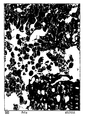
- Figure 1 shows an electron micrograph of a section of calculus taken from the teeth of a 5,000 year old body, believed to be that of an ancient Norwegian farmer.
- the round structures are calcified microorganisms. Magnification is 10,000X.
- Dental calculus was isolated mechanically from the teeth of a 5,000 year old non-mummified skeleton, thought to be that of a farmer. The calculus was washed in an antimicrobial solution to clean the surface, crypts and ducts and remove contaminants. It was washed again and then sectioned using standard techniques for electron microscopy studies. Electron micrographs show bacteria embedded within the calculus (see Fig. 1). The bacteria within the calculus are observed as round bodies and the morphology of the microorganisms is well preserved.
- the calculus is carefully scraped from the surface of the teeth and washed as described in Example 1.
- the calculus is suspended in 250 mM EDTA (pH 8.0) containing 20 mg/ml lysozyme and 1200 units/ml mutanolysine.
- the mixture is incubated for 30 minutes at 37°C and then SDS and proteinase-K are added to a final concentration of 0.1% and 50 ⁇ g/ml, respectively.
- the mixture is incubated for a further 30 minutes at 65°C.
- the mixture is subjected to 5 sequential cycles of boiling for 1 minute followed by freezing in liquid nitrogen for 1 minute.
- the resultant liquid is dialysed for 30 minutes on a filter against a 10 mM tris buffer (pH 8.0; on a petri-dish).
- the nucleic acid containing liquid is transferred to an Eppendorf tube and the nucleic acid dehydrated by vacuum (in a "speedvac").
- the dehydrated samples are resuspended in an appropriate volume of dH 2 O (5-20 ⁇ l).
- DNA prepared by this method may then be applied directly to PCR reaction mixture for PCR amplification. Resultant strands of DNA may be separated by agarose-gel-electrophoresis and purified therefrom by standard methods and the purified DNA sequenced.
Landscapes
- Chemical & Material Sciences (AREA)
- Life Sciences & Earth Sciences (AREA)
- Organic Chemistry (AREA)
- Analytical Chemistry (AREA)
- Proteomics, Peptides & Aminoacids (AREA)
- Zoology (AREA)
- Wood Science & Technology (AREA)
- Engineering & Computer Science (AREA)
- Health & Medical Sciences (AREA)
- Bioinformatics & Cheminformatics (AREA)
- General Health & Medical Sciences (AREA)
- Molecular Biology (AREA)
- Biophysics (AREA)
- Immunology (AREA)
- Physics & Mathematics (AREA)
- Biochemistry (AREA)
- Biotechnology (AREA)
- General Engineering & Computer Science (AREA)
- Microbiology (AREA)
- Genetics & Genomics (AREA)
- Measuring Or Testing Involving Enzymes Or Micro-Organisms (AREA)
- Pharmaceuticals Containing Other Organic And Inorganic Compounds (AREA)
- Compositions Of Macromolecular Compounds (AREA)
- Compounds Of Alkaline-Earth Elements, Aluminum Or Rare-Earth Metals (AREA)
- Medicines That Contain Protein Lipid Enzymes And Other Medicines (AREA)
- Lubricants (AREA)
- Medicines Containing Material From Animals Or Micro-Organisms (AREA)
- Medicines Containing Plant Substances (AREA)
- Micro-Organisms Or Cultivation Processes Thereof (AREA)
Claims (19)
- Verwendung von Zahnstein eines Tieres als Nukleinsäurequelle, wobei die Nukleinsäure aus kalzifizierten, im Zahnstein eingebetteten, mikrobiellen Zellen oder Zellmaterial, direkt erhalten oder isoliert wird, oder wobei die Nukleinsäure durch Kopieren oder Amplifizieren der direkt isolierten Nukleinsäure abgeleitet ist.
- Verwendung nach Anspruch 1, wobei die Nukleinsäure für genetisches Studium verwendet wird.
- Verwendung nach Anspruch 2, wobei das Tier ein Säugetier ist.
- Verwendung nach Anspruch 3, wobei das Säugetier ein menschliches Wesen ist.
- Verwendung nach einem der vorhergehenden Ansprüche, wobei die Nukleinsäure DNA ist.
- Verwendung nach Anspruch 5, wobei die DNA nukleäre DNA ist.
- Verwendung nach einem der Ansprüche 1 bis 6, wobei der Zahnstein während der Lebenszeit des Tieres gebildet ist.
- Verwendung nach einem der Ansprüche 1 bis 7, wobei das Tier mehr als 20.000 Jahre tot ist.
- Verwendung nach Anspruch 8, wobei das Tier 500 bis 1.000 Jahre tot ist.
- Verwendung nach Anspruch 8 oder 9, wobei das Tier in Form von Knochenresten vorliegt.
- Verwendung nach einem der Ansprüche 1 bis 10, wobei die mikrobiellen Zellen oder das Zellmaterial aus einem Organismus sind, der unter den Folgenden ausgewählt ist: Bakterien, Pilzen, Viren, Pflanzenzellen, Algen, Blaualgen, Protozoen, Sporen, Bakteriophagen und Mycoplasmen.
- Verwendung nach Anspruch 11, wobei der mikrobielle Organismus mit einem Erkrankungsprozess zusammenhängt.
- Verwendung nach Anspruch 12, wobei der Organismus ausgewählt ist unter den Folgenden: Coliformen, Enteropathogenen, Streptococci, Mycobakterien und Staphylococci.
- Verwendung nach einem der Ansprüche 1 bis 13, wobei die Nukleinsäure antimikrobielle Substanzen oder Produkte, die mit mikrobiellen Resistenzmechanismen gegen antimikrobielle Produkte zusammenhängen, kodiert.
- Verwendung nach einem der Ansprüche 2 bis 14, wobei das genetische Studium die mikrobielle Epidemiologie ist.
- Verfahren zur Gewinnung einer mikrobiellen Nukleinsäure, dadurch gekennzeichnet, dass die Nukleinsäure aus kalzifizierten Zellen oder Zellmaterial aus mikrobiellen Organismen, die im Zahnstein eines Tieres eingebettet sind, direkt gewonnen oder isoliert wird, oder durch Kopieren oder Amplifizieren der direkt isolierten Nukleinsäure abgeleitet ist.
- Verfahren zum Studium mikrobieller Genetik, dadurch gekennzeichnet, dass die mikrobielle Nukleinsäure für das Studium aus kalzifizierten, im Zahnstein eines Tieres eingebetteten, mikrobiellen Zellen oder Zellmaterial, direkt gewonnen oder isoliert ist, oder durch Kopieren oder Amplifizieren der direkt isolierten Nukleinsäure abgeleitet ist.
- Verfahren zum Vergleichen von Nukleinsäuren aus verschiedenen Individuen, dadurch gekennzeichnet, dass die Nukleinsäuren aus kalzifizierten, im Zahnstein eines Tieres eingebetteten, mikrobiellen Zellen oder Zellmaterial, direkt gewonnen oder isoliert sind, oder durch Kopieren oder Amplifizieren der direkt isolieren Nukleinsäuren abgeleitet sind.
- Verfahren zur Präparierung einer isolierten Nukleinsäure mikrobiellen Ursprungs, wobei die Nukleinsäure aus kalzifizierten, im Zahnstein eines Tieres eingebetteten, mikrobiellen Zellen oder Zellmaterial, direkt gewonnen oder isoliert wird, oder durch Kopieren oder Amplifizieren der direkt isolierten Nukleinsäure abgeleitet wird.
Applications Claiming Priority (3)
| Application Number | Priority Date | Filing Date | Title |
|---|---|---|---|
| GBGB9707775.4A GB9707775D0 (en) | 1997-04-17 | 1997-04-17 | Use |
| GB9707775 | 1997-04-17 | ||
| PCT/GB1998/001083 WO1998046791A1 (en) | 1997-04-17 | 1998-04-14 | Uses of calculus |
Publications (2)
| Publication Number | Publication Date |
|---|---|
| EP0977889A1 EP0977889A1 (de) | 2000-02-09 |
| EP0977889B1 true EP0977889B1 (de) | 2004-01-14 |
Family
ID=10810929
Family Applications (1)
| Application Number | Title | Priority Date | Filing Date |
|---|---|---|---|
| EP98917357A Expired - Lifetime EP0977889B1 (de) | 1997-04-17 | 1998-04-14 | Verwendung von calculus |
Country Status (10)
| Country | Link |
|---|---|
| US (1) | US6322984B1 (de) |
| EP (1) | EP0977889B1 (de) |
| JP (1) | JP2001519670A (de) |
| AT (1) | ATE257862T1 (de) |
| AU (1) | AU744459B2 (de) |
| CA (1) | CA2286874C (de) |
| DE (1) | DE69821102D1 (de) |
| GB (1) | GB9707775D0 (de) |
| NO (1) | NO995068L (de) |
| WO (1) | WO1998046791A1 (de) |
Families Citing this family (1)
| Publication number | Priority date | Publication date | Assignee | Title |
|---|---|---|---|---|
| JP2007279204A (ja) * | 2006-04-04 | 2007-10-25 | Seiko Epson Corp | プロジェクタ |
Family Cites Families (1)
| Publication number | Priority date | Publication date | Assignee | Title |
|---|---|---|---|---|
| CA2242430A1 (en) * | 1996-01-10 | 1997-07-17 | Board Of Regents, The University Of Texas System | Calcium binding proteolipid compositions and methods |
-
1997
- 1997-04-17 GB GBGB9707775.4A patent/GB9707775D0/en active Pending
-
1998
- 1998-04-14 AT AT98917357T patent/ATE257862T1/de not_active IP Right Cessation
- 1998-04-14 DE DE69821102T patent/DE69821102D1/de not_active Expired - Lifetime
- 1998-04-14 AU AU70600/98A patent/AU744459B2/en not_active Ceased
- 1998-04-14 JP JP54362298A patent/JP2001519670A/ja active Pending
- 1998-04-14 US US09/403,168 patent/US6322984B1/en not_active Expired - Fee Related
- 1998-04-14 EP EP98917357A patent/EP0977889B1/de not_active Expired - Lifetime
- 1998-04-14 WO PCT/GB1998/001083 patent/WO1998046791A1/en not_active Ceased
- 1998-04-14 CA CA002286874A patent/CA2286874C/en not_active Expired - Fee Related
-
1999
- 1999-10-15 NO NO995068A patent/NO995068L/no not_active Application Discontinuation
Also Published As
| Publication number | Publication date |
|---|---|
| DE69821102D1 (de) | 2004-02-19 |
| EP0977889A1 (de) | 2000-02-09 |
| AU744459B2 (en) | 2002-02-21 |
| ATE257862T1 (de) | 2004-01-15 |
| US6322984B1 (en) | 2001-11-27 |
| NO995068D0 (no) | 1999-10-15 |
| AU7060098A (en) | 1998-11-11 |
| CA2286874A1 (en) | 1998-10-22 |
| NO995068L (no) | 1999-12-15 |
| JP2001519670A (ja) | 2001-10-23 |
| WO1998046791A1 (en) | 1998-10-22 |
| CA2286874C (en) | 2005-06-07 |
| GB9707775D0 (en) | 1997-06-04 |
Similar Documents
| Publication | Publication Date | Title |
|---|---|---|
| Aguilar-Toalá et al. | Assessment of multifunctional activity of bioactive peptides derived from fermented milk by specific Lactobacillus plantarum strains | |
| Sedgley et al. | Antibiotic resistance gene transfer between Streptococcus gordonii and Enterococcus faecalis in root canals of teeth ex vivo | |
| EP3494206B1 (de) | Milchsäurebakterien und deren verwendung zur vorbeugenden, inhibierenden und oder reduzierenden behandlung der bildung von bakteriellen biofilmen. | |
| JP5921546B2 (ja) | 抗カリエス組成物およびプロバイオティクス/プレバイオティクス | |
| Loozen et al. | Effect of Bdellovibrio bacteriovorus HD100 on multispecies oral communities | |
| Wu et al. | Characterization of biofilm formed by multidrug resistant Pseudomonas aeruginosa DC-17 isolated from dental caries | |
| Rahman et al. | Isolation and identification of oral bacteria and characterization for bacteriocin production and antimicrobial sensitivity | |
| EP1504088B1 (de) | Zur therapie und prophylaxe bakterieller infektionen geeignete bakteriophagen | |
| KR100924661B1 (ko) | 황색포도상구균 특이적 사멸능을 갖는 포도비리대박테리오파지 | |
| US20030180319A1 (en) | Antibacterial agents | |
| CA2286874C (en) | Uses of calculus | |
| KR100914163B1 (ko) | 황색포도상구균에 특이적인 포도비리대 박테리오파지유래의 항균 단백질 | |
| Abdel-Salam et al. | Enhancement of nematicidal potential through cloning and expression of chitinase gene from Bacillus subtilis subsp. Subtilis BTN7A strain | |
| Reed | New concepts regarding the pathogenesis of amebiasis | |
| US5556774A (en) | Selective detection of viable and infectious cryptosporidium oocysts with the help of the polymerase chain reaction (PCR) | |
| AU2002328340B2 (en) | Nucleic acid free ghost preparations | |
| ES2229492T3 (es) | Plasmidos bacterianos. | |
| AU2002328340A1 (en) | Nucleic acid free ghost preparations | |
| Hezam | Evaluate the efficacy of probiotic lactobacilli on growth and biofilm formation in Streptococcus mutans isolated from gingivitis | |
| KR102577258B1 (ko) | 광범위성 항균 활성을 가지는 항균펩티드를 이용하여 용해가 어려운 박테리아로부터 고품질의 핵산을 추출하는 방법 | |
| Madhusudhan et al. | Isolation and characterization of antibacterial phylloplane bacteria Bacillus subtilis isolated from Terminalia arjuna leaves | |
| KR20170086400A (ko) | 카탈라아제를 생산하는 균주 및 이를 포함하는 염증성 장질환 예방용 및 치료용 약학적 조성물 | |
| Atiah et al. | Purification and characterization of a novel enterocins produced by Enterococcus hirae isolated from the fecal matter of swine inhibits growth of Actinomyces hyovaginalis. | |
| Shields | Extracellular DNA in head and neck biofilms | |
| JP5138197B2 (ja) | Lg21株用プライマー及び該プライマーを用いた検出方法 |
Legal Events
| Date | Code | Title | Description |
|---|---|---|---|
| PUAI | Public reference made under article 153(3) epc to a published international application that has entered the european phase |
Free format text: ORIGINAL CODE: 0009012 |
|
| 17P | Request for examination filed |
Effective date: 19991117 |
|
| AK | Designated contracting states |
Kind code of ref document: A1 Designated state(s): AT BE CH CY DE DK ES FI FR GB GR IE IT LI LU MC NL PT SE |
|
| 17Q | First examination report despatched |
Effective date: 20001228 |
|
| GRAH | Despatch of communication of intention to grant a patent |
Free format text: ORIGINAL CODE: EPIDOS IGRA |
|
| GRAS | Grant fee paid |
Free format text: ORIGINAL CODE: EPIDOSNIGR3 |
|
| GRAA | (expected) grant |
Free format text: ORIGINAL CODE: 0009210 |
|
| AK | Designated contracting states |
Kind code of ref document: B1 Designated state(s): AT BE CH CY DE DK ES FI FR GB GR IE IT LI LU MC NL PT SE |
|
| PG25 | Lapsed in a contracting state [announced via postgrant information from national office to epo] |
Ref country code: NL Free format text: LAPSE BECAUSE OF FAILURE TO SUBMIT A TRANSLATION OF THE DESCRIPTION OR TO PAY THE FEE WITHIN THE PRESCRIBED TIME-LIMIT Effective date: 20040114 Ref country code: LI Free format text: LAPSE BECAUSE OF FAILURE TO SUBMIT A TRANSLATION OF THE DESCRIPTION OR TO PAY THE FEE WITHIN THE PRESCRIBED TIME-LIMIT Effective date: 20040114 Ref country code: IT Free format text: LAPSE BECAUSE OF FAILURE TO SUBMIT A TRANSLATION OF THE DESCRIPTION OR TO PAY THE FEE WITHIN THE PRESCRIBED TIME-LIMIT;WARNING: LAPSES OF ITALIAN PATENTS WITH EFFECTIVE DATE BEFORE 2007 MAY HAVE OCCURRED AT ANY TIME BEFORE 2007. THE CORRECT EFFECTIVE DATE MAY BE DIFFERENT FROM THE ONE RECORDED. Effective date: 20040114 Ref country code: FR Free format text: LAPSE BECAUSE OF FAILURE TO SUBMIT A TRANSLATION OF THE DESCRIPTION OR TO PAY THE FEE WITHIN THE PRESCRIBED TIME-LIMIT Effective date: 20040114 Ref country code: FI Free format text: LAPSE BECAUSE OF FAILURE TO SUBMIT A TRANSLATION OF THE DESCRIPTION OR TO PAY THE FEE WITHIN THE PRESCRIBED TIME-LIMIT Effective date: 20040114 Ref country code: CY Free format text: LAPSE BECAUSE OF FAILURE TO SUBMIT A TRANSLATION OF THE DESCRIPTION OR TO PAY THE FEE WITHIN THE PRESCRIBED TIME-LIMIT Effective date: 20040114 Ref country code: CH Free format text: LAPSE BECAUSE OF FAILURE TO SUBMIT A TRANSLATION OF THE DESCRIPTION OR TO PAY THE FEE WITHIN THE PRESCRIBED TIME-LIMIT Effective date: 20040114 Ref country code: BE Free format text: LAPSE BECAUSE OF FAILURE TO SUBMIT A TRANSLATION OF THE DESCRIPTION OR TO PAY THE FEE WITHIN THE PRESCRIBED TIME-LIMIT Effective date: 20040114 Ref country code: AT Free format text: LAPSE BECAUSE OF FAILURE TO SUBMIT A TRANSLATION OF THE DESCRIPTION OR TO PAY THE FEE WITHIN THE PRESCRIBED TIME-LIMIT Effective date: 20040114 |
|
| REG | Reference to a national code |
Ref country code: GB Ref legal event code: FG4D |
|
| REG | Reference to a national code |
Ref country code: CH Ref legal event code: EP |
|
| RAP2 | Party data changed (patent owner data changed or rights of a patent transferred) |
Owner name: ANGENE AS |
|
| REG | Reference to a national code |
Ref country code: IE Ref legal event code: FG4D |
|
| REF | Corresponds to: |
Ref document number: 69821102 Country of ref document: DE Date of ref document: 20040219 Kind code of ref document: P |
|
| NLT2 | Nl: modifications (of names), taken from the european patent patent bulletin |
Owner name: ANGENE AS |
|
| PG25 | Lapsed in a contracting state [announced via postgrant information from national office to epo] |
Ref country code: SE Free format text: LAPSE BECAUSE OF FAILURE TO SUBMIT A TRANSLATION OF THE DESCRIPTION OR TO PAY THE FEE WITHIN THE PRESCRIBED TIME-LIMIT Effective date: 20040414 Ref country code: LU Free format text: LAPSE BECAUSE OF NON-PAYMENT OF DUE FEES Effective date: 20040414 Ref country code: GR Free format text: LAPSE BECAUSE OF FAILURE TO SUBMIT A TRANSLATION OF THE DESCRIPTION OR TO PAY THE FEE WITHIN THE PRESCRIBED TIME-LIMIT Effective date: 20040414 Ref country code: DK Free format text: LAPSE BECAUSE OF FAILURE TO SUBMIT A TRANSLATION OF THE DESCRIPTION OR TO PAY THE FEE WITHIN THE PRESCRIBED TIME-LIMIT Effective date: 20040414 |
|
| PG25 | Lapsed in a contracting state [announced via postgrant information from national office to epo] |
Ref country code: DE Free format text: LAPSE BECAUSE OF FAILURE TO SUBMIT A TRANSLATION OF THE DESCRIPTION OR TO PAY THE FEE WITHIN THE PRESCRIBED TIME-LIMIT Effective date: 20040415 |
|
| PG25 | Lapsed in a contracting state [announced via postgrant information from national office to epo] |
Ref country code: ES Free format text: LAPSE BECAUSE OF FAILURE TO SUBMIT A TRANSLATION OF THE DESCRIPTION OR TO PAY THE FEE WITHIN THE PRESCRIBED TIME-LIMIT Effective date: 20040425 |
|
| PG25 | Lapsed in a contracting state [announced via postgrant information from national office to epo] |
Ref country code: MC Free format text: LAPSE BECAUSE OF NON-PAYMENT OF DUE FEES Effective date: 20040430 |
|
| NLV1 | Nl: lapsed or annulled due to failure to fulfill the requirements of art. 29p and 29m of the patents act | ||
| REG | Reference to a national code |
Ref country code: CH Ref legal event code: PL |
|
| PLBE | No opposition filed within time limit |
Free format text: ORIGINAL CODE: 0009261 |
|
| STAA | Information on the status of an ep patent application or granted ep patent |
Free format text: STATUS: NO OPPOSITION FILED WITHIN TIME LIMIT |
|
| 26N | No opposition filed |
Effective date: 20041015 |
|
| EN | Fr: translation not filed | ||
| PGFP | Annual fee paid to national office [announced via postgrant information from national office to epo] |
Ref country code: IE Payment date: 20050404 Year of fee payment: 8 |
|
| PGFP | Annual fee paid to national office [announced via postgrant information from national office to epo] |
Ref country code: GB Payment date: 20050406 Year of fee payment: 8 |
|
| PG25 | Lapsed in a contracting state [announced via postgrant information from national office to epo] |
Ref country code: IE Free format text: LAPSE BECAUSE OF NON-PAYMENT OF DUE FEES Effective date: 20060414 Ref country code: GB Free format text: LAPSE BECAUSE OF NON-PAYMENT OF DUE FEES Effective date: 20060414 |
|
| GBPC | Gb: european patent ceased through non-payment of renewal fee |
Effective date: 20060414 |
|
| REG | Reference to a national code |
Ref country code: IE Ref legal event code: MM4A |
|
| PG25 | Lapsed in a contracting state [announced via postgrant information from national office to epo] |
Ref country code: PT Free format text: LAPSE BECAUSE OF NON-PAYMENT OF DUE FEES Effective date: 20040614 |