EP0968243B1 - Apparatus and method for molding polyester articles having low acetaldehyde content directly from the melt formation using flash tank devolatilization - Google Patents
Apparatus and method for molding polyester articles having low acetaldehyde content directly from the melt formation using flash tank devolatilization Download PDFInfo
- Publication number
- EP0968243B1 EP0968243B1 EP19980911871 EP98911871A EP0968243B1 EP 0968243 B1 EP0968243 B1 EP 0968243B1 EP 19980911871 EP19980911871 EP 19980911871 EP 98911871 A EP98911871 A EP 98911871A EP 0968243 B1 EP0968243 B1 EP 0968243B1
- Authority
- EP
- European Patent Office
- Prior art keywords
- polyester
- acetaldehyde
- flash tank
- dies
- stripping agent
- Prior art date
- Legal status (The legal status is an assumption and is not a legal conclusion. Google has not performed a legal analysis and makes no representation as to the accuracy of the status listed.)
- Expired - Lifetime
Links
Images
Classifications
-
- B—PERFORMING OPERATIONS; TRANSPORTING
- B29—WORKING OF PLASTICS; WORKING OF SUBSTANCES IN A PLASTIC STATE IN GENERAL
- B29C—SHAPING OR JOINING OF PLASTICS; SHAPING OF MATERIAL IN A PLASTIC STATE, NOT OTHERWISE PROVIDED FOR; AFTER-TREATMENT OF THE SHAPED PRODUCTS, e.g. REPAIRING
- B29C45/00—Injection moulding, i.e. forcing the required volume of moulding material through a nozzle into a closed mould; Apparatus therefor
- B29C45/17—Component parts, details or accessories; Auxiliary operations
- B29C45/18—Feeding the material into the injection moulding apparatus, i.e. feeding the non-plastified material into the injection unit
- B29C45/1816—Feeding auxiliary material, e.g. colouring material
-
- B—PERFORMING OPERATIONS; TRANSPORTING
- B29—WORKING OF PLASTICS; WORKING OF SUBSTANCES IN A PLASTIC STATE IN GENERAL
- B29B—PREPARATION OR PRETREATMENT OF THE MATERIAL TO BE SHAPED; MAKING GRANULES OR PREFORMS; RECOVERY OF PLASTICS OR OTHER CONSTITUENTS OF WASTE MATERIAL CONTAINING PLASTICS
- B29B17/00—Recovery of plastics or other constituents of waste material containing plastics
- B29B17/0005—Direct recuperation and re-use of scrap material during moulding operation, i.e. feed-back of used material
-
- B—PERFORMING OPERATIONS; TRANSPORTING
- B29—WORKING OF PLASTICS; WORKING OF SUBSTANCES IN A PLASTIC STATE IN GENERAL
- B29C—SHAPING OR JOINING OF PLASTICS; SHAPING OF MATERIAL IN A PLASTIC STATE, NOT OTHERWISE PROVIDED FOR; AFTER-TREATMENT OF THE SHAPED PRODUCTS, e.g. REPAIRING
- B29C45/00—Injection moulding, i.e. forcing the required volume of moulding material through a nozzle into a closed mould; Apparatus therefor
- B29C45/17—Component parts, details or accessories; Auxiliary operations
- B29C45/46—Means for plasticising or homogenising the moulding material or forcing it into the mould
- B29C45/58—Details
- B29C45/63—Venting or degassing means
-
- B—PERFORMING OPERATIONS; TRANSPORTING
- B29—WORKING OF PLASTICS; WORKING OF SUBSTANCES IN A PLASTIC STATE IN GENERAL
- B29C—SHAPING OR JOINING OF PLASTICS; SHAPING OF MATERIAL IN A PLASTIC STATE, NOT OTHERWISE PROVIDED FOR; AFTER-TREATMENT OF THE SHAPED PRODUCTS, e.g. REPAIRING
- B29C48/00—Extrusion moulding, i.e. expressing the moulding material through a die or nozzle which imparts the desired form; Apparatus therefor
- B29C48/022—Extrusion moulding, i.e. expressing the moulding material through a die or nozzle which imparts the desired form; Apparatus therefor characterised by the choice of material
-
- B—PERFORMING OPERATIONS; TRANSPORTING
- B29—WORKING OF PLASTICS; WORKING OF SUBSTANCES IN A PLASTIC STATE IN GENERAL
- B29C—SHAPING OR JOINING OF PLASTICS; SHAPING OF MATERIAL IN A PLASTIC STATE, NOT OTHERWISE PROVIDED FOR; AFTER-TREATMENT OF THE SHAPED PRODUCTS, e.g. REPAIRING
- B29C48/00—Extrusion moulding, i.e. expressing the moulding material through a die or nozzle which imparts the desired form; Apparatus therefor
- B29C48/25—Component parts, details or accessories; Auxiliary operations
- B29C48/36—Means for plasticising or homogenising the moulding material or forcing it through the nozzle or die
- B29C48/365—Means for plasticising or homogenising the moulding material or forcing it through the nozzle or die using pumps, e.g. piston pumps
- B29C48/37—Gear pumps
-
- B—PERFORMING OPERATIONS; TRANSPORTING
- B29—WORKING OF PLASTICS; WORKING OF SUBSTANCES IN A PLASTIC STATE IN GENERAL
- B29C—SHAPING OR JOINING OF PLASTICS; SHAPING OF MATERIAL IN A PLASTIC STATE, NOT OTHERWISE PROVIDED FOR; AFTER-TREATMENT OF THE SHAPED PRODUCTS, e.g. REPAIRING
- B29C48/00—Extrusion moulding, i.e. expressing the moulding material through a die or nozzle which imparts the desired form; Apparatus therefor
- B29C48/25—Component parts, details or accessories; Auxiliary operations
- B29C48/36—Means for plasticising or homogenising the moulding material or forcing it through the nozzle or die
- B29C48/375—Plasticisers, homogenisers or feeders comprising two or more stages
- B29C48/387—Plasticisers, homogenisers or feeders comprising two or more stages using a screw extruder and a gear pump
-
- B—PERFORMING OPERATIONS; TRANSPORTING
- B29—WORKING OF PLASTICS; WORKING OF SUBSTANCES IN A PLASTIC STATE IN GENERAL
- B29C—SHAPING OR JOINING OF PLASTICS; SHAPING OF MATERIAL IN A PLASTIC STATE, NOT OTHERWISE PROVIDED FOR; AFTER-TREATMENT OF THE SHAPED PRODUCTS, e.g. REPAIRING
- B29C48/00—Extrusion moulding, i.e. expressing the moulding material through a die or nozzle which imparts the desired form; Apparatus therefor
- B29C48/25—Component parts, details or accessories; Auxiliary operations
- B29C48/36—Means for plasticising or homogenising the moulding material or forcing it through the nozzle or die
- B29C48/375—Plasticisers, homogenisers or feeders comprising two or more stages
- B29C48/388—Plasticisers, homogenisers or feeders comprising two or more stages using a screw extruder and a ram or piston
-
- B—PERFORMING OPERATIONS; TRANSPORTING
- B29—WORKING OF PLASTICS; WORKING OF SUBSTANCES IN A PLASTIC STATE IN GENERAL
- B29C—SHAPING OR JOINING OF PLASTICS; SHAPING OF MATERIAL IN A PLASTIC STATE, NOT OTHERWISE PROVIDED FOR; AFTER-TREATMENT OF THE SHAPED PRODUCTS, e.g. REPAIRING
- B29C48/00—Extrusion moulding, i.e. expressing the moulding material through a die or nozzle which imparts the desired form; Apparatus therefor
- B29C48/25—Component parts, details or accessories; Auxiliary operations
- B29C48/36—Means for plasticising or homogenising the moulding material or forcing it through the nozzle or die
- B29C48/395—Means for plasticising or homogenising the moulding material or forcing it through the nozzle or die using screws surrounded by a cooperating barrel, e.g. single screw extruders
-
- B—PERFORMING OPERATIONS; TRANSPORTING
- B29—WORKING OF PLASTICS; WORKING OF SUBSTANCES IN A PLASTIC STATE IN GENERAL
- B29C—SHAPING OR JOINING OF PLASTICS; SHAPING OF MATERIAL IN A PLASTIC STATE, NOT OTHERWISE PROVIDED FOR; AFTER-TREATMENT OF THE SHAPED PRODUCTS, e.g. REPAIRING
- B29C67/00—Shaping techniques not covered by groups B29C39/00 - B29C65/00, B29C70/00 or B29C73/00
- B29C67/24—Shaping techniques not covered by groups B29C39/00 - B29C65/00, B29C70/00 or B29C73/00 characterised by the choice of material
- B29C67/246—Moulding high reactive monomers or prepolymers, e.g. by reaction injection moulding [RIM], liquid injection moulding [LIM]
-
- C—CHEMISTRY; METALLURGY
- C08—ORGANIC MACROMOLECULAR COMPOUNDS; THEIR PREPARATION OR CHEMICAL WORKING-UP; COMPOSITIONS BASED THEREON
- C08G—MACROMOLECULAR COMPOUNDS OBTAINED OTHERWISE THAN BY REACTIONS ONLY INVOLVING UNSATURATED CARBON-TO-CARBON BONDS
- C08G63/00—Macromolecular compounds obtained by reactions forming a carboxylic ester link in the main chain of the macromolecule
- C08G63/78—Preparation processes
- C08G63/785—Preparation processes characterised by the apparatus used
-
- B—PERFORMING OPERATIONS; TRANSPORTING
- B29—WORKING OF PLASTICS; WORKING OF SUBSTANCES IN A PLASTIC STATE IN GENERAL
- B29C—SHAPING OR JOINING OF PLASTICS; SHAPING OF MATERIAL IN A PLASTIC STATE, NOT OTHERWISE PROVIDED FOR; AFTER-TREATMENT OF THE SHAPED PRODUCTS, e.g. REPAIRING
- B29C45/00—Injection moulding, i.e. forcing the required volume of moulding material through a nozzle into a closed mould; Apparatus therefor
- B29C45/17—Component parts, details or accessories; Auxiliary operations
- B29C45/18—Feeding the material into the injection moulding apparatus, i.e. feeding the non-plastified material into the injection unit
- B29C2045/1883—Feeding the material into the injection moulding apparatus, i.e. feeding the non-plastified material into the injection unit directly injecting moulding material from the chemical production plant into the mould without granulating
-
- B—PERFORMING OPERATIONS; TRANSPORTING
- B29—WORKING OF PLASTICS; WORKING OF SUBSTANCES IN A PLASTIC STATE IN GENERAL
- B29C—SHAPING OR JOINING OF PLASTICS; SHAPING OF MATERIAL IN A PLASTIC STATE, NOT OTHERWISE PROVIDED FOR; AFTER-TREATMENT OF THE SHAPED PRODUCTS, e.g. REPAIRING
- B29C45/00—Injection moulding, i.e. forcing the required volume of moulding material through a nozzle into a closed mould; Apparatus therefor
- B29C45/17—Component parts, details or accessories; Auxiliary operations
- B29C45/46—Means for plasticising or homogenising the moulding material or forcing it into the mould
- B29C45/53—Means for plasticising or homogenising the moulding material or forcing it into the mould using injection ram or piston
- B29C45/54—Means for plasticising or homogenising the moulding material or forcing it into the mould using injection ram or piston and plasticising screw
- B29C2045/545—Means for plasticising or homogenising the moulding material or forcing it into the mould using injection ram or piston and plasticising screw alternately operating injection plungers
-
- B—PERFORMING OPERATIONS; TRANSPORTING
- B29—WORKING OF PLASTICS; WORKING OF SUBSTANCES IN A PLASTIC STATE IN GENERAL
- B29C—SHAPING OR JOINING OF PLASTICS; SHAPING OF MATERIAL IN A PLASTIC STATE, NOT OTHERWISE PROVIDED FOR; AFTER-TREATMENT OF THE SHAPED PRODUCTS, e.g. REPAIRING
- B29C48/00—Extrusion moulding, i.e. expressing the moulding material through a die or nozzle which imparts the desired form; Apparatus therefor
- B29C48/03—Extrusion moulding, i.e. expressing the moulding material through a die or nozzle which imparts the desired form; Apparatus therefor characterised by the shape of the extruded material at extrusion
- B29C48/05—Filamentary, e.g. strands
-
- B—PERFORMING OPERATIONS; TRANSPORTING
- B29—WORKING OF PLASTICS; WORKING OF SUBSTANCES IN A PLASTIC STATE IN GENERAL
- B29C—SHAPING OR JOINING OF PLASTICS; SHAPING OF MATERIAL IN A PLASTIC STATE, NOT OTHERWISE PROVIDED FOR; AFTER-TREATMENT OF THE SHAPED PRODUCTS, e.g. REPAIRING
- B29C48/00—Extrusion moulding, i.e. expressing the moulding material through a die or nozzle which imparts the desired form; Apparatus therefor
- B29C48/03—Extrusion moulding, i.e. expressing the moulding material through a die or nozzle which imparts the desired form; Apparatus therefor characterised by the shape of the extruded material at extrusion
- B29C48/07—Flat, e.g. panels
-
- B—PERFORMING OPERATIONS; TRANSPORTING
- B29—WORKING OF PLASTICS; WORKING OF SUBSTANCES IN A PLASTIC STATE IN GENERAL
- B29K—INDEXING SCHEME ASSOCIATED WITH SUBCLASSES B29B, B29C OR B29D, RELATING TO MOULDING MATERIALS OR TO MATERIALS FOR MOULDS, REINFORCEMENTS, FILLERS OR PREFORMED PARTS, e.g. INSERTS
- B29K2067/00—Use of polyesters or derivatives thereof, as moulding material
-
- B—PERFORMING OPERATIONS; TRANSPORTING
- B29—WORKING OF PLASTICS; WORKING OF SUBSTANCES IN A PLASTIC STATE IN GENERAL
- B29K—INDEXING SCHEME ASSOCIATED WITH SUBCLASSES B29B, B29C OR B29D, RELATING TO MOULDING MATERIALS OR TO MATERIALS FOR MOULDS, REINFORCEMENTS, FILLERS OR PREFORMED PARTS, e.g. INSERTS
- B29K2105/00—Condition, form or state of moulded material or of the material to be shaped
- B29K2105/0002—Condition, form or state of moulded material or of the material to be shaped monomers or prepolymers
-
- Y—GENERAL TAGGING OF NEW TECHNOLOGICAL DEVELOPMENTS; GENERAL TAGGING OF CROSS-SECTIONAL TECHNOLOGIES SPANNING OVER SEVERAL SECTIONS OF THE IPC; TECHNICAL SUBJECTS COVERED BY FORMER USPC CROSS-REFERENCE ART COLLECTIONS [XRACs] AND DIGESTS
- Y02—TECHNOLOGIES OR APPLICATIONS FOR MITIGATION OR ADAPTATION AGAINST CLIMATE CHANGE
- Y02W—CLIMATE CHANGE MITIGATION TECHNOLOGIES RELATED TO WASTEWATER TREATMENT OR WASTE MANAGEMENT
- Y02W30/00—Technologies for solid waste management
- Y02W30/50—Reuse, recycling or recovery technologies
- Y02W30/62—Plastics recycling; Rubber recycling
Definitions
- the present invention relates to an apparatus and a method for molding polyester articles. More particularly, the invention relates to an apparatus and a method for molding polyester articles having low acetaldehyde content using flash tank devolatilization.
- Polyesters are widely used in the manufacture of fibers, molded objects, films, sheeting, food trays, and food and beverage containers. These polymers are generally made by melt phase polymerization reactions which are well known in the art. It is common practice in the art to pelletize the generated polyester for subsequent extrusion or molding operations which require remelting of the pelletized polyester. However, during the processing of polyesters in the melt phase, certain undesirable by-products are formed. One such by-product is acetaldehyde which is continually formed as a by-product during the polymerization and subsequent melt processing of polyesters. Acetaldehyde is known to contaminate food or beverage products when it is present in a food or beverage container.
- a three stage process has been generally used to produce polyester polymers.
- This process typically involves the preparation of a low molecular weight polyester precursor by melt phase polymerization techniques that are well known in the art. This precursor is then pelletized and solid-state polymerized. Typically during the solid-state polymerization, an inert gas is used to strip acetaldehyde and other by-products from the pellets, producing pellets with a low acetaldehyde of about 1 ppm or less.
- the acetaldehyde content in the polyester increases to an undesirable level of from about 8 ppm to about 10 ppm or more Therefore, a more efficient method of producing a polyester article with low acetaldehyde content has been desired.
- U.S. Patent No. 5,597,891 describes an improved process for lowering the acetaldehyde content of molten polyethylene terephthalate (PET) to levels suitable for direct use in food packaging articles by mixing an inert gas with the molten polyester. In this process, devolatilization occurs through venting of a continuous screw conveyor, such as a single or multi-screw extruder.
- U.S. Patent No. 4,734,243 describes an injection molding machine for plastics provided with a plasticization device which consecutively plasticizes material and feeds a plurality of injection devices in sequence. German Patent DE 19505680 and U.S. Patent No.
- 5,656,221 describe a process for the production of bottle preforms from a melt whereby an inert gas is admitted into the continuous flow of the polyester melt. In this process, devolatilization occurs in a vented extruder.
- U.S. Patent No. 5,656,719 describes the direct production of molded packages that imparts no taste from thermoplastic polyesters. An inert gas is dispersed into the polyester by means of stationary pipeline mixers, and the polyester is degassed in an enlarged pipe segment under vacuum.
- Japanese Application Hei 5-315154 describes a method and apparatus for water injection, dispersion, bubbling, and degassing whereby volatiles present in the said polymer are vaporized and removed.
- European Patent 0525748A1 describes a method and apparatus for removal of hydrocarbons from polymer slurries.
- U.S. Patent 3,470,070 describes a similar procedure wherein hexane is removed from hydrogenated polybutadiene.
- U.S. Patent No. 3,458,494 describes a flash tank apparatus for removing cyclohexane from polyethylene. The effluent is flashed through a nozzle into the flash tank at which point it contacts heat exchanger plates and the solvent evaporates.
- U.S. Patent Nos. 5,380,822 and 5,350,813 describe processes for removing residual monomer in polymers by injecting water or a suitable, condensable fluid into the melt and passing the effluent through a flash tank.
- U.S. Patent No. 5,543,495 describes a process whereby an inert gas is injected into a condensation polymer melt at elevated temperature.
- U.S. Patent No. 3,989,677 describes an improved process for the production of polyamides by treating the melt with water or steam and devolatilizing in a vented extruder.
- U.S. Patent No. 4,728,701 describes the use of flash tank devolatilization for the removal of solvent and monomer from acrylate polymers after polymerization.
- U.S. Patent No. 4,294,652 describes an improved devolatilizer using multiple tanks or stages.
- the present invention provides an improved apparatus and a method of forming polyesters articles having a low acetaldehyde content.
- molten polyester is prepared by continuously reacting polyester precursors and injecting an acetaldehyde stripping agent which is inert to the polyester into the melt under pressure.
- the polyester is then devolatilized in a flash tank under vacuum and molded directly from the melt into shaped articles.
- the apparatus and method of the present invention avoids the costly steps of reprocessing pelletized polyester, and forms articles with superior qualities such as better color, enhanced molecular weight, and fewer physical defects, as well as having a low acetaldehyde content.
- the invention provides an apparatus for producing molded thermoplastic articles comprising:
- the invention also provides a method for producing molded polyester articles comprising:
- the invention provides an apparatus and a method to remove acetaldehyde from molten polyester polymers using flash tank devolatilization, optionally followed by direct molding to form articles containing less than about 10 ppm of acetaldehyde.
- the process of the invention involves the known initial steps of polyester formation by esterification of at least one dicarboxylic acid with at least one glycol, followed by polycondensation to form high molecular weight polyester; and subsequently forming the polyester into shaped articles.
- the polyester polymers are prepared from monomers in a melt-phase and fed directly to at least one molding or other shaping machine without solidifying the polyester prior to entry into the molding machine.
- a polyester composition which may be produced by condensing a dibasic acid, such as a dicarboxylic acid or a lower alkyl diester thereof with a glycol.
- a dibasic acid such as a dicarboxylic acid or a lower alkyl diester thereof
- dicarboxylic acids and their lower alkyl diesters which may be employed to form a polyester are terephthalic; isophthalic; phthalic; naphthalene dicarboxylic; succinic; sebacic; adipic; azelaic; bibenzoic; the hexahydrophthalics, and bis-p-carboxy-phenoxyethane.
- naphthalene dicarboxylic acids include the 2,6-, 1,4-, 1,5-, or 2,7- isomers but the 1,2-, 1,3-, 1,6-, 1,7-, 1,8-, 2,3-, 2,4-, 2,5-, and/or 2,8-isomers may also be used.
- Dibasic acids may contain from about 2 to about 40 carbon atoms and include isophthalic, adipic, glutaric, azelaic, sebacic, fumaric, dimer, cis- or trans-1,4-cyclohexanedicarboxylic, the various isomers of naphthalenedicarboxylic acids and the like.
- Preferred dibasic acids include terephthalic acid, isophthalic acid, naphthalene dicarboxylic acid, cyclohexane dicarboxylic acid and mixtures thereof.
- the dibasic acids may be used in acid form, acid anhydride form or as their esters such as the dimethyl esters.
- glycols which include glycols having from about 3 to about 10 carbon atoms and include ethylene glycol, propylene glycol, 1,3-propanediol, 1,4-butanediol, 1,6-hexanediol, diethylene glycol, 1,4-cyclohexanediol, 1,4-cyclohexanedimethanol, neopentyl glycol and the like.
- the 1,4-cyclohexanedimethanol may be in the cis or the trans form or as cis/trans mixtures.
- Preferred glycols include ethylene glycol, 1,4-cyclohexane dimethanol diethylene glycol and mixtures thereof. Since one or more diesters may be reacted with one or more glycols, the polyester film of this invention is not limited to homopolyesters but also includes mixed polyesters such as copolyesters as well as copolymers with other monomers.
- Polymers that are particularly useful in this process include poly(ethylene terephthalate), poly(ethylene naphthalenedicarboxylate), and copolyesters containing up to about 50 mole% of modifying dibasic acids and/or glycols.
- polyesters within the contemplation of this invention preferred are those containing at least a major amount of polyethylene terephthalate, the most preferred being completely polyethylene terephthalate.
- Polyethylene terephthalate is formed from a polymer produced by the polymerization of bis-(2-hydroxyethyl) terephthalate which is itself formed as an intermediate by one of two different methods.
- One method for producing bis-(2-hydroxyethyl) terephthalate is by direct esterification of terephthalic acid with ethylene glycol as described in U.S. Pat. No. 3,050,533. In this method the by-product of the reaction is water which is distilled from the reaction product.
- a second method for producing bis-(2-hydroxyethyl) terephthalate is by transesterification of dialkyl ester of terephthalic acid, preferably dimethyl terephthalate, with ethylene glycol. Preferably, two molecular proportions of ethylene glycol react with one molecular proportion of the dialkyl terephthalate.
- the transesterification reaction is conducted under conditions of elevated temperature. For example, a temperature in the range of from about the boiling temperature of the reaction mixture to as high as about 250° C may be used.
- the reaction can occur at atmospheric, sub-atmospheric or super-atmospheric pressure.
- a by-product of the transesterification reaction is an alkanol. For example, if dimethyl terephthalate is used, methanol is produced. The alkanol is then removed from the reaction product.
- polyesterification catalysts which may be used include titanium alkoxides, dibutyl tin dilaurate, and antimony oxide or antimony triacetate, used separately or in combination, optionally with zinc, manganese, or magnesium acetates or benzoates and/or other such catalyst materials as are well known to those skilled in the art.
- Phosphorus and cobalt compounds may also optionally be present from the beginning of the reaction, or may be added at any convenient point in the process.
- the intermediate bis-(2-hydroxyethyl) terephthalate After the intermediate bis-(2-hydroxyethyl) terephthalate has been produced, it may be converted to polyethylene terephthalate by heating at a temperature above the boiling point of the ethylene glycol or the reaction mixture under conditions effecting the removal of the glycol or water. The heating may occur at a temperature as high as 325° C., if desired. During heating, pressure is reduced so as to provide rapid distillation of the excess glycol or water.
- the final polyethylene terephthalate polymer may have an intrinsic viscosity, as measured in orthochlorophenol at 25° C., in excess of 0.3 deciliter per gram.
- the intrinsic viscosity of the polymer ranges from about 0.4 to about 1.0 deciliter per gram, measured in orthochlorophenol at 25° C. Still more preferably, the polyethylene terephthalate employed in the present invention has an intrinsic viscosity of about 0.5 to about 0.7 deciliter per gram as measured in orthochlorophenol at 25° C.
- the thermoplastic polyester containing polymers of this invention have a preferred melting point in the range of from about 200 °C to about 330 °C or more preferably from about 220 °C to about 290 °C and most preferably from about 250° C. to about 275° C.
- Suitable for use as comonomers in polyester copolymers are such components as ethers, esters and partial esters of acrylic and methacrylic acid and of aromatic and aliphatic polyols.
- the production of such copolymers is well known in the art.
- additives can also be added into the melt, depending on the nature of the desired properties in the finished article.
- additives may include, but are not limited to, colorants, anti-oxidants, acetaldehyde reducing agents, stabilizers, e.g. uv and heat stabilizers, impact modifiers, polymerization catalyst deactivators, melt-strength enhancers, chain extenders, antistatic agents, lubricants, nucleating agents, solvents, fillers, plasticizers and the like.
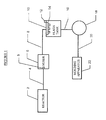
- polyester homopolymer or copolymer precursors are first polymerized in a reactor 2. After polymerization, the molten polyester flows via a conduit 4 into a mixer 6 without intermediate solidification of the molten polyester, and generally has an inherent viscosity (IhV) generally ranging from about 0.5 to about 1.0, with a more preferred range of from about 0.7 to about 0.9.
- IhV inherent viscosity of the polymer as determined by a solution of 0.5 gram of polymer dissolved in 100 ml of a mixture of phenol (60% by volume) and tetrachloroethane (40% by volume).
- the mixer 6 is capable of forming mixtures of the molten polyester and an acetaldehyde stripping agent under superatmospheric pressure.
- Suitable mixers include a static mixer, a gear pump, a single or multi-screw extruder, all of which are well known in the art.
- An acetaldehyde stripping agent is injected into the mixer 6 by an injection nozzle 5 at a rate of about 1.0 SCF/lb of the polymer or less.
- the activity of the mixer forms a multitude of small gas bubbles in the molten polyester.
- the acetaldehyde and other by-products present in the polyester diffuse into the gas.
- Suitable stripping agents which are inert to the polyester include nitrogen, carbon dioxide, C 1 to C 4 hydrocarbons, dehumidified air, and the noble gases.
- the more preferred stripping agents are carbon dioxide and nitrogen.
- the molten polyester is maintained at a temperature greater than the melting point of the polymer, but preferably no greater than from about 10°C to about 15°C higher than its melting point.
- the preferred temperature of the polyester ranges from about 255°C to about 290°C.
- the polyester-stripping agent mixture flows into a flash tank 10 for devolatilization therein.
- Devolatilization is conducted under vacuum conditions to remove acetaldehyde, gases, vapors, and other volatile components from the molten polyester.
- the pressure reduction creates a melt foam under such conditions of reduced pressure.
- the vacuum maintained in the flash tank 10 ranges from about 5 mm Hg to about 50 mm Hg.
- the mixture flows from the mixer to the flash tank through conduit 8 into an upper portion of the flash tank 10 through one or more dies 14 which impart a back pressure to the mixer 6.
- the dies 14 can optionally be arranged in a manifold configuration as shown in Figure 1.
- the back pressure from the dies 14 is at a level sufficient to keep the stripping agent within the mixer, and ranges from about 1,000 psi to about 3,000 psi.
- the dies 14 extrude the polyester-stripping agent mixture into multiple strands, filaments or ribbons which foam vigorously as they fall to the bottom of the flash tank 10. The foaming of the mixture occurs due to the great pressure differential between the vacuum in the flash tank 10 and the entrained gas within the polyester.
- the dies 14 extrude the mixture to maximize the surface area of the mixture so that the volatiles can escape more readily from the polyester as the mixture falls to the floor of the flash tank 10.
- any accumulated gas, vapor, or acetaldehyde within the flash tank 10 are released through a vent 12.
- the polymer is collected at the bottom of the flash tank and adequate residence time is allowed for the acetaldehyde stripping agent to be substantially completely removed.
- the residence time is dictated by the flow rate of the polymer and the time it takes for the polymer to fall from the die to the bottom of the tank. The most appropriate residence time can easily be determined by those skilled in the art.
- the collected polyester is sent along line 16 to a pumping or injecting means 18, which may comprise an extractor screw, which draws the collected polyester from the bottom of flash tank 10.
- the polyester then flows from pumping or injecting means 18 along line 20 into molding apparatus 22 where it is molded into a shaped article.
- the pumping or injecting means 18 can be a ram accumulator, a gear pump, or an extruder.
- a gear pump has the advantage of relatively low shear and low residence time so additional acetaldehyde generation is minimized.
- a vented extruder could be used to pump the melt although residence times and acetaldehyde generation is increased.
- a vented extruder has the advantage of allowing one last devolatilization step, particularly if all of the stripping agent was not removed in the flash tank. If complete removal of the stripping agent is not required, but residual acetaldehyde is still present, then a second stripping agent can be added into the extruder to further enhance devolatilization.
- the compositions of the invention are useful for manufacturing shaped articles, such as structural parts by such processes as injection molding, gas-assist injection molding, blow molding, extrusion thermoforming and the like.
- the articles may also comprise articles suitable for the packaging of goods or pelletized polyester which may be packaged and sold. Molding may be generally done in apparatuses such as ram accumulators, or in a commercially available molding machine such as 150 ton Cincinnati molder.
- ram accumulators When utilizing ram accumulators, it is preferred that they be arranged in pairs. Upon filling of one of the rams, a valve is closed and the ram forces the molten polymer into the mold where it is cooled until solid, at which point it is ejected. While one accumulator ram in injecting polymer into the mold, the other is being filled from the melt stream. The accumulators alternate between being filled and then injecting polymer into the mold.
- the final concentration of acetaldehyde in the molded articles will preferably be less than about 5 ppm, and more preferably less than about 3 ppm.
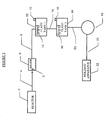
- FIG 3 shows an alternative embodiment of the invention.
- the polyester may optionally flow into a second flash tank 44, maintained under the same vacuum conditions as the first flash tank, for additional devolatilization to further reduce the acetaldehyde content in the polyester.
- Pumping or injecting means 18 may comprises an extractor screw.
- the polyester flows from flash tank 10, along line 16, which may comprises an extractor screw, and into an upper portion of flash tank 44 through one or more dies 46.
- the dies 46 may optionally be arranged in a manifold configuration as shown in Figure 3.
- a pumping means or significant pressure difference in line 16 between the two flash tanks would generally be needed to move polymer between the two flash tanks.
- any gas, vapor, or acetaldehyde accumulated within the flash tank 44 are released through a vent 48.
- the polymer is collected at the bottom of the flash tank 44, and is then sent along line 50 to pumping or injecting means 18 which draws the collected polyester from the bottom of flash tank 44.
- the polyester then flows from pumping or injecting means 18 along line 20 into molding apparatus 22 where it is shaped into a preform, as mentioned above.
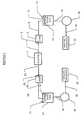
- the molten polyester may optionally flow into a plurality of mixers.
- the molten polyester may be transported from reactor 2 along lines 4 and 24 to mixers 6 and 26, without intermediate solidification of the molten polyester.
- an acetaldehyde stripping agent is injected into the polyester by injection nozzles 5 and 25.
- the mixers 6 and 26 are capable of forming mixtures of the molten polyester and the acetaldehyde stripping agent under superatmospheric pressure.
- the mixture flows along lines 8 and 28 into an upper portion of flash tanks 10 and 30, each maintained under vacuum conditions therein, through one or more dies 14 and 34.
- the dies 14 and 34 which impart a back pressure to mixer 6 and 26 may optionally be arranged in a manifold configuration.
- the dies 14 and 34 extrude the polyester into filaments or ribbons to increase the efficiency of devolatilization in the flash tanks 10 and 30. Any gas, vapor, or acetaldehyde accumulated within flash tanks 10 and 30 are released through a vents 12 and 32.
- the polyester is then collected at the bottom of the flash tanks 10 and 30, and sent along lines 16 and 36 to pumping or injecting means 18 and 38 which draw the collected polyester from the bottom of flash tanks 10 and 30.
- the polyester then flows from pumping or injecting means 18 and 38 along lines 20 and 40 into molding apparatuses 22 and 42 where it is shaped into a preform, as mentioned above.
- the different devolatilization lines may have different additives such as colorants or pigments added to each mixer, while the polymer stems from a single polymerization reactor.
- a twin screw extruder may be preferred as mixer 6 or 26 to incur additional polymerization time.
- long polymerization times and a very low vacuum are required, which may not be practical in a conventional extruder. Instead, a polymerization reactor would be required.
- the stripping agent used in this embodiment would be added through a port in the reactor, preferably near the end of the reactor.
- Each optional devolatilization line may also produce a different copolymer, such as PET/PEN or PET/PCT, by adding the additional polymer component in the twin screw extruder mixer and allowing sufficient time for the level of transesterification desired.
- This additional polymer component may be fed into the twin screw extruder via a satellite extruder using pre-pelletized homopolymer or it may be pumped in from a separate polymerization reactor before or after flash tank devolatilization.
- an acetaldehyde reducing agent may optionally be added to reduce the amount of acetaldehyde in the polyester.
- An acetaldehyde reducing agent may also be added to the devolatilized polyester after it is removed from the flash tank to further reduce amounts of acetaldehyde in the polyester prior to molding. It is important to keep the total amount of acetaldehyde reducer small so that excessive preform hazing does not occur. The preferred amount is less than about 0.5 lb additive per 100 lbs of polymer.
- Suitable acetaldehyde reducing agents include, but are not limited to, polyamides and polyesteramides.
- a mixing section designed to thoroughly mix the additive with the polymer should be provided. Residence time in this section should typically be less than about 20 seconds.
Landscapes
- Engineering & Computer Science (AREA)
- Mechanical Engineering (AREA)
- Chemical & Material Sciences (AREA)
- Medicinal Chemistry (AREA)
- Health & Medical Sciences (AREA)
- Chemical Kinetics & Catalysis (AREA)
- Manufacturing & Machinery (AREA)
- Polymers & Plastics (AREA)
- Organic Chemistry (AREA)
- Environmental & Geological Engineering (AREA)
- Polyesters Or Polycarbonates (AREA)
- Processing And Handling Of Plastics And Other Materials For Molding In General (AREA)
- Extrusion Moulding Of Plastics Or The Like (AREA)
- Blow-Moulding Or Thermoforming Of Plastics Or The Like (AREA)
Applications Claiming Priority (5)
| Application Number | Priority Date | Filing Date | Title |
|---|---|---|---|
| US4105697P | 1997-03-20 | 1997-03-20 | |
| US41056P | 1997-03-20 | ||
| US957522 | 1997-10-24 | ||
| US08/957,522 US5980797A (en) | 1997-03-20 | 1997-10-24 | Apparatus and method for molding polyester articles having low acetaldehyde content directly from the melt formation using flash tank devoltatilization |
| PCT/US1998/005479 WO1998041560A1 (en) | 1997-03-20 | 1998-03-19 | Apparatus and method for molding polyester articles having low acetaldehyde content directly from the melt formation using flash tank devolatilization |
Publications (2)
| Publication Number | Publication Date |
|---|---|
| EP0968243A1 EP0968243A1 (en) | 2000-01-05 |
| EP0968243B1 true EP0968243B1 (en) | 2002-07-03 |
Family
ID=26717755
Family Applications (1)
| Application Number | Title | Priority Date | Filing Date |
|---|---|---|---|
| EP19980911871 Expired - Lifetime EP0968243B1 (en) | 1997-03-20 | 1998-03-19 | Apparatus and method for molding polyester articles having low acetaldehyde content directly from the melt formation using flash tank devolatilization |
Country Status (11)
| Country | Link |
|---|---|
| US (1) | US5980797A (enExample) |
| EP (1) | EP0968243B1 (enExample) |
| JP (1) | JP3464489B2 (enExample) |
| CN (1) | CN1109705C (enExample) |
| AR (1) | AR008959A1 (enExample) |
| AU (1) | AU725646B2 (enExample) |
| BR (1) | BR9808291A (enExample) |
| CA (1) | CA2283677A1 (enExample) |
| DE (1) | DE69806358T2 (enExample) |
| ES (1) | ES2175690T3 (enExample) |
| WO (1) | WO1998041560A1 (enExample) |
Cited By (1)
| Publication number | Priority date | Publication date | Assignee | Title |
|---|---|---|---|---|
| US8470220B2 (en) | 2004-12-07 | 2013-06-25 | Uhde Inventa-Fischer Ag | Method and device for producing polyester granules and/or shaped parts with a low acetaldehyde content |
Families Citing this family (43)
| Publication number | Priority date | Publication date | Assignee | Title |
|---|---|---|---|---|
| US6784234B2 (en) | 1998-10-07 | 2004-08-31 | General Electric Company | High performance plastic pallets |
| US6444782B1 (en) | 1999-04-26 | 2002-09-03 | Eastman Chemical Company | Process for making pre-gels for a cross-linked branched polyester |
| US6469129B1 (en) | 1999-04-26 | 2002-10-22 | Eastman Chemical Company | Process for crosslinked branched polyesters |
| GB9921259D0 (en) * | 1999-09-09 | 1999-11-10 | Nova Chemicals Europ Limited | Polymer devolatilisation apparatus |
| US20030094723A1 (en) * | 2001-11-19 | 2003-05-22 | Ruppman Kurt H. | Method of making an improved preform |
| US7005097B2 (en) * | 2002-01-23 | 2006-02-28 | Boston Scientific Scimed, Inc. | Medical devices employing chain extended polymers |
| DE10241297A1 (de) * | 2002-09-04 | 2004-03-18 | Basf Ag | Thermoplastische Polyesterformmassen |
| US20040075194A1 (en) * | 2002-10-18 | 2004-04-22 | Applied Polymer Sciences Llc | Process for the use of polymeric materials to produce molded foam products |
| US20040075193A1 (en) * | 2002-10-18 | 2004-04-22 | Applied Polymer Sciences Llc. | Process for the use of polymeric materials to produce molded products |
| US20040091651A1 (en) * | 2002-11-01 | 2004-05-13 | Mark Rule | Pet copolymer composition with enhanced mechanical properties and stretch ratio, articles made therewith, and methods |
| US20050260371A1 (en) * | 2002-11-01 | 2005-11-24 | Yu Shi | Preform for low natural stretch ratio polymer, container made therewith and methods |
| US20040091649A1 (en) * | 2002-11-07 | 2004-05-13 | Ruppman Kurt H. | Extrusion blow molding method |
| CA2508466A1 (en) * | 2002-12-04 | 2004-06-17 | Netstal-Maschinen Ag | Method and installation for producing plastic parts |
| WO2004113414A1 (en) * | 2003-06-18 | 2004-12-29 | The Coca-Cola Company | Polyester composition for hot fill applications, containers made therewith, and methods |
| CA2541669C (en) | 2003-10-10 | 2010-01-12 | Asahi Kasei Chemicals Corporation | Process for producing polyalkylene terephthalate, process for producing polyalkylene terephthalate molding and polyalkylene terephthalate molding |
| WO2005070644A1 (en) * | 2004-01-09 | 2005-08-04 | The Coca-Cola Company | Condensation compression molding process and apparatus for production of container preforms |
| US7459113B2 (en) * | 2004-03-08 | 2008-12-02 | Eastman Chemical Company | Process of making a container from polyester polymer particles having a small surface to center intrinsic-viscosity gradient |
| US20050221036A1 (en) * | 2004-04-01 | 2005-10-06 | The Coca-Cola Company | Polyester composition with enhanced gas barrier, articles made therewith, and methods |
| WO2006002554A1 (de) * | 2004-07-01 | 2006-01-12 | Ppal Ag | Verfahren zur herstellung von kunststoffteilen und guss- oder spritzgussanlage zur ausführung dieses verfahrens |
| US7935399B2 (en) * | 2004-09-02 | 2011-05-03 | Grupo Petrotemex, S.A. De C.V. | Low melting polyester polymers |
| US20060047102A1 (en) | 2004-09-02 | 2006-03-02 | Stephen Weinhold | Spheroidal polyester polymer particles |
| US20060051541A1 (en) * | 2004-09-09 | 2006-03-09 | Steele Scott W | Polymeric preform for a blow molded plastic article |
| US8545205B2 (en) * | 2004-11-08 | 2013-10-01 | Chemlink Capital Ltd. | System and method for making polyethylene terephthalate sheets and objects |
| US9011737B2 (en) | 2004-11-08 | 2015-04-21 | Chemlink Capital Ltd. | Advanced control system and method for making polyethylene terephthalate sheets and objects |
| TWI316525B (en) * | 2004-11-30 | 2009-11-01 | Asahi Kasei Chemicals Corp | Method and apparatus for producing molded product |
| JP4744450B2 (ja) | 2004-11-30 | 2011-08-10 | 旭化成ケミカルズ株式会社 | ポリエステル樹脂、その成形体及びそれらの製造方法 |
| US7851037B2 (en) * | 2005-02-07 | 2010-12-14 | Polyone Corporation | Acetaldehyde scavenger in polyester articles |
| US7820257B2 (en) * | 2005-05-11 | 2010-10-26 | The Coca-Cola Company | Preforms for preparing lightweight stretch blow molded PET copolymer containers and methods for making and using same |
| US7572493B2 (en) * | 2005-05-11 | 2009-08-11 | The Coca-Cola Company | Low IV pet based copolymer preform with enhanced mechanical properties and cycle time, container made therewith and methods |
| US7358324B2 (en) | 2005-12-06 | 2008-04-15 | Dak Americas Llc | Manufacturing method of co-polyester resins for clear mono-layer containers with improved gas barrier characteristics |
| US20070128389A1 (en) | 2005-12-06 | 2007-06-07 | Dak Americas Llc | Process for manufacturing co-polyester barrier resins without solid-state polymerization, co-polyester resins made by the process, and clear mono-layer containers made of the co-polyester resins |
| CA2647633A1 (en) * | 2006-03-29 | 2007-10-04 | Nestle Waters Management & Technology | Method for the direct production of polyester articles for packaging purposes and articles obtained therefrom |
| US9656418B2 (en) | 2006-04-21 | 2017-05-23 | Dak Americas Llc | Co-polyester packaging resins prepared without solid-state polymerization, a method for processing the co-polyester resins with reduced viscosity change and containers and other articles prepared by the process |
| WO2008042383A1 (en) * | 2006-10-02 | 2008-04-10 | Armstrong World Industries, Inc. | Process for preparing high molecular weight polyesters |
| WO2008084813A1 (ja) * | 2007-01-12 | 2008-07-17 | Dow Corning Toray Co., Ltd. | 脱泡装置及び該装置を備える成形装置 |
| DE102007016586B4 (de) * | 2007-04-05 | 2018-10-04 | Lurgi Zimmer Gmbh | Verfahren zur direkten und kontinuierlichen Herstellung von Polyesterformkörpern mit geringem Acetaldehydgehalt |
| CN103788353B (zh) * | 2012-10-26 | 2016-03-30 | 中国石油化工股份有限公司 | 聚酯脱挥装置 |
| CN103146159B (zh) * | 2013-03-22 | 2016-02-17 | 江苏中再生投资开发有限公司 | 一种废旧pet耐热增粘增强复合材料及其制备工艺 |
| CN107398089B (zh) * | 2016-09-18 | 2023-01-10 | 宁波工程学院 | 基于静态混合器和超声波消泡的苯丙乳液脱单装置和工艺 |
| DE102017004563A1 (de) | 2017-03-05 | 2018-09-06 | Entex Rust & Mitschke Gmbh | Entgasen beim Extrudieren von Polymeren |
| DE102018001412A1 (de) | 2017-12-11 | 2019-06-13 | Entex Rust & Mitschke Gmbh | Entgasen beim Extrudieren von Stoffen, vorzugsweise von Kunststoffen |
| DE102018202547A1 (de) | 2018-02-20 | 2019-10-02 | Thyssenkrupp Ag | Vorrichtung und Verfahren zum Einmischen von Recyclingmaterial in eine Polyesterschmelze |
| CN113304709B (zh) * | 2021-06-22 | 2023-01-13 | 万华化学(四川)有限公司 | 一种脱挥装置及san树脂脱挥工艺 |
Family Cites Families (18)
| Publication number | Priority date | Publication date | Assignee | Title |
|---|---|---|---|---|
| NL89785C (enExample) * | 1955-02-09 | |||
| US3458494A (en) * | 1964-07-15 | 1969-07-29 | Phillips Petroleum Co | Process for recovering olefin polymers |
| US3476736A (en) * | 1966-04-14 | 1969-11-04 | Phillips Petroleum Co | Solvent removal from polyolefin in vented extruder with water addition |
| US3470070A (en) * | 1966-12-06 | 1969-09-30 | Phillips Petroleum Co | Flashing viscous polymer solutions |
| FR1588308A (enExample) * | 1968-10-09 | 1970-04-10 | ||
| DE1950305B2 (de) * | 1969-10-06 | 1972-10-12 | Mabeg Maschinenbau Gmbh Nachf. Hense & Pleines Gmbh & Co, 6050 Offenbach | Seitliche bogenausrichtvorrichtung |
| DE2357568A1 (de) * | 1973-11-17 | 1975-05-22 | Bayer Ag | Verfahren zur herstellung von polyamiden |
| US4294652A (en) * | 1980-06-30 | 1981-10-13 | Monsanto Company | Falling strand devolatilizer |
| US4728701A (en) * | 1983-09-19 | 1988-03-01 | Jarvis Marvin A | Process for the polymerization of acrylates |
| JPS6225027A (ja) * | 1985-07-25 | 1987-02-03 | Aisin Seiki Co Ltd | 射出成形装置 |
| US5207929A (en) * | 1991-08-02 | 1993-05-04 | Quantum Chemical Corporation | Method for removing hydrocarbons from polymer slurries |
| US5380822A (en) * | 1992-07-27 | 1995-01-10 | Novacor Chemicals (International) S.A. | Water assisted devolatilization |
| US5350813A (en) * | 1992-07-27 | 1994-09-27 | Novacor Chemicals (International) S.A. | Fluid assisted devolatilization |
| US5543495A (en) * | 1994-03-08 | 1996-08-06 | E. I. Du Pont De Nemours And Company | Process for increasing the molecular weight of polyamides and other condensation polymers |
| DE19503053B4 (de) * | 1995-02-01 | 2005-08-18 | Zimmer Ag | Verfahren zur direkten Herstellung von Polyester-Verpackungen |
| DE19505680C1 (de) * | 1995-02-20 | 1996-05-23 | Inventa Ag | Kondensations-Spritzgußverfahren zur Herstellung von Flaschenvorformlingen aus Polyethylenterephthalat und/oder seinen Copolyestern sowie nach diesem Verfahren herstellbare Vorformlinge |
| US5597891A (en) * | 1995-08-01 | 1997-01-28 | Eastman Chemical Company | Process for producing polyester articles having low acetaldehyde content |
| US5648032A (en) * | 1995-08-01 | 1997-07-15 | Eastman Chemical Company | Process for producing polyester articles having low acetaldehyde content |
-
1997
- 1997-10-24 US US08/957,522 patent/US5980797A/en not_active Expired - Lifetime
-
1998
- 1998-03-19 WO PCT/US1998/005479 patent/WO1998041560A1/en not_active Ceased
- 1998-03-19 JP JP54082298A patent/JP3464489B2/ja not_active Expired - Fee Related
- 1998-03-19 CN CN98803531A patent/CN1109705C/zh not_active Expired - Lifetime
- 1998-03-19 AU AU65723/98A patent/AU725646B2/en not_active Ceased
- 1998-03-19 BR BR9808291A patent/BR9808291A/pt not_active IP Right Cessation
- 1998-03-19 EP EP19980911871 patent/EP0968243B1/en not_active Expired - Lifetime
- 1998-03-19 DE DE69806358T patent/DE69806358T2/de not_active Expired - Lifetime
- 1998-03-19 ES ES98911871T patent/ES2175690T3/es not_active Expired - Lifetime
- 1998-03-19 CA CA 2283677 patent/CA2283677A1/en not_active Abandoned
- 1998-03-20 AR ARP980101298 patent/AR008959A1/es active IP Right Grant
Cited By (1)
| Publication number | Priority date | Publication date | Assignee | Title |
|---|---|---|---|---|
| US8470220B2 (en) | 2004-12-07 | 2013-06-25 | Uhde Inventa-Fischer Ag | Method and device for producing polyester granules and/or shaped parts with a low acetaldehyde content |
Also Published As
| Publication number | Publication date |
|---|---|
| CN1251118A (zh) | 2000-04-19 |
| AR008959A1 (es) | 2000-02-23 |
| JP3464489B2 (ja) | 2003-11-10 |
| EP0968243A1 (en) | 2000-01-05 |
| DE69806358D1 (de) | 2002-08-08 |
| CN1109705C (zh) | 2003-05-28 |
| AU725646B2 (en) | 2000-10-19 |
| BR9808291A (pt) | 2000-05-16 |
| ES2175690T3 (es) | 2002-11-16 |
| AU6572398A (en) | 1998-10-12 |
| WO1998041560A1 (en) | 1998-09-24 |
| CA2283677A1 (en) | 1998-09-24 |
| US5980797A (en) | 1999-11-09 |
| JP2001516389A (ja) | 2001-09-25 |
| DE69806358T2 (de) | 2003-03-13 |
Similar Documents
| Publication | Publication Date | Title |
|---|---|---|
| US5980797A (en) | Apparatus and method for molding polyester articles having low acetaldehyde content directly from the melt formation using flash tank devoltatilization | |
| AU719114B2 (en) | Apparatus and method for molding of polyester articles directly from a melt | |
| EP0934351B1 (en) | Process for producing pet articles with low acetaldehyde | |
| US5945460A (en) | Process for continuously producing polyester articles with scrap recycle in a continuous melt-to-preform process | |
| EP0842210B1 (en) | Process for producing polyester articles having low acetaldehyde content | |
| US5656221A (en) | Process for direct production of low acetaldehyde packaging material | |
| CN1313511C (zh) | 使用废料生产透明聚酯 | |
| MXPA98000876A (en) | Process for the production of polyester articles with low content of acetaldeh | |
| WO1998041559A1 (en) | Process for the modification of a polyester melt used in a continuous melt-to-preform process | |
| CA2248268A1 (en) | Process for forming articles directly from melt polymerization | |
| MXPA99008561A (es) | Metodo y aparato para moldear articulos de poliester que tienen bajo contenido de acetaldehido directamente de la formacion del fundido al utilizar desvolatilizacion de tanque de vaporizacion instantanea | |
| MXPA99008560A (es) | Metodo y aparato para moldear articulos de poliester directamente de un fundido | |
| CN121969688A (zh) | 具有改进的跌落冲击的改性共聚酯、其制备方法和由其制备的模制品 | |
| MXPA99008559A (en) | Process for continuously producing polyester articles with scrap recycle in a continuous melt-to-preform process |
Legal Events
| Date | Code | Title | Description |
|---|---|---|---|
| PUAI | Public reference made under article 153(3) epc to a published international application that has entered the european phase |
Free format text: ORIGINAL CODE: 0009012 |
|
| AK | Designated contracting states |
Kind code of ref document: A1 Designated state(s): BE DE ES FR GB IT NL |
|
| 17P | Request for examination filed |
Effective date: 19991004 |
|
| GRAG | Despatch of communication of intention to grant |
Free format text: ORIGINAL CODE: EPIDOS AGRA |
|
| 17Q | First examination report despatched |
Effective date: 20010917 |
|
| GRAG | Despatch of communication of intention to grant |
Free format text: ORIGINAL CODE: EPIDOS AGRA |
|
| GRAH | Despatch of communication of intention to grant a patent |
Free format text: ORIGINAL CODE: EPIDOS IGRA |
|
| GRAH | Despatch of communication of intention to grant a patent |
Free format text: ORIGINAL CODE: EPIDOS IGRA |
|
| GRAA | (expected) grant |
Free format text: ORIGINAL CODE: 0009210 |
|
| AK | Designated contracting states |
Kind code of ref document: B1 Designated state(s): BE DE ES FR GB IT NL |
|
| PG25 | Lapsed in a contracting state [announced via postgrant information from national office to epo] |
Ref country code: IT Free format text: LAPSE BECAUSE OF FAILURE TO SUBMIT A TRANSLATION OF THE DESCRIPTION OR TO PAY THE FEE WITHIN THE PRE;WARNING: LAPSES OF ITALIAN PATENTS WITH EFFECTIVE DATE BEFORE 2007 MAY HAVE OCCURRED AT ANY TIME BEFORE 2007. THE CORRECT EFFECTIVE DATE MAY BE DIFFERENT FROM THE ONE RECORDED.SCRIBED TIME-LIMIT Effective date: 20020703 Ref country code: BE Free format text: LAPSE BECAUSE OF FAILURE TO SUBMIT A TRANSLATION OF THE DESCRIPTION OR TO PAY THE FEE WITHIN THE PRESCRIBED TIME-LIMIT Effective date: 20020703 |
|
| REF | Corresponds to: |
Ref document number: 69806358 Country of ref document: DE Date of ref document: 20020808 |
|
| REG | Reference to a national code |
Ref country code: ES Ref legal event code: FG2A Ref document number: 2175690 Country of ref document: ES Kind code of ref document: T3 |
|
| ET | Fr: translation filed | ||
| PLBQ | Unpublished change to opponent data |
Free format text: ORIGINAL CODE: EPIDOS OPPO |
|
| PLBI | Opposition filed |
Free format text: ORIGINAL CODE: 0009260 |
|
| PLBF | Reply of patent proprietor to notice(s) of opposition |
Free format text: ORIGINAL CODE: EPIDOS OBSO |
|
| 26 | Opposition filed |
Opponent name: ZIMMER A.G.STOCKMAIR & SCHWANHAEUSSERANWALTSSOZ Effective date: 20030402 Opponent name: INVENTA-FISCHER GMBH Effective date: 20030402 |
|
| NLR1 | Nl: opposition has been filed with the epo |
Opponent name: ZIMMER A.G. Opponent name: INVENTA-FISCHER GMBH |
|
| PLAX | Notice of opposition and request to file observation + time limit sent |
Free format text: ORIGINAL CODE: EPIDOSNOBS2 |
|
| PLBB | Reply of patent proprietor to notice(s) of opposition received |
Free format text: ORIGINAL CODE: EPIDOSNOBS3 |
|
| RDAF | Communication despatched that patent is revoked |
Free format text: ORIGINAL CODE: EPIDOSNREV1 |
|
| APBP | Date of receipt of notice of appeal recorded |
Free format text: ORIGINAL CODE: EPIDOSNNOA2O |
|
| APBM | Appeal reference recorded |
Free format text: ORIGINAL CODE: EPIDOSNREFNO |
|
| APBQ | Date of receipt of statement of grounds of appeal recorded |
Free format text: ORIGINAL CODE: EPIDOSNNOA3O |
|
| APAH | Appeal reference modified |
Free format text: ORIGINAL CODE: EPIDOSCREFNO |
|
| APBU | Appeal procedure closed |
Free format text: ORIGINAL CODE: EPIDOSNNOA9O |
|
| PLCK | Communication despatched that opposition was rejected |
Free format text: ORIGINAL CODE: EPIDOSNREJ1 |
|
| PLBN | Opposition rejected |
Free format text: ORIGINAL CODE: 0009273 |
|
| STAA | Information on the status of an ep patent application or granted ep patent |
Free format text: STATUS: OPPOSITION REJECTED |
|
| 27O | Opposition rejected |
Effective date: 20070615 |
|
| NLR2 | Nl: decision of opposition |
Effective date: 20070615 |
|
| PGFP | Annual fee paid to national office [announced via postgrant information from national office to epo] |
Ref country code: ES Payment date: 20080314 Year of fee payment: 11 |
|
| PGFP | Annual fee paid to national office [announced via postgrant information from national office to epo] |
Ref country code: NL Payment date: 20080219 Year of fee payment: 11 Ref country code: GB Payment date: 20080211 Year of fee payment: 11 |
|
| PGFP | Annual fee paid to national office [announced via postgrant information from national office to epo] |
Ref country code: FR Payment date: 20080307 Year of fee payment: 11 |
|
| GBPC | Gb: european patent ceased through non-payment of renewal fee |
Effective date: 20090319 |
|
| NLV4 | Nl: lapsed or anulled due to non-payment of the annual fee |
Effective date: 20091001 |
|
| REG | Reference to a national code |
Ref country code: FR Ref legal event code: ST Effective date: 20091130 |
|
| PG25 | Lapsed in a contracting state [announced via postgrant information from national office to epo] |
Ref country code: NL Free format text: LAPSE BECAUSE OF NON-PAYMENT OF DUE FEES Effective date: 20091001 |
|
| PG25 | Lapsed in a contracting state [announced via postgrant information from national office to epo] |
Ref country code: GB Free format text: LAPSE BECAUSE OF NON-PAYMENT OF DUE FEES Effective date: 20090319 Ref country code: FR Free format text: LAPSE BECAUSE OF NON-PAYMENT OF DUE FEES Effective date: 20091123 |
|
| REG | Reference to a national code |
Ref country code: ES Ref legal event code: FD2A Effective date: 20090320 |
|
| PG25 | Lapsed in a contracting state [announced via postgrant information from national office to epo] |
Ref country code: ES Free format text: LAPSE BECAUSE OF NON-PAYMENT OF DUE FEES Effective date: 20090320 |
|
| REG | Reference to a national code |
Ref country code: DE Ref legal event code: R082 Ref document number: 69806358 Country of ref document: DE Representative=s name: WUESTHOFF & WUESTHOFF PATENT- UND RECHTSANWAEL, DE |
|
| REG | Reference to a national code |
Ref country code: DE Ref legal event code: R082 Ref document number: 69806358 Country of ref document: DE Representative=s name: WUESTHOFF & WUESTHOFF, PATENTANWAELTE PARTG MB, DE Effective date: 20120217 Ref country code: DE Ref legal event code: R082 Ref document number: 69806358 Country of ref document: DE Representative=s name: WUESTHOFF & WUESTHOFF PATENT- UND RECHTSANWAEL, DE Effective date: 20120217 Ref country code: DE Ref legal event code: R081 Ref document number: 69806358 Country of ref document: DE Owner name: GRUPO PETROTEMEX, S.A. DE C.V., SAN PEDRO GARZ, MX Free format text: FORMER OWNER: EASTMAN CHEMICAL CO., KINGSPORT, TENN., US Effective date: 20120217 Ref country code: DE Ref legal event code: R081 Ref document number: 69806358 Country of ref document: DE Owner name: GRUPO PETROTEMEX, S.A. DE C.V., MX Free format text: FORMER OWNER: EASTMAN CHEMICAL CO., KINGSPORT, US Effective date: 20120217 |
|
| PGFP | Annual fee paid to national office [announced via postgrant information from national office to epo] |
Ref country code: DE Payment date: 20170314 Year of fee payment: 20 |
|
| REG | Reference to a national code |
Ref country code: DE Ref legal event code: R071 Ref document number: 69806358 Country of ref document: DE |