EP0964600A2 - Vorrichtung und Verfahren zur Abbildung von Objektadressen - Google Patents
Vorrichtung und Verfahren zur Abbildung von Objektadressen Download PDFInfo
- Publication number
- EP0964600A2 EP0964600A2 EP99106761A EP99106761A EP0964600A2 EP 0964600 A2 EP0964600 A2 EP 0964600A2 EP 99106761 A EP99106761 A EP 99106761A EP 99106761 A EP99106761 A EP 99106761A EP 0964600 A2 EP0964600 A2 EP 0964600A2
- Authority
- EP
- European Patent Office
- Prior art keywords
- address
- memory management
- object information
- block
- elements
- Prior art date
- Legal status (The legal status is an assumption and is not a legal conclusion. Google has not performed a legal analysis and makes no representation as to the accuracy of the status listed.)
- Granted
Links
Images



Classifications
-
- H—ELECTRICITY
- H04—ELECTRIC COMMUNICATION TECHNIQUE
- H04L—TRANSMISSION OF DIGITAL INFORMATION, e.g. TELEGRAPHIC COMMUNICATION
- H04L12/00—Data switching networks
- H04L12/54—Store-and-forward switching systems
- H04L12/56—Packet switching systems
- H04L12/5601—Transfer mode dependent, e.g. ATM
Definitions
- the invention relates to an apparatus and a method for storing, retrieving and manipulating Object information, the object information objects that can be clearly identified by object addresses assigned.
- ATM asynchronous Transfer Mode
- Every ATM switch must current information about the occupancy of their Manage current addresses. That is, every ATM connection (Port) manages these addresses in its own Database by which it ensures that the Establishing a connection no address on this connection is awarded twice. Furthermore, will be new Requested addresses are occupied or at the Return released. Will connect over more switched as an ATM switching center, so synchronization through a "master / slave" mechanism ensured when assigning addresses. Here removes each line unit or switching device a new address of their own Database (i.e.
- a synchronization is by a set "master / slave" indicator in the signaling protocol ensured. Will for a new connection on a connection unit a certain Expected address, this connection unit must on the basis of corresponding status entries that indicate the occupancy status mark, determine if this Address is already occupied and, if necessary, for this connection select a new, free address, which is then only valid within the ATM exchange is to which it belongs.
- mapping registers so that the outgoing connection is also based the new address is still clearly identified can be.
- the "mapping" of the addresses is in progress the "routing" of the ATM cells by appropriate Hardware blocks carried out.
- the object information can be clearly determined by object addresses Objects are assigned, with input and Output means, with a memory in which the object information are stored with a memory management, the filing, access and deletion controls object information in memory, when accessing the object information the object address of the accessing object by the Memory management is segmented to then the individual Mapping address segments onto address blocks, where the address blocks are hierarchical with each other are linked and a clear illustration of the address segment to a unique address element allow the address block, being in the address element References to the next address block and / or status information and / or object information filed and each level of the address tree Represents the address segment of the object address, in which in the lowest level (the sheet) the object information to be read out are filed, with one filing object information through the object address Memory management is segmented by the by the Segmentation set path through the nodes of the address tree represented by the address blocks choose and order in the event of the existence of a complete Path in the address block
- the free address elements preferably by a double concatenated vector within the address blocks connected with each other. This vector is after the LIFO (Last In First Out) process managed.
- LIFO Last In First Out
- the elements of the vectors are contiguous in the memory before and are additionally chained.
- the procedure of a list at the Provide an address with the advantages of the vector connected when sharing an address.
- a preferred application of the device according to the invention is an ATM switch, wherein the objects connections between ATM network participants are the object addresses VPI-VCI addresses one Ports and the object information are the status of connections are.
- Address elements preferably address blocks dynamically assignable.
- the positions of the Address elements or address blocks in memory not determined via physical addresses (for Example pointer, max 4 bytes), but via handles (max 2 bytes) determined.
- the concatenation of the address blocks is also done via handles.
- Memory management optimizes memory consumption in that one with status information or address elements of fully occupied address block removed and a corresponding information in the hierarchically higher-level address block instead of the Reference is deposited.
- the status information however, they must be identical for all objects.
- an address block as Vector is made up of all of an address segment includes address elements.
- Such a Address block contains occupied and unused address elements. Address blocks with none or all Address elements are occupied are from the hierarchical Path removed. To a free address element or a reference to a free hierarchical subordinate Address block when occupying an address without Finding is done in a partially populated Address block identifying references hierarchically subordinate free address blocks or on free address elements within the in the hierarchy last address block in the form of a double-directional concatenation of these free elements guided.
- All address blocks or address elements will not have any free entries from this chaining away. However, in another independent of the chaining of free address elements Concatenation within the same address block which are then only fully occupied Address elements chained together. In principle it is possible to include all address elements of an address block, that carry the same status information independently chain to access to allow items of the same status without searching. Removing an address block from the Hierarchy path is only possible if all Status entries in the address block to be removed are identical or only one chain exists.
- the order the concatenation of the free address elements within an address block when releasing an ATM address by the order of releasing the ATM addresses determined and not by their address value (Position in the vector) itself. Because usually the order when occupying ATM addresses independently and different from the order of their release chaining after the release is not more in the original state (formation of Loops in the chain). If such behavior Is undesirable can be doubled Concatenation when releasing an ATM address Chaining the free elements back to their original ones Form to be built.
- the direction is the positioning of the free pointer is important when occupying an address. For example, when occupying an address the free pointer along the "next / prev chain" always to the next higher / lower index position moved ("step-up / step-down direction"), must at An ATM address releases this positioning again getting produced. This is when releasing ATM addresses first check which position the free pointer, which is the next free address element indicates stands. If the free pointer points to one Index that is lower / higher than that of the address element, that is to be released is the Free pointers along the "next / prev chain" the next higher / lower index above the address element to be released. In this In this case, however, the LIFO behavior is lost.
- Positioning the free pointer along the "prev -" / "next" concatenation can be used when occupying or Release occur dynamically, depending on what behavior should be achieved. Then there is a double Chaining always required. You decide in the implementation of the procedure presented here only for one of the two options (LIFO behavior or "re-chaining" in the original Order) is also one in LIFO behavior simple chaining of the address elements is sufficient. This allows more storage space in the size of 256 to 512 bytes can be saved per address block.
- FIG. 1 shows an address block 20 in which the Assignment of VPI-VCI addresses 21 by a 1 in one associated address element 22 is shown and the non-assignment by a 0.
- the address block 20 is advantageously a linear, coherent Storage area.
- the address block 20 is designed that by mapping (address pointer 19-addr-state-index) the last segment of the VPI-VCI address 21 - this can usually be done by a linear function take place - on the address element 22 and the corresponding Accessed status information can be.
- Figure 2 shows an address block 20 in the address elements 22 of the unused VPI-VCI addresses 21 are linked twice.
- An address pointer shows 24 (next-free-addr-index) to the next free Address element 22. This is not a search for occupied addresses 21 in constant time (O (1)) possible.
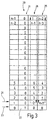
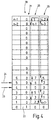
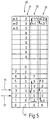
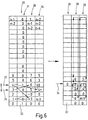
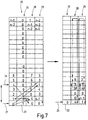
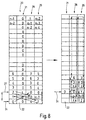
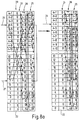
- FIGS 3 to 8a show the assignment and the Release of addresses (connections).
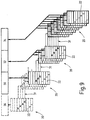
- FIG. 9 shows a tree-shaped, hierarchical concatenation of the address blocks 20, the VPI / VCI address 21 depending on whether UNI port or NNI port in three (Vpi-LSB 30, Vci-MSB 32, Vci-LSB 34) or in four (Vpi-MSB 36, Vpi-LSB 30, Vci-MSB 32, Vci-LSB 34) bytes is segmented.
- the dashed representation of the Vpi-MSB 36 bytes refers to an NNI address.
- the address segments 22 are mapped to one level of the address tree. Each level contains a maximum of a square number of address blocks 20 from the previous level.
- the root consists of an address block 20
- the third level consists of 256 2
- the fourth level consists of 256 3 address blocks 20.
- the address block 20 if it is not occupied by other addresses 21 is passed on to a corresponding pool, where the memory manager manages it.
- this administration also takes place in one Vector shape.
- the vector is preferably double chained and managed according to the LIFO principle.
- a corresponding free pointer 33 is understood from self.
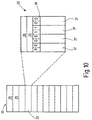
- Figure 10 shows an example of a single address element 22 of the address block 20.
- the address element with 1 byte size contains four status entries 38.
- the address element can be a Multiple of 1 byte, in contrast a status entry can be a multiple of 1 bit.
- the means, depending on the size of the address element and the number the status information is the number of Address elements differ per address block.
- the process itself is independent of the size of the above items. It therefore allows that at the establishment of storage areas for administration the elements via configuration parameters depending on Are adjustable.
- one address element 22 can have several References 37 include, the allocation of the references 37 by corresponding status entries 38. For example, 00 for free, 01 for reserved (for example for the system), 10 used and 11 stand for fully occupied.
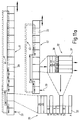
- the address elements 22 integral parts of the Address blocks 20 or - as Figure ha shows - dynamic assignable.
- the address elements 22 are also like the address blocks 20, which are managed in a pool 41 are managed in a pool 42. That pool 42 is preferably double-chained Vector 43 organized.
- the Assignment or release of an address 21 a new one Address element 22 requested or returned by pool 42.
- address block 20 manages a corresponding one Reference. In the other cases there are corresponding ones Entries intended for full or free.
- the pool 41 for the address blocks 20 and the pool 42 for the address elements 22 can be expanded as required so that with increased demand the Needs can be met.
- the pool 42 manages these elements in one separate vector 44, which is preferably double is chained.
- the address element 22 of the address block 20 of the higher levels as far as the Address block 20 is also not completely occupied is a corresponding note instead of the reference registered.
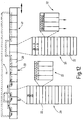
- the chain in pool 41 has the advantage that when an address 21 is released the fully populated address blocks 20 quickly in the Address tree can be inserted and only status information, namely that of the released address, needs to be changed.
Landscapes
- Engineering & Computer Science (AREA)
- Computer Networks & Wireless Communication (AREA)
- Signal Processing (AREA)
- Data Exchanges In Wide-Area Networks (AREA)
Abstract
Description
- Figur 1
- einen Adressblock, bei dem die Belegung der VPI-VCI-Adressen durch eine 1 im Adresselement symbolisiert ist und die Nicht-Belegung durch eine 0;
- Figur 2
- einen Adressblock mit Adresselementen, die doppelt verkettet sind, falls die VPI-VCI-Adresse nicht belegt ist, und mit einem Adresszeiger, der auf das nächste freie Adresselement zeigt;
- Figur 3
- den Adressblock nach Figur 2 nach Anforderung einer freien Adresse, wobei die belegte Adresse durch eine 1 in der Statusspalte gekennzeichnet ist;
- Figur 4
- den Adressblock nach Figur 3 nach Anforderung der vierten Adresse;
- Figur 5
- den Adressblock nach Figur 4 nach der Anforderung der zweiten Adresse;
- Figur 6
- den Adressblock nach Figur 5 nach Freigabe der vierten Adresse, wobei durch die Pfeile angezeigt wird, wie sich die neue Verkettung berechnet;
- Figur 7
- den Adressblock nach Figur 6 nach Freigabe der nullten Adresse mit der entsprechenden neuen Verkettung;
- Figur 8
- den Adressblock nach Figur 7 nach Freigabe der zweiten Adresse;
- Figur 8a
- einen Adressblock mit einer Reihe von belegten Adressen, bei dem die Adresse sieben freigegeben wird;
- Figur 9
- die baumförmige hierarchische Verkettung der Adressblöcke, wobei die VPI/VCI-Adresse je nachdem ob UNI oder NNI in drei (Vpi-LSB, Vci-MSB, Vci-LSB) beziehungsweise in vier (Vpi-MSB, Vpi-LSB, Vci-MSB, Vci-LSB) Bytes segmentiert ist, dabei ist jedes Adresssegment auf einer Ebene des Adressbaumes abgebildet;
- Figur 10
- den Aufbau eines Adresselements mit Verkettungsinformationen, Statusinformationen und Verweisen auf die nächsten Adressblöcke;
- Figur 11
- die Anordnung des Adressblocks im Pool, ohne jegliche Belegung der Adresselemente;
- Figur 11a
- einen Adressblock und ein dynamisch zugeordnetes Adresselement, die jeweils aus den Pools entfernt wurden;
- Figur 12
- einen Speicherpool, bei dem die vollständig belegten Adressblöcke miteinander verkettet sind, und die nicht vollständig belegten Adressblöcke aus der Verkettung der freien Blöcke entfernt sind.
Claims (23)
- vorrichtung zur Ablage, zum Abruf und zur Manipulation von Objektinformationen, wobei die Objektinformationen durch Objektadressen eindeutig bestimmbaren Objekten zugeordnet sind, mit Ein- und Ausgabemitteln, mit einem Speicher, in dem die Objektinformationen abgelegt sind, mit einer Speicherverwaltung, die die Ablage, den Zugriff und das Löschen von Objektinformationen im Speicher steuert, wobei bei einem Zugriff auf die Objektinformationen die Objektadresse des zugreifenden Objektes durch die Speicherverwaltung segmentiert wird, um dann die einzelnen Adresssegmente auf Adressblöcke (20) abzubilden, wobei die Adressblöcke (20) baumförmig hierarchisch miteinander verknüpft sind und eine eindeutige Abbildung des Adresssegmentes auf ein eindeutiges Adresselement (22) im Adressblock (20) erlauben, wobei in dem Adresselement (22) Verweise auf den nächsten Adressblock (20) und/oder Statusinformation und/oder Objektinformationen abgelegt sind, und jede Ebene des Adressbaumes ein Adresssegment der Objektadresse darstellt, bei dem in der untersten Ebene (dem Blatt) die auszulesenden Objektinformationen abgelegt sind, wobei bei einer Ablage von Objektinformationen die Objektadresse durch die Speicherverwaltung segmentiert wird, um den durch die Segmentierung festgelegten Pfad durch die Knoten des durch die Adressblöcke (20) dargestellten Adressbaumes zu wählen und im Falle der Existenz eines vollständigen Pfades im das Blatt darstellenden Adressblock (20) die Objektinformationen abzulegen, und im Falle des Fehlens eines vollständigen Pfades von der Speicherverwaltung der Pfad durch Verkettung von Adressblöcken (20) geschaffen wird, wobei bei einem Löschen von Objektinformationen die Speicherverwaltung die Adressblöcke (20) aus dem die Objektadresse darstellenden hierarchischen Pfad entfernt, die keine Objektinformationen oder Verweise auf einen nächsten Adressblock (20) aufweisen.
- Vorrichtung nach Anspruch 1, dadurch gekennzeichnet, daß die Speicherverwaltung keine Objektadressen oder Adresssegmente als solche speichert.
- Vorrichtung nach den Ansprüchen 1 und 2, dadurch gekennzeichnet, daß die Speicherverwaltung die Adressblöcke (20) in einem Pool (41) dynamisch verwaltet, um sie bei der Ablage von Informationen bereitzustellen oder sie nach dem Löschen entgegenzunehmen.
- Vorrichtung nach den Ansprüchen 1 bis 3, dadurch gekennzeichnet, daß die Adressblöcke (20) linear zusammenhängende Speicherbereiche sind, die mindestens so viele Adresselemente (22) aufweisen, wie durch das Adresssegment der Objektadresse darstellbar sind.
- Vorrichtung nach den Ansprüchen 1 bis 4, dadurch gekennzeichnet, daß die Adresselemente (22) dynamisch erzeugbar sind, in einem Pool (42) von der Speicherverwaltung verwaltet werden und bei Bedarf in den Adressblock (20) einhängbar oder aushängbar sind.
- Vorrichtung nach den Ansprüchen 1 bis 5, dadurch gekennzeichnet, daß die Adresselemente (22) in den Adressblöcken (20) miteinander verkettet sind.
- Vorrichtung nach Anspruch 6, dadurch gekennzeichnet, daß die nicht belegten Adresselemente (22) miteinander verkettet sind, und ein Adresselementzeiger (24) auf das nächste freie Adresselement zeigt.
- Vorrichtung nach Anspruch 7, dadurch gekennzeichnet, daß die Adresselemente (22) doppelt miteinander verkettet sind.
- Vorrichtung nach den Ansprüchen 7 und 8, dadurch gekennzeichnet, daß die Adresselemente (22) in der Verkettung nach dem LIFO-verfahren (Last In First Out) verwaltet sind.
- Vorrichtung nach den Ansprüchen 1 bis 9, dadurch gekennzeichnet, daß es sich um eine ATM-Vermittlungseinrichtung handelt, wobei die Objekte Verbindungen zwischen ATM-Netzwerkteilnehmern sind, die Objektadressen VPI-VCI-Adressen (21) eines Ports sind, die Objektinformationen der Status der Verbindungen sind.
- Vorrichtung nach Anspruch 10, dadurch gekennzeichnet, daß die Speicherverwaltung die VPI-VCI-Adresse (21) in Byte Adresssegmente (22) unterteilt.
- Vorrichtung nach Anspruch 11, dadurch gekennzeichnet, daß die Adressblöcke (20) bei Bedarf 256 Adresselemente (22) bereitstellen.
- Vorrichtung nach Anspruch 11 und 12, dadurch gekennzeichnet, daß der Adressraum bei UNI (24-Bit lange VPI-VCI-Adresse) auf einen Adressbaum mit drei Ebenen beziehungsweise auf einen Adressbaum mit vier Ebenen bei NNI (28-Bit lange VPI-VCI-Adresse) abgebildet wird.
- Vorrichtung nach den Ansprüchen 10 bis 13, dadurch gekennzeichnet, daß bei einer ATM-Vermittlungseinrichtung mit mehreren Ports entsprechend viele Adressbäume vorgesehen sind, die die Adressräume der VPI-VCI-Adressen für jeden Port abbilden, wobei die Speicherverwaltung allen Adressbäumen je nach Bedarf Adressblöcke (20) und/oder Adresselemente (22) bereitstellt.
- Vorrichtung nach den Ansprüchen 1 bis 14, dadurch gekennzeichnet, daß die Speicherverwaltung einen mit Statusinformationen oder Adresselementen (22) vollbelegten Adressblock entfernt und eine entsprechende Information in dem hierarchisch übergeordneten Adressblock (20) anstatt des Verweises hinterlegt.
- Verfahren zur Ablage, zum Abruf und zur Manipulation von Objektinformationen auf einer Vorrichtung nach den Ansprüchen 1 bis 15, wobei die Objektinformationen durch Objektadressen eindeutig bestimmbaren Objekten zugeordnet sind, bei dem die an einer Eingabevorrichtung bereitgestellte Objektadresse durch eine Speicherverwaltung segmentiert wird, bei dem die Speicherverwaltung das erste Adresssegment auf ein Adresselement (22) eines ersten Adressblocks (20) abbildet, wobei der Adressblock (20) den Adressraum des Adresssegmentes abdeckt, bei dem die Speicherverwaltung überprüft, ob das Adresselement (22) auf einen hierarchisch untergeordneten Adressblock (20) verweist, bei dem die Speicherverwaltung im Falle der Existenz eines hierarchisch untergeordneten Adressblocks (20) das nächste Adresssegment der Objektadresse auf diesen Adressblock (20) abbildet, Um sich dann mit jedem Adresssegment in der gleichen Form zum Ende, also dem Blatt, des Baumes zu bewegen, in dem die Objektinformationen abgelegt sind, bei dem bei einem Fehlen eines Verweises keine Objektinformationen abgerufen oder manipuliert werden können und bei der Ablage von Objektinformationen die Speicherverwaltung Adressblöcke (20) bereitstellt, um diese in den hierarchischen Weg einzufügen, und bei dem die durch die Operationen ermittelten Informationen dem Ausgabemittel übergeben werden.
- Verfahren nach Anspruch 16, dadurch gekennzeichnet, daß beim Hinzufügen eines hierarchischen Weges die Adresselemente (22) dynamisch dem Adressblock (20) zugeordnet werden, wobei die Adresselemente (22) von der Speicherverwaltung verwaltet und bei Bedarf erzeugt werden.
- Verfahren nach Anspruch 16 und 17, dadurch gekennzeichnet, daß die Adressblöcke (20) von der Speicherverwaltung verwaltete werden und bei Bedarf erzeugt werden.
- Verfahren nach den Ansprüchen 16 bis 18, dadurch gekennzeichnet, daß in die Adresselemente (22) zusätzlich zu den Verweisen Statusinformationen über den nachfolgenden Adressblock (20) oder, falls es sich um ein Blatt im Adressbaum handelt, Objektinformationen eingetragen werden.
- Verfahren nach den Ansprüchen 16 bis 19, dadurch gekennzeichnet, daß falls die Objektinformationen in einem Unterbaum für alle Objekte identisch sind, der vollständige Adressunterbaum von der Speicherverwaltung entfernt wird, und eine entspechende Information im Adresselement (22) des dem Adressunterbaum übergeordneten Adressblocks (20) gespeichert wird.
- Verfahren nach den Ansprüchen 16 bis 20, dadurch gekennzeichnet, daß die nicht belegten Adresselemente (22) in einem Adressblock (20) miteinander verkettet sind, und ein Adresselementzeiger (24) auf das erste nicht belegte Adresselement zeigt, bei der Belegung eines Adresselements (22) dieses aus der Verkettung entfernt wird und bei der Freigabe (27) dieses in die Verkettung eingefügt wird.
- Verfahren nach Anspruch 21, dadurch gekennzeichnet, daß das die Verkettung der Adresselemente (22) nach dem LIFO-Verfahren erfolgt.
- Verfahren nach den Ansprüchen 21 und 22, dadurch gekennzeichnet, daß bei der Suche nach einer freien Objektadresse die Objektadresse gewählt wird, auf die der Adresszeiger zeigt.
Applications Claiming Priority (2)
| Application Number | Priority Date | Filing Date | Title |
|---|---|---|---|
| DE19825541 | 1998-06-08 | ||
| DE1998125541 DE19825541A1 (de) | 1998-06-08 | 1998-06-08 | Vorrichtung und Verfahren zur Abbildung von Objektadressen |
Publications (3)
| Publication Number | Publication Date |
|---|---|
| EP0964600A2 true EP0964600A2 (de) | 1999-12-15 |
| EP0964600A3 EP0964600A3 (de) | 2001-10-24 |
| EP0964600B1 EP0964600B1 (de) | 2006-08-23 |
Family
ID=7870275
Family Applications (1)
| Application Number | Title | Priority Date | Filing Date |
|---|---|---|---|
| EP19990106761 Expired - Lifetime EP0964600B1 (de) | 1998-06-08 | 1999-04-03 | Vorrichtung und Verfahren zur Abbildung von Objektadressen |
Country Status (2)
| Country | Link |
|---|---|
| EP (1) | EP0964600B1 (de) |
| DE (2) | DE19825541A1 (de) |
Cited By (1)
| Publication number | Priority date | Publication date | Assignee | Title |
|---|---|---|---|---|
| CN113641603A (zh) * | 2021-10-15 | 2021-11-12 | 南京芯驰半导体科技有限公司 | 一种基于axi协议的ddr仲裁与调度方法及系统 |
Family Cites Families (4)
| Publication number | Priority date | Publication date | Assignee | Title |
|---|---|---|---|---|
| SE515422C2 (sv) * | 1993-03-10 | 2001-07-30 | Ericsson Telefon Ab L M | Etiketthantering i paketnät |
| FR2736737B1 (fr) * | 1995-07-12 | 1997-08-14 | Alcatel Nv | Dispositif de gestion de relations entre des objets |
| WO1997003549A2 (en) * | 1995-07-19 | 1997-02-06 | Fujitsu Network Communications, Inc. | Prioritized access to shared buffers |
| DE19629765A1 (de) * | 1996-07-23 | 1998-01-29 | Siemens Ag | Verfahren zur Adreßreduktion in ATM-Vermittlungssystemen |
-
1998
- 1998-06-08 DE DE1998125541 patent/DE19825541A1/de not_active Withdrawn
-
1999
- 1999-04-03 DE DE59913788T patent/DE59913788D1/de not_active Expired - Lifetime
- 1999-04-03 EP EP19990106761 patent/EP0964600B1/de not_active Expired - Lifetime
Cited By (1)
| Publication number | Priority date | Publication date | Assignee | Title |
|---|---|---|---|---|
| CN113641603A (zh) * | 2021-10-15 | 2021-11-12 | 南京芯驰半导体科技有限公司 | 一种基于axi协议的ddr仲裁与调度方法及系统 |
Also Published As
| Publication number | Publication date |
|---|---|
| EP0964600B1 (de) | 2006-08-23 |
| DE59913788D1 (de) | 2006-10-05 |
| EP0964600A3 (de) | 2001-10-24 |
| DE19825541A1 (de) | 1999-12-09 |
Similar Documents
| Publication | Publication Date | Title |
|---|---|---|
| DE69124645T2 (de) | Verfahren und Schaltung zur Verkehrsformung | |
| DE69534758T2 (de) | Verfahren und System für Mehrfachübertragung | |
| EP0435046B1 (de) | Verfahren zum Wiederherstellen der richtigen Zellfolge, insbesondere in einer ATM-Vermittlungsstelle, sowie Ausgangseinheit hierfür | |
| EP0675617B1 (de) | Schaltungsanordnung für Anschlusseinheiten einer ATM-Koppeleinrichtung | |
| DE69810132T2 (de) | Multiport drams mit internen cache-speichern | |
| EP0446589A2 (de) | Kopierfähige ATM-Vermittlungsstelle | |
| EP0703534A1 (de) | Speicherverwaltungssystem eines Rechnersystems | |
| DE2557175A1 (de) | Einrichtung zum umschalten eines durchschaltenetzwerkes | |
| DE69423923T2 (de) | System für Zusammenfügen/Auseinandernehmen von ATM-Zellen | |
| DE19609265B4 (de) | Kommunikationseinrichtung mit asynchronem Übertragungmodus und daraus aufgebautes Kommunikationsnetzwerk | |
| DE69112687T2 (de) | ATM-artiges Vermittlungselement mit mehreren Betriebsarten und dieses enthaltendes Vermittlungsnetzwerk. | |
| DE69933043T2 (de) | Verfahren und vorrichtung für einen adaptiven generator von adressennachschlagtabellen | |
| DE69629540T2 (de) | Verfahren und Gerät zum Sortieren von Elementen | |
| DE60114299T2 (de) | Verfahren und Vorrichtung zum Übersetzen von IP Telekommunikationsnetzwerkadressen mit einem gesteuerten undichten Speicher | |
| DE10120615B4 (de) | Dynamische Speicherverwaltung für Objekte unterschiedlicher Größe | |
| DE69831308T2 (de) | Verfahren zur übersetzung eines atm-zellenkopfs | |
| EP0523276A1 (de) | Verfahren und Schaltungsanordnung zum Einrichten von virtuellen Verbindungen über ein ATM-Verbindungsleitungsbündel | |
| EP0964600B1 (de) | Vorrichtung und Verfahren zur Abbildung von Objektadressen | |
| EP0927476B1 (de) | Verfahren, durch welches sätzen von verschiedene parameter repräsentierenden werten adressen zuweisbar sind | |
| DE2525287A1 (de) | Assoziativspeicher | |
| DE10015683B4 (de) | Datenübertragungsspeicher | |
| DE10129293B4 (de) | Verfahren zum Betrieb einer Telekommunikationsanlage und Telekommunikationsanlage | |
| DE69830948T2 (de) | ATM Zellenpositionierungsanlage | |
| DE3100811A1 (de) | Schaltungsanordnung fuer fernmeldevermittlungsanlagen, insbesondere pcm-fernsprechvermittlungsanlagen, mit einer zeitmultiplexkoppelanordnung mit zeitlagenvielfachen | |
| DE3009330C2 (de) | Verfahren zum Sortieren von in einem Hybrid-Assoziativspeicher gespeicherten Daten und Anordnung zur Durchführung des Verfahrens |
Legal Events
| Date | Code | Title | Description |
|---|---|---|---|
| PUAI | Public reference made under article 153(3) epc to a published international application that has entered the european phase |
Free format text: ORIGINAL CODE: 0009012 |
|
| AK | Designated contracting states |
Kind code of ref document: A2 Designated state(s): AT BE CH CY DE DK ES FI FR GB GR IE IT LI LU MC NL PT SE Kind code of ref document: A2 Designated state(s): CH DE FR GB IT LI |
|
| AX | Request for extension of the european patent |
Free format text: AL;LT;LV;MK;RO;SI |
|
| RAP1 | Party data changed (applicant data changed or rights of an application transferred) |
Owner name: TENOVIS GMBH & CO. KG |
|
| PUAL | Search report despatched |
Free format text: ORIGINAL CODE: 0009013 |
|
| AK | Designated contracting states |
Kind code of ref document: A3 Designated state(s): AT BE CH CY DE DK ES FI FR GB GR IE IT LI LU MC NL PT SE |
|
| AX | Request for extension of the european patent |
Free format text: AL;LT;LV;MK;RO;SI |
|
| 17P | Request for examination filed |
Effective date: 20011220 |
|
| AKX | Designation fees paid |
Free format text: CH DE FR GB IT LI |
|
| GRAP | Despatch of communication of intention to grant a patent |
Free format text: ORIGINAL CODE: EPIDOSNIGR1 |
|
| GRAS | Grant fee paid |
Free format text: ORIGINAL CODE: EPIDOSNIGR3 |
|
| GRAA | (expected) grant |
Free format text: ORIGINAL CODE: 0009210 |
|
| AK | Designated contracting states |
Kind code of ref document: B1 Designated state(s): CH DE FR GB IT LI |
|
| PG25 | Lapsed in a contracting state [announced via postgrant information from national office to epo] |
Ref country code: IT Free format text: LAPSE BECAUSE OF FAILURE TO SUBMIT A TRANSLATION OF THE DESCRIPTION OR TO PAY THE FEE WITHIN THE PRESCRIBED TIME-LIMIT;WARNING: LAPSES OF ITALIAN PATENTS WITH EFFECTIVE DATE BEFORE 2007 MAY HAVE OCCURRED AT ANY TIME BEFORE 2007. THE CORRECT EFFECTIVE DATE MAY BE DIFFERENT FROM THE ONE RECORDED. Effective date: 20060823 Ref country code: GB Free format text: LAPSE BECAUSE OF FAILURE TO SUBMIT A TRANSLATION OF THE DESCRIPTION OR TO PAY THE FEE WITHIN THE PRESCRIBED TIME-LIMIT Effective date: 20060823 |
|
| REG | Reference to a national code |
Ref country code: GB Ref legal event code: FG4D Free format text: NOT ENGLISH |
|
| REG | Reference to a national code |
Ref country code: CH Ref legal event code: EP |
|
| REF | Corresponds to: |
Ref document number: 59913788 Country of ref document: DE Date of ref document: 20061005 Kind code of ref document: P |
|
| GBV | Gb: ep patent (uk) treated as always having been void in accordance with gb section 77(7)/1977 [no translation filed] |
Effective date: 20060823 |
|
| EN | Fr: translation not filed | ||
| PLBE | No opposition filed within time limit |
Free format text: ORIGINAL CODE: 0009261 |
|
| STAA | Information on the status of an ep patent application or granted ep patent |
Free format text: STATUS: NO OPPOSITION FILED WITHIN TIME LIMIT |
|
| 26N | No opposition filed |
Effective date: 20070524 |
|
| REG | Reference to a national code |
Ref country code: CH Ref legal event code: PL |
|
| PG25 | Lapsed in a contracting state [announced via postgrant information from national office to epo] |
Ref country code: LI Free format text: LAPSE BECAUSE OF NON-PAYMENT OF DUE FEES Effective date: 20070430 Ref country code: CH Free format text: LAPSE BECAUSE OF NON-PAYMENT OF DUE FEES Effective date: 20070430 |
|
| PG25 | Lapsed in a contracting state [announced via postgrant information from national office to epo] |
Ref country code: FR Free format text: LAPSE BECAUSE OF FAILURE TO SUBMIT A TRANSLATION OF THE DESCRIPTION OR TO PAY THE FEE WITHIN THE PRESCRIBED TIME-LIMIT Effective date: 20070511 |
|
| PG25 | Lapsed in a contracting state [announced via postgrant information from national office to epo] |
Ref country code: FR Free format text: LAPSE BECAUSE OF FAILURE TO SUBMIT A TRANSLATION OF THE DESCRIPTION OR TO PAY THE FEE WITHIN THE PRESCRIBED TIME-LIMIT Effective date: 20060823 |
|
| PGFP | Annual fee paid to national office [announced via postgrant information from national office to epo] |
Ref country code: DE Payment date: 20100622 Year of fee payment: 12 |
|
| PG25 | Lapsed in a contracting state [announced via postgrant information from national office to epo] |
Ref country code: DE Free format text: LAPSE BECAUSE OF NON-PAYMENT OF DUE FEES Effective date: 20111101 |
|
| REG | Reference to a national code |
Ref country code: DE Ref legal event code: R119 Ref document number: 59913788 Country of ref document: DE Effective date: 20111101 |