EP0964534B1 - DECT data transmitting and receiving apparatus using speech frame - Google Patents
DECT data transmitting and receiving apparatus using speech frame Download PDFInfo
- Publication number
- EP0964534B1 EP0964534B1 EP99303586A EP99303586A EP0964534B1 EP 0964534 B1 EP0964534 B1 EP 0964534B1 EP 99303586 A EP99303586 A EP 99303586A EP 99303586 A EP99303586 A EP 99303586A EP 0964534 B1 EP0964534 B1 EP 0964534B1
- Authority
- EP
- European Patent Office
- Prior art keywords
- data
- section
- dect
- transmission
- transmitting
- Prior art date
- Legal status (The legal status is an assumption and is not a legal conclusion. Google has not performed a legal analysis and makes no representation as to the accuracy of the status listed.)
- Expired - Lifetime
Links
- 230000005540 biological transmission Effects 0.000 claims description 63
- 238000001514 detection method Methods 0.000 claims description 9
- 238000000034 method Methods 0.000 description 18
- 238000004891 communication Methods 0.000 description 7
- 238000010586 diagram Methods 0.000 description 5
- 238000012545 processing Methods 0.000 description 3
- 230000006870 function Effects 0.000 description 2
- 239000008186 active pharmaceutical agent Substances 0.000 description 1
- 238000006243 chemical reaction Methods 0.000 description 1
- 238000012937 correction Methods 0.000 description 1
- 125000004122 cyclic group Chemical group 0.000 description 1
- 238000013461 design Methods 0.000 description 1
- 230000007274 generation of a signal involved in cell-cell signaling Effects 0.000 description 1
- 239000004973 liquid crystal related substance Substances 0.000 description 1
- 238000010295 mobile communication Methods 0.000 description 1
- 230000002093 peripheral effect Effects 0.000 description 1
- 230000004044 response Effects 0.000 description 1
Images

Classifications
-
- H—ELECTRICITY
- H04—ELECTRIC COMMUNICATION TECHNIQUE
- H04L—TRANSMISSION OF DIGITAL INFORMATION, e.g. TELEGRAPHIC COMMUNICATION
- H04L1/00—Arrangements for detecting or preventing errors in the information received
- H04L1/12—Arrangements for detecting or preventing errors in the information received by using return channel
- H04L1/16—Arrangements for detecting or preventing errors in the information received by using return channel in which the return channel carries supervisory signals, e.g. repetition request signals
- H04L1/18—Automatic repetition systems, e.g. Van Duuren systems
- H04L1/1812—Hybrid protocols; Hybrid automatic repeat request [HARQ]
- H04L1/1816—Hybrid protocols; Hybrid automatic repeat request [HARQ] with retransmission of the same, encoded, message
-
- H—ELECTRICITY
- H04—ELECTRIC COMMUNICATION TECHNIQUE
- H04L—TRANSMISSION OF DIGITAL INFORMATION, e.g. TELEGRAPHIC COMMUNICATION
- H04L1/00—Arrangements for detecting or preventing errors in the information received
- H04L1/0001—Systems modifying transmission characteristics according to link quality, e.g. power backoff
- H04L1/0002—Systems modifying transmission characteristics according to link quality, e.g. power backoff by adapting the transmission rate
-
- Y—GENERAL TAGGING OF NEW TECHNOLOGICAL DEVELOPMENTS; GENERAL TAGGING OF CROSS-SECTIONAL TECHNOLOGIES SPANNING OVER SEVERAL SECTIONS OF THE IPC; TECHNICAL SUBJECTS COVERED BY FORMER USPC CROSS-REFERENCE ART COLLECTIONS [XRACs] AND DIGESTS
- Y02—TECHNOLOGIES OR APPLICATIONS FOR MITIGATION OR ADAPTATION AGAINST CLIMATE CHANGE
- Y02D—CLIMATE CHANGE MITIGATION TECHNOLOGIES IN INFORMATION AND COMMUNICATION TECHNOLOGIES [ICT], I.E. INFORMATION AND COMMUNICATION TECHNOLOGIES AIMING AT THE REDUCTION OF THEIR OWN ENERGY USE
- Y02D30/00—Reducing energy consumption in communication networks
- Y02D30/50—Reducing energy consumption in communication networks in wire-line communication networks, e.g. low power modes or reduced link rate
Definitions
- the present invention relates to an apparatus for performing data communication based on Digital Enhanced Cordless Telecommunication (DECT), among mobile communication units, based on time division multiple access (TDMA) methods.
- DECT Digital Enhanced Cordless Telecommunication
- TDMA time division multiple access
- Multiple access methods for enabling a plurality of users to simultaneously communicate by sharing a wireless communication channel are known. Examples of such methods are a frequency division multiple access (FDMA) method, a time division multiple access (TDMA) method, and a code division multiple access (CDMA) method.
- FDMA frequency division multiple access
- TDMA time division multiple access
- CDMA code division multiple access
- PHS Personal Handyphone System
- DECT Digital Enhanced Cordless Telecommunication
- the DECT system was developed based on a common European wireless communication standard established by the European Telecommunication Standard Institute (ETSI) presupposing that it would enable data transmission as well as speech transmission.
- ETSI European Telecommunication Standard Institute
- a band of 1.88 to 1.89 GHz is used in Europe, a band of 1.91 to 1.93 GHz in South America, and a band of 1.90 to 1.92 GHz in China.
- 10 physical channels are used and 12-multiplexing time division is performed.
- an RS-232C/UART (IEEE-based) serial interface is used for DECT data transmission.
- a procedure is used in which serial data is converted into a code in accordance with the DECT before being transmitted, and the code is received and demodulated to regenerate the serial data.
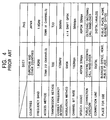
- Fig. 3 shows an example of the basic specifications for the PHS used in Japan and the above-described DECT system.
- a regular format for data transmission has been prescribed as a data service profile such that transmission at a rate of 64 kbps (Air) is performed by using two slots, and an error-correcting function or the like is also provided.
- the process of using this regular format is complicated and specialized in each of hardware and software configurations, so that the format cannot easily be used. There has been a demand for a solution to this problem.
- an object of the present invention is to provide a simple data transmitting and receiving apparatus which can perform 32 kbps Max. (Air) data transmission by using one of speech data transmission slots while the same hardware and software systems as those of the home telephone are used, and which can transmit data with improved reliability in such a manner that, after a data transmission error has occurred, the data is retransmitted by selecting the transmission rate without using an error-correcting coding technique which is complicated and which reduces the effective data transmission rate.
- 32 kbps Max. (Air) data transmission by using one of speech data transmission slots while the same hardware and software systems as those of the home telephone are used, and which can transmit data with improved reliability in such a manner that, after a data transmission error has occurred, the data is retransmitted by selecting the transmission rate without using an error-correcting coding technique which is complicated and which reduces the effective data transmission rate.
- a DECT data transmitting and receiving apparatus which performs transmission and reception of one data set by using one slot in the same format as that for speech transmission, the apparatus comprising a DECT coding section for DECT-encoding serial transmission data, a transmitting section for transmitting, at a predetermined transmission rate, the data encoded by the DECT coding section, receiving section for receiving DECT data, a demodulation section for demodulating the received DECT data received by the receiving section to output a serial reception data, a frequency control section for controlling frequencies in the transmitting section and the receiving section, a transmitting-receiving switching section for switching the connection between an antenna and the transmitting section and the connection between the antenna and the receiving section, a transmission and reception slots control section for performing slot control of the serial transmission data and the serial reception data, a control section having a storage section in which a control program is stored, from which data can be read, and to which data can be written, the control section controlling each of the other sections, error detection means
- the retransmission instruction sending means may send out a retransmission instruction designating a data transmission rate set by reducing the predetermined data transmission rate.
- the data transmission rate may be successively reduced at a predetermined reduction rate, and the data retransmission instruction may be sent out a certain number of times. The reliability with which data is transmitted is improved thereby.
- Fig. 1 is a block diagram showing the configuration of functional sections of a DECT data transmitting and receiving apparatus which represents an embodiment of the present invention.
- an antenna 1 is selectively connected to a transmitting section 3 or to a receiving section 4 by a transmitting-receiving switching section 2.
- a serial transmission data DS is supplied to a DECT coding section 6 via a transmission and reception slots control section 5, and is converted into a signal in the DECT format by the DECT coding section 6.
- the signal in the DECT format is converted into a transmitted signal by the transmitting section 3 operating at a frequency designated by a frequency control section 7.
- a signal received by the receiving section 4 operating at a frequency designated by the frequency control section 7 is demodulated by a demodulation section 8 to extract serial transmission data DR, which is output after being processed in the transmission and reception slots control section 5.
- a control section 9 is formed by a central processing unit (CPU) and peripheral devices.
- a storage section 10 is connected to the control section 9.
- the storage section 10 is formed by a read-only memory (ROM) (in which a control program is stored), an electrically erasable programmable read-only memory (EEPROM) (in which an ID code, clock rate conversion data, a product address, and frequency adjustment data are recorded), and a random access memory (RAM) (in which temporary data is written, or from which temporary data is read out).
- the control section 9 controls the transmitting-receiving switching section 2, the transmission and reception slots control section 5, the frequency control section 7, etc.
- a clock signal generation section 11 generates a signal on which each of the above-described sections operates.
- Received data is monitored by an error detection means 12 using a cyclic redundancy check (CRC) error-detecting device used in the standard form of DECT when the received data is demodulated in the demodulation section 8.
- CRC cyclic redundancy check
- the error detection means 12 If the error detection means 12 has detected an error in the data, it informs the control section 9 of the existence of the error. Receiving this error, the control section 9 commands a retransmission instruction sending means 13 to issue a data retransmission instruction demanding retransmission of the data.
- the DECT coding section 6 transmits the data retransmission instruction.
- the above-described data transmitting and receiving apparatus has been shown without a speech coding and decoding processing section, a display device such as a liquid crystal display, a key input device, and so on.
- the data transmitting and receiving apparatus can perform both speech transmission and data transmission.
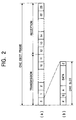
- Fig. 2 is a diagram for explaining the data format for DECT transmission and reception in the embodiment of the present invention.
- one frame in one of a plurality of DECT channels is shown.
- a group of twelve slots 0 to 11 are used for transmission and another group of twelve slots 12 to 23 are used for reception, and each of the group of transmission slots and the group of reception slots occupy a time period of 5 msec.
- speech transmission does not require high error-correcting ability unlike data transmission.
- error correction is performed with respect 1-bit error only and no function for correcting a plurality of error bits is used.
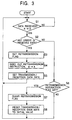
- Fig. 3 is a flowchart for explaining an example of a data transmission procedure in the embodiment of the present invention.
- step S1 When data is received for the first time, the existence/non-existence of received data is checked in step S1 (steps S1, S2, ... hereinafter referred to simply as S1, S2, ).
- S1 data transmitted at an initial transmission rate (e.g., 28.8 kbps) is received.
- the error detection means 12 checks whether there is some error in the data in the demodulation section 8 shown in Fig. 1. If the received data is normal, the process is terminated.
- a retransmission instruction flag is set in S3.
- a retransmission instruction is issued from the retransmission instruction sending means 13.
- a new serial data transmission rate is set at a predetermined reduction rate relative to the initial rate. For example, the transmission rate is reduced three steps by being multiplied by 1/n each time transmission is repeated.
- the terminal which has transmitted the data receives the retransmission instruction, it retransmits the data at the transmission rate set at the predetermined reduction rate.
- the process returns to S1 and data is received.
- a check is performed in S2 as to whether there is some error in the received data. If there is no error, the retransmission flag is checked in S6. Since the transmission rate has been changed if the received data is retransmitted data, the flag is cleared in S7 and the data transmission rate is reset to the initial value in S8.
- DECT communication apparatus of this embodiment originally designed for speech transmission and reception does not have high error-correcting ability, it performs a particular process without using a complicated error-correcting code, in which, if some error is detected in received data, a retransmission instruction is issued to receive correct data. Also, the data transmission rate may be changed (reduced) in response to a retransmission instruction to improve the reliability with which data is received.
- DECT communication performed as described above may be used for replacement of a cable-connected modem or printer, for the operation of a radio-frequency (RF) remote controller or a telemeter, for cancellation of apartment autolocking, for a wireless system using point-of-sale (POS) terminals in family restaurants, for increasing the speed of processing in such a POS system by combining a credit card reader and a wireless POS terminal, etc.
- RF radio-frequency
- the data transmission rate reduction method is not limited to reducing the transmission rate three steps by multiplying it by 1/n. Also, the transmission rate may be changed only after data has been received two times.
- An RS232C driver IC may be optionally incorporated in the apparatus to enable a personal computer to directly operate the apparatus through its serial port.
- a data transmitting and receiving apparatus which is arranged to transmit one data set by using one speech data transmission slot in DECT data transmission while the same hardware and software systems as those for speech transmission are used, and which can transmit data with improved reliability in a simple manner such that, after a data transmission error has occurred, the data is retransmitted by selecting the transmission rate without reducing the data transmission rate by using a complicated error-correcting coding technique.
Landscapes
- Engineering & Computer Science (AREA)
- Computer Networks & Wireless Communication (AREA)
- Signal Processing (AREA)
- Quality & Reliability (AREA)
- Detection And Prevention Of Errors In Transmission (AREA)
- Communication Control (AREA)
- Time-Division Multiplex Systems (AREA)
- Transceivers (AREA)
- Bidirectional Digital Transmission (AREA)
Applications Claiming Priority (2)
| Application Number | Priority Date | Filing Date | Title |
|---|---|---|---|
| JP14478798 | 1998-05-26 | ||
| JP10144787A JPH11340956A (ja) | 1998-05-26 | 1998-05-26 | データ送受信装置 |
Publications (2)
| Publication Number | Publication Date |
|---|---|
| EP0964534A1 EP0964534A1 (en) | 1999-12-15 |
| EP0964534B1 true EP0964534B1 (en) | 2004-03-03 |
Family
ID=15370446
Family Applications (1)
| Application Number | Title | Priority Date | Filing Date |
|---|---|---|---|
| EP99303586A Expired - Lifetime EP0964534B1 (en) | 1998-05-26 | 1999-05-07 | DECT data transmitting and receiving apparatus using speech frame |
Country Status (3)
| Country | Link |
|---|---|
| EP (1) | EP0964534B1 (enExample) |
| JP (1) | JPH11340956A (enExample) |
| DE (1) | DE69915172T2 (enExample) |
Families Citing this family (7)
| Publication number | Priority date | Publication date | Assignee | Title |
|---|---|---|---|---|
| KR20070098913A (ko) | 2000-01-20 | 2007-10-05 | 노오텔 네트웍스 리미티드 | 가변 레이트 패킷 데이타 애플리케이션에서 소프트 결합을사용하는 하이브리드 arq 방법 |
| JP2001274760A (ja) * | 2000-03-24 | 2001-10-05 | Alps Electric Co Ltd | 高速データ通信方式 |
| US7221648B2 (en) * | 2000-11-29 | 2007-05-22 | Lucent Technologies Inc. | Rate adaptation in a wireless communication system |
| KR20030004978A (ko) | 2001-07-07 | 2003-01-15 | 삼성전자 주식회사 | 이동 통신시스템에서 초기전송 및 재전송 방법 |
| US6779147B2 (en) * | 2001-09-25 | 2004-08-17 | Qualcomm, Incorporated | Method and apparatus for efficient use of communication resources in a CDMA communication system |
| US7159163B2 (en) * | 2002-07-08 | 2007-01-02 | Qualcomm Incorporated | Feedback for data transmissions |
| US7801063B2 (en) * | 2003-09-25 | 2010-09-21 | Agere Systems Inc. | Method and apparatus for rate fallback in a wireless communication system |
Family Cites Families (4)
| Publication number | Priority date | Publication date | Assignee | Title |
|---|---|---|---|---|
| GB8628821D0 (en) * | 1986-12-02 | 1987-01-07 | Plessey Co Plc | Data transmission systems |
| GB2232562A (en) * | 1989-05-26 | 1990-12-12 | Philips Electronic Associated | Data transmission over a tdm duplex channel |
| FI92125C (fi) * | 1992-10-30 | 1994-09-26 | Nokia Mobile Phones Ltd | Radiopuhelinjärjestelmä |
| IT1293882B1 (it) * | 1997-04-14 | 1999-03-11 | Sip | Dispositivo e procedimento per la trasmissione di segnali digitali, particolarmente su sistemi di tipo dect. |
-
1998
- 1998-05-26 JP JP10144787A patent/JPH11340956A/ja not_active Withdrawn
-
1999
- 1999-05-07 EP EP99303586A patent/EP0964534B1/en not_active Expired - Lifetime
- 1999-05-07 DE DE69915172T patent/DE69915172T2/de not_active Expired - Fee Related
Also Published As
| Publication number | Publication date |
|---|---|
| JPH11340956A (ja) | 1999-12-10 |
| DE69915172T2 (de) | 2004-07-22 |
| EP0964534A1 (en) | 1999-12-15 |
| DE69915172D1 (de) | 2004-04-08 |
Similar Documents
| Publication | Publication Date | Title |
|---|---|---|
| US6161760A (en) | Multiple application multiterminal data collection network | |
| EP0721714B1 (en) | Method of and system for communicating messages | |
| US5070536A (en) | Mobile radio data communication system and method | |
| USRE45242E1 (en) | Radio transmission method and radio transmission device | |
| EP0353759A2 (en) | Mobile radio data communication system and method | |
| US20050089084A1 (en) | Radio frequency communication network having adaptive communication parameters | |
| US12229619B2 (en) | Method and system for backscatter communication using pre-defined templates | |
| JP2006164263A (ja) | 通信方法及びリモート再プログラミング方法 | |
| EP1833176A1 (en) | Wireless communication apparatus, wireless communication method and wireless communication system | |
| EP0964534A1 (en) | DECT data transmitting and receiving apparatus using speech frame | |
| US6603796B1 (en) | Radio communication system and transmission and/or reception apparatus for use in the system | |
| EP0418866A2 (en) | Signal transmission system capable of performing re-transmission control in units of slots | |
| WO1996037051A1 (en) | Method and apparatus for conserving power in portable, battery-operated radios | |
| US20090245125A1 (en) | Wireless communication system for reducing power consumption when receiving a frame having a low reception success possibility | |
| US7623565B2 (en) | Method for providing packet framing in a communication system | |
| JP4840286B2 (ja) | Rfidタグ用リーダ | |
| CN102026247B (zh) | 一种基于无速率码的认知无线电通信链路的维护方法 | |
| US20110158176A1 (en) | Method for Wireless Data Transmission | |
| EP0961509A2 (en) | Method of initiating and terminating data transmission | |
| JPH0758955B2 (ja) | 無線デ−タ通信方式 | |
| JP2022019960A (ja) | 受信装置、送信装置、受信方法及び送信方法 | |
| US6580713B1 (en) | Radio communication apparatus and mobile radio communication system | |
| WO2010117544A2 (en) | Method for assigning and utilizing forward error correcting (fec) codes | |
| JP3159298B2 (ja) | 局、網および通信システム | |
| US6801121B2 (en) | Pager having simultaneous multichannel scanning function and data transmitting/receiving method thereof |
Legal Events
| Date | Code | Title | Description |
|---|---|---|---|
| PUAI | Public reference made under article 153(3) epc to a published international application that has entered the european phase |
Free format text: ORIGINAL CODE: 0009012 |
|
| AK | Designated contracting states |
Kind code of ref document: A1 Designated state(s): DE FR GB |
|
| AX | Request for extension of the european patent |
Free format text: AL;LT;LV;MK;RO;SI |
|
| 17P | Request for examination filed |
Effective date: 19991123 |
|
| AKX | Designation fees paid |
Free format text: DE FR GB |
|
| 17Q | First examination report despatched |
Effective date: 20021213 |
|
| GRAP | Despatch of communication of intention to grant a patent |
Free format text: ORIGINAL CODE: EPIDOSNIGR1 |
|
| GRAS | Grant fee paid |
Free format text: ORIGINAL CODE: EPIDOSNIGR3 |
|
| GRAA | (expected) grant |
Free format text: ORIGINAL CODE: 0009210 |
|
| AK | Designated contracting states |
Kind code of ref document: B1 Designated state(s): DE FR GB |
|
| REG | Reference to a national code |
Ref country code: GB Ref legal event code: FG4D |
|
| PGFP | Annual fee paid to national office [announced via postgrant information from national office to epo] |
Ref country code: GB Payment date: 20040319 Year of fee payment: 6 |
|
| REF | Corresponds to: |
Ref document number: 69915172 Country of ref document: DE Date of ref document: 20040408 Kind code of ref document: P |
|
| PGFP | Annual fee paid to national office [announced via postgrant information from national office to epo] |
Ref country code: FR Payment date: 20040518 Year of fee payment: 6 |
|
| PGFP | Annual fee paid to national office [announced via postgrant information from national office to epo] |
Ref country code: DE Payment date: 20040727 Year of fee payment: 6 |
|
| ET | Fr: translation filed | ||
| PLBE | No opposition filed within time limit |
Free format text: ORIGINAL CODE: 0009261 |
|
| STAA | Information on the status of an ep patent application or granted ep patent |
Free format text: STATUS: NO OPPOSITION FILED WITHIN TIME LIMIT |
|
| 26N | No opposition filed |
Effective date: 20041206 |
|
| PG25 | Lapsed in a contracting state [announced via postgrant information from national office to epo] |
Ref country code: GB Free format text: LAPSE BECAUSE OF NON-PAYMENT OF DUE FEES Effective date: 20050507 |
|
| PG25 | Lapsed in a contracting state [announced via postgrant information from national office to epo] |
Ref country code: DE Free format text: LAPSE BECAUSE OF NON-PAYMENT OF DUE FEES Effective date: 20051201 |
|
| GBPC | Gb: european patent ceased through non-payment of renewal fee |
Effective date: 20050507 |
|
| PG25 | Lapsed in a contracting state [announced via postgrant information from national office to epo] |
Ref country code: FR Free format text: LAPSE BECAUSE OF NON-PAYMENT OF DUE FEES Effective date: 20060131 |
|
| REG | Reference to a national code |
Ref country code: FR Ref legal event code: ST Effective date: 20060131 |