EP0953809A2 - Door with integrated heating surfaces - Google Patents
Door with integrated heating surfaces Download PDFInfo
- Publication number
- EP0953809A2 EP0953809A2 EP99250133A EP99250133A EP0953809A2 EP 0953809 A2 EP0953809 A2 EP 0953809A2 EP 99250133 A EP99250133 A EP 99250133A EP 99250133 A EP99250133 A EP 99250133A EP 0953809 A2 EP0953809 A2 EP 0953809A2
- Authority
- EP
- European Patent Office
- Prior art keywords
- door
- heat transfer
- door according
- opening
- leaf
- Prior art date
- Legal status (The legal status is an assumption and is not a legal conclusion. Google has not performed a legal analysis and makes no representation as to the accuracy of the status listed.)
- Granted
Links
Images



Classifications
-
- F—MECHANICAL ENGINEERING; LIGHTING; HEATING; WEAPONS; BLASTING
- F24—HEATING; RANGES; VENTILATING
- F24D—DOMESTIC- OR SPACE-HEATING SYSTEMS, e.g. CENTRAL HEATING SYSTEMS; DOMESTIC HOT-WATER SUPPLY SYSTEMS; ELEMENTS OR COMPONENTS THEREFOR
- F24D3/00—Hot-water central heating systems
- F24D3/12—Tube and panel arrangements for ceiling, wall, or underfloor heating
-
- F—MECHANICAL ENGINEERING; LIGHTING; HEATING; WEAPONS; BLASTING
- F24—HEATING; RANGES; VENTILATING
- F24D—DOMESTIC- OR SPACE-HEATING SYSTEMS, e.g. CENTRAL HEATING SYSTEMS; DOMESTIC HOT-WATER SUPPLY SYSTEMS; ELEMENTS OR COMPONENTS THEREFOR
- F24D3/00—Hot-water central heating systems
- F24D3/12—Tube and panel arrangements for ceiling, wall, or underfloor heating
- F24D3/14—Tube and panel arrangements for ceiling, wall, or underfloor heating incorporated in a ceiling, wall or floor
- F24D3/141—Tube mountings specially adapted therefor
- F24D3/142—Tube mountings specially adapted therefor integrated in prefab construction elements
-
- Y—GENERAL TAGGING OF NEW TECHNOLOGICAL DEVELOPMENTS; GENERAL TAGGING OF CROSS-SECTIONAL TECHNOLOGIES SPANNING OVER SEVERAL SECTIONS OF THE IPC; TECHNICAL SUBJECTS COVERED BY FORMER USPC CROSS-REFERENCE ART COLLECTIONS [XRACs] AND DIGESTS
- Y02—TECHNOLOGIES OR APPLICATIONS FOR MITIGATION OR ADAPTATION AGAINST CLIMATE CHANGE
- Y02B—CLIMATE CHANGE MITIGATION TECHNOLOGIES RELATED TO BUILDINGS, e.g. HOUSING, HOUSE APPLIANCES OR RELATED END-USER APPLICATIONS
- Y02B30/00—Energy efficient heating, ventilation or air conditioning [HVAC]
Definitions
- Free heat transfer surfaces are used as heating or cooling elements in the temperature to be controlled Space more or less visible, often installed under the window sill.
- the heat transfer surfaces are in the Ceiling arranged.
- ceiling heating most of the heat is from the Blanket emitted by radiation.
- the outgoing from the heated ceiling Heat rays hit the other wall surfaces, which are heated and in turn, heat is given off partly by radiation and partly by convection.
- the heat transfer surfaces are in concrete, screed or in the voids of the floor.
- the heat transfer surfaces are in the Walls, especially in the outer walls under the window sills.
- the heat transfer medium (hot water) flows through it Heat transfer surfaces integrated in the baseboard body.
- the door leaf becomes air flows through, which is heated by a resistance heater.
- the air comes out through an opening in the lower third of the door leaf, it flows through bottom up and emerges from an opening at the top of the door leaf.
- heating pipes are used in the context of windows or facade elements housed (window frame heating element) or the frame is partially from Flowing water (Gartner facade). This type of radiator is said to emit radiation Compensate window panes to increase comfort.
- Underfloor heating can do its job when the heat is needed is less than or equal to the heat output of the underfloor heating. With the increased statutory requirements for the thermal insulation of buildings and the related accompanying structural improvements in thermal insulation can be When choosing underfloor heating, hardly any of the two requirements at the same time fulfill. Because either underfloor heating provides the desired (i.e. a comfortable) floor temperature is available in most cases however, too much heat entered in the room to be heated, or the Underfloor heating provides (only) the necessary heat, but then either desired surface temperature is no longer reached, or it becomes too little Heated floor area.
- the underfloor heating loses its actual purpose, namely the Combining the two advantages.
- Wall heaters have the disadvantage that the freely usable wall areas are reduced. Just like with an installed radiator, you cannot do it in front of a wall heater Set up furniture or other items without transferring heat to the Affect indoor air. It also requires the installation of a wall heater a relatively high effort.
- Skirting heating has the same disadvantage as free heat transfer surfaces and wall heating: the freely usable wall area is reduced. Before one Skirting heater can not be placed without furniture or other items Affect heat transfer.
- the invention was based, with a door as a heat transfer element in the task to enter heat in a heating system in rooms (covering the heat loss) or in Cooling systems to dissipate heat from the room to be tempered (coverage of the Refrigeration requirements), each of which has the typical disadvantages mentioned above Systems should be avoided or reduced.
- the heat transfer surfaces integrated in the door body can be on both sides of the door (closing and opening area) be arranged (bilaterally effective heat transfer surface) as well as only on one Side (unilaterally effective heat transfer surface).
- the two door side parts are inside the door body thermally (thermally insulated from each other) and hydraulically separated so that the heat transfer is common (e.g. via a thermostatic valve) or controlled separately (e.g. via two thermostatic valves).
- a heat transfer fluid flows through the door, which serves as an energy source. If the door is used as a radiator, it can be operated with hot water. Becomes used as a heat sink, it can be operated with cold water.
- the solution according to the invention relates to doors of all types such as swing doors, Furniture doors, doors in a cupboard system, sliding door, revolving doors, folding doors, built-in and Double-leaf doors, garage doors and also on the door frame.
- the ratio of the heat capacity to the heat transfer area compared to known free heat transfer surfaces (e.g. Pipe radiator, plate radiator) small, so that the heat transfer is quick follow the regulation and the solar energy acting in the room to be tempered can use passively.
- known free heat transfer surfaces e.g. Pipe radiator, plate radiator
- the door according to the invention with integrated surfaces for the transfer of heat can consist of solid plastic material in such a way that the leading the heat transfer fluid Channels or pipes and the door filling material are manufactured in one piece (e.g. pressed).
- the door according to the invention with integrated surfaces for the transfer of heat can with Lines and connections for the transmission of electrical power current (e.g. for the In addition to actuators in the door leaf) and electrical signals (e.g. for controlling Sensors) as well as for the transmission of hydraulic and pneumatic forces and Signals.
- electrical power current e.g. for the In addition to actuators in the door leaf
- electrical signals e.g. for controlling Sensors
- the door according to the invention with integrated surfaces for the transfer of heat can also be equipped with special functions of a door, e.g. B. fire, Smoke and soundproof door.
- the radiator according to the invention can be used advantageously as a fire door in the special way that in the event of a fire, the door is automatically flooded with water (from the heating system) from the inside.
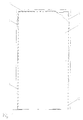
- Fig. 1 shows a double door consisting of door leaf 1 and door frame 2.
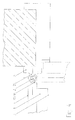
- Door leaf 1 and Door frame 2 as shown in FIG. 2, are differentiated into closing side 3 and opening side 4.
- Door leaf 1 and frame 2 are mechanical via two non-standard multifunctional Connections 5 interconnected.
- the door leaf 1, as shown in FIG. 2, consists of a load-bearing frame 6, which on the closing side 3 and the opening side 4 is provided heat-conductive cover plates 7 made of aluminum.
- the cover plates 7 and the Door edges are provided with a cover layer 8 for decorative purposes.
- the door leaf has heat transfer elements instead of inserts on both sides 9, consisting of vertically running and arranged parallel to each other Copper pipes that end in header pipes that are thermally coupled each adjoin a cover plate but from each other by an insulating layer 10 Polyurethane foam are separated.
- the two heat exchanger elements 9 are hydraulically also usable separately.
- the two heat exchanger elements 9 are via the multifunctional connection 5 with the heat transfer system connected.
- In the upper part of the door frame penetrate in the door edge area Devices for venting 11 the heat exchanger the door frame.
- the door In the lower part the door are two emptying devices 12 for emptying the Heat exchanger integrated in the door frame.
- the multifunctional Connection 5 consists of an upper part 13 which is attached to the door leaf 1 and the Lower part 14, which is attached to the frame. The attachment is done by means of the upper one Lappens 15
- the upper part 13 consists of the distributor sleeve 16 into which two connecting pipes 17, 18 open with the heat exchanger elements 9 of the opening 3 and closing side 4 are connected. Fitted in the upper part 13 is a loose hydraulic Switching sleeve 19.
- the switching sleeve 19 has bores 20 and arranged tangentially Elongated holes. Through these openings, the multifunctional connection 5 flowing heat transfer fluid either not or alternatively or simultaneously via the Distribution sleeve 16 with the heat exchangers 9 on the opening 3 and closing side 4 connected.
- the switching sleeve 19 is closed in the upper part and is in her Tapered diameter, sealed by a gland, upwards from the Distribution sleeve 16 led out.
- Fig. 4 shows shown at 90 ° open door leaf 1 that the switching sleeve 19 upwards is finally formed as an outer square 21.
- the outer square 21 is by a locking fork 22 fastened to the door frame 2 in one of several possible ways Held positions.
- the stuffing box seals off the upper part 13 in an upward direction.
- the distributor sleeve 16 is axially connected to a commercially available screw connection 23 and radially resilient liquid-flowable quick-release nipple 24 with valve connected.
- This quick coupling nipple 24 is detachable with a liquid flowable Quick coupling socket 25 connected.
- Upper part 13 and lower part 14 of the multifunctional Connection 5 are hydraulic by such a quick coupling 24; 25 connected.
- the quick coupling socket 25 is by means of screw 26 on the attached downward collecting sleeve 27 attached. The closed down The collecting sleeve 27 forms the lower part 14 with the lower fastening tab 28 the multifunctional connection 5 of door leaf 1 and frame 2. In the collecting sleeve 27 opens the connecting pipe 28 to the heat transfer distribution network.
- the arrangement and extension of the Openings in the switching sleeve 19 determine which side of the door (closing side 3, Opening side 4, both or neither of them) is flowed through by the heat transfer fluid.
- Fig. 5 shows the circuit options depending on the arrangement of the Bores in the switching sleeve 19 shown as cylinder developments of the switching sleeve for 90 ° door opening angle. Extend the effect to areas with larger opening angles is created by shaping the "door open" openings as elongated holes.
Landscapes
- Engineering & Computer Science (AREA)
- Physics & Mathematics (AREA)
- Thermal Sciences (AREA)
- Chemical & Material Sciences (AREA)
- Combustion & Propulsion (AREA)
- Mechanical Engineering (AREA)
- General Engineering & Computer Science (AREA)
- Building Environments (AREA)
- Furnace Housings, Linings, Walls, And Ceilings (AREA)
- Domestic Hot-Water Supply Systems And Details Of Heating Systems (AREA)
- Power-Operated Mechanisms For Wings (AREA)
Abstract
Description
Es ist bekannt, den Wärmeverlust und den Kältebedarf von Räumen in Gebäuden mit
Heiz- und Kühlsystemen zu decken, die mit Wärmeaustauschern arbeiten, die jeweils in
den zu temperierenden Räumen installiert sind. Solche Wärmeaustauscher lassen sich
unterteilen in:
- Rohrheizkörper;
- Rippenrohrheizkörper;
- Flachheizkörper (Plattenheizkörper, Flachradiatoren, Konvektorheizkörper, Strahlplatten);
- Radiatoren;
- Konvektoren;
- Rohrradiatoren;
- Sockelheizkörper
- Deckenheizung oder Kühldecke;
- Fußbodenheizung;
- Wandheizung;
- Fußleistenheizung;
- Fensterrahmen-Heizelement;
- elektnsch heizende Tür;
- Türrahmenheizung.
- Tubular heater;
- Finned tube radiator;
- Flat radiators (plate radiators, flat radiators, convector radiators, radiant panels);
- Radiators;
- Convectors;
- Pipe radiators;
- Pedestal radiator
- Ceiling heating or chilled ceiling;
- Underfloor heating;
- Wall heating;
- Baseboard heating;
- Window frame heating element;
- electric heating door;
- Door frame heater.
Freie Wärmeübertragungsflächen werden als Heiz- oder Kühlkörper im zu temperierenden Raum mehr oder weniger sichtbar, häufig unter der Fensterbrüstung installiert.Free heat transfer surfaces are used as heating or cooling elements in the temperature to be controlled Space more or less visible, often installed under the window sill.
Bei einer Deckenheizung und einer Kühldecke sind die Wärmeübertragungsflächen in der Decke angeordnet. Bei der Deckenheizung wird der größte Teil der Wärme von der Decke durch Strahlung abgegeben. Die von der beheizten Decke ausgehenden Wärmestrahlen treffen auf die übrigen Wandflächen auf, die dadurch erwärmt werden und ihrerseits wieder Wärme teils durch Strahlung teils durch Konvektion abgegeben.With a ceiling heater and a chilled ceiling, the heat transfer surfaces are in the Ceiling arranged. With ceiling heating, most of the heat is from the Blanket emitted by radiation. The outgoing from the heated ceiling Heat rays hit the other wall surfaces, which are heated and in turn, heat is given off partly by radiation and partly by convection.
Bei einer Fußbodenheizung sind die Wärmeübertragungsflächen im Beton, Estrich oder in den Hohlräumen des Fußbodens verlegt.With underfloor heating, the heat transfer surfaces are in concrete, screed or in the voids of the floor.
Bei einer Wand heizung (Paneelheizung) sind die Wärmeübertragungsflächen in den Wänden, insbesondere in Außenwänden unter Fensterbrüstungen, angebracht.In the case of wall heating (panel heating), the heat transfer surfaces are in the Walls, especially in the outer walls under the window sills.
Bei einer Fußleistenheizung sind die vom Wärmeträger (Warmwasser) durchflossenen Wärmeübertragungsflächen in den Fußleistenkörper integriert. In the case of a baseboard heating system, the heat transfer medium (hot water) flows through it Heat transfer surfaces integrated in the baseboard body.
Bei der elektrisch heizenden Tür nach DE 26 17 701 A 1 wird das Türblatt von Luft
durchströmt, die dabei von einer Widerstandsheizung erwärmt wird. Dabei tritt die Luft
durch eine Öffnung im unteren Drittel des Türblattes in die Tür ein, durchströmt sie von
unten nach oben und tritt aus einer Öffnung oben am Türblatt wieder aus.In the electrically heating door according to DE 26 17 701
Gelegentlich werden im Rahmen von Fenstern oder Fassadenelementen Heizrohre untergebracht (Fensterrahmen-Heizelement) oder es wird der Rahmen teilweise von Wasser durchflossen (Gartner-Fassade). Diese Art der Heizkörper soll die Strahlung der Fenster-scheibe kompensieren, um die Behaglichkeit zu erhöhen.Occasionally, heating pipes are used in the context of windows or facade elements housed (window frame heating element) or the frame is partially from Flowing water (Gartner facade). This type of radiator is said to emit radiation Compensate window panes to increase comfort.
Im Gebrauchsmuster DE 91 08 666 U1 ist eine mit Warmwasser oder elektrischem Strom arbeitende Türrahmenheizung (im Sinne einer Türzargenheizung) vorgeschlagen worden. Bei dieser Einrichtung wird die Wärme hauptsächlich über die Oberfäche der beheizten Türzarge an den Raum abgegeben. Zusätzlich wird ein Teil der Wärme an den Raum über das Türblatt abgegeben, das über Scharniere (Türbänder) und im geschlossenen Zustand über eine metallische Dichtung wärmeleitend mit der Türzarge verbunden ist. Bei der Verwendung freier Wärmeübertragungsflächen wird nutzbare Raumfläche um die für die Aufstellung und/oder Installation der Heiz- bzw. Kühlkörper notwendige Fläche reduziert. Damit der Strahlungsanteil zur Erhöhung der Behaglichkeit der Nutzer des beheizten Raumes wirken kann, dürfen die freien Wärmeübertragungsflächen nicht durch Möbel, Vorhänge etc. verschattet werden. Auf den freien Wärmeübertragungsflächen sammelt sich Staub, der beim Heizbetrieb durch freie Konvektion in die Raumluft emittiert und die Atemluft belastet. Freie Wärmeübertragungsflächen werden nach dem Stand der Technik üblicherweise an den Außenwänden, unter den Fensterbrüstungen aufgestellt.In utility model DE 91 08 666 U1 is one with hot water or electric current Working door frame heater (in the sense of a door frame heater) has been proposed. With this device the heat is mainly heated over the surface of the heated Door frame delivered to the room. In addition, part of the heat is given to the room dispensed via the door leaf, the over hinges (door hinges) and in the closed Condition is connected to the door frame in a heat-conducting manner via a metallic seal. When using free heat transfer surfaces, usable space is around area necessary for the installation and / or installation of the heating or cooling element reduced. So that the radiation portion to increase the comfort of the users of the heated space, the free heat transfer surfaces must not pass through Furniture, curtains, etc. are shaded. On the free heat transfer surfaces Dust collects that emits into the room air through free convection during heating operation and pollutes the air we breathe. Free heat transfer areas are according to the state of the Technology usually placed on the outside walls, under the window sills.
Die Aufstellung freier Wärmeübertragungsflächen schränkt die architektonische Gestaltungsfreiheit (im Bereich der Fenster) ein. Die Aufstellung an den Außenwänden eines Gebäudes bedingt relativ lange (nämlich im wesentlichen zur Länge des Gebäudeumfangs proportionale) Rohrleitungen zur Verteilung des Wärmeträgermediums.The installation of free heat transfer surfaces limits the architectural Freedom of design (in the area of the windows). The installation on the outer walls of a building requires a relatively long time (namely essentially the length of the building's circumference proportional) pipes for the distribution of the heat transfer medium.
Beispiel: Für eine quadratische Geschoßfläche von 100 m2 werden für die Horizontalverteilung des Wärmeträgerfluids bei einer ringförmigen etwa 60 m Rohrleitung (3 x 10 m, jeweils Vor- und Rücklauf) und bei einer sternförmigen Verteilung etwa 50 m Rohrleitung (5 x 5 m, jeweils Vor- und Rücklauf) benötigt.Example: For a square floor area of 100 m 2 , for the horizontal distribution of the heat transfer fluid with a circular approximately 60 m pipeline (3 x 10 m, each flow and return) and with a star-shaped distribution approximately 50 m pipeline (5 x 5 m, forward and reverse).
Bei der Deckenheizung wird ein physiologisch unvorteilhaftes Temperaturprofil (direkt am
Fußboden 18 °C, in Kopfhöhe etwa 24°C) über die Raumhöhe erreicht. Außerdem wird
die architektonische Gestaltungsfreiheit im Bereich der Decke eingeschränkt.
Mit der Fußbodenheizung sollen gleichzeitig zwei Bedingungen erfüllt werden:
Die Fußbodenheizung kann ihrer Aufgabe gerecht werden, wenn der Wärmebedarf kleiner oder gleich der Wärmeleistung der Fußbodenheizung ist. Mit den gestiegenen gesetzlichen Anforderungen an den Wärmeschutz von Gebäuden und den damit einhergehenden bautechnischen Verbesserungen bei der Wärmedämmung lassen sich bei der Wahl von Fußbodenheizungen kaum noch beide Anforderungen gleichzeitig erfüllen. Denn entweder stellt eine Fußbodenheizung die gewünschte (d. h. eine behagliche) Fußbodentemperatur zur Verfügung, dann wird in den meisten Fällen allerdings zuviel Wärme in den zu beheizenden Raum eingetragen, oder die Fußbodenheizung liefert (nur) die notwendige Wärme, dann wird aber entweder die gewünschte Oberflächentemperatur nicht mehr erreicht, oder es wird zuwenig Bodenfläche beheizt.Underfloor heating can do its job when the heat is needed is less than or equal to the heat output of the underfloor heating. With the increased statutory requirements for the thermal insulation of buildings and the related accompanying structural improvements in thermal insulation can be When choosing underfloor heating, hardly any of the two requirements at the same time fulfill. Because either underfloor heating provides the desired (i.e. a comfortable) floor temperature is available in most cases however, too much heat entered in the room to be heated, or the Underfloor heating provides (only) the necessary heat, but then either desired surface temperature is no longer reached, or it becomes too little Heated floor area.
In jedem Fall aber verliert die Fußbodenheizung ihren eigentlichen Zweck, nämlich die Kombination der beiden Vorteile.In any case, the underfloor heating loses its actual purpose, namely the Combining the two advantages.
Wandheizungen haben den Nachteil, daß sich die frei nutzbare Wandflächen verringert. Genau wie bei einem aufgestellten Heizkörper kann man vor einer Wandheizung keine Möbel oder andere Gegenstände aufstellten, ohne die Wärmeübertragung an die Raumluft zu beeinträchtigen. Außerdem erfordert die Installation einer Wandheizung einen relativ hohen Aufwand.Wall heaters have the disadvantage that the freely usable wall areas are reduced. Just like with an installed radiator, you cannot do it in front of a wall heater Set up furniture or other items without transferring heat to the Affect indoor air. It also requires the installation of a wall heater a relatively high effort.
Die Fußleistenheizung hat den gleichen Nachteil wie freie Wärmeübertragungsflächen und die Wandheizung: die frei nutzbare Wandfläche verringert sich. Vor einer Fußleistenheizung können keine Möbel oder andere Gegenstände aufgestellt, ohne die Wärmeübertragung zu beeinträchtigen.Skirting heating has the same disadvantage as free heat transfer surfaces and wall heating: the freely usable wall area is reduced. Before one Skirting heater can not be placed without furniture or other items Affect heat transfer.
Die bekannten elektrisch heizenden Türen haben folgende Nachteile:
- Sie verbrauchen hochwertige elektrische Energie, die überwiegend mit niedrigem Wirkungsgrad in Kraftwerken durch Verfeuerung fossiler Brennstoffe erzeugt wird und verursachen wegen der verglichen mit der direkten Wärmeerzeugung aus fossilen Brennstoffen oder auch der Nutzung von solarthermischer Energie teureren elektrischen Energie relativ hohe Betriebskosten.
- Sie haben eine Heizwirkung mit niedrigem Strahlungsanteil (bzw. hohem Konvektionsanteil und damit niedrigerem Komfort).
- Sie besitzen ein erhebliches Sicherheitsrisiko: Sie werden zu einer potentiellen Brandquelle, wenn Sicherheitsfunktionen (Sicherheitstemperaturbegrenzer) ausfallen und daraufhin im Innenraum der Tür sehr hohe Temperaturen auftreten.
- Die Richtung der Heizungswirkung kann nicht gesteuert oder gewählt werden. Sie
gibt Wärme über beide Seitenteile des Türblattes (Schließ- und Öffnungsseite) ab.
Das schränkt die praktische Verwendbarkeit der Tür stark ein und macht eine
gezielte, den heutigen Ansprüchen an Wohnkomfort entsprechenden Auslegung
solcher Heizkörper unmöglich. Ein Beispiel aus dem Geschoßwohnungsbau macht
dies deutlich: Bei einer Wohnung (
Nutzfläche 100 m2, 3 Zimmer, Küche, Bad) mit einem Wärmebedarf von 70 W/m2 in der Räume von einem zentralem Flur (10 m2) über fünf Türen zugänglich sind, müssen die Türen insgesamt eineWärmeleistung von mindestens - Sie kann nur zu Heiz- und nicht zu Kühlzwecken verwendet werden.
- They consume high-quality electrical energy, which is mainly generated with low efficiency in power plants by burning fossil fuels and cause relatively high operating costs due to the more expensive electrical energy compared to direct heat generation from fossil fuels or the use of solar thermal energy.
- They have a heating effect with a low radiation component (or high convection component and therefore lower comfort).
- They have a significant security risk: they become a potential source of fire if safety functions (safety temperature limiters) fail and very high temperatures occur inside the door.
- The direction of the heating effect cannot be controlled or selected. It gives off heat through both side parts of the door leaf (closing and opening side). This severely limits the practical usability of the door and makes it impossible to design such radiators in a targeted manner that meets today's demands for living comfort. An example from the apartment building makes this clear: In an apartment (
usable area 100 m 2 , 3 rooms, kitchen, bathroom) with a heat requirement of 70 W / m 2 in the rooms accessible from a central hallway (10 m 2 ) via five doors the doors must transmit a total heat output of at least 6.3 kW to the rooms (90 m 2 ). Almost the same power, but is then also transferred to the hallway (10 m 2 ). This results in an oversized heat supply of 630 W / m 2 . The ratio of the areas also shows that the hallway is overheated. An electrically heating door can be used wherever there is a room with the same heat requirement on both sides of the door and the rooms have to be heated at the same time. - It can only be used for heating and not for cooling purposes.
Die Türzargenheizung hat folgende Nachteile:
- Die Tür hat wegen der kleinen Wärmeaustauschfläche (Oberfläche des Türrahmens) nur eine relativ kleine Wärmeübertragungsleistung.
- Die Wärmestrahlung ist nicht in den zu temperierenden Raum gerichtet sondern auf den Raum im Türdurchgang.
- Die Wärme gelangt praktisch nur in den auf der Schließseite der Tür liegenden Raum, dieser Umstand schränkt die architektonische Gestaltungsfreiheit des Türbereiches ein. Die Öffnungsrichtung einer Tür kann entweder günstig für die Wärmeübertragung oder günstig für die Raumnutzung gestaltet werden.
- Die auf der Schließseite der Tür liegenden Wärmeübertragungsflächen der Türzargenheizung sind nicht thermisch getrennt von der auf der Öffnungsseite der Tür liegenden Wärmeübertragungsflächen. Zusammen mit der geringen Wärmeübertragungsleistung führt dies zu vergleichbaren Schwierigkeiten bei der praktischen Verwendung wie bei der elektrisch heizenden Tür.
- Sie hat ein träges Regelverhalten, das einem sparsamen Wärme- und Energiehaushalt in Gebäuden durch verstärkte passive Nutzung der Sonnenenergie nicht entgegenkommt.
- Because of the small heat exchange surface (surface of the door frame), the door has only a relatively small heat transfer capacity.
- The heat radiation is not directed into the room to be tempered, but towards the room in the doorway.
- The heat practically only reaches the room on the closing side of the door, this fact limits the architectural design freedom of the door area. The opening direction of a door can either be designed favorably for heat transfer or favorably for space use.
- The heat transfer surfaces of the door frame heating on the closing side of the door are not thermally separated from the heat transfer surfaces on the opening side of the door. Together with the low heat transfer performance, this leads to comparable difficulties in practical use as in the electrically heating door.
- It has a sluggish control behavior that does not accommodate an economical heat and energy balance in buildings through increased passive use of solar energy.
Der Erfindung lag die Aufgabe zugrunde, mit einer Tür als Wärmeübertragungselement in einem Heizsystem Wärme in Räume einzutragen (Deckung des Wärmeverlustes) oder in Kühlsystemen Wärme aus dem zu temperierenden Raum abzuleiten (Deckung des Kältebedarfs), wobei jeweils die voranstehend genannten typischen Nachteile bekannter Systeme vermieden oder verringert werden sollen.The invention was based, with a door as a heat transfer element in the task to enter heat in a heating system in rooms (covering the heat loss) or in Cooling systems to dissipate heat from the room to be tempered (coverage of the Refrigeration requirements), each of which has the typical disadvantages mentioned above Systems should be avoided or reduced.
Die erfindungsgemäße Tür, bestehend aus Türblatt, Türzarge und Türbeschlägen, mit integrierten Flächen zur Übertragung von Wärme soll
- die Funktionen einer Tür und einer Wärmeübertragungsfläche in einem Bauelement praxistauglich zur Verfügung stellen.
- die gewünschte Wärmeübertragung ohne der Belegung von (teurer) Raumfläche bieten
- eine gezielte und steuerbare Wärmeübertragung ermöglichen, d. h. eine Übertragung von Wärme in notwendiger und hinreichender Größe
- die sparsame und ökologisch sinnvolle Verwendung von Energie unterstützen;
- ein kurzes Rohrleitungssystem für die Verteilung des Wärmeträgermediums ermöglichen;
- die Ästhetik des Wohnraums nicht beeinträchtigen
- die architektonische Freiheit bei der Gestaltung von Wand, Boden, Decken und Fenstern erhalten
- Freiheit bei der Raumnutzung (z. B. beim Aufstellen von Möbeln) bieten.
- die Hygiene der Raumluft verbessern
- ein physiologisch günstiges Temperaturprofil im Raum erzeugen
- die gewünschte Wärme bzw. Kälte sicher zur Verfügung stellen.
- provide the functions of a door and a heat transfer surface in a component in a practical way.
- offer the desired heat transfer without occupying (expensive) space
- enable targeted and controllable heat transfer, ie transfer of heat of a necessary and sufficient size
- support the economical and ecologically sensible use of energy;
- enable a short piping system for the distribution of the heat transfer medium;
- do not affect the aesthetics of the living space
- preserve architectural freedom in the design of walls, floors, ceilings and windows
- Provide freedom in the use of space (e.g. when setting up furniture).
- improve the hygiene of indoor air
- generate a physiologically favorable temperature profile in the room
- provide the desired heat or cold safely.
Die Aufgabe wird entsprechend den Merkmalen des Patentanspruchs 1 gelöst.The object is achieved in accordance with the features of
Die Unteransprüche geben zweckmäßige Ausgestaltungen der Merkmale des Anspruchs
1 wieder.The subclaims give expedient configurations of the features of the
Gemäß der Erfindung wird eine genormte oder nicht genormte Tür mit mindestens einer Wärmeübertragungsfläche verbunden oder eine Wärmeübertragungsfläche mit allen Elementen und Funktionen einer Tür versehen, so daß in jedem Fall, die wesentlichen Elemente, Funktionen und Merkmale einer Tür und einer im Türkörper integrierten Wärmeübertragungsfläche vereint sind. Die im Türkörper integrierten Wärmeübertragungsflächen können sowohl auf beiden Seiten der Tür (Schließ- und Öffnungsfläche) angeordnet sein (zweiseitig wirksame Wärmeübertragungsfläche) als auch nur auf einer Seite (einseitig wirksame Wärmeübertragungsfläche). Die beiden Türseitenteile sind innerhalb des Türkörpers thermisch (gegeneinander wärmeisoliert) und hydraulisch getrennt, so daß die Wärmeübertragung gemeinsam (z. B. über ein Thermostatventil) oder getrennt (z. B. über zwei Thermostatventile) gesteuert werden. Die erfindungsgemäße Tür wird von einem Wärmeträgerfluid durchströmt, das als Energieträger dient. Wird die Tür als Heizkörper eingesetzt, kann sie mit Warmwasser betrieben werden. Wird sie als Kühlkörper eingesetzt, kann sie mit Kaltwasser betrieben werden.According to the invention, a standardized or non-standardized door with at least one Heat transfer surface connected or a heat transfer surface with all Elements and functions of a door provided, so that in any case, the essential Elements, functions and features of a door and one integrated in the door body Heat transfer surface are united. The heat transfer surfaces integrated in the door body can be on both sides of the door (closing and opening area) be arranged (bilaterally effective heat transfer surface) as well as only on one Side (unilaterally effective heat transfer surface). The two door side parts are inside the door body thermally (thermally insulated from each other) and hydraulically separated so that the heat transfer is common (e.g. via a thermostatic valve) or controlled separately (e.g. via two thermostatic valves). The invention A heat transfer fluid flows through the door, which serves as an energy source. If the door is used as a radiator, it can be operated with hot water. Becomes used as a heat sink, it can be operated with cold water.
Die erfindungsgemäße Tür kann wahlweise ausgestattet sein mit
- einer Einrichtung zum Entlüften;
- einer Einrichtung zum Entleeren;
- verschiedenen dekorativen oder funktionalen Oberflächen bzw. Beschichtungen verschiedener Art (z. B. Holzfurnier, andere dünnwandige Holzwerkstoffe, Lackierung, Galvanisierung, Kunststoffbeschichtung, sonstige Anstriche usw.)
- zusätzlichen bekannten Elementen von Türen wie z. B. Lichtausschnitte, Lüftungsöffnungen, Guckloch, Briefschlitz usw.
- zusätzlichen bekannten Elementen von Heiz- und Kühlkörpern wie z. B. Thermometer, Thermostatventile, Wärmezähler für die Heizkostenabrechnung, usw.
- einer hydraulische Verbindung zum Wärmeträgerverteilungsystem
- einer Einrichtung zum Trennen und Abschließen der hydraulische Verbindung zum Wärmeträgerverteilungsystem
- einer mechanischen Verbindungen zur Wand bzw. Zarge zur Aufnahme der Last der Tür bzw. des erfindungsgemäßen Heizkörpers (Band, Scharnier o. ä.)
- mechanischen Verbindungen zur Wand bzw. Zarge und Elemente zum Schließen/Öffnen und Abschließen der Tür (Schloß, Türfalle, Drücker usw.)
- a device for venting;
- a device for emptying;
- various decorative or functional surfaces or coatings of various types (e.g. wood veneer, other thin-walled wood-based materials, painting, galvanizing, plastic coating, other paints, etc.)
- additional known elements of doors such. B. light cutouts, ventilation openings, peephole, letter slot, etc.
- additional known elements of heating and cooling elements such. B. thermometers, thermostatic valves, heat meters for heating bills, etc.
- a hydraulic connection to the heat transfer system
- a device to disconnect and complete the hydraulic connection to the heat transfer system
- a mechanical connection to the wall or frame for receiving the load of the door or the radiator according to the invention (hinge, hinge or the like)
- mechanical connections to the wall or frame and elements for closing / opening and locking the door (lock, door latch, handle, etc.)
Die erfindungsgemäße Lösung bezieht sich auf Türen aller Art wie Schwenktüren, Möbeltüren, Türen in Einbauschranksystem, Schiebetür, Drehtüren, Falttüren, Ein- und Doppelflügelige Türen, Garagentore sowie auch auf die Türzarge.The solution according to the invention relates to doors of all types such as swing doors, Furniture doors, doors in a cupboard system, sliding door, revolving doors, folding doors, built-in and Double-leaf doors, garage doors and also on the door frame.
Bei der erfindungsgemäßen Tür ist das Verhältnis der Wärmekapazität zur Wärmeübertragungsfläche im Vergleich zu bekannten freien Wärmeübertragungsflächen (z. B. Rohrradiator, Plattenheizkörper) klein, damit die Wärmeübertragung einer raschen Regelung folgen und die in den zu temperierenden Raum einwirkende solare Energie passiv nutzen kann.In the door according to the invention is the ratio of the heat capacity to the heat transfer area compared to known free heat transfer surfaces (e.g. Pipe radiator, plate radiator) small, so that the heat transfer is quick Follow the regulation and the solar energy acting in the room to be tempered can use passively.
Die erfindungsgemäße Tür mit integrierten Flächen zur Übertragung von Wärme kann aus Kunststoffvollmaterial bestehen, in der Art, daß die das Wärmeträgerfluid führenden Kanäle oder Rohre und das Türfüllmaterial in einem Stück herstellt (z. B. gepreßt) sind.The door according to the invention with integrated surfaces for the transfer of heat can consist of solid plastic material in such a way that the leading the heat transfer fluid Channels or pipes and the door filling material are manufactured in one piece (e.g. pressed).
Die erfindungsgemäße Tür mit integrierten Flächen zur Übertragung von Wärme kann mit Leitungen und Anschlüssen für die Übertragung elektrischen Kraftstroms (z. B. für den Antneb von Aktoren im Türblatt) und elektrischer Signale (z. B. für die Ansteuerung von Sensoren) sowie für die Übertragung hydraulischer und pneumatischer Kräfte und Signale.The door according to the invention with integrated surfaces for the transfer of heat can with Lines and connections for the transmission of electrical power current (e.g. for the In addition to actuators in the door leaf) and electrical signals (e.g. for controlling Sensors) as well as for the transmission of hydraulic and pneumatic forces and Signals.
Die erfindungsgemäße Tür mit integrierten Flächen zur Übertragung von Wärme kann auch zusätzlich mit speziellen Funktionen einer Tür ausgestattet werden, z. B. Brand-, Rauch- und Schallschutztür. Insbesondere kann der erfindungsgemäße Heizkörper vorteilhaft als Brandschutztür in der speziellen Weise verwendet werden, daß im Brandfall, die Tür automatisch von innen mit Wasser (aus dem Heizungssystem) geflutet wird. The door according to the invention with integrated surfaces for the transfer of heat can also be equipped with special functions of a door, e.g. B. fire, Smoke and soundproof door. In particular, the radiator according to the invention can be used advantageously as a fire door in the special way that in the event of a fire, the door is automatically flooded with water (from the heating system) from the inside.
Ein Ausführungsbeispiel der Erfindung ist in den Figuren 1 bis 5 der Zeichnungen dargestellt und wird im folgenden näher beschrieben. Es zeigen:
- Fig. 1:
- Gesamtansicht einer schematisch dargestellten Tür mit integrierten Einrichtungen zur Wärmeübertragung mit thermischer Trennung von Öffnungs- und Schließseite.
- Fig. 2:
- Schematisierte Darstellung der Tür im horizontalen Schnitt.
- Fig. 3:
- Schematisierte Darstellung der Ansicht einer nicht genormten multifunktionalen Verbindung von Türblatt und Zarge bei 90° Türöffnung mit ausschnittsweise vertikalen Teilschnitt.
- Fig. 4:
- Schematisierte Darstellung einer nicht genormten multifunktionalen Verbindung von Türblatt und Zarge im horizontalen Schnitt mit Draufsicht.
- Fig. 5:
- Masken für die Schalthüse der multifunktionalen Verbindung von Türblatt und Zarge.
- Fig. 1:
- Overall view of a schematically represented door with integrated devices for heat transfer with thermal separation of the opening and closing side.
- Fig. 2:
- Schematic representation of the door in horizontal section.
- Fig. 3:
- Schematic representation of the view of a non-standard multifunctional connection of door leaf and frame with 90 ° door opening with partial vertical section.
- Fig. 4:
- Schematic representation of a non-standardized multifunctional connection of door leaf and frame in horizontal section with a top view.
- Fig. 5:
- Masks for the switch sleeve of the multifunctional connection of door leaf and frame.
Fig. 1 zeigt eine Flügeltür bestehend aus Türblatt 1 und Türzarge 2. Türblatt 1 und
Türzarge 2 werden, wie Fig. 2 zeigt, in Schließseite 3 und Öffnungsseite 4 unterschieden.
Türblatt 1 und Zarge 2 sind mechanisch über zwei nicht genormte multifunktionale
Verbindungen 5 miteinander verbunden. Das Türblatt 1 besteht, wie Fig. 2 zeigt, aus
einem lastabtragenden Rahmen 6, der auf der Schließseite 3 und der Öffnungsseite 4 mit
wärmeleitfähigen Deckplatten 7 aus Aluminium versehen ist. Die Deckplatten 7 und die
Türkanten sind zu dekorativen Zwecken mit einer Decklage 8 versehen. Im Innenraum
des Türblattes befinden sich anstelle von Einlagen auf beiden Seiten Wärmeübertragerelemente
9, bestehend aus vertikal verlaufenden und parallel zueinander angeordneten
Kupferrohren, die an den Enden in Sammelrohren münden, die thermisch gekoppelt
jeweils an eine Deckplatte angrenzen aber voneinander durch eine Isolierschicht 10 aus
Polyurethanschaum getrennt sind. Die beiden Wärmeübertragerelemente 9 sind
hydraulisch ebenfalls voneinander getrennt benutzbar. Die beiden Wärmeübertragerelemente
9 sind über die multifunktionale Verbindung 5 mit dem Wärmeträgerverteilsystem
verbunden. Im oberen Teil des Türrahmens durchdringen im Türkantenbereich
Vorrichtungen zur Entlüftung 11 der Wärmeübertrager den Türrahmen. Im unteren Teil
der Tür sind im Falzbereich zwei Entleerungsvorrichtungen 12 zur Entleerung der
Wärmeübertrager in den Türrahmen integriert.Fig. 1 shows a double door consisting of
Fig. 3 zeigt wie Türblatt 1 und Zarge 2 über zwei multifunktionale Verbindungen 5
miteinander verbunden sind, wovon die eine Verbindung als Vorlauf und die andere als
Rücklauf an das Wärmeträgerverteilnetz angeschlossen ist. Die multifunktionale
Verbindung 5 besteht aus einem Oberteil 13, das an dem Türblatt 1 befestigt ist und dem
Unterteil 14, das an der Zarge befestigt ist. Die Befestigung geschieht mittels des oberen
Lappens 15. 3 shows like
Das Oberteil 13 besteht aus der Verteilerhülse 16, in die zwei Verbindungsrohre 17;18
münden, die mit den Wärmeübertragerelementen 9 der Öffnungs- 3 und Schließseite 4
verbunden sind. In das Oberteil 13 eingepaßt, ist eine losgelagerte hydraulische
Schalthülse 19. Die Schalthülse 19 weist Bohrungen 20 und tangential angeordnete
Langlöcher auf. Durch diese Öffnungen wird das durch die multifunktionale Verbindung 5
strömende Wärmeträgerfluid wahlweise nicht oder alternativ oder gleichzeitig über die
Verteilerhülse 16 mit den Wärmeübertragern 9 der Öffnungs- 3 und Schließseite 4
verbunden. Die Schalthülse 19 ist im oberen Teil verschlossen und wird in ihrem
Durchmesser verjüngt, durch eine Stopfbuchse abgedichtet, nach oben aus der
Verteilerhülse 16 herausgeführt.The
Fig. 4 zeigt dargestellt bei 90° geöffnetem Türblatt 1, daß die Schalthülse 19 nach oben
abschließend als Außenvierkant 21 ausgebildet ist. Der Außenvierkant 21 wird durch eine
an der Türzarge 2 befestigte Arretierungsgabel 22 in einer von mehreren möglichen
Positionen gehalten. Die Stopfbuchse schließt das Oberteil 13 dichtend nach oben ab.Fig. 4 shows shown at 90 °
Die Verteilerhülse 16 ist mittels Schraubverbindung 23 an einen handelsüblichen axial
und radial belastbaren flüssigkeitsdurchstömbaren Schnellkupplungsnippel 24 mit Ventil
angeschlossen. Dieser Schnellkupplungsnippel 24 ist lösbar mit einer flüssigkeitsdurchstömbaren
Schnellkupplungsbuchse 25 verbunden. Oberteil 13 und Unterteil 14 der multifunktionalen
Verbindung 5 sind durch eine solche Schnellkupplung 24;25 hydraulisch
verbunden. Die Schnellkupplungsbuchse 25 ist mittels Schraubverbindung 26 an der
nach unten abgeschlossenen Sammelhülse 27 befestigt. Die nach unten abgeschlossenen
Sammelhülse 27 bildet mit dem unteren Befestigungslappen 28 das Unterteil 14
der multifunktionale Verbindung 5 von Türblatt 1 und Zarge 2. In die Sammelhülse 27
mündet das Verbindungsrohr 28 zum Wärmeträgerverteilungsnetz.The distributor sleeve 16 is axially connected to a commercially
Die multifunktionale Verbindung 5 von Türblatt 1 und Zarge 2, erfüllt somit folgende Aufgaben:
- Übertragung der Kräfte über Türbandlappen 15; 28, Verteiler- 16 und Sammelhülse 27
sowie die axial und radial belastbare Schnellkupplung 24; 25
mit integriertem Axiallager 30, das die mechanische Last aufnimmt und die Drehbeweglichkeit des Türblattes 1 ermöglicht. - Herstellung einer leicht trennbaren hydraulischen Verbindung zwischen Wärmeübertragern 9, Deckplatten 7 und Wärmeträgerverteilungsystem, die bei Bedarf (z. B. Aushängen des Türblattes 1) ein Trennen und Abschließen der hydraulische Verbindung zum Wärmeträgerverteilungsystem ermöglicht, ohne daß dabei Wärmeträgerfluid austritt.
- Transmission of forces via hinge flaps 15; 28, distributor 16 and collecting
sleeve 27 and the axially and radially loadablequick coupling 24; 25 withintegrated thrust bearing 30, which absorbs the mechanical load and enables thedoor leaf 1 to rotate. - Establishment of an easily separable hydraulic connection between
heat exchangers 9, cover plates 7 and heat transfer distribution system, which, if necessary (e.g. hanging the door leaf 1), enables the hydraulic connection to the heat transfer distribution system to be disconnected and closed without heat transfer fluid escaping.
Die Durchströmung der einzelnen Wärmeübertrager 9 auf Schließseite 3 und Öffnungsseite
4 mit Wärmeträgerfluid wird in Abhängigkeit vom Öffnungswinkel des Türblattes 1 je
nach Stellung der Schalthülse 19 gesteuert. Die Anordnung und Ausdehnung der
Öffnungen in der Schalthülse 19 bestimmen, welche Seite der Tür (Schließseite 3,
Öffnungsseite 4, beide oder keine von beiden) vom Wärmeträgerfluid durchströmt wird.The flow through the
Fig. 5 zeigt die Schaltungsmöglichkeiten in Abhängigkeit von der Anordnung der
Bohrungen in der Schalthülse 19 dargestellt als Zylinderabwicklungen der Schalthülse für
90° Türöffnungswinkel. Die Wirkung auf Bereiche größerer Öffnungswinkel auszudehnen
wird durch Ausformung der "Tür auf" - Öffnungen als Langlöcher bewirkt.Fig. 5 shows the circuit options depending on the arrangement of the
Bores in the switching
Durch Einsatz der erfindungsgemäßen Tür mit integrierten Flächen zur Übertragung von Wärme werden folgende Vorteile erzielt:
- die Funktionen einer Tür und einer Wärmeübertragungsfläche werden in einem Bauelement praxistauglich zur Verfügung gestellt;
- die gewünschte Wärmeübertragung wird ohne zusätzliche Belegung von
Raumfläche ermöglicht;
dadurch läßt sich Gebäudefläche wirtschaftlicher nutzen;
Beispiel: Bei einem Raum von 20 m2 Grundfläche belegt ein unter dem Fenster installierter Heizkörper (Tiefe 10 cm, Länge 1 m) eine Grundrißfläche von etwa 0,1 m2. Bezogen auf eine Geschoßfläche von 100 m2 und einenMietpreis von 10bis 20 DM pro m2 und Monat ergibt sich eine Einsparung in Höhe von 60-120 DM pro Jahr; - Wärme kann in notwendigem und hinreichendem Umfang, gezielt und steuerbar übertragen werden;
- im Zusammenhang mit den Anforderungen der umweltverträglichen Nutzung von Gebäuden kann Energie sparsam (durch passive Solarenergienutzung) und effizient (wegen des raschen Regelverhaltens) verwendet werden;
- in Geschoßflächen mit einen zentralen Zugangsbereich mit daran angrenzenden
Räumen, die z. B. für Nutzungen als Wohn- und Büroflächen typisch sind, können
die Wärmeübertragungsflächen über ein kurzes Rohrleitungssystem für die
Verteilung des Wärmeträgermediums angeschlossen werden;
Beispiel: Die Länge des Rohrleitungssystems steht im Verhältnis zur Umfangslänge des zentralen Zugangsbereich des Gebäudes (Flur). Für eine quadratische Geschoßfläche von 100 m2 mit einem zentralen Flurbereich mit einerFläche von 2 m x 5 m werden für die Horizontalverteilung des Wärmeträgerfluids bei einer ringförmigen Verlegung etwa 24 m Rohrleitung (2 m + 5 m + 5 m, jeweils Vor- und Rücklauf) und bei einer sternförmigen Verteilung etwa 25 m Rohrleitung (5 x 2,5, jeweils Vor- und Rücklauf) benötigt. Gegenüber der oben beschriebenen Wärmeverteilung am Rand der Geschoßfläche ergibt sich in diesem Fall eine Einsparung an Rohrleitungslänge in Höhe von 50 bis 60 %. Neben dem Vorteil der Verringerung des Aufwandes bei der Errichtung ergibt ein weiterer Vorteil beim Betrieb eines kurzen Rohrleitungsnetzes. Der Strömungswiderstand eines kurzen Rohrleitungsnetzes ist geringer als der eines langen. Entsprechend reduziert sich der Energieaufwand für die Umwälzung des Wärmeträgerfluids; - die Ästhetik des zu temperierenden Raums wird im erhöht;
- die architektonische Freiheit bei der Gestaltung von Wand, Boden, Decken und Fenstern bleibt erhalten;
- die Freiheit bei der Raumnutzung (z. B. beim Aufstellen von Möbeln) bleibt erhalten;
- die Hygiene der Raumluft wird verbessert;
- der Aufwand für die Reinigung freier Wärmeübertragungsflächen entfällt bzw. ist mit der Reinigung der Tür erledigt ;
- Wärmeübertragung mit hohem Strahlungsanteil;
- im zu temperierenden Raum wird ein physiologisch günstiges Temperaturprofil erzeugt;
- die gewünschte Wärme wird sicher übertragen;
- die zustandsabhängige Wirkungsrichtung der Wärmeübertragung (z.B. ein- oder zweiseitig wirksam, getrennt oder gemeinsam regelbar, Aus- Umschalten der Heizwirkung wenn die Tür geöffnet ist ) kann gewählt und gesteuert werden;
- Reduzierung des Einsatzes von Material für die Wärmeaustauscherfäche und die damit erzielbaren wirtschaftlichen und ökologischen Vorteile (Ressourcenschonung)
- the functions of a door and a heat transfer surface are made available in a component in a practical way;
- the desired heat transfer is made possible without additional occupancy of space;
this allows building space to be used more economically;
Example: In a room with a floor space of 20 m 2, a radiator installed under the window (depth 10 cm, length 1 m) occupies a floor area of approximately 0.1 m 2 . Based on a floor area of 100 m 2 and a rental price of 10 to 20 DM per m 2 and month, this results in savings of 60-120 DM per year; - Heat can be transferred to the necessary and sufficient extent in a targeted and controllable manner;
- in connection with the requirements of environmentally compatible use of buildings, energy can be used sparingly (through passive use of solar energy) and efficiently (because of the rapid control behavior);
- in floor areas with a central access area with adjoining rooms, which e.g. B. are typical for uses as residential and office space, the heat transfer surfaces can be connected via a short pipe system for the distribution of the heat transfer medium;
Example: The length of the piping system is related to the circumferential length of the central access area of the building (hallway). For a square floor area of 100 m 2 with a central corridor area with an area of 2 mx 5 m, approximately 24 m of pipeline (2 m + 5 m + 5 m, in each case forward and return) are used for the horizontal distribution of the heat transfer fluid with an annular laying. and with a star-shaped distribution, about 25 m of pipeline (5 x 2.5, each flow and return) required. Compared to the heat distribution described above at the edge of the floor area, this results in a saving in pipe length of 50 to 60%. In addition to the advantage of reducing the installation effort, there is a further advantage in operating a short pipeline network. The flow resistance of a short pipe network is lower than that of a long one. The energy expenditure for the circulation of the heat transfer fluid is reduced accordingly; - the aesthetics of the room to be tempered is increased;
- the architectural freedom in the design of walls, floors, ceilings and windows is preserved;
- the freedom to use the space (e.g. when setting up furniture) is preserved;
- indoor air hygiene is improved;
- the effort for cleaning free heat transfer surfaces is eliminated or is done with cleaning the door;
- Heat transfer with a high proportion of radiation;
- A physiologically favorable temperature profile is generated in the room to be tempered;
- the desired heat is transferred safely;
- the state-dependent direction of action of the heat transfer (eg one or two-sided effective, separate or jointly controllable, switching the heating effect off when the door is open) can be selected and controlled;
- Reduction of the use of material for the heat exchanger surface and the economic and ecological advantages that can be achieved with this (resource conservation)
Claims (24)
dadurch gekennzeichnet,
characterized,
dadurch gekennzeichnet,
daß sie eine mechanische Verbindung zwischen Wand bzw. Zarge (2) und Türblatt (1) zur schwenkbaren Befestigung, z.B. Band, Scharnier, aufweist.Door according to claim 1,
characterized,
that it has a mechanical connection between the wall or frame (2) and the door leaf (1) for pivotable attachment, for example, a hinge.
dadurch gekennzeichnet,
daß ein Element zur seitlichen Bewegung des Türblattes, z.B. Band, Rollen-Schienen-Linearführung, vorgesehen ist.Door according to claim 1,
characterized,
that an element for lateral movement of the door leaf, such as a belt, roller-rail linear guide, is provided.
dadurch gekennzeichnet,
daß das Türblatt (1) einen hydraulischen Anschluß zum Wärmeträgerverteilungssystem besitzt.Door according to one of claims 1 to 3,
characterized,
that the door leaf (1) has a hydraulic connection to the heat transfer system.
dadurch gekennzeichnet,
daß ein Element zum Trennen und Abschließen der hydraulische Verbindung vom Türblatt (1) zum Wärmeträgerverteilungssystem vorgesehen ist. Door according to claim 4,
characterized,
that an element for separating and closing the hydraulic connection from the door leaf (1) to the heat transfer distribution system is provided.
dadurch gekennzeichnet,
daß eine Vorrichtung vorgesehen ist, die in Abhängigkeit vom Öffnungszustand der Tür (Öffnungswinkel, Öffnungszeit) steuert, welche Seite des Türblattes (1) (Schließseite, Öffnungsseite, beide oder keine von beiden) vom Wärmeträgerfuid durchströmt wird.Door according to claim 5,
characterized,
that a device is provided which, depending on the opening state of the door (opening angle, opening time), controls which side of the door leaf (1) (closing side, opening side, both or neither) through which the heat transfer fluid flows.
dadurch gekennzeichnet,
daß das Türblatt (1) eine Verbindung zur Wand bzw. Zarge hat, die die mechanische Last aufnimmt, die Bewegung der Tür ermöglicht und die gleichzeitig die hydraulische Verbindung zum Wärmeträgerverteilungssystem herstellt.Door according to claims 2 and 4,
characterized,
that the door leaf (1) has a connection to the wall or frame, which absorbs the mechanical load, enables the movement of the door and at the same time establishes the hydraulic connection to the heat transfer distribution system.
dadurch gekennzeichnet
daß das Türblatt (1) und die Zarge (2) über zwei multifunktionale Verbindungen (5), miteinander verbunden sind, die die mechanische Last des Türblatts (1) aufnehmen und von denen die eine Verbindung als Vorlauf und die andere Verbindung als Rücklauf für das Wärmeträgerfluid vom bzw. zum Wärmeverteilernetz ausgebildet ist.Door according to claim 7,
characterized
that the door leaf (1) and the frame (2) are connected to each other via two multifunctional connections (5), which absorb the mechanical load of the door leaf (1) and of which one connection as a flow and the other connection as a return for the Heat transfer fluid from or to the heat distribution network is formed.
dadurch gekennzeichnet,
daß eine multifunktionale Verbindung (5) aus einem Oberteil (13), das am Türblatt (1) befestigt ist und einem Unterteil (14), das an der Zarge (2) befestigt ist, besteht, daß das Oberteil (13) aus einer Verteilerhülse (16) besteht, in die zwei Verbindungsrohre (17,18) münden, die mit Wärmeübertragerelementen (9) der Öffnungs-(3) und der Schließseite (4) verbunden sind, daß in das Oberteil (13) eine losgelagerte hydraulische Schalthülse (19) eingepaßt ist, die Bohrungen (20) und tangential angeordnete Langlöcher aufweist, wobei durch diese Öffnungen das durch die multifunktionale Verbindung strömende Wärmeträgerfluid wahlweise nicht oder alternativ oder gleichzeitig über die Verteilerhülse (16) mit den Wärmeübertragerelementen (9)der Öffnungs- (3) bzw. Schließseite (4) verbunden ist.Door according to claim 8,
characterized,
that a multifunctional connection (5) consists of an upper part (13) which is attached to the door leaf (1) and a lower part (14) which is attached to the frame (2), that the upper part (13) consists of a distributor sleeve (16), into which two connecting pipes (17, 18) open, which are connected to heat transfer elements (9) of the opening (3) and the closing side (4), that in the upper part (13) a loose hydraulic switching sleeve (19 ) is fitted, which has bores (20) and tangentially arranged elongated holes, through which openings the heat transfer fluid flowing through the multifunctional connection either not or alternatively or at the same time via the distributor sleeve (16) with the heat exchanger elements (9) of the opening (3) or closing side (4) is connected.
dadurch gekennzeichnet,
daß das Türblatt (1) eine hydraulische Verbindung zum Wärmeträgerverteilungssystem hat, die gleichzeitig als Vorrichtung ausgestaltet ist, die in Abhängigkeit vom Öffnungszustand der Tür (Öffnungswinkel, Öffnungszeit) steuert, welche Seite des Türblattes (1) (Schließseite, Öffnungsseite, beide oder keine von beiden) vom Wärmeträgerfluid durchströmt wird.Door according to claims 4 and 6,
characterized,
that the door leaf (1) has a hydraulic connection to the heat transfer system, which is also designed as a device that controls which side of the door leaf (1) (closing side, opening side, both or neither of them) depending on the opening state of the door (opening angle, opening time) both) is flowed through by the heat transfer fluid.
dadurch gekennzeichnet,
daß das Türblatt (1) eine Verbindung zur Wand bzw. Zarge (2) hat, die die mechanische Last aufnimmt und die gleichzeitig die hydraulische Verbindung zum Wärmeträgerverteilungsystem herstellt sowie die gleichzeitig als Vorrichtung ausgestaltet ist, die in Abhängigkeit vom Öffnungszustand der Tür (Öffnungswinkel, Öffnungszeit) steuert, welche Seite der Tür (Schließseite, Öffnungsseite, beide oder keine von beiden) vom Wärmeträgerfluid durchströmt wird.Door according to claim 6 and 7,
characterized,
that the door leaf (1) has a connection to the wall or frame (2) which absorbs the mechanical load and which at the same time establishes the hydraulic connection to the heat transfer distribution system and which is at the same time designed as a device which, depending on the opening condition of the door (opening angle, Opening time) controls which side of the door (closing side, opening side, both or neither) through which the heat transfer fluid flows.
dadurch gekennzeichnet,
daß ein oder mehrere Temperaturregelorgane für die Regelung der Strömung des Wärmeüberträgerfuids in den in den Tür- und Zargenflächen auf der Öffnungs- (3) bzw. Schließseite (4) integrierten Wärmeübertragungsflächen vorgesehen sind.Door according to one of the preceding claims,
characterized,
that one or more temperature control elements for controlling the flow of the heat transfer fluid are provided in the heat transfer surfaces integrated in the door and frame surfaces on the opening (3) or closing side (4).
dadurch gekennzeichnet,
daß sie als Möbeltür (z. B. Tür in Einbauschranksystem) ausgebildet ist.Door according to one of the preceding claims,
characterized,
that it is designed as a furniture door (e.g. door in a cupboard system).
dadurch gekennzeichnet,
daß sie mit mindestens einer Einrichtung zum Entlüften ausgerüstet ist.Door according to one of the preceding claims,
characterized,
that it is equipped with at least one device for venting.
dadurch gekennzeichnet,
daß sie mit mindestens einer Einrichtung zum Entleeren ausgerüstet ist.Door according to one of the preceding claims,
characterized,
that it is equipped with at least one device for emptying.
dadurch gekennzeichnet,
daß sie mit Elementen von Heiz- und Kühlkörpern, wie z. B. Thermometer, Thermostatventile, Wärmezähler für die Heizkostenabrechnung, ausgestattet ist. Door according to one of the preceding claims,
characterized,
that they with elements of heating and cooling elements, such as. B. thermometer, thermostatic valves, heat meters for heating billing, is equipped.
dadurch gekennzeichnet,
daß sie mit Funktionselementen von Türen, wie z. B. Lichtausschnitte, Lüftungsöffnungen, Guckloch, Briefschlitz, Sicherheitsbeschläge, ausgerüstet ist.Door according to one of the preceding claims,
characterized,
that they with functional elements of doors, such as. B. light cutouts, ventilation openings, peephole, letter slot, security fittings, is equipped.
dadurch gekennzeichnet,
daß sie mit einer funktionalen oder dekorativen Oberfäche oder Beschichtung, wie z. B. Holzfurnier, andere dünnwandige Holzwerkstoffe, metallische Werkstoffe, Lackierung, Galvanisierung, Kunststoffbeschichtung, sonstige Anstriche, versehen ist.Door according to one of the preceding claims,
characterized,
that they have a functional or decorative surface or coating, such as. B. wood veneer, other thin-walled wood-based materials, metallic materials, painting, electroplating, plastic coating, other coatings, is provided.
dadurch gekennzeichnet,
daß sie als einflügelige Tür, mehrflügelige Tür, Horizontal- oder Vertikalschwenktür, Schiebetür, Drehtür, Falttür, Garagentor, ausgebildet ist.Door according to one of the preceding claims,
characterized,
that it is designed as a single-leaf door, multi-leaf door, horizontal or vertical swing door, sliding door, revolving door, folding door, garage door.
dadurch gekennzeichnet,
daß in die thermische Trennung eine Sprinklereinrichtung integriert ist, die es erlaubt, abhängig von einem Brandmeldesignal die Tür von innen mit Wärmeträgerfluid zu fluten.Door according to one of the preceding claims,
characterized,
that a sprinkler device is integrated in the thermal break, which allows the door to be flooded with heat transfer fluid depending on a fire alarm signal.
dadurch gekennzeichnet,
daß sie mit elektrischen Kraft- und Signalleitungen ausgestattet ist.Door according to one of the preceding claims,
characterized,
that it is equipped with electrical power and signal lines.
dadurch gekennzeichnet,
daß sie mit Leitungen und Anschlüssen für die Übertragung elektrischen Kraftstroms, z. B. für den Antrieb von Aktoren im Türblatt, und elektrischer Signale, z. B. für die Ansteuerung von Sensoren, sowie für die Übertragung hydraulischer und pneumatischer Kräfte und Signale ausgestattet ist. Door according to one of the preceding claims,
characterized,
that they with lines and connections for the transmission of electrical power, z. B. for driving actuators in the door leaf, and electrical signals, for. B. is equipped for the control of sensors and for the transmission of hydraulic and pneumatic forces and signals.
dadurch gekennzeichnet,
daß der Heizkörper aus Kunststoffvollmaterial besteht und daß die das wärmeabgebende Heizmedium führenden Kanäle oder Rohre und das Türfüllmaterial in einem oder mehreren Stücken hergestellt sind.Door according to one of the preceding claims,
characterized,
that the radiator consists of solid plastic and that the channels or pipes carrying the heat-emitting heating medium and the door filling material are made in one or more pieces.
dadurch gekennzeichnet,
daß der Heizkörper durch Pressen des Kunststoffvollmaterials hergestellt ist.Door according to claim 23,
characterized,
that the radiator is made by pressing the solid plastic material.
Applications Claiming Priority (2)
| Application Number | Priority Date | Filing Date | Title |
|---|---|---|---|
| DE19820184A DE19820184C1 (en) | 1998-04-30 | 1998-04-30 | Door with integrated surfaces for the transfer of heat |
| DE19820184 | 1998-04-30 |
Publications (3)
| Publication Number | Publication Date |
|---|---|
| EP0953809A2 true EP0953809A2 (en) | 1999-11-03 |
| EP0953809A3 EP0953809A3 (en) | 2001-10-24 |
| EP0953809B1 EP0953809B1 (en) | 2004-06-30 |
Family
ID=7866823
Family Applications (1)
| Application Number | Title | Priority Date | Filing Date |
|---|---|---|---|
| EP99250133A Expired - Lifetime EP0953809B1 (en) | 1998-04-30 | 1999-04-23 | Door with integrated heating surfaces |
Country Status (3)
| Country | Link |
|---|---|
| EP (1) | EP0953809B1 (en) |
| AT (1) | ATE270420T1 (en) |
| DE (1) | DE19820184C1 (en) |
Cited By (2)
| Publication number | Priority date | Publication date | Assignee | Title |
|---|---|---|---|---|
| FR2816042A1 (en) * | 2000-10-30 | 2002-05-03 | Ghasnavi Eric Moavensadeh | Radiator which may be built into door or window comprises sealed unit made up of two translucent panels separated by gap of a few millimetres, allowing circulation of heating liquid to be seen |
| RU2378100C2 (en) * | 2005-07-01 | 2010-01-10 | Кеярроу (Тайвань) Ко., Лтд | Multilink telescopic closure |
Families Citing this family (1)
| Publication number | Priority date | Publication date | Assignee | Title |
|---|---|---|---|---|
| DE102006012676A1 (en) * | 2006-03-20 | 2007-09-27 | Wolfgang Wendl | Room e.g. store room, tempering device e.g. glass heater, for use in e.g. residence, has tube coil formed in meander shape within device, where device is arranged at edge by hinges in such a manner that device is opened and closed like door |
Citations (2)
| Publication number | Priority date | Publication date | Assignee | Title |
|---|---|---|---|---|
| DE2617701A1 (en) | 1975-04-25 | 1976-11-04 | Elmetherm | HEATING DOOR |
| DE9108666U1 (en) | 1991-07-15 | 1991-09-19 | ITP Institut für technische Beratung und Produktentwicklung GmbH, 6230 Frankfurt | Device for heating rooms |
Family Cites Families (3)
| Publication number | Priority date | Publication date | Assignee | Title |
|---|---|---|---|---|
| FR2030520A5 (en) * | 1969-04-25 | 1970-11-13 | Vey Jean Louis | |
| FR2085473A1 (en) * | 1970-04-24 | 1971-12-24 | Vey Jean | Heating and air conditioning installation set |
| DE29604338U1 (en) * | 1996-03-08 | 1996-05-09 | Albers, Bernd, 44892 Bochum | Space heating |
-
1998
- 1998-04-30 DE DE19820184A patent/DE19820184C1/en not_active Expired - Fee Related
-
1999
- 1999-04-23 EP EP99250133A patent/EP0953809B1/en not_active Expired - Lifetime
- 1999-04-23 AT AT99250133T patent/ATE270420T1/en not_active IP Right Cessation
Patent Citations (2)
| Publication number | Priority date | Publication date | Assignee | Title |
|---|---|---|---|---|
| DE2617701A1 (en) | 1975-04-25 | 1976-11-04 | Elmetherm | HEATING DOOR |
| DE9108666U1 (en) | 1991-07-15 | 1991-09-19 | ITP Institut für technische Beratung und Produktentwicklung GmbH, 6230 Frankfurt | Device for heating rooms |
Cited By (2)
| Publication number | Priority date | Publication date | Assignee | Title |
|---|---|---|---|---|
| FR2816042A1 (en) * | 2000-10-30 | 2002-05-03 | Ghasnavi Eric Moavensadeh | Radiator which may be built into door or window comprises sealed unit made up of two translucent panels separated by gap of a few millimetres, allowing circulation of heating liquid to be seen |
| RU2378100C2 (en) * | 2005-07-01 | 2010-01-10 | Кеярроу (Тайвань) Ко., Лтд | Multilink telescopic closure |
Also Published As
| Publication number | Publication date |
|---|---|
| EP0953809B1 (en) | 2004-06-30 |
| EP0953809A3 (en) | 2001-10-24 |
| ATE270420T1 (en) | 2004-07-15 |
| DE19820184C1 (en) | 1999-11-25 |
Similar Documents
| Publication | Publication Date | Title |
|---|---|---|
| EP1170553B1 (en) | Cooling ceiling | |
| EP0882200B1 (en) | Method and device for heating and cooling buildings, and a heat-insulating wall covering | |
| DE20203713U1 (en) | Device in a building for obtaining thermal energy for a heat pump | |
| DE19820184C1 (en) | Door with integrated surfaces for the transfer of heat | |
| DE1804281C3 (en) | Arrangement for heating or cooling for installation in window frames or the like | |
| DE29922798U1 (en) | Device for tempering rooms | |
| DE102021118086A1 (en) | building services element | |
| DE3802731C2 (en) | ||
| DE2757193A1 (en) | FACADE ELEMENT | |
| DE10015581C1 (en) | Air conditioning device, for fitting indoors, includes one or more heat exchangers for heating and cooling and for circulating air indoors by heat radiation and/or convection | |
| AT413756B (en) | ROOM AIR FACILITY | |
| WO2015043719A1 (en) | Installation system for windows or doors | |
| DE2756860C3 (en) | Control system for the heating system in an apartment building | |
| EP1330579A1 (en) | Low-energy building | |
| EP2792961B1 (en) | Heat exchange unit | |
| DE9116975U1 (en) | System for heating and / or cooling a building with solar energy using transparent thermal insulation | |
| DE3030536A1 (en) | Facade window parapet unit - has air duct, heat exchanger and pump combining heat extraction and ventilation | |
| DE2708128A1 (en) | Building facade component with solar heat exchanger - uses breast panels to form closed exchange circuit with interposed insulated ventilated condenser | |
| DE29617136U1 (en) | Building with a heating system | |
| DE19712744C1 (en) | Room temperature control system | |
| DE19738172C1 (en) | Temperature control for building | |
| AT410456B (en) | Multi-storey high building wit metal profiles | |
| DE102023202513A1 (en) | Heating device and method and kit for its manufacture | |
| DE102006053355B4 (en) | Heating and ventilation device | |
| DE3147632A1 (en) | Facade absorber |
Legal Events
| Date | Code | Title | Description |
|---|---|---|---|
| PUAI | Public reference made under article 153(3) epc to a published international application that has entered the european phase |
Free format text: ORIGINAL CODE: 0009012 |
|
| AK | Designated contracting states |
Kind code of ref document: A2 Designated state(s): AT BE CH CY DE DK ES FI FR GB GR IE IT LI LU MC NL PT SE Kind code of ref document: A2 Designated state(s): AT BE CH FR GB IT LI NL |
|
| AX | Request for extension of the european patent |
Free format text: AL;LT;LV;MK;RO;SI |
|
| PUAL | Search report despatched |
Free format text: ORIGINAL CODE: 0009013 |
|
| AK | Designated contracting states |
Kind code of ref document: A3 Designated state(s): AT BE CH CY DE DK ES FI FR GB GR IE IT LI LU MC NL PT SE |
|
| AX | Request for extension of the european patent |
Free format text: AL;LT;LV;MK;RO;SI |
|
| 17P | Request for examination filed |
Effective date: 20020416 |
|
| AKX | Designation fees paid |
Free format text: AT BE CH CY DE DK ES LI |
|
| RBV | Designated contracting states (corrected) |
Designated state(s): AT BE CH FR GB IT LI NL |
|
| REG | Reference to a national code |
Ref country code: DE Ref legal event code: 8566 |
|
| GRAP | Despatch of communication of intention to grant a patent |
Free format text: ORIGINAL CODE: EPIDOSNIGR1 |
|
| GRAS | Grant fee paid |
Free format text: ORIGINAL CODE: EPIDOSNIGR3 |
|
| GRAA | (expected) grant |
Free format text: ORIGINAL CODE: 0009210 |
|
| AK | Designated contracting states |
Kind code of ref document: B1 Designated state(s): AT BE CH FR GB IT LI NL |
|
| REG | Reference to a national code |
Ref country code: GB Ref legal event code: FG4D Free format text: NOT ENGLISH Ref country code: CH Ref legal event code: EP |
|
| GBT | Gb: translation of ep patent filed (gb section 77(6)(a)/1977) |
Effective date: 20041019 |
|
| PG25 | Lapsed in a contracting state [announced via postgrant information from national office to epo] |
Ref country code: IT Free format text: LAPSE BECAUSE OF NON-PAYMENT OF DUE FEES;WARNING: LAPSES OF ITALIAN PATENTS WITH EFFECTIVE DATE BEFORE 2007 MAY HAVE OCCURRED AT ANY TIME BEFORE 2007. THE CORRECT EFFECTIVE DATE MAY BE DIFFERENT FROM THE ONE RECORDED. Effective date: 20050423 |
|
| PLBE | No opposition filed within time limit |
Free format text: ORIGINAL CODE: 0009261 |
|
| STAA | Information on the status of an ep patent application or granted ep patent |
Free format text: STATUS: NO OPPOSITION FILED WITHIN TIME LIMIT |
|
| ET | Fr: translation filed | ||
| 26N | No opposition filed |
Effective date: 20050331 |
|
| PUAJ | Public notification under rule 129 epc |
Free format text: ORIGINAL CODE: 0009425 |
|
| 32PN | Public notification | ||
| PGFP | Annual fee paid to national office [announced via postgrant information from national office to epo] |
Ref country code: AT Payment date: 20070420 Year of fee payment: 9 |
|
| PG25 | Lapsed in a contracting state [announced via postgrant information from national office to epo] |
Ref country code: AT Free format text: LAPSE BECAUSE OF NON-PAYMENT OF DUE FEES Effective date: 20080423 |
|
| PGFP | Annual fee paid to national office [announced via postgrant information from national office to epo] |
Ref country code: NL Payment date: 20090429 Year of fee payment: 11 Ref country code: FR Payment date: 20090429 Year of fee payment: 11 |
|
| PGFP | Annual fee paid to national office [announced via postgrant information from national office to epo] |
Ref country code: BE Payment date: 20090430 Year of fee payment: 11 |
|
| PGFP | Annual fee paid to national office [announced via postgrant information from national office to epo] |
Ref country code: CH Payment date: 20090430 Year of fee payment: 11 |
|
| PGFP | Annual fee paid to national office [announced via postgrant information from national office to epo] |
Ref country code: GB Payment date: 20090430 Year of fee payment: 11 |
|
| BERE | Be: lapsed |
Owner name: *SCHULZE-KARAL CHRISTIAN Effective date: 20100430 Owner name: *RODE BERNHARD Effective date: 20100430 |
|
| REG | Reference to a national code |
Ref country code: NL Ref legal event code: V1 Effective date: 20101101 |
|
| REG | Reference to a national code |
Ref country code: CH Ref legal event code: PL |
|
| GBPC | Gb: european patent ceased through non-payment of renewal fee |
Effective date: 20100423 |
|
| REG | Reference to a national code |
Ref country code: FR Ref legal event code: ST Effective date: 20101230 |
|
| PG25 | Lapsed in a contracting state [announced via postgrant information from national office to epo] |
Ref country code: NL Free format text: LAPSE BECAUSE OF NON-PAYMENT OF DUE FEES Effective date: 20101101 |
|
| PG25 | Lapsed in a contracting state [announced via postgrant information from national office to epo] |
Ref country code: LI Free format text: LAPSE BECAUSE OF NON-PAYMENT OF DUE FEES Effective date: 20100430 Ref country code: CH Free format text: LAPSE BECAUSE OF NON-PAYMENT OF DUE FEES Effective date: 20100430 |
|
| PG25 | Lapsed in a contracting state [announced via postgrant information from national office to epo] |
Ref country code: GB Free format text: LAPSE BECAUSE OF NON-PAYMENT OF DUE FEES Effective date: 20100423 Ref country code: BE Free format text: LAPSE BECAUSE OF NON-PAYMENT OF DUE FEES Effective date: 20100430 |
|
| PG25 | Lapsed in a contracting state [announced via postgrant information from national office to epo] |
Ref country code: FR Free format text: LAPSE BECAUSE OF NON-PAYMENT OF DUE FEES Effective date: 20100430 |