EP0952904B1 - Method of treating razor blade cutting edges - Google Patents
Method of treating razor blade cutting edges Download PDFInfo
- Publication number
- EP0952904B1 EP0952904B1 EP19970945480 EP97945480A EP0952904B1 EP 0952904 B1 EP0952904 B1 EP 0952904B1 EP 19970945480 EP19970945480 EP 19970945480 EP 97945480 A EP97945480 A EP 97945480A EP 0952904 B1 EP0952904 B1 EP 0952904B1
- Authority
- EP
- European Patent Office
- Prior art keywords
- polyfluorocarbon
- coating
- razor blade
- solvent
- blade cutting
- Prior art date
- Legal status (The legal status is an assumption and is not a legal conclusion. Google has not performed a legal analysis and makes no representation as to the accuracy of the status listed.)
- Expired - Lifetime
Links
- 238000005520 cutting process Methods 0.000 title claims abstract description 54
- 238000000034 method Methods 0.000 title claims abstract description 34
- 239000002904 solvent Substances 0.000 claims abstract description 69
- 238000000576 coating method Methods 0.000 claims abstract description 44
- 239000011248 coating agent Substances 0.000 claims abstract description 39
- 238000004090 dissolution Methods 0.000 claims abstract description 16
- 238000009835 boiling Methods 0.000 claims abstract description 14
- 239000010702 perfluoropolyether Substances 0.000 claims abstract description 6
- 229920001343 polytetrafluoroethylene Polymers 0.000 claims description 41
- 239000004810 polytetrafluoroethylene Substances 0.000 claims description 41
- -1 polytetrafluoroethylene Polymers 0.000 claims description 23
- 239000006185 dispersion Substances 0.000 claims description 20
- 238000010438 heat treatment Methods 0.000 claims description 9
- QKENRHXGDUPTEM-UHFFFAOYSA-N perfluorophenanthrene Chemical compound FC1(F)C(F)(F)C(F)(F)C(F)(F)C2(F)C3(F)C(F)(F)C(F)(F)C(F)(F)C(F)(F)C3(F)C(F)(F)C(F)(F)C21F QKENRHXGDUPTEM-UHFFFAOYSA-N 0.000 claims description 9
- 150000001875 compounds Chemical class 0.000 claims description 5
- 238000007598 dipping method Methods 0.000 claims description 5
- 238000004519 manufacturing process Methods 0.000 claims description 5
- AXFFGMPNSZVEDX-UHFFFAOYSA-N 1,1,1,2,2,3,3,4,4,5,5,6,6,7,7,8,8,9,9,10,10,11,11,12,12,13,13,14,14,15,15,16,16,17,17,18,18,19,19,20,20,21,21,22,22,23,23,24,24,24-pentacontafluorotetracosane Chemical compound FC(F)(F)C(F)(F)C(F)(F)C(F)(F)C(F)(F)C(F)(F)C(F)(F)C(F)(F)C(F)(F)C(F)(F)C(F)(F)C(F)(F)C(F)(F)C(F)(F)C(F)(F)C(F)(F)C(F)(F)C(F)(F)C(F)(F)C(F)(F)C(F)(F)C(F)(F)C(F)(F)C(F)(F)F AXFFGMPNSZVEDX-UHFFFAOYSA-N 0.000 claims description 2
- RKIMETXDACNTIE-UHFFFAOYSA-N 1,1,2,2,3,3,4,4,5,5,6,6-dodecafluorocyclohexane Chemical compound FC1(F)C(F)(F)C(F)(F)C(F)(F)C(F)(F)C1(F)F RKIMETXDACNTIE-UHFFFAOYSA-N 0.000 claims description 2
- JDCMOHAFGDQQJX-UHFFFAOYSA-N 1,2,3,4,5,6,7,8-octafluoronaphthalene Chemical compound FC1=C(F)C(F)=C(F)C2=C(F)C(F)=C(F)C(F)=C21 JDCMOHAFGDQQJX-UHFFFAOYSA-N 0.000 claims description 2
- VRDWRPACFXBYPG-UHFFFAOYSA-N 1-[difluoro-(1,2,2,3,3,4,4,5,5,6,6-undecafluorocyclohexyl)methyl]-2,3,4,5,6,7,8-heptafluoronaphthalene Chemical class FC=1C(F)=C(F)C2=C(F)C(F)=C(F)C(F)=C2C=1C(F)(F)C1(F)C(F)(F)C(F)(F)C(F)(F)C(F)(F)C1(F)F VRDWRPACFXBYPG-UHFFFAOYSA-N 0.000 claims description 2
- 239000006227 byproduct Substances 0.000 claims description 2
- 230000001464 adherent effect Effects 0.000 abstract description 5
- 229920000642 polymer Polymers 0.000 description 38
- 238000002844 melting Methods 0.000 description 17
- 230000008018 melting Effects 0.000 description 16
- KFZMGEQAYNKOFK-UHFFFAOYSA-N Isopropanol Chemical compound CC(C)O KFZMGEQAYNKOFK-UHFFFAOYSA-N 0.000 description 13
- 239000000080 wetting agent Substances 0.000 description 10
- 229920002313 fluoropolymer Polymers 0.000 description 9
- 238000012545 processing Methods 0.000 description 8
- 239000000243 solution Substances 0.000 description 7
- OKTJSMMVPCPJKN-UHFFFAOYSA-N Carbon Chemical compound [C] OKTJSMMVPCPJKN-UHFFFAOYSA-N 0.000 description 6
- NBVXSUQYWXRMNV-UHFFFAOYSA-N fluoromethane Chemical compound FC NBVXSUQYWXRMNV-UHFFFAOYSA-N 0.000 description 6
- 239000000203 mixture Substances 0.000 description 6
- 239000003921 oil Substances 0.000 description 6
- 239000000463 material Substances 0.000 description 5
- 239000002245 particle Substances 0.000 description 5
- 229920006395 saturated elastomer Polymers 0.000 description 5
- BFKJFAAPBSQJPD-UHFFFAOYSA-N tetrafluoroethene Chemical group FC(F)=C(F)F BFKJFAAPBSQJPD-UHFFFAOYSA-N 0.000 description 5
- 210000002268 wool Anatomy 0.000 description 5
- IJGRMHOSHXDMSA-UHFFFAOYSA-N Atomic nitrogen Chemical compound N#N IJGRMHOSHXDMSA-UHFFFAOYSA-N 0.000 description 4
- 229910052799 carbon Inorganic materials 0.000 description 4
- 210000004209 hair Anatomy 0.000 description 4
- 239000007788 liquid Substances 0.000 description 4
- 239000007858 starting material Substances 0.000 description 4
- 239000000126 substance Substances 0.000 description 4
- XLYOFNOQVPJJNP-UHFFFAOYSA-N water Substances O XLYOFNOQVPJJNP-UHFFFAOYSA-N 0.000 description 4
- IAYPIBMASNFSPL-UHFFFAOYSA-N Ethylene oxide Chemical group C1CO1 IAYPIBMASNFSPL-UHFFFAOYSA-N 0.000 description 3
- PXGOKWXKJXAPGV-UHFFFAOYSA-N Fluorine Chemical compound FF PXGOKWXKJXAPGV-UHFFFAOYSA-N 0.000 description 3
- 239000012298 atmosphere Substances 0.000 description 3
- QVGXLLKOCUKJST-UHFFFAOYSA-N atomic oxygen Chemical compound [O] QVGXLLKOCUKJST-UHFFFAOYSA-N 0.000 description 3
- 239000002270 dispersing agent Substances 0.000 description 3
- 239000000194 fatty acid Substances 0.000 description 3
- 239000011737 fluorine Substances 0.000 description 3
- 229910052731 fluorine Inorganic materials 0.000 description 3
- 229920001519 homopolymer Polymers 0.000 description 3
- 239000001257 hydrogen Substances 0.000 description 3
- 229910052739 hydrogen Inorganic materials 0.000 description 3
- 239000001301 oxygen Substances 0.000 description 3
- 229910052760 oxygen Inorganic materials 0.000 description 3
- FYJQJMIEZVMYSD-UHFFFAOYSA-N perfluoro-2-butyltetrahydrofuran Chemical compound FC(F)(F)C(F)(F)C(F)(F)C(F)(F)C1(F)OC(F)(F)C(F)(F)C1(F)F FYJQJMIEZVMYSD-UHFFFAOYSA-N 0.000 description 3
- 239000000843 powder Substances 0.000 description 3
- 229920002545 silicone oil Polymers 0.000 description 3
- 239000007787 solid Substances 0.000 description 3
- 238000005507 spraying Methods 0.000 description 3
- 229910001220 stainless steel Inorganic materials 0.000 description 3
- 239000010935 stainless steel Substances 0.000 description 3
- RIQRGMUSBYGDBL-UHFFFAOYSA-N 1,1,1,2,2,3,4,5,5,5-decafluoropentane Chemical compound FC(F)(F)C(F)C(F)C(F)(F)C(F)(F)F RIQRGMUSBYGDBL-UHFFFAOYSA-N 0.000 description 2
- LFQSCWFLJHTTHZ-UHFFFAOYSA-N Ethanol Chemical compound CCO LFQSCWFLJHTTHZ-UHFFFAOYSA-N 0.000 description 2
- UFHFLCQGNIYNRP-UHFFFAOYSA-N Hydrogen Chemical compound [H][H] UFHFLCQGNIYNRP-UHFFFAOYSA-N 0.000 description 2
- 229920004890 Triton X-100 Polymers 0.000 description 2
- 125000001931 aliphatic group Chemical group 0.000 description 2
- 229910052783 alkali metal Inorganic materials 0.000 description 2
- 239000011324 bead Substances 0.000 description 2
- 125000004432 carbon atom Chemical group C* 0.000 description 2
- 238000004140 cleaning Methods 0.000 description 2
- 150000001924 cycloalkanes Chemical class 0.000 description 2
- 235000014113 dietary fatty acids Nutrition 0.000 description 2
- 238000005516 engineering process Methods 0.000 description 2
- 229930195729 fatty acid Natural products 0.000 description 2
- 150000004665 fatty acids Chemical class 0.000 description 2
- 239000007789 gas Substances 0.000 description 2
- 150000002334 glycols Chemical class 0.000 description 2
- PGFXOWRDDHCDTE-UHFFFAOYSA-N hexafluoropropylene oxide Chemical compound FC(F)(F)C1(F)OC1(F)F PGFXOWRDDHCDTE-UHFFFAOYSA-N 0.000 description 2
- 239000011229 interlayer Substances 0.000 description 2
- 230000007794 irritation Effects 0.000 description 2
- 239000010410 layer Substances 0.000 description 2
- 229910052751 metal Inorganic materials 0.000 description 2
- 239000002184 metal Substances 0.000 description 2
- 229910052757 nitrogen Inorganic materials 0.000 description 2
- 125000006551 perfluoro alkylene group Chemical group 0.000 description 2
- 125000005010 perfluoroalkyl group Chemical group 0.000 description 2
- ZJIJAJXFLBMLCK-UHFFFAOYSA-N perfluorohexane Chemical compound FC(F)(F)C(F)(F)C(F)(F)C(F)(F)C(F)(F)C(F)(F)F ZJIJAJXFLBMLCK-UHFFFAOYSA-N 0.000 description 2
- 239000010701 perfluoropolyalkylether Substances 0.000 description 2
- BASFCYQUMIYNBI-UHFFFAOYSA-N platinum Chemical compound [Pt] BASFCYQUMIYNBI-UHFFFAOYSA-N 0.000 description 2
- 238000000926 separation method Methods 0.000 description 2
- 239000000344 soap Substances 0.000 description 2
- 125000002023 trifluoromethyl group Chemical group FC(F)(F)* 0.000 description 2
- JNYAEWCLZODPBN-JGWLITMVSA-N (2r,3r,4s)-2-[(1r)-1,2-dihydroxyethyl]oxolane-3,4-diol Chemical compound OC[C@@H](O)[C@H]1OC[C@H](O)[C@H]1O JNYAEWCLZODPBN-JGWLITMVSA-N 0.000 description 1
- LWRNQOBXRHWPGE-UHFFFAOYSA-N 1,1,2,2,3,3,4,4,4a,5,5,6,6,7,7,8,8a-heptadecafluoro-8-(trifluoromethyl)naphthalene Chemical compound FC1(F)C(F)(F)C(F)(F)C(F)(F)C2(F)C(C(F)(F)F)(F)C(F)(F)C(F)(F)C(F)(F)C21F LWRNQOBXRHWPGE-UHFFFAOYSA-N 0.000 description 1
- NZXAVWBNLOQPGY-UHFFFAOYSA-N 1,1,2,2,3,3,4,4,5,5,6,6,7,7,8,8-hexadecafluoro-4a,8a-bis(trifluoromethyl)naphthalene Chemical compound FC(F)(F)C12C(F)(F)C(F)(F)C(F)(F)C(F)(F)C1(C(F)(F)F)C(F)(F)C(F)(F)C(F)(F)C2(F)F NZXAVWBNLOQPGY-UHFFFAOYSA-N 0.000 description 1
- QIROQPWSJUXOJC-UHFFFAOYSA-N 1,1,2,2,3,3,4,4,5,5,6-undecafluoro-6-(trifluoromethyl)cyclohexane Chemical compound FC(F)(F)C1(F)C(F)(F)C(F)(F)C(F)(F)C(F)(F)C1(F)F QIROQPWSJUXOJC-UHFFFAOYSA-N 0.000 description 1
- RCZWVHZVRREPBU-UHFFFAOYSA-N 4-ethoxy-2,2,5,5-tetrakis(trifluoromethyl)-1,3-oxazole Chemical compound CCOC1=NC(C(F)(F)F)(C(F)(F)F)OC1(C(F)(F)F)C(F)(F)F RCZWVHZVRREPBU-UHFFFAOYSA-N 0.000 description 1
- VYZAMTAEIAYCRO-UHFFFAOYSA-N Chromium Chemical compound [Cr] VYZAMTAEIAYCRO-UHFFFAOYSA-N 0.000 description 1
- 239000004902 Softening Agent Substances 0.000 description 1
- 229910000831 Steel Inorganic materials 0.000 description 1
- ULUAUXLGCMPNKK-UHFFFAOYSA-N Sulfobutanedioic acid Chemical class OC(=O)CC(C(O)=O)S(O)(=O)=O ULUAUXLGCMPNKK-UHFFFAOYSA-N 0.000 description 1
- 239000013504 Triton X-100 Substances 0.000 description 1
- 229920004929 Triton X-114 Polymers 0.000 description 1
- 229910052770 Uranium Inorganic materials 0.000 description 1
- PWKWDCOTNGQLID-UHFFFAOYSA-N [N].[Ar] Chemical compound [N].[Ar] PWKWDCOTNGQLID-UHFFFAOYSA-N 0.000 description 1
- 239000011149 active material Substances 0.000 description 1
- 238000013019 agitation Methods 0.000 description 1
- 150000001298 alcohols Chemical class 0.000 description 1
- 150000001340 alkali metals Chemical class 0.000 description 1
- 150000008055 alkyl aryl sulfonates Chemical class 0.000 description 1
- 125000002947 alkylene group Chemical group 0.000 description 1
- 229910052782 aluminium Inorganic materials 0.000 description 1
- XAGFODPZIPBFFR-UHFFFAOYSA-N aluminium Chemical compound [Al] XAGFODPZIPBFFR-UHFFFAOYSA-N 0.000 description 1
- 150000001412 amines Chemical class 0.000 description 1
- 239000003708 ampul Substances 0.000 description 1
- 238000013459 approach Methods 0.000 description 1
- 125000003118 aryl group Chemical group 0.000 description 1
- 125000002837 carbocyclic group Chemical group 0.000 description 1
- 125000003178 carboxy group Chemical group [H]OC(*)=O 0.000 description 1
- 229910052804 chromium Inorganic materials 0.000 description 1
- 239000011651 chromium Substances 0.000 description 1
- 229920001577 copolymer Polymers 0.000 description 1
- 150000001923 cyclic compounds Chemical class 0.000 description 1
- 125000004122 cyclic group Chemical group 0.000 description 1
- 238000000354 decomposition reaction Methods 0.000 description 1
- 230000008021 deposition Effects 0.000 description 1
- 238000010586 diagram Methods 0.000 description 1
- 229910003460 diamond Inorganic materials 0.000 description 1
- 239000010432 diamond Substances 0.000 description 1
- 150000005690 diesters Chemical class 0.000 description 1
- 238000004821 distillation Methods 0.000 description 1
- 238000009826 distribution Methods 0.000 description 1
- 230000000694 effects Effects 0.000 description 1
- 238000001962 electrophoresis Methods 0.000 description 1
- 230000005686 electrostatic field Effects 0.000 description 1
- 238000007590 electrostatic spraying Methods 0.000 description 1
- 239000000835 fiber Substances 0.000 description 1
- 239000011521 glass Substances 0.000 description 1
- 210000003780 hair follicle Anatomy 0.000 description 1
- 239000001307 helium Substances 0.000 description 1
- 229910052734 helium Inorganic materials 0.000 description 1
- SWQJXJOGLNCZEY-UHFFFAOYSA-N helium atom Chemical compound [He] SWQJXJOGLNCZEY-UHFFFAOYSA-N 0.000 description 1
- 150000002431 hydrogen Chemical class 0.000 description 1
- 239000011261 inert gas Substances 0.000 description 1
- 230000005865 ionizing radiation Effects 0.000 description 1
- 239000000155 melt Substances 0.000 description 1
- 238000000386 microscopy Methods 0.000 description 1
- SYSQUGFVNFXIIT-UHFFFAOYSA-N n-[4-(1,3-benzoxazol-2-yl)phenyl]-4-nitrobenzenesulfonamide Chemical class C1=CC([N+](=O)[O-])=CC=C1S(=O)(=O)NC1=CC=C(C=2OC3=CC=CC=C3N=2)C=C1 SYSQUGFVNFXIIT-UHFFFAOYSA-N 0.000 description 1
- 238000002663 nebulization Methods 0.000 description 1
- 239000006199 nebulizer Substances 0.000 description 1
- 210000005036 nerve Anatomy 0.000 description 1
- 239000002736 nonionic surfactant Substances 0.000 description 1
- 229950011087 perflunafene Drugs 0.000 description 1
- LOQGSOTUHASIHI-UHFFFAOYSA-N perfluoro-1,3-dimethylcyclohexane Chemical compound FC(F)(F)C1(F)C(F)(F)C(F)(F)C(F)(F)C(F)(C(F)(F)F)C1(F)F LOQGSOTUHASIHI-UHFFFAOYSA-N 0.000 description 1
- UWEYRJFJVCLAGH-IJWZVTFUSA-N perfluorodecalin Chemical compound FC1(F)C(F)(F)C(F)(F)C(F)(F)[C@@]2(F)C(F)(F)C(F)(F)C(F)(F)C(F)(F)[C@@]21F UWEYRJFJVCLAGH-IJWZVTFUSA-N 0.000 description 1
- 229910052697 platinum Inorganic materials 0.000 description 1
- 229920006254 polymer film Polymers 0.000 description 1
- 238000002360 preparation method Methods 0.000 description 1
- 230000005855 radiation Effects 0.000 description 1
- 230000003014 reinforcing effect Effects 0.000 description 1
- 150000003839 salts Chemical class 0.000 description 1
- 239000008257 shaving cream Substances 0.000 description 1
- 210000003491 skin Anatomy 0.000 description 1
- 239000007921 spray Substances 0.000 description 1
- 230000003068 static effect Effects 0.000 description 1
- 239000010959 steel Substances 0.000 description 1
- 238000005496 tempering Methods 0.000 description 1
- 238000012360 testing method Methods 0.000 description 1
- 239000012855 volatile organic compound Substances 0.000 description 1
Images


Classifications
-
- B—PERFORMING OPERATIONS; TRANSPORTING
- B26—HAND CUTTING TOOLS; CUTTING; SEVERING
- B26B—HAND-HELD CUTTING TOOLS NOT OTHERWISE PROVIDED FOR
- B26B21/00—Razors of the open or knife type; Safety razors or other shaving implements of the planing type; Hair-trimming devices involving a razor-blade; Equipment therefor
- B26B21/54—Razor-blades
- B26B21/58—Razor-blades characterised by the material
- B26B21/60—Razor-blades characterised by the material by the coating material
-
- Y—GENERAL TAGGING OF NEW TECHNOLOGICAL DEVELOPMENTS; GENERAL TAGGING OF CROSS-SECTIONAL TECHNOLOGIES SPANNING OVER SEVERAL SECTIONS OF THE IPC; TECHNICAL SUBJECTS COVERED BY FORMER USPC CROSS-REFERENCE ART COLLECTIONS [XRACs] AND DIGESTS
- Y10—TECHNICAL SUBJECTS COVERED BY FORMER USPC
- Y10S—TECHNICAL SUBJECTS COVERED BY FORMER USPC CROSS-REFERENCE ART COLLECTIONS [XRACs] AND DIGESTS
- Y10S76/00—Metal tools and implements, making
- Y10S76/08—Razor blade manufacturing
-
- Y—GENERAL TAGGING OF NEW TECHNOLOGICAL DEVELOPMENTS; GENERAL TAGGING OF CROSS-SECTIONAL TECHNOLOGIES SPANNING OVER SEVERAL SECTIONS OF THE IPC; TECHNICAL SUBJECTS COVERED BY FORMER USPC CROSS-REFERENCE ART COLLECTIONS [XRACs] AND DIGESTS
- Y10—TECHNICAL SUBJECTS COVERED BY FORMER USPC
- Y10T—TECHNICAL SUBJECTS COVERED BY FORMER US CLASSIFICATION
- Y10T428/00—Stock material or miscellaneous articles
- Y10T428/31504—Composite [nonstructural laminate]
- Y10T428/3154—Of fluorinated addition polymer from unsaturated monomers
-
- Y—GENERAL TAGGING OF NEW TECHNOLOGICAL DEVELOPMENTS; GENERAL TAGGING OF CROSS-SECTIONAL TECHNOLOGIES SPANNING OVER SEVERAL SECTIONS OF THE IPC; TECHNICAL SUBJECTS COVERED BY FORMER USPC CROSS-REFERENCE ART COLLECTIONS [XRACs] AND DIGESTS
- Y10—TECHNICAL SUBJECTS COVERED BY FORMER USPC
- Y10T—TECHNICAL SUBJECTS COVERED BY FORMER US CLASSIFICATION
- Y10T428/00—Stock material or miscellaneous articles
- Y10T428/31504—Composite [nonstructural laminate]
- Y10T428/3154—Of fluorinated addition polymer from unsaturated monomers
- Y10T428/31544—Addition polymer is perhalogenated
Definitions
- This invention relates to an improved polyfluorocarbon-coated razor blade cutting edge and its novel method of manufacture. Specifically, this invention relates to razor blade cutting edges which have a thin polyfluorocarbon coating.
- the coatings of the present invention exhibit good blade adhesion and a significantly improved first shave.
- This invention concerns a novel process for treating polyfluorocarbon coated razor blade cutting edges, particularly polytetrafluoroethylene-coated razor blade cutting edges.
- Uncoated razor blades despite their sharpness, cannot be employed for shaving a dry beard without excessive discomfort and pain, and it is as a practical matter necessary to employ with them a beard-softening agent such as water and/or a shaving cream or soap.
- a beard-softening agent such as water and/or a shaving cream or soap.
- the pain and irritation produced by shaving with uncoated blades are due to the excessive force required to draw the cutting edge of the blade through the unsoftened beard hairs, which force is transmitted to the nerves in the skin adjacent the hair follicles from which the beard hairs extend, and, as is well known, the irritation produced by excessive pulling of these hairs may continue for a considerable period of time after the pulling has ceased.
- Blade coatings were developed to solve these shortcomings.
- Fischbein U.S. Patent No. 3,518,110, issued June 30, 1970, discloses an improved solid fluorocarbon telomer for use in coating safety razor blades.
- the solid fluorocarbon polymer has a melting point between 310°C and 332°C and has a melt flow rate of from 0.005 to 600 grams per ten minutes at 350°C.
- the molecular weight is estimated to be between 25,000 and 500,000.
- the solid fluorocarbon polymer is broken down to 0.1 to 1 micron particles.
- the dispersion is electrostatically sprayed onto stainless steel blades.
- PTFE polytetrafluoroethylene
- Triton X-100 brand wetting agent which is electrostatically sprayed on blade edges.
- the aqueous dispersion is prepared by exchanging the Freon solvent in Vydax brand PTFE dispersion (PTFE + Freon solvent), distributed by E.I. DuPont, Wilmington, Delaware, with isopropyl alcohol and then exchanging the isopropyl alcohol with water.
- European Patent Appln. 92922985.4 discloses a method of forming a polyfluorocarbon coating on a razor blade cutting edge which comprises subjecting a fluorocarbon polymer having a molecular weight of at least 1,000,000 in dry powder form to ionizing irradiation to reduce the molecular weight of the polymer, forming a dispersion of the irradiated polymer in a volatile organic liquid, spraying the dispersion on to a razor blade cutting edge and heating the coating obtained to sinter the polyfluorocarbon.
- the polyfluorocarbon preferably is polytetrafluoroethylene and irradiation preferably is effected to obtain a telomer having a molecular weight of about 25,000.
- U.S. Patent No. 5,328,946 to Tuminello et al. discloses perfluorinated cycloalkane solvents for dissolving high melting polymers containing tetrafluoroethylene. These solvents are said to dissolve such polymers more rapidly, and/or are more stable, than previously known solvents. Also disclosed is a process for dissolution of the polymers and their resulting solutions. The solutions are useful for making polymer films, coatings and for encapsulating objects.
- U.S. Patent No. 5,364,929 to Dee et al. discloses a process for dissolving high melting polymers containing tetrafluoroethylene units at pressures greater than autogenous pressure, using selected halogenated solvents that are often not solvents resulting from this process. The resulting solutions are said to be useful for preparing fibers and paper-like webs from these polymers.
- U.S. Patent No. 4,360,388 discloses certain solvents for tetrafluoroethylene (TFE) polymers, including perfluorodecalin, perfluoromethyldecalin, perfluorodimethyldecalin, perfluoromethylcyclohexane and perfluoro(1,3-dimethylcyclohexane). All of these solvents are believed to have critical temperatures below 340°C, and hence are not solvents for PTFE.
- TFE tetrafluoroethylene
- the present invention relates to razor blade cutting edges which exhibit an improvement in the "first shave" cut.
- Conventional razor blade cutting edges exhibit surprisingly high initial cutting forces.
- Razor blades produced according to the present process exhibit significantly lower initial cutting forces which correlates with a more comfortable shave.
- Improved blades according to the present invention involve treating conventional razor blade cutting edges having an adherent polyfluorocarbon coating with a solvent to partially remove some of the coating.
- Preferred solvents include perfluoroalkanes, perfluorocycloalkanes, perfluoroaromatic compounds and oligomers thereof having a critical temperature or boiling point above the dissolution temperature for the polyfluorocarbon in the solvent.
- the present invention also relates to the method of producing these razor blade cutting edges.
- the term "razor blade cutting edge" includes the cutting point and facets of the blade. Applicant recognizes that the entire blade could be coated in the manner described herein; however, an enveloping coat of the type is not believed to be essential to the present invention.
- Razor blades according to the present invention include all types known in the art. For example, stainless steel blades are commonly used. Many other commercial razor blades also include a chromium/platinum interlayer between the steel blade and the polymer. This type of interlayer is sputtered onto the blade edge surface prior to polymer coating. Furthermore, the blade material can be coated with a Diamond Like Carbon (DLC) coating as described in U.S. Patent Nos. 5,142,785 and 5,232,568, incorporated herein by reference, prior to polymer coating.
- DLC Diamond Like Carbon
- the present process starts with a polyfluorocarbon-coated blade edge.
- the blade is solvent-treated to remove most of the polyfluorocarbon but leaving a homogeneous thin coating.
- the solvent-treated blade is finally subjected to a post-treatment step to remove any excess solvent.
- Polyfluorocarbon-coated blade edges according to the present invention can be prepared by any process known in the art.
- the blade edge is coated with a polyfluorocarbon dispersion.
- the dispersion-coated blade edge is next heated to drive off the dispersing media and to sinter the polyfluorocarbon onto the blade edge.
- a dispersion is prepared from a fluorocarbon polymer.
- the preferred fluorocarbon polymers i.e., starting material
- the preferred fluorocarbon polymers are those which contain a chain of carbon atoms including a preponderance of -CF 2 -CF 2 - groups, such as polymers of tetrafluoroethylene, including copolymers such as those with a minor proportion, e.g. up to 5% by weight of hexafluoroproplylene.
- These polymers have terminal groups at the ends of the carbon chains which may vary in nature, depending, as is well known, upon the method of making the polymer.
- a preferred polyfluorocarbon is produced from a fluorocarbon polymer starting material having a molecular weight of at least 1.000,000 in dry powder form, which is subjected to ionizing irradiation to reduce the average molecular weight of the polymer to from about 700 to about 700.000, preferably to from about 700 to about 51,000 and most preferably to about 50,000.
- the radiation dose is preferably from 20 to 80 Mrad and the ionizing radiation is preferably by gamma rays from a Co 60 source.
- the polyfluorocarbon is preferably polytetrafluoroethylene and irradiation is preferably effected to obtain a telomer having an average molecular weight of about 25,000.
- the preferred commercial polyfluorocarbons include MP1100, MP1200 and MP1600 brand polytetrafluoroethylene powders manufactured by DuPont. The most preferred are MP1100 and MP1600 brand polytetrafluoroethylene powder.
- Polyfluorocarbon dispersions according to the present invention comprise from 0.05 to 5% (wt.) polyfluorocarbon, preferably from 0.7 to 1.2% (wt.), dispersed in a dispersant media.
- the polymer can be introduced into the flow stream or mixed directly into an agitated reservoir and then homogenized. When injected into the flow stream, a static mixer downstream is preferred.
- the polyfluorocarbon For the purpose of forming the dispersion which is sprayed onto the cutting edges, the polyfluorocarbon should have a very small submicron particle size. Powdered polyfluorocarbon starting material is normally available as a coarser material than this, and it may be ground to its desired fineness.
- Dispersing medium is typically selected from the group consisting of fluorocarbons (e.g. Freon brand from DuPont), water, volatile organic compounds (e.g. isopropyl alcohol), and supercritical CO 2 . Water is most preferred.
- wetting agent When an aqueous dispersing medium is used, a wetting agent is often necessary, especially when the particle size is large.
- these wetting agents may be selected from the various surface active materials which are available for use in aqueous, polymeric dispersion.
- Such wetting agents include alkali metal salts of dialkyl sulfosuccinates, soaps of higher fatty acids, fatty amines, sorbitan mono- and di-esters of fatty acids and their polyoxyalkyleneether derivatives, alkali metal salts of alkylarylsulfonates, polyalkyleneether glycols, and the mono- and di-fatty acid esters of said glycols.
- the preferred wetting agents for use in the present invention are the non-ionics and more particularly the alkylphenylpolyalkyleneether alcohols such as Triton X100 and Triton X114 sold by Union Carbide, Ipegal CO-610 sold by Rhone-Poulenc, and Tergitol 12P12 sold by Union Carbide Company. Especially useful results have been obtained with the Tergitol 12P12, which is dodecylphenylpolyethyleneether alcohol containing 12 ethylene oxide groups.
- the amount of wetting agent employed may be varied. Usually, the wetting agent is used in amounts equal to at least about 1% by weight of the fluorocarbon polymer, preferably at least about 3% by weight of the fluorocarbon polymer. In preferred embodiments, the wetting agent is used in amounts ranging between about 3% to about 50% by weight of the polymer, with lower levels of wetting agent being desirable. Particularly good results were obtained using between about 3% to about 6%.
- Non-ionic surfactants are often characterized in terms of their HLB (hydrophile-lipophile balance) number.
- HLB hydrophile-lipophile balance
- E the weight percentage of ethylene oxide in the molecule.
- any wetting agent with a Hydrophile-Lipophile Balance number of from about 12.4 to about 18, preferably from about 13.5 to about 18.0 can be utilized in the present invention.
- HLB numbers see Kirk-Othmer, Encyclopedia of Chemical Technology , Vol. 22, pp. 360-362, incorporated herein by reference.
- the dispersion may be applied to the cutting edge in any suitable manner to give as uniform a coating as possible, as for example, by dipping or spraying; nebulization is especially preferred for coating the cutting edges, in which case, an electrostatic field may be employed in conjunction with the nebulizer in order to increase the efficiency of deposition.
- electrostatic spraying technique see U.S. Patent No. 3,713,873 of Fish, issued January 30, 1973, incorporated herein by reference.
- Preheat of the dispersion may be desirable to facilitate spraying, the extent of preheating depending on the nature of the dispersion. Preheating of the blades to a temperature approaching the boiling point of dispersant media may also be desirable.
- the blades carrying the deposited polymer particles on their cutting edges must be heated at an elevated temperature to form an adherent coating on the cutting edge and to drive off the dispersant media.
- the period of time during which the heating is continued may vary widely, from as little as several seconds to as long as several hours, depending upon the identity of the particular polymer used, the nature of the cutting edge, the rapidity with which the blade is brought up to the desired temperature, the temperature achieved, and the nature of the atmosphere in which the blade is heated. It is preferred that the blades are heated in an atmosphere of inert gas such as helium, argon nitrogen, etc., or in an atmosphere of reducing gas such as hydrogen, or in mixtures of such gases, or in vacuo.
- the heating must be sufficient to permit the individual particles of polymer to, at least, sinter. Preferably, the heating must be sufficient to permit the polymer to spread into a substantially continuous film of the proper thickness and to cause it to become firmly adherent to the blade edge material.
- the heating of the coating is intended to cause the polymer to adhere to the blade.
- the heating operation can result in a sintered, partially melted or melted coating.
- a partially melted or totally melted coating is preferred as it allows the coating to spread and cover the blade more thoroughly.
- the heating conditions i.e., maximum temperature, length of time, etc., obviously must be adjusted so as to avoid substantial decomposition of the polymer and/or excessive tempering of the metal of the cutting edge.
- the temperature should not exceed 399°C (750°F).
- the primary feature of the present invention involves treating polyfluorocarbon blades, like those described above, with a solvent to essentially "thin" the polyfluorocarbon coating.
- the resulting blade possesses a uniformly thin coating along the cutting surface.
- Solvents are selected based on the following parameters:
- Melting point depression is used to identify solvency. Polymer melting points and melting depressions in solvents are measured in a Seiko Instrument DSC-220 Differential Scanning Calorimeter (DSC), at a heating rate of 10°C/min in nitrogen. The melting point is the minimum peak of the melting endotherm. Melting depression study used approximately 5 mg of PTFE/solvent in hermetic aluminum or stainless steel pans or glass ampules. Liquids which exhibit a PTFE melting point depression are considered to be solvents. The melting point depression establishes the lower range of dissolution temperatures.
- the solvent should be a liquid at the dissolution temperature.
- the solvent must have a boiling point above the processing temperature and a melting point below the dissolution temperature.
- this can be manipulated by changing the processing pressures; however, ambient pressures are preferred.
- the solvent In the event of processing at higher pressure, the solvent must have a critical temperature above the processing temperature.
- Polar molecules are generally not good solvents according to the present invention. Molecules with low or, most preferably, no polar functionality work best. The most preferred molecules are non-polar aliphatic, cyclic, or aromatic perfluorocarbons; however, low molecular weight (LMW), flourine-end-capped homopolymers of hexafluoropropylene epoxide also work to some degree.
- LMW low molecular weight
- the process of solvent treating the polyfluorocarbon coated blade edge is carried out at the temperature required to dissolve the polymer, i.e. within the dissolution temperature range as defined above.
- lower melting polymers will require lower temperatures, while higher melting polymers such as PTFE will require higher temperatures.
- Useful temperatures are illustrated in the Examples, and are sometimes above the boiling point at atmospheric pressure of the solvent, so that a pressure vessel will be needed to avoid boiling of the solvent.
- the processing temperature must not be above the critical temperature or the boiling point of the solvent, so the critical temperature of the solvent must be above the temperature of dissolution. Critical temperatures of many compounds can be found in standard references, and may be measured by methods known to those skilled in the art.
- the solvent and polymer must be stable at the process temperature. Agitation will increase the rate of dissolution of the polymer along the blade edge. Two other factors influence the rate of dissolution: (1) higher interfacial surface area between the polymer and solvent gives faster rates, and (2) higher polymer molecular weight and higher polymer concentrations give slower rates of dissolution.
- the time required for dissolution will vary with the particular polymer and solvent chosen, as well as with the other factors discussed above. Specific examples of the solvent treatment appear in the Examples.
- Preferred solvents are perfluoroalkanes, perfluorocycloalkanes, perfluoro- aromatic compounds and oligomers thereof. Many perfluoropolyethers (PTFE) work in some cases.
- perfluorocycloalkanes refer to saturated cyclic compounds, which may contain fused or unfused rings.
- the perfluorinated cycloalkane may be substituted by perfluoroalkyl and perfluoroalkylene groups.
- perfluoroalkyl group is meant a saturated branched or linear carbon chain.
- perfluoroalkylene group is an alkylene group which is branched or linear and is bound to two different carbon atoms in carbocyclic rings.
- Perfluorotetradecahydrophenanthrene (C 14 F 24 ) may be obtained from BNFL Fluorochemicals Ltd., Preston Lancashire, England; under the tradename Flutec PP1 commonly called perfluoroperhydrophenanthrene.
- RP-ISC Rhone-Poulenc Co.
- the approximate boiling range of the components is 280-400°C.
- PFAE perfluoroalkylether
- PFPAE perfluoropolyalkylether
- the polymer chain is completely saturated and contains only the elements carbon, oxygen, and fluorine; hydrogen is not present.
- PFPE solvents are Krytox® brand fluorinated oils manufactured by DuPont Specialty Chemicals and FomblinTM brand fluorinated oils made by Montedison UK Ltd.
- the polymer chain is completely saturated and contains only the elements carbon, oxygen, and fluorine; hydrogen is not present.
- a typical Krytox oil contains 21.6% carbon, 9.4% oxygen, and 69.0% fluorine.
- the blades may be cleaned to remove any excess solvent. This can be done by dipping the blade edge into a wash solution for the solvent.
- the wash solution should be easily separable from the solvent and be a true solvent for the solvent described in the previous section.
- the blades are washed at a temperature near the boiling point of the wash solution of Fluorinert FC-75 brand perfluoro (2-n-butyl hydrofuran) solvent, manufactured by 3M or HFC-43 brand 1,1,1,2,3,4,4,5,5,5,decafluoropentane manufactured by DuPont.
- Fluorinert FC-75 brand perfluoro (2-n-butyl hydrofuran) solvent manufactured by 3M or HFC-43 brand 1,1,1,2,3,4,4,5,5,5,decafluoropentane manufactured by DuPont.
- Another preferred post-treatment step involves separating dissolved PTFE from the solvent. This separation allows for the reuse of the solvent and may also afford the reuse of the PTFE. This separation can be accomplished by distillation or any method known in the art.
- the quality of the first shave obtained with blades of each of the following examples is equal to or better than the quality obtained in any subsequent shave; and the decrease in quality with successive shaves in the case of blades of each particular example is equal to or less than the decrease in quality in the case of conventional fluorocarbon polymer-coated blades manufactured without the present solvent treatment step.
- FC-75 Mainly perfluoro (2-n-butyl hydrofuran). C 8 F 12 O. 3M Company.
- MP1600 brand. Polytetrafluoroethylene. -(C 2 F 4 ) n -, DuPont Company. 1% in isopropanol.
- a batch of blades was spray coated and sintered as follows: A fixture containing a magazine of the blades is set on a conveyer belt. The blade fixture is sprayed with a PTFE/isopropanol dispersion at 1% (w/w). The magazine fixture passes through an oven where the PTFE is sintered to the blade edge.
- the batch of sintered blades were divided into two groups: (1) a control group representing current commercial blades which will not undergo any solvent treatment and (2) a group representing the present invention which undergo solvent treatment.
- Flutec PP1 oligomer is preheated in a 500 ml two-neck round bottom flask with a positive nitrogen flow. Approximately 35-50 blades are stacked in one end of a handheld device and are dipped into Flutec oligomer at 310°C for 2 minutes. For post-treatment cleaning of the Flutec oligomer, the blades are flushed 5 times in a Soxhlet extractor, containing Fluorinert FC-75 heated to 108°C.
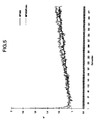
- the cutting force of each blade is determined by measuring the force required by each blade to cut through a wool felt. Each blade is run through the wool felt cutter 500 times and the force of each cut is measured on a recorder. A plot of cutter force of each cut is found in Figure 6. As can be seen from the plot Figure 6, razor blade edges which have been treated according to the present invention exhibit lower cutting forces at and near the first cut. First shave improvements have been observed in actual shave tests comparing blades produced according to the present invention with commercial blades.
Landscapes
- Life Sciences & Earth Sciences (AREA)
- Forests & Forestry (AREA)
- Engineering & Computer Science (AREA)
- Mechanical Engineering (AREA)
- Application Of Or Painting With Fluid Materials (AREA)
- Dry Shavers And Clippers (AREA)
- Paints Or Removers (AREA)
- Details Of Cutting Devices (AREA)
- Other Surface Treatments For Metallic Materials (AREA)
- Polishing Bodies And Polishing Tools (AREA)
- Cosmetics (AREA)
- Knives (AREA)
Applications Claiming Priority (3)
| Application Number | Priority Date | Filing Date | Title |
|---|---|---|---|
| US741794 | 1996-10-31 | ||
| US08/741,794 US5985459A (en) | 1996-10-31 | 1996-10-31 | Method of treating razor blade cutting edges |
| PCT/US1997/017894 WO1998018605A1 (en) | 1996-10-31 | 1997-10-03 | Method of treating razor blade cutting edges |
Publications (2)
| Publication Number | Publication Date |
|---|---|
| EP0952904A1 EP0952904A1 (en) | 1999-11-03 |
| EP0952904B1 true EP0952904B1 (en) | 2002-02-20 |
Family
ID=24982236
Family Applications (1)
| Application Number | Title | Priority Date | Filing Date |
|---|---|---|---|
| EP19970945480 Expired - Lifetime EP0952904B1 (en) | 1996-10-31 | 1997-10-03 | Method of treating razor blade cutting edges |
Country Status (14)
| Country | Link |
|---|---|
| US (1) | US5985459A (enExample) |
| EP (1) | EP0952904B1 (enExample) |
| JP (1) | JP4086907B2 (enExample) |
| KR (1) | KR100514981B1 (enExample) |
| CN (1) | CN1121304C (enExample) |
| AT (1) | ATE213449T1 (enExample) |
| AU (1) | AU742437B2 (enExample) |
| BR (1) | BR9712700A (enExample) |
| CA (1) | CA2265676C (enExample) |
| DE (1) | DE69710616T2 (enExample) |
| ES (1) | ES2168680T3 (enExample) |
| RU (1) | RU2201333C2 (enExample) |
| TR (1) | TR199900890T2 (enExample) |
| WO (1) | WO1998018605A1 (enExample) |
Families Citing this family (55)
| Publication number | Priority date | Publication date | Assignee | Title |
|---|---|---|---|---|
| US5995951A (en) * | 1996-06-04 | 1999-11-30 | Recipio | Network collaboration method and apparatus |
| US6684513B1 (en) * | 2000-02-29 | 2004-02-03 | The Gillette Company | Razor blade technology |
| US20020163629A1 (en) * | 2001-05-07 | 2002-11-07 | Michael Switkes | Methods and apparatus employing an index matching medium |
| US7103977B2 (en) * | 2002-08-21 | 2006-09-12 | Eveready Battery Company, Inc. | Razor having a microfluidic shaving aid delivery system and method of ejecting shaving aid |
| US20040121159A1 (en) * | 2002-11-08 | 2004-06-24 | Nathan Cloud | Microtome blade coating for enhanced performance |
| US20040172832A1 (en) * | 2003-03-04 | 2004-09-09 | Colin Clipstone | Razor blade |
| US7247249B2 (en) * | 2004-01-15 | 2007-07-24 | The Gillette Company | Method of treating razor blade cutting edges |
| DE602005006969D1 (de) * | 2004-01-15 | 2008-07-03 | Gillette Co | Verfahren zur behandlung von rasierklingen-schneidkanten |
| CN100500391C (zh) * | 2004-01-15 | 2009-06-17 | 吉莱特公司 | 处理剃刀刀刃的方法 |
| US7673541B2 (en) * | 2004-06-03 | 2010-03-09 | The Gillette Company | Colored razor blades |
| US7284461B2 (en) * | 2004-12-16 | 2007-10-23 | The Gillette Company | Colored razor blades |
| US20060277767A1 (en) * | 2005-06-14 | 2006-12-14 | Shuwei Sun | Razor blades |
| US7338538B2 (en) * | 2005-08-29 | 2008-03-04 | Elc Management Llc | Compositions and methods for darkening keratinous fibers |
| US20070062047A1 (en) * | 2005-09-19 | 2007-03-22 | Andrew Zhuk | Razor blades |
| US20070124944A1 (en) * | 2005-11-30 | 2007-06-07 | Eveready Battery Company, Inc. | Razor blade and method of making it |
| US20070131060A1 (en) * | 2005-12-14 | 2007-06-14 | The Gillette Company | Automated control of razor blade colorization |
| WO2007095120A2 (en) * | 2006-02-10 | 2007-08-23 | Eveready Battery Company, Inc. | Multi-layer coating for razor blades |
| JP5176337B2 (ja) * | 2006-05-12 | 2013-04-03 | 株式会社デンソー | 皮膜構造及びその形成方法 |
| US8053081B2 (en) | 2007-04-04 | 2011-11-08 | Aculon, Inc. | Cutting tool |
| AU2015200313B2 (en) * | 2007-12-17 | 2016-12-01 | Alpharma Pharmaceuticals, Llc | Pharmaceutical composition |
| US20090263668A1 (en) * | 2008-04-21 | 2009-10-22 | 3M Innovative Properties Company | Durable coating of an oligomer and methods of applying |
| WO2009137389A1 (en) * | 2008-05-05 | 2009-11-12 | Eveready Battery Company, Inc. | Razor blade and method of manufacture |
| US8628821B2 (en) * | 2009-01-12 | 2014-01-14 | The Gillette Company | Formation of thin uniform coatings on blade edges using isostatic press |
| US8642122B2 (en) * | 2009-01-12 | 2014-02-04 | The Gillette Company | Formation of thin uniform coatings on blade edges using isostatic press |
| PL2429777T3 (pl) * | 2009-05-15 | 2017-11-30 | The Gillette Company Llc | Powłoka ostrza maszynki do golenia |
| KR101673499B1 (ko) * | 2009-10-22 | 2016-11-07 | 빅-비올렉스 에스아 | 면도기 블레이드에 윤활 코팅을 형성하는 방법, 그러한 면도기 블레이드 및 면도기 블레이드 코팅 시스템 |
| US20130014395A1 (en) * | 2011-07-14 | 2013-01-17 | Ashok Bakul Patel | Razor blades having a large tip radius |
| US20130014396A1 (en) | 2011-07-14 | 2013-01-17 | Kenneth James Skrobis | Razor blades having a wide facet angle |
| US20130031794A1 (en) | 2011-08-05 | 2013-02-07 | Duff Jr Ronald Richard | RAZOR BLADES WITH ALUMINUM MAGNESIUM BORIDE (AlMgB14)-BASED COATINGS |
| EP2931814B1 (en) * | 2012-12-13 | 2020-08-12 | Technion Research & Development Foundation Ltd. | Use of hydrophobic and oleophobic surfaces |
| US8889225B2 (en) * | 2012-12-21 | 2014-11-18 | The Gillette Company | Chemical vapor deposition of fluorocarbon polymers |
| US11148309B2 (en) * | 2013-06-05 | 2021-10-19 | The Gillette Company Llc | Razor components with novel coating |
| US9751230B2 (en) | 2014-05-19 | 2017-09-05 | The Gillette Company | Razor blades |
| RU2016148919A (ru) * | 2014-07-01 | 2018-08-01 | Дзе Жиллетт Компани Ллс | Способ обработки режущих кромок бритвенных лезвий |
| US9943879B2 (en) | 2014-10-06 | 2018-04-17 | Edgewell Personal Care Brands, Llc | Method of shaping a surface coating on a razor blade |
| PL3204199T3 (pl) * | 2014-10-06 | 2021-01-25 | Edgewell Personal Care Brands, Llc | Sposób kształtowania powłoki powierzchniowej na ostrzu maszynki do golenia z użyciem siły odśrodkowej |
| US11230025B2 (en) | 2015-11-13 | 2022-01-25 | The Gillette Company Llc | Razor blade |
| WO2017210290A1 (en) | 2016-05-31 | 2017-12-07 | Edgewell Personal Care Brands, Llc. | Pulsed laser deposition of fluorocarbon polymers on razor blade cutting edges |
| US11654588B2 (en) | 2016-08-15 | 2023-05-23 | The Gillette Company Llc | Razor blades |
| US10011030B1 (en) * | 2017-02-13 | 2018-07-03 | The Gillette Company Llc | Razor blades |
| US20180230320A1 (en) * | 2017-02-13 | 2018-08-16 | The Gillette Company Llc | Razor blades |
| US10766157B2 (en) * | 2017-02-13 | 2020-09-08 | The Gillette Company Llc | Razor blades |
| EP3616800B1 (en) | 2018-08-31 | 2022-11-09 | BIC Violex Single Member S.A. | Thinning of razor blade coatings |
| EP3639991A1 (en) | 2018-10-19 | 2020-04-22 | Edgewell Personal Care Brands, LLC | Razor blade and method of making it |
| US11338321B2 (en) | 2019-05-09 | 2022-05-24 | The Gillette Company Llc | Method for modifying coated razor blade edges |
| CN114080306B (zh) | 2019-07-31 | 2024-03-29 | 吉列有限责任公司 | 剃刀和剃刀刀片架 |
| CN116615318A (zh) | 2020-11-03 | 2023-08-18 | 吉列有限责任公司 | 具有基于硼化铬的涂层的剃刀刀片 |
| CN117881510A (zh) | 2021-08-24 | 2024-04-12 | Edgewell个人护理品牌有限责任公司 | 用于涂覆刀片的系统和方法 |
| US20230347537A1 (en) | 2022-03-31 | 2023-11-02 | The Gillette Company Llc | Razor blades |
| US20230311354A1 (en) | 2022-03-31 | 2023-10-05 | The Gillette Company Llc | Razor blades |
| US20230311353A1 (en) | 2022-03-31 | 2023-10-05 | The Gillette Company Llc | Razor blades |
| US20240051169A1 (en) | 2022-08-10 | 2024-02-15 | The Gillette Company Llc | Method of treating razor blade cutting edges |
| US20240051170A1 (en) * | 2022-08-10 | 2024-02-15 | The Gillette Company Llc | Method of treating razor blade cutting edges |
| US20240051168A1 (en) | 2022-08-10 | 2024-02-15 | The Gillette Company Llc | Method of treating razor blade cutting edges |
| US20240051167A1 (en) | 2022-08-10 | 2024-02-15 | The Gillette Company Llc | Method of treating razor blade cutting edges |
Family Cites Families (14)
| Publication number | Priority date | Publication date | Assignee | Title |
|---|---|---|---|---|
| NL242055A (enExample) * | 1958-11-25 | 1900-01-01 | ||
| NL123398C (enExample) * | 1959-12-31 | |||
| US3518110A (en) * | 1964-07-23 | 1970-06-30 | Gillette Co | Razor blade and method of making same |
| US3461129A (en) * | 1967-05-04 | 1969-08-12 | Du Pont | 4-alkoxy (and 4-cycloalkoxy) -3-oxazolines having halogenated hydrocarbon substituents in the 2- and 5-positions |
| NL133264C (enExample) * | 1968-02-01 | |||
| US3658742A (en) * | 1968-10-07 | 1972-04-25 | Gillette Co | Aqueous tetrafluoroethylene telomer dispersions |
| DE3005137A1 (de) * | 1980-02-12 | 1981-08-20 | Degussa Ag, 6000 Frankfurt | Cerhaltige faellungskieselsaeure, verfahren zu deren herstellung, sowie zu elastomeren haertbare massen, die die cerhaltige faellungskieselsaeure enthalten |
| US5459191A (en) * | 1992-08-28 | 1995-10-17 | E. I. Du Pont De Nemours And Company | Solvents for tetrafluoroethylene polymers |
| US5328946A (en) * | 1991-08-29 | 1994-07-12 | E. I. Du Pont De Nemours And Company | Solvents for tetrafluoroethylene polymers |
| US5263256A (en) * | 1992-04-17 | 1993-11-23 | The Gillette Company | Method of treating razor blade cutting edges |
| US5356986A (en) * | 1992-08-28 | 1994-10-18 | E. I. Du Pont De Nemours And Company | Plasticized fluoropolymers |
| US5237049A (en) * | 1992-08-28 | 1993-08-17 | E. I. Du Pont De Nemours And Company | Purification and adhesion of fluoropolymers |
| US5364929A (en) * | 1993-01-13 | 1994-11-15 | E. I. Du Pont De Nemours And Company | Dissolution of tetrafluoroethylene polymers at superautogenous pressure |
| US5477756A (en) * | 1993-09-22 | 1995-12-26 | The Gillette Company | Method of applying polymers to razor blade cutting edges |
-
1996
- 1996-10-31 US US08/741,794 patent/US5985459A/en not_active Expired - Lifetime
-
1997
- 1997-10-03 CN CN97199210A patent/CN1121304C/zh not_active Expired - Lifetime
- 1997-10-03 AT AT97945480T patent/ATE213449T1/de not_active IP Right Cessation
- 1997-10-03 CA CA002265676A patent/CA2265676C/en not_active Expired - Lifetime
- 1997-10-03 RU RU99111368A patent/RU2201333C2/ru active
- 1997-10-03 DE DE69710616T patent/DE69710616T2/de not_active Expired - Lifetime
- 1997-10-03 AU AU46676/97A patent/AU742437B2/en not_active Expired
- 1997-10-03 KR KR10-1999-7003715A patent/KR100514981B1/ko not_active Expired - Fee Related
- 1997-10-03 TR TR1999/00890T patent/TR199900890T2/xx unknown
- 1997-10-03 WO PCT/US1997/017894 patent/WO1998018605A1/en not_active Ceased
- 1997-10-03 EP EP19970945480 patent/EP0952904B1/en not_active Expired - Lifetime
- 1997-10-03 ES ES97945480T patent/ES2168680T3/es not_active Expired - Lifetime
- 1997-10-03 JP JP52048398A patent/JP4086907B2/ja not_active Expired - Lifetime
- 1997-10-03 BR BR9712700A patent/BR9712700A/pt not_active IP Right Cessation
Also Published As
| Publication number | Publication date |
|---|---|
| WO1998018605A1 (en) | 1998-05-07 |
| DE69710616D1 (de) | 2002-03-28 |
| TR199900890T2 (xx) | 1999-08-23 |
| AU742437B2 (en) | 2002-01-03 |
| KR100514981B1 (ko) | 2005-09-15 |
| US5985459A (en) | 1999-11-16 |
| CA2265676A1 (en) | 1998-05-07 |
| AU4667697A (en) | 1998-05-22 |
| JP4086907B2 (ja) | 2008-05-14 |
| BR9712700A (pt) | 1999-10-26 |
| CA2265676C (en) | 2004-01-13 |
| ES2168680T3 (es) | 2002-06-16 |
| ATE213449T1 (de) | 2002-03-15 |
| EP0952904A1 (en) | 1999-11-03 |
| CN1121304C (zh) | 2003-09-17 |
| CN1235571A (zh) | 1999-11-17 |
| JP2001524164A (ja) | 2001-11-27 |
| DE69710616T2 (de) | 2002-09-12 |
| RU2201333C2 (ru) | 2003-03-27 |
| KR20000052869A (ko) | 2000-08-25 |
Similar Documents
| Publication | Publication Date | Title |
|---|---|---|
| EP0952904B1 (en) | Method of treating razor blade cutting edges | |
| EP0640019B1 (en) | Method of treating razor blade cutting edges | |
| US10118304B2 (en) | Method of treating razor blade cutting edges | |
| US7247249B2 (en) | Method of treating razor blade cutting edges | |
| RU2159699C2 (ru) | Способ обработки режущих краев лезвия бритвы | |
| EP1704026B1 (en) | Method of treating razor blade cutting edges | |
| PL190245B1 (pl) | Sposób wytwarzania powłoki polifluorowęglowodoru na ostrzu żyletki |
Legal Events
| Date | Code | Title | Description |
|---|---|---|---|
| PUAI | Public reference made under article 153(3) epc to a published international application that has entered the european phase |
Free format text: ORIGINAL CODE: 0009012 |
|
| 17P | Request for examination filed |
Effective date: 19990525 |
|
| AK | Designated contracting states |
Kind code of ref document: A1 Designated state(s): AT BE CH DE DK ES FR GB GR IE IT LI LU NL SE |
|
| 17Q | First examination report despatched |
Effective date: 20000214 |
|
| GRAG | Despatch of communication of intention to grant |
Free format text: ORIGINAL CODE: EPIDOS AGRA |
|
| GRAG | Despatch of communication of intention to grant |
Free format text: ORIGINAL CODE: EPIDOS AGRA |
|
| GRAH | Despatch of communication of intention to grant a patent |
Free format text: ORIGINAL CODE: EPIDOS IGRA |
|
| GRAH | Despatch of communication of intention to grant a patent |
Free format text: ORIGINAL CODE: EPIDOS IGRA |
|
| REG | Reference to a national code |
Ref country code: GB Ref legal event code: IF02 |
|
| GRAA | (expected) grant |
Free format text: ORIGINAL CODE: 0009210 |
|
| AK | Designated contracting states |
Kind code of ref document: B1 Designated state(s): AT BE CH DE DK ES FR GB GR IE IT LI LU NL SE |
|
| PG25 | Lapsed in a contracting state [announced via postgrant information from national office to epo] |
Ref country code: NL Free format text: LAPSE BECAUSE OF FAILURE TO SUBMIT A TRANSLATION OF THE DESCRIPTION OR TO PAY THE FEE WITHIN THE PRESCRIBED TIME-LIMIT Effective date: 20020220 Ref country code: LI Free format text: LAPSE BECAUSE OF FAILURE TO SUBMIT A TRANSLATION OF THE DESCRIPTION OR TO PAY THE FEE WITHIN THE PRESCRIBED TIME-LIMIT Effective date: 20020220 Ref country code: GR Free format text: LAPSE BECAUSE OF FAILURE TO SUBMIT A TRANSLATION OF THE DESCRIPTION OR TO PAY THE FEE WITHIN THE PRESCRIBED TIME-LIMIT Effective date: 20020220 Ref country code: CH Free format text: LAPSE BECAUSE OF FAILURE TO SUBMIT A TRANSLATION OF THE DESCRIPTION OR TO PAY THE FEE WITHIN THE PRESCRIBED TIME-LIMIT Effective date: 20020220 Ref country code: BE Free format text: LAPSE BECAUSE OF FAILURE TO SUBMIT A TRANSLATION OF THE DESCRIPTION OR TO PAY THE FEE WITHIN THE PRESCRIBED TIME-LIMIT Effective date: 20020220 Ref country code: AT Free format text: LAPSE BECAUSE OF FAILURE TO SUBMIT A TRANSLATION OF THE DESCRIPTION OR TO PAY THE FEE WITHIN THE PRESCRIBED TIME-LIMIT Effective date: 20020220 |
|
| REF | Corresponds to: |
Ref document number: 213449 Country of ref document: AT Date of ref document: 20020315 Kind code of ref document: T |
|
| REG | Reference to a national code |
Ref country code: CH Ref legal event code: EP |
|
| REF | Corresponds to: |
Ref document number: 69710616 Country of ref document: DE Date of ref document: 20020328 |
|
| PG25 | Lapsed in a contracting state [announced via postgrant information from national office to epo] |
Ref country code: SE Free format text: LAPSE BECAUSE OF FAILURE TO SUBMIT A TRANSLATION OF THE DESCRIPTION OR TO PAY THE FEE WITHIN THE PRESCRIBED TIME-LIMIT Effective date: 20020520 Ref country code: DK Free format text: LAPSE BECAUSE OF FAILURE TO SUBMIT A TRANSLATION OF THE DESCRIPTION OR TO PAY THE FEE WITHIN THE PRESCRIBED TIME-LIMIT Effective date: 20020520 |
|
| REG | Reference to a national code |
Ref country code: ES Ref legal event code: FG2A Ref document number: 2168680 Country of ref document: ES Kind code of ref document: T3 |
|
| NLV1 | Nl: lapsed or annulled due to failure to fulfill the requirements of art. 29p and 29m of the patents act | ||
| ET | Fr: translation filed | ||
| REG | Reference to a national code |
Ref country code: CH Ref legal event code: PL |
|
| PG25 | Lapsed in a contracting state [announced via postgrant information from national office to epo] |
Ref country code: LU Free format text: LAPSE BECAUSE OF NON-PAYMENT OF DUE FEES Effective date: 20021003 Ref country code: IE Free format text: LAPSE BECAUSE OF NON-PAYMENT OF DUE FEES Effective date: 20021003 |
|
| PLBE | No opposition filed within time limit |
Free format text: ORIGINAL CODE: 0009261 |
|
| STAA | Information on the status of an ep patent application or granted ep patent |
Free format text: STATUS: NO OPPOSITION FILED WITHIN TIME LIMIT |
|
| 26N | No opposition filed |
Effective date: 20021121 |
|
| REG | Reference to a national code |
Ref country code: IE Ref legal event code: MM4A |
|
| PGFP | Annual fee paid to national office [announced via postgrant information from national office to epo] |
Ref country code: IT Payment date: 20061031 Year of fee payment: 10 |
|
| PG25 | Lapsed in a contracting state [announced via postgrant information from national office to epo] |
Ref country code: IT Free format text: LAPSE BECAUSE OF NON-PAYMENT OF DUE FEES Effective date: 20071003 |
|
| PGFP | Annual fee paid to national office [announced via postgrant information from national office to epo] |
Ref country code: FR Payment date: 20111005 Year of fee payment: 15 |
|
| PGFP | Annual fee paid to national office [announced via postgrant information from national office to epo] |
Ref country code: ES Payment date: 20111018 Year of fee payment: 15 |
|
| REG | Reference to a national code |
Ref country code: FR Ref legal event code: ST Effective date: 20130628 |
|
| PG25 | Lapsed in a contracting state [announced via postgrant information from national office to epo] |
Ref country code: FR Free format text: LAPSE BECAUSE OF NON-PAYMENT OF DUE FEES Effective date: 20121031 |
|
| REG | Reference to a national code |
Ref country code: ES Ref legal event code: FD2A Effective date: 20140116 |
|
| PG25 | Lapsed in a contracting state [announced via postgrant information from national office to epo] |
Ref country code: ES Free format text: LAPSE BECAUSE OF NON-PAYMENT OF DUE FEES Effective date: 20121004 |
|
| PGFP | Annual fee paid to national office [announced via postgrant information from national office to epo] |
Ref country code: GB Payment date: 20160926 Year of fee payment: 20 |
|
| REG | Reference to a national code |
Ref country code: DE Ref legal event code: R081 Ref document number: 69710616 Country of ref document: DE Owner name: THE GILLETTE COMPANY LLC (N. D. GES. D. STAATE, US Free format text: FORMER OWNER: THE GILLETTE CO., BOSTON, MASS., US |
|
| PGFP | Annual fee paid to national office [announced via postgrant information from national office to epo] |
Ref country code: DE Payment date: 20161031 Year of fee payment: 20 |
|
| REG | Reference to a national code |
Ref country code: GB Ref legal event code: 732E Free format text: REGISTERED BETWEEN 20170622 AND 20170628 |
|
| REG | Reference to a national code |
Ref country code: DE Ref legal event code: R071 Ref document number: 69710616 Country of ref document: DE |
|
| REG | Reference to a national code |
Ref country code: GB Ref legal event code: PE20 Expiry date: 20171002 |
|
| PG25 | Lapsed in a contracting state [announced via postgrant information from national office to epo] |
Ref country code: GB Free format text: LAPSE BECAUSE OF EXPIRATION OF PROTECTION Effective date: 20171002 |