EP0950963A2 - Vorrichtung und Verfahren für die Kommunikation zwischen mehreren Browsern - Google Patents
Vorrichtung und Verfahren für die Kommunikation zwischen mehreren Browsern Download PDFInfo
- Publication number
- EP0950963A2 EP0950963A2 EP99302655A EP99302655A EP0950963A2 EP 0950963 A2 EP0950963 A2 EP 0950963A2 EP 99302655 A EP99302655 A EP 99302655A EP 99302655 A EP99302655 A EP 99302655A EP 0950963 A2 EP0950963 A2 EP 0950963A2
- Authority
- EP
- European Patent Office
- Prior art keywords
- database
- client
- browsers
- security server
- server
- Prior art date
- Legal status (The legal status is an assumption and is not a legal conclusion. Google has not performed a legal analysis and makes no representation as to the accuracy of the status listed.)
- Withdrawn
Links
Images


Classifications
-
- G—PHYSICS
- G06—COMPUTING OR CALCULATING; COUNTING
- G06F—ELECTRIC DIGITAL DATA PROCESSING
- G06F16/00—Information retrieval; Database structures therefor; File system structures therefor
- G06F16/90—Details of database functions independent of the retrieved data types
- G06F16/95—Retrieval from the web
- G06F16/958—Organisation or management of web site content, e.g. publishing, maintaining pages or automatic linking
- G06F16/972—Access to data in other repository systems, e.g. legacy data or dynamic Web page generation
-
- G—PHYSICS
- G06—COMPUTING OR CALCULATING; COUNTING
- G06F—ELECTRIC DIGITAL DATA PROCESSING
- G06F16/00—Information retrieval; Database structures therefor; File system structures therefor
- G06F16/20—Information retrieval; Database structures therefor; File system structures therefor of structured data, e.g. relational data
- G06F16/23—Updating
- G06F16/2358—Change logging, detection, and notification
-
- G—PHYSICS
- G06—COMPUTING OR CALCULATING; COUNTING
- G06F—ELECTRIC DIGITAL DATA PROCESSING
- G06F16/00—Information retrieval; Database structures therefor; File system structures therefor
- G06F16/20—Information retrieval; Database structures therefor; File system structures therefor of structured data, e.g. relational data
- G06F16/27—Replication, distribution or synchronisation of data between databases or within a distributed database system; Distributed database system architectures therefor
Definitions
- the present invention generally relates to computers and software, and more particularly, to the apparatus and method for providing flexible communication of data modification of Web resources between multiple client browsers, where the Web resources are on a server.
- the Internet is a world-wide collection of networks and gateways that use the TCP/IP suite of protocols to communicate with one another.
- At the heart of the Internet is a backbone of high speed data communication lines between major nodes or host computers consisting of thousands of commercial government educational and other computer systems that route data and messages.
- WWW World Wide Web
- HTML hypertext mark-up language
- URL uniform resource locators
- a Web site is a related group of these documents and associated files, scripts, subprocedures, and databases that are served up by an HTTP server on the WWW.
- Browser programs also called “Web browsers” are client applications that enable a user to navigate the Internet and view HTML documents on the WWW, another network, or the user's computer. Web browsers also allow users to follow codes called "tags" imbedded in an HTML document, which associate particular words and images in the document with URLs so that a user can access another file that may be half way around the world, at the press of a key or the click of a mouse.
- These files may contain text (in a variety of fonts and styles), graphic images, movie files, and sounds as well as java applets, perl applications, other scripted languages, active X-controls, or other small imbedded software programs that execute when the user activates them by, for example, clicking on a link.
- Scripts are applications that are executed by a HTTP server in response to a request by a client user. These scripts are invoked by the HTTP daemon to do a single job, and then they exit.
- CGI script is invoked when a user clicks on an element in a Web page, such as a link or image.
- CGI scripts are used to provide interactivity in a Web page.
- CGI scripts can be written in many languages including C, C++, and Perl.
- a CGI-BIN is a library of CGI scripts applications that can be executed by a HTTP server.
- a key difficulty with communication between client browsers is caused because the client browser will not create a network connection to any computer other than the one from which the client browser code itself was loaded. Therefore, if a client browser changes data in a Web resource that is being shared or accessible by other browsers, the other browsers will not be made aware of the Web resource data change.
- the present invention is generally directed to an apparatus and method for providing flexible communications of data modification of Web resources between client browsers , where the Web resources are on a server.
- a client user interface makes the call to a server application for service.
- the server application verifies authorization and then determines which CGI-BIN application program can perform the requested service.
- the server application invokes the CGI-BIN application program to execute the requested program.
- the CGI-BIN application program receives the program name and arguments, then executes the requested program and returns the output to the server application.
- the CGI-BIN application program then ascertains if database data, accessible to multiple browsers, was updated. If database data was updated, then the CGI-BIN application program establishes a connection to a security server and transmits a database change notice to the security server.
- the security server receives the database change notice and checks its sign-on list of all the client browsers currently active.
- the security server requires all client browsers that request access to the database to sign-on (i.e. register with) to the security server before access to the database is granted.
- the security server then sends a database change notice to all client user interface browsers currently connected to the security server.
- All client user browsers upon receiving a database change notice, then display the database change notice and/or change data within the client user browser. This method of notification and/or data update avoids the utilization of stale database data in the client user browser.
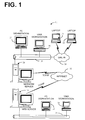
- FIG. 1 is a block diagram of the client/server system utilizing the Internet.
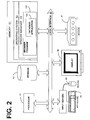
- FIG. 2 is a block diagram illustrating a browser program, with a database update routine, situated within a computer readable medium, for example, in a computer system of the client systems.
- FIG. 3 is a block diagram illustrating a server's service application program, the CGI-BIN program and the security server broadcast routine situated within a computer readable medium, for example, in a computer system of the server systems.
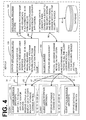
- FIG. 4 is a block diagram illustrating the processes and communication traffic between the client browsers, using the server application, CGI-BIN application program, and the security server processes, as shown in FIGs. 2 and 3.
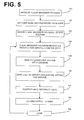
- FIG. 5 is a flow chart of the process for the client browser of the present invention, as shown in FIG. 4.
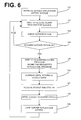
- FIG. 6 is a flow chart of the process for the server's server application of the present invention, as shown in FIG. 4.
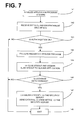
- FIG. 7 is a flow chart of the process for the security server program of the present invention, as shown in FIG. 4.
- FIG. 8 is a flow chart of the process for the CGI-BIN program process of the present invention, as shown in FIG. 4.
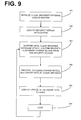
- FIG. 9 is a flow chart of the database update routine in the client browser of the present invention, as shown in FIG. 4.
- FIG. 1 is a block diagram of just one system configuration that illustrates the flexibility, expandability, and platform independence of the present invention. While the system configuration could take many forms, the diagram of FIG. 1 illustrates a plurality of diverse workstations 12, 14 and 16 directly connected to a network, for example, but not limited to, a LAN 18. Additional workstations 21, 22 may similarly be remotely located and in communication with the network 18 through a dial-in or other connection 24. Each of the workstations in FIG. 1 are uniquely illustrated to emphasize that workstations may comprise a diverse hardware platform.
- a browser is a device or platform that allows a user to view a variety of service collections.
- the browser retrieves information from a Web server 31 or network server 26 using HTTP, then interprets HTML code, formats, and displays the interpreted result on a workstation display.
- Additional workstations 33 and 34 may similarly be located and in communication with the Web servers 31 for access to Web pages on the local server and the Internet. Workstations 33 and 34 communicate with the Web server 31 on a LAN network 35.
- Networks 18 and 35 may be, for example, Ethernet type networks, also known as 10 BASE 2, 10 BAS 5, 10 BSAF, 10 BAST, BASE BAN network, CO-EX cable, and the like.
- client systems today generally include only a browser program 100 (e.g. , Netscape, Internet Explorer, or other browser program) for use in accessing locations on a network 11.
- browser programs 100 reside in computer memory 51 and access communication facilities modem 47 to transport the user to other resources connected to the network 11.
- the user In order to find a resource, the user should know the network location of the resource denoted by a network location identifier or URL.
- URL Network location identifier
- identifiers are often cryptic, following very complex schemes and formats in their naming conventions.
- the processor 41, storage device 42, and memory 51 with an operating system 52 and window manager 53.
- the processor accepts data from memory 51 and storage 42 over the bus 43.
- Direction from the user can be signaled by using the input devices mouse 44 and keyboard 45.
- the actions input and result output are displayed on the display terminal 46.
- the first embodiment of the present invention involves the browser program 100.
- the browser program 100 is the software that interacts with the server to obtain the requested data and functionality requested by the client user.
- the client browser program 100 and database update routine 180 will be described hereafter in detail with regard to FIGs. 4, 5, 6 and 10.
- FIG. 3 Illustrated in FIG. 3 is the architecture implementing the Web Server 31 and the network server 26.
- the principal difference between the servers 31 and 26 and the clients 12, 16, 21, 22, 33 and 34, illustrated in FIG. 1, are that the client systems interface to the user and request the functionality through the browser program 100, while the servers 26 and 31 provide the services requested by the client systems utilizing the server application program 120, the security server 160, and CGI-BIN application program 140.
- processor 61 storage 62, mouse 64, keyboard 65, display 66, and modem 67 are essentially the same as corresponding items of FIG. 2 described above.
- client systems 12, 14, 16, 21, 22, 33 and 34, and servers 26 and 31 may reside on the same physical machine.
- server application 120 CGI-BIN application program 140, and security server 160 will herein be defined in more detail with regard to FIG. 4 and FIGs. 7, 8 and 9.
- the client system 12, 16, 21, 22, 33 or 34 can request services from the Web server 31 by utilizing the client system browser program 100.
- the browser user interface program first receives a request from the user and checks to make sure that the user is authorized to access a particular function.
- the client user interface browser 100 makes a call 81 to the service application for service.
- This request for service goes out on a network line to the server 31 and is received by the server application 120.
- the server application 120 receives a request for service from the client user interface 100. Next, the server application 120 finds the requested program and executes 82 the requested program by invoking CGI-BIN application program 140 using the program name and arguments.
- the CGI-BIN application program 140 receives the program name and execution arguments.
- the CGI-BIN application program 140 checks to verify that the authorization is correct, then executes the requested program to provide the client user browser 100 the requested service. Any database access 83 required is completed.
- the application program 140 sends the output of the requested program service to the server application 120.
- the server application 120 receives the output from the application program and returns the output to the client user browser requesting service as shown in item 85.
- the application program 140 after returning the output to the server application 120 then checks to see if database data was changed during the execution of the requested program. If database data was changed in access 83, then the application program 140 establishes a communication socket to the security server, and then forwards a database change notice 86 to the security server 160.
- the security server 160 receives the database change notice 86 on the socket established by the application program 140.
- the security server 160 checks its sign-on listing of all client user interfaces 100 currently active. Then, the security server 160 sends a database change notice 87 to all client user interfaces 100 that are currently active for further processing.
- the browser program 100 then returns the output to the application program that requested service in the client system 12. This process will be further explained hereafter with regard to FIGs. 5-9.
- the process implemented by the browser program 100 in the client system 12 is illustrated in FIG. 5.
- the first step 101 of the browser program 100 is to initialize the client browser program 100.
- the browser program 100 accepts the login of the user name and password from the user and creates a connection to the security server 140 at step 102.
- Browser program 100 invokes the client browser database update routine 180 at step 103.
- the browser program 100 then waits to receive a request for service from the user at step 104.
- browser program 100 When browser program 100 receives the request for service from the user at step 104. The browser program 100 binds to the server application 120 at step 105. The browser program 100 makes a call to the server application 120 at step 106. The user browser program 100 is then suspended until the returning of data at step 107.
- the browser program 100 When data is returned to the client user interface, the browser program 100 is unsuspended and the browser program 100 returns the data received from server application 120 to the user at step 108.
- the client user interface browser 100 returns to step 104 and waits for the next request for service from the user.
- FIG. 6 Illustrated in FIG. 6 is the flow diagram of the architecture and process implemented by the server application 120.
- the server application 120 is initialized at step 121.
- the server application 120 waits to receive a client request for service at step 122.
- the server application 120 checks if the client user interface 100 making the request is authorized to access the requested resource at step 123. If the authorization check is okay, then the server application 120 determines which application program 100 will provide the services requested by the client system. The server application 120 binds to the specified CGI-BIN application program 140 and invokes the specified CGI-BIN application 140 with the specified arguments and sends the necessary data at step 125. The server application 120 process is suspended at step 126, until data is received from the specified CGI-BIN application 140.
- the server application 120 receives the output at step 127.
- the server application 120 prepares the output received from the CGI-BIN application 140 and returns that output to the client requesting service at step 128.
- the server application 120 then exits that session, loops back to step 122, and suspends itself until a new request is received.
- Illustrated in FIG. 7 is the flow diagram for the CGI-BIN application 140.
- the CGI-BIN application program 140 is initialized at step 141.
- the CGI-BIN application program 140 receives the request for the requested service with the program name and arguments, at step 142.
- the CGI-BIN application program 140 establishes whether the client user interface requesting the service is authorized to access the service at step 143. If the application program 140 determines that the client user interface 100 was not authorized to access the requested service, then the application program 140 proceeds to step 148 and terminates.
- the CGI-BIN application program 140 executes the requested service program. After the requested service program is executed at step 144, the CGI-BIN program 140 receives the stdout and standard error messages from the requested service program and sends the stdout and standard error data to the server application 120 at step 145.
- step 146 the application program 140 checks to see if database data was changed at step 146. If no database change has occurred, the application program 140 proceeds to step 148 and terminates.
- the application program 140 determines that database data was changed, then the application program 140 establishes a socket to the security server and sends a database change notice to the security server at step 147.
- a TCP/IP socket is established. Once the database change notice is sent to the security server 160, the application program closes the socket established to the security server 160 and exits at step 148.
- the security server 160 is initialized at step 161.
- the security server 160 establishes a CGI-BIN application program 140 listen socket at step 162.
- the security server 160 then waits for connection to a CGI-BIN application program 140 on the listen socket established at step 162.
- the security server 160 When a connection is made to a CGI-BIN application program 140, the security server 160 receives a database change notice request 86 from the CGI-BIN program 140 on the CGI-BIN socket at step 164. The security server 160 then identifies all connected client user interfaces 100 that are currently active at step 165. In the preferred embodiment, the security server 160 determines which client user interfaces are active by checking a listing for all client user interfaces that are currently connected to the security server.
- the security server 160 sends a database change notice to all the client user interfaces 100 that are currently identified as active and connected to the security server 160 at step 166.
- the security server 160 then returns to step 163 to wait until it receives another token from a user client interface 100.
- the client browser database update routine 180 is part of the client user browser 100 in the preferred embodiment.
- the client browser database update routine is initialized at step 181.
- the client browser database update routine binds to the security server 160 at step 182.
- the client browser database update routine 180 suspends all processing until the client user browser update routine receives a database change notice from the security server 160.
- the client browser database update routine Upon receipt of a database change notice from the security server 160, the client browser database update routine then processes the database change notice and updates any occurrence of the data changed in the client browser at step 184.
- the client browser database update routine 180 can display a message to the user that an update of database data has occurred at step 185.
- the client browser database update routine 180 then returns to step 183 and waits for the next database change notice to be received from security server 160.
Landscapes
- Engineering & Computer Science (AREA)
- Theoretical Computer Science (AREA)
- Databases & Information Systems (AREA)
- Data Mining & Analysis (AREA)
- Physics & Mathematics (AREA)
- General Engineering & Computer Science (AREA)
- General Physics & Mathematics (AREA)
- Information Transfer Between Computers (AREA)
- Computer And Data Communications (AREA)
Applications Claiming Priority (2)
| Application Number | Priority Date | Filing Date | Title |
|---|---|---|---|
| US61360 | 1998-04-15 | ||
| US09/061,360 US6065051A (en) | 1998-04-15 | 1998-04-15 | Apparatus and method for communication between multiple browsers |
Publications (2)
| Publication Number | Publication Date |
|---|---|
| EP0950963A2 true EP0950963A2 (de) | 1999-10-20 |
| EP0950963A3 EP0950963A3 (de) | 2002-03-20 |
Family
ID=22035298
Family Applications (1)
| Application Number | Title | Priority Date | Filing Date |
|---|---|---|---|
| EP99302655A Withdrawn EP0950963A3 (de) | 1998-04-15 | 1999-04-06 | Vorrichtung und Verfahren für die Kommunikation zwischen mehreren Browsern |
Country Status (3)
| Country | Link |
|---|---|
| US (2) | US6065051A (de) |
| EP (1) | EP0950963A3 (de) |
| JP (1) | JPH11328074A (de) |
Cited By (2)
| Publication number | Priority date | Publication date | Assignee | Title |
|---|---|---|---|---|
| GB2376102A (en) * | 2001-01-09 | 2002-12-04 | Kennedys Patent Agency Ltd | method and system for providing secure communication in professional services |
| EP1250669A4 (de) * | 1999-11-03 | 2006-10-25 | Accenture Llp | Datenlagerrechnersystem |
Families Citing this family (68)
| Publication number | Priority date | Publication date | Assignee | Title |
|---|---|---|---|---|
| FR2772293B1 (fr) * | 1997-12-17 | 2000-01-07 | Inst Francais Du Petrole | Methode et dispositif pour la fabrication d'une carcasse de tube flexible |
| US6185598B1 (en) | 1998-02-10 | 2001-02-06 | Digital Island, Inc. | Optimized network resource location |
| US7054935B2 (en) * | 1998-02-10 | 2006-05-30 | Savvis Communications Corporation | Internet content delivery network |
| US8296396B2 (en) | 1998-02-10 | 2012-10-23 | Level 3 Communications, Llc | Delivering resources to clients in a distributed computing environment with rendezvous based on load balancing and network conditions |
| US6338086B1 (en) * | 1998-06-11 | 2002-01-08 | Placeware, Inc. | Collaborative object architecture |
| US6275470B1 (en) | 1999-06-18 | 2001-08-14 | Digital Island, Inc. | On-demand overlay routing for computer-based communication networks |
| US20020052781A1 (en) * | 1999-09-10 | 2002-05-02 | Avantgo, Inc. | Interactive advertisement mechanism on a mobile device |
| US7392308B2 (en) * | 1999-09-10 | 2008-06-24 | Ianywhere Solutions, Inc. | System, method, and computer program product for placement of channels on a mobile device |
| US7987420B1 (en) | 1999-09-10 | 2011-07-26 | Ianywhere Solutions, Inc. | System, method, and computer program product for a scalable, configurable, client/server, cross-platform browser for mobile devices |
| US20010047394A1 (en) * | 1999-09-10 | 2001-11-29 | Kloba David D. | System, method, and computer program product for executing scripts on mobile devices |
| US20080215672A1 (en) * | 1999-09-10 | 2008-09-04 | Sybase 365, Inc. | System, Method, and Computer Program Product for a Scalable, Configurable, Client/Server, Cross-Platform Browser for Mobile Devices |
| US6341316B1 (en) | 1999-09-10 | 2002-01-22 | Avantgo, Inc. | System, method, and computer program product for synchronizing content between a server and a client based on state information |
| US8595308B1 (en) | 1999-09-10 | 2013-11-26 | Ianywhere Solutions, Inc. | System, method, and computer program product for server side processing in a mobile device environment |
| US8543901B1 (en) | 1999-11-01 | 2013-09-24 | Level 3 Communications, Llc | Verification of content stored in a network |
| DE10085178B4 (de) | 1999-11-10 | 2007-06-06 | Launch Media, Inc., Santa Monica | Verfahren für Internetradio und Übertragung |
| US6708172B1 (en) * | 1999-12-22 | 2004-03-16 | Urbanpixel, Inc. | Community-based shared multiple browser environment |
| US6389467B1 (en) | 2000-01-24 | 2002-05-14 | Friskit, Inc. | Streaming media search and continuous playback system of media resources located by multiple network addresses |
| JP3490369B2 (ja) * | 2000-02-15 | 2004-01-26 | インターナショナル・ビジネス・マシーンズ・コーポレーション | コンテンツ情報の取得方法、コラボレーション・システム及びコラボレーション・サーバー |
| US7251665B1 (en) | 2000-05-03 | 2007-07-31 | Yahoo! Inc. | Determining a known character string equivalent to a query string |
| US7162482B1 (en) * | 2000-05-03 | 2007-01-09 | Musicmatch, Inc. | Information retrieval engine |
| US7024485B2 (en) * | 2000-05-03 | 2006-04-04 | Yahoo! Inc. | System for controlling and enforcing playback restrictions for a media file by splitting the media file into usable and unusable portions for playback |
| US8352331B2 (en) * | 2000-05-03 | 2013-01-08 | Yahoo! Inc. | Relationship discovery engine |
| CN1148675C (zh) * | 2000-06-20 | 2004-05-05 | 国际商业机器公司 | 基于网络的输入系统和方法 |
| US7007083B1 (en) * | 2000-06-29 | 2006-02-28 | Microsoft Corporation | Real time update notification |
| US7188157B1 (en) * | 2000-06-30 | 2007-03-06 | Hitachi, Ltd. | Continuous update of data in a data server system |
| US7281032B2 (en) * | 2000-06-30 | 2007-10-09 | Hitachi, Ltd. | File sharing system with data mirroring by storage systems |
| WO2002005140A1 (en) | 2000-07-11 | 2002-01-17 | Launch Media, Inc. | Online playback system with community bias |
| US8271333B1 (en) | 2000-11-02 | 2012-09-18 | Yahoo! Inc. | Content-related wallpaper |
| AU2002230508A1 (en) * | 2000-11-29 | 2002-06-11 | Entropia, Inc. | System and method for securing an application for execution on a computer |
| US7406529B2 (en) * | 2001-02-09 | 2008-07-29 | Yahoo! Inc. | System and method for detecting and verifying digitized content over a computer network |
| US20020178264A1 (en) * | 2001-03-27 | 2002-11-28 | Isource Concepts Inc. | Secure creation and distribution of instructions to uniquely support network applications |
| US7574513B2 (en) | 2001-04-30 | 2009-08-11 | Yahoo! Inc. | Controllable track-skipping |
| US7860964B2 (en) | 2001-09-28 | 2010-12-28 | Level 3 Communications, Llc | Policy-based content delivery network selection |
| WO2003027906A2 (en) | 2001-09-28 | 2003-04-03 | Savvis Communications Corporation | System and method for policy dependent name to address resolutioin. |
| US7373644B2 (en) | 2001-10-02 | 2008-05-13 | Level 3 Communications, Llc | Automated server replication |
| US20030079027A1 (en) | 2001-10-18 | 2003-04-24 | Michael Slocombe | Content request routing and load balancing for content distribution networks |
| US9167036B2 (en) | 2002-02-14 | 2015-10-20 | Level 3 Communications, Llc | Managed object replication and delivery |
| US7707221B1 (en) | 2002-04-03 | 2010-04-27 | Yahoo! Inc. | Associating and linking compact disc metadata |
| US7305483B2 (en) | 2002-04-25 | 2007-12-04 | Yahoo! Inc. | Method for the real-time distribution of streaming data on a network |
| US7765551B2 (en) * | 2003-02-10 | 2010-07-27 | Novell, Inc. | System for dynamically loading application resources from the first server to the second server based on the modified application resources from the first server |
| KR20060120029A (ko) * | 2003-09-10 | 2006-11-24 | 뮤직매치, 인크. | 뮤직을 구매하고 플레이하는 시스템 및 방법 |
| US7873353B2 (en) * | 2003-09-30 | 2011-01-18 | Ianywhere Solutions, Inc. | Method and system for accessing applications and data, and for tracking of key indicators on mobile handheld devices |
| GB0328576D0 (en) * | 2003-12-10 | 2004-01-14 | Ibm | Method and apparatus for browsing a list of data items |
| US8135803B2 (en) * | 2004-08-23 | 2012-03-13 | Ianywhere Solutions, Inc. | Method, system, and computer program product for offline advertisement servicing and cycling |
| US20060064470A1 (en) * | 2004-09-23 | 2006-03-23 | Sargent Antony J | Method, system, and computer program product for improved synchronization efficiency for mobile devices, including database hashing and caching of web access errors |
| US7908286B2 (en) * | 2004-12-08 | 2011-03-15 | Oracle International Corporation | Techniques for providing XQuery access using web services |
| DE102005010690B4 (de) * | 2005-03-09 | 2007-04-12 | Knorr-Bremse Systeme für Schienenfahrzeuge GmbH | Öleingespritzter Verdichter mit Temperaturschalter |
| US8751579B1 (en) * | 2006-03-02 | 2014-06-10 | Salesforce.Com, Inc. | Method and system of maintaining a browser in a design application workflow |
| US7529795B2 (en) | 2006-03-20 | 2009-05-05 | Stragent, Llc | Message board aggregator |
| JP4842742B2 (ja) * | 2006-09-05 | 2011-12-21 | 富士通株式会社 | ソフトウェア管理プログラム、ソフトウェア管理方法およびソフトウェア管理装置 |
| US7647351B2 (en) | 2006-09-14 | 2010-01-12 | Stragent, Llc | Web scrape template generation |
| US8224298B2 (en) * | 2007-02-05 | 2012-07-17 | Boadin Technology, LLC | Systems and methods for mobile media services utilizing a short form command structure |
| US8117242B1 (en) | 2008-01-18 | 2012-02-14 | Boadin Technology, LLC | System, method, and computer program product for performing a search in conjunction with use of an online application |
| US8117225B1 (en) | 2008-01-18 | 2012-02-14 | Boadin Technology, LLC | Drill-down system, method, and computer program product for focusing a search |
| US20090229159A1 (en) * | 2008-03-14 | 2009-09-17 | Stillwater Tactical, L.L.C. | Firearm training safety device |
| US10924573B2 (en) | 2008-04-04 | 2021-02-16 | Level 3 Communications, Llc | Handling long-tail content in a content delivery network (CDN) |
| US9762692B2 (en) | 2008-04-04 | 2017-09-12 | Level 3 Communications, Llc | Handling long-tail content in a content delivery network (CDN) |
| WO2009123868A2 (en) | 2008-04-04 | 2009-10-08 | Level 3 Communications, Llc | Handling long-tail content in a content delivery network (cdn) |
| US8073590B1 (en) | 2008-08-22 | 2011-12-06 | Boadin Technology, LLC | System, method, and computer program product for utilizing a communication channel of a mobile device by a vehicular assembly |
| US8131458B1 (en) | 2008-08-22 | 2012-03-06 | Boadin Technology, LLC | System, method, and computer program product for instant messaging utilizing a vehicular assembly |
| US8078397B1 (en) | 2008-08-22 | 2011-12-13 | Boadin Technology, LLC | System, method, and computer program product for social networking utilizing a vehicular assembly |
| US8265862B1 (en) | 2008-08-22 | 2012-09-11 | Boadin Technology, LLC | System, method, and computer program product for communicating location-related information |
| US8190692B1 (en) | 2008-08-22 | 2012-05-29 | Boadin Technology, LLC | Location-based messaging system, method, and computer program product |
| US9182964B2 (en) | 2009-07-31 | 2015-11-10 | Hewlett-Packard Development Company, L.P. | System and method for deploying software into a computing environment |
| US20130014126A1 (en) * | 2011-07-05 | 2013-01-10 | Microsoft Corporation | Cross-browser communication between devices on a network |
| US9535573B2 (en) * | 2011-08-26 | 2017-01-03 | Salesforce.Com, Inc. | Systems and methods for dynamic list views and detail pages |
| US8996573B2 (en) | 2011-10-10 | 2015-03-31 | George Peter Kelesis | Journaling system with segregated data access |
| US10796015B2 (en) | 2017-03-29 | 2020-10-06 | Mybitchbook, Inc. | Method and system for anonymous user data storage and controlled data access |
Family Cites Families (13)
| Publication number | Priority date | Publication date | Assignee | Title |
|---|---|---|---|---|
| US5133075A (en) * | 1988-12-19 | 1992-07-21 | Hewlett-Packard Company | Method of monitoring changes in attribute values of object in an object-oriented database |
| JPH0471067A (ja) * | 1990-07-12 | 1992-03-05 | Fuji Xerox Co Ltd | データベース通信方式 |
| US5388196A (en) * | 1990-09-07 | 1995-02-07 | Xerox Corporation | Hierarchical shared books with database |
| JPH04310158A (ja) * | 1991-04-08 | 1992-11-02 | Fuji Xerox Co Ltd | データ管理装置 |
| JPH0744441A (ja) * | 1993-07-29 | 1995-02-14 | Toshiba Corp | ファイル変更通知装置 |
| US5644768A (en) * | 1994-12-09 | 1997-07-01 | Borland International, Inc. | Systems and methods for sharing resources in a multi-user environment |
| JPH0954719A (ja) * | 1995-08-14 | 1997-02-25 | Meidensha Corp | クライアント・サーバ型データベース |
| JP2001508561A (ja) * | 1996-02-23 | 2001-06-26 | テイ・ティ・アンド・ティ・コーポレーション | ウェブリポジトリの変更の問い合わせとナビゲーション |
| JPH09269912A (ja) * | 1996-04-02 | 1997-10-14 | Canon Inc | 情報処理方法とその装置 |
| JPH09282210A (ja) * | 1996-04-15 | 1997-10-31 | Hitachi Ltd | データベース監視方法及びそのシステム |
| US5758355A (en) * | 1996-08-07 | 1998-05-26 | Aurum Software, Inc. | Synchronization of server database with client database using distribution tables |
| US6061692A (en) * | 1997-11-04 | 2000-05-09 | Microsoft Corporation | System and method for administering a meta database as an integral component of an information server |
| US6141759A (en) * | 1997-12-10 | 2000-10-31 | Bmc Software, Inc. | System and architecture for distributing, monitoring, and managing information requests on a computer network |
-
1998
- 1998-04-15 US US09/061,360 patent/US6065051A/en not_active Expired - Lifetime
-
1999
- 1999-04-06 EP EP99302655A patent/EP0950963A3/de not_active Withdrawn
- 1999-04-09 JP JP11102756A patent/JPH11328074A/ja active Pending
-
2000
- 2000-03-31 US US09/540,260 patent/US6314458B1/en not_active Expired - Lifetime
Cited By (2)
| Publication number | Priority date | Publication date | Assignee | Title |
|---|---|---|---|---|
| EP1250669A4 (de) * | 1999-11-03 | 2006-10-25 | Accenture Llp | Datenlagerrechnersystem |
| GB2376102A (en) * | 2001-01-09 | 2002-12-04 | Kennedys Patent Agency Ltd | method and system for providing secure communication in professional services |
Also Published As
| Publication number | Publication date |
|---|---|
| JPH11328074A (ja) | 1999-11-30 |
| US6065051A (en) | 2000-05-16 |
| US6314458B1 (en) | 2001-11-06 |
| EP0950963A3 (de) | 2002-03-20 |
Similar Documents
| Publication | Publication Date | Title |
|---|---|---|
| US6065051A (en) | Apparatus and method for communication between multiple browsers | |
| US6405367B1 (en) | Apparatus and method for increasing the performance of Java programs running on a server | |
| US6253325B1 (en) | Apparatus and method for securing documents posted from a web resource | |
| CA2279382C (en) | Web request broker controlling multiple processes | |
| US6141793A (en) | Apparatus and method for increasing the performance of interpreted programs running on a server | |
| US6944666B2 (en) | Mechanism for enabling customized session managers to interact with a network server | |
| US8090793B2 (en) | Methods and apparatus for making a hypermedium interactive | |
| US6397253B1 (en) | Method and system for providing high performance Web browser and server communications | |
| AU2001293254B2 (en) | Accessing data stored at an intermediary from a service | |
| US7047525B2 (en) | System and method for an interoperability framework | |
| JP2001522113A (ja) | 分散ウェブアプリケーションサーバ | |
| JP2001522114A (ja) | 分散を意識させない態様で分散ソフトウェア開発を容易にするための方法およびシステム | |
| AU2001293254A1 (en) | Accessing data stored at an intermediary from a service | |
| GB2366418A (en) | Browser collaboration system | |
| US6973480B2 (en) | Mechanism for implementing server-side pluglets | |
| US20040167878A1 (en) | Systems, methods, and software for preventing redundant processing of transmissions sent to a remote host computer | |
| US6631424B1 (en) | Distributing information using a computer | |
| AU737604B2 (en) | A method for making a hypermedium interactive |
Legal Events
| Date | Code | Title | Description |
|---|---|---|---|
| PUAI | Public reference made under article 153(3) epc to a published international application that has entered the european phase |
Free format text: ORIGINAL CODE: 0009012 |
|
| AK | Designated contracting states |
Kind code of ref document: A2 Designated state(s): AT BE CH CY DE DK ES FI FR GB GR IE IT LI LU MC NL PT SE Kind code of ref document: A2 Designated state(s): DE FR GB |
|
| AX | Request for extension of the european patent |
Free format text: AL;LT;LV;MK;RO;SI |
|
| RAP1 | Party data changed (applicant data changed or rights of an application transferred) |
Owner name: HEWLETT-PACKARD COMPANY, A DELAWARE CORPORATION |
|
| PUAL | Search report despatched |
Free format text: ORIGINAL CODE: 0009013 |
|
| AK | Designated contracting states |
Kind code of ref document: A3 Designated state(s): AT BE CH CY DE DK ES FI FR GB GR IE IT LI LU MC NL PT SE |
|
| AX | Request for extension of the european patent |
Free format text: AL;LT;LV;MK;RO;SI |
|
| 17P | Request for examination filed |
Effective date: 20020510 |
|
| AKX | Designation fees paid |
Free format text: DE FR GB |
|
| 17Q | First examination report despatched |
Effective date: 20030625 |
|
| STAA | Information on the status of an ep patent application or granted ep patent |
Free format text: STATUS: THE APPLICATION IS DEEMED TO BE WITHDRAWN |
|
| 18D | Application deemed to be withdrawn |
Effective date: 20060123 |