EP0942736B1 - Verwendung eines oestrogens zur verhütung und behandlung von ischaemischer schädigung - Google Patents
Verwendung eines oestrogens zur verhütung und behandlung von ischaemischer schädigung Download PDFInfo
- Publication number
- EP0942736B1 EP0942736B1 EP97950607A EP97950607A EP0942736B1 EP 0942736 B1 EP0942736 B1 EP 0942736B1 EP 97950607 A EP97950607 A EP 97950607A EP 97950607 A EP97950607 A EP 97950607A EP 0942736 B1 EP0942736 B1 EP 0942736B1
- Authority
- EP
- European Patent Office
- Prior art keywords
- estrogen
- ischemic
- compound
- cells
- administered
- Prior art date
- Legal status (The legal status is an assumption and is not a legal conclusion. Google has not performed a legal analysis and makes no representation as to the accuracy of the status listed.)
- Expired - Lifetime
Links
Images



Classifications
-
- A—HUMAN NECESSITIES
- A61—MEDICAL OR VETERINARY SCIENCE; HYGIENE
- A61K—PREPARATIONS FOR MEDICAL, DENTAL OR TOILETRY PURPOSES
- A61K31/00—Medicinal preparations containing organic active ingredients
- A61K31/56—Compounds containing cyclopenta[a]hydrophenanthrene ring systems; Derivatives thereof, e.g. steroids
- A61K31/565—Compounds containing cyclopenta[a]hydrophenanthrene ring systems; Derivatives thereof, e.g. steroids not substituted in position 17 beta by a carbon atom, e.g. estrane, estradiol
- A61K31/567—Compounds containing cyclopenta[a]hydrophenanthrene ring systems; Derivatives thereof, e.g. steroids not substituted in position 17 beta by a carbon atom, e.g. estrane, estradiol substituted in position 17 alpha, e.g. mestranol, norethandrolone
-
- A—HUMAN NECESSITIES
- A01—AGRICULTURE; FORESTRY; ANIMAL HUSBANDRY; HUNTING; TRAPPING; FISHING
- A01N—PRESERVATION OF BODIES OF HUMANS OR ANIMALS OR PLANTS OR PARTS THEREOF; BIOCIDES, e.g. AS DISINFECTANTS, AS PESTICIDES OR AS HERBICIDES; PEST REPELLANTS OR ATTRACTANTS; PLANT GROWTH REGULATORS
- A01N1/00—Preservation of bodies of humans or animals, or parts thereof
- A01N1/10—Preservation of living parts
- A01N1/12—Chemical aspects of preservation
- A01N1/122—Preservation or perfusion media
- A01N1/126—Physiologically active agents, e.g. antioxidants or nutrients
-
- A—HUMAN NECESSITIES
- A61—MEDICAL OR VETERINARY SCIENCE; HYGIENE
- A61K—PREPARATIONS FOR MEDICAL, DENTAL OR TOILETRY PURPOSES
- A61K31/00—Medicinal preparations containing organic active ingredients
- A61K31/075—Ethers or acetals
- A61K31/085—Ethers or acetals having an ether linkage to aromatic ring nuclear carbon
-
- A—HUMAN NECESSITIES
- A61—MEDICAL OR VETERINARY SCIENCE; HYGIENE
- A61K—PREPARATIONS FOR MEDICAL, DENTAL OR TOILETRY PURPOSES
- A61K31/00—Medicinal preparations containing organic active ingredients
- A61K31/11—Aldehydes
-
- A—HUMAN NECESSITIES
- A61—MEDICAL OR VETERINARY SCIENCE; HYGIENE
- A61K—PREPARATIONS FOR MEDICAL, DENTAL OR TOILETRY PURPOSES
- A61K31/00—Medicinal preparations containing organic active ingredients
- A61K31/56—Compounds containing cyclopenta[a]hydrophenanthrene ring systems; Derivatives thereof, e.g. steroids
- A61K31/565—Compounds containing cyclopenta[a]hydrophenanthrene ring systems; Derivatives thereof, e.g. steroids not substituted in position 17 beta by a carbon atom, e.g. estrane, estradiol
- A61K31/566—Compounds containing cyclopenta[a]hydrophenanthrene ring systems; Derivatives thereof, e.g. steroids not substituted in position 17 beta by a carbon atom, e.g. estrane, estradiol having an oxo group in position 17, e.g. estrone
-
- A—HUMAN NECESSITIES
- A61—MEDICAL OR VETERINARY SCIENCE; HYGIENE
- A61K—PREPARATIONS FOR MEDICAL, DENTAL OR TOILETRY PURPOSES
- A61K47/00—Medicinal preparations characterised by the non-active ingredients used, e.g. carriers or inert additives; Targeting or modifying agents chemically bound to the active ingredient
- A61K47/50—Medicinal preparations characterised by the non-active ingredients used, e.g. carriers or inert additives; Targeting or modifying agents chemically bound to the active ingredient the non-active ingredient being chemically bound to the active ingredient, e.g. polymer-drug conjugates
- A61K47/69—Medicinal preparations characterised by the non-active ingredients used, e.g. carriers or inert additives; Targeting or modifying agents chemically bound to the active ingredient the non-active ingredient being chemically bound to the active ingredient, e.g. polymer-drug conjugates the conjugate being characterised by physical or galenical forms, e.g. emulsion, particle, inclusion complex, stent or kit
- A61K47/6949—Medicinal preparations characterised by the non-active ingredients used, e.g. carriers or inert additives; Targeting or modifying agents chemically bound to the active ingredient the non-active ingredient being chemically bound to the active ingredient, e.g. polymer-drug conjugates the conjugate being characterised by physical or galenical forms, e.g. emulsion, particle, inclusion complex, stent or kit inclusion complexes, e.g. clathrates, cavitates or fullerenes
- A61K47/6951—Medicinal preparations characterised by the non-active ingredients used, e.g. carriers or inert additives; Targeting or modifying agents chemically bound to the active ingredient the non-active ingredient being chemically bound to the active ingredient, e.g. polymer-drug conjugates the conjugate being characterised by physical or galenical forms, e.g. emulsion, particle, inclusion complex, stent or kit inclusion complexes, e.g. clathrates, cavitates or fullerenes using cyclodextrin
-
- A—HUMAN NECESSITIES
- A61—MEDICAL OR VETERINARY SCIENCE; HYGIENE
- A61P—SPECIFIC THERAPEUTIC ACTIVITY OF CHEMICAL COMPOUNDS OR MEDICINAL PREPARATIONS
- A61P9/00—Drugs for disorders of the cardiovascular system
- A61P9/10—Drugs for disorders of the cardiovascular system for treating ischaemic or atherosclerotic diseases, e.g. antianginal drugs, coronary vasodilators, drugs for myocardial infarction, retinopathy, cerebrovascula insufficiency, renal arteriosclerosis
-
- B—PERFORMING OPERATIONS; TRANSPORTING
- B82—NANOTECHNOLOGY
- B82Y—SPECIFIC USES OR APPLICATIONS OF NANOSTRUCTURES; MEASUREMENT OR ANALYSIS OF NANOSTRUCTURES; MANUFACTURE OR TREATMENT OF NANOSTRUCTURES
- B82Y5/00—Nanobiotechnology or nanomedicine, e.g. protein engineering or drug delivery
Definitions
- the present invention relates to the protection of cells that would otherwise die as a result of an ischemic event.
- Ischemia is an acute condition associated with an inadequate flow of oxygenated blood to a part of the body, caused by the constriction or blockage of the blood vessels supplying it. Ischemia occurs any time that blood flow to a tissue is reduced below a critical level. This reduction in blood flow can result from: (i) the blockage of a vessel by an embolus (blood clot); (ii) the blockage of a vessel due to atherosclerosis; (iii) the breakage of a blood vessel (a bleeding stroke); (iv) the blockage of a blood vessel due to vasoconstriction such as occurs during vasospasms and possibly, during transient ischemic attacks (TIA) and following subarachnoid hemorrhage.
- TIA transient ischemic attacks
- Conditions in which ischemia occurs further include (i) during myocardial infarction (when the heart stops, the flow of blood to organs is reduced and ischemia results); (ii) trauma; and (iii) during cardiac and neurosurgery (blood flow needs to be reduced or stopped to achieve the aims of surgery).
- Focal ischemia encompasses cerebrovascular disease (stroke), subarachnoid hemorrhage (SAH), and trauma. Stroke is the third leading cause of morbidity in the U.S., with over 500,000 cases per year, including 150,000 deaths annually. Post-stroke sequelae are mortality and debilitating chronic neurological complications which result from neuronal damage for which prevention or treatment are not currently available.
- stroke cerebrovascular disease
- SAH subarachnoid hemorrhage
- trauma the third leading cause of morbidity in the U.S., with over 500,000 cases per year, including 150,000 deaths annually.
- Post-stroke sequelae are mortality and debilitating chronic neurological complications which result from neuronal damage for which prevention or treatment are not currently available.
- the core area shows signs of cell death, but cells in the penumbra are still alive although malfunctioning and will, in several days, resemble the necrotic core.
- the neurons in the penumbra seem to malfunction in a graded manner with respect to regional blood flow. As the blood flow is depleted, neurons fall electrically silent, their ionic gradients decay, the cells depolarize, and then they die. Endothelial cells of the brain capillaries undergo swelling and the luminal diameter of the capillaries decrease. Associated with these events, the blood brain barrier appears to be disrupted, and an inflammatory response follows which further interrupts blood flow and the access of cells to oxygen.
- increase in intracellular calcium ion levels results in: (i) the production of free radicals that extensively damage lipids and proteins; (ii) the disruption of calcium sensitive receptors such as the N-methyl D-aspartate (NMDA) and the ⁇ -amino-3-hydroxy-5-methyl-4-isoxazoleproprionic acid (AMPA) synaptic glutamate receptors; (iii) the swelling of cells with water as a result of abnormal accumulation of ions; and (iv) the decrease in intracellular pH.
- the alteration in metabolism within the cell further results in the accumulation of ions in the cells as energy sources are depleted. For example, anaerobic glycolysis that forms lactic acid, replaces the normal aerobic glycolysis pathways in the mitochondria. This results in acidosis that results in further accumulation of calcium ions in the cell.
- TPA tissue plasminogen activator
- TPA cerebral hemorrhaging
- a second basic approach to treating degenerating cells deprived of oxygen is to protect the cells from damage that accumulates from the associated energy deficit.
- glutamate antagonists and calcium channel antagonists have been most thoroughly investigated. None of these has proven to be substantially efficacious but they are still in early clinical development. No treatment other than TPA is currently approved for stroke.
- the pathophysiology and treatment of focal cerebral ischemia has been reviewed by B.K. Seisjo 1992, J. Neurosurgery 77 169-184 and 337-354.
- glucocorticosteroid for example, was found to have a positive effect in reducing spinal chord injury but had a negative effect on hippocampal neurodegeneration.
- Hall J. Neurosurg vol. 76, 13-22 (1992)
- the glucocorticoid steroid, methylprednisolone believed to involve the inhibition of oxygen free radical-induced lipid peroxidation, could improve the 6-month recovery of patients with spinal cord injury when administered in an intensive 24-hour intravenous regimen beginning within 8 hours after injury.
- the steroid was examined for selective protection of neuronal necrosis of hippocampal neurons, it was found that the hippocampal neuronal .
- the present invention satisfies the above need. Novel means are provided for prevention and treatment of ischemic damage using estrogen compounds.
- the present invention provides use of an estrogen compound having insubstantial sex-related activity for the manufacture of a medicament for conferring protection on a population of cells associated with the penumbra of an ischemic focus, the said medicament being suitable for providing an effective cumulative amount of the compound to a subject having an ischemic focus, a first dose being administered within about 5 hours after an ischemic event resulting in the ischemic focus and resulting in a plasma concentration of estrogen of 10 to 1000 pg/ml, so as to confer protection on the population of cells.
- the present invention provides use of an estrogen compound having insubstantial sex-related activity for the manufacture of a medicament for conferring protection on a population of cells associated with the penumbra of an ischemic focus, the said medicament being suitable for providing an effective cumulative amount of the compound to a subject having an increased possibility of an ischemic event resulting in an ischemic focus, a first dose being administered within about 24 hours before the possible iscbemic event and resulting in a plasma concentration of estrogen of 10 to 1000 pg/ml, so as to confer protection on the population of cells if the ischemic event occurs.
- the first dose is administered within about 10 hours before the possible ischemic event.
- the ischemic event in question may be selected from a cerebrovascular disease, subarachnoid hemorrhage, myocardial infarct, surgery and trauma, or in particular is a stroke.
- the cells are neurons or endothelial cells.
- the medicament may be administered by a route selected from oral, nasal, buccal, rectal, intramuscular, transdermal, intravenous and subcutaneous, optionally in a controlled release vehicle.
- the estrogen compound used is preferably an alpha isomer of estrogen, more preferably 17 ⁇ -estradiol.
- the said estrogen compound is administered in an effective dose providing a plasma concentration of from 50 to 500 pg/ml.
- the present invention provides use of an estrogen compound for the manufacture of a medicament for conferring protection on a population of cells associated with the penumbra of an ischemic focus, the said medicament being suitable for providing an effective cumulative amount of the said compound to a subject having an ischemic focus, a first dose being administered within about 5 hours after an ischemic event resulting in the ischemic focus and resulting in a plasma concentration of estrogen of 10 to 1000 pg/ml, so as to confer protection on the population of cells.
- the present invention provides use of an estrogen compound for the manufacture of a medicament for conferring protection on a population of cells associated with the penumbra of an ischemic focus, the said medicament being suitable for providing an effective cumulative amount of the compound to a subject having an increased possibility of an ischemic event resulting in an ischemic focus, a first dose being administered within about 24 hours before the possible ischemic event and resulting in a plasma concentration of estrogen of 10 to 1000 pg/ml, so as to confer protection on the population of cells if the ischemic event occurs. Again, it is preferred that the first dose be administered within about 10 hours before the possible ischemic event.
- Such uses are preferred further comprising an estrogen compound having insubstantial sex-related activity, more preferably an alpha isomer of the estrogen compound.
- an estrogen compound having insubstantial sex-related activity more preferably an alpha isomer of the estrogen compound.
- the present invention provides use of an estrogen compound for the manufacture of a medicament for conferring protection on a population of cells associated with the penumbra of an ischemic focus, the said medicament being suitable for providing an effective cumulative amount of the compound to a subject having an increased possibility of an ischemic event resulting in an ischemic focus due to surgery, a first dose being administered within about 24 hours before the surgery and resulting in a plasma concentration of estrogen of 10 to 1000 pg/ml, so as to confer protection on the population of cells if the ischemic event occurs.
- the invention relates to a method for conferring protection on a population of cells associated with an ischemic focus, in a subject following an ischemic event that includes the steps of providing an estrogen compound; and administering an effective cumulative amount of the compound over a course that includes at least one dose, within a time that is effectively proximate to the ischemic event, so as to confer protection on the population of cells. Further aspects include selecting a proximate time for administering the effective dose of estrogen that is prior to the ischemic event. Alternatively, estrogen may be administered within an effective proximate time after the ischemic event.
- the invention may be applied to any of a cerebrovascular disease, subarachnoid hemorrhage, myocardial infarct, surgery, and trauma.
- the protected cells include at least one of neurons and endothelial cells.
- the method includes administering the estrogen by means of oral, buccal, rectal, intramuscular, transdermal, intravenous, or subcutaneous delivery routes and further may include a sustained controlled release vehicle exemplified by an estrogen-chemical delivery system or a silastic pellet.
- the method utilizes an estrogen compound which includes alpha isomers and beta isomers of estrogen compounds. Examples of different isomers are provided wherein the estrogen compound is selected from the group consisting of 17 ⁇ -estradiol and 17 ⁇ -estradiol.
- the invention relates to a method for protecting cells in a subject from degeneration during or after an ischemic event.
- the steps of the method include identifying a susceptible subject, providing an effective dose of a non-sex related estrogen compound prior to the ischemic event, and protecting cells from degeneration otherwise occurred in the absence of the estrogen compound.
- the invention also relates to a method for treating stroke in a subject, including the steps of providing an effective dose of an estrogen compound in a pharmaceutical and administering the formulation to the subject so as to reduce the adverse effects of the stroke.
- estrogen compounds may protect neurons in a population of cells in a subject and may be used to treat a neurodegenerative disorder according to U.S. 5,554,601.
- the invention relates to an effective treatment for stroke and other forms of ischemia that may safely be administered to men and women so as to protect cells from progressive degeneration that is initiated by the ischemic event.
- Estrogen compounds are defined here and in the claims as any of the structures described in the 11 th edition of "Steroids" from Steraloid Inc., Wilton, N.H.. Included in this definition are non-steroidal estrogens described in the aforementioned reference. Other estrogens included in this definition are estrogen derivatives, isomers, estrogen metabolites, estrogen precursors and modifications of the foregoing as well as molecules capable of binding cell associated estrogen receptor as well as other molecules where the result of binding triggers a characteristic estrogen effect. Also included are mixtures of more than one estrogen.
- estradiol refers to either 17 ⁇ - or 17 ⁇ -estradiol unless specifically identified.
- E2 is synonymous with ⁇ -estradiol, 17 ⁇ -estradiol, E2, and ⁇ -E2.
- non-sex hormone is defined here and in the claims as a hormone having substantially no sex-related effect on the subject.
- Estrogen compounds are here shown to protect cells from degeneration in the penumbra of the ischemic lesion (Examples 1 and 2). Estrogen compounds are further shown to be protective of a plurality of cell types, including neuronal cells and endothelial cells (Examples 1 and 3). According to the invention, estrogen compounds may be used to protect cells from the effects of oxygen deprivation and glucose deprivation and consequently from energy deprivation associated with ischemia.
- the invention relates to a method of treatment that is suitable for human male and female subjects and involves administering an effective dose of estrogen either before or after a stroke has occurred.
- estrogen it is desirable to administer estrogen prior to a predicted ischemic event.
- Such circumstances arise when, for example, a subject has already experienced a stroke. In this case, the subject will have an increased probability of experiencing a second stroke.
- Subjects who are susceptible to transient ischemic attacks also have an increased risk of a stroke.
- Subjects who suffer a subarachnoid hemorrhage may experience further ischemic events induced by vasospasms that constrict the blood vessels.
- Subjects who experience trauma to organs such as the brain are also susceptible to an ischemic event. The above situations exemplify circumstances when a subject would benefit from pretreatment with an estrogen compound.
- Such pretreatment may be beneficial in reducing the adverse effects of a future ischemic event when administered in the short term, such as within 24 hours before the event, (Example 1) or in the long term, where administration begins immediately after an event such as a stroke and continues prophylactically for an extended period of time.
- An example of time of administration for prophylactic use may extend from days to months depending on the particular susceptibility profile of the individual.
- a course of at least one dose of estrogen may be administered over time so that an effective dose is maintained in the subject.
- parenteral administration may be used as an alternative to the delivery of a dose by any of the routes specified below.
- the effective dose of estrogen compound for prophylactic use should provide a plasma concentration of 10-1000 pg/ml of estrogen compound.
- the plasma concentration of the administered estrogen compound may be 50-500 pg/ml.
- the use of non-sex estrogen compounds such as the ⁇ -isomers are of particular utility in men and women because the sex-related functions of the hormone are avoided.
- estrogen compounds are effective in reducing the adverse effects of an ischemic event such as cerebrovascular disease, subarachnoid hemorrhage, or trauma. Accordingly, the compound is administered as soon as possible after initiation of the event and preferably within 10 hours, more particularly, within 5 hours following the event. It is desirable that an increased concentration of estrogen compound be maintained in the plasma for at least several hours to several days following the ischemic event.
- the increased concentration of estrogen compound should be in the range of 10-1000 pg/ml of estrogen compound in the plasma. More particularly, the plasma concentration of the administered estrogen compound may be 50-500 pg/ml.
- the present invention demonstrates for the first time that pretreatment with estrogens or early posttreatment of an estrogen compound can significantly reduce the size of the necrotic area following an ischemic event.
- This effect of estrogen pretreatment is independent of the isomeric form and the route of administration of the estrogen compound.
- ⁇ -isomers of estrogen have been shown to be as effective as ⁇ -isomers of estrogen in protecting cells from the effects of ischemia.
- the method as exemplified in Example 1 and Figs. 1 and 2 , confirms that the protective activity of estrogen compounds is not dependant on the sex-related activity of the hormone (estrogenicity).
- Alpha isomers of estrogen compounds appear to have substantially no sex-related activity, yet these compounds are as effective at protecting the brain against ischemic damage as the ⁇ isomers. Furthermore, Example 1 further demonstrates that the observed reduction in mortality of ovariectomized rats when treated with 17 ⁇ -estradiol is not dependant on the route of administration, since the protective effect was similar when the same estrogen compound was administered as a subcutaneous implant or as an intravenous injection of E2-CDS. Regardless of the route of administration or the formulation of the estrogen compound, the estrogen has a remarkable effect on the ability of animals to survive an ischemic event.
- MCA middle cerebral artery
- This penumbral area around the core infarct is believed to result from a propagation of the lesion from the core outward to tissue that remains perfused by collateral circulation during the occlusion.
- the effect of a therapeutic agent on the penumbra surrounding the core of the ischemic event may be examined when brain slices are obtained from the animal.
- the MCA supplies blood to the cortical surfaces of frontal, parietal, and temporal lobes as well as basal ganglia and internal capsule. Slices of the brain are taken around the region where the greatest ischemic effect occurs. These regions have been identified as region B, C, and D in Examples 1 and 2. These regions are not as readily compensated by alternative sources of blood flow as are regions A and E.
- MCA is the terminal artery on which the lace of collateral arteries supplying the MCA-distributed area relies, thereby making the MCA-occlusion induced ischemia uncompensatible.
- anastomoses between MCA and the anterior carotid artery (ACA) in region A and between MCA and the posterior carotid artery (PCA) in region E may compensate for the MCA occlusion-induced ischemia as observed in the present study.
- rats were ovariectomized (OVX) and two weeks later were exposed to various estrogen preparations prior to or following MCA occlusion.
- OVX ovariectomized
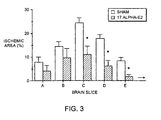
- Pretreatment with a brain-targeted E2-CDS or 17 ⁇ -estradiol (E2) itself decreased mortality from 65% in OVX rats to 22% in E2 treated and 16% in E2-CDS-treated rats. This marked reduction in mortality was accompanied by a reduction in the ischemic area of the brain from 25.6 ⁇ 5.7% in the OVX rates to 9.8 ⁇ 4.0 and 9.1 ⁇ 4.2% in the E2 implanted and the E2-CDS-treated rats, respectively.
- Estrogen compounds have been shown here to have equivalent activity using different methods of delivery (Examples 1 and 2).
- sustained delivery described here include subcutaneous delivery by means of a silastic pellet and intravenous delivery by a chemical delivery system. Estrogen delivered by subcutaneous injection was also found to be effective (Example 1). Consequently, the method of delivery of estrogen should not be limited according to efficacy at the ischemic site, but instead should be selected according to factors affecting overall convenience. Such factors may include the rate of uptake of estrogen compounds into the blood and the central nervous system.
- Routes of administration of estrogen compounds for protecting cells against the effects of ischemia include any of subcutaneous, transdermal, oral, rectal, buccal, intramuscular, or intravenous methods or any alternative methods commonly used in the art to deliver estrogens. Furthermore, delivery may occur by means of a controlled delivery device sustained or by injection.
- Rats were used as experimental models to test the effects of estrogen in protecting against ischemia. To remove the naturally occurring source of estrogen, an ovariectomy was performed prior to induction of ischemia.
- rats were treated with an estrogen compound either by subcutaneous delivery 24 hours prior to the MCA occlusion or by intravenous delivery as follows:
- Subcutaneous sustained delivery 17 ⁇ - or 17 ⁇ -estradiol was packed into 5mm long Silastic® tubes (Dow-Corning, Midland, MI) according to the method of Mohammed et al. Ann. Neurol 18,705-711,1985. Sham (empty) pellets were similarly prepared as estrogen negative controls. The pellets were implanted subcutaneously (sc) into ovariectomized rats 24 hours prior to MCA occlusion. 5mm of silastic tubing containing estrogen results in plasma levels of 100-200pg/ml.
- E2-CDS estrogen-chemical delivery system
- HPCD hydroxypropyl- ⁇ -cyclodextrin
- E2-CDS 1mg/kg body weight
- the control was HPCD only.
- the chemical delivery system is formulated so that the estrogen is slowly released from the carrier. This delivery system has been shown to effectively deliver estrogen in a sustained manner to the brain. Indeed, the dose of E2-CDS used in Examples 1 and 2 (1000 ⁇ g/kg) is sufficient to provide 1000 pg/gm brain tissue at 24 hours post administration.
- ketamine 60 mg/kg, ip
- xylazine 10 mg/kg, intraperitoneal
- Rectal temperature was monitored and maintained between 36.5 and 37.0°C with a heat lamp throughout the entire procedure.
- the left carotid artery was exposed through a midline cervical incision.
- the left stemohyloid, sternomastoid, digastric (posterior belly) and the omohyloid muscles were divided and retracted. Part of the greater horn of the hyloid bone was cut to facilitate exposure of the distal external carotid artery (ECA).
- ECA distal external carotid artery
- the common carotid artery (CCA), ECA, and internal carotid artery (ICA) were dissected away from adjacent nerves.
- the distal ECA and its branches, the CCA, and the pterygopalatine arteries were coagulated completely.
- a microvascular clip was placed on the ICA near skull base.
- a 2.5 cm length of 3-0 monofilament nylon suture was heated to create a globule for easy movement and blocking of the lumen of the vessel. This was introduced into the ECA lumen through the puncture.
- the suture was gently advanced to the distal ICA until it reached the clipped position.
- the microvascular clip was then removed and the suture was inserted until resistance was felt.
- the distance between the CCA bifurcation and the resistive point was about 1.8 cm. This operative procedure was completed within 10 min without bleeding. After the prescribed occlusion time (40 min), the suture was withdrawn from the ICA and the distal ICA was immediately cauterized.
- the brains were isolated from the decapitated heads, sliced into 3 or 5 coronal tissue slices as described below for (a) and (b) and then stained with hematoxylin and eosin to determine the extent of the ischemic area. Stained slices were photographed and subsequently imaged using a Macintosh Cadre 800 computer, equipped with an Image 1.47 software program for the assessment of the cross-sectional area of the ischemic lesion. These images and the calculated area of ischemic damage were stored in the program for later retrieval and data reduction. The significance of differences in mortality among the different treatment groups (sham, E2 pellet and E2-CDS) was determined using Chi-Square analysis.
- the reduced mortality in the estrogen-treated rats was correlated with the reduction of ischemic area in animals that survived to the scheduled 1 day or 1 week post-ischemia sacrifice time (Fig. 1).
- Control (sham treated) rats had ischemic lesions that occupied 25.6 ⁇ 5.7% of the cross-sectional area of brain sections evaluated (Fig. 1).
- rats treated with 17 ⁇ -estradiol (E2) or E2-CDS had ischemic lesions that occupied only 9.8 ⁇ 4.0 and 9.1 ⁇ 4.2%, respectively, of the brain area evaluated.
- the significance of differences among groups was determined by analysis of variance (ANOVA) and the Fischer's test was used for the post hoc comparison. Area under the curve determinations were not done here as only three brain slices were taken.
- Rats were ovariectomized, treated with a single dose of 17 ⁇ -estradiol (100 ⁇ g/kg) by a sc injection, 14 days after the ovariectomy and two hours prior to the ischemic event (MCA) as described above. This injection was sufficient to achieve a plasma concentration of 250pg/ml at the time of occlusion. The animals were sacrificed at 24 hours and the brains extracted. The results shown in Fig. 2 illustrate the significant protective effect of E2 in tissue slices A-D. E2 replacement in OVX rats reduced by 46.3% and 44.1% (p ⁇ 0.05) ischemic lesion size of the whole coronal section at region C and D, respectively (Fig. 2). These regions correspond to sections taken at 9 and 11 mm caudal to the olfactory bulb.
- Ovariectomized rats were treated with 5mm silastic pellets containing 17 ⁇ -estradiol at 24 hours prior to MCAO. At 24 hours after the MCAO, the animals were sacrificed and the brains extracted. Five, 2mm thick coronal sections were made at 5, 7, 9, 11, and 13 mm posterior of the olfactory bulb. The slices were then incubated for 30 minutes in a 2% solution of 2,3,5-triphenyltetrazolium (TTC) (Sigma Chemical Corp., St. Louis, MO) in physiological saline at 37°C.
- TTC 2,3,5-triphenyltetrazolium
- the area under the ischemic lesion curve for the sham-treated, and the 17 ⁇ -E2 groups was 8.1 ⁇ 0.8 and 3.7 ⁇ 1.3, respectively (Table 2) using student t tests. The significance of differences between sham and steroid-treated groups, were thus determined and data from two groups were compared for each experiment. To determine the area under the lesion curve for a given treatment, the trapezoidal method was used. Areas calculated for each animal were grouped and the differences between groups were determined by the student t test.
- ovariectomized rats were treated iv with a sustained release of either E2-CDS or with a control (HPCD vehicle), the positive sample causing a brain tissue concentration of estrogen of 1000pg/gm estrogen, 24 hours after administration.
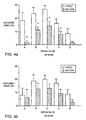
- the estrogen compound was administered at 40 minutes and 90 minutes after the onset of the MCA occlusion ( Figure 4a and b, Table 2) and the animals sacrificed at 24 hours after the MCA occlusion.
- Five 2 mm thick coronal sections were made at 5, 7, 9,11, and 13 mm posterior of the olfactory bulb as described in Example 1.
- Rats were treated with E2-CDS or HPCD vehicle at 90 minutes after the onset of the occlusion ( Figure 4b and Table 2). Again, HPCD treated animals showed a large lesion in all slices sampled, with the maximum ischemic area seen in Slice C (20.5 ⁇ 3.1% of the slice area). Treatment with E2-CDS reduced the mean ischemic area in all slices examined, however, the differences were not statistically significant. An evaluation of the area under the ischemia curve for the two groups revealed that treatment with E2-CDS reduced the ischemic area by 37.1%, from 8.2 ⁇ 1.7 (HPCD treated animals) to 5.2 ⁇ 1.7 (E2-CDS treated animals).
- Example 3 Estrogen compounds protect brain capillary endothelial cells under conditions associated with focal ischemia
- BCEC Primary rat brain capillary endothelial cells
- hypoglycemia experiments were undertaken. 17 ⁇ -estradiol (2nm) or control (ethanol vehicle) were added to BCEC cultures. The glucose concentration of the culture media was then adjusted from 20mg% to 200mg% by adding appropriate amount of D-(+)-glucose to the glucose-free media and monitored by Glucose and L-Lactate Analyzer (YSI model 2300 STAT plus, YSI, Inc., Yellow Springs, OH). The hypoglycemic cultures were maintained for 24 hours or 48 hours prior to staining with Trypan blue.
- Anoxia environment was created by placing culture dishes containing BCEC with or without 2mn 17 ⁇ -estradiol in the Modular Incubator Chamber (Billups-Rothenberg, Inc., Delmar, CA). Nitrogen gas was influxed to replace the oxygen inside the chamber. The chamber was sealed and placed in the incubator four hours for nonhypoglycemic cultures and 2 hours for hypoglycemic cultures.
- Cell mortality was counted using Trypan blue staining method. Cell death percentage was calculated as dead cell/alive cell x100%.
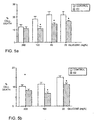
- Fig 5a, 5b The results are shown in Fig 5a, 5b for cells deprived of glucose.
- the normal glucose concentration in the media is 200 mg% and there is little difference in % cell death between cultures with and without estrogen supplement.
- reduction in media glucose to 100 mg%, 40mg%, and 20mg% caused cell death, and 17 ⁇ -estradiol saved cell loss by 35.9%, 28.4% and 23.% (p ⁇ 0.05), respectively, compared with corresponding control groups.
- floating cells which meant more dead cells, in the control groups than in the E2-treated groups. Since these cells were excluded when counting cell mortality, the protective effects of E 2 may be underestimated.
- a similar beneficial effect was observed over a 24 hours and 48 hours hypoglycemic treatment (Fig. 5a and b).
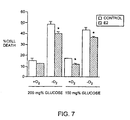
- Anoxia had a more dramatic effect in cell viability as shown in Fig. 6 for cells in media containing 200mg% glucose.
- Anoxia induced cell death as much as 48.8% and 39.8% in the control and E2 reduced cell death by 28.4% (p ⁇ 0.05) at 1-hour and 18.4% (p ⁇ 0.05) at 4-hour anoxic insults.
- the in vitro assay is representative of events that follow ischemia such as induced by occlusion of the MCA where oxygen and glucose supplies to the BBB endothelial cells are reduced. Effects of Pretreatment with 17 ⁇ -Estradiol or an Estradiol-Chemical Delivery System (E2-CDS) on Mortality Following Middle Cerebral Artery Occlusion.
- E2-CDS Estradiol-Chemical Delivery System
Landscapes
- Health & Medical Sciences (AREA)
- Life Sciences & Earth Sciences (AREA)
- Chemical & Material Sciences (AREA)
- General Health & Medical Sciences (AREA)
- Pharmacology & Pharmacy (AREA)
- Medicinal Chemistry (AREA)
- Animal Behavior & Ethology (AREA)
- Veterinary Medicine (AREA)
- Public Health (AREA)
- Epidemiology (AREA)
- Engineering & Computer Science (AREA)
- Bioinformatics & Cheminformatics (AREA)
- Nanotechnology (AREA)
- Molecular Biology (AREA)
- Crystallography & Structural Chemistry (AREA)
- Dentistry (AREA)
- Biophysics (AREA)
- Medical Informatics (AREA)
- Biotechnology (AREA)
- General Engineering & Computer Science (AREA)
- Environmental Sciences (AREA)
- Zoology (AREA)
- Wood Science & Technology (AREA)
- Urology & Nephrology (AREA)
- General Chemical & Material Sciences (AREA)
- Nuclear Medicine, Radiotherapy & Molecular Imaging (AREA)
- Organic Chemistry (AREA)
- Chemical Kinetics & Catalysis (AREA)
- Heart & Thoracic Surgery (AREA)
- Cardiology (AREA)
- Vascular Medicine (AREA)
- Pharmaceuticals Containing Other Organic And Inorganic Compounds (AREA)
- Steroid Compounds (AREA)
- Medicines Containing Material From Animals Or Micro-Organisms (AREA)
Claims (18)
- Verwendung einer Östrogenverbindung mit unwesentlich geschlechtsbezogener Aktivität zur Herstellung eines Arzneimittels, um eine Population von Zellen zu schützen, die mit der Penumbra eines ischämischen Fokus assoziiert ist, wobei sich das Arzneimittel dazu eignet, eine wirksame kumulative Menge der Verbindung einem Subjekt mit einem ischämischen Fokus bereitzustellen, wobei eine erste Dosis innerhalb von etwa 5 Stunden nach einem ischämischen Ereignis, welches zum ischämischen Fokus führt, verabreicht wird und wodurch sich eine Plasmakonzentration des Östrogens von 10 bis 1000 pg/ml ergibt, um der Zellpopulation Schutz zu verleihen.
- Verwendung einer Östrogenverbindung mit unwesentlich geschlechtsbezogener Aktivität zur Herstellung eines Medikaments, um eine Population von Zellen zu schützen, die mit der Penumbra eines ischämischen Fokus assoziiert ist, wobei sich das Arzneimittel dazu eignet, eine wirksame kumulative Menge der Verbindung einem Subjekt mit einer erhöhten Wahrscheinlichkeit für ein Auftreten eines zu einem ischämischen Fokus führenden ischämischen Ereignisses bereitzustellen, wobei eine erste Dosis innerhalb von etwa 24 Stunden vor dem möglichen ischämischen Ereignis verabreicht wird und sich hierdurch eine Östrogen-Plasmakonzentration von 10-1000 pg/ml ergibt, um der Population von Zellen, falls das ischämische Ereignis auftritt, Schutz zu verleihen.
- Verwendung nach Anspruch 2, wobei die erste Dosis innerhalb von etwa 10 Stunden vor dem möglichen ischämischen Ereignis verabreicht wird.
- Verwendung nach einem der Ansprüche 1 bis 3, wobei das ischämische Ereignis ausgewählt wird aus einer cerebrovaskulären Erkrankung, einer Subarachnoidalblutung, einem Myokardinfarkt, einer Operation und einem Trauma, oder das Ereignis insbesondere ein Schlaganfall ist.
- Verwendung nach einem der Ansprüche 1 bis 4, wobei die Zellen Neuronen oder Endothelzellen sind.
- Verwendung nach einem der Ansprüche 1 bis 5, wobei das Arzneimittel oral, nasal, buccal, rektal, intramuskulär, transdermal, intravenös und subkutan, wahlweise in einem Träger zur kontrollierten Freisetzung, verabreicht wird.
- Verwendung nach einem der Ansprüche 1 bis 6, wobei die Östrogenverbindung ein alpha-Isomer von Östrogen ist.
- Verwendung nach einem der Ansprüche 1 bis 7, wobei die Östrogenverbindung 17α-Östradiol ist.
- Verwendung nach einem der Ansprüche 1 bis 8, wobei die Östrogenverbindung in einer wirksamen Dosis verabreicht wird, die eine Plasmakonzentration von 50-500 pg/ml ergibt.
- Verwendung einer Östrogenverbindung zur Herstellung eines Arzneimittels, um eine Population von Zellen zu schützen, die mit der Penumbra eines ischämischen Fokus assoziiert ist, wobei sich das Arzneimittel dazu eignet, eine wirksame kumulative Menge der Verbindung einem Subjekt mit einem ischämischen Fokus bereitzustellen, wobei eine erste Dosis innerhalb von etwa 5 Stunden nach einem ischämischen Ereignis, das zum ischämischen Fokus führt, verabreicht wird, und wodurch sich eine Plasmakonzentration des Östrogens von 10-1000 pg/ml ergibt, um der Zellpopulation Schutz zu verleihen.
- Verwendung einer Östrogenverbindung zur Herstellung eines Arzneimittels, um eine Population von Zellen zu schützen, die mit der Penumbra eines ischämischen Fokus assoziiert ist, wobei sich das Arzneimittel dazu eignet, eine wirksame kumulative Menge der Verbindung einem Subjekt mit einer erhöhten Wahrscheinlichkeit für ein Auftreten eines zu einem ischämischen Fokus führenden ischämischen Ereignisses bereitzustellen, wobei eine erste Dosis innerhalb von etwa 24 Stunden vor dem möglichen ischämischen Ereignis verabreicht wird, und wodurch sich eine Plasmakonzentration an Östrogen von 10-1000 pg/ml ergibt, um der Zellpopulation Schutz zu verleihen, falls das ischämische Ereignis auftritt.
- Verwendung nach Anspruch 11, wobei die erste Dosis innerhalb von 10 Stunden vor dem möglichen ischämischen Ereignis verabreicht wird.
- Verwendung nach einem der Ansprüche 10 bis 12, wobei sie weiterhin eine Östrogenverbindung mit unwesentlich geschlechtsbezogener Aktivität umfasst.
- Verwendung nach Anspruch 13, wobei sie weiterhin ein alpha-Isomer der Östrogenverbindung umfasst.
- Verwendung nach einem der Ansprüche 10 bis 14, wobei das ischämische Ereignis ausgewählt wird aus einer cerebrovaskulären Erkrankung, einer Subarachnoidalblutung, einem Myokardinfarkt, einer Operation und einem Trauma, oder das Ereignis insbesondere ein Schlaganfall ist.
- Verwendung nach einem der Ansprüche 10 bis 15, wobei die Verbindung oral, nasal, buccal, rektal, intramuskulär, transdermal, intravenös und subkutan, wahlweise in einem Träger zur kontrollierten Freisetzung, verabreicht wird.
- Verwendung nach einem der Ansprüche 10 bis 16, wobei die Östrogenverbindung in einer wirksamen Dosis verabreicht wird, um eine Plasmakonzentration von 50-500 pg/ml bereitzustellen.
- Verwendung einer Östrogenverbindung zur Herstellung eines Arzneimittels, um eine Population von Zellen zu schützen, die mit der Penumbra eines ischämischen Fokus assoziiert ist, wobei sich das Arzneimittel dazu eignet, eine wirksame kumulative Menge der Verbindung einem Subjekt mit einer erhöhten Wahrscheinlichkeit für ein ischämisches Ereignis, das in einem ischämischen Fokus während einer Operation resultiert, bereitzustellen, wobei eine erste Dosis innerhalb von etwa 24 Stunden vor der Operation verabreicht wird, und wodurch sich eine Plasmakonzentration des Östrogens von 10-1000 pg/ml ergibt, um der Zellpopulation Schutz zu verleihen, falls das ischämische Ereignis auftritt.
Applications Claiming Priority (3)
| Application Number | Priority Date | Filing Date | Title |
|---|---|---|---|
| US08/749,703 US5877169A (en) | 1993-11-05 | 1996-11-15 | Methods of treatment of ischemic damage |
| US749703 | 1996-11-15 | ||
| PCT/US1997/020875 WO1998022113A1 (en) | 1996-11-15 | 1997-11-14 | Methods of prevention and treatment of ischemic damage |
Publications (2)
| Publication Number | Publication Date |
|---|---|
| EP0942736A1 EP0942736A1 (de) | 1999-09-22 |
| EP0942736B1 true EP0942736B1 (de) | 2005-01-26 |
Family
ID=25014823
Family Applications (1)
| Application Number | Title | Priority Date | Filing Date |
|---|---|---|---|
| EP97950607A Expired - Lifetime EP0942736B1 (de) | 1996-11-15 | 1997-11-14 | Verwendung eines oestrogens zur verhütung und behandlung von ischaemischer schädigung |
Country Status (8)
| Country | Link |
|---|---|
| US (1) | US5877169A (de) |
| EP (1) | EP0942736B1 (de) |
| JP (1) | JP2001504488A (de) |
| KR (1) | KR20000053321A (de) |
| AT (1) | ATE287717T1 (de) |
| CA (1) | CA2271273A1 (de) |
| DE (1) | DE69732367D1 (de) |
| WO (1) | WO1998022113A1 (de) |
Families Citing this family (29)
| Publication number | Priority date | Publication date | Assignee | Title |
|---|---|---|---|---|
| US6350739B1 (en) * | 1999-08-11 | 2002-02-26 | University Of Florida Resarch Foundation, Inc. | Methods of prevention and treatment of ischemic damage |
| US6319914B1 (en) * | 1993-11-05 | 2001-11-20 | Apollo Biopharmaceuticals, Inc. | Cytoprotective effect of polycyclic phenolic compounds |
| US20060264357A1 (en) * | 1997-04-22 | 2006-11-23 | Zikria Bashir A | Capillary membrane stabilization and reduction of tissue injury through use of biodegradable macromolecules with antioxidants and/or other chemicals |
| WO2000028982A2 (en) | 1998-11-19 | 2000-05-25 | The Board Of Trustees For The University Of Arkansas | Increasing bone strength with selected bisphosphonates |
| US6339078B1 (en) * | 1999-07-20 | 2002-01-15 | University Of Florida Research Foundation, Inc. | Methods of prevention and treatment of ischemic damage |
| US6326365B1 (en) | 1999-07-20 | 2001-12-04 | Apollo Biopharmaceutics, Inc. | Methods of prevention and treatment of ischemic damage |
| WO2002000619A2 (en) * | 2000-06-27 | 2002-01-03 | University Of Florida Research Foundation, Inc. | Alkyl ether modified polycyclic compounds having a terminal phenol as cell protecting agents |
| GB2363983A (en) | 2000-06-29 | 2002-01-16 | Hunter Fleming Ltd | Protection against neuronal damage using 7-hydroxyepiandrosterone |
| WO2002013870A2 (en) * | 2000-08-17 | 2002-02-21 | Mitokor, Inc. | Formulation for administering therapeutic lipophilic molecules |
| CA2427817C (en) * | 2000-11-03 | 2009-04-14 | Washington University | Estrone-derivatives having cytoprotective activity |
| EP1834959B1 (de) | 2000-11-03 | 2012-08-08 | Washington University | Tert-butyl-substituierte aromatische Steroide mit zytoprotektiver Wirkung |
| WO2002040032A2 (en) * | 2000-11-17 | 2002-05-23 | Washington University | Cytoprotective estrogen derivatives |
| US20030216329A1 (en) * | 2001-04-24 | 2003-11-20 | Robinson Cynthia B. | Composition, formulations & kit for treatment of respiratory & lung disease with dehydroepiandrosterone(s) steroid & an anti-muscarinic agent(s) |
| EP1423509A2 (de) * | 2001-08-30 | 2004-06-02 | Stem Cell Therapeutics Inc. | Differenzierung von neuralen stammzellen und therapeutische anwendung |
| US20040214806A1 (en) * | 2002-09-03 | 2004-10-28 | Iok-Hou Pang | Use of non-feminizing estrogens as retinoprotective agents for the treatment of glaucoma |
| US7488723B2 (en) | 2001-09-05 | 2009-02-10 | Alcon, Inc. | Use of non-feminizing estrogens as treatment for retinal vascular diseases |
| EP1430114B1 (de) | 2001-09-14 | 2012-01-18 | Stem Cell Therapeutics Inc. | Prolaktin-induzierte zunahme an neuronalen stammzellen und dessen therapeutische anwendung |
| AR036402A1 (es) * | 2001-09-18 | 2004-09-08 | Stem Cell Therapeutics Inc | Efecto de la hormona de crecimiento y de igf-1 sobre celulas madre neuronales. |
| AU2002359635A1 (en) * | 2001-12-05 | 2003-06-17 | Mitokor, Inc. | Use of polycyclic phenolic compounds for the treatment of opthalmic diseases |
| US6903220B2 (en) * | 2002-05-15 | 2005-06-07 | Genzyme Corporation | Synthesis of chiral 2-alkyl amino acids |
| WO2004011497A1 (en) * | 2002-07-31 | 2004-02-05 | Stem Cell Therapeutics Inc. | Method of enhancing neural stem cell proliferation, differentiation, and survival using pituitary adenylate cyclase activating polypeptide (pacap) |
| US20070111932A1 (en) * | 2003-07-31 | 2007-05-17 | Stem Cell Therapeutics Inc. | Method of enhancing and/or inducing neuronal migration using erythropoietin |
| ES2392282T3 (es) * | 2004-02-13 | 2012-12-07 | Stem Cell Therapeutics Corp. | Uso de la hormona luteinizante (LH) y de la gonadotropina coriónica (hCG) para la proliferación de células precursoras neurales y la neurogénesis |
| US7304171B2 (en) * | 2004-05-27 | 2007-12-04 | Migenix Corp. | Compounds and methods for cytoprotection |
| US7304073B2 (en) * | 2004-08-20 | 2007-12-04 | Wyeth | Method of treating myocardial ischemia-reperfusion injury using NF-kB inhibitors |
| KR20080074108A (ko) | 2005-09-27 | 2008-08-12 | 스템 셀 테라퓨틱스 코포레이션 | 프로락틴에 의해 조절되는 올리고덴드로사이트 전구체 세포증식 |
| WO2007106986A1 (en) * | 2006-03-17 | 2007-09-27 | Stem Cell Therapeutics Corp. | Dosing regimes for lh or hcg and epo for treatment of neurological disorders |
| US20070287684A1 (en) | 2006-05-22 | 2007-12-13 | Irshad Chaudry | Methods and compositions for treating trauma-hemorrhage using estrogen and derivatives thereof |
| WO2013172969A1 (en) | 2012-05-15 | 2013-11-21 | The Uab Research Foundation | Methods and compositions for treating trauma-hemorrhage using estrogen and derivatives thereof |
Family Cites Families (9)
| Publication number | Priority date | Publication date | Assignee | Title |
|---|---|---|---|---|
| JPH05178883A (ja) * | 1991-09-27 | 1993-07-20 | Oyo Seikagaku Kenkyusho | カテコールエストロゲンのシクロデキストリン包接複合体及びその用途 |
| US5587369A (en) * | 1993-03-09 | 1996-12-24 | University Of Utah Research Foundation | Methods for preventing progressive tissue necrosis, reperfusion injury, bacterial translocation and adult respiratory distress syndrome |
| DE4319096C1 (de) * | 1993-06-08 | 1994-09-08 | Kuhl Herbert Prof Dr Phil Nat | Hormonales Mittel zur Vorbeugung und Behandlung arterieller Erkrankungen beim Mann |
| US5512557A (en) * | 1993-10-07 | 1996-04-30 | National Heart And Lung Institute | Coronary heart disease treated with 17βoestradiol |
| WO1995005826A1 (en) * | 1993-08-20 | 1995-03-02 | Jackson Meyer B | Method for regulating neuropeptide hormone secretion |
| US5554601A (en) * | 1993-11-05 | 1996-09-10 | University Of Florida | Methods for neuroprotection |
| DE4338314C1 (de) * | 1993-11-10 | 1995-03-30 | Jenapharm Gmbh | Pharmazeutische Präparate zur Prophylaxe und Therapie radikalvermittelter Zellschädigungen |
| JPH08165242A (ja) * | 1994-12-09 | 1996-06-25 | Kunio Yagi | 抗動脈硬化剤 |
| DE19524937A1 (de) * | 1995-07-08 | 1997-01-09 | Jenapharm Gmbh | Pharmazeutische Präparate zur Prophylaxe und Therapie radikalvermittelter Zellschädigungen und zur medikamentösen Substitution beim Mann |
-
1996
- 1996-11-15 US US08/749,703 patent/US5877169A/en not_active Expired - Fee Related
-
1997
- 1997-11-14 KR KR1019990704323A patent/KR20000053321A/ko not_active Ceased
- 1997-11-14 DE DE69732367T patent/DE69732367D1/de not_active Expired - Lifetime
- 1997-11-14 JP JP52376498A patent/JP2001504488A/ja not_active Ceased
- 1997-11-14 WO PCT/US1997/020875 patent/WO1998022113A1/en not_active Ceased
- 1997-11-14 AT AT97950607T patent/ATE287717T1/de not_active IP Right Cessation
- 1997-11-14 EP EP97950607A patent/EP0942736B1/de not_active Expired - Lifetime
- 1997-11-14 CA CA002271273A patent/CA2271273A1/en not_active Abandoned
Also Published As
| Publication number | Publication date |
|---|---|
| ATE287717T1 (de) | 2005-02-15 |
| JP2001504488A (ja) | 2001-04-03 |
| CA2271273A1 (en) | 1998-05-28 |
| EP0942736A1 (de) | 1999-09-22 |
| WO1998022113A1 (en) | 1998-05-28 |
| DE69732367D1 (de) | 2005-03-03 |
| KR20000053321A (ko) | 2000-08-25 |
| US5877169A (en) | 1999-03-02 |
Similar Documents
| Publication | Publication Date | Title |
|---|---|---|
| US5877169A (en) | Methods of treatment of ischemic damage | |
| US6350739B1 (en) | Methods of prevention and treatment of ischemic damage | |
| Simpkins et al. | Estrogens may reduce mortality and ischemic damage caused by middle cerebral artery occlusion in the female rat | |
| Sobrado et al. | Combined nimodipine and citicoline reduce infarct size, attenuate apoptosis and increase bcl-2 expression after focal cerebral ischemia | |
| EP1087773B1 (de) | Abgabeverfahren und formulierungen für vaginalwirkstoffe | |
| CN1248738C (zh) | 用于人的睾酮酯制剂 | |
| Roti Roti et al. | Bortezomib prevents acute doxorubicin ovarian insult and follicle demise, improving the fertility window and pup birth weight in mice | |
| US6339078B1 (en) | Methods of prevention and treatment of ischemic damage | |
| US6326365B1 (en) | Methods of prevention and treatment of ischemic damage | |
| Robinson et al. | Tamoxifen in postmenopausal women: a safety perspective | |
| HU206626B (en) | Application of s-adenozyl-methionine and cyclosporine for treating pancreatitis and for inhibiting incompatibility of transplanted pancreas | |
| US20220016208A1 (en) | Methods and agents to treat infertility in females | |
| Toyoda et al. | Attenuation of ischemia-reperfusion injury in the rat neocortex by the hydroxyl radical scavenger nicaraven | |
| WO2011047309A2 (en) | Treatment of ischemic tissue | |
| Araneo et al. | Dehydroepiandrosterone reduces progressive dermal ischemia caused by thermal injury | |
| RU2485956C2 (ru) | Новая композиция для лечения побочных эффектов противораковой терапии | |
| Gerall et al. | Effects of dihydrotestosterone and gonadotropins on the development of female behavior | |
| KR20010052305A (ko) | 약제 조성물 | |
| CZ200377A3 (cs) | 7-Hydroxyepiandrosteron s neuroprotektivním účinkem | |
| AUROUX et al. | Antimitotic drugs (cyclophosphamide and vinblastine) in the male rat deaths and behavioral abnormalities in the offspring | |
| Southren et al. | Nuclear translocation of the cytoplasmic glucocorticoid receptor in the iris-ciliary body and adjacent corneoscleral tissue of the rabbit following topical administration of various glucocorticoids. A rapid screening method for glucocorticoid activity. | |
| WO1999052532A1 (en) | Method for reducing central nervous system impairment | |
| Wang et al. | Recent advances in methods for establishing animal models of premature ovarian failure | |
| Stein | Brain trauma, sex hormones, neuronal survival, and recovery of function | |
| Pfleiderer jr | The action of oestradiol and histamine on the site of nidation in the rabbit |
Legal Events
| Date | Code | Title | Description |
|---|---|---|---|
| PUAI | Public reference made under article 153(3) epc to a published international application that has entered the european phase |
Free format text: ORIGINAL CODE: 0009012 |
|
| 17P | Request for examination filed |
Effective date: 19990514 |
|
| AK | Designated contracting states |
Kind code of ref document: A1 Designated state(s): AT BE CH DE DK ES FI FR GB GR IE IT LI LU MC NL PT SE |
|
| 17Q | First examination report despatched |
Effective date: 20020703 |
|
| GRAP | Despatch of communication of intention to grant a patent |
Free format text: ORIGINAL CODE: EPIDOSNIGR1 |
|
| RIC1 | Information provided on ipc code assigned before grant |
Ipc: 7A 61P 9/10 B Ipc: 7A 61K 47/48 B Ipc: 7A 61K 31/565 A |
|
| RTI1 | Title (correction) |
Free format text: USE OF AN ESTROGEN FOR THE PREVENTION AND TREATMENT OF ISCHEMIC DAMAGE |
|
| GRAS | Grant fee paid |
Free format text: ORIGINAL CODE: EPIDOSNIGR3 |
|
| GRAA | (expected) grant |
Free format text: ORIGINAL CODE: 0009210 |
|
| AK | Designated contracting states |
Kind code of ref document: B1 Designated state(s): AT BE CH DE DK ES FI FR GB GR IE IT LI LU MC NL PT SE |
|
| PG25 | Lapsed in a contracting state [announced via postgrant information from national office to epo] |
Ref country code: NL Free format text: LAPSE BECAUSE OF FAILURE TO SUBMIT A TRANSLATION OF THE DESCRIPTION OR TO PAY THE FEE WITHIN THE PRESCRIBED TIME-LIMIT Effective date: 20050126 Ref country code: LI Free format text: LAPSE BECAUSE OF FAILURE TO SUBMIT A TRANSLATION OF THE DESCRIPTION OR TO PAY THE FEE WITHIN THE PRESCRIBED TIME-LIMIT Effective date: 20050126 Ref country code: IT Free format text: LAPSE BECAUSE OF FAILURE TO SUBMIT A TRANSLATION OF THE DESCRIPTION OR TO PAY THE FEE WITHIN THE PRESCRIBED TIME-LIMIT;WARNING: LAPSES OF ITALIAN PATENTS WITH EFFECTIVE DATE BEFORE 2007 MAY HAVE OCCURRED AT ANY TIME BEFORE 2007. THE CORRECT EFFECTIVE DATE MAY BE DIFFERENT FROM THE ONE RECORDED. Effective date: 20050126 Ref country code: FR Free format text: LAPSE BECAUSE OF FAILURE TO SUBMIT A TRANSLATION OF THE DESCRIPTION OR TO PAY THE FEE WITHIN THE PRESCRIBED TIME-LIMIT Effective date: 20050126 Ref country code: FI Free format text: LAPSE BECAUSE OF FAILURE TO SUBMIT A TRANSLATION OF THE DESCRIPTION OR TO PAY THE FEE WITHIN THE PRESCRIBED TIME-LIMIT Effective date: 20050126 Ref country code: ES Free format text: LAPSE BECAUSE OF FAILURE TO SUBMIT A TRANSLATION OF THE DESCRIPTION OR TO PAY THE FEE WITHIN THE PRESCRIBED TIME-LIMIT Effective date: 20050126 Ref country code: CH Free format text: LAPSE BECAUSE OF FAILURE TO SUBMIT A TRANSLATION OF THE DESCRIPTION OR TO PAY THE FEE WITHIN THE PRESCRIBED TIME-LIMIT Effective date: 20050126 Ref country code: BE Free format text: LAPSE BECAUSE OF FAILURE TO SUBMIT A TRANSLATION OF THE DESCRIPTION OR TO PAY THE FEE WITHIN THE PRESCRIBED TIME-LIMIT Effective date: 20050126 Ref country code: AT Free format text: LAPSE BECAUSE OF FAILURE TO SUBMIT A TRANSLATION OF THE DESCRIPTION OR TO PAY THE FEE WITHIN THE PRESCRIBED TIME-LIMIT Effective date: 20050126 |
|
| REG | Reference to a national code |
Ref country code: GB Ref legal event code: FG4D |
|
| REG | Reference to a national code |
Ref country code: CH Ref legal event code: EP |
|
| REG | Reference to a national code |
Ref country code: IE Ref legal event code: FG4D |
|
| REF | Corresponds to: |
Ref document number: 69732367 Country of ref document: DE Date of ref document: 20050303 Kind code of ref document: P |
|
| PG25 | Lapsed in a contracting state [announced via postgrant information from national office to epo] |
Ref country code: SE Free format text: LAPSE BECAUSE OF FAILURE TO SUBMIT A TRANSLATION OF THE DESCRIPTION OR TO PAY THE FEE WITHIN THE PRESCRIBED TIME-LIMIT Effective date: 20050426 Ref country code: GR Free format text: LAPSE BECAUSE OF FAILURE TO SUBMIT A TRANSLATION OF THE DESCRIPTION OR TO PAY THE FEE WITHIN THE PRESCRIBED TIME-LIMIT Effective date: 20050426 Ref country code: DK Free format text: LAPSE BECAUSE OF FAILURE TO SUBMIT A TRANSLATION OF THE DESCRIPTION OR TO PAY THE FEE WITHIN THE PRESCRIBED TIME-LIMIT Effective date: 20050426 |
|
| PG25 | Lapsed in a contracting state [announced via postgrant information from national office to epo] |
Ref country code: DE Free format text: LAPSE BECAUSE OF FAILURE TO SUBMIT A TRANSLATION OF THE DESCRIPTION OR TO PAY THE FEE WITHIN THE PRESCRIBED TIME-LIMIT Effective date: 20050427 |
|
| NLV1 | Nl: lapsed or annulled due to failure to fulfill the requirements of art. 29p and 29m of the patents act | ||
| REG | Reference to a national code |
Ref country code: CH Ref legal event code: PL |
|
| PG25 | Lapsed in a contracting state [announced via postgrant information from national office to epo] |
Ref country code: IE Free format text: LAPSE BECAUSE OF NON-PAYMENT OF DUE FEES Effective date: 20051114 Ref country code: GB Free format text: LAPSE BECAUSE OF NON-PAYMENT OF DUE FEES Effective date: 20051114 |
|
| PG25 | Lapsed in a contracting state [announced via postgrant information from national office to epo] |
Ref country code: MC Free format text: LAPSE BECAUSE OF NON-PAYMENT OF DUE FEES Effective date: 20051130 Ref country code: LU Free format text: LAPSE BECAUSE OF NON-PAYMENT OF DUE FEES Effective date: 20051130 |
|
| PLBE | No opposition filed within time limit |
Free format text: ORIGINAL CODE: 0009261 |
|
| STAA | Information on the status of an ep patent application or granted ep patent |
Free format text: STATUS: NO OPPOSITION FILED WITHIN TIME LIMIT |
|
| 26N | No opposition filed |
Effective date: 20051027 |
|
| EN | Fr: translation not filed | ||
| GBPC | Gb: european patent ceased through non-payment of renewal fee |
Effective date: 20051114 |
|
| REG | Reference to a national code |
Ref country code: IE Ref legal event code: MM4A |
|
| PG25 | Lapsed in a contracting state [announced via postgrant information from national office to epo] |
Ref country code: PT Free format text: LAPSE BECAUSE OF NON-PAYMENT OF DUE FEES Effective date: 20050626 |