EP0939139B1 - Abrasion resistant copper alloy for build-up cladding on engine cylinder head - Google Patents
Abrasion resistant copper alloy for build-up cladding on engine cylinder head Download PDFInfo
- Publication number
- EP0939139B1 EP0939139B1 EP99301447A EP99301447A EP0939139B1 EP 0939139 B1 EP0939139 B1 EP 0939139B1 EP 99301447 A EP99301447 A EP 99301447A EP 99301447 A EP99301447 A EP 99301447A EP 0939139 B1 EP0939139 B1 EP 0939139B1
- Authority
- EP
- European Patent Office
- Prior art keywords
- alloy
- content
- copper alloy
- valve seat
- cladding
- Prior art date
- Legal status (The legal status is an assumption and is not a legal conclusion. Google has not performed a legal analysis and makes no representation as to the accuracy of the status listed.)
- Expired - Lifetime
Links
Images


Classifications
-
- B—PERFORMING OPERATIONS; TRANSPORTING
- B23—MACHINE TOOLS; METAL-WORKING NOT OTHERWISE PROVIDED FOR
- B23K—SOLDERING OR UNSOLDERING; WELDING; CLADDING OR PLATING BY SOLDERING OR WELDING; CUTTING BY APPLYING HEAT LOCALLY, e.g. FLAME CUTTING; WORKING BY LASER BEAM
- B23K31/00—Processes relevant to this subclass, specially adapted for particular articles or purposes, but not covered by any single one of main groups B23K1/00 - B23K28/00
- B23K31/02—Processes relevant to this subclass, specially adapted for particular articles or purposes, but not covered by any single one of main groups B23K1/00 - B23K28/00 relating to soldering or welding
- B23K31/025—Connecting cutting edges or the like to tools; Attaching reinforcements to workpieces, e.g. wear-resisting zones to tableware
-
- B—PERFORMING OPERATIONS; TRANSPORTING
- B23—MACHINE TOOLS; METAL-WORKING NOT OTHERWISE PROVIDED FOR
- B23K—SOLDERING OR UNSOLDERING; WELDING; CLADDING OR PLATING BY SOLDERING OR WELDING; CUTTING BY APPLYING HEAT LOCALLY, e.g. FLAME CUTTING; WORKING BY LASER BEAM
- B23K26/00—Working by laser beam, e.g. welding, cutting or boring
- B23K26/20—Bonding
- B23K26/32—Bonding taking account of the properties of the material involved
-
- B—PERFORMING OPERATIONS; TRANSPORTING
- B23—MACHINE TOOLS; METAL-WORKING NOT OTHERWISE PROVIDED FOR
- B23K—SOLDERING OR UNSOLDERING; WELDING; CLADDING OR PLATING BY SOLDERING OR WELDING; CUTTING BY APPLYING HEAT LOCALLY, e.g. FLAME CUTTING; WORKING BY LASER BEAM
- B23K26/00—Working by laser beam, e.g. welding, cutting or boring
- B23K26/34—Laser welding for purposes other than joining
- B23K26/342—Build-up welding
-
- B—PERFORMING OPERATIONS; TRANSPORTING
- B23—MACHINE TOOLS; METAL-WORKING NOT OTHERWISE PROVIDED FOR
- B23K—SOLDERING OR UNSOLDERING; WELDING; CLADDING OR PLATING BY SOLDERING OR WELDING; CUTTING BY APPLYING HEAT LOCALLY, e.g. FLAME CUTTING; WORKING BY LASER BEAM
- B23K35/00—Rods, electrodes, materials, or media, for use in soldering, welding, or cutting
- B23K35/02—Rods, electrodes, materials, or media, for use in soldering, welding, or cutting characterised by mechanical features, e.g. shape
- B23K35/0222—Rods, electrodes, materials, or media, for use in soldering, welding, or cutting characterised by mechanical features, e.g. shape for use in soldering or brazing
- B23K35/0244—Powders, particles or spheres; Preforms made therefrom
-
- B—PERFORMING OPERATIONS; TRANSPORTING
- B23—MACHINE TOOLS; METAL-WORKING NOT OTHERWISE PROVIDED FOR
- B23K—SOLDERING OR UNSOLDERING; WELDING; CLADDING OR PLATING BY SOLDERING OR WELDING; CUTTING BY APPLYING HEAT LOCALLY, e.g. FLAME CUTTING; WORKING BY LASER BEAM
- B23K35/00—Rods, electrodes, materials, or media, for use in soldering, welding, or cutting
- B23K35/22—Rods, electrodes, materials, or media, for use in soldering, welding, or cutting characterised by the composition or nature of the material
- B23K35/24—Selection of soldering or welding materials proper
- B23K35/30—Selection of soldering or welding materials proper with the principal constituent melting at less than 1550°C
- B23K35/302—Cu as the principal constituent
-
- C—CHEMISTRY; METALLURGY
- C22—METALLURGY; FERROUS OR NON-FERROUS ALLOYS; TREATMENT OF ALLOYS OR NON-FERROUS METALS
- C22C—ALLOYS
- C22C1/00—Making non-ferrous alloys
- C22C1/04—Making non-ferrous alloys by powder metallurgy
- C22C1/0425—Copper-based alloys
-
- C—CHEMISTRY; METALLURGY
- C22—METALLURGY; FERROUS OR NON-FERROUS ALLOYS; TREATMENT OF ALLOYS OR NON-FERROUS METALS
- C22C—ALLOYS
- C22C9/00—Alloys based on copper
- C22C9/05—Alloys based on copper with manganese as the next major constituent
-
- C—CHEMISTRY; METALLURGY
- C22—METALLURGY; FERROUS OR NON-FERROUS ALLOYS; TREATMENT OF ALLOYS OR NON-FERROUS METALS
- C22C—ALLOYS
- C22C9/00—Alloys based on copper
- C22C9/06—Alloys based on copper with nickel or cobalt as the next major constituent
-
- F—MECHANICAL ENGINEERING; LIGHTING; HEATING; WEAPONS; BLASTING
- F01—MACHINES OR ENGINES IN GENERAL; ENGINE PLANTS IN GENERAL; STEAM ENGINES
- F01L—CYCLICALLY OPERATING VALVES FOR MACHINES OR ENGINES
- F01L3/00—Lift-valve, i.e. cut-off apparatus with closure members having at least a component of their opening and closing motion perpendicular to the closing faces; Parts or accessories thereof
- F01L3/02—Selecting particular materials for valve-members or valve-seats; Valve-members or valve-seats composed of two or more materials
- F01L3/04—Coated valve members or valve-seats
-
- F—MECHANICAL ENGINEERING; LIGHTING; HEATING; WEAPONS; BLASTING
- F02—COMBUSTION ENGINES; HOT-GAS OR COMBUSTION-PRODUCT ENGINE PLANTS
- F02B—INTERNAL-COMBUSTION PISTON ENGINES; COMBUSTION ENGINES IN GENERAL
- F02B77/00—Component parts, details or accessories, not otherwise provided for
- F02B77/02—Surface coverings of combustion-gas-swept parts
-
- B—PERFORMING OPERATIONS; TRANSPORTING
- B22—CASTING; POWDER METALLURGY
- B22F—WORKING METALLIC POWDER; MANUFACTURE OF ARTICLES FROM METALLIC POWDER; MAKING METALLIC POWDER; APPARATUS OR DEVICES SPECIALLY ADAPTED FOR METALLIC POWDER
- B22F2998/00—Supplementary information concerning processes or compositions relating to powder metallurgy
- B22F2998/10—Processes characterised by the sequence of their steps
-
- B—PERFORMING OPERATIONS; TRANSPORTING
- B23—MACHINE TOOLS; METAL-WORKING NOT OTHERWISE PROVIDED FOR
- B23K—SOLDERING OR UNSOLDERING; WELDING; CLADDING OR PLATING BY SOLDERING OR WELDING; CUTTING BY APPLYING HEAT LOCALLY, e.g. FLAME CUTTING; WORKING BY LASER BEAM
- B23K2103/00—Materials to be soldered, welded or cut
- B23K2103/08—Non-ferrous metals or alloys
-
- B—PERFORMING OPERATIONS; TRANSPORTING
- B23—MACHINE TOOLS; METAL-WORKING NOT OTHERWISE PROVIDED FOR
- B23K—SOLDERING OR UNSOLDERING; WELDING; CLADDING OR PLATING BY SOLDERING OR WELDING; CUTTING BY APPLYING HEAT LOCALLY, e.g. FLAME CUTTING; WORKING BY LASER BEAM
- B23K2103/00—Materials to be soldered, welded or cut
- B23K2103/08—Non-ferrous metals or alloys
- B23K2103/10—Aluminium or alloys thereof
-
- F—MECHANICAL ENGINEERING; LIGHTING; HEATING; WEAPONS; BLASTING
- F02—COMBUSTION ENGINES; HOT-GAS OR COMBUSTION-PRODUCT ENGINE PLANTS
- F02B—INTERNAL-COMBUSTION PISTON ENGINES; COMBUSTION ENGINES IN GENERAL
- F02B2275/00—Other engines, components or details, not provided for in other groups of this subclass
- F02B2275/18—DOHC [Double overhead camshaft]
-
- F—MECHANICAL ENGINEERING; LIGHTING; HEATING; WEAPONS; BLASTING
- F02—COMBUSTION ENGINES; HOT-GAS OR COMBUSTION-PRODUCT ENGINE PLANTS
- F02F—CYLINDERS, PISTONS OR CASINGS, FOR COMBUSTION ENGINES; ARRANGEMENTS OF SEALINGS IN COMBUSTION ENGINES
- F02F1/00—Cylinders; Cylinder heads
- F02F1/24—Cylinder heads
- F02F2001/248—Methods for avoiding thermal stress-induced cracks in the zone between valve seat openings
-
- F—MECHANICAL ENGINEERING; LIGHTING; HEATING; WEAPONS; BLASTING
- F05—INDEXING SCHEMES RELATING TO ENGINES OR PUMPS IN VARIOUS SUBCLASSES OF CLASSES F01-F04
- F05C—INDEXING SCHEME RELATING TO MATERIALS, MATERIAL PROPERTIES OR MATERIAL CHARACTERISTICS FOR MACHINES, ENGINES OR PUMPS OTHER THAN NON-POSITIVE-DISPLACEMENT MACHINES OR ENGINES
- F05C2201/00—Metals
- F05C2201/04—Heavy metals
- F05C2201/0469—Other heavy metals
- F05C2201/0475—Copper or alloys thereof
Definitions
- This invention relates to an abrasion resistant copper alloy.
- This invention also relates to build-up cladding of a copper alloy for forming a valve seat in an engine cylinder head.
- a method of forming a valve seat for an engine intake valve or exhaust valve wherein copper alloy powder is dissolved by a laser beam and accumulated on a cylinder head base metal along a rim of an intake port or exhaust port.
- JP-A-08-35027 published by the Japanese Patent Office in 1996 discloses a powder material of a copper alloy excellent in high temperature wear resistance.
- valve seat formed using this powder material displayed superior abrasion resistance, but microcracks occurred sporadically in the valve seat after cladding.
- JP-A-02-179839 discloses a hot-workable copper alloy containing 3-10 wt% Ni, 0.7-2.5 wt% Si, 2-6 wt% Al, 0.1-1.0 wt% Cr, and optionally 0.05-0.5 wt% of at least one of Zr, Ti, and Nb
- EP-A-0 320 195 discloses a wear resistant copper alloy containing 10-40 wt% Ni, 1-7 wt% Si, 0.5-5 wt% B, and 1-20 wt% Cr.
- EP-A-0 727 501 discloses a wear resistant copper alloy containing 10-30 wt% Ni, 2-15 wt% Fe, 2-15 wt% Co, 0.5-5.0 wt% Si, and 1-10 wt% Cr.
- the present invention provides an abrasion resistant copper alloy as set forth in claim 1.
- This invention preferably provides an abrasion resistant copper alloy consisting of copper (Cu), 9-15 wt% nickel (Ni), 1-5 wt% silicon (Si), 0.5-1.5 wt% iron (Fe), 1-5 wt% chromium (Cr), 0.5-0.9 wt% aluminum (Al), 0.1-1.0 wt% phosphorus (P), and 1-5 wt% of a material selected from molybdenum (Mo), tungsten (W), tantalum (Ta), niobium (Nb),and vanadium (V).
- the preferred material is vanadium.
- This invention also provides an abrasion resistant copper alloy consisting of copper (Cu), 9-15 wt% nickel (Ni), 1-5 wt% silicon (Si), 0.5-1.5 wt% iron (Fe), 1-5 wt% chromium (Cr), 0.5-0.9 wt% aluminum (Al), 0.1-1.0 wt% phosphorus (P), 1-10 wt% manganese (Mn), and 1-5 wt% of a material selected from molybdenum (Mo), tungsten (W), tantalum (Ta), niobium (Nb),and vanadium (V).
- This invention also provides an abrasion resistant copper alloy consisting of copper (Cu), 9-15 wt% nickel (Ni), 1-5 wt% silicon (Si), 0.5-1.5 wt% iron (Fe), 1-5 wt% chromium (Cr), 0.5-0.9 wt% aluminum (Al), 0.1-1.0 wt% phosphorus (P), 1-10 wt% manganese (Mn), 0.01-0.1 wt% rare earth metal, and 1-5 wt% of a material selected from molybdenum (Mo), tungsten (W), tantalum (Ta), niobium (Nb),and vanadium (V).
- the above copper alloys are preferably provided in the form of powder for build-up cladding using a laser beam.
- Such build-up cladding is preferably used for forming a valve seat of intake and exhaust valves arranged in an engine cylinder head.
- Fig. 1 is a perspective view of a valve seat portion of an engine cylinder head.
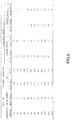
- Fig. 2 is a table showing the composition of samples of copper alloy powder materials proposed by the inventors, only samples #13-15 being according to this invention.
- Fig. 3 is a table showing the composition of comparative samples set by the inventors for the purpose of comparison.
- Fig. 4 is a table showing the characteristics of the valve seats made of the powder materials of Fig. 2.
- Fig. 5 is a table showing the characteristics of the valve seats made of the powder materials of Fig. 3.
- valve seats 2 for intake valves and exhaust valves are formed in an engine cylinder head 1.
- the valve seat 2 is formed by build-up cladding of copper alloy powder 4 having the composition of Samples #1 - #15 in Fig. 2 in the rim of a port 3 in the base material of the precast cylinder head 1.
- Copper alloy powder 4 is supplied to the rim of the port 3 from a powder feed nozzle 5.
- the building of copper alloy is formed with a thickness of 3mm or more on the rim of the hole 3 by irradiating this powder by a laser beam from a carbon dioxide laser element 6 under the following conditions.
- the base metal of the cylinder head 1 is cast in Al-Cu-Mg type alloy specified by AC2A, which is an aluminum casting alloy specified by JIS-H-5202.
- This cylinder head 1 is for an in-line type four-cylinder double overhead cam (DOHC) engine, and comprises four holes 3 for intake valves and exhaust valves in each cylinder.
- DOHC double overhead cam
- the copper alloy powder 4 is formed as follows. First, molten copper alloy corresponding to one of Samples #1 - #15, shown in the table of Fig. 2, is prepared in a graphite pot of a high frequency induction furnace. Next, the molten copper alloy is allowed to flow down from the bottom of the pot, and "gas atomization" is performed wherein a gas is blown into the molten copper alloy which is flowing down to pulverize the alloy to a powder. Dehydration, degassing,and particle grading is then performed to obtain a cladding powder.
- a common feature of the copper alloy powders shown in Samples #1 - #15 of Fig. 2 is that they comprise 6-15 wt% nickel (Ni), 1-5 wt% silicon (Si), and 1-5 wt % of at least one of molybdenum (Mo), tungsten (W), tantalum (Ta), niobium (Nb) and vanadium (V).
- Ni nickel
- Si silicon
- Mo molybdenum
- W tungsten
- Ta tantalum
- Nb niobium
- V vanadium
- Nickel (Ni) is a useful element for improving the abrasion resistance of the valve seat 2.
- Nickel (Ni) When the content of nickel (Ni) is higher than 9 wt%, the number of microcracks increases, but by further adding phosphorus (P) or manganese (Mn), 9-15 wt% of nickel (Ni) may improve the abrasion resistance of the alloy while suppressing the number of microcracks to within an acceptable range as shown by Samples #13 - #15.
- Nickel (Ni) and silicon (Si) cause deposition of hard silicides, but when nickel (Ni) is less than 6 wt%, deposition of hard silicides is reduced and high abrasion resistance is no longer obtained.
- Silicon (Si) is required for deposition of hard silicides and is useful for improving the abrasion resistance of the valve seat 2.
- the silicon (Si) content is less than 1 wt%, the deposition amount of hard silicides decreases, but if the content exceeds 5 wt%, abrasion resistance does not greatly improve and microcracks actually tend to form more easily.
- Samples #1 - #15 of Fig. 2 are copper (Cu) and impurities.
- the inventors prepared 100 of the cylinder heads 1 for each Sample, and performed build-up cladding in sixteen ports 3 in each of the cylinder heads 1.
- Comparative Sample #11 corresponds to the copper alloy disclosed in the aforesaid prior art Tokkai Hei 8-35027.
- Comparative Samples #1 - #10 and #12 were arranged by the inventors for purposes of comparison, and do not necessarily conform to the prior art.
- compositions of Comparative Samples #1 - #12 of Figs. 3 also comprises copper (Cu) and impurities.
- the cylinder head 1 obtained by the above process was finished to predetermined dimensions and surface roughness via mechanical machining.
- the Vickers' hardness of the cladding which has a significant correlation with the abrasion resistance of the valve seat formed, was measured at room temperature and at a high temperature of 400°C.
- Comparative Sample #1 wherein the nickel (Ni) content was less than 6 wt%.
- the hardness Hv200 at room temperature was extremely low, and the abrasion depth of the valve seat was very high as the abrasion resistance was incomplete.
- the abrasion depth of the valve face was also large due to repeated sticking and peeling of the abrasive powder on the valve face.
- Comparative Sample #8 was a copper alloy powder wherein the nickel (Ni), silicon (Si), molybdenum (Mo), iron (Fe), and chromium (Cr) content was that of the copper alloy according to this invention, to which less than 0.1% phosphorus (P), less than 1% manganese (Mn) and less than 0.01% rare earths (REM) had been added.
- Ni nickel
- Si silicon
- Mo molybdenum
- Fe iron
- Cr chromium
- Comparative Sample 10 For a valve seat according to Comparative Sample 10 having an identical composition to that of Comparative Sample 8 wherein the manganese (Mn) content had been increased to more than 1.0 wt%, there was also no great improvement compared to Comparative Sample 8.
Landscapes
- Engineering & Computer Science (AREA)
- Mechanical Engineering (AREA)
- Chemical & Material Sciences (AREA)
- Optics & Photonics (AREA)
- Physics & Mathematics (AREA)
- Organic Chemistry (AREA)
- Materials Engineering (AREA)
- Metallurgy (AREA)
- Plasma & Fusion (AREA)
- General Engineering & Computer Science (AREA)
- Combustion & Propulsion (AREA)
- Cylinder Crankcases Of Internal Combustion Engines (AREA)
- Powder Metallurgy (AREA)
- Laser Beam Processing (AREA)
- Valve-Gear Or Valve Arrangements (AREA)
Description
- This invention relates to an abrasion resistant copper alloy.
- This invention also relates to build-up cladding of a copper alloy for forming a valve seat in an engine cylinder head.
- A method of forming a valve seat for an engine intake valve or exhaust valve is known wherein copper alloy powder is dissolved by a laser beam and accumulated on a cylinder head base metal along a rim of an intake port or exhaust port.
- As an example of such a powdered copper alloy, JP-A-08-35027 published by the Japanese Patent Office in 1996 discloses a powder material of a copper alloy excellent in high temperature wear resistance.
- According to tests performed by the inventors, a valve seat formed using this powder material displayed superior abrasion resistance, but microcracks occurred sporadically in the valve seat after cladding.
- JP-A-02-179839 discloses a hot-workable copper alloy containing 3-10 wt% Ni, 0.7-2.5 wt% Si, 2-6 wt% Al, 0.1-1.0 wt% Cr, and optionally 0.05-0.5 wt% of at least one of Zr, Ti, and Nb
- EP-A-0 320 195 discloses a wear resistant copper alloy containing 10-40 wt% Ni, 1-7 wt% Si, 0.5-5 wt% B, and 1-20 wt% Cr.
- EP-A-0 727 501 discloses a wear resistant copper alloy containing 10-30 wt% Ni, 2-15 wt% Fe, 2-15 wt% Co, 0.5-5.0 wt% Si, and 1-10 wt% Cr.
- It would be desirable to be able to provide an abrasion resistant copper alloy in which microcracks rarely form.
- It would also be desirable to be able to improve the quality of an engine valve seat.
- The present invention provides an abrasion resistant copper alloy as set forth in
claim 1. - This invention preferably provides an abrasion resistant copper alloy consisting of copper (Cu), 9-15 wt% nickel (Ni), 1-5 wt% silicon (Si), 0.5-1.5 wt% iron (Fe), 1-5 wt% chromium (Cr), 0.5-0.9 wt% aluminum (Al), 0.1-1.0 wt% phosphorus (P), and 1-5 wt% of a material selected from molybdenum (Mo), tungsten (W), tantalum (Ta), niobium (Nb),and vanadium (V). The preferred material is vanadium.
- This invention also provides an abrasion resistant copper alloy consisting of copper (Cu), 9-15 wt% nickel (Ni), 1-5 wt% silicon (Si), 0.5-1.5 wt% iron (Fe), 1-5 wt% chromium (Cr), 0.5-0.9 wt% aluminum (Al), 0.1-1.0 wt% phosphorus (P), 1-10 wt% manganese (Mn), and 1-5 wt% of a material selected from molybdenum (Mo), tungsten (W), tantalum (Ta), niobium (Nb),and vanadium (V).
- This invention also provides an abrasion resistant copper alloy consisting of copper (Cu), 9-15 wt% nickel (Ni), 1-5 wt% silicon (Si), 0.5-1.5 wt% iron (Fe), 1-5 wt% chromium (Cr), 0.5-0.9 wt% aluminum (Al), 0.1-1.0 wt% phosphorus (P), 1-10 wt% manganese (Mn), 0.01-0.1 wt% rare earth metal, and 1-5 wt% of a material selected from molybdenum (Mo), tungsten (W), tantalum (Ta), niobium (Nb),and vanadium (V).
- The above copper alloys are preferably provided in the form of powder for build-up cladding using a laser beam.
- Such build-up cladding is preferably used for forming a valve seat of intake and exhaust valves arranged in an engine cylinder head.
- The details as well as other features and advantages of this invention are set forth in the remainder of the specification and are shown in the accompanying drawings.
- Fig. 1 is a perspective view of a valve seat portion of an engine cylinder head.
- Fig. 2 is a table showing the composition of samples of copper alloy powder materials proposed by the inventors, only samples #13-15 being according to this invention.
- Fig. 3 is a table showing the composition of comparative samples set by the inventors for the purpose of comparison.
- Fig. 4 is a table showing the characteristics of the valve seats made of the powder materials of Fig. 2.
- Fig. 5 is a table showing the characteristics of the valve seats made of the powder materials of Fig. 3.
- Referring to Fig. 1 of the drawings,
valve seats 2 for intake valves and exhaust valves are formed in anengine cylinder head 1. Thevalve seat 2 is formed by build-up cladding ofcopper alloy powder 4 having the composition of Samples #1 - #15 in Fig. 2 in the rim of aport 3 in the base material of theprecast cylinder head 1. -
Copper alloy powder 4 is supplied to the rim of theport 3 from apowder feed nozzle 5. - The building of copper alloy is formed with a thickness of 3mm or more on the rim of the
hole 3 by irradiating this powder by a laser beam from a carbondioxide laser element 6 under the following conditions. - Laser output = 5.0 kW
- Working speed = 1.0 m/min
- Shielding gas = Ar
- Shielding gas flow rate = 20 liter/min
-
- The base metal of the
cylinder head 1 is cast in Al-Cu-Mg type alloy specified by AC2A, which is an aluminum casting alloy specified by JIS-H-5202. Thiscylinder head 1 is for an in-line type four-cylinder double overhead cam (DOHC) engine, and comprises fourholes 3 for intake valves and exhaust valves in each cylinder. - The
copper alloy powder 4 is formed as follows. First, molten copper alloy corresponding to one of Samples #1 - #15, shown in the table of Fig. 2, is prepared in a graphite pot of a high frequency induction furnace. Next, the molten copper alloy is allowed to flow down from the bottom of the pot, and "gas atomization" is performed wherein a gas is blown into the molten copper alloy which is flowing down to pulverize the alloy to a powder. Dehydration, degassing,and particle grading is then performed to obtain a cladding powder. - A common feature of the copper alloy powders shown in Samples #1 - #15 of Fig. 2 is that they comprise 6-15 wt% nickel (Ni), 1-5 wt% silicon (Si), and 1-5 wt % of at least one of molybdenum (Mo), tungsten (W), tantalum (Ta), niobium (Nb) and vanadium (V).
- Nickel (Ni) is a useful element for improving the abrasion resistance of the
valve seat 2. - By suppressing nickel (Ni) to 9 wt% or less, microcracks formed sporadically in the cladding layer can be reduced.
- When the content of nickel (Ni) is higher than 9 wt%, the number of microcracks increases, but by further adding phosphorus (P) or manganese (Mn), 9-15 wt% of nickel (Ni) may improve the abrasion resistance of the alloy while suppressing the number of microcracks to within an acceptable range as shown by Samples #13 - #15. Nickel (Ni) and silicon (Si) cause deposition of hard silicides, but when nickel (Ni) is less than 6 wt%, deposition of hard silicides is reduced and high abrasion resistance is no longer obtained.
- Silicon (Si) is required for deposition of hard silicides and is useful for improving the abrasion resistance of the
valve seat 2. When the silicon (Si) content is less than 1 wt%, the deposition amount of hard silicides decreases, but if the content exceeds 5 wt%, abrasion resistance does not greatly improve and microcracks actually tend to form more easily. - By adding 0.5-1.5 wt% of iron (Fe) or 1-5 wt% chromium (Cr), abrasion resistance can be improved as shown by Samples #4 - #15 of Fig. 2. Both of these raise room temperature hardness and high temperature hardness of the cladding of a valve seat. When the addition amount is less than the lower limits mentioned above, a marked effect cannot be obtained from either iron (Fe) or chromium (Cr). However, when the upper limits are exceeded, there is not much improvement of hardness while microcracks form easily.
- When 0.5-0.9 wt% of aluminum (Al) is added, room temperature hardness is enhanced and an improvement of abrasion resistance is obtained as shown by
Samples # 6, #7, and #12 - #15. - However, when aluminum (Al) is less than 0.5 wt%, the effect is small. Above 0.9 wt %, e.g. at 1.3 wt%, room temperature hardness decreases and microcracks form easily.
- When 5-15 wt% of cobalt (Co) is added, lumps of hard silicides are deposited and room temperature hardness is mainly enhanced as shown by
Samples # 7 and #10 - #12. This is effective for abrasion resistance improvement of a valve seat of the exhaust valve. However, when the cobalt (Co) content is less than 5 wt% the effect is small, and when it exceeds 15 wt%, microcracks form easily. Note that Samples #13-15 contain no cobalt. - When 0.1-1.0 wt% of phosphorus (P) is added, the viscosity decreases when the powder melts as shown by Samples #8 - #15, so lumps of hard silicides are uniformly deposited when the cladding is formed by irradiation with the laser beam, and the formation of microcracks is suppressed. However, when the phosphorus (P) content is less than 0.1 wt% the effect is small, and when it exceeds 1.0 wt%, no further advantage is obtained.
- When 1.0-10.0 wt% manganese (Mn) is added, the formation of microcracks is suppressed as shown by Samples #9 - #12, #14,and #15. However, when the manganese (Mn) content is less than 1 wt% the effect is small, and when it exceeds 10 wt%, no further advantage is obtained.
- When 0.01-0.1 wt% of rare earth metals (REM) comprising misch metal is added, the formation of microcracks is suppressed as shown by Samples #10 - #12 and #15. However, when the rare earth metal (REM) content is less than 0.01 wt% the effect is small, and when it exceeds 0.1 wt%, no further advantage is obtained.
- The remaining components of Samples #1 - #15 of Fig. 2 are copper (Cu) and impurities.
- The inventors prepared 100 of the
cylinder heads 1 for each Sample, and performed build-up cladding in sixteenports 3 in each of thecylinder heads 1. - Build-up cladding was performed also using Comparative Samples #1 - #12 which are not according to this invention and which have the compositions shown in Fig. 3.
-
Comparative Sample # 11 corresponds to the copper alloy disclosed in the aforesaid prior art Tokkai Hei 8-35027. - Comparative Samples #1 - #10 and #12 were arranged by the inventors for purposes of comparison, and do not necessarily conform to the prior art.
- The remainder of the compositions of Comparative Samples #1 - #12 of Figs. 3 also comprises copper (Cu) and impurities.
- The
cylinder head 1 obtained by the above process was finished to predetermined dimensions and surface roughness via mechanical machining. - Twenty of the
cylinder heads 1 which respectively have sixteen valve seats thus formed using the same powder were selected corresponding to each of the above Samples and Comparative Samples, and the number of microcracks was examined by performing a color check on the cladding layer of 320 of theholes 3 in total for each case. - The results are shown in Figs. 4 and 5.
- The Vickers' hardness of the cladding, which has a significant correlation with the abrasion resistance of the valve seat formed, was measured at room temperature and at a high temperature of 400°C.
- As for Samples #1 - #3 and Comparative Samples #1 - #4 which have a Vickers' hardness less than Hv150, the cladding was performed only in the valve seat of the intake valve.
- The measurement results are shown in Figs. 4 and 5.
- For each Sample and Comparative Sample, cylinder heads for which microcracks had not been found were subjected to the following engine test.
- Engine = 1998cc in-line type four cylinder DOHC engine
- Fuel = regular clear gasoline
- Engine rotation speed = 6,000rpm
- Intake valve material = heat-resistant steel corresponding to JIS SUH11
- Exhaust valve material = heat-resistant steel corresponding to JIS SUH36
- Engine load (throttle opening) = 4/4
- Test time = 100 hours
-
- After the test, the abrasion depth of the valve seat and valve face were measured.
- The measurement results are shown in Figs. 4 and 5.
- From the test results, the number of valve seats with microcracks decreased for Samples #1 - #15 compared to Comparative Samples #1 - #12.
- The depth of abrasion of the valve seat and valve face after the engine test was also less for Samples #1 - #15 than for Comparative Samples #1 - #12.
- For a valve seat formed using Samples #1 - #15, the external appearance of the frictional sliding parts was almost smooth, and no abrasion defects or pits which would cause loss of sealtightness of the valve seat were observed.
- On the other hand for
Comparative Sample # 1 wherein the nickel (Ni) content was less than 6 wt%. the hardness Hv200 at room temperature was extremely low, and the abrasion depth of the valve seat was very high as the abrasion resistance was incomplete. - The abrasion depth of the valve face was also large due to repeated sticking and peeling of the abrasive powder on the valve face.
- In a valve seat according to
Comparative Sample # 2 wherein the nickel (Ni) content was 10 wt% or more and neither phosphorus (P) nor manganese (Mn) were present, there were a large number of microcracks and the abrasion depths of the valve seat and valve face due to the test were high. Further, in a valve seat according toComparative Sample # 12 wherein phosphorus (P) and manganese (Mn) are added, but the nickel (Ni) content exceeds 15 wt%, high abrasion resistance was obtained, but a considerable number of the valve seats had microcracks. - For a valve seat according to
Comparative Sample # 3 wherein the molybdenum (Mo) and tungsten (W) content was less than 1 wt%, there was little deposition of hard silicides and adequate abrasion resistance was not obtained. This valve seat therefore had a large abrasion depth, and a ring-shaped groove was formed in the valve seat. The abrasion depth of the corresponding valve face was also large. - For a valve seat according to
Comparative Sample # 4 wherein the total amount of molybdenum (Mo), tungsten (W) tantalum (Ta), niobium (Nb), and vanadium (V) exceeded 5%, there were a large number of microcracks as in the case of the valve seat according toComparative Sample 2. Although engine tests were performed using cylinder heads wherein microcracks had not been detected, the abrasion depth of the valve seat and valve face due to the test was high. - For a valve seat according to
Comparative Sample 5 wherein the iron (Fe) content exceeded 1.5% and the chromium (Cr) content exceeded 5%, the abrasion depth of the valve seat was large as in the case of valve seats according toComparative Samples # 2 and #4. - It appears that a high iron (Fe) or chromium (Cr) content is not effective in improving hardness and abrasion resistance.
- For a valve seat according to
Comparative Sample # 6 wherein the aluminum (Al) content was 1-3%, the same result was obtained as for valve seats according toComparative Samples # 2 and #4. - The number of microcracks was highest for this
Comparative Sample # 6. For the valve seat according toComparative Sample # 6, the high temperature hardness fell considerably compared to the room temperature hardness, as shown in Fig. 5. Therefore, the abrasion depth of the valve seat and valve face of the exhaust valve which reaches a high temperature, was fairly large. - For a valve seat according to
Comparative Sample # 7 wherein the cobalt (Co) content exceeded 15%, the same characteristics were obtained as for a valve seat according toComparative Samples # 2, #4, #5, and #6. -
Comparative Sample # 8 was a copper alloy powder wherein the nickel (Ni), silicon (Si), molybdenum (Mo), iron (Fe), and chromium (Cr) content was that of the copper alloy according to this invention, to which less than 0.1% phosphorus (P), less than 1% manganese (Mn) and less than 0.01% rare earths (REM) had been added. - In a valve seat formed using this copper alloy powder, there was no particular decline of abrasion resistance, but there were numerous microcracks.
- For a valve seat according to
Comparative Sample # 9 having an identical composition to that ofComparative Sample # 8 wherein the phosphorus (P) content had been increased to more than 1.0 wt%, there were few microcracks but the abrasion resistance was not high enough. - For a valve seat according to
Comparative Sample 10 having an identical composition to that ofComparative Sample 8 wherein the manganese (Mn) content had been increased to more than 1.0 wt%, there was also no great improvement compared toComparative Sample 8. - For a valve seat according to
Comparative Sample 11 corresponding to the copper alloy disclosed in Tokkai Hei 8-35027 of the aforementioned prior art, there were a considerable number of microcracks. - In a valve seat formed with the copper alloy of Samples #13-#15 according to the present invention, excellent quality is obtained both in terms of the number of microcracks and the abrasion depth.
Claims (14)
- An abrasion resistant copper alloy consisting of:9-15 wt% nickel (Ni);1-5 wt% silicon (Si);1-5 wt% of a material selected from molybdenum (Mo), tungsten (W), tantalum (Ta), niobium (Nb), and vanadium (V);0.5-1.5 wt% iron (Fe);1-5 wt% chromium (Cr);0.5-0.9 wt% aluminum (Al);0.1-1.0 wt% phosphorus (P);optionally 1-10 wt% manganese (Mn);optionally 0.01-0.1 wt% rare earth metal; and the balance copper (Cu) and impurities.
- An alloy as claimed in claim 1, in which the nickel (Ni) content is at least 12.1 wt%.
- An alloy as claimed in claim 1 or 2, in which the silicon (Si) content is about 3 wt%.
- An alloy as claimed in any preceding claim, in which the content of the said selected material is about 2.1 wt%.
- An alloy as claimed in any preceding claim, in which the said selected material is vanadium alone.
- An alloy as claimed in any preceding claim, in which the vanadium (V) content is 1.5-2.5 wt%.
- An alloy as claimed in any preceding claim, in which the iron (Fe) content is at least 1 wt%.
- An alloy as claimed in any preceding claim, in which the chromium (Cr) content is about 2 wt%.
- An alloy as claimed in any preceding claim, in which the aluminum (Al) content is at least 0.8 wt%.
- An alloy as claimed in any preceding claim, in which the phosphorus (P) content is 0.4-0.8 wt%.
- An alloy as claimed in any preceding claim, containing hard silicides.
- An alloy as claimed in any preceding claim, in the form of a powder.
- A method of build-up cladding in which a copper alloy powder is irradiated by a laser beam, characterised in that the copper alloy is an abrasion resistant copper alloy in accordance with any of claims 1 to 11.
- An engine cylinder head having a valve seat clad with an abrasion resistant copper alloy in accordance with any of claims 1 to 11.
Priority Applications (1)
| Application Number | Priority Date | Filing Date | Title |
|---|---|---|---|
| EP00128383A EP1120472B1 (en) | 1998-02-26 | 1999-02-26 | Abrasion resistant copper alloy for build-up cladding on engine cylinder head |
Applications Claiming Priority (4)
| Application Number | Priority Date | Filing Date | Title |
|---|---|---|---|
| JP4583198 | 1998-02-26 | ||
| JP4583198 | 1998-02-26 | ||
| JP02327799A JP3853100B2 (en) | 1998-02-26 | 1999-01-29 | Copper alloy with excellent wear resistance |
| JP2327799 | 1999-01-29 |
Related Child Applications (1)
| Application Number | Title | Priority Date | Filing Date |
|---|---|---|---|
| EP00128383A Division EP1120472B1 (en) | 1998-02-26 | 1999-02-26 | Abrasion resistant copper alloy for build-up cladding on engine cylinder head |
Publications (3)
| Publication Number | Publication Date |
|---|---|
| EP0939139A2 EP0939139A2 (en) | 1999-09-01 |
| EP0939139A3 EP0939139A3 (en) | 2000-01-12 |
| EP0939139B1 true EP0939139B1 (en) | 2001-10-04 |
Family
ID=26360595
Family Applications (2)
| Application Number | Title | Priority Date | Filing Date |
|---|---|---|---|
| EP00128383A Expired - Lifetime EP1120472B1 (en) | 1998-02-26 | 1999-02-26 | Abrasion resistant copper alloy for build-up cladding on engine cylinder head |
| EP99301447A Expired - Lifetime EP0939139B1 (en) | 1998-02-26 | 1999-02-26 | Abrasion resistant copper alloy for build-up cladding on engine cylinder head |
Family Applications Before (1)
| Application Number | Title | Priority Date | Filing Date |
|---|---|---|---|
| EP00128383A Expired - Lifetime EP1120472B1 (en) | 1998-02-26 | 1999-02-26 | Abrasion resistant copper alloy for build-up cladding on engine cylinder head |
Country Status (4)
| Country | Link |
|---|---|
| US (1) | US6531003B2 (en) |
| EP (2) | EP1120472B1 (en) |
| JP (1) | JP3853100B2 (en) |
| DE (2) | DE69909812T2 (en) |
Cited By (2)
| Publication number | Priority date | Publication date | Assignee | Title |
|---|---|---|---|---|
| DE10329912A1 (en) * | 2003-07-02 | 2005-02-10 | Daimlerchrysler Ag | Method for producing a valve seat |
| CN109182795A (en) * | 2018-09-13 | 2019-01-11 | 北京科技大学 | A kind of preparation method of high-strength highly-conductive Cu-RE nisiloy evanohm |
Families Citing this family (38)
| Publication number | Priority date | Publication date | Assignee | Title |
|---|---|---|---|---|
| DE10001781C1 (en) * | 2000-01-18 | 2001-05-17 | Bayerische Motoren Werke Ag | Machine casing with divided bearing fitting, materials of clamping surfaces of which is of similar hardness |
| KR20020019296A (en) * | 2000-09-05 | 2002-03-12 | 이계안 | Sintered alloy for valve seat manufactured by laser cladding |
| US20040045641A1 (en) * | 2001-01-15 | 2004-03-11 | Minoru Kawasaki | Wear-resistant copper-base alloy |
| DE10156196C1 (en) * | 2001-11-15 | 2003-01-02 | Daimler Chrysler Ag | Production of a valve seat used for a cylinder head of internal combustion engine comprises fusing an additive material made from an alloy or a mixture of an aluminum-lead alloy and a further component at a certain point on a cylinder head |
| DE10255447A1 (en) * | 2002-11-28 | 2004-06-24 | Daimlerchrysler Ag | Valve seat and method for producing a valve seat |
| US7431881B2 (en) * | 2003-02-21 | 2008-10-07 | The P.O.M. Group | Wear-resistant alloys particularly suited to aluminum-engine head-valve seats |
| JP4472979B2 (en) * | 2003-12-17 | 2010-06-02 | トヨタ自動車株式会社 | Wear-resistant copper-based alloy for overlaying |
| JP4603808B2 (en) * | 2004-03-15 | 2010-12-22 | トヨタ自動車株式会社 | Overlay wear resistant copper base alloy |
| JP4494048B2 (en) * | 2004-03-15 | 2010-06-30 | トヨタ自動車株式会社 | Overlay wear resistant copper alloy and valve seat |
| JP4314226B2 (en) * | 2005-09-13 | 2009-08-12 | 本田技研工業株式会社 | Particle-dispersed copper alloy and method for producing the same |
| CN100443244C (en) * | 2005-10-25 | 2008-12-17 | 哈尔滨工业大学 | A medium-temperature copper-based cadmium-free solder |
| US20070246611A1 (en) * | 2006-04-19 | 2007-10-25 | Anadish Kumar Pal | Triboelectric treatment of wing and blade surfaces to reduce wake and BVI/HSS noise |
| US7757396B2 (en) * | 2006-07-27 | 2010-07-20 | Sanyo Special Steel Co., Ltd. | Raw material powder for laser clad valve seat and valve seat using the same |
| DE102007052800B3 (en) * | 2007-11-02 | 2009-05-07 | Märkisches Werk GmbH | Inlet or exhaust valve for an internal combustion engine and method for its production |
| US20110200838A1 (en) * | 2010-02-18 | 2011-08-18 | Clover Industries, Inc. | Laser clad metal matrix composite compositions and methods |
| CN102218620B (en) * | 2011-05-20 | 2013-06-19 | 中冶焊接科技有限公司 | Surfacing material for mold rod for manufacturing oxygen bottle |
| CN103074517B (en) * | 2013-02-21 | 2014-07-30 | 南昌航空大学 | Special copper alloy powder for laser-sensing composite fusion-covering high-strength high-conductivity copper alloy coating |
| US10183365B2 (en) * | 2013-12-13 | 2019-01-22 | Dm3D Technology, Llc | Method of manufacturing high-conductivity wear resistant surface on a soft substrate |
| CN105316522A (en) * | 2015-12-02 | 2016-02-10 | 苏州龙腾万里化工科技有限公司 | Copper-nickel alloy convenient to produce for casting processing |
| RU2612480C1 (en) * | 2015-12-07 | 2017-03-09 | Федеральное государственное бюджетное учреждение науки Институт физики прочности и материаловедения Сибирского отделения Российской академии наук (ИФПМ СО РАН) | Method of producing low-modulus alloys based on titan-niobium system by selective laser alloyage |
| JP6602737B2 (en) * | 2016-10-07 | 2019-11-06 | 株式会社豊田中央研究所 | Overlaying alloy and overlaying member |
| JP6729461B2 (en) * | 2017-03-22 | 2020-07-22 | トヨタ自動車株式会社 | Manufacturing method of overlay layer and manufacturing apparatus thereof |
| CA3095046A1 (en) | 2018-03-29 | 2019-10-03 | Oerlikon Metco (Us) Inc. | Reduced carbides ferrous alloys |
| CN108893648B (en) * | 2018-07-20 | 2020-06-26 | 江西理工大学 | A kind of preparation method of yttrium-based heavy rare earth copper-nickel alloy |
| EP3870727A1 (en) | 2018-10-26 | 2021-09-01 | Oerlikon Metco (US) Inc. | Corrosion and wear resistant nickel based alloys |
| CN113631750A (en) | 2019-03-28 | 2021-11-09 | 欧瑞康美科(美国)公司 | Thermally sprayed iron-based alloys for coating engine cylinder bores |
| CA3136967A1 (en) | 2019-05-03 | 2020-11-12 | Oerlikon Metco (Us) Inc. | Powder feedstock for wear resistant bulk welding configured to optimize manufacturability |
| KR102870036B1 (en) | 2019-07-09 | 2025-10-13 | 오를리콘 메트코 (유에스) 아이엔씨. | Iron-based alloys designed for wear and corrosion resistance |
| KR102795979B1 (en) * | 2019-10-17 | 2025-04-14 | 현대자동차주식회사 | Copper alloy for laser cladding valve sheet |
| CN110669960B (en) * | 2019-11-08 | 2021-04-20 | 无锡金卫星铜业有限公司 | Wear-resistant cupronickel wire and forming method thereof |
| JP7733893B2 (en) * | 2019-12-13 | 2025-09-04 | 福田金属箔粉工業株式会社 | Cu-based powder and method for producing the Cu-based powder |
| KR102811011B1 (en) * | 2019-12-16 | 2025-05-23 | 현대자동차주식회사 | Copper alloy for laser cladding valve sheet |
| CN111334684B (en) * | 2020-03-20 | 2021-04-20 | 苏州东方模具科技股份有限公司 | Solid solution state high-toughness high-heat-conductivity copper alloy glass mold and preparation method thereof |
| US11530629B2 (en) * | 2020-06-26 | 2022-12-20 | GM Global Technology Operations LLC | Method to attach copper alloy valve inserts to aluminum cylinder head |
| CN113042746B (en) * | 2021-02-05 | 2022-05-10 | 浙江大学 | A kind of laser additive preparation method of tungsten copper composite material |
| TWI855258B (en) * | 2021-05-26 | 2024-09-11 | 國立清華大學 | High strength and wear resistant multi-element copper alloy and use thereof |
| JP7707671B2 (en) * | 2021-06-10 | 2025-07-15 | 三菱マテリアル株式会社 | Copper alloy powder and additive manufacturing products |
| CN120099351B (en) * | 2024-06-20 | 2025-11-28 | 深圳优思睿科技有限公司 | A high-performance copper alloy for electronic applications |
Family Cites Families (20)
| Publication number | Priority date | Publication date | Assignee | Title |
|---|---|---|---|---|
| JPS59193233A (en) * | 1983-04-15 | 1984-11-01 | Toshiba Corp | Copper alloy |
| JPH0768597B2 (en) * | 1986-02-28 | 1995-07-26 | 株式会社東芝 | Non-magnetic spring material and manufacturing method thereof |
| JPS63149347A (en) | 1986-12-15 | 1988-06-22 | Komatsu Ltd | Copper alloy for high sliding wear resistance for laser welding |
| JP2639949B2 (en) | 1987-12-10 | 1997-08-13 | トヨタ自動車株式会社 | Wear-resistant Cu-based alloy |
| JPH02179839A (en) | 1988-12-29 | 1990-07-12 | Kobe Steel Ltd | High strength copper alloy having excellent impact resistance |
| CA2022271C (en) | 1989-07-31 | 1996-03-12 | Soya Takagi | Dispersion strengthened copper-base alloy for overlay |
| JP2984344B2 (en) * | 1990-09-21 | 1999-11-29 | 福田金属箔粉工業株式会社 | Cu-based alloy powder for laser cladding |
| JPH04172193A (en) * | 1990-11-01 | 1992-06-19 | Nissan Motor Co Ltd | Method for alloying al series base material with cladding by welding |
| JP2748717B2 (en) * | 1991-01-28 | 1998-05-13 | トヨタ自動車株式会社 | Wear-resistant copper-based alloy for cladding |
| JPH0717978B2 (en) * | 1991-03-20 | 1995-03-01 | トヨタ自動車株式会社 | Abrasion resistant copper base alloy with excellent self-lubrication |
| JP3020670B2 (en) * | 1991-08-09 | 2000-03-15 | 日鐵溶接工業株式会社 | Cu-Al composite wire for overlay welding on Al-based material surface |
| JPH0615482A (en) * | 1992-02-14 | 1994-01-25 | Nippon Steel Weld Prod & Eng Co Ltd | Filler welding material for overlay welding on the surface of Al-based material |
| JPH0610081A (en) * | 1992-06-29 | 1994-01-18 | Toyota Motor Corp | Engine with titanium valve for exhaust |
| JP3636731B2 (en) * | 1993-03-09 | 2005-04-06 | 川野周子 | Cu-Ni-Si alloy |
| JP3304021B2 (en) * | 1994-07-20 | 2002-07-22 | 日産自動車株式会社 | Copper alloy with excellent high-temperature wear resistance |
| JP3373076B2 (en) | 1995-02-17 | 2003-02-04 | トヨタ自動車株式会社 | Wear-resistant Cu-based alloy |
| JPH08232029A (en) * | 1995-02-24 | 1996-09-10 | Sumitomo Electric Ind Ltd | Ni-based particle dispersed copper-based sintered alloy and method for producing the same |
| JPH08283889A (en) | 1995-04-14 | 1996-10-29 | Chuetsu Gokin Chuko Kk | High strength and high hardness copper alloy |
| JPH0931571A (en) | 1995-07-17 | 1997-02-04 | Hitachi Powdered Metals Co Ltd | Abrasion resistant copper-based sintered alloy |
| JPH1096037A (en) * | 1996-09-20 | 1998-04-14 | Mitsui Mining & Smelting Co Ltd | Copper alloy with excellent wear resistance |
-
1999
- 1999-01-29 JP JP02327799A patent/JP3853100B2/en not_active Expired - Fee Related
- 1999-02-22 US US09/253,798 patent/US6531003B2/en not_active Expired - Fee Related
- 1999-02-26 EP EP00128383A patent/EP1120472B1/en not_active Expired - Lifetime
- 1999-02-26 DE DE69909812T patent/DE69909812T2/en not_active Expired - Lifetime
- 1999-02-26 DE DE69900320T patent/DE69900320T2/en not_active Expired - Lifetime
- 1999-02-26 EP EP99301447A patent/EP0939139B1/en not_active Expired - Lifetime
Cited By (4)
| Publication number | Priority date | Publication date | Assignee | Title |
|---|---|---|---|---|
| DE10329912A1 (en) * | 2003-07-02 | 2005-02-10 | Daimlerchrysler Ag | Method for producing a valve seat |
| DE10329912B4 (en) * | 2003-07-02 | 2005-06-09 | Daimlerchrysler Ag | Method for producing a valve seat |
| CN109182795A (en) * | 2018-09-13 | 2019-01-11 | 北京科技大学 | A kind of preparation method of high-strength highly-conductive Cu-RE nisiloy evanohm |
| CN109182795B (en) * | 2018-09-13 | 2020-06-05 | 北京科技大学 | A kind of preparation method of high-strength and high-conductivity rare earth copper-nickel-silicon-chromium alloy |
Also Published As
| Publication number | Publication date |
|---|---|
| EP0939139A3 (en) | 2000-01-12 |
| EP0939139A2 (en) | 1999-09-01 |
| DE69909812D1 (en) | 2003-08-28 |
| DE69900320T2 (en) | 2002-07-04 |
| DE69909812T2 (en) | 2004-06-03 |
| EP1120472A2 (en) | 2001-08-01 |
| EP1120472A3 (en) | 2002-01-02 |
| DE69900320D1 (en) | 2001-11-08 |
| JP3853100B2 (en) | 2006-12-06 |
| US20010001641A1 (en) | 2001-05-24 |
| EP1120472B1 (en) | 2003-07-23 |
| US6531003B2 (en) | 2003-03-11 |
| JPH11310837A (en) | 1999-11-09 |
Similar Documents
| Publication | Publication Date | Title |
|---|---|---|
| EP1120472B1 (en) | Abrasion resistant copper alloy for build-up cladding on engine cylinder head | |
| EP1172452B1 (en) | Wear-resistant iron base alloy | |
| JP5161496B2 (en) | Cast iron milling inserts | |
| US5911949A (en) | Abrasion resistant copper alloy | |
| US5431136A (en) | Internal combustion valve having an iron based hard-facing alloy contact surface | |
| EP1361288B1 (en) | Wear-resistant copper-base alloy | |
| EP0682580A1 (en) | Cemented carbide with binder phase enriched surface zone and enhanced edge toughness behaviour | |
| US4216015A (en) | Wear-resistant iron-nickel-cobalt alloys | |
| JPS6233037B2 (en) | ||
| EP1694876A1 (en) | Wear-resistant copper-based alloy | |
| JP4603808B2 (en) | Overlay wear resistant copper base alloy | |
| EP1704263B1 (en) | Ductile cobalt-based laves phase alloys | |
| US6037067A (en) | High temperature abrasion resistant copper alloy | |
| US5226977A (en) | Method of hardfacing an engine valve of a titanium material | |
| US5248352A (en) | Tic-base cermet alloy | |
| GB2085921A (en) | Covered electrode containing zirconium for shielded metal arc welding | |
| CN1424173A (en) | Wear resistant high iron-aluminum based welding wire for build-up welding | |
| GB2157711A (en) | Improvements relating to tough material for tools and/or wearing parts | |
| FR2671993A1 (en) | PROCESS FOR MANUFACTURING A SINTERED PIECE BASED ON STEEL, USE AND PART OBTAINED | |
| JPH0480990B2 (en) | ||
| JPS6053098B2 (en) | Wear-resistant Cu alloy with high strength and toughness | |
| JPH0480991B2 (en) | ||
| Beddoes | Valve materials and design | |
| JPH0480992B2 (en) | ||
| JPS61204381A (en) | Formation of alloy layer coating surface of al alloy |
Legal Events
| Date | Code | Title | Description |
|---|---|---|---|
| PUAI | Public reference made under article 153(3) epc to a published international application that has entered the european phase |
Free format text: ORIGINAL CODE: 0009012 |
|
| 17P | Request for examination filed |
Effective date: 19990323 |
|
| AK | Designated contracting states |
Kind code of ref document: A2 Designated state(s): DE FR GB IT |
|
| AX | Request for extension of the european patent |
Free format text: AL;LT;LV;MK;RO;SI |
|
| PUAL | Search report despatched |
Free format text: ORIGINAL CODE: 0009013 |
|
| AK | Designated contracting states |
Kind code of ref document: A3 Designated state(s): AT BE CH CY DE DK ES FI FR GB GR IE IT LI LU MC NL PT SE |
|
| AX | Request for extension of the european patent |
Free format text: AL;LT;LV;MK;RO;SI |
|
| GRAG | Despatch of communication of intention to grant |
Free format text: ORIGINAL CODE: EPIDOS AGRA |
|
| AKX | Designation fees paid |
Free format text: DE FR GB IT |
|
| 17Q | First examination report despatched |
Effective date: 20000918 |
|
| GRAG | Despatch of communication of intention to grant |
Free format text: ORIGINAL CODE: EPIDOS AGRA |
|
| GRAH | Despatch of communication of intention to grant a patent |
Free format text: ORIGINAL CODE: EPIDOS IGRA |
|
| GRAH | Despatch of communication of intention to grant a patent |
Free format text: ORIGINAL CODE: EPIDOS IGRA |
|
| GRAA | (expected) grant |
Free format text: ORIGINAL CODE: 0009210 |
|
| AK | Designated contracting states |
Kind code of ref document: B1 Designated state(s): DE FR GB IT |
|
| REF | Corresponds to: |
Ref document number: 69900320 Country of ref document: DE Date of ref document: 20011108 |
|
| REG | Reference to a national code |
Ref country code: GB Ref legal event code: IF02 |
|
| ET | Fr: translation filed | ||
| PLBE | No opposition filed within time limit |
Free format text: ORIGINAL CODE: 0009261 |
|
| STAA | Information on the status of an ep patent application or granted ep patent |
Free format text: STATUS: NO OPPOSITION FILED WITHIN TIME LIMIT |
|
| 26N | No opposition filed | ||
| REG | Reference to a national code |
Ref country code: GB Ref legal event code: 732E Free format text: REGISTERED BETWEEN 20100225 AND 20100303 |
|
| REG | Reference to a national code |
Ref country code: FR Ref legal event code: TP |
|
| PGFP | Annual fee paid to national office [announced via postgrant information from national office to epo] |
Ref country code: DE Payment date: 20110223 Year of fee payment: 13 Ref country code: IT Payment date: 20110217 Year of fee payment: 13 Ref country code: FR Payment date: 20110218 Year of fee payment: 13 |
|
| PGFP | Annual fee paid to national office [announced via postgrant information from national office to epo] |
Ref country code: GB Payment date: 20110223 Year of fee payment: 13 |
|
| GBPC | Gb: european patent ceased through non-payment of renewal fee |
Effective date: 20120226 |
|
| REG | Reference to a national code |
Ref country code: FR Ref legal event code: ST Effective date: 20121031 |
|
| PG25 | Lapsed in a contracting state [announced via postgrant information from national office to epo] |
Ref country code: IT Free format text: LAPSE BECAUSE OF NON-PAYMENT OF DUE FEES Effective date: 20120226 |
|
| REG | Reference to a national code |
Ref country code: DE Ref legal event code: R119 Ref document number: 69900320 Country of ref document: DE Effective date: 20120901 |
|
| PG25 | Lapsed in a contracting state [announced via postgrant information from national office to epo] |
Ref country code: FR Free format text: LAPSE BECAUSE OF NON-PAYMENT OF DUE FEES Effective date: 20120229 Ref country code: GB Free format text: LAPSE BECAUSE OF NON-PAYMENT OF DUE FEES Effective date: 20120226 |
|
| PG25 | Lapsed in a contracting state [announced via postgrant information from national office to epo] |
Ref country code: DE Free format text: LAPSE BECAUSE OF NON-PAYMENT OF DUE FEES Effective date: 20120901 |