EP0906102B1 - A process for regulating vagal tone - Google Patents
A process for regulating vagal tone Download PDFInfo
- Publication number
- EP0906102B1 EP0906102B1 EP96944882A EP96944882A EP0906102B1 EP 0906102 B1 EP0906102 B1 EP 0906102B1 EP 96944882 A EP96944882 A EP 96944882A EP 96944882 A EP96944882 A EP 96944882A EP 0906102 B1 EP0906102 B1 EP 0906102B1
- Authority
- EP
- European Patent Office
- Prior art keywords
- atp
- vagal
- pulmonary
- administration
- reflex
- Prior art date
- Legal status (The legal status is an assumption and is not a legal conclusion. Google has not performed a legal analysis and makes no representation as to the accuracy of the status listed.)
- Expired - Lifetime
Links
Images
Classifications
-
- A—HUMAN NECESSITIES
- A61—MEDICAL OR VETERINARY SCIENCE; HYGIENE
- A61K—PREPARATIONS FOR MEDICAL, DENTAL OR TOILETRY PURPOSES
- A61K31/00—Medicinal preparations containing organic active ingredients
- A61K31/70—Carbohydrates; Sugars; Derivatives thereof
- A61K31/7042—Compounds having saccharide radicals and heterocyclic rings
- A61K31/7052—Compounds having saccharide radicals and heterocyclic rings having nitrogen as a ring hetero atom, e.g. nucleosides, nucleotides
- A61K31/706—Compounds having saccharide radicals and heterocyclic rings having nitrogen as a ring hetero atom, e.g. nucleosides, nucleotides containing six-membered rings with nitrogen as a ring hetero atom
- A61K31/7064—Compounds having saccharide radicals and heterocyclic rings having nitrogen as a ring hetero atom, e.g. nucleosides, nucleotides containing six-membered rings with nitrogen as a ring hetero atom containing condensed or non-condensed pyrimidines
- A61K31/7076—Compounds having saccharide radicals and heterocyclic rings having nitrogen as a ring hetero atom, e.g. nucleosides, nucleotides containing six-membered rings with nitrogen as a ring hetero atom containing condensed or non-condensed pyrimidines containing purines, e.g. adenosine, adenylic acid
-
- A—HUMAN NECESSITIES
- A61—MEDICAL OR VETERINARY SCIENCE; HYGIENE
- A61K—PREPARATIONS FOR MEDICAL, DENTAL OR TOILETRY PURPOSES
- A61K31/00—Medicinal preparations containing organic active ingredients
-
- A—HUMAN NECESSITIES
- A61—MEDICAL OR VETERINARY SCIENCE; HYGIENE
- A61K—PREPARATIONS FOR MEDICAL, DENTAL OR TOILETRY PURPOSES
- A61K31/00—Medicinal preparations containing organic active ingredients
- A61K31/66—Phosphorus compounds
- A61K31/675—Phosphorus compounds having nitrogen as a ring hetero atom, e.g. pyridoxal phosphate
-
- A—HUMAN NECESSITIES
- A61—MEDICAL OR VETERINARY SCIENCE; HYGIENE
- A61P—SPECIFIC THERAPEUTIC ACTIVITY OF CHEMICAL COMPOUNDS OR MEDICINAL PREPARATIONS
- A61P11/00—Drugs for disorders of the respiratory system
-
- A—HUMAN NECESSITIES
- A61—MEDICAL OR VETERINARY SCIENCE; HYGIENE
- A61P—SPECIFIC THERAPEUTIC ACTIVITY OF CHEMICAL COMPOUNDS OR MEDICINAL PREPARATIONS
- A61P11/00—Drugs for disorders of the respiratory system
- A61P11/06—Antiasthmatics
-
- A—HUMAN NECESSITIES
- A61—MEDICAL OR VETERINARY SCIENCE; HYGIENE
- A61P—SPECIFIC THERAPEUTIC ACTIVITY OF CHEMICAL COMPOUNDS OR MEDICINAL PREPARATIONS
- A61P25/00—Drugs for disorders of the nervous system
-
- A—HUMAN NECESSITIES
- A61—MEDICAL OR VETERINARY SCIENCE; HYGIENE
- A61P—SPECIFIC THERAPEUTIC ACTIVITY OF CHEMICAL COMPOUNDS OR MEDICINAL PREPARATIONS
- A61P43/00—Drugs for specific purposes, not provided for in groups A61P1/00-A61P41/00
-
- A—HUMAN NECESSITIES
- A61—MEDICAL OR VETERINARY SCIENCE; HYGIENE
- A61P—SPECIFIC THERAPEUTIC ACTIVITY OF CHEMICAL COMPOUNDS OR MEDICINAL PREPARATIONS
- A61P9/00—Drugs for disorders of the cardiovascular system
- A61P9/06—Antiarrhythmics
Definitions
- the present invention relates to regulation of vagal tone in human patients.
- the parasympathetic limb i.e., the vagus nerve
- the parasympathetic limb is a major component of the autonomic nervous system which regulates the function of various organs and tissues throughout the body.
- Sensory stimuli elicit neural signals (i.e.,action potentials) traveling in the vagus nerve via afferent fibers to the central nervous system which in turn sends neural signals to effector organs via efferent vagal fibers; known as vagal reflexes.
- sensory stimuli can elicit localized release of biologically active compounds (i.e., neuropeptides) from afferent nerve terminals, independent of afferent traffic traveling to the central nervous system; known as axonal reflexes.
- vagus nerve maintains a basal level of activity, evidenced by the output of the efferent vagal fibers, or tone.
- Vagal tone is increased or decreased depending upon the body's needs, generally in response to internal or external sensory stimuli.
- the former can be either central or peripheral.
- the effects of the vagus nerve are mediated by the neurotransmitter acetylcholine, released from efferent nerve terminals, activating muscarinic cholinergic receptors on target cells.
- vagal tone is used in humans in the acute management of pathophysiologic conditions and therapy of certain diseases.
- certain cardiac pathologies are associated with vagally mediated slowing of the heart rate (i.e., bradyarrhythmias). This slowing can hemodynamically compromise a patient's welfare.
- vagal reflexes and vagal afferent axonal reflexes contribute to the pathophysiology and symptomatology of asthma and other obstructive pulmonary diseases.
- vagal tone can be modulated by blockade of muscarinic cholinergic receptors as well as by the inhibition of acetylcholinesterase, an enzyme which degrades acetylcholine.
- anticholinergic drugs are very effective in the treatment of bradyarrhythmias associated with acute myocardial ischemia. These drugs are also effective bronchodilators in chronic obstructive pulmonary diseases.
- axonal reflexes which exacerbate certain pathophysiologic conditions such as asthmatic bronchoconstriction.
- vasovagal syncope The vagus nerve also mediates neurogenic human fainting (i.e., vasovagal syncope).
- a vasovagal reaction is characterized by an inappropriate decrease in blood pressure and/or heart rate.
- Patients suspected of suffering from vasovagal syncope are subjected to a clinical test (i.e., tilt test) in which the induction of fainting is attempted by head-up tilt in the presence or absence of drugs (e.g., isoproterenol). This is a tedious and expensive test.
- drugs e.g., isoproterenol
- Adenosine 5'-triphosphate is a purine nucleotide found in every cell of the human body where it plays a major role in cellular metabolism and energetics. Once outside of cells, however, ATP exerts different effects on various tissues and organs.
- the actions of extracellular ATP are known to be mediated by specific cell surface receptors, P 2 -purinoceptors. These receptors are subdivided into two families: P 2x and P 2y (Abbracchio and Burnstock, Pharmacol Ther. (1994) 64, 445-475). Classification is based upon certain aspects of the signal transduction initiated by the activation of these receptors as well as the relative agonist potencies of ATP and ATP analogues in different systems.
- P 2x -purinoceptor-mediated responses are characterized by the order of agonist potencies of ⁇ , ⁇ -methylene ATP which is greater than ⁇ , ⁇ -methylene ATP which is greater than ATP and 2methyl-thio ATP (those two being equal).
- purinoceptors are unique and their stimulation activates specific mechanisms.
- Extracellular ATP is known to affect neural elements via the activation of a P 2x -purinoceptor.
- ATP has been employed as a therapeutic in human patients.
- ATP has been used for many years in the acute management of paroxysmal supraventricular tachycardia.
- the mechanism of ATP's action in this setting involves the degradation of ATP to adenosine and the action of adenosine on the specialized tissue of the heart (i.e., atrio-ventricular node).
- adenosine in this setting is the subject of Belardinelli et al., U.s. Patent No. 4,673,563.
- ATP has also been shown to be effective against cancer in animal models and in humans.
- the present invention provides a unique approach to modulating vagal tone and vagal axonal reflexes in humans through the activation and blockade of P 2 -purinoceptors on afferent vagal nerve terminals in vivo.
- the present invention provides the use of an antagonist or allosteric modifier of P 2x -purinoceptors located on vagal afferent nerve terminals in the preparation of a medicament for reducing vagal tone in a mammal suffering from a condition associated with undesirably high vagal tone.
- the antagonist may be pyridoxalphosphate-6-azophenyl-2',4'-disulphonic acid.
- the condition may be asthma, pulmonary embolism or bradyarrhythmia.
- the present invention provides the use of a mediator of a P 2x -purinoceptor located on a vagal afferent nerve terminal, in the manufacture of a medicament for the diagnosis of abnormal vagal tone, said medicament being for administration to a patient such that the patient's vagal reflex elicited by said mediator can be measured and compared to a standard reflex, whereby reflex which varies from standard reflex is indicative of abnormal vagal function.
- the abnormal vagal tone may be associated with vasovagal syncope.
- the present invention provides a novel approach to modulating vagal tone of the autonomic nervous system.
- Treatment of conditions associated with the parasympathetic limb of the autonomic nervous system generally has focused on the modulation of the efferent portion of the vagal system.
- the present invention is based upon the novel approach of modulating afferent nerve traffic which in turn ultimately evokes a modulated response of efferent fibers.
- the modulated reflex may be cardio-cardiac or pulmonary-pulmonary.
- the cardio-cardiac reflex involves afferent traffic elicited in the left ventricle of the heart which travels to the brain where it is subjected to central processing.
- the outcome of the central processing is efferent neural traffic which reaches the heart to cause slowing of heart rate and reduced force of cardiac muscle contraction.
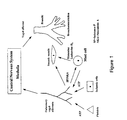
- the pulmonary-pulmonary reflex consists similarly of afferent and efferent traffics as well as central processing, however, the efferent traffic of this reflex reaches the lungs to cause bronchoconstriction.
- Figure 1 illustrates the pulmonary-pulmonary reflex. In both reflexes the efferent nerve terminals release acetylcholine which acts on target cells; i.e.
- the cardio-cardiac reflex reduces the work load of the heart and thereby reduces oxygen demand.
- the pulmonary-pulmonary reflex protects the lungs by limiting the amount of noxious material entering the lungs. In the same fashion that patients receive drugs to lower their body temperature, elevation of which is a protective mechanism against bacterial infection, there is a need under specific pathophysiologic conditions to modulate the cardio-cardiac and pulmonary-pulmonary reflexes.
- a patient's vagal reflexes may be modulated and the extent of the response observed.
- efferent nerve traffic is observed and compared with standard efferent nerve traffic associated with normal vagal function. Deviation from standard, i.e. , normal vagal response will serve to aid the clinician in determining the severity of a patients condition and indicate an appropriate treatment.
- a standard vagal response is that of a healthy human subjects. As would be appreciated by those skilled in the art, a standard response might be obtained by measuring vagal reflex of healthy patients in response to a selected mediator.
- vagus nerve has also been implicated in the pathophysiology of the acute phase of pulmonary embolism.
- the mechanism of enhanced vagal tone in this setting was not known.
- ATP released from activated platelets in the lungs activates P 2 -purinoceptors located on vagal afferent nerve terminals thereby triggering a pulmonary-pulmonary vagal reflex.
- This reflex causes bronchoconstriction and bronchial secretion.
- bronchoconstriction and mucous plug in bronchi commonly found in patients at the time of pulmonary embolism, contribute to the causes of death in this setting.
- vagal reflexes elicited during the acute phase of pulmonary embolism may be suppressed by an antagonist mediator administered to the patient.
- vagal tone may be modulated by the administration of one or more mediators.
- Mediators effective for purposes of this invention act upon P 2x -purinoceptors on afferent nerve terminals.
- Administration of one or more mediators is preferably by specifically targeted administration.
- localized catheters may be used to effectively administer the mediator to the desired target.
- an antagonist is administered when vagal tone is too high; and/or to suppress axonal reflexes.
- an antagonist of the P 2x - purinoceptor such as pyridoxalphosphate-6-azophenyl-2',4'-disulphonic acid may be administered to decrease vagal tone.
- mediators of the present invention may be administered in therapeutically effective amounts in accordance with methods appreciated by those skilled in the art.
- the mode of administration of mediators includes any means that produces contact of the active ingredient with the agent's site of action in the body of a mammal or in a body fluid or tissue. These modes of administration include but not limited to oral, topical, hypodermal, intravenous, intramuscular and intraparenteral methods of administration.
- the mediator may be administered by a catheter directed to the site of the afferent nerve terminals.
- the mediators may be administered singly or in combination with other compounds used in the invention, other pharmaceutical compounds are preferably administered with a pharmaceutically acceptable carrier selected on the basis of the selected route of administration and standard pharmaceutical practice.
- Administration of compounds to mammals, preferably humans, is preferably in therapeutically effective amounts.
- the dosage administered in any particular instance will depend upon factors such as the pharmacodynamic characteristics of the compound of the invention, its mode and route of administration; age, health, and weight of the recipient; nature and extent of symptoms; kind of concurrent treatment, frequency of treatment, and the effect desired.
- the daily dosage of a compound used in the invention will be in the range of from about 1 ⁇ g to about 100 mg per kg of body weight, preferable from about 10 ⁇ g to about 20 mg per kg per day.
- Pharmaceutical compositions may be administered in a single dosage, divided dosages or in sustained release. Persons of ordinary skill will be able to determine dosage forms and amounts with only routine experimentation based upon the considerations of this invention.
- Administration may be as a pharmaceutical composition parenterally in sterile liquid dosage forms or topically in a carrier.
- the mediators may be formulated into dosage forms according to standard practices in the field of pharmaceutical preparations. See Gennaro Alphonso, ed., Remington's Pharmaceutical Sciences, 18th Ed., (1990) Mack Publishing Company, Easton, Pennsylvania.
- mediators may be mixed with a suitable carrier or diluent such as water, a oil, saline solution, aqueous dextrose (glucose), and related sugar solutions, and a glycol such as propylene glycol or polyethylene glycol.
- a suitable carrier or diluent such as water, a oil, saline solution, aqueous dextrose (glucose), and related sugar solutions, and a glycol such as propylene glycol or polyethylene glycol.
- Solutions for parenteral administration contain preferably a water soluble salt of the compound.
- Stabilizing agents, antioxidizing agents and preservatives may also be added. Suitable sulfite, and ascorbic acid, citric acid and its salts, and sodium EDTA.
- Suitable preservatives include benzalkonium chloride, methyl- or propyl-paraben, and chlorbutanol.
- Systemic arterial blood pressure was determined with a Millar pressure transducer located in the descending aorta.
- a peripheral vein was cannulated for the administration of a physiological saline solution and maintenance doses of the anaesthetic.
- Catheters were introduced via the right femoral vein and left atrial appendage and positioned in the right atrium and left atrium, respectively, for the administration of test solutions.
- a Swan-Ganz catheter was introduced via a femoral vein and positioned in the distal portion of the right pulmonary artery. The chest was opened by a longitudinal sternotomy.
- the right cervical vagosympathetic trunk was exposed by a midcervical longitudinal section of the skin and careful dissection of neck muscles and connective tissues. The edges of the cut skin were elevated and secured to create a trough which was filled with warm (37°C) mineral oil. A section of the vagosympathetic trunk was placed on a small plate of black Perspex and fine branches were separated from the main bundle by careful dissection using microsurgical tools and a dissecting microscope (Model F212, Jenopik Jena, GmbH, Germany) .
- Extracellular neural action potentials were recorded using a custom-made bipolar electrode, which consisted of two platinum-iridium wires (1.25x0.0125cm), connected to a high-impedance first-stage differential amplifier (model AC8331, CWE Inc., Ardmore, PA, USA) via a shielded cable. The output of the first-stage amplifier was fed into a second-stage differential amplifier (model BMA-831/C, CWE, Inc.) Isolated fibres were laid on the pair of platinum wires. Vagal C fibres with chemosensitive endings have a sparse irregular discharge which is never associated with cardiac or respiratory cycles.
- Confirmation of fibre type was obtained by: first, monitoring the response to capsaicin (10 ⁇ g kg -1 , intra-right atrial bolus); second, monitoring the response to mechanical stimulation of the lungs using gentle probing with forceps as well as inflation of the lungs to 2-3 times the tidal volume; and third, determining the speed of conduction using a stimulating electrode positioned distal to the initial recording site.
- PTX ⁇ g kg -1 , given into a peripheral vein of conscious animals
- PTX was donated by Dr. E. Hewlett, University of Virginia, Charlottesville, VA, USA.
- Animals did not show any signs of distress during that period.
- These animals were subjected to glucose tolerance tests prior to and 48 h after PTX administration to confirm PTX intoxication.
- the test consisted of the application of a bolus of dextrose (1.1g kg -1 , I.V.) and subsequent withdrawal of blood samples (5ml, every 10 min). Glucose and insulin levels in the blood samples withdrawn during these tests were determined by the Diagnostic Laboratory at Cornell University, New York State College of Veterinary Medicine, Ithaca, NY, USA.
- Purine compounds (ATP, adenosine 5'-diphosphate (ADP), adenosine 5'-monophosphate (AMP) and adenosine; 3-6 ⁇ mol kg -1 and capsaicin (10 ⁇ g kg -1 ) were given as a rapid bolus into the right atrium (5 ml test solution +5 ml physiological saline flush) or the right pulmonary artery (1 ml test solution + 3 ml physiological saline flush). When given in the latter site, smaller doses were used, i.e. 0.5-3 ⁇ mol kg -1 for purine compounds and 1-5 ⁇ g kg -1 for capsaicin.
- ADP adenosine 5'-diphosphate
- AMP adenosine 5'-monophosphate
- capsaicin 10 ⁇ g kg -1
- ⁇ , ⁇ -Methylene ATP ( ⁇ , ⁇ -mATP) and ⁇ , ⁇ -methylene ATP ( ⁇ , ⁇ -mATP) were give as one low dose only (0.75 ⁇ mol kg -1 ) to avoid systemic side effects.
- PPADS selective P 2x -purinoceptor antagonist pyridoxal phosphate-6-azophenyl-2',4'-disulphonic acid
- mice were killed using sodium pentobarbitone (100 mg kg -1 , I.V.) plus 3M KCl (10ml, I.V.)
- Results are expressed as means ⁇ S.E.M.
- hexamethonium did not alter the transient reduction of blood pressure caused by ATP and the significantly larger time-to-peak effect of ATP on blood pressure versus that of capsaicin indicates that a non-neural factor, i.e. adenosine, the product of the enzymatic degradation of ATP, is mediating, to a large extent, the peripheral vasodilatory action of ATP.
- a non-neural factor i.e. adenosine
- the partially degradable analogue of ATP, ⁇ , ⁇ -mATP (0.75 ⁇ mol kg -1 ) did not elicit neural action potentials in any of the fibres studied (5 fibres in 5 dogs).
- Intra-right pulmonary administration of PPADS reduced the number of neural action potentials elicited by intra-right pulmonary administration of ATP in a time-dependent manner.
- PPADS did not affect the neural response to intra-right pulmonary-applied capsaicin.
- Examples 1-5 show that an intra-right atrial bolus 5 of ATP elicited a transient burst of action potentials in cervical vagal fibers; similar activity was elicited by capsaicin, given in the same mode; neural activity was elicited in otherwise quiescent slow-conducting fibers; adenosine, AMP, or ADP did not elicit this activity; ⁇ , ⁇ -mATP was much more potent than ATP while ⁇ , ⁇ -mATP was inactive; PPADS but not RB2 abolished this action of ATP; and neither PTX nor hexamethonium prevented this action of ATP.
- ATP stimulates pulmonary vagal afferent C fiber terminals by activating P 2x -purinoceptors.
- Example 1 The fact that adenosine, AMP and ADP, unlike ATP, did not elicit neural responses (Example 1) indicates that the action of ATP was mediated by a P2-purinoceptor. Furthermore, the structure-function cascade: ⁇ , ⁇ -mATP >>ATP >> ⁇ , ⁇ -mATP as shown in Example 5 strongly suggests that the P 2 -purinoceptor activated by ATP was that of the P 2x subtype. This is supported by the data obtained with the P 2 -purinoceptor antagonists.
- Example 5 Specifically, PPADS, a P 2x -purinoceptor antagonist, but not RB2, a P 2y -purinoceptor antagonist effectively blocked the action of ATP on the pulmonary vagal afferent C fiber nerve terminals.
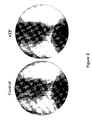
- ATP 8 ⁇ mol/kg was given as a rapid bolus into the right atrium of the anesthetized dog heart.
- a bronchogram was obtained eight seconds later using tantalum powder and digital fluoroscopy.
- Figure 2 is a bronchogram of a control (baseline conditions) (Panel A) and a bronchogram (Panel B) showing the pronounced bronchoconstriction induced by administration of ATP (Panel B).
- the effect of ATP was transient and all monitored parameters returned to baseline values within 120 seconds.
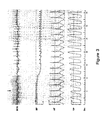
- ATP 8 ⁇ mol/kg was given as a rapid bolus into the right atrium of the anesthetized dog heart.
- Figure 3 shows the electrocardiogram (ECG) systemic arterial blood pressure (BP, mmHg) pulmonary air flow (AF, 1/min) and tracheal pressure (TP, mmH 2 O) of the dog following administration of ATP (marked by the arrow, sec-0).
- ECG electrocardiogram
- BP systemic arterial blood pressure
- AF pulmonary air flow
- TP tracheal pressure
- TP tracheal pressure
- % ⁇ SCL left main coronary arteries
- t p time peak effect
- Bilateral cervical vagotomy either abolished or markedly attenuated the effect of ATP; in the latter case there was no difference between the effects of ATP and adenosine and their t p was similar.
- the site-potency cascade for ATP was LM>>Cfx>LAD.
- ATP triggers a vagal reflex by stimulating vagal afferent nerve terminals in the left ventricle. This reflex mediates the negative chronotropic action of ATP and is independent of adenosine, the product of its enzymatic degradation.
Landscapes
- Health & Medical Sciences (AREA)
- Life Sciences & Earth Sciences (AREA)
- Pharmacology & Pharmacy (AREA)
- Veterinary Medicine (AREA)
- Public Health (AREA)
- General Health & Medical Sciences (AREA)
- Chemical & Material Sciences (AREA)
- Animal Behavior & Ethology (AREA)
- Medicinal Chemistry (AREA)
- Epidemiology (AREA)
- General Chemical & Material Sciences (AREA)
- Organic Chemistry (AREA)
- Nuclear Medicine, Radiotherapy & Molecular Imaging (AREA)
- Chemical Kinetics & Catalysis (AREA)
- Bioinformatics & Cheminformatics (AREA)
- Engineering & Computer Science (AREA)
- Pulmonology (AREA)
- Molecular Biology (AREA)
- Neurosurgery (AREA)
- Neurology (AREA)
- Biomedical Technology (AREA)
- Cardiology (AREA)
- Heart & Thoracic Surgery (AREA)
- Pharmaceuticals Containing Other Organic And Inorganic Compounds (AREA)
- Medicines That Contain Protein Lipid Enzymes And Other Medicines (AREA)
- Electrophonic Musical Instruments (AREA)
- Measuring And Recording Apparatus For Diagnosis (AREA)
- Electrotherapy Devices (AREA)
- Reverberation, Karaoke And Other Acoustics (AREA)
Applications Claiming Priority (6)
| Application Number | Priority Date | Filing Date | Title |
|---|---|---|---|
| US922895P | 1995-12-26 | 1995-12-26 | |
| US9228P | 1995-12-26 | ||
| US771518 | 1996-12-23 | ||
| US771581 | 1996-12-23 | ||
| US08/771,518 US5874420A (en) | 1995-12-26 | 1996-12-23 | Process for regulating vagal tone |
| PCT/US1996/020255 WO1997023218A1 (en) | 1995-12-26 | 1996-12-24 | A process for regulating vagal tone |
Publications (3)
| Publication Number | Publication Date |
|---|---|
| EP0906102A4 EP0906102A4 (enExample) | 1999-04-07 |
| EP0906102A1 EP0906102A1 (en) | 1999-04-07 |
| EP0906102B1 true EP0906102B1 (en) | 2004-06-16 |
Family
ID=26679226
Family Applications (1)
| Application Number | Title | Priority Date | Filing Date |
|---|---|---|---|
| EP96944882A Expired - Lifetime EP0906102B1 (en) | 1995-12-26 | 1996-12-24 | A process for regulating vagal tone |
Country Status (7)
| Country | Link |
|---|---|
| US (1) | US5874420A (enExample) |
| EP (1) | EP0906102B1 (enExample) |
| JP (1) | JP2002518983A (enExample) |
| AT (1) | ATE269091T1 (enExample) |
| AU (1) | AU710770B2 (enExample) |
| DE (1) | DE69632743T2 (enExample) |
| WO (1) | WO1997023218A1 (enExample) |
Families Citing this family (69)
| Publication number | Priority date | Publication date | Assignee | Title |
|---|---|---|---|---|
| US6449507B1 (en) * | 1996-04-30 | 2002-09-10 | Medtronic, Inc. | Method and system for nerve stimulation prior to and during a medical procedure |
| US7225019B2 (en) | 1996-04-30 | 2007-05-29 | Medtronic, Inc. | Method and system for nerve stimulation and cardiac sensing prior to and during a medical procedure |
| US7269457B2 (en) * | 1996-04-30 | 2007-09-11 | Medtronic, Inc. | Method and system for vagal nerve stimulation with multi-site cardiac pacing |
| US20040199209A1 (en) * | 2003-04-07 | 2004-10-07 | Hill Michael R.S. | Method and system for delivery of vasoactive drugs to the heart prior to and during a medical procedure |
| US6628987B1 (en) * | 2000-09-26 | 2003-09-30 | Medtronic, Inc. | Method and system for sensing cardiac contractions during vagal stimulation-induced cardiopalegia |
| US6532388B1 (en) | 1996-04-30 | 2003-03-11 | Medtronic, Inc. | Method and system for endotracheal/esophageal stimulation prior to and during a medical procedure |
| US6735471B2 (en) | 1996-04-30 | 2004-05-11 | Medtronic, Inc. | Method and system for endotracheal/esophageal stimulation prior to and during a medical procedure |
| US6904318B2 (en) * | 2000-09-26 | 2005-06-07 | Medtronic, Inc. | Method and system for monitoring and controlling systemic and pulmonary circulation during a medical procedure |
| US8036741B2 (en) | 1996-04-30 | 2011-10-11 | Medtronic, Inc. | Method and system for nerve stimulation and cardiac sensing prior to and during a medical procedure |
| US6372724B1 (en) | 1997-03-25 | 2002-04-16 | Duska Scientific Co. | Modulation of human mast cell activation |
| US6479523B1 (en) * | 1997-08-26 | 2002-11-12 | Emory University | Pharmacologic drug combination in vagal-induced asystole |
| US6043259A (en) * | 1998-07-09 | 2000-03-28 | Medicure Inc. | Treatment of cardiovascular and related pathologies |
| CA2366602A1 (en) | 1999-03-08 | 2000-09-14 | Medicure Inc. | Pyridoxal analogues for vitamin b-6 disorders |
| WO2001000273A1 (en) | 1999-06-25 | 2001-01-04 | Emory University | Devices and methods for vagus nerve stimulation |
| CA2376029A1 (en) * | 1999-07-13 | 2001-01-18 | Medicure Inc. | Use of pyridoxin derivatives for the treatment of diabetes and related complications |
| CA2383252A1 (en) * | 1999-08-24 | 2001-03-01 | Medicure International Inc. | Treatment of cardiovascular related pathologies |
| US7442689B2 (en) * | 2000-02-29 | 2008-10-28 | Medicure International Inc. | Cardioprotective phosphonates and malonates |
| PT1268498E (pt) | 2000-02-29 | 2005-07-29 | Medicure Int Inc | Fosfonatos cardioprotectores |
| JP2003528146A (ja) | 2000-03-28 | 2003-09-24 | メディキュア インターナショナル インコーポレイテッド | 脳血管疾患の治療 |
| US6548519B1 (en) | 2001-07-06 | 2003-04-15 | Medicure International Inc. | Pyridoxine and pyridoxal analogues: novel uses |
| US6897228B2 (en) * | 2000-07-07 | 2005-05-24 | Medicure International Inc. | Pyridoxine and pyridoxal analogues: new uses |
| EP1299358B1 (en) | 2000-07-07 | 2007-06-13 | Medicure International Inc. | Pyridoxine and pyridoxal analogues as cardiovascular therapeutics |
| US6487446B1 (en) * | 2000-09-26 | 2002-11-26 | Medtronic, Inc. | Method and system for spinal cord stimulation prior to and during a medical procedure |
| US7369890B2 (en) * | 2000-11-02 | 2008-05-06 | Cardiac Pacemakers, Inc. | Technique for discriminating between coordinated and uncoordinated cardiac rhythms |
| US6689117B2 (en) * | 2000-12-18 | 2004-02-10 | Cardiac Pacemakers, Inc. | Drug delivery system for implantable medical device |
| US20040121988A1 (en) * | 2001-03-28 | 2004-06-24 | Medicure International Inc. | Treatment of cerebrovascular disease |
| US6912420B2 (en) | 2001-04-10 | 2005-06-28 | Cardiac Pacemakers, Inc. | Cardiac rhythm management system for hypotension |
| US20050283197A1 (en) * | 2001-04-10 | 2005-12-22 | Daum Douglas R | Systems and methods for hypotension |
| US6907288B2 (en) | 2001-04-10 | 2005-06-14 | Cardiac Pacemakers, Inc. | Cardiac rhythm management system adjusting rate response factor for treating hypotension |
| US6748271B2 (en) | 2001-07-27 | 2004-06-08 | Cardiac Pacemakers, Inc. | Method and system for treatment of neurocardiogenic syncope |
| US7191000B2 (en) * | 2001-07-31 | 2007-03-13 | Cardiac Pacemakers, Inc. | Cardiac rhythm management system for edema |
| US7006868B2 (en) * | 2002-03-06 | 2006-02-28 | Pacesetter, Inc. | Method and apparatus for using a rest mode indicator to automatically adjust control parameters of an implantable cardiac stimulation device |
| US6968232B2 (en) * | 2002-03-06 | 2005-11-22 | Pacesetter, Inc. | Method and apparatus for using a rest mode indicator to automatically adjust control parameters of an implantable cardiac stimulation device |
| US20030232887A1 (en) * | 2002-04-10 | 2003-12-18 | Johnson Douglas Giles | Preparation and use of a stable formulation of allosteric effector compounds |
| JP4473491B2 (ja) * | 2002-05-28 | 2010-06-02 | 株式会社資生堂 | 毛穴縮小剤 |
| US7089055B2 (en) | 2002-06-28 | 2006-08-08 | Cardiac Pacemakers, Inc. | Method and apparatus for delivering pre-shock defibrillation therapy |
| US7226422B2 (en) | 2002-10-09 | 2007-06-05 | Cardiac Pacemakers, Inc. | Detection of congestion from monitoring patient response to a recumbent position |
| US7627373B2 (en) * | 2002-11-30 | 2009-12-01 | Cardiac Pacemakers, Inc. | Method and apparatus for cell and electrical therapy of living tissue |
| US20040158289A1 (en) * | 2002-11-30 | 2004-08-12 | Girouard Steven D. | Method and apparatus for cell and electrical therapy of living tissue |
| US20040161481A1 (en) * | 2002-12-18 | 2004-08-19 | Algorx | Administration of capsaicinoids |
| US20050019436A1 (en) * | 2002-12-18 | 2005-01-27 | Algorx | Injectable capsaicin |
| US20040186077A1 (en) * | 2003-03-17 | 2004-09-23 | Medicure International Inc. | Novel heteroaryl phosphonates as cardioprotective agents |
| EA008705B1 (ru) * | 2003-04-08 | 2007-06-29 | Алгоркс Фармасьютикалз, Инк. | Получение и очистка синтетического капсаицина |
| US20070259966A1 (en) * | 2004-04-22 | 2007-11-08 | Allos Therapeutics, Inc. | Coadministration of Radiation, Efaproxiral Sodium, and Supplemental Oxygen for the Treatment of Cancer |
| US20100099630A1 (en) * | 2004-04-29 | 2010-04-22 | Maccarter Dean J | Method for improving ventilatory efficiency |
| JPWO2005107804A1 (ja) * | 2004-05-06 | 2008-03-21 | 小野薬品工業株式会社 | 呼吸器疾患治療剤 |
| AU2005259735A1 (en) * | 2004-07-07 | 2006-01-12 | Medicure International Inc. | Combination therapies employing platelet aggregation drugs |
| CA2573565A1 (en) * | 2004-07-22 | 2006-02-02 | Duska Scientific Co. | Method of diagnosing, monitoring and treating pulmonary diseases |
| US20070060549A1 (en) * | 2004-08-10 | 2007-03-15 | Friesen Albert D | Combination therapies employing ace inhibitors and uses thereof for the treatment of diabetic disorders |
| US7387610B2 (en) * | 2004-08-19 | 2008-06-17 | Cardiac Pacemakers, Inc. | Thoracic impedance detection with blood resistivity compensation |
| CA2585165A1 (en) | 2004-10-28 | 2006-05-18 | Medicure International Inc. | Dual antiplatelet/anticoagulant pyridoxine analogs |
| US20060094749A1 (en) * | 2004-10-28 | 2006-05-04 | Medicure International Inc. | Substituted pyridoxines as anti-platelet agents |
| US7459468B2 (en) * | 2004-10-28 | 2008-12-02 | Medicure International, Inc. | Aryl sulfonic pyridoxines as antiplatelet agents |
| US7981065B2 (en) | 2004-12-20 | 2011-07-19 | Cardiac Pacemakers, Inc. | Lead electrode incorporating extracellular matrix |
| US8060219B2 (en) * | 2004-12-20 | 2011-11-15 | Cardiac Pacemakers, Inc. | Epicardial patch including isolated extracellular matrix with pacing electrodes |
| US7603170B2 (en) * | 2005-04-26 | 2009-10-13 | Cardiac Pacemakers, Inc. | Calibration of impedance monitoring of respiratory volumes using thoracic D.C. impedance |
| US7907997B2 (en) * | 2005-05-11 | 2011-03-15 | Cardiac Pacemakers, Inc. | Enhancements to the detection of pulmonary edema when using transthoracic impedance |
| US7340296B2 (en) | 2005-05-18 | 2008-03-04 | Cardiac Pacemakers, Inc. | Detection of pleural effusion using transthoracic impedance |
| MX2008002733A (es) * | 2005-09-01 | 2008-03-26 | Hoffmann La Roche | Diaminopirimidinas como moduladores p2x3 y p2x2/3. |
| AU2006317440A1 (en) * | 2005-11-28 | 2007-05-31 | Medicure International Inc. | Selected dosage for the treatment of cardiovascular and related pathologies |
| US8343049B2 (en) | 2006-08-24 | 2013-01-01 | Cardiac Pacemakers, Inc. | Physiological response to posture change |
| US8639327B2 (en) | 2010-04-29 | 2014-01-28 | Medtronic, Inc. | Nerve signal differentiation in cardiac therapy |
| US8620425B2 (en) | 2010-04-29 | 2013-12-31 | Medtronic, Inc. | Nerve signal differentiation in cardiac therapy |
| US8423134B2 (en) | 2010-04-29 | 2013-04-16 | Medtronic, Inc. | Therapy using perturbation and effect of physiological systems |
| US8718763B2 (en) | 2011-01-19 | 2014-05-06 | Medtronic, Inc. | Vagal stimulation |
| US8706223B2 (en) | 2011-01-19 | 2014-04-22 | Medtronic, Inc. | Preventative vagal stimulation |
| US8781582B2 (en) | 2011-01-19 | 2014-07-15 | Medtronic, Inc. | Vagal stimulation |
| US8781583B2 (en) | 2011-01-19 | 2014-07-15 | Medtronic, Inc. | Vagal stimulation |
| US8725259B2 (en) | 2011-01-19 | 2014-05-13 | Medtronic, Inc. | Vagal stimulation |
Family Cites Families (4)
| Publication number | Priority date | Publication date | Assignee | Title |
|---|---|---|---|---|
| US4673563A (en) * | 1980-10-14 | 1987-06-16 | The University Of Virginia Alumni Patents Foundation | Adenosine in the treatment of supraventricular tachycardia |
| US5049372A (en) * | 1982-07-13 | 1991-09-17 | Eliezer Rapaport | Anticancer activities in a host by increasing blood and plasma adenosine 5'-triphosphate (ATP) levels |
| JP2783880B2 (ja) * | 1989-11-24 | 1998-08-06 | 富士レビオ株式会社 | 心臓病治療剤 |
| US5504090A (en) * | 1994-03-30 | 1996-04-02 | Trustees Of The University Of Pennsylvania | Compositions and methods for the prevention and treatment of ischemia-reperfusion organ injury |
-
1996
- 1996-12-23 US US08/771,518 patent/US5874420A/en not_active Expired - Lifetime
- 1996-12-24 AT AT96944882T patent/ATE269091T1/de not_active IP Right Cessation
- 1996-12-24 JP JP52381197A patent/JP2002518983A/ja active Pending
- 1996-12-24 DE DE69632743T patent/DE69632743T2/de not_active Expired - Lifetime
- 1996-12-24 EP EP96944882A patent/EP0906102B1/en not_active Expired - Lifetime
- 1996-12-24 WO PCT/US1996/020255 patent/WO1997023218A1/en not_active Ceased
- 1996-12-24 AU AU13383/97A patent/AU710770B2/en not_active Ceased
Also Published As
| Publication number | Publication date |
|---|---|
| JP2002518983A (ja) | 2002-06-25 |
| EP0906102A4 (enExample) | 1999-04-07 |
| DE69632743D1 (de) | 2004-07-22 |
| AU710770B2 (en) | 1999-09-30 |
| ATE269091T1 (de) | 2004-07-15 |
| WO1997023218A1 (en) | 1997-07-03 |
| US5874420A (en) | 1999-02-23 |
| DE69632743T2 (de) | 2005-07-07 |
| EP0906102A1 (en) | 1999-04-07 |
| AU1338397A (en) | 1997-07-17 |
Similar Documents
| Publication | Publication Date | Title |
|---|---|---|
| EP0906102B1 (en) | A process for regulating vagal tone | |
| JP3836128B2 (ja) | プリン組成物および投与方法 | |
| US6004945A (en) | Use of adenosine compounds to relieve pain | |
| Aubier et al. | Diaphragmatic contractility enhanced by aminophylline: role of extracellular calcium | |
| Pelleg et al. | Mechanism of action of ATP on canine pulmonary vagal C fibre nerve terminals. | |
| US5679649A (en) | Use of adenosine compounds for autonomic nervous system attenuation | |
| EP0689405A1 (en) | Methods for protecting tissues and organs from ischemic damage | |
| US6180616B1 (en) | Use of purine receptor agonists to alleviate or normalize physiopathologically excited sensory nerve function | |
| Lee et al. | Electromyographic and mechanomyographic characteristics of neuromuscular block by magnesium sulphate in the pig. | |
| EP0711134A1 (en) | Medicinal for protection from neurological damage | |
| Rattan et al. | Evidence against purinergic inhibitory nerves in the vagal pathway to the opossum lower esophageal sphincter | |
| CA2239780C (en) | A process for regulating vagal tone | |
| WO2014134419A1 (en) | Use of ikach blockers for the treatment of cardiac diseases | |
| US6924272B2 (en) | Medicinal composition for diabetic neuropathy | |
| Wilder et al. | Activation of spike and wave discharge in patients with generalized seizures | |
| Anand | Low activation threshold of juxtapulmonary capillary (J) receptors of the lung | |
| Ravi et al. | Role of vagal lung C-fibres in the cardiorespiratory effects of capsaicin in monkeys | |
| JP2000026295A (ja) | 虚血再潅流損傷の治療薬ならび不整脈および心筋梗塞による心不全を含む細胞機能障害の治療薬 | |
| Hiasa et al. | Three elderly cases with Brugada-type electrocardiographic pattern unmasked by pilsicainide at the toxic level | |
| WO2019131308A1 (ja) | 9‐β‐D‐アラビノフラノシルヒポキサンチンによる不整脈治療 | |
| Rajan et al. | Neuroanesthesia and Monitoring for Cranial and Complex Spinal Surgery | |
| RU2493836C1 (ru) | Фармацевтическая комбинация для профилактики и лечения хронических нарушений вегетативной регуляции ритма сердца и способ профилактики и лечения с помощью фармацевтической комбинации | |
| Katz | Pharmacological effects of prilocaine | |
| Toung et al. | Enhanced recovery of brain electrical activity by adenosine 3 prime, 5 prime-cyclic monophosphate following complete global cerebral ischemia in dogs | |
| RU2248208C2 (ru) | Пуринрибозиды в качестве антиаритмических средств |
Legal Events
| Date | Code | Title | Description |
|---|---|---|---|
| PUAI | Public reference made under article 153(3) epc to a published international application that has entered the european phase |
Free format text: ORIGINAL CODE: 0009012 |
|
| A4 | Supplementary search report drawn up and despatched |
Effective date: 19990115 |
|
| AK | Designated contracting states |
Kind code of ref document: A4 Designated state(s): AT BE CH DE DK ES FI FR GB GR IE IT LI LU MC NL PT SE Kind code of ref document: A1 Designated state(s): AT BE CH DE DK ES FI FR GB GR IE IT LI LU MC NL PT SE |
|
| 17P | Request for examination filed |
Effective date: 19980923 |
|
| 17Q | First examination report despatched |
Effective date: 20010529 |
|
| RAP1 | Party data changed (applicant data changed or rights of an application transferred) |
Owner name: DUSKA SCIENTIFIC CO |
|
| RIN1 | Information on inventor provided before grant (corrected) |
Inventor name: DUSKA SCIENTIFIC CO |
|
| RIC1 | Information provided on ipc code assigned before grant |
Ipc: 7A 61K 31/00 B Ipc: 7A 61P 11/00 B Ipc: 7A 61P 11/06 B Ipc: 7A 61P 9/06 B Ipc: 7A 61K 31/661 A |
|
| GRAP | Despatch of communication of intention to grant a patent |
Free format text: ORIGINAL CODE: EPIDOSNIGR1 |
|
| RIN1 | Information on inventor provided before grant (corrected) |
Inventor name: PELLEG, AMIR |
|
| GRAS | Grant fee paid |
Free format text: ORIGINAL CODE: EPIDOSNIGR3 |
|
| GRAA | (expected) grant |
Free format text: ORIGINAL CODE: 0009210 |
|
| AK | Designated contracting states |
Kind code of ref document: B1 Designated state(s): AT BE CH DE DK ES FI FR GB GR IE IT LI LU MC NL PT SE |
|
| PG25 | Lapsed in a contracting state [announced via postgrant information from national office to epo] |
Ref country code: FI Free format text: LAPSE BECAUSE OF FAILURE TO SUBMIT A TRANSLATION OF THE DESCRIPTION OR TO PAY THE FEE WITHIN THE PRESCRIBED TIME-LIMIT Effective date: 20040616 Ref country code: AT Free format text: LAPSE BECAUSE OF FAILURE TO SUBMIT A TRANSLATION OF THE DESCRIPTION OR TO PAY THE FEE WITHIN THE PRESCRIBED TIME-LIMIT Effective date: 20040616 |
|
| REG | Reference to a national code |
Ref country code: GB Ref legal event code: FG4D |
|
| REG | Reference to a national code |
Ref country code: CH Ref legal event code: EP |
|
| REF | Corresponds to: |
Ref document number: 69632743 Country of ref document: DE Date of ref document: 20040722 Kind code of ref document: P |
|
| REG | Reference to a national code |
Ref country code: IE Ref legal event code: FG4D |
|
| PG25 | Lapsed in a contracting state [announced via postgrant information from national office to epo] |
Ref country code: SE Free format text: LAPSE BECAUSE OF FAILURE TO SUBMIT A TRANSLATION OF THE DESCRIPTION OR TO PAY THE FEE WITHIN THE PRESCRIBED TIME-LIMIT Effective date: 20040916 Ref country code: GR Free format text: LAPSE BECAUSE OF FAILURE TO SUBMIT A TRANSLATION OF THE DESCRIPTION OR TO PAY THE FEE WITHIN THE PRESCRIBED TIME-LIMIT Effective date: 20040916 Ref country code: DK Free format text: LAPSE BECAUSE OF FAILURE TO SUBMIT A TRANSLATION OF THE DESCRIPTION OR TO PAY THE FEE WITHIN THE PRESCRIBED TIME-LIMIT Effective date: 20040916 |
|
| PG25 | Lapsed in a contracting state [announced via postgrant information from national office to epo] |
Ref country code: ES Free format text: LAPSE BECAUSE OF FAILURE TO SUBMIT A TRANSLATION OF THE DESCRIPTION OR TO PAY THE FEE WITHIN THE PRESCRIBED TIME-LIMIT Effective date: 20040927 |
|
| REG | Reference to a national code |
Ref country code: CH Ref legal event code: NV Representative=s name: KIRKER & CIE SA |
|
| PG25 | Lapsed in a contracting state [announced via postgrant information from national office to epo] |
Ref country code: MC Free format text: LAPSE BECAUSE OF NON-PAYMENT OF DUE FEES Effective date: 20041231 |
|
| ET | Fr: translation filed | ||
| PLBE | No opposition filed within time limit |
Free format text: ORIGINAL CODE: 0009261 |
|
| STAA | Information on the status of an ep patent application or granted ep patent |
Free format text: STATUS: NO OPPOSITION FILED WITHIN TIME LIMIT |
|
| 26N | No opposition filed |
Effective date: 20050317 |
|
| PG25 | Lapsed in a contracting state [announced via postgrant information from national office to epo] |
Ref country code: PT Free format text: LAPSE BECAUSE OF NON-PAYMENT OF DUE FEES Effective date: 20041116 |
|
| PGFP | Annual fee paid to national office [announced via postgrant information from national office to epo] |
Ref country code: IE Payment date: 20101227 Year of fee payment: 15 |
|
| PGFP | Annual fee paid to national office [announced via postgrant information from national office to epo] |
Ref country code: LU Payment date: 20110103 Year of fee payment: 15 Ref country code: CH Payment date: 20101227 Year of fee payment: 15 |
|
| PGFP | Annual fee paid to national office [announced via postgrant information from national office to epo] |
Ref country code: NL Payment date: 20101224 Year of fee payment: 15 Ref country code: GB Payment date: 20101229 Year of fee payment: 15 |
|
| PGFP | Annual fee paid to national office [announced via postgrant information from national office to epo] |
Ref country code: IT Payment date: 20110127 Year of fee payment: 15 Ref country code: FR Payment date: 20110301 Year of fee payment: 15 Ref country code: DE Payment date: 20101229 Year of fee payment: 15 |
|
| PGFP | Annual fee paid to national office [announced via postgrant information from national office to epo] |
Ref country code: BE Payment date: 20101224 Year of fee payment: 15 |
|
| BERE | Be: lapsed |
Owner name: *DUSKA SCIENTIFIC CO. Effective date: 20111231 |
|
| REG | Reference to a national code |
Ref country code: NL Ref legal event code: V1 Effective date: 20120701 |
|
| REG | Reference to a national code |
Ref country code: CH Ref legal event code: PL |
|
| GBPC | Gb: european patent ceased through non-payment of renewal fee |
Effective date: 20111224 |
|
| REG | Reference to a national code |
Ref country code: FR Ref legal event code: ST Effective date: 20120831 |
|
| REG | Reference to a national code |
Ref country code: IE Ref legal event code: MM4A |
|
| REG | Reference to a national code |
Ref country code: DE Ref legal event code: R119 Ref document number: 69632743 Country of ref document: DE Effective date: 20120703 |
|
| PG25 | Lapsed in a contracting state [announced via postgrant information from national office to epo] |
Ref country code: GB Free format text: LAPSE BECAUSE OF NON-PAYMENT OF DUE FEES Effective date: 20111224 Ref country code: BE Free format text: LAPSE BECAUSE OF NON-PAYMENT OF DUE FEES Effective date: 20111231 Ref country code: DE Free format text: LAPSE BECAUSE OF NON-PAYMENT OF DUE FEES Effective date: 20120703 Ref country code: CH Free format text: LAPSE BECAUSE OF NON-PAYMENT OF DUE FEES Effective date: 20111231 Ref country code: LI Free format text: LAPSE BECAUSE OF NON-PAYMENT OF DUE FEES Effective date: 20111231 Ref country code: IE Free format text: LAPSE BECAUSE OF NON-PAYMENT OF DUE FEES Effective date: 20111224 |
|
| PG25 | Lapsed in a contracting state [announced via postgrant information from national office to epo] |
Ref country code: IT Free format text: LAPSE BECAUSE OF NON-PAYMENT OF DUE FEES Effective date: 20111224 |
|
| PG25 | Lapsed in a contracting state [announced via postgrant information from national office to epo] |
Ref country code: NL Free format text: LAPSE BECAUSE OF NON-PAYMENT OF DUE FEES Effective date: 20120701 |
|
| PG25 | Lapsed in a contracting state [announced via postgrant information from national office to epo] |
Ref country code: FR Free format text: LAPSE BECAUSE OF NON-PAYMENT OF DUE FEES Effective date: 20120102 |
|
| PG25 | Lapsed in a contracting state [announced via postgrant information from national office to epo] |
Ref country code: LU Free format text: LAPSE BECAUSE OF NON-PAYMENT OF DUE FEES Effective date: 20111224 |