EP0905953A2 - Telefonsystem mit Streifenkodeleser zur automatischen Nummernwahl und Informationsübertragung - Google Patents
Telefonsystem mit Streifenkodeleser zur automatischen Nummernwahl und Informationsübertragung Download PDFInfo
- Publication number
- EP0905953A2 EP0905953A2 EP98307511A EP98307511A EP0905953A2 EP 0905953 A2 EP0905953 A2 EP 0905953A2 EP 98307511 A EP98307511 A EP 98307511A EP 98307511 A EP98307511 A EP 98307511A EP 0905953 A2 EP0905953 A2 EP 0905953A2
- Authority
- EP
- European Patent Office
- Prior art keywords
- bar code
- telephone
- characters
- telephonic
- code reader
- Prior art date
- Legal status (The legal status is an assumption and is not a legal conclusion. Google has not performed a legal analysis and makes no representation as to the accuracy of the status listed.)
- Withdrawn
Links
Images


Classifications
-
- H—ELECTRICITY
- H04—ELECTRIC COMMUNICATION TECHNIQUE
- H04M—TELEPHONIC COMMUNICATION
- H04M1/00—Substation equipment, e.g. for use by subscribers
- H04M1/26—Devices for calling a subscriber
- H04M1/27—Devices whereby a plurality of signals may be stored simultaneously
- H04M1/274—Devices whereby a plurality of signals may be stored simultaneously with provision for storing more than one subscriber number at a time, e.g. using toothed disc
- H04M1/2745—Devices whereby a plurality of signals may be stored simultaneously with provision for storing more than one subscriber number at a time, e.g. using toothed disc using static electronic memories, e.g. chips
- H04M1/2753—Devices whereby a plurality of signals may be stored simultaneously with provision for storing more than one subscriber number at a time, e.g. using toothed disc using static electronic memories, e.g. chips providing data content
- H04M1/2755—Devices whereby a plurality of signals may be stored simultaneously with provision for storing more than one subscriber number at a time, e.g. using toothed disc using static electronic memories, e.g. chips providing data content by optical scanning
Definitions
- Another problem associated with a user dialing a non-memorized telephone number is that there are some users who find it difficult to dial a telephone number or are unable to use a standard telephone book. For instance, handicapped persons may find it difficult to dial a telephone number. Also, blind persons or those persons visually impaired may find it difficult to dial a telephone number or to use a standard telephone book to look up a non-memorized telephone number. Additionally, there are many persons who cannot easily read telephone numbers such as small children and the elderly. Accordingly, it is often impossible for a small child to dial a non-memorized telephone number in an emergency situation.
- a telephone system implementing a telephone bar code reader for dialing and information transmission over a telephone network.
- a telephone system user points the bar code scanner at a bar code and activates a triggering device, such as pressing and releasing a button or toggle, to trigger execution including: scanning a bar code with a bar code reader producing electrical pulses representative of the bar code; decoding the electrical pulses into characters of a telephonic character set; and generating appropriate Dual-Tone Multi-Frequency (DTMF) pulses representative of the characters of the telephonic character set over the telephone network.
- DTMF Dual-Tone Multi-Frequency
- Applications of the present invention include shortening the time required to dial a non-memorized telephone number in a telephone system, assisting those persons unable to use an existing standard telephone book, providing an easier and more secure means of transmitting credit card information and other confidential information over the telephone, and allowing companies to offer new and improved services to their customers.
- the present invention describes a bar code reader implementation for information transmission over a telephone network.
- the major components of the present invention are a bar code scanner, controller ROM code to interpret the bar code reader output and generate DTMF pulses, and a means of triggering execution of the present invention.
- the present invention is easily implemented within an existing telephone frame of a new telephone or fax machine.
- An interface is added to process the input from the bar code reader to the controller.
- the bar code scanner could be integrated into the handset or be separate from the headset, such as a wand as is well known in the art.
- Code is integrated into the telephone controller's ROM to interpret the bar code reader input and generate appropriate Dual-Tone Multi-Frequency (DTMF) pulses.
- DTMF Dual-Tone Multi-Frequency
- the present invention is compatible with any existing telephone or fax system.
- the added hardware would include a bar code reader and controller ROM code to interpret the bar code reader output and generate appropriate DTMF pulses
- a standard telephone system keypad includes the zero through nine digits and the pound and asterisk symbols which are used to connect and transmit information over a telephone network.
- the character set associated with standard telephone systems must therefore include the zero through nine digits and the pound and asterisk symbols.
- Other symbols that are desirable to be used by the present invention include a pause symbol to force a pause between transmission of information and a data type used as a prefix to indicate if the encoded number must be interpreted as a phone number or rather as plain data, such as a credit card number, which should be transmitted as is without further processing.
- Information that is transmitted over a telephone network using a telephone keypad may be comprised of any combination of keypad presses and is therefore generally variable in length. For instance, a user entering a local telephone number for dialing purposes may utilize only seven digits, a user entering a remote telephone number for dialing purposes may utilize ten or more digits, and a user entering telephone information not used for dialing purposes may utilize any number of keypad combinations.
- a number of standards are well known in the current art for encoding numbers into bar codes that could be used in the present invention to encode variable length telephone information.
- a new standard could be implemented to take advantage of the limited character set associated with standard telephone systems, the zero through nine digits and the plus and asterisk symbols, for compactness and/or reliability.
- a wand scanner is the least expensive scanner, but requires the user to move the wand across the bar code. It is thus the least practical from a user perspective.
- a CCD scanner is more expensive but very efficient without requiring movements from the user.
- the CCD scanner is a point-and-shoot scanner, but the width of the bar code is limited to the scanner aperture.
- a laser scanner is the most expensive and most efficient scanner. It has moving parts and is easier to break, but can read a bar code even if the bar code is slanted or on a tilted axis relative to the laser scanner.
- the present invention may be operatively configured with any scanner ;
- FIG. 2 a block diagram for implementing a telephone bar code reader for dialing a telephone number in a telephone system 20 according to the present invention is illustrated.
- an interface 22 As illustrated in Blocks 22 through 26, an interface 22, a bar code reader 24, and a triggering device 26 are added to the telephone system known in the prior art shown in Figure 1.
- Interface 22 is used to interconnect bar code reader 24 to controller 16.
- Interface 22 processes the input from the bar code reader 24, and may be either internal or external to controller 16.
- Trigger device 26 may be any device, such as a button or a toggle, that is capable of triggering execution that includes: scanning a bar code with a bar code reader 24 producing electrical pulses representative of the bar code; decoding the electrical pulses into characters of a telephonic character set; and generating DTMF pulses representative of the characters of the telephonic character set over the telephone network.
- a flow chart of a mode of operation 40 implementing a telephone bar code reader for transmitting telephone information over a telephone network according to the present invention is illustrated.
- the telephone system user unhooks the handset.
- the telephone system user points the scanner at a bar code 44 and activates a triggering device 46, such as pressing and releasing a button or toggle, to trigger execution of Blocks 48 through 62.
- the bar code reader scans the bar code information.
- code in the controller's ROM is executed to interpret the bar code reader output and generate appropriate Dual-Tone Multi-Frequency (DTMF) pulses.
- DTMF Dual-Tone Multi-Frequency
- the bar code reader sends successive electrical impulses characteristic of the bar code which is translated by the controller's ROM code into a number or symbol using an encoding standard that is well known in the art.
- the telephone information is then transmitted over the telephone network.
- the telephone system user is signaled, either visually or audibly, that Blocks 42 through 50 were completed successfully. Successful completion indicates that the bar code reader properly scanned the bar code; the bar code reader properly scanned the bar code producing electrical pulses representative of the bar code; the electrical pulses were decoded into characters of a telephonic character set; and appropriate DTMF pulses representative of the characters of the telephonic character set were generated over the telephone network.
- Decision Block 62 if the telephone system user does not receive a visual or audible signal indicating a successful transmission, then Blocks 44 through 62 are repeated. Otherwise, the bar code information was successfully transmitted and the operation ends.
- FIG. 4 a flow chart of a mode of operation 70 implementing a telephone bar code reader for transmitting telephone information over a telephone network according to an alternate embodiment of the present invention is illustrated.
- the telephone system user points the scanner at a bar code which automatically triggers execution as previously described in Figure 3.
- Triggering execution of the present invention as described in Block 72 includes Blocks 48 and 50. This may be accomplished by using a button or toggle with a lock position such that the scanner transmits continuously when the button or toggle is locked in the transmit position or by removing the button or toggle entirely such that the scanner always transmits continuously.
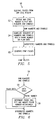
- a flow chart 50 illustrating the translation of electrical pulses from a bar code reader into DTMF pulses over a telephone network according to the present invention is illustrated.
- the electrical pulses from the bar code reader is decoded into characters of a telephonic character set containing numbers and symbols.
- the sequence of numbers and symbols are interpreted into either a telephone number or plain data.
- DTMF pulses consisting of numbers, symbols, and pauses, are generated and transmitted over the telephone network as illustrated in Block 60.
- a flow chart illustrating data type handling 54 according to the present invention is illustrated.
- the data type of the number and symbols is determined based on the content. As previously described, a data type symbol is desirable to be used by the present invention as a prefix to indicate if the encoded number must be interpreted as a phone number or rather as plain data. If a data type symbol is encountered then the data type is determined as described in Decision Block 56. If the data type is plain data, then execution continues with no translation. Plain data is defined as telephone data that is not used for dialing purposes, such as credit card information, confidential information, or any other telephone data that is transmitted over the telephone after a telephone connection is established. If the data type is a phone number, then execution continues at Block 58.
- the telephone number may be translated, as required, such as adding a prefix.
- Examples of translation include: prefixing the telephone number with a 1 for long distance calls; removing the area code if the telephone is a local call; prefixing the telephone number with international information; prefixing the telephone call with billing information or a telephone carrier number; and prefixing the telephone call with an outside access number, such as 9, for large internal phone systems.
- the data required for translation could be coded into the telephone controller's ROM by the user.
- An application of this invention of automated telephone dialing is to add telephone bar code information to a business listing in the yellow pages or business white pages of a telephone book for a fee.
- a company or contractor with a telephone bar code printed in the yellow pages or business white pages of a telephone book would be at an advantage over its competitors if their number could be dialed more easily.
- telephone bar code information could be added to business cards making a rolodex even more convenient. It could also be added to any printed advertisement such as a leaflet, magnet, or newspaper.
- the present invention is particularly useful to assist those persons who find it difficult to dial a telephone number or are unable to use a standard telephone book. For instance, the present invention would assist a handicapped person whom otherwise would find it difficult to dial a telephone number. The present invention would also allow a blind person or a person visually impaired to dial a non-memorized telephone number using a telephone book that contains telephone bar code information. The present invention would also be useful for those persons who cannot easily read telephone number such as small children. This would allow small children to dial non-memorized telephone numbers in an emergency situation.
- Telephone credit card transactions could be automated using the present invention by adding bar code information to the credit card. Automating credit card transactions would save a telephone system user time, eliminate manual entry, and thus reduce the number of errors associated with manual entry. Telephone companies also benefit from the time saving advantage, because shorter telephone calls mean that their equipment can serve more calls over a given period of time, which reduces the cost of their telephone equipment investment.
- confidential information such as identification or authentication information is generally manually entered by the user using a telephone keypad. Confidential information or passwords could be encoded into a bar code and transmitted more quickly over the telephone for authentication.
- the present invention allows companies to offer new and improved services to their customers. For instance, a customer could use a bar code printed on a bill to determine if the bill was paid. Using the present invention, a bar code printed on a plane ticket could be used to automate confirmation on international flights. In the field of warehouse management, cordless or radio frequency bar code readers are commonly used to manage inventory. The present invention uses a standard telephone system and may be used to replace cordless or radio frequency bar code readers.
Landscapes
- Engineering & Computer Science (AREA)
- Signal Processing (AREA)
- Telephone Function (AREA)
- Telephonic Communication Services (AREA)
Applications Claiming Priority (2)
| Application Number | Priority Date | Filing Date | Title |
|---|---|---|---|
| US94027197A | 1997-09-29 | 1997-09-29 | |
| US940271 | 1997-09-29 |
Publications (2)
| Publication Number | Publication Date |
|---|---|
| EP0905953A2 true EP0905953A2 (de) | 1999-03-31 |
| EP0905953A3 EP0905953A3 (de) | 2000-09-06 |
Family
ID=25474536
Family Applications (1)
| Application Number | Title | Priority Date | Filing Date |
|---|---|---|---|
| EP98307511A Withdrawn EP0905953A3 (de) | 1997-09-29 | 1998-09-16 | Telefonsystem mit Streifenkodeleser zur automatischen Nummernwahl und Informationsübertragung |
Country Status (2)
| Country | Link |
|---|---|
| EP (1) | EP0905953A3 (de) |
| JP (1) | JPH11164001A (de) |
Cited By (3)
| Publication number | Priority date | Publication date | Assignee | Title |
|---|---|---|---|---|
| GB2359956A (en) * | 2000-03-03 | 2001-09-05 | Michael Andrew George | Easy dial telephone |
| FR2815438A1 (fr) * | 2000-10-13 | 2002-04-19 | Mobile Service Interactif | Procede et dispositif pour transmettre une information relative a un produit de consommation |
| US12341761B2 (en) | 2022-10-27 | 2025-06-24 | Zohaib Khan Khattak | Proximity-based communication systems and methods |
Family Cites Families (4)
| Publication number | Priority date | Publication date | Assignee | Title |
|---|---|---|---|---|
| US4937853A (en) * | 1989-05-03 | 1990-06-26 | Agt International, Inc. | Lottery agent data communication/telephone line interface |
| US4975948A (en) * | 1989-10-13 | 1990-12-04 | Andresen Dennis R | Rapid dialing method for telecommunications |
| US5144654A (en) * | 1991-03-22 | 1992-09-01 | Kelley James T | Automatic telephone dialer system with printed storage |
| WO1992019064A1 (en) * | 1991-04-16 | 1992-10-29 | John Barrus | Method and apparatus for the ordering from remote locations |
-
1998
- 1998-09-16 EP EP98307511A patent/EP0905953A3/de not_active Withdrawn
- 1998-09-29 JP JP27413798A patent/JPH11164001A/ja active Pending
Cited By (3)
| Publication number | Priority date | Publication date | Assignee | Title |
|---|---|---|---|---|
| GB2359956A (en) * | 2000-03-03 | 2001-09-05 | Michael Andrew George | Easy dial telephone |
| FR2815438A1 (fr) * | 2000-10-13 | 2002-04-19 | Mobile Service Interactif | Procede et dispositif pour transmettre une information relative a un produit de consommation |
| US12341761B2 (en) | 2022-10-27 | 2025-06-24 | Zohaib Khan Khattak | Proximity-based communication systems and methods |
Also Published As
| Publication number | Publication date |
|---|---|
| EP0905953A3 (de) | 2000-09-06 |
| JPH11164001A (ja) | 1999-06-18 |
Similar Documents
| Publication | Publication Date | Title |
|---|---|---|
| US4975948A (en) | Rapid dialing method for telecommunications | |
| EP0396253A1 (de) | Datenübertragungssystem zum Lesen und Umwandeln von strichkodierter Information in Standardtelefonsignale | |
| US5999600A (en) | Facsimile mail system and method for controlling the same | |
| EP0905953A2 (de) | Telefonsystem mit Streifenkodeleser zur automatischen Nummernwahl und Informationsübertragung | |
| US20060023852A1 (en) | Telephone to telephone data passing system | |
| JPH05167745A (ja) | ファクシミリの発信源登録方法及び装置 | |
| JPS62264752A (ja) | 電話機の発信方式 | |
| JPH01276862A (ja) | 無線バーコードリーダ通信方式 | |
| EP0458791A1 (de) | Fernsprechbezahlsystem. | |
| JPH0497465A (ja) | 複合端末装置 | |
| JP2837456B2 (ja) | ファクシミリ装置 | |
| JPH01200755A (ja) | 自動ダイヤリング装置 | |
| JPH01212061A (ja) | ポケットベル用文字情報送信装置 | |
| JPH02274159A (ja) | ファクシミリ装置 | |
| JPH06105003A (ja) | バーコードリーダを備えた電話機 | |
| JP2637507B2 (ja) | 通信装置 | |
| KR100338067B1 (ko) | 팩시밀리의 송/수신 모드 변경방법 | |
| JPH02244978A (ja) | ファクシミリ装置 | |
| KR950016142A (ko) | 수신자 전화번호 자동 다이얼링 카드와 이 카드를 이용한 자동 발신 전화기 및 자동발신 제어방법 | |
| JPH06133080A (ja) | 電話通信装置 | |
| JPH0766960A (ja) | 送受信システム並びにこのシステムに用いるファクシミリ装置及び前記送受信システムの操作方法 | |
| EP0544016A1 (de) | Drucker für identifizierung-kennzeichnungen | |
| JPH0541731A (ja) | 光学読み取り機能付電話端末 | |
| JPH057285A (ja) | フアクシミリ送信装置 | |
| JPS63144660A (ja) | フアクシミリ着呼拒否方式 |
Legal Events
| Date | Code | Title | Description |
|---|---|---|---|
| PUAI | Public reference made under article 153(3) epc to a published international application that has entered the european phase |
Free format text: ORIGINAL CODE: 0009012 |
|
| AK | Designated contracting states |
Kind code of ref document: A2 Designated state(s): AT BE CH CY DE DK ES FI FR GB GR IE IT LI LU MC NL PT SE |
|
| AX | Request for extension of the european patent |
Free format text: AL;LT;LV;MK;RO;SI |
|
| PUAL | Search report despatched |
Free format text: ORIGINAL CODE: 0009013 |
|
| AK | Designated contracting states |
Kind code of ref document: A3 Designated state(s): AT BE CH CY DE DK ES FI FR GB GR IE IT LI LU MC NL PT SE |
|
| AX | Request for extension of the european patent |
Free format text: AL;LT;LV;MK;RO;SI |
|
| RIC1 | Information provided on ipc code assigned before grant |
Free format text: 7H 04M 1/274 A, 7H 04M 11/06 B |
|
| AKX | Designation fees paid | ||
| REG | Reference to a national code |
Ref country code: DE Ref legal event code: 8566 |
|
| STAA | Information on the status of an ep patent application or granted ep patent |
Free format text: STATUS: THE APPLICATION IS DEEMED TO BE WITHDRAWN |
|
| 18D | Application deemed to be withdrawn |
Effective date: 20010307 |