EP0900840B1 - Verfahren zur Herstellung von C9,C11 und C13 Alkanolen und dazu fähiger Mikroorgamismus - Google Patents
Verfahren zur Herstellung von C9,C11 und C13 Alkanolen und dazu fähiger Mikroorgamismus Download PDFInfo
- Publication number
- EP0900840B1 EP0900840B1 EP98306343A EP98306343A EP0900840B1 EP 0900840 B1 EP0900840 B1 EP 0900840B1 EP 98306343 A EP98306343 A EP 98306343A EP 98306343 A EP98306343 A EP 98306343A EP 0900840 B1 EP0900840 B1 EP 0900840B1
- Authority
- EP
- European Patent Office
- Prior art keywords
- mixture
- defined according
- scs
- compound
- compounds
- Prior art date
- Legal status (The legal status is an assumption and is not a legal conclusion. Google has not performed a legal analysis and makes no representation as to the accuracy of the status listed.)
- Expired - Lifetime
Links
Images



Classifications
-
- A—HUMAN NECESSITIES
- A61—MEDICAL OR VETERINARY SCIENCE; HYGIENE
- A61K—PREPARATIONS FOR MEDICAL, DENTAL OR TOILETRY PURPOSES
- A61K8/00—Cosmetics or similar toiletry preparations
- A61K8/18—Cosmetics or similar toiletry preparations characterised by the composition
- A61K8/30—Cosmetics or similar toiletry preparations characterised by the composition containing organic compounds
- A61K8/33—Cosmetics or similar toiletry preparations characterised by the composition containing organic compounds containing oxygen
- A61K8/34—Alcohols
- A61K8/342—Alcohols having more than seven atoms in an unbroken chain
-
- A—HUMAN NECESSITIES
- A23—FOODS OR FOODSTUFFS; TREATMENT THEREOF, NOT COVERED BY OTHER CLASSES
- A23L—FOODS, FOODSTUFFS OR NON-ALCOHOLIC BEVERAGES, NOT OTHERWISE PROVIDED FOR; PREPARATION OR TREATMENT THEREOF
- A23L27/00—Spices; Flavouring agents or condiments; Artificial sweetening agents; Table salts; Dietetic salt substitutes; Preparation or treatment thereof
- A23L27/20—Synthetic spices, flavouring agents or condiments
-
- A—HUMAN NECESSITIES
- A61—MEDICAL OR VETERINARY SCIENCE; HYGIENE
- A61Q—SPECIFIC USE OF COSMETICS OR SIMILAR TOILETRY PREPARATIONS
- A61Q13/00—Formulations or additives for perfume preparations
-
- C—CHEMISTRY; METALLURGY
- C11—ANIMAL OR VEGETABLE OILS, FATS, FATTY SUBSTANCES OR WAXES; FATTY ACIDS THEREFROM; DETERGENTS; CANDLES
- C11D—DETERGENT COMPOSITIONS; USE OF SINGLE SUBSTANCES AS DETERGENTS; SOAP OR SOAP-MAKING; RESIN SOAPS; RECOVERY OF GLYCEROL
- C11D3/00—Other compounding ingredients of detergent compositions covered in group C11D1/00
- C11D3/16—Organic compounds
- C11D3/20—Organic compounds containing oxygen
- C11D3/2003—Alcohols; Phenols
- C11D3/2006—Monohydric alcohols
- C11D3/201—Monohydric alcohols linear
- C11D3/2013—Monohydric alcohols linear fatty or with at least 8 carbon atoms in the alkyl chain
-
- C—CHEMISTRY; METALLURGY
- C11—ANIMAL OR VEGETABLE OILS, FATS, FATTY SUBSTANCES OR WAXES; FATTY ACIDS THEREFROM; DETERGENTS; CANDLES
- C11D—DETERGENT COMPOSITIONS; USE OF SINGLE SUBSTANCES AS DETERGENTS; SOAP OR SOAP-MAKING; RESIN SOAPS; RECOVERY OF GLYCEROL
- C11D3/00—Other compounding ingredients of detergent compositions covered in group C11D1/00
- C11D3/50—Perfumes
-
- C—CHEMISTRY; METALLURGY
- C12—BIOCHEMISTRY; BEER; SPIRITS; WINE; VINEGAR; MICROBIOLOGY; ENZYMOLOGY; MUTATION OR GENETIC ENGINEERING
- C12N—MICROORGANISMS OR ENZYMES; COMPOSITIONS THEREOF; PROPAGATING, PRESERVING, OR MAINTAINING MICROORGANISMS; MUTATION OR GENETIC ENGINEERING; CULTURE MEDIA
- C12N1/00—Microorganisms; Compositions thereof; Processes of propagating, maintaining or preserving microorganisms or compositions thereof; Processes of preparing or isolating a composition containing a microorganism; Culture media therefor
- C12N1/20—Bacteria; Culture media therefor
- C12N1/205—Bacterial isolates
-
- C—CHEMISTRY; METALLURGY
- C12—BIOCHEMISTRY; BEER; SPIRITS; WINE; VINEGAR; MICROBIOLOGY; ENZYMOLOGY; MUTATION OR GENETIC ENGINEERING
- C12P—FERMENTATION OR ENZYME-USING PROCESSES TO SYNTHESISE A DESIRED CHEMICAL COMPOUND OR COMPOSITION OR TO SEPARATE OPTICAL ISOMERS FROM A RACEMIC MIXTURE
- C12P7/00—Preparation of oxygen-containing organic compounds
- C12P7/02—Preparation of oxygen-containing organic compounds containing a hydroxy group
- C12P7/04—Preparation of oxygen-containing organic compounds containing a hydroxy group acyclic
-
- C—CHEMISTRY; METALLURGY
- C12—BIOCHEMISTRY; BEER; SPIRITS; WINE; VINEGAR; MICROBIOLOGY; ENZYMOLOGY; MUTATION OR GENETIC ENGINEERING
- C12R—INDEXING SCHEME ASSOCIATED WITH SUBCLASSES C12C - C12Q, RELATING TO MICROORGANISMS
- C12R2001/00—Microorganisms ; Processes using microorganisms
- C12R2001/01—Bacteria or Actinomycetales ; using bacteria or Actinomycetales
- C12R2001/38—Pseudomonas
-
- Y—GENERAL TAGGING OF NEW TECHNOLOGICAL DEVELOPMENTS; GENERAL TAGGING OF CROSS-SECTIONAL TECHNOLOGIES SPANNING OVER SEVERAL SECTIONS OF THE IPC; TECHNICAL SUBJECTS COVERED BY FORMER USPC CROSS-REFERENCE ART COLLECTIONS [XRACs] AND DIGESTS
- Y10—TECHNICAL SUBJECTS COVERED BY FORMER USPC
- Y10S—TECHNICAL SUBJECTS COVERED BY FORMER USPC CROSS-REFERENCE ART COLLECTIONS [XRACs] AND DIGESTS
- Y10S435/00—Chemistry: molecular biology and microbiology
- Y10S435/8215—Microorganisms
- Y10S435/822—Microorganisms using bacteria or actinomycetales
- Y10S435/874—Pseudomonas
Definitions
- the present invention concerns biologically pure cultures of the microorganism: Pseudomonas cepacia ATCC 55792 capable of producing in high yields with high conversions at least one mixture of alkanols containing the compounds defined according to the generic structures: (the mixture having an optical rotation of between about +0.2 and about +0.9° due to the presence of optical isomers defined according to the structure: with the major proportion of the composition being those compounds defined according to the structure: and with compounds defined according to the structure: being optical isomers having optical rotations of between about +3 and about +4° under aerobic conditions and in an aqueous medium containing at least one ketone defined according to the generic structure: wherein R 1 is methyl or n-propyl.
- the form in which the microorganism is used is not critical. It can be used as the culture (suspension), i.e., including the cells and the corresponding nutrient solution, or in the form of cells suspended in a buffer solution.
- the cells, or an enzyme extract thereof, may be immobilized on a suitable solid support, which may then be used to effect transformations.
- the suspended culture mixture is prepared by inoculation of a suitable aqueous nutrient medium with the microorganism (or a mutant thereof).
- a suitable nutrient medium is one which contains nitrogen sources, inorganic salts, growth factors, the desired substrate(s) and, optionally, other carbon sources.
- Some carbon sources suitable for use in the inventive process include, for example, glucose, galactose, L-sorbose, maltose, sucrose, cellobiose, trehalose, L-arabinose, L-rhamnose, ethanol, glycerol, L-erythrithol, D-mannitol, lactose, melibiose, raffinose, melezitose, starch, D-xylose, D-sorbitol, a-methyl-D-glucoside, lactic acid, citric acid and succinic acid.
- Suitable nitrogen sources include, for example, nitrogen-containing organic substances such as peptone, meat extract, yeast extract, corn steep liquor, casein, urea, amino acids, or nitrogen-containing inorganic compounds such as nitrates, nitrites and inorganic ammonium salts.
- Suitable inorganic salts include, for example, phosphates of magnesium, potassium, calcium or sodium.
- the above-mentioned culture medium nutrients may be supplemented with, for example, one or more vitamins of the B group and/or one or more trace minerals such as Fe, Mo, Cu, Mn and B, as desired.
- the vitamins of trace minerals are not necessary when a small amount of yeast extract is added to the medium. Addition of an antibiotic, such as chloroamphenicol or chlorotetracycline, may be desirable when bacterial contamination is a problem.
- the cultivation of the microorganism may be carried out as a stationary culture or as a submersed (e.g., shaking culture, fermentation culture) under aerobic conditions.
- One may suitably work in the pH range of from between 2.5 and about 9.0 and preferably in the range of between about 3.0 and about 7.5 and most preferably between about 3.0 and about 6.5.
- the pH may be regulated by the addition of inorganic or organic acids such as hydrochloric acid, acetic acid and oxalic acid, or by the addition of bases such as sodium hydroxide and ammonium hydroxide, or by the addition of a buffer such as a phosphate or a phthalate.
- the incubation temperature should suitably be maintained between about 12°C and about 33°C, with a range between about 15°C and about 30°C being more preferred, and a range between about 18°C and about 28°C being most preferred.
- the process according to this invention may be conveniently carried out by adding one or a mixture of the ketones having the structure: to the nutrient medium at the onset of cultivation as the sole carbon source.
- the substrate may be added in combination with another carbon source, such as dextrose, either during cultivation or when the carbon source is depleted.
- the only restriction on the concentration of substrate in the culture medium is that of being able to effectively aerate the culture.
- the substrate concentration is preferably in the range of between about 0.1 g/L and about 100 g/L, more preferably in the range of between about 0.5 g/L and about 50 g/L, and most preferably in the range of between about 2.5 g/L and about 30 g/L.
- the transformation can be suitably carried out under any of the above-mentioned conditions.
- the total transformation time (after initial cultivation period) may vary depending on the composition of the nutrient medium and the substrate concentration. In general, shaking flask cultures require from between about 12 hours and about 264 hours. However, when a fementor is used, the cultivation time may be reduced to about 48 hours or less.
- the transformation may be carried out using the cells of the microorganism isolated from the culture solution, with an enzyme extract isolated from the cells in a manner well known to the art.
- the transformation can be conveniently carried out in a variety of aqueous nutrient mediums including, for example, in a buffer solution, in a physiological salt solution, in a fresh nutrient solution or in water.
- the isolated cells or enzyme extract may be immobilized on a solid support and the desired transformation effected. Also, transformation of the substrate may be effected by mutants of this organism.
- mutants can be readily obtained by methods well known in the art, for example, by exposing the cells to UV or X-rays, or known mutagenic substances such as, for example, acridine orange, and are readily obtained as will be seen from Example I-M, infra
- the substrate can be added to the medium as a powder, or a slurry in an emulsifier such as TWEEN® 80 (polyoxyethylenesorbitan monostearate), or as a solution in an emulsifier, or as a solution in a hydrophilic solvent such as acetone, methanol, ethanol, ethylene glycol, propylene glycol or dioxan.
- an emulsifier such as TWEEN® 80 (polyoxyethylenesorbitan monostearate)
- a hydrophilic solvent such as acetone, methanol, ethanol, ethylene glycol, propylene glycol or dioxan.
- a surface-active agent or a dispersion agent can also be added to an aqueous suspension of the substrate, or the substrate can be emulsified using ultrasound.
- Conventional antifoam agents such as silicone oils (e.g., UCON®), polyalkyleneglycol derivatives, maize oil or soya oil, can be used to control foaming.
- silicone oils e.g., UCON®
- polyalkyleneglycol derivatives e.g., polyalkyleneglycol derivatives, maize oil or soya oil
- the transformation of the substrate can be monitored using standard analytical techniques such as GLC, TLC, HPLC, IR and NMR. If a rapid disappearance of the substrate is observed, more substrate can then be added in order to maximize the transformation capacity of the microorganism. The process is generally terminated when most of the substrate has disappeared from the culture medium.
- the compounds having the structures may be recovered from the aqueous nutrient medium as set forth in the Examples, infra, and as set forth below.
- Isolation and purification of the compounds defined according to the structures: from the fermentation broths may be achieved by initially using conventional techniques including filtration or centrifugation, solvent extraction, distillation, crystallization and the like, and then carrying out a further purification (as exemplified in Example XVIII, infra) using, for example, the reactions: and
- the mixture of compounds as defined according to the structures may be used for their organoleptic (flavor or fragrance) properties "as is” or they may be further distilled.
- the microorganism employed in this invention was isolated form a soil sample obtained from central New Jersey, the United States of America.
- the strain has been deposited with the American Type Culture Collection with the accession number as follows: Pseudomonas cepacia ATCC 55792 (initially submitted to the American Type Culture Collection as IFF-8296C).
- RNA Group II This isolate is a member of the Pseudomonas RNA Group II.
- the principal feature shared by the species in this group is nutritional versatility in the type and number of organic compounds utilized as sole sources of carbon and energy, which include carbohydrates, mono- and dicarboxylic acids, mono- and polyalcohols, aromatic compounds, amino acids and amines.
- the most outstanding property of RNA Group II is the fact that, with the exception of Pseudomonas pickettii , the species included are animal or plant pathogens [ Bergey's Manual of Systematic Bacteriology, Volume 1, N.R. Krieg (ed.), Williams & Wilkins, 1984.] Growth occurs in mineral base medium containing ammonium ions as sole source of nitrogen and glucose as sole source of carbon and energy. A few strains fail to produce indophenol oxidase, and others produce a slow and very weak indolphenol oxidase reaction. The majority of the strains are not susceptible to antibiotics of the polymyxin class.
- Pseudomonas cepacia was first described as a phytopathogen that causes sour skin, an onion bulb rot. It has wide geographic distribution and has been isolated from raw and pasteurized milk; hard lens and soft lens wetting and saline solutions; nasal sprays; rotting tree trunk; forest soil, muck soil; soil enrichments; and natural river and tap waters. Pseudomonas cepacia has also been isolated from a variety of clinical materials. It is an opportunistic pathogen, and most infections are of nosocomial origin. Pseudomonas cepacia demonstrates a multiple antibiotic resistance pattern, especially to the aminoglycosides usually active against Pseudomonas aeruginosa.
- Pseudomonas cepacia produce pathological changes in animals similar to those produced by Pseudomonas pseudomallei [G.L. Gilardi, 1985. Pseudomonas, pages 361-362. In E.H. Lennette, A. Balows, W.J. Hausler, Jr., and H.J. Shadomy (ed.), Manual of Clinical Microbiology, 4th edition, American Society for Microbiology, Washington, D.C.].
- Strain exhibits the minimal characters for the identification of Pseudomonas cepacia strains (see Table I). Strain is identified as Pseudomonas cepacia .
- This strain is a gram-negative; short rod. Cells occur singly and in pairs. It is motile by means of a tuft of polar flagella [lophotrichous, that is, three or more flagella]. In nitrogen deficient medium, cells accumulate poly- ⁇ -hydroxybutyrate as a carbon reserve material; this is a typical feature of Pseudomonas cepacia. Colonies showed the following characteristics in nutrient medium (ATCC medium #3):
- IFF-8296C is oxidase and catalase positive. Gelatin and starch are not hydrolyzed. Caesin is hydrolyzed and gave a positive lecithinase (egg yolk) reaction. Strain grows on MacConkey agar, but not on 0.05% centrimide agar. Denitrification is negative; nitrate is reduced to nitrite. Growth occurs at 42°C, 37°C, 30°C, 26°C, but not at 4°C. Metabolism is by respiration (aerobic). Strain is lipolytic [TWEEN® 80 hydrolysis]. Strain is lysine decarboxylase positive. Acid is produced from all Hugh and Leifson's O-F Medium, except in L-rhamnose, adonitol, inulin and salicin which were alkaline.
- IFF-8296C is very versatile. Most of the organic compounds can be used as sole carbon and energy sources for growth. These compounds include a large variety of carbohydrates, mono- and dicarboxylic acids, mono- and polyalcohols, aromatic compounds, amino acids an amines. Lactose, maltose, L-rhamnose, adonitol, erythritol, geraniol, acetamide, testosterone, citraconate, L-(+)-tartrate, glycine, DL-norleucine, M-hydroxybenzoate, D-tryptophan, butylamine, mesaconate and methanol were not utilized by IFF-8296C for growth.
- IFF-8296C The antibiotic susceptibilities of IFF-8296C as determined by standardized, single-disk diffusion tests was determined using 28 different antibiotics. IFF-8296C was resistant to 15 antibiotics tested, susceptible to 10 antibiotics and intermediate to 3 antibiotics. Antibiotic susceptibilities of Pseudomonas cepacia is from the studies of H.A. Sinsabaugh and G.W. Howard, Jr. [Henry A. Sinsabaugh and G.W. Howard, Jr., International Journal of Systematic Bacteriology, April 1975, pages 187-201]. Fifteen (15) strains of Pseudomonas cepacia were tested for antibiotic susceptibility (see Table III).
- the mixture of alcohols of this invention defined according to the structures: wherein R 1 is methyl or n-propyl can be added to flavor and/or perfume compositions in a pure form, or they can be added to mixtures of materials in flavor and/or fragrance imparting compositions to provide a desired organoleptic or fragrance character to the finished flavor or perfume material (as the case may be).
- the flavor, perfume and fragrance compositions obtained according to this invention are suitable in a wide variety of foodstuffs and perfumed articles and can also be used to improve, enhance, modify, alter or reinforce natural flavor and fragrance materials. It will thus be appreciated that the mixture of alcohols of this invention are useful as olfactory agents and fragrances or organoleptic agents and flavors.
- the present invention also provides a biologically pure culture containing the microorganism, Pseudomonas cepacia ATCC 55792, being capable of producing a mixture of compounds defined according to the generic structures: with a major proportion of the composition being those compounds defined according to the structure: with the compound defined according to the structure: being optical isomers having an optical rotation of between about +3 and about +4° in a recoverable quantity upon the transformation of a compound defined according to the structure: wherein R 1 is, in the alternative, methyl or n-propyl.
- the invention also provides a process for producing a mixture of alkanols defined according to the structures: containing at least 65 mole percent of the alkanol defined according to the structure: comprising the step of admixing at least one alkanone defined according to the structure: with the organism: Pseudomonas cepacia ATCC 55792 or a mutant thereof wherein R 1 is, in the alternative, n-propyl or methyl.
- the present invention additionally provides a mixture of compounds having the structures: wherein R1 is, in the alternative, methyl or n-propyl; and wherein the mixture has an optical rotation of between about +0.2 and about +0.9°.
- Examples I-XVIII serve to illustrate embodiments of the invention for production and purification of the mixture of alcohols and alcohols per se of our invention as it is now preferred to practice it.
- Examples XIX, XX and XXI indicate uses of the mixture of alcohols of our invention for their organoleptic properties.
- the pH of the reaction mass is automatically controlled at 6.5 using 20% aqueous ammonia. After 6 days while maintaining the fermentation at 30°C and the pH at 6.5, 75 grams of 87% pure nonyl alcohol was recovered by steam distillation directly the fermenter. The remaining product is dextrorotatory 2-undecanol having the structure:
- Fractions 9-33 are bulked. Bulked distillation fractions 9-33 contain the compound having the structure: and the compound having the structure: as confirmed by NMR, IR and mass spectral analyses. The resulting product is used for its organoleptic utilities as set forth in Examples XIX, et seq., infra.
- Example VIII The foregoing reaction was carried out in the same manner as in Example VIII, except that a mutant prepared according Example I-M was used. After 7 days, 87.8 grams of 77.3% pure nonyl alcohol was recovered through steam distillation with the remainder of the product being the stereo isomer having the structure: A distillation cut containing 72% 1-nonanol and 18% 2-undecanol has an optical rotation of +0.73°.
- Example VIII The foregoing reaction was carried out in the same manner as in Example VIII, except that when the undecanone was added to the fermenter, the aeration rate was reduced to 0.1 v/v/m and back pressure was set at 10 psig. After 9 days, 97.4 grams of 46.9% pure nonyl alcohol was recovered through steam distillation with the remainder of the product being the stereo isomer having the structure: A distillation cut containing 50% 1-nonanol and 37% 2-undecanol had an optical rotation of +0.24°. A distillation cut containing 96% 2-undecanol and 3.6% 2-undecanone had an optical rotation of +3.44°.
- Example V An 800 liter batch was carried out in the same manner as in Example V, except that 50% aqueous sodium hydroxide was used for maintaining the pH throughout the fermentation. After 8 days, a total of 6.95 kg of crude nonyl alcohol with a purity of 94.4% was recovered by steam distillation. The nonyl alcohol was further purified by fractional distillation as set forth in Example I yielding fractions boiling at a vapor temperature of 132-133°C and a liquid temperature of 138-150°C at a pressure of 400 mm/Hg. The remainder of the product is the optical isomer having the structure:
- the crude, extracted, natural nonyl alcohol of Example XVI contained as the major impurity 2-undecanol having the structure: These two materials readily separate by distillation.
- the product also contained a small amount of unsaturated C-9 amine having the structure: which is a mixture of compounds wherein in the mixture one of the dashed lines is a carbon carbon double bond and the other of the dashed lines is a carbon carbon single bond.
- This unsaturated C-9 amine boils very closely to the main component. It can degrade flavor quality if not removed.
- the presence of small amounts of residual methly nonyl ketone having the structure: as well as related ketones can cause a problem during the purification. Even though these ketones are higher boiling than nonyl alcohol, they co-distill. Accordingly, using the reactions: and these impurities can be removed.
- the amine impurity in the crude is easily removed by extraction with dilute acid such as hydrochloric acid.
- dilute acid such as hydrochloric acid.
- Other acids such as citric acid and acetic acid can also be used.
- the methyl nonyl ketone and isomers thereof if over 1% in the crude (compared to the nonyl alcohol), must be chemically converted to the corresponding cyclic ketal via reaction with 1,2-propylene glycol as set forth in the above reaction.
- the corresponding dioxylane derivative is higher boiling than the 2-undecyl alcohol and can be readily separated by distillation.
- the crude reaction mixture is reacted with 1,2-propylene glycol in the presence of paratoluene sulfonic acid in boiling cyclohexane.
- the ketal (dioxolane) made from ethylene glycol is not high boiling enough. While these ingredients are not "flavor natural" per se, they do not react in any way with nonyl alcohol. They react sole
- a cosmetic powder is prepared by mixing in a ball mill 100 grams of talcum powder with 0.25 grams of one of the substances set forth in Table IV below containing the mixture of compounds having the structures: Each of the cosmetic powders has an excellent aroma as described in Table IV below.
- Three meatloaf-type products are prepared according to the following formulation: Ingredients Amounts TVP® minced 1 cup Ground beef 1 cup Water 1 cup Beef suet 1/2 cup Bread crumbs, dry and unflavored 1 cup Whole milk 1 cup Egg albumen 3 tablespoons Salt 1.25 tablespoons Black pepper 0.25 tablespoons Catsup 0.25 tablespoons Water 32 ml
- Loaf A contains no additional additive.
- Loaf B contains 32 ml of fresh pressed onion juice to replace the 32 ml of water.
- Loaf C contains 0.6 ppm of the mixture of the compound having the structure: prepared according to Example II and, in addition, 32 ml of fresh pressed onion juice to replace the 32 ml of water.
- the three loaves are baked at 350°F for 1 hour and evaluated for flavor by a panel of twelve judges.
- the consensus of the judges is that Loaf C is superior to Loaves A and B.
- the onion/baked goods character of Loaf C enhances the overall taste and covers the dry, cardboard-like cereal character of Loaf A. It is accordingly apparent that the product of this invention is a valuable ingredient for a wide variety of flavors and types of foodstuffs.
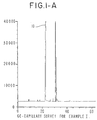
- the peak indicated by reference numeral 12 is for the compound having the structure:
- the peak indicated by reference numeral 13 is for the compound having the structure:
- the peak indicated by reference numeral 14 is for the compound having the structure:
- the peak indicated by reference numeral 15 is for the compound having the structure:
- the peak indicated by reference numeral 16 is for the compound having the structure:
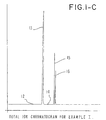
- the peak indicated by reference numeral 22 is for the compound having the structure:
- the peak indicated by reference numeral 23 is for the compound having the structure:
- the peak indicated by reference numeral 24 is for the compound having the structure:
- the peak indicated by reference numeral 25 is for the compound having the structure:
- the peak indicated by reference numeral 26 is for the compound having the structure:
- the peak indicated by reference numeral 27 is for the compound having the structure:
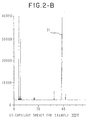
- the peak indicated by reference numeral 30 is for the compound having the structure:
- the peak indicated by reference numeral 31 is for the compound having the structure:
- the peak indicated by reference numeral 32 is for the mixture of compounds defined according to the structure: wherein in the mixture in one of the compounds, one of the dashed lines is a carbon carbon double bond and the other of the dashed lines is a carbon carbon single bond.
- the peak indicated by reference numeral 33 is for the compound having the structure:
- the peak indicated by reference numeral 34 is for the compound having the structure:
- the peak indicated by reference numeral 35 is for the compound having the structure:
- the peak indicated by reference numeral 36 is for the compound having the structure:
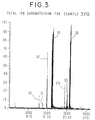
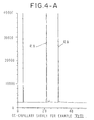
- the GC-capillary survey for the purified product of Example XVIII the peak indicated by reference numeral 41A is for the compound having the struture:
- the peak indicated by reference numeral 42A is for the compound having the structure:
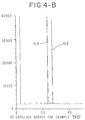
- the GC-capillary survey for the purified product of Example XVIII the peak indicated by reference numeral 41B is for the compound having the structure:
- the peak indicated by reference numeral 42B is for the compound having the structure:
Landscapes
- Chemical & Material Sciences (AREA)
- Life Sciences & Earth Sciences (AREA)
- Health & Medical Sciences (AREA)
- Engineering & Computer Science (AREA)
- Organic Chemistry (AREA)
- Wood Science & Technology (AREA)
- Zoology (AREA)
- General Health & Medical Sciences (AREA)
- Biotechnology (AREA)
- Chemical Kinetics & Catalysis (AREA)
- Bioinformatics & Cheminformatics (AREA)
- Genetics & Genomics (AREA)
- Veterinary Medicine (AREA)
- Public Health (AREA)
- Oil, Petroleum & Natural Gas (AREA)
- Animal Behavior & Ethology (AREA)
- General Engineering & Computer Science (AREA)
- Microbiology (AREA)
- Emergency Medicine (AREA)
- Biochemistry (AREA)
- General Chemical & Material Sciences (AREA)
- Epidemiology (AREA)
- Birds (AREA)
- Medicinal Chemistry (AREA)
- Tropical Medicine & Parasitology (AREA)
- Virology (AREA)
- Biomedical Technology (AREA)
- Nutrition Science (AREA)
- Food Science & Technology (AREA)
- Polymers & Plastics (AREA)
- Preparation Of Compounds By Using Micro-Organisms (AREA)
- Micro-Organisms Or Cultivation Processes Thereof (AREA)
Claims (8)
- Biologisch reine Kultur des Mikroorganismus Pseudomonas cepacia ATCC 55792.
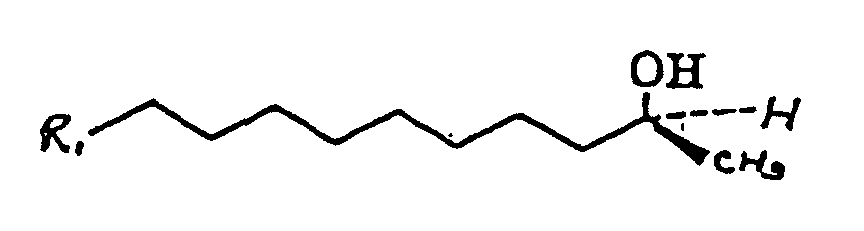
- Biologisch reine Kultur, die den Mikroorganismus Pseudomonas cepacia ATCC 55792 enthält, der ein Gemisch gemäß der generischen Strukturen:definierter Verbindungen erzeugen kann, wobei diese gemäß der Struktur:
 definierten Verbindungen einen Hauptteil der Zusammensetzung bilden, wobei die gemäß der Struktur:
 definierte Verbindung ein optisches Isomer in einer rückgewinnbaren Menge ist, das bei Transformation einer gemäß der Struktur:
 in der R1 entweder Methyl oder n-Propyl ist, definierten Verbindung eine optische Drehung von etwa +3 bis etwa +4° aufweist.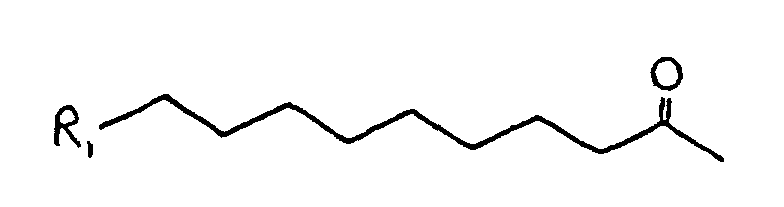
- Verfahren zur Herstellung eines Gemisches gemäß den Strukturen:definierter Alkanole, das mindestens 65 Molprozent des gemäß der Struktur:
 definierten Alkanols enthält,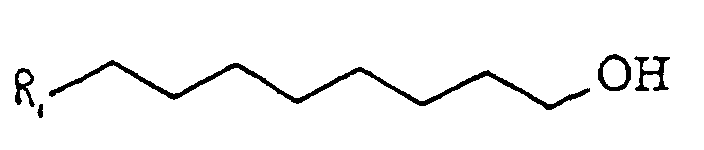
welches den Schritt des Mischens mindestens eines gemäß der Struktur:wobei R1 entweder n-Propyl oder Methyl ist, definierten Alkanons mit dem Organismus Pseudomonas cepacia ATCC 55792 oder einer Mutante davon umfasst.
- Verfahren nach Anspruch 3, das den zusätzlichen Schritt des intimen Mischens einer Aroma oder Geschmack verbessernden, verstärkenden oder verleihenden Menge des entstandenen Produkts mit einem konsumierbaren Material zur Verbesserung oder Verstärkung des Aromas oder Geschmackes des konsumierbaren Materials umfasst.
- Verfahren nach Anspruch 3, das die zusätzlichen Schritte der Reinigung des entstandenen Produktes durch Mischen zunächst mit einer Säure zur Weiterführung der Reaktion:und anschließend mit Propylenglycol zur Weiterführung der Reaktion:
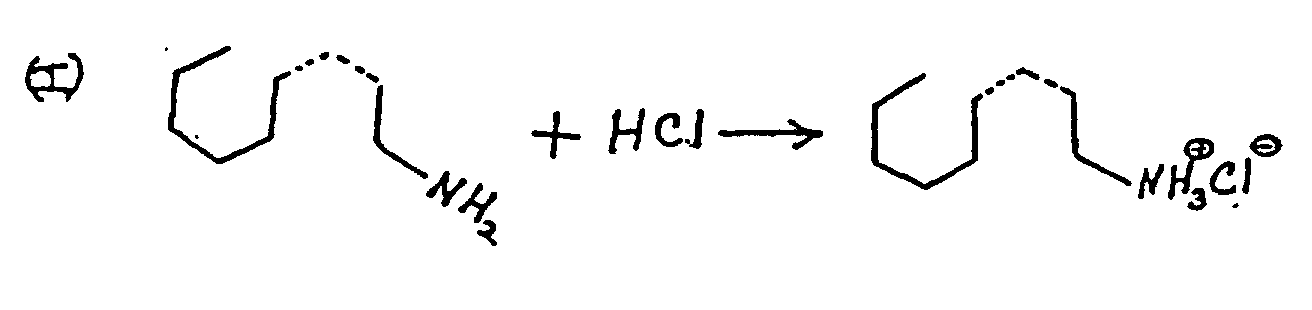 umfasst, wobei in der Verbindung mit der Struktur:
 eine der gestrichelten Linien eine Kohlenstoff-Kohlenstoff-Doppelbindung darstellt und die andere gestrichelte Linie eine Kohlenstoff Kohlenstoff Einfachbindung darstellt.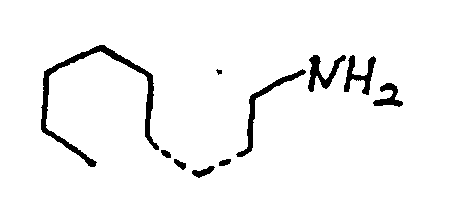
- Gemisch von Verbindungen mit den Strukturen:wobei R1 entweder Methyl oder n-Propyl ist und das Gemisch eine optische Drehung von etwa +0,2 bis etwa +0,9° aufweist.

- Gemisch nach Anspruch 6, wobei die Verbindung mit der Struktur:eine optische Drehung von etwa +3 bis etwa +4° aufweist.
- Verfahren zur Verbesserung und Verstärkung eines Aromas oder Geschmackes in einem konsumierbaren Material oder die Aroma- oder Geschmacksverleihung an ein konsumierbares Material, das entweder eine Parfumzusammensetzung, ein parfümierter Artikel oder ein Nahrungsmittel ist, welches den Schritt des intimen Mischens einer Aroma verbessernden, verstärkenden oder verleihenden Menge und Konzentration des Gemisches von Anspruch 6 mit dem konsumierbaren Material umfasst.
Applications Claiming Priority (4)
| Application Number | Priority Date | Filing Date | Title |
|---|---|---|---|
| US915934 | 1997-08-21 | ||
| US08/915,934 US5837659A (en) | 1997-08-21 | 1997-08-21 | Process for producing C9 C11 and C13 alkanols and microorganism capable of the same |
| US64740 | 1998-04-23 | ||
| US09/064,740 US5866381A (en) | 1997-08-21 | 1998-04-23 | Process for producing C9, C11 and C13 alkanols and microorganism capable of same |
Publications (3)
| Publication Number | Publication Date |
|---|---|
| EP0900840A2 EP0900840A2 (de) | 1999-03-10 |
| EP0900840A3 EP0900840A3 (de) | 2000-06-21 |
| EP0900840B1 true EP0900840B1 (de) | 2004-02-25 |
Family
ID=26744850
Family Applications (1)
| Application Number | Title | Priority Date | Filing Date |
|---|---|---|---|
| EP98306343A Expired - Lifetime EP0900840B1 (de) | 1997-08-21 | 1998-08-07 | Verfahren zur Herstellung von C9,C11 und C13 Alkanolen und dazu fähiger Mikroorgamismus |
Country Status (3)
| Country | Link |
|---|---|
| US (1) | US5866381A (de) |
| EP (1) | EP0900840B1 (de) |
| DE (1) | DE69821843T2 (de) |
Family Cites Families (2)
| Publication number | Priority date | Publication date | Assignee | Title |
|---|---|---|---|---|
| US4588584A (en) * | 1983-06-01 | 1986-05-13 | The United States Of America As Represented By The Secretary Of Agriculture | Medium for the isolation of Pseudomonas cepacia biotype from soil and the isolated biotype |
| US4975277A (en) * | 1988-08-02 | 1990-12-04 | United States Of America | Biological control of postharvest rots in fruits using Pseudomonas cepacia and pyrrolnitrin produced therefrom |
-
1998
- 1998-04-23 US US09/064,740 patent/US5866381A/en not_active Expired - Fee Related
- 1998-08-07 EP EP98306343A patent/EP0900840B1/de not_active Expired - Lifetime
- 1998-08-07 DE DE69821843T patent/DE69821843T2/de not_active Expired - Fee Related
Also Published As
| Publication number | Publication date |
|---|---|
| DE69821843D1 (de) | 2004-04-01 |
| DE69821843T2 (de) | 2004-12-09 |
| EP0900840A2 (de) | 1999-03-10 |
| US5866381A (en) | 1999-02-02 |
| EP0900840A3 (de) | 2000-06-21 |
Similar Documents
| Publication | Publication Date | Title |
|---|---|---|
| US5128253A (en) | Bioconversion process for the production of vanillin | |
| Shimoni et al. | Isolation of a Bacillus sp. capable of transforming isoeugenol to vanillin | |
| US5017388A (en) | Process for the preparation of vanillin | |
| Kempler | Production of flavor compounds by microorganisms | |
| JP4474082B2 (ja) | 水酸化脂肪酸およびδ−ラクトン類の製造方法 | |
| US5063160A (en) | Identification, characterization, and method of production of a novel microbial lipase | |
| EP0805850B1 (de) | Neuer stamm von klebsiella pneumoniae,subsp.pneumoniae und verfahren zur pruduktion eines l-fucose enthaltenden polysaccharids | |
| WO1991014758A1 (en) | Microbial production of a novel compound 7,10-dihydroxy-8-octadecenoic acid from oleic acid | |
| Lanzilotta et al. | Microbial reduction of ketopantoyl lactone to pantoyl lactone | |
| US6589774B2 (en) | Process for producing a bran pickless flavoring solution | |
| EP0900840A2 (de) | Verfahren zur Herstellung von C9,C11 und C13 Alkanolen und dazu fähiger Mikroorgamismus | |
| US6482794B1 (en) | Process for preparing acetophenone, products produced therefrom and organoletpic uses of said products | |
| US5244790A (en) | Microorganisms for preparing traditional Korean soybean paste and the method for the production of soybean paste by using the same | |
| US5837659A (en) | Process for producing C9 C11 and C13 alkanols and microorganism capable of the same | |
| CA1338471C (en) | Process for producing menaquinone-4 | |
| JP5271606B2 (ja) | (s)−2−メチル酪酸の製造方法 | |
| JPS6328593B2 (de) | ||
| US4495284A (en) | Microbiological process for the preparation of 1-carvone | |
| US5316939A (en) | Microorganism belonging to the genus Rhodococcus, and process for producing sec-cedrenol and cedrenone | |
| US5420022A (en) | Fermentation process for preparing phenylacetic acid using phenylalanine as a starting material | |
| FR2555198A1 (fr) | Procede d'amelioration d'une souche de micro-organismes pour la preparation de l-serine par fermentation, et souche obtenue | |
| JPS5917996A (ja) | レバウディオサイドaの製造方法 | |
| JP2797295B2 (ja) | 新規微生物および新規微生物を使用するメナキノン−4の製造法 | |
| JPH01144982A (ja) | 不飽和脂肪酸およびその誘導体の製造法 | |
| Bolton | Factors Affecting the Production of Fruity Aroma by Pseudomonas Fragi |
Legal Events
| Date | Code | Title | Description |
|---|---|---|---|
| PUAI | Public reference made under article 153(3) epc to a published international application that has entered the european phase |
Free format text: ORIGINAL CODE: 0009012 |
|
| AK | Designated contracting states |
Kind code of ref document: A2 Designated state(s): DE FR NL |
|
| AX | Request for extension of the european patent |
Free format text: AL;LT;LV;MK;RO;SI |
|
| PUAL | Search report despatched |
Free format text: ORIGINAL CODE: 0009013 |
|
| AK | Designated contracting states |
Kind code of ref document: A3 Designated state(s): AT BE CH CY DE DK ES FI FR GB GR IE IT LI LU MC NL PT SE |
|
| AX | Request for extension of the european patent |
Free format text: AL;LT;LV;MK;RO;SI |
|
| 17P | Request for examination filed |
Effective date: 20000810 |
|
| AKX | Designation fees paid |
Free format text: DE FR NL |
|
| 17Q | First examination report despatched |
Effective date: 20021204 |
|
| GRAP | Despatch of communication of intention to grant a patent |
Free format text: ORIGINAL CODE: EPIDOSNIGR1 |
|
| GRAS | Grant fee paid |
Free format text: ORIGINAL CODE: EPIDOSNIGR3 |
|
| GRAA | (expected) grant |
Free format text: ORIGINAL CODE: 0009210 |
|
| AK | Designated contracting states |
Kind code of ref document: B1 Designated state(s): DE FR NL |
|
| REF | Corresponds to: |
Ref document number: 69821843 Country of ref document: DE Date of ref document: 20040401 Kind code of ref document: P |
|
| ET | Fr: translation filed | ||
| PLBE | No opposition filed within time limit |
Free format text: ORIGINAL CODE: 0009261 |
|
| STAA | Information on the status of an ep patent application or granted ep patent |
Free format text: STATUS: NO OPPOSITION FILED WITHIN TIME LIMIT |
|
| 26N | No opposition filed |
Effective date: 20041126 |
|
| PGFP | Annual fee paid to national office [announced via postgrant information from national office to epo] |
Ref country code: NL Payment date: 20060824 Year of fee payment: 9 |
|
| PGFP | Annual fee paid to national office [announced via postgrant information from national office to epo] |
Ref country code: FR Payment date: 20060831 Year of fee payment: 9 |
|
| PGFP | Annual fee paid to national office [announced via postgrant information from national office to epo] |
Ref country code: DE Payment date: 20061002 Year of fee payment: 9 |
|
| PG25 | Lapsed in a contracting state [announced via postgrant information from national office to epo] |
Ref country code: NL Free format text: LAPSE BECAUSE OF NON-PAYMENT OF DUE FEES Effective date: 20080301 |
|
| NLV4 | Nl: lapsed or anulled due to non-payment of the annual fee |
Effective date: 20080301 |
|
| REG | Reference to a national code |
Ref country code: FR Ref legal event code: ST Effective date: 20080430 |
|
| PG25 | Lapsed in a contracting state [announced via postgrant information from national office to epo] |
Ref country code: DE Free format text: LAPSE BECAUSE OF NON-PAYMENT OF DUE FEES Effective date: 20080301 |
|
| PG25 | Lapsed in a contracting state [announced via postgrant information from national office to epo] |
Ref country code: FR Free format text: LAPSE BECAUSE OF NON-PAYMENT OF DUE FEES Effective date: 20070831 |