EP0871986B1 - Aufladbare elektrochemische zelle - Google Patents
Aufladbare elektrochemische zelle Download PDFInfo
- Publication number
- EP0871986B1 EP0871986B1 EP95921893A EP95921893A EP0871986B1 EP 0871986 B1 EP0871986 B1 EP 0871986B1 EP 95921893 A EP95921893 A EP 95921893A EP 95921893 A EP95921893 A EP 95921893A EP 0871986 B1 EP0871986 B1 EP 0871986B1
- Authority
- EP
- European Patent Office
- Prior art keywords
- lithium
- electrochemical cell
- rechargeable electrochemical
- cell according
- salt
- Prior art date
- Legal status (The legal status is an assumption and is not a legal conclusion. Google has not performed a legal analysis and makes no representation as to the accuracy of the status listed.)
- Expired - Lifetime
Links
- 239000000203 mixture Substances 0.000 claims abstract description 22
- 239000003513 alkali Substances 0.000 claims abstract description 18
- 150000003839 salts Chemical class 0.000 claims abstract description 18
- 229910052784 alkaline earth metal Inorganic materials 0.000 claims abstract description 16
- 239000003792 electrolyte Substances 0.000 claims abstract description 14
- NINIDFKCEFEMDL-UHFFFAOYSA-N Sulfur Chemical compound [S] NINIDFKCEFEMDL-UHFFFAOYSA-N 0.000 claims abstract description 12
- 239000002253 acid Substances 0.000 claims abstract description 12
- 239000005864 Sulphur Substances 0.000 claims abstract description 11
- 150000001342 alkaline earth metals Chemical class 0.000 claims abstract description 9
- 229910000314 transition metal oxide Inorganic materials 0.000 claims abstract description 9
- 239000011255 nonaqueous electrolyte Substances 0.000 claims abstract description 8
- -1 lithium fluoroborate Chemical compound 0.000 claims description 16
- 239000000758 substrate Substances 0.000 claims description 13
- BBLSYMNDKUHQAG-UHFFFAOYSA-L dilithium;sulfite Chemical compound [Li+].[Li+].[O-]S([O-])=O BBLSYMNDKUHQAG-UHFFFAOYSA-L 0.000 claims description 11
- 229910003002 lithium salt Inorganic materials 0.000 claims description 11
- 159000000002 lithium salts Chemical class 0.000 claims description 11
- UQSXHKLRYXJYBZ-UHFFFAOYSA-N Iron oxide Chemical compound [Fe]=O UQSXHKLRYXJYBZ-UHFFFAOYSA-N 0.000 claims description 10
- 229910021542 Vanadium(IV) oxide Inorganic materials 0.000 claims description 6
- GRUMUEUJTSXQOI-UHFFFAOYSA-N vanadium dioxide Chemical compound O=[V]=O GRUMUEUJTSXQOI-UHFFFAOYSA-N 0.000 claims description 6
- BERDEBHAJNAUOM-UHFFFAOYSA-N copper(I) oxide Inorganic materials [Cu]O[Cu] BERDEBHAJNAUOM-UHFFFAOYSA-N 0.000 claims description 5
- KRFJLUBVMFXRPN-UHFFFAOYSA-N cuprous oxide Chemical compound [O-2].[Cu+].[Cu+] KRFJLUBVMFXRPN-UHFFFAOYSA-N 0.000 claims description 5
- QSZMZKBZAYQGRS-UHFFFAOYSA-N lithium;bis(trifluoromethylsulfonyl)azanide Chemical compound [Li+].FC(F)(F)S(=O)(=O)[N-]S(=O)(=O)C(F)(F)F QSZMZKBZAYQGRS-UHFFFAOYSA-N 0.000 claims description 5
- GNRSAWUEBMWBQH-UHFFFAOYSA-N oxonickel Chemical compound [Ni]=O GNRSAWUEBMWBQH-UHFFFAOYSA-N 0.000 claims description 5
- HBBGRARXTFLTSG-UHFFFAOYSA-N Lithium ion Chemical compound [Li+] HBBGRARXTFLTSG-UHFFFAOYSA-N 0.000 claims description 4
- 229910001416 lithium ion Inorganic materials 0.000 claims description 4
- PPNAOCWZXJOHFK-UHFFFAOYSA-N manganese(2+);oxygen(2-) Chemical compound [O-2].[Mn+2] PPNAOCWZXJOHFK-UHFFFAOYSA-N 0.000 claims description 4
- VASIZKWUTCETSD-UHFFFAOYSA-N manganese(II) oxide Inorganic materials [Mn]=O VASIZKWUTCETSD-UHFFFAOYSA-N 0.000 claims description 4
- GEYXPJBPASPPLI-UHFFFAOYSA-N manganese(III) oxide Inorganic materials O=[Mn]O[Mn]=O GEYXPJBPASPPLI-UHFFFAOYSA-N 0.000 claims description 4
- KELHQGOVULCJSG-UHFFFAOYSA-N n,n-dimethyl-1-(5-methylfuran-2-yl)ethane-1,2-diamine Chemical compound CN(C)C(CN)C1=CC=C(C)O1 KELHQGOVULCJSG-UHFFFAOYSA-N 0.000 claims description 4
- 150000003624 transition metals Chemical class 0.000 claims description 4
- BVKZGUZCCUSVTD-UHFFFAOYSA-L Carbonate Chemical compound [O-]C([O-])=O BVKZGUZCCUSVTD-UHFFFAOYSA-L 0.000 claims description 3
- 229940112669 cuprous oxide Drugs 0.000 claims description 3
- 229910052751 metal Inorganic materials 0.000 claims description 3
- 239000002184 metal Substances 0.000 claims description 3
- 229910052723 transition metal Inorganic materials 0.000 claims description 3
- 229910001290 LiPF6 Inorganic materials 0.000 claims description 2
- FHWIZNVFXYZMMN-UHFFFAOYSA-L [Li+].[Li+].[O-]S(=O)(=O)S([O-])(=O)=O Chemical compound [Li+].[Li+].[O-]S(=O)(=O)S([O-])(=O)=O FHWIZNVFXYZMMN-UHFFFAOYSA-L 0.000 claims description 2
- XRZCZQUCDBWELQ-UHFFFAOYSA-L [Li+].[Li+].[O-]S(=O)S([O-])=O Chemical compound [Li+].[Li+].[O-]S(=O)S([O-])=O XRZCZQUCDBWELQ-UHFFFAOYSA-L 0.000 claims description 2
- QUEDYRXQWSDKKG-UHFFFAOYSA-M [O-2].[O-2].[V+5].[OH-] Chemical compound [O-2].[O-2].[V+5].[OH-] QUEDYRXQWSDKKG-UHFFFAOYSA-M 0.000 claims description 2
- 229910001496 lithium tetrafluoroborate Inorganic materials 0.000 claims description 2
- 239000002904 solvent Substances 0.000 claims description 2
- 150000003512 tertiary amines Chemical class 0.000 claims description 2
- 229910052744 lithium Inorganic materials 0.000 description 19
- WHXSMMKQMYFTQS-UHFFFAOYSA-N Lithium Chemical compound [Li] WHXSMMKQMYFTQS-UHFFFAOYSA-N 0.000 description 13
- RAHZWNYVWXNFOC-UHFFFAOYSA-N Sulphur dioxide Chemical compound O=S=O RAHZWNYVWXNFOC-UHFFFAOYSA-N 0.000 description 12
- RYGMFSIKBFXOCR-UHFFFAOYSA-N Copper Chemical compound [Cu] RYGMFSIKBFXOCR-UHFFFAOYSA-N 0.000 description 7
- 239000000243 solution Substances 0.000 description 6
- 239000004743 Polypropylene Substances 0.000 description 5
- 239000002131 composite material Substances 0.000 description 5
- 229920001155 polypropylene Polymers 0.000 description 5
- 239000002033 PVDF binder Substances 0.000 description 4
- 239000006229 carbon black Substances 0.000 description 4
- 229910052802 copper Inorganic materials 0.000 description 4
- 239000010949 copper Substances 0.000 description 4
- 238000000034 method Methods 0.000 description 4
- 239000004570 mortar (masonry) Substances 0.000 description 4
- 229920002981 polyvinylidene fluoride Polymers 0.000 description 4
- 230000008569 process Effects 0.000 description 4
- XTQHKBHJIVJGKJ-UHFFFAOYSA-N sulfur monoxide Chemical class S=O XTQHKBHJIVJGKJ-UHFFFAOYSA-N 0.000 description 4
- 235000010269 sulphur dioxide Nutrition 0.000 description 4
- 239000004291 sulphur dioxide Substances 0.000 description 4
- XLYOFNOQVPJJNP-UHFFFAOYSA-N water Substances O XLYOFNOQVPJJNP-UHFFFAOYSA-N 0.000 description 4
- 239000011149 active material Substances 0.000 description 3
- 239000000470 constituent Substances 0.000 description 3
- 239000011889 copper foil Substances 0.000 description 3
- 238000003869 coulometry Methods 0.000 description 3
- 230000001351 cycling effect Effects 0.000 description 3
- 238000000354 decomposition reaction Methods 0.000 description 3
- NUJOXMJBOLGQSY-UHFFFAOYSA-N manganese dioxide Chemical compound O=[Mn]=O NUJOXMJBOLGQSY-UHFFFAOYSA-N 0.000 description 3
- 239000000047 product Substances 0.000 description 3
- OIFBSDVPJOWBCH-UHFFFAOYSA-N Diethyl carbonate Chemical compound CCOC(=O)OCC OIFBSDVPJOWBCH-UHFFFAOYSA-N 0.000 description 2
- XEEYBQQBJWHFJM-UHFFFAOYSA-N Iron Chemical compound [Fe] XEEYBQQBJWHFJM-UHFFFAOYSA-N 0.000 description 2
- PXHVJJICTQNCMI-UHFFFAOYSA-N Nickel Chemical compound [Ni] PXHVJJICTQNCMI-UHFFFAOYSA-N 0.000 description 2
- GJCNZQUZWSHFHP-UHFFFAOYSA-N [Li].O=S=O Chemical compound [Li].O=S=O GJCNZQUZWSHFHP-UHFFFAOYSA-N 0.000 description 2
- 229910052783 alkali metal Inorganic materials 0.000 description 2
- 150000001340 alkali metals Chemical class 0.000 description 2
- 150000001447 alkali salts Chemical class 0.000 description 2
- 239000004411 aluminium Substances 0.000 description 2
- 229910052782 aluminium Inorganic materials 0.000 description 2
- XAGFODPZIPBFFR-UHFFFAOYSA-N aluminium Chemical compound [Al] XAGFODPZIPBFFR-UHFFFAOYSA-N 0.000 description 2
- 239000005030 aluminium foil Substances 0.000 description 2
- 239000011230 binding agent Substances 0.000 description 2
- 239000003990 capacitor Substances 0.000 description 2
- 239000011888 foil Substances 0.000 description 2
- 159000000011 group IA salts Chemical class 0.000 description 2
- AMWRITDGCCNYAT-UHFFFAOYSA-L hydroxy(oxo)manganese;manganese Chemical compound [Mn].O[Mn]=O.O[Mn]=O AMWRITDGCCNYAT-UHFFFAOYSA-L 0.000 description 2
- 239000011244 liquid electrolyte Substances 0.000 description 2
- 239000004033 plastic Substances 0.000 description 2
- 229920003023 plastic Polymers 0.000 description 2
- 239000000843 powder Substances 0.000 description 2
- 239000002994 raw material Substances 0.000 description 2
- OKTJSMMVPCPJKN-UHFFFAOYSA-N Carbon Chemical compound [C] OKTJSMMVPCPJKN-UHFFFAOYSA-N 0.000 description 1
- 229920002943 EPDM rubber Polymers 0.000 description 1
- KMTRUDSVKNLOMY-UHFFFAOYSA-N Ethylene carbonate Chemical compound O=C1OCCO1 KMTRUDSVKNLOMY-UHFFFAOYSA-N 0.000 description 1
- 229910016287 MxOy Inorganic materials 0.000 description 1
- SECXISVLQFMRJM-UHFFFAOYSA-N N-Methylpyrrolidone Chemical compound CN1CCCC1=O SECXISVLQFMRJM-UHFFFAOYSA-N 0.000 description 1
- MUBZPKHOEPUJKR-UHFFFAOYSA-N Oxalic acid Chemical compound OC(=O)C(O)=O MUBZPKHOEPUJKR-UHFFFAOYSA-N 0.000 description 1
- JDZCKJOXGCMJGS-UHFFFAOYSA-N [Li].[S] Chemical compound [Li].[S] JDZCKJOXGCMJGS-UHFFFAOYSA-N 0.000 description 1
- GOPYZMJAIPBUGX-UHFFFAOYSA-N [O-2].[O-2].[Mn+4] Chemical compound [O-2].[O-2].[Mn+4] GOPYZMJAIPBUGX-UHFFFAOYSA-N 0.000 description 1
- 230000009471 action Effects 0.000 description 1
- 229910001413 alkali metal ion Inorganic materials 0.000 description 1
- 229910001420 alkaline earth metal ion Inorganic materials 0.000 description 1
- 239000012298 atmosphere Substances 0.000 description 1
- 229910052799 carbon Inorganic materials 0.000 description 1
- POIUWJQBRNEFGX-XAMSXPGMSA-N cathelicidin Chemical compound C([C@@H](C(=O)N[C@@H](CCCNC(N)=N)C(=O)N[C@@H](CCCCN)C(=O)N[C@@H](CO)C(=O)N[C@@H](CCCCN)C(=O)N[C@@H](CCC(O)=O)C(=O)N[C@@H](CCCCN)C(=O)N[C@@H]([C@@H](C)CC)C(=O)NCC(=O)N[C@@H](CCCCN)C(=O)N[C@@H](CCC(O)=O)C(=O)N[C@@H](CC=1C=CC=CC=1)C(=O)N[C@@H](CCCCN)C(=O)N[C@@H](CCCNC(N)=N)C(=O)N[C@@H]([C@@H](C)CC)C(=O)N[C@@H](C(C)C)C(=O)N[C@@H](CCC(N)=O)C(=O)N[C@@H](CCCNC(N)=N)C(=O)N[C@@H]([C@@H](C)CC)C(=O)N[C@@H](CCCCN)C(=O)N[C@@H](CC(O)=O)C(=O)N[C@@H](CC=1C=CC=CC=1)C(=O)N[C@@H](CC(C)C)C(=O)N[C@@H](CCCNC(N)=N)C(=O)N[C@@H](CC(N)=O)C(=O)N[C@@H](CC(C)C)C(=O)N[C@@H](C(C)C)C(=O)N1[C@@H](CCC1)C(=O)N[C@@H](CCCNC(N)=N)C(=O)N[C@@H]([C@@H](C)O)C(=O)N[C@@H](CCC(O)=O)C(=O)N[C@@H](CO)C(O)=O)NC(=O)[C@H](CC=1C=CC=CC=1)NC(=O)[C@H](CC(O)=O)NC(=O)CNC(=O)[C@H](CC(C)C)NC(=O)[C@@H](N)CC(C)C)C1=CC=CC=C1 POIUWJQBRNEFGX-XAMSXPGMSA-N 0.000 description 1
- 239000006182 cathode active material Substances 0.000 description 1
- 239000002801 charged material Substances 0.000 description 1
- 239000007795 chemical reaction product Substances 0.000 description 1
- 239000003795 chemical substances by application Substances 0.000 description 1
- 239000010941 cobalt Substances 0.000 description 1
- GUTLYIVDDKVIGB-UHFFFAOYSA-N cobalt atom Chemical compound [Co] GUTLYIVDDKVIGB-UHFFFAOYSA-N 0.000 description 1
- 229910000428 cobalt oxide Inorganic materials 0.000 description 1
- 230000002860 competitive effect Effects 0.000 description 1
- 150000001875 compounds Chemical class 0.000 description 1
- 238000001816 cooling Methods 0.000 description 1
- 238000005260 corrosion Methods 0.000 description 1
- 230000007797 corrosion Effects 0.000 description 1
- 230000001627 detrimental effect Effects 0.000 description 1
- IEJIGPNLZYLLBP-UHFFFAOYSA-N dimethyl carbonate Chemical compound COC(=O)OC IEJIGPNLZYLLBP-UHFFFAOYSA-N 0.000 description 1
- 239000008151 electrolyte solution Substances 0.000 description 1
- 238000009713 electroplating Methods 0.000 description 1
- 238000005516 engineering process Methods 0.000 description 1
- 230000007613 environmental effect Effects 0.000 description 1
- 238000004880 explosion Methods 0.000 description 1
- 229940062993 ferrous oxalate Drugs 0.000 description 1
- 239000003517 fume Substances 0.000 description 1
- 230000020169 heat generation Effects 0.000 description 1
- 230000003100 immobilizing effect Effects 0.000 description 1
- 239000012212 insulator Substances 0.000 description 1
- 229910052742 iron Inorganic materials 0.000 description 1
- OWZIYWAUNZMLRT-UHFFFAOYSA-L iron(2+);oxalate Chemical compound [Fe+2].[O-]C(=O)C([O-])=O OWZIYWAUNZMLRT-UHFFFAOYSA-L 0.000 description 1
- 150000002642 lithium compounds Chemical class 0.000 description 1
- PQXKHYXIUOZZFA-UHFFFAOYSA-M lithium fluoride Chemical class [Li+].[F-] PQXKHYXIUOZZFA-UHFFFAOYSA-M 0.000 description 1
- 239000000463 material Substances 0.000 description 1
- 229910044991 metal oxide Inorganic materials 0.000 description 1
- 150000004706 metal oxides Chemical class 0.000 description 1
- 150000002739 metals Chemical class 0.000 description 1
- 238000002156 mixing Methods 0.000 description 1
- 238000012986 modification Methods 0.000 description 1
- 230000004048 modification Effects 0.000 description 1
- 229910052759 nickel Inorganic materials 0.000 description 1
- 239000011356 non-aqueous organic solvent Substances 0.000 description 1
- 230000001473 noxious effect Effects 0.000 description 1
- 229920000620 organic polymer Polymers 0.000 description 1
- 238000007747 plating Methods 0.000 description 1
- 229920000379 polypropylene carbonate Polymers 0.000 description 1
- 238000003825 pressing Methods 0.000 description 1
- RUOJZAUFBMNUDX-UHFFFAOYSA-N propylene carbonate Chemical compound CC1COC(=O)O1 RUOJZAUFBMNUDX-UHFFFAOYSA-N 0.000 description 1
- 230000009467 reduction Effects 0.000 description 1
- 230000000630 rising effect Effects 0.000 description 1
- 239000007787 solid Substances 0.000 description 1
- 239000007858 starting material Substances 0.000 description 1
- 239000000126 substance Substances 0.000 description 1
Images
Classifications
-
- H—ELECTRICITY
- H01—ELECTRIC ELEMENTS
- H01M—PROCESSES OR MEANS, e.g. BATTERIES, FOR THE DIRECT CONVERSION OF CHEMICAL ENERGY INTO ELECTRICAL ENERGY
- H01M4/00—Electrodes
- H01M4/02—Electrodes composed of, or comprising, active material
- H01M4/36—Selection of substances as active materials, active masses, active liquids
- H01M4/58—Selection of substances as active materials, active masses, active liquids of inorganic compounds other than oxides or hydroxides, e.g. sulfides, selenides, tellurides, halogenides or LiCoFy; of polyanionic structures, e.g. phosphates, silicates or borates
- H01M4/581—Chalcogenides or intercalation compounds thereof
-
- H—ELECTRICITY
- H01—ELECTRIC ELEMENTS
- H01M—PROCESSES OR MEANS, e.g. BATTERIES, FOR THE DIRECT CONVERSION OF CHEMICAL ENERGY INTO ELECTRICAL ENERGY
- H01M10/00—Secondary cells; Manufacture thereof
- H01M10/05—Accumulators with non-aqueous electrolyte
- H01M10/056—Accumulators with non-aqueous electrolyte characterised by the materials used as electrolytes, e.g. mixed inorganic/organic electrolytes
- H01M10/0564—Accumulators with non-aqueous electrolyte characterised by the materials used as electrolytes, e.g. mixed inorganic/organic electrolytes the electrolyte being constituted of organic materials only
- H01M10/0566—Liquid materials
- H01M10/0568—Liquid materials characterised by the solutes
-
- H—ELECTRICITY
- H01—ELECTRIC ELEMENTS
- H01M—PROCESSES OR MEANS, e.g. BATTERIES, FOR THE DIRECT CONVERSION OF CHEMICAL ENERGY INTO ELECTRICAL ENERGY
- H01M10/00—Secondary cells; Manufacture thereof
- H01M10/05—Accumulators with non-aqueous electrolyte
- H01M10/056—Accumulators with non-aqueous electrolyte characterised by the materials used as electrolytes, e.g. mixed inorganic/organic electrolytes
- H01M10/0564—Accumulators with non-aqueous electrolyte characterised by the materials used as electrolytes, e.g. mixed inorganic/organic electrolytes the electrolyte being constituted of organic materials only
- H01M10/0566—Liquid materials
- H01M10/0569—Liquid materials characterised by the solvents
-
- H—ELECTRICITY
- H01—ELECTRIC ELEMENTS
- H01M—PROCESSES OR MEANS, e.g. BATTERIES, FOR THE DIRECT CONVERSION OF CHEMICAL ENERGY INTO ELECTRICAL ENERGY
- H01M4/00—Electrodes
- H01M4/02—Electrodes composed of, or comprising, active material
- H01M4/13—Electrodes for accumulators with non-aqueous electrolyte, e.g. for lithium-accumulators; Processes of manufacture thereof
- H01M4/136—Electrodes based on inorganic compounds other than oxides or hydroxides, e.g. sulfides, selenides, tellurides, halogenides or LiCoFy
-
- H—ELECTRICITY
- H01—ELECTRIC ELEMENTS
- H01M—PROCESSES OR MEANS, e.g. BATTERIES, FOR THE DIRECT CONVERSION OF CHEMICAL ENERGY INTO ELECTRICAL ENERGY
- H01M4/00—Electrodes
- H01M4/02—Electrodes composed of, or comprising, active material
- H01M4/36—Selection of substances as active materials, active masses, active liquids
- H01M4/58—Selection of substances as active materials, active masses, active liquids of inorganic compounds other than oxides or hydroxides, e.g. sulfides, selenides, tellurides, halogenides or LiCoFy; of polyanionic structures, e.g. phosphates, silicates or borates
-
- H—ELECTRICITY
- H01—ELECTRIC ELEMENTS
- H01M—PROCESSES OR MEANS, e.g. BATTERIES, FOR THE DIRECT CONVERSION OF CHEMICAL ENERGY INTO ELECTRICAL ENERGY
- H01M4/00—Electrodes
- H01M4/02—Electrodes composed of, or comprising, active material
- H01M4/36—Selection of substances as active materials, active masses, active liquids
- H01M4/58—Selection of substances as active materials, active masses, active liquids of inorganic compounds other than oxides or hydroxides, e.g. sulfides, selenides, tellurides, halogenides or LiCoFy; of polyanionic structures, e.g. phosphates, silicates or borates
- H01M4/581—Chalcogenides or intercalation compounds thereof
- H01M4/5815—Sulfides
-
- H—ELECTRICITY
- H01—ELECTRIC ELEMENTS
- H01M—PROCESSES OR MEANS, e.g. BATTERIES, FOR THE DIRECT CONVERSION OF CHEMICAL ENERGY INTO ELECTRICAL ENERGY
- H01M4/00—Electrodes
- H01M4/02—Electrodes composed of, or comprising, active material
- H01M4/64—Carriers or collectors
- H01M4/66—Selection of materials
- H01M4/661—Metal or alloys, e.g. alloy coatings
-
- H—ELECTRICITY
- H01—ELECTRIC ELEMENTS
- H01M—PROCESSES OR MEANS, e.g. BATTERIES, FOR THE DIRECT CONVERSION OF CHEMICAL ENERGY INTO ELECTRICAL ENERGY
- H01M10/00—Secondary cells; Manufacture thereof
- H01M10/05—Accumulators with non-aqueous electrolyte
- H01M10/058—Construction or manufacture
- H01M10/0587—Construction or manufacture of accumulators having only wound construction elements, i.e. wound positive electrodes, wound negative electrodes and wound separators
-
- H—ELECTRICITY
- H01—ELECTRIC ELEMENTS
- H01M—PROCESSES OR MEANS, e.g. BATTERIES, FOR THE DIRECT CONVERSION OF CHEMICAL ENERGY INTO ELECTRICAL ENERGY
- H01M2300/00—Electrolytes
- H01M2300/0017—Non-aqueous electrolytes
- H01M2300/0025—Organic electrolyte
- H01M2300/0028—Organic electrolyte characterised by the solvent
- H01M2300/0037—Mixture of solvents
-
- Y—GENERAL TAGGING OF NEW TECHNOLOGICAL DEVELOPMENTS; GENERAL TAGGING OF CROSS-SECTIONAL TECHNOLOGIES SPANNING OVER SEVERAL SECTIONS OF THE IPC; TECHNICAL SUBJECTS COVERED BY FORMER USPC CROSS-REFERENCE ART COLLECTIONS [XRACs] AND DIGESTS
- Y02—TECHNOLOGIES OR APPLICATIONS FOR MITIGATION OR ADAPTATION AGAINST CLIMATE CHANGE
- Y02E—REDUCTION OF GREENHOUSE GAS [GHG] EMISSIONS, RELATED TO ENERGY GENERATION, TRANSMISSION OR DISTRIBUTION
- Y02E60/00—Enabling technologies; Technologies with a potential or indirect contribution to GHG emissions mitigation
- Y02E60/10—Energy storage using batteries
-
- Y—GENERAL TAGGING OF NEW TECHNOLOGICAL DEVELOPMENTS; GENERAL TAGGING OF CROSS-SECTIONAL TECHNOLOGIES SPANNING OVER SEVERAL SECTIONS OF THE IPC; TECHNICAL SUBJECTS COVERED BY FORMER USPC CROSS-REFERENCE ART COLLECTIONS [XRACs] AND DIGESTS
- Y02—TECHNOLOGIES OR APPLICATIONS FOR MITIGATION OR ADAPTATION AGAINST CLIMATE CHANGE
- Y02P—CLIMATE CHANGE MITIGATION TECHNOLOGIES IN THE PRODUCTION OR PROCESSING OF GOODS
- Y02P70/00—Climate change mitigation technologies in the production process for final industrial or consumer products
- Y02P70/50—Manufacturing or production processes characterised by the final manufactured product
Definitions
- the rechargeable electrochemical cell may be used as a storage battery or as a capacitor.
- Non-rechargeable lithium electrochemical cells are well known.
- a two cell battery is used in the consumer field and it has a manganese dioxide positive electrode.
- a battery used in the military field employs a lithium sulphur dioxide liquid electrolyte de-polarizer system.
- Both of these battery systems are renowned for their high energy densities of more than 300 Watt hours/Kg, high power densities and modest raw material costs. Attempts to recharge such primary cells have met with little or no success.
- the product formed on electrochemical reduction with lithium at the positive electrode has a radically altered chemical structure and the lithium intercalated on discharge is recoverable to a small extent only on current reversal.
- the present invention provides a rechargeable electrochemical cell comprising a positive electrode, a negative electrode and an electrolyte, the positive electrode being such that it is a composition of an alkali or alkaline earth salt of a sulphur oxy-acid and a transition metal oxide, and the electrolyte being such that it is a non-aqueous electrolyte containing a soluble salt of the alkali or alkaline earth metal dissolved the non-aqueous electrolyte.
- the salt of a sulphur oxy-acid is a lithium salt.
- the lithium salt is preferably lithium sulphite (Li 2 SO 3 ), lithium dithionate (Li 2 S 2 O 6 ) or lithium dithionite (Li 2 S 2 O 4 ).
- the transition metal is preferably one or more of ferrous oxide (FeO), titanium monoxide (TiO), manganous oxide (MnO), manganic oxide (Mn 2 O 3 ), vanadium trioxide (V 2 O 3 ), vanadium dioxide (VO 2 ), cuprous oxide (Cu 2 O) or nickelous oxide (NiO).
- FeO ferrous oxide
- TiO titanium monoxide
- MnO manganous oxide
- Mn 2 O 3 manganic oxide
- V 2 O 3 vanadium trioxide
- V 2 O 3 vanadium dioxide
- cuprous oxide Cu 2 O
- NiO nickelous oxide
- Many other transition metal oxides may be used as will be familiar to those versed in this technology.
- the oxides may be used singly or in combination.
- the alkali or alkaline salt in solution is preferably present in approximately 1 molar concentration. Other concentrations may however be employed with a preferred molar concentration range being 0.5 - 2 molar concentration.
- the alkali or alkaline salt in solution in the electrolyte is preferably a lithium salt.
- Other alkali or alkaline earth salts may however be employed, with the corresponding sulphur oxy-acid salt in the cathode.
- a soluble salt of the alkali or alkaline earth metal must always be present in the non-aqueous electrolyte solution.
- this can be lithium fluoroborate or lithium hexafluorophosphate or a number of other complex lithium fluorides, for example, lithium trifluoromethane sulphonimide LiN(CF 3 SO 2 ) 2 .
- the said salt provides a source of alkali-metal ions or alkaline earth metal ions in solution for electroplating alkali metal or alkaline earth metal from the cathode compound or complex, for example lithium sulphite which is totally insoluble in the electrolyte.
- the alkali or alkaline earth metal in solution must be the same as the alkali or alkaline earth salt of the sulphur oxy-acid in the cathode.
- the process of operation of say the rechargeable lithium electrochemical cell may be thought of as a shuttle of lithium going from a lithium compound in the cathode to lithium metal at the anode following the charge process.
- the cell may include a separator which is permeable to the lithium ions.
- the rechargeable electrochemical cell may then be one in which the lithium salt is lithium fluoroborate (LiBF 4 ) and/or lithium hexafluorophosphate LiPF 6 or LiN(CF 3 SO 2 ) 2 .
- Suitable solvents are a mixture of a linear carbonate and a cyclic ester.
- the linear carbonate is preferably diethyl carbonate or dimethyl carbonate.
- the cyclic ester is preferably polypropylene carbonate or ethylene carbonate.
- the separator is preferably a microporous polypropylene. In the case of lithium ions, the separator allows permeation of lithium ions but will not allow lithium metal plated at the anode to get in electrical contact with the cathode.
- the negative electrode current collector is preferably copper. Nickel or other metals may also be employed.
- the negative electrode current collector may alternatively be coated with a porous substrate into which deposited alkali or alkaline earth metal will intercalate.
- the porous substrate may be a porous substrate of conductive finely divided carbon.
- Both electrodes may include a binding agent.
- the binding agent has two functions. It holds the constituents of the cathode together so that a thin layer or film can be applied to the substrate electrode collector. It also enables adhesion of this layer to be effective to the substrate.
- Many organic polymers are suitable, examples being polyvinylidene fluoride and ethylene propylene diene terpolymer.
- the rechargeable electrochemical cell may be cylindrical in shape.
- the cylindrical rechargeable electrochemical cell may be one in which the composition of the alkali or alkaline earth salt of the sulphur oxy-acid and the transition metal oxide is provided on a substrate which is wound in the form of a roll.
- the substrate is preferably a foil substrate.
- a presently preferred foil substrate is an aluminium foil substrate.
- the rechargeable electrochemical cell may be in the shape of a disc.
- the disc may be in the shape of a button or a coin.
- the rechargeable electrochemical cell may be rectangular in shape and have multiple layers folded zig zag fashion.
- the rechargeable electrochemical cell may be in the form of a battery or a super capacitor.
- the rechargeable electrochemical cell uses a lithium salt of a sulphur oxy-acid as the uncharged cathode.
- the sulphur oxides formed by electrode decomposition of lithium oxy-acid salts must combine or complex with an appropriate substrate in order to preclude action with the lithium negative electrode.
- the transition metal oxides react with the sulphur oxides formed on charging the lithium sulphur oxy-acid composition, thereby acting in the role of a de-fluidizing agent.
- the composition may also include one or more polymeric tertiary amines.
- the electrolyte is non-aqueous because the presence of water at concentrations as low as 10 parts per million is detrimental since the water would react instantly with the alkali metal or alkaline earth metal formed in a finely divided state on charge.
- the non-aqueous electrolyte is preferably a non-aqueous organic solvent. It is essential that none of the constituents of the positive electrode composition in either the charged or the discharged state, are soluble in the electrolyte solution.
- the electrochemical process taking place in the rechargeable electrochemical cell of the present invention may be represented as follows: Li 2 SO 3 + x Mo y ⁇ 2 Li + (M x SO 3+xy ) complex in which M is the transition metal atom, and in which 1 ⁇ x ⁇ 4 and 0.5 ⁇ y ⁇ 2.5.
- Lithium sulphite (Li 2 SO 3 ) is an efficient source of lithium because it has two lithium atoms per sulphur atom present.
- the utilisation of lithium metal in the discharge process is thus up to twice that obtainable in competitive systems, especially those based on cobalt and manganese oxide.
- a mixture of lithium sulphite and vanadium dioxide in a 1:2 molar ratio was intimately ground together using a pestle and mortar. The ground mixture was then heated for 3 hours at 200°C under vacuum in order to remove traces of water absorbed on standing.
- a 3% solution of polyvinylidene fluoride in N-methylpyrrolidone was prepared and to this was added carbon black which was obtained from MMM Sedema under the trade name Super S+. The carbon black was added in proportion to give 60% by weight carbon black and 40% by weight polyvinylidene fluoride in the resulting dried powder. 20% by weight of the dried powder was added to the mixture of the lithium sulphite and the vanadium dioxide, the composite positive electrode thus containing 80% of the active material. After thorough mixing together of the composite, a 25mm diameter disc, approximately 1mm thick, was prepared by pressing with a load of 15 tonnes.
- the disc was placed in a test cell in which a microporous polypropylene separator 25 microns thick was used, together with a copper disc as a target negative electrode.
- a 1 molar solution of lithium fluoborate in an anhydrous mixture of equal volumes of propylene carbonate and diethyl carbonate was used as an electrolyte to saturate the positive electrode and the separator.
- the rechargeable electrochemical cell was charged at a current density of 0.8 ma/cm 2 for 6 hours, the applied voltage starting at 3.5 volts and rising to a maximum of 4.25 volts.
- a mixture of lithium sulphite and ferrous oxalate (FeC 2 O 4 .2H 2 0 in a 1:2 molar ratio was intimately ground together using a pestle and mortar. The mixture was then heated at 300°C for 2 hours under vacuum in order to convert the oxalate to oxide and to remove all the water present. After cooling, the product was mixed with carbon black and polyvinylidene fluoride as described in Example I, the active materials content again being 80% by weight.
- a rechargeable electrochemical cell was prepared as described in Example I and the cell was placed on charge. The voltage range necessary to charge at 0.8 ma/cm 2 started at 3.2 volts and rose to a maximum of 3.9 volts.
- a mixture of lithium sulphite and nickelous oxide in a 1:2 molar ratio was intimately ground together using a pestle and mortar. The mixture was heated at 200°C for 2 hours under vacuum and then reground. The mixture was then prepared and formed into a rechargeable electrochemical cell as described in Example I.
- the applied voltage ranged between 3.4 volts and 4.0 volts.
- On discharge at a current density of 1 ma/cm 2 and average voltage of 3.2 volts was observed with an end point of around 2.5 volts.
- the form of the discharge curve and the coulometric efficiency was similar to that observed in Example II.
- a mixture of lithium sulphite and cuprous oxide in a 1:1 molar ratio was intimately ground together using a pestle and mortar. The mixture was heated at 200°C for 2 hours under vacuum and then reground.
- a rechargeable electrochemical cell was produced as described in Example I. For a 0.8 ma/cm 2 charging current, the applied voltage required was between the limits of 3.2 volts and 3.9 volts. On discharge at a current density of 1 ma/cm 2 , a two step discharge curve was observed with a joining plateau at around 2.85 volts. With this composition, the average discharge voltage was just below 3 volts but the cycling efficiency was greater than 95%.
- the valency state of sulphur in the charged complex is between 4 and 6.
- the higher voltage realised in the rechargeable electrochemical cells is believed to be due to the presence of a substantial proportion of sulphur oxide in the 6-valent state which is formed from Li 2 SO 3 as the result of electrolytic decomposition taking place on charging.
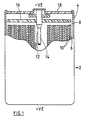
- a rechargeable electrochemical cell 2 has a cylindrical outer body 4 which is preferably made of aluminium.
- the cell 2 has a composite positive electrode 6 formed of lithium sulphite on aluminium foil.
- the cell 2 further comprises copper foil 8 having a lithium negative electrode.
- a separator 10 is employed as shown and the composite positive electrode 6, the copper foil 8 and the separator 10 are wound to form a roll as shown. The roll then fits inside the body 4, also as shown.
- a copper tab 12 extends from the copper foil 8 to a copper tube 14 which serves as feed through.
- the body 4 is closed by a polypropylene insulating disc 16 and a polypropylene insulating cap 18.
- the cell 2 is fabricated in the uncharged state. This is primarily for safety considerations since no lithium metal is then present and should the wound sub-assembly develop a short circuit prior to final assembly with electrolyte, there is no danger of heat generation and fire or explosion.
- the starting materials in the uncharged state are also much less costly than would be the case for the charged state.
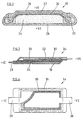
- a rechargeable electrochemical cell 20 which is in the form of a disc.
- the cell 20 has a lithium negative electrode 22, and a lithium sulphite/transition metal oxide positive electrode 24.
- An anode current collector 26 forms a negative hole.
- a positive electrode current collector 28 made of aluminium is provided.
- the cell 20 also includes a separator 30 and a polypropylene plastics insulator/seal 32.
- FIG. 3 and 4 there is shown a rechargeable electrochemical cell 34 in which similar parts as in Figure 2 have been given the same reference numerals.
- the cell 34 is produced in a flat rectangular shape.
- the cell 34 includes a plastics sheet 36 which is heat sealed on four sides.
- the rechargeable electrochemical cell of the present invention When the rechargeable electrochemical cell of the present invention is in the form of a large rechargeable battery, then one or more such batteries may be used to power electric vehicles.
- Raw material cost are an important commercial consideration and an iron oxide used as the transition metal is especially appropriate in such applications. The environmental impact will be minimal since the iron and sulphur oxides are in a chemically bound state even when the battery is fully charged.
Landscapes
- Chemical & Material Sciences (AREA)
- General Chemical & Material Sciences (AREA)
- Chemical Kinetics & Catalysis (AREA)
- Electrochemistry (AREA)
- Inorganic Chemistry (AREA)
- Engineering & Computer Science (AREA)
- Manufacturing & Machinery (AREA)
- General Physics & Mathematics (AREA)
- Condensed Matter Physics & Semiconductors (AREA)
- Physics & Mathematics (AREA)
- Materials Engineering (AREA)
- Secondary Cells (AREA)
- Organic Low-Molecular-Weight Compounds And Preparation Thereof (AREA)
- Battery Electrode And Active Subsutance (AREA)
- Micro-Organisms Or Cultivation Processes Thereof (AREA)
Claims (12)
- Eine aufladbare elektrochemische Zelle, aufweisend eine positive Elektrode, eine negative Elektrode und einen Elektrolyten, wobei die positve Eletrode so ausgebildet ist, daß sie eine Zusammensetzung eines Alkali- oder Erdalkalisalzes einer Schwefelsauerstoffsäure und eines Übergangsmetalloxyds ist, und der Elektrolyt so ausgebildet ist, daß er ein nicht-wäßriger Elektrolyt ist, der ein lösliches Salz des Alkali- oder Erdalkalimetalls, gelöst im nicht-wäßrigen Elektrolyten, enthält.
- Eine aufladbare elektrochemische Zelle nach Anspruch 1, in der das Salz einer Schwefelsauerstoffsäure ein Lithium-Salz ist.
- Eine aufladbare elektrochemische Zelle nach Anspruch 2, in der das Lithiumsalz eine Lithiumsalz ausgewählt aus der Gruppe, die aus Lithiumsulfit (Li2SO3), Lithiumdithionat (Li2S2O2)) und Lithiumdithionit (Li2S2O4) besteht, ist.
- Eine aufladbare elektrochemische Zelle nach irgendeinem der vorhergehenden Ansprüche, in der das Übergangsmetall mindestens eines aus Eisen(II)-oxyd (FeO), Titanmonoxyd (TiO), Mangan(II)-oxyd (MnO), Dimangantrioxyd (Mn2O3), Vanadiumtrioxyd (V2O3), Vanadiumdioxyd (VO2), Kupfer(I)-oxyd (Cu2O) und Nickel(II)-oxyd (NiO) ist.
- Eine aufladbare elektrochemische Zelle nach irgendeinem der vorhergehenden Ansprüche, in der das Alkali- oder Erdalkalisalz in Lösung in annähernd 1-molarer Konzentration vorliegt.
- Eine aufladbare elektrochemische Zelle nach irgendeinem der vorhergehenden Ansprüche, in der das Alkali- oder Erdalkalisalz in dem Elektrolyten ein Lithiumsalz ist.
- Eine aufladbare elektrochemische Zelle nach Anspruch 6, in der der Elektrolyt einen Trenner aufweist, der für Lithiumionen durchlässig ist.
- Eine aufladbare elektrochemische Zelle nach Anspruch 7, in der das Lithiumsalz mindestens eines aus Lithiumfluorborat (LiBF4), Lithiumhexafluorophosphat (LiPF6) und Lithiumtrifluormethansulfonimid [LiN(CF3SO2)2] ist, und in dem das Lithiumsalz in einer Mischung eines linearen Karbonats und eines cyklischen Esthers als Lösungsmittel in Lösung ist.
- Eine aufladbare elektrochemische Zelle nach irgendeinem der vorhergehenden Ansprüche, in der die negative Elektrode eine negative Metallelektrode ist.
- Eine aufladbare elektrochemische Zelle nach irgendeinem der Ansprüche 1 - 8, in der die negative Elektrode mit einem porösen Substrat beschichtet ist, in das abgelagertes Alkali- oder Erdalkalimetall sich einlagern wird.
- Eine aufladbare elektrochemische Zelle nach irgendeinem der vorhergehenden Ansprüche, in der die Zusammensetzung aus dem Alkali- oder Erdalkalisalz einer Schwefelsauerstoffsäure und dem Übergangsmetalloxyd auf einem Substrat zur Verfügung gestellt wird, das in Form einer Rolle gewickelt ist.
- Eine aufladbare elektrochemische Zelle nach irgendeinem der vorhergehenden Ansprüche und aufweisend ein oder mehrere polymere tertiäre Amine.
Applications Claiming Priority (3)
| Application Number | Priority Date | Filing Date | Title |
|---|---|---|---|
| GB9412045A GB9412045D0 (en) | 1994-06-16 | 1994-06-16 | Non-aqueous electrochemical cells having novel duplex cathode composition |
| GB9412045 | 1994-06-16 | ||
| PCT/GB1995/001337 WO1995034920A1 (en) | 1994-06-16 | 1995-06-08 | A rechargeable electrochemical cell |
Publications (2)
| Publication Number | Publication Date |
|---|---|
| EP0871986A1 EP0871986A1 (de) | 1998-10-21 |
| EP0871986B1 true EP0871986B1 (de) | 1999-12-08 |
Family
ID=10756808
Family Applications (1)
| Application Number | Title | Priority Date | Filing Date |
|---|---|---|---|
| EP95921893A Expired - Lifetime EP0871986B1 (de) | 1994-06-16 | 1995-06-08 | Aufladbare elektrochemische zelle |
Country Status (7)
| Country | Link |
|---|---|
| US (1) | US5741607A (de) |
| EP (1) | EP0871986B1 (de) |
| AT (1) | ATE187581T1 (de) |
| AU (1) | AU2677895A (de) |
| DE (1) | DE69513854D1 (de) |
| GB (1) | GB9412045D0 (de) |
| WO (1) | WO1995034920A1 (de) |
Families Citing this family (9)
| Publication number | Priority date | Publication date | Assignee | Title |
|---|---|---|---|---|
| US6346351B1 (en) | 1996-09-30 | 2002-02-12 | Danionics A/S | Lithium salt/carbonate electrolyte system, a method for the preparation thereof, the use thereof and a battery containing the electrolyte system |
| US5865860A (en) * | 1997-06-20 | 1999-02-02 | Imra America, Inc. | Process for filling electrochemical cells with electrolyte |
| JP3422745B2 (ja) * | 2000-02-28 | 2003-06-30 | エヌイーシートーキン株式会社 | 電気二重層コンデンサ |
| JP4207451B2 (ja) * | 2002-04-19 | 2009-01-14 | パナソニック株式会社 | 円筒型リチウムイオン二次電池およびその製造方法 |
| JP4359098B2 (ja) * | 2003-08-04 | 2009-11-04 | 三洋電機株式会社 | 円筒型アルカリ蓄電池 |
| GB2404781A (en) * | 2003-08-08 | 2005-02-09 | Alexander Gilmour | Electrochemical cell having "in-situ" generated component |
| GB201014317D0 (en) | 2010-08-27 | 2010-10-13 | Qinetiq Ltd | Preparation of electrode compositions |
| US20170047581A1 (en) * | 2014-02-11 | 2017-02-16 | Batelle Memorial Institute | Additives to enhance electrode wetting and performance and methods of making electrodes comprising the same |
| CN108009474B (zh) * | 2017-11-01 | 2020-05-19 | 武汉万集信息技术有限公司 | 一种基于激光测距的车辆表面图文提取方法及装置 |
Family Cites Families (6)
| Publication number | Priority date | Publication date | Assignee | Title |
|---|---|---|---|---|
| DE69127251T3 (de) * | 1990-10-25 | 2005-01-13 | Matsushita Electric Industrial Co., Ltd., Kadoma | Nichtwässrige elektrochemische Sekundärbatterie |
| CA2096386A1 (en) * | 1992-05-18 | 1993-11-19 | Masahiro Kamauchi | Lithium secondary battery |
| DE69303980T2 (de) * | 1992-05-18 | 1997-01-23 | Mitsubishi Cable Ind Ltd | Sekundäre Lithiumbatterie |
| JP3059832B2 (ja) * | 1992-07-27 | 2000-07-04 | 三洋電機株式会社 | リチウム二次電池 |
| US5278000A (en) * | 1992-09-02 | 1994-01-11 | The United States Of America As Represented By The Administrator Of The National Aeronautics And Space Administration | Overcharge and overdischarge protection of ambient temperature secondary lithium cells |
| JP3380930B2 (ja) * | 1994-03-28 | 2003-02-24 | ソニー株式会社 | アルミニウム非水電解液二次電池 |
-
1994
- 1994-06-16 GB GB9412045A patent/GB9412045D0/en active Pending
-
1995
- 1995-06-08 AU AU26778/95A patent/AU2677895A/en not_active Abandoned
- 1995-06-08 EP EP95921893A patent/EP0871986B1/de not_active Expired - Lifetime
- 1995-06-08 AT AT95921893T patent/ATE187581T1/de not_active IP Right Cessation
- 1995-06-08 US US08/765,154 patent/US5741607A/en not_active Expired - Fee Related
- 1995-06-08 DE DE69513854T patent/DE69513854D1/de not_active Expired - Lifetime
- 1995-06-08 WO PCT/GB1995/001337 patent/WO1995034920A1/en not_active Ceased
Also Published As
| Publication number | Publication date |
|---|---|
| WO1995034920A1 (en) | 1995-12-21 |
| DE69513854D1 (de) | 2000-01-13 |
| GB9412045D0 (en) | 1994-08-03 |
| EP0871986A1 (de) | 1998-10-21 |
| US5741607A (en) | 1998-04-21 |
| ATE187581T1 (de) | 1999-12-15 |
| AU2677895A (en) | 1996-01-05 |
Similar Documents
| Publication | Publication Date | Title |
|---|---|---|
| EP0398689B1 (de) | Sekundärbatterie mit nichtwässerigen Elektrolyten | |
| US5512389A (en) | Rechargeable non-aqueous thin film lithium battery | |
| KR100439448B1 (ko) | 수성전해액및이를사용하는리튬2차전지 | |
| KR100413816B1 (ko) | 리튬 2차 전지용 전극 활물질, 그의 제조방법, 및 그를포함하는 리튬 2차 전지 | |
| US6645667B1 (en) | Lithium secondary cell | |
| US7326493B2 (en) | Lithium electrochemical generator comprising at least a bipolar electrode with conductive aluminium or aluminium alloy substrates | |
| EP2169756A1 (de) | Lithium-zweitbatterie | |
| US20120321955A1 (en) | Lithium-ion secondary battery | |
| EP3429019B1 (de) | Zelle mit wasserfreiem elektrolyt und zellenpaket | |
| EP0871986B1 (de) | Aufladbare elektrochemische zelle | |
| EP4435892A1 (de) | Batterie, batteriepack, fahrzeug und stationäre stromversorgung | |
| EP0905807B1 (de) | Nichtwässrige Sekundärbatterie | |
| JP3396990B2 (ja) | 有機電解液二次電池 | |
| JP4845245B2 (ja) | リチウム電池 | |
| JP3410027B2 (ja) | 非水電解質電池 | |
| Takeda et al. | Developments of the advanced all-solid-state polymer electrolyte lithium secondary battery | |
| JP2001015125A (ja) | リチウム電池 | |
| JP3135613B2 (ja) | リチウム二次電池 | |
| EP4435884A1 (de) | Batterie, batteriepack, fahrzeug und stationäre stromversorgung | |
| JPH11312540A (ja) | 非水電解質二次電池 | |
| JPH10255846A (ja) | 非水電解液二次電池 | |
| JPS6293868A (ja) | 二次電池 | |
| JP3152695B2 (ja) | 非水電解液二次電池 | |
| JP3128230B2 (ja) | 非水電解液二次電池 | |
| JPWO2024142352A5 (de) |
Legal Events
| Date | Code | Title | Description |
|---|---|---|---|
| PUAI | Public reference made under article 153(3) epc to a published international application that has entered the european phase |
Free format text: ORIGINAL CODE: 0009012 |
|
| 17P | Request for examination filed |
Effective date: 19961126 |
|
| AK | Designated contracting states |
Kind code of ref document: A1 Designated state(s): AT BE CH DE DK ES FR GB GR IE IT LI LU MC NL PT SE |
|
| GRAG | Despatch of communication of intention to grant |
Free format text: ORIGINAL CODE: EPIDOS AGRA |
|
| 17Q | First examination report despatched |
Effective date: 19990122 |
|
| GRAG | Despatch of communication of intention to grant |
Free format text: ORIGINAL CODE: EPIDOS AGRA |
|
| GRAH | Despatch of communication of intention to grant a patent |
Free format text: ORIGINAL CODE: EPIDOS IGRA |
|
| GRAH | Despatch of communication of intention to grant a patent |
Free format text: ORIGINAL CODE: EPIDOS IGRA |
|
| GRAA | (expected) grant |
Free format text: ORIGINAL CODE: 0009210 |
|
| AK | Designated contracting states |
Kind code of ref document: B1 Designated state(s): AT BE CH DE DK ES FR GB GR IE IT LI LU MC NL PT SE |
|
| PG25 | Lapsed in a contracting state [announced via postgrant information from national office to epo] |
Ref country code: SE Free format text: THE PATENT HAS BEEN ANNULLED BY A DECISION OF A NATIONAL AUTHORITY Effective date: 19991208 Ref country code: NL Free format text: LAPSE BECAUSE OF FAILURE TO SUBMIT A TRANSLATION OF THE DESCRIPTION OR TO PAY THE FEE WITHIN THE PRESCRIBED TIME-LIMIT Effective date: 19991208 Ref country code: LI Free format text: LAPSE BECAUSE OF FAILURE TO SUBMIT A TRANSLATION OF THE DESCRIPTION OR TO PAY THE FEE WITHIN THE PRESCRIBED TIME-LIMIT Effective date: 19991208 Ref country code: IT Free format text: LAPSE BECAUSE OF FAILURE TO SUBMIT A TRANSLATION OF THE DESCRIPTION OR TO PAY THE FEE WITHIN THE PRESCRIBED TIME-LIMIT;WARNING: LAPSES OF ITALIAN PATENTS WITH EFFECTIVE DATE BEFORE 2007 MAY HAVE OCCURRED AT ANY TIME BEFORE 2007. THE CORRECT EFFECTIVE DATE MAY BE DIFFERENT FROM THE ONE RECORDED. Effective date: 19991208 Ref country code: GR Free format text: LAPSE BECAUSE OF NON-PAYMENT OF DUE FEES Effective date: 19991208 Ref country code: FR Free format text: LAPSE BECAUSE OF FAILURE TO SUBMIT A TRANSLATION OF THE DESCRIPTION OR TO PAY THE FEE WITHIN THE PRESCRIBED TIME-LIMIT Effective date: 19991208 Ref country code: ES Free format text: THE PATENT HAS BEEN ANNULLED BY A DECISION OF A NATIONAL AUTHORITY Effective date: 19991208 Ref country code: CH Free format text: LAPSE BECAUSE OF FAILURE TO SUBMIT A TRANSLATION OF THE DESCRIPTION OR TO PAY THE FEE WITHIN THE PRESCRIBED TIME-LIMIT Effective date: 19991208 Ref country code: BE Free format text: LAPSE BECAUSE OF FAILURE TO SUBMIT A TRANSLATION OF THE DESCRIPTION OR TO PAY THE FEE WITHIN THE PRESCRIBED TIME-LIMIT Effective date: 19991208 Ref country code: AT Free format text: LAPSE BECAUSE OF FAILURE TO SUBMIT A TRANSLATION OF THE DESCRIPTION OR TO PAY THE FEE WITHIN THE PRESCRIBED TIME-LIMIT Effective date: 19991208 |
|
| REF | Corresponds to: |
Ref document number: 187581 Country of ref document: AT Date of ref document: 19991215 Kind code of ref document: T |
|
| REG | Reference to a national code |
Ref country code: CH Ref legal event code: EP |
|
| REF | Corresponds to: |
Ref document number: 69513854 Country of ref document: DE Date of ref document: 20000113 |
|
| REG | Reference to a national code |
Ref country code: IE Ref legal event code: FG4D |
|
| PG25 | Lapsed in a contracting state [announced via postgrant information from national office to epo] |
Ref country code: DK Free format text: LAPSE BECAUSE OF FAILURE TO SUBMIT A TRANSLATION OF THE DESCRIPTION OR TO PAY THE FEE WITHIN THE PRESCRIBED TIME-LIMIT Effective date: 20000308 |
|
| PG25 | Lapsed in a contracting state [announced via postgrant information from national office to epo] |
Ref country code: PT Free format text: LAPSE BECAUSE OF FAILURE TO SUBMIT A TRANSLATION OF THE DESCRIPTION OR TO PAY THE FEE WITHIN THE PRESCRIBED TIME-LIMIT Effective date: 20000309 Ref country code: DE Free format text: LAPSE BECAUSE OF FAILURE TO SUBMIT A TRANSLATION OF THE DESCRIPTION OR TO PAY THE FEE WITHIN THE PRESCRIBED TIME-LIMIT Effective date: 20000309 |
|
| NLV1 | Nl: lapsed or annulled due to failure to fulfill the requirements of art. 29p and 29m of the patents act | ||
| EN | Fr: translation not filed | ||
| PG25 | Lapsed in a contracting state [announced via postgrant information from national office to epo] |
Ref country code: LU Free format text: LAPSE BECAUSE OF NON-PAYMENT OF DUE FEES Effective date: 20000608 Ref country code: IE Free format text: LAPSE BECAUSE OF NON-PAYMENT OF DUE FEES Effective date: 20000608 |
|
| REG | Reference to a national code |
Ref country code: CH Ref legal event code: PL |
|
| PG25 | Lapsed in a contracting state [announced via postgrant information from national office to epo] |
Ref country code: MC Free format text: THE PATENT HAS BEEN ANNULLED BY A DECISION OF A NATIONAL AUTHORITY Effective date: 20000630 |
|
| PLBE | No opposition filed within time limit |
Free format text: ORIGINAL CODE: 0009261 |
|
| STAA | Information on the status of an ep patent application or granted ep patent |
Free format text: STATUS: NO OPPOSITION FILED WITHIN TIME LIMIT |
|
| 26N | No opposition filed | ||
| REG | Reference to a national code |
Ref country code: IE Ref legal event code: MM4A |
|
| REG | Reference to a national code |
Ref country code: GB Ref legal event code: IF02 |
|
| PGFP | Annual fee paid to national office [announced via postgrant information from national office to epo] |
Ref country code: GB Payment date: 20040615 Year of fee payment: 10 |
|
| PG25 | Lapsed in a contracting state [announced via postgrant information from national office to epo] |
Ref country code: GB Free format text: LAPSE BECAUSE OF NON-PAYMENT OF DUE FEES Effective date: 20050608 |
|
| GBPC | Gb: european patent ceased through non-payment of renewal fee |
Effective date: 20050608 |