EP0870044B1 - Regulierte expression von proteinen in stabil transformierten säugetierzellen - Google Patents
Regulierte expression von proteinen in stabil transformierten säugetierzellen Download PDFInfo
- Publication number
- EP0870044B1 EP0870044B1 EP96940158A EP96940158A EP0870044B1 EP 0870044 B1 EP0870044 B1 EP 0870044B1 EP 96940158 A EP96940158 A EP 96940158A EP 96940158 A EP96940158 A EP 96940158A EP 0870044 B1 EP0870044 B1 EP 0870044B1
- Authority
- EP
- European Patent Office
- Prior art keywords
- gene
- recombinant
- inducible
- dna molecule
- cell
- Prior art date
- Legal status (The legal status is an assumption and is not a legal conclusion. Google has not performed a legal analysis and makes no representation as to the accuracy of the status listed.)
- Expired - Lifetime
Links
- 108090000623 proteins and genes Proteins 0.000 title claims abstract description 63
- 230000014509 gene expression Effects 0.000 title claims abstract description 61
- 102000004169 proteins and genes Human genes 0.000 title claims abstract description 23
- 210000004962 mammalian cell Anatomy 0.000 title claims description 14
- 230000001105 regulatory effect Effects 0.000 title abstract description 28
- 238000004806 packaging method and process Methods 0.000 claims abstract description 49
- 241000702421 Dependoparvovirus Species 0.000 claims abstract description 47
- 241000125945 Protoparvovirus Species 0.000 claims abstract description 30
- 241000700605 Viruses Species 0.000 claims abstract description 26
- 238000000034 method Methods 0.000 claims abstract description 18
- 239000000463 material Substances 0.000 claims abstract description 4
- 210000004027 cell Anatomy 0.000 claims description 118
- 101100524324 Adeno-associated virus 2 (isolate Srivastava/1982) Rep78 gene Proteins 0.000 claims description 39
- 101100524321 Adeno-associated virus 2 (isolate Srivastava/1982) Rep68 gene Proteins 0.000 claims description 36
- 230000001939 inductive effect Effects 0.000 claims description 35
- 238000004519 manufacturing process Methods 0.000 claims description 27
- 108020004511 Recombinant DNA Proteins 0.000 claims description 23
- 239000004098 Tetracycline Substances 0.000 claims description 22
- 229960002180 tetracycline Drugs 0.000 claims description 22
- 229930101283 tetracycline Natural products 0.000 claims description 22
- 235000019364 tetracycline Nutrition 0.000 claims description 22
- 150000003522 tetracyclines Chemical class 0.000 claims description 22
- 102000053602 DNA Human genes 0.000 claims description 21
- 108091023040 Transcription factor Proteins 0.000 claims description 14
- 102000040945 Transcription factor Human genes 0.000 claims description 14
- 239000002245 particle Substances 0.000 claims description 10
- 230000010076 replication Effects 0.000 claims description 10
- 108020004414 DNA Proteins 0.000 claims description 8
- 239000013608 rAAV vector Substances 0.000 claims description 6
- 101150066583 rep gene Proteins 0.000 claims description 6
- 101100524319 Adeno-associated virus 2 (isolate Srivastava/1982) Rep52 gene Proteins 0.000 claims description 5
- 230000010354 integration Effects 0.000 claims description 5
- 102000039446 nucleic acids Human genes 0.000 claims description 5
- 108020004707 nucleic acids Proteins 0.000 claims description 5
- 150000007523 nucleic acids Chemical class 0.000 claims description 5
- 101100524317 Adeno-associated virus 2 (isolate Srivastava/1982) Rep40 gene Proteins 0.000 claims description 4
- 239000001963 growth medium Substances 0.000 claims description 3
- 238000012258 culturing Methods 0.000 claims description 2
- 238000003306 harvesting Methods 0.000 claims description 2
- 239000012190 activator Substances 0.000 abstract description 15
- 239000013598 vector Substances 0.000 abstract description 13
- 238000001890 transfection Methods 0.000 abstract description 12
- 238000001415 gene therapy Methods 0.000 abstract description 9
- 231100000331 toxic Toxicity 0.000 abstract description 7
- 230000002588 toxic effect Effects 0.000 abstract description 7
- 238000003153 stable transfection Methods 0.000 abstract description 3
- 230000002068 genetic effect Effects 0.000 abstract 1
- 208000002267 Anti-neutrophil cytoplasmic antibody-associated vasculitis Diseases 0.000 description 55
- 101710192750 Tetracycline resistance protein TetO Proteins 0.000 description 33
- 241000701161 unidentified adenovirus Species 0.000 description 20
- 238000013518 transcription Methods 0.000 description 17
- 230000035897 transcription Effects 0.000 description 16
- 230000000694 effects Effects 0.000 description 15
- 239000013612 plasmid Substances 0.000 description 14
- 239000002609 medium Substances 0.000 description 11
- 239000000047 product Substances 0.000 description 11
- SGKRLCUYIXIAHR-AKNGSSGZSA-N (4s,4ar,5s,5ar,6r,12ar)-4-(dimethylamino)-1,5,10,11,12a-pentahydroxy-6-methyl-3,12-dioxo-4a,5,5a,6-tetrahydro-4h-tetracene-2-carboxamide Chemical compound C1=CC=C2[C@H](C)[C@@H]([C@H](O)[C@@H]3[C@](C(O)=C(C(N)=O)C(=O)[C@H]3N(C)C)(O)C3=O)C3=C(O)C2=C1O SGKRLCUYIXIAHR-AKNGSSGZSA-N 0.000 description 9
- 108010054278 Lac Repressors Proteins 0.000 description 9
- 150000001875 compounds Chemical class 0.000 description 9
- 229960003722 doxycycline Drugs 0.000 description 9
- BPHPUYQFMNQIOC-NXRLNHOXSA-N isopropyl beta-D-thiogalactopyranoside Chemical compound CC(C)S[C@@H]1O[C@H](CO)[C@H](O)[C@H](O)[C@H]1O BPHPUYQFMNQIOC-NXRLNHOXSA-N 0.000 description 9
- 238000003556 assay Methods 0.000 description 8
- 239000012634 fragment Substances 0.000 description 8
- 208000015181 infectious disease Diseases 0.000 description 7
- 238000006243 chemical reaction Methods 0.000 description 6
- 238000011144 upstream manufacturing Methods 0.000 description 6
- 239000013607 AAV vector Substances 0.000 description 5
- 238000002474 experimental method Methods 0.000 description 5
- 230000006698 induction Effects 0.000 description 5
- 108020004999 messenger RNA Proteins 0.000 description 5
- 241000588724 Escherichia coli Species 0.000 description 4
- 241000725303 Human immunodeficiency virus Species 0.000 description 4
- 108700026226 TATA Box Proteins 0.000 description 4
- 210000003527 eukaryotic cell Anatomy 0.000 description 4
- 210000002845 virion Anatomy 0.000 description 4
- 208000010370 Adenoviridae Infections Diseases 0.000 description 3
- 206010060931 Adenovirus infection Diseases 0.000 description 3
- 108010068250 Herpes Simplex Virus Protein Vmw65 Proteins 0.000 description 3
- 241000700584 Simplexvirus Species 0.000 description 3
- 230000004913 activation Effects 0.000 description 3
- 208000011589 adenoviridae infectious disease Diseases 0.000 description 3
- 238000000211 autoradiogram Methods 0.000 description 3
- 108010005774 beta-Galactosidase Proteins 0.000 description 3
- 230000001413 cellular effect Effects 0.000 description 3
- WIIZWVCIJKGZOK-RKDXNWHRSA-N chloramphenicol Chemical compound ClC(Cl)C(=O)N[C@H](CO)[C@H](O)C1=CC=C([N+]([O-])=O)C=C1 WIIZWVCIJKGZOK-RKDXNWHRSA-N 0.000 description 3
- 238000005516 engineering process Methods 0.000 description 3
- 238000000338 in vitro Methods 0.000 description 3
- 230000002458 infectious effect Effects 0.000 description 3
- 230000022532 regulation of transcription, DNA-dependent Effects 0.000 description 3
- 238000012360 testing method Methods 0.000 description 3
- 108700020534 tetracycline resistance-encoding transposon repressor Proteins 0.000 description 3
- 230000014616 translation Effects 0.000 description 3
- 108090000565 Capsid Proteins Proteins 0.000 description 2
- 102100023321 Ceruloplasmin Human genes 0.000 description 2
- 241000701959 Escherichia virus Lambda Species 0.000 description 2
- 241000713333 Mouse mammary tumor virus Species 0.000 description 2
- 108091028043 Nucleic acid sequence Proteins 0.000 description 2
- 102000009572 RNA Polymerase II Human genes 0.000 description 2
- 108010009460 RNA Polymerase II Proteins 0.000 description 2
- 108700008625 Reporter Genes Proteins 0.000 description 2
- 241000714474 Rous sarcoma virus Species 0.000 description 2
- 238000009825 accumulation Methods 0.000 description 2
- 230000003321 amplification Effects 0.000 description 2
- 230000001028 anti-proliverative effect Effects 0.000 description 2
- 102000005936 beta-Galactosidase Human genes 0.000 description 2
- 230000015572 biosynthetic process Effects 0.000 description 2
- 229960001714 calcium phosphate Drugs 0.000 description 2
- 229910000389 calcium phosphate Inorganic materials 0.000 description 2
- 239000001506 calcium phosphate Substances 0.000 description 2
- 235000011010 calcium phosphates Nutrition 0.000 description 2
- 230000010261 cell growth Effects 0.000 description 2
- 238000005119 centrifugation Methods 0.000 description 2
- 238000012761 co-transfection Methods 0.000 description 2
- 238000011161 development Methods 0.000 description 2
- 238000010790 dilution Methods 0.000 description 2
- 239000012895 dilution Substances 0.000 description 2
- 230000030279 gene silencing Effects 0.000 description 2
- 238000009396 hybridization Methods 0.000 description 2
- 239000000411 inducer Substances 0.000 description 2
- 230000007246 mechanism Effects 0.000 description 2
- 238000010369 molecular cloning Methods 0.000 description 2
- 239000013642 negative control Substances 0.000 description 2
- 238000003199 nucleic acid amplification method Methods 0.000 description 2
- 210000004940 nucleus Anatomy 0.000 description 2
- 230000004983 pleiotropic effect Effects 0.000 description 2
- 239000013641 positive control Substances 0.000 description 2
- 238000001243 protein synthesis Methods 0.000 description 2
- 238000000746 purification Methods 0.000 description 2
- 230000002441 reversible effect Effects 0.000 description 2
- 239000000523 sample Substances 0.000 description 2
- 239000000126 substance Substances 0.000 description 2
- 101150024821 tetO gene Proteins 0.000 description 2
- 238000013519 translation Methods 0.000 description 2
- QORWJWZARLRLPR-UHFFFAOYSA-H tricalcium bis(phosphate) Chemical compound [Ca+2].[Ca+2].[Ca+2].[O-]P([O-])([O-])=O.[O-]P([O-])([O-])=O QORWJWZARLRLPR-UHFFFAOYSA-H 0.000 description 2
- 241001430294 unidentified retrovirus Species 0.000 description 2
- QKNYBSVHEMOAJP-UHFFFAOYSA-N 2-amino-2-(hydroxymethyl)propane-1,3-diol;hydron;chloride Chemical compound Cl.OCC(N)(CO)CO QKNYBSVHEMOAJP-UHFFFAOYSA-N 0.000 description 1
- 108010024878 Adenovirus E1A Proteins Proteins 0.000 description 1
- 101150044789 Cap gene Proteins 0.000 description 1
- 208000003322 Coinfection Diseases 0.000 description 1
- 230000004543 DNA replication Effects 0.000 description 1
- 239000006144 Dulbecco’s modified Eagle's medium Substances 0.000 description 1
- 101710199711 Early E1A protein Proteins 0.000 description 1
- 229930182566 Gentamicin Natural products 0.000 description 1
- CEAZRRDELHUEMR-URQXQFDESA-N Gentamicin Chemical compound O1[C@H](C(C)NC)CC[C@@H](N)[C@H]1O[C@H]1[C@H](O)[C@@H](O[C@@H]2[C@@H]([C@@H](NC)[C@@](C)(O)CO2)O)[C@H](N)C[C@@H]1N CEAZRRDELHUEMR-URQXQFDESA-N 0.000 description 1
- 108010071893 Human Immunodeficiency Virus rev Gene Products Proteins 0.000 description 1
- 241000484121 Human parvovirus Species 0.000 description 1
- GRRNUXAQVGOGFE-UHFFFAOYSA-N Hygromycin-B Natural products OC1C(NC)CC(N)C(O)C1OC1C2OC3(C(C(O)C(O)C(C(N)CO)O3)O)OC2C(O)C(CO)O1 GRRNUXAQVGOGFE-UHFFFAOYSA-N 0.000 description 1
- 208000032420 Latent Infection Diseases 0.000 description 1
- 241001465754 Metazoa Species 0.000 description 1
- 239000004677 Nylon Substances 0.000 description 1
- OAICVXFJPJFONN-UHFFFAOYSA-N Phosphorus Chemical compound [P] OAICVXFJPJFONN-UHFFFAOYSA-N 0.000 description 1
- 108010034634 Repressor Proteins Proteins 0.000 description 1
- 102000009661 Repressor Proteins Human genes 0.000 description 1
- 108020004682 Single-Stranded DNA Proteins 0.000 description 1
- 101710172711 Structural protein Proteins 0.000 description 1
- 108700005077 Viral Genes Proteins 0.000 description 1
- 101710185494 Zinc finger protein Proteins 0.000 description 1
- 102100023597 Zinc finger protein 816 Human genes 0.000 description 1
- 102000005421 acetyltransferase Human genes 0.000 description 1
- 108020002494 acetyltransferase Proteins 0.000 description 1
- 230000003213 activating effect Effects 0.000 description 1
- 108700022893 adenovirus MLTF Proteins 0.000 description 1
- 238000004458 analytical method Methods 0.000 description 1
- 230000001580 bacterial effect Effects 0.000 description 1
- 230000008901 benefit Effects 0.000 description 1
- 230000033228 biological regulation Effects 0.000 description 1
- 230000000903 blocking effect Effects 0.000 description 1
- 238000009395 breeding Methods 0.000 description 1
- 230000001488 breeding effect Effects 0.000 description 1
- 230000004663 cell proliferation Effects 0.000 description 1
- 239000006285 cell suspension Substances 0.000 description 1
- 230000008859 change Effects 0.000 description 1
- 239000003795 chemical substances by application Substances 0.000 description 1
- 210000000349 chromosome Anatomy 0.000 description 1
- 239000002299 complementary DNA Substances 0.000 description 1
- 238000010276 construction Methods 0.000 description 1
- 239000012228 culture supernatant Substances 0.000 description 1
- 230000003247 decreasing effect Effects 0.000 description 1
- 238000001514 detection method Methods 0.000 description 1
- 208000037771 disease arising from reactivation of latent virus Diseases 0.000 description 1
- 230000003828 downregulation Effects 0.000 description 1
- -1 doxycycline 47 Chemical class 0.000 description 1
- 239000012636 effector Substances 0.000 description 1
- 239000003623 enhancer Substances 0.000 description 1
- 230000004927 fusion Effects 0.000 description 1
- 108020001507 fusion proteins Proteins 0.000 description 1
- 102000037865 fusion proteins Human genes 0.000 description 1
- 230000012010 growth Effects 0.000 description 1
- 229910001385 heavy metal Inorganic materials 0.000 description 1
- 239000005556 hormone Substances 0.000 description 1
- 229940088597 hormone Drugs 0.000 description 1
- 210000005260 human cell Anatomy 0.000 description 1
- GRRNUXAQVGOGFE-NZSRVPFOSA-N hygromycin B Chemical compound O[C@@H]1[C@@H](NC)C[C@@H](N)[C@H](O)[C@H]1O[C@H]1[C@H]2O[C@@]3([C@@H]([C@@H](O)[C@@H](O)[C@@H](C(N)CO)O3)O)O[C@H]2[C@@H](O)[C@@H](CO)O1 GRRNUXAQVGOGFE-NZSRVPFOSA-N 0.000 description 1
- 229940097277 hygromycin b Drugs 0.000 description 1
- 238000001727 in vivo Methods 0.000 description 1
- 238000011534 incubation Methods 0.000 description 1
- 230000002401 inhibitory effect Effects 0.000 description 1
- 230000005764 inhibitory process Effects 0.000 description 1
- 230000000977 initiatory effect Effects 0.000 description 1
- 238000003780 insertion Methods 0.000 description 1
- 230000037431 insertion Effects 0.000 description 1
- 230000003834 intracellular effect Effects 0.000 description 1
- 230000000670 limiting effect Effects 0.000 description 1
- 230000002101 lytic effect Effects 0.000 description 1
- 239000012528 membrane Substances 0.000 description 1
- 238000000329 molecular dynamics simulation Methods 0.000 description 1
- 230000035772 mutation Effects 0.000 description 1
- 231100000252 nontoxic Toxicity 0.000 description 1
- 230000003000 nontoxic effect Effects 0.000 description 1
- 229920001778 nylon Polymers 0.000 description 1
- 230000008520 organization Effects 0.000 description 1
- 230000001717 pathogenic effect Effects 0.000 description 1
- 239000008188 pellet Substances 0.000 description 1
- 230000023603 positive regulation of transcription initiation, DNA-dependent Effects 0.000 description 1
- 239000002244 precipitate Substances 0.000 description 1
- 238000002360 preparation method Methods 0.000 description 1
- 230000002265 prevention Effects 0.000 description 1
- 238000012545 processing Methods 0.000 description 1
- 230000006798 recombination Effects 0.000 description 1
- 238000005215 recombination Methods 0.000 description 1
- 230000002829 reductive effect Effects 0.000 description 1
- 230000003362 replicative effect Effects 0.000 description 1
- 238000012552 review Methods 0.000 description 1
- 238000013341 scale-up Methods 0.000 description 1
- 238000007790 scraping Methods 0.000 description 1
- 238000012163 sequencing technique Methods 0.000 description 1
- 238000013207 serial dilution Methods 0.000 description 1
- 230000035939 shock Effects 0.000 description 1
- 238000002415 sodium dodecyl sulfate polyacrylamide gel electrophoresis Methods 0.000 description 1
- 150000003431 steroids Chemical class 0.000 description 1
- 238000003860 storage Methods 0.000 description 1
- 238000006467 substitution reaction Methods 0.000 description 1
- 239000000725 suspension Substances 0.000 description 1
- 238000003786 synthesis reaction Methods 0.000 description 1
- 230000001225 therapeutic effect Effects 0.000 description 1
- 238000004809 thin layer chromatography Methods 0.000 description 1
- 230000005026 transcription initiation Effects 0.000 description 1
- 230000009261 transgenic effect Effects 0.000 description 1
- 230000001052 transient effect Effects 0.000 description 1
- 230000003827 upregulation Effects 0.000 description 1
- 230000003612 virological effect Effects 0.000 description 1
Images



Classifications
-
- C—CHEMISTRY; METALLURGY
- C12—BIOCHEMISTRY; BEER; SPIRITS; WINE; VINEGAR; MICROBIOLOGY; ENZYMOLOGY; MUTATION OR GENETIC ENGINEERING
- C12N—MICROORGANISMS OR ENZYMES; COMPOSITIONS THEREOF; PROPAGATING, PRESERVING, OR MAINTAINING MICROORGANISMS; MUTATION OR GENETIC ENGINEERING; CULTURE MEDIA
- C12N15/00—Mutation or genetic engineering; DNA or RNA concerning genetic engineering, vectors, e.g. plasmids, or their isolation, preparation or purification; Use of hosts therefor
- C12N15/09—Recombinant DNA-technology
- C12N15/63—Introduction of foreign genetic material using vectors; Vectors; Use of hosts therefor; Regulation of expression
- C12N15/79—Vectors or expression systems specially adapted for eukaryotic hosts
- C12N15/85—Vectors or expression systems specially adapted for eukaryotic hosts for animal cells
- C12N15/86—Viral vectors
-
- C—CHEMISTRY; METALLURGY
- C07—ORGANIC CHEMISTRY
- C07K—PEPTIDES
- C07K14/00—Peptides having more than 20 amino acids; Gastrins; Somatostatins; Melanotropins; Derivatives thereof
- C07K14/005—Peptides having more than 20 amino acids; Gastrins; Somatostatins; Melanotropins; Derivatives thereof from viruses
-
- C—CHEMISTRY; METALLURGY
- C12—BIOCHEMISTRY; BEER; SPIRITS; WINE; VINEGAR; MICROBIOLOGY; ENZYMOLOGY; MUTATION OR GENETIC ENGINEERING
- C12N—MICROORGANISMS OR ENZYMES; COMPOSITIONS THEREOF; PROPAGATING, PRESERVING, OR MAINTAINING MICROORGANISMS; MUTATION OR GENETIC ENGINEERING; CULTURE MEDIA
- C12N15/00—Mutation or genetic engineering; DNA or RNA concerning genetic engineering, vectors, e.g. plasmids, or their isolation, preparation or purification; Use of hosts therefor
- C12N15/09—Recombinant DNA-technology
- C12N15/63—Introduction of foreign genetic material using vectors; Vectors; Use of hosts therefor; Regulation of expression
- C12N15/79—Vectors or expression systems specially adapted for eukaryotic hosts
- C12N15/85—Vectors or expression systems specially adapted for eukaryotic hosts for animal cells
-
- C—CHEMISTRY; METALLURGY
- C12—BIOCHEMISTRY; BEER; SPIRITS; WINE; VINEGAR; MICROBIOLOGY; ENZYMOLOGY; MUTATION OR GENETIC ENGINEERING
- C12N—MICROORGANISMS OR ENZYMES; COMPOSITIONS THEREOF; PROPAGATING, PRESERVING, OR MAINTAINING MICROORGANISMS; MUTATION OR GENETIC ENGINEERING; CULTURE MEDIA
- C12N2750/00—MICROORGANISMS OR ENZYMES; COMPOSITIONS THEREOF; PROPAGATING, PRESERVING, OR MAINTAINING MICROORGANISMS; MUTATION OR GENETIC ENGINEERING; CULTURE MEDIA ssDNA viruses
- C12N2750/00011—Details
- C12N2750/14011—Parvoviridae
- C12N2750/14111—Dependovirus, e.g. adenoassociated viruses
- C12N2750/14122—New viral proteins or individual genes, new structural or functional aspects of known viral proteins or genes
-
- C—CHEMISTRY; METALLURGY
- C12—BIOCHEMISTRY; BEER; SPIRITS; WINE; VINEGAR; MICROBIOLOGY; ENZYMOLOGY; MUTATION OR GENETIC ENGINEERING
- C12N—MICROORGANISMS OR ENZYMES; COMPOSITIONS THEREOF; PROPAGATING, PRESERVING, OR MAINTAINING MICROORGANISMS; MUTATION OR GENETIC ENGINEERING; CULTURE MEDIA
- C12N2750/00—MICROORGANISMS OR ENZYMES; COMPOSITIONS THEREOF; PROPAGATING, PRESERVING, OR MAINTAINING MICROORGANISMS; MUTATION OR GENETIC ENGINEERING; CULTURE MEDIA ssDNA viruses
- C12N2750/00011—Details
- C12N2750/14011—Parvoviridae
- C12N2750/14111—Dependovirus, e.g. adenoassociated viruses
- C12N2750/14141—Use of virus, viral particle or viral elements as a vector
- C12N2750/14143—Use of virus, viral particle or viral elements as a vector viral genome or elements thereof as genetic vector
-
- C—CHEMISTRY; METALLURGY
- C12—BIOCHEMISTRY; BEER; SPIRITS; WINE; VINEGAR; MICROBIOLOGY; ENZYMOLOGY; MUTATION OR GENETIC ENGINEERING
- C12N—MICROORGANISMS OR ENZYMES; COMPOSITIONS THEREOF; PROPAGATING, PRESERVING, OR MAINTAINING MICROORGANISMS; MUTATION OR GENETIC ENGINEERING; CULTURE MEDIA
- C12N2830/00—Vector systems having a special element relevant for transcription
- C12N2830/001—Vector systems having a special element relevant for transcription controllable enhancer/promoter combination
- C12N2830/002—Vector systems having a special element relevant for transcription controllable enhancer/promoter combination inducible enhancer/promoter combination, e.g. hypoxia, iron, transcription factor
- C12N2830/003—Vector systems having a special element relevant for transcription controllable enhancer/promoter combination inducible enhancer/promoter combination, e.g. hypoxia, iron, transcription factor tet inducible
-
- C—CHEMISTRY; METALLURGY
- C12—BIOCHEMISTRY; BEER; SPIRITS; WINE; VINEGAR; MICROBIOLOGY; ENZYMOLOGY; MUTATION OR GENETIC ENGINEERING
- C12N—MICROORGANISMS OR ENZYMES; COMPOSITIONS THEREOF; PROPAGATING, PRESERVING, OR MAINTAINING MICROORGANISMS; MUTATION OR GENETIC ENGINEERING; CULTURE MEDIA
- C12N2830/00—Vector systems having a special element relevant for transcription
- C12N2830/001—Vector systems having a special element relevant for transcription controllable enhancer/promoter combination
- C12N2830/005—Vector systems having a special element relevant for transcription controllable enhancer/promoter combination repressible enhancer/promoter combination, e.g. KRAB
- C12N2830/006—Vector systems having a special element relevant for transcription controllable enhancer/promoter combination repressible enhancer/promoter combination, e.g. KRAB tet repressible
Definitions
- the present invention relates to recombinant DNA molecules encoding products of interest, as well as to methods employing said molecules.
- it relates to recombinant DNA molecules capable of regulated expression of one or more genes in a host cell.
- the invention relates to expression of products which are in some way toxic when expressed in a host cell.
- a good example of such a product or products are the products of non-structural genes of parvoviruses (PV). Because these products are toxic to their host cells it is not feasible to arrange for constitutive expression of said products in host cells.
- High level PV-protein expression in stably transfected mammalian cells is very often an elusive goal in trying to make host cells express PV-proteins genes introduced therein by recombinant DNA technology.
- high levels of PV-protein synthesis in human cells are of importance for the production of packaging cells for recombinant PV vectors.
- packaging cells the recombinant PV vector DNA is replicated and packaged into PV-capsids when PV-proteins are supplied in trans by the packaging cell.
- the parvovirus Adeno-Associated Virus is a non-pathogenic human parvovirus (reviewed in 1, 2 ). The virus replicates to a single stranded DNA of approximately 4.6 kb. Both the plus and the minus strand are packaged and infectious. Efficient replication of AAV requires the co-infection of the cell by a helper virus such as Adenovirus or Herpes Simplex Virus. In the absence of a helper virus no substantial replication of AAV is observed. AAV is therefore also classified as a "Dependovirus". When no helper virus is present, the AAV genome integrates into the host cell genome.
- helper virus such as Adenovirus or Herpes Simplex Virus
- the wild-type virus has a strong preference (70%) for an integration site on the long arm of chromosome 19 (19 q13.3) 3-5 .
- the integrated provirus replicates as a normal part of the host cell genome upon division of the transduced cell and ends up in both daughter cells.
- This stage of the virus life cycle is known as the latent stage.
- This latent stage is very stable but can be interrupted upon infection of the transduced cell by a helper virus.
- AAV is excised from the host cell genome, expresses its genes and starts to replicate.
- the REP-genes are expressed.
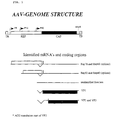
- the capsid proteins VP1, VP2 en VP3 are expressed and the replicated virus is packaged into virions (structure of the AAV-genome and its genes are depicted in figure 1).
- the virions accumulate in the nucleus of the cell and are released when the cell lyses as a result of the accumulation of AAV and the helpervirus.
- the AAV-genome consists of two genes rep and cap (Fig. 1). Three promoters (P5, P19 and P40) drive the synthesis of mRNAs coding for 4 Rep-proteins (Rep78, Rep68, Rep52 and Rep40) and three capsid proteins (VP1, VP2 and VP3). Both the Rep and the VP-proteins are encoded in overlapping reading frames. Therefore the Rep proteins and also the VP-proteins share a common carboxyterminal end but differ in their N-termini.
- the AAV-genome is flanked on both sides by a 145 bp sequence, called the Inverted Terminal Repeat (ITR).
- ITR Inverted Terminal Repeat
- the P5-promoter is activated first and directs the production of Rep78 and Rep68. These proteins are essential for AAV-replication and trans regulation of viral genes.
- the large Rep-proteins activate the P19 and the P40 promoter.
- Rep78 and Rep68 downregulate expression of the P5 promoter and help to maintain the latency of AAV (for a review see 1 ).
- the smaller Rep-proteins, Rep52 and Rep40 are encoded by transcripts from the P19 promoter and are important for the formation of infectious virus 6 .
- the P40 promoter is the last promoter to become activated and the expression follows the expression of the late genes of the helper adenovirus.
- a mature AAV virion consists of 5% VP1, 5% VP2 and 90% VP3 7 .
- the first recombinant AAV vectors were made by replacing sequences from the rep or the cap gene by the sequences of interest 8-10 .
- the vector genome was packaged by co-transfecting into adenovirus infected cells a plasmid containing the vector with either a plasmid containing the missing AAV-gene or a recombinant AAV-genome that was too large to be packaged by an insertion of lambda phage DNA 8-10 .
- Recombinant virus that was produced in this way was always contaminated with wild-type AAV (ranging from 10-50% compared to the recombinant titer).
- a packaging plasmid was constructed that contained no overlap with the vector plasmid 11 .
- This packaging plasmid it is possible to generate rAAV virus stock which is free of detectable amounts of wild-type AAV and at the same time enabling the production of 0.1 to 1 rAAV particles per cell 11 .
- This packaging system or analogous systems derived therefrom are currently standardly used by most laboratories. Although this is the method of choice at present, the method is far from optimal and cannot easily be scaled up to allow for "industrial" production of rAAV vectors. Plasmid transfections are inherently inefficient and difficult to standardize or to scale up. This is even more true for co-transfections.
- the yield of rAAV in a typical rAAV-production (0.1-1 particles per cell) is very low with the current methods 11, 12 .
- This low yield makes purification of the rAAV a difficult task to undertake.
- the production problems pose a real technological obstacle for the further development of AAV-vector technology for gene therapy purposes.
- the most convenient packaging system would be in vitro packaging of rAAV by purified recombinantly produced AAV-proteins.
- a practical alternative is the generation of a packaging cell line for rAAV where the packaging cell line supplies in trans the required AAV and helper virus proteins for the production of rAAV.
- the specific recombinant AAV producing cell lines can be generated by stably transfecting a plasmid containing the recombinant AAV into the packaging cells.
- the present invention is useful for both the in vitro packaging strategy and the packaging cell line strategy.
- Packaging cell lines are currently the most efficient way in which retrovirus and adenovirus vectors are produced for therapeutical purposes such as gene therapy 13, 14 .
- Virus protein production for the in vitro packaging on an industrial scale is currently employed for Lambda phages.
- the currently available packaging cell lines for retrovirus and adenovirus vectors constitutively produce the in trans required virus proteins 15-21 .
- Mammalian cells useful for efficient packaging of rAAV or the production of AAV proteins are not available.
- Recombinant AAV packaging cell lines require that production of the in trans required AAV-proteins are present in the cells only during the production phase of the rAAV vector.
- Clark et al. 30b reported the generation of dedicated cell lines capable of producing specific rAAV vectors upon adenovirus infection.
- stable transfection of only the packaging construct and a selectable markergene resulted in cell lines that, after transfection of a rAAV construct, were capable of replicating rAAV but not packaging rAAV.
- this method can not be used to generate universal packaging cell lines for the production of different rAAV vectors.
- the invention thus provides a recombinant DNA molecule comprising a gene which gene is under the control of a combination of an inducible repressor and an inducible transactivator.
- a recombinant DNA molecule comprising a gene which gene is under the control of a combination of an inducible repressor and an inducible transactivator.
- the repressor is also a modulator. It is important only that a repression functionality is present at the same time as a non-functional activator in the "switched off” state and a non-functional repressor and a functional activator functionality in the "switched on” state. This may thus be arrived at by any combination of the two, either repressor-activator, modulator-modulator, modulator-repressor or modulator activator. Not only is the expression essentially completely switched off in the "off” state, but also the expression levels in the "on” state are unexpectedly high.
- the invention is particularly useful for the expression of genes of which the product is toxic for cells expressing said product.
- inducible repressors and/or activators some of which may be promoters and others being parts of a DNA molecule upstream of a promoter, all of which may be used according to the present invention.
- inducible is meant to include all such promoters, activators or repressors which respond to the presence or absence of a signal, such as the presence of a chemical substance or a change of temperature, by either improving transcription or reducing transcription.
- the choice that has to be made is that both functionalities (repressor and activator) together result in an essentially complete "switch-off" and an enhanced “switched-on” state.
- One such a combination comprises at least one transactivator sequence which is a binding site for a tetracycline repressor, preferably one whereby the binding site is derived from tn10 described herein below.
- Another such a preferred embodiment comprises a recombinant DNA molecule whereby at least one inducible repressor sequence is a binding site for a YY1 repressor, or whereby at least one inducible repressor is a binding site for a major late transcription factor (MTLF), or whereby at least one inducible repressor is derived from an adeno-associated virus p5 promoter all described below.
- MTLF major late transcription factor
- the invented molecules are preferably used to express parvovirus gene products.
- a preferred embodiment therefore comprises a recombinant DNA molecule whereby the gene encodes at least a specific part of a Parvovirus protein and/or a recombinant DNA molecule whereby the gene is a Parvovirus non-structural gene, preferably an adeno-associated virus rep gene.
- cells can be stably transfected therewith.
- Such cells are also a part of the present invention, especially such cells which have been immortalized and which are of mammalian origin.
- One of the goals of the present invention is providing better means and methods for gene therapy for which the most suitable cells to use in production of means for gene therapy are mammalian cells. They are also the natural host for the viruses which are preferred according to the present invention.
- the cells according to the invention which are to be used as production facilities for recombinant virus protein, particles or virions, or which are packaging cell lines need to be capable of induced expression and inducible repression of the gene comprised in the recombinant DNA molecule.
- the cells When the cells are used for packaging or production of recombinant adenovirus associated virus particles they should preferably at least be capable of inducible expression and repression of Rep78/Rep68 or derivatives thereof, of an adeno associated virus.
- rAAV should comprise packaging cells according to the invention which have been provided with at least one additional recombinant nucleic acid molecule to be packaged into a parvovirus, preferably rAAV which additional nucleic acid should comprise at least a gene of interest, flanked by parvovirus inverted terminal repeats conveying in cis the required sequence information for rescue, replication, packaging and integration of the rAAV vector.
- the present invention also provides methods for producing recombinant parvovirus comprising culturing a cell line according to the invention in a suitable culture medium and harvesting recombinant parvoviruses from said culture, as well as that it comprises recombinant parvovirus obtainable by such a method.
- the present invention further provides a cell line expressing in a regulated fashion Rep78 and Rep68 useful for the production and purification of AAV-proteins and the production of a rAAV packaging cell line. It further discloses the identification of sequences in the AAV p5 promoter that combined with regulated promoter elements or alone facilitate regulated expression of Rep78 and Rep68 in stably transfected mammalian cells . The present invention further discloses methods for the generation of such cell lines expressing the AAV-coding regions in mammalian cells useful for the generation of rAAV-packaging cells.
- a cell line expressing high levels of Rep78 and Rep68 in a regulated fashion is provided.
- a further embodiment of the invention comprises methods to improve the quality of rAAV-preparations by reducing the amount of wild-type AAV produced and methods to improve the overall yield of rAAV per cell by separating the AAV-transcription units and placing them on different constructs.
- recombinant AAV packaging cell a cell line is meant which provides in trans required AAV-proteins necessary for the replication and/or packaging of modified wild-type or recombinant AAV genomes.
- the in trans required proteins are provided either in a constitutive fashion or in a regulated fashion.
- parvovirus protein expression refers to levels of expression sufficient for replication and/or packaging of recombinant or modified wild-type parvovirus genomes.
- regulated expression is intended to mean expression levels which can be altered either by manipulating the cell's environment or by infecting the cells with a virus such as adenovirus or herpes simplex virus.
- regulated promoter means a DNA sequence, preferably a promoter, which enables a linked gene to be expressed at levels that can be modified by changing the cell's environment, for instance by the addition or removal of compounds to the medium in which the cells are grown.
- the system of repression combined with activation may be used in in vivo settings as well, whereby switching on and off of the gene is achieved by administration of an inducing agent.
- the present invention is in one aspect based on the discovery of sequences that enable the efficient production of stable cell lines expressing in a regulated fashion high levels of Rep78 and Rep68. As noted above, it has been shown to be possible to obtain stable clones expressing the Rep78 protein in a regulated fashion. However, the frequency with which such clones are found and more importantly the level of regulated Rep78 expression is very low. This has severely limited the application and the development of packaging cell lines for rAAV. The present invention for the first time describes the generation of efficient packaging cell lines for the production of recombinant AAV.
- the classical inducible eukaryotic promoters like for instance the mouse methallothionine promoter or the mouse mammary-tumor virus long terminal repeat promoter, respond to heavy metals, heat shock or hormones 31-38 .
- the human immunodeficiency virus (HIV) long terminal repeat promoter can be induced by the HIV transactivator protein TAT or by the adenovirus E1A protein.
- An inducible expression system based on HIV promoter induction by TAT has been described in patent application EP 0 455 424 and expression of AAV rep proteins driven by the HIV promoter was suggested in patent application WO 95/13365.
- inducible promoters are in principle not ideally suited to inducibly express (toxic) genes, since the promoters are not completely silent in the uninduced state 32 and/or because the inducing principle induces pleiotropic effects in the target cells 39 .
- a new generation of regulated promoters has adapted parts from bacterial transcription units for use in eukaryotic cells 40-47 . These artificial transcription units are adapted from the lac repressor-operator-inductor system or the TN10-specific tetracycline resistance operon from E. coli.
- RNA-polymerase II during elongation by a repressor-operator complex 43, 46 ; or iii) the activation of a minimal TATA-box .
- tA transactivator
- Binding of the tA to the operator sequences can be effectively inhibited with specific compounds, i.e. IPTG for tA based on the lac-repressor operator binding domain, and tetracycline or tetracycline-related compounds for tA based on the tetracycline-repressor operator binding domain.
- specific compounds i.e. IPTG for tA based on the lac-repressor operator binding domain
- tetracycline or tetracycline-related compounds for tA based on the tetracycline-repressor operator binding domain.
- lac-repressor/operator based systems in mammalian cells is limited, because the inducer compound ⁇ -D-thiogalactopyranoside (IPTG), despite its rapid uptake and intracellular stability, acts rather slowly and inefficient. Consequently, such systems give only moderate expression induction (47).
- Stable cell lines exist that constitutively express the tetracycline-repressor VP16 fusion gene (tA). Therefore, in one embodiment of the invention the AAV rep gene is placed downstream from the tet operon and this construct is introduced into tA-expressing cells. Tetracycline or related compounds are present in the medium during cell expansion. AAV rep expression can be induced by removal of said compounds from the culture.
- tetracycline and many tetracycline derivatives are nontoxic to eukaryotic cells at the low concentration required to abolish gene expression, their continuous presence is suboptimal in a variety of experimental and industrial set ups; for example, in the breeding of transgenic animals, in gene therapy or in large volume bioreactors, where for full activation of gene expression the tetracycline or derivative needs to be washed out rigorously.
- an inducing effector substance would be preferred over an inhibiting compound and as such a modified tA was developed (Gossen et al., Science 268 (1995):1766-1769).
- rTetR reverse Tet repressor
- rtTA reverse tetracycline-controlled activator in which rTetR was fused to VP16 was developed.
- Cell lines expressing the rtTA were generated and can be used to express tet-operon controlled transcription units upon induction with tetracycline or tetracycline derivatives (Gossen et al., Science 266(1995):1766-1769).
- the AAV rep gene cloned downstream from the tet operon is introduced into rtTA-expressing cells and AAV rep expression can be induced by the addition of tetracycline or related compounds to the medium.
- the upstream primer was 5'-ATTAATCTAGACTAGTCGCGCAGCCGCCATGCCGGGG-3' and the downstream primer was 5'-TGTGGAAGTAGCTCTCTCCC-3'.
- the PCR reaction was performed on pAAV/Ad with pfuTM (Stratagene) using the buffer and the reaction conditions recommended by the manufacturer.
- the final construct, tet(O) Ap5- rep was generated by digesting the 299 bp PCR product with SfiI and XbaI and ligating the resulting 248 bp fragment in a three part ligation with a 3.95 kb SfiI-XbaI fragment from pAAV/Ad into the XbaI site immediately downstream of the tet(O) construct.
- the amplified part of the construct was checked by sequencing and found to be as expected.
- Both the tet(O) ⁇ p5- rep and the tet(O)+p5- rep constructs express Rep78 and Rep68 in a doxycycline regulated fashion in HtTA cells.
- Both the tet(O) ⁇ p5- rep promoter and the tet(O)+p5- rep promoter are upregulated upon adenovirus infection.
- Rep78 and Rep68 expression in the uninduced state i.e. with doxycycline and without adenovirus
- the constructs were used to produce recombinant AAV.
- Recombinant AAV was titrated in a replication center assay (RCA) by serial dilution of the recombinant AAV stock on adenovirus ts149 and wtAAV infected 293 cells 20 as described in 49 .
- This assay takes advantage of the fact that recombinant AAV-DNA is replicated to very large amounts in wtAAV and adenovirus infected 293 cells.
- the vector DNA accumulation in the nucleus of transduced cells is large enough to allow the detection of individual infected cells following hybridization with a vector specific probe.
- the cells were collected in PBS-EDTA (5mM) after one day and single cell suspensions were transferred to a hybond N + nylon membrane.
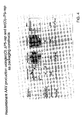
- the tet(O) ⁇ p5- rep packaging construct produced about 20 spots which, adjusted for the dilution, corresponded to a titer of 6 x 10 4 Infectious Particles (IP) per ml whereas the tet(O)+P5- rep packaging construct produced about 34 spots corresponding to a titer of 1.0 x 1.0 5 IP per ml (Fig. 4).
- IP Infectious Particles
- adeno-associated virus P5 promoter contains a motif centered at -60 and +1 relative to its initiation site that mediates transactivation by the 13S E1A protein.
- a cellular factor, YY1 that binds to the motif was identified, and its cDNA was cloned.
- YY1 is a 414-amino-acid zinc finger protein that represses transcription when bound upstream of heterologous basal promoters; ElA-proteins relieve the repression and activate transcription through YY1 50 .
- constructs carrying only the p5-promotor (pAAV/Ad) as functional element driving expression of Rep78 and Rep68 are much less efficient in generating stable cell lines expressing Rep78/Rep68 in a regulatable fashion than combinations of a regulatable activator with the p5-promotor (tet(0)+p5-rep).
- CAT chloroamphenicol acetyltransferase
- pOPI3CAT and pCMVLacI were obtained from Stratagene (La Jolla, California, USA).
- pCMVLacI contains the E . coli lac repressor under transcriptional control of the CMV promoter.
- RSV Rous Sarcoma virus
- pOPI3CAT the constitutive Rous Sarcoma virus (RSV) promoter from pOPI3CAT was exchanged for the tet-operon promoter by ligating the 5.7 kb SnaBI-BglII fragment from pOPI3GAT to a 0.66 kb PvuII-BamHI fragment containing the tet-operon + minimal TATA-Box from the CMV promoter.
- RSV Rous Sarcoma virus
- the latter fragment was obtained from a pBluescript SK + (Stratagene, La Jolla, California, USA) containing the ClaI-BamHI fragment from pUHD10-3 (obtained from Prof. Bujard) in the Clal-BamHI sites of pBluescript SK + .
- the construct pCMVLacZ was used as a transfection efficiency control. It carries the E. coli ⁇ -galactosidase gene as a reporter gene under the transcriptional control of a CMV promoter.
- a reporter gene was used to analyze the activity of a promoter with a regulatable transactivator (tet-VP16) and a regulatable repressor (LacI).
- tet-VP16 a regulatable transactivator
- LacI regulatable repressor
- the tet-VP16 system has been described in example 1 of this application.
- the E. coli lac-repressor/operator /inducer system has been shown to function in mammalian cells (Dueschle, U. Hibskind, R.A. and Bujard, H. (1990). Science 248, 480-483). Repression with this system can be obtained via various methods of transcription interference.
- RNA-polymerase II is blocked during elongation by a lac repressor/operator complex.
- the lac repressor/operator complex can be released from the transcription unit thus allowing elongation by the addition of isopropyl ⁇ -D-thiogalactopyranoside (IPTG) to the culture medium.
- IPTG isopropyl ⁇ -D-thiogalactopyranoside
- ptet(o)OPCAT expression of CAT can be regulated by adding IPTG and/or tetracycline or its analogs such as doxycycline to the medium.
- HtTA cells were transiently transfected with the following constructs: pCMVLacI, ptet(o)OPCAT, pBluescript SK+, and pCMVLacZ. Transfections and subsequent culture were performed in DMEM+10% FCS and Gentamycin (50 ug/ml). Transfections were performed using the Calcium phosphate transfection system from Life Technologies (Breda, The Netherlands) according to the manufacturers description. HtTA cells (3-6 x 10 5 cells per dish) were seeded into 8 60 mm dishes (Greiner, Alphen aan de Rijn, The Netherlands) one day prior to transfection.
- the CAT-assays were performed as described in (Sambrook J, Fritsch EF, Maniatis T: Molecular Cloning: A laboratory manual. 1989).
- the thin layer chromatography plates were exposed to photostimulable storage phosphor plates and scanned with a PhosphorImager (Molecular Dynamics, Sunnyvale, CA) and chloroamphenicol conversion was quantitated.
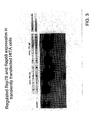
- FIG. 6A shows the autoradiogram of the CAT-assay. Lanes 1 to 4 of exp. 1 and 9 to 12 of exp. 2 shows the CAT-assay from the transfection and lanes 5 to 8, Exp. 1 and 13 to 16, exp. 2 show the result from the untransfected control cultures. Below the autoradiogram is depicted whether IPTG or Doxycycline (Dox.) was present (+) or absent (-) during the experiment.
- Figure 6B show the percentage conversion of chloroamphenical into acytylated forms from each lane.
- Fig 6C shows the induction of CAT-activity in the samples relative to the CAT-activity in the most repressed state (-IPTG, +Dox.) within the same experiment.
- CAT-activity In the presence of doxycycline and in the absence of IPTG, when the promoter is in its most repressed state CAT-expression can be detected, albeit at a very low level (fig 6A, lane 2 and lane 10).
- CAT-activity is increased by resp. 19 and 2.3-fold.
Landscapes
- Health & Medical Sciences (AREA)
- Life Sciences & Earth Sciences (AREA)
- Genetics & Genomics (AREA)
- Chemical & Material Sciences (AREA)
- Organic Chemistry (AREA)
- Engineering & Computer Science (AREA)
- Zoology (AREA)
- Wood Science & Technology (AREA)
- Bioinformatics & Cheminformatics (AREA)
- General Engineering & Computer Science (AREA)
- Biotechnology (AREA)
- Biomedical Technology (AREA)
- Biophysics (AREA)
- Molecular Biology (AREA)
- General Health & Medical Sciences (AREA)
- Biochemistry (AREA)
- Physics & Mathematics (AREA)
- Plant Pathology (AREA)
- Microbiology (AREA)
- Virology (AREA)
- Proteomics, Peptides & Aminoacids (AREA)
- Medicinal Chemistry (AREA)
- Gastroenterology & Hepatology (AREA)
- Micro-Organisms Or Cultivation Processes Thereof (AREA)
- Preparation Of Compounds By Using Micro-Organisms (AREA)
Claims (21)
- Rekombinantes DNA-Molekül, das ein interessierendes Gen umfasst, welches unter der Kontrolle einer Kombination aus einem induzierbaren Repressor und einem induzierbaren Transaktivator steht, wobei die Transaktivatorsequenz eine Bindungsstelle für einen Tetracyclin-Repressor ist.
- Rekombinantes DNA-Molekül gemäß Anspruch 1, wobei die Bindungsstelle von tn10 abgeleitet ist.
- Rekombinantes DNA-Molekül gemäß Anspruch 1 oder 2, wobei wenigstens eine induzierbare Repressorsequenz eine Bindungsstelle für einen YY1-Repressor ist.
- Rekombinantes DNA-Molekül gemäß einem der Ansprüche 1 bis 3, wobei wenigstens ein induzierbarer Repressor eine Bindungsstelle für einen starken späten (major-late) Transcriptionsfaktor (MLTF) ist.
- Rekombinantes DNA-Molekül gemäß Anspruch 1 oder 2, wobei wenigstens ein induzierbarer Repressor von einem p5-Promotor eines adenoassoziierten Virus abgeleitet ist.
- Rekombinantes DNA-Molekül gemäß einem der Ansprüche 1 bis 5, wobei das interessierende Gen wenigstens einen spezifischen Teil eines Parvovirus-Proteins codiert.
- Rekombinantes DNA-Molekül gemäß einem der Ansprüche 1 bis 6, wobei das interessierende Gen ein nichtstrukturelles Parvovirus-Gen ist.
- Rekombinantes DNA-Molekül gemäß Anspruch 7, wobei das interessierende Gen ein rep-Gen eines adenoassoziierten Virus ist.
- Säugerzelle, die ein rekombinantes DNA-Molekül gemäß einem der vorstehenden Ansprüche umfasst.
- Zelle gemäß Anspruch 9, die immortalisiert wurde.
- Zelle gemäß einem der Ansprüche 9 und 10, die zu einer induzierten Expression und induzierbaren Repression des interessierenden Gens, das in dem rekombinahten DNA-Molekül enthalten ist, befähigt ist.
- Zelle gemäß Anspruch 11, die zu einer induzierbaren Expression und Repression von Rep78/Rep68, Rep52/Rep40 und/oder VP1/VP2/VP3 eines adenoassoziierten Virus befähigt ist.
- Verpackungszelllinie zur Herstellung von rekombinanten Parvovirus-Partikeln, die eine Zelle gemäß einem der Ansprüche 9 bis 12 und/oder ein rekombinantes DNA-Molekül gemäß einem der Ansprüche 1 bis 8 umfasst.
- Zelllinie zur Herstellung von rekombinanten Parvovirus-Partikeln, die eine Verpackungszelllinie gemäß Anspruch 13 umfasst, wobei Verpackungszellen mit wenigstens einem zusätzlichen rekombinanten zu verpackenden Nucleinsäuremolekül versehen wurden, das ein interessierendes Gen umfasst, das durch parvovirale invertierte terminale Repeats flankiert ist, die in cis-Anordnung die erforderliche Sequenzinformation für die Bergung, Replikation, Verpackung und Integration des rAAV-Vektors enthalten.
- Zelllinie gemäß Anspruch 14, wobei die für die Produktion von Viruspartikeln notwendigen Materialien entweder in dem genetischen Material der Verpackungszelle oder auf der zusätzlichen rekombinanten Nucleinsäure, aber nicht auf beiden, vorhanden sind.
- Säugerzelle, die ein DNA-Molekül umfasst, das ein interessierendes Gen umfasst, welches unter der Kontrolle einer Kombination aus einem induzierbaren Repressor und einem induzierbaren Transaktivator steht.
- Säugerzelle gemäß Anspruch 16, wobei die Säugerzelle eine Verpackungszelle ist.
- Verfahren zur Herstellung von rekombinantem Parvovirus, das das Kultivieren einer Zelllinie gemäß Anspruch 14 oder 15 oder einer Säugerzelle gemäß Anspruch 16 oder 17 in einem geeigneten Kulturmedium und das Ernten von rekombinanten Parvoviren aus der Kultur umfasst.
- Rekombinantes Parvovirus, das ein rekombinantes DNA-Molekül gemäß einem der Ansprüche 1 bis 8 enthält.
- Rekombinantes Parvovirus, das ein rekombinantes DNA-Molekül umfasst, das ein interessierendes Gen umfasst, welches unter der Kontrolle einer Kombination aus einem induzierbaren Repressor und einem induzierbaren Transaktivatör steht.
- Verfahren zur induzierbaren Expression eines interessierenden Gens in einer Säugerwirtszelle, wobei die Expression des Gens im Wesentlichen vollständig ausgeschaltet werden kann, wobei das Gen unter der Kontrolle einer Kombination aus einem induzierbaren Transaktivator und einem induzierbaren Repressor steht.
Priority Applications (1)
| Application Number | Priority Date | Filing Date | Title |
|---|---|---|---|
| EP96940158A EP0870044B1 (de) | 1995-12-01 | 1996-11-29 | Regulierte expression von proteinen in stabil transformierten säugetierzellen |
Applications Claiming Priority (4)
| Application Number | Priority Date | Filing Date | Title |
|---|---|---|---|
| EP95203307 | 1995-12-01 | ||
| EP95203307 | 1995-12-01 | ||
| EP96940158A EP0870044B1 (de) | 1995-12-01 | 1996-11-29 | Regulierte expression von proteinen in stabil transformierten säugetierzellen |
| PCT/NL1996/000472 WO1997020943A1 (en) | 1995-12-01 | 1996-11-29 | Regulated protein expression in stably transfected mammalian cells |
Publications (2)
| Publication Number | Publication Date |
|---|---|
| EP0870044A1 EP0870044A1 (de) | 1998-10-14 |
| EP0870044B1 true EP0870044B1 (de) | 2004-04-14 |
Family
ID=8220893
Family Applications (1)
| Application Number | Title | Priority Date | Filing Date |
|---|---|---|---|
| EP96940158A Expired - Lifetime EP0870044B1 (de) | 1995-12-01 | 1996-11-29 | Regulierte expression von proteinen in stabil transformierten säugetierzellen |
Country Status (9)
| Country | Link |
|---|---|
| US (1) | US6140103A (de) |
| EP (1) | EP0870044B1 (de) |
| JP (1) | JP3881382B2 (de) |
| AT (1) | ATE264398T1 (de) |
| AU (1) | AU7710996A (de) |
| DE (1) | DE69632201T2 (de) |
| DK (1) | DK0870044T3 (de) |
| ES (1) | ES2219700T3 (de) |
| WO (1) | WO1997020943A1 (de) |
Families Citing this family (9)
| Publication number | Priority date | Publication date | Assignee | Title |
|---|---|---|---|---|
| KR100470180B1 (ko) * | 1995-06-15 | 2005-02-04 | 크루셀 홀란드 비.브이. | 유전자 요법에 사용할 수 있는 인간의 재조합아데노바이러스 패키징 시스템 |
| US6783980B2 (en) * | 1995-06-15 | 2004-08-31 | Crucell Holland B.V. | Packaging systems for human recombinant adenovirus to be used in gene therapy |
| US6696423B1 (en) | 1997-08-29 | 2004-02-24 | Biogen, Inc. | Methods and compositions for therapies using genes encoding secreted proteins such as interferon-beta |
| WO2001030799A1 (en) * | 1999-10-28 | 2001-05-03 | Research Development Foundation | Methods to enhance and confine gene expression in cancer therapy |
| SG168422A1 (en) * | 2001-11-13 | 2011-02-28 | Univ Pennsylvania | A method of detecting and/or identifying adeno-associated virus (aav) sequences and isolating novel sequences identified thereby |
| EP2543734A1 (de) * | 2011-07-07 | 2013-01-09 | Deutsches Krebsforschungszentrum | Adenoparvovirus-Chimäre mit verbessertem Onkolysepotential |
| EP3456822A1 (de) * | 2017-09-19 | 2019-03-20 | CEVEC Pharmaceuticals GmbH | Induzierbare aav rep gene |
| GB201800903D0 (en) | 2018-01-19 | 2018-03-07 | Oxford Genetics Ltd | Vectors |
| GB201901571D0 (en) | 2019-02-05 | 2019-03-27 | Oxford Genetics Ltd | Inducible AAV sysyem |
Family Cites Families (5)
| Publication number | Priority date | Publication date | Assignee | Title |
|---|---|---|---|---|
| EP0455424A3 (en) * | 1990-05-02 | 1992-04-29 | Merck & Co. Inc. | Mammalian inducible promoter cascade system |
| US5464758A (en) * | 1993-06-14 | 1995-11-07 | Gossen; Manfred | Tight control of gene expression in eucaryotic cells by tetracycline-responsive promoters |
| JPH09509564A (ja) * | 1993-11-09 | 1997-09-30 | ターゲテッド ジェネティックス コーポレイション | 高力価組換えaavベクターの生成 |
| US5851796A (en) * | 1995-06-07 | 1998-12-22 | Yale University | Autoregulatory tetracycline-regulated system for inducible gene expression in eucaryotes |
| KR100470180B1 (ko) * | 1995-06-15 | 2005-02-04 | 크루셀 홀란드 비.브이. | 유전자 요법에 사용할 수 있는 인간의 재조합아데노바이러스 패키징 시스템 |
-
1996
- 1996-11-29 EP EP96940158A patent/EP0870044B1/de not_active Expired - Lifetime
- 1996-11-29 US US09/077,444 patent/US6140103A/en not_active Expired - Lifetime
- 1996-11-29 DE DE69632201T patent/DE69632201T2/de not_active Expired - Lifetime
- 1996-11-29 AT AT96940158T patent/ATE264398T1/de active
- 1996-11-29 WO PCT/NL1996/000472 patent/WO1997020943A1/en not_active Ceased
- 1996-11-29 JP JP52118197A patent/JP3881382B2/ja not_active Expired - Fee Related
- 1996-11-29 ES ES96940158T patent/ES2219700T3/es not_active Expired - Lifetime
- 1996-11-29 DK DK96940158T patent/DK0870044T3/da active
- 1996-11-29 AU AU77109/96A patent/AU7710996A/en not_active Abandoned
Non-Patent Citations (6)
Also Published As
| Publication number | Publication date |
|---|---|
| US6140103A (en) | 2000-10-31 |
| JP2000501934A (ja) | 2000-02-22 |
| DK0870044T3 (da) | 2004-08-02 |
| WO1997020943A1 (en) | 1997-06-12 |
| DE69632201D1 (de) | 2004-05-19 |
| ES2219700T3 (es) | 2004-12-01 |
| DE69632201T2 (de) | 2005-04-21 |
| JP3881382B2 (ja) | 2007-02-14 |
| EP0870044A1 (de) | 1998-10-14 |
| AU7710996A (en) | 1997-06-27 |
| ATE264398T1 (de) | 2004-04-15 |
Similar Documents
| Publication | Publication Date | Title |
|---|---|---|
| CA2176215C (en) | Stable cell lines capable of expressing the adeno-associated virus replication gene | |
| Carter et al. | Adeno-associated viral vectors as gene delivery vehicles. | |
| US20240018545A1 (en) | Adeno-associated virus (aav) producer cell line and related methods | |
| JP4693244B2 (ja) | 組換えアデノ随伴ウイルスのヘルパー無しの生産のための組成物および方法 | |
| US6924128B2 (en) | Packaging cell lines for generation of high titers of recombinant AAV vectors | |
| US6258595B1 (en) | Compositions and methods for helper-free production of recombinant adeno-associated viruses | |
| JP5922095B2 (ja) | 薬理学的に誘導される導入遺伝子アブレーション系 | |
| US20040087026A1 (en) | Host cells for packing a recombinant adeno-associated virus (raav), method for the production and use thereof | |
| CA2207927A1 (en) | Packaging cell lines for generation of high titers of recombinant aav vectors | |
| CA2269661A1 (en) | Recombinase-activatable aav packaging cassettes for use in the production of aav vectors | |
| Pieroni et al. | Targeted integration of adeno-associated virus-derived plasmids in transfected human cells | |
| JP2022514761A (ja) | ウイルスベクターの自動産生方法 | |
| US6232105B1 (en) | Conditional replication and expression system | |
| EP0870044B1 (de) | Regulierte expression von proteinen in stabil transformierten säugetierzellen | |
| Bartlett et al. | Genetics and biology of adeno-associated virus | |
| Trempe | Packaging systems for adeno-associated virus vectors | |
| Dutheil et al. | Site-specific integration by adeno-associated virus | |
| Class et al. | Patent application title: RECOMBINANT VIRUS AND PREPARATIONS THEREOF Inventors: Feng Zhang (Cambridge, MA, US) Feng Zhang (Cambridge, MA, US) Mark D. Brigham (Somerville, MA, US) Le Cong (Cambridge, MA, US) Le Cong (Cambridge, MA, US) Silvana Konermann (Zurich, CH) |
Legal Events
| Date | Code | Title | Description |
|---|---|---|---|
| PUAI | Public reference made under article 153(3) epc to a published international application that has entered the european phase |
Free format text: ORIGINAL CODE: 0009012 |
|
| 17P | Request for examination filed |
Effective date: 19980629 |
|
| AK | Designated contracting states |
Kind code of ref document: A1 Designated state(s): AT BE CH DE DK ES FI FR GB GR IE IT LI LU MC NL PT SE |
|
| AX | Request for extension of the european patent |
Free format text: AL PAYMENT 980629;LT PAYMENT 980629;LV PAYMENT 980629;RO PAYMENT 980629;SI PAYMENT 980629 |
|
| RIC1 | Information provided on ipc code assigned before grant |
Free format text: 7C 12N 15/85 A, 7C 12N 5/10 B, 7C 12N 15/864 B |
|
| 17Q | First examination report despatched |
Effective date: 20001227 |
|
| RAP1 | Party data changed (applicant data changed or rights of an application transferred) |
Owner name: CRUCELL HOLLAND B.V. |
|
| RIC1 | Information provided on ipc code assigned before grant |
Ipc: 7C 12N 15/864 B Ipc: 7C 12N 5/10 B Ipc: 7C 12N 15/85 A |
|
| GRAP | Despatch of communication of intention to grant a patent |
Free format text: ORIGINAL CODE: EPIDOSNIGR1 |
|
| RIC1 | Information provided on ipc code assigned before grant |
Ipc: 7C 12N 15/864 B Ipc: 7C 12N 5/10 B Ipc: 7C 12N 15/85 A |
|
| GRAS | Grant fee paid |
Free format text: ORIGINAL CODE: EPIDOSNIGR3 |
|
| GRAA | (expected) grant |
Free format text: ORIGINAL CODE: 0009210 |
|
| AK | Designated contracting states |
Kind code of ref document: B1 Designated state(s): AT BE CH DE DK ES FI FR GB GR IE IT LI LU MC NL PT SE |
|
| AX | Request for extension of the european patent |
Extension state: AL LT LV RO SI |
|
| REG | Reference to a national code |
Ref country code: GB Ref legal event code: FG4D |
|
| REG | Reference to a national code |
Ref country code: CH Ref legal event code: EP |
|
| REF | Corresponds to: |
Ref document number: 69632201 Country of ref document: DE Date of ref document: 20040519 Kind code of ref document: P |
|
| REG | Reference to a national code |
Ref country code: IE Ref legal event code: FG4D |
|
| REG | Reference to a national code |
Ref country code: SE Ref legal event code: TRGR |
|
| PG25 | Lapsed in a contracting state [announced via postgrant information from national office to epo] |
Ref country code: GR Free format text: LAPSE BECAUSE OF FAILURE TO SUBMIT A TRANSLATION OF THE DESCRIPTION OR TO PAY THE FEE WITHIN THE PRESCRIBED TIME-LIMIT Effective date: 20040714 |
|
| REG | Reference to a national code |
Ref country code: CH Ref legal event code: NV Representative=s name: BOVARD AG PATENTANWAELTE |
|
| REG | Reference to a national code |
Ref country code: DK Ref legal event code: T3 |
|
| LTIE | Lt: invalidation of european patent or patent extension |
Effective date: 20040414 |
|
| REG | Reference to a national code |
Ref country code: ES Ref legal event code: FG2A Ref document number: 2219700 Country of ref document: ES Kind code of ref document: T3 |
|
| ET | Fr: translation filed | ||
| PLBE | No opposition filed within time limit |
Free format text: ORIGINAL CODE: 0009261 |
|
| STAA | Information on the status of an ep patent application or granted ep patent |
Free format text: STATUS: NO OPPOSITION FILED WITHIN TIME LIMIT |
|
| 26N | No opposition filed |
Effective date: 20050117 |
|
| PG25 | Lapsed in a contracting state [announced via postgrant information from national office to epo] |
Ref country code: PT Free format text: LAPSE BECAUSE OF NON-PAYMENT OF DUE FEES Effective date: 20040914 |
|
| PGFP | Annual fee paid to national office [announced via postgrant information from national office to epo] |
Ref country code: AT Payment date: 20101103 Year of fee payment: 15 |
|
| PGFP | Annual fee paid to national office [announced via postgrant information from national office to epo] |
Ref country code: DE Payment date: 20101126 Year of fee payment: 15 |
|
| REG | Reference to a national code |
Ref country code: CH Ref legal event code: PFA Owner name: CRUCELL HOLLAND B.V. Free format text: CRUCELL HOLLAND B.V.#ARCHIMEDESWEG 4#2333 CN LEIDEN (NL) -TRANSFER TO- CRUCELL HOLLAND B.V.#ARCHIMEDESWEG 4#2333 CN LEIDEN (NL) |
|
| PGFP | Annual fee paid to national office [announced via postgrant information from national office to epo] |
Ref country code: IT Payment date: 20101126 Year of fee payment: 15 Ref country code: GB Payment date: 20101124 Year of fee payment: 15 |
|
| PGFP | Annual fee paid to national office [announced via postgrant information from national office to epo] |
Ref country code: CH Payment date: 20111123 Year of fee payment: 16 Ref country code: SE Payment date: 20111125 Year of fee payment: 16 Ref country code: NL Payment date: 20111129 Year of fee payment: 16 Ref country code: ES Payment date: 20111124 Year of fee payment: 16 Ref country code: MC Payment date: 20111102 Year of fee payment: 16 Ref country code: FR Payment date: 20111128 Year of fee payment: 16 Ref country code: IE Payment date: 20111123 Year of fee payment: 16 Ref country code: DK Payment date: 20111123 Year of fee payment: 16 Ref country code: FI Payment date: 20111125 Year of fee payment: 16 Ref country code: LU Payment date: 20111205 Year of fee payment: 16 |
|
| PGFP | Annual fee paid to national office [announced via postgrant information from national office to epo] |
Ref country code: BE Payment date: 20111124 Year of fee payment: 16 |
|
| BERE | Be: lapsed |
Owner name: *CRUCELL HOLLAND B.V. Effective date: 20121130 |
|
| REG | Reference to a national code |
Ref country code: NL Ref legal event code: V1 Effective date: 20130601 |
|
| REG | Reference to a national code |
Ref country code: CH Ref legal event code: PL |
|
| REG | Reference to a national code |
Ref country code: DK Ref legal event code: EBP |
|
| REG | Reference to a national code |
Ref country code: AT Ref legal event code: MM01 Ref document number: 264398 Country of ref document: AT Kind code of ref document: T Effective date: 20121129 |
|
| GBPC | Gb: european patent ceased through non-payment of renewal fee |
Effective date: 20121129 |
|
| PG25 | Lapsed in a contracting state [announced via postgrant information from national office to epo] |
Ref country code: CH Free format text: LAPSE BECAUSE OF NON-PAYMENT OF DUE FEES Effective date: 20121130 Ref country code: SE Free format text: LAPSE BECAUSE OF NON-PAYMENT OF DUE FEES Effective date: 20121130 Ref country code: AT Free format text: LAPSE BECAUSE OF NON-PAYMENT OF DUE FEES Effective date: 20121129 Ref country code: LI Free format text: LAPSE BECAUSE OF NON-PAYMENT OF DUE FEES Effective date: 20121130 |
|
| REG | Reference to a national code |
Ref country code: FR Ref legal event code: ST Effective date: 20130731 |
|
| REG | Reference to a national code |
Ref country code: IE Ref legal event code: MM4A |
|
| PG25 | Lapsed in a contracting state [announced via postgrant information from national office to epo] |
Ref country code: FI Free format text: LAPSE BECAUSE OF NON-PAYMENT OF DUE FEES Effective date: 20121129 Ref country code: NL Free format text: LAPSE BECAUSE OF NON-PAYMENT OF DUE FEES Effective date: 20130601 Ref country code: BE Free format text: LAPSE BECAUSE OF NON-PAYMENT OF DUE FEES Effective date: 20121130 Ref country code: IT Free format text: LAPSE BECAUSE OF NON-PAYMENT OF DUE FEES Effective date: 20121129 |
|
| REG | Reference to a national code |
Ref country code: DE Ref legal event code: R119 Ref document number: 69632201 Country of ref document: DE Effective date: 20130601 |
|
| PG25 | Lapsed in a contracting state [announced via postgrant information from national office to epo] |
Ref country code: IE Free format text: LAPSE BECAUSE OF NON-PAYMENT OF DUE FEES Effective date: 20121129 Ref country code: DE Free format text: LAPSE BECAUSE OF NON-PAYMENT OF DUE FEES Effective date: 20130601 Ref country code: DK Free format text: LAPSE BECAUSE OF NON-PAYMENT OF DUE FEES Effective date: 20121130 |
|
| PG25 | Lapsed in a contracting state [announced via postgrant information from national office to epo] |
Ref country code: GB Free format text: LAPSE BECAUSE OF NON-PAYMENT OF DUE FEES Effective date: 20121129 Ref country code: FR Free format text: LAPSE BECAUSE OF NON-PAYMENT OF DUE FEES Effective date: 20121130 |
|
| REG | Reference to a national code |
Ref country code: ES Ref legal event code: FD2A Effective date: 20140304 |
|
| PG25 | Lapsed in a contracting state [announced via postgrant information from national office to epo] |
Ref country code: MC Free format text: LAPSE BECAUSE OF NON-PAYMENT OF DUE FEES Effective date: 20121130 |
|
| PG25 | Lapsed in a contracting state [announced via postgrant information from national office to epo] |
Ref country code: ES Free format text: LAPSE BECAUSE OF NON-PAYMENT OF DUE FEES Effective date: 20121130 Ref country code: LU Free format text: LAPSE BECAUSE OF NON-PAYMENT OF DUE FEES Effective date: 20121129 |