EP0837909B1 - Compositions bitume/polymere a stabilite amelioree et leur application a la realisation de revetements - Google Patents
Compositions bitume/polymere a stabilite amelioree et leur application a la realisation de revetements Download PDFInfo
- Publication number
- EP0837909B1 EP0837909B1 EP97923148A EP97923148A EP0837909B1 EP 0837909 B1 EP0837909 B1 EP 0837909B1 EP 97923148 A EP97923148 A EP 97923148A EP 97923148 A EP97923148 A EP 97923148A EP 0837909 B1 EP0837909 B1 EP 0837909B1
- Authority
- EP
- European Patent Office
- Prior art keywords
- bitumen
- ethylene
- polymer
- weight
- copolymers
- Prior art date
- Legal status (The legal status is an assumption and is not a legal conclusion. Google has not performed a legal analysis and makes no representation as to the accuracy of the status listed.)
- Expired - Lifetime
Links
Classifications
-
- C—CHEMISTRY; METALLURGY
- C08—ORGANIC MACROMOLECULAR COMPOUNDS; THEIR PREPARATION OR CHEMICAL WORKING-UP; COMPOSITIONS BASED THEREON
- C08L—COMPOSITIONS OF MACROMOLECULAR COMPOUNDS
- C08L95/00—Compositions of bituminous materials, e.g. asphalt, tar, pitch
-
- C—CHEMISTRY; METALLURGY
- C08—ORGANIC MACROMOLECULAR COMPOUNDS; THEIR PREPARATION OR CHEMICAL WORKING-UP; COMPOSITIONS BASED THEREON
- C08L—COMPOSITIONS OF MACROMOLECULAR COMPOUNDS
- C08L23/00—Compositions of homopolymers or copolymers of unsaturated aliphatic hydrocarbons having only one carbon-to-carbon double bond; Compositions of derivatives of such polymers
-
- C—CHEMISTRY; METALLURGY
- C08—ORGANIC MACROMOLECULAR COMPOUNDS; THEIR PREPARATION OR CHEMICAL WORKING-UP; COMPOSITIONS BASED THEREON
- C08L—COMPOSITIONS OF MACROMOLECULAR COMPOUNDS
- C08L23/00—Compositions of homopolymers or copolymers of unsaturated aliphatic hydrocarbons having only one carbon-to-carbon double bond; Compositions of derivatives of such polymers
- C08L23/02—Compositions of homopolymers or copolymers of unsaturated aliphatic hydrocarbons having only one carbon-to-carbon double bond; Compositions of derivatives of such polymers not modified by chemical after-treatment
- C08L23/16—Ethylene-propylene or ethylene-propylene-diene copolymers
-
- C—CHEMISTRY; METALLURGY
- C08—ORGANIC MACROMOLECULAR COMPOUNDS; THEIR PREPARATION OR CHEMICAL WORKING-UP; COMPOSITIONS BASED THEREON
- C08L—COMPOSITIONS OF MACROMOLECULAR COMPOUNDS
- C08L33/00—Compositions of homopolymers or copolymers of compounds having one or more unsaturated aliphatic radicals, each having only one carbon-to-carbon double bond, and only one being terminated by only one carboxyl radical, or of salts, anhydrides, esters, amides, imides or nitriles thereof; Compositions of derivatives of such polymers
-
- C—CHEMISTRY; METALLURGY
- C08—ORGANIC MACROMOLECULAR COMPOUNDS; THEIR PREPARATION OR CHEMICAL WORKING-UP; COMPOSITIONS BASED THEREON
- C08L—COMPOSITIONS OF MACROMOLECULAR COMPOUNDS
- C08L33/00—Compositions of homopolymers or copolymers of compounds having one or more unsaturated aliphatic radicals, each having only one carbon-to-carbon double bond, and only one being terminated by only one carboxyl radical, or of salts, anhydrides, esters, amides, imides or nitriles thereof; Compositions of derivatives of such polymers
- C08L33/04—Homopolymers or copolymers of esters
- C08L33/06—Homopolymers or copolymers of esters of esters containing only carbon, hydrogen and oxygen, which oxygen atoms are present only as part of the carboxyl radical
- C08L33/10—Homopolymers or copolymers of methacrylic acid esters
- C08L33/12—Homopolymers or copolymers of methyl methacrylate
-
- C—CHEMISTRY; METALLURGY
- C08—ORGANIC MACROMOLECULAR COMPOUNDS; THEIR PREPARATION OR CHEMICAL WORKING-UP; COMPOSITIONS BASED THEREON
- C08L—COMPOSITIONS OF MACROMOLECULAR COMPOUNDS
- C08L53/00—Compositions of block copolymers containing at least one sequence of a polymer obtained by reactions only involving carbon-to-carbon unsaturated bonds; Compositions of derivatives of such polymers
-
- C—CHEMISTRY; METALLURGY
- C09—DYES; PAINTS; POLISHES; NATURAL RESINS; ADHESIVES; COMPOSITIONS NOT OTHERWISE PROVIDED FOR; APPLICATIONS OF MATERIALS NOT OTHERWISE PROVIDED FOR
- C09D—COATING COMPOSITIONS, e.g. PAINTS, VARNISHES OR LACQUERS; FILLING PASTES; CHEMICAL PAINT OR INK REMOVERS; INKS; CORRECTING FLUIDS; WOODSTAINS; PASTES OR SOLIDS FOR COLOURING OR PRINTING; USE OF MATERIALS THEREFOR
- C09D195/00—Coating compositions based on bituminous materials, e.g. asphalt, tar, pitch
-
- C—CHEMISTRY; METALLURGY
- C08—ORGANIC MACROMOLECULAR COMPOUNDS; THEIR PREPARATION OR CHEMICAL WORKING-UP; COMPOSITIONS BASED THEREON
- C08L—COMPOSITIONS OF MACROMOLECULAR COMPOUNDS
- C08L2666/00—Composition of polymers characterized by a further compound in the blend, being organic macromolecular compounds, natural resins, waxes or and bituminous materials, non-macromolecular organic substances, inorganic substances or characterized by their function in the composition
- C08L2666/02—Organic macromolecular compounds, natural resins, waxes or and bituminous materials
-
- C—CHEMISTRY; METALLURGY
- C08—ORGANIC MACROMOLECULAR COMPOUNDS; THEIR PREPARATION OR CHEMICAL WORKING-UP; COMPOSITIONS BASED THEREON
- C08L—COMPOSITIONS OF MACROMOLECULAR COMPOUNDS
- C08L2666/00—Composition of polymers characterized by a further compound in the blend, being organic macromolecular compounds, natural resins, waxes or and bituminous materials, non-macromolecular organic substances, inorganic substances or characterized by their function in the composition
- C08L2666/02—Organic macromolecular compounds, natural resins, waxes or and bituminous materials
- C08L2666/04—Macromolecular compounds according to groups C08L7/00 - C08L49/00, or C08L55/00 - C08L57/00; Derivatives thereof
-
- C—CHEMISTRY; METALLURGY
- C08—ORGANIC MACROMOLECULAR COMPOUNDS; THEIR PREPARATION OR CHEMICAL WORKING-UP; COMPOSITIONS BASED THEREON
- C08L—COMPOSITIONS OF MACROMOLECULAR COMPOUNDS
- C08L2666/00—Composition of polymers characterized by a further compound in the blend, being organic macromolecular compounds, natural resins, waxes or and bituminous materials, non-macromolecular organic substances, inorganic substances or characterized by their function in the composition
- C08L2666/02—Organic macromolecular compounds, natural resins, waxes or and bituminous materials
- C08L2666/04—Macromolecular compounds according to groups C08L7/00 - C08L49/00, or C08L55/00 - C08L57/00; Derivatives thereof
- C08L2666/08—Homopolymers or copolymers according to C08L7/00 - C08L21/00; Derivatives thereof
Definitions
- the invention relates to bitumen / polymer compositions. having improved stability translating, in particular, by a very good aptitude for hot storage and by excellent mechanical properties. It relates still to the application of said compositions to the production of coatings and in particular coatings road surface, asphalt or surfacing sealing.
- compositions bituminous as coatings for various surfaces and especially as road surface plasters provided that these compositions have a certain number of qualities essential mechanics.
- bitumens do not have not simultaneously all the qualities required and one has long known that the addition of various polymers to these conventional bitumens can modify favorably the mechanical properties of said bitumens and of forming bitumen / polymer compositions having mechanical qualities improved compared to those of bitumens alone.
- the polymers which can be added to bitumens can be elastomers such as polyisobutylene, polyisoprene, polybutadiene, polychloroprene, butyl rubber, random copolymers ethylene / propylene (EP), random terpolymers ethylene / propylene / diene (EPDM), polynorbornene or even plastomers such as polypropylene, polyethylenes, ethylene / vinyl acetate copolymers, copolymers ethylene / methyl acrylate, ethylene / acrylate copolymers butyl.
- EP ethylene / propylene
- EPDM random terpolymers ethylene / propylene / diene
- polynorbornene or even plastomers such as polypropylene, polyethylenes, ethylene / vinyl acetate copolymers, copolymers ethylene / methyl acrylate, ethylene / acrylate copolymers butyl
- Bitumen / polymer compositions based on bitumen or a mixture of bitumens and one or more polymers of the type mentioned above have a limited stability during storage. It happens fairly quickly a demixing between the bituminous phase and the polymer phase, resulting in degradation physicomechanical properties of said compositions relatively short storage time.
- bitumen / polymer compositions consisting of bitumen or mixture of bitumens and one or more polymers as mentioned above, significantly improved stability said compositions in storage and by the same ensured the maintaining or even improving their physicomechanical characteristics.
- bitumen / polymer compositions comprising a bitumen or mixture of bitumens and, counted by weight of the bitumen or mixture of bitumens, 0.3% to 20% and more particularly 0.5% to 10% of at least one primary polymer chosen from the group formed by homopolymers of conjugated dienes, copolymers of dienes conjugated to each other, polynorbornenes, polyisobutylenes, butyl rubber, homopolymers of C 2 to C 4 olefins , copolymers of ethylene and propylene, terpolymers of ethylene, propylene and a C 4 to C 12 diene or alpha-olefin and copolymers of ethylene and at least one monomer A of formula where R 1 denotes H, CH 3 or C 2 H 5 and R 2 represents a radical -COOR 5 , -OR 5 , -OOCR 6 or phenyl with R 5 denoting a C 1 to C
- the monomers C are radical polymerizable monomers different from the monomers A and B, such as, for example, CO, SO 2 and acrylonitrile.
- the olefinic copolymers carriers of epoxy or COOH functional groups used to produce the bitumen / polymer composition, have masses molecular such as the melt index of said copolymers, determined according to standard ASTM D 1238 (test performed at 190 ° C under a load of 2.16 kg), has a value, expressed in grams per 10 minutes, between 0.3 and 3000 and preferably between 0.5 and 900.
- bitumen or mixture of bitumens which is used for implementing the method according to the invention, is advantageously chosen from the various bitumens which have a kinematic viscosity at 100 ° C. of between 0.5 ⁇ 10 -4 m 2 / s and 3x10 -2 m 2 / s and preferably between 1x10 -4 m 2 / s and 2x10 -2 m 2 / s.
- bitumens can be bitumens for direct distillation or for distillation under reduced pressure or even blown or semi-blown bitumens, deasphalting residues with propane or pentane, visbreaking residues, or even certain petroleum fractions or mixtures of bitumens and vacuum distillates or mixtures of at least two of the products just listed.
- bitumen or mixture of bitumens used in the process according to the invention in addition to a kinematic viscosity included in the above-mentioned intervals, has a penetrability at 25 ° C., defined according to standard NF T 66004, of between 5 and 800 and of preferably between 10 and 400.
- the primary polymer may in particular be such as polybutadiene, polyisoprene, polychloroprene, butadiene / isoprene copolymers, polynorbornene, polyisobutylene, butyl rubber, high density polyethylene, low density polyethylene, polypropylene, polybutene, random ethylene / propylene (EP) copolymers, statistical terpolymers ethylene / propylene / diene (EPDM), ethylene / vinyl acetate copolymers (EVA), ethylene / acrylate copolymers of a C 1 to C 6 alkyl, in particular ethylene / methyl acrylate copolymers and ethylene / butyl acrylate copolymers, and ethylene / methacrylate copolymers of a C 1 to C 6 alkyl, in particular ethylene / ethyl methacrylate copolymers and ethylene / butyl methacrylate copolymers
- At least part of the polymer primary may consist of crushed waste from said polymer.
- the bitumen / polymer composition is prepared in bringing the primary polymer (s) into contact with the functionalized olefin polymers with groups epoxy or COOH with bitumen or mixture of bitumens, in proportions chosen in defined intervals previously, operating at temperatures between 100 ° C and 230 ° C, more particularly between 120 ° C and 190 ° C, and with stirring, for a period of at least 10 minutes, generally of the order of a few tens of minutes to a few hours and, for example, from 10 minutes to 8 hours and more particularly from 10 minutes to 5 hours to train a homogeneous mass constituting the composition bitumen / polymer.
- the primary polymer can be incorporated into the bitumen or mixture of bitumens before or after the polymer olefinic with epoxy or COOH groups, an incorporation simultaneous can also be considered.
- the composition bitumen / polymer can be further added from 1% to 40% and more particularly from 2% to 30%, by weight of the bitumen, a fluxing agent, which may consist, in particular, of a hydrocarbon oil with a distillation interval at atmospheric pressure determined according to the standard ASTM D 86-67, between 100 ° C and 600 ° C and located more especially between 150 ° C and 400 ° C.
- a fluxing agent which may consist, in particular, of a hydrocarbon oil with a distillation interval at atmospheric pressure determined according to the standard ASTM D 86-67, between 100 ° C and 600 ° C and located more especially between 150 ° C and 400 ° C.
- This oil hydrocarbon which can in particular be an oil cut of aromatic character, an oil cut of character naphtheno-aromatic, a petroleum cut with character naphthéno-paraffinique, an oil cut of character paraffinic, a coal oil or an oil of plant origin, is sufficiently "heavy” to limit evaporation when added to bitumen and at the same time sufficiently “light” time to be eliminated as much as possible after spreading the bitumen / polymer composition the containing, so as to find the same properties mechanical that would have presented, after hot spreading, the bitumen / polymer composition prepared without using an agent fluxing.
- the fluxing agent can be added in the middle reaction that we form from bitumen, the sulfur crosslinkable elastomer and the coupling agent sulfur donor, at any time during the constitution of said reaction medium, the quantity of fluxing agent being chosen, in the intervals defined above, to be compatible with the desired end use on site.
- the medium based on bitumen or mixture of bitumens, polymer or primary polymers, of polymer (s) olefinic (s) carrying epoxy or COOH groups and possibly a fluxing agent, which gives rise to the bitumen / polymer composition may still contain one or more several non-polymer additives capable of reacting with the epoxy or COOH groups of the olefinic polymer functionalized.
- These reactive additives can be especially amines, especially polyamines, primary or secondary, alcohols, especially polyols, acids, especially polyacids, or metallic salts.
- Reactive amine additives are, for example, aromatic diamines such as diamino-1, 4 benzene, diamino-2, 4 toluene, diaminonaphthalene, bis (4-amino phenyl) sulfone, bis (4-amino phenyl) ether, bis (4-amino phenyl) methane, aliphatic or cycloaliphatic diamines such as those of formula H 2 N - R 13 -NH 2 where R 13 denotes a C 2 to C 12 alkylene or C 6 to C 12 cycloalkylene radical, for example ethylenediamine, diaminopropane, diaminobutane, diaminohexane, diaminodecane, diaminododecane, diaminocyclohexane, diaminocyclooctane, diaminocyclododecane, polyethylene polyamines or polypropylene poly
- Reactive additives of the alcohol type are, in particular, polyols such as diols or triols and in particular diols of formula HO - R 14 - OH, where R 14 denotes a hydrocarbon radical, in particular a C 2 to C 18 alkylene radical, arylene, C 6 -C 8 cycloalkylene, C 6 -C 8, and HO formula polyetherdiols [C q H 2q O] r H where q is a number from 2 to 6 and especially equal to 2 or 3 and r is a number at least equal to 2 and for example ranging from 2 to 20.
- polyols examples include such as ethylene glycol, propylene glycol, butylene glycol, diethylene glycol, triethylene glycol, tetraethylene glycol, hexanediol, octane diol.
- Reactive additives of the acid type are, in particular, polyacids of formula HOOC - R 14 -COOH, where R 14 has the meaning given above.
- polyacids are such as phthalic acid, terephthalic acid, malonic acid, succinic acid, adipic acid, glutaric acid.
- Reactive additives of the metal salt type are, in particular, compounds such as hydroxides, oxides, alcoholates, carboxylates as formates and acetates, methoxides, ethoxides, nitrites, carbonates and bicarbonates of metals from groups I, II, III and VIII of the Table Periodic of the Elements, in particular Na, K, Li, Mg, Ca, Cd, Zn, Ba, Al, Fe.
- the amount of the reactive additive or additives reagents, which are incorporated into the reaction medium giving birth of bitumen / polymer compositions, can range from 0.01% to 10% and more particularly 0.05% to 5% of the weight of bitumen present in said reaction medium.
- bitumen / polymer compositions at any time during their constitution, additives conventionally used in compositions bitumen / polymer such as adhesion promoters bitumen / polymer composition on mineral surfaces or fillers like talc, carbon black, tires used crumbs.
- bitumen / polymer composition contains a fluxing agent consisting of a hydrocarbon oil such as defined above
- said composition can be produced bitumen / polymer by incorporating the olefinic polymer carrier of epoxy or COOH groups and the primary polymer with bitumen or mixture of bitumens in the form of a solution mother of these polymers in the hydrocarbon oil constituting the fluxing agent.
- the mother solution is prepared by contacting of the component ingredients, namely hydrocarbon oil as solvent, olefinic polymer with epoxy groups or COOH or / and primary polymer and, where appropriate additive reactive, at temperatures between 10 ° C and 170 ° C and more particularly between 40 ° C and 120 ° C and with stirring, for a sufficient time, for example between 10 minutes and 2 hours, to obtain a dissolution full of ingredients in hydrocarbon oil.
- component ingredients namely hydrocarbon oil as solvent, olefinic polymer with epoxy groups or COOH or / and primary polymer and, where appropriate additive reactive
- the respective concentrations of the various ingredients, in particular olefinic polymer with groups epoxy or COOH, primary polymer and, where appropriate, additive reagent in stock solution can vary quite widely depending, in particular, on the nature of the oil hydrocarbon used to dissolve said ingredients.
- the respective amounts of olefin polymer functionalized and primary polymer can represent advantageously 1% to 20% and 5% to 30% by weight of the oil hydrocarbon.
- bitumen / polymer compositions in using the mother solution technique, we mix the mother solution containing the olefinic polymer functionalized and the primary polymer and, if applicable reactive additives with bitumen or a mixture of bitumens, operating at temperatures between 100 ° C and 230 ° C, more particularly between 120 ° C and 190 ° C, and below agitation, this being achieved, for example, by incorporating the bitumen stock solution or mixture of bitumens maintained with stirring at temperatures between 100 ° C and 230 ° C and above particularly between 120 ° C and 190 ° C, then maintain the resulting mixture with stirring at temperatures between 100 ° C and 230 ° C, more particularly between 100 ° C and 190 ° C, for example at the temperatures used for mix the stock solution with the bitumen, for a period of at least 10 minutes, and generally ranging from 10 minutes to 2 hours, to form a reaction product constituting the composition bitumen / polymer.
- the amount of stock solution mixed with the bitumen or mix of bitumens is chosen to supply the quantities desired, based on bitumen, of olefinic polymer to epoxy or COOH and primary polymer groups, said groups quantities being in the ranges defined above.
- Bitumen / polymer compositions with stability improved according to the invention can be used as which or diluted with varying proportions of a bitumen or mixture of bitumens or a composition according to the invention having different characteristics for constitute bitumen / polymer binders having a content chosen in polymers, which can be either equal (composition undiluted) or much lower (diluted composition) than the polymer content of bitumen / polymer compositions corresponding initials.
- bitumen or mixture bitumen or with a composition according to the invention of different characteristics can be achieved either directly after obtaining said compositions, when almost immediate use of binders resulting bitumen / polymer is required, or even after a more or less prolonged storage period for bitumen / polymer compositions, when used of the resulting bitumen / polymer binders is considered.
- the bitumen or mixture of bitumens used for the dilution of a bitumen / polymer composition according to the invention can be chosen from the bitumens defined above, as suitable for the preparation of the compositions bitumen / polymer.
- the dilution of a bitumen / polymer composition by a bitumen or mixture of bitumens or by a second composition according to the invention with a lower polymer content, for forming a bitumen / polymer binder with a selected content of polymers lower than that of the composition bitumen / polymer to be diluted, is generally made in bringing into contact, with stirring and at temperatures between 100 ° C and 230 ° C and more particularly between 120 ° C and 190 ° C, suitable proportions of the bitumen / polymer composition to be diluted and bitumen or mixture bitumen or second bitumen / polymer composition according to the invention.
- Bitumen / polymer binders consisting of bitumen / polymer compositions according to the invention or resulting dilution of said compositions with a bitumen or mixture of bitumens or by another composition bitumen / polymer according to the invention, up to the desired content of polymer (s) in said binders, are applicable, directly or after an aqueous emulsion, at the production of coated road surfaces superficial, for the production of hot mix asphalt or cold, or the production of coatings sealing.
- rheological and mechanical bitumen or bitumen / polymer compositions to which reference is made in said examples, namely Ball and Ring penetrability and softening point, are those defined above.
- Bitumen / polymer compositions were prepared controls (examples 1, 2 and 3), as well as compositions bitumen / polymer according to the invention (examples 4, 5 and 6), for evaluate and compare the characteristics physicomechanical.
- Example 2 We operated as described in Example 1, in replacing, however, the ethylene / acetate copolymer vinyl with low density polyethylene having an index fluidity, determined as indicated in Example 1, having a value equal to 1.2 g per 10 minutes.
- Example 5 (according to the invention):
- Example 4 We operated as described in Example 4, in replacing, however, the ethylene / acetate copolymer vinyl with 20 parts of the polynorbornene used in example 2 and using 972.5 parts of bitumen and 7.5 parts of the ethylene / acrylate terpolymer methyl / glycidyl methacrylate.
- Example 4 We operated as described in Example 4, in replacing, however, the ethylene / acetate copolymer vinyl by low density polyethylene used in Example 3.
- the penetration was determined at 25 ° C (Pen) and the ball softening temperature and Ring (TBA).
- a storage stability test at 180 ° C for 3 days was carried out on each of the compositions bitumen / polymer obtained.
- This test consists of filling in a aluminum tube, type "toothpaste tube", by means of the composition to study and maintain the tube containing the composition at a temperature of 180 ° C for the duration chosen for storage, namely 3 days. At the end of said time, the tube is cooled, then it is cut into three parts having substantially the same length. We determine then the penetration at 25 ° C and the temperature of softening of the composition in each part high (upper third) and low (lower third) of the tube.
- the composition is all the more stable as the difference "Delta X" is smaller.
- compositions in EVA, PNB, LDPE and TPO are expressed in percentages by weight of the overall amounts of bitumen and polymer (s).
Landscapes
- Chemical & Material Sciences (AREA)
- Organic Chemistry (AREA)
- Chemical Kinetics & Catalysis (AREA)
- Health & Medical Sciences (AREA)
- Medicinal Chemistry (AREA)
- Polymers & Plastics (AREA)
- Materials Engineering (AREA)
- Engineering & Computer Science (AREA)
- Structural Engineering (AREA)
- Civil Engineering (AREA)
- Life Sciences & Earth Sciences (AREA)
- Wood Science & Technology (AREA)
- Compositions Of Macromolecular Compounds (AREA)
- Paints Or Removers (AREA)
- Road Paving Structures (AREA)
Description
- température de ramollissement (en abrégé TBA), exprimée en °C et déterminée par l'essai Bille et Anneau défini par la norme NF T 66008,
- point de fragilité ou point de Fraass, exprimé en °C et déterminé selon la norme IP 80/53,
- pénétrabilité, exprimée en 1/10 de mm et déterminée selon la norme NF T 66004,
- caractéristiques rhéologiques en traction
déterminées selon la norme NF T 46002 et comportant les
grandeurs :
- contrainte au seuil σs en bars,
- allongement au seuil εs en %,
- contrainte à la rupture σr en bars,
- allongement à la rupture εr en %.







- BT : bitume non modifié de pénétrabilité dans l'intervalle 50/70 utilisé dans les divers exemples ;
- EVA : copolymère statistique éthylène/acétate de vinyle utilisé dans les exemples 1 et 4 ;
- PNB : polynorbornène utilisé dans les exemples 2 et 5 ;
- PEBD : polyéthylène basse densité utilisé dans les exemples 3 et 6 ;
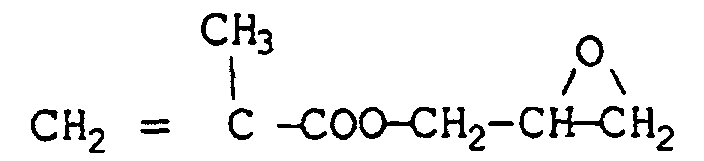
- TPO : terpolymère éthylène/acrylate de méthyle/méthacrylate de glycidyle utilisé dans les exemples 4, 5 et 6.
| Exemples | BT | 1 | 2 | 3 | 4 | 5 | 6 |
| EVA (%) | 3,5 | 3,5 | |||||
| PNB (%) | 2 | 2 | |||||
| PEBD (%) | 3,5 | 3,5 | |||||
| TPO (%) | 1,5 | 0,75 | 1,5 | ||||
| Pen (1/10 mm) | 68 | 48 | 45 | 50 | 54 | 50 | 53 |
| TBA (°C) | 49 | 56 | 62 | 59 | 59 | 70 | 63 |
| STOCKAGE A 180°C PENDANT 3 JOURS | |||||||
| Pen Haut (1/10 mm) | 68 | 83 | 70 | 100 | 54 | 52 | 52 |
| Pen Bas (1/10 mm) | 68 | 42 | 30 | 30 | 53 | 50 | 50 |
| Delta Pen (1/10 mm) | 0 | 41 | 40 | 70 | 1 | 2 | 2 |
| TBA Haut (°C) | 49 | 59 | 65 | 62 | 57 | 71 | 63 |
| TBA Bas (°C) | 49 | 55 | 56 | 50 | 58 | 69 | 61 |
| Delta TBA (°C) | 0 | 4 | 9 | 12 | -1 | 2 | 2 |
- le bitume de base est stable comme attendu ;
- les compositions bitume/polymère à base d'un bitume et d'un polymère primaire sont toutes instables au stockage (exemples 1 à 3), la composition bitume/polymère renfermant du polyéthylène (exemple 3) étant la plus instable.
- les compositions bitume/polymère selon l'invention à base d'un bitume, d'un polymère primaire et d'un polymère oléfinique fonctionnalisé, ici par des groupements époxy (exemples 4 à 6) sont notablement plus stables que les compositions bitume/polymère témoins (exemples 1 à 3).
Claims (23)
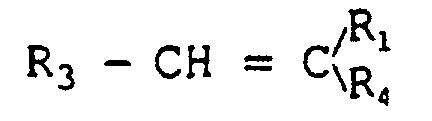
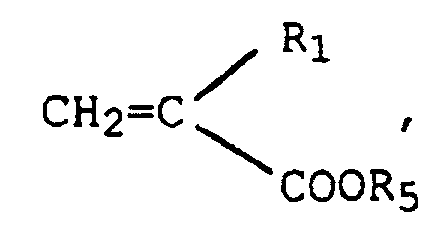
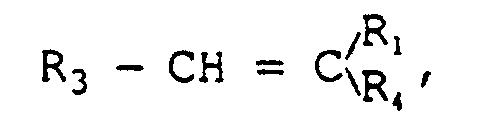
- Compositions bitume/polymère, à stabilité améliorée, comportant un bitume ou mélange de bitumes et, comptés en poids du bitume ou mélange de bitumes, 0,3 % à 20 % d'au moins un polymère primaire choisi dans le groupe formé par les homopolymères de diènes conjugués, les copolymères de diènes conjugués entre eux, les polynorbornènes, les polyisobutylènes, le caoutchouc butyle, les homopolymères d'oléfines en C2 à C4, les copolymères d'éthylène et de propylène, les terpolymères d'éthylène, de propylène et d'un diène ou d'une alpha-oléfine en C4 à C12 et les copolymères d'éthylène et d'au moins un monomère A de formuleoù R1 désigne H, CH3 ou C2H5 et R2 représente un radical -COOR5, -OR5, -OOCR6 ou phényle avec R5 désignant un alkyle en C1 à C10 et R6 représentant H ou un alkyle en C1 à C3, lesdites compositions se caractérisant en ce qu'elles renferment en outre, comptés en poids du bitume ou mélange de bitumes, 0,01 % à 12 % d'un polymère oléfinique à groupements fonctionnels époxy ou COOH choisis parmi les copolymères renfermant, en poids, x % de motifs issus de l'éthylène ou du propylène, y % de motifs issus d'un ou plusieurs monomères A précités, z% de motifs issus d'au moins un monomère B de formule
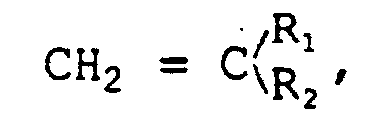 et v % de motifs issus d'un ou plusieurs monomères C différents des monomères A et B, avec R1 ayant la signification précitée, R3 représentant H, -COOH ou -COOR5, R4 étant un radical -COOH,
 ou
ou R5 étant un radical alkyle en C1 à C10 et x, y, z et v représentant des nombres tels que 40 ≤ x ≤ 99,9, 0 ≤ y ≤ 50, 0,1 ≤ z ≤ 20, 0 ≤ v ≤ 15 avec x+y+z+v = 100 , à l'exclusion des compositions bitume/polymère ci-dessus, qui referment, en poids du bitume ou mélange de bitumes, soit (i) 0,1% à 10% de copolymère oléfinique à groupements époxy et, simultanément, comme polymères primaires, 0,1% à 10% d'un copolymère d'éthylène et d'un monomère de formule
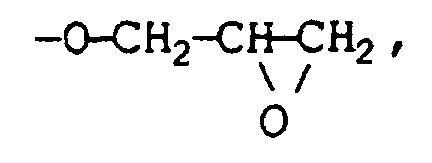 R1 et R5 ayant la signification donnée plus haut, 0% à 10% d'un élastomère thermoplastique D et 0% à 10% d'un copolymère EVA ou bien (ii) 0,5% à 4% de copolymère oléfinique à groupements époxy et, à titre de polymères primaires utilisés conjointement, 2% à 6% d'un élastomère thermoplastique D et 0,5% à 5% d'un copolymère EVA, l'élastomère D étant choisi parmi les polybutènes, les polybutadiènes, les polyisoprènes, les copolymères éthylène/propylène, les copolymères éthylène/ butène et les copolymères éthylène/diènes.
- Compositions selon la revendication 1, caractérisées en ce que leur teneur en polymère primaire représente 0,5 % à 10 % du poids de bitume ou mélange de bitumes.
- Compositions selon la revendication 1 ou 2, caractérisées en ce que leur teneur en polymère oléfinique à groupements fonctionnels époxy ou COOH représente 0,1 % à 5 % du poids de bitume ou mélange de bitumes.
- Compositions selon l'une des revendications 1 à 3, caractérisées en ce que, dans le polymère oléfinique à groupements époxy ou COOH, les teneurs x, y, z et v sont telles que 50 ≤ x ≤ 99,5, 0 ≤ y ≤ 40, 0,5 ≤ z ≤ 15 et 0 ≤ v ≤ 10 avec x+y+z+v = 100.
- Compositions selon l'une des revendications 1 à 4, caractérisées en ce que les monomères A sont choisis parmi le formiate de vinyle, l'acétate de vinyle, le propionate de vinyle, le butyrate de vinyle, les éthers de vinyle CH2 = CH-O-R5, les acrylates d'alkyle de formule CH2 = CH -COOR5 et les méthacrylates d'alkyle de formuleR5 étant un radical alkyle en C1 à C10 et de préférence en C1 à C6, notamment méthyle, éthyle, propyle, butyle.

- Compositions selon l'une des revendications 1 à 5, caractérisées en ce que les monomères B sont choisis parmi l'acide maléique et son anhydride, l'acide acrylique, l'acide méthacrylique, les maléates acides d'alkyle de formule HOOC-CH=CH-COOR7 où R7 est un radical alkyle en C1 à C6, l'acrylate de glycidyle, le méthacrylate de glycidyle et le vinyléther de glycidyle.
- Compositions selon l'une des revendications 1 à 6, caractérisées en ce que les monomères C sont choisis parmi CO, SO2 et acrylonitrile.
- Compositions selon l'une des revendications 1 à 7, caractérisées en ce que les polymères oléfiniques à groupements époxy ou COOH sont choisis dans le groupe consistant en :(a) les copolymères statistiques d'éthylène et d'un monomère B choisi parmi l'acide acrylique, l'acide méthacrylique, l'acide maléique ou son anhydride, l'acrylate de glycidyle et le méthacrylate de glycidyle, qui renferment, en poids, 80 % à 99,7 % et de préférence 85 % à 99,5 % d'éthylène ;(b) les terpolymères statistiques d'éthylène, d'un monomère A choisi parmi l'acétate de vinyle et les acrylates ou méthacrylates d'alkyle à reste alkyle en C1 à C6 tel que méthyle, éthyle, propyle, butyle, hexyle, et d'un monomère B choisi parmi l'acide acrylique, l'acide méthacrylique, l'acide maléique ou son anhydride, l'acrylate de glycidyle et le méthacrylate de glycidyle, qui renferment, en poids, 0,5 % à 40 % de motifs issus du monomère A et 0,5 % à 15 % de motifs issus du monomère B, le reste étant formé de motifs issus de l'éthylène ; et(c) les copolymères résultant du greffage d'un monomère B choisi parmi l'acide acrylique, l'acide méthacrylique, l'acide maléique ou son anhydride, l'acrylate de glycidyle et le méthacrylate de glycidyle, sur un substrat consistant en un polymère choisi parmi les polyéthylènes, notamment polyéthylènes basse densité, les polypropylènes et les copolymères statistiques d'éthylène et d'acétate de vinyle ou d'éthylène et d'acrylate ou de méthacrylate d'alkyle à reste alkyle en C1 à C6 tel que méthyle, éthyle, propyle, butyle, hexyle, qui renferment, en poids, 40 % à 99,7 % et de préférence 50 % à 99 % d'éthylène, lesdits copolymères greffés renfermant, en poids, 0,5 % à 15 % de motifs greffés issus du monomère B.
- Compositions selon la revendication 8, caractérisées en ce que les polymères oléfiniques à groupements époxy ou COOH sont choisis parmi :(i) les terpolymères statistiques d'éthylène, d'acrylate ou méthacrylate d'alkyle à reste alkyle en C1 à C6 tel que méthyle, éthyle, butyle, et d'anhydride maléique, qui renferment, en poids, 0,5 % à 40 % de motifs issus d'acrylate ou méthacrylate d'alkyle et 0,5 % à 15 % de motifs issus de l'anhydride maléique, le reste étant formé de motifs issus de l'éthylène ;(ii) les terpolymères statistiques d'éthylène, d'acrylate ou méthacrylate d'alkyle à reste alkyle en C1 à C6 tel que méthyle, éthyle, butyle, et d'acrylate ou méthacrylate de glycidyle, qui renferment, en poids, 0,5 % à 40 % de motifs issus d'acrylate ou méthacrylate d'alkyle et 0,5 à 15 % de motifs issus d'acrylate ou méthacrylate de glycidyle, le reste étant formé de motifs issus de l'éthylène ;(iii) les polyéthylènes basse densité greffés anhydride maléique et les polypropylènes greffés anhydride maléique, qui renferment, en poids, 0,5 % à 15 % de motifs greffés issus de l'anhydride maléique ; et(iv) les polyéthylènes basse densité greffés acrylate ou méthacrylate de glycidyle et les polypropylènes greffés acrylate ou méthacrylate de glycidyle, qui renferment, en poids, 0,5 % à 15 % de motifs greffés issus du dérivé glycidyle.
- Compositions selon l'une des revendications 1 à 9, caractérisées en ce que les polymères oléfiniques à groupements époxy ou COOH possèdent un indice de fluidité, déterminé selon la norme ASTM D 1238, ayant une valeur, exprimée en grammes par 10 minutes, comprise entre 0,3 et 3000 et de préférence entre 0,5 et 900.
- Compositions selon l'une des revendications 1 à 10, caractérisées en ce que le bitume ou mélange de bitumes est choisi parmi les bitumes ayant une viscosité cinématique à 100°C comprise entre 0,5x10⁻⁴ m2/s et 3x10⁻² m2/s et de préférence entre 1x10⁻⁴ m2/s et 2x10⁻² m2/s.
- Compositions selon la revendication 11, caractérisées en ce que le bitume ou mélange de bitumes présente une pénétrabilité à 25°C, définie selon la norme NF T 66004, comprise entre 5 et 800 et de préférence entre 10 et 400.
- Compositions selon l'une des revendications 1 à 12, caractérisées en ce que le polymère primaire est choisi parmi polybutadiène, polyisoprène, polychloroprène, copolymères butadiène/isoprène, polynorbornène, polyisobutylène, caoutchouc butyle, polyéthylène haute densité, polyéthylène basse densité, polypropylène, polybutène, copolymères statistiques éthylène/propylène (EP), terpolymères statistiques éthylène/propylène/diène (EPDM), copolymères éthylène/acétate de vinyle (EVA), copolymères éthylène/acrylate d'un alkyle en C1 à C6, notamment copolymères éthylène/acrylate de méthyle.et copolymères éthylène/acrylate de butyle, et copolymères éthylène/méthacrylate d'un alkyle en C1 à C6, notamment copolymères éthylène/méthacrylate d'éthyle et copolymères éthylène/méthacrylate de butyle, copolymères éthylène/styrène et copolymères éthylène/butène/styrène.
- Compositions selon l'une des revendications 1 à 13, caractérisées en ce qu'elles sont obtenues en mettant en contact le ou les polymères primaires et le ou les polymères oléfiniques à groupements époxy ou COOH avec le bitume ou mélange de bitumes, dans les proportions choisies, en opérant à des températures comprises entre 100°C et 230°C, plus particulièrement entre 120°C et 190°C, et sous agitation, pendant une durée d'au moins 10 minutes, en particulier de 10 minutes à 8 heures et plus particulièrement de 10 minutes à 5 heures, pour former une masse homogène constituant la composition bitume/polymère.
- Compositions selon l'une des revendications 1 à 14, caractérisées en ce qu'elles renferment, en outre, 1 % à 40 % et plus particulièrement 2 % à 30 %, en poids du bitume ou mélange de bitumes, d'un agent fluxant.
- Compositions selon la revendication 15, caractérisées en ce que l'agent fluxant consiste en une huile hydrocarbonée présentant un intervalle de distillation à pression atmosphérique, déterminé selon la norme ASTM D 86-67, compris entre 100°C et 600°C et situé plus spécialement entre 150°C et 400°C.
- Compositions selon la revendication 16, caractérisées en ce que l'huile hydrocarboné est choisie parmi les coupes pétrolières de caractère aromatique, les coupes pétrolières de caractère naphténo-aromatique, les coupes pétrolières de caractère naphténo-paraffinique, les coupes pétrolières de caractère paraffinique, les huiles de houille et les huiles d'origine végétale.
- Compositions selon la revendication 16 ou 17, caractérisées en ce qu'elles sont obtenues en incorporant le polymère oléfinique à groupements époxy ou COOH et le polymère primaire au bitume ou mélange de bitumes sous la forme d'une solution mère de ces polymères dans l'huile hydrocarbonée constituant l'agent fluxant.
- Compositions selon la revendication 18, caractérisées en ce que la solution mère renferme, en poids de l'huile hydrocarbonée, 1 % à 20 % de polymère oléfinique à groupements époxy ou COOH et 5 % à 30 % de polymère primaire.
- Compositions selon la revendication 18 ou 19, caractérisées en ce qu'elles sont obtenues en mélangeant la solution mère avec le bitume ou mélange de bitumes, en opérant à des températures comprises entre 100°C et 230°C, plus particulièrement entre 120°C et 190°C, et sous agitation, puis en maintenant le mélange résultant sous agitation à des températures comprises entre 100°C et 230°C, plus particulièrement entre 120°C et 190°C, pendant une durée au moins égale à 10 minutes, en particulier allant de 10 minutes à 2 heures, pour former un produit de réaction constituant la composition bitume/polymère.
- Compositions selon l'une des revendications 1 à 20, caractérisées en ce qu'elles renferment un ou plusieurs additifs non polymères susceptibles de réagir avec les groupements époxy ou COOH du polymère oléfinique portant lesdits groupements, lesdits additifs réactifs étant en particulier des amines, notamment polyamines, primaires ou secondaires, des alcools, notamment polyols, des acides, notamment polyacides, ou encore des sels métalliques, notamment composés de métaux des groupes I, II, III et VIII du Tableau Périodique des Eléments.
- Compositions selon la revendication 21, caractérisées en ce que la quantité d'additif réactif ou d'additifs réactifs qu'elles renferment, représente 0,01 % à 10 % et de préférence 0,05 % à 5 % du poids du bitume.
- Application des compositions bitume/polymère selon l'une des revendications 1 à 22, à la production de liants bitume/polymère, lesdits liants consistant en lesdites compositions utilisées telles quelles ou bien étant formés par dilution desdites compositions bitume/polymère par un bitume ou mélange de bitumes ou par une composition bitume/polymère selon l'une des revendications 1 à 22 à teneurs plus faibles en polymère primaire et en polymère oléfinique à groupements époxy ou COOH, lesquels liants bitume/polymère sont notamment utilisables, directement ou après mise en émulsion aqueuse, à la réalisation de revêtements, notamment revêtements routiers du type enduit superficiel, à la production d'enrobés mis en place à chaud ou à froid, ou encore à la réalisation de revêtements d'étanchéité.
Applications Claiming Priority (3)
| Application Number | Priority Date | Filing Date | Title |
|---|---|---|---|
| FR9605827 | 1996-05-10 | ||
| FR9605827A FR2748487B1 (fr) | 1996-05-10 | 1996-05-10 | Compositions bitume/polymere a stabilite amelioree et leur application a la realisation de revetements |
| PCT/FR1997/000811 WO1997043341A1 (fr) | 1996-05-10 | 1997-05-06 | Compositions bitume/polymere a stabilite amelioree et leur application a la realisation de revetements |
Publications (2)
| Publication Number | Publication Date |
|---|---|
| EP0837909A1 EP0837909A1 (fr) | 1998-04-29 |
| EP0837909B1 true EP0837909B1 (fr) | 2004-02-11 |
Family
ID=9492008
Family Applications (1)
| Application Number | Title | Priority Date | Filing Date |
|---|---|---|---|
| EP97923148A Expired - Lifetime EP0837909B1 (fr) | 1996-05-10 | 1997-05-06 | Compositions bitume/polymere a stabilite amelioree et leur application a la realisation de revetements |
Country Status (17)
| Country | Link |
|---|---|
| US (1) | US6020404A (fr) |
| EP (1) | EP0837909B1 (fr) |
| JP (1) | JPH11509889A (fr) |
| KR (1) | KR19990028873A (fr) |
| CN (1) | CN1152090C (fr) |
| AT (1) | ATE259397T1 (fr) |
| AU (1) | AU2902597A (fr) |
| BR (1) | BR9702204A (fr) |
| CA (1) | CA2224415C (fr) |
| DE (1) | DE69727528T2 (fr) |
| ES (1) | ES2216148T3 (fr) |
| FR (1) | FR2748487B1 (fr) |
| ID (1) | ID18235A (fr) |
| MX (1) | MX9800117A (fr) |
| MY (1) | MY129081A (fr) |
| NO (1) | NO311576B1 (fr) |
| WO (1) | WO1997043341A1 (fr) |
Families Citing this family (36)
| Publication number | Priority date | Publication date | Assignee | Title |
|---|---|---|---|---|
| EP0815170B1 (fr) | 1995-03-13 | 2003-06-04 | Mathy Construction Company | Compositions contenant de l'asphalte modifiees par des polymeres et reagies avec un acide et leur preparation |
| FR2748488B1 (fr) * | 1996-05-10 | 1998-07-10 | Elf Antar France | Procede de preparation de compositions bitume/polymere a tres faible susceptibilite thermique et application des compositions obtenues a la production de liants bitume/polymere pour revetements |
| JPH10120839A (ja) * | 1996-10-15 | 1998-05-12 | Sumitomo Chem Co Ltd | アスファルト改質材及び該改質材を含むアスファルト組成物 |
| JPH10120843A (ja) * | 1997-06-12 | 1998-05-12 | Sumitomo Chem Co Ltd | アスファルト改質材及び該改質材を含むアスファルト組成物 |
| FR2795418B1 (fr) | 1999-06-22 | 2001-09-28 | Elf Antar France | Procede de preparation de compositions bitume/polymere reticulees et/ou fonctionnalisees a tres faible susceptibilite thermique et application des compositions obtenues a la realisation de revetements |
| US7081492B1 (en) | 2000-05-16 | 2006-07-25 | Dennis Krivohlavek | Ambient temperature anhydrous liquid cross-linking agent |
| EP1350813A1 (fr) * | 2002-04-01 | 2003-10-08 | Rohm And Haas Company | Asphalte modifié par des polymères |
| FR2849047B1 (fr) * | 2002-12-20 | 2005-12-02 | Totalfinaelf France | Procede de preparation de compositions bitume/polymere a resistance aux solvants petroliers amelioree, compositions ainsi obtenues et leur utilisation comme liant bitumineux |
| FR2849048B1 (fr) * | 2002-12-23 | 2005-11-04 | Totalfinaelf France | Procede de preparation de compositions bitume/polymere epoxyde reticule, composition ainsi obtenues et leur utilisation |
| FR2878856B1 (fr) * | 2004-12-03 | 2007-04-06 | Smac Acieroid Sa | Enrobe bitumineux, procede de preparation, et applications de cet enrobe |
| MX2007016028A (es) * | 2005-06-23 | 2008-03-10 | Du Pont | Composicion que comprende asfalto, copolimero de etileno y azufre. |
| FR2918066B1 (fr) | 2007-06-26 | 2010-11-19 | Total France | Liant concentre non gelifiable et pompable pour bitume/polymere |
| FR2919298B1 (fr) | 2007-07-24 | 2012-06-08 | Total France | Composition bitume/polymere a reticulation thermoreversible. |
| FR2919294B1 (fr) * | 2007-07-24 | 2012-11-16 | Total France | Polymere greffe et composition de bitume a reticulation thermoreversible comprenant ledit polymere greffe. |
| JP2011506634A (ja) | 2007-12-07 | 2011-03-03 | シエル・インターナシヨネイル・リサーチ・マーチヤツピイ・ベー・ウイ | バインダー組成物及びアスファルト混合物 |
| FR2929616B1 (fr) * | 2008-04-08 | 2011-09-09 | Total France | Procede de reticulation de compositions bitume/polymere presentant des emissions reduites d'hydrogene sulfure |
| US9884965B2 (en) | 2009-03-08 | 2018-02-06 | Lehigh Tehnologies, Inc. | Functional group asphalt modifiers, methods of modifying asphalt, asphalt compositions and methods of making |
| US9617424B2 (en) * | 2009-03-08 | 2017-04-11 | Lehigh Technologies, Inc. | Polyolefin asphalt modifiers, methods of modifying asphalt, asphalt compositions and methods of making |
| US9896582B2 (en) | 2009-03-08 | 2018-02-20 | Lehigh Technologies, Inc. | Micronized asphalt modifiers, methods of modifying asphalt, asphalt compositions and methods of making |
| US8541523B2 (en) * | 2010-04-05 | 2013-09-24 | Promerus, Llc | Norbornene-type polymers, compositions thereof and lithographic process using such compositions |
| CN102086349B (zh) * | 2010-12-10 | 2012-10-03 | 上海台安工程实业有限公司 | 一种具双重特性的非固化防水涂胶 |
| CN102399493A (zh) * | 2011-10-27 | 2012-04-04 | 北京东方雨虹防水技术股份有限公司 | 蠕变型热熔橡胶沥青防水涂料 |
| FR2984342B1 (fr) | 2011-12-20 | 2014-01-03 | Total Raffinage Marketing | Procede de production d'une composition bitume/polymere reticulee avec reduction des emissions de h2s |
| CN102604297B (zh) * | 2012-03-09 | 2013-11-13 | 湖北省高速公路实业开发有限公司 | 一种沥青路面用缓释型防冰材料及其制备方法 |
| CN103030314B (zh) * | 2012-12-31 | 2015-01-07 | 哈尔滨工业大学 | 一种沥青混合料缓释络合盐填料的制备方法 |
| FR3005058B1 (fr) * | 2013-04-25 | 2017-09-08 | Arkema France | Composition de pre-melange pour bitumes |
| CN103525303A (zh) * | 2013-09-27 | 2014-01-22 | 吴润秀 | 聚烯烃涂料 |
| CN104987607A (zh) * | 2015-06-30 | 2015-10-21 | 南阳理工学院 | 一种防腐防水材料 |
| FR3041355B1 (fr) | 2015-09-18 | 2017-09-01 | Total Marketing Services | Composition bitume / polymere presentant des proprietes mecaniques ameliorees |
| BR112018009808B1 (pt) * | 2015-12-29 | 2022-08-23 | Dow Global Technologies Llc | Composição de asfalto modificada com o polímero, material de pavimentação de estradas ou um material de cobertura e método para a preparação da composição de asfalto modificada com o polímero |
| CN110093836A (zh) * | 2018-01-27 | 2019-08-06 | 深圳善跑体育产业集团有限公司 | 塑胶跑道及施工工艺 |
| FR3080856B1 (fr) | 2018-05-02 | 2020-07-10 | Total Marketing Services | Composition bitume/polymere presentant des proprietes mecaniques ameliorees |
| FR3099486B1 (fr) | 2019-07-31 | 2023-04-28 | Total Marketing Services | Composition bitume/polymère fluxée et son procédé de préparation |
| CN113683959B (zh) * | 2021-10-27 | 2022-02-18 | 科顺防水科技股份有限公司 | 双组份橡胶沥青防水涂料组合物及应用该双组份橡胶沥青防水涂料组合物的结构 |
| JP2023170479A (ja) * | 2022-05-19 | 2023-12-01 | 住友化学株式会社 | アスファルト組成物及びアスファルト舗装材組成物 |
| CN116814160B (zh) * | 2023-05-26 | 2023-12-19 | 佛山市科顺建筑材料有限公司 | 一种反应改性沥青防水卷材涂盖料组合物、防水卷材涂盖料及其制备方法与应用 |
Family Cites Families (12)
| Publication number | Priority date | Publication date | Assignee | Title |
|---|---|---|---|---|
| FR1511604A (fr) * | 1966-12-19 | 1968-02-02 | Produits élasto-plastiques et leur application | |
| CA1282513C (fr) * | 1986-03-04 | 1991-04-02 | Raymond T. Woodhams | Compositions de bitume-polyolefine |
| US4818367A (en) * | 1986-04-14 | 1989-04-04 | J. H. Diamond Company | Asphalt, copolymer and elastomer composition |
| EP0384254A3 (fr) * | 1989-02-21 | 1992-04-01 | BASF Aktiengesellschaft | Composés de latex pour modifications d'asphalte |
| NZ236604A (en) * | 1989-12-29 | 1993-10-26 | Chevron Res & Tech | Asphalt compositions obtained by reacting asphalts with epoxy containing polymers and processes for their preparation |
| DE4128640A1 (de) * | 1991-08-29 | 1993-03-04 | Roehm Gmbh | Alkyl(meth)acrylat-maleinsaeureanhydrid copolymer-modifiziertes bitumen |
| JPH06116333A (ja) * | 1992-10-02 | 1994-04-26 | Elf Atochem Japan Kk | 改良された舗装用アスファルト組成物 |
| US5331028A (en) * | 1993-06-30 | 1994-07-19 | Chevron Research And Technology Company, A Division Of Chevron U.S.A. Inc. | Polymer-modified asphalt composition and process for the preparation thereof |
| FR2718747B1 (fr) * | 1994-04-18 | 1996-06-07 | Elf Antar France | Procédé de préparation de compositions bitume/polymère à caractère multigrade renforcé et application des compositions obtenues à la production de liants bitume/polymère pour revêtements. |
| EP0718373A1 (fr) * | 1994-12-20 | 1996-06-26 | Bridgestone/Firestone, Inc. | Compositions bitumineuses modifiées par un polymère à dispersion améliorée et produits à partir de celles-ci |
| JPH08199073A (ja) * | 1995-01-30 | 1996-08-06 | Elf Atochem Japan Kk | 改質アスファルト組成物 |
| US5708062A (en) * | 1995-01-30 | 1998-01-13 | Elf Atochem S.A. | Bitumen compositions |
-
1996
- 1996-05-10 FR FR9605827A patent/FR2748487B1/fr not_active Expired - Fee Related
-
1997
- 1997-05-06 AU AU29025/97A patent/AU2902597A/en not_active Abandoned
- 1997-05-06 KR KR1019980700175A patent/KR19990028873A/ko not_active Withdrawn
- 1997-05-06 EP EP97923148A patent/EP0837909B1/fr not_active Expired - Lifetime
- 1997-05-06 MX MX9800117A patent/MX9800117A/es unknown
- 1997-05-06 US US08/983,300 patent/US6020404A/en not_active Expired - Lifetime
- 1997-05-06 JP JP9540577A patent/JPH11509889A/ja active Pending
- 1997-05-06 CA CA002224415A patent/CA2224415C/fr not_active Expired - Lifetime
- 1997-05-06 BR BR9702204A patent/BR9702204A/pt not_active IP Right Cessation
- 1997-05-06 WO PCT/FR1997/000811 patent/WO1997043341A1/fr not_active Ceased
- 1997-05-06 CN CNB971906947A patent/CN1152090C/zh not_active Expired - Lifetime
- 1997-05-06 DE DE69727528T patent/DE69727528T2/de not_active Expired - Lifetime
- 1997-05-06 ES ES97923148T patent/ES2216148T3/es not_active Expired - Lifetime
- 1997-05-06 AT AT97923148T patent/ATE259397T1/de not_active IP Right Cessation
- 1997-05-09 MY MYPI97002039A patent/MY129081A/en unknown
- 1997-05-12 ID IDP971581A patent/ID18235A/id unknown
-
1998
- 1998-01-08 NO NO19980084A patent/NO311576B1/no not_active IP Right Cessation
Also Published As
| Publication number | Publication date |
|---|---|
| FR2748487B1 (fr) | 1998-07-10 |
| EP0837909A1 (fr) | 1998-04-29 |
| NO311576B1 (no) | 2001-12-10 |
| MX9800117A (es) | 1998-04-30 |
| CA2224415A1 (fr) | 1997-11-20 |
| CN1152090C (zh) | 2004-06-02 |
| DE69727528D1 (de) | 2004-03-18 |
| US6020404A (en) | 2000-02-01 |
| ATE259397T1 (de) | 2004-02-15 |
| MY129081A (en) | 2007-03-30 |
| ID18235A (id) | 1998-03-19 |
| CA2224415C (fr) | 2006-10-17 |
| ES2216148T3 (es) | 2004-10-16 |
| CN1195362A (zh) | 1998-10-07 |
| KR19990028873A (ko) | 1999-04-15 |
| FR2748487A1 (fr) | 1997-11-14 |
| WO1997043341A1 (fr) | 1997-11-20 |
| BR9702204A (pt) | 1999-07-20 |
| AU2902597A (en) | 1997-12-05 |
| NO980084D0 (no) | 1998-01-08 |
| JPH11509889A (ja) | 1999-08-31 |
| NO980084L (no) | 1998-03-02 |
| DE69727528T2 (de) | 2004-12-23 |
Similar Documents
| Publication | Publication Date | Title |
|---|---|---|
| CA2224415C (fr) | Compositions bitume/polymere a stabilite amelioree et leur application a la realisation de revetements | |
| CA2180757C (fr) | Procede de preparation de compositions bitume/polymere et leur utilisation a la realisation de revetements | |
| EP0907686B1 (fr) | Procede de preparation de compositions bitume/polymere, leur utilisation dans des revetements | |
| EP0837910B1 (fr) | Procede de preparation de compositions bitume/polymere et leur utilisation | |
| EP2162492B1 (fr) | Liant concentre non gelifiable et pompable pour bitume/polymere | |
| EP0582703B1 (fr) | Procede de preparation de compositions bitume-polymere, application des compositions obtenues a la realisation de revetements et solution mere de polymere pour l'obtention desdites compositions | |
| CA1341275C (fr) | Procede de preparation de compositions bitume-polymere, application des compositions obtenues a la realisation de revetements et solution mere de polymere utilisable pour l'obtention desdites compositions | |
| EP0799280B1 (fr) | Procede de preparation de composition bitume/elastomere, leur application comme revetement routier | |
| MXPA98000117A (en) | Compositions of betun / polymer with improved stability, and its application to carry out revestimie operations | |
| WO2008077888A1 (fr) | Fluxant et ses applications | |
| EP0797629A1 (fr) | Procede de preparation de compositions bitume/polymere a caractere multigrade renforce et application des compositions obtenues a la production de liants bitume/polymere pour revetements | |
| EP0754205B1 (fr) | Compositions de bitumes | |
| WO2017046523A1 (fr) | Composition bitume / polymere presentant des proprietes mecaniques ameliorees | |
| EP0907687B1 (fr) | Procede de preparation de compositions bitume/elastomere fonctionnalise, leur utilisation dans des revetements | |
| EP0799252B1 (fr) | Elastomere fonctionnalise par des groupements carboxyliques ou esters greffes et son application a la production de compositions bitume/elastomere fonctionnalise utilisables pour la realisation de revetements | |
| FR2795418A1 (fr) | Procede de preparation de compositions bitume/polymere reticulees et/ou fonctionnalisees a tres faible susceptibilite thermique et application des compositions obtenues a la realisation de revetements | |
| FR2849047A1 (fr) | Procede de preparation de compositions bitume/polymere a resistance aux solvants petroliers amelioree, compositions ainsi obtenues et leur utilisation comme liant bitumineux | |
| EP1664199B1 (fr) | Fluxant, solumere et composition bitumineuse en contenant, preparation et applications de ces produits | |
| CA2208588C (fr) | Elastomere fonctionnalise par des groupements carboxyliques ou esters greffes et son application a la production de compositions bitume/elastomere fonctionnalise utilisables pour la realisation de revetements | |
| WO2022200721A1 (fr) | Composition émulsifiante pour bitumes |
Legal Events
| Date | Code | Title | Description |
|---|---|---|---|
| PUAI | Public reference made under article 153(3) epc to a published international application that has entered the european phase |
Free format text: ORIGINAL CODE: 0009012 |
|
| 17P | Request for examination filed |
Effective date: 19980128 |
|
| AK | Designated contracting states |
Kind code of ref document: A1 Designated state(s): AT BE CH DE DK ES FI FR GB GR IE IT LI LU MC NL PT SE |
|
| GRAP | Despatch of communication of intention to grant a patent |
Free format text: ORIGINAL CODE: EPIDOSNIGR1 |
|
| GRAS | Grant fee paid |
Free format text: ORIGINAL CODE: EPIDOSNIGR3 |
|
| GRAA | (expected) grant |
Free format text: ORIGINAL CODE: 0009210 |
|
| RAP1 | Party data changed (applicant data changed or rights of an application transferred) |
Owner name: TOTALFINAELF FRANCE |
|
| AK | Designated contracting states |
Kind code of ref document: B1 Designated state(s): AT BE CH DE DK ES FI FR GB GR IE IT LI LU MC NL PT SE |
|
| PG25 | Lapsed in a contracting state [announced via postgrant information from national office to epo] |
Ref country code: NL Free format text: LAPSE BECAUSE OF FAILURE TO SUBMIT A TRANSLATION OF THE DESCRIPTION OR TO PAY THE FEE WITHIN THE PRESCRIBED TIME-LIMIT Effective date: 20040211 Ref country code: IE Free format text: LAPSE BECAUSE OF FAILURE TO SUBMIT A TRANSLATION OF THE DESCRIPTION OR TO PAY THE FEE WITHIN THE PRESCRIBED TIME-LIMIT Effective date: 20040211 Ref country code: FI Free format text: LAPSE BECAUSE OF FAILURE TO SUBMIT A TRANSLATION OF THE DESCRIPTION OR TO PAY THE FEE WITHIN THE PRESCRIBED TIME-LIMIT Effective date: 20040211 Ref country code: AT Free format text: LAPSE BECAUSE OF FAILURE TO SUBMIT A TRANSLATION OF THE DESCRIPTION OR TO PAY THE FEE WITHIN THE PRESCRIBED TIME-LIMIT Effective date: 20040211 |
|
| REG | Reference to a national code |
Ref country code: GB Ref legal event code: FG4D Free format text: NOT ENGLISH |
|
| REG | Reference to a national code |
Ref country code: CH Ref legal event code: EP |
|
| REG | Reference to a national code |
Ref country code: IE Ref legal event code: FG4D Free format text: FRENCH |
|
| REF | Corresponds to: |
Ref document number: 69727528 Country of ref document: DE Date of ref document: 20040318 Kind code of ref document: P |
|
| PG25 | Lapsed in a contracting state [announced via postgrant information from national office to epo] |
Ref country code: LU Free format text: LAPSE BECAUSE OF NON-PAYMENT OF DUE FEES Effective date: 20040506 |
|
| PG25 | Lapsed in a contracting state [announced via postgrant information from national office to epo] |
Ref country code: SE Free format text: LAPSE BECAUSE OF FAILURE TO SUBMIT A TRANSLATION OF THE DESCRIPTION OR TO PAY THE FEE WITHIN THE PRESCRIBED TIME-LIMIT Effective date: 20040511 Ref country code: GR Free format text: LAPSE BECAUSE OF FAILURE TO SUBMIT A TRANSLATION OF THE DESCRIPTION OR TO PAY THE FEE WITHIN THE PRESCRIBED TIME-LIMIT Effective date: 20040511 Ref country code: DK Free format text: LAPSE BECAUSE OF FAILURE TO SUBMIT A TRANSLATION OF THE DESCRIPTION OR TO PAY THE FEE WITHIN THE PRESCRIBED TIME-LIMIT Effective date: 20040511 |
|
| PG25 | Lapsed in a contracting state [announced via postgrant information from national office to epo] |
Ref country code: MC Free format text: LAPSE BECAUSE OF NON-PAYMENT OF DUE FEES Effective date: 20040531 Ref country code: LI Free format text: LAPSE BECAUSE OF NON-PAYMENT OF DUE FEES Effective date: 20040531 Ref country code: CH Free format text: LAPSE BECAUSE OF NON-PAYMENT OF DUE FEES Effective date: 20040531 Ref country code: BE Free format text: LAPSE BECAUSE OF NON-PAYMENT OF DUE FEES Effective date: 20040531 |
|
| GBT | Gb: translation of ep patent filed (gb section 77(6)(a)/1977) |
Effective date: 20040614 |
|
| NLV1 | Nl: lapsed or annulled due to failure to fulfill the requirements of art. 29p and 29m of the patents act | ||
| REG | Reference to a national code |
Ref country code: IE Ref legal event code: FD4D |
|
| REG | Reference to a national code |
Ref country code: ES Ref legal event code: FG2A Ref document number: 2216148 Country of ref document: ES Kind code of ref document: T3 |
|
| BERE | Be: lapsed |
Owner name: TOTALFINAELF FRANCE Effective date: 20040531 |
|
| PLBE | No opposition filed within time limit |
Free format text: ORIGINAL CODE: 0009261 |
|
| STAA | Information on the status of an ep patent application or granted ep patent |
Free format text: STATUS: NO OPPOSITION FILED WITHIN TIME LIMIT |
|
| REG | Reference to a national code |
Ref country code: CH Ref legal event code: PL |
|
| 26N | No opposition filed |
Effective date: 20041112 |
|
| PG25 | Lapsed in a contracting state [announced via postgrant information from national office to epo] |
Ref country code: PT Free format text: LAPSE BECAUSE OF NON-PAYMENT OF DUE FEES Effective date: 20040711 |
|
| REG | Reference to a national code |
Ref country code: FR Ref legal event code: CD |
|
| REG | Reference to a national code |
Ref country code: FR Ref legal event code: PLFP Year of fee payment: 20 |
|
| PGFP | Annual fee paid to national office [announced via postgrant information from national office to epo] |
Ref country code: GB Payment date: 20160426 Year of fee payment: 20 Ref country code: DE Payment date: 20160421 Year of fee payment: 20 Ref country code: ES Payment date: 20160506 Year of fee payment: 20 |
|
| PGFP | Annual fee paid to national office [announced via postgrant information from national office to epo] |
Ref country code: IT Payment date: 20160427 Year of fee payment: 20 Ref country code: FR Payment date: 20160422 Year of fee payment: 20 |
|
| REG | Reference to a national code |
Ref country code: DE Ref legal event code: R071 Ref document number: 69727528 Country of ref document: DE |
|
| REG | Reference to a national code |
Ref country code: GB Ref legal event code: PE20 Expiry date: 20170505 |
|
| PG25 | Lapsed in a contracting state [announced via postgrant information from national office to epo] |
Ref country code: GB Free format text: LAPSE BECAUSE OF EXPIRATION OF PROTECTION Effective date: 20170505 |
|
| REG | Reference to a national code |
Ref country code: ES Ref legal event code: FD2A Effective date: 20170825 |
|
| PG25 | Lapsed in a contracting state [announced via postgrant information from national office to epo] |
Ref country code: ES Free format text: LAPSE BECAUSE OF EXPIRATION OF PROTECTION Effective date: 20170507 |