EP0805212A1 - Primer zur genamplifizierung, verfahren zur nukleinsäure unterscheidung und reagentiensatz mit diesen - Google Patents
Primer zur genamplifizierung, verfahren zur nukleinsäure unterscheidung und reagentiensatz mit diesen Download PDFInfo
- Publication number
- EP0805212A1 EP0805212A1 EP96901125A EP96901125A EP0805212A1 EP 0805212 A1 EP0805212 A1 EP 0805212A1 EP 96901125 A EP96901125 A EP 96901125A EP 96901125 A EP96901125 A EP 96901125A EP 0805212 A1 EP0805212 A1 EP 0805212A1
- Authority
- EP
- European Patent Office
- Prior art keywords
- dna
- primer
- nucleic acid
- unlabeled
- gene
- Prior art date
- Legal status (The legal status is an assumption and is not a legal conclusion. Google has not performed a legal analysis and makes no representation as to the accuracy of the status listed.)
- Withdrawn
Links
- 150000007523 nucleic acids Chemical class 0.000 title claims abstract description 137
- 108020004707 nucleic acids Proteins 0.000 title claims abstract description 133
- 102000039446 nucleic acids Human genes 0.000 title claims abstract description 133
- 238000000034 method Methods 0.000 title claims abstract description 100
- 230000004544 DNA amplification Effects 0.000 title description 16
- 108090000623 proteins and genes Proteins 0.000 claims abstract description 115
- 230000004069 differentiation Effects 0.000 claims abstract description 92
- 230000027455 binding Effects 0.000 claims abstract description 64
- 238000009396 hybridization Methods 0.000 claims abstract description 57
- 230000002860 competitive effect Effects 0.000 claims abstract description 47
- 238000006243 chemical reaction Methods 0.000 claims abstract description 41
- 230000000295 complement effect Effects 0.000 claims abstract description 26
- 238000003149 assay kit Methods 0.000 claims abstract description 19
- 239000007790 solid phase Substances 0.000 claims description 42
- 239000013598 vector Substances 0.000 claims description 38
- 239000003153 chemical reaction reagent Substances 0.000 claims description 23
- 239000013612 plasmid Substances 0.000 claims description 11
- 239000013600 plasmid vector Substances 0.000 claims description 11
- UYTPUPDQBNUYGX-UHFFFAOYSA-N guanine Chemical compound O=C1NC(N)=NC2=C1N=CN2 UYTPUPDQBNUYGX-UHFFFAOYSA-N 0.000 claims description 6
- 238000012215 gene cloning Methods 0.000 claims description 5
- 206010064571 Gene mutation Diseases 0.000 abstract description 11
- 230000000694 effects Effects 0.000 abstract description 6
- 238000002156 mixing Methods 0.000 abstract description 6
- 238000002372 labelling Methods 0.000 abstract 1
- 108020004414 DNA Proteins 0.000 description 247
- 239000000523 sample Substances 0.000 description 144
- 230000003321 amplification Effects 0.000 description 52
- 238000003199 nucleic acid amplification method Methods 0.000 description 52
- 230000035772 mutation Effects 0.000 description 50
- 239000000243 solution Substances 0.000 description 41
- 239000000047 product Substances 0.000 description 39
- YBJHBAHKTGYVGT-ZKWXMUAHSA-N (+)-Biotin Chemical compound N1C(=O)N[C@@H]2[C@H](CCCCC(=O)O)SC[C@@H]21 YBJHBAHKTGYVGT-ZKWXMUAHSA-N 0.000 description 26
- 239000002773 nucleotide Substances 0.000 description 23
- 125000003729 nucleotide group Chemical group 0.000 description 23
- 239000012634 fragment Substances 0.000 description 21
- 238000003556 assay Methods 0.000 description 19
- 238000001514 detection method Methods 0.000 description 16
- 238000010790 dilution Methods 0.000 description 14
- 239000012895 dilution Substances 0.000 description 14
- 229960002685 biotin Drugs 0.000 description 13
- 235000020958 biotin Nutrition 0.000 description 13
- 239000011616 biotin Substances 0.000 description 13
- 230000000052 comparative effect Effects 0.000 description 13
- 102000004190 Enzymes Human genes 0.000 description 12
- 108090000790 Enzymes Proteins 0.000 description 12
- FAPWRFPIFSIZLT-UHFFFAOYSA-M Sodium chloride Chemical compound [Na+].[Cl-] FAPWRFPIFSIZLT-UHFFFAOYSA-M 0.000 description 12
- 238000005259 measurement Methods 0.000 description 12
- 238000002835 absorbance Methods 0.000 description 11
- 210000004027 cell Anatomy 0.000 description 11
- 125000005842 heteroatom Chemical group 0.000 description 10
- 239000000203 mixture Substances 0.000 description 10
- 125000001917 2,4-dinitrophenyl group Chemical group [H]C1=C([H])C(=C([H])C(=C1*)[N+]([O-])=O)[N+]([O-])=O 0.000 description 8
- 239000000126 substance Substances 0.000 description 8
- 239000000758 substrate Substances 0.000 description 8
- 239000011780 sodium chloride Substances 0.000 description 6
- 108700028369 Alleles Proteins 0.000 description 5
- 102000053602 DNA Human genes 0.000 description 5
- 108010014303 DNA-directed DNA polymerase Proteins 0.000 description 5
- 102000016928 DNA-directed DNA polymerase Human genes 0.000 description 5
- 101001100327 Homo sapiens RNA-binding protein 45 Proteins 0.000 description 5
- 238000004925 denaturation Methods 0.000 description 5
- 230000036425 denaturation Effects 0.000 description 5
- 201000010099 disease Diseases 0.000 description 5
- 208000037265 diseases, disorders, signs and symptoms Diseases 0.000 description 5
- 239000001257 hydrogen Substances 0.000 description 5
- 229910052739 hydrogen Inorganic materials 0.000 description 5
- 238000011835 investigation Methods 0.000 description 5
- 241000588724 Escherichia coli Species 0.000 description 4
- TWRXJAOTZQYOKJ-UHFFFAOYSA-L Magnesium chloride Chemical compound [Mg+2].[Cl-].[Cl-] TWRXJAOTZQYOKJ-UHFFFAOYSA-L 0.000 description 4
- 102100038823 RNA-binding protein 45 Human genes 0.000 description 4
- 238000011161 development Methods 0.000 description 4
- 239000003921 oil Substances 0.000 description 4
- 238000002360 preparation method Methods 0.000 description 4
- 102000004169 proteins and genes Human genes 0.000 description 4
- XLYOFNOQVPJJNP-UHFFFAOYSA-N water Substances O XLYOFNOQVPJJNP-UHFFFAOYSA-N 0.000 description 4
- LFQSCWFLJHTTHZ-UHFFFAOYSA-N Ethanol Chemical compound CCO LFQSCWFLJHTTHZ-UHFFFAOYSA-N 0.000 description 3
- ZMXDDKWLCZADIW-UHFFFAOYSA-N N,N-Dimethylformamide Chemical compound CN(C)C=O ZMXDDKWLCZADIW-UHFFFAOYSA-N 0.000 description 3
- 238000012408 PCR amplification Methods 0.000 description 3
- 108010006785 Taq Polymerase Proteins 0.000 description 3
- 239000002253 acid Substances 0.000 description 3
- 239000000427 antigen Substances 0.000 description 3
- 102000036639 antigens Human genes 0.000 description 3
- 108091007433 antigens Proteins 0.000 description 3
- 238000011156 evaluation Methods 0.000 description 3
- MHMNJMPURVTYEJ-UHFFFAOYSA-N fluorescein-5-isothiocyanate Chemical compound O1C(=O)C2=CC(N=C=S)=CC=C2C21C1=CC=C(O)C=C1OC1=CC(O)=CC=C21 MHMNJMPURVTYEJ-UHFFFAOYSA-N 0.000 description 3
- 238000010438 heat treatment Methods 0.000 description 3
- 239000002480 mineral oil Substances 0.000 description 3
- 235000010446 mineral oil Nutrition 0.000 description 3
- 230000008569 process Effects 0.000 description 3
- 239000001509 sodium citrate Substances 0.000 description 3
- NLJMYIDDQXHKNR-UHFFFAOYSA-K sodium citrate Chemical compound O.O.[Na+].[Na+].[Na+].[O-]C(=O)CC(O)(CC([O-])=O)C([O-])=O NLJMYIDDQXHKNR-UHFFFAOYSA-K 0.000 description 3
- 238000012360 testing method Methods 0.000 description 3
- QKNYBSVHEMOAJP-UHFFFAOYSA-N 2-amino-2-(hydroxymethyl)propane-1,3-diol;hydron;chloride Chemical compound Cl.OCC(N)(CO)CO QKNYBSVHEMOAJP-UHFFFAOYSA-N 0.000 description 2
- 108090001008 Avidin Proteins 0.000 description 2
- 241000894006 Bacteria Species 0.000 description 2
- 108010017826 DNA Polymerase I Proteins 0.000 description 2
- 102000004594 DNA Polymerase I Human genes 0.000 description 2
- ZHNUHDYFZUAESO-UHFFFAOYSA-N Formamide Chemical compound NC=O ZHNUHDYFZUAESO-UHFFFAOYSA-N 0.000 description 2
- 102100040485 HLA class II histocompatibility antigen, DRB1 beta chain Human genes 0.000 description 2
- 108010039343 HLA-DRB1 Chains Proteins 0.000 description 2
- 108091005461 Nucleic proteins Proteins 0.000 description 2
- 229910019142 PO4 Inorganic materials 0.000 description 2
- 240000004808 Saccharomyces cerevisiae Species 0.000 description 2
- 150000007513 acids Chemical class 0.000 description 2
- DZBUGLKDJFMEHC-UHFFFAOYSA-N acridine Chemical compound C1=CC=CC2=CC3=CC=CC=C3N=C21 DZBUGLKDJFMEHC-UHFFFAOYSA-N 0.000 description 2
- 238000000246 agarose gel electrophoresis Methods 0.000 description 2
- 230000015572 biosynthetic process Effects 0.000 description 2
- 239000007853 buffer solution Substances 0.000 description 2
- 239000000969 carrier Substances 0.000 description 2
- 239000000470 constituent Substances 0.000 description 2
- 238000003745 diagnosis Methods 0.000 description 2
- 239000003814 drug Substances 0.000 description 2
- 230000002255 enzymatic effect Effects 0.000 description 2
- 238000001704 evaporation Methods 0.000 description 2
- 230000008020 evaporation Effects 0.000 description 2
- 210000003608 fece Anatomy 0.000 description 2
- 239000003446 ligand Substances 0.000 description 2
- 229910001629 magnesium chloride Inorganic materials 0.000 description 2
- 238000004519 manufacturing process Methods 0.000 description 2
- NMHMNPHRMNGLLB-UHFFFAOYSA-N phloretic acid Chemical compound OC(=O)CCC1=CC=C(O)C=C1 NMHMNPHRMNGLLB-UHFFFAOYSA-N 0.000 description 2
- 239000010452 phosphate Substances 0.000 description 2
- RWQNBRDOKXIBIV-UHFFFAOYSA-N thymine Chemical compound CC1=CNC(=O)NC1=O RWQNBRDOKXIBIV-UHFFFAOYSA-N 0.000 description 2
- 210000001519 tissue Anatomy 0.000 description 2
- 238000005406 washing Methods 0.000 description 2
- BCHIXGBGRHLSBE-UHFFFAOYSA-N (4-methyl-2-oxochromen-7-yl) dihydrogen phosphate Chemical compound C1=C(OP(O)(O)=O)C=CC2=C1OC(=O)C=C2C BCHIXGBGRHLSBE-UHFFFAOYSA-N 0.000 description 1
- GEYOCULIXLDCMW-UHFFFAOYSA-N 1,2-phenylenediamine Chemical compound NC1=CC=CC=C1N GEYOCULIXLDCMW-UHFFFAOYSA-N 0.000 description 1
- VZSRBBMJRBPUNF-UHFFFAOYSA-N 2-(2,3-dihydro-1H-inden-2-ylamino)-N-[3-oxo-3-(2,4,6,7-tetrahydrotriazolo[4,5-c]pyridin-5-yl)propyl]pyrimidine-5-carboxamide Chemical compound C1C(CC2=CC=CC=C12)NC1=NC=C(C=N1)C(=O)NCCC(N1CC2=C(CC1)NN=N2)=O VZSRBBMJRBPUNF-UHFFFAOYSA-N 0.000 description 1
- OBYNJKLOYWCXEP-UHFFFAOYSA-N 2-[3-(dimethylamino)-6-dimethylazaniumylidenexanthen-9-yl]-4-isothiocyanatobenzoate Chemical compound C=12C=CC(=[N+](C)C)C=C2OC2=CC(N(C)C)=CC=C2C=1C1=CC(N=C=S)=CC=C1C([O-])=O OBYNJKLOYWCXEP-UHFFFAOYSA-N 0.000 description 1
- IQUPABOKLQSFBK-UHFFFAOYSA-N 2-nitrophenol Chemical compound OC1=CC=CC=C1[N+]([O-])=O IQUPABOKLQSFBK-UHFFFAOYSA-N 0.000 description 1
- XZKIHKMTEMTJQX-UHFFFAOYSA-N 4-Nitrophenyl Phosphate Chemical compound OP(O)(=O)OC1=CC=C([N+]([O-])=O)C=C1 XZKIHKMTEMTJQX-UHFFFAOYSA-N 0.000 description 1
- YUDPTGPSBJVHCN-DZQJYWQESA-N 4-methylumbelliferyl beta-D-galactoside Chemical compound C1=CC=2C(C)=CC(=O)OC=2C=C1O[C@@H]1O[C@H](CO)[C@H](O)[C@H](O)[C@H]1O YUDPTGPSBJVHCN-DZQJYWQESA-N 0.000 description 1
- 229930024421 Adenine Natural products 0.000 description 1
- GFFGJBXGBJISGV-UHFFFAOYSA-N Adenine Chemical compound NC1=NC=NC2=C1N=CN2 GFFGJBXGBJISGV-UHFFFAOYSA-N 0.000 description 1
- 102000007698 Alcohol dehydrogenase Human genes 0.000 description 1
- 108010021809 Alcohol dehydrogenase Proteins 0.000 description 1
- 102000002260 Alkaline Phosphatase Human genes 0.000 description 1
- 108020004774 Alkaline Phosphatase Proteins 0.000 description 1
- 241000193830 Bacillus <bacterium> Species 0.000 description 1
- 244000063299 Bacillus subtilis Species 0.000 description 1
- 235000014469 Bacillus subtilis Nutrition 0.000 description 1
- 239000003298 DNA probe Substances 0.000 description 1
- 101710088194 Dehydrogenase Proteins 0.000 description 1
- SHIBSTMRCDJXLN-UHFFFAOYSA-N Digoxigenin Natural products C1CC(C2C(C3(C)CCC(O)CC3CC2)CC2O)(O)C2(C)C1C1=CC(=O)OC1 SHIBSTMRCDJXLN-UHFFFAOYSA-N 0.000 description 1
- KCXVZYZYPLLWCC-UHFFFAOYSA-N EDTA Chemical compound OC(=O)CN(CC(O)=O)CCN(CC(O)=O)CC(O)=O KCXVZYZYPLLWCC-UHFFFAOYSA-N 0.000 description 1
- WQZGKKKJIJFFOK-GASJEMHNSA-N Glucose Natural products OC[C@H]1OC(O)[C@H](O)[C@@H](O)[C@@H]1O WQZGKKKJIJFFOK-GASJEMHNSA-N 0.000 description 1
- 108091027305 Heteroduplex Proteins 0.000 description 1
- 108010027412 Histocompatibility Antigens Class II Proteins 0.000 description 1
- 102000018713 Histocompatibility Antigens Class II Human genes 0.000 description 1
- 208000001019 Inborn Errors Metabolism Diseases 0.000 description 1
- 208000024556 Mendelian disease Diseases 0.000 description 1
- 108091028043 Nucleic acid sequence Proteins 0.000 description 1
- 102000003992 Peroxidases Human genes 0.000 description 1
- 101000865057 Thermococcus litoralis DNA polymerase Proteins 0.000 description 1
- XJLXINKUBYWONI-DQQFMEOOSA-N [[(2r,3r,4r,5r)-5-(6-aminopurin-9-yl)-3-hydroxy-4-phosphonooxyoxolan-2-yl]methoxy-hydroxyphosphoryl] [(2s,3r,4s,5s)-5-(3-carbamoylpyridin-1-ium-1-yl)-3,4-dihydroxyoxolan-2-yl]methyl phosphate Chemical compound NC(=O)C1=CC=C[N+]([C@@H]2[C@H]([C@@H](O)[C@H](COP([O-])(=O)OP(O)(=O)OC[C@@H]3[C@H]([C@@H](OP(O)(O)=O)[C@@H](O3)N3C4=NC=NC(N)=C4N=C3)O)O2)O)=C1 XJLXINKUBYWONI-DQQFMEOOSA-N 0.000 description 1
- 230000002159 abnormal effect Effects 0.000 description 1
- 229960000643 adenine Drugs 0.000 description 1
- 230000002411 adverse Effects 0.000 description 1
- 210000004381 amniotic fluid Anatomy 0.000 description 1
- 238000000137 annealing Methods 0.000 description 1
- 101150036080 at gene Proteins 0.000 description 1
- WQZGKKKJIJFFOK-FPRJBGLDSA-N beta-D-galactose Chemical compound OC[C@H]1O[C@@H](O)[C@H](O)[C@@H](O)[C@H]1O WQZGKKKJIJFFOK-FPRJBGLDSA-N 0.000 description 1
- 102000005936 beta-Galactosidase Human genes 0.000 description 1
- 108010005774 beta-Galactosidase Proteins 0.000 description 1
- 210000001109 blastomere Anatomy 0.000 description 1
- 210000004369 blood Anatomy 0.000 description 1
- 239000008280 blood Substances 0.000 description 1
- 238000010322 bone marrow transplantation Methods 0.000 description 1
- 238000011088 calibration curve Methods 0.000 description 1
- 238000005119 centrifugation Methods 0.000 description 1
- 230000008859 change Effects 0.000 description 1
- 239000013611 chromosomal DNA Substances 0.000 description 1
- 238000003776 cleavage reaction Methods 0.000 description 1
- 150000001875 compounds Chemical class 0.000 description 1
- SUYVUBYJARFZHO-RRKCRQDMSA-N dATP Chemical compound C1=NC=2C(N)=NC=NC=2N1[C@H]1C[C@H](O)[C@@H](COP(O)(=O)OP(O)(=O)OP(O)(O)=O)O1 SUYVUBYJARFZHO-RRKCRQDMSA-N 0.000 description 1
- RGWHQCVHVJXOKC-SHYZEUOFSA-N dCTP Chemical compound O=C1N=C(N)C=CN1[C@@H]1O[C@H](CO[P@](O)(=O)O[P@](O)(=O)OP(O)(O)=O)[C@@H](O)C1 RGWHQCVHVJXOKC-SHYZEUOFSA-N 0.000 description 1
- HAAZLUGHYHWQIW-KVQBGUIXSA-N dGTP Chemical compound C1=NC=2C(=O)NC(N)=NC=2N1[C@H]1C[C@H](O)[C@@H](COP(O)(=O)OP(O)(=O)OP(O)(O)=O)O1 HAAZLUGHYHWQIW-KVQBGUIXSA-N 0.000 description 1
- NHVNXKFIZYSCEB-XLPZGREQSA-N dTTP Chemical compound O=C1NC(=O)C(C)=CN1[C@@H]1O[C@H](COP(O)(=O)OP(O)(=O)OP(O)(O)=O)[C@@H](O)C1 NHVNXKFIZYSCEB-XLPZGREQSA-N 0.000 description 1
- 230000003247 decreasing effect Effects 0.000 description 1
- 230000007812 deficiency Effects 0.000 description 1
- 230000003111 delayed effect Effects 0.000 description 1
- QONQRTHLHBTMGP-UHFFFAOYSA-N digitoxigenin Natural products CC12CCC(C3(CCC(O)CC3CC3)C)C3C11OC1CC2C1=CC(=O)OC1 QONQRTHLHBTMGP-UHFFFAOYSA-N 0.000 description 1
- SHIBSTMRCDJXLN-KCZCNTNESA-N digoxigenin Chemical compound C1([C@@H]2[C@@]3([C@@](CC2)(O)[C@H]2[C@@H]([C@@]4(C)CC[C@H](O)C[C@H]4CC2)C[C@H]3O)C)=CC(=O)OC1 SHIBSTMRCDJXLN-KCZCNTNESA-N 0.000 description 1
- 238000007865 diluting Methods 0.000 description 1
- 229940079593 drug Drugs 0.000 description 1
- 230000001747 exhibiting effect Effects 0.000 description 1
- 230000001605 fetal effect Effects 0.000 description 1
- GNBHRKFJIUUOQI-UHFFFAOYSA-N fluorescein Chemical class O1C(=O)C2=CC=CC=C2C21C1=CC=C(O)C=C1OC1=CC(O)=CC=C21 GNBHRKFJIUUOQI-UHFFFAOYSA-N 0.000 description 1
- 239000008103 glucose Substances 0.000 description 1
- 230000005484 gravity Effects 0.000 description 1
- 210000003917 human chromosome Anatomy 0.000 description 1
- 125000002887 hydroxy group Chemical group [H]O* 0.000 description 1
- 230000001771 impaired effect Effects 0.000 description 1
- 230000006872 improvement Effects 0.000 description 1
- 208000016245 inborn errors of metabolism Diseases 0.000 description 1
- 208000015978 inherited metabolic disease Diseases 0.000 description 1
- 210000000265 leukocyte Anatomy 0.000 description 1
- HOVAGTYPODGVJG-UHFFFAOYSA-N methyl beta-galactoside Natural products COC1OC(CO)C(O)C(O)C1O HOVAGTYPODGVJG-UHFFFAOYSA-N 0.000 description 1
- 238000012986 modification Methods 0.000 description 1
- 230000004048 modification Effects 0.000 description 1
- 108700020942 nucleic acid binding protein Proteins 0.000 description 1
- 102000044158 nucleic acid binding protein Human genes 0.000 description 1
- 239000002777 nucleoside Substances 0.000 description 1
- -1 nucleoside triphosphate Chemical class 0.000 description 1
- 210000000056 organ Anatomy 0.000 description 1
- 238000005192 partition Methods 0.000 description 1
- 108040007629 peroxidase activity proteins Proteins 0.000 description 1
- 239000002244 precipitate Substances 0.000 description 1
- 238000003793 prenatal diagnosis Methods 0.000 description 1
- 238000002203 pretreatment Methods 0.000 description 1
- 230000002285 radioactive effect Effects 0.000 description 1
- 238000009877 rendering Methods 0.000 description 1
- 238000011160 research Methods 0.000 description 1
- PYWVYCXTNDRMGF-UHFFFAOYSA-N rhodamine B Chemical compound [Cl-].C=12C=CC(=[N+](CC)CC)C=C2OC2=CC(N(CC)CC)=CC=C2C=1C1=CC=CC=C1C(O)=O PYWVYCXTNDRMGF-UHFFFAOYSA-N 0.000 description 1
- 150000003839 salts Chemical class 0.000 description 1
- 230000007017 scission Effects 0.000 description 1
- 229920002545 silicone oil Polymers 0.000 description 1
- 239000001488 sodium phosphate Substances 0.000 description 1
- 229910000162 sodium phosphate Inorganic materials 0.000 description 1
- 230000009870 specific binding Effects 0.000 description 1
- 239000004094 surface-active agent Substances 0.000 description 1
- 238000003786 synthesis reaction Methods 0.000 description 1
- 229940113082 thymine Drugs 0.000 description 1
- 238000002054 transplantation Methods 0.000 description 1
- 239000001226 triphosphate Substances 0.000 description 1
- 235000011178 triphosphate Nutrition 0.000 description 1
- RYFMWSXOAZQYPI-UHFFFAOYSA-K trisodium phosphate Chemical compound [Na+].[Na+].[Na+].[O-]P([O-])([O-])=O RYFMWSXOAZQYPI-UHFFFAOYSA-K 0.000 description 1
- 238000002525 ultrasonication Methods 0.000 description 1
- 210000002700 urine Anatomy 0.000 description 1
Images
Classifications
-
- C—CHEMISTRY; METALLURGY
- C12—BIOCHEMISTRY; BEER; SPIRITS; WINE; VINEGAR; MICROBIOLOGY; ENZYMOLOGY; MUTATION OR GENETIC ENGINEERING
- C12Q—MEASURING OR TESTING PROCESSES INVOLVING ENZYMES, NUCLEIC ACIDS OR MICROORGANISMS; COMPOSITIONS OR TEST PAPERS THEREFOR; PROCESSES OF PREPARING SUCH COMPOSITIONS; CONDITION-RESPONSIVE CONTROL IN MICROBIOLOGICAL OR ENZYMOLOGICAL PROCESSES
- C12Q1/00—Measuring or testing processes involving enzymes, nucleic acids or microorganisms; Compositions therefor; Processes of preparing such compositions
- C12Q1/68—Measuring or testing processes involving enzymes, nucleic acids or microorganisms; Compositions therefor; Processes of preparing such compositions involving nucleic acids
- C12Q1/6813—Hybridisation assays
- C12Q1/6827—Hybridisation assays for detection of mutation or polymorphism
Definitions
- the present invention relates to a gene amplifying primer, a nucleic acid-differentiation method and a nucleic acid-differentiation assay kit using such primer. More specifically, the present invention relates to a gene amplifying primer which permits a target nucleic acid to be amplified, even when the target nucleic acid has a site of gene mutation or a difference among genes located in the vicinity of a primer binding site thereof, such that the site of gene mutation or difference may be shifted to the central side; a nucleic acid-differentiation method which ensures to detect a site of gene mutation or difference among genes in a target nucleic acid using the primer even when the site of gene mutation or difference is located near the primer binding site of the target nucleic acid; and a nucleic acid-differentiation assay kit for assaying genes by this nucleic acid-differentiation method.
- gene diseases include almost all of the enzyme deficiencies which are long known as diseases caused by inborn errors of metabolism. Detection of gene mutation is quite effective for the diagnosis of such gene diseases.
- HLA human leukocyte antigen
- An exemplary method for detecting the gene mutation or determining the gene type is the method of Nicolas, J. C. et al. (EP-A 362042; Anal. Biochem. 205, 193 (1992)), which is a modification of ED-PCR detection system (Japanese Patent Application Kokai (JP-A) Nos. 314965/1989 and 252300/1989; J. Clin. Microbiol. 30, 1728 (1992)).
- the method of Nicolas et al. is carried out as follows. First, a labeled standard DNA is prepared from a double stranded nucleic acid fragment including a mutation region to be detected by introducing biotin label in one strand and FITC label in the other strand of the nucleic acid fragment. The labeled standard DNA is then mixed with an excess amount of a sample DNA including an unlabeled nucleic acid fragment of the same region as the standard DNA, and the mixture is heated for denaturation and slowly cooled (competitive hybridization).
- this method determines whether or not a fragment including a nucleotide sequence identical with that of the labeled standard DNA is present, by observing a change of the initial amount of the labeled standard DNA added through the steps of mixing, denaturation and annealing (competitive hybridization).
- a nucleic acid-differentiation method which is an improvement over the method of Nicolas et al. (PCT/JP94/01106, Nucl. Acids. Rec. 22, 1541 (1994)).
- a primer including a detectable label and a site capable of binding with a solid phase carrier is used for the PCR amplification of a target nucleic acid to produce a labeled DNA (sample DNA); and contrary to the above-described method of Nicolas et al., at least an equimolar amount of unlabeled DNA specimen of the same region (standard DNA) is added to the thus obtained labeled DNA (sample DNA) for competitive hybridization.
- the degree of complementary strand exchange between said sample DNA and said standard DNA is measured utilizing said detectable label and said site capable of binding with the solid phase carrier, to thereby determine the identity of nucleic acids.
- PCR-PHFA The nucleic acid-differentiation methods of detecting gene mutation or the like by employing the detection system of ED-PCR and combining it with competitive hybridization, inclusive of the method of Nicolas et al. and the method proposed by the present inventors, are generally referred to as PCR-PHFA, hereinafter.
- the primer-binding site in the nucleotide sequence may be adequately selected, and a number of primers may be prepared from which the most suitable primer is selected.
- the choice of the primer-binding site would be limited when the information on the nucleotide sequence is limited, or when the sequence to be amplified is common to several genes.
- DNAs of various types should be amplified with one pair of primers for the sake of examination efficiency, and consequently, the choice of the primer binding sequence is limited to the sequence commonly found among the different DNA types.
- the site of nucleotide difference between particular types of DNAs can be situated quite near the primer binding site.
- the present inventors found that, in such case, the nucleotide (sequence) to be differentiated is located near the terminal of the PCR amplification product and sometimes difficult to differentiate with the above-described PCR-PHFA.
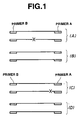
- FIG. 1 is a schematic view for explaining the difference in stability in competitive hybridization depending on whether a site of mutation is located in a central portion or end portion of DNA.
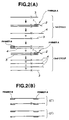
- FIG. 2 schematically shows the principle of the present invention.
- A is a schematic view for explaining the principle of gene amplification using the primer of the present invention.
- B is a schematic view for explaining the principle of competitive hybridization.
- the present invention has been made in consideration of the above-mentioned situation, and an object of the present invention is to provide a nucleic acid-differentiation method which ensures detection of mutation in a target nucleic acid and differentiation of genes for identity even when the target nucleic acid has the mutation site or the nucleotide sequence to be differentiated near the primer binding site, and a gene amplifying primer and a nucleic acid-differentiation assay kit for use in the practice of the differentiation method.
- the present inventors made an extensive investigation to solve the problem that nucleic acid differentiation based on the above-described PCR-PHFA is easy when a mutation site or a nucleotide sequence to be differentiated is located near the center of an amplified product, but difficult when such site is located near the end of the amplified product.
- the inventors of the present invention have made further investigation and found that, in the amplification of the target nucleic acid including the mutation site or the nucleotide sequence to be differentiated near its primer binding site, if a length of sequence that is noncomplementary to the target nucleic acid is added on the 5' terminal of the main region of the amplification primer, the amplification product obtained will be the one wherein the mutation site or the nucleotide sequence to be differentiated has shifted to the central side; and when the differentiation by competitive hybridization in accordance with the above-described PCR-PHFA is carried out using the thus obtained amplification product, the gene mutation or the nucleotide sequence to be differentiated can be easily differentiated.
- the present invention has been completed on the basis of such finding.
- the target nucleic acid 3 including the mutation site or the nucleotide sequence to be differentiated (hereinafter referred to as the mutation site or the like) X near its primer binding site is amplified with a primer A comprising a primer main region 1 complementary to the target nucleic acid having added to its 5' end an additional sequence 2 that is noncomplementary to the target nucleic acid, one amplification product 4 wherein the mutation site or the like X has shifted to the central side and one target nucleic acid 3 will be obtained in the reaction of the first cycle.
- the amplification product 4 will produce two similar amplification products 4 through the use of another primer B which is complementary to the target nucleic acid, and the target nucleic acid 3 will produce one similar amplification product 4 through the use of the primer A, resulting in three similar amplification products 4 in total.
- the amplification product 4 wherein the mutation site or the like X has shifted to the central side will be further amplified by repeating similar cycles.
- the number of hydrogen bonds serially present along the strand will be increased to result in the increased stability in contrast to the case of the double stranded fragment (C') including the mismatch site wherein the stability remains unchanged in spite of the addition of the additional sequence on the 5' end of the primer A on the side of the mutation site or the like X since the stability of the molecule is determined by the longest length of the serially present hydrogen bonds, namely, the length between the mutation site or the like X and the primer B on the side remote from the mutation site or the like X.
- the present invention provides a gene amplifying primer for use in DNA differentiation wherein the DNA differentiation is effected by utilizing a complementary strand-exchange reaction in competitive hybridization, characterized in that said primer comprises a primer main region which is complementary to a target nucleic acid to be amplified and a sequence added to the 5' end of the primer main region which is noncomplementary to the target nucleic acid.
- a detectable label and/or a site capable of binding to a solid phase carrier may be introduced into the gene amplifying primer according to the present invention so that the gene amplification product produced by using the amplifying primer may be subject to the differentiation method based on competitive hybridization (PCR-PHFA) as a labeled DNA.
- PCR-PHFA competitive hybridization
- the present invention also provides methods for differentiating nucleic acids by using the above-mentioned gene amplifying primer according to the present invention, which are:
- the unlabeled standard DNA in the above-mentioned differentiation method (1) and the unlabeled sample DNA in the above-mentioned differentiation method (2) may be prepared by using the gene amplifying primer according to the present invention which has not introduced therein a detectable label or a site capable of binding to a solid phase carrier; or by gene cloning using a vector selected from a plasmid vector, a phage vector, and a chimerical vector of a plasmid and a phage.
- the present invention provides an assay kit for effecting nucleic acid differentiation by the above-mentioned nucleic acid differentiation method (1), characterized by comprising
- the above-mentioned nucleic acid differentiation assay kits of the present invention are adapted for assaying nucleic acids by the above-mentioned nucleic acid differentiation methods (1) and (2), respectively.
- the differentiation assay is carried out by using the former assay kit in accordance with the above-mentioned method (1), the target nucleic acid in the sample is amplified with a pair of labeled primers to prepare labeled sample DNA, and competitive hybridization is carried out between the thus prepared labeled sample DNA and the unlabeled DNA specimen; and when the differentiation assay is carried out by using the latter assay kit in accordance with the above-mentioned method (2), the DNA specimen is amplified with a pair of labeled primers to prepare labeled standard DNA, and competitive hybridization is carried out between the thus prepared labeled standard DNA and the unlabeled sample DNA prepared from the sample using the unlabeled primer or vector; and in either case, the resulting hybridization products are measured by utilizing the label.
- the sample in amplifying the target nucleic acid with the primers, the sample is subjected to an adequate pretreatment such as cell disruption, if desired; and reagents necessary for the amplification are employed.
- the measurement of the hybridization product is carried out by trapping the hybridization product on a solid phase carrier with the use of the site capable of binding to the carrier, and detecting the trapped hybridization product with the use of the detectable label.
- the above-mentioned nucleic acid differentiation assay kit of the present invention may be constituted by incorporating the reagents and components which have been used in conventional PCR-PHFA, for example, such as the reagent for cell disruption, the reagents for nucleic acid amplification, the carrier for trapping the hybridization product, and the like.
- the gene amplifying primer of the present invention comprises a primer main region complementary to the target nucleic acid having added to its 5' end a sequence which is noncomplementary to the target nucleic acid.
- the sequence added to the primer main region is not limited to any particular sequence so long as the sequence is noncomplementary to the target nucleic acid and the sequence added does not bind to the target nucleic acid.
- the sequence added is preferably a sequence wherein 50% or more of the constituent bases comprise guanine (G) and citosine (C), and more preferably, a sequence wherein all of the constituent bases comprise G and/or C, since the bond between G and C is stronger than the bond between A and T due to the number of the hydrogen bonds present between the bases (three hydrogen bonds are formed between G (guanine) and C (citosine) in contrast to two hydrogen bonds formed between A (adenine) and T (thymine)).
- this brings a larger difference in stability between the fully complementary double stranded fragment and the double stranded fragment including the mismatch site, facilitating differentiation of the mutation or the like.
- the noncomplementary sequence added is not particularly limited in length.
- the length is preferably from 10 to 40 bases, and more preferably, from 20 to 40 bases.
- the noncomplementary sequence with a length of less than 10 bases might be insufficient in shifting the mutation site of the nucleic acid to the central side.
- a length of more than 40 bases might adversely affect the specificity of the PCR.
- the primer of the present invention may have introduced therein either or both of a detectable label and a site capable of binding to a solid phase carrier.
- the introduction site of the detectable label or the site capable of binding to a solid phase carrier is not particularly limited so long as the efficiency of the primer extension reaction is not impaired, and preferably, the introduction site is an active group in a hydroxyl group, base or phosphate diester moiety near the 5' end.
- the above-mentioned detectable label and the site capable of binding to a solid phase carrier are utilized when the primer of the present invention is used for the amplification of the target nucleic acid and the amplification product is subjected to competitive hybridization for nucleic acid differentiation.
- the above-mentioned detectable label may be either radioactive or radio-inactive, and preferably, radio-inactive.
- radio-inactive labels include directly detectable labels such as fluorescent substances, e.g., fluorescein derivatives (fluorescein isothiocyanate etc.), rhodamine and its derivatives (tetramethylrhodamine isothiocyanate etc.), chemiluminescent substances (e.g., acridine), and delayed fluorescent substances (DTTA, manufactured by Pharmacia).
- fluorescent substances e.g., fluorescein derivatives (fluorescein isothiocyanate etc.), rhodamine and its derivatives (tetramethylrhodamine isothiocyanate etc.), chemiluminescent substances (e.g., acridine), and delayed fluorescent substances (DTTA, manufactured by Pharmacia).
- the label may be indirectly detected if the label is used in combination with a substance that specifically binds to the label, and such a substance may be introduced in the primer of the present invention.
- the label that can be used in this embodiment includes biotin, a ligand, a nucleic acid or protein of a particular type, and a hapten. Biotin may be used in combination with avidin or streptoavidin that specifically binds to biotin; and the hapten may be used with an antibody that specifically binds to the hapten.
- the ligand may be used with a receptor, and the nucleic acid or protein of the particular type may be used with a nucleic acid that specifically binds thereto, a nucleic acid-binding protein or a protein that has an affinity to the particular protein.
- the hapten examples include compounds having a 2,4-dinitrophenyl (DNP) group and digoxigenin, and biotin or a fluorescent substance may also be used as the hapten.
- DNP 2,4-dinitrophenyl
- biotin or a fluorescent substance may also be used as the hapten.
- the labels as described above may be introduced alone or, if desired, in combination of two or more by known means (see JP-A 59-93099, 59-148798, and 59-204200). It should be noted that the detectable label and the site capable of binding to a solid phase carrier may be the same.
- the gene amplifying primer of the present invention is used for nucleic acid amplification reaction, and most preferably, in a nucleic acid differentiation method wherein PCR-PHFA utilizing ED-PCR is adopted for the detection system.
- the nucleic acid differentiation by PCR-PHFA may be effected either by the method (of Nicolas et al.) wherein an excessive amount of unlabeled sample DNA is mixed with labeled standard DNA, or by the method (of PCT/JP94/01106, Nucl. Acids. Rec.
- the primer of the present invention may be used to enable efficient nucleic acid differentiation assay.
- the use of the primer of the present invention enables convenient differentiation of the mutation or the like near the primer which was difficult to differentiate in the prior art.
- both the method of Nicolas et al. and the nucleic acid differentiation method previously proposed by the inventors of the present invention may be suitably used in the differentiation of the nucleic acid using the gene amplifying primer of the present invention.
- Particular use of the method of the present inventors would enable determination of the presence/absence of a particular mutation at a non-predetermined site on a particular gene, detection of a small amount of abnormal cells with a mutant gene which are co-present with normal cells, and determination for identity of a particular gene in a plurality of samples in addition to the determination of the DNA type of the HLA gene or the like.
- the use of the gene amplifying primer of the present invention also enables a clear differentiation of the nucleic acid even when the mutation or the like is present near the primer binding site, thereby realizing differentiation assay with a quite high accuracy.
- this differentiation method In the following description, explanation is made for this differentiation method. In the following description, the difference in nucleotide sequences to be differentiated is generally referred to as "mutation" for simplicity.
- this method comprises the steps of amplifying a particular region of a target nucleic acid in a sample by using a pair of the primers according to the present invention having a detectable label introduced in one primer and a site capable of binding to a solid phase carrier on the other primer, using the resulting labeled DNA as a sample DNA using an unlabeled DNA specimen to be determined for identity with the sample DNA as a standard DNA; adding an equimolar amount or excess of said standard DNA to said sample DNA to promote competitive hybridization; and evaluating the degree of complementary strand exchange that has occurred between said sample DNA and said standard DNA by utilizing said detectable label and said site capable of binding to the solid phase carrier, thereby determining the identity of the nucleic acid.
- this differentiation method by adding an equimolar amount or excess, namely, an excessive amount of said unlabeled standard DNA to said labeled sample DNA, not only the detection of the occurrence of an unspecified mutation in a particular gene region, but also the determination of whether such mutation has occurred on both alleles or only on one of the alleles are enabled. Such determination is possible even when the occurrence of the mutant gene is as low as about 10%, and evaluation of the occurrence is also enabled. Furthermore, by using one DNA sample for the labeled sample DNA and the other for the unlabeled standard DNA, this differentiation method can determine the homology between genes of a particular type in two DNA samples, whether the genes in two DNA samples are identical, completely different, or partly different from one another, and a degree of difference.
- the gene amplifying primer of the present invention as described above is used in such nucleic acid differentiation method for at least one of the primer pair for amplification of said target nucleic acid comprising the primer having introduced therein a detectable label and the primer having introduced therein a site capable of binding to a solid phase carrier.
- a particular region of the target nucleic acid in the sample is amplified by using the primer of the present invention as described above for at least one of the primer having introduced therein a detectable label and the primer having introduced therein a site capable of binding to a solid phase carrier.
- both primers used for the gene amplification may comprise the primer of the present invention. It is, however, typical to constitute one primer from the primer of the present invention, and the other primer from a conventional primer solely comprising the sequence complementary to the target acid.
- the detectable label and the site capable of binding to a solid phase carrier introduced in the primer of the present invention and the other primer may be the same as those described in the foregoing.
- the samples that may be used include blood, diseased tissue pieces, and excreta such as feces and urine available from human being.
- fetal cells in the amniotic fluid and blastomeres in a test tube may be used as the sample.
- the samples as such or after optional concentration into a precipitate by centrifugation may be previously subjected to cell disruption by enzymatic treatment, heat treatment, surfactant treatment or ultrasonication or a combination thereof.
- the cell disruption is carried out for the purpose of exposing the DNA originating from the target tissue.
- the cell disruption may be typically carried out in accordance with well-known processes in the literature, for example, PCR Protocols, Academic Press Inc., p 14 and p 352 (1990).
- the amount of the DNA in the sample is approximately 1 to 100 ⁇ g in total. Sufficient amplification is possible with less than 1 ⁇ g of DNA.
- gene amplification through primer extension will proceed if the target nucleic acid to be amplified is present in the sample.
- the gene amplification may be effected by well-known PCR, LCR, 3SR, SDA and other processes (Manak, DNA Probes, 2nd Edition, p 255-291, Stockton Press, 1993), and most preferably, by PCR.
- the primer extension reaction is effected by incorporating 4 types of nucleoside triphosphate (deoxyadenosine triphosphate, deoxyguanosine triphosphate, deoxycytidine triphosphate and deoxythymidine triphosphate, a mixture of which is sometimes referred to as dNTPs) as substrates into the primer.
- nucleoside triphosphate deoxyadenosine triphosphate, deoxyguanosine triphosphate, deoxycytidine triphosphate and deoxythymidine triphosphate, a mixture of which is sometimes referred to as dNTPs
- an amplification reaction reagent including the above-mentioned nucleic acid units for amplifying nucleic acid strands and nucleic acid extension enzyme is generally employed.
- the nucleic acid extension enzymes incorporated in such reaction reagent include DNA polymerases such as E. coli DNA polymerase I, Krenow fragment of the E. coli DNA polymerase I, T4 DNA polymerase, and the like, and use of a thermally stable DNA polymerase such as Taq DNA polymerase, Tth DNA polymerase, Vent DNA polymerase or the like is most preferable.
- the specificity of target sequence recognition by the primer is improved to enable rapid, specific gene amplification (For further detail, see JP-A 314965/1989 and 252300/1989).
- an oil may be added to the reaction solution to prevent evaporation of water from the reaction solution. Any oil exhibiting partition with water and having a lower specific gravity than water may be used for such purpose, and exemplary oils include silicone oil and mineral oil.
- the target nucleic acid in the sample may be efficiently amplified by repeating extension reaction using the above-described nucleic acid amplification primers.
- the conditions and other detailed procedures of the gene amplification reaction may be adequately determined in accordance with known procedures described in the publications such as Jikken Igaku (Experimental Medicine), Yodo-sha, 8, No. 9 (1990) and PCR technology, Stockton Press (1989).
- competitive hybridization is effected by using the amplification product of the above-described gene amplification procedure, namely, the labeled DNA for the sample DNA, and adding the standard DNA, namely, the unlabeled DNA specimen to be determined for identity with the sample DNA to the sample DNA.
- the unlabeled standard DNA is the DNA which has a sequence homologous to the amplification product of the gene whose mutation is to be detected, and in general, the unlabeled standard DNA is preferably the normal gene corresponding to the gene whose mutation is to be detected, although genes other than such normal gene may be used depending on the purpose of the detection.
- Such an unlabeled standard DNA may be prepared as will be described below. It should be noted that the terminology "a sequence homologous to the amplification product of the gene whose mutation is to be detected" designates the sequence which substantially shares the sequence other than the mutation site, and therefore, the sequence whose length is substantially the same.
- the unlabeled standard DNA may be prepared by the amplification of the normal gene using the unlabeled primer having the same nucleotide sequence as the primer used for the amplification of the gene whose mutation is to be detected.
- the thus amplified gene can be further mass-produced by incorporating the gene in a vector selected from a plasmid vector, a phage vector, and a chimera vector of a plasmid and a phage, and introducing the vector in a host such as a bacterium, for example, E. coli and Bacillus subtitles or yeast (gene cloning).
- the unlabeled standard DNA may be prepared by enzymatic cleavage from a natural gene without utilizing gene amplification. Preparation by chemical synthesis is also possible in some situation.
- the unlabeled standard DNA previously prepared as described above is subjected to competitive hybridization together with the labeled sample DNA as described above.
- both of the above-described DNA must be denatured, and the denaturation may be effected with heat or alkaline.
- the DNAs may be mixed immediately before the denaturation or after the denaturation of respective DNAs.
- an equimolar amount or excess of the unlabeled standard DNA should be added to the labeled sample DNA, and generally, an amount of approximately 5 to 20 times in excess of the unlabeled standard DNA is preferably added to the labeled sample DNA.
- the optimal amount added may vary depending on the length, base sequence, and degree of mutation of the DNA.
- the salt concentration of the reaction solution should be adjusted to the optimal level primarily determined by the strand length.
- the solutions generally used in competitive hybridization are SSC (20 x SSC: 3M sodium chloride; 0.3N sodium citrate, pH 7.0) and SSPE (20 x SSPE: 3.6M sodium chloride, 0.2M sodium phosphate, 2mM EDTA), and these solutions may be used in the present invention after diluting the solution to the desired concentration. Addition of about 10% of an organic medium such as formamide or dimethylformamide may facilitate the adjustment of the solution to optimal conditions.
- ком ⁇ онент may be carried out by mixing the DNAs that have been denatured by the above-described procedure, and gradually reducing the temperature from the elevated temperature.
- optimal conditions may be suitably set in accordance with the length and the sequence of the DNA to be hybridized and the difference between the mutant nucleotide sequence and the normal nucleotide sequence.
- the temperature conditions are set so that the temperature is reduced in the range of from 98 to 58°C at a rate of 1°C per 6 to 10 minutes.
- the product of the competitive hybridization is measured by the principle of ED-PCR (see JP-A 314965/1989 and 252300/1989 and J. Clin. Microbiol., 30, 1728 (1992), for example).
- ED-PCR the presence of double stranded nucleic acid is indicated by a signal only when different labels are present on respective strands of the nucleic acid (The labels on the strands of the nucleic acid are the same as the case may be). Accordingly, the competitive hybridization products as described above will produce a weaker signal with an increasing strand exchange frequency between the labeled DNA and the unlabeled DNA.
- the signal produced will be weaker when the sample DNA includes a larger proportion of the sequence which is identical with the standard DNA in the target region of the sample DNA.
- the label may be introduced in one strand of the sample DNA, and in the strand of the standard DNA that is complementary to the labeled strand of the sample DNA so that a signal will be generated when the sample DNA and the standard DNA have the identical nucleotide sequence, that is, when exchange has taken place between both DNAs.
- the hybridization products are measured as described above, and the identity of the sample DNA with the standard DNA, the presence/absence of mutant gene and the ratio of mutant gene to normal gene are determined from these measurements. Measurement may be done by a conventional procedure in accordance with the label used. For example, when the label is an isotope, it is only required to measure the radioactivity, and when the label is a fluorescent substance, its intensity may be directly measured by means of a fluorometer (see JP-A 252300/1989).
- a reagent for indirectly measuring the label is employed.
- a typical reagent for the indirect measurement is a complex of avidin or strepto-avidin with an enzyme
- a typical reagent is an antibody-enzyme complex comprising an antibody which specifically binds to the hapten and an enzyme bound to the hapten, and a substrate for the enzyme is also employed.
- the use of such a reagent allows reaction to take place between the reagent and a label to produce a component detectable by chromatic or fluorescent detection means.
- Exemplary combinations of enzyme and substrate which can be used for the reagent include ⁇ -D-galactosidase for the enzyme and 2-nitrophenol, ⁇ -D-galactoside, 4-methylumbelliferyl- ⁇ -D-galactoside, etc. for the substrate; peroxidase for the enzyme and 3-(4-hydroxyphenyl)propionic acid, 3,3',5,5'-tetramethylbendidine, 1,2-phenylenediamine, etc. for the substrate; alkaline phosphatase for the enzyme and 4-methylumbelliferyl phosphate, NADP, 4-nitrophenylphosphate, etc. for the substrate; a dehydrogenase such as gulucose-6-phosphate for the enzyme and glucose, NAD, etc. for the substrate; and alcohol dehydrogenase for the enzyme and ethanol, NAD, etc. for the substrate.
- ⁇ -D-galactosidase for the enzyme and 2-nitrophenol, ⁇ -D-galactoside, 4-
- the measurement of the hybridization product as described above is carried out after trapping the hybridization product on a solid phase carrier.
- the solid phase carrier employed is the one which is capable of specifically binding with the solid phase carrier-binding site introduced in the primer; and a typical solid phase carrier employed is a microtiter well which has been treated to enable specific binding with the site.
- the target nucleic acid includes the mutation site or the nucleotide sequence to be differentiated (mutation site or the like) near its primer binding site
- the labeled sample DNA obtained by amplification has the mutation site or the like shifted to the central side. Accordingly, in the product resulting from hybridization of this amplification product, the double stranded fragments with no mismatch site and the double stranded fragments with mismatch site will exhibit an increased difference in stability, enabling clear differentiation of the target nucleic acid even when the mutation site or the like is located near the primer binding site.
- the nucleic acid differentiation method comprises the steps of amplifying the DNA specimen by using a pair of primers comprising a primer having introduced therein a detectable label and a primer having introduced therein a site capable of binding to a solid phase carrier; using the resulting labeled DNA as a labeled standard DNA; adding an excessive amount of an unlabeled sample DNA to said labeled standard DNA to carry out competitive hybridization; and evaluating the hybridization product for the degree of complementary strand-exchange that has occurred between said labeled standard DNA and said unlabeled sample DNA by utilizing said detectable label and said site capable of binding to the solid phase carrier to determine the identity between the nucleic acids.
- the measured value will be significantly reduced for the sample in which a sequence identical with the standard DNA is present, since the labeled standard DNA would be diluted by the excessive unlabeled sample DNA; and the measured value will be high for the sample in which the identical sequence is absent, since the labeled standard DNA would not be diluted by the unlabeled sample DNA. It is then judged from a measurement value whether a fragment including the sequence identical with the labeled standard DNA is present or absent in the sample DNA.
- the nucleic acid differentiation according to the method of Nicolas et al. is carried out by using the gene amplifying primer of the present invention that has been labeled for at least one of the primer pair for the preparation of the labeled standard DNA.
- the primer of the present invention is used in the amplification of the DNA specimen wherein the site to be differentiated is located near the primer binding site, the resulting labeled standard DNA has the site for differentiation shifted to the central side, which enables reliable differentiation of the nucleic acid.
- the labeled standard DNA can be prepared by mixing the DNA specimen with the pair of primers wherein at least one of the primers is the gene amplifying primer of the present invention having introduced therein a detectable label and/or a site capable of binding to a solid phase carrier, and amplifying the DNA specimen.
- the amplification procedure of the labeled standard DNA is similar to the amplification procedure in the preparation of the labeled sample DNA in the differentiation method of the inventors of the present invention.
- the unlabeled sample DNA can be prepared by amplifying the particular gene to be determined in the sample using the unlabeled primer having the nucleotide sequence identical with the primer used in the preparation of the labeled standard DNA.
- the thus amplified gene can be further mass-produced by incorporating the gene in a vector selected from a plasmid vector, a phage vector, and a chimera vector of a plasmid and a phage, and introducing the vector in a host such as a bacteria, for example, E. coli or Bacillus subtilis or yeast (gene cloning).
- a host such as a bacteria, for example, E. coli or Bacillus subtilis or yeast (gene cloning).
- the sample may be subject to pretreatment such as cell disruption, if desired, and amplification may be carried out by a conventional procedure.
- an equimolar amount or excess, and preferably, approximately 5 to 20 times in excess of the unlabeled sample DNA is added to the labeled standard DNA to effect competitive hybridization, and the resulting competitive hybridization product is evaluated for the degree of the complementary strand-exchange that has occurred between the labeled standard DNA and the unlabeled sample DNA by the procedure similar to the above-described differentiation method of the present inventors. It should be noted that procedures other than the above-mentioned, the reagents, members and the like used for the amplification and measurement are the same as those employed in the above-described method of the present inventors.
- the first assay kit of the present invention is the kit for effecting assay according to the differentiation method of the present inventors, and the kit is characterized by comprising a pair of primers for preparing a labeled sample DNA comprising a primer having introduced therein a detectable label and a primer having introduced therein a site capable of binding to a solid phase carrier, wherein at least one of the primers comprises the gene amplifying primer of the present invention that has been labeled; and one of the following (A) to (C):
- assay is effected in accordance with the above-described method of the present inventors, namely, by mixing the sample that has been optionally subjected to pretreatment such as cell disruption with a pair of primers including the gene amplifying primer of the present invention that has been labeled; adding amplification reagents and amplifying the sample region whose mutation is to be detected to obtain the labeled sample DNA; adding an excessive amount of the unlabeled DNA specimen or the unlabeled DNA specimen prepared with the unlabeled DNA specimen-preparing primers and the vector as the unlabeled standard DNA to effect competitive hybridization; and trapping the resulting competitive hybridization product on the carrier to evaluate the degree of strand exchange that has occurred between the DNAs.
- assay is effected in accordance with the above-described method of Nicolas et al., namely, by mixing the DNA sample with a pair of the above-described labeled standard DNA-preparing primers; adding amplification reagents and amplifying the DNA to obtain the labeled standard DNA; preparing, in the meanwhile, the unlabeled sample DNA from the sample by using a pair of the unlabeled sample DNA-preparing primer or a vector; adding an excessive amount of the thus prepared unlabeled sample DNA to the labeled standard DNA to effect competitive hybridization; and trapping the resulting competitive hybridization product on the carrier to evaluate the degree of strand exchange that had occurred between the DNAs.
- the amplification reagents and the carrier employed in such assay may be those known in the art, and exemplary reagents and carriers are those described in relation to the nucleic acid differentiation method of the present invention.
- the nucleic acid differentiation assay kit of the present invention may further comprise such reagents and carriers.
- the assay may be carried out by additionally employing a cell disruption reagent for sample pre-treatment, a washing solution for washing the amplification product, an oil for preventing evaporation of water from the reaction solution, and reagents for indirectly detecting the label as set forth in the description of the nucleic acid differentiation method of the present invention, and the nucleic acid differentiation assay kit of the present invention may further comprise such reagents.
- a differentiation assay was carried out as described below in accordance with the method of Nicolas et al. to differentiate *0403 gene and *0407 gene (these genes are different only in 2 bases in a region near the primer binding site) located near the primer (DR-BAMP-B), among the genes of HLA-DRB1, which is one DR antigen of Class II antigens in the HLA antigen on sixth human chromosome.
- primers of the present invention (Examples 1 to 3) and a conventional primer (Comparative Example 1) were used as a gene amplifying primer to compare the differentiation ability.
- primers used were primers DRBAMP-4 and DRBAMP-B as shown below, and primers DRBAMP-BAT, DRBAMP-BGC and DRBAMP-B4 in which an noncomplementary sequence (the underscored region) was added to the 5' end of DRBAMP-B.
- amplification primers were prepared each comprising Bio-DRBAMP-4 (100 ng) having biotin introduced therein as a site capable of binding to a carrier, and one of the labeled primers DNP-DRBAMP-B, DNP-DRBAMP-BAT, DNP-DRBAMP-BGC, and DNP-DRBAMP-B4 (100 ng) having DNP introduced therein as a detectable site.
- reaction solution comprising 50mM Tris-HCl buffer solution (pH 9.5, 25°C), 50mM NaCl, 10mM MgCl 2 and 200mM dNTPs were added *0407 gene together with each pair of amplification primers; and then, 2 units of Taq DNA polymerase.
- reaction solution was heated to 94°C for 5 minutes, and then subjected to 30 cycles of gene amplification each comprising heating at 94°C for 30 seconds, 60°C for 30 seconds and 72°C for 1 minute (PCR).
- PCR primer extension reaction
- the amplification products in the thus produced four labeled standard DNA solutions and the four unlabeled sample DNA solutions were determined for size and production amount by agarose gel electrophoresis.
- a 20 ⁇ l aliquot was sampled from the competitive hybridization reaction solution, and color development reaction was promoted at 25°C for 30 minutes using ED-PCR for the detection system. Development of yellow color was measured in terms of absorbance at 405 nm to determine the amount of the residual double stranded DNA having both the biotin and DNP labels.
- the competitive hybridization procedure as described above was simultaneously conducted in two test tubes, and the measurements were averaged.
- the dilution index (the degree of dilution of the labeled standard DNA (*0407 gene) with the unlabeled sample DNA (*0403 gene)) was calculated by dividing the absorbance at 405 nm of the reaction solution wherein the unlabeled sample DNA was added to the labeled sample DNA by the absorbance at 405 nm of the reaction solution wherein H 2 O was added instead of the unlabeled sample DNA.
- a differentiation assay was carried out as described below in accordance with the method of Nicolas et al. to differentiate *1301 gene and *1302 gene which are different from one another only by 2 bases in a region near the primer binding site, among the genes of HLA-DRB1.
- primers of the present invention (Examples 4 to 6) and a conventional primer (Comparative Example 2) were used as a gene amplifying primer to compare the differentiation ability.
- primers DRBAMP-3/5/6 and DRBAMP-B whose base composition is shown below, and primers DRBAMP-BAT, DRBAMP-BGC and DRBAMP-B4 in which a noncomplementary sequence (the underscored region) was added to the 5' end of DRBAMP-B.
- amplification primers were prepared each comprising Bio-DRBAMP-3/5/6 (100 ng) having biotin introduced therein as a site capable of binding to a carrier, and one of the labeled primers DNP-DRBAMP-B, DNP-DRBAMP-BAT, DNP-DRBAMP-BGC and DNP-DRBAMP-B4 (100 ng) having DNP introduced therein as a detectable site.
- *1301 gene was added to 100 ⁇ l reaction solution comprising 50mM Tris-HCl buffer solution (pH 9.5, 25°C), 50mM NaCl, 10mM MgCl 2 and 200mM dNTPs together with each pair of amplification primers; and then, 2 units of Taq DNA polymerase added.
- the reaction solution was heated to 94°C for 5 minutes, and then, subjected to 30 cycles of gene amplification each comprising heating at 94°C for 30 seconds, 60°C for 30 seconds and 72°C for 1 minute (PCR).
- the resulting four reaction solutions were used as a labeled standard DNA solution.
- the amplification products in the thus produced four labeled standard DNA solutions and the four unlabeled sample DNA solutions were determined for size and production amount by agarose gel electrophoresis.
- a 20 ⁇ l aliquot was sampled from the competitive hybridization reaction solution, and color development reaction was promoted at 25°C for 30 minutes using ED-PCR for the detection system. Development of yellow color was measured in terms of absorbance at 405 nm to determine the amount of the residual double stranded DNA having both the biotin and DNP labels.
- the competitive hybridization procedure as described above was simultaneously conducted in two test tubes, and the measurements were averaged.
- the dilution index (the degree of dilution of the labeled standard DNA (*1301 gene) with the unlabeled sample DNA (*1302 gene)) was calculated by dividing the absorbance at 405 nm of the reaction solution wherein the unlabeled sample DNA was added to the labeled sample DNA by the absorbance at 405 nm of the reaction solution wherein H 2 O was added instead of the unlabeled sample DNA.
- Table 2 the degree of dilution of the labeled standard DNA (*1301 gene) with the unlabeled sample DNA
- Tables 1 and 2 indicate that the use of primers of the present invention (DRBAMP-BAT, DRBAMP-B4 and DRBAMP-BGC) (Examples 1 to 6) results in higher values of dilution index than the use of the conventional primer (DRBAMP-B) (Comparative Examples 1 and 2), and the dilution index value increases in this order, indicating the preferential formation of a homoduplex to a heteroduplex.
- the use of the primer of the present invention having a sequence noncomplementary to the target nucleic acid added thereto enables the preferential formation of a homoduplex and hence, clear differentiation. Addition of the noncomplementary sequence solely comprising the bases of G and C (DRBAMP-BGC, Examples 3 and 6) showed most significant effects.
- a sample of DRB1 *1301/*1301 (homo) and a sample of DRB1 *1301/*1402 (hetero) were differentiated in accordance with the method of Nicolas et al. using a labeled standard DNA and an unlabeled sample DNA.
- Sample 1 (DRB1 *1301/*1301) and sample 2 (DRB1 *1301/*1402) were amplified under the conditions similar to the above-described Examples 4 to 6 using the primer pair comprising NH 2 -DRBAMP-3/5/6, and either one of NH 2 -DRBAMP-B (conventional primer) and NH 2 -DPBAMP-BGC (inventive primer), obtaining the unlabeled sample DNA.
- the labeled standard DNA was produced by amplifying respective genes of the DNA sample shown in Table 3 with the amplification primer pair comprising Bio-DRBAMP-3/5/6, and either one of DNP-DRBAMP-B (conventional primer) and DNP-DRBAMP-BGC (inventive primer).
- sample 2 exhibited a low absorbance for the labeled standard DNAs *1301, *1302 and *1402 when the conventional primer (Comparative Example 3) was used. Such results are based on the fact that the conventional primer is difficult to differentiate *1301 and *1302, whose only difference is the 2 bases located near the primer binding site. In contrast, when the inventive primer (Example 7) was used, sample 2 exhibited a low value only for *1301 and *1402, confirming that the sample 2 is a hetero having the genotypes of *1301 and *1402.
- this sample exhibited a low value for the labeled standard DNAs *1301 and *1302 when the conventional primer was used. This sample, however, exhibited a low value only for *1301 when the inventive primer was used, and the presence of the *1302 gene was thus denied.
- the gene amplifying primer of the present invention enables nucleic acid differentiation at a higher accuracy than the conventional primer.
- Example 7 the presence of *1302 could be denied for sample 1 as described above.
- the results of Table 3 also confirmed the presence of *1301 in sample 1.
- the procedure of Example 7, however, could not differentiate whether sample 1 was a *1301 homo or a hetero with a gene other than the one examined in that Example.
- second stage typing was carried out in accordance with the differentiation method of the present inventors wherein the sample is amplified with the labeled primer to prepare the labeled sample DNA; and an excessive amount of unlabeled standard DNA is added to the labeled sample DNA to effect the competitive hybridization.
- the labeled sample DNA when the labeled sample DNA is a homo of the type of the unlabeled standard DNA, the molecule having the label on its opposite ends will finally be reduced at an arithmetic dilution index, and the absorbance will be about 1/20 of the initial value.
- the labeled sample DNA has one allele which is of different type (hetero)
- it is theoretically expected that half the amount of the labeled sample DNA molecule derived from the chromosomal DNA of the same type as the unlabeled standard DNA will be arithmetically diluted to provide little contribution to absorbance, while the other half will not undergo a substantial dilution, and as a result, the absorbance is about 1/2 of the initial absorbance.
- the following assay was conducted in accordance with this principle.
- Sample 1 as described above was amplified under conditions similar to the above-described conditions using a pair of amplifying primers comprising Bio-DRBAMP-3/5/6 and either one of DNP-DRBAMP-B (conventional primer) and DNP-DRBAMP-BGC (inventive primer).
- a specimen solely comprising *1301 gene (homo) and a specimen comprising a mixture of *1301 and *1302 (hetero) were also amplified under the same conditions.
- the amplified products were used as labeled sample DNAs.
- the genes DRB1 *1301, *1302, *1402, and *1405 were amplified with a pair of amplification primers comprising NH 2 -DRBAMP-3/5/6 and either one of NH 2 -DRBAMP-B (conventional primer) and NH 2 -DRBAMP-BGC (inventive primer),
- the nucleic acid differentiation in accordance with the method of the present inventors using the primer of the present invention enables reliable differentiation even when the mutation site or the like to be differentiated is located near the primer binding site, as well as convenient differentiation between the homo and the hetero.
- the gene amplifying primer of the present invention produces an amplification product wherein the mutation site or the like has shifted to the central side.
- nucleic acid differentiation by competitive hybridization utilizing complementary strand-exchange reaction is carried out using the thus amplified product, the target nucleic acid can be readily differentiated.
- nucleic acid differentiation method of the present invention enables clear, easy differentiation of a nucleic acid even when the target nucleic acid includes the mutation site or the like near its primer binding site.
- nucleic acid differentiation assay kit of the present invention enables nucleic acid differentiation assay to be readily and reliably carried out in accordance with the differentiation method of the present invention as described above.
Landscapes
- Chemical & Material Sciences (AREA)
- Organic Chemistry (AREA)
- Life Sciences & Earth Sciences (AREA)
- Zoology (AREA)
- Wood Science & Technology (AREA)
- Proteomics, Peptides & Aminoacids (AREA)
- Health & Medical Sciences (AREA)
- Engineering & Computer Science (AREA)
- Microbiology (AREA)
- Immunology (AREA)
- Physics & Mathematics (AREA)
- Molecular Biology (AREA)
- Biotechnology (AREA)
- Biophysics (AREA)
- Analytical Chemistry (AREA)
- Biochemistry (AREA)
- Bioinformatics & Cheminformatics (AREA)
- General Engineering & Computer Science (AREA)
- General Health & Medical Sciences (AREA)
- Genetics & Genomics (AREA)
- Measuring Or Testing Involving Enzymes Or Micro-Organisms (AREA)
Applications Claiming Priority (3)
| Application Number | Priority Date | Filing Date | Title |
|---|---|---|---|
| JP31477/95 | 1995-01-27 | ||
| JP3147795 | 1995-01-27 | ||
| PCT/JP1996/000151 WO1996023077A1 (en) | 1995-01-27 | 1996-01-26 | Primer for gene amplification, method for nucleic acid discrimination with the use of the same, and nucleic acid discrimination kit |
Publications (1)
| Publication Number | Publication Date |
|---|---|
| EP0805212A1 true EP0805212A1 (de) | 1997-11-05 |
Family
ID=12332351
Family Applications (1)
| Application Number | Title | Priority Date | Filing Date |
|---|---|---|---|
| EP96901125A Withdrawn EP0805212A1 (de) | 1995-01-27 | 1996-01-26 | Primer zur genamplifizierung, verfahren zur nukleinsäure unterscheidung und reagentiensatz mit diesen |
Country Status (3)
| Country | Link |
|---|---|
| US (1) | US5948618A (de) |
| EP (1) | EP0805212A1 (de) |
| WO (1) | WO1996023077A1 (de) |
Families Citing this family (5)
| Publication number | Priority date | Publication date | Assignee | Title |
|---|---|---|---|---|
| JP2003174882A (ja) * | 1999-08-12 | 2003-06-24 | Wakunaga Pharmaceut Co Ltd | 核酸の識別方法及び核酸の検査キット |
| DE10012540B4 (de) * | 2000-03-15 | 2004-09-23 | Vermicon Ag | Oligonukleotide und Verfahren zum spezifischen Nachweis von Mikroorganismen durch Polymerase-Kettenreaktion |
| US20030148284A1 (en) * | 2001-12-17 | 2003-08-07 | Vision Todd J. | Solid phase detection of nucleic acid molecules |
| US7833716B2 (en) | 2006-06-06 | 2010-11-16 | Gen-Probe Incorporated | Tagged oligonucleotides and their use in nucleic acid amplification methods |
| JP5720564B2 (ja) | 2009-03-31 | 2015-05-20 | 凸版印刷株式会社 | 遺伝子型の識別方法 |
Family Cites Families (4)
| Publication number | Priority date | Publication date | Assignee | Title |
|---|---|---|---|---|
| US5629158A (en) * | 1989-03-22 | 1997-05-13 | Cemu Bitecknik Ab | Solid phase diagnosis of medical conditions |
| US5106727A (en) * | 1989-04-27 | 1992-04-21 | Life Technologies, Inc. | Amplification of nucleic acid sequences using oligonucleotides of random sequences as primers |
| US5104792A (en) * | 1989-12-21 | 1992-04-14 | The United States Of America As Represented By The Department Of Health And Human Services | Method for amplifying unknown nucleic acid sequences |
| EP0664339A4 (de) * | 1993-07-09 | 1999-04-28 | Wakunaga Seiyaku Kk | Methode und testsatz zur unterscheidung von dna. |
-
1996
- 1996-01-26 EP EP96901125A patent/EP0805212A1/de not_active Withdrawn
- 1996-01-26 WO PCT/JP1996/000151 patent/WO1996023077A1/ja not_active Ceased
- 1996-01-26 US US08/875,377 patent/US5948618A/en not_active Expired - Fee Related
Non-Patent Citations (1)
| Title |
|---|
| See references of WO9623077A1 * |
Also Published As
| Publication number | Publication date |
|---|---|
| US5948618A (en) | 1999-09-07 |
| WO1996023077A1 (en) | 1996-08-01 |
Similar Documents
| Publication | Publication Date | Title |
|---|---|---|
| US5688643A (en) | Method of nucleic acid-differentiation and assay kit for nucleic acid differentiation | |
| JP2783568B2 (ja) | 望ましくない交差反応を排除するためにオリゴヌクレオチドを使用するポリヌクレオチドの検定法 | |
| US6440707B1 (en) | Fluorescence polarization in nucleic acid analysis | |
| US6498012B2 (en) | Methods for detecting mutations using primer extension for detecting disease | |
| EP1241266A1 (de) | Methode zum nachweis von nukleinsäurepolymorphismen | |
| US20030148301A1 (en) | Method of detecting nucleotide polymorphism | |
| JP2002505117A (ja) | チモーゲン性核酸検出方法、および関連分子およびキット | |
| KR20140010093A (ko) | 혼합 집단 중 표적 dna의 서열분석을 위한 키트 및 방법 | |
| CN107709573A (zh) | 用于在采用ddNTP的方法中防止假阳性的方法和产品 | |
| EP1131468A2 (de) | "primer extension" methoden unter verwendung von donor- und akzeptor-molekülen zum nachweis von nukleinsäuren | |
| KR102683325B1 (ko) | 헬리코박터 파일로리(Helicobacter pylori) 유전형 판별용 PNA 프로브 및 이를 이용한 헬리코박터 파일로리 유전형 판별방법 | |
| CN113646444B (zh) | 检测军团菌属的方法 | |
| JP4969250B2 (ja) | スペーサー領域を使用するプロテウス種の検出、同定、および区別 | |
| US5948618A (en) | Primer for gene amplification, method for nucleic acid discrimination with the use of the same, and nucleic acid discrimination kit | |
| EP3387146B1 (de) | Verfahren und kits zur verbindung von fragmentierten nukleinsäuren | |
| JP2982304B2 (ja) | 核酸の識別方法及び核酸の識別用検査セット | |
| EP0933431A1 (de) | Verfahren zur untersuchung von nukleinsäuren und reagentiensätze | |
| US7432362B2 (en) | Assay for human DNA for gender determination | |
| US12359261B2 (en) | Assay for detection of pathogenic Leptospira strains | |
| US20020058271A1 (en) | Process for detecting a nucleic acid target | |
| US20260043076A1 (en) | Detection of molecular analytes based on tailored probe competition | |
| US7074567B2 (en) | Assay for human DNA for gender determination | |
| JPWO1995002068A1 (ja) | 核酸の識別方法及び核酸の識別用検査セット | |
| JPWO1996023077A1 (ja) | 遺伝子増幅用プライマー、該プライマーを用いた核酸の識別方法及び核酸の識別用検査セット | |
| Munkhtogtokh et al. | Combination of upstream primer-multuplex PCR (UP-mpcr) and capillary electrophoresis for equine genetic analysis |
Legal Events
| Date | Code | Title | Description |
|---|---|---|---|
| PUAI | Public reference made under article 153(3) epc to a published international application that has entered the european phase |
Free format text: ORIGINAL CODE: 0009012 |
|
| 17P | Request for examination filed |
Effective date: 19970818 |
|
| AK | Designated contracting states |
Kind code of ref document: A1 Designated state(s): CH DE FR GB IT LI NL |
|
| STAA | Information on the status of an ep patent application or granted ep patent |
Free format text: STATUS: THE APPLICATION HAS BEEN WITHDRAWN |
|
| 18W | Application withdrawn |
Withdrawal date: 19991123 |