EP0803521B1 - Blockcopolymer, sein Herstellungsverfahren und seine Verwendung - Google Patents
Blockcopolymer, sein Herstellungsverfahren und seine Verwendung Download PDFInfo
- Publication number
- EP0803521B1 EP0803521B1 EP97106660A EP97106660A EP0803521B1 EP 0803521 B1 EP0803521 B1 EP 0803521B1 EP 97106660 A EP97106660 A EP 97106660A EP 97106660 A EP97106660 A EP 97106660A EP 0803521 B1 EP0803521 B1 EP 0803521B1
- Authority
- EP
- European Patent Office
- Prior art keywords
- block copolymer
- group
- structural unit
- general formula
- polyalkylene glycol
- Prior art date
- Legal status (The legal status is an assumption and is not a legal conclusion. Google has not performed a legal analysis and makes no representation as to the accuracy of the status listed.)
- Expired - Lifetime
Links
- 229920001400 block copolymer Polymers 0.000 title claims description 192
- 238000004519 manufacturing process Methods 0.000 title description 15
- 239000003599 detergent Substances 0.000 claims description 78
- 239000002270 dispersing agent Substances 0.000 claims description 52
- HHLFWLYXYJOTON-UHFFFAOYSA-N glyoxylic acid Chemical compound OC(=O)C=O HHLFWLYXYJOTON-UHFFFAOYSA-N 0.000 claims description 52
- 239000000203 mixture Substances 0.000 claims description 52
- 229920001515 polyalkylene glycol Polymers 0.000 claims description 52
- 239000004568 cement Substances 0.000 claims description 46
- 125000000217 alkyl group Chemical group 0.000 claims description 43
- XLYOFNOQVPJJNP-UHFFFAOYSA-N water Substances O XLYOFNOQVPJJNP-UHFFFAOYSA-N 0.000 claims description 28
- 238000006116 polymerization reaction Methods 0.000 claims description 27
- 239000000049 pigment Substances 0.000 claims description 26
- 239000003795 chemical substances by application Substances 0.000 claims description 25
- 125000004435 hydrogen atom Chemical group [H]* 0.000 claims description 22
- 239000000178 monomer Substances 0.000 claims description 22
- 238000000034 method Methods 0.000 claims description 20
- 239000004094 surface-active agent Substances 0.000 claims description 19
- 125000004432 carbon atom Chemical group C* 0.000 claims description 18
- 229910052751 metal Inorganic materials 0.000 claims description 14
- 239000002184 metal Chemical group 0.000 claims description 14
- 229920001577 copolymer Polymers 0.000 claims description 13
- 239000007788 liquid Substances 0.000 claims description 12
- 125000005037 alkyl phenyl group Chemical group 0.000 claims description 11
- 125000004429 atom Chemical group 0.000 claims description 11
- 239000003054 catalyst Substances 0.000 claims description 11
- 239000000126 substance Substances 0.000 claims description 11
- 125000003342 alkenyl group Chemical group 0.000 claims description 10
- 125000003277 amino group Chemical group 0.000 claims description 10
- QGZKDVFQNNGYKY-UHFFFAOYSA-O ammonium group Chemical group [NH4+] QGZKDVFQNNGYKY-UHFFFAOYSA-O 0.000 claims description 9
- QVGXLLKOCUKJST-UHFFFAOYSA-N atomic oxygen Chemical compound [O] QVGXLLKOCUKJST-UHFFFAOYSA-N 0.000 claims description 9
- 239000001301 oxygen Substances 0.000 claims description 9
- 229910052760 oxygen Inorganic materials 0.000 claims description 9
- 125000001797 benzyl group Chemical group [H]C1=C([H])C([H])=C(C([H])=C1[H])C([H])([H])* 0.000 claims description 8
- 125000001997 phenyl group Chemical group [H]C1=C([H])C([H])=C(*)C([H])=C1[H] 0.000 claims description 8
- 239000002280 amphoteric surfactant Substances 0.000 claims description 5
- 238000007127 saponification reaction Methods 0.000 claims description 5
- 239000003945 anionic surfactant Substances 0.000 claims description 4
- 239000003093 cationic surfactant Substances 0.000 claims description 4
- 125000000753 cycloalkyl group Chemical group 0.000 claims description 4
- 239000002736 nonionic surfactant Substances 0.000 claims description 4
- 229920000642 polymer Polymers 0.000 description 68
- 230000000052 comparative effect Effects 0.000 description 34
- -1 carboxylate ions Chemical class 0.000 description 32
- 238000006243 chemical reaction Methods 0.000 description 29
- HEMHJVSKTPXQMS-UHFFFAOYSA-M Sodium hydroxide Chemical compound [OH-].[Na+] HEMHJVSKTPXQMS-UHFFFAOYSA-M 0.000 description 24
- 239000000243 solution Substances 0.000 description 24
- YXFVVABEGXRONW-UHFFFAOYSA-N Toluene Chemical compound CC1=CC=CC=C1 YXFVVABEGXRONW-UHFFFAOYSA-N 0.000 description 18
- 229920001223 polyethylene glycol Polymers 0.000 description 18
- 239000002202 Polyethylene glycol Substances 0.000 description 17
- OKKJLVBELUTLKV-UHFFFAOYSA-N Methanol Chemical compound OC OKKJLVBELUTLKV-UHFFFAOYSA-N 0.000 description 15
- 239000002904 solvent Substances 0.000 description 14
- 239000002253 acid Substances 0.000 description 12
- 239000004744 fabric Substances 0.000 description 12
- 239000004570 mortar (masonry) Substances 0.000 description 11
- 238000005406 washing Methods 0.000 description 11
- LYCAIKOWRPUZTN-UHFFFAOYSA-N Ethylene glycol Chemical compound OCCO LYCAIKOWRPUZTN-UHFFFAOYSA-N 0.000 description 10
- VTYYLEPIZMXCLO-UHFFFAOYSA-L Calcium carbonate Chemical compound [Ca+2].[O-]C([O-])=O VTYYLEPIZMXCLO-UHFFFAOYSA-L 0.000 description 9
- 125000002947 alkylene group Chemical group 0.000 description 8
- 238000001879 gelation Methods 0.000 description 8
- 150000003839 salts Chemical class 0.000 description 8
- IUVCFHHAEHNCFT-INIZCTEOSA-N 2-[(1s)-1-[4-amino-3-(3-fluoro-4-propan-2-yloxyphenyl)pyrazolo[3,4-d]pyrimidin-1-yl]ethyl]-6-fluoro-3-(3-fluorophenyl)chromen-4-one Chemical compound C1=C(F)C(OC(C)C)=CC=C1C(C1=C(N)N=CN=C11)=NN1[C@@H](C)C1=C(C=2C=C(F)C=CC=2)C(=O)C2=CC(F)=CC=C2O1 IUVCFHHAEHNCFT-INIZCTEOSA-N 0.000 description 7
- OYPRJOBELJOOCE-UHFFFAOYSA-N Calcium Chemical compound [Ca] OYPRJOBELJOOCE-UHFFFAOYSA-N 0.000 description 7
- IAYPIBMASNFSPL-UHFFFAOYSA-N Ethylene oxide Chemical compound C1CO1 IAYPIBMASNFSPL-UHFFFAOYSA-N 0.000 description 7
- LCTONWCANYUPML-UHFFFAOYSA-M Pyruvate Chemical compound CC(=O)C([O-])=O LCTONWCANYUPML-UHFFFAOYSA-M 0.000 description 7
- 150000001412 amines Chemical class 0.000 description 7
- 229910052791 calcium Inorganic materials 0.000 description 7
- 239000011575 calcium Substances 0.000 description 7
- 238000005227 gel permeation chromatography Methods 0.000 description 7
- 239000002685 polymerization catalyst Substances 0.000 description 7
- 239000002002 slurry Substances 0.000 description 7
- XNWFRZJHXBZDAG-UHFFFAOYSA-N 2-METHOXYETHANOL Chemical compound COCCO XNWFRZJHXBZDAG-UHFFFAOYSA-N 0.000 description 6
- CSCPPACGZOOCGX-UHFFFAOYSA-N Acetone Chemical compound CC(C)=O CSCPPACGZOOCGX-UHFFFAOYSA-N 0.000 description 6
- YMWUJEATGCHHMB-UHFFFAOYSA-N Dichloromethane Chemical compound ClCCl YMWUJEATGCHHMB-UHFFFAOYSA-N 0.000 description 6
- KWYUFKZDYYNOTN-UHFFFAOYSA-M Potassium hydroxide Chemical compound [OH-].[K+] KWYUFKZDYYNOTN-UHFFFAOYSA-M 0.000 description 6
- ZMANZCXQSJIPKH-UHFFFAOYSA-N Triethylamine Chemical compound CCN(CC)CC ZMANZCXQSJIPKH-UHFFFAOYSA-N 0.000 description 6
- 239000003513 alkali Substances 0.000 description 6
- 239000007864 aqueous solution Substances 0.000 description 6
- 239000004567 concrete Substances 0.000 description 6
- 239000011521 glass Substances 0.000 description 6
- WGCNASOHLSPBMP-UHFFFAOYSA-N hydroxyacetaldehyde Natural products OCC=O WGCNASOHLSPBMP-UHFFFAOYSA-N 0.000 description 6
- 238000002156 mixing Methods 0.000 description 6
- 239000002245 particle Substances 0.000 description 6
- 239000000047 product Substances 0.000 description 6
- 239000007858 starting material Substances 0.000 description 6
- RTZKZFJDLAIYFH-UHFFFAOYSA-N Diethyl ether Chemical compound CCOCC RTZKZFJDLAIYFH-UHFFFAOYSA-N 0.000 description 5
- 108090000790 Enzymes Proteins 0.000 description 5
- 102000004190 Enzymes Human genes 0.000 description 5
- 150000001875 compounds Chemical class 0.000 description 5
- 229940088598 enzyme Drugs 0.000 description 5
- 125000002887 hydroxy group Chemical group [H]O* 0.000 description 5
- 230000005764 inhibitory process Effects 0.000 description 5
- 238000002310 reflectometry Methods 0.000 description 5
- VEXZGXHMUGYJMC-UHFFFAOYSA-N Hydrochloric acid Chemical compound Cl VEXZGXHMUGYJMC-UHFFFAOYSA-N 0.000 description 4
- NBIIXXVUZAFLBC-UHFFFAOYSA-N Phosphoric acid Chemical compound OP(O)(O)=O NBIIXXVUZAFLBC-UHFFFAOYSA-N 0.000 description 4
- JUJWROOIHBZHMG-UHFFFAOYSA-N Pyridine Chemical compound C1=CC=NC=C1 JUJWROOIHBZHMG-UHFFFAOYSA-N 0.000 description 4
- DTQVDTLACAAQTR-UHFFFAOYSA-N Trifluoroacetic acid Chemical compound OC(=O)C(F)(F)F DTQVDTLACAAQTR-UHFFFAOYSA-N 0.000 description 4
- 229910000019 calcium carbonate Inorganic materials 0.000 description 4
- 150000007942 carboxylates Chemical class 0.000 description 4
- 239000007809 chemical reaction catalyst Substances 0.000 description 4
- 238000001816 cooling Methods 0.000 description 4
- 230000007423 decrease Effects 0.000 description 4
- 125000004185 ester group Chemical group 0.000 description 4
- 150000002148 esters Chemical class 0.000 description 4
- 125000001495 ethyl group Chemical group [H]C([H])([H])C([H])([H])* 0.000 description 4
- 125000002496 methyl group Chemical group [H]C([H])([H])* 0.000 description 4
- 239000011541 reaction mixture Substances 0.000 description 4
- UHOVQNZJYSORNB-UHFFFAOYSA-N Benzene Chemical compound C1=CC=CC=C1 UHOVQNZJYSORNB-UHFFFAOYSA-N 0.000 description 3
- LFQSCWFLJHTTHZ-UHFFFAOYSA-N Ethanol Chemical compound CCO LFQSCWFLJHTTHZ-UHFFFAOYSA-N 0.000 description 3
- XEKOWRVHYACXOJ-UHFFFAOYSA-N Ethyl acetate Chemical compound CCOC(C)=O XEKOWRVHYACXOJ-UHFFFAOYSA-N 0.000 description 3
- PEDCQBHIVMGVHV-UHFFFAOYSA-N Glycerine Chemical compound OCC(O)CO PEDCQBHIVMGVHV-UHFFFAOYSA-N 0.000 description 3
- 239000004721 Polyphenylene oxide Substances 0.000 description 3
- 238000002835 absorbance Methods 0.000 description 3
- 150000003973 alkyl amines Chemical class 0.000 description 3
- 238000004458 analytical method Methods 0.000 description 3
- WTEOIRVLGSZEPR-UHFFFAOYSA-N boron trifluoride Chemical compound FB(F)F WTEOIRVLGSZEPR-UHFFFAOYSA-N 0.000 description 3
- LLSDKQJKOVVTOJ-UHFFFAOYSA-L calcium chloride dihydrate Chemical compound O.O.[Cl-].[Cl-].[Ca+2] LLSDKQJKOVVTOJ-UHFFFAOYSA-L 0.000 description 3
- 125000003178 carboxy group Chemical group [H]OC(*)=O 0.000 description 3
- 125000000271 carboxylic acid salt group Chemical group 0.000 description 3
- KRKNYBCHXYNGOX-UHFFFAOYSA-N citric acid Chemical compound OC(=O)CC(O)(C(O)=O)CC(O)=O KRKNYBCHXYNGOX-UHFFFAOYSA-N 0.000 description 3
- 239000004927 clay Substances 0.000 description 3
- 235000014113 dietary fatty acids Nutrition 0.000 description 3
- 230000000694 effects Effects 0.000 description 3
- 230000002708 enhancing effect Effects 0.000 description 3
- 239000000194 fatty acid Substances 0.000 description 3
- 229930195729 fatty acid Natural products 0.000 description 3
- 239000000706 filtrate Substances 0.000 description 3
- 238000010528 free radical solution polymerization reaction Methods 0.000 description 3
- 229920001519 homopolymer Polymers 0.000 description 3
- 125000000959 isobutyl group Chemical group [H]C([H])([H])C([H])(C([H])([H])[H])C([H])([H])* 0.000 description 3
- 125000004108 n-butyl group Chemical group [H]C([H])([H])C([H])([H])C([H])([H])C([H])([H])* 0.000 description 3
- 229920000570 polyether Polymers 0.000 description 3
- 239000002244 precipitate Substances 0.000 description 3
- 229920005604 random copolymer Polymers 0.000 description 3
- DLYUQMMRRRQYAE-UHFFFAOYSA-N tetraphosphorus decaoxide Chemical compound O1P(O2)(=O)OP3(=O)OP1(=O)OP2(=O)O3 DLYUQMMRRRQYAE-UHFFFAOYSA-N 0.000 description 3
- SPEUIVXLLWOEMJ-UHFFFAOYSA-N 1,1-dimethoxyethane Chemical compound COC(C)OC SPEUIVXLLWOEMJ-UHFFFAOYSA-N 0.000 description 2
- RYHBNJHYFVUHQT-UHFFFAOYSA-N 1,4-Dioxane Chemical compound C1COCCO1 RYHBNJHYFVUHQT-UHFFFAOYSA-N 0.000 description 2
- UZKWTJUDCOPSNM-UHFFFAOYSA-N 1-ethenoxybutane Chemical compound CCCCOC=C UZKWTJUDCOPSNM-UHFFFAOYSA-N 0.000 description 2
- YFNMCIDRIAXDMF-UHFFFAOYSA-N 1-naphthalen-1-yloxyperoxynaphthalene Chemical compound C1=CC=C2C(OOOC=3C4=CC=CC=C4C=CC=3)=CC=CC2=C1 YFNMCIDRIAXDMF-UHFFFAOYSA-N 0.000 description 2
- QCDWFXQBSFUVSP-UHFFFAOYSA-N 2-phenoxyethanol Chemical compound OCCOC1=CC=CC=C1 QCDWFXQBSFUVSP-UHFFFAOYSA-N 0.000 description 2
- VVJKKWFAADXIJK-UHFFFAOYSA-N Allylamine Chemical compound NCC=C VVJKKWFAADXIJK-UHFFFAOYSA-N 0.000 description 2
- PAYRUJLWNCNPSJ-UHFFFAOYSA-N Aniline Chemical compound NC1=CC=CC=C1 PAYRUJLWNCNPSJ-UHFFFAOYSA-N 0.000 description 2
- IJGRMHOSHXDMSA-UHFFFAOYSA-N Atomic nitrogen Chemical compound N#N IJGRMHOSHXDMSA-UHFFFAOYSA-N 0.000 description 2
- KZMGYPLQYOPHEL-UHFFFAOYSA-N Boron trifluoride etherate Chemical compound FB(F)F.CCOCC KZMGYPLQYOPHEL-UHFFFAOYSA-N 0.000 description 2
- 108010059892 Cellulase Proteins 0.000 description 2
- 229920000742 Cotton Polymers 0.000 description 2
- QEVGZEDELICMKH-UHFFFAOYSA-N Diglycolic acid Chemical compound OC(=O)COCC(O)=O QEVGZEDELICMKH-UHFFFAOYSA-N 0.000 description 2
- ROSDSFDQCJNGOL-UHFFFAOYSA-N Dimethylamine Chemical compound CNC ROSDSFDQCJNGOL-UHFFFAOYSA-N 0.000 description 2
- KCXVZYZYPLLWCC-UHFFFAOYSA-N EDTA Chemical compound OC(=O)CN(CC(O)=O)CCN(CC(O)=O)CC(O)=O KCXVZYZYPLLWCC-UHFFFAOYSA-N 0.000 description 2
- QUSNBJAOOMFDIB-UHFFFAOYSA-N Ethylamine Chemical compound CCN QUSNBJAOOMFDIB-UHFFFAOYSA-N 0.000 description 2
- XLYOFNOQVPJJNP-ZSJDYOACSA-N Heavy water Chemical compound [2H]O[2H] XLYOFNOQVPJJNP-ZSJDYOACSA-N 0.000 description 2
- DGAQECJNVWCQMB-PUAWFVPOSA-M Ilexoside XXIX Chemical compound C[C@@H]1CC[C@@]2(CC[C@@]3(C(=CC[C@H]4[C@]3(CC[C@@H]5[C@@]4(CC[C@@H](C5(C)C)OS(=O)(=O)[O-])C)C)[C@@H]2[C@]1(C)O)C)C(=O)O[C@H]6[C@@H]([C@H]([C@@H]([C@H](O6)CO)O)O)O.[Na+] DGAQECJNVWCQMB-PUAWFVPOSA-M 0.000 description 2
- XEEYBQQBJWHFJM-UHFFFAOYSA-N Iron Chemical compound [Fe] XEEYBQQBJWHFJM-UHFFFAOYSA-N 0.000 description 2
- 239000004367 Lipase Substances 0.000 description 2
- 102000004882 Lipase Human genes 0.000 description 2
- 108090001060 Lipase Proteins 0.000 description 2
- FYYHWMGAXLPEAU-UHFFFAOYSA-N Magnesium Chemical compound [Mg] FYYHWMGAXLPEAU-UHFFFAOYSA-N 0.000 description 2
- MZRVEZGGRBJDDB-UHFFFAOYSA-N N-Butyllithium Chemical compound [Li]CCCC MZRVEZGGRBJDDB-UHFFFAOYSA-N 0.000 description 2
- 239000011398 Portland cement Substances 0.000 description 2
- ZLMJMSJWJFRBEC-UHFFFAOYSA-N Potassium Chemical compound [K] ZLMJMSJWJFRBEC-UHFFFAOYSA-N 0.000 description 2
- XBDQKXXYIPTUBI-UHFFFAOYSA-M Propionate Chemical compound CCC([O-])=O XBDQKXXYIPTUBI-UHFFFAOYSA-M 0.000 description 2
- GOOHAUXETOMSMM-UHFFFAOYSA-N Propylene oxide Chemical class CC1CO1 GOOHAUXETOMSMM-UHFFFAOYSA-N 0.000 description 2
- UIIMBOGNXHQVGW-UHFFFAOYSA-M Sodium bicarbonate Chemical compound [Na+].OC([O-])=O UIIMBOGNXHQVGW-UHFFFAOYSA-M 0.000 description 2
- WQDUMFSSJAZKTM-UHFFFAOYSA-N Sodium methoxide Chemical compound [Na+].[O-]C WQDUMFSSJAZKTM-UHFFFAOYSA-N 0.000 description 2
- QAOWNCQODCNURD-UHFFFAOYSA-N Sulfuric acid Chemical compound OS(O)(=O)=O QAOWNCQODCNURD-UHFFFAOYSA-N 0.000 description 2
- WYURNTSHIVDZCO-UHFFFAOYSA-N Tetrahydrofuran Chemical compound C1CCOC1 WYURNTSHIVDZCO-UHFFFAOYSA-N 0.000 description 2
- DHKHKXVYLBGOIT-UHFFFAOYSA-N acetaldehyde Diethyl Acetal Natural products CCOC(C)OCC DHKHKXVYLBGOIT-UHFFFAOYSA-N 0.000 description 2
- 150000001241 acetals Chemical class 0.000 description 2
- KXKVLQRXCPHEJC-UHFFFAOYSA-N acetic acid trimethyl ester Natural products COC(C)=O KXKVLQRXCPHEJC-UHFFFAOYSA-N 0.000 description 2
- 150000007513 acids Chemical class 0.000 description 2
- 125000002252 acyl group Chemical group 0.000 description 2
- 239000000654 additive Substances 0.000 description 2
- 230000000996 additive effect Effects 0.000 description 2
- 150000001346 alkyl aryl ethers Chemical class 0.000 description 2
- 229910000147 aluminium phosphate Inorganic materials 0.000 description 2
- VSCWAEJMTAWNJL-UHFFFAOYSA-K aluminium trichloride Chemical compound Cl[Al](Cl)Cl VSCWAEJMTAWNJL-UHFFFAOYSA-K 0.000 description 2
- 238000010539 anionic addition polymerization reaction Methods 0.000 description 2
- 125000000129 anionic group Chemical group 0.000 description 2
- TZCXTZWJZNENPQ-UHFFFAOYSA-L barium sulfate Chemical compound [Ba+2].[O-]S([O-])(=O)=O TZCXTZWJZNENPQ-UHFFFAOYSA-L 0.000 description 2
- WGQKYBSKWIADBV-UHFFFAOYSA-N benzylamine Chemical compound NCC1=CC=CC=C1 WGQKYBSKWIADBV-UHFFFAOYSA-N 0.000 description 2
- 231100000209 biodegradability test Toxicity 0.000 description 2
- 238000006065 biodegradation reaction Methods 0.000 description 2
- 230000015572 biosynthetic process Effects 0.000 description 2
- AXCZMVOFGPJBDE-UHFFFAOYSA-L calcium dihydroxide Chemical compound [OH-].[OH-].[Ca+2] AXCZMVOFGPJBDE-UHFFFAOYSA-L 0.000 description 2
- 239000000920 calcium hydroxide Substances 0.000 description 2
- 229910001861 calcium hydroxide Inorganic materials 0.000 description 2
- 239000006229 carbon black Substances 0.000 description 2
- 238000010538 cationic polymerization reaction Methods 0.000 description 2
- 229940106157 cellulase Drugs 0.000 description 2
- 239000000919 ceramic Substances 0.000 description 2
- HVYWMOMLDIMFJA-DPAQBDIFSA-N cholesterol Chemical compound C1C=C2C[C@@H](O)CC[C@]2(C)[C@@H]2[C@@H]1[C@@H]1CC[C@H]([C@H](C)CCCC(C)C)[C@@]1(C)CC2 HVYWMOMLDIMFJA-DPAQBDIFSA-N 0.000 description 2
- PAFZNILMFXTMIY-UHFFFAOYSA-N cyclohexylamine Chemical compound NC1CCCCC1 PAFZNILMFXTMIY-UHFFFAOYSA-N 0.000 description 2
- 230000003247 decreasing effect Effects 0.000 description 2
- 230000018044 dehydration Effects 0.000 description 2
- 238000006297 dehydration reaction Methods 0.000 description 2
- 229910001873 dinitrogen Inorganic materials 0.000 description 2
- 125000003438 dodecyl group Chemical group [H]C([H])([H])C([H])([H])C([H])([H])C([H])([H])C([H])([H])C([H])([H])C([H])([H])C([H])([H])C([H])([H])C([H])([H])C([H])([H])C([H])([H])* 0.000 description 2
- FJKIXWOMBXYWOQ-UHFFFAOYSA-N ethenoxyethane Chemical compound CCOC=C FJKIXWOMBXYWOQ-UHFFFAOYSA-N 0.000 description 2
- 125000001033 ether group Chemical group 0.000 description 2
- 229940071106 ethylenediaminetetraacetate Drugs 0.000 description 2
- 150000004665 fatty acids Chemical class 0.000 description 2
- 238000001914 filtration Methods 0.000 description 2
- 125000000524 functional group Chemical group 0.000 description 2
- 238000002329 infrared spectrum Methods 0.000 description 2
- 230000002401 inhibitory effect Effects 0.000 description 2
- 125000001449 isopropyl group Chemical group [H]C([H])([H])C([H])(*)C([H])([H])[H] 0.000 description 2
- 235000019421 lipase Nutrition 0.000 description 2
- 229910052749 magnesium Inorganic materials 0.000 description 2
- 239000011777 magnesium Substances 0.000 description 2
- VTHJTEIRLNZDEV-UHFFFAOYSA-L magnesium dihydroxide Chemical compound [OH-].[OH-].[Mg+2] VTHJTEIRLNZDEV-UHFFFAOYSA-L 0.000 description 2
- 239000000347 magnesium hydroxide Substances 0.000 description 2
- 229910001862 magnesium hydroxide Inorganic materials 0.000 description 2
- 239000000463 material Substances 0.000 description 2
- YWFWDNVOPHGWMX-UHFFFAOYSA-N n,n-dimethyldodecan-1-amine Chemical compound CCCCCCCCCCCCN(C)C YWFWDNVOPHGWMX-UHFFFAOYSA-N 0.000 description 2
- VLKZOEOYAKHREP-UHFFFAOYSA-N n-Hexane Chemical compound CCCCCC VLKZOEOYAKHREP-UHFFFAOYSA-N 0.000 description 2
- 125000004123 n-propyl group Chemical group [H]C([H])([H])C([H])([H])C([H])([H])* 0.000 description 2
- 229920005646 polycarboxylate Polymers 0.000 description 2
- 230000000379 polymerizing effect Effects 0.000 description 2
- 239000011591 potassium Substances 0.000 description 2
- 229910052700 potassium Inorganic materials 0.000 description 2
- BDERNNFJNOPAEC-UHFFFAOYSA-N propan-1-ol Chemical compound CCCO BDERNNFJNOPAEC-UHFFFAOYSA-N 0.000 description 2
- 125000001436 propyl group Chemical group [H]C([*])([H])C([H])([H])C([H])([H])[H] 0.000 description 2
- WGYKZJWCGVVSQN-UHFFFAOYSA-N propylamine Chemical compound CCCN WGYKZJWCGVVSQN-UHFFFAOYSA-N 0.000 description 2
- UMJSCPRVCHMLSP-UHFFFAOYSA-N pyridine Natural products COC1=CC=CN=C1 UMJSCPRVCHMLSP-UHFFFAOYSA-N 0.000 description 2
- 239000011369 resultant mixture Substances 0.000 description 2
- 125000002914 sec-butyl group Chemical group [H]C([H])([H])C([H])([H])C([H])(*)C([H])([H])[H] 0.000 description 2
- 238000007086 side reaction Methods 0.000 description 2
- 239000011734 sodium Substances 0.000 description 2
- 229910052708 sodium Inorganic materials 0.000 description 2
- 159000000000 sodium salts Chemical class 0.000 description 2
- 125000004079 stearyl group Chemical group [H]C([*])([H])C([H])([H])C([H])([H])C([H])([H])C([H])([H])C([H])([H])C([H])([H])C([H])([H])C([H])([H])C([H])([H])C([H])([H])C([H])([H])C([H])([H])C([H])([H])C([H])([H])C([H])([H])C([H])([H])C([H])([H])[H] 0.000 description 2
- 125000000999 tert-butyl group Chemical group [H]C([H])([H])C(*)(C([H])([H])[H])C([H])([H])[H] 0.000 description 2
- VZGDMQKNWNREIO-UHFFFAOYSA-N tetrachloromethane Chemical compound ClC(Cl)(Cl)Cl VZGDMQKNWNREIO-UHFFFAOYSA-N 0.000 description 2
- DCXXMTOCNZCJGO-UHFFFAOYSA-N tristearoylglycerol Chemical compound CCCCCCCCCCCCCCCCCC(=O)OCC(OC(=O)CCCCCCCCCCCCCCCCC)COC(=O)CCCCCCCCCCCCCCCCC DCXXMTOCNZCJGO-UHFFFAOYSA-N 0.000 description 2
- YYGNTYWPHWGJRM-UHFFFAOYSA-N (6E,10E,14E,18E)-2,6,10,15,19,23-hexamethyltetracosa-2,6,10,14,18,22-hexaene Chemical compound CC(C)=CCCC(C)=CCCC(C)=CCCC=C(C)CCC=C(C)CCC=C(C)C YYGNTYWPHWGJRM-UHFFFAOYSA-N 0.000 description 1
- WRIDQFICGBMAFQ-UHFFFAOYSA-N (E)-8-Octadecenoic acid Natural products CCCCCCCCCC=CCCCCCCC(O)=O WRIDQFICGBMAFQ-UHFFFAOYSA-N 0.000 description 1
- PSBDWGZCVUAZQS-UHFFFAOYSA-N (dimethylsulfonio)acetate Chemical compound C[S+](C)CC([O-])=O PSBDWGZCVUAZQS-UHFFFAOYSA-N 0.000 description 1
- OVGRCEFMXPHEBL-UHFFFAOYSA-N 1-ethenoxypropane Chemical compound CCCOC=C OVGRCEFMXPHEBL-UHFFFAOYSA-N 0.000 description 1
- 238000005160 1H NMR spectroscopy Methods 0.000 description 1
- HZAXFHJVJLSVMW-UHFFFAOYSA-N 2-Aminoethan-1-ol Chemical compound NCCO HZAXFHJVJLSVMW-UHFFFAOYSA-N 0.000 description 1
- LQJBNNIYVWPHFW-UHFFFAOYSA-N 20:1omega9c fatty acid Natural products CCCCCCCCCCC=CCCCCCCCC(O)=O LQJBNNIYVWPHFW-UHFFFAOYSA-N 0.000 description 1
- BMYNFMYTOJXKLE-UHFFFAOYSA-N 3-azaniumyl-2-hydroxypropanoate Chemical compound NCC(O)C(O)=O BMYNFMYTOJXKLE-UHFFFAOYSA-N 0.000 description 1
- QSBYPNXLFMSGKH-UHFFFAOYSA-N 9-Heptadecensaeure Natural products CCCCCCCC=CCCCCCCCC(O)=O QSBYPNXLFMSGKH-UHFFFAOYSA-N 0.000 description 1
- OSDWBNJEKMUWAV-UHFFFAOYSA-N Allyl chloride Chemical compound ClCC=C OSDWBNJEKMUWAV-UHFFFAOYSA-N 0.000 description 1
- 239000005995 Aluminium silicate Substances 0.000 description 1
- QGZKDVFQNNGYKY-UHFFFAOYSA-N Ammonia Chemical compound N QGZKDVFQNNGYKY-UHFFFAOYSA-N 0.000 description 1
- 229910015900 BF3 Inorganic materials 0.000 description 1
- BHPQYMZQTOCNFJ-UHFFFAOYSA-N Calcium cation Chemical compound [Ca+2] BHPQYMZQTOCNFJ-UHFFFAOYSA-N 0.000 description 1
- 239000004215 Carbon black (E152) Substances 0.000 description 1
- XDTMQSROBMDMFD-UHFFFAOYSA-N Cyclohexane Chemical compound C1CCCCC1 XDTMQSROBMDMFD-UHFFFAOYSA-N 0.000 description 1
- XBPCUCUWBYBCDP-UHFFFAOYSA-N Dicyclohexylamine Chemical compound C1CCCCC1NC1CCCCC1 XBPCUCUWBYBCDP-UHFFFAOYSA-N 0.000 description 1
- BRLQWZUYTZBJKN-UHFFFAOYSA-N Epichlorohydrin Chemical compound ClCC1CO1 BRLQWZUYTZBJKN-UHFFFAOYSA-N 0.000 description 1
- 239000002841 Lewis acid Substances 0.000 description 1
- WHXSMMKQMYFTQS-UHFFFAOYSA-N Lithium Chemical compound [Li] WHXSMMKQMYFTQS-UHFFFAOYSA-N 0.000 description 1
- QPCDCPDFJACHGM-UHFFFAOYSA-N N,N-bis{2-[bis(carboxymethyl)amino]ethyl}glycine Chemical compound OC(=O)CN(CC(O)=O)CCN(CC(=O)O)CCN(CC(O)=O)CC(O)=O QPCDCPDFJACHGM-UHFFFAOYSA-N 0.000 description 1
- 238000005481 NMR spectroscopy Methods 0.000 description 1
- CTQNGGLPUBDAKN-UHFFFAOYSA-N O-Xylene Chemical compound CC1=CC=CC=C1C CTQNGGLPUBDAKN-UHFFFAOYSA-N 0.000 description 1
- REYJJPSVUYRZGE-UHFFFAOYSA-N Octadecylamine Chemical compound CCCCCCCCCCCCCCCCCCN REYJJPSVUYRZGE-UHFFFAOYSA-N 0.000 description 1
- 239000005642 Oleic acid Substances 0.000 description 1
- ZQPPMHVWECSIRJ-UHFFFAOYSA-N Oleic acid Natural products CCCCCCCCC=CCCCCCCCC(O)=O ZQPPMHVWECSIRJ-UHFFFAOYSA-N 0.000 description 1
- 108091005804 Peptidases Proteins 0.000 description 1
- 229920003171 Poly (ethylene oxide) Polymers 0.000 description 1
- 239000004365 Protease Substances 0.000 description 1
- 102100037486 Reverse transcriptase/ribonuclease H Human genes 0.000 description 1
- CDBYLPFSWZWCQE-UHFFFAOYSA-L Sodium Carbonate Chemical compound [Na+].[Na+].[O-]C([O-])=O CDBYLPFSWZWCQE-UHFFFAOYSA-L 0.000 description 1
- 239000004115 Sodium Silicate Substances 0.000 description 1
- PMZURENOXWZQFD-UHFFFAOYSA-L Sodium Sulfate Chemical compound [Na+].[Na+].[O-]S([O-])(=O)=O PMZURENOXWZQFD-UHFFFAOYSA-L 0.000 description 1
- 229930006000 Sucrose Natural products 0.000 description 1
- BHEOSNUKNHRBNM-UHFFFAOYSA-N Tetramethylsqualene Natural products CC(=C)C(C)CCC(=C)C(C)CCC(C)=CCCC=C(C)CCC(C)C(=C)CCC(C)C(C)=C BHEOSNUKNHRBNM-UHFFFAOYSA-N 0.000 description 1
- GWEVSGVZZGPLCZ-UHFFFAOYSA-N Titan oxide Chemical compound O=[Ti]=O GWEVSGVZZGPLCZ-UHFFFAOYSA-N 0.000 description 1
- GSEJCLTVZPLZKY-UHFFFAOYSA-N Triethanolamine Chemical compound OCCN(CCO)CCO GSEJCLTVZPLZKY-UHFFFAOYSA-N 0.000 description 1
- BAECOWNUKCLBPZ-HIUWNOOHSA-N Triolein Natural products O([C@H](OCC(=O)CCCCCCC/C=C\CCCCCCCC)COC(=O)CCCCCCC/C=C\CCCCCCCC)C(=O)CCCCCCC/C=C\CCCCCCCC BAECOWNUKCLBPZ-HIUWNOOHSA-N 0.000 description 1
- PHYFQTYBJUILEZ-UHFFFAOYSA-N Trioleoylglycerol Natural products CCCCCCCCC=CCCCCCCCC(=O)OCC(OC(=O)CCCCCCCC=CCCCCCCCC)COC(=O)CCCCCCCC=CCCCCCCCC PHYFQTYBJUILEZ-UHFFFAOYSA-N 0.000 description 1
- 229910021536 Zeolite Inorganic materials 0.000 description 1
- BAPJBEWLBFYGME-UHFFFAOYSA-N acrylic acid methyl ester Natural products COC(=O)C=C BAPJBEWLBFYGME-UHFFFAOYSA-N 0.000 description 1
- 150000001298 alcohols Chemical class 0.000 description 1
- 125000003172 aldehyde group Chemical group 0.000 description 1
- 150000001338 aliphatic hydrocarbons Chemical class 0.000 description 1
- 239000012670 alkaline solution Substances 0.000 description 1
- 150000001336 alkenes Chemical class 0.000 description 1
- 150000004703 alkoxides Chemical class 0.000 description 1
- 150000001350 alkyl halides Chemical class 0.000 description 1
- 150000008051 alkyl sulfates Chemical class 0.000 description 1
- 229910052782 aluminium Inorganic materials 0.000 description 1
- XAGFODPZIPBFFR-UHFFFAOYSA-N aluminium Chemical compound [Al] XAGFODPZIPBFFR-UHFFFAOYSA-N 0.000 description 1
- PNEYBMLMFCGWSK-UHFFFAOYSA-N aluminium oxide Inorganic materials [O-2].[O-2].[O-2].[Al+3].[Al+3] PNEYBMLMFCGWSK-UHFFFAOYSA-N 0.000 description 1
- 235000012211 aluminium silicate Nutrition 0.000 description 1
- 150000001413 amino acids Chemical class 0.000 description 1
- 150000004945 aromatic hydrocarbons Chemical class 0.000 description 1
- 229910052788 barium Inorganic materials 0.000 description 1
- DSAJWYNOEDNPEQ-UHFFFAOYSA-N barium atom Chemical compound [Ba] DSAJWYNOEDNPEQ-UHFFFAOYSA-N 0.000 description 1
- AGEZXYOZHKGVCM-UHFFFAOYSA-N benzyl bromide Chemical compound BrCC1=CC=CC=C1 AGEZXYOZHKGVCM-UHFFFAOYSA-N 0.000 description 1
- KCXMKQUNVWSEMD-UHFFFAOYSA-N benzyl chloride Chemical compound ClCC1=CC=CC=C1 KCXMKQUNVWSEMD-UHFFFAOYSA-N 0.000 description 1
- 229940073608 benzyl chloride Drugs 0.000 description 1
- 239000011230 binding agent Substances 0.000 description 1
- 239000004566 building material Substances 0.000 description 1
- 238000012662 bulk polymerization Methods 0.000 description 1
- HQABUPZFAYXKJW-UHFFFAOYSA-N butan-1-amine Chemical compound CCCCN HQABUPZFAYXKJW-UHFFFAOYSA-N 0.000 description 1
- 125000004369 butenyl group Chemical group C(=CCC)* 0.000 description 1
- 239000006227 byproduct Substances 0.000 description 1
- 229910001424 calcium ion Inorganic materials 0.000 description 1
- 150000004649 carbonic acid derivatives Chemical class 0.000 description 1
- 150000001732 carboxylic acid derivatives Chemical class 0.000 description 1
- 239000011083 cement mortar Substances 0.000 description 1
- 239000013522 chelant Substances 0.000 description 1
- 239000003153 chemical reaction reagent Substances 0.000 description 1
- 235000012000 cholesterol Nutrition 0.000 description 1
- XHRPOTDGOASDJS-UHFFFAOYSA-N cholesterol n-octadecanoate Natural products C12CCC3(C)C(C(C)CCCC(C)C)CCC3C2CC=C2C1(C)CCC(OC(=O)CCCCCCCCCCCCCCCCC)C2 XHRPOTDGOASDJS-UHFFFAOYSA-N 0.000 description 1
- XHRPOTDGOASDJS-XNTGVSEISA-N cholesteryl stearate Chemical compound C([C@@H]12)C[C@]3(C)[C@@H]([C@H](C)CCCC(C)C)CC[C@H]3[C@@H]1CC=C1[C@]2(C)CC[C@H](OC(=O)CCCCCCCCCCCCCCCCC)C1 XHRPOTDGOASDJS-XNTGVSEISA-N 0.000 description 1
- 229910052570 clay Inorganic materials 0.000 description 1
- 238000000576 coating method Methods 0.000 description 1
- 238000010276 construction Methods 0.000 description 1
- 238000010612 desalination reaction Methods 0.000 description 1
- ZBCBWPMODOFKDW-UHFFFAOYSA-N diethanolamine Chemical compound OCCNCCO ZBCBWPMODOFKDW-UHFFFAOYSA-N 0.000 description 1
- DENRZWYUOJLTMF-UHFFFAOYSA-N diethyl sulfate Chemical compound CCOS(=O)(=O)OCC DENRZWYUOJLTMF-UHFFFAOYSA-N 0.000 description 1
- 229940008406 diethyl sulfate Drugs 0.000 description 1
- HPNMFZURTQLUMO-UHFFFAOYSA-N diethylamine Chemical compound CCNCC HPNMFZURTQLUMO-UHFFFAOYSA-N 0.000 description 1
- HQWPLXHWEZZGKY-UHFFFAOYSA-N diethylzinc Chemical compound CC[Zn]CC HQWPLXHWEZZGKY-UHFFFAOYSA-N 0.000 description 1
- VAYGXNSJCAHWJZ-UHFFFAOYSA-N dimethyl sulfate Chemical compound COS(=O)(=O)OC VAYGXNSJCAHWJZ-UHFFFAOYSA-N 0.000 description 1
- HNPSIPDUKPIQMN-UHFFFAOYSA-N dioxosilane;oxo(oxoalumanyloxy)alumane Chemical compound O=[Si]=O.O=[Al]O[Al]=O HNPSIPDUKPIQMN-UHFFFAOYSA-N 0.000 description 1
- WEHWNAOGRSTTBQ-UHFFFAOYSA-N dipropylamine Chemical compound CCCNCCC WEHWNAOGRSTTBQ-UHFFFAOYSA-N 0.000 description 1
- 239000006185 dispersion Substances 0.000 description 1
- 238000004821 distillation Methods 0.000 description 1
- 239000012153 distilled water Substances 0.000 description 1
- PRAKJMSDJKAYCZ-UHFFFAOYSA-N dodecahydrosqualene Natural products CC(C)CCCC(C)CCCC(C)CCCCC(C)CCCC(C)CCCC(C)C PRAKJMSDJKAYCZ-UHFFFAOYSA-N 0.000 description 1
- JRBPAEWTRLWTQC-UHFFFAOYSA-N dodecylamine Chemical compound CCCCCCCCCCCCN JRBPAEWTRLWTQC-UHFFFAOYSA-N 0.000 description 1
- 239000000428 dust Substances 0.000 description 1
- 150000002170 ethers Chemical class 0.000 description 1
- 239000000835 fiber Substances 0.000 description 1
- 239000008394 flocculating agent Substances 0.000 description 1
- 239000007850 fluorescent dye Substances 0.000 description 1
- NVVZQXQBYZPMLJ-UHFFFAOYSA-N formaldehyde;naphthalene-1-sulfonic acid Chemical compound O=C.C1=CC=C2C(S(=O)(=O)O)=CC=CC2=C1 NVVZQXQBYZPMLJ-UHFFFAOYSA-N 0.000 description 1
- 239000011396 hydraulic cement Substances 0.000 description 1
- 229930195733 hydrocarbon Natural products 0.000 description 1
- XMBWDFGMSWQBCA-UHFFFAOYSA-N hydrogen iodide Chemical compound I XMBWDFGMSWQBCA-UHFFFAOYSA-N 0.000 description 1
- 229940071870 hydroiodic acid Drugs 0.000 description 1
- 150000004679 hydroxides Chemical class 0.000 description 1
- 239000003112 inhibitor Substances 0.000 description 1
- 230000000977 initiatory effect Effects 0.000 description 1
- 229910017053 inorganic salt Inorganic materials 0.000 description 1
- INQOMBQAUSQDDS-UHFFFAOYSA-N iodomethane Chemical compound IC INQOMBQAUSQDDS-UHFFFAOYSA-N 0.000 description 1
- 238000005342 ion exchange Methods 0.000 description 1
- 150000002500 ions Chemical class 0.000 description 1
- 229910052742 iron Inorganic materials 0.000 description 1
- QXJSBBXBKPUZAA-UHFFFAOYSA-N isooleic acid Natural products CCCCCCCC=CCCCCCCCCC(O)=O QXJSBBXBKPUZAA-UHFFFAOYSA-N 0.000 description 1
- ULYZAYCEDJDHCC-UHFFFAOYSA-N isopropyl chloride Chemical compound CC(C)Cl ULYZAYCEDJDHCC-UHFFFAOYSA-N 0.000 description 1
- JJWLVOIRVHMVIS-UHFFFAOYSA-N isopropylamine Chemical compound CC(C)N JJWLVOIRVHMVIS-UHFFFAOYSA-N 0.000 description 1
- NLYAJNPCOHFWQQ-UHFFFAOYSA-N kaolin Chemical compound O.O.O=[Al]O[Si](=O)O[Si](=O)O[Al]=O NLYAJNPCOHFWQQ-UHFFFAOYSA-N 0.000 description 1
- 150000007517 lewis acids Chemical class 0.000 description 1
- 229910052744 lithium Inorganic materials 0.000 description 1
- 239000012528 membrane Substances 0.000 description 1
- 150000002739 metals Chemical class 0.000 description 1
- 229910052757 nitrogen Inorganic materials 0.000 description 1
- 239000012299 nitrogen atmosphere Substances 0.000 description 1
- 125000004433 nitrogen atom Chemical group N* 0.000 description 1
- ZQPPMHVWECSIRJ-KTKRTIGZSA-N oleic acid Chemical compound CCCCCCCC\C=C/CCCCCCCC(O)=O ZQPPMHVWECSIRJ-KTKRTIGZSA-N 0.000 description 1
- 125000000962 organic group Chemical group 0.000 description 1
- 150000002902 organometallic compounds Chemical class 0.000 description 1
- 150000002924 oxiranes Chemical class 0.000 description 1
- 239000012188 paraffin wax Substances 0.000 description 1
- 239000002304 perfume Substances 0.000 description 1
- 239000011505 plaster Substances 0.000 description 1
- 229920001495 poly(sodium acrylate) polymer Polymers 0.000 description 1
- 229920001748 polybutylene Polymers 0.000 description 1
- 229920001451 polypropylene glycol Polymers 0.000 description 1
- BDAWXSQJJCIFIK-UHFFFAOYSA-N potassium methoxide Chemical compound [K+].[O-]C BDAWXSQJJCIFIK-UHFFFAOYSA-N 0.000 description 1
- 239000000843 powder Substances 0.000 description 1
- 125000004368 propenyl group Chemical group C(=CC)* 0.000 description 1
- 238000000425 proton nuclear magnetic resonance spectrum Methods 0.000 description 1
- 150000003242 quaternary ammonium salts Chemical class 0.000 description 1
- 239000000376 reactant Substances 0.000 description 1
- 239000013557 residual solvent Substances 0.000 description 1
- 238000002390 rotary evaporation Methods 0.000 description 1
- 239000004576 sand Substances 0.000 description 1
- 229920006395 saturated elastomer Polymers 0.000 description 1
- 150000004671 saturated fatty acids Chemical class 0.000 description 1
- 239000002455 scale inhibitor Substances 0.000 description 1
- 239000013535 sea water Substances 0.000 description 1
- BHRZNVHARXXAHW-UHFFFAOYSA-N sec-butylamine Chemical compound CCC(C)N BHRZNVHARXXAHW-UHFFFAOYSA-N 0.000 description 1
- 150000004760 silicates Chemical class 0.000 description 1
- 229910000030 sodium bicarbonate Inorganic materials 0.000 description 1
- 235000017557 sodium bicarbonate Nutrition 0.000 description 1
- NNMHYFLPFNGQFZ-UHFFFAOYSA-M sodium polyacrylate Chemical compound [Na+].[O-]C(=O)C=C NNMHYFLPFNGQFZ-UHFFFAOYSA-M 0.000 description 1
- NTHWMYGWWRZVTN-UHFFFAOYSA-N sodium silicate Chemical compound [Na+].[Na+].[O-][Si]([O-])=O NTHWMYGWWRZVTN-UHFFFAOYSA-N 0.000 description 1
- 229910052911 sodium silicate Inorganic materials 0.000 description 1
- RPACBEVZENYWOL-XFULWGLBSA-M sodium;(2r)-2-[6-(4-chlorophenoxy)hexyl]oxirane-2-carboxylate Chemical compound [Na+].C=1C=C(Cl)C=CC=1OCCCCCC[C@]1(C(=O)[O-])CO1 RPACBEVZENYWOL-XFULWGLBSA-M 0.000 description 1
- 239000007787 solid Substances 0.000 description 1
- 238000001228 spectrum Methods 0.000 description 1
- 229940031439 squalene Drugs 0.000 description 1
- TUHBEKDERLKLEC-UHFFFAOYSA-N squalene Natural products CC(=CCCC(=CCCC(=CCCC=C(/C)CCC=C(/C)CC=C(C)C)C)C)C TUHBEKDERLKLEC-UHFFFAOYSA-N 0.000 description 1
- 230000006641 stabilisation Effects 0.000 description 1
- 238000011105 stabilization Methods 0.000 description 1
- 238000003756 stirring Methods 0.000 description 1
- 229910052712 strontium Inorganic materials 0.000 description 1
- CIOAGBVUUVVLOB-UHFFFAOYSA-N strontium atom Chemical compound [Sr] CIOAGBVUUVVLOB-UHFFFAOYSA-N 0.000 description 1
- 239000005720 sucrose Substances 0.000 description 1
- 229940117986 sulfobetaine Drugs 0.000 description 1
- 150000003467 sulfuric acid derivatives Chemical class 0.000 description 1
- 239000008399 tap water Substances 0.000 description 1
- 235000020679 tap water Nutrition 0.000 description 1
- NBRKLOOSMBRFMH-UHFFFAOYSA-N tert-butyl chloride Chemical compound CC(C)(C)Cl NBRKLOOSMBRFMH-UHFFFAOYSA-N 0.000 description 1
- YBRBMKDOPFTVDT-UHFFFAOYSA-N tert-butylamine Chemical compound CC(C)(C)N YBRBMKDOPFTVDT-UHFFFAOYSA-N 0.000 description 1
- 239000012085 test solution Substances 0.000 description 1
- YLQBMQCUIZJEEH-UHFFFAOYSA-N tetrahydrofuran Natural products C=1C=COC=1 YLQBMQCUIZJEEH-UHFFFAOYSA-N 0.000 description 1
- OGIDPMRJRNCKJF-UHFFFAOYSA-N titanium oxide Inorganic materials [Ti]=O OGIDPMRJRNCKJF-UHFFFAOYSA-N 0.000 description 1
- 125000005425 toluyl group Chemical group 0.000 description 1
- PHYFQTYBJUILEZ-IUPFWZBJSA-N triolein Chemical compound CCCCCCCC\C=C/CCCCCCCC(=O)OCC(OC(=O)CCCCCCC\C=C/CCCCCCCC)COC(=O)CCCCCCC\C=C/CCCCCCCC PHYFQTYBJUILEZ-IUPFWZBJSA-N 0.000 description 1
- 229940117972 triolein Drugs 0.000 description 1
- 235000021122 unsaturated fatty acids Nutrition 0.000 description 1
- 125000002348 vinylic group Chemical group 0.000 description 1
- 239000003039 volatile agent Substances 0.000 description 1
- 230000003245 working effect Effects 0.000 description 1
- 239000008096 xylene Substances 0.000 description 1
- 125000005023 xylyl group Chemical group 0.000 description 1
- 239000010457 zeolite Substances 0.000 description 1
Classifications
-
- C—CHEMISTRY; METALLURGY
- C08—ORGANIC MACROMOLECULAR COMPOUNDS; THEIR PREPARATION OR CHEMICAL WORKING-UP; COMPOSITIONS BASED THEREON
- C08G—MACROMOLECULAR COMPOUNDS OBTAINED OTHERWISE THAN BY REACTIONS ONLY INVOLVING UNSATURATED CARBON-TO-CARBON BONDS
- C08G16/00—Condensation polymers of aldehydes or ketones with monomers not provided for in the groups C08G4/00 - C08G14/00
- C08G16/02—Condensation polymers of aldehydes or ketones with monomers not provided for in the groups C08G4/00 - C08G14/00 of aldehydes
- C08G16/0212—Condensation polymers of aldehydes or ketones with monomers not provided for in the groups C08G4/00 - C08G14/00 of aldehydes with acyclic or carbocyclic organic compounds
- C08G16/0218—Condensation polymers of aldehydes or ketones with monomers not provided for in the groups C08G4/00 - C08G14/00 of aldehydes with acyclic or carbocyclic organic compounds containing atoms other than carbon and hydrogen
-
- C—CHEMISTRY; METALLURGY
- C04—CEMENTS; CONCRETE; ARTIFICIAL STONE; CERAMICS; REFRACTORIES
- C04B—LIME, MAGNESIA; SLAG; CEMENTS; COMPOSITIONS THEREOF, e.g. MORTARS, CONCRETE OR LIKE BUILDING MATERIALS; ARTIFICIAL STONE; CERAMICS; REFRACTORIES; TREATMENT OF NATURAL STONE
- C04B24/00—Use of organic materials as active ingredients for mortars, concrete or artificial stone, e.g. plasticisers
- C04B24/24—Macromolecular compounds
- C04B24/28—Macromolecular compounds obtained otherwise than by reactions only involving carbon-to-carbon unsaturated bonds
-
- C—CHEMISTRY; METALLURGY
- C04—CEMENTS; CONCRETE; ARTIFICIAL STONE; CERAMICS; REFRACTORIES
- C04B—LIME, MAGNESIA; SLAG; CEMENTS; COMPOSITIONS THEREOF, e.g. MORTARS, CONCRETE OR LIKE BUILDING MATERIALS; ARTIFICIAL STONE; CERAMICS; REFRACTORIES; TREATMENT OF NATURAL STONE
- C04B24/00—Use of organic materials as active ingredients for mortars, concrete or artificial stone, e.g. plasticisers
- C04B24/24—Macromolecular compounds
- C04B24/28—Macromolecular compounds obtained otherwise than by reactions only involving carbon-to-carbon unsaturated bonds
- C04B24/30—Condensation polymers of aldehydes or ketones
-
- C—CHEMISTRY; METALLURGY
- C04—CEMENTS; CONCRETE; ARTIFICIAL STONE; CERAMICS; REFRACTORIES
- C04B—LIME, MAGNESIA; SLAG; CEMENTS; COMPOSITIONS THEREOF, e.g. MORTARS, CONCRETE OR LIKE BUILDING MATERIALS; ARTIFICIAL STONE; CERAMICS; REFRACTORIES; TREATMENT OF NATURAL STONE
- C04B24/00—Use of organic materials as active ingredients for mortars, concrete or artificial stone, e.g. plasticisers
- C04B24/24—Macromolecular compounds
- C04B24/28—Macromolecular compounds obtained otherwise than by reactions only involving carbon-to-carbon unsaturated bonds
- C04B24/32—Polyethers, e.g. alkylphenol polyglycolether
-
- C—CHEMISTRY; METALLURGY
- C08—ORGANIC MACROMOLECULAR COMPOUNDS; THEIR PREPARATION OR CHEMICAL WORKING-UP; COMPOSITIONS BASED THEREON
- C08G—MACROMOLECULAR COMPOUNDS OBTAINED OTHERWISE THAN BY REACTIONS ONLY INVOLVING UNSATURATED CARBON-TO-CARBON BONDS
- C08G2/00—Addition polymers of aldehydes or cyclic oligomers thereof or of ketones; Addition copolymers thereof with less than 50 molar percent of other substances
- C08G2/38—Block or graft polymers prepared by polymerisation of aldehydes or ketones on to macromolecular compounds
-
- C—CHEMISTRY; METALLURGY
- C08—ORGANIC MACROMOLECULAR COMPOUNDS; THEIR PREPARATION OR CHEMICAL WORKING-UP; COMPOSITIONS BASED THEREON
- C08G—MACROMOLECULAR COMPOUNDS OBTAINED OTHERWISE THAN BY REACTIONS ONLY INVOLVING UNSATURATED CARBON-TO-CARBON BONDS
- C08G4/00—Condensation polymers of aldehydes or ketones with polyalcohols; Addition polymers of heterocyclic oxygen compounds containing in the ring at least once the grouping —O—C—O—
-
- C—CHEMISTRY; METALLURGY
- C11—ANIMAL OR VEGETABLE OILS, FATS, FATTY SUBSTANCES OR WAXES; FATTY ACIDS THEREFROM; DETERGENTS; CANDLES
- C11D—DETERGENT COMPOSITIONS; USE OF SINGLE SUBSTANCES AS DETERGENTS; SOAP OR SOAP-MAKING; RESIN SOAPS; RECOVERY OF GLYCEROL
- C11D3/00—Other compounding ingredients of detergent compositions covered in group C11D1/00
- C11D3/16—Organic compounds
- C11D3/37—Polymers
- C11D3/3703—Macromolecular compounds obtained otherwise than by reactions only involving carbon-to-carbon unsaturated bonds
- C11D3/3711—Polyacetal carboxylates
-
- C—CHEMISTRY; METALLURGY
- C04—CEMENTS; CONCRETE; ARTIFICIAL STONE; CERAMICS; REFRACTORIES
- C04B—LIME, MAGNESIA; SLAG; CEMENTS; COMPOSITIONS THEREOF, e.g. MORTARS, CONCRETE OR LIKE BUILDING MATERIALS; ARTIFICIAL STONE; CERAMICS; REFRACTORIES; TREATMENT OF NATURAL STONE
- C04B2103/00—Function or property of ingredients for mortars, concrete or artificial stone
- C04B2103/0045—Polymers chosen for their physico-chemical characteristics
- C04B2103/0061—Block (co-)polymers
-
- C—CHEMISTRY; METALLURGY
- C04—CEMENTS; CONCRETE; ARTIFICIAL STONE; CERAMICS; REFRACTORIES
- C04B—LIME, MAGNESIA; SLAG; CEMENTS; COMPOSITIONS THEREOF, e.g. MORTARS, CONCRETE OR LIKE BUILDING MATERIALS; ARTIFICIAL STONE; CERAMICS; REFRACTORIES; TREATMENT OF NATURAL STONE
- C04B2103/00—Function or property of ingredients for mortars, concrete or artificial stone
- C04B2103/40—Surface-active agents, dispersants
- C04B2103/408—Dispersants
-
- Y—GENERAL TAGGING OF NEW TECHNOLOGICAL DEVELOPMENTS; GENERAL TAGGING OF CROSS-SECTIONAL TECHNOLOGIES SPANNING OVER SEVERAL SECTIONS OF THE IPC; TECHNICAL SUBJECTS COVERED BY FORMER USPC CROSS-REFERENCE ART COLLECTIONS [XRACs] AND DIGESTS
- Y10—TECHNICAL SUBJECTS COVERED BY FORMER USPC
- Y10S—TECHNICAL SUBJECTS COVERED BY FORMER USPC CROSS-REFERENCE ART COLLECTIONS [XRACs] AND DIGESTS
- Y10S516/00—Colloid systems and wetting agents; subcombinations thereof; processes of
- Y10S516/905—Agent composition per se for colloid system making or stabilizing, e.g. foaming, emulsifying, dispersing, or gelling
- Y10S516/914—The agent contains organic compound containing nitrogen, except if present solely as NH4+
- Y10S516/916—The compound contains repeating -OCnH2n-, i.e. repeating unsubstituted oxyalkylene
-
- Y—GENERAL TAGGING OF NEW TECHNOLOGICAL DEVELOPMENTS; GENERAL TAGGING OF CROSS-SECTIONAL TECHNOLOGIES SPANNING OVER SEVERAL SECTIONS OF THE IPC; TECHNICAL SUBJECTS COVERED BY FORMER USPC CROSS-REFERENCE ART COLLECTIONS [XRACs] AND DIGESTS
- Y10—TECHNICAL SUBJECTS COVERED BY FORMER USPC
- Y10S—TECHNICAL SUBJECTS COVERED BY FORMER USPC CROSS-REFERENCE ART COLLECTIONS [XRACs] AND DIGESTS
- Y10S516/00—Colloid systems and wetting agents; subcombinations thereof; processes of
- Y10S516/905—Agent composition per se for colloid system making or stabilizing, e.g. foaming, emulsifying, dispersing, or gelling
- Y10S516/917—The agent contains organic compound containing oxygen
- Y10S516/919—The compound contains -C[=O]OH or salt thereof
Definitions
- the present invention relates to a block copolymer which displays excellent performance such as dispersibility, and to a production process for the block copolymer, and uses of the block copolymer.
- a polyether block copolymer which has structural units derived from ethylene- and propylene oxides respectively.
- Such a block polymer has surface activity.
- it when used as a pigment dispersant, it does not display satisfactory performance.
- it when used as a water-treating agent, it does not display satisfactory scale inhibitability, either, and when used for trapping hardness components in water or used as a mud dirt dispersant, it does not provide any satisfactory results, either.
- USP 4,204,052 discloses a random copolymer having structural units derived from ethylene oxide and a glyoxylic acid derivative respectively.
- USP 4,144,226 discloses a polymer of glyoxylic acid, of which both terminal moieties are ethylene glycol monoether derivative ones as obtained by reacting 1 to 3 molecules of ethylene oxide upon both terminal moieties of a polymer molecule for stabilization.
- carboxylate ions are arranged on the polymer at random.
- this polymer in the case where this polymer is used as a cement dispersant, it has negative charges to the same extent at any polymer side chain moiety and is therefore adsorbed to cement particles almost homogeneously.
- polymer moieties that are not adsorbed to cement particles are considered few, so it cannot be expected to effectively disperse cement particles utilizing steric repulsion between these polymer moieties that are not adsorbed to cement particles.
- the present inventors studied the above-mentioned problems, and proposed a polymer which has a block structure of a polyether structural unit and a polycarboxylate structural unit which units have a polymerization degree of not less than a certain value to effectively display the workings of the polyether block moiety and polycarboxylate block moiety.
- the inventors completed the present invention.
- a block copolymer includes:
- At least one terminal moiety may be selected from the group consisting of structures of the following general formulae (3) and (4): -OC n H 2n OR 1 wherein: n is an integer of 2 to 4; and R 1 denotes one type selected from the group consisting of a hydrogen atom, alkyls, alkenyls, alkylphenyls, phenyl, and benzyl; and wherein: M denotes one type selected from the group consisting of a hydrogen atom, alkyls with 1 to 4 carbon atoms, metal atoms of 1 to 3 in valency, ammonium groups, and organic amine groups; and X denotes a group which is chemically stable to depolymerization of the block copolymer.
- x may be in a range of 20 to 500 on average.
- a ratio by weight of the polyalkylene glycol structural unit to the polyglyoxylate structural unit may be in a range of 2/8 to 8/2.
- the number-average molecular weight of the block copolymer may be in a range of 2,000 to 50,000.
- one of the structural units may designated A, and the other structural unit may be designated B, and the block copolymer may be selected from the group consisting of an AB type block copolymer, an ABA type block copolymer, and a copolymer having at least one AB type block, at least one ABA type block, and at least one BAB type block.
- X may be selected from the group consisting of alkyls, oxygen-containing alkyls, and oxygen-containing cycloalkyls.
- y may fall in a range of 20 to 500 on average.
- the block copolymer of the present invention having general formulae (1) and (2) may be prepared by the below-mentioned production process of the present invention.
- a cement dispersant includes the block copolymer of the present invention having general formulae (1) and (2).
- a pigment dispersant includes the block copolymer of the present invention having general formulae (1) and (2).
- a water-treating agent includes the block copolymer of the present invention having general formulae (1) and (2).
- n may be 2.
- a detergent builder includes the block copolymer of the present invention having general formulae (1) and (2).
- the detergent builder of the present invention may be used for a liquid detergent composition.
- a detergent composition includes a surfactant and the detergent builder of the present invention.
- the surfactant is at least one type selected from the group consisting of anionic surfactants, nonionic surfactants, cationic surfactants, and amphoteric surfactants, and the surfactant includes a concentration of 10 to 60 % by weight of the detergent composition, and the detergent builder includes a concentration of 0.1 to 60 % by weight of the detergent composition.
- a process for producing a block copolymer includes the step of carrying out a polymerization reaction between:
- the process of the present invention further includes the step of carrying out a saponification reaction of the resultant block copolymer using an alkaline substance, whereby the water solubility of the copolymer is enhanced.
- Block copolymer
- the block copolymer of the present invention has a polyalkylene glycol structural unit of the above-mentioned general formula (1) and a polyglyoxylate structural unit of the above-mentioned general formula (2).
- the polyalkylene glycol structural unit is shown by general formula (1) and derived from a polyalkylene glycol.
- n is an integer of 2 to 4
- x is a number of 5 or more on average.
- the average value of x is preferably 10 or more, and an average value of x of 20 to 1,000 is more preferable for obtaining more excellence with regard to dispersibility, chelatability, and scale inhibitability.
- the most preferable average value of x is in a range of 20 to 500.
- the polyglyoxylate structural unit is shown by general formula (2) and derived from a polyglyoxylate.
- M denotes one type selected from the group consisting of a hydrogen atom, alkyls with 1 to 4 carbon atoms, metal atoms of 1 to 3 in valency, ammonium groups (NH 4 ), and organic amine groups; and y is a number of 10 or more on average.
- alkyl with 1 to 4 carbon atoms can be enumerated as follows: methyl, ethyl, n-propyl, iso-propyl, n-butyl, iso-butyl, sec-butyl, tert-butyl. These alkyls may be used alone or in combinations of at least two thereof.
- metal atom of 1 to 3 in valency can be enumerated as follows: lithium, sodium, potassium, magnesium, calcium, strontium, barium, aluminum, iron. These metal atoms may be used alone or in combinations of at least two thereof.
- the organic amine group is not especially limited, provided that it is a group having a structure in which at least one of the groups bonded to its nitrogen atom is an organic group and which can form a salt with a carboxyl group.
- Specific examples of such an organic amine group can be enumerated as follows: alkyl amines with 1 to 4 carbon atoms, such as ethylamine, n-propylamine, isopropylamine, n-butylamine, sec-butylamine, tert-butylamine, allylamine, dimethylamine, diethylamine, triethylamine; other amines, such as dodecylamine, octadecylamine, cyclohexylamine, benzylamine, aniline, dipropylamine, dicyclohexylamine, N,N-dimethyldodecylamine; alkanolamines, such as monoethanolamine, diethanolamine, triethanolamine
- M is preferably at least one type selected from the group consisting of: a hydrogen atom; metal atoms, such as sodium, potassium, magnesium, calcium; ammonium groups; and organic amine groups derived from organic amines, such as alkanol amines, alkylamines with 1 to 4 carbon atoms.
- the functional group (-COOM) in the polyglyoxylate structural unit of general formula (2) is an ester group.
- M is one type selected from the group consisting of metal atoms of 1 to 3 in valency, ammonium groups and organic amine groups
- the functional group (-COOM) in the polyglyoxylate structural unit of general formula (2) is a carboxylic acid salt group which produces affinity with substances positively charged by electrostatic action and thereby enhances the chelatability and the scale inhibitability.
- the ester group can easily be converted into the carboxylic acid salt group by the below-mentioned method.
- the average value of y is not especially limited, provided it is 10 or more. However, in the case where y is less than 10, the improvement of the chelatability and the dispersibility, which improvement is not effected from the polyalkylene glycol structural unit, cannot be adequately obtained.
- the average value of y is preferably 20 or more for the excellence in the performance, such as chelatability, dispersibility, scale inhibitability, and more preferably in a range of 20 to 500.
- the ratio of the combination of the polyalkylene glycol structural unit and the polyglyoxylate structural unit in the block copolymer is not especially limited, but the ratio by weight of polyalkylene glycol structural unit/polyglyoxylate structural unit is preferably in a range of 1/9 to 9/1, more preferably, 2/8 to 8/2, because the excellent performance of a block copolymer with such a structural unit ratio is even better than the excellent performance of a homopolymer consisting of the respective structural unit alone.
- the number-average molecular weight of the block copolymer is preferably in a range of 1,500 to 1,000,000, more preferably, 2,000 to 50,000. In the case where the number-average molecular weight is out of these ranges, effects such as dispersibility which are produced by a block copolymer might not be adequately obtained.
- each structural unit of the block copolymer is not especially limited, provided that the block copolymer contains the polyalkylene glycol structural unit (which hereinafter may be referred to as "A") and the polyglyoxylate structural unit (which hereinafter may be referred to as "B") .
- the arrangement can roughly be classified into the following ones (1) to (4):
- the structures of the terminal moieties of the polymer are not especially limited, but it is preferable that a structure of at least one terminal moiety of the polymer is selected from structures of general formulae (3) and (4), because a polymer having such a structure is more stable and therefore possesses excellent handling properties.
- a terminal of the repeated moieties of the polymer is a polyalkylene glycol structural unit
- the structure of general formula (3) (which hereinafter may be referred to as "terminal structure a") is a structure of a terminal moiety of the polymer.
- terminal structure b is a structure of a terminal moiety of the polymer.
- Structures of one terminal moiety and of the other terminal moiety of the polymer may be shown by either the same or different general formulae selected from general formulae (3) and (4).
- the structures of these terminal moieties may be either the very same structures as each other or those which are shown by the same general formula, but are not the very same structures as each other.
- a given copolymer may have terminal moieties of different general formulae.
- a given copolymer having terminal moieties of the same general formula may have terminal moieties which are different from each other.
- n is an integer of 2 to 4
- R 1 is one type selected from the group consisting of a hydrogen atom, alkyls, alkenyls, alkylphenyls, phenyl, and benzyl, wherein R 1 other than a hydrogen atom may be a substituted group.
- alkyl used as R 1 can be enumerated as follows: methyl, ethyl, propyl, n-butyl, iso-butyl, lauryl, stearyl. These alkyls may be used alone or in combinations of at least two thereof.
- alkenyl used as R 1 are propenyl and butenyl. These alkenyls may be used alone or in combinations of at least two thereof.
- alkylphenyl used as R 1 can be enumerated as follows: toluyl, xylyl, dodecylphenyl, nonylphenyl. These alkylphenyls may be used alone or in combinations of at least two thereof.
- M is one type selected from the group consisting of a hydrogen atom, alkyls with 1 to 4 carbon atoms, metal atoms of 1 to 3 in valency, ammonium groups, and organic amine groups
- X is a group which is chemically stable to depolymerization of the block copolymer.
- the group, which is chemically stable to depolymerization is an optional group that is chemically stable to rapid depolymerization in an alkaline solution.
- X is a group which displays preferably less than a about 50 % ratio of decrease in the average chain length of the polyglyoxylate structural unit in the block copolymer at 20 °C in 1 hour in a 0.5 M aqueous sodium hydroxide solution containing 10 g/l of the block copolymer, with the average chain length measured by NMR.
- Preferable group X can be exemplified by alkyls, oxygen-containing alkyls, oxygen-containing cycloalkyls.
- alkyl can be enumerated as follows: methyl, ethyl, propyl, lauryl, stearyl.
- oxygen-containing alkyl can be enumerated as follows: alkyls having carboxyl, such as -CH 2 COOM 1 , -CR 3 (COOM 1 ) 2 ,-CH(COOM 1 )[CH(OH)COOM 1 ], -CH(OCH 2 CH 3 )[CH(COOM 1 ) 2 ] (wherein: M 1 is one type selected from the group consisting of alkaline-metal atoms, ammonium groups, alkanolamine groups, and alkyls with 1 to 4 carbon atoms; and R 3 is one type selected from a hydrogen atom and alkyls with 1 to 8 carbon atoms); alkyls having an ether group, such as-CHCH 3 OCH 2 CH 3 , -(CH 2 CH 2 O) 1-4 H; an aldehyde group and other oxygen-containing alkyls; and acyls of the following general formula (7): wherein R 1 is one type selected from the group consisting of a hydrogen
- oxygen-containing cycloalkyl is a group of the following formula (8):
- X as mentioned above may be used alone or in combinations of at least two thereof.
- the above-explained block copolymer can preferably be used for cement dispersants, water-treating agents, and pigment dispersants.
- a process of the present invention for producing a block copolymer is characterized by the step of allowing a glyoxylic acid-based monomer of the aforementioned general formula (6) to react upon a polyalkylene glycol of the aforementioned general formula (5) by polymerization in the presence of a catalyst in a polymerization reaction system which has a water content of 30 mol % or less relative to the polyalkylene glycol.
- the polyalkylene glycol is shown by general formula (5) and, for example, can be obtained by polymerizing an alkylene oxide in the presence of a polymerization catalyst.
- R 1 in the polyalkylene glycol is one type selected from the group consisting of a hydrogen atom, alkyls, alkenyls, alkylphenyls, phenyl, and benzyl, and n is an integer of 2 to 4, and the average value of x is 5 or more, and details of these parameters with regard to the polyalkylene glycol are the same as explained in the preceding item on the block copolymer in this specification. Preferable ones are also the same as previously mentioned.
- R 1 is a hydrogen atom
- the polyalkylene glycol has hydroxyl at both terminal moieties, and the polymerization of the below-mentioned glyoxylic acid-based monomer is initiated from both terminal moieties of the polyalkylene glycol.
- R 1 is a type other than an hydrogen atom
- the polyalkylene glycol has hydroxyl at one terminal moiety and an ether group at the other terminal moiety, and the polymerization of the glyoxylic acid-based monomer is initiated from the one terminal moiety, to which hydroxyl is bonded, of the polyalkylene glycol.
- the glyoxylic acid-based monomer is an glyoxylic acid alkyl ester of general formula (6), and R 2 therein is an alkyl with 1 to 4 carbon atoms.
- alkyl with 1 to 4 carbon atoms used as R 2 , are methyl, ethyl, n-propyl, iso-propyl, n-butyl, iso-butyl, sec-butyl, tert-butyl. These alkyls may be used alone or in combinations of at least two thereof.
- the ratio of the combination of the polyalkylene glycol and the glyoxylic acid-based monomer is not especially limited, but the ratio of polyalkylene glycol/glyoxylic acid-based monomer being 1/9 to 9/1 (w/w) is preferable in that a polymer having such a ratio displays better performance than a polymer obtained by polymerizing each monomer alone, and the more preferable ratio is in a range of 2/8 to 8/2.
- the production of the block copolymer is carried out in the presence of a catalyst.
- the catalyst is not especially limited, but a specific example thereof is one type selected from the group consisting of cationic polymerization catalysts and anionic ones.
- cationic polymerization catalyst examples include trifluoroboron etherate (BF 3 ⁇ Et 2 O), trifluoroacetic acid, hydrochloric acid, sulfuric acid, phosphoric acid, phosphorus pentaoxide.
- anionic polymerization catalyst examples include as follows: organometallic compounds, such as diethylzinc, n-butyllithium; alkaline-metal compounds, such as potassium hydroxide, sodium hydroxide, calcium hydroxide, magnesium hydroxide; amines, such as triethylamine, N,N-dimethyldodecylamine; sodium methyl malonate ester; alkaline-metal alkoxides, such as sodium methoxide, potassium methoxide.
- organometallic compounds such as diethylzinc, n-butyllithium
- alkaline-metal compounds such as potassium hydroxide, sodium hydroxide, calcium hydroxide, magnesium hydroxide
- amines such as triethylamine, N,N-dimethyldodecylamine
- sodium methyl malonate ester alkaline-metal alkoxides, such as sodium methoxide, potassium methoxide.
- the anionic polymerization catalyst is preferable for the production of the block copolymer in that the number-average molecular weight of the resultant polymer is easy to control.
- the amount of the catalyst as used is not especially limited and depends upon the type of the catalyst. However, for example, the amount of the amine catalyst is preferably in a range of about 0.001 to about 10 % by weight of the monomers.
- the reaction temperature during the production of the block copolymer depends upon reaction conditions and is appropriately determined depending upon the type of the catalyst or solvent, but the production is usually carried out in a range of -50 to 50 °C. At a temperature lower than -50 °C, cooling is difficult. At a temperature higher than 50 °C, the yield of the resultant block copolymer decreases.
- the production process for the block copolymer may be carried out either by solution polymerization with a solvent or by bulk polymerization without any solvents.
- the solution polymerization can be carried out by either a batch or continuous manner.
- the solvent used in the solution polymerization is not especially limited, provided the solvent satisfies conditions, for example, where the solvent is miscible with the polyalkylene glycol and the glyoxylic acid-based monomer, which are used in the reaction, and with the block copolymer resultant from the reaction, and where the solvent does not take part in an undesirable side reaction.
- Such a solvent are as follows: aromatic hydrocarbons, such as benzene, toluene, xylene; aliphatic hydrocarbons, such as cyclohexane, n-hexane; hydrocarbon halides, such as methylene chloride; ester compounds, such as methyl acetate, ethyl acetate; ketone compounds, such as acetone; ether compounds, such as tetrahydrofuran, dioxane.
- aromatic hydrocarbons such as benzene, toluene, xylene
- aliphatic hydrocarbons such as cyclohexane, n-hexane
- hydrocarbon halides such as methylene chloride
- ester compounds such as methyl acetate, ethyl acetate
- ketone compounds such as acetone
- ether compounds such as tetrahydrofuran, dioxane.
- the amount of the solvent as used is preferably in a range of 10 to 2,000 parts by weight per 100 parts by weight of the resultant copolymer not only for the productivity, but also in that side reactions can be inhibited.
- the reaction may be carried out without any solvents, provided the polyalkylene glycol is liquid at the reaction temperature.
- the polymerization reaction is carried out in a polymerization reaction system which has a water content of 30 mol % or less, preferably 10 mol % or less, more preferably 1 mol % or less, relative to the polyalkylene glycol, and most preferably in a water-free system.
- a water content of 30 mol % or less, preferably 10 mol % or less, more preferably 1 mol % or less, relative to the polyalkylene glycol, and most preferably in a water-free system.
- the production amount of a homopolymer, which is a by-product, of the glyoxylic acid-based monomer increases and therefore the yield of the aimed block copolymer decreases.
- the polyalkylene glycol, the glyoxylic acid-based monomer, and the solvent which is used if need arises are dehydrated before initiating the polymerization reaction.
- the method for dehydration is not especially limited, but examples thereof are azeotropic dehydration and addition of a dehydrator.
- each structural unit in the resultant block copolymer depends upon a structure of a terminal moiety of the polyalkylene glycol.
- R 1 in the polyalkylene glycol is a hydrogen atom
- the polyalkylene glycol has hydroxyl at both terminal moieties, and the polymerization of the glyoxylic acid-based monomer is initiated from both terminal moieties of the polyalkylene glycol to give a BAB block copolymer in which the structural units are arranged in the aforementioned order of B, A, B.
- an ABABA block copolymer is obtained in which the structural units are arranged in the aforementioned order of A, B, A, B, A. Furthermore, if the resultant ABABA block copolymer is allowed to further react with the glyoxylic acid-based monomer by polymerization, a BABABAB block copolymer is obtained in which the structural units are arranged in the aforementioned order of B, A, B, A, B, A, B.
- An optional block copolymer can be produced by repeating such a polymerization reaction.
- R 1 in the polyalkylene glycol is a type other than a hydrogen atom
- the polyalkylene glycol has hydroxyl at only one terminal moiety, and the polymerization of the glyoxylic acid-based monomer is initiated only from the one terminal moiety of the polyalkylene glycol to give an AB block copolymer in which the structural units are arranged in the aforementioned order of A, B.
- the resultant AB block copolymer is allowed to further react with an alkylene oxide of the above-mentioned general formula (9) without converting the B terminal moiety of the AB block copolymer into a chemically stable group (wherein because R 1 is a type other than a hydrogen atom, the A terminal moiety of the AB block copolymer has an ether bond and therefore does not participate in the reaction), then an ABA block copolymer is obtained in which the structural units are arranged in the aforementioned order of A, B, A.
- an ABAB block copolymer is obtained in which the structural units are arranged in the aforementioned order of A, B, A, B.
- An optional block copolymer can be produced by repeating such a polymerization reaction.
- reaction conditions for reacting the block copolymer having the B terminal moiety with the alkylene oxide of general formula (9) by polymerization and the reaction conditions for reacting the block copolymer having the A terminal moiety with the glyoxylic acid-based monomer by polymerization are both the same as those aforementioned in detail with regard to the production process for the block copolymer, and the preferable ones are also the same as mentioned previously as to such production process for such block copolymer.
- a terminal moiety of the block copolymer obtained in this way is B
- this terminal moiety is converted into a group stable to depolymerization in that the resultant block copolymer becomes stable.
- the terminal moiety does not especially need to be converted into another group, but may be converted into a group stable to the depolymerization.
- An example of the method for converting the terminal moiety into a group stable to depolymerization is a method in which a block copolymer having a B terminal moiety is reacted with a reactive compound.
- the reactive compound are as follows: alkyl vinyl ethers, such as ethyl vinyl ether, butyl vinyl ether, propyl vinyl ether; substituted olefins, such as propylene, butylene, methyl acrylate; epoxides, such as ethylene oxide, propylene oxide, epichlorohydrin; alcohols, such as methanol, ethanol, propyl alcohol; alkyl halides, such as methyl iodide, iso-propyl chloride, tert-butyl chloride; allyl halides, such as allyl chloride; acetals, such as acetaldehyde dimethylacetal; alkyl sulfates, such as dimethyl sulfate, diethyl sulfate; benzyl halides, such as benzyl chloride, benzyl bromide. These reactive compounds may be used alone or in combinations of at least two thereof.
- the amount of the reactive compound as used is not especially limited, but the amount is preferably in a range of about 1.1 to about 10, in terms of molar ratio, relative to the block copolymer having a B terminal moiety.
- reaction catalyst examples include protonic acids, such as hydrochloric acid, hydrobromic acid, hydroiodic acid, trifluoroacetic acid, phosphoric acid; Lewis- acids, such as aluminum chloride, alkylaluminum halides, trialkylaluminums. These reaction catalysts may be used alone or in combinations of at least two thereof.
- the amount of the reaction catalyst as used is not especially limited, and is appropriately determined depending upon the type of the reaction catalyst.
- the same solvent that is used in producing the block copolymer can be used.
- the reaction is preferably carried out in a temperature range of 0 to 50 °C.
- the glyoxylic acid-based monomer used in the production process for the block copolymer is a glyoxylic acid alkyl ester and therefore has a structure in which an ester group is pendent from the principal chain of the copolymer.
- This ester itself can also be used for the below-mentioned various purposes, but it is preferable that the resultant block copolymer is then saponified with an alkaline substance to convert the ester group into a carboxylic acid salt group, because the block copolymer thereby becomes highly soluble in water when used in an aqueous system.
- alkaline substance examples include hydroxides of metals with a valence of 1 to 3, such as potassium hydroxide, sodium hydroxide, calcium hydroxide. These alkaline substances may be used alone or in combinations of at least two thereof.
- the amount of the alkaline substance as used is not especially limited, but the amount is preferably in a range of 1.0 to 2.0, more preferably 1.1 to 1.5, in terms of molar ratio, relative to the glyoxylic acid-based monomer used in the polymerization reaction.
- the saponification reaction is preferably carried out at a temperature of 0 to 100 °C, more preferably 20 to 70 °C, by adding the block copolymer into an aqueous solution containing the alkaline substance.
- the 1- to 3-valent metal carboxylate group obtained by the saponification reaction can easily be converted into an ammonium carboxylate group or a carboxylic acid amine salt group by methods such as ion exchange methods.
- salt exchange is carried out by mixing strong acid salts such as amine hydrochlorates and, if necessary, then the resultant inorganic salt may be removed.
- the cement dispersant includes the aforementioned block copolymer.
- the block copolymer included in the cement dispersant is not especially limited, provided the copolymer is the aforementioned one.
- the ratio of the combination of the polyalkylene glycol structural unit and the polyglyoxylate structural unit in the block copolymer is preferably 30/70 or more in that the amount of the block copolymer as added can be decreased and the viscosity also can be decreased.
- the polyalkylene glycol structural unit is preferably a polyethylene glycol structural unit in that the block copolymer having this structural unit is excellent in the water solubility.
- the number-average molecular weight of the block copolymer included in the cement dispersant is preferably in a range of 2,000 to 50,000.
- the average number of the alkylene glycol structural units composing the polyalkylene glycol structural unit of the block copolymer in the cement dispersant namely, the average value of x in general formula (1), is not especially limited, provided it is 5 or more.
- an average value of x of 10 to 80 is preferable for the improvement of the fluidity of cement, and a more preferable average value of x is in a range of 20 to 60.
- the average number of the glyoxylate structural units composing the polyglyoxylate structural unit of the block copolymer in the cement dispersant namely, the average value of y in general formula (2), is not especially limited, provided it is 10 or more.
- an average value of y of 10 to 100 is preferable for the decrease of the amount of the block copolymer as added, and a more preferable average value of y is in a range of 20 to 50.
- the block copolymer displays the ability to improve the performance of the cement compositions as follows: the dispersibility can be improved, the fluidity can be enhanced, and the setting time can be lengthened, without bringing about great retardment of the setting because of addition of the cement dispersant, whereby the workability of construction using mortar or concrete is greatly improved.
- this cement dispersant for example, can be used as a fluidizing agent for concrete such as ready-mixed concrete.
- this cement dispersant serves as a plant-simultaneously-added type high performance AE (air-entraining) water-reducing additive to easily enable the production of ready-mixed concrete having the composition of a high water-reducing ratio.
- the cement dispersant for example, can be used for dispersing hydraulic cement, such as portland cement, alumina cement, various types of mixed cement, and for dispersing hydraulic materials other than cement, such as plaster.
- the ratio of the combination of the cement dispersant to cement is not especially limited, but the amount of the cement dispersant is preferably in a range of 0.01 to 1.0 parts by weight relative to 100 parts by weight of cement.
- Examples of methods for using the cement dispersant are: a method in which the cement dispersant is dissolved into knead-mixing water and then added simultaneously with knead-mixing water in preparing a cement composition; and a method in which the cement dispersant is added to an already kneaded cement composition.
- the cement dispersant can also be used as a high performance water-reducing additive for producing secondary concrete products, and can reduce the water content and therefore enhance the strength.
- the pigment dispersant includes the aforementioned block copolymer.
- the block copolymer included in the pigment dispersant is not especially limited, provided it is the aforementioned block copolymer.
- the pigment dispersant includes the block copolymer as the essential component and may further include other components.
- the pigment dispersant is used for dispersing pigments, such as kaolin, clay, calcium carbonate, titanium oxide, barium sulfate, satin white, magnesium hydroxide, into water.
- the average number of the alkylene glycol structural units composing the polyalkylene glycol structural unit of the block copolymer in the pigment dispersant namely, the average value of x in general formula (1), is not especially limited, provided it is 5 or more. However, an average value of x of 5 to 30 is preferable for lowering the viscosity of a pigment slurry, and a more preferable average value of x is in a range of 8 to 20.
- the average number of the glyoxylate structural units composing the polyglyoxylate structural unit of the block copolymer in the pigment dispersant namely, the average value of y in general formula (2), is not especially limited, provided it is 10 or more. However, an average value of y of 10 to 200 is preferable for improving the stability with time of the viscosity of a pigment slurry, and a more preferable average value of y is in a range of 20 to 50.
- the ratio of the combination of the pigment dispersant to pigment is not especially limited, but the amount of the cement dispersant is preferably in a range of 0.01 to 1.0 parts by weight relative to 100 parts by weight of pigment.
- the pigment dispersant can produce a dispersion that is excellent in dispersibility and has a low viscosity even in a high concentration and is excellent in stability. Therefore the pigment dispersant can particularly favorably be used as a dispersant used for dispersing pigments for paper, and also can widely be applied in fields such as fiber processing, building material processing, coatings, ceramics.
- the water-treating agent includes the aforementioned block copolymer.
- the block copolymer included in the water-treating agent is not especially limited, provided it is the aforementioned block copolymer.
- the water-treating agent includes the block copolymer as the essential component and may further include other components.
- the water-treating agent is excellent in chelatability and scale inhibitability due to the block copolymer, and therefore can be used for inhibiting formation of scale in systems, such as cooling water-circulating systems, boiler water-circulating systems, seawater desalination plants, pulp digestors, black liquor evaporators.
- the average number of the alkylene glycol structural units composing the polyalkylene glycol structural unit of the block copolymer in the water-treating agent namely, the average value of x in general formula (1), is not especially limited, provided it is 5 or more. However, an average value of x of 5 to 20 is preferable for improving the gelation resistance of the water-treating agent, and a more preferable average value of x is in a range of 8 to 18.
- the average number of the glyoxylate structural units composing the polyglyoxylate structural unit of the block copolymer in the water-treating agent, namely, the average value of y in general formula (2) is not especially limited, provided it is 10 or more. However, an average value of y of 10 to 100 is preferable for inhibiting the formation of calcium scale, and a more preferable average value of y is in a range of 15 to 50.
- the ratio of the combination of the water-treating agent to water is not especially limited, but the amount of the water-treating agent is preferably in a range of 1 to 100 mg per liter of water.
- the detergent builder includes the aforementioned block copolymer.
- the detergent builder includes the block copolymer as the essential component, and may further include other components, such as other acetal-based polymers, vinylic polymers.
- the detergent builder is a component that is added to the below-mentioned detergent composition together with a surfactant, and is excellent with regard to dispersibility and chelatability, and has high washability and excellent biodegradability.
- the detergent builder serves to maintain a pH of an aqueous solution containing a detergent composition at a constant value, to scavenge components, such as a calcium ion, in the aqueous solution, to disperse dirt, as removed from objects being washed, into water, and to prevent the dirt from attaching again to the objects being washed.
- the form of the detergent composition may be either liquid or powdered and therefore is not especially limited.
- the detergent builder is preferably used for a liquid detergent composition, because the detergent builder has excellent compatibility with the surfactant and therefore gives a high concentrated liquid detergent composition.
- the average number of the alkylene glycol structural units composing the polyalkylene glycol structural unit of the block copolymer in the detergent builder used for the detergent composition namely, the average value of x in general formula (1), is not especially limited, provided it is 5 or more.
- an average value of x of 5 to 20 is preferable for dispersing mud dirt components, and a more preferable average value of x is in a range of 8 to 18, and the most preferable one is in a range of 10 to 15.
- the average number of the glyoxylate structural units composing the polyglyoxylate structural unit of the block copolymer in the detergent builder used for the detergent composition namely, the average value of y in general formula (2), is not especially limited, provided it is 10 or more.
- an average value of y of 10 to 200 is preferable for enhancing the compatibility, and a more preferable average value of y is in a range of 30 to 100, and the most preferable one is in a range of 50 to 80.
- the average number of the alkylene glycol structural units composing the polyalkylene glycol structural unit of the block copolymer in the detergent builder used for the detergent composition namely, the average value of x in general formula (1), is not especially limited, provided it is 5 or more.
- an average value of x of 5 to 20 is preferable for enhancing the dispersibility to mud dirt, and a more preferable average value of x is in a range of 8 to 18, and the most preferable one is in a range of 10 to 15.
- the average number of the glyoxylate structural units composing the polyglyoxylate structural unit of the block copolymer in the detergent builder used for the detergent composition namely, the average value of y in general formula (2), is not especially limited, provided it is 10 or more.
- an average value of y of 30 to 500 is preferable for enhancing the chelatability, and a more preferable average value of y is in a range of 60 to 400, and the most preferable one is in a range of 80 to 400.
- the preferable range of y of the block copolymer in the detergent builder for the liquid detergent composition is less than that for the powdered detergent composition is because the glyoxylate structural unit is relatively sparingly soluble in water, and because a large value of y therefore makes the liquid detergent composition difficult to use.
- the reason is also because while a surfactant added to the powdered detergent composition is mainly anionic, a surfactant added to the liquid detergent composition is mainly nonionic, and because the detergent performance is measurable even if the number of the glyoxylate structural units composing the polyglyoxylate structural unit is small.
- the detergent composition includes a surfactant and the above-mentioned detergent builder as the essential components, and, as needed, may further include the below-mentioned other components.
- the surfactant is at least one type selected from the group consisting of anionic surfactants, nonionic surfactants, cationic surfactants, and amphoteric surfactants. These surfactants may be used alone or in combinations of two or more thereof.
- anionic surfactant examples include alkylbenzenesulfonic acid salts, alkyl or alkenyl ether sulfuric acid salts, alkyl- or alkenylsulfuric acid salts, ⁇ -olefinsulfonic acid salts, ⁇ -sulfofatty acids or ester salts thereof, alkanesulfonic acid salts, saturated or unsaturated fatty acid salts, alkyl or alkenyl ether carboxylic acid salts, amino acid type surfactants, N-acylamino acid type surfactants, alkyl- or alkenylphosphoric acid esters or salts thereof.
- nonionic surfactant examples include polyoxyalkylene alkyl or alkenyl ethers, polyoxyethylene alkyl phenyl ethers, higher fatty acid alkanolamides or alkylene oxide adducts thereof, sucrose fatty acid esters, alkyl glycoxides, fatty acid glycerol monoesters, alkylamine oxides.
- cationic surfactant thereof are quaternary ammonium salts.
- amphoteric surfactant examples include carboxyl type or sulfobetaine type amphoteric surfactants.
- the concentration of the surfactant in the detergent composition is usually in a range of 10 to 60 % by weight, preferably, 15 to 50 % by weight, of the detergent composition. In the case where the concentration of the surfactant is less than 10 % by weight, sufficient washability cannot be displayed. On the other hand, in the case where the concentration of the surfactant is more than 60 % by weight, there is no problem on the performance, but economic disadvantage is involved.
- the concentration of the detergent builder in the detergent composition is usually in a range of 0.1 to 60 % by weight, preferably, 3 to 30 % by weight, of the detergent composition. In the case where the concentration of the detergent builder is less than 0.1 % by weight, sufficient washability cannot be displayed. On the other hand, in the case where the concentration of the detergent builder is more than 60 % by weight, there is no problem on the performance, but economic disadvantage is involved.
- the detergent composition can further include other components, for example, enzymes (e.g. protease, (alkali) lipase, (alkali) cellulase), alkali builders (e.g. silicates, carbonates, sulfates), chelate builders (e.g. diglycolic acid, oxycarboxylates, EDTA (ethylenediaminetetraacetate), DTPA (diethylenetriaminehexaacetate), citric acid), reattachment inhibitors, fluorescent agents, bleachers, perfumes, zeolite, in addition to the surfactant and the detergent builder.
- enzymes e.g. protease, (alkali) lipase, (alkali) cellulase
- alkali builders e.g. silicates, carbonates, sulfates
- chelate builders e.g. diglycolic acid, oxycarboxylates, EDTA (ethylenediaminetetraacetate),
- alkali lipase and alkali cellulase are particularly preferable, because they are high active in alkali washing liquids.
- the concentration of the enzyme in the detergent composition is usually in a range of 0.01 to 5 % by weight of the detergent composition. In the case where the enzyme concentration is less than 0.01 % by weight, sufficient washability cannot be displayed. In the case where the enzyme concentration is more than 5 % by weight, there is no problem on the performance, but economic disadvantage is involved.
- block copolymer is also useful as various materials, such as binders for ceramic, fiber-treating agents, flocculants, besides the above-mentioned uses.
- the block copolymer of the present invention has a polyalkylene glycol structural unit of general formula (1) and a polyglyoxylate structural unit of general formula (2), this copolymer can provide a new block copolymer that is excellent with regard to abilities such as dispersibility, chelatability, and scale inhibitability.
- a structure of at least one terminal moiety of the polymer is selected from the group consisting of structures of general formulae (3) and (4), the stability of the polymer is enhanced and handling-properties of the polymer are excellent.
- cement- and pigment dispersants of the present invention both include the block copolymer, they are excellent with regard to dispersibility.
- the water-treating agent of the present invention includes the block copolymer, this agent is excellent with regard to dispersibility, chelatability, and scale inhibitability. regard to dispersibility.
- the detergent builder and the detergent composition of the present invention both include the block copolymer, they are excellent with regard to dispersibility and chelatability and has high washability and excellent biodegradability.
- the present invention process for producing a block copolymer includes the step of carrying out a polymerization reaction between a polyalkylene glycol of general formula (5) and a glyoxylic acid-based monomer of general formula (6) in the presence of a catalyst in a polymerization reaction system which has a water content of 30 mol % or less relative to the polyalkylene glycol. Therefore, this process can easily and efficiently produce a new block copolymer that is excellent with regard to abilities such as dispersibility, chelatability, and scale inhibitability.
- the block copolymer is then saponified with an alkaline substance, the block copolymer becomes more water-soluble, and effects from the water-solubility are enhanced.
- the resultant reaction mixture was cooled to 20 °C, and 0.03 g of trifluoroboron etherate was then added to the reaction mixture and completely dissolved by stirring for 10 minutes. Next, a mixed liquid of 1.0 g of ethylene oxide and 10 ml of toluene was dropwise added to the reaction mixture over a period of 30 minutes. After the addition had finished, the reaction mixture was further stirred for 60 minutes to thereby produce a stabilized ester polymer.
- the above-mentioned operations were all carried out under water-free conditions under nitrogen atmosphere.
- a saponification reaction was carried out by adding sodium hydroxide of 1.2 times by mol of the preceding methyl glyoxylate, as used for the polymerization, into the reaction solution containing the resultant stabilized ester polymer. Toluene and methanol were then removed from the resultant solution of a product, thus obtaining an aqueous polymer solution containing block copolymer 1.
- Block copolymer 1 was analyzed by gel permeation chromatography (hereinafter abbreviated to GPC). As a result, the peak of the polyethylene glycol monomethyl ether, as used as a starting material of the reaction, disappeared, and instead a new peak was recognized on a high molecular side, and the number-average molecular weight of block copolymer 1 was 9,000.
- GPC gel permeation chromatography
- results from measuring 1 H-NMR and IR spectra of block copolymer 1 were as follows: 1 H-NMR ( ⁇ value, solvent: heavy water) 3.4-3.8 (7H) 4.9-5.2 (1H) (The number of protons shows the respective ratios.) IR spectrum 2,880; 2,740; 1,630 (carboxylate); 1,430 (carboxylate); 1,300; 1110 (ether bond, acetal bond); 940; 840; 680; 520 cm -1
- a reaction was carried out in the same way as of Example A1 except that the amount of methyl glyoxylate as used was changed from 35 g to 18 g, thus obtaining an aqueous polymer solution containing block copolymer 2.
- Block copolymer 2 was analyzed by GPC. As a result, the peak of the polyethylene glycol monomethyl ether, as used as a starting material of the reaction, disappeared, and instead a new peak was recognized on a high molecular side.
- the number-average molecular weight of block copolymer 2 is shown in Table 1.
- a reaction was carried out in the same way as of Example A1 except that polyethylene glycol monomethyl ether was replaced with polyethylene glycol monophenyl ether (molecular weight: 1,000), and that the amount of methyl glyoxylate as used was changed to 18 g, thus obtaining an aqueous polymer solution containing block copolymer 4.
- Block copolymer 4 was analyzed by GPC. As a result, the peak of the polyethylene glycol monophenyl ether, as used as a starting material of the reaction, disappeared, and instead a new peak was recognized on a high molecular side.
- the number-average molecular weight of block copolymer 4 is shown in Table 1.
- a reaction was carried out in the same way as of Example A1 except that polyethylene glycol monomethyl ether was replaced with polyethylene glycol monoalkyl ether (molecular weight: 500; number of carbon atoms of alkyl moiety: 12 to 15), and that the amount of methyl glyoxylate as used was changed to 18 g, thus obtaining an aqueous polymer solution containing block copolymer 5.
- Block copolymer 5 was analyzed by GPC. As a result, the peak of the polyethylene glycol monoalkyl ether, as used as a starting material of the reaction, disappeared, and instead a new peak was recognized on a high molecular side.
- the number-average molecular weight of block copolymer 5 is shown in Table 1.
- a reaction was carried out in the same way as of Example A1 except that polyethylene glycol monomethyl ether was replaced with polyethylene glycol mononaphthoxy ether (molecular weight: 420), and that the amount of methyl glyoxylate as used was changed to 60 g, thus obtaining an aqueous polymer solution containing block copolymer 6.
- Block copolymer 6 was analyzed by GPC. As a result, the peak of the polyethylene glycol mononaphthoxy ether, as used as a starting material of the reaction, disappeared, and instead a new peak was recognized on a high molecular side.
- the number-average molecular weight of block copolymer 6 is shown in Table 1.
- comparative polymer A1 a copolymer having the following empirical formula: where n averages about 20, Y is -CH 2 CH 2 O- randomly distributed in the copolymer, and the ratio of p to q is about 1:3.
- block copolymers are used as cement dispersants, pigment dispersants, water-treating agents, and detergent builders.
- cement dispersibility was confirmed from mortar tests using block copolymers 1 to 2, comparative polymer 1 (Na salt of naphthalenesulfonic acid-formalin condensed product), and comparative polymer A1 as cement dispersants as follows:
- the pigment dispersibility was confirmed by measuring slurry viscosity using block copolymer 1, comparative polymer 2 (sodium polyacrylate (molecular weight 5,000)), and comparative polymer A1 as pigment dispersants as follows:
- a slurry was prepared which had a light calcium carbonate (Brilliant 1500, made by Shiraishi Kogyo Kabushiki Kaisha)/water ratio by weight of 60/40. Each polymer of 0.3 % by weight relative to calcium carbonate was added to this slurry. The resultant mixture was stirred for 3 minutes and then allowed to stand stationary for 1 minute. Then, the viscosity of the mixture was measured with a B-type rotatory viscosimeter, model BM (made by Tokyo Keiki Co.). When any polymer was not added to the slurry, the viscosity was unmeasurable. Results are shown in Table 3. Dispersant Slurry viscosity (cps) Example B3 Block copolymer 1 58 Comparative Example B3 Comparative polymer 2 2,900 Comparative Example B4 Comparative polymer A1 2,700
- Solution A was prepared by mixing 100 g of a 100 mg/l aqueous calcium chloride (dihydrate) solution and 1 ml of an aqueous solution of each polymer (concentration: 1 %) in a glass bottle of 225 ml in capacity and then adjusting the pH of the resultant test solution to 8.5 with NaOH.
- Solution B was prepared by mixing 1 ml of the 1 % aqueous polymer solution and 100 g of pure water as a blank instead of the 100 mg/l aqueous calcium chloride (dihydrate) solution in the same glass bottle as above-mentioned and then adjusting the pH of the resultant mixture to 8.5 with NaOH.
- block copolymers 1 to 6 The performance of block copolymers 1 to 6, comparative polymer 3 (diglycolic acid), and comparative polymer A1 as detergent builders and the performance of detergent compositions containing these polymers were evaluated by carrying out washability and biodegradability tests as follows:
- Detergent compositions were prepared by mixing each detergent builder (in terms of solid content), sodium salt of linear chain alkylbenzenesulfonic acid, #2 sodium silicate, anhydrous sodium carbonate, and anhydrous sodium sulfate in a ratio by weight of 3/25/12.5/12.5/47.
- dirty cloth was prepared as follows:
- test cloth #3 white cotton cloth according to JIS
- test cloth #3 white cotton cloth according to JIS
- Washing ratio (%) ⁇ (reflectivity of dirty cloth after washing) - (reflectivity of dirty cloth before washing) ⁇ / ⁇ (reflectivity of white cloth) - (reflectivity of dirty cloth before washing) ⁇ ⁇ 100.
- the biodegradability was evaluated by measuring the biodegradation ratio in accordance with a revised MITI test (I) method as disclosed in an OECD guide line.
- the washing ratios in Table 5 were average values of the 8 sheets of dirty cloth.
Landscapes
- Chemical & Material Sciences (AREA)
- Organic Chemistry (AREA)
- Chemical Kinetics & Catalysis (AREA)
- Engineering & Computer Science (AREA)
- Ceramic Engineering (AREA)
- Structural Engineering (AREA)
- Materials Engineering (AREA)
- Health & Medical Sciences (AREA)
- Medicinal Chemistry (AREA)
- Polymers & Plastics (AREA)
- Life Sciences & Earth Sciences (AREA)
- Oil, Petroleum & Natural Gas (AREA)
- Wood Science & Technology (AREA)
- Emulsifying, Dispersing, Foam-Producing Or Wetting Agents (AREA)
Claims (20)
- Blockcopolymer, umfassendeine Polyalkylenglykolstruktureinheit der folgenden allgemeinen Formel (1):worin bedeuten:
 n eine ganze Zahl von 2 bis 4, undx eine Zahl von im Mittel etwa 5 oder mehr, undeine Polyglyoxylatstruktureinheit der folgenden allgemeinen Formel (2) :worin bedeuten:
 M ein Wasserstoffatom, einen Alkylrest mit 1 bis 4 Kohlenstoffatom(en), ein Metallatom einer Valenz von 1 bis 3, eine Ammoniumgruppe oder eine organische Amingruppe, undy eine Zahl von im Mittel 10 oder mehr.
 - Blockcopolymer nach Anspruch 1, wobei mindestens eine endständige Einheit aus der Gruppe bestehend aus Strukturen der folgenden allgemeinen Formeln (3) und (4) ausgewählt ist:n eine ganze Zahl von 2 bis 4, undR1 ein Wasserstoffatom, einen Alkylrest, einen Alkenylrest, einen Alkylphenylrest, Phenyl oder Benzyl, undworin bedeuten:
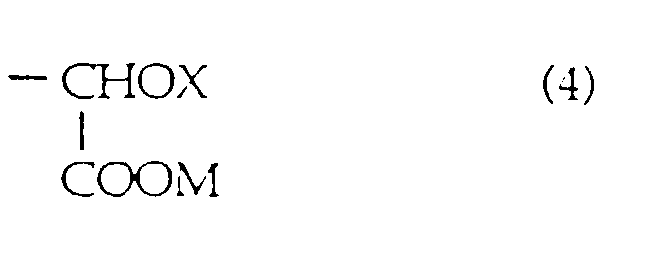 M ein Wasserstoffatom, einen Alkylrest mit 1 bis 4 Kohlenstoffatom(en), ein Metallatom einer Valenz von 1 bis 3, eine Ammoniumgruppe oder eine organische Amingruppe, undX eine Gruppe, die gegenüber einer Depolymerisation des Blockcopolymers chemisch stabil ist.
 - Blockcopolymer nach Anspruch 1, wobei x in einem Bereich von durchschnittlich 20 bis 500 liegt.
- Blockcopolymer nach Anspruch 1, wobei das Gewichtsverhältnis Polyalkylenglykolstruktureinheit / Polyglyoxylatstruktureinheit im Bereich von 2/8 bis 8/2 liegt.
- Blockcopolymer nach Anspruch 1, wobei das anzahlgemittelte Molekulargewicht des Blockcopolymers im Bereich von 2000 bis 50000 liegt.
- Blockcopolymer nach Anspruch 1, wobei eine der Struktureinheiten mit "A" und die andere Struktureinheit mit "B" bezeichnet werden und das Blockcopolymer aus einem solchen vom AB-Typ besteht.
- Blockcopolymer nach Anspruch 1, wobei eine der Struktureinheiten mit "A" und die andere Struktureinheit mit "B" bezeichnet werden und das Blockcopolymer aus einem solchen vom ABA-Typ besteht.
- Blockcopolymer nach Anspruch 1, wobei eine der Struktureinheiten mit "A" und die andere Struktureinheit mit "B" bezeichnet werden und das Blockcopolymer aus einem solchen mit mindestens einem Block vom AB-Typ, mindestens einem Block vom ABA-Typ und mindestens einem Block vom BAB-Typ besteht.
- Blockcopolymer nach Anspruch 2, wobei X aus der Gruppe Alkylreste, sauerstoffhaltige Alkylreste und sauerstoffhaltige Cycloalkylreste ausgewählt ist.
- Blockcopolymer nach Anspruch 1, wobei y in einem Bereich von durchschnittlich 20 bis 500 liegt.
- Blockcopolymer nach Anspruch 1, hergestellt nach einem Verfahren, umfassend die Stufe Durchführung einer Polymerisationsreaktion zwischen einem Polyalkylenglykol der folgenden allgemeinen Formel (5) :worin bedeuten:
 in Gegenwart eines Katalysators in einem Polymerisationsreaktionssystem eines Wassergehalts von 30 Mol-% oder weniger in Bezug auf das Polyalkylenglykol.R1 ein Wasserstoffatom, einen Alkylrest, einen Alkenylrest, einen Alkylphenylrest, Phenyl oder Benzyl;n eine ganze Zahl von 2 bis 4, undx eine Zahl von durchschnittlich 5 oder mehr, und einem Monomer auf Glyoxalsäurebasis der folgenden allgemeinen Formel (6) :worin R2 für einen Alkylrest mit 1 bis 4 Kohlenstoffatom(en) steht,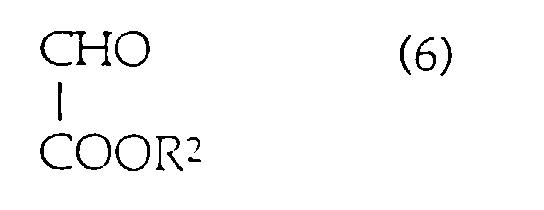
- Zementdispergiermittel, umfassend ein Blockcopolymer gemäß Anspruch 1.
- Pigmentdispergiermittel, umfassend ein Blockcopolymer gemäß Anspruch 1.
- Wasserbehandlungsmittel, umfassend ein Blockcopolymer gemäß Anspruch 1.
- Wasserbehandlungsmittel nach Anspruch 14, wobei n = 2.
- Waschmittel- bzw. Detergensbuilder, umfassend ein Blockcopolymer gemäß Anspruch 1.
- Waschmittel- bzw. Detergensbuilder nach Anspruch 16, welcher für eine flüssige Waschmittel- bzw. Detergenszusammensetzung verwendet wird.
- Waschmittel- bzw. Detergenszusammensetzung, umfassend ein Netzmittel und einen Waschmittel- bzw. Detergensbuilder gemäß Anspruch 16, wobei das Netzmittel aus einem anionischen, nichtionischen, kationischen oder amphoteren Netzmittel ausgewählt ist und 10 bis 60 Gew.-% der Waschmittel- bzw. Detergenszusammensetzung ausmacht, und der Waschmittel- bzw. Detergensbuilder 0,1 bis 60 Gew.-% der Waschmittel- bzw. Detergenszusammensetzung bildet.
- Verfahren zur Herstellung eines Blockcopolymers, umfassend eine Stufe Durchführung einer Polymerisationsreaktion zwischen einem Polyalkylenglykol der folgenden allgemeinen Formel (5):worin bedeuten:
 in Gegenwart eines Katalysators in einem Polymerisationsreaktionssystem eines Wassergehalts von 30 Mol-% oder weniger in Bezug auf das Polyalkylenglykol.R1 ein Wasserstoffatom, einen Alkylrest, einen Alkenylrest, einen Alkylphenylrest, Phenyl oder Benzyl;n eine ganze Zahl von 2 bis 4, undx eine Zahl von durchschnittlich 5 oder mehr, und einem Monomer auf Glyoxalsäurebasis der folgenden allgemeinen Formel (6) :worin R2 für einen Alkylrest mit 1 bis 4 Kohlenstoffatom(en) steht,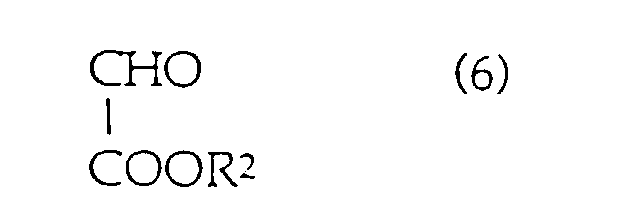
- Verfahren nach Anspruch 19, bei welchem zusätzlich das erhaltene Blockcopolymer mithilfe einer alkalischen Substanz verseift wird.
Applications Claiming Priority (3)
| Application Number | Priority Date | Filing Date | Title |
|---|---|---|---|
| JP108134/96 | 1996-04-26 | ||
| JP10813496 | 1996-04-26 | ||
| JP10813496 | 1996-04-26 |
Publications (2)
| Publication Number | Publication Date |
|---|---|
| EP0803521A1 EP0803521A1 (de) | 1997-10-29 |
| EP0803521B1 true EP0803521B1 (de) | 1999-12-22 |
Family
ID=14476802
Family Applications (1)
| Application Number | Title | Priority Date | Filing Date |
|---|---|---|---|
| EP97106660A Expired - Lifetime EP0803521B1 (de) | 1996-04-26 | 1997-04-22 | Blockcopolymer, sein Herstellungsverfahren und seine Verwendung |
Country Status (3)
| Country | Link |
|---|---|
| US (1) | US5856288A (de) |
| EP (1) | EP0803521B1 (de) |
| DE (1) | DE69700973T2 (de) |
Cited By (2)
| Publication number | Priority date | Publication date | Assignee | Title |
|---|---|---|---|---|
| US8722783B2 (en) | 2006-11-30 | 2014-05-13 | Smith & Nephew, Inc. | Fiber reinforced composite material |
| US9000066B2 (en) | 2007-04-19 | 2015-04-07 | Smith & Nephew, Inc. | Multi-modal shape memory polymers |
Families Citing this family (17)
| Publication number | Priority date | Publication date | Assignee | Title |
|---|---|---|---|---|
| US6031132A (en) * | 1997-12-18 | 2000-02-29 | Nippon Shokubai Co., Ltd. | Amide-group-containing polyacetal and its production process and use |
| US6133347A (en) | 1999-07-09 | 2000-10-17 | Mbt Holding Ag | Oligomeric dispersant |
| US6908955B2 (en) | 1999-07-09 | 2005-06-21 | Construction Research & Technology Gmbh | Oligomeric dispersant |
| AU2004205111B2 (en) * | 1999-07-09 | 2007-05-24 | Construction Research & Technology Gmbh | Oligomeric Dispersant |
| US6861459B2 (en) | 1999-07-09 | 2005-03-01 | Construction Research & Technology Gmbh | Oligomeric dispersant |
| EP1127903A1 (de) * | 2000-02-28 | 2001-08-29 | Nippon Shokubai Co., Ltd. | Verfahren zur Herstellung von einem Polymer enthaltend Glyoxylsäure |
| US6756460B2 (en) * | 2000-08-22 | 2004-06-29 | Nippon Shokubai Co., Ltd. | Water-soluble copolymer and its production process and use |
| DE10057044B4 (de) * | 2000-11-17 | 2004-05-06 | Clariant Gmbh | Harze aus Alkylphenolen und Glyoxalsäurederivaten, und ihre Verwendung als Emulsionsspalter |
| GB0116341D0 (en) | 2001-07-04 | 2001-08-29 | Smith & Nephew | Biodegradable polymer systems |
| US20040106704A1 (en) * | 2001-09-18 | 2004-06-03 | Christian Meyer | Admixture to improve rheological property of composition comprising a mixture of hydraulic cement and alumino-silicate mineral admixture |
| WO2003029382A1 (en) * | 2001-09-19 | 2003-04-10 | Tdk Corporation | Artificial finger print liquid, testing method for optical information medium using it and optical information medium |
| US20050076946A1 (en) * | 2001-09-19 | 2005-04-14 | Mannina Rosario Michael | Electricity-generating system and method and heat-resistant concrete and method for making such concrete |
| GB0202233D0 (en) | 2002-01-31 | 2002-03-20 | Smith & Nephew | Bioresorbable polymers |
| GB0329654D0 (en) * | 2003-12-23 | 2004-01-28 | Smith & Nephew | Tunable segmented polyacetal |
| EP2142353A1 (de) | 2007-04-18 | 2010-01-13 | Smith & Nephew PLC | Expansionsformen von formgedächtnis-polymeren |
| WO2008130954A2 (en) | 2007-04-19 | 2008-10-30 | Smith & Nephew, Inc. | Graft fixation |
| KR20160065850A (ko) | 2013-10-02 | 2016-06-09 | 바스프 에스이 | 분산제로서의 폴리(옥시알킬렌)옥시- 및/또는 폴리(옥시알킬렌)아미노알킬트리알콕시실란의 용도 |
Family Cites Families (19)
| Publication number | Priority date | Publication date | Assignee | Title |
|---|---|---|---|---|
| US4204052A (en) * | 1977-08-22 | 1980-05-20 | Monsanto Company | Copolymers of acetal carboxylates |
| ES472603A1 (es) * | 1977-08-22 | 1979-10-16 | Monsanto Co | Un procedimiento para preparar un polimero de carboxilato deacetal |
| US4146495A (en) * | 1977-08-22 | 1979-03-27 | Monsanto Company | Detergent compositions comprising polyacetal carboxylates |
| US4315092A (en) * | 1977-08-22 | 1982-02-09 | Monsanto Company | Polyacetal carboxylates |
| US4144226A (en) * | 1977-08-22 | 1979-03-13 | Monsanto Company | Polymeric acetal carboxylates |
| US4201858A (en) * | 1977-11-21 | 1980-05-06 | Monsanto Company | Method of preparing polyacetal carboxylates |
| US4140676A (en) * | 1978-03-02 | 1979-02-20 | Monsanto Company | Process for preparing polymeric acetal carboxylate salts |
| US4225685A (en) * | 1979-06-18 | 1980-09-30 | Monsanto Company | Preparation of polymeric acetal carboxylates using organoaluminum compounds |
| US4224420A (en) * | 1979-06-18 | 1980-09-23 | Monsanto Company | Preparation of polymeric acetal carboxylates using molecular sieves |
| US4233422A (en) * | 1979-09-24 | 1980-11-11 | Monsanto Company | Process for stabilizing acetal carboxylate polymers using dialkyl sulfate |
| US4226960A (en) * | 1979-10-22 | 1980-10-07 | Monsanto Company | Process for the preparation of polymeric acetal carboxylates |
| US4226959A (en) * | 1979-10-22 | 1980-10-07 | Monsanto Company | Process for the preparation of polymeric acetal carboxylates |
| US4233423A (en) * | 1979-11-05 | 1980-11-11 | Monsanto Company | Stabilization of polymeric acetal carboxylates using an acetal |
| US4303777A (en) * | 1980-06-05 | 1981-12-01 | Monsanto Company | Acetal carboxylic acid polymers |
| US4302564A (en) * | 1980-06-05 | 1981-11-24 | Monsanto Company | Selectively controlling the hydrolytic stability of acetal carboxylate polymers |
| DE3136025A1 (de) * | 1981-09-11 | 1983-03-24 | Hoechst Ag, 6000 Frankfurt | "polymere ethylenoxid-propylenoxid- oder ethylenoxid-butylenoxid-ethercarbonsaeuren, verfahren zu deren herstellung und deren verwendung" |
| US4542206A (en) * | 1984-07-02 | 1985-09-17 | Monsanto Company | Process for preparing polymeric acetal carboxylate compositions |
| US4600750A (en) * | 1985-08-27 | 1986-07-15 | Monsanto Company | Process for preparing polymeric acetal carboxylates |
| DE4106355A1 (de) * | 1991-02-28 | 1992-09-03 | Basf Ag | Verfahren zur herstellung von polyglyoxylaten |
-
1997
- 1997-04-21 US US08/843,816 patent/US5856288A/en not_active Expired - Fee Related
- 1997-04-22 EP EP97106660A patent/EP0803521B1/de not_active Expired - Lifetime
- 1997-04-22 DE DE69700973T patent/DE69700973T2/de not_active Expired - Fee Related
Cited By (3)
| Publication number | Priority date | Publication date | Assignee | Title |
|---|---|---|---|---|
| US8722783B2 (en) | 2006-11-30 | 2014-05-13 | Smith & Nephew, Inc. | Fiber reinforced composite material |
| US9000066B2 (en) | 2007-04-19 | 2015-04-07 | Smith & Nephew, Inc. | Multi-modal shape memory polymers |
| US9308293B2 (en) | 2007-04-19 | 2016-04-12 | Smith & Nephew, Inc. | Multi-modal shape memory polymers |
Also Published As
| Publication number | Publication date |
|---|---|
| DE69700973T2 (de) | 2000-05-18 |
| US5856288A (en) | 1999-01-05 |
| DE69700973D1 (de) | 2000-01-27 |
| EP0803521A1 (de) | 1997-10-29 |
Similar Documents
| Publication | Publication Date | Title |
|---|---|---|
| EP0803521B1 (de) | Blockcopolymer, sein Herstellungsverfahren und seine Verwendung | |
| JP7846012B2 (ja) | 生分解性グラフトポリマー | |
| CA2702824C (en) | Cleaning compositions with alkoxylated polyalkanolamines | |
| JP5404518B2 (ja) | ポリアルキレンイミンアルキレンオキシド共重合体 | |
| KR100615378B1 (ko) | 폴리카르복실산계 공중합체 및 그의 제조 방법, 및 그의용도 | |
| US5399286A (en) | Polyacetals, preparation thereof and use thereof in detergents | |
| JPH08500618A (ja) | ポリアセタールの製法、該化合物の使用および製造されたポリアセタール | |
| JPH04244094A (ja) | アルキルモノグルコシドエーテルカルボキシレート及びアルキルポリグルコシドエーテルカルボキシレート | |
| EP1182217A2 (de) | Wasserlösliches Copolymer, Verfahren zu dessen Herstellung und dessen Verwendung | |
| EP1020485B1 (de) | Polyether-Hydroxycarboxylat-Copolymerisate | |
| JP4549135B2 (ja) | ポリアルキレンイミンアルキレンオキシド共重合体 | |
| EP4378968A1 (de) | Esterbindung enthaltende polycarbonsäure (salz) und verfahren zu ihrer herstellung | |
| JP3315056B2 (ja) | ブロック共重合体、その製造方法およびその用途 | |
| JP4891553B2 (ja) | 末端変性ポリアルキレンイミンアルキレンオキシド共重合体 | |
| AU2122599A (en) | Laundry detergents containing styrene-anhydride copolymers grafted with polyethylene glycol | |
| EP0891992A1 (de) | Acrylpolymer, verfahren zu seiner herstellung und biologisch abbaubare baustoffe, waschmittel und dispergiermittel | |
| EP0962475B1 (de) | Amidierten polyacetalen, verfahren zur herstellung und deren verwendung | |
| EP1505091A1 (de) | Wasserlösliches Copolymer | |
| EP3424980A1 (de) | Alkoxylierte polycarbonsäureamide | |
| JP2003192722A (ja) | アミノ基含有重合体とその製造方法、ならびに用途 | |
| EP1282679A1 (de) | Hoch schäumende reinigungsmittel für harte oberflächen | |
| US5789369A (en) | Modified polyacrylic acid polymers for anti-redeposition performance | |
| JP3998771B2 (ja) | 洗剤ビルダーおよび洗剤組成物 | |
| JP4519244B2 (ja) | 遠心製品の製造方法 | |
| US6310030B1 (en) | Unsaturated carboxylic acid polymer, biodegradable builder, and detergent composition |
Legal Events
| Date | Code | Title | Description |
|---|---|---|---|
| PUAI | Public reference made under article 153(3) epc to a published international application that has entered the european phase |
Free format text: ORIGINAL CODE: 0009012 |
|
| 17P | Request for examination filed |
Effective date: 19970520 |
|
| AK | Designated contracting states |
Kind code of ref document: A1 Designated state(s): DE FR GB IT |
|
| GRAG | Despatch of communication of intention to grant |
Free format text: ORIGINAL CODE: EPIDOS AGRA |
|
| 17Q | First examination report despatched |
Effective date: 19990329 |
|
| GRAG | Despatch of communication of intention to grant |
Free format text: ORIGINAL CODE: EPIDOS AGRA |
|
| GRAH | Despatch of communication of intention to grant a patent |
Free format text: ORIGINAL CODE: EPIDOS IGRA |
|
| GRAH | Despatch of communication of intention to grant a patent |
Free format text: ORIGINAL CODE: EPIDOS IGRA |
|
| GRAA | (expected) grant |
Free format text: ORIGINAL CODE: 0009210 |
|
| AK | Designated contracting states |
Kind code of ref document: B1 Designated state(s): DE FR GB IT |
|
| REF | Corresponds to: |
Ref document number: 69700973 Country of ref document: DE Date of ref document: 20000127 |
|
| ITF | It: translation for a ep patent filed | ||
| ET | Fr: translation filed | ||
| PLBE | No opposition filed within time limit |
Free format text: ORIGINAL CODE: 0009261 |
|
| STAA | Information on the status of an ep patent application or granted ep patent |
Free format text: STATUS: NO OPPOSITION FILED WITHIN TIME LIMIT |
|
| 26N | No opposition filed | ||
| REG | Reference to a national code |
Ref country code: GB Ref legal event code: IF02 |
|
| PGFP | Annual fee paid to national office [announced via postgrant information from national office to epo] |
Ref country code: FR Payment date: 20060410 Year of fee payment: 10 |
|
| PGFP | Annual fee paid to national office [announced via postgrant information from national office to epo] |
Ref country code: GB Payment date: 20060419 Year of fee payment: 10 |
|
| PGFP | Annual fee paid to national office [announced via postgrant information from national office to epo] |
Ref country code: DE Payment date: 20060420 Year of fee payment: 10 |
|
| PGFP | Annual fee paid to national office [announced via postgrant information from national office to epo] |
Ref country code: IT Payment date: 20060430 Year of fee payment: 10 |
|
| GBPC | Gb: european patent ceased through non-payment of renewal fee |
Effective date: 20070422 |
|
| PG25 | Lapsed in a contracting state [announced via postgrant information from national office to epo] |
Ref country code: DE Free format text: LAPSE BECAUSE OF NON-PAYMENT OF DUE FEES Effective date: 20071101 |
|
| PG25 | Lapsed in a contracting state [announced via postgrant information from national office to epo] |
Ref country code: GB Free format text: LAPSE BECAUSE OF NON-PAYMENT OF DUE FEES Effective date: 20070422 |
|
| PG25 | Lapsed in a contracting state [announced via postgrant information from national office to epo] |
Ref country code: FR Free format text: LAPSE BECAUSE OF NON-PAYMENT OF DUE FEES Effective date: 20070430 |
|
| PG25 | Lapsed in a contracting state [announced via postgrant information from national office to epo] |
Ref country code: IT Free format text: LAPSE BECAUSE OF NON-PAYMENT OF DUE FEES Effective date: 20070422 |