EP0770710B2 - Process for electroplating nickel with satin finish - Google Patents
Process for electroplating nickel with satin finish Download PDFInfo
- Publication number
- EP0770710B2 EP0770710B2 EP96116639A EP96116639A EP0770710B2 EP 0770710 B2 EP0770710 B2 EP 0770710B2 EP 96116639 A EP96116639 A EP 96116639A EP 96116639 A EP96116639 A EP 96116639A EP 0770710 B2 EP0770710 B2 EP 0770710B2
- Authority
- EP
- European Patent Office
- Prior art keywords
- electrolyte
- process according
- adducts
- nickel
- operated
- Prior art date
- Legal status (The legal status is an assumption and is not a legal conclusion. Google has not performed a legal analysis and makes no representation as to the accuracy of the status listed.)
- Expired - Lifetime
Links
Images
Classifications
-
- C—CHEMISTRY; METALLURGY
- C25—ELECTROLYTIC OR ELECTROPHORETIC PROCESSES; APPARATUS THEREFOR
- C25D—PROCESSES FOR THE ELECTROLYTIC OR ELECTROPHORETIC PRODUCTION OF COATINGS; ELECTROFORMING; APPARATUS THEREFOR
- C25D3/00—Electroplating: Baths therefor
- C25D3/02—Electroplating: Baths therefor from solutions
- C25D3/12—Electroplating: Baths therefor from solutions of nickel or cobalt
Definitions
- the invention relates to a method for galvanic Separation of glare-free nickel deposits on a metallic surface.
- Nikkel precipitation also includes nickel alloy precipitation.
- metallic surface also metallized surfaces of non-metallic Objects.
- a concentration of adducts in the range of 5 to 100 mg / l worked.
- the deposition is operated that the electrolyte has a temperature in the range from 40 to 75 ° C.
- the adducts are selected so that the adducts in the working electrolyte form a finely dispersed emulsion that turns out to be turbidity manifests.
- the droplets of the emulsion are used as the reason considered that there is a glare-free surface forms. Glare-free is in need of improvement. The printout does not become glare for identification the.
- the cloud point that is, the electrolyte temperature at which the surfactant fails, from the chemical structure and the concentration depends on the substances in the electrolyte. additionally the salt load of the electrolyte also goes into the Height of the cloud point.
- the danger of agglomeration is too large Conglomerates of emulsion drops that are satin-like Disrupt separation, so big that special Measures are mandatory to complete the procedure to be able to use it permanently in practice.
- the invention is based on the technical problem the procedure of the structure described at the beginning and the intended use described at the beginning to be reproducible so that an essential improved defined glare control is achieved.
- the usual base gloss agents used are "sulfonic acids such as benzenesulfonic acid, naphthalene trisulfonic acid, alkanesulfonic acids or also sulfonamides or sulfonimides or the corresponding alkali salts" or mixtures thereof, in an amount of 0.5 to 10 g / l.
- a substance from the group "the unsaturated aliphatic sulfonic acids or their alkali metal salts" or mixtures thereof are used for the purpose of producing the glare-free nickel deposits.
- the concentration of the adducts added is expediently chosen in the range from 0.5 to 10 g / l.
- the electrolyte is preferably operated in a temperature range of 50 to 65 ° C during the electrolytic deposition. Wetting agents and organic sulfinic acids or their alkali salts can also be added to the electrolyte.
- the invention is based on the knowledge that even without the formation of a visible, cloudy emulsion and corresponding organic foreign bodies in the Electrolytes achieved high quality glare control is when proceeding according to the teaching of the invention becomes.
- the nickel layer applied according to the invention has a completely different structure than that after generated known methods described above. This is discussed below in connection with exemplary embodiments explained. It can be left open whether according to the invention is still drop-shaped at all Precipitations occur. Drop-shaped precipitates are within the scope of the invention, the mainly about the surface tension as drops are stabilized. In any case, the effects occur for the high quality reproducible glare-free are required - and surprisingly disruptive conglomerates that disrupt freedom from glare and need to be filtered, not observed.
- the current densities can largely be adapted to the operating conditions. It has proven useful to operate the electrolyte with a current density of 0.1 to 10 A / dm 2 .
- the electrolyte is preferably operated with a current density of approximately 4 A / dm 2 .
- the treatment time for the nickel deposition is largely arbitrary and can be adapted to the operating conditions, in particular also the layer thickness. Within the scope of the invention, the treatment time for the nickel deposition is preferably 1 to 120 minutes, preferably about 10 minutes. is.
- the electrolyte can always be operated without secondary circulation. Secondary circuit free means that a secondary circuit with filter devices or cooling devices is not required.
- An electrolyte was used to separate out a glare-free nickel deposit 265 g / l NiSO 4 x 7 H 2 O, 53 g / l NiCl 2 x 6 H 2 O, 33 g / l H 3 BO 3 , 1 g / l of benzoic acid sulfonimide sodium salt and 30 mg of propylene oxide / ethylene oxide block polymer (molecular weight 2500) were added.
- the non-glare of the coating according to Example 1 is compared to the embodiment according to Example 2 clearly improved.
Landscapes
- Chemical & Material Sciences (AREA)
- Engineering & Computer Science (AREA)
- Chemical Kinetics & Catalysis (AREA)
- Electrochemistry (AREA)
- Materials Engineering (AREA)
- Metallurgy (AREA)
- Organic Chemistry (AREA)
- Electroplating And Plating Baths Therefor (AREA)
- Preventing Corrosion Or Incrustation Of Metals (AREA)
- Physical Vapour Deposition (AREA)
- Electrolytic Production Of Metals (AREA)
Abstract
Description
Die Erfindung betrifft ein Verfahren zur galvanischen Abscheidung von blendfreien Nickelniederschlägen auf einer metallischen Oberfläche. Der Begriff Nikkelniederschläge umfaßt auch Nickellegierungsniederschläge. Der Begriff metallische Oberfläche umfaßt auch metallisierte Oberflächen von nichtmetallischen Gegenständen.The invention relates to a method for galvanic Separation of glare-free nickel deposits on a metallic surface. The term Nikkel precipitation also includes nickel alloy precipitation. The term includes metallic surface also metallized surfaces of non-metallic Objects.
Bei dem bekannten Verfahren, von dem die Erfindung
ausgeht (DE 16 21 085 A1), wird mit einem
Watts'schen Elektrolyten gearbeitet, dem ein übliches
Grundglanzmittel beigegeben wird. Zum Begriff
Watts'scher Elektrolyt wird verwiesen auf LPW "Taschenbuch
für Galvanotechnik", Band 1, Verfahrenstechnik,
13. Ausgabe 1988, (S. 173 bis 177). Im Rahmen
der bekannten Maßnahmen, von denen die Erfindung
ausgeht, werden zum Zwecke der Erzeugung der
blendfreien Nickelniederschläge substituierte und/oder
unsubstituierte Äthylenoxid-Addukte oder Propylenoxid-Addukte
oder Äthylenoxid-Propylenoxid-Addukte
verwendet und dem Elektrolyten beigegeben. Dabei
wird mit einer Konzentration der Addukte im Bereich von
5 bis 100 mg/l gearbeitet. Die Abscheidung wird so betrieben,
daß der Elektrolyt eine Temperatur im Bereich
von 40 bis 75° C aufweist. Die Addukte werden so ausgewählt,
daß die Addukte im arbeitenden Elektrolyten
eine feindisperse Emulsion bilden, die sich als Trübung
äußert. Die Tröpfchen der Emulsion werden als Grund
dafür angesehen, daß sich eine blendreie Oberfläche
bildet. Die Blendfreiheit ist jedoch verbesserungsbedürftig.
Zwar wird der Ausdruck blendfrei zur Kennzeichnung
der. Oberfläche der Nickelabscheidung im Rahmen
der bekannten Maßnahmen benutzt, der erreichte
Effekt ist jedoch eher ein satinartiger Glanz und dieser
Ausdruck wird für die im Rahmen der bekannten
Maßnahmen erreichbaren Effekte in der Praxis auch
verwendet (vgl. DE 16 21 085). Die Blendfreiheit ist also
verbesserungsbedürftig. Im einzelnen ist zu den bekannten
Maßnahmen folgendes zu bemerken: Die zum
Zwecke der Erzeugung der satinartig glänzenden Nikkelniederschläge
im Rahmen der bekannten Maßnahmen
beigegebenen Substanzen sind nichtionogene
Tenside. Diese fallen bei höherer Elektrolyttemperatur
aus. Sie bilden einen organischen Fremdstoff im Elektrolyten,
und zwar in Form einer Emulsion. Es versteht
sich, daß natürlich nicht jedes beliebige nichtionogene
Tensid Verwendung finden kann, da der Trübungspunkt,
das heißt, die Elektrolyttemperatur, bei der das Tensid
ausfällt, von der chemischen Struktur und der Konzentration
der Substanzen im Elektrolyten abhängt. Zusätzlich
geht ebenfalls die Salzfracht des Elektrolyten in die
Höhe des Trübungspunktes ein. Trotz des mehr oder
weniger fein verteilten Zustandes der Emulsionstropfen
ist die Gefahr der Zusammenballung zu unpassend großen
Konglomeraten aus Emulsionstropfen die die satinglanzartige
Abscheidung stören, so groß, daß besondere
Maßnahmen zwingend erforderlich sind, um das Verfahren
dauerhaft in der Praxis einsetzen zu können. Es
ist erforderlich, den Elektrolyten in einem entsprechend
dimensionierten Nebenkreislauf abzukühlen, damit der
Trübungspunkt des nichtionogenen Tensides deutlich
unterschritten wird und dieses sich im Elektrolyten löst.
Anschließend wird der Elektrolyt wieder auf die erforderliche
Arbeitstemperatur aufgeheizt. Der Betrieb und
die Steuerung der bekannten Maßnahmen müssen sehr
vorsichtig erfolgen, wenn anders sich auch schwarze
Poren bilden können. Insoweit sind die Blendfreiheit und
die Reproduzierbarkeit nicht ausreichend und nicht störungsfrei
gesichert.In the known method of which the invention
goes out (DE 16 21 085 A1), with a
Watts electrolyte, which is a common one
Basic gloss agent is added. To the subject
Watts' electrolyte is referred to LPW "paperback
für Galvanotechnik ",
Um die beschriebenen Mängel zu vermeiden, ist es bekannt (DE 23 27 881 C2), mit besonderen Fremdsubstanzen zu arbeiten. Im Rahmen der insoweit bekannten Maßnahmen werden organische Fremdsubstanzen im Elektrolyten durch Reaktion zumindest einer kationenaktiven bzw. amphoteren Substanz mit organischen Anionen wenigstens einer Verbindung erzeugt. Diese Anionen liefernden Substanzen sind unter anderem Alkyl- oder Arylsulfate, -sulfonsäuren sowie -sulfinsäuren wie Sulfonamide und Sulfonimide. Für den entblendeten, aber glänzenden Charakter soll der Elektrolyt zusätzlich bekannte primäre und/oder sekundäre Glanzmittel enthatten. Diese organischen Fremdstoffe ergeben für gewisse Produktionszeitspannen eine dekorativ brauchbare Entblendung in Form eines Matteffektes. Nach dieser Zeitspanne müssen die Fremdsubstanzen jedoch infolge von Agglomerationserscheinungen abgefiltert werden. Das ist aufwendig. Hinzu kommt, daß für den nächsten Arbeitszyklus die organischen Fremdsubstanzen jeweils erneut gebildet werden müssen, was ebenfalls aufwendig ist.To avoid the shortcomings described, it is known (DE 23 27 881 C2), with special foreign substances to work. As part of the known Measures become organic foreign substances in the electrolyte by reaction of at least one cation-active or amphoteric substance with organic Anions of at least one compound generated. This Anions supplying substances include alkyl or aryl sulfates, sulfonic acids and sulfinic acids such as sulfonamides and sulfonimides. For the glare-free, but the electrolyte should also have a shiny character known primary and / or secondary brighteners enthatten. These organic foreign substances result a decorative for certain production periods usable glare control in the form of a matt effect. After this period, the foreign substances must however filtered out due to agglomeration phenomena become. It is expensive. On top of that the organic foreign substances for the next working cycle must be formed again each time which is also expensive.
Der Erfindung liegt das technische Problem zugrunde, das Verfahren des eingangs beschriebenen Aufbaus und der eingangs beschriebenen Zweckbestimmung so zu führen, daß reproduzierbar eine wesentlich verbesserte definierte Blendfreiheit erreicht wird.The invention is based on the technical problem the procedure of the structure described at the beginning and the intended use described at the beginning to be reproducible so that an essential improved defined glare control is achieved.
Zur Lösung dieses technischen Problems ist Gegenstand
der Erfindung ein Verfahren zur galvanischen
Abscheidung von blendfreien Nickelniederschlägen auf
einer metallischen Oberfläche mit den Merkmalen:
Im allgemeinen wird man mit einem Elektrolyten arbeiten, der eine Richtanalyse mit 70 bis 140 g/l Nickel, 1 bis 20 g/l Chlorid, 30 bis 50 g/l H3BO3 und im Rest das Grundglanzmittel sowie die Addukte und außerdem Wasser aufweist. Nach bevorzugter Ausführungsform der Erfindung werden als übliche Grundglanzmittel "Sulfonsäuren wie Benzolsulfonsäure, Naphthalintrisulfonsäure, Alkansutfonsäuren oder auch Sulfonamide oder Sulfonimide bzw. die entsprechenden Alkalisalze" oder Mischungen davon verwendet, und zwar in einer Menge von 0,5 bis 10 g/l. Zum Zwecke der Erzeugung der blendfreien Nickelniederschläge werden nach bevorzugter Ausführungsform der Erfindung eine Substanz der Gruppe "der ungesättigten aliphatischen Sulfonsäuren bzw. deren Alkalisalze" oder Mischungen davon verwendet. Die Konzentration der beigegebenen Addukte wird zweckmäßigerweise im Bereich von 0,5 bis 10 g/l gewählt. - Vorzugsweise wird bei der elektrolytischen Abscheidung der Elektrolyt in einem Temperaturbereich von 50 bis 65° C betrieben. Dem Elektrolyten können weiterhin Netzmittel sowie organische Sulfinsäuren bzw. deren Alkalisalze zugesetzt werden.In general, you will work with an electrolyte, the directional analysis with 70 to 140 g / l of nickel, 1 to 20 g / l of chloride, 30 to 50 g / l of H 3 BO 3 and the rest of the basic gloss and adducts and also water having. According to a preferred embodiment of the invention, the usual base gloss agents used are "sulfonic acids such as benzenesulfonic acid, naphthalene trisulfonic acid, alkanesulfonic acids or also sulfonamides or sulfonimides or the corresponding alkali salts" or mixtures thereof, in an amount of 0.5 to 10 g / l. According to a preferred embodiment of the invention, a substance from the group "the unsaturated aliphatic sulfonic acids or their alkali metal salts" or mixtures thereof are used for the purpose of producing the glare-free nickel deposits. The concentration of the adducts added is expediently chosen in the range from 0.5 to 10 g / l. - The electrolyte is preferably operated in a temperature range of 50 to 65 ° C during the electrolytic deposition. Wetting agents and organic sulfinic acids or their alkali salts can also be added to the electrolyte.
Die Erfindung geht von der Erkenntnis aus, daß auch ohne Bildung einer sichtbaren, trüben Emulsion und entsprechender organischer Fremdkörper in dem Elektrolyten eine qualitativ hochwertige Entblendung erreicht wird, wenn nach der Lehre der Erfindung verfahren wird. Die erfindungsgemäß aufgebrachte Nickelschicht hat eine ganz andere Struktur als die nach dem eingangs beschriebenen bekannten Verfahren erzeugte. Das wird weiter unten im Zusammenhang mit Ausführungsbeispielen erläutert. Es kann dahingestellt bleiben, ob erfindungsgemäß überhaupt noch tropfenförmige Ausfällungen auftreten. Tropfenförmige Ausfällungen sind im Rahmen der Erfindung Ausfällungen, die hauptsächlich über die Oberflächenspannung als Tropfen stabilisiert sind. Jedenfalls treten die Effekte ein, die für die qualitativ hochwertige reproduzierbare Blendfreiheit erforderlich sind - und überraschenderweise werden störende Konglomerate, die die Blendfreiheit stören und abgefiltert werden müssen, nicht beobachtet.The invention is based on the knowledge that even without the formation of a visible, cloudy emulsion and corresponding organic foreign bodies in the Electrolytes achieved high quality glare control is when proceeding according to the teaching of the invention becomes. The nickel layer applied according to the invention has a completely different structure than that after generated known methods described above. This is discussed below in connection with exemplary embodiments explained. It can be left open whether according to the invention is still drop-shaped at all Precipitations occur. Drop-shaped precipitates are within the scope of the invention, the mainly about the surface tension as drops are stabilized. In any case, the effects occur for the high quality reproducible glare-free are required - and surprisingly disruptive conglomerates that disrupt freedom from glare and need to be filtered, not observed.
Im Rahmen der Erfindung können die Stromdichten weitgehend den betrieblichen Verhältnissen angepaßt werden. Bewährt hat es sich, den Elektrolyten mit einer Stromdichte von 0,1 bis 10 A/dm2 zu betreiben. Vorzugsweise wird der Elektrolyt mit einer Stromdichte von etwa 4 A/dm2 betrieben. Auch die Behandlungszeit für die Nickelabscheidung ist weitgehend beliebig und betrieblichen Verhältnissen anpaßbar, insbesondere auch der Schichtdicke. Vorzugsweise wird im Rahmen der Erfindung mit einer Behandlungszeit für die Nickelabscheidung gearbeitet, die 1 bis 120 min., vorzugsweise zugsweise etwa 10 min. beträgt. Der Elektrolyt kann stets nebenkreislauffrei betrieben werden. Nebenkreislauffrei bedeutet, daß ein Nebenkreislauf mit Filtereinrichtungen oder Kühleinrichtungen nicht erforderlich ist.Within the scope of the invention, the current densities can largely be adapted to the operating conditions. It has proven useful to operate the electrolyte with a current density of 0.1 to 10 A / dm 2 . The electrolyte is preferably operated with a current density of approximately 4 A / dm 2 . The treatment time for the nickel deposition is largely arbitrary and can be adapted to the operating conditions, in particular also the layer thickness. Within the scope of the invention, the treatment time for the nickel deposition is preferably 1 to 120 minutes, preferably about 10 minutes. is. The electrolyte can always be operated without secondary circulation. Secondary circuit free means that a secondary circuit with filter devices or cooling devices is not required.
Zur Abscheidung eines blendfreien Nickelniederschlages
wurde einem Elektrolyten mit
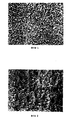
In Bild 1 erkennt man einen Niederschlag in Form
einer Tropfenstruktur, der ein Tröpfendurchmesser von
1 bis 7 µm zugeordnet werden kann.In
Zur Abscheidung eines blendfreien Nickelniederschlages
wurde einem Elektrolyten mit
Man erkennt einen Niederschlag in Form einer Tropfenstruktur, der ein Tröpfchendurchmesser von 5 bis 20 µm zugeordnet werden kann.You can see a precipitation in the form of a Teardrop structure with a droplet diameter of 5 up to 20 µm can be assigned.
Die Blendfreiheit der Beschichtung nach Beispiel 1 ist gegenüber der Ausführungsform nach Beispiel 2 deutlich verbessert.The non-glare of the coating according to Example 1 is compared to the embodiment according to Example 2 clearly improved.
Claims (10)
- A process for the galvanic deposition of non-glare nickel precipitates on a metallic surface with the features:provided that the concentration according to 1.3) and the temperature according to 1.4) are selected such that the working electrolyte appears clear upon visual inspection and displays virtually no diffuse scatter with transmitted light.1.1) an electrolyte of the group "Watts-type electrolyte, electrolytes based on sulphamate, sulphonate, fluoroborate" or mixtures thereof is worked with, to which a standard basic lustering agent has been added,1.2) for the purpose of producing the non-glare nickel precipitates, substituted and/or unsubstituted ethylene oxide adducts or propylene oxide adducts or ethylene oxide propylene oxide adducts are used and added to the electrolyte,1.3) the concentration of the adducts added according to 1.2) is selected in a range from greater than zero up to less than 5 mg/l,1.4) during the galvanic deposition, the electrolyte is maintained in a temperature range from 40 to 75 °C,
- A process according to claim 1, wherein a Watts electrolyte is employed which has a set analysis of
70 to 140 g/l nickel,
1 to 20 g/l chloride,
30 to 50 g/l H3BO3,
balance basic brighteners, adducts and water. - A process according to either one of claims 1 or 2, wherein a substance from the group comprising 2-sulphobenzoic acid imide, 1,3-benzenedisulphonic acid and naphthalenetrisulphonic acid or alkali salts thereof or mixtures thereof, or from the group comprising arylsulphonic acids, alkylsulphonic acids, sulphonamides and sulphonimides or alkali salts thereof or mixtures thereof, is used as the basic brightener in an amount of 0.5 to 10 g/l.
- A process according to any one of claims 1 to 3, wherein a substance from the group comprising unsaturated aliphatic sulphonic acids or alkali salts thereof or mixtures thereof is used as the basic brightener.
- A process according to claim 4, wherein the concentration of basic brightener is selected within a range from 0.5 to 10 g/l.
- A process according to any one of claims 1 to 5, wherein during the electrolytic deposition the electrolyte is operated within a temperature range from 50 to 65°C.
- A process according to any one of claims 1 to 6, wherein the electrolyte is operated at a current density of 0.1 to 10 A/dm2.
- A process according to any one of claims 1 to 7, wherein the electrolyte is operated at a current density of about 4 A/dm2.
- A process according to any one of claims 1 to 8, wherein a treatment time is employed for nickel deposition which amounts to 1 to 120 minutes, preferably about 10 minutes.
- A process according to any one of claims 1 to 9, wherein the electrolyte is operated free from auxiliary circulation.
Applications Claiming Priority (3)
| Application Number | Priority Date | Filing Date | Title |
|---|---|---|---|
| DE9540011U | 1995-10-27 | ||
| DE19540011 | 1995-10-27 | ||
| DE19540011A DE19540011C2 (en) | 1995-10-27 | 1995-10-27 | Process for the galvanic deposition of glare-free nickel or nickel alloy deposits |
Publications (3)
| Publication Number | Publication Date |
|---|---|
| EP0770710A1 EP0770710A1 (en) | 1997-05-02 |
| EP0770710B1 EP0770710B1 (en) | 1999-01-07 |
| EP0770710B2 true EP0770710B2 (en) | 2002-08-14 |
Family
ID=7775920
Family Applications (1)
| Application Number | Title | Priority Date | Filing Date |
|---|---|---|---|
| EP96116639A Expired - Lifetime EP0770710B2 (en) | 1995-10-27 | 1996-10-17 | Process for electroplating nickel with satin finish |
Country Status (6)
| Country | Link |
|---|---|
| US (1) | US5897763A (en) |
| EP (1) | EP0770710B2 (en) |
| JP (1) | JPH09202987A (en) |
| AT (1) | ATE175453T1 (en) |
| DE (2) | DE19540011C2 (en) |
| ES (1) | ES2128135T5 (en) |
Families Citing this family (11)
| Publication number | Priority date | Publication date | Assignee | Title |
|---|---|---|---|---|
| US6248228B1 (en) * | 1999-03-19 | 2001-06-19 | Technic, Inc. And Specialty Chemical System, Inc. | Metal alloy halide electroplating baths |
| EP1086262A4 (en) * | 1999-03-19 | 2002-01-02 | Technic | Electroplating baths |
| US6251253B1 (en) * | 1999-03-19 | 2001-06-26 | Technic, Inc. | Metal alloy sulfate electroplating baths |
| US6797141B1 (en) * | 1999-11-25 | 2004-09-28 | Enthone Inc. | Removal of coagulates from a non-glare electroplating bath |
| US6306275B1 (en) * | 2000-03-31 | 2001-10-23 | Lacks Enterprises, Inc. | Method for controlling organic micelle size in nickel-plating solution |
| DE10025552C1 (en) | 2000-05-19 | 2001-08-02 | Atotech Deutschland Gmbh | Acidic electroplating nickel bath and process for depositing a satin nickel or nickel alloy coating |
| DE10222962A1 (en) * | 2002-05-23 | 2003-12-11 | Atotech Deutschland Gmbh | Acidic galvanic bath electrolyte and process for the electrolytic deposition of satin-shining nickel deposits |
| JP4811880B2 (en) * | 2006-01-06 | 2011-11-09 | エントン インコーポレイテッド | Electrolyte and process for depositing a matte metal layer |
| EP2620529B1 (en) * | 2012-01-25 | 2014-04-30 | Atotech Deutschland GmbH | Method for producing matt copper deposits |
| JP6760166B2 (en) | 2017-03-23 | 2020-09-23 | トヨタ自動車株式会社 | A method for forming a nickel film and a nickel solution for use in the method. |
| US11505867B1 (en) | 2021-06-14 | 2022-11-22 | Consolidated Nuclear Security, LLC | Methods and systems for electroless plating a first metal onto a second metal in a molten salt bath, and surface pretreatments therefore |
Citations (1)
| Publication number | Priority date | Publication date | Assignee | Title |
|---|---|---|---|---|
| DE1621085A1 (en) † | 1967-05-16 | 1971-03-11 | Henkel & Cie Gmbh | Acid galvanic bath for the production of satin nickel deposits |
Family Cites Families (9)
| Publication number | Priority date | Publication date | Assignee | Title |
|---|---|---|---|---|
| US2238861A (en) * | 1938-07-06 | 1941-04-15 | Harshaw Chem Corp | Electrodeposition of metals |
| DE1134258B (en) * | 1959-05-06 | 1962-08-02 | Dehydag Gmbh | Acid galvanic nickel bath |
| US3839166A (en) * | 1967-05-16 | 1974-10-01 | Henkel & Cie Gmbh | Method for obtaining nickel deposits with satin finish |
| US3839165A (en) * | 1967-08-26 | 1974-10-01 | Henkel & Cie Gmbh | Nickel electroplating method |
| BE794695A (en) * | 1972-01-29 | 1973-05-16 | W Kampschulte & Cie K G Dr | GALVANIC NICKEL BATH FOR SEPARATING MATT SATIN NICKEL COATINGS |
| DE2327881B2 (en) * | 1973-06-01 | 1978-06-22 | Langbein-Pfanhauser Werke Ag, 4040 Neuss | Process for the galvanic deposition of matt-glossy nickel or nickel / cobalt deposits |
| JPS56152988A (en) * | 1980-04-30 | 1981-11-26 | Nobuyuki Koura | Nickel satin finish plating bath of heavy ruggedness |
| JPS61238993A (en) * | 1985-04-16 | 1986-10-24 | Dai Ichi Kogyo Seiyaku Co Ltd | Additive for electroplating bath |
| JPS62205041A (en) * | 1986-03-05 | 1987-09-09 | Nisso Yuka Kogyo Kk | Production of hydroxyalkyletherified substance of 1,4-butynediol and nickel plating treating solution using same |
-
1995
- 1995-10-27 DE DE19540011A patent/DE19540011C2/en not_active Expired - Lifetime
-
1996
- 1996-10-17 ES ES96116639T patent/ES2128135T5/en not_active Expired - Lifetime
- 1996-10-17 EP EP96116639A patent/EP0770710B2/en not_active Expired - Lifetime
- 1996-10-17 AT AT96116639T patent/ATE175453T1/en not_active IP Right Cessation
- 1996-10-17 DE DE59601103T patent/DE59601103D1/en not_active Expired - Lifetime
- 1996-10-25 US US08/736,906 patent/US5897763A/en not_active Expired - Lifetime
- 1996-10-25 JP JP8284052A patent/JPH09202987A/en active Pending
Patent Citations (1)
| Publication number | Priority date | Publication date | Assignee | Title |
|---|---|---|---|---|
| DE1621085A1 (en) † | 1967-05-16 | 1971-03-11 | Henkel & Cie Gmbh | Acid galvanic bath for the production of satin nickel deposits |
Non-Patent Citations (4)
| Title |
|---|
| G. Michael: "Verfahren zur Abscheidung von seidenmatten Nickelüberzügen", Metalloberfläche, Band 25 (1971), Heft 10, Seiten 345-380. † |
| K. Schulze-Berge: "Blendarmes Glanznickel als Matrix für farbige Beschichtungen, Galvanotechnik, Band 80 (1989), Heft 11, Seiten 3799-3804. † |
| Merkblatt "Mattierungsbad Supramatt KN 650000" Dr. Hesse & Cie. † |
| Römpp Chemielexikon, 9. Auflage 1992, Band 6, Seite 4754 † |
Also Published As
| Publication number | Publication date |
|---|---|
| US5897763A (en) | 1999-04-27 |
| ATE175453T1 (en) | 1999-01-15 |
| ES2128135T3 (en) | 1999-05-01 |
| EP0770710A1 (en) | 1997-05-02 |
| DE19540011C2 (en) | 1998-09-10 |
| EP0770710B1 (en) | 1999-01-07 |
| DE59601103D1 (en) | 1999-02-18 |
| DE19540011A1 (en) | 1997-04-30 |
| JPH09202987A (en) | 1997-08-05 |
| ES2128135T5 (en) | 2003-03-01 |
Similar Documents
| Publication | Publication Date | Title |
|---|---|---|
| DE69127394T2 (en) | Tin electroplating at high speed | |
| DE69604180T2 (en) | ELECTROPLATING METHOD FOR PRODUCING COATINGS FROM NICKEL, COBALT, NICKEL OR COBALT ALLOYS | |
| EP0770710B1 (en) | Process for electroplating nickel with satin finish | |
| DE1063003B (en) | Process for the electrolytic production of high-gloss nickel coatings | |
| DE3856429T2 (en) | Tin, lead or tin-lead alloy electrolytes for high speed electroplating | |
| DE10025552C1 (en) | Acidic electroplating nickel bath and process for depositing a satin nickel or nickel alloy coating | |
| DE2417952A1 (en) | METHOD FOR THE ELECTROVAL DEPOSITION OF NICKEL AND / OR COBALT | |
| DE10222962A1 (en) | Acidic galvanic bath electrolyte and process for the electrolytic deposition of satin-shining nickel deposits | |
| DE2630980C2 (en) | ||
| DE2352970C2 (en) | Aqueous acidic nickel bath for the electrodeposition of bright nickel layers of the dispersion type and its use | |
| DE3611627A1 (en) | CONNECTION, COMPOSITION AND METHOD FOR ELECTROPLATING | |
| DE2541304A1 (en) | METHOD AND BATH FOR GALVANIC DEPOSITION OF IRON ALLOYS | |
| DE2215737C3 (en) | Aqueous acid galvanic semi-bright nickel bath | |
| EP1244827A1 (en) | Bath for electrochemically depositing highly lustrous white rhodium coatings and whitening agent for the same | |
| DE2948261A1 (en) | ACID ZINC GALVANIZING BATH AND METHOD FOR ELECTROLYTICALLY DEPOSITING GLOSSY ZINCING COATS ON A SUBSTRATE | |
| DE1621031A1 (en) | Nickel electrostatic precipitator | |
| DE2333069A1 (en) | ELECTROLYTIC DEPOSITION OF GLOSSY NICKEL-IRON COATING | |
| DE3108466C2 (en) | Use of an acetylene alcohol in a bath for the electrodeposition of a palladium / nickel alloy | |
| DE1496898C3 (en) | Process for the galvanic deposition of very shiny and leveled nickel layers | |
| DE2743847A1 (en) | METHOD FOR GALVANIC DEPOSITION OF NICKEL AND COBALT ALONE OR AS BINARY OR TERNAIRE ALLOYS | |
| DE3108467A1 (en) | BATH FOR GALVANIC DEPOSITION OF A PALLADIUM / NICKEL ALLOY | |
| DE3934866C2 (en) | ||
| DE971335C (en) | Bright nickel plating | |
| US4764262A (en) | High quality, bright nickel plating | |
| DE1496900A1 (en) | Process for the deposition of bright nickel by electroplating |
Legal Events
| Date | Code | Title | Description |
|---|---|---|---|
| PUAI | Public reference made under article 153(3) epc to a published international application that has entered the european phase |
Free format text: ORIGINAL CODE: 0009012 |
|
| 17P | Request for examination filed |
Effective date: 19970208 |
|
| AK | Designated contracting states |
Kind code of ref document: A1 Designated state(s): AT DE ES FR GB NL |
|
| GRAG | Despatch of communication of intention to grant |
Free format text: ORIGINAL CODE: EPIDOS AGRA |
|
| GRAG | Despatch of communication of intention to grant |
Free format text: ORIGINAL CODE: EPIDOS AGRA |
|
| GRAH | Despatch of communication of intention to grant a patent |
Free format text: ORIGINAL CODE: EPIDOS IGRA |
|
| 17Q | First examination report despatched |
Effective date: 19980525 |
|
| GRAH | Despatch of communication of intention to grant a patent |
Free format text: ORIGINAL CODE: EPIDOS IGRA |
|
| GRAA | (expected) grant |
Free format text: ORIGINAL CODE: 0009210 |
|
| AK | Designated contracting states |
Kind code of ref document: B1 Designated state(s): AT DE ES FR GB NL |
|
| REF | Corresponds to: |
Ref document number: 175453 Country of ref document: AT Date of ref document: 19990115 Kind code of ref document: T |
|
| REF | Corresponds to: |
Ref document number: 59601103 Country of ref document: DE Date of ref document: 19990218 |
|
| ET | Fr: translation filed | ||
| GBT | Gb: translation of ep patent filed (gb section 77(6)(a)/1977) |
Effective date: 19990209 |
|
| REG | Reference to a national code |
Ref country code: ES Ref legal event code: FG2A Ref document number: 2128135 Country of ref document: ES Kind code of ref document: T3 |
|
| PLBQ | Unpublished change to opponent data |
Free format text: ORIGINAL CODE: EPIDOS OPPO |
|
| PLBI | Opposition filed |
Free format text: ORIGINAL CODE: 0009260 |
|
| 26 | Opposition filed |
Opponent name: ATOTECH DEUTSCHLAND GMBH Effective date: 19990714 |
|
| PLBQ | Unpublished change to opponent data |
Free format text: ORIGINAL CODE: EPIDOS OPPO |
|
| PLBI | Opposition filed |
Free format text: ORIGINAL CODE: 0009260 |
|
| 26 | Opposition filed |
Opponent name: DR. HESSE GMBH & CIE KG Effective date: 19991007 Opponent name: ATOTECH DEUTSCHLAND GMBH Effective date: 19990714 |
|
| PLBF | Reply of patent proprietor to notice(s) of opposition |
Free format text: ORIGINAL CODE: EPIDOS OBSO |
|
| NLR1 | Nl: opposition has been filed with the epo |
Opponent name: DR. HESSE GMBH & CIE KG Opponent name: ATOTECH DEUTSCHLAND GMBH |
|
| PLBF | Reply of patent proprietor to notice(s) of opposition |
Free format text: ORIGINAL CODE: EPIDOS OBSO |
|
| PLAW | Interlocutory decision in opposition |
Free format text: ORIGINAL CODE: EPIDOS IDOP |
|
| APAC | Appeal dossier modified |
Free format text: ORIGINAL CODE: EPIDOS NOAPO |
|
| APAE | Appeal reference modified |
Free format text: ORIGINAL CODE: EPIDOS REFNO |
|
| APAC | Appeal dossier modified |
Free format text: ORIGINAL CODE: EPIDOS NOAPO |
|
| REG | Reference to a national code |
Ref country code: GB Ref legal event code: IF02 |
|
| APAC | Appeal dossier modified |
Free format text: ORIGINAL CODE: EPIDOS NOAPO |
|
| PLAW | Interlocutory decision in opposition |
Free format text: ORIGINAL CODE: EPIDOS IDOP |
|
| PLBP | Opposition withdrawn |
Free format text: ORIGINAL CODE: 0009264 |
|
| PUAH | Patent maintained in amended form |
Free format text: ORIGINAL CODE: 0009272 |
|
| STAA | Information on the status of an ep patent application or granted ep patent |
Free format text: STATUS: PATENT MAINTAINED AS AMENDED |
|
| 27A | Patent maintained in amended form |
Effective date: 20020814 |
|
| AK | Designated contracting states |
Kind code of ref document: B2 Designated state(s): AT DE ES FR GB NL |
|
| NLR2 | Nl: decision of opposition | ||
| GBTA | Gb: translation of amended ep patent filed (gb section 77(6)(b)/1977) | ||
| NLR3 | Nl: receipt of modified translations in the netherlands language after an opposition procedure | ||
| PG25 | Lapsed in a contracting state [announced via postgrant information from national office to epo] |
Ref country code: FR Free format text: LAPSE BECAUSE OF FAILURE TO SUBMIT A TRANSLATION OF THE DESCRIPTION OR TO PAY THE FEE WITHIN THE PRESCRIBED TIME-LIMIT Effective date: 20030221 |
|
| REG | Reference to a national code |
Ref country code: ES Ref legal event code: DC2A Date of ref document: 20021114 Kind code of ref document: T5 |
|
| ET3 | Fr: translation filed ** decision concerning opposition | ||
| APAH | Appeal reference modified |
Free format text: ORIGINAL CODE: EPIDOSCREFNO |
|
| PGFP | Annual fee paid to national office [announced via postgrant information from national office to epo] |
Ref country code: AT Payment date: 20091015 Year of fee payment: 14 |
|
| PLAB | Opposition data, opponent's data or that of the opponent's representative modified |
Free format text: ORIGINAL CODE: 0009299OPPO |
|
| PG25 | Lapsed in a contracting state [announced via postgrant information from national office to epo] |
Ref country code: AT Free format text: LAPSE BECAUSE OF NON-PAYMENT OF DUE FEES Effective date: 20101017 |
|
| REG | Reference to a national code |
Ref country code: FR Ref legal event code: PLFP Year of fee payment: 20 |
|
| PGFP | Annual fee paid to national office [announced via postgrant information from national office to epo] |
Ref country code: DE Payment date: 20151022 Year of fee payment: 20 Ref country code: GB Payment date: 20151021 Year of fee payment: 20 |
|
| PGFP | Annual fee paid to national office [announced via postgrant information from national office to epo] |
Ref country code: FR Payment date: 20151023 Year of fee payment: 20 Ref country code: ES Payment date: 20151028 Year of fee payment: 20 Ref country code: NL Payment date: 20151021 Year of fee payment: 20 |
|
| REG | Reference to a national code |
Ref country code: DE Ref legal event code: R071 Ref document number: 59601103 Country of ref document: DE |
|
| REG | Reference to a national code |
Ref country code: NL Ref legal event code: MK Effective date: 20161016 |
|
| REG | Reference to a national code |
Ref country code: GB Ref legal event code: PE20 Expiry date: 20161016 |
|
| REG | Reference to a national code |
Ref country code: ES Ref legal event code: FD2A Effective date: 20170126 |
|
| PG25 | Lapsed in a contracting state [announced via postgrant information from national office to epo] |
Ref country code: GB Free format text: LAPSE BECAUSE OF EXPIRATION OF PROTECTION Effective date: 20161016 |
|
| PG25 | Lapsed in a contracting state [announced via postgrant information from national office to epo] |
Ref country code: ES Free format text: LAPSE BECAUSE OF EXPIRATION OF PROTECTION Effective date: 20161018 |