EP0769039B1 - Anwuchsverhindernde zusammensetzungen - Google Patents
Anwuchsverhindernde zusammensetzungen Download PDFInfo
- Publication number
- EP0769039B1 EP0769039B1 EP95924107A EP95924107A EP0769039B1 EP 0769039 B1 EP0769039 B1 EP 0769039B1 EP 95924107 A EP95924107 A EP 95924107A EP 95924107 A EP95924107 A EP 95924107A EP 0769039 B1 EP0769039 B1 EP 0769039B1
- Authority
- EP
- European Patent Office
- Prior art keywords
- compounds
- carbon atoms
- group
- antifouling composition
- settlement
- Prior art date
- Legal status (The legal status is an assumption and is not a legal conclusion. Google has not performed a legal analysis and makes no representation as to the accuracy of the status listed.)
- Expired - Lifetime
Links
- 230000003373 anti-fouling effect Effects 0.000 title claims abstract description 27
- 239000000203 mixture Substances 0.000 title claims abstract description 27
- 125000004432 carbon atom Chemical group C* 0.000 claims abstract description 16
- 125000004435 hydrogen atom Chemical group [H]* 0.000 claims abstract description 12
- 125000002887 hydroxy group Chemical group [H]O* 0.000 claims abstract description 10
- 229910052739 hydrogen Inorganic materials 0.000 claims abstract description 8
- 239000001257 hydrogen Substances 0.000 claims abstract description 8
- 150000001336 alkenes Chemical class 0.000 claims abstract description 6
- 125000001033 ether group Chemical group 0.000 claims abstract description 6
- RHDGNLCLDBVESU-UHFFFAOYSA-N but-3-en-4-olide Chemical compound O=C1CC=CO1 RHDGNLCLDBVESU-UHFFFAOYSA-N 0.000 claims abstract description 5
- 125000000217 alkyl group Chemical group 0.000 claims abstract description 4
- 125000004185 ester group Chemical group 0.000 claims abstract description 4
- 125000005843 halogen group Chemical group 0.000 claims abstract description 4
- 238000000576 coating method Methods 0.000 claims description 17
- 238000000034 method Methods 0.000 claims description 10
- -1 monobromomethylene Chemical group 0.000 claims description 9
- XLYOFNOQVPJJNP-UHFFFAOYSA-N water Substances O XLYOFNOQVPJJNP-UHFFFAOYSA-N 0.000 claims description 8
- 239000003973 paint Substances 0.000 claims description 7
- 239000011248 coating agent Substances 0.000 claims description 6
- GDTBXPJZTBHREO-UHFFFAOYSA-N bromine Chemical group BrBr GDTBXPJZTBHREO-UHFFFAOYSA-N 0.000 claims description 5
- 229910052794 bromium Inorganic materials 0.000 claims description 4
- WKBOTKDWSSQWDR-UHFFFAOYSA-N Bromine atom Chemical group [Br] WKBOTKDWSSQWDR-UHFFFAOYSA-N 0.000 claims description 3
- 125000003668 acetyloxy group Chemical group [H]C([H])([H])C(=O)O[*] 0.000 claims description 3
- 229910052801 chlorine Inorganic materials 0.000 claims description 3
- 239000000460 chlorine Substances 0.000 claims description 3
- 125000001570 methylene group Chemical group [H]C([H])([*:1])[*:2] 0.000 claims description 3
- ZCYVEMRRCGMTRW-UHFFFAOYSA-N 7553-56-2 Chemical group [I] ZCYVEMRRCGMTRW-UHFFFAOYSA-N 0.000 claims description 2
- 125000002777 acetyl group Chemical group [H]C([H])([H])C(*)=O 0.000 claims description 2
- 125000002947 alkylene group Chemical group 0.000 claims description 2
- 125000001309 chloro group Chemical group Cl* 0.000 claims description 2
- FJBFPHVGVWTDIP-UHFFFAOYSA-N dibromomethane Chemical group BrCBr FJBFPHVGVWTDIP-UHFFFAOYSA-N 0.000 claims description 2
- 150000002148 esters Chemical group 0.000 claims description 2
- 230000002265 prevention Effects 0.000 claims description 2
- 125000004429 atom Chemical group 0.000 claims 1
- 125000001424 substituent group Chemical group 0.000 abstract 1
- 150000001875 compounds Chemical class 0.000 description 72
- 239000002207 metabolite Substances 0.000 description 40
- 230000000694 effects Effects 0.000 description 27
- 238000012360 testing method Methods 0.000 description 19
- 238000003556 assay Methods 0.000 description 18
- 239000013535 sea water Substances 0.000 description 17
- 241001519550 Delisea Species 0.000 description 14
- LFQSCWFLJHTTHZ-UHFFFAOYSA-N Ethanol Chemical compound CCO LFQSCWFLJHTTHZ-UHFFFAOYSA-N 0.000 description 14
- 230000005764 inhibitory process Effects 0.000 description 13
- XEKOWRVHYACXOJ-UHFFFAOYSA-N Ethyl acetate Chemical compound CCOC(C)=O XEKOWRVHYACXOJ-UHFFFAOYSA-N 0.000 description 11
- IAZDPXIOMUYVGZ-UHFFFAOYSA-N Dimethylsulphoxide Chemical compound CS(C)=O IAZDPXIOMUYVGZ-UHFFFAOYSA-N 0.000 description 10
- 241000238585 Thoracica Species 0.000 description 8
- 230000001965 increasing effect Effects 0.000 description 8
- 241000894006 Bacteria Species 0.000 description 7
- 238000002474 experimental method Methods 0.000 description 6
- 230000035784 germination Effects 0.000 description 6
- 230000002401 inhibitory effect Effects 0.000 description 6
- 239000000243 solution Substances 0.000 description 6
- 241000238586 Cirripedia Species 0.000 description 5
- 239000010949 copper Substances 0.000 description 5
- 229960001760 dimethyl sulfoxide Drugs 0.000 description 5
- 241000700670 Bryozoa Species 0.000 description 4
- RYGMFSIKBFXOCR-UHFFFAOYSA-N Copper Chemical compound [Cu] RYGMFSIKBFXOCR-UHFFFAOYSA-N 0.000 description 4
- ATJFFYVFTNAWJD-UHFFFAOYSA-N Tin Chemical compound [Sn] ATJFFYVFTNAWJD-UHFFFAOYSA-N 0.000 description 4
- 230000001580 bacterial effect Effects 0.000 description 4
- 229910052802 copper Inorganic materials 0.000 description 4
- 235000019439 ethyl acetate Nutrition 0.000 description 4
- 229910001385 heavy metal Inorganic materials 0.000 description 4
- 229920000642 polymer Polymers 0.000 description 4
- 238000006467 substitution reaction Methods 0.000 description 4
- 239000012085 test solution Substances 0.000 description 4
- 241001474374 Blennius Species 0.000 description 3
- 241000122827 Delisea pulchra Species 0.000 description 3
- YMWUJEATGCHHMB-UHFFFAOYSA-N Dichloromethane Chemical compound ClCCl YMWUJEATGCHHMB-UHFFFAOYSA-N 0.000 description 3
- WSFSSNUMVMOOMR-UHFFFAOYSA-N Formaldehyde Chemical compound O=C WSFSSNUMVMOOMR-UHFFFAOYSA-N 0.000 description 3
- 241000196252 Ulva Species 0.000 description 3
- 239000004480 active ingredient Substances 0.000 description 3
- 238000000540 analysis of variance Methods 0.000 description 3
- 238000004458 analytical method Methods 0.000 description 3
- 238000004166 bioassay Methods 0.000 description 3
- 230000003115 biocidal effect Effects 0.000 description 3
- 239000011347 resin Substances 0.000 description 3
- 229920005989 resin Polymers 0.000 description 3
- 239000000126 substance Substances 0.000 description 3
- 238000011282 treatment Methods 0.000 description 3
- 241000556533 uncultured marine bacterium Species 0.000 description 3
- 241000607620 Aliivibrio fischeri Species 0.000 description 2
- 241000351387 Amphibalanus amphitrite Species 0.000 description 2
- 241000700675 Bugula neritina Species 0.000 description 2
- 241000195493 Cryptophyta Species 0.000 description 2
- CEAZRRDELHUEMR-URQXQFDESA-N Gentamicin Chemical compound O1[C@H](C(C)NC)CC[C@@H](N)[C@H]1O[C@H]1[C@H](O)[C@@H](O[C@@H]2[C@@H]([C@@H](NC)[C@@](C)(O)CO2)O)[C@H](N)C[C@@H]1N CEAZRRDELHUEMR-URQXQFDESA-N 0.000 description 2
- 229930182566 Gentamicin Natural products 0.000 description 2
- 241000206732 Skeletonema costatum Species 0.000 description 2
- 241001052560 Thallis Species 0.000 description 2
- 239000003242 anti bacterial agent Substances 0.000 description 2
- 230000000844 anti-bacterial effect Effects 0.000 description 2
- 229940088710 antibiotic agent Drugs 0.000 description 2
- 238000009360 aquaculture Methods 0.000 description 2
- 244000144974 aquaculture Species 0.000 description 2
- 230000008901 benefit Effects 0.000 description 2
- 210000004027 cell Anatomy 0.000 description 2
- 229940126214 compound 3 Drugs 0.000 description 2
- ARUVKPQLZAKDPS-UHFFFAOYSA-L copper(II) sulfate Chemical compound [Cu+2].[O-][S+2]([O-])([O-])[O-] ARUVKPQLZAKDPS-UHFFFAOYSA-L 0.000 description 2
- 229910000366 copper(II) sulfate Inorganic materials 0.000 description 2
- 239000000287 crude extract Substances 0.000 description 2
- 239000012895 dilution Substances 0.000 description 2
- 238000010790 dilution Methods 0.000 description 2
- 238000005516 engineering process Methods 0.000 description 2
- 239000000446 fuel Substances 0.000 description 2
- 229960002518 gentamicin Drugs 0.000 description 2
- 238000012423 maintenance Methods 0.000 description 2
- 238000004519 manufacturing process Methods 0.000 description 2
- 238000004949 mass spectrometry Methods 0.000 description 2
- 230000017066 negative regulation of growth Effects 0.000 description 2
- 230000003287 optical effect Effects 0.000 description 2
- 239000011550 stock solution Substances 0.000 description 2
- 239000000725 suspension Substances 0.000 description 2
- 230000009182 swimming Effects 0.000 description 2
- 238000003786 synthesis reaction Methods 0.000 description 2
- PIILXFBHQILWPS-UHFFFAOYSA-N tributyltin Chemical compound CCCC[Sn](CCCC)CCCC PIILXFBHQILWPS-UHFFFAOYSA-N 0.000 description 2
- 241001672739 Artemia salina Species 0.000 description 1
- 241000700682 Bugula Species 0.000 description 1
- 0 CCCC(*)C(C(O1)=O)=C(*)C1=C(*)* Chemical compound CCCC(*)C(C(O1)=O)=C(*)C1=C(*)* 0.000 description 1
- OKTJSMMVPCPJKN-UHFFFAOYSA-N Carbon Chemical group [C] OKTJSMMVPCPJKN-UHFFFAOYSA-N 0.000 description 1
- ZAMOUSCENKQFHK-UHFFFAOYSA-N Chlorine atom Chemical compound [Cl] ZAMOUSCENKQFHK-UHFFFAOYSA-N 0.000 description 1
- QPLDLSVMHZLSFG-UHFFFAOYSA-N Copper oxide Chemical class [Cu]=O QPLDLSVMHZLSFG-UHFFFAOYSA-N 0.000 description 1
- UFHFLCQGNIYNRP-UHFFFAOYSA-N Hydrogen Chemical compound [H][H] UFHFLCQGNIYNRP-UHFFFAOYSA-N 0.000 description 1
- 238000004566 IR spectroscopy Methods 0.000 description 1
- 238000005481 NMR spectroscopy Methods 0.000 description 1
- 238000010162 Tukey test Methods 0.000 description 1
- 125000002009 alkene group Chemical group 0.000 description 1
- 239000002519 antifouling agent Substances 0.000 description 1
- 230000004071 biological effect Effects 0.000 description 1
- 230000015572 biosynthetic process Effects 0.000 description 1
- 244000144987 brood Species 0.000 description 1
- 125000000484 butyl group Chemical group [H]C([*])([H])C([H])([H])C([H])([H])C([H])([H])[H] 0.000 description 1
- 210000000170 cell membrane Anatomy 0.000 description 1
- 239000000356 contaminant Substances 0.000 description 1
- 230000007797 corrosion Effects 0.000 description 1
- 238000005260 corrosion Methods 0.000 description 1
- 230000003247 decreasing effect Effects 0.000 description 1
- 238000011161 development Methods 0.000 description 1
- 230000018109 developmental process Effects 0.000 description 1
- 238000001035 drying Methods 0.000 description 1
- 230000007613 environmental effect Effects 0.000 description 1
- 239000000284 extract Substances 0.000 description 1
- 150000002241 furanones Chemical class 0.000 description 1
- 125000003844 furanonyl group Chemical group 0.000 description 1
- 239000007789 gas Substances 0.000 description 1
- 150000004676 glycans Chemical class 0.000 description 1
- 238000004128 high performance liquid chromatography Methods 0.000 description 1
- 238000010348 incorporation Methods 0.000 description 1
- 238000011534 incubation Methods 0.000 description 1
- 239000002054 inoculum Substances 0.000 description 1
- 229910052500 inorganic mineral Inorganic materials 0.000 description 1
- 238000007689 inspection Methods 0.000 description 1
- PNDPGZBMCMUPRI-UHFFFAOYSA-N iodine Chemical compound II PNDPGZBMCMUPRI-UHFFFAOYSA-N 0.000 description 1
- 229910052740 iodine Chemical group 0.000 description 1
- 230000002147 killing effect Effects 0.000 description 1
- 238000011068 loading method Methods 0.000 description 1
- 239000011159 matrix material Substances 0.000 description 1
- 239000011707 mineral Substances 0.000 description 1
- 238000002156 mixing Methods 0.000 description 1
- 229930014626 natural product Natural products 0.000 description 1
- 235000015097 nutrients Nutrition 0.000 description 1
- 230000002319 phototactic effect Effects 0.000 description 1
- 229920003023 plastic Polymers 0.000 description 1
- 239000004033 plastic Substances 0.000 description 1
- 229920001282 polysaccharide Polymers 0.000 description 1
- 239000005017 polysaccharide Substances 0.000 description 1
- 230000002829 reductive effect Effects 0.000 description 1
- 239000002904 solvent Substances 0.000 description 1
- 238000004611 spectroscopical analysis Methods 0.000 description 1
- 238000007619 statistical method Methods 0.000 description 1
- 231100000331 toxic Toxicity 0.000 description 1
- 230000002588 toxic effect Effects 0.000 description 1
- 238000000870 ultraviolet spectroscopy Methods 0.000 description 1
- 238000003817 vacuum liquid chromatography Methods 0.000 description 1
- 125000000391 vinyl group Chemical group [H]C([*])=C([H])[H] 0.000 description 1
- 229920002554 vinyl polymer Polymers 0.000 description 1
- 239000011782 vitamin Substances 0.000 description 1
- 229930003231 vitamin Natural products 0.000 description 1
- 235000013343 vitamin Nutrition 0.000 description 1
- 229940088594 vitamin Drugs 0.000 description 1
- 150000003722 vitamin derivatives Chemical class 0.000 description 1
Images



Classifications
-
- C—CHEMISTRY; METALLURGY
- C09—DYES; PAINTS; POLISHES; NATURAL RESINS; ADHESIVES; COMPOSITIONS NOT OTHERWISE PROVIDED FOR; APPLICATIONS OF MATERIALS NOT OTHERWISE PROVIDED FOR
- C09D—COATING COMPOSITIONS, e.g. PAINTS, VARNISHES OR LACQUERS; FILLING PASTES; CHEMICAL PAINT OR INK REMOVERS; INKS; CORRECTING FLUIDS; WOODSTAINS; PASTES OR SOLIDS FOR COLOURING OR PRINTING; USE OF MATERIALS THEREFOR
- C09D5/00—Coating compositions, e.g. paints, varnishes or lacquers, characterised by their physical nature or the effects produced; Filling pastes
- C09D5/16—Antifouling paints; Underwater paints
- C09D5/1606—Antifouling paints; Underwater paints characterised by the anti-fouling agent
- C09D5/1612—Non-macromolecular compounds
- C09D5/1625—Non-macromolecular compounds organic
-
- A—HUMAN NECESSITIES
- A01—AGRICULTURE; FORESTRY; ANIMAL HUSBANDRY; HUNTING; TRAPPING; FISHING
- A01N—PRESERVATION OF BODIES OF HUMANS OR ANIMALS OR PLANTS OR PARTS THEREOF; BIOCIDES, e.g. AS DISINFECTANTS, AS PESTICIDES OR AS HERBICIDES; PEST REPELLANTS OR ATTRACTANTS; PLANT GROWTH REGULATORS
- A01N43/00—Biocides, pest repellants or attractants, or plant growth regulators containing heterocyclic compounds
- A01N43/02—Biocides, pest repellants or attractants, or plant growth regulators containing heterocyclic compounds having rings with one or more oxygen or sulfur atoms as the only ring hetero atoms
- A01N43/04—Biocides, pest repellants or attractants, or plant growth regulators containing heterocyclic compounds having rings with one or more oxygen or sulfur atoms as the only ring hetero atoms with one hetero atom
- A01N43/06—Biocides, pest repellants or attractants, or plant growth regulators containing heterocyclic compounds having rings with one or more oxygen or sulfur atoms as the only ring hetero atoms with one hetero atom five-membered rings
- A01N43/08—Biocides, pest repellants or attractants, or plant growth regulators containing heterocyclic compounds having rings with one or more oxygen or sulfur atoms as the only ring hetero atoms with one hetero atom five-membered rings with oxygen as the ring hetero atom
Definitions
- the present invention relates to marine antifouling composition containing naturally occurring compounds.
- Biofouling is the settlement and subsequent growth of marine organisms on submerged surfaces. Because these surfaces are in many instances artificial, e.g. boat hulls, oil and gas platforms, aquaculture nets and enclosures, fouling organisms present a significant problem to human activities in the ocean. The formation of fouling communities on boats increases drag, reducing ship speed while increasing fuel costs and dry dock time; fouling of semi-permanent offshore structures increases structural loading and corrosion, and fouling of nets and enclosures adds significant costs to the maintenance of aquaculture systems. The increased fuel usage, drydocking, structural inspection, maintenance etc. resulting from biofouling has been estimated to cost the world's marine industries over $3.5 billion dollars per year.
- Fouling is primarily combatted by the use of antifouling coatings which are applied to the surfaces of boats or other marine structures. These coatings rely almost exclusively on heavy metals particularly copper and tin based compounds for their active ingredients. These compounds leach into the water from the coating, killing fouling organisms. Unfortunately, these compounds also kill non-target organisms in the environment at large, and the general environmental effects of these compounds is of worldwide concern. (Dalley 1989). Tin based coatings are particularly toxic, and such coatings are now partially (restricted to vessels > 25 m in length in NSW, Europe and parts of the USA) or totally (Japan) banned in the world's waterways. It is generally accepted that the use of tin (specifically tributyl tin) based coatings will be completely banned in most countries within the next 5-10 years.
- tin specifically tributyl tin
- Marine organisms such as seaweeds, sponges, etc. are also submerged surfaces, and they must detre fouling of their bodies to avoid increases in drag (and being pulled off the bottom) or being smothered. It is now abundantly clear that one of the ways in which marine organisms defend against fouling is via the production of natural antifoulants. Because these compounds already occur in nature, it is thought that these natural metabolites will be less environmentally damaging that the current heavy-metal based paints. A number of metabolites or extracts from marine organisms with antifouling activities typically tested against barnacle larvae have now been identified (Holmstrom and Kjelleberg 1994, Targett et al. 1983, Standing et al.
- the present invention is directed to alternatives to the heavy metal antifouling compounds.
- the inventors have found that a group of compounds produced by the Australian red seaweed Delisea pulchra may be used as the active ingredients in antifouling coatings and related antifouling technologies. These compounds are extremely active against representatives of the three major groups of fouling organisms ie.seaweeds, invertebrates, and bacteria. Moreover, the metabolites are small, stable, and can be synthesized. Their variation in polarity and other chemical features also means that the potential for manipulation and incorporation into a range of polymer coatings is high.
- the present invention consists in an antifouling composition
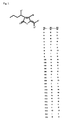
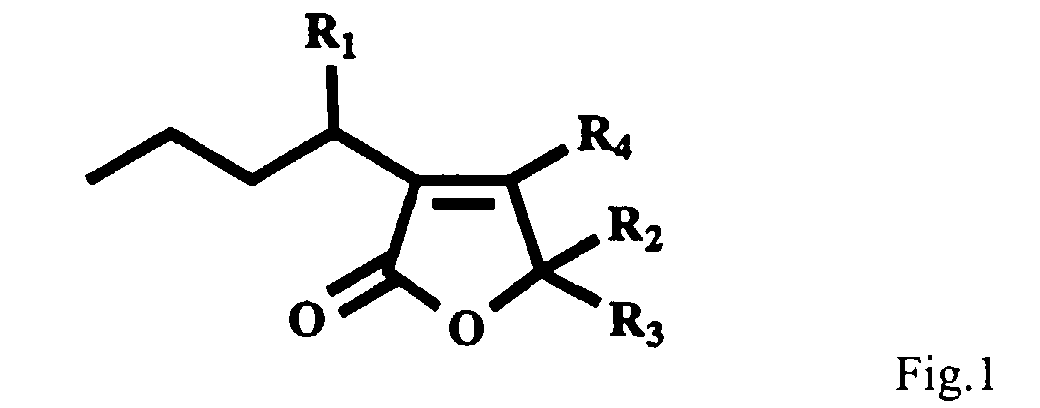
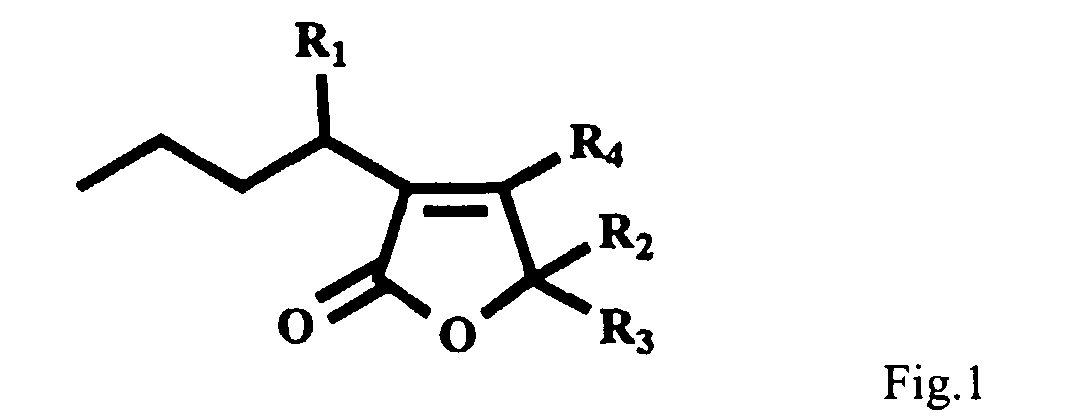
- an antifouling composition comprising an effective amount of a furanone of the structure shown in Fig. 1 wherein R 1 , R 2 and R 3 are each selected from the group comprising a hydrogen atom, a hydroxyl group, an alkyl group containing from 1 to 10 carbon atoms, an ether group containing from 1 to 10 carbon atoms, an ester group containing from 1 to 10 carbon atoms or a halogenated alkene containing from 1 to 10 carbon atoms, or R 2 and R 3 together may comprise an unsubstituted or a halogenated alkene containing from 1 to 10 carbon atoms, and R 4 is hydrogen or a halogen atom, and a suitable carrier therefore.
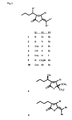
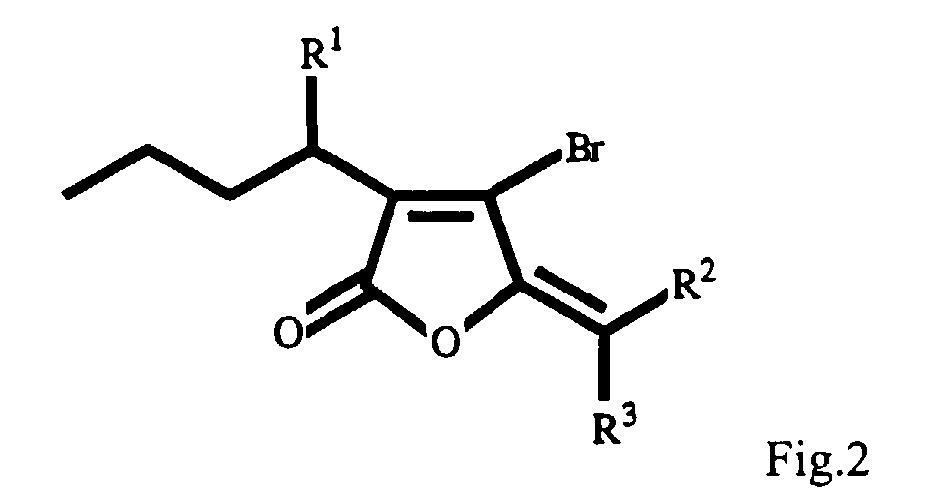
- the furanone has the structure shown in Fig. 2, wherein R 1 is a hydrogen atom, or hydroxyl, ester or an ether group and wherein R 2 and R 3 are each together an unsubstituted or halogenated methylene group.
- R 1 is selected from the group comprising hydrogen, hydroxy and acetoxy groups.
- R 2 and R 3 together, can be an alkylene group substituted with one or more chlorine, bromine or iodine atom or a mixture thereof.
- R 1 can be hydrogen with R 2 and R 3 , together, being dibromomethylene or monobromomethylene.
- R 1 can be an acetyl group with R 2 and R 3 together, being monobromomethylene or monoiodomethylene.
- R 1 can be a hydroxy group with R 2 and R 3 , together, being monobromomethylene.
- antifouling compositions in accordance with the present invention can contain two or more compositions according to Fig. 1.
- the carrier employed in the inventive antifouling compositions can be a paint or other dryable film forming composition.
- the present invention relates to a process for the prevention of marine fouling of an object comprising applying to at least a part of the object a coating of the composition according to the present invention or incorporating in the object itself such a composition, and immersing at least that part of the object into the water.
- the compounds to which the present invention relates consist of a series of structurally related halogenated furanones.
- the compounds have been previously described in the literature, (Kazlauskas et al., 1977; de Nys et al., 1992; de Nys et al., 1993), where their molecular structures have been eludicated and characterised by nuclear magnetic spectroscopy, mass spectrometry, ultra-violet and infra-red spectroscopy and optical rotation ( ⁇ D).
- the structures have been fully characterised (de Nys et al., 1992; de Nys et al., 1993).
- the compounds all share a basic carbon skeleton consisting of a furanone moiety with a butyl side chain at the 3-position (Fig. 1). Substitution occurs at the R 1 and R 2 , R 3 positions of the basic structure.
- the alkyl group, ether group, ester group and the alkene group preferably have 1 to 5 carbon atoms, most preferably 1 to 3 carbon atoms.
- the halogen atoms are preferably bromine, chlorine and iodine, most preferably bromine.
- the substitution of hydrogen, hydroxy and acetoxy groups at the R 1 position, and the substitution of a single unsubstituted or halogenated methylene group for R 2 and R 3 is preferred and results in a large series of structurally related metabolites (Fig. 2).
- the combination of the most feasible substitutions at these positions results in 30 possible preferred structures, of which 13 have been characterised. This application is intended to cover, inter alia, all of these 30 preferred compounds.
- the most preferred active compounds for use in the present invention are compounds 1 to 6 and 8 to 10 of Fig. 3.
- Delisea pulchra metabolites were extracted as follows: The alga was collected from Cape Banks, NSW, Australia and frozen on collection. The tissue was subsequently freeze dried, extracted with dichloromethane, and the crude extract reduced in vacuo. Purified metabolites were isolated by vacuum liquid chromatography followed by high performance liquid chromatography (de Nys et al., 1993). The structural elucidation of purified metabolites was carried out using a combination of nuclear magnetic resonance spectroscopy and mass-spectrometry techniques. Three previously characterised Delisea metabolites (Fig. 3 labelled here as compounds 1 to 6 and 8 to 10) were isolated and identified in sufficient quantities for biological testing.
- the Delisea metabolites were tested against representatives of four main groups of fouling organisms invertebrates, algae, bryozoan and bacteria. These were barnacle larvae (invertebrates), algal spores, bryozoan larvae and marine bacterial strains. These tests (bioassays) were done in the laboratory under controlled conditions.
- Assays used purified metabolites at concentrations ranging from 100 ⁇ g to 0.1 ng per millilitre. Metabolites 1-5 were dissolved in dimethylsulphoxide (DMSO) (60 ⁇ l/mg-0.6%) prior to being made up to their highest concentration (100 ⁇ g/ml) in 0.45 ⁇ m filtered seawater. Subsequent dilutions were made from these stock solutions. Controls of filtered seawater and the highest concentration of DMSO (0.6%) were run with each experiment. Experiments were repeated using metabolites 2 and 4 using larvae from independent spawning events to determine the reproducibility of results. An experiment comparing all concentration of DMSO used (0.6% - 0.6 * 10-5%) and filtered seawater was also carried out.
- DMSO dimethylsulphoxide
- Tests were conducted by adding 45-65 cyprids to petri-dishes (47 mm) containing five mls of either test solution, filtered seawater control, or DMSO control. All test solutions and controls were replicated four times. Test dishes were incubated for 24 hours at 28°C in a 15:9 hr light-dark cycle. Upon completion of incubation non-settled cyprids were observed as swimming or non-swimming and the test was terminated by the addition of three drops of 40% formaldehyde. The dishes were then rinsed and the percent settlement of cyprids was determined by counting settled and non settled larvae.
- Antifoulants may work in one of two ways; they may leach out of a coating into the water and inhibit fouling organisms via contact in the water, or they may adhere to a surface and inhibit fouling only via contact of fouling organisms with that surface.
- the assay described tests the effects of compounds when dissolved in the water.
- the effects of Delisea compounds were tested against barnacle larvae when they were applied to the surface of Petri dishes.
- Assays used purified metabolites at concentrations ranging from 500 ⁇ g to 50 ng per millilitre. Metabolites 1-4 were dissolved in ethanol (99.7% + purity) at the highest concentration of 500 ⁇ g/ml. Subsequent dilutions were made from these stock solutions. One ml of each solution was added to a petri dish (surface area 20cm 2 ) and the dish shaken on an orbital shaker until dry. The solvent evaporates and the non-polar metabolites adhere to the plastic petri dish at concentrations ranging from 25 ⁇ g/cm 2 to 2.5 ng/cm 2 . Controls of ethanol without added metabolites, and filtered seawater were run with each experiment. All test solutions and controls were replicated three times. The addition of cyprids and subsequent testing of compounds was conducted as for compounds in solution (see above).
- Purified metabolites 1-4 were dissolved in ethyl acetate (10 mg/ml - 10 ⁇ g/ml) and were added in volumes of 20 ⁇ l to sterilised McCartney bottles containing 19 mls of filter sterilised artificial seawater (ASW) medium supplemented with a trace vitamin and mineral solution (Schneider et al., 1994).
- ASW filter sterilised artificial seawater
- II saturated copper
- the media was inoculated with SW8.
- the inoculum for the assay was taken from a continuous culture fermenter operating at a cell density of 10 7 cells/ml.
- the final concentration of metabolites and antibiotic tested ranged from 10 ⁇ g/ml to 10 ng/ml. Control bottles with media only, and media with 20 ⁇ l EtOAc added, were inoculated with SW8 and run concurrently with each experiment.
- gametophytes were used in the assays. Gametophytes were twice "raced" towards a light source across a watchglass containing sterile seawater to remove contaminants and added to 20 ml of sterile seawater prior to use in tests. In order to obtain a uniform suspension for addition to test wells the solution was mechanically stirred.
- Purified metabolites 1-4 were dissolved in ethanol (99.7% + purity) at a concentration of 500 ⁇ g/ml to 50 ng/ml. 94 ⁇ l of test solution was added to repliplate test wells (surface area 1.88 cm 2 ) giving a concentration range of 25 ⁇ g/cm 2 to 2.5 ⁇ g/cm 2 for each compound. Control wells containing only ethanol and filtered seawater (0.20 ⁇ m) were also prepared. The treatment and ethanol control repli-plate wells were prepared by drying on a shaker. A swarmer suspension (100 ⁇ l) was added to cover each well and the repli-plates placed in the dark to allow an even settlement of spores.
- the second analytical procedure used was the determination of the 24 hr-EC 50 value (the concentration required for 50% settlement inhibition in a 24 hour assay) of Delisea metabolites. This procedure, used in the barnacle assay only, was done using the trimmed Spearmann-Karber method (Hamilton et al. 1977). Ec 50 values are useful for comparisons to other studies.
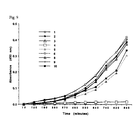
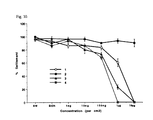
- Figs. 4 for compounds 1, 2 and 4) and 5 (compounds 3, 5,) and Table 1 (statistical results). All 5 compounds showed significant activity against settlement, with activity increasing with increasing concentration. All compounds completely inhibited settlement at a concentration of 10 ⁇ g/ml. Three compounds - 1, 2 and 4 were particularly inhibitory (Fig. 4, Table 1). All three compounds significantly (Table 1) inhibited settlement at the very low concentrations of 1 and 10 ng/ml. At 10 ng/ml compounds 1 and 2 inhibited settlement by 50%, relative to control settlement levels. Interestingly, these 3 compounds also exhibited non-linear patterns in their effects on settlement.
- EC50 values for these compounds are presented in Table 2. Two of the compounds had EC50 values ⁇ 100 ng/ml, and 5 of the compounds had EC50's significantly less than that of CuSO 4 . Following the reduction in the use of tin-based compounds, copper (Cu) is now the main active ingredient in antifouling paints.
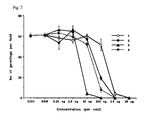
- Fig. 7 The effects of surface coatings of metabolites 1-4 coated against the settlement of and germination of algal spores are shown in Fig. 7. All compounds completely inhibited settlement of algal spores at 25ug/cm 2 . Compounds 2 and 4 significantly deterred settlement and germination at a concentration of 250 ng respectively, while the most deterrent metabolite, compound 3, inhibited settlement and germination by >90% at a concentration of 25 ng/cm 2 .
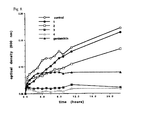
- Compounds 3 and 4 were significantly more inhibitory than the antibiotic gentamicin. Inhibition of marine bacteria A) 4 hours concentration Compounds in order of increasing activity 10 ⁇ g/mL c 1 gent 2 3 4 1.0 ⁇ g/mL c gent 2 1 4 3 100 ng/mL gent 4 c 2 3 1 10 ng/mL gent c 4 2 1 3 B) 11.5 hours concentration Compounds in order of increasing activity 10 ⁇ g/mL c 1 2 gent 3 4 1.0 ⁇ g/mL c gent 1 2 3 4 100 ng/mL gent 4 2 c 1 3 10 ng/mL gent c 2 4 1 3 concentration Compounds in order of increasing activity 10 ⁇ g/mL c 1 2 gent 3 4 1.0 ⁇ g/mL 2 c 1 3 4 gent 100 ng/mL gent 4 3 2 c 1 10 ng/mL gent 4 1 c 3 2
- the compounds are very active, at low concentrations, against representatives from four major groups of fouling organisms.
- EC 50 's of previously reported natural products (and copper) in cyprid assays are, with one exception (the "renillafoulines", Rittschof et al. 1994) typically in the range of 100's of ng/ml to 1 ⁇ g/ml.
- EC 50 's of three of the Delisea compounds fall at the lower end of this range, and EC 50 's of two of the compounds fall well below it.
- the activity of the compounds is broad spectrum. This is a significant advantage over most previously described natural antifoulants, which have tended to focus on the activity of the compounds against barnacle larvae, or at most invertebrates and bacteria (Holmstrom and Kjelleberg 1994). Clearly any antifouling coating must work against the range of fouling organisms which occur in the field, and thus the Delisea metabolites broad spectrum activities are very important. Their strong activities against algal spores is a major benefit in and of itself, since algae have often proven to be the most difficult foulers to control.
- the second major point to emerge is that the structural variation that exists among the Delisea metabolites is very important in terms of the compounds' effects on fouling organisms. Tests against any one fouling organism indicate significant variation in the effects of different compounds (e.g. Figs. 4-10), and the relative effects of each compound against different organisms is not the same. For example, the most effective compound against barnacle larvae is 1 and 2; against bacteria 3 and 4, and; against algal spores compound 3.
Landscapes
- Life Sciences & Earth Sciences (AREA)
- Wood Science & Technology (AREA)
- Chemical & Material Sciences (AREA)
- Engineering & Computer Science (AREA)
- Plant Pathology (AREA)
- General Health & Medical Sciences (AREA)
- Agronomy & Crop Science (AREA)
- Pest Control & Pesticides (AREA)
- Materials Engineering (AREA)
- Health & Medical Sciences (AREA)
- Dentistry (AREA)
- Organic Chemistry (AREA)
- Zoology (AREA)
- Environmental Sciences (AREA)
- Paints Or Removers (AREA)
- Agricultural Chemicals And Associated Chemicals (AREA)
- Macromonomer-Based Addition Polymer (AREA)
- Preventing Corrosion Or Incrustation Of Metals (AREA)
- Furan Compounds (AREA)
Claims (10)
- Anwuchsverhindernde Zusammensetzung, die eine wirksame Menge eines Furanons mit der in Fig. 1 gezeigten Struktur enthältin welcher R1, R2 und R3 jeweils ein Wasserstoffatom, eine Hydroxylgruppe, eine Alkylgruppe mit 1 bis 10 Kohlenstoffatomen, eine Ethergruppe mit 1 bis 10 Kohlenstoffatomen, eine Estergruppe mit 1 bis 10 Kohlenstoffatomen oder ein halogeniertes Alken mit 1 bis 10 Kohlenstoffatomen sind, oder R2 und R3 zugleich ein unsubstituiertes oder ein halogeniertes Alken mit 1 bis 10 Kohlenstoffatomen enthalten können und R4 einem Wasserstoff- oder einem Halogenatom entspricht, und einen geeigneten Träger hierfür.
- Anwuchsverhindernde Zusammensetzung gemäß Anspruch 1, in der das Furanon die in Fig. 2 gezeigte Struktur besitztin welcher R1 für ein Wasserstoffatom oder eine Hydroxyl-, eine Ester- oder eine Ethergruppe steht, und R2 und R3 jeweils zugleich einer unsubstituierten oder halogenisierten Methylengruppe entsprechen.
- Anwuchsverhindernde Zusammensetzung gemäß Anspruch 1, in der R1 ausgewählt wird aus der Gruppe, die Wasserstoff, Hydroxy- und Acetoxygruppen enthält.
- Anwuchsverhindernde Zusammensetzung gemäß Anspruch 1, in der R2 und R3 zugleich einer Alkengruppe entsprechen, die mit einem oder mehreren Chlor-, Brom- oder Jodatomen oder einer Mischung daraus substituiert sind.
- Anwuchsverhindernde Zusammensetzung gemäß Anspruch 1, in der R1 ein Wasserstoffatom ist, und R2 und R3 zugleich Dibrommethylen oder Monobrommethylen sind.
- Anwuchsverhindernde Zusammensetzung gemäß Anspruch 1, in der R1 eine Acetylgruppe ist, und R2 und R3 zugleich Monobrommethylen oder Monojodmethylen sind.
- Anwuchsverhindernde Zusammensetzung gemäß Anspruch 1, in der R1 eine Hydroxygruppe ist, und R2 und R3 zugleich Monobrommethylen sind.
- Anwuchsverhindernde Zusammensetzung gemäß Anspruch 1, welche zwei oder mehrere der Zusammensetzungen gemäß Fig. 1 enthalten.
- Anwuchsverhindernde Zusammensetzung gemäß Anspruch 1, in welcher der Träger eine Anstrichfarbe oder eine andere trockenfähige, filmbildende Zusammensetzung ist.
- Verfahren zum Verhindern des Anwachsens von Meeresorganismen an einem Gegenstand, welches das Auftragen auf zumindest einem Teil des Gegenstandes einer Beschichtung mit einer Zusammensetzung gemäß irgendeinem der Ansprüche 1 bis 9, das Einarbeiten einer derartigen Zusammensetzung in zumindest den erwähnten Teil des Gegenstandes selbst, und das Eintauchen von zumindest diesem Teil des Gegenstandes in das Wasser einschließt.
Applications Claiming Priority (4)
| Application Number | Priority Date | Filing Date | Title |
|---|---|---|---|
| AUPM6666/94 | 1994-07-06 | ||
| AUPM6666A AUPM666694A0 (en) | 1994-07-06 | 1994-07-06 | Natural antifouling compositions |
| AUPM666694 | 1994-07-06 | ||
| PCT/AU1995/000407 WO1996001294A1 (en) | 1994-07-06 | 1995-07-05 | Antifouling compositions |
Publications (3)
| Publication Number | Publication Date |
|---|---|
| EP0769039A1 EP0769039A1 (de) | 1997-04-23 |
| EP0769039A4 EP0769039A4 (de) | 1998-05-06 |
| EP0769039B1 true EP0769039B1 (de) | 2000-09-27 |
Family
ID=3781234
Family Applications (1)
| Application Number | Title | Priority Date | Filing Date |
|---|---|---|---|
| EP95924107A Expired - Lifetime EP0769039B1 (de) | 1994-07-06 | 1995-07-05 | Anwuchsverhindernde zusammensetzungen |
Country Status (14)
| Country | Link |
|---|---|
| US (1) | US6060046A (de) |
| EP (1) | EP0769039B1 (de) |
| JP (1) | JPH10502402A (de) |
| KR (1) | KR100343847B1 (de) |
| CN (1) | CN1047785C (de) |
| AT (1) | ATE196643T1 (de) |
| AU (1) | AUPM666694A0 (de) |
| CA (1) | CA2192955A1 (de) |
| DE (1) | DE69518985T2 (de) |
| DK (1) | DK0769039T3 (de) |
| ES (1) | ES2151962T3 (de) |
| GR (1) | GR3034630T3 (de) |
| NZ (1) | NZ289025A (de) |
| WO (1) | WO1996001294A1 (de) |
Families Citing this family (32)
| Publication number | Priority date | Publication date | Assignee | Title |
|---|---|---|---|---|
| AUPN191295A0 (en) * | 1995-03-23 | 1995-04-27 | Unisearch Limited | Microbiocide or microbial regulator |
| AUPO821197A0 (en) | 1997-07-24 | 1997-08-14 | Aquaculture Crc Limited | Antifouling of shellfish |
| AUPP297898A0 (en) * | 1998-04-16 | 1998-05-07 | Unisearch Limited | Production of furanones |
| AUPP303498A0 (en) | 1998-04-17 | 1998-05-14 | Unisearch Limited | Inhibition of gram positive bacteria |
| AUPQ475599A0 (en) * | 1999-12-17 | 2000-01-20 | Unisearch Limited | Inhibition of two-component transduction systems |
| AUPQ681200A0 (en) | 2000-04-10 | 2000-05-11 | Unisearch Limited | Antimicrobial coatings |
| AUPQ841900A0 (en) * | 2000-06-28 | 2000-07-20 | Unisearch Limited | Synthesis of cyclic compounds |
| US6487906B1 (en) * | 2000-09-18 | 2002-12-03 | Advantedge Systems Inc | Flexible film sensor system for monitoring body motion |
| US6528472B2 (en) | 2000-11-17 | 2003-03-04 | S.C. Johnson & Son, Inc. | Antimicrobial compositions containing quaternary ammonium compounds, silanes and other disinfectants with furanones |
| AUPR209000A0 (en) * | 2000-12-14 | 2001-01-11 | Unisearch Limited | Regulation of bacterial virulence |
| AUPR575401A0 (en) * | 2001-06-18 | 2001-07-12 | Unisearch Limited | Method of causing sloughing |
| AUPR833301A0 (en) | 2001-10-17 | 2001-11-08 | Advanced Environmental Technologies Pty Ltd | Organic waste treatment |
| US6794346B2 (en) | 2001-10-26 | 2004-09-21 | S.C. Johnson & Son, Inc. | Hard surface cleaners containing chitosan and furanone |
| AU2003218628B2 (en) * | 2002-04-30 | 2005-11-24 | Technical University Of Denmark | Composition and method for controlling microbial adhesion and biofilm formation of surfaces |
| AU2002950862A0 (en) * | 2002-08-19 | 2002-09-12 | Biosignal Pty Ltd | Furanone derivatives and methods of making same |
| FR2863168A1 (fr) * | 2003-12-04 | 2005-06-10 | Centre Nat Rech Scient | Utilisation d'inducteurs de la voie de degradation de la gamma-butyrolactone pour inactiver le signal n-acy homoserine lactone. |
| GB0500895D0 (en) | 2005-01-17 | 2005-02-23 | Isis Innovation | Biocidal surface functionalisation |
| DE102005020759A1 (de) * | 2005-05-02 | 2006-11-09 | Henkel Kgaa | Halomethylen-Alkanone und Furanone als Biofilmblocker |
| US7972635B2 (en) | 2005-07-08 | 2011-07-05 | Seabrook Jr Samuel G | Polymer coatings containing phytochemical agents and methods for making and using same |
| AU2006344708A1 (en) * | 2005-07-08 | 2008-03-20 | Magellan Companies, Inc. | Polymer coatings containing phytochemical agents and methods for making and using same |
| US20070172434A1 (en) * | 2006-01-24 | 2007-07-26 | Jernberg Gary R | Antimicrobial dental materials, restorations, and prostheses |
| GB0616724D0 (en) * | 2006-08-23 | 2006-10-04 | Isis Innovation | Surface adhesion using arylcarbene reactive intermediates |
| JP5280368B2 (ja) | 2006-10-31 | 2013-09-04 | バイオ−テック エンバイロメンタル,エルエルシー | 高分子材料を生分解性にする化学添加剤 |
| US8513329B2 (en) | 2006-10-31 | 2013-08-20 | Bio-Tec Environmental, Llc | Chemical additives to make polymeric materials biodegradable |
| EP2403825B1 (de) | 2009-03-02 | 2019-09-11 | Oxford Advanced Surfaces Ltd | Zur bildung kovalenter 3-d-netze fähige chemische mittel |
| WO2012012158A2 (en) * | 2010-06-30 | 2012-01-26 | Schlumberger Canada Limited | Bacterial control of water based fluids during subsurface injection and subsequent residence time in the subterranean formation |
| KR101471270B1 (ko) * | 2013-01-21 | 2014-12-10 | 고려대학교 산학협력단 | 돌연변이가 유발된 단세포 생물체의 선별방법 및 이에 사용되는 미세유체 장치 |
| CN104277019B (zh) * | 2014-10-15 | 2016-10-05 | 暨南大学 | 用于防治水产养殖病虫害及污损生物附着的呋喃酮类衍生物及其制备方法 |
| CN104356730B (zh) * | 2014-10-27 | 2017-02-01 | 中国科学院南海海洋研究所 | 一类丁烯酸内酯化合物在制备抗海洋生物污损涂料中的应用 |
| CN109266172B (zh) * | 2018-09-12 | 2021-02-09 | 浙江飞鲸新材料科技股份有限公司 | 一种海洋防污涂料及其制备方法和应用 |
| TR202009948A1 (tr) * | 2020-06-25 | 2022-01-21 | Dokuz Eyluel Ueniversitesi Rektoerluegue | Antifouling boya bi̇leşi̇mi̇ |
| CN116903155B (zh) * | 2023-09-13 | 2023-11-28 | 上海同济工程咨询有限公司 | 一种水质改良剂及其制备方法、水体养护方法 |
Family Cites Families (5)
| Publication number | Priority date | Publication date | Assignee | Title |
|---|---|---|---|---|
| GB1497064A (en) * | 1975-08-07 | 1978-01-05 | Paint Res Ass | Antifouling paints |
| US5266359A (en) * | 1991-01-14 | 1993-11-30 | Becton, Dickinson And Company | Lubricative coating composition, article and assembly containing same and method thereof |
| US5248221A (en) * | 1992-10-22 | 1993-09-28 | Rohm And Haas Company | Antifouling coating composition comprising lactone compounds, method for protecting aquatic structures, and articles protected against fouling organisms |
| CA2146130C (en) * | 1992-10-15 | 2004-06-08 | Donald John Gerhart | Antifouling coating composition and method |
| AUPN191295A0 (en) * | 1995-03-23 | 1995-04-27 | Unisearch Limited | Microbiocide or microbial regulator |
-
1994
- 1994-07-06 AU AUPM6666A patent/AUPM666694A0/en not_active Abandoned
-
1995
- 1995-07-05 AT AT95924107T patent/ATE196643T1/de not_active IP Right Cessation
- 1995-07-05 WO PCT/AU1995/000407 patent/WO1996001294A1/en not_active Ceased
- 1995-07-05 KR KR1019970700024A patent/KR100343847B1/ko not_active Expired - Fee Related
- 1995-07-05 DE DE69518985T patent/DE69518985T2/de not_active Expired - Fee Related
- 1995-07-05 ES ES95924107T patent/ES2151962T3/es not_active Expired - Lifetime
- 1995-07-05 NZ NZ289025A patent/NZ289025A/en unknown
- 1995-07-05 JP JP8503579A patent/JPH10502402A/ja not_active Ceased
- 1995-07-05 EP EP95924107A patent/EP0769039B1/de not_active Expired - Lifetime
- 1995-07-05 US US08/765,226 patent/US6060046A/en not_active Expired - Fee Related
- 1995-07-05 CN CN95194788A patent/CN1047785C/zh not_active Expired - Fee Related
- 1995-07-05 CA CA002192955A patent/CA2192955A1/en not_active Abandoned
- 1995-07-05 DK DK95924107T patent/DK0769039T3/da active
-
2000
- 2000-10-16 GR GR20000402316T patent/GR3034630T3/el not_active IP Right Cessation
Also Published As
| Publication number | Publication date |
|---|---|
| CN1156471A (zh) | 1997-08-06 |
| WO1996001294A1 (en) | 1996-01-18 |
| KR100343847B1 (ko) | 2002-11-22 |
| DK0769039T3 (da) | 2000-11-06 |
| EP0769039A1 (de) | 1997-04-23 |
| HK1001287A1 (en) | 1998-06-12 |
| JPH10502402A (ja) | 1998-03-03 |
| ATE196643T1 (de) | 2000-10-15 |
| GR3034630T3 (en) | 2001-01-31 |
| ES2151962T3 (es) | 2001-01-16 |
| CA2192955A1 (en) | 1996-01-18 |
| DE69518985D1 (de) | 2000-11-02 |
| EP0769039A4 (de) | 1998-05-06 |
| DE69518985T2 (de) | 2001-03-01 |
| AUPM666694A0 (en) | 1994-07-28 |
| US6060046A (en) | 2000-05-09 |
| CN1047785C (zh) | 1999-12-29 |
| NZ289025A (en) | 1997-12-19 |
Similar Documents
| Publication | Publication Date | Title |
|---|---|---|
| EP0769039B1 (de) | Anwuchsverhindernde zusammensetzungen | |
| De Nys et al. | Broad spectrum effects of secondary metabolites from the red alga Delisea pulchra in antifouling assays | |
| Targett et al. | Antifouling agents against the benthic marine diatom, Navicula salinicola Homarine from the gorgonians Leptogorgia virgulata and L. setacea and analogs | |
| Xu et al. | Potent antifouling compounds produced by marine Streptomyces | |
| Lau et al. | Phlorotannins and related compounds as larval settlement inhibitors of the tube-building polychaete Hydroides elegans | |
| Bazes et al. | Investigation of the antifouling constituents from the brown alga Sargassum muticum (Yendo) Fensholt | |
| Maréchal et al. | Seasonal variation in antifouling activity of crude extracts of the brown alga Bifurcaria bifurcata (Cystoseiraceae) against cyprids of Balanus amphitrite and the marine bacteria Cobetia marina and Pseudoalteromonas haloplanktis | |
| Iyapparaj et al. | Antifouling and toxic properties of the bioactive metabolites from the seagrasses Syringodium isoetifolium and Cymodocea serrulata | |
| Armstrong et al. | Marine microbial natural products in antifouling coatings | |
| Feng et al. | The plant alkaloid camptothecin as a novel antifouling compound for marine paints: Laboratory bioassays and field trials | |
| Hellio et al. | Isethionic acid and floridoside isolated from the red alga, Grateloupia turuturu, inhibit settlement of Balanus amphitrite cyprid larvae | |
| Chambers et al. | Investigation of Chondrus crispus as a potential source of new antifouling agents | |
| Pérez et al. | Antifouling activity of green-synthesized 7-hydroxy-4-methylcoumarin | |
| CN102105542A (zh) | 防污的呋喃-2-酮衍生物 | |
| Soliman et al. | Antifouling and antibacterial activities of marine bioactive compounds extracted from some red sea cucumber | |
| Li et al. | Investigation on the efficiency of a silicone antifouling coating in controlling the adhesion and germination of Ulva prolifera micro-propagules on rafts | |
| Prakash et al. | Antimicrofouling properties of chosen marine plants: An eco-friendly approach to restrain marine microfoulers | |
| Hong et al. | Effect of seaweed epibiotic bacterium Streptomyces violaceoruber SCH-09 on marine fouling organisms | |
| WO1994008904A1 (en) | Antifouling coating composition and method | |
| Braekman et al. | Chemical and biological aspects of sponge secondary metabolites | |
| AU688535B2 (en) | Antifouling compositions | |
| Callow et al. | Attachment of zoospores of the fouling alga Enteromorpha in the presence of zosteric acid | |
| CN111269603B (zh) | 一种吡嗪喹唑啉二酮生物碱化合物在制备海洋污损生物防除剂中的应用 | |
| JP2008504377A (ja) | 親環境性防汚剤 | |
| Anil et al. | Role of diatoms in marine biofouling |
Legal Events
| Date | Code | Title | Description |
|---|---|---|---|
| PUAI | Public reference made under article 153(3) epc to a published international application that has entered the european phase |
Free format text: ORIGINAL CODE: 0009012 |
|
| 17P | Request for examination filed |
Effective date: 19970109 |
|
| AK | Designated contracting states |
Kind code of ref document: A1 Designated state(s): AT BE CH DE DK ES FR GB GR IE IT LI LU MC NL PT SE |
|
| RAP1 | Party data changed (applicant data changed or rights of an application transferred) |
Owner name: UNISEARCH LIMITED |
|
| A4 | Supplementary search report drawn up and despatched |
Effective date: 19980320 |
|
| AK | Designated contracting states |
Kind code of ref document: A4 Designated state(s): AT BE CH DE DK ES FR GB GR IE IT LI LU MC NL PT SE |
|
| 17Q | First examination report despatched |
Effective date: 19981204 |
|
| GRAG | Despatch of communication of intention to grant |
Free format text: ORIGINAL CODE: EPIDOS AGRA |
|
| GRAG | Despatch of communication of intention to grant |
Free format text: ORIGINAL CODE: EPIDOS AGRA |
|
| GRAG | Despatch of communication of intention to grant |
Free format text: ORIGINAL CODE: EPIDOS AGRA |
|
| GRAH | Despatch of communication of intention to grant a patent |
Free format text: ORIGINAL CODE: EPIDOS IGRA |
|
| GRAH | Despatch of communication of intention to grant a patent |
Free format text: ORIGINAL CODE: EPIDOS IGRA |
|
| GRAA | (expected) grant |
Free format text: ORIGINAL CODE: 0009210 |
|
| AK | Designated contracting states |
Kind code of ref document: B1 Designated state(s): AT BE CH DE DK ES FR GB GR IE IT LI LU MC NL PT SE |
|
| PG25 | Lapsed in a contracting state [announced via postgrant information from national office to epo] |
Ref country code: LI Free format text: LAPSE BECAUSE OF FAILURE TO SUBMIT A TRANSLATION OF THE DESCRIPTION OR TO PAY THE FEE WITHIN THE PRESCRIBED TIME-LIMIT Effective date: 20000927 Ref country code: CH Free format text: LAPSE BECAUSE OF FAILURE TO SUBMIT A TRANSLATION OF THE DESCRIPTION OR TO PAY THE FEE WITHIN THE PRESCRIBED TIME-LIMIT Effective date: 20000927 Ref country code: BE Free format text: LAPSE BECAUSE OF FAILURE TO SUBMIT A TRANSLATION OF THE DESCRIPTION OR TO PAY THE FEE WITHIN THE PRESCRIBED TIME-LIMIT Effective date: 20000927 Ref country code: AT Free format text: LAPSE BECAUSE OF FAILURE TO SUBMIT A TRANSLATION OF THE DESCRIPTION OR TO PAY THE FEE WITHIN THE PRESCRIBED TIME-LIMIT Effective date: 20000927 |
|
| REF | Corresponds to: |
Ref document number: 196643 Country of ref document: AT Date of ref document: 20001015 Kind code of ref document: T |
|
| REG | Reference to a national code |
Ref country code: CH Ref legal event code: EP |
|
| REG | Reference to a national code |
Ref country code: IE Ref legal event code: FG4D |
|
| REF | Corresponds to: |
Ref document number: 69518985 Country of ref document: DE Date of ref document: 20001102 |
|
| ET | Fr: translation filed | ||
| REG | Reference to a national code |
Ref country code: DK Ref legal event code: T3 |
|
| ITF | It: translation for a ep patent filed | ||
| PG25 | Lapsed in a contracting state [announced via postgrant information from national office to epo] |
Ref country code: PT Free format text: LAPSE BECAUSE OF FAILURE TO SUBMIT A TRANSLATION OF THE DESCRIPTION OR TO PAY THE FEE WITHIN THE PRESCRIBED TIME-LIMIT Effective date: 20001227 |
|
| REG | Reference to a national code |
Ref country code: ES Ref legal event code: FG2A Ref document number: 2151962 Country of ref document: ES Kind code of ref document: T3 |
|
| REG | Reference to a national code |
Ref country code: CH Ref legal event code: PL |
|
| PG25 | Lapsed in a contracting state [announced via postgrant information from national office to epo] |
Ref country code: LU Free format text: LAPSE BECAUSE OF NON-PAYMENT OF DUE FEES Effective date: 20010705 |
|
| PLBE | No opposition filed within time limit |
Free format text: ORIGINAL CODE: 0009261 |
|
| STAA | Information on the status of an ep patent application or granted ep patent |
Free format text: STATUS: NO OPPOSITION FILED WITHIN TIME LIMIT |
|
| 26N | No opposition filed | ||
| REG | Reference to a national code |
Ref country code: GB Ref legal event code: IF02 |
|
| PG25 | Lapsed in a contracting state [announced via postgrant information from national office to epo] |
Ref country code: MC Free format text: LAPSE BECAUSE OF NON-PAYMENT OF DUE FEES Effective date: 20020201 |
|
| PGFP | Annual fee paid to national office [announced via postgrant information from national office to epo] |
Ref country code: SE Payment date: 20030707 Year of fee payment: 9 |
|
| PGFP | Annual fee paid to national office [announced via postgrant information from national office to epo] |
Ref country code: DK Payment date: 20030718 Year of fee payment: 9 |
|
| PGFP | Annual fee paid to national office [announced via postgrant information from national office to epo] |
Ref country code: ES Payment date: 20030813 Year of fee payment: 9 |
|
| PGFP | Annual fee paid to national office [announced via postgrant information from national office to epo] |
Ref country code: GB Payment date: 20040630 Year of fee payment: 10 |
|
| PGFP | Annual fee paid to national office [announced via postgrant information from national office to epo] |
Ref country code: NL Payment date: 20040704 Year of fee payment: 10 |
|
| PG25 | Lapsed in a contracting state [announced via postgrant information from national office to epo] |
Ref country code: SE Free format text: LAPSE BECAUSE OF NON-PAYMENT OF DUE FEES Effective date: 20040706 Ref country code: ES Free format text: LAPSE BECAUSE OF NON-PAYMENT OF DUE FEES Effective date: 20040706 |
|
| PGFP | Annual fee paid to national office [announced via postgrant information from national office to epo] |
Ref country code: FR Payment date: 20040708 Year of fee payment: 10 |
|
| PGFP | Annual fee paid to national office [announced via postgrant information from national office to epo] |
Ref country code: IE Payment date: 20040714 Year of fee payment: 10 |
|
| PGFP | Annual fee paid to national office [announced via postgrant information from national office to epo] |
Ref country code: DE Payment date: 20040715 Year of fee payment: 10 |
|
| PGFP | Annual fee paid to national office [announced via postgrant information from national office to epo] |
Ref country code: GR Payment date: 20040727 Year of fee payment: 10 |
|
| PG25 | Lapsed in a contracting state [announced via postgrant information from national office to epo] |
Ref country code: DK Free format text: LAPSE BECAUSE OF NON-PAYMENT OF DUE FEES Effective date: 20040802 |
|
| EUG | Se: european patent has lapsed | ||
| REG | Reference to a national code |
Ref country code: DK Ref legal event code: EBP |
|
| PG25 | Lapsed in a contracting state [announced via postgrant information from national office to epo] |
Ref country code: IT Free format text: LAPSE BECAUSE OF NON-PAYMENT OF DUE FEES Effective date: 20050705 Ref country code: IE Free format text: LAPSE BECAUSE OF NON-PAYMENT OF DUE FEES Effective date: 20050705 Ref country code: GB Free format text: LAPSE BECAUSE OF NON-PAYMENT OF DUE FEES Effective date: 20050705 |
|
| REG | Reference to a national code |
Ref country code: ES Ref legal event code: FD2A Effective date: 20040706 |
|
| PG25 | Lapsed in a contracting state [announced via postgrant information from national office to epo] |
Ref country code: NL Free format text: LAPSE BECAUSE OF NON-PAYMENT OF DUE FEES Effective date: 20060201 Ref country code: DE Free format text: LAPSE BECAUSE OF NON-PAYMENT OF DUE FEES Effective date: 20060201 |
|
| PG25 | Lapsed in a contracting state [announced via postgrant information from national office to epo] |
Ref country code: GR Free format text: LAPSE BECAUSE OF NON-PAYMENT OF DUE FEES Effective date: 20060202 |
|
| GBPC | Gb: european patent ceased through non-payment of renewal fee |
Effective date: 20050705 |
|
| PG25 | Lapsed in a contracting state [announced via postgrant information from national office to epo] |
Ref country code: FR Free format text: LAPSE BECAUSE OF NON-PAYMENT OF DUE FEES Effective date: 20060331 |
|
| NLV4 | Nl: lapsed or anulled due to non-payment of the annual fee |
Effective date: 20060201 |
|
| REG | Reference to a national code |
Ref country code: IE Ref legal event code: MM4A |
|
| REG | Reference to a national code |
Ref country code: FR Ref legal event code: ST Effective date: 20060331 |