EP0760671B1 - Peptide, verwendet als träger in immunogenen konstrukten, die in der entwicklung synthetischer impfstoffe geeignet sind - Google Patents
Peptide, verwendet als träger in immunogenen konstrukten, die in der entwicklung synthetischer impfstoffe geeignet sind Download PDFInfo
- Publication number
- EP0760671B1 EP0760671B1 EP95920641A EP95920641A EP0760671B1 EP 0760671 B1 EP0760671 B1 EP 0760671B1 EP 95920641 A EP95920641 A EP 95920641A EP 95920641 A EP95920641 A EP 95920641A EP 0760671 B1 EP0760671 B1 EP 0760671B1
- Authority
- EP
- European Patent Office
- Prior art keywords
- peptide
- analog
- poorly immunogenic
- residue
- conjugate according
- Prior art date
- Legal status (The legal status is an assumption and is not a legal conclusion. Google has not performed a legal analysis and makes no representation as to the accuracy of the status listed.)
- Expired - Lifetime
Links
- 108090000765 processed proteins & peptides Proteins 0.000 title claims abstract description 126
- 230000002163 immunogen Effects 0.000 title claims abstract description 41
- 102000004196 processed proteins & peptides Human genes 0.000 title abstract description 22
- 239000000969 carrier Substances 0.000 title description 4
- 238000011161 development Methods 0.000 title description 4
- 229940126577 synthetic vaccine Drugs 0.000 title description 2
- 239000000427 antigen Substances 0.000 claims abstract description 51
- 108091007433 antigens Proteins 0.000 claims abstract description 51
- 102000036639 antigens Human genes 0.000 claims abstract description 51
- 210000001744 T-lymphocyte Anatomy 0.000 claims abstract description 39
- 101150086609 groEL2 gene Proteins 0.000 claims abstract description 25
- 150000004676 glycans Chemical class 0.000 claims abstract description 23
- 229920001282 polysaccharide Polymers 0.000 claims abstract description 23
- 239000005017 polysaccharide Substances 0.000 claims abstract description 23
- 230000005847 immunogenicity Effects 0.000 claims abstract description 20
- 241000588724 Escherichia coli Species 0.000 claims abstract description 17
- 102000004169 proteins and genes Human genes 0.000 claims abstract description 13
- 108090000623 proteins and genes Proteins 0.000 claims abstract description 13
- 230000001965 increasing effect Effects 0.000 claims abstract description 7
- 230000003053 immunization Effects 0.000 claims description 18
- 238000002649 immunization Methods 0.000 claims description 15
- 230000028993 immune response Effects 0.000 claims description 14
- 238000000034 method Methods 0.000 claims description 13
- SNDPXSYFESPGGJ-UHFFFAOYSA-N L-norVal-OH Natural products CCCC(N)C(O)=O SNDPXSYFESPGGJ-UHFFFAOYSA-N 0.000 claims description 8
- LRQKBLKVPFOOQJ-YFKPBYRVSA-N L-norleucine Chemical compound CCCC[C@H]([NH3+])C([O-])=O LRQKBLKVPFOOQJ-YFKPBYRVSA-N 0.000 claims description 8
- 230000001580 bacterial effect Effects 0.000 claims description 8
- 230000000694 effects Effects 0.000 claims description 8
- 125000006850 spacer group Chemical group 0.000 claims description 7
- 241000293871 Salmonella enterica subsp. enterica serovar Typhi Species 0.000 claims description 6
- 230000002708 enhancing effect Effects 0.000 claims description 6
- 230000004044 response Effects 0.000 claims description 6
- 229960005486 vaccine Drugs 0.000 claims description 6
- 229960002684 aminocaproic acid Drugs 0.000 claims description 5
- 150000001720 carbohydrates Chemical group 0.000 claims description 5
- 201000004792 malaria Diseases 0.000 claims description 5
- 238000002360 preparation method Methods 0.000 claims description 5
- SLXKOJJOQWFEFD-UHFFFAOYSA-N 6-aminohexanoic acid Chemical compound NCCCCCC(O)=O SLXKOJJOQWFEFD-UHFFFAOYSA-N 0.000 claims description 4
- 125000001183 hydrocarbyl group Chemical group 0.000 claims description 4
- 229920006395 saturated elastomer Polymers 0.000 claims description 4
- 229930195734 saturated hydrocarbon Natural products 0.000 claims description 4
- 229930195735 unsaturated hydrocarbon Natural products 0.000 claims description 4
- 230000001419 dependent effect Effects 0.000 claims description 3
- 238000004519 manufacturing process Methods 0.000 claims description 3
- 241000725303 Human immunodeficiency virus Species 0.000 claims description 2
- SNDPXSYFESPGGJ-BYPYZUCNSA-N L-2-aminopentanoic acid Chemical compound CCC[C@H](N)C(O)=O SNDPXSYFESPGGJ-BYPYZUCNSA-N 0.000 claims description 2
- 125000000218 acetic acid group Chemical group C(C)(=O)* 0.000 claims description 2
- 125000001931 aliphatic group Chemical group 0.000 claims description 2
- 125000004432 carbon atom Chemical group C* 0.000 claims description 2
- 125000005842 heteroatom Chemical group 0.000 claims description 2
- 238000002156 mixing Methods 0.000 claims description 2
- 229910052760 oxygen Inorganic materials 0.000 claims description 2
- 229910052717 sulfur Inorganic materials 0.000 claims description 2
- 239000003814 drug Substances 0.000 claims 2
- 239000001205 polyphosphate Substances 0.000 claims 1
- 108010058432 Chaperonin 60 Proteins 0.000 abstract description 9
- -1 e.g. Proteins 0.000 abstract description 3
- 102000006303 Chaperonin 60 Human genes 0.000 abstract 1
- 239000012634 fragment Substances 0.000 description 31
- 239000000562 conjugate Substances 0.000 description 25
- 241000699670 Mus sp. Species 0.000 description 22
- 210000001165 lymph node Anatomy 0.000 description 12
- 239000000243 solution Substances 0.000 description 11
- 241000699666 Mus <mouse, genus> Species 0.000 description 10
- 239000000863 peptide conjugate Substances 0.000 description 10
- 102100038222 60 kDa heat shock protein, mitochondrial Human genes 0.000 description 8
- 108700018351 Major Histocompatibility Complex Proteins 0.000 description 8
- 230000035755 proliferation Effects 0.000 description 8
- 150000001413 amino acids Chemical class 0.000 description 7
- 230000020382 suppression by virus of host antigen processing and presentation of peptide antigen via MHC class I Effects 0.000 description 7
- 238000011725 BALB/c mouse Methods 0.000 description 6
- DTQVDTLACAAQTR-UHFFFAOYSA-N Trifluoroacetic acid Chemical compound OC(=O)C(F)(F)F DTQVDTLACAAQTR-UHFFFAOYSA-N 0.000 description 6
- 210000004027 cell Anatomy 0.000 description 6
- 230000006698 induction Effects 0.000 description 6
- 210000002966 serum Anatomy 0.000 description 6
- 241000894006 Bacteria Species 0.000 description 5
- 241001529936 Murinae Species 0.000 description 5
- 230000002788 anti-peptide Effects 0.000 description 5
- 208000015181 infectious disease Diseases 0.000 description 5
- 239000000463 material Substances 0.000 description 5
- RYHBNJHYFVUHQT-UHFFFAOYSA-N 1,4-Dioxane Chemical compound C1COCCO1 RYHBNJHYFVUHQT-UHFFFAOYSA-N 0.000 description 4
- QOSSAOTZNIDXMA-UHFFFAOYSA-N Dicylcohexylcarbodiimide Chemical compound C1CCCCC1N=C=NC1CCCCC1 QOSSAOTZNIDXMA-UHFFFAOYSA-N 0.000 description 4
- 239000002671 adjuvant Substances 0.000 description 4
- 125000000539 amino acid group Chemical group 0.000 description 4
- 210000003719 b-lymphocyte Anatomy 0.000 description 4
- 230000008878 coupling Effects 0.000 description 4
- 238000010168 coupling process Methods 0.000 description 4
- 238000005859 coupling reaction Methods 0.000 description 4
- 230000002209 hydrophobic effect Effects 0.000 description 4
- 230000001717 pathogenic effect Effects 0.000 description 4
- 239000000047 product Substances 0.000 description 4
- 230000001681 protective effect Effects 0.000 description 4
- 238000012360 testing method Methods 0.000 description 4
- WEVYAHXRMPXWCK-UHFFFAOYSA-N Acetonitrile Chemical compound CC#N WEVYAHXRMPXWCK-UHFFFAOYSA-N 0.000 description 3
- 108091003079 Bovine Serum Albumin Proteins 0.000 description 3
- 238000002965 ELISA Methods 0.000 description 3
- XEKOWRVHYACXOJ-UHFFFAOYSA-N Ethyl acetate Chemical compound CCOC(C)=O XEKOWRVHYACXOJ-UHFFFAOYSA-N 0.000 description 3
- 101001111984 Homo sapiens N-acylneuraminate-9-phosphatase Proteins 0.000 description 3
- 102100023906 N-acylneuraminate-9-phosphatase Human genes 0.000 description 3
- HEMHJVSKTPXQMS-UHFFFAOYSA-M Sodium hydroxide Chemical compound [OH-].[Na+] HEMHJVSKTPXQMS-UHFFFAOYSA-M 0.000 description 3
- 238000004458 analytical method Methods 0.000 description 3
- 230000005875 antibody response Effects 0.000 description 3
- 230000000890 antigenic effect Effects 0.000 description 3
- 229940098773 bovine serum albumin Drugs 0.000 description 3
- 235000014633 carbohydrates Nutrition 0.000 description 3
- 239000003795 chemical substances by application Substances 0.000 description 3
- 238000002474 experimental method Methods 0.000 description 3
- 210000000987 immune system Anatomy 0.000 description 3
- 238000011534 incubation Methods 0.000 description 3
- 239000012678 infectious agent Substances 0.000 description 3
- 239000000203 mixture Substances 0.000 description 3
- 230000037452 priming Effects 0.000 description 3
- 230000009696 proliferative response Effects 0.000 description 3
- 239000011541 reaction mixture Substances 0.000 description 3
- NHBKXEKEPDILRR-UHFFFAOYSA-N 2,3-bis(butanoylsulfanyl)propyl butanoate Chemical compound CCCC(=O)OCC(SC(=O)CCC)CSC(=O)CCC NHBKXEKEPDILRR-UHFFFAOYSA-N 0.000 description 2
- FPQQSJJWHUJYPU-UHFFFAOYSA-N 3-(dimethylamino)propyliminomethylidene-ethylazanium;chloride Chemical compound Cl.CCN=C=NCCCN(C)C FPQQSJJWHUJYPU-UHFFFAOYSA-N 0.000 description 2
- KQPKMEYBZUPZGK-UHFFFAOYSA-N 4-[(4-azido-2-nitroanilino)methyl]-5-(hydroxymethyl)-2-methylpyridin-3-ol Chemical compound CC1=NC=C(CO)C(CNC=2C(=CC(=CC=2)N=[N+]=[N-])[N+]([O-])=O)=C1O KQPKMEYBZUPZGK-UHFFFAOYSA-N 0.000 description 2
- 108700028369 Alleles Proteins 0.000 description 2
- 102000014914 Carrier Proteins Human genes 0.000 description 2
- 108010078791 Carrier Proteins Proteins 0.000 description 2
- YMWUJEATGCHHMB-UHFFFAOYSA-N Dichloromethane Chemical compound ClCCl YMWUJEATGCHHMB-UHFFFAOYSA-N 0.000 description 2
- 241000282412 Homo Species 0.000 description 2
- 241001465754 Metazoa Species 0.000 description 2
- NQTADLQHYWFPDB-UHFFFAOYSA-N N-Hydroxysuccinimide Chemical compound ON1C(=O)CCC1=O NQTADLQHYWFPDB-UHFFFAOYSA-N 0.000 description 2
- 241000283984 Rodentia Species 0.000 description 2
- 230000027455 binding Effects 0.000 description 2
- 239000002775 capsule Substances 0.000 description 2
- 230000004663 cell proliferation Effects 0.000 description 2
- 239000011248 coating agent Substances 0.000 description 2
- 238000000576 coating method Methods 0.000 description 2
- 230000001268 conjugating effect Effects 0.000 description 2
- 238000010790 dilution Methods 0.000 description 2
- 239000012895 dilution Substances 0.000 description 2
- 238000001035 drying Methods 0.000 description 2
- SFNALCNOMXIBKG-UHFFFAOYSA-N ethylene glycol monododecyl ether Chemical compound CCCCCCCCCCCCOCCO SFNALCNOMXIBKG-UHFFFAOYSA-N 0.000 description 2
- 238000004128 high performance liquid chromatography Methods 0.000 description 2
- 229910052739 hydrogen Inorganic materials 0.000 description 2
- 239000001257 hydrogen Substances 0.000 description 2
- 230000001900 immune effect Effects 0.000 description 2
- 230000006054 immunological memory Effects 0.000 description 2
- 230000005923 long-lasting effect Effects 0.000 description 2
- 230000015654 memory Effects 0.000 description 2
- 230000003287 optical effect Effects 0.000 description 2
- 244000052769 pathogen Species 0.000 description 2
- NMHMNPHRMNGLLB-UHFFFAOYSA-N phloretic acid Chemical compound OC(=O)CCC1=CC=C(O)C=C1 NMHMNPHRMNGLLB-UHFFFAOYSA-N 0.000 description 2
- 230000003389 potentiating effect Effects 0.000 description 2
- 230000003252 repetitive effect Effects 0.000 description 2
- 235000020183 skimmed milk Nutrition 0.000 description 2
- DAEPDZWVDSPTHF-UHFFFAOYSA-M sodium pyruvate Chemical compound [Na+].CC(=O)C([O-])=O DAEPDZWVDSPTHF-UHFFFAOYSA-M 0.000 description 2
- UCSJYZPVAKXKNQ-HZYVHMACSA-N streptomycin Chemical compound CN[C@H]1[C@H](O)[C@@H](O)[C@H](CO)O[C@H]1O[C@@H]1[C@](C=O)(O)[C@H](C)O[C@H]1O[C@@H]1[C@@H](NC(N)=N)[C@H](O)[C@@H](NC(N)=N)[C@H](O)[C@H]1O UCSJYZPVAKXKNQ-HZYVHMACSA-N 0.000 description 2
- 239000000126 substance Substances 0.000 description 2
- 229960000814 tetanus toxoid Drugs 0.000 description 2
- 238000002255 vaccination Methods 0.000 description 2
- 238000005406 washing Methods 0.000 description 2
- XZKIHKMTEMTJQX-UHFFFAOYSA-N 4-Nitrophenyl Phosphate Chemical compound OP(O)(=O)OC1=CC=C([N+]([O-])=O)C=C1 XZKIHKMTEMTJQX-UHFFFAOYSA-N 0.000 description 1
- 208000023275 Autoimmune disease Diseases 0.000 description 1
- 241000208199 Buxus sempervirens Species 0.000 description 1
- 241000283707 Capra Species 0.000 description 1
- 101710098119 Chaperonin GroEL 2 Proteins 0.000 description 1
- 102000009016 Cholera Toxin Human genes 0.000 description 1
- 108010049048 Cholera Toxin Proteins 0.000 description 1
- 108010009685 Cholinergic Receptors Proteins 0.000 description 1
- 241000588919 Citrobacter freundii Species 0.000 description 1
- 108010060123 Conjugate Vaccines Proteins 0.000 description 1
- 241001445332 Coxiella <snail> Species 0.000 description 1
- 101100125027 Dictyostelium discoideum mhsp70 gene Proteins 0.000 description 1
- 102000004190 Enzymes Human genes 0.000 description 1
- 108090000790 Enzymes Proteins 0.000 description 1
- 241000283074 Equus asinus Species 0.000 description 1
- 101150031823 HSP70 gene Proteins 0.000 description 1
- 241000606768 Haemophilus influenzae Species 0.000 description 1
- 102000002812 Heat-Shock Proteins Human genes 0.000 description 1
- 108010004889 Heat-Shock Proteins Proteins 0.000 description 1
- 101000610640 Homo sapiens U4/U6 small nuclear ribonucleoprotein Prp3 Proteins 0.000 description 1
- 238000004566 IR spectroscopy Methods 0.000 description 1
- 102000043131 MHC class II family Human genes 0.000 description 1
- 108091054438 MHC class II family Proteins 0.000 description 1
- 241000124008 Mammalia Species 0.000 description 1
- 201000009906 Meningitis Diseases 0.000 description 1
- 241000186366 Mycobacterium bovis Species 0.000 description 1
- 241000187479 Mycobacterium tuberculosis Species 0.000 description 1
- OVRNDRQMDRJTHS-KEWYIRBNSA-N N-acetyl-D-galactosamine Chemical compound CC(=O)N[C@H]1C(O)O[C@H](CO)[C@H](O)[C@@H]1O OVRNDRQMDRJTHS-KEWYIRBNSA-N 0.000 description 1
- MBLBDJOUHNCFQT-UHFFFAOYSA-N N-acetyl-D-galactosamine Natural products CC(=O)NC(C=O)C(O)C(O)C(O)CO MBLBDJOUHNCFQT-UHFFFAOYSA-N 0.000 description 1
- 239000007832 Na2SO4 Substances 0.000 description 1
- 241000588653 Neisseria Species 0.000 description 1
- 241000283973 Oryctolagus cuniculus Species 0.000 description 1
- 229930182555 Penicillin Natural products 0.000 description 1
- JGSARLDLIJGVTE-MBNYWOFBSA-N Penicillin G Chemical compound N([C@H]1[C@H]2SC([C@@H](N2C1=O)C(O)=O)(C)C)C(=O)CC1=CC=CC=C1 JGSARLDLIJGVTE-MBNYWOFBSA-N 0.000 description 1
- 108090000608 Phosphoric Monoester Hydrolases Proteins 0.000 description 1
- 102000004160 Phosphoric Monoester Hydrolases Human genes 0.000 description 1
- 239000004793 Polystyrene Substances 0.000 description 1
- 101001110823 Saccharomyces cerevisiae (strain ATCC 204508 / S288c) 60S ribosomal protein L6-A Proteins 0.000 description 1
- 101000712176 Saccharomyces cerevisiae (strain ATCC 204508 / S288c) 60S ribosomal protein L6-B Proteins 0.000 description 1
- 241000607142 Salmonella Species 0.000 description 1
- 206010070834 Sensitisation Diseases 0.000 description 1
- PMZURENOXWZQFD-UHFFFAOYSA-L Sodium Sulfate Chemical compound [Na+].[Na+].[O-]S([O-])(=O)=O PMZURENOXWZQFD-UHFFFAOYSA-L 0.000 description 1
- 241000193998 Streptococcus pneumoniae Species 0.000 description 1
- IQFYYKKMVGJFEH-XLPZGREQSA-N Thymidine Chemical compound O=C1NC(=O)C(C)=CN1[C@@H]1O[C@H](CO)[C@@H](O)C1 IQFYYKKMVGJFEH-XLPZGREQSA-N 0.000 description 1
- 102100040374 U4/U6 small nuclear ribonucleoprotein Prp3 Human genes 0.000 description 1
- 241000700605 Viruses Species 0.000 description 1
- 238000002835 absorbance Methods 0.000 description 1
- PBCJIPOGFJYBJE-UHFFFAOYSA-N acetonitrile;hydrate Chemical compound O.CC#N PBCJIPOGFJYBJE-UHFFFAOYSA-N 0.000 description 1
- 102000034337 acetylcholine receptors Human genes 0.000 description 1
- 230000009824 affinity maturation Effects 0.000 description 1
- 230000029936 alkylation Effects 0.000 description 1
- 238000005804 alkylation reaction Methods 0.000 description 1
- 125000003275 alpha amino acid group Chemical group 0.000 description 1
- 150000001408 amides Chemical class 0.000 description 1
- 125000003277 amino group Chemical group 0.000 description 1
- 230000002238 attenuated effect Effects 0.000 description 1
- 230000015572 biosynthetic process Effects 0.000 description 1
- 210000004899 c-terminal region Anatomy 0.000 description 1
- 125000003178 carboxy group Chemical group [H]OC(*)=O 0.000 description 1
- 230000003915 cell function Effects 0.000 description 1
- 238000001516 cell proliferation assay Methods 0.000 description 1
- 230000004637 cellular stress Effects 0.000 description 1
- 230000008859 change Effects 0.000 description 1
- 238000003776 cleavage reaction Methods 0.000 description 1
- 150000001875 compounds Chemical class 0.000 description 1
- 229940031670 conjugate vaccine Drugs 0.000 description 1
- 230000021615 conjugation Effects 0.000 description 1
- 239000000470 constituent Substances 0.000 description 1
- 230000002939 deleterious effect Effects 0.000 description 1
- 238000012217 deletion Methods 0.000 description 1
- 230000037430 deletion Effects 0.000 description 1
- 238000000502 dialysis Methods 0.000 description 1
- 239000013024 dilution buffer Substances 0.000 description 1
- 229960003983 diphtheria toxoid Drugs 0.000 description 1
- 201000010099 disease Diseases 0.000 description 1
- 208000037265 diseases, disorders, signs and symptoms Diseases 0.000 description 1
- 101150052825 dnaK gene Proteins 0.000 description 1
- 239000012154 double-distilled water Substances 0.000 description 1
- 239000002158 endotoxin Substances 0.000 description 1
- 230000007613 environmental effect Effects 0.000 description 1
- 238000006911 enzymatic reaction Methods 0.000 description 1
- 150000002148 esters Chemical class 0.000 description 1
- 230000001747 exhibiting effect Effects 0.000 description 1
- 239000012530 fluid Substances 0.000 description 1
- 230000002068 genetic effect Effects 0.000 description 1
- 102000054766 genetic haplotypes Human genes 0.000 description 1
- ZDXPYRJPNDTMRX-UHFFFAOYSA-N glutamine Natural products OC(=O)C(N)CCC(N)=O ZDXPYRJPNDTMRX-UHFFFAOYSA-N 0.000 description 1
- 150000004820 halides Chemical class 0.000 description 1
- 230000036541 health Effects 0.000 description 1
- 229920001519 homopolymer Polymers 0.000 description 1
- 230000028996 humoral immune response Effects 0.000 description 1
- 230000036039 immunity Effects 0.000 description 1
- 230000016784 immunoglobulin production Effects 0.000 description 1
- 238000000338 in vitro Methods 0.000 description 1
- 230000001939 inductive effect Effects 0.000 description 1
- 230000002458 infectious effect Effects 0.000 description 1
- 238000002347 injection Methods 0.000 description 1
- 239000007924 injection Substances 0.000 description 1
- 238000011081 inoculation Methods 0.000 description 1
- 230000003834 intracellular effect Effects 0.000 description 1
- 238000010253 intravenous injection Methods 0.000 description 1
- 229920006008 lipopolysaccharide Polymers 0.000 description 1
- 239000007788 liquid Substances 0.000 description 1
- 238000004811 liquid chromatography Methods 0.000 description 1
- 108010077055 methylated bovine serum albumin Proteins 0.000 description 1
- 244000000010 microbial pathogen Species 0.000 description 1
- 239000013586 microbial product Substances 0.000 description 1
- 244000005700 microbiome Species 0.000 description 1
- 239000000178 monomer Substances 0.000 description 1
- 229910052757 nitrogen Inorganic materials 0.000 description 1
- 230000009871 nonspecific binding Effects 0.000 description 1
- 102000039446 nucleic acids Human genes 0.000 description 1
- 108020004707 nucleic acids Proteins 0.000 description 1
- 150000007523 nucleic acids Chemical class 0.000 description 1
- 235000015097 nutrients Nutrition 0.000 description 1
- 229920001542 oligosaccharide Polymers 0.000 description 1
- 150000002482 oligosaccharides Chemical class 0.000 description 1
- 230000004792 oxidative damage Effects 0.000 description 1
- 244000045947 parasite Species 0.000 description 1
- 229940049954 penicillin Drugs 0.000 description 1
- 238000010647 peptide synthesis reaction Methods 0.000 description 1
- 229920001184 polypeptide Polymers 0.000 description 1
- 229940031937 polysaccharide vaccine Drugs 0.000 description 1
- 229920002223 polystyrene Polymers 0.000 description 1
- 239000011736 potassium bicarbonate Substances 0.000 description 1
- 229910000028 potassium bicarbonate Inorganic materials 0.000 description 1
- CHKVPAROMQMJNQ-UHFFFAOYSA-M potassium bisulfate Chemical compound [K+].OS([O-])(=O)=O CHKVPAROMQMJNQ-UHFFFAOYSA-M 0.000 description 1
- 229910000343 potassium bisulfate Inorganic materials 0.000 description 1
- TYJJADVDDVDEDZ-UHFFFAOYSA-M potassium hydrogencarbonate Chemical compound [K+].OC([O-])=O TYJJADVDDVDEDZ-UHFFFAOYSA-M 0.000 description 1
- 125000002924 primary amino group Chemical group [H]N([H])* 0.000 description 1
- 238000012545 processing Methods 0.000 description 1
- 230000009257 reactivity Effects 0.000 description 1
- 230000009467 reduction Effects 0.000 description 1
- 238000004007 reversed phase HPLC Methods 0.000 description 1
- 230000007017 scission Effects 0.000 description 1
- 230000008313 sensitization Effects 0.000 description 1
- 229940054269 sodium pyruvate Drugs 0.000 description 1
- 229910052938 sodium sulfate Inorganic materials 0.000 description 1
- 239000007787 solid Substances 0.000 description 1
- 239000007790 solid phase Substances 0.000 description 1
- 239000002904 solvent Substances 0.000 description 1
- 230000004936 stimulating effect Effects 0.000 description 1
- 230000000638 stimulation Effects 0.000 description 1
- 239000004575 stone Substances 0.000 description 1
- 238000003860 storage Methods 0.000 description 1
- 229940031000 streptococcus pneumoniae Drugs 0.000 description 1
- 229960005322 streptomycin Drugs 0.000 description 1
- 238000007920 subcutaneous administration Methods 0.000 description 1
- 239000000758 substrate Substances 0.000 description 1
- 229940031626 subunit vaccine Drugs 0.000 description 1
- 230000001629 suppression Effects 0.000 description 1
- 238000003786 synthesis reaction Methods 0.000 description 1
- XLYOFNOQVPJJNP-UHFFFAOYSA-N water Chemical compound O XLYOFNOQVPJJNP-UHFFFAOYSA-N 0.000 description 1
- DGVVWUTYPXICAM-UHFFFAOYSA-N β‐Mercaptoethanol Chemical compound OCCS DGVVWUTYPXICAM-UHFFFAOYSA-N 0.000 description 1
Images


Classifications
-
- C—CHEMISTRY; METALLURGY
- C07—ORGANIC CHEMISTRY
- C07K—PEPTIDES
- C07K14/00—Peptides having more than 20 amino acids; Gastrins; Somatostatins; Melanotropins; Derivatives thereof
- C07K14/195—Peptides having more than 20 amino acids; Gastrins; Somatostatins; Melanotropins; Derivatives thereof from bacteria
- C07K14/24—Peptides having more than 20 amino acids; Gastrins; Somatostatins; Melanotropins; Derivatives thereof from bacteria from Enterobacteriaceae (F), e.g. Citrobacter, Serratia, Proteus, Providencia, Morganella, Yersinia
- C07K14/245—Escherichia (G)
-
- A—HUMAN NECESSITIES
- A61—MEDICAL OR VETERINARY SCIENCE; HYGIENE
- A61K—PREPARATIONS FOR MEDICAL, DENTAL OR TOILETRY PURPOSES
- A61K39/00—Medicinal preparations containing antigens or antibodies
- A61K39/385—Haptens or antigens, bound to carriers
-
- C—CHEMISTRY; METALLURGY
- C07—ORGANIC CHEMISTRY
- C07K—PEPTIDES
- C07K9/00—Peptides having up to 20 amino acids, containing saccharide radicals and having a fully defined sequence; Derivatives thereof
- C07K9/001—Peptides having up to 20 amino acids, containing saccharide radicals and having a fully defined sequence; Derivatives thereof the peptide sequence having less than 12 amino acids and not being part of a ring structure
- C07K9/005—Peptides having up to 20 amino acids, containing saccharide radicals and having a fully defined sequence; Derivatives thereof the peptide sequence having less than 12 amino acids and not being part of a ring structure containing within the molecule the substructure with m, n > 0 and m+n > 0, A, B, D, E being heteroatoms; X being a bond or a chain, e.g. muramylpeptides
-
- A—HUMAN NECESSITIES
- A61—MEDICAL OR VETERINARY SCIENCE; HYGIENE
- A61K—PREPARATIONS FOR MEDICAL, DENTAL OR TOILETRY PURPOSES
- A61K39/00—Medicinal preparations containing antigens or antibodies
- A61K2039/555—Medicinal preparations containing antigens or antibodies characterised by a specific combination antigen/adjuvant
- A61K2039/55511—Organic adjuvants
- A61K2039/55566—Emulsions, e.g. Freund's adjuvant, MF59
-
- A—HUMAN NECESSITIES
- A61—MEDICAL OR VETERINARY SCIENCE; HYGIENE
- A61K—PREPARATIONS FOR MEDICAL, DENTAL OR TOILETRY PURPOSES
- A61K39/00—Medicinal preparations containing antigens or antibodies
- A61K2039/60—Medicinal preparations containing antigens or antibodies characteristics by the carrier linked to the antigen
- A61K2039/6031—Proteins
- A61K2039/6043—Heat shock proteins
-
- Y—GENERAL TAGGING OF NEW TECHNOLOGICAL DEVELOPMENTS; GENERAL TAGGING OF CROSS-SECTIONAL TECHNOLOGIES SPANNING OVER SEVERAL SECTIONS OF THE IPC; TECHNICAL SUBJECTS COVERED BY FORMER USPC CROSS-REFERENCE ART COLLECTIONS [XRACs] AND DIGESTS
- Y02—TECHNOLOGIES OR APPLICATIONS FOR MITIGATION OR ADAPTATION AGAINST CLIMATE CHANGE
- Y02A—TECHNOLOGIES FOR ADAPTATION TO CLIMATE CHANGE
- Y02A50/00—TECHNOLOGIES FOR ADAPTATION TO CLIMATE CHANGE in human health protection, e.g. against extreme weather
- Y02A50/30—Against vector-borne diseases, e.g. mosquito-borne, fly-borne, tick-borne or waterborne diseases whose impact is exacerbated by climate change
Definitions
- a synthetic peptide having an amino acid sequence corresponding to that of a T cell epitope of the heat shock protein 65 of E. coli (hereinafter GroEL) and its analogs able to be recognized in association with a range of mouse major histocompatibility complex (MHC) molecules.
- GroEL E. coli
- MHC mouse major histocompatibility complex
- Said peptide or its analogs can be used as synthetic carriers in the preparation of immunogenic conjugates consisting of said peptides and a natural or synthetic hapten derived from a pathogenic agent of interest.
- Immunization against infection caused by pathogenic microorganism is generally achieved by inoculating an individual with the natural antigen (attenuated or killed microorganism) or parts of said infectious agent (for example detoxified microbial products) in order to stimulate a protective immune response able to neutralize the pathogenic microbe or its deleterious effects.
- infectious agent for example detoxified microbial products
- Isolated protective epitopes nevertheless are often characterized by their poor immunogenicity.
- the carbohydrate capsules of bacteria are an example of such coats: They are not easily recognized by T cells and therefore the immune response to these antigens is deprived of T cell help, T cell memory, IgG class switch, and affinity maturation. Such an immune response is inefficient and resistance to infection with bacteria encoated with carbohydrate capsules is not easily obtained by vaccination with bacterial carbohydrates.
- Peptide epitopes too may be poorly immunogenic, the absence of a T cell epitope and the genetically restricted immune response being the reason.
- T cell independent (T-ind) antigens have been coupled to large immunogenic carrier proteins such as tetanus toxoid, cholera toxin or diphtheria toxoid. Nevertheless, besides dosage limitations and the risk of sensitization to the carrier itself, as reported for tetanus toxoid, the immunological response to high molecular weight carrier molecules harboring stimulatory as well as suppressive T cell epitopes is not very predictable. It has been shown that the antibody response to a hapten coupled to a carrier protein can also be inhibited when the recipient has been previously immunized with the unmodified protein.
- T cell epitope suppression This phenomenon has been termed carrier-induced epitope suppression and was recently demonstrated to occur with a number of hapten-protein conjugates (Herzenberg & Tokuhisa, 1982). Since the development of more potent conjugate vaccines against a large number of extremely infectious organisms is still important, efforts are being made to search for more appropriate carrier molecules providing the needed T cell epitopes. Universally immunogenic T cell epitopes, defined by specific peptides with sharply outlined immunological characteristics, might represent a new generation of such alternative molecules. T cell epitopes of various sorts have been used for this purpose before. However, to trigger a strong memory response when the host meets the infectious agent after vaccination, the T cell carrier epitope should be present along with the specific B cell epitope. This fact would seem to require that a different T cell carrier be used for each infectious agent. Highly abundant proteins well recognized by the immune system might be an appropriate source for peptides serving this purpose.
- T cells are focused onto a few immunodominant epitopes with a minority responding to other, subdominant determinants.
- This hierarchy of determinant utilization by T cells could result from a combination of factors including differential affinities for the available MHC molecules, the diversity of the T cell repertoire, internal competition for MHC-binding sites and fine differences in processing (Babitt et al, 1985; Kappler et al, 1987; Brett et al, 1988)
- Hsp's heat shock proteins
- pathogens Young et al, 1988.
- Hsp's were first described and later named due to their production by cells exposed to sudden elevations in temperature.
- the hsp's include proteins of various molecular weights, including 20kD, 60kD, 65-68kD, 70kD, 90kD, 110kD, and others. It is now apparent that hsp's are induced in all cells by many different environmental insults, including oxidative injury, nutrient depletion and infection with intracellular pathogens; the hsp response enables the cell to survive under otherwise unfavorable conditions.
- hsp's Although cellular stress increases the synthesis of hsp's, many hsp's are also constitutively expressed and play an essential role in normal cell function. The hsp response is ubiquitous throughout the pro- and eukaryotic kingdoms and hsp's belong to some of the most conserved molecules.
- Hsp65 as a representative member of the proteins belonging to the hsp family, can be considered to be a dominant antigen because infection or immunization with many different bacteria induces antibodies and T cells specific for the hsp65 molecule (Young et al, 1988). In mice immunized with Mycobacterium tuberculosis, 20% of all T cells which respond to the bacterium, are specific for hsp65. Interestingly, T cells with reactivity to hsp65 have also been identified in normal healthy individuals lacking any clinical signs of disease (Munk et al, 1988).
- Lussow et al. (1990) showed that priming of mice with live Mycobacterium tuberculosis var.bovis (BCG) and immunization with the repetitive malaria synthetic peptide (NANP) 40 , conjugated to purified protein derivative (PPD), led to the induction of high and long-lasting titers of anti-peptide IgG antibodies. Later on, Lussow et al. (1991) reported that the mycobacterial hsp65 as well as the hsp65 of E. coli (GroEL) acted as carrier molecules in mice, previously primed with BCG, for the induction of high and long-lasting titers of IgG against the repetitive malaria synthetic peptide (NANP) 40 . Anti-peptide antibodies were induced when the malaria peptide, conjugated to the mycobacterial or E. coli hsp, was given in the absence of any adjuvants.
- BCG Mycobacterium tuberculosis var.bovis
- mice immunized with peptides or oligosaccharides conjugated to the 70kD hsp produced high titers of IgG antibodies in the absence of any previous priming with BCG.
- the anti-peptide antibody response persisted for at least 1 year.
- This adjuvant-free carrier effect of the 70kD hsp was T cell dependent, since no anti-peptide nor anti70kD IgG antibodies were induced in athymic nu/nu mice.
- mice with the 65kD or 70kD hsp did not have any negative effect on the induction of anti-peptide IgG antibodies after immunization with hsp-peptide conjugates in the absence of adjuvants. Furthermore, preimmunization with the 65kD hsp could substitute for BCG in providing an effective priming for the induction of ariti-(NANP) 40 antibodies.
- the carrier effect of mycobacterial hsp65 and hsp70 for conjugated peptides was demonstrated also in non-human primates (Perraut et al, 1993).
- T cell epitopes within the sequence of the bacterial hsp65 protein show immunodominance and are able to induce immunological memory, whereas others do not express privileged immunological recognition or are involved in the induction of autoimmune diseases. Distinguishing between functionally different T cell epitopes, binding to several different MHC molecules, may lead to the identification of universally immunogenic peptides, which can qualify as safe, defined, and potent alternatives for carrier molecules of T-ind antigens.
- Israel Patent Application No. 102687 of the same applicants describes specific T cell epitopes of human hsp65, and analogs thereof, conjugated to poorly immunogenic molecules.
- the present invention provides conjugates of a poorly immunogenic antigen and a synthetic peptide carrier constituting a T cell epitope derived from the sequence of E. coli hsp65 (GroEL) Pep278e or an analog thereof, wherein at least 70% of the electric properties and of the hydrophobicity of Pep278e are conserved, said peptide or analog being capable of increasing substantially the immunogenicity of the poorly immunogenic antigen.
- a synthetic peptide carrier constituting a T cell epitope derived from the sequence of E. coli hsp65 (GroEL) Pep278e or an analog thereof, wherein at least 70% of the electric properties and of the hydrophobicity of Pep278e are conserved, said peptide or analog being capable of increasing substantially the immunogenicity of the poorly immunogenic antigen.
- Any peptide, or analog thereof, derived from GroEL Pep278e peptide constituting a T cell epitope and able to increase substantially the immunogenicity of the poorly immunogenic antigen, can be used in the invention.
- the peptide according to the invention corresponds to positions 437-453 of the GroEL molecule, and has the sequence:
- the poorly immunogenic antigen molecule may be a peptide, a polypeptide or a protein, e.g., a peptide derived from HIV virus or from malaria antigen, or a bacterial polysaccharide, e.g., capsular polysaccharides from Haemophilus influenzas type b, Streptococcus pneumoniae, Neisseria meningitides, group B Streptococci, E. coli type K1, Salmonella, such as Salmonella typhi, etc.
- a bacterial polysaccharide e.g., capsular polysaccharides from Haemophilus influenzas type b, Streptococcus pneumoniae, Neisseria meningitides, group B Streptococci, E. coli type K1, Salmonella, such as Salmonella typhi, etc.
- the carrier peptide is covalently linked to the poorly immunogenic antigen molecule, either directly or through a spacer.
- the invention further relates to vaccines comprising a conjugate of the invention or a mixture of the poorly immunogenic antigen and the suitable peptide carrier.
- the invention in another embodiment, relates to a method of immunization of a mammalian host which comprises administering to said host an effective amount of a conjugate of the invention, or co-administering effective amounts of a poorly immunogenic antigen molecule and of a synthetic peptide carrier constituting a T cell epitope derived from the sequence of GroEL Pep278e peptide, or an analog thereof, said peptide or analog being able to enhance substantially the immunogenicity of the poorly immunogenic antigen.
- Preferred conjugates according to the invention are formed by covalently linking peptide 278e with a bacterial polysaccharide, e.g., the capsular polysaccharide (CPS) Vi of Salmonella typhi, hereinafter referred to as Vi or Vi-fragments, a linear homopolymer of poly- ⁇ -(1-4)GalNAc variably O-acetylated at the C 3 -position, as shown in scheme 1.
- the native Vi molecule has a molecular weight of about 3 x 10 3 kD (Vi).
- Vi-fragments (about 45kD) are prepared by ultrasonic cleavage, which does not alter the structure of its monomeric units and which produces a relatively homogeneous polysaccharide (Stone & Szu, 1988).
- Vi/Vi-fragments alone do not elicit a booster response in mammals, either in animals or in humans, when reinjected, but its immunogenicity is increased when presented as a conjugate according to the invention coupled to a suitable peptide derived from GroEL or an analog thereof, or in a mixture with such a peptide or analog. Reinjection of the Vi-peptide conjugate induces an increase in the level of anti-Vi antibodies (booster effect), which are mainly represented by the IgG isotype.
- Peptide 278e of the present invention is clearly distinct from peptides 278h and 278m of above-mentioned Israel Patent Application No. 102687.
- Peptide 278e is a highly charged and hydrophobic molecule. Thus, 5 out of 17 constituent amino acids are ionized (3 negatively and 2 positively) at physiological pH. Five amino acid residues are hydrophobic. In addition, 3 residues are amidated and capable of establishing substantial hydrogen bonding.
- the peptide is further characterized as possessing a polar negatively-charged N-terminal domain, a polar charged C-terminal domain and a highly hydrophobic core. 278e can be modified while retaining activity. In order to preserve activity, however, its overall structural features should be maintained. Thus, positions 2, 3 and 16 can be either occupied by either E or D, and positions 9 and 13 by either K or R. Conservation of the charge at positions 9 and 13 (positive to negative and vice-versa) will lead to active peptides.
- a hydrogen bond forming amino acid, preferably N and Q, should occupy positions 1 and 4.
- Hydrophobicity at positions 6, 8, 10, 12 and 15 should be maintained by incorporating hydrophobic amino acids, natural, e.g., I, L, V, M or F, or unnatural, e.g., norleucine (Nle) or norvaline (Nva).
- hydrophobic amino acids natural, e.g., I, L, V, M or F, or unnatural, e.g., norleucine (Nle) or norvaline (Nva).
- analogs in the present invention relates to Pep278e peptides obtained by replacement, deletion or addition of amino acid residues to the sequence of the T cell epitope, as long as they have the capability of enhancing substantially the immunogenicity of poorly immunogenic antigen molecules.
- Analogs, in the case of peptide 278e are peptides such that at least 70%, preferably 90-100%, of the electric properties and of the hydrophobicity of the peptide molecule are conserved. These peptides can be obtained according to the instructions in the paragraph herein before.
- the peptides according to the invention may have all the optically active amino acid residues in L or D form, or some of the amino acid residues are in L and others are in D form.
- substantially increasing the immunogenicity of a poorly immunogenic antigen molecule it is meant to comprise both the induction of an increase in the level of antibodies against said antigen as well as the presentation of said antibodies as mainly of the IgG isotype.
- the peptide carrier may be linked to the antigen molecule directly or through a spacer.
- the spacer may have the formula -O-R-CO or -NH-R-CO, thus forming an ester or amide, respectively, with the carboxyl group of Vi or Vi-fragments and a peptide bond with the terminal amino group of the peptide; or -NH-R-CH 2 -, wherein R is a saturated or unsaturated hydrocarbon chain optionally substituted and/or interrupted by one or more aromatic radicals or by heteroatoms such as O, S or N.
- R is an aliphatic hydrocarbon chain containing 3-16 carbon atoms, such as the residue of ⁇ -aminocaproic acid.
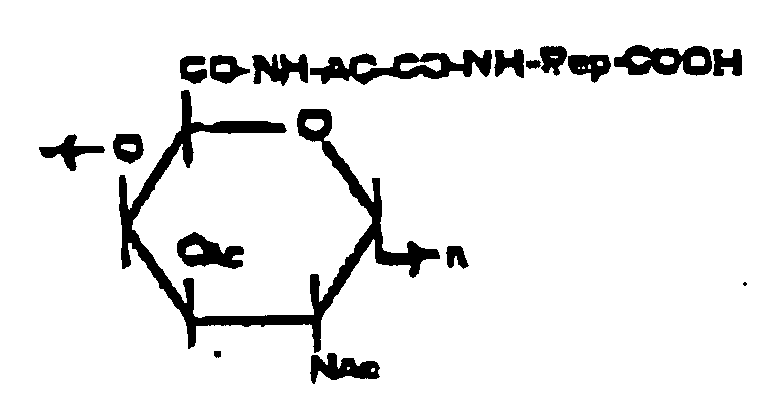
- the conjugate of the formula: in which Ac is acetyl, AC is the residue of ⁇ -aminocaproic acid, Pep is the residue of the peptide carrier 278e or an analog thereof and the saccharide residue represents a repeating unit of the Vi capsular polysaccharide (Vi or vi-fragments) of Salmonella typhi, may be prepared by Procedure 2 depicted in Scheme 1 and described in detail hereafter.
- conjugates wherein the spacer is -NH-R-CH 2 - are obtained by reduction of -NH-R-CO- groups or by alkylation cm the peptidic amino terminus with -NH-R-CH 2 -X, when X is an appropriate leaving group such as an halide.
- the invention further relates to vaccines comprising a conjugate of the invention.
- These vaccines may be administered by any suitable route, e.g., orally or via the subcutaneous route in suitable vehicles for human and veterinary purposes.
- composition of the Vi-peptide conjugates is summarized in Table 1.
- the results presented in Table 1 indicate that the molar ratio of peptide per sugar monomer was variable.
- Peptide doses of 0.8-2.2 ⁇ g injected per mouse as sugar-peptide conjugate were shown to be most effective.
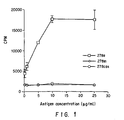
- LNCs of BALB/c (H-2d) mice inoculated with peptide 278e showed clear specific proliferative responses to the latter whereas no proliferation occurred to control peptide 278m and 278cox.
- LNCs primed with peptide 278e do not cross-react with the homologous self-peptide 278m derived from the sequence of murine hsp65.
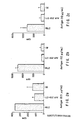
- Fig. 2a-c demonstrates that peptide 278e was also recognized in the three different congenic B10 mouse strains.
- LNCs of B10.RIII mice (H-2 r ) (Fig. 2a), B10.BR mice (H-2 k ) (Fig. 2b) and B10.S mice (H-2') (Fig. 2c) showed significant higher proliferative responses to peptide 278e in the designated peptide concentrations than to the control peptide AcR259-271.
- Vi-fragment-peptide conjugate Peptide amount injected per 2 ⁇ g Vi-fragment [ ⁇ g] Vi-fragments-278e 0.8 Vi-fragments-278m 1.8 Vi-fragments-278h 2.2
- peptide 278e conjugated to Vi-fragments can enhance the immune response to this T-ind antigen
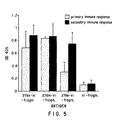
- the immune response to the sugar was studied after inoculation of five BALB/c mice with the sugar-peptide conjugate.
- Fig. 5 clearly demonstrates that peptide 278e covalently linked to Vi-fragments can enhance the sugar-specific IgG antibody production substantially.
- Immunizing mice with a second dose of the conjugate gave rise to a strong booster effect indicating the involvement of T cells in the sugar-specific immune response.
- Inoculating BALB/c mice with the unconjugated polysaccharide only induced negligible levels of specific antibodies.
- the immune response induced by Vi-fragments-278e is compared to that elicited by the sugar conjugated to peptide 278h and 278m.
- this synthetic peptide and analogs thereof might be used as universal carriers for the preparation of immunogenic conjugates to provide protective immunity against different pathogenic agents and can be suitable for the development of synthetic vaccines.
Landscapes
- Chemical & Material Sciences (AREA)
- Health & Medical Sciences (AREA)
- Organic Chemistry (AREA)
- Life Sciences & Earth Sciences (AREA)
- General Health & Medical Sciences (AREA)
- Medicinal Chemistry (AREA)
- Biochemistry (AREA)
- Biophysics (AREA)
- Genetics & Genomics (AREA)
- Molecular Biology (AREA)
- Proteomics, Peptides & Aminoacids (AREA)
- Crystallography & Structural Chemistry (AREA)
- Animal Behavior & Ethology (AREA)
- Immunology (AREA)
- Microbiology (AREA)
- Mycology (AREA)
- Pharmacology & Pharmacy (AREA)
- Epidemiology (AREA)
- Gastroenterology & Hepatology (AREA)
- Public Health (AREA)
- Veterinary Medicine (AREA)
- Medicines Containing Antibodies Or Antigens For Use As Internal Diagnostic Agents (AREA)
- Peptides Or Proteins (AREA)
- Medicines That Contain Protein Lipid Enzymes And Other Medicines (AREA)
- Preparation Of Compounds By Using Micro-Organisms (AREA)
Claims (25)
- Konjugat eines schwach immunogenen Antigens und eines synthetischen Peptidträgers, welcher ein T-Zellepitop darstellt, das von der Sequenz von E. coli hsp65 (GROEL), die hierin Pep278e genannt wird, welche den Positionen 437-453 des E. coli hsp65-Moleküls entspricht, abgeleitet ist, oder ein Analog desselben, wobei zumindest 70 % der elektrischen Eigenschaften und der Hydrophobizität von Pep278e bewahrt bleiben, wobei das Peptid oder das Analog desselben in der Lage ist, die Immunogenizität des schwach immunogenen Antigens maßgeblich zu vergrößern.
- Konjugat gemäß Anspruch 1, wobei der synthetische Peptidträger oder das Analog kovalent am schwach immunogenen Antigen gebunden ist.
- Konjugat gemäß Anspruch 1 oder 2, wobei das schwach immunogene Antigen ein Peptid, ein Protein oder ein Polysaccharid ist.
- Konjugat gemäß Anspruch 3, wobei das schwach immunogene Antigen ein aus HIV-Virus oder aus Malaria-Antigen erhaltenes Peptid ist.
- Konjugat gemäß Anspruch 3, wobei das schwach immunogene Antigen ein bakterielles Polysaccharid ist.
- Konjugat gemäß Anspruch 1, wobei der synthetische Peptidträger, der hier als Pep278e bezeichnet wird, oder ein Analog von Pep278e den Positionen 437-453 des E. coli hsp65-Moleküls entspricht, welches die Sequenz aufweist:in dem der Rest N437 entweder N oder Q ist; der Rest E438 entweder E oder D ist; der Rest D439 entweder D oder E ist; der Rest E452 entweder E oder D ist; der Rest Q440 entweder Q oder N ist; der Rest K445 entweder K oder R ist; der Rest V442 I, L, V, M, F, Norleucin (Nle) oder Norvalin (Nva) ist; der Rest I444 I, L, V, M, F, Nle oder Nva ist; der Rest V446 I, L, V, M, F, Nle oder Nva ist; der Rest L448 L, I, V, M, F, Nle oder Nva ist; der Rest R449 entweder R oder K ist; und der Rest M451 M, I, V, L, F, Nle oder Nva ist.

- Konjugat gemäß Anspruch 1, wobei der synthetische Peptidträger oder sein Analog direkt an das schwach immogene Antigenmolekül gebunden ist.
- Konjugat gemäß Anspruch 7, wobei das schwach immunogene Antigenmolekül ein bakterielles Polysaccharid ist.
- Konjugat gemäß Anspruch 8, wobei das bakterielle Polysaccharid das Kapsel-Polysaccharid (CPS) Vi aus Salmonella typhi ist.
- Konjugat gemäß Anspruch 1, wobei der synthetische Peptidträger oder sein Analog mit dem schwach immunogenen Antigenmolekül durch einen Abstandhalter verknüpft ist, der ausgewählt ist aus -O-R-CO-, NH-R-CO-, NH-R-NH, O-R-NH- oder -NH-R-CH2-, wobei R eine gesättigte oder ungesättigte Kohlenwasserstoffkette ist.
- Konjugat gemäß Anspruch 10, wobei R eine gesättigte oder ungesättigte Kohlenwasserstoffkette ist, die durch eine oder mehrere aromatische Reste substituiert und/oder unterbrochen ist.
- Konjugat gemäß Anspruch 10, wobei R eine gesättigte oder ungesättigte Kohlenwasserstoffkette ist, die durch ein oder mehrere aus N, O oder S ausgewählte Heteroatome substituiert und/oder unterbrochen ist.
- Konjugat gemäß den Ansprüchen 10 bis 12, wobei R eine aliphatische Kohlenwasserstoffkette ist, die 3-16 Kohlenstoffatome enthält.
- Konjugat gemäß Anspruch 13, wobei R der Rest der ε-Aminocapronsäure ist.
- Konjugat gemäß Anspruch 14 der Formelwobei Ac Acetyl ist, AC der Rest der ε-Aminocapronsäure ist, Pep der Rest des Peptidträgers Pep278e ist und der Saccharidrest eine Wiederholungseinheit des Vi-Kapselpolysaccharids von Salmonella typhi repräsentiert.
- Konjugat gemäß einem der Ansprüche 1 bis 15, das in der Lage ist, einen T Lymphozytenhelfereffekt zu erzeugen, der zu einer für T-abhängige Antigene charakteristischen Immunantwort führt.
- Konjugat gemäß einem der Ansprüche 1 bis 15, das bei Reinjektion eine Boosterreaktion hervorruft, die zu einem Anstieg der Menge von Antikörpern gegen das schwach immunogene Antigenmolekül führt.
- Konjugat gemäß Anspruch 17, welches Antikörper hauptsächlich des IgG-Isotyps induziert.
- Vakzin, umfassend ein Konjugat, wie in Anspruch 1 beansprucht.
- Verfahren zum Verstärken der Immunogenizität eines schwach immunogenen Antigenmoleküls, welches sein Verbinden mit einem synthetischen Peptidträger umfasst, der ein T-Zellepitop darstellt, das von der Sequenz von E. coli hsp65, hier als Pep278e bezeichnet, welches den Positionen 437-453 des E. coli hsp65-Moleküls entspricht, abgeleitet ist, oder ein Analog desselben, wobei zumindest 70 % der elektrischen Eigenschaften und der Hydrophobizität von Pep278e bewahrt sind, wobei das Peptid oder Analog in der Lage ist, die Immunogenizität des schwach immunogenen Antigenmoleküls maßgeblich zu vergrößern.
- Verfahren zum Verstärken der Immunogenizität eines schwach immunogenen Antigenmoleküls, welches sein Mischen mit einem synthetischen Peptidträger umfasst, der ein T-Zellepitop darstellt, das von der Sequenz von E. coli hsp65, hier als Pep278e bezeichnet, welches den Positionen 437-453 des E. coli hsp65-Moleküls entspricht, abgeleitet ist, oder ein Analog desselben, wobei zumindest 70 % der elektrischen Eigenschaften und der Hydrophobizität von Pep278e bewahrt sind, wobei das Peptid oder Analog in der Lage ist, die Immunogenizität des schwach immunogenen Antigenmoleküls maßgeblich zu vergrößern.
- Verfahren gemäß Anspruch 20 oder 21 zum Verstärken der Immunogenizität von bakteriellen Polysacchariden.
- Verwendung eines Konjugats gemäß einem der vorstehenden Ansprüche für die Herstellung eines Vakzins zur Immunisierung eines Säugerwirts.
- Verwendung eines synthetischen Peptidträgers, der ein T-Zellepitop darstellt, das von der Sequenz von E. coli hsp65, die hier als Pep278e bezeichnet wird, welche den Positionen 437-453 des E. coli hsp65-Moleküls entspricht, abgeleitet ist, oder ein Analog desselben, bei der Herstellung eines Medikamentes, welches das Peptid oder Analog und ein schwach immunogenes Antigenmolekül bei der Immunisierung eines Säugerwirts umfasst, wobei zumindest 70 % der elektrischen Eigenschaften und der Hydrophobizität von Pep278e bewahrt sind, wobei das Peptid oder Analog in der Lage ist, die Immunogenizität des schwach immunogenen Antigens maßgeblich zu verstärken.
- Verwendung eines synthetischen Peptidträgers gemäß Anspruch 6 in der Herstellung eines Medikaments, welches das Peptid oder Analog und ein schwach immunogenes Antigenmolekül bei der Immunisierung eines Säugerwirts umfasst, wobei das peptid oder Analog in der Lage ist, die Immunogenizität des schwach immunogenen Antigens maßgeblich zu verstärken.
Applications Claiming Priority (3)
| Application Number | Priority Date | Filing Date | Title |
|---|---|---|---|
| IL10979094 | 1994-05-25 | ||
| IL10979094A IL109790A0 (en) | 1994-05-25 | 1994-05-25 | Peptides used as carriers in immunogenic constructs suitable for development of synthetic vaccines |
| PCT/US1995/006575 WO1995031994A1 (en) | 1994-05-25 | 1995-05-24 | Peptides used as carriers in immunogenic constructs suitable for development of synthetic vaccines |
Publications (3)
| Publication Number | Publication Date |
|---|---|
| EP0760671A1 EP0760671A1 (de) | 1997-03-12 |
| EP0760671A4 EP0760671A4 (de) | 1999-11-17 |
| EP0760671B1 true EP0760671B1 (de) | 2005-08-17 |
Family
ID=11066168
Family Applications (1)
| Application Number | Title | Priority Date | Filing Date |
|---|---|---|---|
| EP95920641A Expired - Lifetime EP0760671B1 (de) | 1994-05-25 | 1995-05-24 | Peptide, verwendet als träger in immunogenen konstrukten, die in der entwicklung synthetischer impfstoffe geeignet sind |
Country Status (8)
| Country | Link |
|---|---|
| EP (1) | EP0760671B1 (de) |
| JP (1) | JPH10504524A (de) |
| AT (1) | ATE302016T1 (de) |
| AU (1) | AU684369B2 (de) |
| CA (1) | CA2191202A1 (de) |
| DE (1) | DE69534382T2 (de) |
| IL (1) | IL109790A0 (de) |
| WO (1) | WO1995031994A1 (de) |
Families Citing this family (15)
| Publication number | Priority date | Publication date | Assignee | Title |
|---|---|---|---|---|
| DK0700445T3 (da) | 1993-06-04 | 2002-05-13 | Whitehead Biomedical Inst | Stressproteiner og anvendelser deraf |
| US7157089B1 (en) | 1996-11-26 | 2007-01-02 | Stressgen Biotechnologies Corporation | Immune responses using compositions containing stress proteins |
| CA2282426A1 (en) * | 1997-02-18 | 1998-08-20 | The Whitehead Institute For Biomedical Research | Use of heat shock proteins to deliver moieties into cells |
| ES2191929T3 (es) | 1997-08-05 | 2003-09-16 | Stressgen Biotechnologies Corp | Respuestas inmunologicas contra los antigenos pvh estimuladas por composiciones que comprenden un antigeno pvh y una proteina de estres o un vector de expresion capaz de expresar dichas proteinas. |
| DE19821859A1 (de) * | 1998-05-15 | 1999-12-09 | M Alexander Schmidt | Darstellung immunogener (Kapsel-)Polysaccharid-Konjugate durch orientierte Kupplung synthetischer T-Zell-Epitope zur Erzeugung von Vakzinen gegen N.meningitidis |
| US6197340B1 (en) | 1998-05-28 | 2001-03-06 | Medical Research Institute | Controlled release lipoic acid |
| EP1196772A2 (de) | 1999-07-08 | 2002-04-17 | Stressgen Biotechnologies Corporation | Induktion einer th1-vermittelten immunantwort in vitro |
| US6677139B1 (en) | 1999-12-23 | 2004-01-13 | Genecor International, Inc. | Methods for production of proteins in host cells |
| DE60042704D1 (de) | 2000-01-14 | 2009-09-17 | Whitehead Biomedical Inst | Induktion zytotoxischer lymphozyten durch hitzeschockprotein-fusionsproteine hängt von der atp-bindungsdomäne in hsp ab und is cd4+ unabhängig |
| BR0111956A (pt) | 2000-06-26 | 2003-05-13 | Stressgen Biotechnologies Corp | Tratamento do vìrus do papiloma humano |
| IT1319277B1 (it) * | 2000-10-24 | 2003-09-26 | Chiesi Farma Spa | Proteine di fusione utili per il trattamento di immunizzazione dellamalattia di alzheimer. |
| BR0206995A (pt) | 2001-02-05 | 2005-08-16 | Stressgen Biotechnologies Corp | Tratamento do vìrus da hepatite b |
| AUPR852301A0 (en) * | 2001-10-26 | 2001-11-29 | Medvet Science Pty. Ltd. | Groel chimeric protein and vaccine |
| WO2006097914A2 (en) * | 2005-03-14 | 2006-09-21 | Yeda Research And Development Co. Ltd. At The Weizmann Institute Of Science | Compositions of hsp60 peptides and viral antigens for vaccination and diagnosis |
| EP2870974A1 (de) | 2013-11-08 | 2015-05-13 | Novartis AG | Salmonella-Konjugatimpfstoffe |
Family Cites Families (2)
| Publication number | Priority date | Publication date | Assignee | Title |
|---|---|---|---|---|
| IT1262896B (it) * | 1992-03-06 | 1996-07-22 | Composti coniugati formati da proteine heat shock (hsp) e oligo-poli- saccaridi, loro uso per la produzione di vaccini. | |
| IL102687A (en) * | 1992-07-30 | 1997-06-10 | Yeda Res & Dev | Conjugates of poorly immunogenic antigens and synthetic pepide carriers and vaccines comprising them |
-
1994
- 1994-05-25 IL IL10979094A patent/IL109790A0/xx not_active IP Right Cessation
-
1995
- 1995-05-24 CA CA002191202A patent/CA2191202A1/en not_active Abandoned
- 1995-05-24 EP EP95920641A patent/EP0760671B1/de not_active Expired - Lifetime
- 1995-05-24 JP JP7530530A patent/JPH10504524A/ja not_active Ceased
- 1995-05-24 AT AT95920641T patent/ATE302016T1/de not_active IP Right Cessation
- 1995-05-24 AU AU26027/95A patent/AU684369B2/en not_active Ceased
- 1995-05-24 DE DE69534382T patent/DE69534382T2/de not_active Expired - Lifetime
- 1995-05-24 WO PCT/US1995/006575 patent/WO1995031994A1/en not_active Ceased
Also Published As
| Publication number | Publication date |
|---|---|
| JPH10504524A (ja) | 1998-05-06 |
| DE69534382D1 (de) | 2005-09-22 |
| IL109790A0 (en) | 1994-08-26 |
| AU684369B2 (en) | 1997-12-11 |
| AU2602795A (en) | 1995-12-18 |
| WO1995031994A1 (en) | 1995-11-30 |
| EP0760671A1 (de) | 1997-03-12 |
| EP0760671A4 (de) | 1999-11-17 |
| DE69534382T2 (de) | 2006-09-14 |
| CA2191202A1 (en) | 1995-11-30 |
| ATE302016T1 (de) | 2005-09-15 |
Similar Documents
| Publication | Publication Date | Title |
|---|---|---|
| US5869058A (en) | Peptides used as carriers in immunogenic constructs suitable for development of synthetic vaccines | |
| EP0658120B1 (de) | Konjugate von schwach immunogenen antigenen und synthetischen peptidträgern und impfstoffe diese enthaltend | |
| US5736146A (en) | Conjugates of poorly immunogenic antigens and synthetic peptide carriers and vaccines comprising them | |
| Barrios et al. | Mycobacterial heat‐shock proteins as carrier molecules. II: The use of the 70‐kDa mycobacterial heat‐shock protein as carrier for conjugated vaccinescan circumvent the need for adjuvants and Bacillus Calmette Guérin priming | |
| EP0760671B1 (de) | Peptide, verwendet als träger in immunogenen konstrukten, die in der entwicklung synthetischer impfstoffe geeignet sind | |
| Lowell et al. | Proteosome-lipopeptide vaccines: enhancement of immunogenicity for malaria CS peptides | |
| US5573916A (en) | Immunogenic constructs comprising b-cell and t-cell epitopes on common carrier | |
| CA1340956C (en) | Synthetic peptides representing a t-cell epitope as a carrier molecule for conjugate vaccines | |
| EP0245078A2 (de) | Vermehrung der Antigenimmunogenizität | |
| US4816253A (en) | Novel mutant strain of Listeria monocytogenes and its use in production of IgM antibodies and as an immunotherapeutic agent | |
| JP2002541808A (ja) | ポリサッカリド結合体ワクチンのための組換えトキシンaタンパク質キャリア | |
| US5043158A (en) | Immunogenic compositions containing ordered carriers | |
| US4567041A (en) | Mutant strain of Listeria monocytogenes and its use in production of IgM antibodies and as an immunotherapeutic agent | |
| Czerkinsky et al. | Induction and assessment of immunity at enteromucosal surfaces in humans: implications for vaccine development | |
| Könen-Waisman et al. | Self and foreign 60-kilodalton heat shock protein T cell epitope peptides serve as immunogenic carriers for a T cell-independent sugar antigen. | |
| Ogunniyi et al. | A Salmonella enteritidis 11RX pilin induces strong T-lymphocyte responses | |
| Kuhn et al. | Effect of proteins on the immunogenicity of enterobacterial common antigen | |
| Bellstedt et al. | Immune carrier properties of acid-treated Salmonella minnesota R595 bacteria The immune response to TNP-bacterial conjugates in rabbits and mice | |
| WO1991012819A1 (en) | Improved immunogenic compositions | |
| Chedid | Immunomodulation by BCG and synthetic bacterial-like adjuvants | |
| Konen-Waisman | HSP60 T cell epitopes convert T-independent into T-dependent antigens | |
| FI104179B (fi) | Menetelmä terapeuttisesti käyttökelpoisen polypeptidin valmistamiseksi | |
| Banerjee et al. | Humoral immune response in infection | |
| Chatfield | Live Salmonella as vaccines and carriers of heterologous antigens to the mammalian immune system | |
| Hirst | Non-living antigen delivery systems |
Legal Events
| Date | Code | Title | Description |
|---|---|---|---|
| PUAI | Public reference made under article 153(3) epc to a published international application that has entered the european phase |
Free format text: ORIGINAL CODE: 0009012 |
|
| 17P | Request for examination filed |
Effective date: 19961202 |
|
| AK | Designated contracting states |
Kind code of ref document: A1 Designated state(s): AT BE CH DE DK ES FR GB GR IE IT LI LU MC NL PT SE |
|
| A4 | Supplementary search report drawn up and despatched |
Effective date: 19991006 |
|
| AK | Designated contracting states |
Kind code of ref document: A4 Designated state(s): AT BE CH DE DK ES FR GB GR IE IT LI LU MC NL PT SE |
|
| 17Q | First examination report despatched |
Effective date: 20010405 |
|
| GRAP | Despatch of communication of intention to grant a patent |
Free format text: ORIGINAL CODE: EPIDOSNIGR1 |
|
| GRAS | Grant fee paid |
Free format text: ORIGINAL CODE: EPIDOSNIGR3 |
|
| GRAA | (expected) grant |
Free format text: ORIGINAL CODE: 0009210 |
|
| AK | Designated contracting states |
Kind code of ref document: B1 Designated state(s): AT BE CH DE DK ES FR GB GR IE IT LI LU MC NL PT SE |
|
| PG25 | Lapsed in a contracting state [announced via postgrant information from national office to epo] |
Ref country code: NL Free format text: LAPSE BECAUSE OF FAILURE TO SUBMIT A TRANSLATION OF THE DESCRIPTION OR TO PAY THE FEE WITHIN THE PRESCRIBED TIME-LIMIT Effective date: 20050817 Ref country code: LI Free format text: LAPSE BECAUSE OF FAILURE TO SUBMIT A TRANSLATION OF THE DESCRIPTION OR TO PAY THE FEE WITHIN THE PRESCRIBED TIME-LIMIT Effective date: 20050817 Ref country code: IT Free format text: LAPSE BECAUSE OF FAILURE TO SUBMIT A TRANSLATION OF THE DESCRIPTION OR TO PAY THE FEE WITHIN THE PRE;WARNING: LAPSES OF ITALIAN PATENTS WITH EFFECTIVE DATE BEFORE 2007 MAY HAVE OCCURRED AT ANY TIME BEFORE 2007. THE CORRECT EFFECTIVE DATE MAY BE DIFFERENT FROM THE ONE RECORDED.SCRIBED TIME-LIMIT Effective date: 20050817 Ref country code: CH Free format text: LAPSE BECAUSE OF FAILURE TO SUBMIT A TRANSLATION OF THE DESCRIPTION OR TO PAY THE FEE WITHIN THE PRESCRIBED TIME-LIMIT Effective date: 20050817 Ref country code: BE Free format text: LAPSE BECAUSE OF FAILURE TO SUBMIT A TRANSLATION OF THE DESCRIPTION OR TO PAY THE FEE WITHIN THE PRESCRIBED TIME-LIMIT Effective date: 20050817 Ref country code: AT Free format text: LAPSE BECAUSE OF FAILURE TO SUBMIT A TRANSLATION OF THE DESCRIPTION OR TO PAY THE FEE WITHIN THE PRESCRIBED TIME-LIMIT Effective date: 20050817 |
|
| REG | Reference to a national code |
Ref country code: GB Ref legal event code: FG4D |
|
| REG | Reference to a national code |
Ref country code: CH Ref legal event code: EP |
|
| REG | Reference to a national code |
Ref country code: IE Ref legal event code: FG4D |
|
| REF | Corresponds to: |
Ref document number: 69534382 Country of ref document: DE Date of ref document: 20050922 Kind code of ref document: P |
|
| PG25 | Lapsed in a contracting state [announced via postgrant information from national office to epo] |
Ref country code: SE Free format text: LAPSE BECAUSE OF FAILURE TO SUBMIT A TRANSLATION OF THE DESCRIPTION OR TO PAY THE FEE WITHIN THE PRESCRIBED TIME-LIMIT Effective date: 20051117 Ref country code: GR Free format text: LAPSE BECAUSE OF FAILURE TO SUBMIT A TRANSLATION OF THE DESCRIPTION OR TO PAY THE FEE WITHIN THE PRESCRIBED TIME-LIMIT Effective date: 20051117 Ref country code: DK Free format text: LAPSE BECAUSE OF FAILURE TO SUBMIT A TRANSLATION OF THE DESCRIPTION OR TO PAY THE FEE WITHIN THE PRESCRIBED TIME-LIMIT Effective date: 20051117 |
|
| PG25 | Lapsed in a contracting state [announced via postgrant information from national office to epo] |
Ref country code: PT Free format text: LAPSE BECAUSE OF FAILURE TO SUBMIT A TRANSLATION OF THE DESCRIPTION OR TO PAY THE FEE WITHIN THE PRESCRIBED TIME-LIMIT Effective date: 20060117 |
|
| NLV1 | Nl: lapsed or annulled due to failure to fulfill the requirements of art. 29p and 29m of the patents act | ||
| REG | Reference to a national code |
Ref country code: CH Ref legal event code: PL |
|
| ET | Fr: translation filed | ||
| PG25 | Lapsed in a contracting state [announced via postgrant information from national office to epo] |
Ref country code: IE Free format text: LAPSE BECAUSE OF NON-PAYMENT OF DUE FEES Effective date: 20060524 |
|
| PG25 | Lapsed in a contracting state [announced via postgrant information from national office to epo] |
Ref country code: MC Free format text: LAPSE BECAUSE OF NON-PAYMENT OF DUE FEES Effective date: 20060531 |
|
| PLBE | No opposition filed within time limit |
Free format text: ORIGINAL CODE: 0009261 |
|
| STAA | Information on the status of an ep patent application or granted ep patent |
Free format text: STATUS: NO OPPOSITION FILED WITHIN TIME LIMIT |
|
| 26N | No opposition filed |
Effective date: 20060518 |
|
| PG25 | Lapsed in a contracting state [announced via postgrant information from national office to epo] |
Ref country code: LU Free format text: LAPSE BECAUSE OF NON-PAYMENT OF DUE FEES Effective date: 20060524 |
|
| PG25 | Lapsed in a contracting state [announced via postgrant information from national office to epo] |
Ref country code: ES Free format text: LAPSE BECAUSE OF NON-PAYMENT OF DUE FEES Effective date: 20060531 |
|
| PGFP | Annual fee paid to national office [announced via postgrant information from national office to epo] |
Ref country code: GB Payment date: 20110518 Year of fee payment: 17 |
|
| GBPC | Gb: european patent ceased through non-payment of renewal fee |
Effective date: 20120524 |
|
| PG25 | Lapsed in a contracting state [announced via postgrant information from national office to epo] |
Ref country code: GB Free format text: LAPSE BECAUSE OF NON-PAYMENT OF DUE FEES Effective date: 20120524 |
|
| PGFP | Annual fee paid to national office [announced via postgrant information from national office to epo] |
Ref country code: DE Payment date: 20130522 Year of fee payment: 19 |
|
| PGFP | Annual fee paid to national office [announced via postgrant information from national office to epo] |
Ref country code: FR Payment date: 20130531 Year of fee payment: 19 |
|
| REG | Reference to a national code |
Ref country code: DE Ref legal event code: R119 Ref document number: 69534382 Country of ref document: DE |
|
| REG | Reference to a national code |
Ref country code: DE Ref legal event code: R119 Ref document number: 69534382 Country of ref document: DE Effective date: 20141202 |
|
| REG | Reference to a national code |
Ref country code: FR Ref legal event code: ST Effective date: 20150130 |
|
| PG25 | Lapsed in a contracting state [announced via postgrant information from national office to epo] |
Ref country code: DE Free format text: LAPSE BECAUSE OF NON-PAYMENT OF DUE FEES Effective date: 20141202 |
|
| PG25 | Lapsed in a contracting state [announced via postgrant information from national office to epo] |
Ref country code: FR Free format text: LAPSE BECAUSE OF NON-PAYMENT OF DUE FEES Effective date: 20140602 |