EP0748631A2 - Virale Vakzine - Google Patents
Virale Vakzine Download PDFInfo
- Publication number
- EP0748631A2 EP0748631A2 EP96108830A EP96108830A EP0748631A2 EP 0748631 A2 EP0748631 A2 EP 0748631A2 EP 96108830 A EP96108830 A EP 96108830A EP 96108830 A EP96108830 A EP 96108830A EP 0748631 A2 EP0748631 A2 EP 0748631A2
- Authority
- EP
- European Patent Office
- Prior art keywords
- mdv
- gene
- hvt
- sequence
- virus
- Prior art date
- Legal status (The legal status is an assumption and is not a legal conclusion. Google has not performed a legal analysis and makes no representation as to the accuracy of the status listed.)
- Granted
Links
Images

































Classifications
-
- C—CHEMISTRY; METALLURGY
- C12—BIOCHEMISTRY; BEER; SPIRITS; WINE; VINEGAR; MICROBIOLOGY; ENZYMOLOGY; MUTATION OR GENETIC ENGINEERING
- C12N—MICROORGANISMS OR ENZYMES; COMPOSITIONS THEREOF; PROPAGATING, PRESERVING, OR MAINTAINING MICROORGANISMS; MUTATION OR GENETIC ENGINEERING; CULTURE MEDIA
- C12N15/00—Mutation or genetic engineering; DNA or RNA concerning genetic engineering, vectors, e.g. plasmids, or their isolation, preparation or purification; Use of hosts therefor
- C12N15/09—Recombinant DNA-technology
- C12N15/63—Introduction of foreign genetic material using vectors; Vectors; Use of hosts therefor; Regulation of expression
- C12N15/79—Vectors or expression systems specially adapted for eukaryotic hosts
- C12N15/85—Vectors or expression systems specially adapted for eukaryotic hosts for animal cells
- C12N15/86—Viral vectors
-
- A—HUMAN NECESSITIES
- A61—MEDICAL OR VETERINARY SCIENCE; HYGIENE
- A61K—PREPARATIONS FOR MEDICAL, DENTAL OR TOILETRY PURPOSES
- A61K39/00—Medicinal preparations containing antigens or antibodies
- A61K39/12—Viral antigens
-
- A—HUMAN NECESSITIES
- A61—MEDICAL OR VETERINARY SCIENCE; HYGIENE
- A61K—PREPARATIONS FOR MEDICAL, DENTAL OR TOILETRY PURPOSES
- A61K39/00—Medicinal preparations containing antigens or antibodies
- A61K39/12—Viral antigens
- A61K39/245—Herpetoviridae, e.g. herpes simplex virus
-
- A—HUMAN NECESSITIES
- A61—MEDICAL OR VETERINARY SCIENCE; HYGIENE
- A61K—PREPARATIONS FOR MEDICAL, DENTAL OR TOILETRY PURPOSES
- A61K39/00—Medicinal preparations containing antigens or antibodies
- A61K39/12—Viral antigens
- A61K39/245—Herpetoviridae, e.g. herpes simplex virus
- A61K39/255—Marek's disease virus
-
- A—HUMAN NECESSITIES
- A61—MEDICAL OR VETERINARY SCIENCE; HYGIENE
- A61P—SPECIFIC THERAPEUTIC ACTIVITY OF CHEMICAL COMPOUNDS OR MEDICINAL PREPARATIONS
- A61P31/00—Antiinfectives, i.e. antibiotics, antiseptics, chemotherapeutics
-
- A—HUMAN NECESSITIES
- A61—MEDICAL OR VETERINARY SCIENCE; HYGIENE
- A61P—SPECIFIC THERAPEUTIC ACTIVITY OF CHEMICAL COMPOUNDS OR MEDICINAL PREPARATIONS
- A61P31/00—Antiinfectives, i.e. antibiotics, antiseptics, chemotherapeutics
- A61P31/12—Antivirals
-
- A—HUMAN NECESSITIES
- A61—MEDICAL OR VETERINARY SCIENCE; HYGIENE
- A61P—SPECIFIC THERAPEUTIC ACTIVITY OF CHEMICAL COMPOUNDS OR MEDICINAL PREPARATIONS
- A61P31/00—Antiinfectives, i.e. antibiotics, antiseptics, chemotherapeutics
- A61P31/12—Antivirals
- A61P31/20—Antivirals for DNA viruses
-
- A—HUMAN NECESSITIES
- A61—MEDICAL OR VETERINARY SCIENCE; HYGIENE
- A61P—SPECIFIC THERAPEUTIC ACTIVITY OF CHEMICAL COMPOUNDS OR MEDICINAL PREPARATIONS
- A61P31/00—Antiinfectives, i.e. antibiotics, antiseptics, chemotherapeutics
- A61P31/12—Antivirals
- A61P31/20—Antivirals for DNA viruses
- A61P31/22—Antivirals for DNA viruses for herpes viruses
-
- A—HUMAN NECESSITIES
- A61—MEDICAL OR VETERINARY SCIENCE; HYGIENE
- A61P—SPECIFIC THERAPEUTIC ACTIVITY OF CHEMICAL COMPOUNDS OR MEDICINAL PREPARATIONS
- A61P37/00—Drugs for immunological or allergic disorders
- A61P37/02—Immunomodulators
- A61P37/04—Immunostimulants
-
- C—CHEMISTRY; METALLURGY
- C07—ORGANIC CHEMISTRY
- C07K—PEPTIDES
- C07K14/00—Peptides having more than 20 amino acids; Gastrins; Somatostatins; Melanotropins; Derivatives thereof
- C07K14/005—Peptides having more than 20 amino acids; Gastrins; Somatostatins; Melanotropins; Derivatives thereof from viruses
-
- C—CHEMISTRY; METALLURGY
- C12—BIOCHEMISTRY; BEER; SPIRITS; WINE; VINEGAR; MICROBIOLOGY; ENZYMOLOGY; MUTATION OR GENETIC ENGINEERING
- C12N—MICROORGANISMS OR ENZYMES; COMPOSITIONS THEREOF; PROPAGATING, PRESERVING, OR MAINTAINING MICROORGANISMS; MUTATION OR GENETIC ENGINEERING; CULTURE MEDIA
- C12N15/00—Mutation or genetic engineering; DNA or RNA concerning genetic engineering, vectors, e.g. plasmids, or their isolation, preparation or purification; Use of hosts therefor
-
- C—CHEMISTRY; METALLURGY
- C12—BIOCHEMISTRY; BEER; SPIRITS; WINE; VINEGAR; MICROBIOLOGY; ENZYMOLOGY; MUTATION OR GENETIC ENGINEERING
- C12N—MICROORGANISMS OR ENZYMES; COMPOSITIONS THEREOF; PROPAGATING, PRESERVING, OR MAINTAINING MICROORGANISMS; MUTATION OR GENETIC ENGINEERING; CULTURE MEDIA
- C12N9/00—Enzymes; Proenzymes; Compositions thereof; Processes for preparing, activating, inhibiting, separating or purifying enzymes
- C12N9/0004—Oxidoreductases (1.)
- C12N9/0093—Oxidoreductases (1.) acting on CH or CH2 groups (1.17)
-
- C—CHEMISTRY; METALLURGY
- C12—BIOCHEMISTRY; BEER; SPIRITS; WINE; VINEGAR; MICROBIOLOGY; ENZYMOLOGY; MUTATION OR GENETIC ENGINEERING
- C12N—MICROORGANISMS OR ENZYMES; COMPOSITIONS THEREOF; PROPAGATING, PRESERVING, OR MAINTAINING MICROORGANISMS; MUTATION OR GENETIC ENGINEERING; CULTURE MEDIA
- C12N9/00—Enzymes; Proenzymes; Compositions thereof; Processes for preparing, activating, inhibiting, separating or purifying enzymes
- C12N9/10—Transferases (2.)
- C12N9/12—Transferases (2.) transferring phosphorus containing groups, e.g. kinases (2.7)
- C12N9/1205—Phosphotransferases with an alcohol group as acceptor (2.7.1), e.g. protein kinases
- C12N9/1211—Thymidine kinase (2.7.1.21)
-
- A—HUMAN NECESSITIES
- A61—MEDICAL OR VETERINARY SCIENCE; HYGIENE
- A61K—PREPARATIONS FOR MEDICAL, DENTAL OR TOILETRY PURPOSES
- A61K39/00—Medicinal preparations containing antigens or antibodies
- A61K2039/51—Medicinal preparations containing antigens or antibodies comprising whole cells, viruses or DNA/RNA
-
- A—HUMAN NECESSITIES
- A61—MEDICAL OR VETERINARY SCIENCE; HYGIENE
- A61K—PREPARATIONS FOR MEDICAL, DENTAL OR TOILETRY PURPOSES
- A61K39/00—Medicinal preparations containing antigens or antibodies
- A61K2039/51—Medicinal preparations containing antigens or antibodies comprising whole cells, viruses or DNA/RNA
- A61K2039/525—Virus
- A61K2039/5254—Virus avirulent or attenuated
-
- A—HUMAN NECESSITIES
- A61—MEDICAL OR VETERINARY SCIENCE; HYGIENE
- A61K—PREPARATIONS FOR MEDICAL, DENTAL OR TOILETRY PURPOSES
- A61K39/00—Medicinal preparations containing antigens or antibodies
- A61K2039/51—Medicinal preparations containing antigens or antibodies comprising whole cells, viruses or DNA/RNA
- A61K2039/525—Virus
- A61K2039/5256—Virus expressing foreign proteins
-
- A—HUMAN NECESSITIES
- A61—MEDICAL OR VETERINARY SCIENCE; HYGIENE
- A61K—PREPARATIONS FOR MEDICAL, DENTAL OR TOILETRY PURPOSES
- A61K38/00—Medicinal preparations containing peptides
-
- A—HUMAN NECESSITIES
- A61—MEDICAL OR VETERINARY SCIENCE; HYGIENE
- A61K—PREPARATIONS FOR MEDICAL, DENTAL OR TOILETRY PURPOSES
- A61K39/00—Medicinal preparations containing antigens or antibodies
-
- C—CHEMISTRY; METALLURGY
- C12—BIOCHEMISTRY; BEER; SPIRITS; WINE; VINEGAR; MICROBIOLOGY; ENZYMOLOGY; MUTATION OR GENETIC ENGINEERING
- C12N—MICROORGANISMS OR ENZYMES; COMPOSITIONS THEREOF; PROPAGATING, PRESERVING, OR MAINTAINING MICROORGANISMS; MUTATION OR GENETIC ENGINEERING; CULTURE MEDIA
- C12N2710/00—MICROORGANISMS OR ENZYMES; COMPOSITIONS THEREOF; PROPAGATING, PRESERVING, OR MAINTAINING MICROORGANISMS; MUTATION OR GENETIC ENGINEERING; CULTURE MEDIA dsDNA viruses
- C12N2710/00011—Details
- C12N2710/16011—Herpesviridae
- C12N2710/16022—New viral proteins or individual genes, new structural or functional aspects of known viral proteins or genes
-
- C—CHEMISTRY; METALLURGY
- C12—BIOCHEMISTRY; BEER; SPIRITS; WINE; VINEGAR; MICROBIOLOGY; ENZYMOLOGY; MUTATION OR GENETIC ENGINEERING
- C12N—MICROORGANISMS OR ENZYMES; COMPOSITIONS THEREOF; PROPAGATING, PRESERVING, OR MAINTAINING MICROORGANISMS; MUTATION OR GENETIC ENGINEERING; CULTURE MEDIA
- C12N2710/00—MICROORGANISMS OR ENZYMES; COMPOSITIONS THEREOF; PROPAGATING, PRESERVING, OR MAINTAINING MICROORGANISMS; MUTATION OR GENETIC ENGINEERING; CULTURE MEDIA dsDNA viruses
- C12N2710/00011—Details
- C12N2710/16011—Herpesviridae
- C12N2710/16034—Use of virus or viral component as vaccine, e.g. live-attenuated or inactivated virus, VLP, viral protein
-
- C—CHEMISTRY; METALLURGY
- C12—BIOCHEMISTRY; BEER; SPIRITS; WINE; VINEGAR; MICROBIOLOGY; ENZYMOLOGY; MUTATION OR GENETIC ENGINEERING
- C12N—MICROORGANISMS OR ENZYMES; COMPOSITIONS THEREOF; PROPAGATING, PRESERVING, OR MAINTAINING MICROORGANISMS; MUTATION OR GENETIC ENGINEERING; CULTURE MEDIA
- C12N2710/00—MICROORGANISMS OR ENZYMES; COMPOSITIONS THEREOF; PROPAGATING, PRESERVING, OR MAINTAINING MICROORGANISMS; MUTATION OR GENETIC ENGINEERING; CULTURE MEDIA dsDNA viruses
- C12N2710/00011—Details
- C12N2710/16011—Herpesviridae
- C12N2710/16041—Use of virus, viral particle or viral elements as a vector
- C12N2710/16043—Use of virus, viral particle or viral elements as a vector viral genome or elements thereof as genetic vector
-
- C—CHEMISTRY; METALLURGY
- C12—BIOCHEMISTRY; BEER; SPIRITS; WINE; VINEGAR; MICROBIOLOGY; ENZYMOLOGY; MUTATION OR GENETIC ENGINEERING
- C12N—MICROORGANISMS OR ENZYMES; COMPOSITIONS THEREOF; PROPAGATING, PRESERVING, OR MAINTAINING MICROORGANISMS; MUTATION OR GENETIC ENGINEERING; CULTURE MEDIA
- C12N2710/00—MICROORGANISMS OR ENZYMES; COMPOSITIONS THEREOF; PROPAGATING, PRESERVING, OR MAINTAINING MICROORGANISMS; MUTATION OR GENETIC ENGINEERING; CULTURE MEDIA dsDNA viruses
- C12N2710/00011—Details
- C12N2710/16011—Herpesviridae
- C12N2710/16311—Mardivirus, e.g. Gallid herpesvirus 2, Marek-like viruses, turkey HV
- C12N2710/16322—New viral proteins or individual genes, new structural or functional aspects of known viral proteins or genes
-
- C—CHEMISTRY; METALLURGY
- C12—BIOCHEMISTRY; BEER; SPIRITS; WINE; VINEGAR; MICROBIOLOGY; ENZYMOLOGY; MUTATION OR GENETIC ENGINEERING
- C12N—MICROORGANISMS OR ENZYMES; COMPOSITIONS THEREOF; PROPAGATING, PRESERVING, OR MAINTAINING MICROORGANISMS; MUTATION OR GENETIC ENGINEERING; CULTURE MEDIA
- C12N2710/00—MICROORGANISMS OR ENZYMES; COMPOSITIONS THEREOF; PROPAGATING, PRESERVING, OR MAINTAINING MICROORGANISMS; MUTATION OR GENETIC ENGINEERING; CULTURE MEDIA dsDNA viruses
- C12N2710/00011—Details
- C12N2710/16011—Herpesviridae
- C12N2710/16311—Mardivirus, e.g. Gallid herpesvirus 2, Marek-like viruses, turkey HV
- C12N2710/16334—Use of virus or viral component as vaccine, e.g. live-attenuated or inactivated virus, VLP, viral protein
-
- C—CHEMISTRY; METALLURGY
- C12—BIOCHEMISTRY; BEER; SPIRITS; WINE; VINEGAR; MICROBIOLOGY; ENZYMOLOGY; MUTATION OR GENETIC ENGINEERING
- C12N—MICROORGANISMS OR ENZYMES; COMPOSITIONS THEREOF; PROPAGATING, PRESERVING, OR MAINTAINING MICROORGANISMS; MUTATION OR GENETIC ENGINEERING; CULTURE MEDIA
- C12N2710/00—MICROORGANISMS OR ENZYMES; COMPOSITIONS THEREOF; PROPAGATING, PRESERVING, OR MAINTAINING MICROORGANISMS; MUTATION OR GENETIC ENGINEERING; CULTURE MEDIA dsDNA viruses
- C12N2710/00011—Details
- C12N2710/16011—Herpesviridae
- C12N2710/16311—Mardivirus, e.g. Gallid herpesvirus 2, Marek-like viruses, turkey HV
- C12N2710/16341—Use of virus, viral particle or viral elements as a vector
- C12N2710/16343—Use of virus, viral particle or viral elements as a vector viral genome or elements thereof as genetic vector
Definitions
- the present invention relates to viral vaccines which may be used to provide immunity against disease and to nucleotide sequences for inclusion in the viruses of such vaccines.
- Herpesviruses are large double stranded DNA viruses consisting of an icosahedral capsid surrounded by an envelope. The group has been classified as alpha, beta and gammaherpesviruses on the basis of genome structure and biological properties [Roizman B et al (1981) Inter-virology 16, 201-2171. Avian herpes viruses include Marek's Disease Virus (MDV) (a gammaherpesvirus) which causes a lymphomatous disease of considerable economic importance in chickens [reviewed in Payne, L.N.
- MDV Marek's Disease Virus
- Marek's Disease (1985), Martinus Nijhoff Publishing, Boston] and Infectious Laryngotracheitis Virus (ILTV) (an alphaherpesvirus) which causes an acute upper respiratory tract infection in chickens resulting in mortality and loss of egg production.
- ILTV Infectious Laryngotracheitis Virus
- Type 1 comprises pathogenic strains and their attenuated derivatives.
- Type 2 are a group of naturally-occurring non-pathogenic strains and type 3 is HVT.
- HVT a group of naturally-occurring non-pathogenic strains
- HVT a group of naturally-occurring non-pathogenic strains
- MDV a group of naturally-occurring non-pathogenic strains
- HVT HVT
- new strains of MDV have been isolated which cause disease despite vaccination with HVT. Losses due to these 'very virulent' strains have occurred in parts of the U.S.A., Europe and the Middle East.
- the degree of protection can be improved by using a mixture of HVT, type 2 MDV and attenuated derivatives of very virulent strains for vaccination, the results have been erratic.
- herpesvirus antigens have been shown to confer protective immunity when expressed in a recombinant vaccinia virus. These include the gB gene of HSV [Cantin E.M. et al (1987) Proc. Natl. Acad. Sci. U.S.A. 84, 5908-5912], gD of HSV [Paoletti, E. et al (1984) Proc. Natl. Acad. Sci. U.S.A. 81, 193-197] and gp50 of pseudorabies virus (PRV), a homologue of HSV gD [Marchioli, C.C. et al (1987) J. Virol. 61, 3977-3981].
- PRV pseudorabies virus
- gB and its homologues are important immunogens. Moreover, the presence of gB at the surface of infected cells has been shown to be an important target for humoral and cell-mediated immune responses [Blacklaws, B.A. et al J.gen. Virol. 68, 1103-1114 (1987); McLaughlin-Taylor, E. et al (1988) J. gen. Virol. 69, 1731-1734].
- the recently described glycoprotein gH of HSV is also essential for infectivity and may also be an important immunogen [Desai, P.J. et al (1988) J. gen.
- herpesviruses as vectors for the expression of foreign genes.
- HSV hepatitis antigen
- PRV human tissue plasminogen activator
- the hepatitis virus gene was fused to a herpesvirus promoter and the recombinant DNA was inserted within the TK gene of HSV. Homologous recombination following co-transfection of the recombinant DNA and wild-type HSV DNA resulted in TK - virus clones that expressed the hepatitis antigen.
- the gX gene mapping in U s was used as the site for insertion of the foreign gene.
- the strategy used involved insertion of the TK gene of HSV in the gX gene of a PRV mutant that had a defect in its TK gene resulting in a TK positive virus.
- the human tissue plasminogen activator gene was then inserted within a cloned fragement of HSV TK and the recombinant was introduced into the PRV mutant by homologous recombination.
- TK - virus was selected which expressed the human gene (Thomsen et al as above) .
- VZV has been used as a vector [Lowe et al (1987) Proc. Natl. Acad. Sci.
- herpesvirus genes have also been shown to be associated with virulence and to be non-essential for growth in vitro .
- HSV mapping in the internal repeat region (TRS) flanking the long unique sequence have also been associated with pathogenicity [Rosen, A. et al (1986) Virus Research 5, 157-175; Thompson, R.L. et al (1983) Virology 131, 180-192].
- TRS internal repeat region
- Several additional genes of HSV have been shown to be non-essential for growth in vitro although it is not known whether they are associated with virulence. These include UL24 (Sanders, P.G., (1982), J. gen. Virol. 63, 277-295, large subunit of ribonucleotide reductase (Goldstein D.J. and Weller, S.K. (1988) J. Virol.
- WO 88/07088 (published only on 22 September 1988) disclosed hybrid viral vectors based on HVT or MDV and including a gene of interest in a non-essential site, such as the TK region or the region encoding protein A.
- Protein A in this context, appears to be the same as gC, disclosed by Velicer and Coussens.
- nucleotide sequence substantially free of the sequences which would adjoin it in the wild-type virus associated with the sequence the sequence being selected from the group consisting of:
- TK sequence of HVT referred to hereinafter sometimes as sequence (x)
- MDV analogue of HSV gC referred to hereinafter sometimes as sequence (y)
- minor variations of either may be used as insertion sites for certain heterologous sequences or as deletion sites to obtain less virulent viruses but are not novel per se .
- sequences (a) to (f), (x) and (y) may be associated with further elements such as suitable stop and start signals and other 5' and 3' non-coding sequences, including promoters, enabling expression of the sequence.
- further elements may be those associated with the sequence in its naturally-occurring state or may be heterologous to that sequence.
- the promoter may be one associated with one of the sequences (d) and (f) above.
- sequences which are intended for insertion into a vector to encode an antigen are intended to include changes in the nucleotide sequence which do not affect its essential nature, for example minor substitutions of nucleotides for one another.
- sequences which are intended for insertion into a vector to encode an antigen the "essential nature of the sequence refers to the protein or glycoprotein encoded.
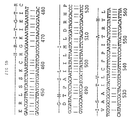
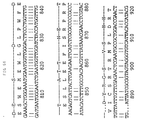
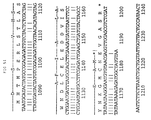
- antigenic portions of the antigen sequences may be used alone, for example, the regions corresponding to nucleotides 816-863, 1377-1595, 1377-1630 or 1824-1985 of MDV gB, or nucleotides 483-633, 843-933 or 1203-1278 or MDV gC, and minor variations thereof. These sequences and the peptides encoded thereby form further aspects of the invention.
- nucleotide homology of at least 75%
- sequence is regarded as a "minor variation”.
- sequence is at least 80, 85, 90, 95 or 99% homologous.
- degrees of homology relate to substantially the entire portion of each sequence (a) to (f) and (x) defined above. Shorter sequences may be used as probes in the identification or isolation of such longer sequences, but in this case the degree of homology will in general need to be greater in order to ensure accurate hybridisation.
- a further aspect of the invention provides sub-sequences of at least 13 nucleotides having at least 90% (preferably 95%, 99% or 100%) homology to at least one portion of any of the said sequences (a) to (f), (x) and (y) above.
- sequences (a), (b) and (d) to (f) are useful as antigen-expressing sequences and sequence (y) is useful as an insertion site for heterologous sequences. Sequence (c) is useful for deletion to provide TK - mutants.
- sequences may readily be isolated from naturally-occurring HVT and MDV viruses, using the sequence information given herein and standard techniques, for example involving the preparation of oligonucleotide probes and use thereof to hybridise to the naturally-occurring DNA.
- isolated polypeptides encoded by sequences (a), (b) and (f) above are novel and form a further aspect of the invention, together with minor variations thereof and any glycosylated forms thereof which result from expression of the said sequences in MDV-susceptible cells.
- a second aspect of the invention provides MDV mutants which are insertional or deletional mutants in the TK gene.
- the mutation may be in the coding or non-coding sequences of the region identified.
- An MDV antigen-expressing gene may be isolated from a virulent strain of MDV and inserted into the TK region of a less virulent strain of MDV; this insertion would result in a novel "virus” if it did not result in a naturally-occurring virus.
- heterologous antigen-encoding sequences may be included, as well as an MDV antigen-encoding sequence, for example.
- the heterologous sequence may alternatively be one coding for an antigen associated with any one of the following diseases: avian encephalomyelitis (epidemic tremor), avian influenza (fowl plague), avian leukosis, avian paramyxoviruses other than Newcastle disease (PMV2 to PMV7), avian reovirus diseases (enteric disease, tenosynovitis), chicken anaemia (caused by chicken anaemia agent), coccidiosis, egg drop syndrome (EDS76), fowl pox, infectious bronchitis, infectious bursal disease (Gumboro), inclusion body hepatitis (adenovirus), lymphoproliferative disease of turkeys, Newcastle disease, reticuloendotheliosis in chickens, reticuloendotheliosis in turkeys, rotavirus enteritis, turkey haemorrhagic enteritis and turkey rhinotracheitis.
- the sequence may alternatively encode paramyos
- the vectors in accordance with the invention will then provide multivalent vaccine protection.
- mutant viruses are potentially useful in vaccines as attenuated viruses, without necessarily having a heterologous sequence inserted.
- a convenient process for preparing the deletional or insertional mutants of the second aspect of the invention comprises simply introducing into a suitable cell, for example by co-transfection, a deletional or insertional mutant version of the TK region and either whole viral DNA or a whole virus (for example the wild-type virus).
- the naked DNA of such viruses has been found to be infectious, provided that it has not been sheared.
- a calcium phosphate precipitate of the DNA is generally advantageous.
- Suitable cells include chicken embryo fibroblasts, chicken kidney cells and duck embryo fibroblasts, all preferably grown in sub-confluent monolayers in Petri dishes.
- transfected DNA and the whole viral DNA will then recombine with one another in the infected cells by homologous recombination and the desired recombinants can be screened for, for example by the detection of hybridisation to suitable probes or by an immunoassay using suitable antibodies to the gene product of the region in question.
- the viral DNA must replicate.
- no cell-free replication system for MDV is known. However, if such a system becomes available, then the process of the invention could be operated therein.
- the environment in which the replication and recombination occur is not critical.
- Regions (a), (b) and (d) to (f), which were identified above as being responsible for encoding immunologically useful viral antigens, can be inserted into suitable vectors, for example into HVT or other vectors such as fowlpox-virus, bacteria or fungi.
- suitable vectors for example into HVT or other vectors such as fowlpox-virus, bacteria or fungi.
- viral vectors especially herpesvirus vectors and poxvirus vectors
- such insertion can be achieved by recombination between the antigen-encoding sequence, flanked by suitable non-essential sequences, and the vector's genome in a suitable host cell as described above.
- HVT is the vector
- the promoter will usually be an HVT or MDV vector.
- the promoter When fowlpox-virus or other virus is the vector, the promoter will usually be a promoter which is endogenous to the vector.
- the antigen-encoding sequence may be inserted using known or yet-to-be-discovered techniques of DNA manipulation.
- a non-pathogenic strain of Salmonella may be used as such a host.
- the heterologous sequence may be inserted into the host's genome or be carried on an independently-replicating plasmid.
- a promoter which is endogenous to the host will usually be used to control expression of the heterologous (viral antigen-encoding) sequence.
- flanking sequences which are used may comprise all, virtually all or less of the region into which the heterologous sequence is to be inserted. If all the region is employed, then the sequence of that region will clearly still be present in the resulting virus, but the function of that region will have been deleted. If less than the whole region is used as flanking sequences, then the result will be a structural as well as functional deletion. Either approach may be used.
- Marek's disease vaccines (1) Construction of recombinant HVT that express selected MDV genes; (2) Construction of deletional or insertional mutants of highly virulent strains of MDV, which are attenuated and hence suitable for use in vaccines; (3) Construction of recombinant viruses that express MDV proteins in other vectors such as fowl pox virus.
- the virus is grown in suitable cells such as chick embryo fibroblasts in a standard culture medium which as 199 medium (Wellcome or Flow Laboratories) for 3 to 4 days at about 37oC.
- suitable cells such as chick embryo fibroblasts in a standard culture medium which as 199 medium (Wellcome or Flow Laboratories) for 3 to 4 days at about 37oC.
- the cells are harvested by trypsinisation and suspended in medium containing 10% dimethyl sulphoxide and 4% calf serum before storage in liquid nitrogen in sealed ampoules.
- MDV and HVT are cell-associated viruses and are infectious only when present in cells. Thus, a vaccine based on such viruses will always include suitable infected cells.
- the vaccines of the invention may be used to protect any fowl susceptible to MDV, including commercially-reared poultry such as chickens, turkeys, ducks and quail.
- the 'highly oncogenic' strain RB1B of MDV [Schat, K.A. et al (1982) Avian Pathol. 11, 593-605] was obtained from Professor B. Calnek, Cornell University, Ithaca, U.S.A. The. virus received has been plaque purified in chicken kidney vells in tissue culture. It was passaged twice in SPF RIR chickens and 4 times in chick embryo fibroblasts (CEF). Its 'highly oncogenic' nature was demonstrated by a high incidence of gross tumours when inoculated in genetically resistant N-line chickens.
- FC126 strain of HVT (Witter, R.L. et al (1970) Am. J. Vet. Res. 31, 525-538], obtained from the Wellcome Research Laboratories, Beckenham, Kent, had been passaged 14 times in CEF. It was subsequently grown in duck embryo fibroblasts (DEF) and CEF in our laboratory. It was then plaque-purified and grown further in CEF. Viral DNA used for cloning in the present work was extracted from virus that had been passed 29 times since the original isolation.
- Tissue culture CEF were grown in roller bottles in 199 medium (Wellcome), supplemented with penicillin, streptomycin, Fungizone (Regd. T.M.) and calf serum as described previously (Ross, L.J.N. et al (1975) J. gen. Virol. 28, 37-47].
- CKC were grown in 10 cm Petri dishes [Churchill, A.E. and Biggs P.M., (1967) Nature, 215, 528-530].
- MDV DNA Isolation of MDV DNA .
- Cell associated RB1B was inoculated onto confluent monolayers of CEF in roller bottles at a multiplicity of infection of approximately 0.001 plaque-forming units (pfu) per cell, and the cultures were incubated at 37°C. After 3 days, the medium was discarded and replaced with fresh 199 medium containing 2% calf serum. Cells were harvested for virus purification after 2 to 3 days when cytopathic effect was extensive. Virus was obtained by rate zonal centrifugation of the cytoplasmic fraction of infected cells [Lee, Y.S. et al (1980) J. gen. Virol. 51, 245-253].
- Viral DNA was extracted by treating purified virus with sarcosyl, proteinase K and Tris buffer pH 9 overnight at 37°C and purified by rate zonal centrifugation in glycerol gradients as described previously (Lee et al , 1980). High molecular weight viral DNA was precipitated with ethanol and resuspended in 10 mM Tris pH 7.5 im 1mM EDTA (TE).
- MDV DNA Cloning of MDV DNA .
- MDV DNA was cut with the restriction enzyme Bam H1 and ligated to Bam H1-cut, dephosphorylated pUC13 DNA (Pharmacia).
- Competent E.coli strain TG1 cells were transformed according to standard procedures [Hanahan, D. (1983) J. Mol. Biol. 166, 557-580] and were grown in the presence of ampicillin and X-gal. White colonies were picked and tested for the presence or MDV inserts by hybridization to nick-translated MDV DNA [Grunstein M. and Hogness, D.S. (1975) Proc. Natl. Acad. Sci. U.S.A. 72, 3961].
- EXAMPLE 1 gB gene of MDV
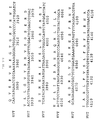
- MDV gB The primary translated sequence of MDV gB has a few features in common with gB of other herpes viruses such as the alignment of cysteine residues and the presence of hydrophobic sequences which are presumably capable of spanning a lipid bilayer [Pellet, P.E. et al (1985), J. Virol. 53, 243-253].
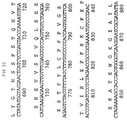
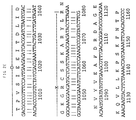
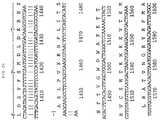
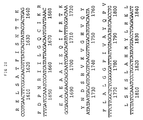
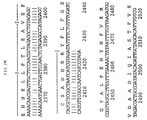
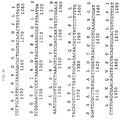
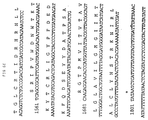
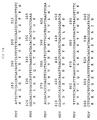
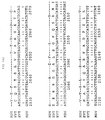
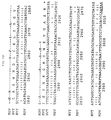
- MDV gB has only 48% amino acid similarity with gB of HSV and has many unique features such as the insertion of 23 amino acids (residues 1851-1920, Figure 2) and the presence of extra sites with glycosylation potential.
- EXAMPLE 2 gH gene of HVT and gH gene of MDV
- EXAMPLE 3 TK gene of HVT and TK gene of MDV
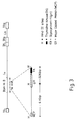
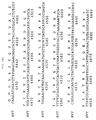
- the whole coding region of the TK gene of HVT (1053 bp) was contained within the 3.2 Kbp Hin dIII fragment described above ( Figure 3).
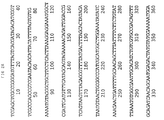
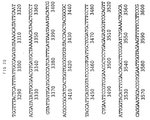
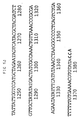
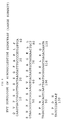
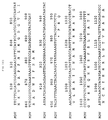
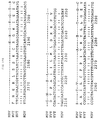
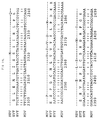
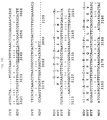
- the sequence of the entire gene and flanking regions is shown in Figure 5.
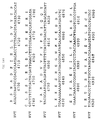
- the whole of the MDV TK gene is contained within the 3.6 Kbp Bam H1 K2 fragment of MDV ( Figure 1).
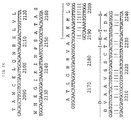
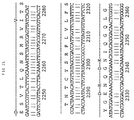
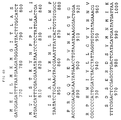
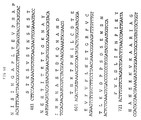
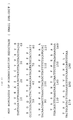
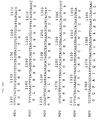
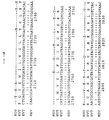
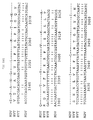
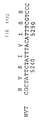
- the complete sequence of MDV TK gene is shown in Figure 14.
- Comparison of the MDV and HVT TK sequences shows that the two genes have 60% amino acid identity.
- the % amino acid identities between the TK gene of HVT and the TK genes of HSV 1, VZV and EBV are only 30, 27 and 24 respectively (estimated from amino acid overlaps of 320, 332 and 193 respectively).
- HVT and MDV TK show characteristic ATP and/or CTP binding site motifs described for a number of virus and eukaryotic proteins that are associated with phosphorylation (Gentry, G.A. (1985) Proc. Natl. Acad. Sci. U.S.A. 82, 6815-6819). These conserved sequences are examples of useful sites for insertion and expression of foreign genes and for producing TK - deletion mutants.
- EXAMPLE 4 A antigen gene of MDV (gP57-65) (gC homologue)
- the A antigen gene is of interest in vaccine development both as an immunogen (it encodes a major glycopolypeptide product) and also because we have identified it as the homologue of HSV gC, a potential non-essential region.
- the A antigen gene was mapped within the Bam H1 B fragment of MDV (Isfort et al 1987), and the nucleotide sequence determined for the GA strain of MDV (Coussens and Velicer, Abstract OP18.51, VII International Congress of Virology, 9-14 August, (1987) Edmonton, Canada; J. Virol. 62, 2373-2379). During the random sequencing studies described earlier (Buckmaster et al 1988), we identified an M13 clone (No.
- the A antigen regions of MDV and HVT are non-essential genes and they can therefore be used as sites in MDV and HVT into which other genes can be inserted into the virus by homologous recombination.
- the A antigen is a major secreted glycoprotein
- it may be a particularly suitable location for the presentation of foreign epitopes within the A antigen as soluble, secreted proteins. This may be achieved by cloning oligonucleotides encoding these epitopes in frame within the A antigen gene.
- MDV and HVT DNA obtained as described above is infectious provided that precautions are taken not to shear the DNA during extraction.
- Calcium phosphate precipitates of viral DNA prepared as described by Stow and Wilkie [(1976) J. gen. Virol. 33, 477] were added to sub-confluent monolayers of CEF. After absorption for 1h at 37°C, culture medium was added and cultures were incubated for 1 or 2 days until confluent. Monolayers were then trypsinised, replated (1:1 or 1:2) in 199 medium (Wellcome) containing 2 to 4% calf serum and incubated at 37°C until plaques developed, usually after 4 to 5 days. Approximately 200 plaques may be obtained per ⁇ g of HVT DNA and approximately 50 per ⁇ g of MDV DNA.
- genes of interest are inserted within non-essential genes such as TK or gC and co-transfected with wild-type viral DNA at molar ratios ranging from 10:1 to 2:1 as described above.
- intact wild-type virus may be used for co-infection.
- Restriction enzyme sites that could be used for the insertion of foreign antigens into the TK of HVT strain Fc-126 include: Ban II, Bsp 1286, Dra III, Eco RI, Hin cII, Hpa I, Nhe I and Nsp bII.
- RE sites that could be used to produce defined TK deletion mutants in MDV serotype I strain RB1B include; Bal I, Hae II, Nde I and - Sph I as insertion sites for foreign DNA that would disrupt the TK gene, and double digests of combinations of these four restriction enzymes ( Eco K could also be used) to remove a portion of the TK gene, thus inactivating it.
- Some of these enzymes also have sites in the plasmid vector into which the virus DNA fragments are cloned. Thus in order to linearize the clone DNA without also cutting within the vector, partial, digests may be carried out.
- Virus recombination may be detected by 'plaque lifts' which involve transfer of infected cells and released virus which have adhered to the agar overlay to nitrocellulose and hybridization of the denatured DNA released from the cells and virus to suitable probes as described by Villareal, L. et al (1977) Science 196, 183-185. Virus which hybridizes to the probe may be recovered from the monolayer.
- nitrocellulose "plaque lifts" are treated with antibody and the presence of bound antibody revealed using a suitable detection system such as labelled protein A or phosphatase conjugated anti-globulin antibody.
- the gene of interest with appropriate promoters is first inserted within the cloned TK gene.
- the recombinant DNA is then co-transfected with infectious DNA of the vector in chick embryo fibroblasts or chicken kidney cells and TK - virus may be selected by growth in medium containing acyclovir [Ross, N. (1985) as above] or FMAU [Schat, K.A. et al (1984) Antiviral Research 4, 159-270].
- plaques are screened for the presence of the gene of interest using 'plaque lifts' on nitrocellulose and hybridization to any relevant labelled probe. Plaques are also screened for expression of the epitopes of interest using monoclonal antibodies or antipeptide antibodies.
- the main advantage of this strategy is that the selection procedure increases the chances of obtaining virus recombinants containing the gene of interest. It also offers the opportunity of using different promoters for optimum expression. Thus the use of an immediate early promoter may allow expression in latently infected cells.
- the A antigen HVT and MDV homologues of HSV gC
- HSV gC A antigen that is not essential for virus growth in vivo and in vitro (see section on gC above) it is a potentially useful site for the insertion and expression of foreign genes.
- it since it is one of the most abundant antigens and is excreted, it may be particularly useful for enhancing the immunogenic properties of foreign proteins.
- the isolation of virus recombinants at this locus may be achieved by first inserting at least part of the gene of interest in frame within the gC gene and then co-transfecting with infectious viral DNA. Screening of virus plaques with sequence specific probes or with specific antibody allows the isolation of recombinants.
- An antigen-encoding sequence can also be inserted into the ribonucleotide reductase (large subunit) gene of HVT or of MDV - see Figures 8 and 9.
- Substitution may be achieved by co-transfection of cloned MDV sequences and infectious HVT DNA as described in Example 5. Substitution of the gB and gC genes derived from the RBIB strain of MDV for their counterparts in HVT may be effected as may substitution of the gH gene of MDV, other glycoproteins and immediate early genes.
- Recombinants expressing MDV sequences and epitopes may be detected using MDV-specific monoclonal antibodies or anti-peptide antibodies raised against unique MDV sequences as described-above.
- Deletion mutants may be introduced within any suitable part of the gene, for example the domains of the gene that are required for nucleoside binding. This may be achieved by restriction enzyme double digestion, for example with Hae II and any of the following enzymes: Bal I, Nde I, Sph I or Eco K. Appropriate fragments are then religated, followed by co-transfection with infectious viral DNA or transfection into virally-infected cells. Reference may be made to Figures 7 and 8, and to the section above relating to insertion of heterologous sequences, in choosing restriction enzymes and so on.
- TK - virus may be selected in the presence of acyclovir [Ross, N. (1985) as above] or FMAU [Schat, K.A. et al (1984) as above]. Plaque-purified clones may then be tested for the absence of the deleted portion of the TK gene by hybridization.
- the deletion mutants of MDV may be used themselves as attenuated viruses for vaccine preparation, or may have sequences for heterologous antigens inserted.
- Insertional mutants A functional ⁇ -galactosidase gene under the control of a herpesvirus promoter or any other suitable sequence or a single base is first introduced in a domain of the TK gene which is essential for TK activity. The recombinant DNA is then co-transfected with infectious viral DNA or transfected into virally-infected cells to allow homologous recombination to occur. Selection in the presence of acylovir or FMAU will yield TK - insertional mutants. If a ⁇ -galactosidase gene is introduced, mutants can be detected by the production of blue plaques in the presence of X-gal.
- the TK gene and surrounding sequences may be subcloned into another suitable vector if necessary.
- the HVT TK gene is cloned in the plasmid vector pUC13 to generate a plasmid, which is termed pTK1B.
- This plasmid is linearised with, for example, the restriction endonuclease Rsr II which cleaves the plasmid only within the TK gene (nucleotide position 197 in Figure 5, enzyme recognition sequence CGGACCG).
- Rsr II restriction endonuclease
- CGGACCG enzyme recognition sequence
- the RB1B gB was originally cloned on two plasmids which may be termed RB1B- Bam H1-I 3 and RB1B- Bam H1-K 3 . (Note I 3 had lost one Bam H1 site during cloning.)
- RB1B- Bam H1-I 3 plasmids which may be termed RB1B- Bam H1-I 3 and RB1B- Bam H1-K 3 .
- Bam H1 Bam H1
- Recombinants containing the desired configuration were identified by restriction enzyme analysis of plasmid DNA's.
- the complete gB sequence was subsequently obtained on an Eco RI/ Sal I fragment.
- the single recombinant plasmid of Ross et al is then cleaved with Eco RI and Sal I, the ends are repaired and the plasmid is cloned into PTK1B prepared as above.
- the MDV gB open reading frame could be excised from plasmid MSB27 by digestion with Hin cII and Nae I and the products ligated to HVT TK plasmid pTK1B, cleaved partially with Hpa I.
- Recombinant plasmids containing both TK and gB sequences could be identified by hybridisation and further characterised by Southern blotting.
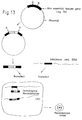
- HVT viral recombinants are then introduced into cells containing HVT virus (viral DNA) and homologous recombination will introduce the gB gene into the TK gene.
- HVT viral recombinants can be selected with acyclovir or FMAU or alternatively detected with labelled gB probes.
- Blunt ended PTK1B is prepared as in Example 8.
- the RB1B gC is cleaved from the plasmid pMB419 (Example 4) with the restriction endonucleases Eco R1 and Hin dIII (site within the pUC13 polylinker).
- the sticky ends generated are again end-repaired by standard protocols.
- the end-repaired gC fragment is then cloned into the linearized end-repaired pTK1B as in Example 8. (The cloning can be verified by analysis of the resulting clones with restriction enzymes, probing with radio-actively labelled fragments, or DNA sequencing, or any combination of these).
- the resulting plasmid with the RB1B gC gene cloned into the HVT TK gene can then be introduced into the HVT genome by transfecting the plasmid into HVT-infected cells using calcium phosphate precipitation or electro-poration. Homologous recombination, involving cross-overs either side of the gC gene, between the HVT virus and the flanking sequences of the HVT TK plasmid will carry the RB1B gC gene into the HVT viral genome. Viral recombinants can be selected for (as they are TK - ) or identified (eg by probing) as described above.
- sequence information given above and in the Figures can be used to design cloning strategies for the insertion of these genes and others into the non-essential genes of the HVT described here or to generating combinations of antigen genes in HVT.
- EXAMPLE 10 MDV gD gene
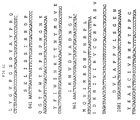
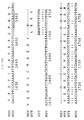
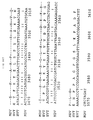
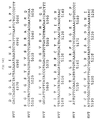
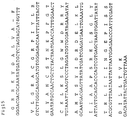
- Figure 15 shows part of the sequence of the MDV gD gene.
- the sequence was obtained by sequencing random fragments of the U s region MDV DNA and comparing the sequence to the sequence of known herpesvirus genes (see Buckmaster et al , lo c. ci t.). The sequence gave homology scores of 189 and 216 respectively with HSV gD and PRV gp50. The sequence information assists in the preparation of suitable probes to isolate and characterise the gene.
Landscapes
- Health & Medical Sciences (AREA)
- Life Sciences & Earth Sciences (AREA)
- Chemical & Material Sciences (AREA)
- Organic Chemistry (AREA)
- Genetics & Genomics (AREA)
- Engineering & Computer Science (AREA)
- Virology (AREA)
- General Health & Medical Sciences (AREA)
- Zoology (AREA)
- Medicinal Chemistry (AREA)
- Bioinformatics & Cheminformatics (AREA)
- Wood Science & Technology (AREA)
- Microbiology (AREA)
- Biotechnology (AREA)
- Molecular Biology (AREA)
- Biomedical Technology (AREA)
- General Engineering & Computer Science (AREA)
- Pharmacology & Pharmacy (AREA)
- Public Health (AREA)
- Animal Behavior & Ethology (AREA)
- Veterinary Medicine (AREA)
- Biochemistry (AREA)
- Immunology (AREA)
- Biophysics (AREA)
- Epidemiology (AREA)
- Mycology (AREA)
- Chemical Kinetics & Catalysis (AREA)
- General Chemical & Material Sciences (AREA)
- Nuclear Medicine, Radiotherapy & Molecular Imaging (AREA)
- Physics & Mathematics (AREA)
- Communicable Diseases (AREA)
- Plant Pathology (AREA)
- Oncology (AREA)
- Gastroenterology & Hepatology (AREA)
- Proteomics, Peptides & Aminoacids (AREA)
- Medicines Containing Antibodies Or Antigens For Use As Internal Diagnostic Agents (AREA)
- Micro-Organisms Or Cultivation Processes Thereof (AREA)
- Peptides Or Proteins (AREA)
Applications Claiming Priority (4)
| Application Number | Priority Date | Filing Date | Title |
|---|---|---|---|
| GB888821441A GB8821441D0 (en) | 1988-09-13 | 1988-09-13 | Viral vectors |
| GB8821441 | 1988-09-13 | ||
| EP89910900A EP0434747B1 (de) | 1988-09-13 | 1989-09-13 | AUF DEM gB-PROTEIN DES MAREK'S DISEASE VIRUS (MDV) BASIERENDE, REKOMBINANTE IMPFSTOFFE |
| US08/654,931 US5744143A (en) | 1988-09-13 | 1996-05-29 | Viral vaccines |
Related Parent Applications (2)
| Application Number | Title | Priority Date | Filing Date |
|---|---|---|---|
| EP89910900A Division EP0434747B1 (de) | 1988-09-13 | 1989-09-13 | AUF DEM gB-PROTEIN DES MAREK'S DISEASE VIRUS (MDV) BASIERENDE, REKOMBINANTE IMPFSTOFFE |
| EP89910900.3 Division | 1989-09-13 |
Publications (3)
| Publication Number | Publication Date |
|---|---|
| EP0748631A2 true EP0748631A2 (de) | 1996-12-18 |
| EP0748631A3 EP0748631A3 (de) | 2000-02-23 |
| EP0748631B1 EP0748631B1 (de) | 2006-02-08 |
Family
ID=26294384
Family Applications (3)
| Application Number | Title | Priority Date | Filing Date |
|---|---|---|---|
| EP89910146A Expired - Lifetime EP0434721B1 (de) | 1988-09-13 | 1989-09-13 | Virale nucleotidsequenzen |
| EP96108830A Expired - Lifetime EP0748631B1 (de) | 1988-09-13 | 1989-09-13 | Virale Vakzine |
| EP89910900A Expired - Lifetime EP0434747B1 (de) | 1988-09-13 | 1989-09-13 | AUF DEM gB-PROTEIN DES MAREK'S DISEASE VIRUS (MDV) BASIERENDE, REKOMBINANTE IMPFSTOFFE |
Family Applications Before (1)
| Application Number | Title | Priority Date | Filing Date |
|---|---|---|---|
| EP89910146A Expired - Lifetime EP0434721B1 (de) | 1988-09-13 | 1989-09-13 | Virale nucleotidsequenzen |
Family Applications After (1)
| Application Number | Title | Priority Date | Filing Date |
|---|---|---|---|
| EP89910900A Expired - Lifetime EP0434747B1 (de) | 1988-09-13 | 1989-09-13 | AUF DEM gB-PROTEIN DES MAREK'S DISEASE VIRUS (MDV) BASIERENDE, REKOMBINANTE IMPFSTOFFE |
Country Status (6)
| Country | Link |
|---|---|
| US (3) | US5744143A (de) |
| EP (3) | EP0434721B1 (de) |
| JP (2) | JP3339854B2 (de) |
| AU (2) | AU633272B2 (de) |
| IL (3) | IL113339A (de) |
| WO (2) | WO1990002802A2 (de) |
Families Citing this family (45)
| Publication number | Priority date | Publication date | Assignee | Title |
|---|---|---|---|---|
| US5965138A (en) * | 1985-09-06 | 1999-10-12 | Syntro Corporation | Recombinant chimeric virus and uses thereof |
| US5928648A (en) * | 1985-09-06 | 1999-07-27 | Syntro Corporation | Recombinant herpesvirus of turkeys and uses thereof |
| EP0434721B1 (de) * | 1988-09-13 | 2000-03-15 | Merial | Virale nucleotidsequenzen |
| FR2659349B1 (fr) * | 1990-03-12 | 1993-12-24 | Rhone Merieux | Virus herpes recombinants notamment pour la realisation de vaccins, leur procede de preparation, les plasmides realises au cours de ce procede et les vaccins obtenus. |
| US6087127A (en) * | 1990-08-24 | 2000-07-11 | Board Of Trustees Operating Michigan State University | Marek's disease herpesvirus DNA segment encoding glycoproteins, gD, gI and gE |
| WO1992003554A1 (en) * | 1990-08-24 | 1992-03-05 | Arthur Webster Pty. Ltd. | Infectious laryngotracheitis virus vaccine |
| FR2666589B1 (fr) * | 1990-09-07 | 1994-08-05 | Rhone Merieux | Nouveaux virus herpes recombinants, vaccin a base de ces recombinants, leur procede de preparation, genes, vecteurs et plasmides utilises dans ce procede. |
| NL9002008A (nl) * | 1990-09-12 | 1992-04-01 | Stichting Centr Diergeneeskund | Recombinant dna en rna en daarvan afgeleide produkten. |
| EP0486106A3 (en) * | 1990-11-16 | 1992-12-23 | Akzo N.V. | Marek's disease virus vaccine |
| US5759552A (en) * | 1991-03-07 | 1998-06-02 | Virogenetics Corporation | Marek's disease virus recombinant poxvirus vaccine |
| US5369025A (en) * | 1991-06-28 | 1994-11-29 | The United States Of America As Represented By The Secretary Of Agriculture | Recombinant fowlpox vaccine for protection against Marek's disease |
| AU657144B2 (en) * | 1991-07-09 | 1995-03-02 | Juridical Foundation The Chemo-Sero-Therapeutic Research Institute | Recombinant Marek's disease virus, process for preparing the same and vaccine containing the same |
| US5223408A (en) * | 1991-07-11 | 1993-06-29 | Genentech, Inc. | Method for making variant secreted proteins with altered properties |
| US5443831A (en) * | 1991-10-29 | 1995-08-22 | University Of Delaware | Gene encoding glycoprotein B of Infectious Laryngotracheitis Virus |
| CA2127700C (en) * | 1992-01-13 | 2006-06-20 | Enzo Paoletti | Marek's disease virus recombinant poxvirus vaccine |
| US5643578A (en) | 1992-03-23 | 1997-07-01 | University Of Massachusetts Medical Center | Immunization by inoculation of DNA transcription unit |
| US5620896A (en) * | 1992-03-23 | 1997-04-15 | University Of Massachusetts Medical Center | DNA vaccines against rotavirus infections |
| US6165993A (en) * | 1992-03-23 | 2000-12-26 | University Of Massachusetts Medical Center | DNA vaccines against rotavirus infections |
| US5853733A (en) * | 1993-02-26 | 1998-12-29 | Syntro Corporation | Recombinant herpesvirus of turkeys and uses thereof |
| GB9213882D0 (en) * | 1992-06-30 | 1992-08-12 | Univ Court Of The University O | Live modified equine herpesvirus-4 vaccine |
| US6875856B2 (en) | 1993-09-24 | 2005-04-05 | Syntro Corporation | Recombinant infectious laryngotracheitis virus and uses thereof |
| EP0723584A4 (de) * | 1993-09-24 | 2000-12-20 | Syntro Corp | Rekombinanter infektiöser laryngothracheitisoitus und seine verwendung |
| EP0750670A1 (de) * | 1994-02-07 | 1997-01-02 | Cornell Research Foundation, Inc. | Zusammensetzungen zur behandlung der marek-krankheit |
| FR2719056B1 (fr) * | 1994-04-20 | 1996-09-06 | Rhone Merieux | Herpesvirus transformés pour exprimer gD in vitro. |
| AU2946395A (en) * | 1994-06-30 | 1996-01-25 | Board of Regents of the University of Illinois, The | Recombinant infectious laryngotracheitis virus and vaccine |
| FR2728795B1 (fr) * | 1994-12-30 | 1997-03-21 | Rhone Merieux | Vaccin vivant recombinant aviaire, utilisant comme vecteur un virus herpes aviaire |
| FR2728794B1 (fr) * | 1994-12-30 | 1997-03-21 | Rhone Merieux | Vaccin recombinant aviaire a base de virus herpes aviaire, notamment contre la maladie de gumboro |
| CA2216139C (en) * | 1995-03-23 | 2013-01-08 | Syntro Corporation | Recombinant infectious laryngotracheitis virus and uses thereof |
| JPH08322559A (ja) * | 1995-06-02 | 1996-12-10 | Chemo Sero Therapeut Res Inst | gB遺伝子プロモーターを用いた組換えヘルペスウイルス |
| WO1997003187A2 (en) * | 1995-07-07 | 1997-01-30 | Nippon Zeon Co., Ltd. | Marek's disease virus genes and their use in vaccines for protection against marek's disease |
| FR2750866B1 (fr) * | 1996-06-27 | 1998-11-27 | Rhone Merieux | Vaccin vivant recombinant aviaire, utilisant comme vecteur le virus de la laryngotracheite infectieuse aviaire |
| FR2757061B1 (fr) * | 1996-12-16 | 1999-03-26 | Rhone Merieux | Vaccin vivant recombinant aviaire, utilisant comme vecteur le virus de la laryngotracheite infectieuse aviaire |
| AU2738302A (en) * | 2000-10-30 | 2002-05-15 | Euro Celtique Sa | Controlled release hydrocodone formulations |
| DE60236068D1 (de) | 2001-01-31 | 2010-06-02 | Mayo Foundation | Nachweis von herpex-simplex-virus |
| US7037506B2 (en) * | 2002-03-08 | 2006-05-02 | Schweltzer Chemical Corporation Ltd. | Vaccine accelerator factor (VAF) for improvement of vaccinations in poultry |
| US7029681B2 (en) * | 2002-03-08 | 2006-04-18 | Schweitzer Chemical Corporation | Multiple and multivalent DNA vaccines in ovo |
| US8754031B2 (en) | 2004-03-08 | 2014-06-17 | Oncolix, Inc. | Use of prolactin receptor antagonists in combination with an agent that inactivates the HER2/neu signaling pathway |
| AU2005249450A1 (en) | 2004-05-27 | 2005-12-15 | Centocor, Inc. | Cynomolgus prostate specific antigen |
| CA2570563A1 (en) * | 2004-06-15 | 2006-09-28 | Centocor, Inc. | Method for screening agents against human prostate disease |
| US20070178115A1 (en) | 2005-08-15 | 2007-08-02 | Tang De-Chu C | Immunization of avians by administration of non-replicating vectored vaccines |
| CN100460509C (zh) * | 2007-01-04 | 2009-02-11 | 首都医科大学 | 旋毛虫副肌球蛋白基因及其应用 |
| TW201109913A (en) * | 2009-09-02 | 2011-03-16 | Inventec Corp | Main system board error-detecting system and its pluggable error-detecting board |
| US12589147B2 (en) | 2019-12-20 | 2026-03-31 | Intervet Inc. | Multivalent HVT vector vaccine |
| EP4267179A1 (de) | 2020-12-24 | 2023-11-01 | Intervet International B.V. | Multivalenter hvt-vektorimpfstoff |
| JP2025515050A (ja) | 2022-05-05 | 2025-05-13 | インターベット インターナショナル ベー. フェー. | 新規多価hvtベクターワクチン |
Family Cites Families (8)
| Publication number | Priority date | Publication date | Assignee | Title |
|---|---|---|---|---|
| US5965138A (en) * | 1985-09-06 | 1999-10-12 | Syntro Corporation | Recombinant chimeric virus and uses thereof |
| AU623333B2 (en) * | 1986-01-27 | 1992-05-14 | Syntro Corporation | Attenuated herpesviruses, herpesviruses which include foreign dna encoding an amino acid sequence and vaccine containing same |
| DE3853819T2 (de) * | 1987-03-19 | 1995-09-21 | Synergen Inc | Virales vektorsystem zum einführen fremder dns-expressionserzeugnisse in gallinaceenvögeln. |
| US4996152A (en) * | 1987-12-04 | 1991-02-26 | The United States Of America, As Represented By The Secretary Of Agriculture | Avian herpesvirus amplicon as a eucaryotic expression vector |
| DE68926712T2 (de) * | 1988-05-02 | 1997-04-17 | The United States Of America, Represented By The Secretary, U.S. Department Of Commerce, Springfield, Va. | Gen zum kodieren eines antigens gegen menschlichen malaria impfstoff |
| US5558860A (en) * | 1988-09-13 | 1996-09-24 | Rhone Merieux | Viral vaccines |
| EP0434721B1 (de) * | 1988-09-13 | 2000-03-15 | Merial | Virale nucleotidsequenzen |
| EP0431668B1 (de) * | 1989-12-04 | 1995-02-15 | Akzo Nobel N.V. | Rekombinantes Truthahn-Herpesvirus und davon abgeleiteter Lebendimpfstoffvektor |
-
1989
- 1989-09-13 EP EP89910146A patent/EP0434721B1/de not_active Expired - Lifetime
- 1989-09-13 JP JP51023289A patent/JP3339854B2/ja not_active Expired - Lifetime
- 1989-09-13 EP EP96108830A patent/EP0748631B1/de not_active Expired - Lifetime
- 1989-09-13 EP EP89910900A patent/EP0434747B1/de not_active Expired - Lifetime
- 1989-09-13 IL IL113339A patent/IL113339A/xx not_active IP Right Cessation
- 1989-09-13 WO PCT/GB1989/001075 patent/WO1990002802A2/en not_active Ceased
- 1989-09-13 JP JP50949989A patent/JP3292371B2/ja not_active Expired - Lifetime
- 1989-09-13 AU AU42142/89A patent/AU633272B2/en not_active Expired
- 1989-09-13 WO PCT/GB1989/001076 patent/WO1990002803A2/en not_active Ceased
- 1989-09-13 IL IL9162789A patent/IL91627A/en not_active IP Right Cessation
- 1989-09-13 AU AU43250/89A patent/AU629248B2/en not_active Expired
-
1995
- 1995-04-12 IL IL11333995A patent/IL113339A0/xx unknown
-
1996
- 1996-05-29 US US08/654,931 patent/US5744143A/en not_active Expired - Lifetime
-
1997
- 1997-09-25 US US08/938,336 patent/US5958425A/en not_active Expired - Lifetime
-
1998
- 1998-12-30 US US09/223,001 patent/US6100088A/en not_active Expired - Fee Related
Also Published As
| Publication number | Publication date |
|---|---|
| JPH04501658A (ja) | 1992-03-26 |
| WO1990002803A3 (en) | 1990-05-31 |
| EP0434721B1 (de) | 2000-03-15 |
| JPH04502852A (ja) | 1992-05-28 |
| WO1990002802A2 (en) | 1990-03-22 |
| WO1990002802A3 (en) | 1990-05-17 |
| AU633272B2 (en) | 1993-01-28 |
| EP0434721A1 (de) | 1991-07-03 |
| AU4325089A (en) | 1990-04-02 |
| EP0434747A1 (de) | 1991-07-03 |
| IL113339A0 (en) | 1995-07-31 |
| JP3339854B2 (ja) | 2002-10-28 |
| IL113339A (en) | 1997-03-18 |
| JP3292371B2 (ja) | 2002-06-17 |
| US5958425A (en) | 1999-09-28 |
| EP0434747B1 (de) | 1999-05-19 |
| IL91627A (en) | 1995-08-31 |
| EP0748631A3 (de) | 2000-02-23 |
| US6100088A (en) | 2000-08-08 |
| WO1990002803A2 (en) | 1990-03-22 |
| EP0748631B1 (de) | 2006-02-08 |
| AU4214289A (en) | 1990-04-02 |
| US5744143A (en) | 1998-04-28 |
| AU629248B2 (en) | 1992-10-01 |
Similar Documents
| Publication | Publication Date | Title |
|---|---|---|
| EP0748631B1 (de) | Virale Vakzine | |
| EP0908517B1 (de) | Virale Nukleotidsequenzen | |
| US5558860A (en) | Viral vaccines | |
| IE19990699A1 (en) | Viral Vaccines | |
| IE84982B1 (en) | Viral Vaccines |
Legal Events
| Date | Code | Title | Description |
|---|---|---|---|
| PUAI | Public reference made under article 153(3) epc to a published international application that has entered the european phase |
Free format text: ORIGINAL CODE: 0009012 |
|
| 17P | Request for examination filed |
Effective date: 19960603 |
|
| AC | Divisional application: reference to earlier application |
Ref document number: 434747 Country of ref document: EP |
|
| AK | Designated contracting states |
Kind code of ref document: A2 Designated state(s): AT BE CH DE FR GB IT LI NL |
|
| RAP1 | Party data changed (applicant data changed or rights of an application transferred) |
Owner name: MERIAL |
|
| PUAL | Search report despatched |
Free format text: ORIGINAL CODE: 0009013 |
|
| AK | Designated contracting states |
Kind code of ref document: A3 Designated state(s): AT BE CH DE FR GB IT LI NL |
|
| RIC1 | Information provided on ipc code assigned before grant |
Free format text: 7C 12N 15/38 A, 7C 12N 15/86 B, 7A 61K 39/255 B, 7C 07K 14/055 B |
|
| 17Q | First examination report despatched |
Effective date: 20030925 |
|
| GRAP | Despatch of communication of intention to grant a patent |
Free format text: ORIGINAL CODE: EPIDOSNIGR1 |
|
| GRAS | Grant fee paid |
Free format text: ORIGINAL CODE: EPIDOSNIGR3 |
|
| GRAA | (expected) grant |
Free format text: ORIGINAL CODE: 0009210 |
|
| RAP1 | Party data changed (applicant data changed or rights of an application transferred) |
Owner name: MERIAL |
|
| AC | Divisional application: reference to earlier application |
Ref document number: 0434747 Country of ref document: EP Kind code of ref document: P |
|
| AK | Designated contracting states |
Kind code of ref document: B1 Designated state(s): AT BE CH DE FR GB IT LI NL |
|
| REG | Reference to a national code |
Ref country code: GB Ref legal event code: FG4D |
|
| REG | Reference to a national code |
Ref country code: CH Ref legal event code: EP |
|
| REG | Reference to a national code |
Ref country code: CH Ref legal event code: NV Representative=s name: BRAUNPAT BRAUN EDER AG |
|
| REF | Corresponds to: |
Ref document number: 68929544 Country of ref document: DE Date of ref document: 20060420 Kind code of ref document: P |
|
| ET | Fr: translation filed | ||
| PLBE | No opposition filed within time limit |
Free format text: ORIGINAL CODE: 0009261 |
|
| STAA | Information on the status of an ep patent application or granted ep patent |
Free format text: STATUS: NO OPPOSITION FILED WITHIN TIME LIMIT |
|
| 26N | No opposition filed |
Effective date: 20061109 |
|
| PGFP | Annual fee paid to national office [announced via postgrant information from national office to epo] |
Ref country code: CH Payment date: 20080930 Year of fee payment: 20 |
|
| PGFP | Annual fee paid to national office [announced via postgrant information from national office to epo] |
Ref country code: NL Payment date: 20080924 Year of fee payment: 20 Ref country code: FR Payment date: 20080917 Year of fee payment: 20 Ref country code: AT Payment date: 20080820 Year of fee payment: 20 |
|
| PGFP | Annual fee paid to national office [announced via postgrant information from national office to epo] |
Ref country code: GB Payment date: 20080929 Year of fee payment: 20 |
|
| PGFP | Annual fee paid to national office [announced via postgrant information from national office to epo] |
Ref country code: DE Payment date: 20081031 Year of fee payment: 20 |
|
| PGFP | Annual fee paid to national office [announced via postgrant information from national office to epo] |
Ref country code: IT Payment date: 20080929 Year of fee payment: 20 Ref country code: BE Payment date: 20081009 Year of fee payment: 20 |
|
| REG | Reference to a national code |
Ref country code: CH Ref legal event code: PL |
|
| BE20 | Be: patent expired |
Owner name: *MERIAL Effective date: 20090913 |
|
| REG | Reference to a national code |
Ref country code: GB Ref legal event code: PE20 Expiry date: 20090912 |
|
| NLV7 | Nl: ceased due to reaching the maximum lifetime of a patent |
Effective date: 20090913 |
|
| PG25 | Lapsed in a contracting state [announced via postgrant information from national office to epo] |
Ref country code: NL Free format text: LAPSE BECAUSE OF EXPIRATION OF PROTECTION Effective date: 20090913 Ref country code: GB Free format text: LAPSE BECAUSE OF EXPIRATION OF PROTECTION Effective date: 20090912 |