EP0748377B1 - Verbesserte dnase flüssige lösungen - Google Patents
Verbesserte dnase flüssige lösungen Download PDFInfo
- Publication number
- EP0748377B1 EP0748377B1 EP95911123A EP95911123A EP0748377B1 EP 0748377 B1 EP0748377 B1 EP 0748377B1 EP 95911123 A EP95911123 A EP 95911123A EP 95911123 A EP95911123 A EP 95911123A EP 0748377 B1 EP0748377 B1 EP 0748377B1
- Authority
- EP
- European Patent Office
- Prior art keywords
- dnase
- solution
- rhdnase
- cacl
- calcium
- Prior art date
- Legal status (The legal status is an assumption and is not a legal conclusion. Google has not performed a legal analysis and makes no representation as to the accuracy of the status listed.)
- Expired - Lifetime
Links
Images


Classifications
-
- C—CHEMISTRY; METALLURGY
- C12—BIOCHEMISTRY; BEER; SPIRITS; WINE; VINEGAR; MICROBIOLOGY; ENZYMOLOGY; MUTATION OR GENETIC ENGINEERING
- C12N—MICROORGANISMS OR ENZYMES; COMPOSITIONS THEREOF; PROPAGATING, PRESERVING, OR MAINTAINING MICROORGANISMS; MUTATION OR GENETIC ENGINEERING; CULTURE MEDIA
- C12N9/00—Enzymes; Proenzymes; Compositions thereof; Processes for preparing, activating, inhibiting, separating or purifying enzymes
- C12N9/14—Hydrolases (3)
- C12N9/16—Hydrolases (3) acting on ester bonds (3.1)
- C12N9/22—Ribonucleases [RNase]; Deoxyribonucleases [DNase]
-
- A—HUMAN NECESSITIES
- A61—MEDICAL OR VETERINARY SCIENCE; HYGIENE
- A61K—PREPARATIONS FOR MEDICAL, DENTAL OR TOILETRY PURPOSES
- A61K36/00—Medicinal preparations of undetermined constitution containing material from algae, lichens, fungi or plants, or derivatives thereof, e.g. traditional herbal medicines
- A61K36/18—Magnoliophyta (angiosperms)
- A61K36/185—Magnoliopsida (dicotyledons)
- A61K36/53—Lamiaceae or Labiatae (Mint family), e.g. thyme, rosemary or lavender
- A61K36/534—Mentha (mint)
-
- A—HUMAN NECESSITIES
- A61—MEDICAL OR VETERINARY SCIENCE; HYGIENE
- A61K—PREPARATIONS FOR MEDICAL, DENTAL OR TOILETRY PURPOSES
- A61K36/00—Medicinal preparations of undetermined constitution containing material from algae, lichens, fungi or plants, or derivatives thereof, e.g. traditional herbal medicines
- A61K36/18—Magnoliophyta (angiosperms)
- A61K36/88—Liliopsida (monocotyledons)
- A61K36/906—Zingiberaceae (Ginger family)
- A61K36/9068—Zingiber, e.g. garden ginger
-
- A—HUMAN NECESSITIES
- A61—MEDICAL OR VETERINARY SCIENCE; HYGIENE
- A61K—PREPARATIONS FOR MEDICAL, DENTAL OR TOILETRY PURPOSES
- A61K38/00—Medicinal preparations containing peptides
- A61K38/01—Hydrolysed proteins; Derivatives thereof
- A61K38/012—Hydrolysed proteins; Derivatives thereof from animals
- A61K38/018—Hydrolysed proteins; Derivatives thereof from animals from milk
-
- A—HUMAN NECESSITIES
- A61—MEDICAL OR VETERINARY SCIENCE; HYGIENE
- A61K—PREPARATIONS FOR MEDICAL, DENTAL OR TOILETRY PURPOSES
- A61K45/00—Medicinal preparations containing active ingredients not provided for in groups A61K31/00 - A61K41/00
- A61K45/06—Mixtures of active ingredients without chemical characterisation, e.g. antiphlogistics and cardiaca
-
- A—HUMAN NECESSITIES
- A61—MEDICAL OR VETERINARY SCIENCE; HYGIENE
- A61P—SPECIFIC THERAPEUTIC ACTIVITY OF CHEMICAL COMPOUNDS OR MEDICINAL PREPARATIONS
- A61P11/00—Drugs for disorders of the respiratory system
- A61P11/10—Expectorants
-
- C—CHEMISTRY; METALLURGY
- C12—BIOCHEMISTRY; BEER; SPIRITS; WINE; VINEGAR; MICROBIOLOGY; ENZYMOLOGY; MUTATION OR GENETIC ENGINEERING
- C12N—MICROORGANISMS OR ENZYMES; COMPOSITIONS THEREOF; PROPAGATING, PRESERVING, OR MAINTAINING MICROORGANISMS; MUTATION OR GENETIC ENGINEERING; CULTURE MEDIA
- C12N9/00—Enzymes; Proenzymes; Compositions thereof; Processes for preparing, activating, inhibiting, separating or purifying enzymes
- C12N9/96—Stabilising an enzyme by forming an adduct or a composition; Forming enzyme conjugates
-
- C—CHEMISTRY; METALLURGY
- C12—BIOCHEMISTRY; BEER; SPIRITS; WINE; VINEGAR; MICROBIOLOGY; ENZYMOLOGY; MUTATION OR GENETIC ENGINEERING
- C12Y—ENZYMES
- C12Y301/00—Hydrolases acting on ester bonds (3.1)
- C12Y301/21—Endodeoxyribonucleases producing 5'-phosphomonoesters (3.1.21)
- C12Y301/21001—Deoxyribonuclease I (3.1.21.1)
-
- A—HUMAN NECESSITIES
- A61—MEDICAL OR VETERINARY SCIENCE; HYGIENE
- A61K—PREPARATIONS FOR MEDICAL, DENTAL OR TOILETRY PURPOSES
- A61K38/00—Medicinal preparations containing peptides
Definitions
- the present invention is related to results obtained from research on the formulation of deoxyribonuclease, otherwise referred to as DNase, a phosphodiesterase that is capable of hydrolyzing polydeoxyribonucleic acid (DNA).
- DNase deoxyribonuclease
- DNA polydeoxyribonucleic acid
- the present invention relates generally to the preparation of liquid solutions of DNase that are protected from thermally induced aggregation of the DNase active principal component.
- the present invention relates additionally generally to the preparation of liquid solutions of DNase that are maintained stable at pHs of less than neutral.
- DNase is a phosphodiesterase capable of hydrolyzing polydeoxyribonucleic acid. DNase has been purified from various species to various degrees. The complete amino acid sequence for a mammalian DNase was first made available in 1973. See, e.g., Liao, et al., J. Biol. Chem. 248, 1489 (1973 ).
- DNase has a number of known utilities and has been used for therapeutic purposes. Its principal therapeutic use has been to reduce the viscoelasticity of pulmonary secretions in such diseases as pneumonia and cystic fibrosis, thereby aiding in the clearing of respiratory airways. See, e.g., Lourenco, et al., Arch, Intern. Med. 142, 2299 (1982 ); Shak, et al., Proc. Nat. Acad. Scl. 87, 9188 (1990 ); and Hubbard, et al., New England Journal of Medicine 326, 812 (1992 ).
- DNA encoding human DNase has been isolated and sequenced and that DNA has been expressed in recombinant mammalian host cells, thereby enabling the production of human DNase in mammalian commercially useful quantities. See, e.g., Shak, et al., Proc. Nat. Acad. Scl. 87, 9188 (1990 ).
- Recombinant human DNase rhDNase
- USPN 3,042,587 relates to a procedure and composition for the stabilization of desoxyribonuclease.
- WO 93/25670 describes the identification and characterization of two components of a recombinant preparation of DNase. These components are the purified deamidated and non-deamidated human DNases.
- DNase can be employed as such, as a mixture of deamidated and non-deamidated forms, or in isolated deamidated and non-deamidated forms, The preparation and separation of such forms are the subject matter of a patent application cited above.
- the present invention is directed to the preparation of liquid solutions of DNase (including all of its biologically active forms as previously noted) that are stable to thermally induced aggregation of DNase.
- the present invention is directed to the preparation of stabilized liquid solutions of DNase (including all of its biologically active forms as previously noted).
- DNase including all of its biologically active forms as previously noted.
- These liquid solutions containing DNase in substantially non-deamidated form are maintained at pHs of less than neutral in stable form such that precipitation of material does not occur to any substantial extent, and therefore, the solutions are in a clear form suitable for pharmaceutical administration.
- Such less than neutral pH levels result in a reduction of the rate of deamidation of the DNase principle during storage.
- At storage at elevated temperatures (upwards of 37°C) such lower pH solutions result in precipitation products.
- the present invention in an aspect, stabilizes such solutions from such precipitation.
- the present invention is predicated upon the finding of an exceptional characteristic found attributable to a particular component which in liquid solution together with DNase as biologically active principle, protects said DNase from thermally induced aggregation.
- This particular component in liquid solution together with DNase as biologically active principle protects and stabilizes the solution from precipitation effects resulting in clear solutions which are suitable for pharmaceutical administration.
- the pharmaceutical specifications permitting the storage with suitable shelf life of DNase requires the retention of at least 80% biological potency at from 2 to 8°C over a sustained period of time.
- the recommended pH of such solutions are about neutral, more particularly approximately 6.5. It has been discovered that at this pH range, deamidation occurs at a relatively constant rate resulting in solutions in which the DNase component is increasingly deamidated. The deamidation takes place at the asparagine residue that occurs at position 74 in the amino acid sequence of native mature DNase. Attention is directed to U.S. Serial No. 07/895,300, filed 8 June 1992 . In that application attention is focused on the separation of deamidated and non-deamidated DNase from one another for separate formulation into pharmaceutically administrable forms.
- the present invention in this aspect relates to the stabilization of such less than neutral pH liquid solutions containing DNase from precipitation resulting in solutions that are pharmaceutically administrable.
- the present invention in this aspect relates to a method of stabilizing liquid solutions containing DNase as active principle, such solutions being at a pH of less than neutral such that deamidation is deterred or inhibited which comprises employing amounts of calcium ion in said solution that protect such solutions from precipitation resulting in liquid formulations of DNase that are suitable for storage and ultimate pharmaceutical administration.
- a method of stabilizing liquid solutions containing DNase as active principle such solutions being at a pH of less than neutral such that deamidation is deterred or inhibited which comprises employing amounts of calcium ion in said solution that protect such solutions from precipitation resulting in liquid formulations of DNase that are suitable for storage and ultimate pharmaceutical administration.
- These solutions are maintained in a stable form without any or any substantial precipitation that otherwise occurs at pHs of less than neutral. Further, these solutions result in a minimal deamidation of the active component of DNase.
- the present invention in signal distinction from certain other divalent cations, calcium ion (Ca +2 ) additionally protects DNase from thermally induced aggregation in liquid solution.
- Ca +2 calcium ion additionally protects DNase from thermally induced aggregation in liquid solution.
- the present invention relates to a process of minimizing thermally induced aggregation of DNase in liquid solution comprising DNase as active principle which comprises employing DNase-aggregation-minimizing amounts of calcium ion in said solution.
- protection of DNase from thermally induced aggregation in liquid solution is obtained by the addition of sugars to said solutions, either in lieu of or additional to the presence of calcium ion.
- the present invention is directed to methods for the preparation of liquid solutions comprising DNase as active principle which comprising using in said solutions an amount of calcium ion and/or sugar that: 1) minimizes DNase aggregation brought about from thermal instability (a DNase-aggregation-minimizing amount) and an amount of calcium ion that 2) stabilizes said solutions that are at a pH of less than neutral from precipitation resulting in said solutions being clear and thus in a form suitable for storage and pharmaceutical administration. In the latter, deamidation of the DNase is inhibited, a consequence of the lowered pH (from neutral).
- the present invention is directed to a method for the preparation of a liquid solution comprising DNase as active principle which comprises utilizing in said solution an amount of calcium ion and/or sugar that stabilizes said solutions from both thermally induced DNase aggregation and an amount of calcium ion that stabilizes said solutions from precipitation effects when said solutions are at less than neutral pH.
- a method for the preparation of a liquid solution comprising DNase as active principle which comprises utilizing in said solution an amount of calcium ion and/or sugar that stabilizes said solutions from both thermally induced DNase aggregation and an amount of calcium ion that stabilizes said solutions from precipitation effects when said solutions are at less than neutral pH.
- deamidation of the DNase is inhibited, a result of the lowered pH of the solution.
- the present invention is further directed in different aspects to the solutions themselves comprising DNase as active principle and amounts of calcium ion, and to the use of these solutions for the treatment of disorders in which the biological activity of DNase can be exploited.
- it is directed to methods for the use of such solutions in the preparation of further formulations comprising DNase as active principle such as subjecting said solutions to elevated temperatures, e.g. as in spray-drying techniques to produce pharmaceutically acceptable formulations of DNase in the form of a respirable DNase-containing powder, suspension or solution that is therapeutically effective when administered into the lung of an individual.
- such solutions that are at less than neutral pH, in order to inhibit deamidation of the DNase are rendered stable to (lower pH) induced precipitation when stored at temperatures at about ambient temperature or above.
- the present invention is further directed to all associated embodiments thereof relating to the preparation and use of liquid solutions of DNase, which is essentially in monomeric form and/or inhibited in deamidation, and to stabilize against precipitation at pHs of less than neutral, employing the calcium cation to minimize thermal aggregation of the DNase.
- the liquid solutions hereof comprise as essential components DNase as the biologically active principle and a source of calcium cation.
- DNase is in substantially monomeric form, and where such solutions are at a pH of less than neutral, deamidation of the DNase is inhibited, and in those instances, the solutions are stabilized against precipitation when stored at ambient or elevated temperatures.
- the calcium ion source can be virtually any calcium salt supplied directly or formed in situ from a suitable calcium source that is pharmaceutically acceptable such as calcium chloride, in its various hydrated and anhydrous forms, calcium oxide and calcium carbonate.
- the calcium source for the calcium cation active component of the present liquid solutions of DNase is present generally at a concentration of from about 1 mM to about 1 M, and more preferably, from about 10 mM to about 100 mM.
- the sugars may include, for example, ⁇ -lactose monohydrate, mannitol, trehalose, sucrose, and the like. They are employed in concentrations generally of from about 50 to about 200 mg/ml., although concentrations outside of this range can also be used.
- solutions hereof may contain other components, such as excipients, with the only requirements being that such other components are pharmaceutically acceptable and do not interfere with the effect of calcium cation.
- the solutions hereof can be used as such, or they can be used for the preparation of pharmaceutically acceptable formulations comprising DNase that are prepared for example by the method of spray-drying the liquid solutions hereof and collecting the spray-dried product as a dispersible DNase-containing powder that is therapeutically effective when administered into the lung of an individual.
- the calcium ion protecting effect applies to any situation in which rhDNase solutions are exposed to elevated temperature and/or where such solutions are at a pH of less than neutral.
- the DNase formulations hereof are employed for enzymatic alteration of the viscoelasticity of mucus within the lung. Such formulations are particularly useful for the treatment of patients with pulmonary disease who have abnormal viscous, purulent secretions and conditions such as acute or chronic bronchial pulmonary disease, including infectious pneumonia, bronchitis or tracheobronchitis, bronchiectasis, cystic fibrosis, asthma, tuberculosis and fungal infections and the like.
- the novel formulations hereof are instilled generally by methods familiar to those skilled in the art into the bronchi of the individual being treated.
- the formulations hereof are particularly suited for the assured introduction into the lung of DNase such that a therapeutically effective amount of DNase is delivered to the individual by direct action in the lung.
- DNase or "human DNase” or “recombinant human DNase” or grammatical equivalents herein is meant a polypeptide having the amino acid , sequence of human mature DNase as well as amino acid sequence variants thereof (including allelic variants) that are enzymatically active in hydrolyzing DNA.
- the terms herein denote a broad definition of those materials disclosed and prepared in the various patent applications cited above and incorporated herein by reference. It will be understood that the terms include both purified mixtures of deamidated and non-deamidated human DNase as well as purified forms of each.
- excipient herein is meant a pharmaceutically acceptable material that is employed together with DNase for the proper and successful preparation of a spray-dried formulation that results in therapeutic effect when administered into the lung of an individual patient.
- excipients are well-known in the art, and are generally described above and, for example, in the Physician's Desk Reference , the Merck Index and Remington's Pharmaceutical Sciences .
- therapeutically effective and grammatical equivalents thereof herein is meant dosages of from about 1 microgram to about 1 milligram of human DNase per kilogram of body weight of the individual being treated, administered within the pharmaceutical formulations hereof.
- the therapeutically effective amount of human DNase will depend, for example, upon the therapeutic objectives and the condition of the individual being treated.
- the present invention provides as an essential component, formulations containing therapeutically effective amounts, the formulations being prepared such that they suitably provide such therapeutic effect when administered into the lung of the individual.
- Thermally induced aggregation was carried out by heating rhDNase solutions in 3 cc glass vials for lyophilization which were pre-equilibrated at the set temperatures in a water bath (Fisher Scientific). The temperature was controlled by a water circulator (Isotemp Immersion Circulator Model 730 Fisher Scientific) within an accuracy of ⁇ 0.2 °C as measured by a temperature probe (Thermistor Thermometer, Omega Engineering, Inc.). Solutions of rhDNase were pipetted into the vials, heated for different lengths of time, and transferred to an ice-bath to terminate any thermally induced reactions.
- Size exclusion chromatography was employed to quantify the amount of monomer and aggregates.
- the solutions were filtered (0.22 ⁇ m pore-size filters, ultra-low protein binding, Millex-GV).
- the % monomer or aggregate was corrected for the precipitated protein using the peak area of the control (i.e. time zero) sample.
- the solutions were then diluted with the SEC mobile phase to 1 mg/ml rhDNase for the measurement.
- the running conditions were:
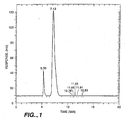
- the amount of aggregates was expressed as a fraction of the peak area eluted at 5.3 min to the total area at 5.3 min and 7.1 min ( Figure 1 ).
- the peak areas were automatically integrated by the computer. In case of unsatisfactory integration (e.g. baseline shift), manual integration was employed.
- the chemical nature (covalently bond or disulfide linkage) of the aggregates was analyzed by SDS-PAGE (Sodium Dodecyl Sulfate Polyacrylamide Gel Electrophoresis). Two fully aggregated samples were measured. A 10 ⁇ g (in 10 ⁇ l) of 1 mg/ml rhDNase load was used. The gels were stained with Coomassie blue.
- Table 1 shows that heating the rhDNase powders results in less than 1 % aggregated rhDNase whereas in solution the protein can fully aggregate quite rapidly. Thus, thermally induced aggregation occurs much more significantly in solution than in the solid state. This suggests that the aggregates found in the spray-dried DNase powders were formed in the solution state in droplets or while the powder still contains a high moisture content.
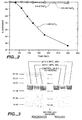
- Figure 2 and Table 2 indicate the effect of calcium ions.
- the protection against thermal aggregation at 65 °C for 5 min is 98%; at 100 mM CaCl 2 it offers complete protection.
- Other divalent cations such as Mn 2+ , Mg 2+ and Zn 2+ (chloride as the same anions) at 100 mM did not give such protection as Ca 2+ .
- Zn 2+ precipitates the protein even at room temperature (Table 3).
- calcium ions appear to specifically bind to the protein preventing aggregation.
- the SDS-PAGE results show that the band pattern of the aggregated samples are the same as the non-aggregated ones, indicating that the aggregates dissociate in the SDS. Thus, the aggregates are not covalent or linked by disulfide bond.
- Table 1 Thermally Induced Aggregation of rhDNase in the Solution and Solid-state Sample % Monomer Solution, Control 1 99.92 Solution, Lyophilized 2 99.62 Solution, Heated & Lyophilized 3 0.88 Solution, Lyophilized & Heated 4 98.96 Solution, Lyophilized & Heated 5 99.33 Ditto 6 99.02 Ditto 7 99.01 Notes: 1. Solution after dialysis in water as a control with no further treatment 2. Solution 1 lyophilized to powder 3.
- a stock rhDNase solution of 20 mg/ml was prepared from a starting solution (rhDNase 6.4 mg/ml, 150 mM NaCl, 1 mM CaCl 2 ) by concentration in an Amicon deafiltration cell followed by dialysis in Milli-Q water to remove the salts.
- the solutes (additives) which were studied for their effects on thermal stability of rhDNase were: ⁇ -lactose monohydrate (Sigma, lot 72H0563), mannitol (Sigma, lot 31HO181), trehalose (Sigma, lot 112H3903), sucrose (AR, Mallinckrodt, lot 8360 KBTA).
- DSC differential scanning calorimeter
- Aqueous solutions of different additives were prepared by dissolving a known amount of the solute in Milli-Q water.
- the solution pH was adjusted using diluted NaOH or HCI to a value between 6 arid 7 (this will give rise to a difference within 1.0°C in the T m and 0.5 J/g in H m , see Results and Discussion).
- 70-100 ⁇ l of the 20 mg/ml rhDNase stock solution were then mixed with an equal volume of additive solutions (which was substituted by pure water for the control rhDNase samples).
- the final pH of the solutions was measured as 6.3 to 7.0. No buffer was added in order to avoid possible interactions of the buffer species with rhDNase and/or additives.
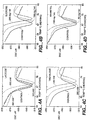
- Figure 4a-d show the protective effects of different sugars (disaccharides: lactose, sucrose and trehalose,monosaccharide; mannitol) on rhDNase against thermal denaturation.
- sugars disaccharides: lactose, sucrose and trehalose,monosaccharide; mannitol
- T m and H m appear to increase monotonically with the sugar concentration ( Figure 4e-h ).
- the effects could be explained thermodynamically.
- Addition of sugars increases the chemical potential of the protein (both native and denatured state). However, because of the larger surface area of contact between the unfolded protein and solvent, the increase is higher (and thus more favorable) for the denatured state than the native state. Thus, the native state is stabilized because thermodynamically it will be more unfavorable to move to the denatured state.
- the major route of degradation for rhDNase is deamidation.
- Deamidation correlates with loss in activity as assessed by the methyl green activity assay.
- the rate of deamidation was also found to be highly dependent on the pH of the formulation ( Figure 5 ). In particular, as the pH decreases, the rate of deamidation can be minimized even at higher storage temperatures.
- rhDNase (4.7 mg/mL, 150 mM NaCl, 1 mM CaCl 2 ) was concentrated to ⁇ 50 mg/ML at 2-8 °C by Amicon ultrafiltration using a YM10 membrane.
- the concentrated rhDNase solution was divided into two equal aliquots. The first aliquot was adjusted to pH 6 with 1N HCl. The second aliquot was adjusted to pH 5. Both solutions were filtered through a 0.2 ⁇ m filter unit and sterile filled into 3 cc glass vials with a nominal volume of 1 mL. The samples were stored at -70°, 2-8°, 15°, 25° and 37°C.
- the high concentration rhDNase-formulation was prepared as described above. After concentration the rhDNase was dialyzed into solutions containing 150 mM NaCl, 10-200 mM CaCl 2 , at 2-8°C for 36 hours with two buffer changes. Two aliquots of the same concentrated rhDNase were dialyzed against 1 mM EDTA. One aliquot was then further dialyzed into 150 mM NaCl only, and the other into 150 mM NaCl, 1 mM CaCl 2 . After dialysis, the solutions were adjusted to pH 5 with 1 N HCl. All final solutions were filtered and sterile filled into 3 cc glass vials with 0.5 mL nominal volume. The stability of these solutions was monitored as above at 37°C for up to 6 months for the 0-50 mM CaCl 2 and up to two months for > 50 mM CaCl 2 samples.
- rhDNase was concentrated to 50 mg/mL from the bulk rhDNase (4.7 mg/mL) as described above.
- the concentrated rhDNase was buffer exchanged into 1 mM NaOAc, 1, 50 or 100 mM CaCl 2 isotonic with NaCl at either pH 5 or 5.2 by dialysis at 2-8°C for 36 hours.
- the dialyzed solutions were filtered and sterile filled into 3 cc glass vials with 0.5 mL nominal volume.
- the samples were stored at 37°C and the stability of rhDNase was assessed periodically for 1 month with the assays as described below.
- rhDNase solutions at ionic strengths ranging from 0.153 M (150 mM NaCl, 1 mM CaCl 2 ) to 3.15M (150 mM NaCl, 1 M CaCl 2 and 3.15M NaCl, 1 mM CaCl 2 ) were prepared by Amicon concentration and dialysis. The solutions were adjusted to pH 5 by acid titration.
- the Ca ++ contents were analyzed by Atomic Absorption (AA) according to and by LC (ion chromatography equipped with a conductivity detector.
- rhDNase samples were diluted with Milli-Q water to 1-5 ppm for AA analysis and to 30-50 ⁇ g/mL for LC analysis.
- rhDNase in current formulation at 1 mg/mL (S9847A, 150 mM NaCl, 1 mM CaCl 2 ), bulk rhDNase at 4.7 mg/mL, 5.9 mg/mL, and 10 mg/mL, and the concentrated rhDNase at 50 mg/mL were analyzed by both methods and compared.
- rhDNase samples treated with 1 mM EDTA were also analyzed.
- rhDNase in current formulation 150 mM NaCl, 1 mM CaCl 2
- the concentrated solution was clear to slightly yellow. Precipitation occurred upon acid titration to pH 5 but was not noticeable at pH 6.
- the solution was clarified by filtration but precipitated after one day at pH 5 and five days at pH 6 at 37°C.
- the precipitate could be solubilized in strong base.
- SDS-PAGE (not shown) of the precipitate confirms the presence of high molecular weight aggregates and fragments. Both have very intense bands that spread along the whole lane on the gel.
- pH variance of 50 mg/mL rhDNase solutions containing various amount of Ca ++ in 150 mm NaCl, pH 5 at 37°C for 6 months was determined. See Figure 8 .
- the pH of the formulations with ⁇ 10 mM CaCl 2 increased gradually with time while the formulations with > 1 mM CaCl 2 , the pH remained constant. This suggests that increasing Ca ++ may provide a more stable pH at higher storage temperature.
- the increase in pH of the formulations at 37°C, containing 1 mM or less CaCl 2 may be due to precipitation of rhDNase. Since the protein is the major buffering component in these formulations, a decrease in protein concentration may lower the buffering capacity of the formulation.
- a formulation where rhDNase was first treated with 1 mM EDTA and then subsequently dialyzed back into 1 mM CaCl 2 is represented by the symbol 0/1 mM CaCl 2 in Figures 8 and 9 .
- This formulation should behave the same as the original formulation of 1 mM CaCl 2 .
- the local pH hypothesis was tested by avoiding direct acid titration of the formulation.
- concentration of the rhDNase with an Amicon stirred cell the formulation was dialyzed into 150 mM NaCl, 1 mM CaCl 2 at pH 4.7.
- the final rhDNase was a clear solution with a pH of 5.0, whereas, direct titration to pH 5 resulted in a turbid solution.
- This further supports the idea that precipitation of protein during acid titration to pH 5 is due to a local pH effect. No dimers or soluble aggregates were detected by size-exclusion chromatography for the 50 mg/mL rhDNase solutions prepared by dialysis at pH 5.
- the high concentration rhDNase in 1 mM NaOAc, 150 mM NaCl, 1 mM CaCl 2 shows a significant decrease in the amount of precipitation upon storage at 37°C when the pH is increased from 5.0 to 5.2, indicating that the precipitation of protein is very pH dependent.
- Table 6 shows that, based on color and clarity, > 10 mM CaCl 2 is required to maintain the physical stability of the high concentration rhDNase at pH 5 for long term storage at 37°C. A more effective calcium concentration probably lies in the 25 - 50 mM range.
- Acetate buffers ranging from 0.25 mM to 1 mM was tested to see which concentration is adequate for buffering of the 50 mg/mL rhDNase containing 1 - 50 mM CaCl 2 isotonic with NaCl at pH 5 (by dialysis), stored at 37°C.
- the results are given in Table 7. Based on pH, color and clarity, the 1 mM NaOAc and 50 mM CaCl 2 formulation gives constant adequate buffering at the desired pH (5.0 ⁇ 0.20) over a period of 28 days. There is a slight rise in pH after dialysis. Therefore, the buffer used to prepare high concentration rhDNase should begin with the same buffer at 0.1-0.2 pH unit lower than the expected pH in the final formulation.
- the protective effect of addition of calcium (to prevent precipitation of protein at 37°C) beyond 1 mM could be the result of high ionic strength rather than a specific calcium effect.
- I 3.1 5M
- rhDNase in final vial 1 mg/mL, in bulks 5.9 mg/mL; 10 mg/mL; 4.7 mg/mL, and concentrated rhDNase 50 mg/mL in current formulation of 150 mM NaCl, 1 mM CaCl 2 were submitted for calcium analysis by AA and LC (ion chromatography equipped with a conductivity detector).
- the concentrated rhDNase supplemented with 10-200 mM CaCl 2 and the EDTA treated rhDNase were also analyzed.
- the expected calcium concentration would range from 0 - 200 mM.
- the results show both AA and LC methods are comparable.
- One sample (10 mg/mL shown with an asterisk) was also analyzed by Inductive Coupled Plasma - Atomic Absorption Spectroscopy (ICP-AAS) for total calcium. The results are in good agreement with the AA method.
- ICP-AAS Inductive Coupled Plasma - Atomic Absorption Spectroscopy
- the 0/1 mM CaCl 2 formulation (EDTA treatment followed by dialysis versus 1 mM CaCl 2 ) is found to contain 1 mole of Ca ++ / mole of rhDNase less than the 1 mM CaCl 2 formulation. Therefore, the physical stability of the 0/1 mM CaCl 2 formulation lies somewhat in between the 1 mM CaCl 2 formulation and the one treated with EDTA.
- a possible formulation for the portable ultrasonic nebulizer is 40 - 50 mg/mL rhDNase in 1 mM NaOAc, 30 mM CaCl 2 , 105 mM NaCl, pH 5.3.
- the 10-200 mM CaCl 2 was incorporated into the formulation by dialysis and the final solutions were acid titrated to pH 5 with HCl.
- the samples were stored at 37°C for more than 30 days.
- the supernatants of these samples were obtained after centrifugation at 13,000 rpm for 10 min at ambient temperature.
Landscapes
- Health & Medical Sciences (AREA)
- Life Sciences & Earth Sciences (AREA)
- Chemical & Material Sciences (AREA)
- Natural Medicines & Medicinal Plants (AREA)
- Engineering & Computer Science (AREA)
- General Health & Medical Sciences (AREA)
- Bioinformatics & Cheminformatics (AREA)
- Medicinal Chemistry (AREA)
- Organic Chemistry (AREA)
- Zoology (AREA)
- Genetics & Genomics (AREA)
- Wood Science & Technology (AREA)
- Pharmacology & Pharmacy (AREA)
- Animal Behavior & Ethology (AREA)
- Public Health (AREA)
- Veterinary Medicine (AREA)
- Epidemiology (AREA)
- Biotechnology (AREA)
- Microbiology (AREA)
- Biochemistry (AREA)
- Molecular Biology (AREA)
- General Engineering & Computer Science (AREA)
- Botany (AREA)
- Biomedical Technology (AREA)
- Mycology (AREA)
- Medical Informatics (AREA)
- Alternative & Traditional Medicine (AREA)
- Proteomics, Peptides & Aminoacids (AREA)
- Immunology (AREA)
- Pulmonology (AREA)
- Chemical Kinetics & Catalysis (AREA)
- General Chemical & Material Sciences (AREA)
- Nuclear Medicine, Radiotherapy & Molecular Imaging (AREA)
- Medicines That Contain Protein Lipid Enzymes And Other Medicines (AREA)
- Medicinal Preparation (AREA)
- Enzymes And Modification Thereof (AREA)
- Jellies, Jams, And Syrups (AREA)
Claims (21)
- Verwendung von etwa 1 mM bis 1 M Calcium-Kation mit einem pH-Wert von weniger als 6,5 und DNase zur Herstellung einer flüssigen DNase-Lösung, wobei die DNase gegenüber thermisch induzierter Aggregation der DNase bei erhöhten Temperaturen oberhalb von 37°C stabil ist.
- Verwendung von etwa 1 mM bis 1 M Calcium-Kation und einem pH-Wert von weniger als 6,5 zur Herstellung einer flüssigen DNase-Lösung, die gegenüber thermisch induzierter Aggregation und Deaminierung der DNase bei erhöhten Temperaturen oberhalb von 37°C stabil ist.
- Verwendung nach Anspruch 2, wobei der pH-Wert der Lösung etwa pH 6,5 beträgt.
- Verwendung nach Anspruch 2, wobei der pH-Wert der Lösung etwa pH 6 beträgt.
- Verwendung nach Anspruch 2, wobei der pH-Wert der Lösung etwa pH 5 beträgt.
- Verwendung von Zucker, ausgewählt aus Lactose, Mannitol, Trehalose und Saccharose, in einer Menge von 50 mg/ml bis 200 mg/ml und DNase zur Herstellung einer DNase-Lösung, die gegenüber thermisch induzierter Aggregation der DNase bei erhöhten Temperaturen oberhalb von 37°C stabil ist.
- Verwendung von Zucker, ausgewählt aus Lactose, Mannitol, Trehalose und Saccharose, in einer Menge von 50 mg/ml bis 200 mg/ml, etwa 1 mM bis 1 M Calcium und DNase zur Herstellung einer DNase-Lösung, die gegenüber thermisch induzierter Aggregation der DNase stabil ist.
- Verwendung von Calcium nach einem der Ansprüche 1-5 oder 7, wobei das Calcium-Kation durch Calciumchlorid, Calciumoxid oder Calciumcarbonat bereitgestellt wird.
- Verwendung von Calcium nach einem der Ansprüche 1-5 oder 7, wobei das Calcium-Kation durch Calciumchlorid in einer Menge von 10 mM bis 100 mM in der Lösung bereitgestellt wird.
- Pharmazeutische DNase-Lösung, umfassend DNase und etwa 1 mM bis 1 M Calcium-Kation mit einem pH-Wert von weniger als 6,5, wobei die Aggregation der DNase auf ein Minimum beschränkt ist, wenn die Temperatur der Lösung anschließend auf mehr als 37 °C erhöht wird.
- Pharmazeutische DNase-Lösung, umfassend DNase und Zucker, ausgewählt aus Lactose, Mannitol, Trehalose und Saccharose, in einer Menge von 50 mg/ml bis 200 mg/ml.
- Pharmazeutische DNase-Lösung nach Anspruch 10, weiterhin umfassend Zucker, ausgewählt aus Lactose, Mannitol, Trehalose und Saccharose, in einer Menge von 50 mg/ml bis 200 mg/ml.
- Pharmazeutische DNase-Lösung nach Anspruch 10 oder 12, wobei das Calcium-Kation durch Calciumchlorid, Calciumoxid oder Calciumcarbonat bereitgestellt wird.
- Pharmazeutische DNase-Lösung nach Anspruch 10 oder 12, wobei die Menge an Calcium-Kation 10 mM bis 200 mM beträgt.
- Pharmazeutische DNase-Lösung nach Anspruch 10 oder 12, wobei der pH-Wert etwa 6 beträgt.
- Pharmazeutische DNase-Lösung nach Anspruch 10 oder 12, wobei der pH-Wert etwa 5 beträgt.
- Pharmazeutische DNase-Lösung nach Anspruch 10 oder 12, wobei die Aggregation der DNase auf ein Minimum beschränkt ist, wenn die Temperatur der Lösung auf mehr als 37°C erhöht wird.
- Pharmazeutische DNase-Lösung nach Anspruch 11 oder 12, wobei der Zucker α-Lactosemonohydrat ist.
- Verfahren zur Minimierung der Aggregation von DNase in einer flüssigen Lösung, umfassend:Eintragen von etwa 1 mM bis 1 M Calcium-Kation in eine DNase umfassende Lösung und Sprühtrocknen der flüssigen Lösung undSammeln des sprühgetrockneten Produkts als ein einatembares DNase enthaltendes Pulver, das therapeutisch wirksam ist.
- Verfahren zur Minimierung der Aggregation von DNase in einer flüssigen Lösung, umfassend:Eintragen von Zucker, ausgewählt aus Lactose, Mannitol, Trehalose und Saccharose, in einer Menge von 50 mg/ml bis 200 mg/ml in eine DNase enthaltende Lösung undSprühtrocknen der flüssigen Lösung und Sammeln des sprühgetrockneten Produkts als ein einatembares DNase enthaltendes Pulver, das therapeutisch wirksam ist.
- Verfahren zur Minimierung der Aggregation von DNase in einer flüssigen Lösung, umfassend:Eintragen von etwa 1 mM bis 1 M Calcium und Zucker, ausgewählt aus Lactose, Mannitol, Trehalose und Saccharose, in einer Menge von 50 mg/ml bis 200 mg/ml in die DNase enthaltende Lösung undSprühtrocknen der flüssigen Lösung und Sammeln des sprühgetrockneten Produkts als ein einatembares DNase enthaltendes Pulver, das therapeutisch wirksam ist.
Applications Claiming Priority (5)
| Application Number | Priority Date | Filing Date | Title |
|---|---|---|---|
| US20650494A | 1994-03-04 | 1994-03-04 | |
| US206504 | 1994-03-04 | ||
| US37752795A | 1995-01-20 | 1995-01-20 | |
| US377527 | 1995-01-20 | ||
| PCT/US1995/002457 WO1995023854A1 (en) | 1994-03-04 | 1995-02-28 | IMPROVED DNase LIQUID SOLUTIONS |
Publications (2)
| Publication Number | Publication Date |
|---|---|
| EP0748377A1 EP0748377A1 (de) | 1996-12-18 |
| EP0748377B1 true EP0748377B1 (de) | 2008-07-16 |
Family
ID=26901408
Family Applications (1)
| Application Number | Title | Priority Date | Filing Date |
|---|---|---|---|
| EP95911123A Expired - Lifetime EP0748377B1 (de) | 1994-03-04 | 1995-02-28 | Verbesserte dnase flüssige lösungen |
Country Status (7)
| Country | Link |
|---|---|
| US (2) | US6383788B1 (de) |
| EP (1) | EP0748377B1 (de) |
| JP (1) | JP3009224B2 (de) |
| AT (1) | ATE401394T1 (de) |
| CA (1) | CA2184581C (de) |
| DE (1) | DE69535787D1 (de) |
| WO (1) | WO1995023854A1 (de) |
Families Citing this family (9)
| Publication number | Priority date | Publication date | Assignee | Title |
|---|---|---|---|---|
| ATE401394T1 (de) * | 1994-03-04 | 2008-08-15 | Genentech Inc | Verbesserte dnase flüssige lösungen |
| EP0938543A4 (de) * | 1996-09-04 | 2002-10-29 | Nexell Therapeutics Inc | Nuclease- und chelatbildner-haltige zusammensetzungen zur verbesserung der zellgewinnung in zelltrennverfahren |
| JP4340062B2 (ja) | 2000-10-12 | 2009-10-07 | ジェネンテック・インコーポレーテッド | 粘度の減少した濃縮タンパク質製剤 |
| US8703126B2 (en) | 2000-10-12 | 2014-04-22 | Genentech, Inc. | Reduced-viscosity concentrated protein formulations |
| BRPI1006519A2 (pt) | 2009-03-06 | 2016-08-09 | Genentech Inc | formulação de anticorpos |
| HRP20192207T1 (hr) | 2010-08-11 | 2020-02-21 | Ironwood Pharmaceuticals, Inc. | Stabilne formulacije linaklotida |
| WO2016067944A1 (ja) | 2014-10-31 | 2016-05-06 | Jcrファーマ株式会社 | 組換えヒトDNaseIの製造方法 |
| EP3240896A1 (de) | 2015-01-04 | 2017-11-08 | Protalix Ltd. | Modifizierte dnase und verwendungen davon |
| WO2017049205A2 (en) * | 2015-09-18 | 2017-03-23 | Amunix Operating Inc. | Growth hormone formulation |
Family Cites Families (7)
| Publication number | Priority date | Publication date | Assignee | Title |
|---|---|---|---|---|
| US3042587A (en) * | 1960-11-29 | 1962-07-03 | Merck & Co Inc | Stabilized desoxyribonuclease preparation |
| CA1059937A (en) | 1975-03-25 | 1979-08-07 | Canada Packers Limited | Isolation and purification of deoxyribonuclease |
| US4233405A (en) * | 1979-10-10 | 1980-11-11 | Rohm And Haas Company | Process for spray drying enzymes |
| WO1990007572A1 (en) | 1988-12-23 | 1990-07-12 | Genentech, Inc. | HUMAN DNase |
| US5279823A (en) * | 1992-06-08 | 1994-01-18 | Genentech, Inc. | Purified forms of DNASE |
| ATE401394T1 (de) * | 1994-03-04 | 2008-08-15 | Genentech Inc | Verbesserte dnase flüssige lösungen |
| US5580856A (en) * | 1994-07-15 | 1996-12-03 | Prestrelski; Steven J. | Formulation of a reconstituted protein, and method and kit for the production thereof |
-
1995
- 1995-02-28 AT AT95911123T patent/ATE401394T1/de not_active IP Right Cessation
- 1995-02-28 EP EP95911123A patent/EP0748377B1/de not_active Expired - Lifetime
- 1995-02-28 DE DE69535787T patent/DE69535787D1/de not_active Expired - Fee Related
- 1995-02-28 US US08/696,955 patent/US6383788B1/en not_active Expired - Lifetime
- 1995-02-28 JP JP7522968A patent/JP3009224B2/ja not_active Expired - Lifetime
- 1995-02-28 WO PCT/US1995/002457 patent/WO1995023854A1/en not_active Ceased
- 1995-02-28 CA CA002184581A patent/CA2184581C/en not_active Expired - Lifetime
-
2002
- 2002-02-12 US US10/076,213 patent/US7018825B2/en not_active Expired - Fee Related
Also Published As
| Publication number | Publication date |
|---|---|
| JP3009224B2 (ja) | 2000-02-14 |
| ATE401394T1 (de) | 2008-08-15 |
| JPH09503394A (ja) | 1997-04-08 |
| CA2184581A1 (en) | 1995-09-08 |
| WO1995023854A1 (en) | 1995-09-08 |
| US20030054532A1 (en) | 2003-03-20 |
| US6383788B1 (en) | 2002-05-07 |
| US7018825B2 (en) | 2006-03-28 |
| EP0748377A1 (de) | 1996-12-18 |
| DE69535787D1 (de) | 2008-08-28 |
| CA2184581C (en) | 2005-02-22 |
Similar Documents
| Publication | Publication Date | Title |
|---|---|---|
| EP0228862B1 (de) | Stabilisierte Zusammensetzungen von menschlichen Aktivatoren des Gewebeplasminogens | |
| JP4879104B2 (ja) | 高度に濃縮された、凍結乾燥された、および液体の、因子ix処方 | |
| CA2099138C (en) | Chondroitinase, process for preparing the same, and pharmaceutical composition comprising the same | |
| AU2012326171B2 (en) | Etanercept formulations stabilized with sodium chloride | |
| US4478829A (en) | Pharmaceutical preparation containing purified fibronectin | |
| US9907829B2 (en) | Stable MIA/CD-RAP formulation | |
| KR20080049152A (ko) | 보툴리눔 신경독소를 포함하는 치료 조성물 | |
| IL117405A (en) | Stable preparations of transglutaminase and processes for their preparation | |
| US7018825B2 (en) | DNase liquid solutions | |
| WO2008078189A2 (en) | Factor vii and viia compositions | |
| US5034225A (en) | Stabilized human tissue plasminogen activator compositions | |
| Porter et al. | Thermal stability of low molecular weight urokinase during heat treatment. I. Effects of protein concentration, pH and ionic strength | |
| CA1214102A (en) | Pharmaceutical preparation containing purified fibronectin | |
| CN114438048B (zh) | 尿酸氧化酶制剂及其应用 | |
| JP3895782B2 (ja) | コンドロイチナーゼ組成物およびそれを含有する注射用製剤 | |
| KR930008908B1 (ko) | 조직형 플라스미노겐 활성화제 또는 그의 유도체를 함유하는 혈전용해 조성물 | |
| JPH0767642A (ja) | 酵素組成物 | |
| JPH1112194A (ja) | 組織プラスミノーゲン活性化因子医薬組成物 | |
| AU3541900A (en) | Stable transglutaminase preparations and process for producing them |
Legal Events
| Date | Code | Title | Description |
|---|---|---|---|
| PUAI | Public reference made under article 153(3) epc to a published international application that has entered the european phase |
Free format text: ORIGINAL CODE: 0009012 |
|
| 17P | Request for examination filed |
Effective date: 19961004 |
|
| AK | Designated contracting states |
Kind code of ref document: A1 Designated state(s): AT BE CH DE DK ES FR GB GR IE IT LI LU MC NL PT SE |
|
| 17Q | First examination report despatched |
Effective date: 19990205 |
|
| GRAP | Despatch of communication of intention to grant a patent |
Free format text: ORIGINAL CODE: EPIDOSNIGR1 |
|
| GRAS | Grant fee paid |
Free format text: ORIGINAL CODE: EPIDOSNIGR3 |
|
| GRAA | (expected) grant |
Free format text: ORIGINAL CODE: 0009210 |
|
| AK | Designated contracting states |
Kind code of ref document: B1 Designated state(s): AT BE CH DE DK ES FR GB GR IE IT LI LU MC NL PT SE |
|
| REG | Reference to a national code |
Ref country code: GB Ref legal event code: FG4D |
|
| REG | Reference to a national code |
Ref country code: CH Ref legal event code: EP |
|
| REF | Corresponds to: |
Ref document number: 69535787 Country of ref document: DE Date of ref document: 20080828 Kind code of ref document: P |
|
| REG | Reference to a national code |
Ref country code: IE Ref legal event code: FG4D |
|
| RAP2 | Party data changed (patent owner data changed or rights of a patent transferred) |
Owner name: GENENTECH, INC. |
|
| NLT2 | Nl: modifications (of names), taken from the european patent patent bulletin |
Owner name: GENENTECH, INC. Effective date: 20080910 |
|
| NLV1 | Nl: lapsed or annulled due to failure to fulfill the requirements of art. 29p and 29m of the patents act | ||
| PG25 | Lapsed in a contracting state [announced via postgrant information from national office to epo] |
Ref country code: PT Free format text: LAPSE BECAUSE OF FAILURE TO SUBMIT A TRANSLATION OF THE DESCRIPTION OR TO PAY THE FEE WITHIN THE PRESCRIBED TIME-LIMIT Effective date: 20081216 Ref country code: NL Free format text: LAPSE BECAUSE OF FAILURE TO SUBMIT A TRANSLATION OF THE DESCRIPTION OR TO PAY THE FEE WITHIN THE PRESCRIBED TIME-LIMIT Effective date: 20080716 Ref country code: ES Free format text: LAPSE BECAUSE OF FAILURE TO SUBMIT A TRANSLATION OF THE DESCRIPTION OR TO PAY THE FEE WITHIN THE PRESCRIBED TIME-LIMIT Effective date: 20081027 |
|
| PG25 | Lapsed in a contracting state [announced via postgrant information from national office to epo] |
Ref country code: AT Free format text: LAPSE BECAUSE OF FAILURE TO SUBMIT A TRANSLATION OF THE DESCRIPTION OR TO PAY THE FEE WITHIN THE PRESCRIBED TIME-LIMIT Effective date: 20080716 |
|
| PG25 | Lapsed in a contracting state [announced via postgrant information from national office to epo] |
Ref country code: BE Free format text: LAPSE BECAUSE OF FAILURE TO SUBMIT A TRANSLATION OF THE DESCRIPTION OR TO PAY THE FEE WITHIN THE PRESCRIBED TIME-LIMIT Effective date: 20080716 |
|
| PG25 | Lapsed in a contracting state [announced via postgrant information from national office to epo] |
Ref country code: DK Free format text: LAPSE BECAUSE OF FAILURE TO SUBMIT A TRANSLATION OF THE DESCRIPTION OR TO PAY THE FEE WITHIN THE PRESCRIBED TIME-LIMIT Effective date: 20080716 |
|
| PLBE | No opposition filed within time limit |
Free format text: ORIGINAL CODE: 0009261 |
|
| STAA | Information on the status of an ep patent application or granted ep patent |
Free format text: STATUS: NO OPPOSITION FILED WITHIN TIME LIMIT |
|
| 26N | No opposition filed |
Effective date: 20090417 |
|
| PG25 | Lapsed in a contracting state [announced via postgrant information from national office to epo] |
Ref country code: IT Free format text: LAPSE BECAUSE OF FAILURE TO SUBMIT A TRANSLATION OF THE DESCRIPTION OR TO PAY THE FEE WITHIN THE PRESCRIBED TIME-LIMIT Effective date: 20080716 |
|
| PG25 | Lapsed in a contracting state [announced via postgrant information from national office to epo] |
Ref country code: MC Free format text: LAPSE BECAUSE OF NON-PAYMENT OF DUE FEES Effective date: 20090228 |
|
| REG | Reference to a national code |
Ref country code: CH Ref legal event code: PL |
|
| GBPC | Gb: european patent ceased through non-payment of renewal fee |
Effective date: 20090228 |
|
| PG25 | Lapsed in a contracting state [announced via postgrant information from national office to epo] |
Ref country code: LI Free format text: LAPSE BECAUSE OF NON-PAYMENT OF DUE FEES Effective date: 20090228 Ref country code: CH Free format text: LAPSE BECAUSE OF NON-PAYMENT OF DUE FEES Effective date: 20090228 |
|
| REG | Reference to a national code |
Ref country code: IE Ref legal event code: MM4A |
|
| REG | Reference to a national code |
Ref country code: FR Ref legal event code: ST Effective date: 20091030 |
|
| PG25 | Lapsed in a contracting state [announced via postgrant information from national office to epo] |
Ref country code: SE Free format text: LAPSE BECAUSE OF FAILURE TO SUBMIT A TRANSLATION OF THE DESCRIPTION OR TO PAY THE FEE WITHIN THE PRESCRIBED TIME-LIMIT Effective date: 20081016 Ref country code: IE Free format text: LAPSE BECAUSE OF NON-PAYMENT OF DUE FEES Effective date: 20090228 Ref country code: DE Free format text: LAPSE BECAUSE OF NON-PAYMENT OF DUE FEES Effective date: 20090901 |
|
| PG25 | Lapsed in a contracting state [announced via postgrant information from national office to epo] |
Ref country code: GB Free format text: LAPSE BECAUSE OF NON-PAYMENT OF DUE FEES Effective date: 20090228 Ref country code: FR Free format text: LAPSE BECAUSE OF NON-PAYMENT OF DUE FEES Effective date: 20090302 |
|
| PG25 | Lapsed in a contracting state [announced via postgrant information from national office to epo] |
Ref country code: GR Free format text: LAPSE BECAUSE OF FAILURE TO SUBMIT A TRANSLATION OF THE DESCRIPTION OR TO PAY THE FEE WITHIN THE PRESCRIBED TIME-LIMIT Effective date: 20081017 |
|
| PG25 | Lapsed in a contracting state [announced via postgrant information from national office to epo] |
Ref country code: LU Free format text: LAPSE BECAUSE OF NON-PAYMENT OF DUE FEES Effective date: 20090228 |