EP0742846B1 - Wärmebehandlung von aluminium-lithium-legierungen - Google Patents
Wärmebehandlung von aluminium-lithium-legierungen Download PDFInfo
- Publication number
- EP0742846B1 EP0742846B1 EP95940342A EP95940342A EP0742846B1 EP 0742846 B1 EP0742846 B1 EP 0742846B1 EP 95940342 A EP95940342 A EP 95940342A EP 95940342 A EP95940342 A EP 95940342A EP 0742846 B1 EP0742846 B1 EP 0742846B1
- Authority
- EP
- European Patent Office
- Prior art keywords
- hours
- ageing
- artificial ageing
- temperature range
- temperature
- Prior art date
- Legal status (The legal status is an assumption and is not a legal conclusion. Google has not performed a legal analysis and makes no representation as to the accuracy of the status listed.)
- Expired - Lifetime
Links
- 229910001148 Al-Li alloy Inorganic materials 0.000 title claims description 18
- FCVHBUFELUXTLR-UHFFFAOYSA-N [Li].[AlH3] Chemical compound [Li].[AlH3] FCVHBUFELUXTLR-UHFFFAOYSA-N 0.000 title claims description 12
- 239000001989 lithium alloy Substances 0.000 title claims description 11
- 238000010438 heat treatment Methods 0.000 title description 6
- 230000032683 aging Effects 0.000 claims description 69
- 238000000034 method Methods 0.000 claims description 17
- 239000000853 adhesive Substances 0.000 claims description 5
- 230000001070 adhesive effect Effects 0.000 claims description 5
- 238000003483 aging Methods 0.000 description 58
- 238000011282 treatment Methods 0.000 description 42
- 239000000463 material Substances 0.000 description 34
- 230000035882 stress Effects 0.000 description 17
- 239000000956 alloy Substances 0.000 description 15
- 238000001556 precipitation Methods 0.000 description 15
- 229910045601 alloy Inorganic materials 0.000 description 14
- 229910000989 Alclad Inorganic materials 0.000 description 8
- 230000000694 effects Effects 0.000 description 8
- WHXSMMKQMYFTQS-UHFFFAOYSA-N Lithium Chemical group [Li] WHXSMMKQMYFTQS-UHFFFAOYSA-N 0.000 description 7
- 229910052744 lithium Inorganic materials 0.000 description 7
- 230000009467 reduction Effects 0.000 description 7
- 239000000243 solution Substances 0.000 description 7
- 230000008901 benefit Effects 0.000 description 6
- 230000007797 corrosion Effects 0.000 description 6
- 238000005260 corrosion Methods 0.000 description 6
- 238000005728 strengthening Methods 0.000 description 6
- 238000012360 testing method Methods 0.000 description 6
- 239000002244 precipitate Substances 0.000 description 5
- 239000000047 product Substances 0.000 description 5
- 208000013201 Stress fracture Diseases 0.000 description 4
- 238000009792 diffusion process Methods 0.000 description 4
- 230000007774 longterm Effects 0.000 description 4
- 239000004411 aluminium Substances 0.000 description 3
- 229910052782 aluminium Inorganic materials 0.000 description 3
- XAGFODPZIPBFFR-UHFFFAOYSA-N aluminium Chemical compound [Al] XAGFODPZIPBFFR-UHFFFAOYSA-N 0.000 description 3
- 230000006872 improvement Effects 0.000 description 3
- 238000011534 incubation Methods 0.000 description 3
- 239000000203 mixture Substances 0.000 description 3
- 230000008569 process Effects 0.000 description 3
- 238000009864 tensile test Methods 0.000 description 3
- DBGIVFWFUFKIQN-UHFFFAOYSA-N (+-)-Fenfluramine Chemical compound CCNC(C)CC1=CC=CC(C(F)(F)F)=C1 DBGIVFWFUFKIQN-UHFFFAOYSA-N 0.000 description 2
- 229910017076 Fe Zr Inorganic materials 0.000 description 2
- 230000000052 comparative effect Effects 0.000 description 2
- 238000010276 construction Methods 0.000 description 2
- 230000007246 mechanism Effects 0.000 description 2
- 229910052751 metal Inorganic materials 0.000 description 2
- 239000002184 metal Substances 0.000 description 2
- 230000035515 penetration Effects 0.000 description 2
- 230000005855 radiation Effects 0.000 description 2
- 239000011347 resin Substances 0.000 description 2
- 229920005989 resin Polymers 0.000 description 2
- 229920006395 saturated elastomer Polymers 0.000 description 2
- 230000007704 transition Effects 0.000 description 2
- 229910000547 2024-T3 aluminium alloy Inorganic materials 0.000 description 1
- 208000010392 Bone Fractures Diseases 0.000 description 1
- RYGMFSIKBFXOCR-UHFFFAOYSA-N Copper Chemical compound [Cu] RYGMFSIKBFXOCR-UHFFFAOYSA-N 0.000 description 1
- 229910000881 Cu alloy Inorganic materials 0.000 description 1
- 206010017076 Fracture Diseases 0.000 description 1
- FYYHWMGAXLPEAU-UHFFFAOYSA-N Magnesium Chemical compound [Mg] FYYHWMGAXLPEAU-UHFFFAOYSA-N 0.000 description 1
- JRBRVDCKNXZZGH-UHFFFAOYSA-N alumane;copper Chemical compound [AlH3].[Cu] JRBRVDCKNXZZGH-UHFFFAOYSA-N 0.000 description 1
- 230000003466 anti-cipated effect Effects 0.000 description 1
- 239000001996 bearing alloy Substances 0.000 description 1
- 230000015572 biosynthetic process Effects 0.000 description 1
- 230000008859 change Effects 0.000 description 1
- 230000002301 combined effect Effects 0.000 description 1
- 230000000295 complement effect Effects 0.000 description 1
- 239000010949 copper Substances 0.000 description 1
- 229910052802 copper Inorganic materials 0.000 description 1
- 230000001186 cumulative effect Effects 0.000 description 1
- 230000002939 deleterious effect Effects 0.000 description 1
- 238000010790 dilution Methods 0.000 description 1
- 239000012895 dilution Substances 0.000 description 1
- 238000004090 dissolution Methods 0.000 description 1
- 238000009826 distribution Methods 0.000 description 1
- 238000013213 extrapolation Methods 0.000 description 1
- 238000001125 extrusion Methods 0.000 description 1
- 238000005242 forging Methods 0.000 description 1
- 238000007656 fracture toughness test Methods 0.000 description 1
- 238000011221 initial treatment Methods 0.000 description 1
- 238000011835 investigation Methods 0.000 description 1
- 229910052749 magnesium Inorganic materials 0.000 description 1
- 239000011777 magnesium Substances 0.000 description 1
- 238000005259 measurement Methods 0.000 description 1
- 230000003278 mimic effect Effects 0.000 description 1
- 230000008447 perception Effects 0.000 description 1
- 230000000505 pernicious effect Effects 0.000 description 1
- ISWSIDIOOBJBQZ-UHFFFAOYSA-N phenol group Chemical group C1(=CC=CC=C1)O ISWSIDIOOBJBQZ-UHFFFAOYSA-N 0.000 description 1
- 238000012545 processing Methods 0.000 description 1
- 230000000750 progressive effect Effects 0.000 description 1
- 230000002035 prolonged effect Effects 0.000 description 1
- 238000011084 recovery Methods 0.000 description 1
- 238000005096 rolling process Methods 0.000 description 1
- 230000035945 sensitivity Effects 0.000 description 1
- 230000003068 static effect Effects 0.000 description 1
- 238000007669 thermal treatment Methods 0.000 description 1
Images

Classifications
-
- C—CHEMISTRY; METALLURGY
- C22—METALLURGY; FERROUS OR NON-FERROUS ALLOYS; TREATMENT OF ALLOYS OR NON-FERROUS METALS
- C22F—CHANGING THE PHYSICAL STRUCTURE OF NON-FERROUS METALS AND NON-FERROUS ALLOYS
- C22F1/00—Changing the physical structure of non-ferrous metals or alloys by heat treatment or by hot or cold working
- C22F1/04—Changing the physical structure of non-ferrous metals or alloys by heat treatment or by hot or cold working of aluminium or alloys based thereon
-
- C—CHEMISTRY; METALLURGY
- C22—METALLURGY; FERROUS OR NON-FERROUS ALLOYS; TREATMENT OF ALLOYS OR NON-FERROUS METALS
- C22F—CHANGING THE PHYSICAL STRUCTURE OF NON-FERROUS METALS AND NON-FERROUS ALLOYS
- C22F1/00—Changing the physical structure of non-ferrous metals or alloys by heat treatment or by hot or cold working
- C22F1/04—Changing the physical structure of non-ferrous metals or alloys by heat treatment or by hot or cold working of aluminium or alloys based thereon
- C22F1/057—Changing the physical structure of non-ferrous metals or alloys by heat treatment or by hot or cold working of aluminium or alloys based thereon of alloys with copper as the next major constituent
Definitions
- This invention relates to the heat treatment of aluminium-lithium alloys and in particular to such heat treatment for the strengthening of such alloys and for the optimisation of such alloys' plane stress fracture toughness.
- Such alloys are known in particular for use in aircraft skin construction, and more particularly for commercial aircraft fuselage, wing and empennage construction.
- the low density, high stiffness and excellent fatigue properties of aluminium-lithium alloys enable weight savings to be achieved to maximise profitability of the aircraft.
- Al-Li alloys registered with the ALUMINIUM ASSOCIATION as AA8090 and AA2091 (hereinafter referred to without the "AA" prefix) in recrystallised sheet form and under-aged tempers have been shown to possess attributes of "Damage Tolerance” in that fatigue crack growth rates are commendably slow coupled with reasonably high levels of plane stress fracture toughness (Kc).
- Kc plane stress fracture toughness
- any new skin material and particularly fuselage wing and empennage skin materials must possess. These include adequate strength, good corrosion resistance and an often unstated but very important requirement of long-term thermal stability, ie the ability to withstand prolonged periods at moderately elevated temperatures without an appreciable or unacceptable loss in any of the key attributes.
- thermal instability involves on the ground exposures to the combined effects of high ambient temperatures and intense solar radiation. It is generally accepted that in tropical conditions fuselage skin temperatures of up to 70-85°C can be achieved when the sun is at or near its zenith.
- the 8090 and 2091 alloys have been primarily investigated for fuselage skin applications in the T81 and T84 conditions respectively.
- the T81 condition for 8090 is achieved by artificial age hardening ("ageing") from the T31 condition (ie solution treated and controlled stretched) for 24 hours at 150°C whilst the T84 condition for 2091 is achieved by ageing from the T3 condition for 12 hours at 135°C following a slow ramp up from ambient to 135°C.
- ageing age hardening
- T3 condition ie solution treated and controlled stretched
- T84 condition for 2091 is achieved by ageing from the T3 condition for 12 hours at 135°C following a slow ramp up from ambient to 135°C.
- both the Al-Li products referred to are known to lack thermal stability in the temperature range 70-85°C and an increase in strength coupled with a disproportionately large reduction in Kc results after relatively short isothermal exposures (ie a very significant effect after 1000 hours). This inverse relationship between strength and Kc for Al-Li alloys has been demonstrated on many occasions.
- the cause of thermal instability is attributed to an on-going precipitation of ⁇ ' (Al 3 Li).
- the reason for the continued precipitation of ⁇ ', and hence the thermal instability, is that there is an inverse relationship between the equilibrium volume fraction of ⁇ ' and temperature (ie the equilibrium volume fraction increases as temperature is reduced).
- the high rate of diffusion of lithium in aluminium ensures that the formation of ⁇ ' is not effectively diffusion rate controlled until the temperature falls some considerable way below the exposure temperature of concern.
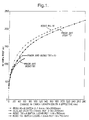
- Batch 1 material 8090 T81 duplicate samples of a batch of (hereinafter referred to as "Batch 1" material) 8090 T81 were given a range of thermal treatments prior to being exposed to an elevated temperature for a considerable length of time.
- the composition in weight percent of the Batch 1 material was: Li Cu Mg Fe Zr Al 2.23 1.14 0.79 0.045 0.06 Remainder
- the treatments chosen included a 10 minute "reversion" at 200°C from the T81 condition (ie causing a drop in 0.2% Proof Stress due to ⁇ ' dissolution), followed by a re-age of 170°C for 4 hours (ie to achieve a recovery to approximately the original level of T81 0.2% Proof Stress and, finally, an extensive over-ageing treatment of 220°C for 12 hours in addition to the T81 initial treatment.
- the Batch 1 8090 sheet had a T81 LT 0.2% Proof Stress of 293 MPa and which then reached what is believed to be a ⁇ ' -saturated 0.2% Proof Stress of 320 MPa following 920 hours thermal exposure at 100°C , ie a rise of 27 MPa.
- an improved method of heat treating Aluminium-Lithium alloy includes carrying out a succession of at least two artificial ageing steps, the first such step being carried out within a first temperature range and at least one further step being carried out within a successively reduced temperature range as defined in claim 1.
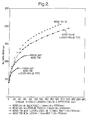
- Ageing trials according to the invention were then conducted using an 8090 T31 starting condition material which was arrived at by re-solution treatment and controlled stretching of some Batch 1 8090 T81 material.
- NB Re-solution treatment was carried out at 505°C to avoid grain growth.
- Ageing commenced at 150°C but for a short duration (very much less than the prior art 24 hours at 150°C) followed by progressive reductions in temperature and increases in ageing time in order that the volume fraction of S' and phases other than ⁇ ' could be capped and a high volume fraction of ⁇ ' realised.
- Batch 2 a new batch of 8090 sheet was obtained (hereinafter referred to as "Batch 2") which had not been previously solution heat treated. This material was used for solution heat treatment and ageing trials in order to optimise the process of RS-W ageing.
- the composition in weight percent of the Batch 2 sheet material was: Li Cu Mg Fe Zr Al 2.26 1.21 0.69 0.047 0.06 Remainder
- a method of forming an adhesively bonded heat treated structure of at least two components at least one of which comprises aluminium-lithium alloy including the steps of forming a pre-cure assembly of the components and adhesive and heat treating the assembly according to the method of the first aspect of the invention whereby to cure the adhesive during at least one of the artificial ageing steps and so form the adhesively bonded heat treated structure.
- the first step could be shortened to 0.75 hours or extended to 1.25 hours without undue deleterious effects being apparent. It was also found that the final step could be truncated to 8 hours for material given 1 hour/150°C or 1.25/150°C without a significant effect on the final strength being apparent and, for applications where strength is not critical, this step can be omitted completely and/or the shorter 150°C ageing treatment adopted.
- the preferred ageing treatment identified as a result of this work is: 1 hour/150°C + 8/120°C + 24/105°C + 8/95°C
- the 4-step treatment has the advantage of maximising the degree of benign strengthening (ie strengthening due to ⁇ ' precipitation) without requiring an overly long ageing treatment which might be uneconomic.
- the treatment was found to be reasonably insensitive to ageing temperature within the range ⁇ 5°C (all steps) and to variations in the length of individual treatments within the range ⁇ 25% of the stated time.
- this final predicted 0.2% Proof Stress level for Batch 2 RS-W material is regarded as approximately 25-30 MPa above a value considered compatible with a target of matching the plane stress fracture toughness of alclad 2024 T3.
- To achieve a further reduction in the level of the ⁇ '-saturated 0.2% Proof Stress may require a compositional adjustment to be made in combination with the RS-W treatment.
- the magnesium level should be reduced from the 0.69% level present in Batch 2 to substantially the minimum level in the compositional registration (ie 0.6%), or even to below this value to as low as substantially 0.4%. This will further restrict the strengthening attributed to S' precipitation and will increase the solubility limit of lithium in aluminium thereby restricting the degree of ⁇ ' precipitation.
- the lithium level may also need to be maintained at or even below the 8090 compositional minimum (ie 2.2%). Reducing the copper levels may be counterproductive in terms of toughness and so further dilution below the Batch 2 level may not be advisable.
- the nature of the heat treatment according to the RS-W aspect of the invention is such that there is a broad range of treatments which achieve approximately the same final condition.
- a very broad range of RS-W treatment intended to produce a condition of high plane stress fracture toughness is therefore disclosed and then various refinements culminating in a preferred range (RS-W Range 4) which is particularly suited to the 8090 alloy and which achieves an optimum combination of initial strength, toughness and thermal stability is disclosed.
- the HSRS-W ageing treatment combines the process of maximising the ⁇ ' volume fraction with an ageing treatment intended to produce a medium-to-high strength condition (ie high in S' and ⁇ ') to result in an increased strength level which is higher than would result from the initial prior art ageing treatment alone or from an isothermal ageing treatment of the same overall length which is solely carried out at the higher temperature.
- a medium-to-high strength condition ie high in S' and ⁇ '
- the time indicated may commence when the temperature of the product as determined by a contact-based temperature measuring device (thermocouple) reaches a temperature within 5°C of the nominal temperature of the treatment.
- a contact-based temperature measuring device thermocouple
- a heat up time 10 to 15 minutes has been found to be appropriate.
- the lag between the metal and oven air temperatures can be ignored and the treatment time then commences when the oven air temperature recovers to the set temperature.
- Treatments below 90°C are considered to be ineffective, according to the invention.
- the use of the RS-W ageing method of the invention provides a means of achieving a strength level for aluminium-lithium alloys such as 8090 which are strengthened by the precipitation of ⁇ ' and S' which is comparable with conventional aluminium-copper alloy materials whilst also restricting the degree of subsequent and unwanted strengthening and associated loss in fracture toughness which can take place due to prolonged exposure to moderately elevated temperatures such as are encountered by fuselage, wing and empennage skin structures during on-the-ground exposures when relatively high ambient temperatures exist and/or there is significant heating due to solar radiation.
- the invention also provides a means of achieving an improved level of toughness of all other aluminium-lithium alloys whether in plate form, sheet form, extruded form or otherwise primarily strengthened by the precipitation of the ⁇ ' (Al 3 Li) precipitate in conjunction with other precipitates such as S' (Al 2 CuMg).
- the invention also provides an improvement in the resistance of the 8090 alloy in recrystallised sheet form to intergranular corrosion.
Landscapes
- Chemical & Material Sciences (AREA)
- Thermal Sciences (AREA)
- Crystallography & Structural Chemistry (AREA)
- Engineering & Computer Science (AREA)
- Materials Engineering (AREA)
- Mechanical Engineering (AREA)
- Metallurgy (AREA)
- Organic Chemistry (AREA)
- Physics & Mathematics (AREA)
- Battery Electrode And Active Subsutance (AREA)
- Secondary Cells (AREA)
- Cell Electrode Carriers And Collectors (AREA)
- Heat Treatment Of Articles (AREA)
- Heat Treatment Of Steel (AREA)
- Cookers (AREA)
- Resistance Heating (AREA)
- Chemical Treatment Of Metals (AREA)
- Processing And Handling Of Plastics And Other Materials For Molding In General (AREA)
- Pressure Welding/Diffusion-Bonding (AREA)
- Application Of Or Painting With Fluid Materials (AREA)
Claims (6)
- Verfahren zur Wärmebehandlung einer Aluminium-Lithium-Legierung, bei welchem eine Folge von wenigstens zwei künstlichen Alterungsschritten durchgeführt wird, wobei der erste Alterungsschritt in einem ersten Temperaturbereich zwischen 165°C und 130°C durchgeführt wird und wenigstens ein weiterer Alterungsschritt innerhalb eines sukzessiv verminderten Temperaturbereichs zwischen 130°C und 90°C durchgeführt wird.
- Verfahren nach Anspruch 1, bei welchem der erste künstliche Alterungsschritt innerhalb eines Zeitraumes zwischen 15 Minuten und 24 Stunden durchgeführt wird und danach ein zweiter künstlicher Alterungsschritt innerhalb eines Zeitraumes zwischen 1 Stunde und 72 Stunden durchgeführt wird.
- Verfahren nach Anspruch 1, bei welchem der erste künstliche Alterungsschritt innerhalb eines Temperaturbereichs zwischen 160°C und 130°C und innerhalb eines Zeitraumes von 30 Minuten bis 12 Stunden durchgeführt wird und danach ein zweiter künstlicher Alterungsschritt in einem Temperaturbereich zwischen 130°C und 90°C und innerhalb eines Zeitraumes zwischen 2 Stunden und 72 Stunden durchgeführt wird.
- Verfahren nach Anspruch 1, bei welchem der erste künstliche Alterungsschritt innerhalb eines Temperaturbereichs zwischen 155°C und 145°C und während einer Zeitdauer zwischen 45 Minuten bis 75 Minuten durchgeführt wird, wobei danach ein zweiter künstlicher Alterungsschritt innerhalb eines Temperaturbereichs zwischen 125°C und 115°C innerhalb eines Zeitraumes zwischen 4 Stunden und 12 Stunden durchgeführt wird, worauf ein dritter künstlicher Alterungsschritt innerhalb eines Temperaturbereichs zwischen 110°C und 100°C innerhalb eines Zeitraumes zwischen 12 Stunden und 36 Stunden durchgeführt wird und wobei danach ein vierter künstlicher Alterungsschritt innerhalb eines Temperaturbereichs zwischen 100°C und 90°C und innerhalb eines Zeitraumes zwischen 0 Stunden und 24 Stunden durchgeführt wird.
- Verfahren nach Anspruch 1, bei welchem der erste künstliche Alterungsschritt innerhalb eines Temperaturbereichs zwischen 155°C bis 145°C und während einer Zeitdauer zwischen 45 Minuten bis 75 Minuten durchgeführt wird, worauf ein zweiter künstlicher Alterungsschritt innerhalb eines Temperaturbereichs zwischen 125°C und 115°C und während einer Zeitdauer zwischen 6 Stunden und 10 Stunden durchgeführt wird, worauf ein dritter künstlicher Alterungsschritt innerhalb eines Temperaturbereichs zwischen 110°C und 100°C und innerhalb einer Zeitdauer zwischen 18 und 30 Stunden durchgeführt wird und danach ein vierter Alterungsschritt innerhalb eines Temperaturbereichs zwischen 100°C und 90°C und während einer Zeitdauer zwischen 0 Stunden und 8 Stunden durchgeführt wird.
- Verfahren zur Erzeugung einer durch Verklebung verbundenen wärmebehandelten Struktur von wenigstens zwei Komponenten, von denen wenigstens eine eine Aluminium-Lithium-Legierung ist und das Verfahren die Schritte aufweist, einen vorgehärteten Aufbau von Komponenten und Klebern zu erzeugen und den Aufbau einer Wärmebehandlung gemäß dem Verfahren nach Anspruch 1 zu unterwerfen, wodurch der Kleber während wenigstens einer künstlichen Alterungsstufe aushärtet und so eine durch Verklebung verbundene hitzebehandelte Struktur schafft.
Applications Claiming Priority (3)
| Application Number | Priority Date | Filing Date | Title |
|---|---|---|---|
| GBGB9424970.3A GB9424970D0 (en) | 1994-12-10 | 1994-12-10 | Thermal stabilisation of Al-Li alloy |
| GB9424970 | 1994-12-10 | ||
| PCT/GB1995/002878 WO1996018752A1 (en) | 1994-12-10 | 1995-12-11 | Heat treatment of aluminium-lithium alloys |
Publications (2)
| Publication Number | Publication Date |
|---|---|
| EP0742846A1 EP0742846A1 (de) | 1996-11-20 |
| EP0742846B1 true EP0742846B1 (de) | 2002-04-10 |
Family
ID=10765745
Family Applications (1)
| Application Number | Title | Priority Date | Filing Date |
|---|---|---|---|
| EP95940342A Expired - Lifetime EP0742846B1 (de) | 1994-12-10 | 1995-12-11 | Wärmebehandlung von aluminium-lithium-legierungen |
Country Status (17)
| Country | Link |
|---|---|
| US (1) | US5879481A (de) |
| EP (1) | EP0742846B1 (de) |
| JP (1) | JP3147383B2 (de) |
| KR (1) | KR100254948B1 (de) |
| CN (1) | CN1062315C (de) |
| AU (1) | AU690784B2 (de) |
| BR (1) | BR9506759A (de) |
| CA (1) | CA2181585C (de) |
| DE (1) | DE69526335T2 (de) |
| ES (1) | ES2172603T3 (de) |
| GB (1) | GB9424970D0 (de) |
| MY (1) | MY111856A (de) |
| PL (1) | PL179787B1 (de) |
| RU (1) | RU2127329C1 (de) |
| TW (1) | TW373025B (de) |
| UA (1) | UA41975C2 (de) |
| WO (1) | WO1996018752A1 (de) |
Families Citing this family (11)
| Publication number | Priority date | Publication date | Assignee | Title |
|---|---|---|---|---|
| UA66367C2 (uk) | 1997-09-22 | 2004-05-17 | Еадс Дойчленд Гмбх | Сплав на алюмінієвій основі та спосіб його термообробки |
| AUPQ485399A0 (en) * | 1999-12-23 | 2000-02-03 | Commonwealth Scientific And Industrial Research Organisation | Heat treatment of age-hardenable aluminium alloys |
| RU2180930C1 (ru) * | 2000-08-01 | 2002-03-27 | Государственное предприятие "Всероссийский научно-исследовательский институт авиационных материалов" | Сплав на основе алюминия и способ изготовления полуфабрикатов из этого сплава |
| EP1409759A4 (de) * | 2000-10-20 | 2004-05-06 | Pechiney Rolled Products Llc | Hochfeste aluminiumlegierung |
| AUPR360801A0 (en) | 2001-03-08 | 2001-04-05 | Commonwealth Scientific And Industrial Research Organisation | Heat treatment of age-hardenable aluminium alloys utilising secondary precipitation |
| RU2264481C1 (ru) * | 2004-03-09 | 2005-11-20 | Институт химии твердого тела Уральского отделения Российской Академии наук | Способ получения галлия из щелочно-алюминатных растворов глиноземного производства |
| US8333853B2 (en) * | 2009-01-16 | 2012-12-18 | Alcoa Inc. | Aging of aluminum alloys for improved combination of fatigue performance and strength |
| CN102198576B (zh) * | 2010-11-25 | 2013-01-02 | 兰州威特焊材炉料有限公司 | 一种铝锂合金焊丝的加工方法 |
| CN102400069B (zh) * | 2011-11-22 | 2014-04-09 | 中国航空工业集团公司北京航空材料研究院 | 一种Al-Li-Cu-X系铝锂合金多级时效强韧化工艺 |
| CN102634707B (zh) * | 2012-05-10 | 2014-08-20 | 中南大学 | 一种超高强铝锂合金及热处理工艺 |
| CN108193151B (zh) * | 2018-03-28 | 2020-02-14 | 北京工业大学 | 一种Al-Er-Li合金时效处理工艺 |
Family Cites Families (9)
| Publication number | Priority date | Publication date | Assignee | Title |
|---|---|---|---|---|
| US3359142A (en) * | 1965-10-18 | 1967-12-19 | Reynolds Metals Co | Bonding aluminum to titanium and heat treating the composite |
| US4812178A (en) * | 1986-12-05 | 1989-03-14 | Bruno Dubost | Method of heat treatment of Al-based alloys containing Li and the product obtained by the method |
| US4790884A (en) * | 1987-03-02 | 1988-12-13 | Aluminum Company Of America | Aluminum-lithium flat rolled product and method of making |
| SU1513940A1 (ru) * | 1987-09-28 | 1994-06-30 | А.М. Дриц | Способ термомеханической обработки изделий из алюминиевых сплавов, содержащий литий |
| SU1527939A1 (ru) * | 1988-03-14 | 1995-06-09 | И.Н. Фридляндер | Способ термической обработки алюминиевых сплавов, содержащих литий и медь |
| US5076859A (en) * | 1989-12-26 | 1991-12-31 | Aluminum Company Of America | Heat treatment of aluminum-lithium alloys |
| US5178695A (en) | 1990-05-02 | 1993-01-12 | Allied-Signal Inc. | Strength enhancement of rapidly solidified aluminum-lithium through double aging |
| CA2079327A1 (en) * | 1990-05-02 | 1991-11-03 | Jerry C. Lasalle | Double aged rapidly solidified aluminum-lithium alloys |
| US5393357A (en) * | 1992-10-06 | 1995-02-28 | Reynolds Metals Company | Method of minimizing strength anisotropy in aluminum-lithium alloy wrought product by cold rolling, stretching and aging |
-
1994
- 1994-12-10 GB GBGB9424970.3A patent/GB9424970D0/en active Pending
-
1995
- 1995-12-09 MY MYPI95003813A patent/MY111856A/en unknown
- 1995-12-11 ES ES95940342T patent/ES2172603T3/es not_active Expired - Lifetime
- 1995-12-11 EP EP95940342A patent/EP0742846B1/de not_active Expired - Lifetime
- 1995-12-11 DE DE69526335T patent/DE69526335T2/de not_active Expired - Fee Related
- 1995-12-11 KR KR1019960704351A patent/KR100254948B1/ko not_active Expired - Fee Related
- 1995-12-11 AU AU41820/96A patent/AU690784B2/en not_active Ceased
- 1995-12-11 PL PL95315806A patent/PL179787B1/pl not_active IP Right Cessation
- 1995-12-11 BR BR9506759A patent/BR9506759A/pt not_active IP Right Cessation
- 1995-12-11 CN CN95191555A patent/CN1062315C/zh not_active Expired - Fee Related
- 1995-12-11 WO PCT/GB1995/002878 patent/WO1996018752A1/en not_active Ceased
- 1995-12-11 JP JP51845896A patent/JP3147383B2/ja not_active Expired - Fee Related
- 1995-12-11 CA CA002181585A patent/CA2181585C/en not_active Expired - Fee Related
- 1995-12-11 RU RU96118100A patent/RU2127329C1/ru not_active IP Right Cessation
- 1995-12-11 UA UA96083203A patent/UA41975C2/uk unknown
-
1996
- 1996-02-05 TW TW084113141A patent/TW373025B/zh active
- 1996-07-25 US US08/686,011 patent/US5879481A/en not_active Expired - Fee Related
Also Published As
| Publication number | Publication date |
|---|---|
| CA2181585A1 (en) | 1996-06-20 |
| AU4182096A (en) | 1996-07-03 |
| PL315806A1 (en) | 1996-12-09 |
| TW373025B (en) | 1999-11-01 |
| PL179787B1 (pl) | 2000-10-31 |
| RU2127329C1 (ru) | 1999-03-10 |
| DE69526335T2 (de) | 2002-11-14 |
| WO1996018752A1 (en) | 1996-06-20 |
| JPH09504833A (ja) | 1997-05-13 |
| BR9506759A (pt) | 1997-10-07 |
| KR970701272A (ko) | 1997-03-17 |
| CA2181585C (en) | 2001-02-06 |
| EP0742846A1 (de) | 1996-11-20 |
| DE69526335D1 (de) | 2002-05-16 |
| CN1140474A (zh) | 1997-01-15 |
| KR100254948B1 (ko) | 2000-05-01 |
| UA41975C2 (uk) | 2001-10-15 |
| US5879481A (en) | 1999-03-09 |
| JP3147383B2 (ja) | 2001-03-19 |
| ES2172603T3 (es) | 2002-10-01 |
| MY111856A (en) | 2001-01-31 |
| GB9424970D0 (en) | 1995-02-08 |
| AU690784B2 (en) | 1998-04-30 |
| CN1062315C (zh) | 2001-02-21 |
Similar Documents
| Publication | Publication Date | Title |
|---|---|---|
| RU2353699C2 (ru) | ИЗДЕЛИЕ ИЗ ДЕФОРМИРУЕМОГО ВЫСОКОПРОЧНОГО СПЛАВА Al-Zn И СПОСОБ ПРОИЗВОДСТВА ТАКОГО ИЗДЕЛИЯ | |
| RU2477331C2 (ru) | Изделие из алюминиевого сплава с высокой стойкостью к повреждениям, в частности, для применений в авиационно-космической промышленности | |
| JP5068654B2 (ja) | 高強度、高靱性Al−Zn合金製品およびそのような製品の製造方法 | |
| EP1945825B1 (de) | Al-cu-mg- legierung für luftfahrtanwendung | |
| RU2418088C2 (ru) | Лист из высоковязкого алюминиево-медно-литиевого сплава для фюзеляжа летательного аппарата | |
| EP0742846B1 (de) | Wärmebehandlung von aluminium-lithium-legierungen | |
| JP2008516079A5 (de) | ||
| KR100540234B1 (ko) | 알루미늄 기초 합금 및 알루미늄 기초 합금의 열처리 방법 | |
| EP0368005A1 (de) | Verfahren zur Herstellung eines nichtkristallisierten, flachgewalzten, dünnen, wärmebehandelten Produktes auf Aluminiumbasis | |
| EP3414352A1 (de) | Gezogenes produkt aus al-cu-li-mg-mn-zn-legierung | |
| CN111492074A (zh) | 用于飞机机身制造的铝-铜-锂合金板的改进的制造方法 | |
| US20070181229A1 (en) | High fracture toughness aluminum-copper-lithium sheet or light-gauge plates suitable for fuselage panels | |
| GB2245591A (en) | Diaphragm aluminum alloy plates and their preparation | |
| US11879167B2 (en) | Clad 2XXX-series aerospace product | |
| CN114007860B (zh) | 包覆的2xxx系列航空航天产品 | |
| RU2133295C1 (ru) | Сплав на основе алюминия и способ его термической обработки | |
| US5108516A (en) | Al-li-cu-mg alloy with good cold deformability and good damage resistance | |
| JPS602644A (ja) | アルミニウム合金 | |
| RU2238997C1 (ru) | Способ изготовления полуфабрикатов из алюминиевого сплава и изделие, полученное этим способом | |
| MXPA96003280A (en) | Aluminum-li alloy thermal treatment | |
| CN118613598A (zh) | 由铝-铜-锂合金制成的改进薄板 |
Legal Events
| Date | Code | Title | Description |
|---|---|---|---|
| PUAI | Public reference made under article 153(3) epc to a published international application that has entered the european phase |
Free format text: ORIGINAL CODE: 0009012 |
|
| 17P | Request for examination filed |
Effective date: 19960812 |
|
| AK | Designated contracting states |
Kind code of ref document: A1 Designated state(s): BE DE ES FR GB IT NL SE |
|
| 17Q | First examination report despatched |
Effective date: 19990127 |
|
| RAP1 | Party data changed (applicant data changed or rights of an application transferred) |
Owner name: BAE SYSTEMS PLC |
|
| GRAG | Despatch of communication of intention to grant |
Free format text: ORIGINAL CODE: EPIDOS AGRA |
|
| GRAG | Despatch of communication of intention to grant |
Free format text: ORIGINAL CODE: EPIDOS AGRA |
|
| GRAH | Despatch of communication of intention to grant a patent |
Free format text: ORIGINAL CODE: EPIDOS IGRA |
|
| GRAH | Despatch of communication of intention to grant a patent |
Free format text: ORIGINAL CODE: EPIDOS IGRA |
|
| REG | Reference to a national code |
Ref country code: GB Ref legal event code: IF02 |
|
| GRAA | (expected) grant |
Free format text: ORIGINAL CODE: 0009210 |
|
| AK | Designated contracting states |
Kind code of ref document: B1 Designated state(s): BE DE ES FR GB IT NL SE |
|
| PG25 | Lapsed in a contracting state [announced via postgrant information from national office to epo] |
Ref country code: BE Free format text: LAPSE BECAUSE OF FAILURE TO SUBMIT A TRANSLATION OF THE DESCRIPTION OR TO PAY THE FEE WITHIN THE PRESCRIBED TIME-LIMIT Effective date: 20020410 |
|
| REF | Corresponds to: |
Ref document number: 69526335 Country of ref document: DE Date of ref document: 20020516 |
|
| ET | Fr: translation filed | ||
| REG | Reference to a national code |
Ref country code: ES Ref legal event code: FG2A Ref document number: 2172603 Country of ref document: ES Kind code of ref document: T3 |
|
| PLBE | No opposition filed within time limit |
Free format text: ORIGINAL CODE: 0009261 |
|
| STAA | Information on the status of an ep patent application or granted ep patent |
Free format text: STATUS: NO OPPOSITION FILED WITHIN TIME LIMIT |
|
| 26N | No opposition filed |
Effective date: 20030113 |
|
| PGFP | Annual fee paid to national office [announced via postgrant information from national office to epo] |
Ref country code: FR Payment date: 20031110 Year of fee payment: 9 |
|
| PGFP | Annual fee paid to national office [announced via postgrant information from national office to epo] |
Ref country code: NL Payment date: 20031117 Year of fee payment: 9 |
|
| PGFP | Annual fee paid to national office [announced via postgrant information from national office to epo] |
Ref country code: SE Payment date: 20031118 Year of fee payment: 9 Ref country code: GB Payment date: 20031118 Year of fee payment: 9 |
|
| PGFP | Annual fee paid to national office [announced via postgrant information from national office to epo] |
Ref country code: DE Payment date: 20031125 Year of fee payment: 9 |
|
| PGFP | Annual fee paid to national office [announced via postgrant information from national office to epo] |
Ref country code: ES Payment date: 20031205 Year of fee payment: 9 |
|
| PG25 | Lapsed in a contracting state [announced via postgrant information from national office to epo] |
Ref country code: GB Free format text: LAPSE BECAUSE OF NON-PAYMENT OF DUE FEES Effective date: 20041211 |
|
| PG25 | Lapsed in a contracting state [announced via postgrant information from national office to epo] |
Ref country code: SE Free format text: LAPSE BECAUSE OF NON-PAYMENT OF DUE FEES Effective date: 20041212 |
|
| PG25 | Lapsed in a contracting state [announced via postgrant information from national office to epo] |
Ref country code: ES Free format text: LAPSE BECAUSE OF NON-PAYMENT OF DUE FEES Effective date: 20041213 |
|
| PG25 | Lapsed in a contracting state [announced via postgrant information from national office to epo] |
Ref country code: NL Free format text: LAPSE BECAUSE OF NON-PAYMENT OF DUE FEES Effective date: 20050701 Ref country code: DE Free format text: LAPSE BECAUSE OF NON-PAYMENT OF DUE FEES Effective date: 20050701 |
|
| EUG | Se: european patent has lapsed | ||
| GBPC | Gb: european patent ceased through non-payment of renewal fee |
Effective date: 20041211 |
|
| PG25 | Lapsed in a contracting state [announced via postgrant information from national office to epo] |
Ref country code: FR Free format text: LAPSE BECAUSE OF NON-PAYMENT OF DUE FEES Effective date: 20050831 |
|
| NLV4 | Nl: lapsed or anulled due to non-payment of the annual fee |
Effective date: 20050701 |
|
| REG | Reference to a national code |
Ref country code: FR Ref legal event code: ST |
|
| PG25 | Lapsed in a contracting state [announced via postgrant information from national office to epo] |
Ref country code: IT Free format text: LAPSE BECAUSE OF NON-PAYMENT OF DUE FEES Effective date: 20051211 |
|
| REG | Reference to a national code |
Ref country code: ES Ref legal event code: FD2A Effective date: 20041213 |