EP0735397A2 - Micro-optical device for transforming beams of a laser diode array and method for the production of such a device - Google Patents
Micro-optical device for transforming beams of a laser diode array and method for the production of such a device Download PDFInfo
- Publication number
- EP0735397A2 EP0735397A2 EP96103557A EP96103557A EP0735397A2 EP 0735397 A2 EP0735397 A2 EP 0735397A2 EP 96103557 A EP96103557 A EP 96103557A EP 96103557 A EP96103557 A EP 96103557A EP 0735397 A2 EP0735397 A2 EP 0735397A2
- Authority
- EP
- European Patent Office
- Prior art keywords
- micro
- optical device
- laser beams
- individual
- mirrors
- Prior art date
- Legal status (The legal status is an assumption and is not a legal conclusion. Google has not performed a legal analysis and makes no representation as to the accuracy of the status listed.)
- Granted
Links
- 238000000034 method Methods 0.000 title claims abstract description 15
- 238000004519 manufacturing process Methods 0.000 title claims description 5
- 230000001131 transforming effect Effects 0.000 title 1
- 239000004065 semiconductor Substances 0.000 claims abstract description 17
- 239000000463 material Substances 0.000 claims abstract description 15
- 238000005516 engineering process Methods 0.000 claims abstract description 5
- 238000005530 etching Methods 0.000 claims description 4
- 230000003287 optical effect Effects 0.000 claims description 4
- 239000011521 glass Substances 0.000 description 6
- 238000007493 shaping process Methods 0.000 description 5
- 230000008878 coupling Effects 0.000 description 4
- 238000010168 coupling process Methods 0.000 description 4
- 238000005859 coupling reaction Methods 0.000 description 4
- 239000004033 plastic Substances 0.000 description 4
- 229920003023 plastic Polymers 0.000 description 4
- 229910001218 Gallium arsenide Inorganic materials 0.000 description 3
- 229910004298 SiO 2 Inorganic materials 0.000 description 3
- 229910052782 aluminium Inorganic materials 0.000 description 3
- XAGFODPZIPBFFR-UHFFFAOYSA-N aluminium Chemical compound [Al] XAGFODPZIPBFFR-UHFFFAOYSA-N 0.000 description 3
- 229910052751 metal Inorganic materials 0.000 description 3
- 239000002184 metal Substances 0.000 description 3
- 238000004026 adhesive bonding Methods 0.000 description 2
- 238000000576 coating method Methods 0.000 description 2
- 238000005476 soldering Methods 0.000 description 2
- 238000004544 sputter deposition Methods 0.000 description 2
- 229910000881 Cu alloy Inorganic materials 0.000 description 1
- 229910005540 GaP Inorganic materials 0.000 description 1
- 229910001182 Mo alloy Inorganic materials 0.000 description 1
- 238000004364 calculation method Methods 0.000 description 1
- 238000005266 casting Methods 0.000 description 1
- 239000011248 coating agent Substances 0.000 description 1
- 239000004020 conductor Substances 0.000 description 1
- 238000007516 diamond turning Methods 0.000 description 1
- 230000008020 evaporation Effects 0.000 description 1
- 238000001704 evaporation Methods 0.000 description 1
- 238000002347 injection Methods 0.000 description 1
- 239000007924 injection Substances 0.000 description 1
- 238000010297 mechanical methods and process Methods 0.000 description 1
- 230000005226 mechanical processes and functions Effects 0.000 description 1
- 229910003465 moissanite Inorganic materials 0.000 description 1
- 238000003825 pressing Methods 0.000 description 1
- 230000005855 radiation Effects 0.000 description 1
- 229910010271 silicon carbide Inorganic materials 0.000 description 1
- 238000007740 vapor deposition Methods 0.000 description 1
Images


Classifications
-
- G—PHYSICS
- G02—OPTICS
- G02B—OPTICAL ELEMENTS, SYSTEMS OR APPARATUS
- G02B19/00—Condensers, e.g. light collectors or similar non-imaging optics
- G02B19/0033—Condensers, e.g. light collectors or similar non-imaging optics characterised by the use
- G02B19/0047—Condensers, e.g. light collectors or similar non-imaging optics characterised by the use for use with a light source
- G02B19/0052—Condensers, e.g. light collectors or similar non-imaging optics characterised by the use for use with a light source the light source comprising a laser diode
- G02B19/0057—Condensers, e.g. light collectors or similar non-imaging optics characterised by the use for use with a light source the light source comprising a laser diode in the form of a laser diode array, e.g. laser diode bar
-
- G—PHYSICS
- G02—OPTICS
- G02B—OPTICAL ELEMENTS, SYSTEMS OR APPARATUS
- G02B19/00—Condensers, e.g. light collectors or similar non-imaging optics
- G02B19/0004—Condensers, e.g. light collectors or similar non-imaging optics characterised by the optical means employed
- G02B19/0028—Condensers, e.g. light collectors or similar non-imaging optics characterised by the optical means employed refractive and reflective surfaces, e.g. non-imaging catadioptric systems
-
- G—PHYSICS
- G02—OPTICS
- G02B—OPTICAL ELEMENTS, SYSTEMS OR APPARATUS
- G02B27/00—Optical systems or apparatus not provided for by any of the groups G02B1/00 - G02B26/00, G02B30/00
- G02B27/10—Beam splitting or combining systems
- G02B27/1086—Beam splitting or combining systems operating by diffraction only
-
- G—PHYSICS
- G02—OPTICS
- G02B—OPTICAL ELEMENTS, SYSTEMS OR APPARATUS
- G02B27/00—Optical systems or apparatus not provided for by any of the groups G02B1/00 - G02B26/00, G02B30/00
- G02B27/10—Beam splitting or combining systems
- G02B27/12—Beam splitting or combining systems operating by refraction only
- G02B27/123—The splitting element being a lens or a system of lenses, including arrays and surfaces with refractive power
-
- H—ELECTRICITY
- H01—ELECTRIC ELEMENTS
- H01S—DEVICES USING THE PROCESS OF LIGHT AMPLIFICATION BY STIMULATED EMISSION OF RADIATION [LASER] TO AMPLIFY OR GENERATE LIGHT; DEVICES USING STIMULATED EMISSION OF ELECTROMAGNETIC RADIATION IN WAVE RANGES OTHER THAN OPTICAL
- H01S5/00—Semiconductor lasers
- H01S5/40—Arrangement of two or more semiconductor lasers, not provided for in groups H01S5/02 - H01S5/30
- H01S5/4025—Array arrangements, e.g. constituted by discrete laser diodes or laser bar
-
- H—ELECTRICITY
- H01—ELECTRIC ELEMENTS
- H01S—DEVICES USING THE PROCESS OF LIGHT AMPLIFICATION BY STIMULATED EMISSION OF RADIATION [LASER] TO AMPLIFY OR GENERATE LIGHT; DEVICES USING STIMULATED EMISSION OF ELECTROMAGNETIC RADIATION IN WAVE RANGES OTHER THAN OPTICAL
- H01S3/00—Lasers, i.e. devices using stimulated emission of electromagnetic radiation in the infrared, visible or ultraviolet wave range
- H01S3/005—Optical devices external to the laser cavity, specially adapted for lasers, e.g. for homogenisation of the beam or for manipulating laser pulses, e.g. pulse shaping
-
- H—ELECTRICITY
- H01—ELECTRIC ELEMENTS
- H01S—DEVICES USING THE PROCESS OF LIGHT AMPLIFICATION BY STIMULATED EMISSION OF RADIATION [LASER] TO AMPLIFY OR GENERATE LIGHT; DEVICES USING STIMULATED EMISSION OF ELECTROMAGNETIC RADIATION IN WAVE RANGES OTHER THAN OPTICAL
- H01S5/00—Semiconductor lasers
- H01S5/005—Optical components external to the laser cavity, specially adapted therefor, e.g. for homogenisation or merging of the beams or for manipulating laser pulses, e.g. pulse shaping
Definitions
- the invention relates to a micro-optical device for converting a first laser beam emitted by one or more laser diode bars or a number of individual laser diodes in the x-direction of an orthogonal reference system, consisting of a plurality of individual laser beams with a strip-shaped cross section, into a second laser beam.
- Such a micro-optical device is known, for example, from J.R. Hobbs, "Diode pumped solid-state lasers: Offset-plane mirrors transform laserbeam", Laser Focus World, May 1994, p.47.
- the micro-optical device described therein consists of two highly reflecting mirrors arranged parallel to one another at a distance. The two mirrors are offset vertically and horizontally.
- the first laser beam bundle of a laser diode bar that is incident at an angle ⁇ , with 0 ° ⁇ ⁇ 190 °, to the mirror surface normal is converted into the second laser beam bundle from strip-shaped individual laser beams arranged parallel to one another by means of suitable multiple total reflection between the two mirrors.
- a major difficulty of this mirror system is that a highly precise adjustment of the two mirrors to one another and the pair of mirrors to the incident first laser beam is necessary for effective beam shaping.
- the reflection losses are very high due to the multiple reflection within the pair of mirrors.
- the maximum forming efficiency achieved is around 70%.
- the invention is therefore based on the object of developing a micro-optical device of the type mentioned at the outset, which is easy to adjust and its forming efficiency is between 90% and 100%.
- a micro-optical device should be inexpensive to manufacture.
- a beam paralleling optical system parallelizes the individual laser beams of the first laser beam which are divergent in the z-direction of the reference system, and in that a deflecting mirror arrangement then transforms the laser beam consisting of the parallelized strip-shaped individual laser beams into the second laser beam.
- This micro-optical device can consist, for example, of a semiconductor material which is transparent to the wavelength of the laser light emitted by the laser diode field.
- the laser beam can then be guided in the semiconductor material, whereby the beam expansion of the individual laser beams and thus the radiation loss can be reduced.
- the structures of the beam parallelization optics and the deflecting mirror arrangement can be produced by means of known etching techniques of semiconductor process technology. This ensures cost-effective production of the micro-optical device.
- the exemplary embodiments described below each serve to deform a laser beam 8, which is emitted by a laser diode bar 6 according to FIG. 2.
- the laser diode bar 6 consists of seven individual laser diodes 7.
- the pn junctions of the individual laser diodes 7 lie parallel to the xy plane of an orthogonal reference system 5.
- Each individual laser diode 7 emits an individual laser beam 9 of the width ⁇ y, which is only one parallel to the pn junction of the individual laser diode very weak and strong divergence perpendicular to the pn junction.
- laser diode bar 6 instead of the laser diode bar 6, a plurality of laser diode bars or a number of individual laser diode chips can of course also be used in all the exemplary embodiments.
- the first exemplary embodiment of a micro-optical device according to the invention is constructed on a base plate 1.
- the base plate 1 consists, for example, of a Mo / Cu alloy or another good heat-conducting material, the coefficient of thermal expansion of which is the coefficient of thermal expansion of the others Components of the micro-optical device is adapted.
- the top of the base plate 1 is divided by a vertical step 2 into two surfaces 3, 4, which are parallel to the xy plane of the orthogonal reference system 5.
- the laser diode bar 6 is attached to the higher surface 3, for example by means of soldering or gluing, in such a way that the laser light exit surface 10 of the laser diode bar 6 is flush with the vertical surface of stage 2.
- the individual laser beams 9 are thus emitted in the x direction.
- a plano-convex cylindrical lens 11 is attached to the lower surface 4 and adjoins the laser light exit surface 10 with its curved surface. However, it can also be arranged at a small distance from the light exit surface 10, such that the curved surface and the light exit surface 10 face each other.
- the cylindrical lens 11 is produced, for example, from glass, plastic or from a semiconductor material which is transparent to the wavelength of the laser light of the individual laser diodes. Semiconductor materials are particularly suitable for this application due to their large refractive index. For example, SiC can be used for light wavelengths ⁇ > 400 nm, GaP for ⁇ > 500 nm, GaAs for ⁇ > 900 nm and Si for ⁇ > 1100 nm.
- the cylindrical lens 11 parallelizes the individual laser beams 9, which are very divergent in the z-direction of the reference system 5.
- the longitudinal cross-sectional central axes of the individual laser beams 12 lie on a single straight line parallel to the y-axis of the reference system 5.
- the parallelized individual laser beams 12 are shown by their beam axes.
- a diffractive optic or a combination of a cylindrical lens and a diffractive optic can also be used.
- a row of mirrors 14 consisting of seven individual mirrors 13 is fastened on the surface 4 in the beam propagation direction (+ x direction) after the cylindrical lens 11. It is made of metal or a semiconductor material, for example, and the mirror surfaces are coated and / or polished with a reflection-enhancing material such as aluminum or SiO 2 / Si, for example by means of vapor deposition or sputtering.
- the mirror surface normals of the individual mirrors 13 form an angle of 45 ° with the beam axes of the parallelized individual laser beams 12 and run parallel to the xz plane of the reference system 5.
- Each individual mirror 13 is displaced parallel to its neighboring individual mirrors 13 in the x direction by ⁇ z + ⁇ , so that the row of mirrors 14 has a step-like structure.
- ⁇ z is the beam height in the z direction and ⁇ is the distance between the strip-shaped individual laser beams 12 shown in FIG. 4 after the laser beam 31 has been transformed into the laser beam 17 when the individual laser beams 12 are exactly orthogonal.
- the width and length of the mirror surfaces of the individual mirrors 13 is ⁇ y + ⁇ or at least ⁇ z / cos45 ° .
- ⁇ y is the width of an individual laser beam 9 after emerging from the laser diode bar 6 and ⁇ is the distance between two individual laser beams 9.
- the parallelized individual laser beams 12 are deflected by 90 ° in the z direction and at the same time offset in the x direction, such that no two individual laser beams 12 lie with their cross-sectional longitudinal center axis on a common straight line.
- Another row of mirrors 15 with seven individual mirrors 16 is arranged above the row of mirrors 14.
- the row of mirrors 15 is produced, for example, in exactly the same way as the row of mirrors 14.
- the mirror surface normals of the individual mirrors 16 form an angle of 45 ° with the beam axes of the individual laser beams 12 deflected by 90 ° in the z direction and run parallel to the yz plane of the reference system 5.
- Each individual mirror 16 is shifted parallel to its neighboring individual mirrors 16 in the y direction by ⁇ y + ⁇ , so that the row of mirrors 15 has a step-like structure.
- the width and length of the mirror surfaces of the individual mirrors 16 are ⁇ z + ⁇ and ( ⁇ y + ⁇ ) / cos45 ° .
- the individual mirrors 13, 16 are arranged relative to one another in such a way that the center points of the mirror surfaces of two individual mirrors 13, 16 lie exactly one above the other in the z direction.
- the row of mirrors 15 deflects the individual laser beams 12 deflected by the row of mirrors 14 in the z direction by 90 ° in the y direction and images the individual laser beams 12 in parallel next to one another according to FIG.
- the deflecting mirror arrangement shown schematically in FIG. 3 of the second exemplary embodiment of the micro-optical device according to the invention likewise consists of two rows of mirrors 18, 21 each consisting of seven individual mirrors 19, 20.
- the arrangement and size of the individual mirrors 19, 20 and the arrangement of the remaining components of the micro-optical device are identical
- the first embodiment The difference from the rows of mirrors 14, 15 is that the individual laser beams 12 are guided after the cylindrical lens 11 not in air but in a medium which is transparent to the wavelength of the laser light emitted by the individual laser diodes.
- the interfaces between the translucent medium and air or another adjacent medium thus form the mirror surfaces of the individual mirrors 19, 20.
- the individual mirrors 19, 20 are formed, for example, by recesses from a single cuboid consisting of the permeable medium.
- SiC can also be used as the medium, for example for a light wavelength ⁇ > 400 nm, for ⁇ > 550 nm GaP, for ⁇ > 900 nm GaAs and for ⁇ > 1100 nm Si.
- the advantage of these semiconductor materials is that, owing to their high refractive index, no coating of the mirror surfaces of the individual mirrors 19, 20 is required.
- the mirror surfaces can be improved with aluminum or with another suitable material to improve the reflective properties be coated. Evaporation, sputtering, CVD or another method known from semiconductor process technology can be used as the coating method.
- the parallel individual beams 12 enter the row of mirrors 18 through a light entry surface 22 and are deflected by 90 ° in the z direction on the individual mirrors 19 and at the same time offset in the x direction. Subsequently, the individual laser beams 12 are deflected by the individual mirrors 20 by 90 ° in the y direction and emerge from the row of mirrors 21 through a light exit surface 23.
- FIG. 4 schematically shows the shaping of the laser beam 31 by means of the deflecting mirror arrangement according to exemplary embodiment one or two.
- the laser beam bundle 31 consisting of seven parallelized individual laser beams 12 is converted into a rectangular laser beam bundle 17 consisting of seven parallelized individual laser beams 12 arranged next to one another at a distance ⁇ .
- a simplification of the two exemplary embodiments one and two described above can be achieved in that the row of mirrors 14 and 18 is replaced by a single larger mirror.
- This mirror must be mounted in such a way that its mirror surface normal includes an angle of 45 ° with the xy plane of the reference system 5 and an angle ⁇ > 0 ° with the xz plane.
- the width of the oblique mirror is (Length of the laser diode bar 6) * cos ⁇ and the height of the oblique mirror is at least ⁇ z / cos45 ° .
- the row of mirrors 15 and 21 remains unchanged in terms of structure.
- the width of the individual mirrors 16 and 20 is, however ( ⁇ y + ⁇ ) * tan ⁇ .
- the third exemplary embodiment of the micro-optical device according to the invention has a single mirror row 24 instead of two rows of mirrors, each of which performs a 90 ° deflection.
- This row of mirrors shown in Figure 5 24 consists of seven individual mirrors 25, the mirror surface normals of which have an angle of 45 ° with the xz plane of the reference system 5 and an angle ⁇ > 0 ° with the xy plane.
- the centers of the mirror surfaces of the individual mirrors 25 lie on a single straight line running parallel to the y-axis of the reference system 5 and are at a distance of ⁇ y + ⁇ from one another.
- the length of the individual mirror 25 is at least ⁇ y / cos45 ° and the width at least ⁇ z / cos ⁇ .
- the angle ⁇ is selected such that each parallelized individual laser beam 12 is guided over the individual mirror 25 following in the + y direction after reflection at the associated individual mirror 25.
- the width of the individual mirrors 25 and the angle ⁇ should be as small as possible.
- the minimum size of the angle ⁇ depends on the distance between the individual laser diodes and on the width of the individual mirrors 25.
- the fourth exemplary embodiment of a micro-optical device according to the invention is in principle identical to the third exemplary embodiment.
- the difference is that the row of mirrors 26 with the individual mirrors 27 is designed in such a way that the individual laser beams 12 are guided not in air but in a light-conducting medium.
- the medium is transparent to the wavelength of the laser light emitted by the individual laser diodes.
- the row of mirrors 26 can be made, for example, from the materials already mentioned in the second exemplary embodiment.
- the individual mirrors 27 are formed, for example, by wedge-shaped recesses from a cuboid, consisting of the medium which is permeable to the laser light of the individual laser diodes.
- the mirror surfaces are coated and / or polished, for example with aluminum or SiO 2 / Si (possibly alternating layers, ie alternately SiO 2 and Si).
- the row of mirrors 26 is by means of a coupling plate 28, which likewise consists of a material which is transparent to the wavelength of the laser light, coupled to the cylindrical lens 11.
- the row of mirrors 26 and the coupling plate 28 can also consist of a single part.
- a plate can be arranged between the row of mirrors 26 and the laser diode bar, in which the cylindrical lens 11 and / or further lenses are introduced or formed.
- This plate can consist of a semiconductor material.
- the lens (s) can be manufactured using conventional semiconductor processes.
- FIG. 7 schematically shows the shaping of the laser beam 31 by means of the deflecting mirror arrangement according to exemplary embodiment three or four.
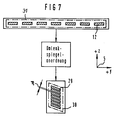
- the laser beam bundle 31 consisting of seven parallelized strip-shaped individual laser beams 12 is converted into a parallelogram-shaped laser beam bundle 30 consisting of seven parallelized strip-shaped individual laser beams 29 arranged next to one another in parallel at a distance ⁇ .
- the individual laser beams 9 for the pn junction of the individual laser beams are not exactly parallel, as assumed above, but rather weakly divergent.
- the mirror dimensions must therefore be adjusted accordingly.
- the minimum dimensions given above change towards larger values.
- the individual laser beams 12 are not exactly parallelized but rather weakly divergent.
- the values of ⁇ y and ⁇ z on the mirror surfaces of those mirrors which are furthest away from the light exit surface 10 in the beam direction are always decisive for the calculation.
- the guidance of the individual laser beams 9, 12, 29 in an optical medium has the advantage that their expansion can be avoided.
- the light exit surface 10 of the cylindrical lens 11 can advantageously directly adjoin the light entry surface 22 or 32 of the mirror row 18 or the coupling plate 28. Thereby the number of optical interfaces that cause reflection losses can be minimized in the micro-optical device. It is also conceivable that the mirror rows or rows and the cylindrical lens are made from one part.
- the mirror arrangements described above and the cylindrical lens are characterized in an advantageous manner in that they can be produced using inexpensive processes.
- Plano-convex cylindrical lenses made of semiconductor materials can be produced, for example, on a wafer using known etching processes. The wafer is then cut into individual lenses of suitable length and width.
- the rows of mirrors can be produced, for example, using Si, GaP, GaAs, SiC, metal or glass using etching processes known in semiconductor process technology. However, injection, pressing and casting processes for plastic, glass or metal can also be used in the same way. For the production of the forms, for. B. the so-called LIGA method can be used.
- the mirror structures can also be produced using mechanical processes such as the micro-precision diamond turning process. It is also possible to line up structured glass panes by anodic bonding, soldering or gluing. In the case of plastics, the mirror structure can be produced by mechanical processing or as a molded part.
- the deflecting mirror arrangements described in the exemplary embodiments are designed exclusively for seven individual laser beams, the micro-optical device according to the invention can be used for any number of individual laser beams. It is only necessary to adjust the number of individual mirrors.
Landscapes
- Physics & Mathematics (AREA)
- General Physics & Mathematics (AREA)
- Optics & Photonics (AREA)
- Condensed Matter Physics & Semiconductors (AREA)
- Electromagnetism (AREA)
- Semiconductor Lasers (AREA)
- Laser Beam Processing (AREA)
- Lasers (AREA)
- Optical Elements Other Than Lenses (AREA)
Abstract
Die mikrooptische Vorrichtung weist eine Strahlenparallelisierungsoptik und eine Umlenkspiegelanordnung auf. Sie formt ein von einem Laserdiodenbarren (6) abgestrahltes Laserstrahlenbündel (8), bestehend aus aus einer Mehrzahl von streifenförmigen Einzellaserstrahlen (9), in ein rechteckiges bzw. parallelogrammförmiges Laserstrahlenbündel (17 bzw. 30) aus parallel nebeneinander angeordneten parallelisierten streifenförmigen Einzellaserstrahlen (12) um. Die Strahlenprallelisierungsoptik ist beispielsweise eine Zylinderlinse (11) und die Umlenkspiegelanordnung weist beispielsweise zwei Spiegelreihen (14, 15) auf. Die Zylinderlinse (11) und die Spiegelreihen (14, 15) sind beispielsweise aus einem Halbleitermaterial hergestellt und können daher mittels Verfahren der Halbleiterprozeßtechnik kostengünstig hergestellt werden.
Description
Die Erfindung bezieht sich auf eine mikrooptische Vorrichtung zum Umformen eines von einem oder mehreren Laserdiodenbarren oder einer Anzahl von einzelnen Laserdioden in x-Richtung eines orthogonalen Bezugssystems abgestrahlten ersten Laserstrahlenbündels, bestehend aus einer Mehrzahl von im Querschnitt streifenförmigen Einzellaserstrahlen, in ein zweites Laserstrahlenbündel.The invention relates to a micro-optical device for converting a first laser beam emitted by one or more laser diode bars or a number of individual laser diodes in the x-direction of an orthogonal reference system, consisting of a plurality of individual laser beams with a strip-shaped cross section, into a second laser beam.
Eine solche mikrooptische Vorrichtung ist beispielsweise aus J. R. Hobbs, "Diode pumped solid-state lasers: Offset-plane mirrors transform laserbeam", Laser Focus World, Mai 1994, S.47, bekannt. Die darin beschriebene mikrooptische Vorrichtung besteht aus zwei in einem Abstand parallel zueinander angeordneten hochreflektierenden Spiegeln. Die beiden Spiegel sind vertikal und horizontal gegeneinander versetzt. Das in einem Winkel α, mit 0°<α<190°, zur Spiegelflächennormalen einfallende erste Laserstrahlenbündel eines Laserdiodenbarrens wird mittels geeigneter mehrfacher Totalreflektion zwischen den beiden Spiegeln in das zweite Laserstrahlenbündel aus parallel nebeneinander angeordneten streifenförmigen Einzellaserstrahlen umgeformt. Eine wesentliche Schwierigkeit dieses Spiegelsystems besteht darin, daß zu einer effektiven Strahlenbündel-Umformung eine hochgenaue Justierung der beiden Spiegel zueinander und des Spiegelpaares zum einfallenden ersten Laserstrahlenbündel notwendig ist. Außerdem sind die Reflexionsverluste aufgrund der Mehrfachreflexion innerhalb des Spiegelpaares sehr hoch. Der maximal erzielte Umformwirkungsgrad liegt bei etwa 70%.Such a micro-optical device is known, for example, from J.R. Hobbs, "Diode pumped solid-state lasers: Offset-plane mirrors transform laserbeam", Laser Focus World, May 1994, p.47. The micro-optical device described therein consists of two highly reflecting mirrors arranged parallel to one another at a distance. The two mirrors are offset vertically and horizontally. The first laser beam bundle of a laser diode bar that is incident at an angle α, with 0 ° <α <190 °, to the mirror surface normal is converted into the second laser beam bundle from strip-shaped individual laser beams arranged parallel to one another by means of suitable multiple total reflection between the two mirrors. A major difficulty of this mirror system is that a highly precise adjustment of the two mirrors to one another and the pair of mirrors to the incident first laser beam is necessary for effective beam shaping. In addition, the reflection losses are very high due to the multiple reflection within the pair of mirrors. The maximum forming efficiency achieved is around 70%.
Der Erfindung liegt daher die Aufgabe zugrunde, eine mikrooptische Vorrichtung der eingangs erwähnten Art zu entwickeln, die einfach zu justieren ist und deren Umformwirkungsgrad zwischen 90% und 100% liegt. Außerdem soll eine solche mikrooptische Vorrichtung kostengünstig herstellbar sein.The invention is therefore based on the object of developing a micro-optical device of the type mentioned at the outset, which is easy to adjust and its forming efficiency is between 90% and 100%. In addition, such a micro-optical device should be inexpensive to manufacture.
Diese Aufgabe wird dadurch gelöst, daß eine Strahlenparallelisierungsoptik die in z-Richtung des Bezugssystems divergenten Einzellaserstrahlen des ersten Laserstrahlenbündels parallelisiert und daß anschließend eine Umlenkspiegelanordnung das aus den parallelisierten streifenförmigen Einzellaserstrahlen bestehende Laserstrahlenbündel in das zweite Laserstrahlenbündel umformt.This object is achieved in that a beam paralleling optical system parallelizes the individual laser beams of the first laser beam which are divergent in the z-direction of the reference system, and in that a deflecting mirror arrangement then transforms the laser beam consisting of the parallelized strip-shaped individual laser beams into the second laser beam.
Diese mikrooptische Vorrichtung kann beispielsweise aus einem Halbleitermaterial bestehen, das für die Wellenlänge des vom Laserdiodenfeld abgestrahlten Laserlichtes durchlässig ist. Das Laserstrahlenbündel kann dann im Halbleitermaterial geführt werden, wodurch die Strahlaufweitung der Einzellaserstrahlen und damit auch der Strahlungsverlust vermindert werden kann. Die Strukturen der Strahlenparallelisierungsoptik und der Umlenkspiegelanordnung können mittels bekannter Ätztechniken der Halbleiterprozeßtechnik hergestellt werden. Dadurch ist eine kostengünstige Produktion der mikrooptischen Vorrichtung gewährleistet.This micro-optical device can consist, for example, of a semiconductor material which is transparent to the wavelength of the laser light emitted by the laser diode field. The laser beam can then be guided in the semiconductor material, whereby the beam expansion of the individual laser beams and thus the radiation loss can be reduced. The structures of the beam parallelization optics and the deflecting mirror arrangement can be produced by means of known etching techniques of semiconductor process technology. This ensures cost-effective production of the micro-optical device.
Die Erfindung wird anhand von vier Ausführungsbeispielen in Verbindung mit den Figuren 1 bis 6 näher erläutert. Es zeigen
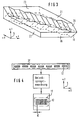
Figur 1- eine schematische perspektivische Darstellung eines ersten Ausführungsbeispieles einer erfindungsgemäßen mikrooptischen Vorrichtung,
Figur 2- eine schematische Darstellung eines Ausschnitts eines Laserdiodenbarrens,
Figur 3- eine schematische perspektivische Darstellung einer Umlenkspiegelanordnung eines zweiten Ausführungsbeispieles einer erfindungsgemäßen mikrooptischen Vorrichtung,
- Figur 4
- eine schematische Darstellung der Strahlenbündel-Umformung mit einer mikrooptischen Vorrichtung gemäß Ausführungsbeispiel eins oder zwei,
Figur 5- eine schematische perspektivische Darstellung einer Umlenkspiegelanordnung eines dritten Ausführungsbeispieles einer erfindungsgemäßen mikrooptischen Vorrichtung,
Figur 6- eine schematische perspektivische Darstellung eines vierten Ausführungsbeispieles einer erfindungsgemäßen mikrooptischen Vorrichtung,
- Figur 7
- eine schematische Darstellung der Strahlenbündel-Umformung mit einer mikrooptischen Vorrichtung gemäß Ausführungsbeispiel drei oder vier.
- Figure 1
- 2 shows a schematic perspective illustration of a first exemplary embodiment of a micro-optical device according to the invention,
- Figure 2
- 1 shows a schematic representation of a section of a laser diode bar,
- Figure 3
- 2 shows a schematic perspective illustration of a deflecting mirror arrangement of a second exemplary embodiment of a micro-optical device according to the invention,
- Figure 4
- 1 shows a schematic illustration of the beam shaping with a micro-optical device according to exemplary embodiment one or two,
- Figure 5
- 2 shows a schematic perspective illustration of a deflecting mirror arrangement of a third exemplary embodiment of a micro-optical device according to the invention,
- Figure 6
- 2 shows a schematic perspective illustration of a fourth exemplary embodiment of a micro-optical device according to the invention,
- Figure 7
- is a schematic representation of the beam shaping with a micro-optical device according to embodiment three or four.
Die im nachfolgenden beschriebenen Ausführungsbeispiele dienen jeweils zur Umformung eines Laserstrahlenbündels 8, das von einem Laserdiodenbarren 6 gemäß Figur 2 abgestrahlt wird. Der Laserdiodenbarren 6 besteht aus sieben Einzellaserdioden 7. Die pn-Übergänge der Einzellaserdioden 7 liegen parallel zur x-y-Ebene eines orthogonalen Bezugssystems 5. Jede Einzellaserdiode 7 sendet einen Einzellaserstrahl 9 der Breite Δ y aus, der parallel zum pn-Übergang der Einzellaserdiode nur eine sehr schwache und senkrecht zum pn-Übergang eine starke Divergenz aufweist. Im folgenden wird jedoch aus Gründen der Einfachheit angenommen, daß die Einzellaserdioden 7 Einzellaserstrahlen 9 aussenden, die nur senkrecht zu den pn-Übergängen der Einzellaserdioden 7 divergent und parallel zu den pn-Übergängen parallel sind.The exemplary embodiments described below each serve to deform a
Anstelle des Laserdiodenbarrens 6 kann bei allen Ausführungsbeispielen selbstverständlicherweise auch eine Mehrzahl von Laserdiodenbarren oder eine Anzahl von einzelnen Laserdiodenchips verwendet sein.Instead of the
Das in Figur 1 schematisch dargestellte erste Ausführungsbeispiel einer erfindungsgemäßen mikrooptischen Vorrichtung ist auf einer Bodenplatte 1 aufgebaut. Die Bodenplatte 1 besteht beispielsweise aus einer Mo/Cu-Legierung oder einem anderen gut wärmeleitenden Material, dessen thermischer Ausdehnungskoeffizient den thermischen Ausdehnungskoeffizienten der anderen Komponenten der mikrooptischen Vorrichtung angepaßt ist. Die Oberseite der Bodenplatte 1 ist durch eine senkrechte Stufe 2 in zwei Flächen 3, 4 unterteilt, die parallel zur x-y-Ebene des orthogonalen Bezugssystems 5 liegen. Der Laserdiodenbarren 6 ist auf der höhergelegenen Fläche 3 beispielsweise mittels Löten oder Kleben befestigt, derart, daß die Laserlichtaustrittsfläche 10 des Laserdiodenbarrens 6 bündig mit der senkrechten Fläche der Stufe 2 abschließt. Die Einzellaserstrahlen 9 werden somit in x-Richtung abgestrahlt.The first exemplary embodiment of a micro-optical device according to the invention, shown schematically in FIG. 1, is constructed on a
Eine plankonvexe Zylinderlinse 11 ist auf der tiefergelegenen Fläche 4 befestigt und grenzt mit ihrer gekrümmten Oberfläche an die Laserlichtaustrittsfläche 10 an. Sie kann aber auch in einem geringen Anstand zur Lichtaustrittsfläche 10 angeordnet sein, derart, daß sich die gekrümmte Oberfläche und die Lichtaustrittsfläche 10 gegenüberstehen. Die Zylinderlinse 11 ist beispielsweise aus Glas, Kunststoff oder aus einem für die Wellenlänge des Laserlichtes der Einzellaserdioden durchlässigen Halbleitermaterial hergestellt. Halbleitermaterialien eignen sich insbesondere aufgrund ihres großen Brechungsindex für diese Anwendung. Für Lichtwellenlängen λ > 400 nm kann beispielsweise SiC,für λ > 500 nm GaP, für λ > 900 nm GaAs und für λ > 1100 nm Si verwendet werden. Die Zylinderlinse 11 parallelisiert die in z-Richtung des Bezugssystems 5 stark divergenten Einzellaserstrahlen 9. Aus der Zylinderlinse 11 tritt somit ein Laserstrahlenbündel 31, bestehend aus sieben parallelisierten Einzellaserstrahlen 12 mit gleichem streifenförmigen Querschnitt aus. Die Querschnitts-Längsmittelachsen der Einzellaserstrahlen 12 liegen auf einer einzigen zur y-Achse des Bezugssystems 5 parallelen geraden Linie. In Figur 1 sind die randseitig angeordneten parallelisierten Einzellaserstrahlen 12 durch ihre Strahlachsen dargestellt.A plano-convex
Anstelle der Zylinderlinse 11 kann auch eine diffraktive Optik oder eine Kombination aus einer Zylinderlinse und einer diffraktiven Optik eingesetzt werden.Instead of the
Auf der Fläche 4 ist in Strahlausbreitungsrichtung (+x-Richtung) nach der Zylinderlinse 11 eine aus sieben Einzelspiegeln 13 bestehende Spiegelreihe 14 befestigt. Sie ist beispielsweise aus Metall oder aus einem Halbleitermaterial hergestellt und die Spiegelflächen sind mit einem reflexionssteigernden Material wie beispielsweise Aluminium oder SiO2/Si beispielsweise mittels Aufdampfen oder Sputtern beschichtet und/oder poliert. Die Spiegelflächennormalen der Einzelspiegel 13 bilden mit den Strahlachsen der parallelisierten Einzellaserstrahlen 12 einen Winkel von 45° und verlaufen parallel zur x-z-Ebene des Bezugssystems 5. Jeder Einzelspiegel 13 ist gegenüber seinen benachbarten Einzelspiegeln 13 in x-Richtung um Δz+ε parallelverschoben, so daß die Spiegelreihe 14 eine stufenförmige Struktur aufweist. Δz ist die Strahlhöhe in z-Richtung und ε ist bei exakt orthogonaler Abbildung der Einzellaserstrahlen 12 der in Figur 4 angegebene Abstand zwischen den streifenförmigen Einzellaserstrahlen 12 nach der Umformung des Laserstrahlenbündels 31 in das Laserstrahlenbündel 17. Die Breite und Länge der Spiegelflächen der Einzelspiegel 13 ist Δy+δ bzw. mindestens 

Die in Figur 3 schematisch dargestellte Umlenkspiegelanordnung des zweiten Ausführungsbeispiels der erfindungsgemäßen mikrooptischen Vorrichtung besteht ebenfalls aus zwei Spiegelreihen 18, 21 aus jeweils sieben Einzelspiegel 19, 20. Die Anordnung und Größe der Einzelspiegel 19, 20 sowie die Anordnung der restlichen Komponenten der mikrooptischen Vorrichtung ist identisch dem ersten Ausführungsbeispiel Der Unterschied zu den Spiegelreihen 14, 15 besteht darin, daß die Einzellaserstrahlen 12 nach der Zylinderlinse 11 nicht in Luft, sondern in einem für die Wellenlänge des von den Einzellaserdioden abgestrahlten Laserlichtes durchlässigen Medium geführt sind. Bei diesem Ausführungsbeispiel bilden somit die Grenzflächen zwischen dem lichtdurchlässigen Medium und Luft oder einem anderen angrenzenden Medium die Spiegelflächen der Einzelspiegel 19, 20 aus. Die Einzelspiegel 19, 20 sind beispielsweise von Ausnehmungen aus einem einzigen Quader, bestehend aus dem durchlässigen Medium, gebildet. Als Medium kann neben Glas und Kunststoff beispielsweise für eine Lichtwellenlänge λ > 400 nm auch SiC, für λ > 550 nm GaP, für λ > 900 nm GaAs und für λ > 1100 nm Si verwendet werden. Der Vorteil dieser Halbleitermaterialien besteht darin, daß aufgrund ihres hohen Brechungsindex keine Beschichtung der Spiegelflächen der Einzelspiegel 19, 20 erforderlich ist. Bei Verwendung von Glas können die Spiegelflächen zur Verbesserung der Reflexionseigenschaften beispielsweise mit Aluminium oder mit einem anderen geeigneten Material beschichtet werden. Als Beschichtungsverfahren kann Aufdampfen, Sputtern, CVD oder ein anderes aus der Halbleiterprozeßtechnik bekanntes Verfahren angewendet werden.The deflecting mirror arrangement shown schematically in FIG. 3 of the second exemplary embodiment of the micro-optical device according to the invention likewise consists of two rows of
Bei dem Ausführungsbeispiel zwei treten die parallelen Einzelstrahlen 12 durch eine Lichteintrittsfläche 22 in die Spiegelreihe 18 ein und werden an den Einzelspiegeln 19 um 90° in z-Richtung umgelenkt und gleichzeitig in x-Richtung gegeneinander versetzt. Anschließend werden die Einzellaserstrahlen 12 von den Einzelspiegeln 20 um 90° in y-Richtung umgelenkt und treten durch eine Lichtaustrittsfläche 23 aus der Spiegelreihe 21 aus.In the exemplary embodiment two, the parallel
Figur 4 zeigt schematisch die Umformung des Laserstrahlenbündels 31 mittels der Umlenkspiegelanordnung gemäß Ausführungsbeispiel eins oder zwei. Das Laserstrahlenbündel 31 aus sieben parallelisierten Einzellaserstrahlen 12 wird in ein rechteckiges Laserstrahlenbündel 17 aus sieben im Abstand ε parallel nebeneinander angeordneten parallelisierten Einzellaserstrahlen 12 umgeformt.FIG. 4 schematically shows the shaping of the
Eine Vereinfachung der beiden oben beschriebenen Ausführungsbeispiele eins und zwei kann dadurch erzielt werden, daß die Spiegelreihe 14 bzw. 18 durch einen einzigen größeren Spiegel ersetzt wird. Dieser Spiegel muß so angebracht sein, daß seine Spiegelflächennormale mit der x-y-Ebene des Bezugssystems 5 einen Winkel von 45° und mit der x-z-Ebene einen Winkel γ > 0° einschließt. Die Breite des schrägen Spiegels ist 


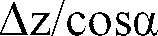
Das dritte Ausführungsbeispiel der erfindungsgemäßen mikrooptischen Vorrichtung weist anstelle von zwei Spiegelreihen, von denen jede eine 90°-Umlenkung durchführt, eine einzige Spiegelreihe 24 auf. Diese in Figur 5 dargestellte Spiegelreihe 24 besteht aus sieben Einzelspiegeln 25, deren Spiegelflächennormalen mit der x-z-Ebene des Bezugssystems 5 einen Winkel von 45° und mit der x-y-Ebene einen Winkel α > 0° aufweisen. Die Mittelpunkte der Spiegelflächen der Einzelspiegel 25 liegen auf einer einzigen parallel zur y-Achse des Bezugssystems 5 verlaufenden geraden Linie und haben voneinander einen Abstand von Δy+δ. Die Länge der Einzelspiegel 25 ist mindestens 
Das in Figur 6 schematisch dargestellte vierte Ausführungsbeispiel einer erfindungsgemäßen mikrooptischen Vorrichtung ist im Prinzip dem dritten Ausführungsbeispiel identisch. Der Unterschied besteht darin, daß die Spiegelreihe 26 mit den Einzelspiegeln 27 so ausgebildet ist, daß die Einzellaserstrahlen 12 nicht in Luft, sondern in einem lichtleitenden Medium geführt sind. Das Medium ist für die Wellenlänge des von den Einzellaserdioden ausgestrahlten Laserlichtes durchlässig. Die Spiegelreihe 26 kann beispielsweise aus den bereits im zweiten Ausführungsbeispiel genannten Materialien hergestellt sein. Die Einzelspiegel 27 sind beispielsweise von keilförmigen Ausnehmungen aus einem Quader, bestehend aus dem für das Laserlicht der Einzellaserdioden durchlässigen Medium, gebildet. Die Spiegelflächen sind zur Verbesserung ihrer Reflexionseigenschaften beispielsweise mit Aluminium oder SiO2/Si (evtl.Wechselschichten, d. h. abwechselnd SiO2 und Si) beschichtet und/oder poliert. Die Spiegelreihe 26 ist mittels einer Koppelplatte 28, die ebenfalls aus einem für die Wellenlänge des Laserlichtes durchlässigen Material besteht, an die Zylinderlinse 11 gekoppelt. Die Spiegelreihe 26 und die Koppelplatte 28 können aber auch aus einem einzigen Teil bestehen. Ebenso kann anstelle der Koppelplatte 28 zwischen der Spiegelreihe 26 und dem Laserdiodenbarren eine Platte angeordnet sein, in der die Zylinderlinse 11 und/oder weitere Linsen eingebracht oder ausgebildet sind. Diese Platte kann aus einem Halbleitermaterial bestehen. Die Linse(n) können mittels herkömmlicher Halbleiterprozesse hergestellt sein.The fourth exemplary embodiment of a micro-optical device according to the invention, shown schematically in FIG. 6, is in principle identical to the third exemplary embodiment. The difference is that the row of
Figur 7 zeigt schematisch die Umformung des Laserstrahlenbündels 31 mittels der Umlenkspiegelanordnung gemäß Ausführungsbeispiel drei oder vier. Das Laserstrahlenbündel 31 aus sieben parallelisierten streifenförmigen Einzellaserstrahlen 12 wird in ein parallelogrammförmiges Laserstrahlenbündel 30 aus sieben im Abstand η parallel nebeneinander angeordneten parallelisierten streifenförmigen Einzellaserstrahlen 29 umgeformt.FIG. 7 schematically shows the shaping of the
An dieser Stelle sei nochmals darauf hingewiesen, daß die Einzellaserstrahlen 9 zum pn-Übergang der Einzellaserstrahlen nicht, wie oben angenommen, exakt parallel sondern schwach divergent sind. Die Spiegelabmessungen müssen daher entsprechend angepaßt werden. Die oben angegebenen Mindestmaße verändern sich zu größeren Werten hin. Das gleiche gilt, wenn die Einzellaserstrahlen 12 nicht exakt parallelisiert sondern schwach divergent sind. Für die Berechnung sind dann immer die Werte von Δy und Δz an den Spiegelflächen derjenigen Spiegel maßgebend, die in Strahlrichtung am weitesten von der Lichtaustrittsfläche 10 entfernt sind.At this point it should be pointed out again that the individual laser beams 9 for the pn junction of the individual laser beams are not exactly parallel, as assumed above, but rather weakly divergent. The mirror dimensions must therefore be adjusted accordingly. The minimum dimensions given above change towards larger values. The same applies if the
Die Führung der Einzellaserstrahlen 9, 12, 29 in einem optischen Medium hat den Vorteil, daß deren Aufweitung vermieden werden kann. In vorteilhafter Weise kann bei den Ausführungsbeispielen zwei und vier die Lichtaustrittsfläche 10 der Zylinderlinse 11 direkt an die Lichteintrittsfläche 22 bzw. 32 der Spiegelreihe 18 bzw. der Koppelplatte 28 angrenzen. Dadurch kann in der mikrooptischen Vorrichtung die Zahl der optischen Grenzflächen, die Reflexionsverluste verursachen, minimiert werden. Denkbar ist auch, daß die Spiegelreihen bzw. -reihe und die Zylinderlinse aus einem Teil gefertigt sind.The guidance of the
Die oben beschriebenen Spiegelanordnungen und die Zylinderlinse zeichnen sich in vorteilhafter Weise dadurch aus, daß sie mittels kostengünstiger Verfahren hergestellt werden können.The mirror arrangements described above and the cylindrical lens are characterized in an advantageous manner in that they can be produced using inexpensive processes.
Plankonvexe Zylinderlinsen aus Halbleitermaterialien sind beispielsweise auf einem Wafer mittels bekannter Ätzverfahren herstellbar. Der Wafer wird dann in Einzellinsen geeigneter Länge und Breite aufgetrennt.Plano-convex cylindrical lenses made of semiconductor materials can be produced, for example, on a wafer using known etching processes. The wafer is then cut into individual lenses of suitable length and width.
Die Spiegelreihen können beispielsweise mit Hilfe von in der Halbleiterprozeßtechnik bekannten Ätzverfahren aus Si, GaP, GaAs, SiC, Metall oder Glas hergestellt werden. Genauso können aber auch Spritz-, Press- und Gießverfahren für Kunststoff, Glas oder Metall eingesetzt werden. Zur Herstellung der Formen kann z. B. das sogenannte LIGA-Verfahren verwendet werden. Die Spiegelstrukturen können auch mittels mechanischer Verfahren wie beispielsweise das Mikropräzisions-Diamantdrehverfahren hergestellt werden. Auch eine Aneinanderreihung von strukturierten Glasscheiben durch anodisches Bonden, Löten oder Kleben ist möglich. Bei Kunststoffen kann die Spiegelstruktur durch mechanische Bearbeitung oder als Formspritzteil hergestellt werden.The rows of mirrors can be produced, for example, using Si, GaP, GaAs, SiC, metal or glass using etching processes known in semiconductor process technology. However, injection, pressing and casting processes for plastic, glass or metal can also be used in the same way. For the production of the forms, for. B. the so-called LIGA method can be used. The mirror structures can also be produced using mechanical processes such as the micro-precision diamond turning process. It is also possible to line up structured glass panes by anodic bonding, soldering or gluing. In the case of plastics, the mirror structure can be produced by mechanical processing or as a molded part.
An dieser Stelle sei vollständigkeitshalber noch erwähnt, daß, obwohl die in den Ausführungsbeispielen beschriebenen Umlenkspiegelanordnungen ausschließlich auf sieben Einzellaserstrahlen ausgelegt sind, die erfindungsgemäße mikrooptische Vorrichtung für jede beliebige Anzahl von Einzellaserstrahlen einsetzbar ist. Es muß lediglich jeweils die Anzahl der Einzelspiegel angepaßt sein.At this point it should be mentioned for the sake of completeness that, although the deflecting mirror arrangements described in the exemplary embodiments are designed exclusively for seven individual laser beams, the micro-optical device according to the invention can be used for any number of individual laser beams. It is only necessary to adjust the number of individual mirrors.
Claims (11)
Applications Claiming Priority (2)
| Application Number | Priority Date | Filing Date | Title |
|---|---|---|---|
| DE19511593A DE19511593C2 (en) | 1995-03-29 | 1995-03-29 | Micro-optical device |
| DE19511593 | 1995-03-29 |
Publications (3)
| Publication Number | Publication Date |
|---|---|
| EP0735397A2 true EP0735397A2 (en) | 1996-10-02 |
| EP0735397A3 EP0735397A3 (en) | 1997-04-02 |
| EP0735397B1 EP0735397B1 (en) | 2002-06-12 |
Family
ID=7758100
Family Applications (1)
| Application Number | Title | Priority Date | Filing Date |
|---|---|---|---|
| EP96103557A Revoked EP0735397B1 (en) | 1995-03-29 | 1996-03-06 | Micro-optical device for transforming beams of a laser diode array and method for the production of such a device |
Country Status (9)
| Country | Link |
|---|---|
| US (1) | US5808323A (en) |
| EP (1) | EP0735397B1 (en) |
| JP (1) | JP2991968B2 (en) |
| KR (1) | KR960035074A (en) |
| CN (1) | CN1080417C (en) |
| CA (1) | CA2173059C (en) |
| DE (2) | DE19511593C2 (en) |
| IN (1) | IN187666B (en) |
| TW (1) | TW317034B (en) |
Cited By (3)
| Publication number | Priority date | Publication date | Assignee | Title |
|---|---|---|---|---|
| EP0903823A3 (en) * | 1997-09-22 | 2000-07-12 | Siemens Aktiengesellschaft | Laser element incorporating a laser array and method of fabrication |
| WO2010084001A1 (en) * | 2009-01-23 | 2010-07-29 | Limo Patentverwaltung Gmbh & Co. Kg | Beam forming device for laser diode arrays |
| CN102096291A (en) * | 2009-12-09 | 2011-06-15 | 精工爱普生株式会社 | Light emitting device and projector |
Families Citing this family (82)
| Publication number | Priority date | Publication date | Assignee | Title |
|---|---|---|---|---|
| US6124973A (en) * | 1996-02-23 | 2000-09-26 | Fraunhofer Gesellschaft Zur Foerderung Der Angewandten Forschung E.V. | Device for providing the cross-section of the radiation emitted by several solid-state and/or semiconductor diode lasers with a specific geometry |
| DE19706279A1 (en) * | 1997-02-18 | 1998-08-20 | Siemens Ag | Laser device |
| DE19706276B4 (en) * | 1997-02-18 | 2011-01-13 | Siemens Ag | A semiconductor laser device and method of manufacturing a semiconductor laser device |
| DE69835216T2 (en) | 1997-07-25 | 2007-05-31 | Nichia Corp., Anan | SEMICONDUCTOR DEVICE OF A NITRIDE CONNECTION |
| DE59813644D1 (en) * | 1997-09-05 | 2006-08-31 | Osram Opto Semiconductors Gmbh | Immersion System |
| US6303986B1 (en) | 1998-07-29 | 2001-10-16 | Silicon Light Machines | Method of and apparatus for sealing an hermetic lid to a semiconductor die |
| US6872984B1 (en) | 1998-07-29 | 2005-03-29 | Silicon Light Machines Corporation | Method of sealing a hermetic lid to a semiconductor die at an angle |
| JP3770014B2 (en) | 1999-02-09 | 2006-04-26 | 日亜化学工業株式会社 | Nitride semiconductor device |
| KR100683877B1 (en) | 1999-03-04 | 2007-02-15 | 니치아 카가쿠 고교 가부시키가이샤 | Nitride Semiconductor Laser Devices |
| US6356577B1 (en) * | 1999-07-15 | 2002-03-12 | Silicon Light Machines | Method and apparatus for combining light output from multiple laser diode bars |
| JP4748836B2 (en) * | 1999-08-13 | 2011-08-17 | 株式会社半導体エネルギー研究所 | Laser irradiation device |
| US6504650B1 (en) | 1999-10-19 | 2003-01-07 | Anthony J. Alfrey | Optical transformer and system using same |
| US6407870B1 (en) | 1999-10-28 | 2002-06-18 | Ihar Hurevich | Optical beam shaper and method for spatial redistribution of inhomogeneous beam |
| JP2001215443A (en) * | 2000-02-04 | 2001-08-10 | Hamamatsu Photonics Kk | Optical device |
| US6956878B1 (en) | 2000-02-07 | 2005-10-18 | Silicon Light Machines Corporation | Method and apparatus for reducing laser speckle using polarization averaging |
| EP1215523A3 (en) * | 2000-12-16 | 2004-05-26 | Hentze-Lissotschenko Patentverwaltungs GmbH & Co.KG | Radiation system with beam transformation for generating modulated radiation |
| US7177081B2 (en) | 2001-03-08 | 2007-02-13 | Silicon Light Machines Corporation | High contrast grating light valve type device |
| DE10113019A1 (en) | 2001-03-17 | 2002-09-19 | Lissotschenko Vitalij | Beam shaper has boundary surface at which sub-beams are incident from different directions; one sub-beam passes through surface, the other is reflected to combine beams |
| EP1376197B1 (en) * | 2001-03-30 | 2012-02-29 | Nippon Steel Corporation | Beam arrangement converter, semiconductor laser device and solid laser device using the same |
| US6707591B2 (en) | 2001-04-10 | 2004-03-16 | Silicon Light Machines | Angled illumination for a single order light modulator based projection system |
| US6865346B1 (en) | 2001-06-05 | 2005-03-08 | Silicon Light Machines Corporation | Fiber optic transceiver |
| US6747781B2 (en) | 2001-06-25 | 2004-06-08 | Silicon Light Machines, Inc. | Method, apparatus, and diffuser for reducing laser speckle |
| US6782205B2 (en) | 2001-06-25 | 2004-08-24 | Silicon Light Machines | Method and apparatus for dynamic equalization in wavelength division multiplexing |
| US6829092B2 (en) | 2001-08-15 | 2004-12-07 | Silicon Light Machines, Inc. | Blazed grating light valve |
| US6930364B2 (en) | 2001-09-13 | 2005-08-16 | Silicon Light Machines Corporation | Microelectronic mechanical system and methods |
| US6956995B1 (en) | 2001-11-09 | 2005-10-18 | Silicon Light Machines Corporation | Optical communication arrangement |
| US6800238B1 (en) | 2002-01-15 | 2004-10-05 | Silicon Light Machines, Inc. | Method for domain patterning in low coercive field ferroelectrics |
| FI116010B (en) | 2002-05-22 | 2005-08-31 | Cavitar Oy | Method and laser device for producing high optical power density |
| US6767751B2 (en) | 2002-05-28 | 2004-07-27 | Silicon Light Machines, Inc. | Integrated driver process flow |
| US6728023B1 (en) | 2002-05-28 | 2004-04-27 | Silicon Light Machines | Optical device arrays with optimized image resolution |
| US7054515B1 (en) | 2002-05-30 | 2006-05-30 | Silicon Light Machines Corporation | Diffractive light modulator-based dynamic equalizer with integrated spectral monitor |
| US6822797B1 (en) | 2002-05-31 | 2004-11-23 | Silicon Light Machines, Inc. | Light modulator structure for producing high-contrast operation using zero-order light |
| US6829258B1 (en) | 2002-06-26 | 2004-12-07 | Silicon Light Machines, Inc. | Rapidly tunable external cavity laser |
| US6714337B1 (en) | 2002-06-28 | 2004-03-30 | Silicon Light Machines | Method and device for modulating a light beam and having an improved gamma response |
| US6908201B2 (en) | 2002-06-28 | 2005-06-21 | Silicon Light Machines Corporation | Micro-support structures |
| US6813059B2 (en) | 2002-06-28 | 2004-11-02 | Silicon Light Machines, Inc. | Reduced formation of asperities in contact micro-structures |
| US7057795B2 (en) | 2002-08-20 | 2006-06-06 | Silicon Light Machines Corporation | Micro-structures with individually addressable ribbon pairs |
| US6801354B1 (en) | 2002-08-20 | 2004-10-05 | Silicon Light Machines, Inc. | 2-D diffraction grating for substantially eliminating polarization dependent losses |
| CN2566292Y (en) * | 2002-09-03 | 2003-08-13 | 钱定榕 | Light beam distributor |
| US6712480B1 (en) | 2002-09-27 | 2004-03-30 | Silicon Light Machines | Controlled curvature of stressed micro-structures |
| US6928207B1 (en) | 2002-12-12 | 2005-08-09 | Silicon Light Machines Corporation | Apparatus for selectively blocking WDM channels |
| US6987600B1 (en) | 2002-12-17 | 2006-01-17 | Silicon Light Machines Corporation | Arbitrary phase profile for better equalization in dynamic gain equalizer |
| US7057819B1 (en) | 2002-12-17 | 2006-06-06 | Silicon Light Machines Corporation | High contrast tilting ribbon blazed grating |
| US6934070B1 (en) | 2002-12-18 | 2005-08-23 | Silicon Light Machines Corporation | Chirped optical MEM device |
| US6927891B1 (en) | 2002-12-23 | 2005-08-09 | Silicon Light Machines Corporation | Tilt-able grating plane for improved crosstalk in 1×N blaze switches |
| US7068372B1 (en) | 2003-01-28 | 2006-06-27 | Silicon Light Machines Corporation | MEMS interferometer-based reconfigurable optical add-and-drop multiplexor |
| JP4153438B2 (en) | 2003-01-30 | 2008-09-24 | 富士フイルム株式会社 | Laser beam multiplexing method and apparatus |
| US7286764B1 (en) | 2003-02-03 | 2007-10-23 | Silicon Light Machines Corporation | Reconfigurable modulator-based optical add-and-drop multiplexer |
| US6947613B1 (en) | 2003-02-11 | 2005-09-20 | Silicon Light Machines Corporation | Wavelength selective switch and equalizer |
| US6922272B1 (en) | 2003-02-14 | 2005-07-26 | Silicon Light Machines Corporation | Method and apparatus for leveling thermal stress variations in multi-layer MEMS devices |
| US7027202B1 (en) | 2003-02-28 | 2006-04-11 | Silicon Light Machines Corp | Silicon substrate as a light modulator sacrificial layer |
| US6922273B1 (en) | 2003-02-28 | 2005-07-26 | Silicon Light Machines Corporation | PDL mitigation structure for diffractive MEMS and gratings |
| US6829077B1 (en) | 2003-02-28 | 2004-12-07 | Silicon Light Machines, Inc. | Diffractive light modulator with dynamically rotatable diffraction plane |
| US6806997B1 (en) | 2003-02-28 | 2004-10-19 | Silicon Light Machines, Inc. | Patterned diffractive light modulator ribbon for PDL reduction |
| US7391973B1 (en) | 2003-02-28 | 2008-06-24 | Silicon Light Machines Corporation | Two-stage gain equalizer |
| US7042611B1 (en) | 2003-03-03 | 2006-05-09 | Silicon Light Machines Corporation | Pre-deflected bias ribbons |
| US6870682B1 (en) | 2003-09-30 | 2005-03-22 | Institut National D'optique | Apparatus for reshaping an optical beam bundle |
| US20060280209A1 (en) * | 2005-02-11 | 2006-12-14 | Hans-Georg Treusch | Beam combining methods and devices with high output intensity |
| US7830608B2 (en) * | 2006-05-20 | 2010-11-09 | Oclaro Photonics, Inc. | Multiple emitter coupling devices and methods with beam transform system |
| US20070268572A1 (en) * | 2006-05-20 | 2007-11-22 | Newport Corporation | Multiple emitter coupling devices and methods with beam transform system |
| US7680170B2 (en) * | 2006-06-15 | 2010-03-16 | Oclaro Photonics, Inc. | Coupling devices and methods for stacked laser emitter arrays |
| US20070291373A1 (en) * | 2006-06-15 | 2007-12-20 | Newport Corporation | Coupling devices and methods for laser emitters |
| US7866897B2 (en) * | 2006-10-06 | 2011-01-11 | Oclaro Photonics, Inc. | Apparatus and method of coupling a fiber optic device to a laser |
| CN101933202B (en) * | 2007-12-17 | 2013-05-29 | 奥兰若光电公司 | Laser transmitter module and method of assembly |
| WO2009137703A2 (en) | 2008-05-08 | 2009-11-12 | Newport Corporation | High brightness diode output methods and devices |
| TWI362769B (en) | 2008-05-09 | 2012-04-21 | Univ Nat Chiao Tung | Light emitting device and fabrication method therefor |
| JP5740654B2 (en) | 2010-01-22 | 2015-06-24 | トゥー−シックス レイザー エンタープライズ ゲーエムベーハー | Homogenization of far-field fiber-coupled radiation |
| DE102010031199B4 (en) * | 2010-07-09 | 2020-05-14 | Jenoptik Optical Systems Gmbh | Beam shaping apparatus and method |
| DE102010038572A1 (en) * | 2010-07-28 | 2012-02-02 | Jenoptik Laser Gmbh | Apparatus and method for beam shaping |
| DE102010038571A1 (en) * | 2010-07-28 | 2012-02-02 | Jenoptik Laser Gmbh | Device for beam shaping radiation beams of e.g. semiconductor laser elements, has reflective mirrors arranged in direction of radiation beams emitted by light sources and displaced with respect to each other |
| US8644357B2 (en) | 2011-01-11 | 2014-02-04 | Ii-Vi Incorporated | High reliability laser emitter modules |
| DE102012107456A1 (en) * | 2012-08-14 | 2014-02-20 | Limo Patentverwaltung Gmbh & Co. Kg | Arrangement for shaping laser radiation |
| JP5767752B2 (en) | 2012-08-29 | 2015-08-19 | 株式会社フジクラ | Light guiding device, manufacturing method, and LD module |
| JP5717714B2 (en) | 2012-12-27 | 2015-05-13 | 株式会社フジクラ | Multiplexing device, multiplexing method, and LD module |
| WO2014167904A1 (en) * | 2013-04-12 | 2014-10-16 | シャープ株式会社 | Reflective type image forming element and method for manufacturing reflective type image forming element |
| JP5767684B2 (en) * | 2013-11-15 | 2015-08-19 | 株式会社フジクラ | Light guiding device, manufacturing method, and LD module |
| JP5781188B1 (en) * | 2014-03-26 | 2015-09-16 | 株式会社フジクラ | Light guiding device, manufacturing method, and LD module |
| US9513483B2 (en) | 2015-03-16 | 2016-12-06 | Igor Gurevich | Beam shaper system for laser diode array |
| JP2017120301A (en) * | 2015-12-28 | 2017-07-06 | ウシオ電機株式会社 | Prism and light source device |
| DE102016102591A1 (en) * | 2016-02-15 | 2017-08-17 | Limo Patentverwaltung Gmbh & Co. Kg | Device for shaping laser radiation |
| CN105891977B (en) * | 2016-06-16 | 2018-08-17 | 韩涛 | A kind of compact laser |
| CN112394436B (en) * | 2020-11-25 | 2021-07-06 | 中国科学院上海光学精密机械研究所 | Asymmetric Structure All-Dielectric Reflective Beam Combining Grating in 1064 nm Band |
Family Cites Families (7)
| Publication number | Priority date | Publication date | Assignee | Title |
|---|---|---|---|---|
| US4823357A (en) * | 1986-11-10 | 1989-04-18 | The United States Of America As Represented By The Secretary Of The Air Force | Diffraction limited dichroic combiner diode laser |
| JP2535201B2 (en) * | 1988-02-18 | 1996-09-18 | 富士写真フイルム株式会社 | Multi semiconductor laser light source device |
| US5333077A (en) * | 1989-10-31 | 1994-07-26 | Massachusetts Inst Technology | Method and apparatus for efficient concentration of light from laser diode arrays |
| US5168401A (en) * | 1991-05-07 | 1992-12-01 | Spectra Diode Laboratories, Inc. | Brightness conserving optical system for modifying beam symmetry |
| JPH05236216A (en) * | 1992-02-24 | 1993-09-10 | Ricoh Co Ltd | Light source equipment in optical scanner |
| US5369659A (en) * | 1993-12-07 | 1994-11-29 | Cynosure, Inc. | Fault tolerant optical system using diode laser array |
| DE4438368C3 (en) * | 1994-10-27 | 2003-12-04 | Fraunhofer Ges Forschung | Arrangement for guiding and shaping beams of a straight-line laser diode array |
-
1995
- 1995-03-29 DE DE19511593A patent/DE19511593C2/en not_active Revoked
-
1996
- 1996-03-06 DE DE59609313T patent/DE59609313D1/en not_active Revoked
- 1996-03-06 EP EP96103557A patent/EP0735397B1/en not_active Revoked
- 1996-03-25 IN IN525CA1996 patent/IN187666B/en unknown
- 1996-03-27 JP JP8095890A patent/JP2991968B2/en not_active Expired - Lifetime
- 1996-03-29 US US08/625,636 patent/US5808323A/en not_active Expired - Fee Related
- 1996-03-29 KR KR1019960009022A patent/KR960035074A/en not_active Withdrawn
- 1996-03-29 CN CN96107217A patent/CN1080417C/en not_active Expired - Fee Related
- 1996-03-29 CA CA002173059A patent/CA2173059C/en not_active Expired - Fee Related
- 1996-04-17 TW TW085104590A patent/TW317034B/zh not_active IP Right Cessation
Cited By (6)
| Publication number | Priority date | Publication date | Assignee | Title |
|---|---|---|---|---|
| EP0903823A3 (en) * | 1997-09-22 | 2000-07-12 | Siemens Aktiengesellschaft | Laser element incorporating a laser array and method of fabrication |
| US6254287B1 (en) | 1997-09-22 | 2001-07-03 | Siemens Aktiengesellschaft | Laser component with a laser array and method for manufacturing the component |
| WO2010084001A1 (en) * | 2009-01-23 | 2010-07-29 | Limo Patentverwaltung Gmbh & Co. Kg | Beam forming device for laser diode arrays |
| US9001426B2 (en) | 2009-01-23 | 2015-04-07 | Limo Patentverwaltung Gmbh & Co. Kg | Beam forming device for laser diode arrays |
| CN102096291A (en) * | 2009-12-09 | 2011-06-15 | 精工爱普生株式会社 | Light emitting device and projector |
| CN102096291B (en) * | 2009-12-09 | 2012-09-05 | 精工爱普生株式会社 | Light emitting device and projector |
Also Published As
| Publication number | Publication date |
|---|---|
| IN187666B (en) | 2002-06-01 |
| DE19511593C2 (en) | 1997-02-13 |
| EP0735397A3 (en) | 1997-04-02 |
| TW317034B (en) | 1997-10-01 |
| JP2991968B2 (en) | 1999-12-20 |
| US5808323A (en) | 1998-09-15 |
| CN1164657A (en) | 1997-11-12 |
| DE19511593A1 (en) | 1996-10-24 |
| DE59609313D1 (en) | 2002-07-18 |
| EP0735397B1 (en) | 2002-06-12 |
| KR960035074A (en) | 1996-10-24 |
| JPH08271832A (en) | 1996-10-18 |
| CN1080417C (en) | 2002-03-06 |
| CA2173059C (en) | 2000-03-14 |
| CA2173059A1 (en) | 1996-09-30 |
Similar Documents
| Publication | Publication Date | Title |
|---|---|---|
| EP0735397B1 (en) | Micro-optical device for transforming beams of a laser diode array and method for the production of such a device | |
| EP0788673B1 (en) | Arrangement for guiding and shaping beams from a rectilinear laser diode array | |
| EP0863588B1 (en) | Laseroptics and laserdiode | |
| DE19751716C2 (en) | Arrangement for shaping and guiding radiation | |
| EP0803075B1 (en) | Optical arrangement for use in a laser diode system | |
| DE19725262C2 (en) | Optical beam transformation device | |
| DE19537265C1 (en) | Combining and shaping device for multiple laser diode rows esp. for coupling into optical fibre or solid state laser rod | |
| DE102010031199B4 (en) | Beam shaping apparatus and method | |
| EP2219064B1 (en) | Laser lens and diode laser | |
| EP0476384A1 (en) | Optical grating with several end-areas arranged side by side for output of optical waveguides | |
| DE19813127A1 (en) | Laser device with several laser light emitting diodes | |
| DE19544488A1 (en) | Optical arrangement for use in a laser diode arrangement | |
| EP2508934B1 (en) | Diode Laser | |
| EP1601072B1 (en) | Beam shaping optics and module for a diode laser assembly | |
| EP3355097A1 (en) | Device for the collimation of a light beam, high power laser and focussing optics and method for collimating a light beam | |
| DE60026771T2 (en) | Optical element for controlling the beam separation of several beams | |
| DE19705574C2 (en) | Laser optics for shaping at least one laser beam and diode laser with such a laser optics | |
| EP0903823B1 (en) | Laser element incorporating a laser array and method of fabrication | |
| DE19918444C2 (en) | Laser optics and diode lasers | |
| DE102024123297A1 (en) | LASER PACKAGE AND METHOD FOR MANUFACTURING A LASER PACKAGE | |
| DE10012480C2 (en) | Laser optics and diode lasers | |
| DE19613755A1 (en) | Optical coupler for light guide structures | |
| EP1116982A2 (en) | Beam splitter | |
| DE102009031046B4 (en) | Laser optics and diode lasers | |
| EP0744798A1 (en) | Device for laser coupling |
Legal Events
| Date | Code | Title | Description |
|---|---|---|---|
| PUAI | Public reference made under article 153(3) epc to a published international application that has entered the european phase |
Free format text: ORIGINAL CODE: 0009012 |
|
| AK | Designated contracting states |
Kind code of ref document: A2 Designated state(s): DE ES FR GB IT |
|
| PUAL | Search report despatched |
Free format text: ORIGINAL CODE: 0009013 |
|
| AK | Designated contracting states |
Kind code of ref document: A3 Designated state(s): DE ES FR GB IT |
|
| 17P | Request for examination filed |
Effective date: 19970421 |
|
| 17Q | First examination report despatched |
Effective date: 19980701 |
|
| RIC1 | Information provided on ipc code assigned before grant |
Free format text: 7G 02B 27/14 A, 7H 01S 5/40 B |
|
| RAP1 | Party data changed (applicant data changed or rights of an application transferred) |
Owner name: OSRAM OPTO SEMICONDUCTORS GMBH & CO. OHG |
|
| GRAG | Despatch of communication of intention to grant |
Free format text: ORIGINAL CODE: EPIDOS AGRA |
|
| GRAG | Despatch of communication of intention to grant |
Free format text: ORIGINAL CODE: EPIDOS AGRA |
|
| GRAH | Despatch of communication of intention to grant a patent |
Free format text: ORIGINAL CODE: EPIDOS IGRA |
|
| GRAH | Despatch of communication of intention to grant a patent |
Free format text: ORIGINAL CODE: EPIDOS IGRA |
|
| GRAA | (expected) grant |
Free format text: ORIGINAL CODE: 0009210 |
|
| AK | Designated contracting states |
Kind code of ref document: B1 Designated state(s): DE ES FR GB IT |
|
| PG25 | Lapsed in a contracting state [announced via postgrant information from national office to epo] |
Ref country code: IT Free format text: LAPSE BECAUSE OF FAILURE TO SUBMIT A TRANSLATION OF THE DESCRIPTION OR TO PAY THE FEE WITHIN THE PRE;WARNING: LAPSES OF ITALIAN PATENTS WITH EFFECTIVE DATE BEFORE 2007 MAY HAVE OCCURRED AT ANY TIME BEFORE 2007. THE CORRECT EFFECTIVE DATE MAY BE DIFFERENT FROM THE ONE RECORDED.SCRIBED TIME-LIMIT Effective date: 20020612 Ref country code: GB Free format text: LAPSE BECAUSE OF FAILURE TO SUBMIT A TRANSLATION OF THE DESCRIPTION OR TO PAY THE FEE WITHIN THE PRESCRIBED TIME-LIMIT Effective date: 20020612 |
|
| REG | Reference to a national code |
Ref country code: GB Ref legal event code: FG4D Free format text: NOT ENGLISH |
|
| REF | Corresponds to: |
Ref document number: 59609313 Country of ref document: DE Date of ref document: 20020718 |
|
| ET | Fr: translation filed | ||
| GBV | Gb: ep patent (uk) treated as always having been void in accordance with gb section 77(7)/1977 [no translation filed] |
Effective date: 20020612 |
|
| PG25 | Lapsed in a contracting state [announced via postgrant information from national office to epo] |
Ref country code: ES Free format text: LAPSE BECAUSE OF FAILURE TO SUBMIT A TRANSLATION OF THE DESCRIPTION OR TO PAY THE FEE WITHIN THE PRESCRIBED TIME-LIMIT Effective date: 20021220 |
|
| PLBQ | Unpublished change to opponent data |
Free format text: ORIGINAL CODE: EPIDOS OPPO |
|
| PLBI | Opposition filed |
Free format text: ORIGINAL CODE: 0009260 |
|
| PLBF | Reply of patent proprietor to notice(s) of opposition |
Free format text: ORIGINAL CODE: EPIDOS OBSO |
|
| 26 | Opposition filed |
Opponent name: FRAUNHOFER-GESELLSCHAFT ZUR FOERDERUNGDER ANGEWAND Effective date: 20030312 |
|
| PLAX | Notice of opposition and request to file observation + time limit sent |
Free format text: ORIGINAL CODE: EPIDOSNOBS2 |
|
| PLAX | Notice of opposition and request to file observation + time limit sent |
Free format text: ORIGINAL CODE: EPIDOSNOBS2 |
|
| PLBB | Reply of patent proprietor to notice(s) of opposition received |
Free format text: ORIGINAL CODE: EPIDOSNOBS3 |
|
| RAP2 | Party data changed (patent owner data changed or rights of a patent transferred) |
Owner name: OSRAM OPTO SEMICONDUCTORS GMBH |
|
| RDAF | Communication despatched that patent is revoked |
Free format text: ORIGINAL CODE: EPIDOSNREV1 |
|
| PGFP | Annual fee paid to national office [announced via postgrant information from national office to epo] |
Ref country code: FR Payment date: 20100325 Year of fee payment: 15 |
|
| RDAG | Patent revoked |
Free format text: ORIGINAL CODE: 0009271 |
|
| STAA | Information on the status of an ep patent application or granted ep patent |
Free format text: STATUS: PATENT REVOKED |
|
| PGFP | Annual fee paid to national office [announced via postgrant information from national office to epo] |
Ref country code: DE Payment date: 20100521 Year of fee payment: 15 |
|
| 27W | Patent revoked |
Effective date: 20100420 |