EP0734456B1 - Molecular diagnosis of familial adenomatous polyposis - Google Patents
Molecular diagnosis of familial adenomatous polyposis Download PDFInfo
- Publication number
- EP0734456B1 EP0734456B1 EP95905313A EP95905313A EP0734456B1 EP 0734456 B1 EP0734456 B1 EP 0734456B1 EP 95905313 A EP95905313 A EP 95905313A EP 95905313 A EP95905313 A EP 95905313A EP 0734456 B1 EP0734456 B1 EP 0734456B1
- Authority
- EP
- European Patent Office
- Prior art keywords
- gene
- primers
- allele
- apc
- seq
- Prior art date
- Legal status (The legal status is an assumption and is not a legal conclusion. Google has not performed a legal analysis and makes no representation as to the accuracy of the status listed.)
- Expired - Lifetime
Links
- 201000006107 Familial adenomatous polyposis Diseases 0.000 title abstract description 44
- 208000029664 classic familial adenomatous polyposis Diseases 0.000 title abstract description 44
- 238000003745 diagnosis Methods 0.000 title abstract description 5
- 108700028369 Alleles Proteins 0.000 claims abstract description 69
- 230000035772 mutation Effects 0.000 claims abstract description 68
- 108090000623 proteins and genes Proteins 0.000 claims abstract description 47
- 238000000034 method Methods 0.000 claims abstract description 38
- 238000003556 assay Methods 0.000 claims abstract description 34
- 108020004999 messenger RNA Proteins 0.000 claims abstract description 24
- 238000000338 in vitro Methods 0.000 claims abstract description 19
- 239000002299 complementary DNA Substances 0.000 claims abstract description 8
- 108020004414 DNA Proteins 0.000 claims description 61
- 108700001666 APC Genes Proteins 0.000 claims description 31
- 229920001184 polypeptide Polymers 0.000 claims description 31
- 102000004196 processed proteins & peptides Human genes 0.000 claims description 31
- 108090000765 processed proteins & peptides Proteins 0.000 claims description 31
- 238000006243 chemical reaction Methods 0.000 claims description 18
- 108091026890 Coding region Proteins 0.000 claims description 16
- 238000013518 transcription Methods 0.000 claims description 15
- 230000035897 transcription Effects 0.000 claims description 15
- 238000013519 translation Methods 0.000 claims description 15
- 230000000295 complement effect Effects 0.000 claims description 13
- 230000014621 translational initiation Effects 0.000 claims description 10
- 230000002103 transcriptional effect Effects 0.000 claims description 8
- 108020004705 Codon Proteins 0.000 claims description 7
- 201000010099 disease Diseases 0.000 claims description 6
- 208000037265 diseases, disorders, signs and symptoms Diseases 0.000 claims description 6
- 239000000499 gel Substances 0.000 claims description 6
- 230000000977 initiatory effect Effects 0.000 claims description 6
- 239000002773 nucleotide Substances 0.000 claims description 6
- 125000003729 nucleotide group Chemical group 0.000 claims description 6
- 208000001333 Colorectal Neoplasms Diseases 0.000 claims description 5
- 230000000692 anti-sense effect Effects 0.000 claims description 4
- 229920002401 polyacrylamide Polymers 0.000 claims description 4
- 108700024394 Exon Proteins 0.000 claims description 3
- 210000005259 peripheral blood Anatomy 0.000 claims description 3
- 239000011886 peripheral blood Substances 0.000 claims description 3
- 101710137500 T7 RNA polymerase Proteins 0.000 claims description 2
- 210000002308 embryonic cell Anatomy 0.000 claims 1
- 230000014509 gene expression Effects 0.000 abstract description 16
- 230000014616 translation Effects 0.000 abstract description 11
- 238000013459 approach Methods 0.000 abstract description 6
- 238000001727 in vivo Methods 0.000 abstract description 2
- 208000026350 Inborn Genetic disease Diseases 0.000 abstract 2
- 238000002405 diagnostic procedure Methods 0.000 abstract 2
- 208000016361 genetic disease Diseases 0.000 abstract 2
- 238000001243 protein synthesis Methods 0.000 abstract 1
- 108020004707 nucleic acids Proteins 0.000 description 24
- 102000039446 nucleic acids Human genes 0.000 description 24
- 150000007523 nucleic acids Chemical class 0.000 description 24
- 238000004458 analytical method Methods 0.000 description 21
- 108091032973 (ribonucleotides)n+m Proteins 0.000 description 12
- 238000012360 testing method Methods 0.000 description 12
- 239000000523 sample Substances 0.000 description 11
- 230000003321 amplification Effects 0.000 description 10
- 238000003199 nucleic acid amplification method Methods 0.000 description 10
- 238000001514 detection method Methods 0.000 description 9
- 210000004027 cell Anatomy 0.000 description 8
- 102000054765 polymorphisms of proteins Human genes 0.000 description 8
- 108091034117 Oligonucleotide Proteins 0.000 description 7
- 210000004369 blood Anatomy 0.000 description 7
- 239000008280 blood Substances 0.000 description 7
- 230000002068 genetic effect Effects 0.000 description 7
- 230000008901 benefit Effects 0.000 description 6
- 238000002731 protein assay Methods 0.000 description 5
- 102000004169 proteins and genes Human genes 0.000 description 5
- 102000003960 Ligases Human genes 0.000 description 4
- 108090000364 Ligases Proteins 0.000 description 4
- 230000001404 mediated effect Effects 0.000 description 4
- 238000012300 Sequence Analysis Methods 0.000 description 3
- 108010006785 Taq Polymerase Proteins 0.000 description 3
- JLCPHMBAVCMARE-UHFFFAOYSA-N [3-[[3-[[3-[[3-[[3-[[3-[[3-[[3-[[3-[[3-[[3-[[5-(2-amino-6-oxo-1H-purin-9-yl)-3-[[3-[[3-[[3-[[3-[[3-[[5-(2-amino-6-oxo-1H-purin-9-yl)-3-[[5-(2-amino-6-oxo-1H-purin-9-yl)-3-hydroxyoxolan-2-yl]methoxy-hydroxyphosphoryl]oxyoxolan-2-yl]methoxy-hydroxyphosphoryl]oxy-5-(5-methyl-2,4-dioxopyrimidin-1-yl)oxolan-2-yl]methoxy-hydroxyphosphoryl]oxy-5-(6-aminopurin-9-yl)oxolan-2-yl]methoxy-hydroxyphosphoryl]oxy-5-(6-aminopurin-9-yl)oxolan-2-yl]methoxy-hydroxyphosphoryl]oxy-5-(6-aminopurin-9-yl)oxolan-2-yl]methoxy-hydroxyphosphoryl]oxy-5-(6-aminopurin-9-yl)oxolan-2-yl]methoxy-hydroxyphosphoryl]oxyoxolan-2-yl]methoxy-hydroxyphosphoryl]oxy-5-(5-methyl-2,4-dioxopyrimidin-1-yl)oxolan-2-yl]methoxy-hydroxyphosphoryl]oxy-5-(4-amino-2-oxopyrimidin-1-yl)oxolan-2-yl]methoxy-hydroxyphosphoryl]oxy-5-(5-methyl-2,4-dioxopyrimidin-1-yl)oxolan-2-yl]methoxy-hydroxyphosphoryl]oxy-5-(5-methyl-2,4-dioxopyrimidin-1-yl)oxolan-2-yl]methoxy-hydroxyphosphoryl]oxy-5-(6-aminopurin-9-yl)oxolan-2-yl]methoxy-hydroxyphosphoryl]oxy-5-(6-aminopurin-9-yl)oxolan-2-yl]methoxy-hydroxyphosphoryl]oxy-5-(4-amino-2-oxopyrimidin-1-yl)oxolan-2-yl]methoxy-hydroxyphosphoryl]oxy-5-(4-amino-2-oxopyrimidin-1-yl)oxolan-2-yl]methoxy-hydroxyphosphoryl]oxy-5-(4-amino-2-oxopyrimidin-1-yl)oxolan-2-yl]methoxy-hydroxyphosphoryl]oxy-5-(6-aminopurin-9-yl)oxolan-2-yl]methoxy-hydroxyphosphoryl]oxy-5-(4-amino-2-oxopyrimidin-1-yl)oxolan-2-yl]methyl [5-(6-aminopurin-9-yl)-2-(hydroxymethyl)oxolan-3-yl] hydrogen phosphate Polymers Cc1cn(C2CC(OP(O)(=O)OCC3OC(CC3OP(O)(=O)OCC3OC(CC3O)n3cnc4c3nc(N)[nH]c4=O)n3cnc4c3nc(N)[nH]c4=O)C(COP(O)(=O)OC3CC(OC3COP(O)(=O)OC3CC(OC3COP(O)(=O)OC3CC(OC3COP(O)(=O)OC3CC(OC3COP(O)(=O)OC3CC(OC3COP(O)(=O)OC3CC(OC3COP(O)(=O)OC3CC(OC3COP(O)(=O)OC3CC(OC3COP(O)(=O)OC3CC(OC3COP(O)(=O)OC3CC(OC3COP(O)(=O)OC3CC(OC3COP(O)(=O)OC3CC(OC3COP(O)(=O)OC3CC(OC3COP(O)(=O)OC3CC(OC3COP(O)(=O)OC3CC(OC3COP(O)(=O)OC3CC(OC3COP(O)(=O)OC3CC(OC3CO)n3cnc4c(N)ncnc34)n3ccc(N)nc3=O)n3cnc4c(N)ncnc34)n3ccc(N)nc3=O)n3ccc(N)nc3=O)n3ccc(N)nc3=O)n3cnc4c(N)ncnc34)n3cnc4c(N)ncnc34)n3cc(C)c(=O)[nH]c3=O)n3cc(C)c(=O)[nH]c3=O)n3ccc(N)nc3=O)n3cc(C)c(=O)[nH]c3=O)n3cnc4c3nc(N)[nH]c4=O)n3cnc4c(N)ncnc34)n3cnc4c(N)ncnc34)n3cnc4c(N)ncnc34)n3cnc4c(N)ncnc34)O2)c(=O)[nH]c1=O JLCPHMBAVCMARE-UHFFFAOYSA-N 0.000 description 3
- 230000005856 abnormality Effects 0.000 description 3
- 238000012197 amplification kit Methods 0.000 description 3
- 238000011161 development Methods 0.000 description 3
- 208000022131 polyp of large intestine Diseases 0.000 description 3
- 238000012216 screening Methods 0.000 description 3
- 208000011580 syndromic disease Diseases 0.000 description 3
- 210000001519 tissue Anatomy 0.000 description 3
- 238000001262 western blot Methods 0.000 description 3
- 201000003883 Cystic fibrosis Diseases 0.000 description 2
- 208000008051 Hereditary Nonpolyposis Colorectal Neoplasms Diseases 0.000 description 2
- 208000017095 Hereditary nonpolyposis colon cancer Diseases 0.000 description 2
- 102100034343 Integrase Human genes 0.000 description 2
- 206010028980 Neoplasm Diseases 0.000 description 2
- 102000007517 Neurofibromin 2 Human genes 0.000 description 2
- 108010085839 Neurofibromin 2 Proteins 0.000 description 2
- 208000037062 Polyps Diseases 0.000 description 2
- 239000013614 RNA sample Substances 0.000 description 2
- 108010092799 RNA-directed DNA polymerase Proteins 0.000 description 2
- IQFYYKKMVGJFEH-XLPZGREQSA-N Thymidine Chemical compound O=C1NC(=O)C(C)=CN1[C@@H]1O[C@H](CO)[C@@H](O)C1 IQFYYKKMVGJFEH-XLPZGREQSA-N 0.000 description 2
- 230000004075 alteration Effects 0.000 description 2
- 238000000137 annealing Methods 0.000 description 2
- 230000015572 biosynthetic process Effects 0.000 description 2
- 210000000349 chromosome Anatomy 0.000 description 2
- 210000001072 colon Anatomy 0.000 description 2
- OPTASPLRGRRNAP-UHFFFAOYSA-N cytosine Chemical compound NC=1C=CNC(=O)N=1 OPTASPLRGRRNAP-UHFFFAOYSA-N 0.000 description 2
- 238000004925 denaturation Methods 0.000 description 2
- 230000036425 denaturation Effects 0.000 description 2
- 229940079593 drug Drugs 0.000 description 2
- 239000003814 drug Substances 0.000 description 2
- 230000037433 frameshift Effects 0.000 description 2
- 238000001502 gel electrophoresis Methods 0.000 description 2
- 230000000415 inactivating effect Effects 0.000 description 2
- 239000006166 lysate Substances 0.000 description 2
- 238000007726 management method Methods 0.000 description 2
- 238000002156 mixing Methods 0.000 description 2
- 208000002761 neurofibromatosis 2 Diseases 0.000 description 2
- 208000022032 neurofibromatosis type 2 Diseases 0.000 description 2
- 208000015768 polyposis Diseases 0.000 description 2
- 238000011160 research Methods 0.000 description 2
- 238000012163 sequencing technique Methods 0.000 description 2
- 238000003786 synthesis reaction Methods 0.000 description 2
- 208000006542 von Hippel-Lindau disease Diseases 0.000 description 2
- 208000019901 Anxiety disease Diseases 0.000 description 1
- DWRXFEITVBNRMK-UHFFFAOYSA-N Beta-D-1-Arabinofuranosylthymine Natural products O=C1NC(=O)C(C)=CN1C1C(O)C(O)C(CO)O1 DWRXFEITVBNRMK-UHFFFAOYSA-N 0.000 description 1
- 208000005623 Carcinogenesis Diseases 0.000 description 1
- 108020004635 Complementary DNA Proteins 0.000 description 1
- 108091035707 Consensus sequence Proteins 0.000 description 1
- 102000053602 DNA Human genes 0.000 description 1
- 102000012410 DNA Ligases Human genes 0.000 description 1
- 108010061982 DNA Ligases Proteins 0.000 description 1
- KCXVZYZYPLLWCC-UHFFFAOYSA-N EDTA Chemical compound OC(=O)CN(CC(O)=O)CCN(CC(O)=O)CC(O)=O KCXVZYZYPLLWCC-UHFFFAOYSA-N 0.000 description 1
- 102000004190 Enzymes Human genes 0.000 description 1
- 108090000790 Enzymes Proteins 0.000 description 1
- 241000701044 Human gammaherpesvirus 4 Species 0.000 description 1
- 108091092195 Intron Proteins 0.000 description 1
- 108700021638 Neuro-Oncological Ventral Antigen Proteins 0.000 description 1
- 108091028043 Nucleic acid sequence Proteins 0.000 description 1
- 108700026244 Open Reading Frames Proteins 0.000 description 1
- 241000283973 Oryctolagus cuniculus Species 0.000 description 1
- 238000012408 PCR amplification Methods 0.000 description 1
- OAICVXFJPJFONN-UHFFFAOYSA-N Phosphorus Chemical compound [P] OAICVXFJPJFONN-UHFFFAOYSA-N 0.000 description 1
- 108020005038 Terminator Codon Proteins 0.000 description 1
- 241000209140 Triticum Species 0.000 description 1
- 235000021307 Triticum Nutrition 0.000 description 1
- XSQUKJJJFZCRTK-UHFFFAOYSA-N Urea Chemical compound NC(N)=O XSQUKJJJFZCRTK-UHFFFAOYSA-N 0.000 description 1
- 239000002253 acid Substances 0.000 description 1
- 150000001413 amino acids Chemical group 0.000 description 1
- 230000036506 anxiety Effects 0.000 description 1
- 238000000376 autoradiography Methods 0.000 description 1
- IQFYYKKMVGJFEH-UHFFFAOYSA-N beta-L-thymidine Natural products O=C1NC(=O)C(C)=CN1C1OC(CO)C(O)C1 IQFYYKKMVGJFEH-UHFFFAOYSA-N 0.000 description 1
- 210000002459 blastocyst Anatomy 0.000 description 1
- 210000001109 blastomere Anatomy 0.000 description 1
- 238000010804 cDNA synthesis Methods 0.000 description 1
- 201000011510 cancer Diseases 0.000 description 1
- 230000036952 cancer formation Effects 0.000 description 1
- 239000004202 carbamide Substances 0.000 description 1
- 231100000504 carcinogenesis Toxicity 0.000 description 1
- 239000003795 chemical substances by application Substances 0.000 description 1
- XNFHIOMLAQGQKV-UHFFFAOYSA-N chloroform;isothiocyanic acid;phenol Chemical compound N=C=S.ClC(Cl)Cl.OC1=CC=CC=C1 XNFHIOMLAQGQKV-UHFFFAOYSA-N 0.000 description 1
- 210000004252 chorionic villi Anatomy 0.000 description 1
- 238000004891 communication Methods 0.000 description 1
- 238000012790 confirmation Methods 0.000 description 1
- 238000011109 contamination Methods 0.000 description 1
- 238000007796 conventional method Methods 0.000 description 1
- 229940104302 cytosine Drugs 0.000 description 1
- 230000003247 decreasing effect Effects 0.000 description 1
- 238000012217 deletion Methods 0.000 description 1
- 230000037430 deletion Effects 0.000 description 1
- 238000013399 early diagnosis Methods 0.000 description 1
- 230000001819 effect on gene Effects 0.000 description 1
- 238000001839 endoscopy Methods 0.000 description 1
- 239000003623 enhancer Substances 0.000 description 1
- 238000011156 evaluation Methods 0.000 description 1
- 238000002474 experimental method Methods 0.000 description 1
- 238000000605 extraction Methods 0.000 description 1
- 231100000221 frame shift mutation induction Toxicity 0.000 description 1
- 238000012254 genetic linkage analysis Methods 0.000 description 1
- 210000004602 germ cell Anatomy 0.000 description 1
- 238000007489 histopathology method Methods 0.000 description 1
- 238000003780 insertion Methods 0.000 description 1
- 230000037431 insertion Effects 0.000 description 1
- 238000007834 ligase chain reaction Methods 0.000 description 1
- 210000004698 lymphocyte Anatomy 0.000 description 1
- 238000004519 manufacturing process Methods 0.000 description 1
- 238000000329 molecular dynamics simulation Methods 0.000 description 1
- 210000005087 mononuclear cell Anatomy 0.000 description 1
- 238000007857 nested PCR Methods 0.000 description 1
- 230000037434 nonsense mutation Effects 0.000 description 1
- 210000003819 peripheral blood mononuclear cell Anatomy 0.000 description 1
- 230000002093 peripheral effect Effects 0.000 description 1
- 230000000144 pharmacologic effect Effects 0.000 description 1
- 238000002205 phenol-chloroform extraction Methods 0.000 description 1
- 238000003752 polymerase chain reaction Methods 0.000 description 1
- 230000003389 potentiating effect Effects 0.000 description 1
- 230000002028 premature Effects 0.000 description 1
- 238000003793 prenatal diagnosis Methods 0.000 description 1
- 238000002360 preparation method Methods 0.000 description 1
- 230000003449 preventive effect Effects 0.000 description 1
- 230000000750 progressive effect Effects 0.000 description 1
- 230000004853 protein function Effects 0.000 description 1
- 238000001814 protein method Methods 0.000 description 1
- 238000000746 purification Methods 0.000 description 1
- 239000000941 radioactive substance Substances 0.000 description 1
- 239000011535 reaction buffer Substances 0.000 description 1
- 210000000664 rectum Anatomy 0.000 description 1
- 230000001105 regulatory effect Effects 0.000 description 1
- 210000001995 reticulocyte Anatomy 0.000 description 1
- 238000012340 reverse transcriptase PCR Methods 0.000 description 1
- 238000010839 reverse transcription Methods 0.000 description 1
- 230000002441 reversible effect Effects 0.000 description 1
- 239000012723 sample buffer Substances 0.000 description 1
- 238000000926 separation method Methods 0.000 description 1
- 238000002415 sodium dodecyl sulfate polyacrylamide gel electrophoresis Methods 0.000 description 1
- 230000037436 splice-site mutation Effects 0.000 description 1
- 239000000126 substance Substances 0.000 description 1
- 239000000758 substrate Substances 0.000 description 1
- 238000001356 surgical procedure Methods 0.000 description 1
- 229940104230 thymidine Drugs 0.000 description 1
- 238000012762 unpaired Student’s t-test Methods 0.000 description 1
- 108700026220 vif Genes Proteins 0.000 description 1
Images


Classifications
-
- C—CHEMISTRY; METALLURGY
- C12—BIOCHEMISTRY; BEER; SPIRITS; WINE; VINEGAR; MICROBIOLOGY; ENZYMOLOGY; MUTATION OR GENETIC ENGINEERING
- C12Q—MEASURING OR TESTING PROCESSES INVOLVING ENZYMES, NUCLEIC ACIDS OR MICROORGANISMS; COMPOSITIONS OR TEST PAPERS THEREFOR; PROCESSES OF PREPARING SUCH COMPOSITIONS; CONDITION-RESPONSIVE CONTROL IN MICROBIOLOGICAL OR ENZYMOLOGICAL PROCESSES
- C12Q1/00—Measuring or testing processes involving enzymes, nucleic acids or microorganisms; Compositions therefor; Processes of preparing such compositions
- C12Q1/68—Measuring or testing processes involving enzymes, nucleic acids or microorganisms; Compositions therefor; Processes of preparing such compositions involving nucleic acids
- C12Q1/6844—Nucleic acid amplification reactions
- C12Q1/6865—Promoter-based amplification, e.g. nucleic acid sequence amplification [NASBA], self-sustained sequence replication [3SR] or transcription-based amplification system [TAS]
-
- C—CHEMISTRY; METALLURGY
- C12—BIOCHEMISTRY; BEER; SPIRITS; WINE; VINEGAR; MICROBIOLOGY; ENZYMOLOGY; MUTATION OR GENETIC ENGINEERING
- C12Q—MEASURING OR TESTING PROCESSES INVOLVING ENZYMES, NUCLEIC ACIDS OR MICROORGANISMS; COMPOSITIONS OR TEST PAPERS THEREFOR; PROCESSES OF PREPARING SUCH COMPOSITIONS; CONDITION-RESPONSIVE CONTROL IN MICROBIOLOGICAL OR ENZYMOLOGICAL PROCESSES
- C12Q1/00—Measuring or testing processes involving enzymes, nucleic acids or microorganisms; Compositions therefor; Processes of preparing such compositions
- C12Q1/68—Measuring or testing processes involving enzymes, nucleic acids or microorganisms; Compositions therefor; Processes of preparing such compositions involving nucleic acids
- C12Q1/6813—Hybridisation assays
- C12Q1/6827—Hybridisation assays for detection of mutation or polymorphism
-
- C—CHEMISTRY; METALLURGY
- C12—BIOCHEMISTRY; BEER; SPIRITS; WINE; VINEGAR; MICROBIOLOGY; ENZYMOLOGY; MUTATION OR GENETIC ENGINEERING
- C12Q—MEASURING OR TESTING PROCESSES INVOLVING ENZYMES, NUCLEIC ACIDS OR MICROORGANISMS; COMPOSITIONS OR TEST PAPERS THEREFOR; PROCESSES OF PREPARING SUCH COMPOSITIONS; CONDITION-RESPONSIVE CONTROL IN MICROBIOLOGICAL OR ENZYMOLOGICAL PROCESSES
- C12Q1/00—Measuring or testing processes involving enzymes, nucleic acids or microorganisms; Compositions therefor; Processes of preparing such compositions
- C12Q1/68—Measuring or testing processes involving enzymes, nucleic acids or microorganisms; Compositions therefor; Processes of preparing such compositions involving nucleic acids
- C12Q1/6844—Nucleic acid amplification reactions
- C12Q1/6853—Nucleic acid amplification reactions using modified primers or templates
-
- C—CHEMISTRY; METALLURGY
- C12—BIOCHEMISTRY; BEER; SPIRITS; WINE; VINEGAR; MICROBIOLOGY; ENZYMOLOGY; MUTATION OR GENETIC ENGINEERING
- C12Q—MEASURING OR TESTING PROCESSES INVOLVING ENZYMES, NUCLEIC ACIDS OR MICROORGANISMS; COMPOSITIONS OR TEST PAPERS THEREFOR; PROCESSES OF PREPARING SUCH COMPOSITIONS; CONDITION-RESPONSIVE CONTROL IN MICROBIOLOGICAL OR ENZYMOLOGICAL PROCESSES
- C12Q1/00—Measuring or testing processes involving enzymes, nucleic acids or microorganisms; Compositions therefor; Processes of preparing such compositions
- C12Q1/68—Measuring or testing processes involving enzymes, nucleic acids or microorganisms; Compositions therefor; Processes of preparing such compositions involving nucleic acids
- C12Q1/6844—Nucleic acid amplification reactions
- C12Q1/6858—Allele-specific amplification
-
- C—CHEMISTRY; METALLURGY
- C12—BIOCHEMISTRY; BEER; SPIRITS; WINE; VINEGAR; MICROBIOLOGY; ENZYMOLOGY; MUTATION OR GENETIC ENGINEERING
- C12Q—MEASURING OR TESTING PROCESSES INVOLVING ENZYMES, NUCLEIC ACIDS OR MICROORGANISMS; COMPOSITIONS OR TEST PAPERS THEREFOR; PROCESSES OF PREPARING SUCH COMPOSITIONS; CONDITION-RESPONSIVE CONTROL IN MICROBIOLOGICAL OR ENZYMOLOGICAL PROCESSES
- C12Q1/00—Measuring or testing processes involving enzymes, nucleic acids or microorganisms; Compositions therefor; Processes of preparing such compositions
- C12Q1/68—Measuring or testing processes involving enzymes, nucleic acids or microorganisms; Compositions therefor; Processes of preparing such compositions involving nucleic acids
- C12Q1/6844—Nucleic acid amplification reactions
- C12Q1/6862—Ligase chain reaction [LCR]
-
- Y—GENERAL TAGGING OF NEW TECHNOLOGICAL DEVELOPMENTS; GENERAL TAGGING OF CROSS-SECTIONAL TECHNOLOGIES SPANNING OVER SEVERAL SECTIONS OF THE IPC; TECHNICAL SUBJECTS COVERED BY FORMER USPC CROSS-REFERENCE ART COLLECTIONS [XRACs] AND DIGESTS
- Y10—TECHNICAL SUBJECTS COVERED BY FORMER USPC
- Y10S—TECHNICAL SUBJECTS COVERED BY FORMER USPC CROSS-REFERENCE ART COLLECTIONS [XRACs] AND DIGESTS
- Y10S435/00—Chemistry: molecular biology and microbiology
- Y10S435/81—Packaged device or kit
Definitions
- the invention relates to the area of medical diagnostics. More particularly it relates to the area of diagnostic genetics, where the presence of mutations in certain genes presage particular disease states.
- Familial Adenomatous Polyposis is an autosomal, dominantly-inherited syndrome characterized by the progressive development of hundreds of adenomatous colorectal polyps, some of which will inevitably progress to cancer. Although the clinical manifestations of this syndrome and its variants (e.g. Gardner's, Turcot's syndromes) have been known for many years (Bussey, H.J.R., et al. (1990) Familial Adenomatous Polyposis, 1-7), diagnosis still relies largely on the observation of numerous colorectal polyps developing during the second or third decade of life. Today, with FAP afflicting nearly one in eight thousand people (Alm, T. et al. (1973) Clin. Gastroenterol, 2:557-602) and twice that many at risk, there are over 50,000 individuals in the U.S. alone whose families could potentially benefit from genetic testing.
- FAP Familial Adenomatous Polyposis
- the first step towards genetic testing was achieved when inheritance of FAP was linked to a small region of chromosome 5(5q21) (Herrera, L., et al. (1986) American Journal of Medical Genetics 25: 473-476; Bodmer, W.F., et al. (1987) Nature 328: 614-616; Leppert, M., et al. (1987) 238: 1411-1413).
- linkage analysis can be useful in some situations, it can benefit only a minority of FAP kindreds in practice (Petersen, G.M., et al.
- a method for detecting mutations in the APC gene comprises the steps of: forming APC templates by amplifying some or all portions of APC gene coding sequences in a DNA sample of a human; making a polypeptide product from said APC templates in in vitro transcription and translation reactions; analyzing said polypeptide products to determine the size of said polypeptide products, a truncated polypeptide product indicating a mutation in an APC gene in said DNA sample.
- the method comprises the further steps of: determining whether the patient is heterozygous for a polymorphism in the APC gene, a patient who is heterozygous having a first and a second polymorphic allele of an APC gene; and determining the relative amount of mRNA transcribed from each of said two polymorphic alleles in a DNA sample of a heterozygous patient, a ratio of mRNA transcribed from said first allele to mRNA transcribed from said second allele which is greater than 1.2 or less than 0.8 indicating a mutation in one of said alleles in the DNA.
- a pair of primers for amplifying all or a segment of APC gene coding sequence to form templates useful for in vitro transcription and translation.
- One of the pair of primers comprises a transcriptional promotor and a translational initiation site.
- Each of the primers comprises at least about twenty contiguous nucleotides which are complementary to opposite strands of said gene coding sequence.
- a set of primers for amplifying all segments of APC gene coding sequence to form templates useful for in vitro transcription and translation.
- One primer in each pair of the set of primers comprises a transcriptional promotor and a translational initiation site.
- Each of said primers comprises at least about twenty contiguous nucleotides which are complementary to opposite strands of said gene coding sequence.
- a method for detecting mutations in a gene comprises the steps of: forming templates by amplifying some or all portions of the coding sequences of the gene in a DNA sample of a patient suspected of being affected by, or a carrier of, a disease caused by mutation in the gene; making a polypeptide product from said templates in in vitro transcription and translation reactions; analyzing said polypeptide products to determine the size of said polypeptide products, a truncated polypeptide product indicating a mutation in the gene in said DNA sample. Further steps are taken to determine if a cis -acting mutation is present which reduces the amount of mRNA expressed from the gene.
- the further steps comprise: determining whether the human is heterozygous for a polymorphism in the gene, a human who is heterozygous having a first and a second polymorphic allele of the gene; determining the relative amount of mRNA transcribed from each of said two polymorphic alleles in a DNA sample of a heterozygous patient, a ratio of mRNA transcribed from said first allele to mRNA transcribed from said second allele which is greater than 1.2 or less than 0.8 indicating a mutation in one of said alleles in the DNA sample.
- the present invention thus provides the art with a practical and sensitive screening method for detecting mutations in large genes, such as APC, which are otherwise difficult to determine absent extremely labor-intensive efforts.
- the invention allows routine preclinical testing of at-risk individuals, as well as genetic confirmation of de nov o cases. Such methods will improve management of patients and potentiate the development of effective non-invasive preventive measures.
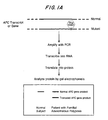
- FIG. 1 shows schematics of the in vitro synthesis (IVS) and allele-specific expression (ASE) assays.
- FIG. 1A shows a schematic illustrating the principles of the IVS assay.
- the APC gene is divided into five overlapping segments encompassing the entire coding region of the APC gene. These regions are amplified using specially designed PCR primers which place the necessary transcriptional and translational regulatory sequences at the 5' end of the PCR product.
- Radiolabeled polypeptide is synthesized in vitro from these surrogate genes in a simple one-step coupled transcription-translation reaction (illustrated as two steps). Truncating mutations can then be identified as smaller polypeptide products after gel electrophoresis and autoradiography.
- the stop codon represents a typical truncating APC mutation, for example, a single base-pair change that creates a premature translation termination codon.
- Figure 1B is a schematic which shows an allele-specific-expression assay. Every normal cell has two copies of the APC gene that are identical except for occasional polymorphisms of a single base pair (cytosine [C] or thymidine [T] in this example). Normally, both alleles of the APC gene are equally represented in the RNA fraction of the cell. However, some cases of familial adenomatous polyposis are caused by mutations that lead to reduced levels of normal APC transcript from one allele. This results in an imbalance in the representation of the transcripts from the two alleles. This altered allele ratio in RNA can be detected with the allele-specific-expression assay (which is described below the dotted line). First, RNA is isolated from peripheral blood mononuclear cells.
- APC transcripts are converted to complementary DNA and amplified by reverse transcriptase PCR.
- the PCR products are then annealed with a common 9-bp oligomer and two different-sized allele-specific oligomers (8 and 10 bp). After ligation, these oligomers will yield 17-bp and 19-bp products corresponding to alleles A and B that can be distinguished by gel electrophoresis.
- the box shows the expected results from a normal subject and from a patient with familial adenomatous polyposis who has a mutation that leads to the reduced expression of the normal transcripts of allele A.
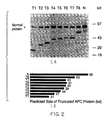
- Figure 2 shows IVS polypeptide analysis for detection of known truncating APC mutations.
- Figure 2A shows representative IVS polypeptide samples of sporadic colorectal tumors (T1-T8), known to have truncating mutations from sequence analysis, run on SDS-PAGE. Each demonstrates the expected truncated APC polypeptide in segment 3. A significant amount of normal, full sized APC protein (Indicated at left by N) is noted from the remaining normal alleles. A normal tissue sample (Indicated by an N at top) is also shown.
- Figure 2B graphically depicts the predicted size of truncated APC polypeptides in each of the tumors, based on sequence analysis of the APC gene.
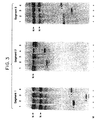
- FIG. 3 shows IVS protein analysis for detection of APC mutations in FAP patients.
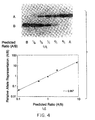
- Figure 4 shows allele mixing analysis of the ASE assay.
- RNA each homozygous for one allele (A or B) at the exon 11 polymorphic site, were used as templates for amplification and subsequent ligation reactions.
- the input ratio for each allele is shown below Figure 4A.
- a linear correlation between input and the observed result in the ASE assay is apparent from Figure 4A and the graph ( Figure 4B).
- the correlation coefficient, r was 0.997.
- Figure 5 shows detection of altered APC transcripts by the ASE assay.
- the "Genomic” bar indicates the average allele ratio derived from assays of 28 genomic DNA samples from 21 different individuals.
- the “Normal” bar indicates the average allele ratio observed in eleven RNA samples from four different individuals.
- the "FAP #11", “FAP #38”, and “FAP #62” bars represent analysis of RNA samples from three different FAP patients. The ratio for each patient was derived from four assays. Means and standard deviations are indicated by the box and overlying brackets, respectively.
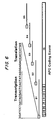
- Figure 6 shows the segments of APC used for analysis, as mapped to the APC exons.
- truncated APC polypeptides in FAP are unstable in vivo, precluding their demonstration by Western blot assays (Smith, K.J., et al. (1993) Proc. Natl. Acad. Sci. USA 90:2846-2850.
- truncated APC polypeptides could not be identified in three of seven FAP cases examined by Western blot analysis, but mutations in all seven cases were easily detectable through the present approach.
- genes are amplified. This can be done with any technique known in the art, including polymerase chain reaction (Saiki et al., Science 329: 487-491, 1988), and ligase chain reaction (Wu et al. Genomics, 4: 560-569,1989). Gene coding sequences can be amplified using reverse transcription of mRNA to form a cDNA template, or by using portions of genomic sequences which are free of intervening sequences.
- DNA samples for testing may be obtained from particularly affected tissues, such as colorectal tumors, or from other tissues, such as peripheral blood, chorionic villi, and blastomeres of pre-implantation embryos.
- DNA samples are obtained from persons who are suspected of being affected by, or of being a carrier of, a disease which is caused by mutation of the gene to be tested. For example, a DNA sample would be obtained from a person at risk of having familial adenomatous polyposis to test for mutations in the APC gene.
- Templates which are formed by the amplification of portions of the desired gene preferably will contain a transcriptional promotor and a translational initiation site. These are conveniently attached to the template during amplification by incorporating such sequences on the amplification primer which is complementary to the antisense strand of the gene. Alternatively, these can be attached by a separate ligation reaction.
- a polypeptide is produced which contains all or a portion of the amino acid sequence of the gene being tested.
- In vitro transcription and translation IVS can be accomplished in any convenient system known in the art, including rabbit reticulocyte lysates and wheat germ lysates.
- WO 92/07949 discloses a method for the "in vitro" production of proteins from DNA sequences.
- Polypeptides which are produced in the IVS are typically labeled with a radioactive substance or a fluorescent substance.
- a radioactive substance or a fluorescent substance for example, 35 S-methionine can be used as a substrate during the IVS to produce radiolabeled products which can be separated on an SDS.-polyacrylamide gel and autoradiographed. Other means for size separation or detection of polypeptide products as are known in the art may also be used.
- Mutations which are detectable by the TVS technique are those which lead to truncated polypeptides, which include nonsense and frameshift mutations.
- the presence of such polymorphisms in the patient can be assessed, inter alia, by using the ligase-mediated gene detection technique, generally as taught by Landegren et al., Science 241: 1077-1080, 1988, the disclosure of which is expressly incorporated herein.
- the template for such a ligase-mediated reaction can be genomic DNA.
- the patient's mRNA can be used as a template in a second ligase-mediated assay.
- the relative amount of mRNA transcribed from each of the two polymorphic alleles in the DNA sample of the patient can be determined. If the ratio is more than 1.2 or less than 0.8, then a mutation is indicated in one of the two polymorphic alleles which affects the expression of the gene.
- Such mutations include such cis acting mutations as promotor mutations and splice site mutations.
- An allele-specific ligation assay anneals two oligonucleotides immediately adjacent to each other on a complementary target DNA molecule. Two versions of the adjacent oligonucleotide are joined covalently by the action of a DNA ligase, provided that the nucleotides at the junction are correctly base-paired. One of the two oligonucleotides to be ligated is labeled. This oligonucleotide is complementary to DNA immediately adjacent to the polymorphism.
- the second and a third oligonucleotides are not labeled, and each of these contains as its terminal nucleotide (adjacent to the first oligonucleotide when annealed) one of the two polymorphic variants relevant to the patient under evaluation.
- the lengths of the two versions of the second oligonucleotide are distinct from each other.
- the ligation products can be separated on sequencing gels, for example, and the amount of each product determined with a phosphor imager. If the ratio of mRNA made from one allele to mRNA made from the other is outside of the range of 1 +/- 0.2, a mutation is indicated.
- Primers are provided for amplification of particular portions or entire genes. These primers are paired, and can be used as individual pairs or as sets which will amplify a whole coding sequence. Each primer is typically ten or more bases in length. The sequence of the primer is primarily complementary to one strand of the gene coding sequence, preferably about fifteen or twenty contiguous bases of the gene coding sequence. Each primer of a pair hybridizes and is complementary to opposite strands of the coding sequence. Desirably one primer of each pair will incorporate the sequence of a promotor and translational initiation sequence. This primer is complementary to the antisense strand of the gene to be amplified. Any promotor and initiation sequence can be used, that are compatible with the IVS system to be used. One preferred promotor and initiation sequence is that of T7. Others as are known in the art can be used.
- IVS in vitro synthesized
- the APC gene was divided into five overlapping segments (#1 to 5) containing codons 1 to 804, 686 to 1217, 1099 to 1693, 1555 to 2256, and 2131 to 2843 of APC, respectively (see Figure 6).
- the primers used for PCR amplification were designed to introduce a T7 promotor sequence for initiation of transcription by T7 RNA polymerase as well as a consensus sequence for translation initiation (Kozak, M. (1987) Nucleic Acids Research 15: 8125-8133). Segment 1 was isolated from cDNA templates prepared by reverse transcribing mRNA. Segments 2 to 5 were isolated directly from genomic DNA.
- cDNA template was prepared by incubating 5 ⁇ g of total RNA, 1 ⁇ g of random hexamer, 1 ⁇ l of amplification enhancer (0.5 units/ ⁇ L; USB) and 300 units of superscript II reverse transcriptase (BRL) in 20 ⁇ l of reaction buffer for one hour at 37 degrees.
- a mock reverse transcriptase reaction including everything except the enzyme was performed in parallel and used as a PCR template.
- Two-stage, nested PCR was performed using the USB Bind-Aid amplification kit according to manufacturer's instructions with the following changes.
- cDNA template 4 ⁇ l of cDNA template, 35 ng of each outside primer (see below), and 2.5 units of Taq polymerase (Cetus) were used in a 20 ⁇ l PCR reaction for 10 cycles (95° C x 30', 62.5° C x 2', 70° C x 3') in a total volume of 50 ⁇ l.
- PCR products were used directly (without purification) as templates in 25 ⁇ l coupled transcription-translation reactions (Promega) containing 40 ⁇ Ci of S 35 -Methionine translabel (ICN) for one hour at 30° C. Samples were diluted in sample buffer, boiled for 5', and one tenth analyzed on 10%-20% gradient SDS-poly acrylamide gel. Polypeptides were visualized by fluorography after impregnating the gel with ENHANCE (NEN). The sequence of amplification primers were as follows with [T7-Trans] representing the sequence displayed in Figure 6:
- IVS protein assay can be used to diagnose FAP from peripheral blood samples.
- Lymphoblastoid cell lines were obtained from 17 FAP patients by Epstein Barr virus immortalization of their lymphocytes. RNA and DNA were extracted from such cells as described (Chomczynski, P., et al. (1987) Analytical Biochemistry 162: 156-159; Goelz, S.E., et al. (1985) Biochemical and Biophysical Research Communications 130: 118-126).
- the two site polymorphisms used in this assay were silent single base pair changes, one in exon 11 (codon 486, TAC/TAT) and one in exon 13 (codon 545, GCA/GCG) (Powell, S.M., et al. (1991) Nature 359: 235-237). Homozygous cases were first sought by analyzing amplified APC exons 11 and 13 from genomic DNA.
- Amplification of exon 11 and 13 was carried out using approximately 100 ng of genomic DNA, 350 ng each primer, and 2.5 units of Taq polymerase was used in a 50 ⁇ l Bind-Aid amplification kit (USB) reaction was cycled 35 times [30' denaturation (95° C), 1' annealing (exon 11, 52.5° C; exon 13, 55° C) and 1' extension (70° C)] All reactions included a 5' extension period at the end.
- USB Bind-Aid amplification kit
- the sequence of primers used for amplification were as follows: (exon 11, 5'-TAGATGATTGTCTTTTTCCTC-3', 5 '-TCATACCTGAGCTATCTTAAG-3'; exon 13, 5 '-A CATGAAATTCATATTATAGTAC-3', 5'-CTATTCTTACTGCTAGCATTA-3'.
- the genomic PCR product was added to a modified allele-specific ligation assay (Landgren, et al. supra, which is incorporated herein by reference). A common 9 base pair 32 P-labeled oligomer and two different sized allele-specific oligomers (8 and 10 base pairs) were used in the ligation assay.
- genomic PCR product was added to 2 ng of a common 32 P-5' labeled oligomer (exon 11, 5'-GGGCTTACT-3'; exon 13, 5'-AGTGTTTTGA-3') and 2 ng of allele-specific oligomers (exon 11, 5'-TGAAATGTA C -3' and 5'-AAATGTA T -3'; exon 13, 5'-GGTTATTGC A -3' and 5'-TTATTGC G -3') in a modified ligase-mediated reaction.
- a common 32 P-5' labeled oligomer exon 11, 5'-GGGCTTACT-3'; exon 13, 5'-AGTGTTTTGA-3'
- allele-specific oligomers exon 11, 5'-TGAAATGTA C -3' and 5'-AAATGTA T -3'
- exon 13, 5'-GGTTATTGC A -3' and 5'-TTATTGC G -3' in a modified ligase-mediated reaction.
- Ligation products were separated through polyacrylamide/8M urea sequencing gels and the abundance of each allele was determined by the relative amount of allele-specific ligation product (17 bp for allele A, 19 bp for allele B, see Figure 4). Quantitation was achieved with a PhosphorImager TM (Molecular Dynamics, Inc.). Segment 1 PCR products (derived from mRNA, as for the IVS protein assay) were then analyzed in the same quantitative ligation reaction to determine the relative abundance of APC transcripts expressed from each allele.
- This example demonstrates the use of the ASE assay to evaluate patients and healthy controls with no detectable protein abnormalities in the IVS assay.
Landscapes
- Chemical & Material Sciences (AREA)
- Life Sciences & Earth Sciences (AREA)
- Organic Chemistry (AREA)
- Engineering & Computer Science (AREA)
- Zoology (AREA)
- Wood Science & Technology (AREA)
- Proteomics, Peptides & Aminoacids (AREA)
- Health & Medical Sciences (AREA)
- Molecular Biology (AREA)
- General Engineering & Computer Science (AREA)
- Immunology (AREA)
- Microbiology (AREA)
- Biophysics (AREA)
- Analytical Chemistry (AREA)
- Physics & Mathematics (AREA)
- Genetics & Genomics (AREA)
- Biochemistry (AREA)
- Bioinformatics & Cheminformatics (AREA)
- Biotechnology (AREA)
- General Health & Medical Sciences (AREA)
- Chemical Kinetics & Catalysis (AREA)
- Measuring Or Testing Involving Enzymes Or Micro-Organisms (AREA)
- Peptides Or Proteins (AREA)
- Addition Polymer Or Copolymer, Post-Treatments, Or Chemical Modifications (AREA)
Applications Claiming Priority (3)
| Application Number | Priority Date | Filing Date | Title |
|---|---|---|---|
| US08/169,303 US5709998A (en) | 1993-12-15 | 1993-12-15 | Molecular diagnosis of familial adenomatous polyposis |
| US169303 | 1993-12-15 | ||
| PCT/US1994/013910 WO1995017523A2 (en) | 1993-12-15 | 1994-12-13 | Molecular diagnosis of familial adenomatous polyposis |
Publications (2)
| Publication Number | Publication Date |
|---|---|
| EP0734456A1 EP0734456A1 (en) | 1996-10-02 |
| EP0734456B1 true EP0734456B1 (en) | 2003-03-05 |
Family
ID=22615099
Family Applications (1)
| Application Number | Title | Priority Date | Filing Date |
|---|---|---|---|
| EP95905313A Expired - Lifetime EP0734456B1 (en) | 1993-12-15 | 1994-12-13 | Molecular diagnosis of familial adenomatous polyposis |
Country Status (7)
| Country | Link |
|---|---|
| US (2) | US5709998A (enExample) |
| EP (1) | EP0734456B1 (enExample) |
| JP (1) | JPH09506775A (enExample) |
| AT (1) | ATE233824T1 (enExample) |
| CA (1) | CA2179012C (enExample) |
| DE (1) | DE69432225T2 (enExample) |
| WO (1) | WO1995017523A2 (enExample) |
Families Citing this family (44)
| Publication number | Priority date | Publication date | Assignee | Title |
|---|---|---|---|---|
| US5643722A (en) | 1994-05-11 | 1997-07-01 | Trustees Of Boston University | Methods for the detection and isolation of proteins |
| US6210941B1 (en) * | 1997-06-27 | 2001-04-03 | The Trustees Of Boston University | Methods for the detection and isolation of proteins |
| US5928870A (en) * | 1997-06-16 | 1999-07-27 | Exact Laboratories, Inc. | Methods for the detection of loss of heterozygosity |
| US6020137A (en) * | 1996-08-14 | 2000-02-01 | Exact Laboratories, Inc. | Methods for the detection of loss of heterozygosity |
| US6300077B1 (en) | 1996-08-14 | 2001-10-09 | Exact Sciences Corporation | Methods for the detection of nucleic acids |
| US6146828A (en) * | 1996-08-14 | 2000-11-14 | Exact Laboratories, Inc. | Methods for detecting differences in RNA expression levels and uses therefor |
| US6100029A (en) * | 1996-08-14 | 2000-08-08 | Exact Laboratories, Inc. | Methods for the detection of chromosomal aberrations |
| US6203993B1 (en) | 1996-08-14 | 2001-03-20 | Exact Science Corp. | Methods for the detection of nucleic acids |
| US6235474B1 (en) * | 1996-12-30 | 2001-05-22 | The Johns Hopkins University | Methods and kits for diagnosing and determination of the predisposition for diseases |
| US5879890A (en) * | 1997-01-31 | 1999-03-09 | The Johns Hopkins University | APC mutation associated with familial colorectal cancer in Ashkenazi jews |
| JP3693352B2 (ja) * | 1997-06-13 | 2005-09-07 | アフィメトリックス インコーポレイテッド | プローブアレイを使用して、遺伝子多型性を検出し、対立遺伝子発現をモニターする方法 |
| US6268136B1 (en) | 1997-06-16 | 2001-07-31 | Exact Science Corporation | Methods for stool sample preparation |
| US6406857B1 (en) | 1997-06-16 | 2002-06-18 | Exact Sciences Corporation | Methods for stool sample preparation |
| AUPO926597A0 (en) * | 1997-09-17 | 1997-10-09 | University Of Melbourne, The | Improved detection method for premature termination mutations |
| US20020064792A1 (en) * | 1997-11-13 | 2002-05-30 | Lincoln Stephen E. | Database for storage and analysis of full-length sequences |
| WO1999055906A2 (en) * | 1998-04-27 | 1999-11-04 | University Health Network | Gene screening methods and related assays |
| WO2000018958A2 (en) | 1998-09-29 | 2000-04-06 | Government Of The Republic Of Singapore | An in vitro activity assay for human hepatits b virus (hbv) dna polymerase, the use of such an assay to assay activity of various serum samples and to screen for inhibitors of the hbv dna polymerase and a method of producing hbv dna polymerase |
| FR2786787B1 (fr) | 1998-12-08 | 2002-04-19 | Proteus | Methode d'analyse in vitro d'un phenotype connu a partir d'un echantillon d'acides nucleiques |
| US6280947B1 (en) | 1999-08-11 | 2001-08-28 | Exact Sciences Corporation | Methods for detecting nucleotide insertion or deletion using primer extension |
| US6503718B2 (en) | 1999-01-10 | 2003-01-07 | Exact Sciences Corporation | Methods for detecting mutations using primer extension for detecting disease |
| US7148016B1 (en) | 1999-01-14 | 2006-12-12 | Ca*Tx Inc. | Immunoassays to detect diseases or disease susceptibility traits |
| CA2362251C (en) | 1999-02-25 | 2008-06-17 | Exact Sciences Corporation | Methods for preserving dna integrity |
| US7037682B2 (en) | 1999-03-13 | 2006-05-02 | Government Of The Republic Of Singapore | In vitro activity assay for human hepatitis B virus (HBV) DNA polymerase, and its use for screening for inhibitors of HBV DNA polymerase |
| CA2366778C (en) | 1999-04-09 | 2008-07-22 | Exact Sciences Corporation | Methods for detecting nucleic acids indicative of cancer |
| US6653126B1 (en) | 1999-06-04 | 2003-11-25 | Massachusetts Insititute Of Technology | Compositions and methods for the screening of compounds to enhance or reduce apoptosis |
| US6306628B1 (en) * | 1999-08-25 | 2001-10-23 | Ambergen, Incorporated | Methods for the detection, analysis and isolation of Nascent proteins |
| US6849403B1 (en) | 1999-09-08 | 2005-02-01 | Exact Sciences Corporation | Apparatus and method for drug screening |
| US6586177B1 (en) * | 1999-09-08 | 2003-07-01 | Exact Sciences Corporation | Methods for disease detection |
| US6919174B1 (en) * | 1999-12-07 | 2005-07-19 | Exact Sciences Corporation | Methods for disease detection |
| EP1238113B1 (en) * | 1999-12-07 | 2010-02-24 | EXACT Sciences Corporation | Detection of lung neoplasms in stool |
| US6271257B1 (en) * | 2000-04-17 | 2001-08-07 | Hormos Nutraceutical Oy Ltd. | Decreasing the intracellular level of β-catenin by administering hydroxymatairesinol |
| EP1160332A1 (en) * | 2000-05-30 | 2001-12-05 | Amsterdam Support Diagnostics B.V. | Methods for detecting enzymatic activity or detecting resistance to enzyme inhibitors |
| US20030165940A1 (en) * | 2001-12-06 | 2003-09-04 | The Johns Hopkins University | Disease detection by digital protein truncation assays |
| WO2003071252A2 (en) * | 2002-02-15 | 2003-08-28 | Exact Sciences Corporation | Methods for analysis of molecular events |
| US7927840B2 (en) * | 2006-09-11 | 2011-04-19 | Gen Probe Incorporated | Method for detecting West Nile Virus nucleic acids in the 3′ non-coding region |
| EP1583949B1 (en) * | 2002-10-16 | 2015-06-17 | Gen-Probe Incorporated | Compositions and methods for detecting west nile virus |
| US20040259101A1 (en) * | 2003-06-20 | 2004-12-23 | Shuber Anthony P. | Methods for disease screening |
| WO2005111244A2 (en) * | 2004-05-10 | 2005-11-24 | Exact Sciences Corporation | Methods for detecting a mutant nucleic acid |
| WO2005113769A1 (en) * | 2004-05-14 | 2005-12-01 | Exact Sciences Corporation | Method for stabilizing biological samples for nucleic acid analysis |
| US7981607B2 (en) * | 2004-08-27 | 2011-07-19 | Esoterix Genetic Laboratories LLC | Method for detecting recombinant event |
| US9109256B2 (en) | 2004-10-27 | 2015-08-18 | Esoterix Genetic Laboratories, Llc | Method for monitoring disease progression or recurrence |
| WO2006104477A1 (en) * | 2005-03-24 | 2006-10-05 | Cleveland State University | Detection of truncation mutations in a large background of normal dna |
| WO2007044071A2 (en) * | 2005-04-21 | 2007-04-19 | Exact Sciences Corporation | Analysis of heterogeneous nucleic acid samples |
| CN115216531A (zh) * | 2022-06-30 | 2022-10-21 | 湖南家辉生物技术有限公司 | 一种新的APC基因突变c.794_795insG及其诊断试剂 |
Family Cites Families (6)
| Publication number | Priority date | Publication date | Assignee | Title |
|---|---|---|---|---|
| US4800159A (en) * | 1986-02-07 | 1989-01-24 | Cetus Corporation | Process for amplifying, detecting, and/or cloning nucleic acid sequences |
| EP0358737A4 (en) * | 1988-01-28 | 1992-04-08 | Mayo Foundation For Medical Education And Research | Genomic amplification with direct sequencing |
| WO1991009964A1 (en) * | 1990-01-04 | 1991-07-11 | The Johns Hopkins University | Gene deleted in colorectal cancer of humans |
| AU1322692A (en) * | 1990-11-05 | 1992-05-26 | United States Of America, As Represented By The Secretary Of The Army, The | Method for the in vitro production of protein from a dna sequence without cloning |
| US5352775A (en) * | 1991-01-16 | 1994-10-04 | The Johns Hopkins Univ. | APC gene and nucleic acid probes derived therefrom |
| WO1993011266A1 (en) * | 1991-12-05 | 1993-06-10 | Sloan-Kettering Institute For Cancer Research | Method for the detection of mutations and monoclonal lineages by analysis of rna conformation polymorphism(s) |
-
1993
- 1993-12-15 US US08/169,303 patent/US5709998A/en not_active Expired - Lifetime
-
1994
- 1994-12-13 CA CA002179012A patent/CA2179012C/en not_active Expired - Lifetime
- 1994-12-13 JP JP7517444A patent/JPH09506775A/ja active Pending
- 1994-12-13 DE DE69432225T patent/DE69432225T2/de not_active Expired - Lifetime
- 1994-12-13 AT AT95905313T patent/ATE233824T1/de not_active IP Right Cessation
- 1994-12-13 EP EP95905313A patent/EP0734456B1/en not_active Expired - Lifetime
- 1994-12-13 WO PCT/US1994/013910 patent/WO1995017523A2/en not_active Ceased
-
1996
- 1996-06-03 US US08/657,207 patent/US5760207A/en not_active Expired - Lifetime
Also Published As
| Publication number | Publication date |
|---|---|
| EP0734456A1 (en) | 1996-10-02 |
| CA2179012A1 (en) | 1995-06-29 |
| DE69432225T2 (de) | 2004-02-05 |
| JPH09506775A (ja) | 1997-07-08 |
| CA2179012C (en) | 2006-10-31 |
| DE69432225D1 (de) | 2003-04-10 |
| WO1995017523A2 (en) | 1995-06-29 |
| ATE233824T1 (de) | 2003-03-15 |
| US5709998A (en) | 1998-01-20 |
| US5760207A (en) | 1998-06-02 |
| WO1995017523A3 (en) | 1995-09-28 |
Similar Documents
| Publication | Publication Date | Title |
|---|---|---|
| CA2179012C (en) | Molecular diagnosis of familial adenomatous polyposis | |
| US5605794A (en) | Method of detecting variant nucleic acids | |
| US5545527A (en) | Method for testing for mutations in DNA from a patient sample | |
| US9677127B2 (en) | Method of detecting gene mutation | |
| US7662563B2 (en) | Cancer diagnostic method based upon DNA methylation differences | |
| US6200747B1 (en) | Method and kits for detection of fragile X specific, GC-rich DNA sequences | |
| US20030077592A1 (en) | Methods for analyzing LTC4 synthase polymorphisms and diagnostic use | |
| Reue | mRNA quantitation techniques: considerations for experimental design and application | |
| WO2001014589A2 (en) | Liquid array technology | |
| WO1996030545A1 (en) | Mutation detection by differential primer extension of mutant and wildtype target sequences | |
| Ruiz-Ponte et al. | Rapid real-time fluorescent PCR gene dosage test for the diagnosis of DNA duplications and deletions | |
| WO1996030545A9 (en) | Mutation detection by differential primer extension of mutant and wildtype target sequences | |
| JP2000508539A (ja) | Str座位の多重増幅 | |
| WO2000009751A1 (en) | Diagnostic methods using serial testing of polymorphic loci | |
| Giordano et al. | Determination of SNP allele frequencies in pooled DNAs by primer extension genotyping and denaturing high-performance liquid chromatography | |
| Allingham-Hawkins et al. | FRAXE expansion is not a common etiological factor among developmentally delayed males | |
| US5550020A (en) | Method, reagents and kit for diagnosis and targeted screening for retinoblastoma | |
| EP1178119A2 (en) | A Pcr-based multiplex assay for determining haplotype | |
| CA2282705A1 (en) | Nucleic acid analysis methods | |
| Kropp et al. | Selective enzymatic amplification of α2-globin DNA for detection of the hemoglobin Constant Spring mutation | |
| JP2001245698A (ja) | 核酸検出法 | |
| EP1100963A2 (en) | Human ccr-2 gene polymorphisms | |
| Sitbon et al. | A colorimetric minisequencing assay for the mutation in codon 506 of the coagulation factor V gene | |
| Gazzoli et al. | Molecular screening of families affected by familial adenomatous polyposis (FAP) | |
| Dowton et al. | Diagnosis of human heritable diseases--laboratory approaches and outcomes |
Legal Events
| Date | Code | Title | Description |
|---|---|---|---|
| PUAI | Public reference made under article 153(3) epc to a published international application that has entered the european phase |
Free format text: ORIGINAL CODE: 0009012 |
|
| 17P | Request for examination filed |
Effective date: 19960617 |
|
| AK | Designated contracting states |
Kind code of ref document: A1 Designated state(s): AT BE CH DE DK ES FR GB GR IE IT LI LU MC NL PT SE |
|
| 17Q | First examination report despatched |
Effective date: 19971212 |
|
| GRAH | Despatch of communication of intention to grant a patent |
Free format text: ORIGINAL CODE: EPIDOS IGRA |
|
| RAP1 | Party data changed (applicant data changed or rights of an application transferred) |
Owner name: THE JOHNS HOPKINS UNIVERSITY |
|
| RIN1 | Information on inventor provided before grant (corrected) |
Inventor name: VOGELSTEIN, BERT Inventor name: KINZLER, KENNETH, W. |
|
| GRAH | Despatch of communication of intention to grant a patent |
Free format text: ORIGINAL CODE: EPIDOS IGRA |
|
| GRAA | (expected) grant |
Free format text: ORIGINAL CODE: 0009210 |
|
| AK | Designated contracting states |
Designated state(s): AT BE CH DE DK ES FR GB GR IE IT LI LU MC NL PT SE |
|
| PG25 | Lapsed in a contracting state [announced via postgrant information from national office to epo] |
Ref country code: NL Free format text: LAPSE BECAUSE OF FAILURE TO SUBMIT A TRANSLATION OF THE DESCRIPTION OR TO PAY THE FEE WITHIN THE PRESCRIBED TIME-LIMIT Effective date: 20030305 Ref country code: LI Free format text: LAPSE BECAUSE OF FAILURE TO SUBMIT A TRANSLATION OF THE DESCRIPTION OR TO PAY THE FEE WITHIN THE PRESCRIBED TIME-LIMIT Effective date: 20030305 Ref country code: IT Free format text: LAPSE BECAUSE OF FAILURE TO SUBMIT A TRANSLATION OF THE DESCRIPTION OR TO PAY THE FEE WITHIN THE PRE;WARNING: LAPSES OF ITALIAN PATENTS WITH EFFECTIVE DATE BEFORE 2007 MAY HAVE OCCURRED AT ANY TIME BEFORE 2007. THE CORRECT EFFECTIVE DATE MAY BE DIFFERENT FROM THE ONE RECORDED.SCRIBED TIME-LIMIT Effective date: 20030305 Ref country code: GR Free format text: LAPSE BECAUSE OF FAILURE TO SUBMIT A TRANSLATION OF THE DESCRIPTION OR TO PAY THE FEE WITHIN THE PRESCRIBED TIME-LIMIT Effective date: 20030305 Ref country code: CH Free format text: LAPSE BECAUSE OF FAILURE TO SUBMIT A TRANSLATION OF THE DESCRIPTION OR TO PAY THE FEE WITHIN THE PRESCRIBED TIME-LIMIT Effective date: 20030305 Ref country code: BE Free format text: LAPSE BECAUSE OF FAILURE TO SUBMIT A TRANSLATION OF THE DESCRIPTION OR TO PAY THE FEE WITHIN THE PRESCRIBED TIME-LIMIT Effective date: 20030305 Ref country code: AT Free format text: LAPSE BECAUSE OF FAILURE TO SUBMIT A TRANSLATION OF THE DESCRIPTION OR TO PAY THE FEE WITHIN THE PRESCRIBED TIME-LIMIT Effective date: 20030305 |
|
| REG | Reference to a national code |
Ref country code: GB Ref legal event code: FG4D |
|
| REG | Reference to a national code |
Ref country code: CH Ref legal event code: EP |
|
| REG | Reference to a national code |
Ref country code: IE Ref legal event code: FG4D |
|
| REF | Corresponds to: |
Ref document number: 69432225 Country of ref document: DE Date of ref document: 20030410 Kind code of ref document: P |
|
| PG25 | Lapsed in a contracting state [announced via postgrant information from national office to epo] |
Ref country code: SE Free format text: LAPSE BECAUSE OF FAILURE TO SUBMIT A TRANSLATION OF THE DESCRIPTION OR TO PAY THE FEE WITHIN THE PRESCRIBED TIME-LIMIT Effective date: 20030605 Ref country code: PT Free format text: LAPSE BECAUSE OF FAILURE TO SUBMIT A TRANSLATION OF THE DESCRIPTION OR TO PAY THE FEE WITHIN THE PRESCRIBED TIME-LIMIT Effective date: 20030605 Ref country code: DK Free format text: LAPSE BECAUSE OF FAILURE TO SUBMIT A TRANSLATION OF THE DESCRIPTION OR TO PAY THE FEE WITHIN THE PRESCRIBED TIME-LIMIT Effective date: 20030605 |
|
| NLV1 | Nl: lapsed or annulled due to failure to fulfill the requirements of art. 29p and 29m of the patents act | ||
| REG | Reference to a national code |
Ref country code: CH Ref legal event code: PL |
|
| PG25 | Lapsed in a contracting state [announced via postgrant information from national office to epo] |
Ref country code: ES Free format text: LAPSE BECAUSE OF FAILURE TO SUBMIT A TRANSLATION OF THE DESCRIPTION OR TO PAY THE FEE WITHIN THE PRESCRIBED TIME-LIMIT Effective date: 20030930 |
|
| ET | Fr: translation filed | ||
| PG25 | Lapsed in a contracting state [announced via postgrant information from national office to epo] |
Ref country code: LU Free format text: LAPSE BECAUSE OF NON-PAYMENT OF DUE FEES Effective date: 20031213 |
|
| PG25 | Lapsed in a contracting state [announced via postgrant information from national office to epo] |
Ref country code: IE Free format text: LAPSE BECAUSE OF NON-PAYMENT OF DUE FEES Effective date: 20031215 |
|
| PG25 | Lapsed in a contracting state [announced via postgrant information from national office to epo] |
Ref country code: MC Free format text: LAPSE BECAUSE OF NON-PAYMENT OF DUE FEES Effective date: 20031231 |
|
| PLBE | No opposition filed within time limit |
Free format text: ORIGINAL CODE: 0009261 |
|
| STAA | Information on the status of an ep patent application or granted ep patent |
Free format text: STATUS: NO OPPOSITION FILED WITHIN TIME LIMIT |
|
| 26N | No opposition filed |
Effective date: 20031208 |
|
| REG | Reference to a national code |
Ref country code: IE Ref legal event code: MM4A |
|
| PGFP | Annual fee paid to national office [announced via postgrant information from national office to epo] |
Ref country code: DE Payment date: 20131230 Year of fee payment: 20 Ref country code: GB Payment date: 20131227 Year of fee payment: 20 |
|
| PGFP | Annual fee paid to national office [announced via postgrant information from national office to epo] |
Ref country code: FR Payment date: 20131217 Year of fee payment: 20 |
|
| REG | Reference to a national code |
Ref country code: DE Ref legal event code: R071 Ref document number: 69432225 Country of ref document: DE |
|
| REG | Reference to a national code |
Ref country code: DE Ref legal event code: R071 Ref document number: 69432225 Country of ref document: DE |
|
| REG | Reference to a national code |
Ref country code: GB Ref legal event code: PE20 Expiry date: 20141212 |
|
| PG25 | Lapsed in a contracting state [announced via postgrant information from national office to epo] |
Ref country code: GB Free format text: LAPSE BECAUSE OF EXPIRATION OF PROTECTION Effective date: 20141212 |