EP0734289B1 - Verfahren zur herstellung von polyolefinen in einem autoclavreaktor - Google Patents
Verfahren zur herstellung von polyolefinen in einem autoclavreaktor Download PDFInfo
- Publication number
- EP0734289B1 EP0734289B1 EP95919267A EP95919267A EP0734289B1 EP 0734289 B1 EP0734289 B1 EP 0734289B1 EP 95919267 A EP95919267 A EP 95919267A EP 95919267 A EP95919267 A EP 95919267A EP 0734289 B1 EP0734289 B1 EP 0734289B1
- Authority
- EP
- European Patent Office
- Prior art keywords
- reactor
- temperature
- monomer
- initiator
- zone
- Prior art date
- Legal status (The legal status is an assumption and is not a legal conclusion. Google has not performed a legal analysis and makes no representation as to the accuracy of the status listed.)
- Expired - Lifetime
Links
- 238000000034 method Methods 0.000 title claims abstract description 36
- 238000004519 manufacturing process Methods 0.000 title claims abstract description 20
- 229920000098 polyolefin Polymers 0.000 title claims abstract description 6
- 239000000178 monomer Substances 0.000 claims abstract description 54
- 238000006243 chemical reaction Methods 0.000 claims abstract description 49
- 239000003999 initiator Substances 0.000 claims abstract description 42
- 238000006116 polymerization reaction Methods 0.000 claims abstract description 28
- 230000001105 regulatory effect Effects 0.000 claims abstract description 23
- VGGSQFUCUMXWEO-UHFFFAOYSA-N Ethene Chemical compound C=C VGGSQFUCUMXWEO-UHFFFAOYSA-N 0.000 claims description 14
- 239000005977 Ethylene Substances 0.000 claims description 14
- 230000001276 controlling effect Effects 0.000 claims description 5
- 210000000056 organ Anatomy 0.000 claims description 5
- 229920001577 copolymer Polymers 0.000 claims description 3
- 229920001519 homopolymer Polymers 0.000 claims description 2
- 238000001816 cooling Methods 0.000 description 6
- 150000001336 alkenes Chemical class 0.000 description 5
- 229920000642 polymer Polymers 0.000 description 5
- 239000004698 Polyethylene Substances 0.000 description 4
- 230000000052 comparative effect Effects 0.000 description 4
- 239000000155 melt Substances 0.000 description 4
- JRZJOMJEPLMPRA-UHFFFAOYSA-N olefin Natural products CCCCCCCC=C JRZJOMJEPLMPRA-UHFFFAOYSA-N 0.000 description 4
- -1 polyethylene Polymers 0.000 description 4
- 229920000573 polyethylene Polymers 0.000 description 4
- 230000000694 effects Effects 0.000 description 3
- 238000000354 decomposition reaction Methods 0.000 description 2
- 230000001419 dependent effect Effects 0.000 description 2
- 229920001684 low density polyethylene Polymers 0.000 description 2
- 239000004702 low-density polyethylene Substances 0.000 description 2
- 239000000047 product Substances 0.000 description 2
- 238000010526 radical polymerization reaction Methods 0.000 description 2
- 238000012937 correction Methods 0.000 description 1
- 239000012467 final product Substances 0.000 description 1
- 238000009499 grossing Methods 0.000 description 1
- 230000017525 heat dissipation Effects 0.000 description 1
- 239000007788 liquid Substances 0.000 description 1
- 230000007774 longterm Effects 0.000 description 1
- 239000000203 mixture Substances 0.000 description 1
- 230000003287 optical effect Effects 0.000 description 1
- 229920005638 polyethylene monopolymer Polymers 0.000 description 1
- 229920013716 polyethylene resin Polymers 0.000 description 1
- 230000000379 polymerizing effect Effects 0.000 description 1
- 239000000376 reactant Substances 0.000 description 1
- 230000011218 segmentation Effects 0.000 description 1
- 230000002269 spontaneous effect Effects 0.000 description 1
Images

Classifications
-
- B—PERFORMING OPERATIONS; TRANSPORTING
- B01—PHYSICAL OR CHEMICAL PROCESSES OR APPARATUS IN GENERAL
- B01J—CHEMICAL OR PHYSICAL PROCESSES, e.g. CATALYSIS OR COLLOID CHEMISTRY; THEIR RELEVANT APPARATUS
- B01J19/00—Chemical, physical or physico-chemical processes in general; Their relevant apparatus
- B01J19/0006—Controlling or regulating processes
- B01J19/0013—Controlling the temperature of the process
-
- B—PERFORMING OPERATIONS; TRANSPORTING
- B01—PHYSICAL OR CHEMICAL PROCESSES OR APPARATUS IN GENERAL
- B01J—CHEMICAL OR PHYSICAL PROCESSES, e.g. CATALYSIS OR COLLOID CHEMISTRY; THEIR RELEVANT APPARATUS
- B01J19/00—Chemical, physical or physico-chemical processes in general; Their relevant apparatus
- B01J19/0006—Controlling or regulating processes
-
- B—PERFORMING OPERATIONS; TRANSPORTING
- B01—PHYSICAL OR CHEMICAL PROCESSES OR APPARATUS IN GENERAL
- B01J—CHEMICAL OR PHYSICAL PROCESSES, e.g. CATALYSIS OR COLLOID CHEMISTRY; THEIR RELEVANT APPARATUS
- B01J3/00—Processes of utilising sub-atmospheric or super-atmospheric pressure to effect chemical or physical change of matter; Apparatus therefor
- B01J3/04—Pressure vessels, e.g. autoclaves
-
- C—CHEMISTRY; METALLURGY
- C08—ORGANIC MACROMOLECULAR COMPOUNDS; THEIR PREPARATION OR CHEMICAL WORKING-UP; COMPOSITIONS BASED THEREON
- C08F—MACROMOLECULAR COMPOUNDS OBTAINED BY REACTIONS ONLY INVOLVING CARBON-TO-CARBON UNSATURATED BONDS
- C08F10/00—Homopolymers and copolymers of unsaturated aliphatic hydrocarbons having only one carbon-to-carbon double bond
-
- B—PERFORMING OPERATIONS; TRANSPORTING
- B01—PHYSICAL OR CHEMICAL PROCESSES OR APPARATUS IN GENERAL
- B01J—CHEMICAL OR PHYSICAL PROCESSES, e.g. CATALYSIS OR COLLOID CHEMISTRY; THEIR RELEVANT APPARATUS
- B01J2219/00—Chemical, physical or physico-chemical processes in general; Their relevant apparatus
- B01J2219/00049—Controlling or regulating processes
- B01J2219/00051—Controlling the temperature
- B01J2219/00054—Controlling or regulating the heat exchange system
- B01J2219/00056—Controlling or regulating the heat exchange system involving measured parameters
- B01J2219/00058—Temperature measurement
-
- B—PERFORMING OPERATIONS; TRANSPORTING
- B01—PHYSICAL OR CHEMICAL PROCESSES OR APPARATUS IN GENERAL
- B01J—CHEMICAL OR PHYSICAL PROCESSES, e.g. CATALYSIS OR COLLOID CHEMISTRY; THEIR RELEVANT APPARATUS
- B01J2219/00—Chemical, physical or physico-chemical processes in general; Their relevant apparatus
- B01J2219/00049—Controlling or regulating processes
- B01J2219/00162—Controlling or regulating processes controlling the pressure
-
- B—PERFORMING OPERATIONS; TRANSPORTING
- B01—PHYSICAL OR CHEMICAL PROCESSES OR APPARATUS IN GENERAL
- B01J—CHEMICAL OR PHYSICAL PROCESSES, e.g. CATALYSIS OR COLLOID CHEMISTRY; THEIR RELEVANT APPARATUS
- B01J2219/00—Chemical, physical or physico-chemical processes in general; Their relevant apparatus
- B01J2219/00049—Controlling or regulating processes
- B01J2219/00182—Controlling or regulating processes controlling the level of reactants in the reactor vessel
-
- B—PERFORMING OPERATIONS; TRANSPORTING
- B01—PHYSICAL OR CHEMICAL PROCESSES OR APPARATUS IN GENERAL
- B01J—CHEMICAL OR PHYSICAL PROCESSES, e.g. CATALYSIS OR COLLOID CHEMISTRY; THEIR RELEVANT APPARATUS
- B01J2219/00—Chemical, physical or physico-chemical processes in general; Their relevant apparatus
- B01J2219/00761—Details of the reactor
- B01J2219/00763—Baffles
- B01J2219/00779—Baffles attached to the stirring means
-
- B—PERFORMING OPERATIONS; TRANSPORTING
- B01—PHYSICAL OR CHEMICAL PROCESSES OR APPARATUS IN GENERAL
- B01J—CHEMICAL OR PHYSICAL PROCESSES, e.g. CATALYSIS OR COLLOID CHEMISTRY; THEIR RELEVANT APPARATUS
- B01J2219/00—Chemical, physical or physico-chemical processes in general; Their relevant apparatus
- B01J2219/18—Details relating to the spatial orientation of the reactor
- B01J2219/185—Details relating to the spatial orientation of the reactor vertical
-
- B—PERFORMING OPERATIONS; TRANSPORTING
- B01—PHYSICAL OR CHEMICAL PROCESSES OR APPARATUS IN GENERAL
- B01J—CHEMICAL OR PHYSICAL PROCESSES, e.g. CATALYSIS OR COLLOID CHEMISTRY; THEIR RELEVANT APPARATUS
- B01J2219/00—Chemical, physical or physico-chemical processes in general; Their relevant apparatus
- B01J2219/19—Details relating to the geometry of the reactor
- B01J2219/194—Details relating to the geometry of the reactor round
- B01J2219/1941—Details relating to the geometry of the reactor round circular or disk-shaped
- B01J2219/1943—Details relating to the geometry of the reactor round circular or disk-shaped cylindrical
Definitions
- the present invention relates to a process for the production of olefin polymers in an autoclave reactor at high pressure and moderate temperature.
- the present invention relates to a process for the production of polyethylene homopolymers and copolymers having low and medium densities by a controlled feeding of monomer and initiator into the reactor at a number of inlet points along the reactor.
- the polymerization of ethylene at a high pressure, i.e. from 100 to 300 MPa, and a moderate temperature, i.e. from 100 to 300 °C, into polyethylene is performed by a free radical polymerization process.
- the polymerization of ethylene or a mixture of ethylene with other olefins is performed by using an initiator having a suitable decomposition rate at the given temperature conditions. Since polymerization reactions are exothermal, the temperature in the reactor must be kept under strict control.
- reaction temperature inside the reactor is controlled by regulating the amount of added initiator, or by providing indirect cooling by means of cooling pipes.
- GB Patent No. 1,538,633 teaches a high pressure process for polymerizing monomer comprising ethylene in a first and second autoclave reaction zones arranged in series, which process is performed with a reduced temperature in said first zone in order to obtain final products having improved optical properties.
- the average amount of monomers fed to the first part of the reactor is reduced, thus obtaining an improved distribution of the polymerization reactions along the reactor.
- the temperature is controlled by regulating the introduced amount of initiator.
- US Patent No. 3,299,033 discloses a method used in a high pressure ethylene polymerization process to provide a substantially uniform feeding rate of initiator into the reactor by means of a temperature or pressure controlled valve arranged in the feeding line.
- the main purpose of the invention is to smooth out the variations in the amounts of initiator delivered by the piston pumps used for feeding the initiator, as well as smoothing out the variations caused by pressure fluctuations in the reactor.
- the initiator is mixed with ethylene to achieve improved mixing.
- US Patent No. 4,012,573 teaches a method of removing heat from polymerization reactions of monomers in the gas phase in a reactor by removing a portion of the gaseous monomers, liquefying said monomers and regulate the rate at which the liquid is fed back to the reactor, whereby the temperature and pressure inside the reactor are regulated.
- DE Patent No. 1,620,947 teaches the conveying of cold ethylene through a heat exchange unit mounted inside the reactor.
- the cooling effect of the cold ethylene is used for indirect cooling of the reactor, and the prewarmed ethylene is fed to the reactor.
- the present invention provides a process for the production of polyolefins, in particular ethylene homopolymers and copolymers of low and medium density, in an elongated autoclave reactor having several reaction zones operated at pressures from 100 to 300 MPa and temperatures between 100 and 300 °C, in which process monomer and initiator are introduced into the reactor through several feed inlets distributed along the reactor length.
- each of said measured temperatures is compared with a corresponding preset temperature and the detected deviation between each pair of preset and measured temperatures are used by applying a controller that compensates for the non-linearity and the differences in their responses in regulating the amount of monomer and initiator fed into the autoclave through the feed inlets in order to minimize the temperature deviations.
- the autoclave reactor will comprise a number of more or less overlapping reaction zones, and the proportion of the polymerization reactions thing place in each zone along the reactor is controlled by regulating the amounts of initiator and monomer fed to each such reaction zone.
- the process of the present invention allows such control by regulating both the amount of initiator and the amount of monomer fed to the reactor, as well as the temperature of the monomer.
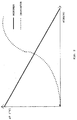
- the initiator fed to the reactor must decompose before it can initiate the polymerization reactions. Said reactions generate heat which consequently cause a temperature increase. There exists a non-linear correlation between the amount of initiator fed to the reactor and the resulting increase in temperature within the reaction zone. Said effect is illustrated by the S-curved, dotted line in Figure 2. Further, a linear relation exists between the amount of cold monomer fed into the reactor and the resulting temperature decrease within the reactor a linear relation exists. When the amount of cold monomer fed to the reactor is increased, the temperature will spontaneously drop as illustrated by the solid line in Figure 2.
- the control system of the process according to the invention provides a means by which temperature fluctuations in an olefin polymerization reaction zone can be minimized.
- the control system also makes it possible to continue the polymerization reaction at lower feed gas temperatures than in similar prior art processes. By lowering the temperature of the monomers the heat dissipation increases.
- the monomers introduced into the reactor should therefore have a low, controlled temperature, preferably within a temperature range from -10 °C to 100 °C, more preferred from 0 °C to 100 °C. Such low temperatures imply that the amount of heat needed to raise the monomer temperature up to the reaction temperature will be taken from the reactants and products within the reaction zone.
- the polymerization reaction When the temperature within the reaction zone is low, the polymerization reaction may become unstable, which may lead to operational problems. However, the polymerization reaction can be maintained at a stable level even if the temperature of the feed gas is low if more active initiators are used. Moreover, this would result in an increase in the production capacity of the reactor whithout reducing any properties of the obtained final product.
- the present process also allows the reactor outlet temperature to be increased. Without a well-functioning control system, the reactor outlet temperature may increase to a too high value resulting in the polymerization reaction coming out of control. Ultimately, this may lead to a decomposition of the ethylene, the outcome of which would be a spontaneous pressure increase inside the reactor resulting in a reactor blow-out.
- the present control system is based on measuring the temperatures at defined locations along the reactor length and comparing said measured temperatures with preset temperature values.
- the differences between measured and preset temperatures are processed in PID or PD control units, the signals from which are transmitted to a distribution control unit determining to which degree the corresponding amounts of monomer and initiator have to be increased or lowered.
- PID and PD control units employed in the present process are well known to those skilled in the art. A more detailed explanation of such control devices and how they function is therefore considered to be superfluous.
- any temperature exceeding a preset value will result in an increased amount of cold monomer gas being fed into the reactor, resulting in a rapid cooling of the reaction zone. This effect cannot be achieved by merely regulating the amount of initiator introduced into the reactor.
- the present autoclave reactor control system is segmented so as to comprise a number of separate, mutually dependent or independent, control loops, each of which is controlling one of the reaction zones into which the reactor is subdivided. Alternatively, one control loop may be controlling a group of such reaction zones.
- the segmentation of the control system will depend on how the reactor is subdivided into reaction zones. Reactors of current types are usually equipped with a mixing device, and a subdivision of the reactor into reaction zones would be determined by the circulation pattern created by the mixing device and the walls of the reactor, and by the manner in which the monomers being introduced into the reactor. The circulation pattern will depend i.a. on the inclination of the blades of the mixing device.
- one or more of the detected temperature deviations in one reaction zone or group of zones are used in adjusting the amounts of monomer and/or initiator fed into the reactor through one or more feed inlets in the respective zone or groups of zones.
- a typical reactor such as the one shown in Figure 1, would provide a different mixing pattern within its upper part than within its lower parts. Because the circulation pattern varies throughout the upper part of the reactor, said upper part is usually considered to comprise several reaction zones.
- the uppermost monomer feed inlet is situated at the top of the reactor, and the remaining part of the monomer feed is introduced through separate feed inlets located along the side of the reactor, as shown in Figure 1.
- the ratios between the amounts of monomer introduced into each reaction zone or group of zones are controlled in order to achieve a predetermined polymerization rate distribution along the reactor length.
- the autoclave reactor comprises a main reactor 100 provided with a mixing device 101 and a feed manifold 13 having branched-off lines, each equipped with a regulating valve 14 - 19.
- the pressure in the manifold 13 is kept at such a level that the pressure drop over each regulating valve 14 - 19 becomes as low as practically possible.
- the initiator is fed to the reactor by the use of pumps 20 - 22.
- the pressure inside the reactor is controlled by an outlet valve 10.
- the temperatures are measured at specific measure points 1 - 9.
- the desired temperatures inside the reactor are preset at desired values, which are based on experience, and which are also specified in the recipe for each particular polymer grade to be produced.
- a typical reactor such as the one shown in Figure 1, may be subdivided into e.g. three reaction zones: a top zone, a middle zone, and a bottom zone. However, it is contemplated that some reactors may have more than three reaction zones, while others may have less.
- the top zone comprises the temperature measure points 8 and 9.
- Monomer is fed into said zone through lines 18 and 19, and initiator is supplied by the use of a pump 20.
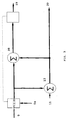
- the polymerization reaction in the top zone is controlled by a control system such as the one outlined in Figure 3.
- the signals from each of the temperature measure points are processed in the respective PID or PD control units. For example, the temperature measured at point 9 is compared with a preset temperature 9a and the difference between the two temperatures is transmitted as a deviation signal to the summing unit 39. From the deviation signal is subtracted a time-delayed signal which progressively increases until it equals the original signal. Thus, the resulting gate opening in the monomer feed valve 19 will become proportional to a brief, time-differentiated temperature deviation value.
- the temperature deviation signal is also transmitted to a summing unit 12 where it is added to a profile signal 11.
- the profile signal is a signal which regulates the feeding rate of the initiator. Said signal has a profile which secures that a desired ratio of the total amount of the initiator fed to the reactor is introduced into a given reaction zone. Hence, the profile signal is used to determine the ratios between the amounts of polymer to be produced in each of the reaction zones and consequently also the total amount of polymers produced.
- the signal from the summing unit 12 is scaled, and the resultant signal determines the amount of initiator to be fed to the reaction zone (by means of pump 20).
- the profile-determining signal is also used to regulate the pressure difference between the manifold and the reactor.
- the resulting profile signal 11 regulates both the desired production rate distribution along the reactor length, i.e. the amounts of monomer polymerized in the various reaction zones, and the pressure drops over the valves arranged in lines 14 - 19. For example, if the measured pressure drop is higher than the preset value, the profile signal 11 will automatically increase. The control system will then open the valves in lines 14 - 19, and the pressure drop over said valves will be reduced. Because there is a feed-back of the measured pressure drop signals to the profile signal 11, the measured pressure drop will automatically be adjusted and become equal to the preset pressure drop value.
- the amount of monomer fed to each reaction zone or group of zones is regulated because the pressure drop over the respective control valve is adjusted.
- the ratios between the amounts of polymer polymerized in each of the respective reaction zones are calculated on the basis of the actual amounts of initiator used in each particular zone.
- the splitting of the temperature deviation signal has as a result that short-time deviations between the preset temperatures and the measured temperatures inside the reactor are reduced by adjusting the amount of monomer introduced into the reactor, while corrections due to long-term deviations are achieved by adjusting the amount of initiator introduced into the reactor.
- the middle zone of the autoclave comprises temperature measure points 6 and 7, monomer feed inlets 16 and 17 with their respective valves, and an initiator feeding pump 21.
- This zone comprises control units analogous to those of the top zone, and the control loop for the middle zone will thus in principle be similar to the one for the top zone.
- the bottom zone of the autoclave comprises five temperature measure points 2, 3, 4 and two monomer feed inlet lines 14 and 15 with their respective valves, and an initiator feeding pump 22.
- this control loop functions in the same way as the one described above, except that the temperature deviation signal adjusting the amount of monomer fed to the last monomer feed inlet is the sum of the four last temperature deviation signals 1 - 4, and that the temperature deviation signals adjusting the initiator feed is based on all five temperature deviation signals.
- the number of reactor process variables that can be regulated obviously depends on the number of control organs regulating the reactor.
- the control system comprise several measure points for temperature, one measure point for the total reactor pressure and one measure point for the manifold pressure, as well as two ratios utilized in regulating the production distribution within the reactor. Ideally, it would be desirable to control all these variables.
- the reactor is not sufficiently determined and the number of process variables to be controlled must therefore be reduced. This can be achieved by leaving out e.g. the temperatures at levels 2, 3 and 4 by not having any integrating units connected to the temperature control units at said levels. In other words, a certain stationary deviation is permitted. This will not influence the adjusting organs directly.
- the reactor may also be operated in such a manner that one of the two downstream valves 14 or 15, or both, will be closed, which will further reduce the degree of control by renouncing the integrating part of the controllers.
- the order of the control system is adapted to the degrees of freedom of the production process. By a reduction in the number of degrees of freedom of the process due to a control organ being in a state of saturation, the order of the control system will be reduced correspondingly.
- saturation is meant that the particular control organ is in its extreme position, i.e. totally closed or totally open (0 % or 100 % open, respectively).
- the non-linear correlation between the amount of initiator fed to the reactor and the resulting generated heat can be partly counteracted by using an initiator having an optimal behaviour within a specific temperature range, but it is not possible to avoid that a certain non-linear relation always will exist. This may be further compensated for by making the signal booster vary in proportion to the deviation between the preset temperature and the measured temperature.
- ethylene was polymerized to a low density polyethylene grade having a nominal melt flow index of 1.0.
- the reactor used was of the type described hereinbefore and outlined in Figure 1.
- the reactor was equipped with a control system comprising three control loops, one for each of: the top reaction zone comprising monomer feed inlet lines 18 and 19, and temperature measure points 8 and 9; the middle reaction zone comprising monomer feed inlet lines 16 and 17, and temperature measure points 6 and 7; and the bottom reaction zone comprising monomer feed inlet lines 14 and 15, and temperature measure points 1, 2, 3, 4 and 5.
- Example 1 The autoclave pressure was 120 MPa both in Example 1 and Example 2.
- Example 1 the autoclave was operated with a pressure drop over the regulating valves in the monomer feed inlet lines of approximately 10 MPa, while the operation of the poorer controlled reactor in Example 2 required a pressure drop of approximately 20 MPa. These pressure drops resulted in a temperature increase in the monomer feed of approximately 6 °C in Example 1 and approximately 12 °C in Example 2.
- Example 1 the recorded polymerization temperatures varied very little and they had an average value very close to the nominal values.
- Example 2 in the two first zones of the reactor the polymerization temperatures were higher than the nominal values, while in the last zone the actual temperature was lower than the nominal value; in addition, the range of temperature variations were greater than in Example 1.
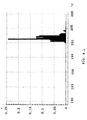
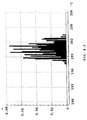
- the magnitude of variations in the reaction temperatures are demonstrated in Figure 4.
- the temperatures measured at temperature measure point 5 (Figure 1) during the production runs of Examples 1 and 2 are collected in two histograms shown in Figures 4.1 and 4.2, respectively. These histograms show that in Example 1 the nominal temperature (203°C) was maintained very well and with small deviations, while in Example 2 the average temperature was approximately 200.5 °C, i.e.
- Example 1 The polymerization distribution along the reactor length is an important parameter used to optimalise the production.
- Example 2 the ratios between the amounts of ethylene polymerized in each of the three reaction zones were equal to the nominal ratios 1:2:2. It was not possible to obtain these ratios in Example 2 where the ratios between the polymerized amounts were 1:2.5:2.5.
- Example 1 (Comparative) Monomer feed, manifold pressure MPa 130 140 pressure drop over regulating valves MPa 10 20 Monomer feed, manifold temperature °C 50 50 temp.
Landscapes
- Chemical & Material Sciences (AREA)
- Organic Chemistry (AREA)
- Chemical Kinetics & Catalysis (AREA)
- Health & Medical Sciences (AREA)
- Medicinal Chemistry (AREA)
- Polymers & Plastics (AREA)
- Addition Polymer Or Copolymer, Post-Treatments, Or Chemical Modifications (AREA)
- Polymerisation Methods In General (AREA)
- Graft Or Block Polymers (AREA)
- Processes Of Treating Macromolecular Substances (AREA)
Claims (9)
- Verfahren zur Herstellung von Polyolefinen, insbesondere Ethylenhomopolymere und Copolymere mit geringer und mittlerer Dichte, in einem länglichen Autoklavreaktor mit mehreren Reaktionszonen, der bei einem Druck von 100 bis 300 MPa und einer Temperatur von 100 bis 300 °C betrieben wird, wobei bei diesem Prozeß Monomer und Initiator durch mehrere Zufuhreinlässe, die über die Reaktorlänge verteilt sind, in den Reaktor eingeführt werden, dadurch gekennzeichnet, daß die Temperaturen im Inneren des Autoklavreaktors kontinuierlich an bestimmten Punkten gemessen werden, die über die Reaktorlänge verteilt sind, wobei jede der gemessenen Temperaturen mit einer entsprechenden Solltemperatur verglichen und die erkannte Abweichung zwischen jedem Paar Solltemperatur und gemessener Temperatur durch Anwendung eines Reglers verwendet wird, der die Nichtlinearität und die Unterschiede in ihrem Ansprechverhalten beim Regeln der Menge an Monomer und Initiator ausgleicht, welche durch die Zufuhreinlässe in den Autoklaven eingeführt werden, um die Temperaturabweichungen zu minimieren.
- Verfahren nach Anspruch 1, dadurch gekennzeichnet, daß alle Einstellungen durch eine Gruppe getrennter Regelschleifen ausgeführt werden, von denen eine jede eine der Reaktionszonen regelt, in welche der Reaktor unterteilt ist, oder alternativ dazu eine Gruppe solcher Reaktionszonen regelt.
- Verfahren nach Anspruch 1 oder 2, dadurch gekennzeichnet, daß ein oder mehrere der in einer Zone oder einer Gruppe von Zonen gemessenen Temperaturabweichungswerten für die Einstellung der Menge an Monomer verwendet wird, die durch einen oder mehrere Zufuhreinlässe in den Reaktor eingeführt wird.
- Verfahren nach Anspruch 3, dadurch gekennzeichnet, daß die in einer Zone gemessenen Temperaturabweichungswerte auch für die Einstellung der Menge an Initiator verwendet werden, der in die Zone eingeführt wird.
- Verfahren nach einem der Ansprüche 1 bis 4, dadurch gekennzeichnet, daß auch die Verhältnisse zwischen den Mengen an Monomer, das in die einzelnen Reaktionszonen oder Gruppen von Reaktionszonen eingeführt wird, geregelt werden, um eine vorherbestimmte Polymerisationsratenverteilung entlang der Reaktorlänge zu erzielen.
- Verfahren nach einem der Ansprüche 1, 2, 3 oder 5, dadurch gekennzeichnet, daß die Menge an Monomer, die zu den einzelnen Reaktionszonen oder Gruppen von Zonen zugeführt wird, durch Einstellen des Druckabfalls über das jeweilige Regelventil geregelt wird.
- Verfahren nach Anspruch 6, dadurch gekennzeichnet, daß auch der Gesamtdruck innerhalb des Reaktors geregelt wird.
- Verfahren nach einem der Ansprüche 1 bis 7, dadurch gekennzeichnet, daß die Reihenfolge des Regelsystems an den Freiheitsgrad des Produktionsverfahrens derart angepaßt ist, so daß eine Verringerung der Anzahl der Freiheitsgrade, welche durch ein Regelorgan verursacht wird, das sich in seiner extremen Position befindet (Sättigung), die Reihenfolge des Regelsystems entsprechend verringert.
- Verfahren nach einem der Ansprüche 1 bis 8, dadurch gekennzeichnet, daß das Monomer, das in den Reaktor eingeführt wird, eine Temperatur im Bereich von -10 °C bis +100 °C besitzt.
Applications Claiming Priority (3)
| Application Number | Priority Date | Filing Date | Title |
|---|---|---|---|
| NO934585A NO178790C (no) | 1993-12-13 | 1993-12-13 | Fremgangsmåte ved fremstilling av olefinpolymerer i en autoklavrektor |
| NO934585 | 1993-12-13 | ||
| PCT/NO1994/000201 WO1995016517A1 (en) | 1993-12-13 | 1994-12-12 | Process for the production of polyolefins in an autoclave reactor |
Publications (2)
| Publication Number | Publication Date |
|---|---|
| EP0734289A1 EP0734289A1 (de) | 1996-10-02 |
| EP0734289B1 true EP0734289B1 (de) | 1999-10-06 |
Family
ID=19896682
Family Applications (1)
| Application Number | Title | Priority Date | Filing Date |
|---|---|---|---|
| EP95919267A Expired - Lifetime EP0734289B1 (de) | 1993-12-13 | 1994-12-12 | Verfahren zur herstellung von polyolefinen in einem autoclavreaktor |
Country Status (8)
| Country | Link |
|---|---|
| US (1) | US5965674A (de) |
| EP (1) | EP0734289B1 (de) |
| AT (1) | ATE185286T1 (de) |
| AU (1) | AU1285195A (de) |
| DE (1) | DE69421089T2 (de) |
| ES (1) | ES2137514T3 (de) |
| NO (1) | NO178790C (de) |
| WO (1) | WO1995016517A1 (de) |
Families Citing this family (19)
| Publication number | Priority date | Publication date | Assignee | Title |
|---|---|---|---|---|
| GB0018162D0 (en) * | 2000-07-26 | 2000-09-13 | Dow Corning Sa | Polymerisation reactor and process |
| AU2003291627A1 (en) * | 2002-09-20 | 2004-04-08 | Exxonmobil Chemical Patents Inc. | Supercritical polymerization process and polymers produced therefrom |
| US8008412B2 (en) | 2002-09-20 | 2011-08-30 | Exxonmobil Chemical Patents Inc. | Polymer production at supersolution conditions |
| US7341736B2 (en) * | 2004-01-30 | 2008-03-11 | S.C. Johnson & Son, Inc. | Aerosol spray resistant to discoloration |
| DE602005010255D1 (de) * | 2004-07-08 | 2008-11-20 | Exxonmobil Chem Patents Inc | Katalysator system für die olefinpolymerisation und verfahren zu seiner verwendung |
| EP1805229A1 (de) | 2004-10-28 | 2007-07-11 | Dow Gloval Technologies Inc. | Verfahren zur steuerung eines polymerisierungsreaktors |
| US7053163B1 (en) * | 2005-02-22 | 2006-05-30 | Fina Technology, Inc. | Controlled comonomer distribution along a reactor for copolymer production |
| EP1777238B1 (de) * | 2005-10-18 | 2007-05-02 | Borealis Technology Oy | Polyethylenmischungskomponente und diese enthaltende Mischungen |
| US8242237B2 (en) * | 2006-12-20 | 2012-08-14 | Exxonmobil Chemical Patents Inc. | Phase separator and monomer recycle for supercritical polymerization process |
| US8143352B2 (en) * | 2006-12-20 | 2012-03-27 | Exxonmobil Research And Engineering Company | Process for fluid phase in-line blending of polymers |
| US8080610B2 (en) | 2007-03-06 | 2011-12-20 | Exxonmobil Research And Engineering Company | Monomer recycle process for fluid phase in-line blending of polymers |
| JP2010529253A (ja) | 2007-06-04 | 2010-08-26 | エクソンモービル・ケミカル・パテンツ・インク | 非常に均一なプロピレンの溶液重合法 |
| CN101855249B (zh) * | 2007-09-13 | 2013-02-13 | 埃克森美孚研究工程公司 | 在线生产增塑聚合物和增塑聚合物共混物的方法 |
| US7910637B2 (en) * | 2007-09-13 | 2011-03-22 | Exxonmobil Research And Engineering Company | In-line blending of plasticizers with a base polymer |
| EP2231779B1 (de) * | 2007-12-20 | 2012-06-06 | ExxonMobil Research and Engineering Company | In-line-verfahren zur herstellung von pelletstabilen polyolefinen |
| CN103254513B (zh) * | 2007-12-20 | 2015-08-26 | 埃克森美孚研究工程公司 | 全同立构聚丙烯和乙烯-丙烯共聚物的共混物 |
| US7910679B2 (en) * | 2007-12-20 | 2011-03-22 | Exxonmobil Research And Engineering Company | Bulk homogeneous polymerization process for ethylene propylene copolymers |
| US8318875B2 (en) | 2008-01-18 | 2012-11-27 | Exxonmobil Chemical Patents Inc. | Super-solution homogeneous propylene polymerization and polypropylenes made therefrom |
| US8653207B1 (en) | 2012-11-30 | 2014-02-18 | Westlake Longview Corporation | Process and apparatus for polymerizing ethylene under ultra-high pressure |
Family Cites Families (12)
| Publication number | Priority date | Publication date | Assignee | Title |
|---|---|---|---|---|
| US3057840A (en) * | 1960-02-23 | 1962-10-09 | Phillips Petroleum Co | Method for controlling the temperature in a butadiene polymerization process |
| GB1047191A (de) * | 1963-02-15 | 1900-01-01 | ||
| GB1062408A (en) * | 1965-02-17 | 1967-03-22 | Koppers Co Inc | Polymerization of ethylene |
| US4008049A (en) * | 1970-07-09 | 1977-02-15 | Dart Industries Inc. | Apparatus for controlling operational parameters in polymerization equipment |
| CH536325A (fr) * | 1970-08-07 | 1973-04-30 | Imhico Ag | Verfahren zur Homo- und Copolymerisation von Äthylen und Polymerisationsreaktor zu dessen Durchführung |
| US4012573A (en) * | 1970-10-09 | 1977-03-15 | Basf Aktiengesellschaft | Method of removing heat from polymerization reactions of monomers in the gas phase |
| DE2611405A1 (de) * | 1976-03-18 | 1977-09-22 | Basf Ag | Verfahren zur herstellung von aethylenpolymerisaten in einem autoklavenreaktor |
| JPS532585A (en) * | 1976-06-29 | 1978-01-11 | Sumitomo Chem Co Ltd | Preparation of polyethylene |
| JPS5938961B2 (ja) * | 1978-12-26 | 1984-09-20 | 住友化学工業株式会社 | ポリエチレンの改良された製造法 |
| US4491924A (en) * | 1982-04-22 | 1985-01-01 | The Babcock & Wilcox Company | Olefin oxidation reactor temperature control |
| US4740643A (en) * | 1986-04-04 | 1988-04-26 | The B. F. Goodrich Company | Quantification of the quality of fluidization using a thermocouple |
| FI90474C (fi) * | 1991-05-30 | 1994-02-10 | Borealis Polymers Oy | Säätömenetelmä olefiinien polymeroinnissa käytetyn reaktorin lämpötilan säätämiseksi |
-
1993
- 1993-12-13 NO NO934585A patent/NO178790C/no not_active IP Right Cessation
-
1994
- 1994-12-12 DE DE69421089T patent/DE69421089T2/de not_active Expired - Lifetime
- 1994-12-12 AT AT95919267T patent/ATE185286T1/de active
- 1994-12-12 US US08/663,142 patent/US5965674A/en not_active Expired - Lifetime
- 1994-12-12 AU AU12851/95A patent/AU1285195A/en not_active Abandoned
- 1994-12-12 WO PCT/NO1994/000201 patent/WO1995016517A1/en not_active Ceased
- 1994-12-12 EP EP95919267A patent/EP0734289B1/de not_active Expired - Lifetime
- 1994-12-12 ES ES95919267T patent/ES2137514T3/es not_active Expired - Lifetime
Also Published As
| Publication number | Publication date |
|---|---|
| NO934585L (no) | 1995-06-14 |
| NO178790C (no) | 1996-06-05 |
| EP0734289A1 (de) | 1996-10-02 |
| AU1285195A (en) | 1995-07-03 |
| US5965674A (en) | 1999-10-12 |
| DE69421089D1 (de) | 1999-11-11 |
| WO1995016517A1 (en) | 1995-06-22 |
| NO178790B (no) | 1996-02-26 |
| NO934585D0 (no) | 1993-12-13 |
| ATE185286T1 (de) | 1999-10-15 |
| DE69421089T2 (de) | 2000-05-25 |
| ES2137514T3 (es) | 1999-12-16 |
Similar Documents
| Publication | Publication Date | Title |
|---|---|---|
| EP0734289B1 (de) | Verfahren zur herstellung von polyolefinen in einem autoclavreaktor | |
| US4153774A (en) | Manufacture of high pressure polyethylene | |
| JP3177185B2 (ja) | 気相流動床重合反応器の制御方法 | |
| US4085266A (en) | Process for the high pressure production of polyethylene | |
| KR101093470B1 (ko) | 중합 루프 반응기에서 에틸렌 및 하나 이상의 선택적인 공단량체(들)의 중합을 향상시키는 공정 | |
| US4496698A (en) | Process for producing polyethylene having constant physical and chemical properties | |
| US5844054A (en) | Process control in the presence of chromium based catalysts | |
| US6723677B1 (en) | High activity ziegler-natta catalyst for high molecular weight polyolefins | |
| EP0986587A1 (de) | Verbessertes verfahren zur temperaturkontrolle im wirbelschichtbett | |
| US6894126B2 (en) | Method for producing ethylene homopolymers and copolymers by means of radical high pressure polymerization | |
| KR100533057B1 (ko) | 용액 중합 공정에서 활성 증가를 위한 지글러-나타 촉매의열처리 | |
| US3726849A (en) | Continuous process for the solution polymerization of olefinic monomers | |
| EP0069806A1 (de) | Verfahren zur Herstellung von Polyäthylen mit konstanten physischen und chemischen Eigenschaften | |
| EP2398830B1 (de) | Verbreiterung der molekulargewichtsverteilung von in einem horizontalen gerührten gasphasenreaktor hergestellten polyolefinmaterialien | |
| EP0318609B1 (de) | Reaktor-Steuersystem zur Herstellung von schlagfestem Propylencopolymer | |
| US4082910A (en) | Multi-stage isolation of high pressure polyethylene | |
| US6867160B1 (en) | High activity catalyst for high molecular weight polyolefins | |
| EP0949281B1 (de) | Wärmebehandlung von Ziegler-Katalysatoren zur Erhöhung des Polymermolekulargewichts in der Polymerisationslösung | |
| EP1099715A1 (de) | Übergangsstrategie zur Produktion von klebrigen Polymeren | |
| EP2607385A1 (de) | Schlaufenreaktor mit verbesserter Herstellungsteilungssteuerung | |
| CN104662048B (zh) | 制备聚合物的方法 | |
| CA1068448A (en) | Manufacture of high pressure polyethylene | |
| CN120166985A (zh) | 制备低聚物的方法 | |
| SU1419990A1 (ru) | Способ управлени непрерывным процессом полимеризации изопрена | |
| Ardell et al. | Polypropylene Impact Copolymer Reactor Control System |
Legal Events
| Date | Code | Title | Description |
|---|---|---|---|
| PUAI | Public reference made under article 153(3) epc to a published international application that has entered the european phase |
Free format text: ORIGINAL CODE: 0009012 |
|
| 17P | Request for examination filed |
Effective date: 19960702 |
|
| AK | Designated contracting states |
Kind code of ref document: A1 Designated state(s): AT BE CH DE DK ES FR GB GR IE IT LI LU MC NL PT SE |
|
| 17Q | First examination report despatched |
Effective date: 19980713 |
|
| GRAG | Despatch of communication of intention to grant |
Free format text: ORIGINAL CODE: EPIDOS AGRA |
|
| GRAG | Despatch of communication of intention to grant |
Free format text: ORIGINAL CODE: EPIDOS AGRA |
|
| GRAH | Despatch of communication of intention to grant a patent |
Free format text: ORIGINAL CODE: EPIDOS IGRA |
|
| GRAH | Despatch of communication of intention to grant a patent |
Free format text: ORIGINAL CODE: EPIDOS IGRA |
|
| GRAA | (expected) grant |
Free format text: ORIGINAL CODE: 0009210 |
|
| ITF | It: translation for a ep patent filed | ||
| AK | Designated contracting states |
Kind code of ref document: B1 Designated state(s): AT BE CH DE DK ES FR GB GR IE IT LI LU MC NL PT SE |
|
| PG25 | Lapsed in a contracting state [announced via postgrant information from national office to epo] |
Ref country code: SE Free format text: THE PATENT HAS BEEN ANNULLED BY A DECISION OF A NATIONAL AUTHORITY Effective date: 19991006 Ref country code: LI Free format text: LAPSE BECAUSE OF FAILURE TO SUBMIT A TRANSLATION OF THE DESCRIPTION OR TO PAY THE FEE WITHIN THE PRESCRIBED TIME-LIMIT Effective date: 19991006 Ref country code: GR Free format text: LAPSE BECAUSE OF NON-PAYMENT OF DUE FEES Effective date: 19991006 Ref country code: CH Free format text: LAPSE BECAUSE OF FAILURE TO SUBMIT A TRANSLATION OF THE DESCRIPTION OR TO PAY THE FEE WITHIN THE PRESCRIBED TIME-LIMIT Effective date: 19991006 Ref country code: AT Free format text: LAPSE BECAUSE OF FAILURE TO SUBMIT A TRANSLATION OF THE DESCRIPTION OR TO PAY THE FEE WITHIN THE PRESCRIBED TIME-LIMIT Effective date: 19991006 |
|
| REF | Corresponds to: |
Ref document number: 185286 Country of ref document: AT Date of ref document: 19991015 Kind code of ref document: T |
|
| REG | Reference to a national code |
Ref country code: CH Ref legal event code: EP |
|
| REF | Corresponds to: |
Ref document number: 69421089 Country of ref document: DE Date of ref document: 19991111 |
|
| PG25 | Lapsed in a contracting state [announced via postgrant information from national office to epo] |
Ref country code: LU Free format text: LAPSE BECAUSE OF NON-PAYMENT OF DUE FEES Effective date: 19991212 Ref country code: IE Free format text: LAPSE BECAUSE OF NON-PAYMENT OF DUE FEES Effective date: 19991212 |
|
| REG | Reference to a national code |
Ref country code: ES Ref legal event code: FG2A Ref document number: 2137514 Country of ref document: ES Kind code of ref document: T3 |
|
| ET | Fr: translation filed | ||
| PG25 | Lapsed in a contracting state [announced via postgrant information from national office to epo] |
Ref country code: PT Free format text: LAPSE BECAUSE OF FAILURE TO SUBMIT A TRANSLATION OF THE DESCRIPTION OR TO PAY THE FEE WITHIN THE PRESCRIBED TIME-LIMIT Effective date: 20000106 Ref country code: DK Free format text: LAPSE BECAUSE OF FAILURE TO SUBMIT A TRANSLATION OF THE DESCRIPTION OR TO PAY THE FEE WITHIN THE PRESCRIBED TIME-LIMIT Effective date: 20000106 |
|
| REG | Reference to a national code |
Ref country code: IE Ref legal event code: FG4D |
|
| REG | Reference to a national code |
Ref country code: CH Ref legal event code: PL |
|
| PG25 | Lapsed in a contracting state [announced via postgrant information from national office to epo] |
Ref country code: MC Free format text: LAPSE BECAUSE OF NON-PAYMENT OF DUE FEES Effective date: 20000630 |
|
| PLBE | No opposition filed within time limit |
Free format text: ORIGINAL CODE: 0009261 |
|
| STAA | Information on the status of an ep patent application or granted ep patent |
Free format text: STATUS: NO OPPOSITION FILED WITHIN TIME LIMIT |
|
| 26N | No opposition filed | ||
| REG | Reference to a national code |
Ref country code: IE Ref legal event code: MM4A |
|
| REG | Reference to a national code |
Ref country code: GB Ref legal event code: IF02 |
|
| REG | Reference to a national code |
Ref country code: NL Ref legal event code: SD Effective date: 20110124 |
|
| REG | Reference to a national code |
Ref country code: GB Ref legal event code: 732E Free format text: REGISTERED BETWEEN 20110127 AND 20110202 |
|
| REG | Reference to a national code |
Ref country code: ES Ref legal event code: PC2A Owner name: BOREALIS TECHNOLOGY OY Effective date: 20110425 |
|
| REG | Reference to a national code |
Ref country code: FR Ref legal event code: TP |
|
| REG | Reference to a national code |
Ref country code: DE Ref legal event code: R081 Ref document number: 69421089 Country of ref document: DE Owner name: BOREALIS TECHNOLOGY OY, FI Free format text: FORMER OWNER: BOREALIS HOLDING A/S, LYNGBY, DK Effective date: 20110429 |
|
| PGFP | Annual fee paid to national office [announced via postgrant information from national office to epo] |
Ref country code: DE Payment date: 20131220 Year of fee payment: 20 Ref country code: GB Payment date: 20131219 Year of fee payment: 20 |
|
| PGFP | Annual fee paid to national office [announced via postgrant information from national office to epo] |
Ref country code: ES Payment date: 20131226 Year of fee payment: 20 Ref country code: NL Payment date: 20131219 Year of fee payment: 20 Ref country code: IT Payment date: 20131217 Year of fee payment: 20 |
|
| PGFP | Annual fee paid to national office [announced via postgrant information from national office to epo] |
Ref country code: BE Payment date: 20131219 Year of fee payment: 20 |
|
| PGFP | Annual fee paid to national office [announced via postgrant information from national office to epo] |
Ref country code: FR Payment date: 20131220 Year of fee payment: 20 |
|
| REG | Reference to a national code |
Ref country code: DE Ref legal event code: R071 Ref document number: 69421089 Country of ref document: DE |
|
| REG | Reference to a national code |
Ref country code: DE Ref legal event code: R071 Ref document number: 69421089 Country of ref document: DE |
|
| REG | Reference to a national code |
Ref country code: NL Ref legal event code: V4 Effective date: 20141212 |
|
| REG | Reference to a national code |
Ref country code: GB Ref legal event code: PE20 Expiry date: 20141211 |
|
| PG25 | Lapsed in a contracting state [announced via postgrant information from national office to epo] |
Ref country code: GB Free format text: LAPSE BECAUSE OF EXPIRATION OF PROTECTION Effective date: 20141211 |
|
| REG | Reference to a national code |
Ref country code: ES Ref legal event code: FD2A Effective date: 20150226 |
|
| PG25 | Lapsed in a contracting state [announced via postgrant information from national office to epo] |
Ref country code: ES Free format text: LAPSE BECAUSE OF EXPIRATION OF PROTECTION Effective date: 20141213 |